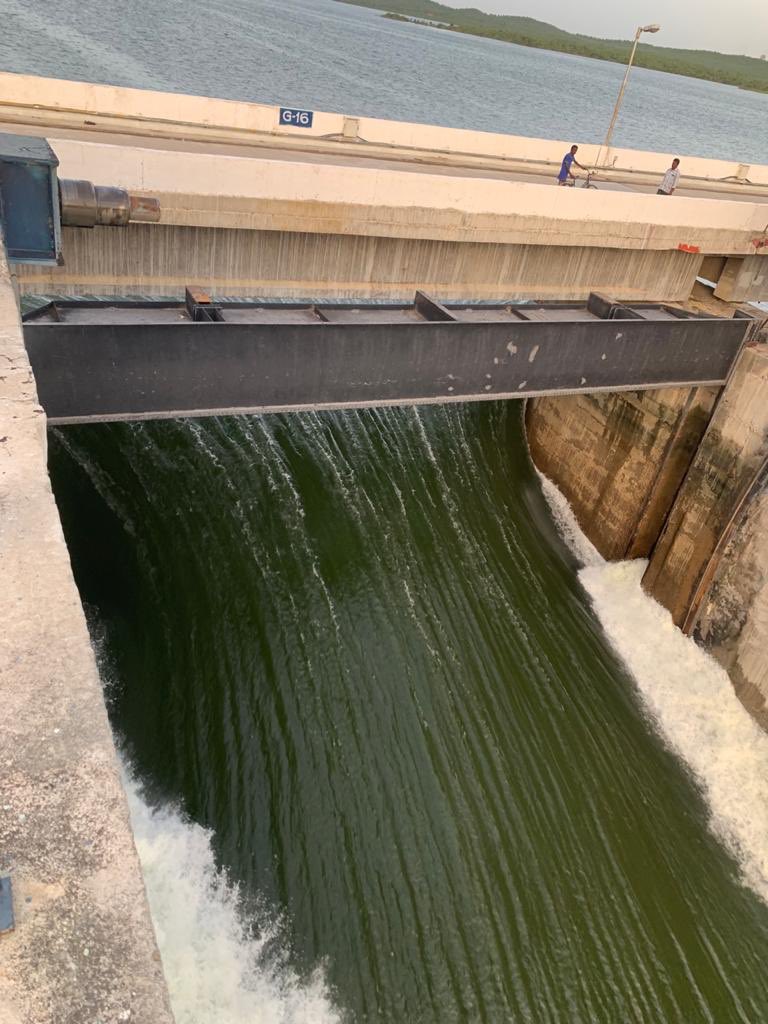
In another dam related disaster in Andhra Pradesh, a flood gate of K L Rao multi-purpose irrigation project also known as Pulichintala Dam was washed away on August 5, 2021 raising flood alarm in downstream areas along Krishna river. As per latest information the gate has been fixed and officials have started filling up the reservoir again. However, there is no official statement regarding exact causes, financial losses, damages to dam structure and downstream flood impact caused by the apparently avoidable dam disaster. The rule curve seems to be violated in operation of every dam and the gates do not seem to have been properly maintained. An independent enquiry needs to be immediately set up to find out what lessons we can learn and how we can fix accountability for the disaster.
Continue reading “Andhra Pradesh: Pulichintala Dam Gate disaster shows improper maintenance and operation”Tag: Dam

Yamuna Jayanti 2021: River needs flows; not dam, mining & pollution
Yamuna Jayanti the birthday of Yamuna river is celebrated every year on sixth day of summer Navratri. This year the day occurred on Sunday, April 18. On this occasion, Yamuna Nadi Mitra Mandlis [NMM (Friends of Yamuna River groups)] from all along the river through pics, videos share the latest updates on the issues affecting the river health and riverine community’s wellbeing. They also celebrate the river for its innumerable/ services and carry out activities to draw the attention of concerned governments and public at large towards gradual decline in river’s health.
This year due to Covid 19 pandemic and resultant restrictions, they could not organize public gatherings and undertake river related activities as usual, however they have shared some relevant pictures and videos depicting present status of River Yamuna which are presented here.
Continue reading “Yamuna Jayanti 2021: River needs flows; not dam, mining & pollution”
Judicial Interventions in Hydro Projects in India in 2020
This report is about the interventions by various judicial bodies in India in the hydro power projects related issues in 2020. This also covers judicial decisions either delaying the justice or facilitating the projects thus unhelpful for the public interest cause and paving way for financially unviable and environmentally destructive projects. The account first looks at judicial interventions at the National level and then in states in North, North East and South Zones.
Continue reading “Judicial Interventions in Hydro Projects in India in 2020”
India Hydro Power Projects 2020: Violations, Accidents and Corruption
This highlights Disasters, accidents, corruptions and violations taking place in hydro power projects across India in 2020 mostly as reported by media.
Continue reading “India Hydro Power Projects 2020: Violations, Accidents and Corruption”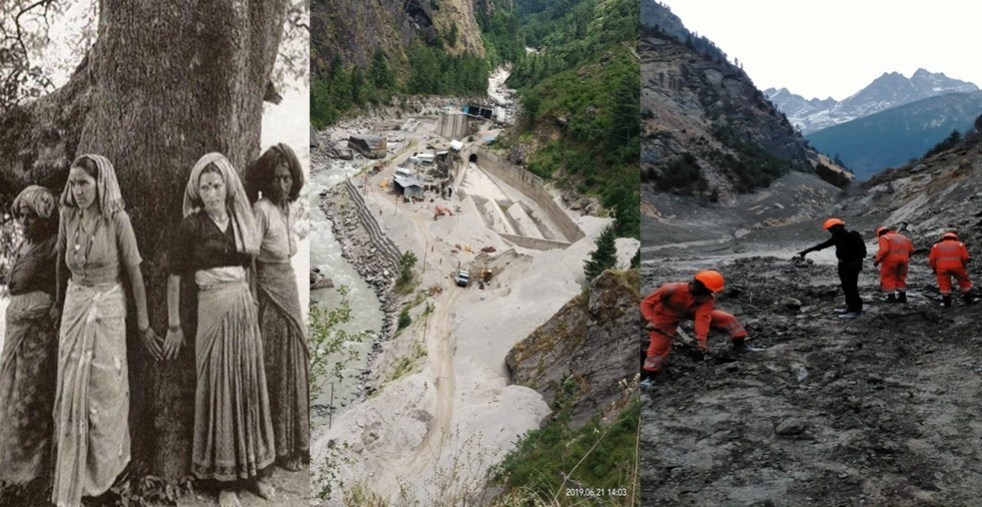
Rishiganga HEP: A foretold disaster for River, People and Chipko legacy
The February 7 2021 Chamoli deluge has completely destroyed Rishiganga Hydro Electric Project (HEP). The 13.2 MW run of the river project has also become graveyard for over 50 innocent workers and villagers. The damages to homes, bridges, forest and river eco-system is additional which cannot be restored easily.
In fact, the disaster is among the threats against which experts and locals had been warning the authorities time and again. Sadly, the past history of struggle and destruction shows that not only the state government but the judiciary also failed miserably to address the pleas of locals and assess the disaster risks in a timely manner.
Continue reading “Rishiganga HEP: A foretold disaster for River, People and Chipko legacy”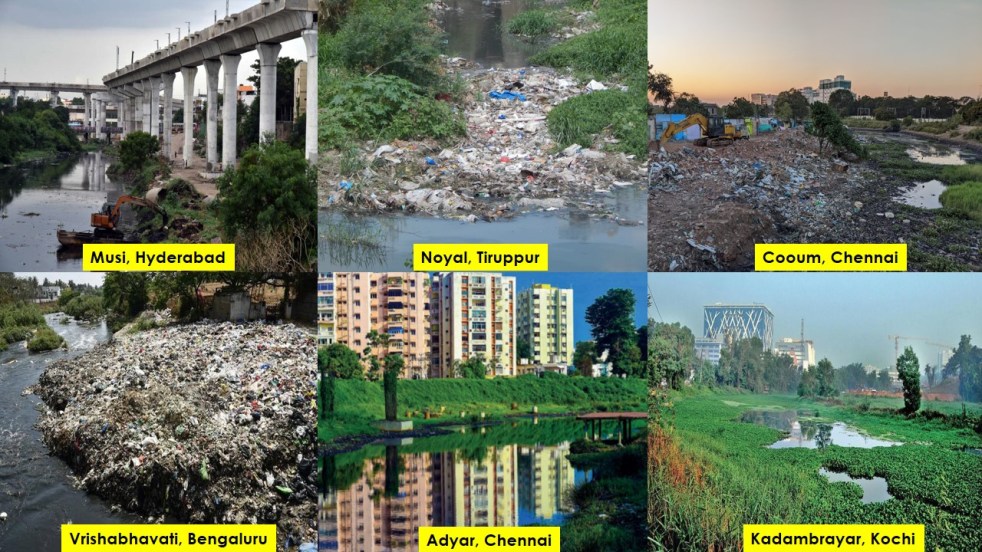
South India Urban Rivers Overview 2020
Urban rivers provide a lot of services, but the urban areas are inviting major trouble by destroying them through dumping of solid and liquid waste, encroachments, river front developments, unsustainable mining among others. The urban areas also operate in almost total policy vacuum and none of the cities under smart city programs are dealing with Urban rivers with any smartness.
This overview includes some key developments about Urban Rivers in 2020 from the South Indian states of Karnataka (Vrishabhavati in Bengaluru; Swarna-Netravati in Udupi), Tamil Nadu (Adyar, Buckingham Canal and Cooum rivers in Chennai; Kiruthumal in Madurai; Noyyal in Tiruppur; Bhavani in Coimbatore; Palar in Vellore; Vasishta in Salem), Telangana (Musi in Hyderabad), Andhra Pradesh (Tungabhadra in Kurnool), Kerala (Periyar, Kadambrayar & Konthuruthy in Kochi; Kodoor in Kottayam) and Puducherry (Sankarabarani).
Continue reading “South India Urban Rivers Overview 2020”
Inland Fish, Fisheries, Fisher-folks: 2020 Overview
Inland fisheries support millions of people and remains a major source of nutrition for a very large number of poorest people. This includes riverine fisheries, reservoir fisheries, wetland and local water body fisheries. Here we try to provide an overview of developments in this sector during the year 2020.
The overview has following sections: Policy & Governance in Centre, followed by in States, some positive developments, Covid-19 & Fishing Community, Fisher folks’ struggles, New Fish Species, Invasive fish, Fish Deaths & Pollution, Over fishing & Extinction, Studies related to inland fisheries.
Continue reading “Inland Fish, Fisheries, Fisher-folks: 2020 Overview”
DRP: 19 Oct 2020: India Rivers Week 2020: IS SAND MINING KILLING OUR RIVERS?
India Rivers Week (IRW) Organising Committee is excited to announce that the theme of the forthcoming annual event IRW 2020 will be: “Is Sand Mining Killing our Rivers?”. As part of IRW-2020, India Rivers Forum is organizing a series of Dialogues (digitally). This includes four regional dialogues focusing on North (Oct 31), South (Nov 7), West (Nov 12) and East (including North East: Nov 21)) India, and the final one (Nov 28) focusing on Sand Mining as a National issue.
Sand mining or mining of River Bed Material (RBM, including sand, gravel, boulders) has a huge impact on Rivers, in multiple ways: physical, ecological, livelihood impacts among others. While sand is also sourced from sources other than rivers, IRW 2020 will focus on sand sourced directly or indirectly from rivers. Sand is by definition, a key ingredient of the rivers. It provides habitat for multiple species of the biodiversity in the river. It provides both sub surface storage space and a mechanism to recharge the groundwater. The sand, along with silt, clay, pebbles and boulders are part of the river and are supposed to reach the deltas and provide a key existential medium in floodplain and deltas. To achieve that, sustaining river connectivities is very important.
Continue reading “DRP: 19 Oct 2020: India Rivers Week 2020: IS SAND MINING KILLING OUR RIVERS?”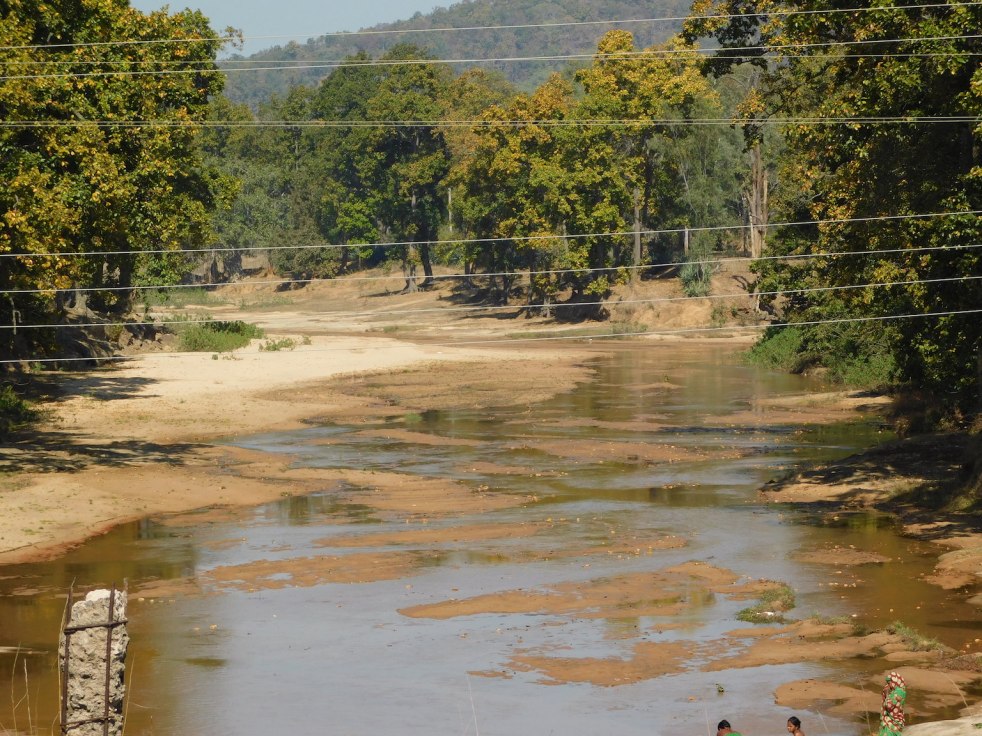
Demystifying River Health-2
Guest Blog by Manoj Misra
This article is in two parts. Part I was about a new name and Part II suggests a way forward. It is more in nature of loud thinking and is an expression of a personal discomfort with a ‘missing’ terminology with respect to ‘streams’ against few parallels including that with humans and the latter’s unscientific propensity to view a stream as being little more than a carrier of utilizable water.
This is primarily to stir ‘thinking’ and ‘debate’. Comments are most welcome. Terms ‘river’ and ‘stream’ have been used here interchangeably.
Continue reading “Demystifying River Health-2”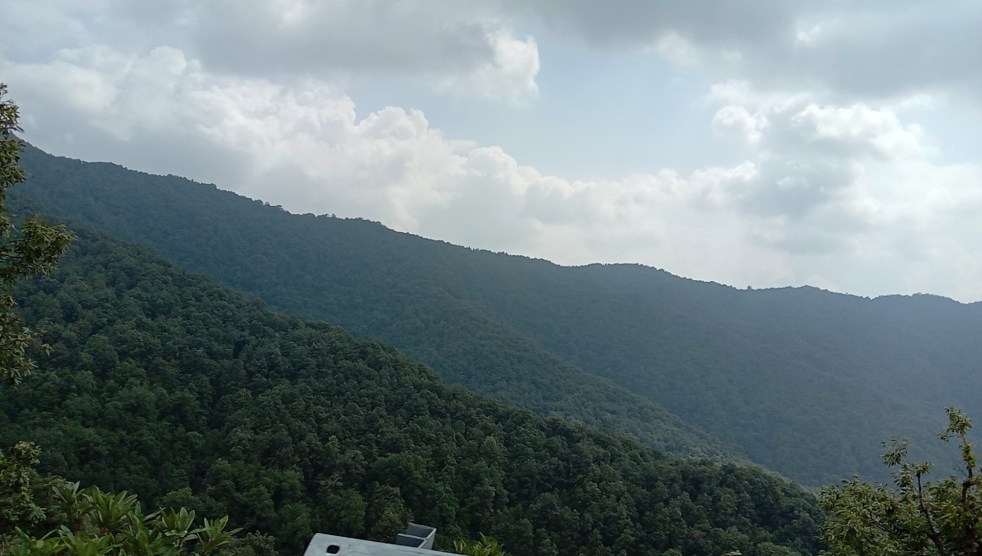
Travelling through Ramganga and Nayaar Rivers Basin
Fed by Dudhatoli forest range, the Ramganga West and Nayaar East and West in Uttarakhand are perennial rivers of immense scenic beauty amid emerging and looming threats. This photo blogs highlights some of the charms and concerns of these non-glacial rivers of the Ganga Basin.
Continue reading “Travelling through Ramganga and Nayaar Rivers Basin”
 SANDRP