A brilliant coverage by NDTV INDIA at PRIME TIME (08 Dec 2017) on so many issues related to the proposed controversial Pancheshwar Dam, World’s tallest dam in the Himalayas that has neither credible impact assessment nor proper public hearings. Please watch and share.
The wrong process of dam clearance for the Pancheshwar and Rupaligad Dams have been strongly condemned by Mahakali Lok Sangathan, Uttarakhand Parivartan Party, Uttarakhand Kranti Dal, the National Alliance of People’s Movements: Uttarakhand Akta Manch, Delhi Solidarity Group and others. https://www.facebook.com/sandrp.in/posts/1874936619200669
Villagers and local groups people also continue raising their concerns and objections against 5040 Mw dam project. Today, scores of villagers, environmental groups including regional political party have protested at Jhulaghat in Champawat, Pithoragarh, Almora and in Delhi demanding EAC to listen to the voices of local people and groups.
From left Arti Kumar Rao, winner of first ever Anupam Misra Memorial Award, Mahavir Singh Sukarlai, of Prayavaran Kisan Sanghrash Samiti, Pali; Winner of BPS 2017 in individual category and S. Ramachandran and Eby Emmaunuel of Meenachil Nadee Samrakshana Samithi, Kerala; Winner of BPS 2017 in organization category.
The program started with the welcome address by Manoj Misra. It was followed by an introductory speech on the theme by Himanshu Thakkar of SANDRP in which he described the deteriorating relationships between urban rivers and citizens and how urban areas are treating their rivers as parasite.
In the key note address by Dr. Ravi Chopra of PSI threw light on the lost, ignored and abused rivers in Delhi, Mumbai, Dehradun and Chennai.
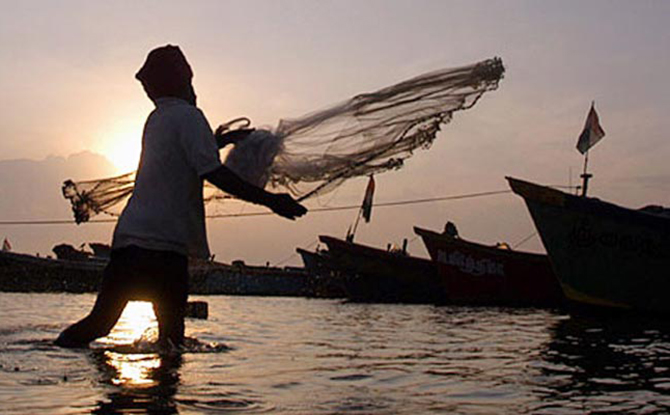
Every year, November 21 is celebrated as World Fisheries day across the world. Fisherfolk communities organize rallies, workshops, public meetings, cultural programs, dramas, exhibition, music show, and demonstrations to highlight the importance of maintaining the world’s fisheries.
As per a recent United Nations study, more than two-thirds of the world’s fisheries have been overfished or are fully harvested and more than one third are in a state of decline because of factors such as the loss of essential fish habitats, pollution, and global warming. The World Fisheries Day helps in highlighting these problems, and moves towards finding solutions to the increasingly inter-connected problems, and in the longer term, to sustainable means of maintaining fish stocks. https://www.gdrc.org/doyourbit/21_11-fisheries-day.html
In an attempt to understand the significance of the issue, SANDRP with the help of selective media report, presents an overview of key developments and problems affecting fisheries and fisher folks at India and South Asia level.
This is further reinforced by study by Dr. Luke Gibson, Honorary Assistant Professor of the School of Biological Sciences at the University of Hong Kong, which concludes that among so called green energy sources, hydropower is most dangerous. https://phys.org/news/2017-10-green-energy-hydropower-dangerous.html#jCp
In the minutes, the EAC said that it would require to study the Environmental Impact Assessment (EIA) report for the Nepal portion of the project to get a holistic view. It also directed the project proponent to obtain wildlife clearance as the project was located 300 metres from the Ascot Wildlife Sanctuary.
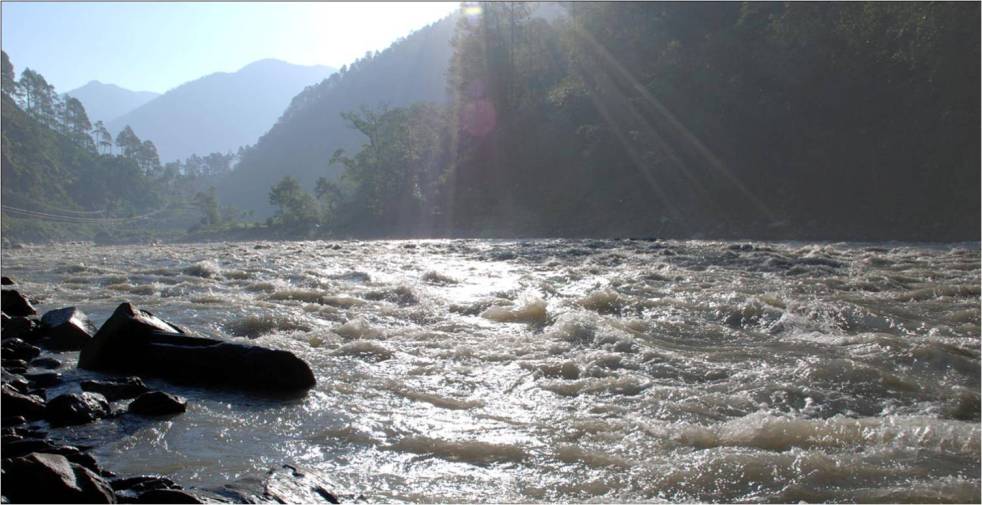
It is worth to mention that the Pancheshwar dam with a height of 315 meters is world’s second tallest dam proposed in ecologically sensitive region. Scores of media reports have underlined the unfair and politically influenced Environment Public Hearing (EPH) process, conducted during peak monsoon month in landslide ridden and disaster prone region. The venue of the EPH was also several kms away from villages going to be affected thus depriving the local people participation in essential decision making process. As a result the concerns and voices of villagers to have their voices heard. The EIA report of the project has also not mentioned several grave environmental issues of GOLFs events, cloud bursts, earthquakes etc in the catchment of the dam let alone the question of impact on endangered wildlife like Mahseer fish.
Rivers in different parts of the world have been dammed to fulfill human needs like water for irrigation, industries and domestic supplies. Then there are dams that have been raised to control floods or to produce electricity.
These have often been celebrated as human victory over nature, glorified as engineering marvel and claimed variously as highest, longest etc as a matter of national pride.
But rarely has there been a holistic assessment or appreciation of what a dam does to the natural entity called river and its adverse impacts on all the associated life forms, including humans.
Over 250 residents along with environmentalists, activists and members of civil societies formed a human chain at Elliot’s beach on Oct 28, asking State Govt to protect the wetlands, rivers, environment in Ennore creek area from willful destruction of govt agencies and industries. The human chain was joined by all the walk of society irrespective of age group from kids to senior citizens who were holding placards that explain the sorry state of Ennore Creek. http://www.thenewsminute.com/article/residents-chennai-form-human-chain-save-ennore-creek-70724
The Coastal Resource Centre and members of the Save Ennore campaign organized the human chain to raise awareness in the city ahead of the monsoons about the encroachments in Ennore Creek, a backwater located in Thiruvallur district. Residents from all 52 villages in Ennore, who have witnessed the ecology die a slow death, also joined the rally, hoping that the govt would react.
Industrial effluents from the thermal power stations here and domestic sewage from North Chennai have killed various fish species. More than 1000 acres of Kosasthalaiyar River’s backwaters have already been lost due to the deposition of fly ash by the Tangedco units. http://chennai.citizenmatters.in/chennai-human-chain-ennore-creek-encroachment-2862
As per the online petition, ten Lakh Chennai residents are at higher risk of disastrous flooding because Govt of Tamil Nadu has allowed Kamarajar Port to convert 1000 acres of Ennore wetlands into industrial real estate. Chennai has barely recovered from the 2015 floods. Don’t let Chennai get flooded again.
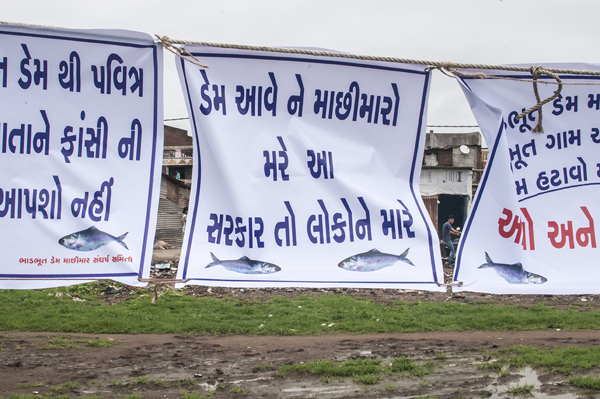
This Sunday (October 08) has been a sad day for Narmada River and thousands of fisherfolk families who will further suffer due to the Rs 4350 Cr Bhadbhut dam of which PM Modi has laid the foundation Stone. The PM seems to love dams so much!
However, the project is facing opposition because it would adversely affect over 12000 fisherfolk families and their livelihoods. Neither they have been consulted, nor there have been any impact assessment, nor any question of compensation or rehabilitation.
The new dam is claimed to mitigate the impacts of upstream dams! It will actually store polluted water from urban and industrial areas and further destroy the estuarine ecosystems.
Raising these concerns, over 100 fishermen took out a boat protest with black flags against the PM laying foundation stone of the dam. They all were arrested and released only after PM left. Similarly, 250 women who were silently marching were arrested. They were denied permission to hold protest walk. Indeed, fishermen have amazing courage. But the national media unfortunately seems happy to ignore this.
Also see following links to know more why fishermen are objecting to the project.
Arunachal PradeshKameng hydel project, still a long way from commissioning According to Energy Line India update on Oct 3, 2017NEEPCO’s 600 Mw project was meant to be commissioned in January, 2016. Until August, 2017 however, the project is yet to go through commissioning activities. The civil contractor is reported to be at fault. So far there seems to be no light at the end of the tunnel. http://www.energylineindia.com/
SARDAR SAROVAR DAMMedha Patkar asks a lot of uncomfortable questions In an Indian Express Op-Ed she writes that in fact, there are several clues that can help us decide exactly what was dedicated to the nation — the project or the dam wall. For a project to be dedicated to the nation, shouldn’t it be completed in the first place? When the project in question pertains to a dam, is it enough to raise a wall to its envisaged height or should canals be constructed as well? Only 33 per cent of the canals in Gujarat have been constructed. Can the one dedicating the project and the one receiving the project — the nation — be satisfied if the enormous impacts of the 138.68 metre-high wall on communities upstream and the downstream, about 10 lakh people, and the ecosystem are not taken into account? The nation may not be aware of what has been gifted to it, but will soon realise the betrayal. http://indianexpress.com/article/opinion/columns/drowned-by-the-dam-sardar-sarovar-narmada-narendra-modi-4878153/
Karnataka NGT okays first phase of Yettinahole project In a setback, the govt has received the green signal on the controversial Yettinahole drinking water project with the NGT overriding objections to it and permitting its first phase with some pre-conditions. The ambitious Rs 13,000 crore project aims to divert the Yettinahole, a vital tributary of the Netravathi river originating in the Western ghats to provide drinking water to the parched villages of three districts. ANOTHER DISASTROUS DECISION BY NGT: It has taken many such decisions, while also taking many welcome ones. http://www.deccanchronicle.com/nation/current-affairs/071017/ngt-okays-first-phase-of-yettinahole-project.html
TelanganaNGT stays Kaleshwaram lift irrigation project In the latest development NGT on Oct. 05, has ordered an interim stay on Kaleshwaram lift irrigation project, pointing out that the state govt did not have adequate environmental clearance. Kaleshwaram is stated to be the costliest irrigation project taken up in the country with an estimated expenditure of Rs 80,500 crore. NGT should have been much stronger. they should have in fact asked that there is no logic in excluding such massive projects in the name of drinking water project, in any case why did they start work without forest clearance and in fact held the officers accountable. http://www.thenewsminute.com/article/big-blow-telangana-govt-ngt-stays-construction-work-kaleshwaram-project-69498
Meanwhile in a strange development, before the stay, a consortium of lenders headed by Punjab National Bank has agreed to pitch in by extending a ₹11,400-crore loan. As per the arrangement, of the ₹11,400 crore, Punjab National Bank has agreed to extend ₹1900 crore, Bank of India and Canara Bank (₹1500 crore each), Allahabad Bank, Syndicate Bank, Punjab & Sindh Bank, Oriental Bank of Commerce ₹1000 crore each, Indian Bank ₹750 crore, Union Bank of India, Indian Overseas Bank and Bank of Maharashtra, ₹500 crore each and Central Bank of India ₹250 crore. This will surely prove seeds of massive non performing asset.http://www.thehindubusinessline.com/news/national/kaleshwaram-irrigation-project-phase-ii-achieves-financial-closure-pnb-leads-consortium-of-lenders/article9878467.ece
Meanwhile, it looks like Andhra CM is trying to hoodwink the central leaders by showcasing Pattiseema project as the major part of the Polavaram project works to seek more funds. Even during the visit of Parliamentary Committee, too, he had played the same trick and the team members were all praise for him for completing the Pattiseema project, ignoring the actual Polavaram project. This is interesting to see that this club of Naidu and Gadkari, one trying to hoodwink and the other acting to be hoodwinked will be able to hoodwink everyone else how long. http://www.greatandhra.com/politics/gossip/naidu-hoodwinks-gadkari-with-pattiseema-84723.html
Meanwhile there are reports of confirming agreement between UP & MP over the linking project. The report has two interesting facts: “It has also been decided that Panna will get a share of water for irrigating 70,000 hectares of land. An IAS officer, who accompanied CM Chouhan to the meeting, tried to pitch an old agreement for MP’s cause, but the Union minister wasn’t pleased. “Gadkari got angry and asked the officer to not to talk like a politician. The officer remained quiet after that,”” https://timesofindia.indiatimes.com/city/bhopal/chouhan-yogi-agree-to-ken-betwa-solution-on-gadkari-table/articleshow/60905420.cms
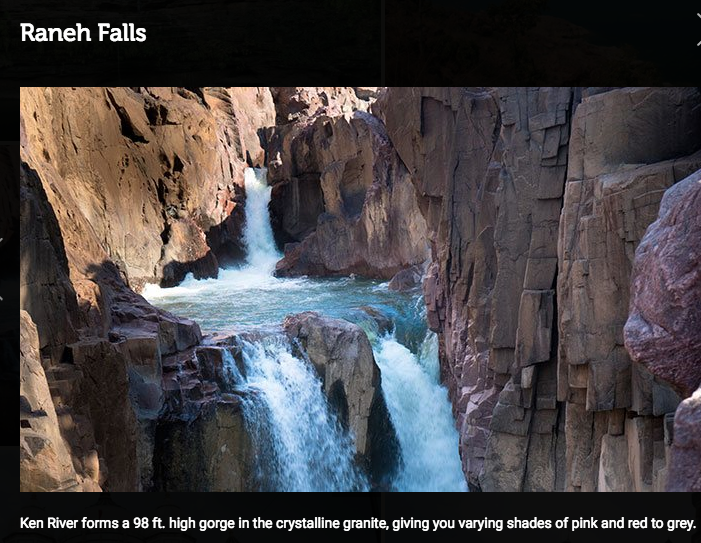
Amidst reports of reconciliation between UP and MP, concerned and to be affected in Panna have started protesting. It may become an election issue in Panna during the assembly polls in the state. Opposing the project for “undermining the interests of the backward district of Bundelkhand”, the ‘rajmata’ of Panna has decided to take up cudgels against it. Indeed people of Panna needs to rise up united and unequivocally against the project in collaboration with other Ken Basin district and also downstream Banda in UP. There is still hope to stop this nonsense.https://timesofindia.indiatimes.com/city/bhopal/rajmata-of-panna-against-ken-betwa-linking-project/articleshow/60931188.cms
In one more significant related development National Tiger Conservation Authority reports of death of 17 tigers in MP state during past one year. Indeed, with Panna Tiger Reserve slated to lose huge chunk of over 200 sq km to the Ken Betwa link, I have been told that the management of PTR is totally incompetent. NTCA itself is to be blamed for meekly allowing such decisions. Destruction of Panna will give a signal that there is no hope for tigers in India.http://www.thehindubusinessline.com/news/national/mp-loses-17-tigers-in-2017-ntca/article9890231.ece
Foundation for NW-4 laid In the presence of Nitin Gadkari and Andhra CM the Vice President Venkaiah Naidu has laid foundation stone for the development of Muktyala to Vijayawada stretch of Krishna River (National Waterways – 4) in Vijayawada. National Waterway No.4 was declared in November, 2008 for a total length of 1078 km. This length was extended to 2890 km by NW Act-2016. The following stretches are included in this :
a) River Godavari (Bhadrachalam to Rajahmundry) = 171 km
b) River Krishna (Wazirabad to Vijayawada) = 157 km
c) Kakinada Canal (Kakinada to Rajahmundry) = 50 km
d) Eluru Canal (Rajahmundry to Vijayawada) = 139 Km
e) Commamur Canal (Vijayawada to Pedaganjam) = 113 km
f) North Buckingham Canal (Pedaganjam to Chennai) = 316 km
g) South Buckingham Canal (Chennai to Merkanam) = 110 km
h) Kaluvelly Tank (Markanam to Puducherry) = 22 km
Extended sections
River Krishna from Wazirabad to Galagali (628 Km)
River Godavari from Bhadrachalam to Nasik (1184Km)
A proposal for Phase-II has been recommended by IWAI board for PIB/Cabinet. Also, a proposal for formation of Special Purpose Vehicle (SPV) for implementation of the project is under consideration for the approval of Cabinet. The SPV is expected to be formed by November 2017. http://pib.nic.in/newsite/PrintRelease.aspx?relid=171321
IRRIGATION
MAHA IRRIGATION SCAMProtest over CM sharing dais with named in irrigation scam In a move that has raised eyebrows, CM Devendra Fadnavis is set to share the stage with controversial NCP leaders Ajit Pawar and Sunil Tatkare, who are under investigation in the irrigation scam. As per Anjali Damania the irrigation scam is bound to be buried with likes of Gadakari at the helm of even water resources now. “Bravo CM, you have done a great job. You will now share the dais with the cleanest people of Maharashtra. Why did you even fight the irrigation scam, was it a show? Rest in Peace irrigation scam,” social worker Anjali Damania said in a message. https://timesofindia.indiatimes.com/city/mumbai/cm-plan-to-share-stage-with-ajit-tatkare-raises-eyebrows/articleshow/60989006.cms
Study Negative rainfall in 8 out of 14 normal monsoons in 18 years Data from the IMD revealed majority of monsoons over the past 18 years had been below average like 2017, which ended on a below average note at -5% departure. From 2000, the country has seen as many as 12 monsoons with less rain than the long period average, more so from 2014 to 2017— a period marked by consecutive monsoons ending on a negative note.
Experts stressed there was a possibility of monsoon weakening due to the impact of the climate change, but this was something that researchers were unclear about. A K Srivastava, the head of IMD’s climate monitoring and analysis group, Pune, said, “The current epoch — from 1991 to 2020 — has shown a trend of negative or low rainfall. Past statistics show the epochal behaviour of monsoon, but how long will this rainall trend continues beyond the year 2020 cannot be gauged.” https://timesofindia.indiatimes.com/city/pune/negative-rainfall-in-8-out-of-14-normal-monsoons-in-18-years/articleshow/60916411.cms
– “There have been 268 reported flooding events in India over 1950-2015 affecting about 825 million people, leaving 17 million homeless and killing 69,000 people (according to the International Disaster Data Base),” the study said. According to lead author Roxy Mathew Koll, a scientist with the Indian Institute of Tropical Meteorology, a premium research body under the Ministry of Earth Science (MoES), extreme rainfall is defined as more than 15 cm of rain in a day and “spread over a large region, enough to cause floods”. “These widespread extremes were two per year in central India during 1950s. Now, it’s six per year,” Koll told PTI.
– “As the atmosphere and the oceans are getting warmer due to increasing carbon dioxide, a result of human activities, atmosphere holds more moisture. This results in two factors. The first is that warm moist air is lighter than cold dry air and hence makes the atmosphere unstable as it rises up,” Koll explained.
– The second factor, Koll added, is that since the atmosphere holds more moisture, it dumps it all together – a heavy rainfall event. But why is central India the focal point of erratic and extreme rain events? “The low pressure areas (circulation) that brings rains move around this region. Cloud formation also forms around this area,” Rajeevan told PTI.
– The fact that this intensification is against the background of a declining monsoon rainfall, which has been observed in previous studies, makes it catastrophic, as it puts several millions of lives, property and agriculture at risk, experts say. According to the paper, floods alone lead to losses amounting to $3 billion in India, 10 per cent of global economic losses.
Similarly Mridula Chari analyses Monsoon rainfall this year. As per the report, of the 630 districts for which the India Meteorological Department tracks rainfall data, 308 received between 19% more and 19% less than normal rain. But 219 received deficient rain, or 20% less than normal rain. Of those, 12 had scanty rain, or 60% less than normal rain. On the other end, 103 districts received excess rain, or 20% more than normal rain. Of those, 27 were 60% above normal.” https://scroll.in/article/852793/after-uneven-monsoon-in-india-some-districts-that-faced-floods-end-with-deficient-rain
In a news report, IMD chief K J Ramesh on Oct 05, has said that the number of rainy days are going to shrink but the intensity of rainfall will increase. He also said that the amount of rainfall in the country this year was in line with the IMD’s forecast and the distribution has also been good. WHICH RAINWATER IS IMD CHIEF CONSUMING? What is the basis for this claim of IMD CHIEF? Does he not have access to all the data about such disastrous distribution both spatially and temporally? http://www.business-standard.com/article/current-affairs/expect-fewer-but-intense-rainy-days-in-coming-days-says-imd-chief-117100501147_1.html
Report India fails to manage flood As per the report 14 percent of India’s landmass is vulnerable to flooding and more than 15 percent of this area gets flooded every year. Since 1953, almost 1,600 lives have been lost every year on an average due to floods.Yet, the central govt has not released 61 percent of the funds promised for flood management between April 2007 and March 2016, and 43 percent of the 517 projects approved have not been completed, a recent report by the CAG revealed. Indeed, India’s flood management has failed due to the failure of institutions like CWC, CAG and media needs to focus on that. https://www.thequint.com/news/india/flood-related-deaths-in-india
Urban FloodHighest Oct day rainfall in Hyderabad since 1903 The rainfall in Hyderabad on Oct 2, 2017 seems to have broken the highest one day rainfall of Oct since 1903. The 13.2 cm of rain at Mir Alam was the highest Hyderabad is believed to have witnessed in October ever. According to data with the India Meteorological Department, Hyderabad received 11.7 cm of rain on October 6, 1903, recorded at Begumpet. That number paled in comparison with the rainfall recorded near Mir Alam on Monday. In fact, two other areas, Rajendra Nagar and Amberpet, recorded more than the all-time record in about four hours.” http://www.thehindu.com/news/cities/Hyderabad/record-set-for-rainfall/article19787029.ece
As per GHMC executive engineer R. Srinivas Reddy there are two records. Usually rainfall is calculated over 24 hours. If the 24-hour rainfall from Sept 19 8.30 am to Sept 20 8.30 am is taken, then the highest is still the 24 cm rainfall of August 2000. But if we consider the two-hour spell, around 10 cm of rain was recorded at Shapurnagar in Quthbullapur, the highest short spell in city’s history. http://www.deccanchronicle.com/nation/current-affairs/220916/hyderabad-floods-167-cm-rain-breaks-16-year-old-record.html
Indeed, haphazard construction blocking the natural course of water, slow drainage due to choked storm water drains, and insufficiency of the existing drains were apparently the reasons behind the heavy inundation at the Biodiverstiy Junction, Gachibowli.
The engineering staffs were shocked to see the storm water pipes which were dug up after the water was cleared. The three pipes– two with the diameter of 900 mm and one with two metres– were fully choked with garbage, and plastic waste. The garbage which accumulated over long time, hardened into obstinate blocks of dirt, and hampered the flow of rain water leading to stagnation on the road. http://www.thehindu.com/news/cities/Hyderabad/choked-storm-water-drains-drown-gachibowli/article19800638.ece
Jammu & KashmirIncreased siltation raises flood threat Kashmir’s deforested hills have been the prime cause of the heavy siltation of its water bodies. This is now being aggravated by changes in land use due to water scarcity in the catchments of the Jhelum – caused partially by climate change – adding to the siltation load in the river that feeds the Wular Lake, Kashmir’s largest flood basin.
Interesting: “silt load of nearly one million cubic meters stands removed at a cost of INR 600 million… An estimated 20 million cubic meters of slit load, Wani said, is yet to be dredged out of the lake. He added that WUCMA will soon start work to de-silt the remaining amount with the help of a INR 4 billion (USD 60 million) project… In Jhelum River, a project for de-silting an estimated 1.6 million cubic meters of sediment is going on. Close to one million cubic meters of silt has been dredged out so far.”
Where is the silt going? How far it is taken and how it is disposed off?
This somehow does not sound right… orchards in longer terms will have less erosion than agri land? “Experts have called for massive afforestation programmes in the catchments of Jhelum in both degraded forests and barren lands; and stopping conversion of paddy land into orchards for curbing the siltation of water bodies.” https://www.thethirdpole.net/2017/09/18/increased-siltation-raises-kashmir-flood-threat/
MeghalayaFlash floods destroy fisheries Due to incessant rains in the Meghalaya hills for the past few days, a devastating flash flood occurred in the entire Kalapani area under Mankachar revenue circle of South Salmara-Mankachar district and caused huge damages to agricultural fields and fisheries. The rush of flood water, while it came down from the hills, was so fast that within a few minutes three wooden bridges on Kalo river located at Boisabari, Tokpara and Lakhishari were washed away causing total disruption of road communication in greater Kalapani areas. http://www.assamtribune.com/scripts/detailsnew.asp?id=oct0317/state050
– Farmers participated in the river water parliament, constituted to find amicable solutions to water disputes, which met for the first time in Trichy on Oct 6.
– Rainwater should be harvested and river water should be utilised judiciously only when there is no other option
– the river water parliament was proposed for five rivers including Cauvery, Vaigai, Palaru, Thamirabarani, and Thenpennai by Retrieval of Tamil Nadu Rivers and Water Resources in July 2017. It attempts to emulate the success of efficient water management mechanism of Arvari river parliament in Alwar district of Rajasthan.
– Leading farmers in the state like Mahadhanapuram V Rajaram, C Nallasamy, and Puliyur A Nagarajan were appointed president, general secretary and secretary respectively of Cauvery river parliament on Friday. Further, the farmers have planned to sensitise those in their respective blocks and villages about the functions of water parliament. The second meeting of the river parliament to be attended by farmers from all southern states has been scheduled at Chennai on December 10
As per another report Civic Agencies and Civil Societies in Pune to great extent have achieved success in making citizens aware of pollution by idol immersion and positive results have started appearing.
Jammu & KashmirJhelum faces water pollution in Baramulla townAs per report, the absence of a solid waste plant in Baramulla town is directly impacting the health of the Jhelum here with tons of garbage and waste including human excreta daily finding its way into it. Notably, the drinking water for the town comprising over 80,000 souls is being supplied from the Jhelum. According to locals, the local administration had been in the process of identifying land for solid waste plant for last more than a decade. Surprisingly, the garbage dumping site at Jetty is in violation of the rules as the pollution control department Baramulla has served several notices to the municipal council authorities directing them to stop the use of land for dumping of garbage as the area “is close to the banks of river Jhelum”. http://www.greaterkashmir.com/news/kashmir/jhelum-faces-water-pollution-in-baramulla-town/262193.html
Tamil NaduAdyar desilting to stop airport floodAhead of the northeast monsoon, the Airports Authority of India (AAI) has started work to prevent a repeat of the 2015 floods which inundated the runway , taxiways and aircraft parking stands at the city airport. A series of checks are being conducted as the airport is located in an area through which rainwater from southern and eastern neighbour hoods flows into the Adyar river via drains crisscrossing the airport. It was these drains along with the river that caused the flooding. The AAI would also be clearing garbage and plastic that had choked the river 500 metres upstream and downstream from the runway bridge. https://timesofindia.indiatimes.com/city/chennai/adyar-desilting-to-stop-airport-flood/articleshow/60999272.cms
GANGA CentreFuture of Varanasi and Allahabad turtle sanctuary hangs in balance Another example how Nitin Gadkari headed Inland Water Ways Ministry projects are against the very purpose of Ganga rejuvenation work. Sad Ganga seems on the losing side in this conflict. NMCG to establish a turtle sanctuary in Allahabad at an estimated cost ₹1.34 cr. that would contribute to the sustenance of more than 2,000 aquatic species, including threatened gharials, dolphins and turtles. http://pib.nic.in/newsite/PrintRelease.aspx?relid=171361
LG Anil Baijal reviewed DDA’s Yamuna rejuvenation and restoration plan on Oct 07 and directed it to finish the first phase by April 2018. DDA has identified 4,885 acres (four land parcels) of land on the Yamuna riverbed which will be taken up for redevelopment. In the first phase, 500 acres of area on western bank of the river — from old railway bridge to ITO barrage — will be taken up. What that DDA is so far doing is beautification of Yamuna banks which has nothing to do with restoration. https://timesofindia.indiatimes.com/city/delhi/finish-ph-i-revival-of-yamuna-by-april-lg/articleshow/60988706.cms
National80000 water bodies in country unusable for irrigation Shocking, but could be worse? “Pollution, encroachments and urbanization are eating into waterbodies meant for irrigation, even as rain-dependent farmers continue to commit suicide. According to information accessed from the ministry of water resources, 80,128 (15.29%) of the 5.23 lakh waterbodies dedicated for minor irrigation in rural areas have become unusable due to these factors.”
– Among the worst-affected states are Andhra Pradesh-Telangana, Karnataka and Tamil Nadu, whose farmers’ woes have made national headlines. The three states account for 61% of the 80,128 waterbodies, followed by Odisha, Jharkhand and Chhattisgarh. Of the 72,000 waterbodies dedicated for minor irrigation in Andhra Pradesh-Telangana, 22,877 are unusable.The numbers stand at 29,481 and 14,918 for Karnataka, and 37,174 and 11,039 for Tamil Nadu.
– Karnataka fares the worst among the three states, with 50.6% of its waterbodies having become unusable compared to 31.6% in Andhra Pradesh-Telangana and 29.6% in Tamil Nadu.
– “It is a major crime.” said former environment secretary, Karnataka, A N Yellappa Reddy.
ReportDifference between 2010 & 2017 Wetland rules The report pins down some significant difference between Wetland conservation & Management Rules 2010 & 2017. The 2010 Rules specifically included in the definition of wetlands “all inland waters such as lakes, reservoir, tanks, backwaters, lagoon, creeks, estuaries and man-made wetland and the zone of direct influence on wetlands”. These have not been spelt out in the 2017 Rules. Central Wetlands Regulatory Authority (CWRA) under the 2010 Rules has been replaced by the National Wetland Committee, which has a merely advisory role.
The differences between the old and new Rules are also apparent in their applicability. The 2010 Rules listed six points describing protected wetlands; the new Rules have done away with them, and instead state that wetlands are limited to and do not include wetlands under forest and coastal regulation zones. Under ‘Restrictions of activities in wetlands’, the new Rules say conservation and management would be “in accordance with the principle of ‘wise use’ as determined by the Wetlands Authority”. Environmentalists had criticised this principle when the draft Rules were circulated for comments and suggestions. http://indianexpress.com/article/explained/central-control-out-subjective-aspects-in-why-new-wetlands-rules-are-different-4876406/
India Water PortalStory of degradation of another wetland Ousteri lake is the largest water body in the Puducherry region. Every year, the lake provides irrigation and tourism benefits worth Rs 11.5 million and Rs 5.72 million respectively and plays a crucial role in recharging groundwater aquifers. The lake is also a resting ground for many migratory birds and provides livelihood to thousands of people. It has been recognised as one of the important wetlands of Asia by IUCN. It is the largest freshwater lake in the Puducherry region. The lake, which is 390 hectares in area, supports a variety of fauna and flora. But, in the last one decade, 2800 acres of land around the lake has been converted into commercial non-agricultural purposes. The lake has suffered pressure from land-use changes in the catchment area, encroachment, siltation, pollution from the industry and agriculture.” http://www.indiawaterportal.org/articles/ousteri-lake-needs-help
WATER OPTIONS
Op-EdBenefits of Water TanksVishwanath Srikanthiah so well celebrates the wisdom behind tanks and calls it way advanced than inter linking of rivers. The tank water harvesting system is a project linking the sky and the earth. It is a much bigger project than the linking of rivers for at its heart it teaches the lesson of cooperation and living within ecological means of a place. Building strong equitable communities is to build water resilience. Understanding that would be water wisdom. http://www.thehindu.com/life-and-style/homes-and-gardens/the-benefits-of-tank-water-harvesting/article19811533.ece
GROUND WATER
HaryanaGroundwater levels sinking in Gurugram Gurgaon ground water level fell 16 metres in 10 years due to Illegal extraction and private water tanker mafia thrives. With an estimate that its current population is 20 lakh, the city requires around 150 MGD (million gallons per day) water but Huda supplies only 75-80 MGD. The rest is met by groundwater extraction through illegal borewells which are more than 20000. The sad part is that the enforcement authorities have sealed not more a dozen such borewells in the past one-and-a-half years, despite a NGT ban on such illegal extraction in Delhi-NCR. Even though a 2012 Punjab and Haryana high court order prohibited extraction of groundwater through borewells, the practice is rampant in the city. There are around 40 water tanker services in the city. https://timesofindia.indiatimes.com/city/gurgaon/groundwater-levels-sinking-but-city-does-nothing-to-stop-extraction/articleshow/60931034.cms
Poorly maintained storm-water drains prove hazardous The 20-foot-wide drain has put the lives of several families living in Dwarka Sector-1 at risk. The resident body of Apna Niwas, a DDA SFS colony in Pocket-2, has been seeking relief from the pollution, but no help has been extended by either the Delhi govt or the SDMC. This is the state of over 50 residential neighbourhoods across the Capital, which are situated on the sides of open storm-water drains. Instead of maintaining cleanliness, the civic agencies have turned a blind eye towards it. http://www.thehindu.com/news/cities/Delhi/poorly-maintained-storm-water-drains-prove-hazardous/article19825138.ece
India gets Lowest Wind Tariff of Rs. 2.64 per kWh The wind tariff in India touched lowest level of Rs.2.64 per kWh in the second wind auction conducted by the Solar Energy Corporation of India (SECI) on behalf of Ministry of New & Renewable Energy, Government of India yesterday. The tariff discovered is much lower than first wind auction concluded at Rs. 3.46 per kWh in February this year. With improving technology and reducing tariffs Ministry is not only confident of achieving the target of 175 GW by 2022 but exceeding it. http://pib.nic.in/newsite/PrintRelease.aspx?relid=171394
As per one more news, Indian fisherman are intruding to catch fish in Bangladesh waters, this report alleges, when fishing is banned by Bangladesh govt. Bangladesh govt has imposed a ban on catching, sales and transportation of hilsa for 22 days from 1 October to October 22 in order to save mother hilsa during the breeding and thus increase national hilsa output. http://en.prothom-alo.com/bangladesh/news/161509/Indian-fishermen-intrude-into-Bangladesh-water
IWTNo agreement on Kishanganga and Ratle Projects The World Bank statement after the Sept 14-15, 2017 India Pakistan meeting on Indus water disputes regarding Kishanganga and Ratle Projects of India, held in World Bank at Washington. Both countries and the World Bank appreciated the discussions and reconfirmed their commitment to the preservation of the Treaty. While an agreement has not been reached at the conclusion of the meetings, the World Bank will continue to work with both countries to resolve the issues in an amicable manner and in line with the Treaty provisions. http://www.worldbank.org/en/news/press-release/2017/09/15/world-bank-statement-on-the-indus-waters-treaty-meetings
WESTERN GHATSDestruction of India’s green gold Origin of some 58 years, habitat of 50 million people, about 4000 species of flowering plants, 645 species of evergreen trees, about 120 species of mammals, 500 species of birds and many reptiles, butterflies and fishes.
– The results of their findings by a team of IISc and IIT (Mumbai) were astounding. Just one square km of forest in Uttara Kannada provides close to Rs 7.38 million worth of timber, about Rs 1.1 million worth of fuelwood and Rs 3.2 million worth of medicinal plants and fruits. Add to that, the recreational benefits from Dandeli and Anshi protected areas which are part of a tiger reserve are worth about Rs 11.37 billion. If all these benefits come from just ONE SQ KM of forest, then one can imagine the value of over 1,29,000 sq km of the Western Ghats!
Gujarat Students object to cutting of crops for PM helipad Students of an agricultural college in Gujarat’s Bharuch district have objected to the administration making a helipad on its campus for PM Modi to land as the area given for the purpose had standing cotton crops that are required for research.This is the second time this year — the first was in March — that the College of Agriculture, affiliated to Navsari Agricultural University (NAU), has been told that a helipad needs to be built there. The process of clearing the cotton crops has started. Good to see students are speaking up and media reporting, but amazing to see how insensitive and anti people, anti farmer this administration can get. http://indianexpress.com/article/india/gujarat-helipad-for-pm-narendra-modi-students-object-to-cutting-of-crops-4874969/
Similarly, farmers and fishermen who sued an arm of the World Bank – for funding an Indian power plant they say hurts their livelihoods – have vowed to appeal a U.S. court ruling that the institution has “absolute immunity”. The Indian communities, represented by advocacy Earth Rights International (ERI), had sued the International Finance Corporation over its $450-million loan for a coal-fired plant operated by a Tata Power unit near Mundra, in Gujarat state. http://www.eco-business.com/news/indian-fishermen-vow-to-keep-fighting-devastating-world-bank-project/
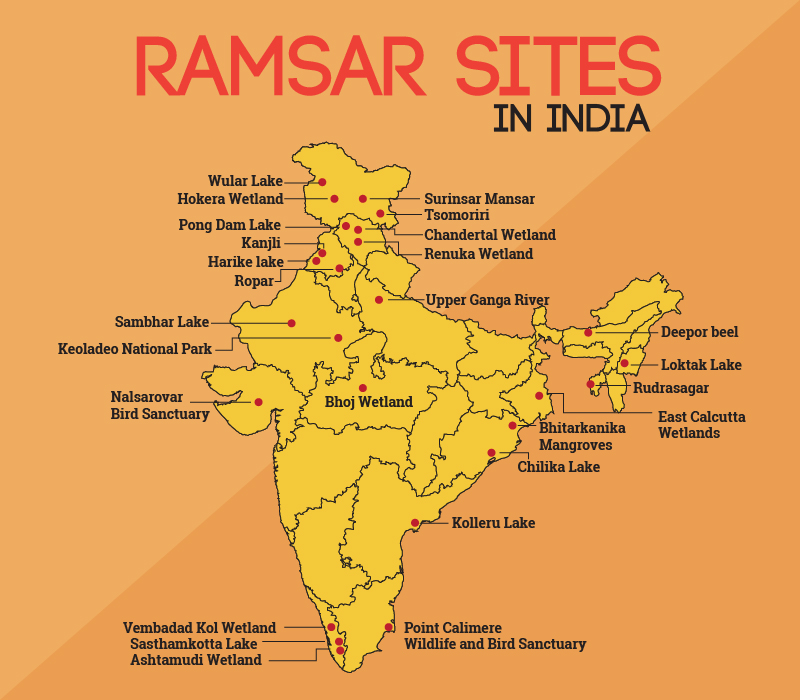
Wetlands can be defined as lands transitional between terrestrial and aquatic eco-systems where the water table is usually at or near the surface or the land is covered by shallow water.
But they are threatened by reclamation and degradation due to activities like drainage and landfill, pollution, hydrological alteration (water withdrawal and changes in inflow and outflow), over-exploitation resulting in loss of biodiversity and disruption in ecosystem services provided by them.
Similarly, despite country’s space agency ISRO had in 2011 mapped over two lakhs of wetlands across the country, the centre has, so far, notified only 115 wetlands and 63 lakes in 24 states and 2 UTs for conservation and management.








 SANDRP