Dams · DRP News Bulletin

DRP: 19 Feb 2018 (How Are We Treating Our Urban Rivers?)

In this comprehensive article Mumbai-based author Vaishnavi Chandrashekhar throws the light on the plight of Uraban Rivers. “Rivers and streams have borne the brunt of the recent urban explosion in India, a nation whose population has nearly doubled in the last 40 years to 1.35 billion. Unplanned growth has led to the use of water bodies as dumping grounds for sewage and industrial effluent. According to CPCB, 63 % of the urban sewage flowing into rivers (some 62 billion liters a day) is untreated.

In addition, riverbanks, wetlands, and floodplains have been claimed over time by infrastructure, slums, offices, and housing developments – all of which has narrowed natural river channels and distorted flow, greatly reducing the ability of India’s rivers to buffer flooding. It also has taken a toll on biodiversity. http://e360.yale.edu/features/dying-waters-india-struggles-to-clean-up-its-polluted-urban-rivers (Yale Environment 360, 15 Feb. 2018) 

Continue reading “DRP: 19 Feb 2018 (How Are We Treating Our Urban Rivers?)”
Cauvery · Inter State Water Disputes · Karnataka · Tamil Nadu

Supreme Court Judgment on Cauvery Dispute: Does it change anything?

Supreme Court of India passed the much awaited 465-page Judgment on Cauvery Water Dispute on Feb 16, 2018[i]. After the Cauvery Water Disputes Tribunal declared its award on Feb 5, 2007, a number of Appeals were filed in the SC, challenging the Tribunal Award, including those by Karnataka and Tamil Nadu. By this Judgment, the SC has partially allowed the Karnataka Appeal (Civil Appeal 2453 of 2007) and disposed off all the appeals. The Award was published in gazette only in 2013, following an earlier SC order. The SC Judgment provides additional 14.75 TMC (Thousand Million Cubic Feet) of water to Karnataka and thus reduces Tamil Nadu’s share to that extent.

Continue reading “Supreme Court Judgment on Cauvery Dispute: Does it change anything?”

Dams · DRP News Bulletin

DRP: 25 September 2017 (Three Incidents of Canals & Dam Breach In Two Days, Who Is Responsible?)

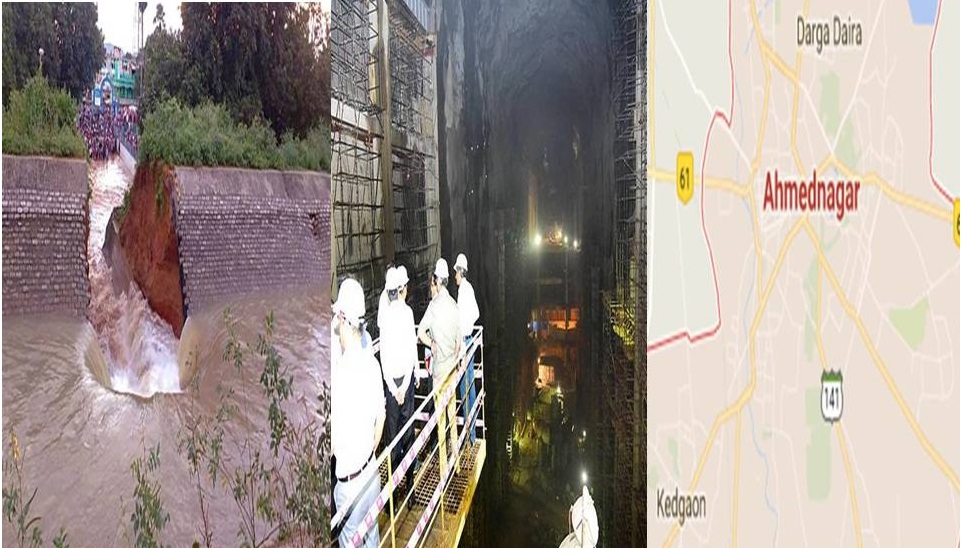
This week there have been three incidents of canals and dam breach in three States raising concern over quality of construction of dams and canals in India. 

All these incidents are a result of negligence exercised by concerned departments. These incidents also proves that the quality of construction of dams and canals in India is not as par standard. 

It is surprising that no government official or private contractor has been held responsible for these avoidable incidents. To avoid recurrence of such incidents, governments of these states bring the involved officials and persons to justice. It also strictly monitor the quality of construction to avoid wastage of public money. The safety of the public is also uncompromising and hence should not rush through the irrigation projects without proper consultation care. 

Continue reading “DRP: 25 September 2017 (Three Incidents of Canals & Dam Breach In Two Days, Who Is Responsible?)”
Dams · DRP News Bulletin

DRP: 31 July 2017 (Dams Turn Floods into Disasters, Yet We Continue to Push Big Dams)  

All through the month, several states in the country have been battling severe flood situation. The Northeastern (Arunachal Pradesh, Assam), Western (Rajasthan Gujurat), Central (Madhya Pradesh, Uttar Pradesh) and Eastern (Bihar, Odisha, West Bengal) regions have been particularly affected by floods following incessant rain.

Till July 28, 2017, 293 people have succumbed to flood related accidents. As per govt sources, the economic cost of flood damages has reached 53894.634 lakh.  http://www.ndmindia.nic.in/flood-2017/floodsJuly-2017.htm

Superficially water deluge seems a natural disaster occurring on annual basis. But a closer observation of flood monitoring mechanisms and scores of media reports reveal that most of the flood crisis is man-made and dams have been playing a bigger role in creating a disaster out of a natural phenomenon.

So far there have been more than a dozen reported incidents across country where breaching of aged or unmaintained dams have led to inundation of human habitation. On July 06, 2017 breaching of Shiv Sagar dam was such an incident causing severe floods in several villages in Mirzapur district, Uttar Pradesh. http://amritprabhat.com/mirzapur-mirzapur-floods-with-heavy-rain-dozens-of-houses-and-five-people-of-the-same-family-found-dead-body-of-two-shivsagar-dam-broke/

Similarly, there is information from reliable sources proving that the wrong operation of dams end up creating flood situation in downstream areas which were already facing heavy rains. The devastating floods in Lakhimpur Assam around July 09, 2017, were a result of release of huge amount of water from Ranganadi dam in Arunachal Pradesh. https://scroll.in/article/844509/severity-of-assam-floods-heightens-old-fears-about-dams-in-the-brahmaputra-basin

In one more similar and latest incident, untimely release of water by Damodar Valley Corporation (DVC), Jharkhand resulted in flood disaster in Birbhum, Purulia, West Medinipur and Hoogly districts. As per West Bengal Govt the DVC officials discharged the around 2 lakhs cusec of water on 25 July 2017, from many dams built on Damodar river without intimating it.  https://scroll.in/latest/845268/mamata-banerjee-blames-west-bengal-floods-on-centre-run-damodar-valley-corporation  

The third dimension in the flood tragedy is the fact that responsible authorities like Central Water Commission (CWC), concerned state department have failed to issue timely warning in so many incidences which could have otherwise been avoided or mitigated. There are also reports suggesting that there was no prior forecast and warning for ongoing floods in Gujarat and Rajasthan.

Similarly there have been dozens of incidents in different parts where flood situation has been either caused or aggravated by faulty dam operation, breach in dams and lack of timely warning by responsible authorities.

The breach in Jaitpura dam and over spilling of Jawai dam in Jalor Rajasthan has inundated several villages. http://indiatoday.intoday.in/story/jawai-dam-pali-disrict-floods-rajasthan-heavy-rains-rescue-operations-ndrf-food-material/1/1012924.html The breach in Narmada canal has led to floods in Badmer districts. http://timesofindia.indiatimes.com/city/jaipur/narmada-canal-damaged/articleshow/59762317.cms

The sudden discharge from Seepu dam on West Banas River, Dharoi dam on Sabarmati river has created severe flooding in downstream districts killing many villagers. http://indianexpress.com/article/india/aerial-survey-of-banas-river-to-be-undertaken-as-death-toll-in-gujarat-floods-touch-111-4768335/ , http://timesofindia.indiatimes.com/city/vadodara/gujarat-sabarmati-waters-flood-anand-villages/articleshow/59786379.cms  

Further, the latest Comptroller and Auditor General (CAG) latest report only goes on reinforcing all these issues. The shocking report tells us that out of 4,862 large dams, emergency action plans or disaster management plans of only 349 (seven per cent) large dams had been prepared till March 2016. http://www.newindianexpress.com/nation/2017/jul/22/huge-delay-in-completion-of-flood-control-projects-in-country-cag-1632017.html

In a similar development another CAG report has put onus on Hirakud dam officials for 2011 floods. http://www.newindianexpress.com/states/odisha/2017/jul/23/cag-puts-onus-on-hirakud-officials-for-2011-flood-1632412.html 

The CAG has also presented scathing indictment of India’s CWC’s shoddy flood forecasting system. https://www.dailypioneer.com/todays-newspaper/indias-flood-forecast-capability-a-washout-cag.html

The efficiency of flood monitoring can be judged from the fact that Irrigation Department Uttar Pradesh still relies on blade runners to convey flood information in the digital era. http://timesofindia.indiatimes.com/city/varanasi/in-e-age-runners-alert-officials-about-flash-floods/articleshow/59676066.cms

The DAM FLOOD sanction of this update is full of such reports proving that dams have turning the floods into disasters.

Continue reading “DRP: 31 July 2017 (Dams Turn Floods into Disasters, Yet We Continue to Push Big Dams)  “
Dams · DRP News Bulletin

DRP: 17 July 2017 (Northeast Continues To Experience Floods As Disaster Majorly due to Man-made Reasons) 

Since May 2017, several flood related incidents have taken place in the North East showing how our shortsightedness in understanding the rivers, how our thoughtless construction along the rivers in the name of flood control and how our careless operation of dams have converted floods into a disaster.

At the same time, there have been incidents raising suspicion over quality of construction of built and ongoing dams. Then the news of NHPC being accused of forging Gram Panchayats signs to build 520 MW Teesta IV dam is shocking revelation in itself. Contribution of such factors in worsening the floods is always underplayed. 

The countless landslides and Cyclone Mora (http://www.hindustantimes.com/india-news/cyclone-mora-reaches-northeast-many-houses-damaged-in-mizoram/story-UzcDuPOge0drAklftXW38L.html) have already left the region crippling, despite this there is no regular monitoring of flood situation and no timely warning being issued by States or Central Agencies about the rainfall and floods. All this is enough to prove that the ongoing flood devastation in North East has very much to do with the way we are destroying rivers with hydro projects, dams and embankments and disturbing the fragile environment of North East. These incidents also put question mark before govt agencies which are first pushing the destruction in the sensitive region and then lagging way behind in monitoring and issuing timely precautionary warnings.  

Continue reading “DRP: 17 July 2017 (Northeast Continues To Experience Floods As Disaster Majorly due to Man-made Reasons) “
Dams · DRP News Bulletin

DRP: 5 June 2017 (Agitation To Stop Illegal Mining in Ganga)

Today is 13th day of the Swami Shivanand fast unto death to protect Ganga River from illegal mining. The health of 70 years old Marti Sadan head is turning critical with each passing hour. If no intervention is done immediately, the Saint’s life will be in danger.  

Matri Sadan resumed its fight against rampant mining in Ganga on  May 13th, 2017 after State Government opened Ganga riverbed mining which the Ashram is strongly opposing for last many years.  

For first eleven days two disciples of the Ashram observed hunger strike. But seeing no response from Govt, Swami Shivanand himself sat on fast unto death on May 24, 2017 against indiscriminate mining of national river.  Still the Govt went ahead with Ganga mining activities stating that it was necessary to protect the city from flood. 

In response the Saint shunned even taking water. But instead of communication with the protesters, the State Govt reportedly on May 28, 2017 tried to force feed the saint to fail the agitation for which the Govt was criticized greatly.

After mounting pressure the CM of Uttarakhand is learnt requesting to stop hunger strike. Following this mining was stopped in Ganga and the saint started taking water after six days but decided to continue fast as long as Government imposes complete ban on mining in writing. 

On June 02, 2017, accusing the State Govt of blatant apathy towards Swami Shivanand’s hunger strike against illegal mining on the Ganga riverbed in the Kumbh Mela area, a group of scientists,  activists and followers have written to the PM Modi requesting the PM to intervene without delay to stop unscientific mining of the Ganga.

Continue reading “DRP: 5 June 2017 (Agitation To Stop Illegal Mining in Ganga)”
Dams · DRP News Bulletin

DRP: 22 May 2017 (SOLVE SILTATION OF GANGA OR REMOVE FARAKKA DAM TO REVIVE GANGA: BIHAR CM)

Bihar Chief Minister Nitish Kumar again has urged the central govt to remove the Farakka barrage in West Bengal and make a countrywide policy on silt management for letting river Ganga to flow freely.

“Siltation is destroying Ganga’s ecology and health. It’s due to heavy deposits of silt on the riverbed that stream of the river is being badly affected,” Kumar said at a two-day national seminar on ‘Obstacles in the Incessant Flow of the Ganga’.

Speaking on the occasion, Swami Avimukteshwara Anand criticised Union Water Resources Minister Uma Bharati for doing absolutely nothing for the cause of the river Ganga and said she seems more interested in her chair rather  than the river. He also criticised  Prime Minister Modi for claiming that he is son  of Ganga, but doing nothing positive for the river. Swami ji said Nitin Gadkari seems bent on further destroying the river in the name of National Waterway.

Addressing the seminar Nitish Kukar said that Bihar’s demand for the framing of national policy on desiltation of the Ganga and clearance of silt in the state is not a political issue, as the matter is related to larger environmental and biodiversity issues facing the people.

He added, “Concrete steps have to be taken to ensure incessant flow of the Ganga. Otherwise, cleanliness of the river is not possible.” Referring to the need to protect biodiversity, he said conservation of the Ganga dolphins is dependent on the cleanliness of its water. He added the Farakka barrage constructed across the river in West Bengal has led to slow flow of water between Buxar to Bhagalpur, and consequent annual flood and waterlogging during the monsoon.

Nitish recalled the devastating flood that the state had witnessed in the Ganga basin last year and said Bihar had spent Rs 1,058 crore over the last five years to prevent soil erosion. He appealed to the Centre to frame a sound policy on silt management, stressing that it should be prepared by making on the spot survey and assessment of the prevailing situation. Nitish said even the report of the committee headed by Madhav Chitale had accepted the problem of siltation facing the Ganga.

Continue reading “DRP: 22 May 2017 (SOLVE SILTATION OF GANGA OR REMOVE FARAKKA DAM TO REVIVE GANGA: BIHAR CM)”
Dams · Monsoon

Welcome development: River basin wise rainfall maps from IMD!

We have noticed during just concluded South West monsoon season that IMD (India Meteorological Department) has started a new and welcome feature in rainfall data reporting[i]. The Data is available in maps, on daily, weekly and seasonal basis. We are not sure when this practice started, we noticed it only during 2016 monsoon season.

This is most welcome development, since getting rainfall data at basin level is most appropriate and useful, since basin is the hydrological unit that will experience the impact of rainfall or lack of rainfall in the basin, in form of floods or droughts. It can also be very useful for flood forecasting and preparedness, among many other uses. We hope IMD will develop and refine this further.

In each map, the actual rainfall for the given period is given for each basin, as also the normal rainfall & % departure from normal. Usual colour code is used to show the basin as blue if rainfall is more than 120% of normal rainfall, green if rainfall is 81-119 %, brown if rainfall is 60-80% of normal and yellow if rainfall is below 60% of normal rainfall.

Continue reading “Welcome development: River basin wise rainfall maps from IMD!”

Inter State Water Disputes

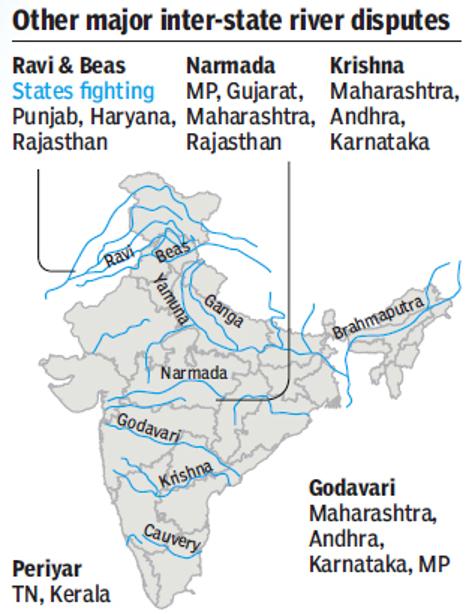
Inter state River Water Disputes in India: History and status

Water sharing disputes across the country (and even beyond) are only going to escalate with increasing demands, and also with increasing pollution & losses reducing the available water. Climate change is likely to worsen the situation as monsoon patterns change, water demands going up with increasing temperatures, glaciers melt and sea levels rise. The government’s agenda of interlinking of rivers would further complicate the matters.

The ongoing Cauvery Water Dispute [iv] has once again brought the focus on interstate river water sharing disputes in India and what has been our experience so far. There is no solution of Cauvery water dispute in sight and the engineer-dominated Cauvery Management Board that the Cauvery Water Dispute Tribunal Award has recommended is unlikely to help matters. Continue reading “Inter state River Water Disputes in India: History and status”

Dams

Celebrating our Rivers on the World Rivers Day, 2016!

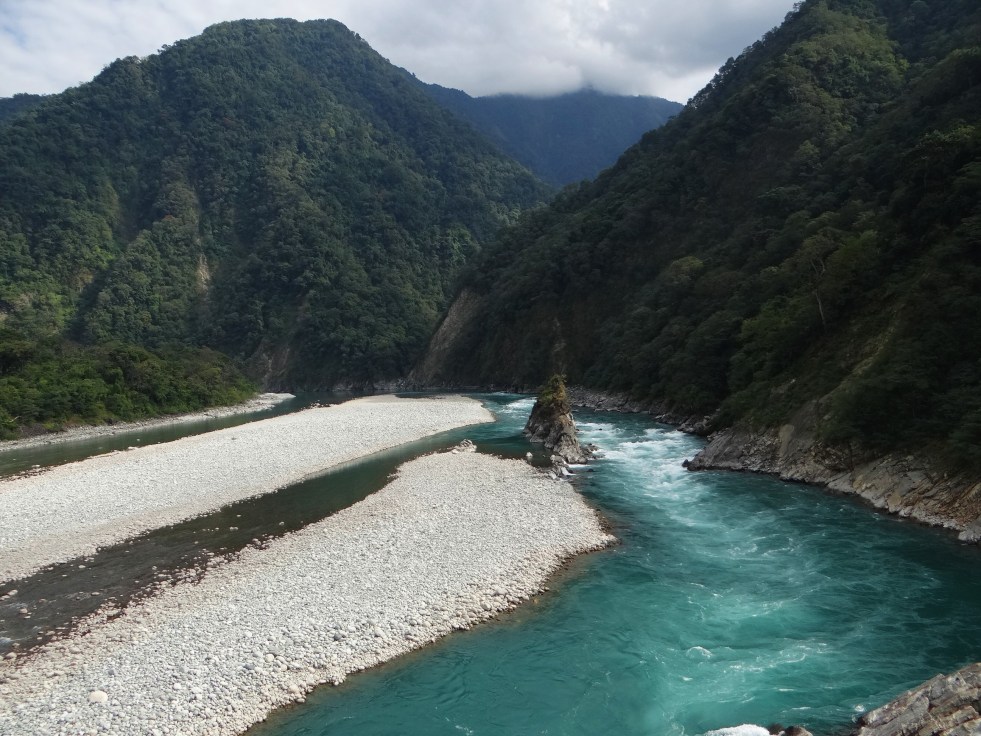
Above: Parshuram Kund on River Lohit, Arunachal Pradesh

Since 2005, last Sunday of every September is celebrated as the World Rivers Day. The tradition started in 1980s in British Columbia when some river activists came together for their rivers. Its only grown since then.

All through the year we hear about water conflicts, river pollution, degrading freshwater biodiversity, damming of living rivers, mismanagment, concretisation and encroachment on Indian Rivers. As I write this, Cauvery Water Conflict and simmering, serious discontent over the Indus Water Treaty governing 6 rivers between India and Pakistan is mounting. A simple google search on Indian Rivers throws up images of filth, pollution, droughts and floods. Lest we forget, thats not the whole picture. We are still the custodians of an amazing legacy. India still holds some of the most beautiful, healthy and life giving rivers in the world. There are people and communities nurturing their rivers and protecting them. All is not lost and this is a battle worth fighting, full of positive energy. Continue reading “Celebrating our Rivers on the World Rivers Day, 2016!”