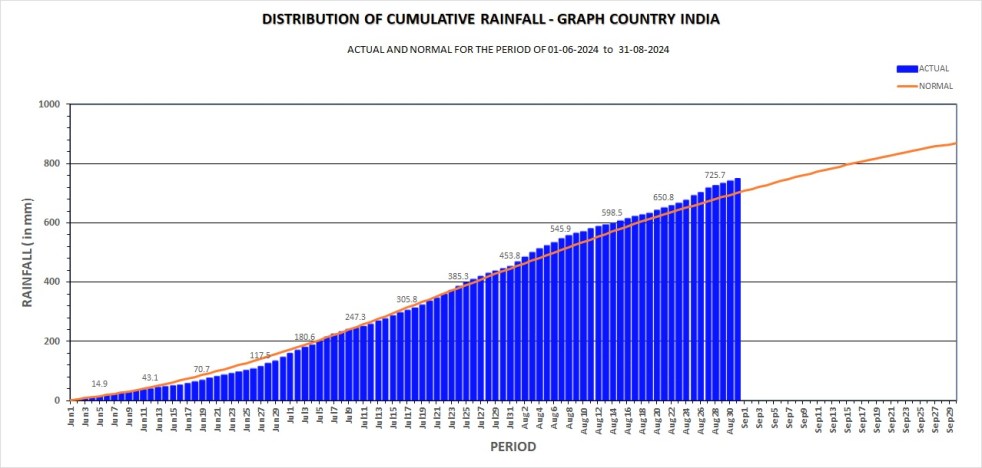
An analysis of the daily district wise rainfall data from India Meteorological Department (IMD) for the month of Aug 2024, shows that there were 717 (500 in Aug 2023; 667 in Aug 2022[i] and 431 in Aug 2021) instances when district rainfall of a day in a district was above 50 mm. Such high rainfall instances included 572 (424/ 553/ 371 in Aug 2023, Aug 2022 and Aug 2021 respectively) instances when rainfall was 50-100 mm; 113 (67/ 98/ 48 in Aug 2023, Aug 2022 and Aug 2021 respectively) instances when it was 100-150 mm; 19 (5/ 13/ 11 in Aug 2023, Aug 2022 and Aug 2021 respectively) times it was 150-200 mm; and 13 (4/ 3/ 1 in Aug 2023, Aug 2022 and Aug 2021 respectively) instance when a district day rainfall was above 200 mm.
Continue reading “High Rainfall days in India’s districts in Aug 2024 highest in last 4 years”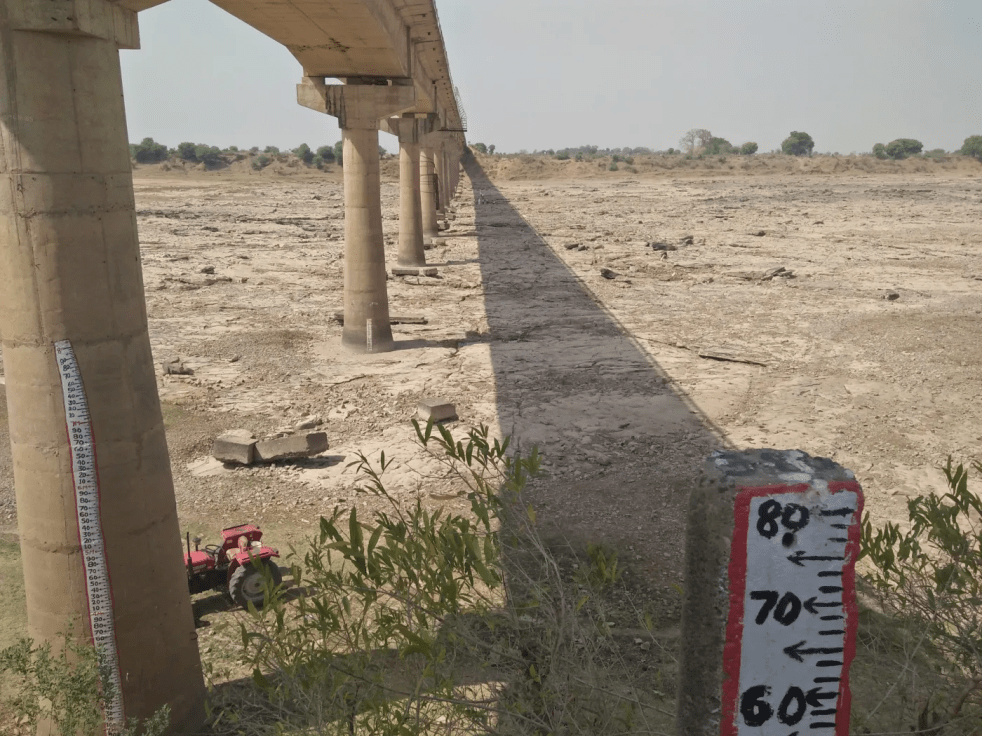
Yamuna Manthan 050924: Changing parameters of Ken-Betwa Project needs fresh appraisal?
(Feature Image: Dry Ken river beneath bridge at Pandvan in Amanganj, Panna in April 2018. Image taken during Ken river walk by SANDRP & Veditum India)
The controversial Ken-Betwa Interlinking project is undergoing several changes being proposed by central and state governments of UP and MP. Firstly, there are plans to build two new barrages at Pailani and Banda and renovate Beriyapur and Pariksha weirs and Barua Sagar dam apart from renovation of 15 dams and large ponds in Mahoba district. Then, the construction of a 21 km link channel will require 271 ha of forest land.
Similarly, the CM of MP has requested to increase irrigation capacity of Patne-Biarma Irrigation Scheme from 90,100 ha to 2,50,000 ha under the interlinking plan. On the other hand, the CM of UP has suggested inclusion of Hamirpur district in the plan.
Continue reading “Yamuna Manthan 050924: Changing parameters of Ken-Betwa Project needs fresh appraisal?”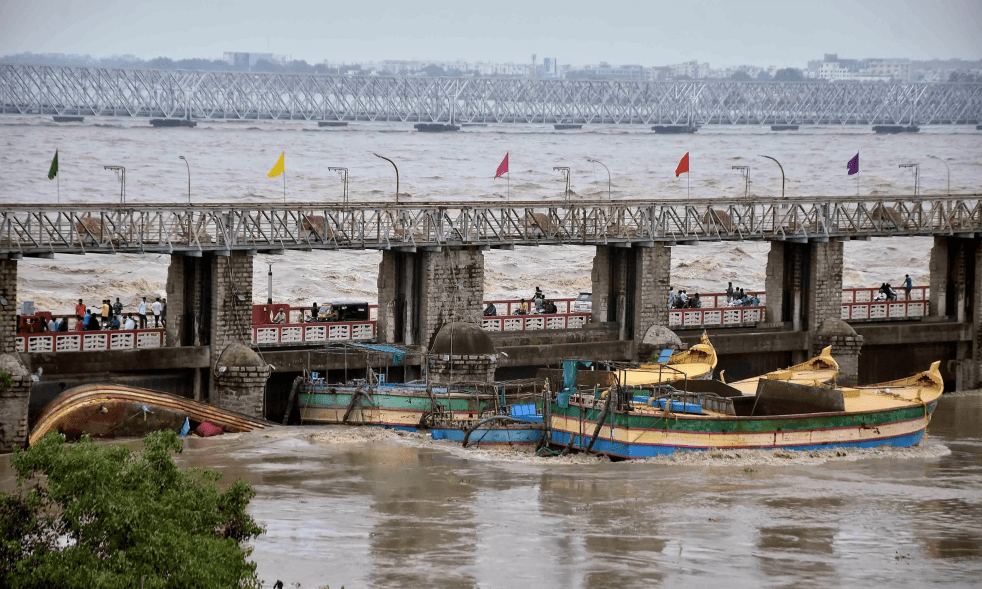
Andhra Pradesh: Prakasam Barrage Damaged by ‘Sand Boats’ Again
(Feature Image: Sand boats hit Prakasam Barrage gate no 69 while irrigation officials release 11.24 lakhs cusecs of flood water in Vijayawada on Monday (Sept. 02, 2024). Image Source: Deccan Chronicle)
Amid the unprecedented flood spell in Krishna river passing through the Prakasam barrage located in Vijaywada city of NTR district in Andhra Pradesh, an incident of ‘sand boats’ getting stuck and damaging the barrage in early morning of Sep. 2, 2024, has been reported. The number of boats varied from three to five. The incident became a cause of worry for the structural safety of the barrage.
The New Indian Express report mentioned above reported, quoting irrigation officials that all 70 gates of the barrage were lifted at 2200 hours on Sept. 2, 2024, passing 11.03 lakhs cusecs of water, highest in 70 year history of the barrage. The report stated: “Previously, the Krishna River saw historic floods from October 2 to 13, 2009, when the maximum inflow recorded at Prakasam Barrage was 11,10,404 cusecs at 11 pm on October 5.”
Continue reading “Andhra Pradesh: Prakasam Barrage Damaged by ‘Sand Boats’ Again”
June Aug 2024: District wise rainfall in India’s SW Monsoon
In the just concluded month of Aug 2024, India received just 295.2 mm (162.7 mm or 36.2% below normal in Aug 2023[i], 263.8 mm in Aug 2022, 3.5% above the normal[ii]) or 15.8% above normal rainfall of 254.9 mm as per India Meteorological department (IMD). In Aug 2021, the rainfall was 195.9 mm[iii], about 24.13% below normal and in Aug 2020, the rainfall was 327 mm[iv], or about 26.6% above normal.
Continue reading “June Aug 2024: District wise rainfall in India’s SW Monsoon”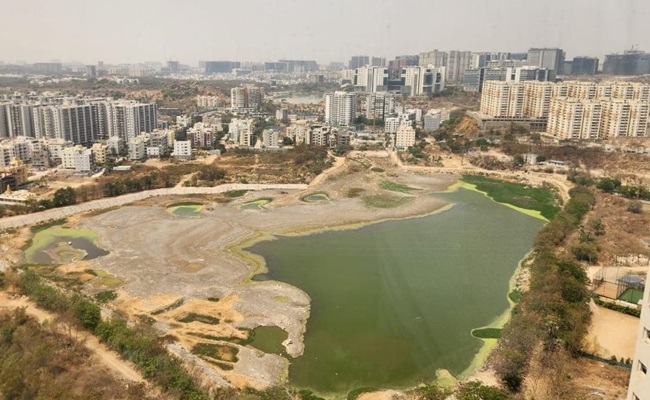
DRP 020924: HYDRA to protect water bodies in Hyderabad – a landmark move?
(Feature Image: An analysis of satellite imaging of 54 lakes taken in 1979 and 2023, secured by the HYDRAA from the NRSA shows that 40 lakes or nearly 75 per cent of lakes have shrunk by half. (Image: Twitter/DC)
The Hyderabad Disaster Response and Asset Monitoring and Protection Agency, or Hydra was established under GO 99, dated July 19 2024. A task the agency has taken up in all seriousness is protection of water bodies in the Hyderabad Capital Region (it includes 4 districts). To begin with it has started demolition of buildings illegally built inside the Full Tank Area (FTL) and Buffer area of the water bodies.
In July, Telangana Chief Minister Revanth Reddy replaced the Enforcement, Vigilance and Disaster Management (EVDM) wing of the government with Hydra, a body mandated to tackle illegal encroachment on water bodies in the Greater Hyderabad Municipal Corporation (GHMC) limits and surrounding areas. Its strength was upgraded from around 800 to 2,200 and its officials came directly under the principal secretary, municipal administration and urban development or the CM himself. “Hydra will also ensure the protection of water bodies in and around Hyderabad,” former EVDM commissioner and Hydra chief A V Ranganath said during its inception.
Continue reading “DRP 020924: HYDRA to protect water bodies in Hyderabad – a landmark move?”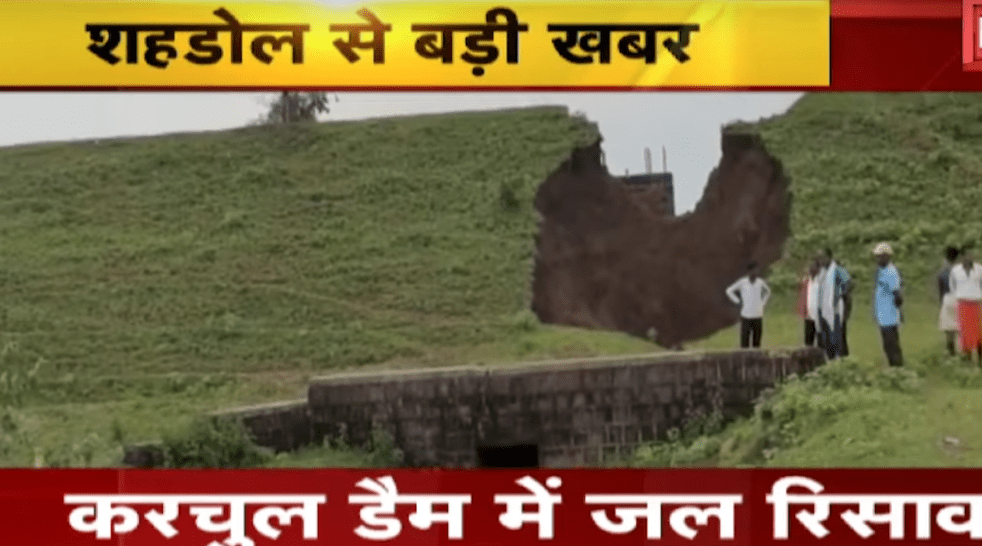
Aug 2024: Karchul Earthen Dam Breach in Shahdol-Madhya Pradesh a wake up call
On Aug 28 2024, the earthen wall of the Karchul Dam in Jetpur Tehsil of Shahdol district in Madhya Pradesh breached. A mid night operation[i] had to be conducted to shift about 52 people to safe location in a community building three km away in Bhathia. The Times of India reported: “Officials said that the erosion was severe and the rising water level posed a significant risk.” The dam was full due to recent heavy rains, and the earthen wall of the dam breached, leading to flooding in residential area and panic in the village[ii].
Continue reading “Aug 2024: Karchul Earthen Dam Breach in Shahdol-Madhya Pradesh a wake up call”
Will Sardar Sarovar AGAIN create avoidable flood disaster in Sept 2024?
India Meteorological Department (IMD) Flash Flood Bulletin (FFB) at 11.30 hours on Sept 1 2024[i] for “24 hours Outlook for Flash Flood Risk till 0530 hrs of 02-09-2024” includes large number of Narmada valley districts of MP. All this water is likely to come to Sardar Sarovar Dam as Big upstream dams like Bargi (96% full), Tawa (94%), Indira Sagar (97%) and Omkareshwar (72%) are all almost full and the soil in the Narmada basin is already almost fully saturated, all figures from the daily reservoir bulletin of Narmada Control Authority as on Aug 29 2024 (https://nca.gov.in/dailyreports.htm).
Continue reading “Will Sardar Sarovar AGAIN create avoidable flood disaster in Sept 2024?”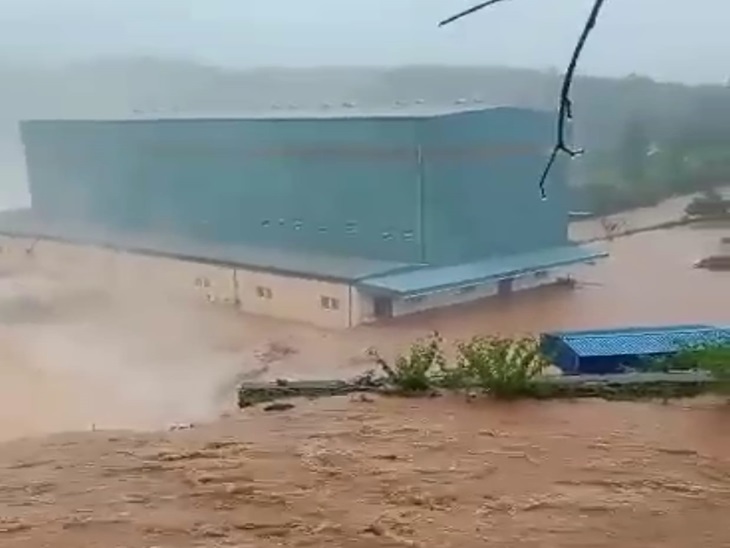
August 2024: Mismanagement Damages Mahan-III HEP In Chhattisgarh
(Feature Image: Mahan III HEP powerhouse in flooded condition due to overflowing of dam. Image Source: Dainik Bhaskar)
The powerhouse and dam of Mahan-III Hydroelectric Project (HEP) in Chhattisgarh have faced significant damages due to floods during intermittent rainfall in the catchment of Mahan river in the 1st week of Aug 2024. As per the reports, the HEP dam overflowed and breached adjoining embankments because the project authority failed to open its gates in time.
The 24.75 Mw project is developed by Venika Hydro Power Project Ltd near Chikini village under Odgi (also spelt as Oudgi & Odagi) block of Surajpur district in Chhattisgarh. Work on the Run of the River (RoR) project started around 2011, and it was commissioned in Nov 2019. The dam is about 21 meter high and about 400 meter long including 70 meter and 20 meter long earthen embankments on right and left side of the main dam respectively.
Continue reading “August 2024: Mismanagement Damages Mahan-III HEP In Chhattisgarh”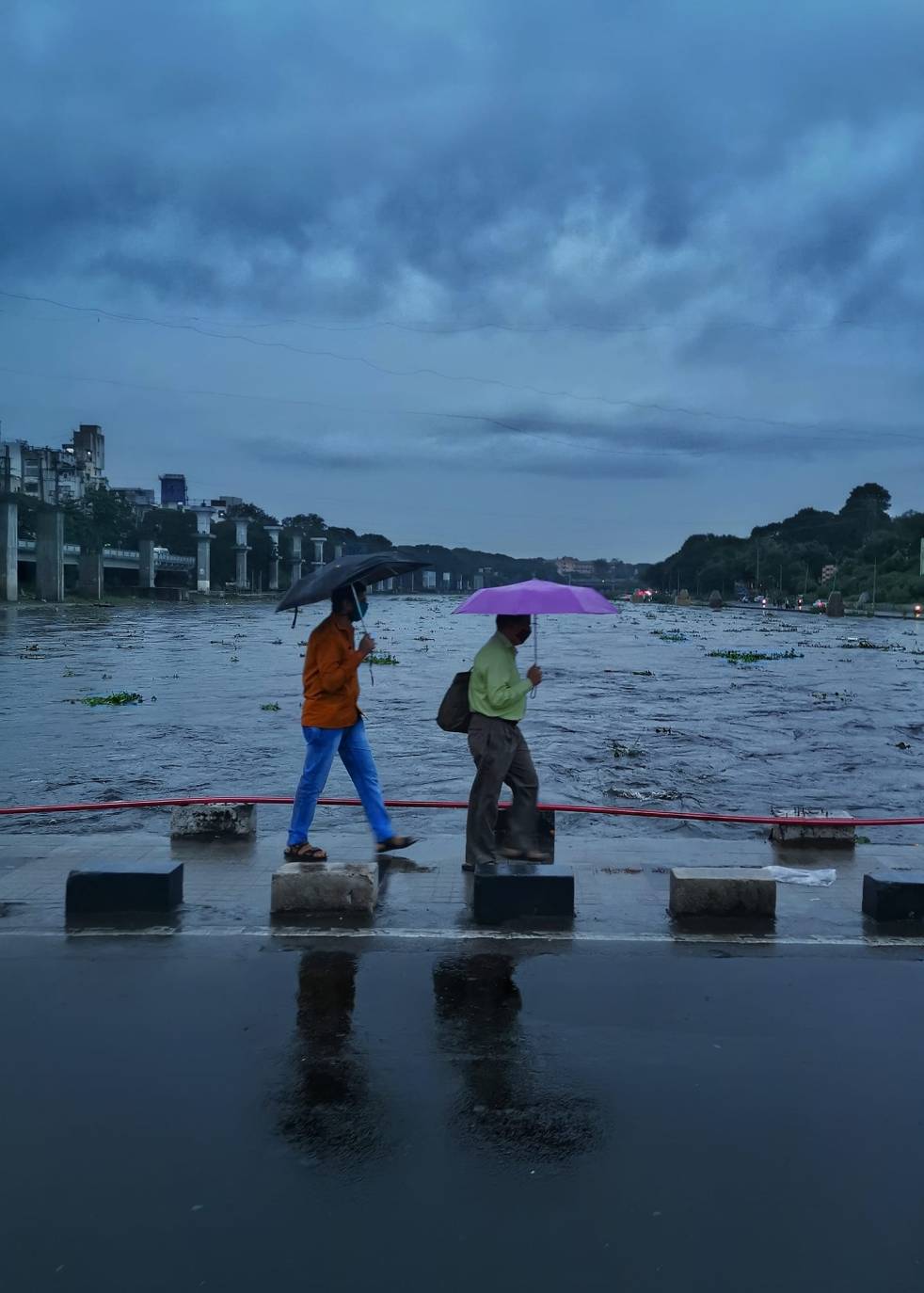
Flood Lines, Riverfront Development & Citizen Heroes: Story of Pune Floods
If a city deserved beautiful rivers only through the sheer will and efforts of its civil society, Pune would be a strong contender.
For decades Pune’s civil society has been remarkably active in protecting its rivers. Organizations like Gomukh, Parisar, Soppecom, ACWADAM, Vanrai, Jal Biradari, Ecological Society and newer, powerful people-led groups like Jeevit Nadi and Pune River Revival have put up studies, reports and protests at times. Experts, academics, musicians, poets, writers, historians, students have held the cause of Pune’s rivers high. At any given time, several public interest litigations are being fought by the weary yet hopeful groups, fueled by personal funds, time and passion.
Continue reading “Flood Lines, Riverfront Development & Citizen Heroes: Story of Pune Floods”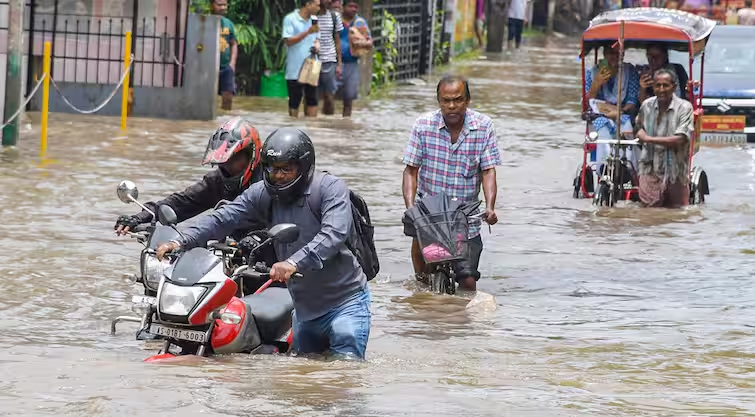
DRP N260824: Urban flooding plan welcome, Urban Water Sector needs attention
(Feature Image: Assam Floods: Commuters wade through a flooded road after incessant rains, in Guwahati, Friday, July 5, 2024. Image Source: PTI/ABP Live)
The Union Government plan to spend Rs 2517 Cr in 2 years in seven metro cities to mitigate floods is certainly welcome announcement. The key component of the plan, conservation and improving capacity of urban water bodies is noteworthy along with storm water drainage. Does it mean that the River Front Development projects that actually reduce the flood carrying capacity of the rivers will be closed, since one does not expect govt to be working at cross purposes in different schemes.
In fact, Urban Water Sector as a whole needs attention with National Urban Water Policy as a first step. This is because the groundwater aquifers that are fast being emptied out, can be least cost option for storing the excess rain water, serving the purpose of reducing storm water drainage load and also improving water conservation. There is huge scope for this in all the seven metros listed in the scheme as also in many other cities.
Continue reading “DRP N260824: Urban flooding plan welcome, Urban Water Sector needs attention” SANDRP