
This annual overview tracks the minutes of meetings held by Expert Appraisal Committee (EAC) for River Valley and Hydropower Projects between 20 December 2023 and 31 December 2024 for consideration of Dams, Hydroelectric Power (HEP), Pumped Storage Hydro Projects (PSP) and Irrigation related proposals seeking Terms of Reference (TOR) and Environment Clearance (EC) approvals. The analysis also covers various water projects related proposals considered by the Forest Appraisal Committee (FAC) between 15 December 2023 and 26 December 2024 for Forest Clearances (FC).
Continue reading “EAC & FAC Decisions on Dams, Hydro, Irrigation Projects in 2024”
2024: Siltation, Safety & Sustainability of Hydro, Dams in India
(Feature Image: Pune: Pavana, Mulshi, Panshet, and Khadakwasla Dams Release Water Due to Heavy Rain in Catchment Areas. Source: Pune Now News, Sept 2024)
This annual overview focusses on how siltation, muck dumping related issues are affecting the safety and sustainability of Hydropower projects and dams in India. Some of the key dams facing crisis in this regard include Bhakra, Ratle, Gangasagar, Hathnur among others. Some of the states where this issue is acute include HP, J&K, Maharashtra, Telangana, Kerala, Karnataka & Punjab.
Continue reading “2024: Siltation, Safety & Sustainability of Hydro, Dams in India”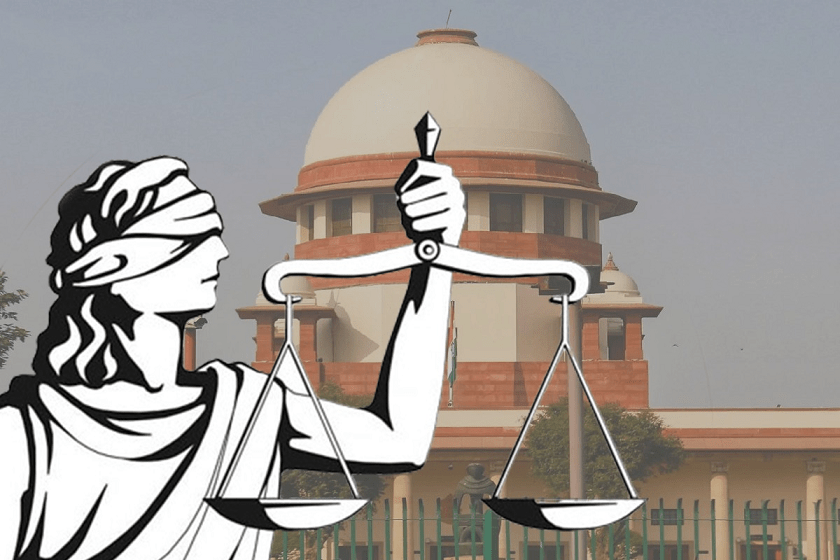
DRP 130125: Will Judiciary take these matters to logical conclusion?
There are at least four cases in this past week where the judiciary has used strong words or taken up crucial issues in water, dams, hydropower projects, wetlands and riverbed mining related issues. In the case related to the safety of Mullaperiyar dam on Kerala-TN border, the Supreme Court has prodded the Centre to wake up from the slumber to ensure that National Dam Safety Authority quickly forms a panel to examine the project. This case has wide ranging repercussions not only about this project, but also functioning of NDSA and other bodies under the Dam Safety Act 2021. Indeed, there is huge question mark as to what extent NDSA and DSA has made our dams any safer.
Continue reading “DRP 130125: Will Judiciary take these matters to logical conclusion?”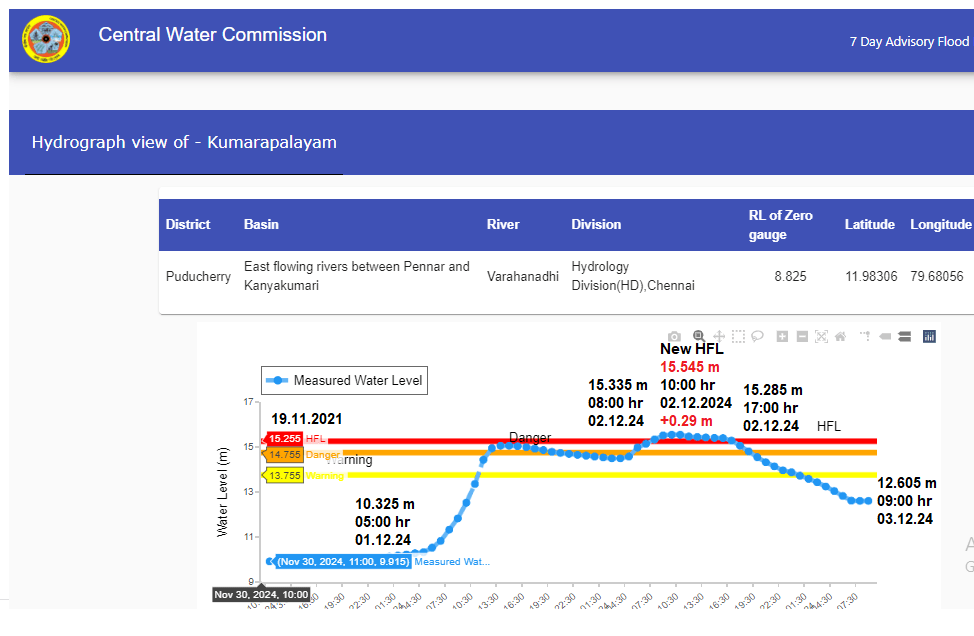
Rivers Flowing in Extreme Flood Situation during Northeast Monsoon 2024
In addition to rivers flowing in extreme flood situations at 64 flooding monitoring stations during Southwest Monsoon 2024, we have found that rivers have crossed highest flood level (HFL) at four stations during just concluded Northeast Monsoon season. Of these four stations, three are in Tamil Nadu state and one is in Union Territory of Puducherry.
Continue reading “Rivers Flowing in Extreme Flood Situation during Northeast Monsoon 2024”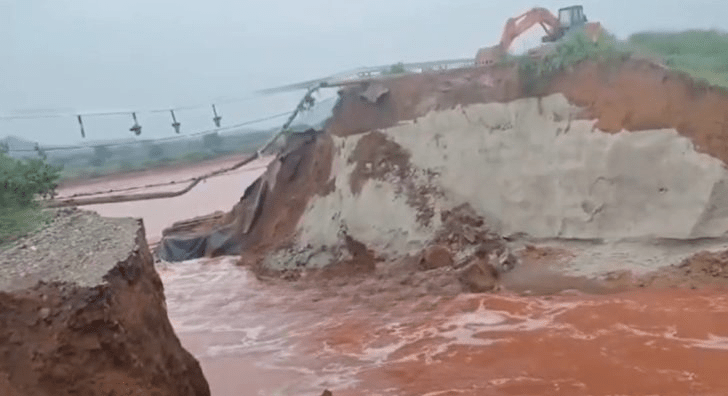
2024: Mining Dam Breach Flood Incidents in India
(Feature Image: -Vedanta’s red mud pond collapse on Sept. 15, 2024 inundates farmlands in Kalahandi. Photo: OTV)
Besides the dam induced flood events, the available media reports show two incidents of breach in industrial dams causing substantial flood damages to local people in India during 2024. The first incident took place in NMDC’s iron ore mine in Kirandul area of Dantewada district in Chhattisgarh in July 2024 in which collapse of an iron ore waste ‘check dam’ resulted in extensive flood damages in downstream areas.
The second such incident happened in September 2024 when aluminium mine waste dyke breached in Vedanta Alumina Lanjigarh facility in Kalahandi district of Odisha flooding scores of farmlands with toxic mud. Interestingly both the NMDC and Vedanta have blamed extreme rains reason behind the breach in their mine waste collection facilities while the reports indicate negligence in maintenance of these dams.
Continue reading “2024: Mining Dam Breach Flood Incidents in India”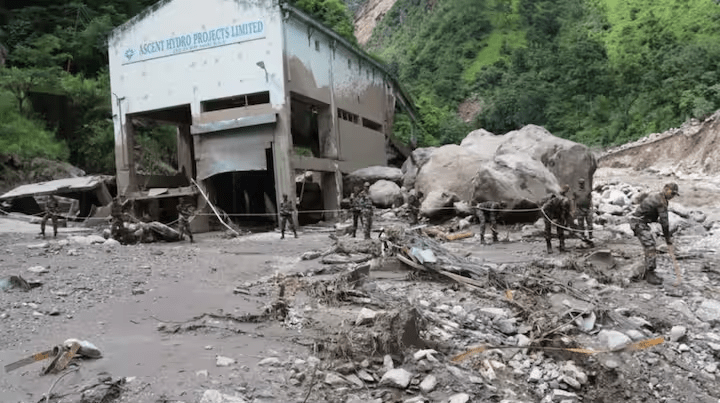
2024: Climate Change, GLOF impact on Safety of Hydro, Dams in India
(Powerhouse of a hydro project ravaged by cloudburst induced flashflood in Sutlej basin Shimla, Himachal Pradesh in Aug 2024. Image Source: Social Media)
This 2024 annual overview focusses on important reports highlighting the safety and sustainability issues of the hydro and dam projects in India in 2024 in the context of Climate Change, including Glacier melt and GLOFs. The compilation shows that the climate change driven extreme weather events have become significant threat for the structural safety of these projects.
This is even more relevant in inherently vulnerable areas like the Himalayas and Western Ghats from the point of view of seismic activity, young erosion prone mountain, flash floods, avalanches and landslides. Here the impact of climate change effects like more intensified hydrological cycles, cloud bursts, reduction in snow fall, glacier melts and GLOF (Glacier Lake Outburst Flood) increase the vulnerability including landslide dams and avalanche dams.
Continue reading “2024: Climate Change, GLOF impact on Safety of Hydro, Dams in India”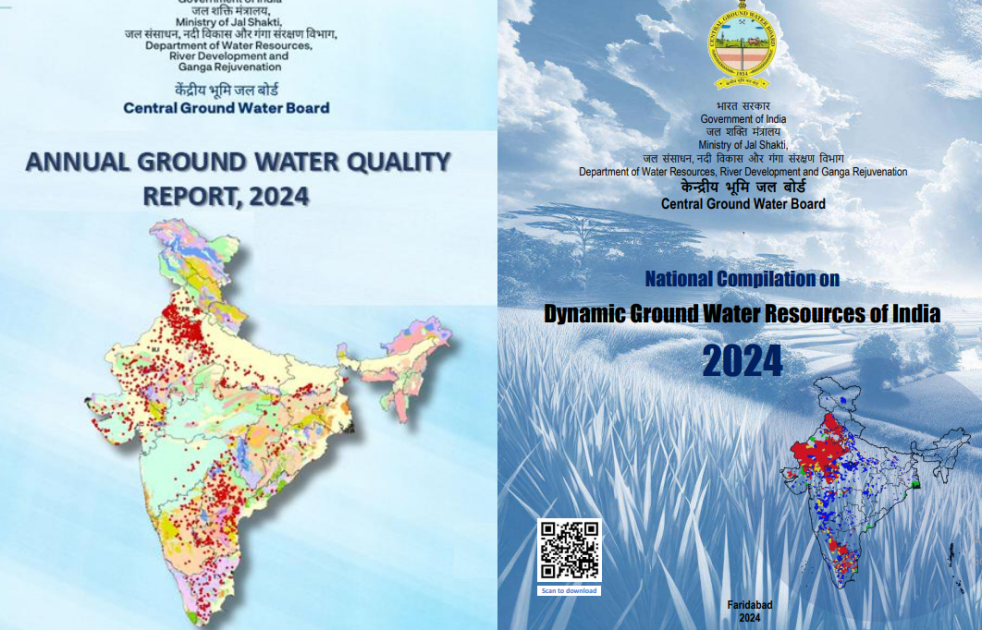
DRP 060125: Concerns about & Contradictions in CGWB’s Reports
The Central Ground Water Board (CGWB) released two important reports last week. While the Annual Ground Water Quality Report 2024 reveals rise in nitrate fluoride, arsenic and uranium contimination of groundwater resource in India, the Dynamic Groundwater Resource Assessment Report 2024 claims substantial rise in annual groundwater recharge and decline in extraction of the resource.
As per the first report, the number of districts affected by high nitrate levels in groundwater has gone up to 440 (near 56% of all 779 districts in country) from 359 found in 2017 assessment which means in 7 years 81 more districts have been found having excessive nitrate levels in groundwater. This should concern us from a number of points of view.
Continue reading “DRP 060125: Concerns about & Contradictions in CGWB’s Reports”
2024: Has NDSA made our dams any safer?
(Feature Image: Srisailam dam in Telangana. Source: Telangana Today)
This annual overview focusses on the functioning of National Dam Safety Authority (NDSA) and related institutions in 2024 to understand if the functioning of these institutions have made Indian Dams any safer? Here functioning of Central Water Commission (CWC) is also important as CWC people head all the dam safety panels. The dam safety related institutions were formed following the passage of Dam Safety Act 2021 and hence there were promises and hopes that these institutions will make our dams safer.
Continue reading “2024: Has NDSA made our dams any safer?”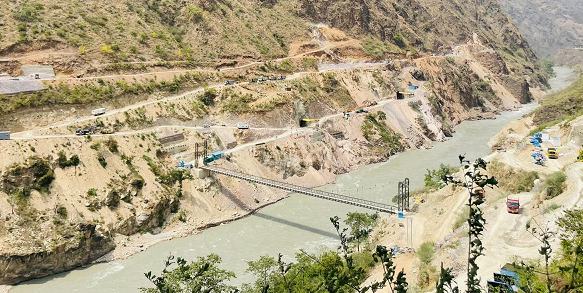
2024: Corruption in Hydro, Dams in India
(Feature Image: Construction site of 382 Mw Sunni Hydro project on Sutlej river in Himachal Pradesh. Source: Social Media)
This annual overview focusses on important reports highlighting the corruption issues related to the hydro and dam projects in India in 2024. The electoral bond case has revealed the deep nexus among political parties, contractors and financers as dominant force working behind the projects overlooking the evident disaster risks and undermining the democratic process. As a result, the people, rivers and environment are made to bear the burden and burnt.
The part 1 of the yearend roundup has documented the accidents and disasters related to dam and HEP projects in India in 2024. The part 2 focuses on community resistance against hydro projects in Himalayan states. The part 3 covers the struggle of dam projects affected people. The part 4 highlights growing concerns against pump storage projects.
Continue reading “2024: Corruption in Hydro, Dams in India”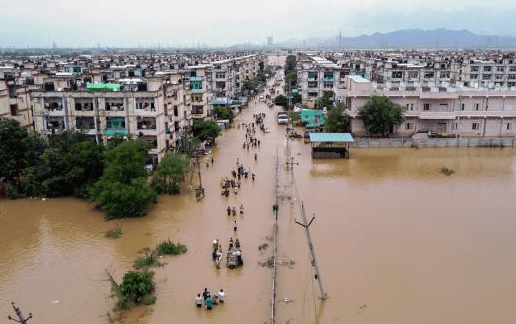
2024: Dam Induced Floods in Urban India
(Feature Image: A drone visual of the flood-affected areas of Vijayawada city on Sept. 6, 2024. Credit: ANI Photo/Source: Rediff.com)
Having covered dam induced flood incidents and embankment breach flooding events in part 1 and part 2, this third part on annual overview compiles media reports on manmade Urban flood disasters in India during the year 2024. While the cities of Pune, Nasik, Nagpur, Vadodara and Bharuch were affected by dam induced floods, the high discharges from Prakasam barrage and multiple breaches in Budameru river deluged the Vijayawada city. Interestingly, these urban flood episodes coincided with heavy rainfall events giving a reality check to dam and city managers.
In addition to failure in dam management, the deluge in Pune, Vadodara and Vijayawada city were particularly worsened by river front development projects and encroachment on river floodplains putting question marks on the urban planning and development works in these cities. Similarly, the breach in embankment of Munak canal in Delhi flooded several homes Bawana area during the monsoon season.
Continue reading “2024: Dam Induced Floods in Urban India” SANDRP