Bhakra Dams · Dam floods · Indus

Are we ready to use more water from snow melt in Indus basin this year?

Union Water Resources Minister Shri Gajendra Singh Shekhawat has recently said that the snow this year on Himalayan peaks is the highest in 50 years, and reservoirs like Bhakra, Pong, Ranjit Sagar, Ramganga, Tehri, etc will receive very high water inflow from snowmelt during summer and SW Monsoon.[i] This is in fact the third warning this year on this issue. Earlier on Feb 27, 2020 and then again on May 4, 2020, the Bhakra Beas Management Board (BBMB) provided the same warning to its partner states. However, neither the Union Minister & BBMB, nor the partner states seem ready or doing anything to prepare for the unprecedented situation that the dams and rivers may bring in ongoing summer and coming SW monsoon.

In fact the situation is similar to the one that happened twice at Bhakra-Pong-Ranjit Sagar Dams last year[ii]. Even then not only there were massive floods, but the water flowed away to Pakistan, totally against the declared pronouncements and policy of Indian Government leaders including the Prime Minister. Continue reading “Are we ready to use more water from snow melt in Indus basin this year?”
Dams · DRP News Bulletin

DRP: 04 May 2020: Wildlife Institute of India doing quid pro quo with hydro developers?

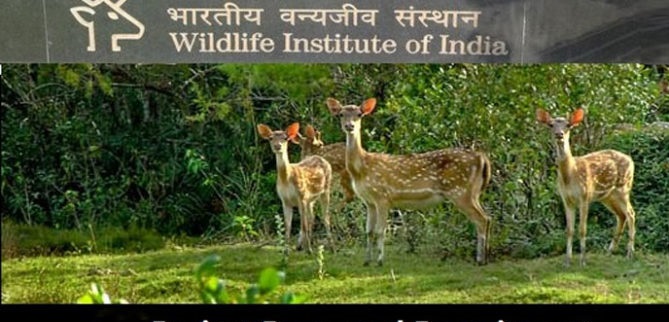
WII skips multi-seasonal study on Etalin, cheats its way to compile a conservation plan; MoEFCC and FAC ignore all FANTASTIC REPORT The Wildlife Institute of India (WII) spent only four months on field while compiling a multi-seasonal replicate study on the Jindals’ 3097 mw Etalin Hydro Electric Power Company Ltd (EHEPCL) in Dibang Valley in Arunachal, and it relied on earlier studies conducted in the region. The forest advisory committee (FAC) of the union ministry of environment, forests & climate change (MoEFCC) and the ministry itself did not bother to ask any questions as to how the study was compiled, even though one of its own reports states that four months’ study was carried out. Instead, the FAC formed a subcommittee to look into the “concerns related to tree enumeration process and the aspects highlighted in biodiversity assessments study by WII.” The wildlife study done by the WII is accepted in toto by the subcommittee, the subcommittee report says. The subcommittee included a member of the WII who was part of the team that cheated its way to compile a questionable report on Etalin.  https://arunachaltimes.in/index.php/2020/05/03/wii-skips-multi-seasonal-study-on-etalin-cheats-its-way-to-compile-a-conservation-plan-moefcc-and-fac-ignore-all/  (03 May 2020)

Continue reading “DRP: 04 May 2020: Wildlife Institute of India doing quid pro quo with hydro developers?”
Dams · Sand Mining

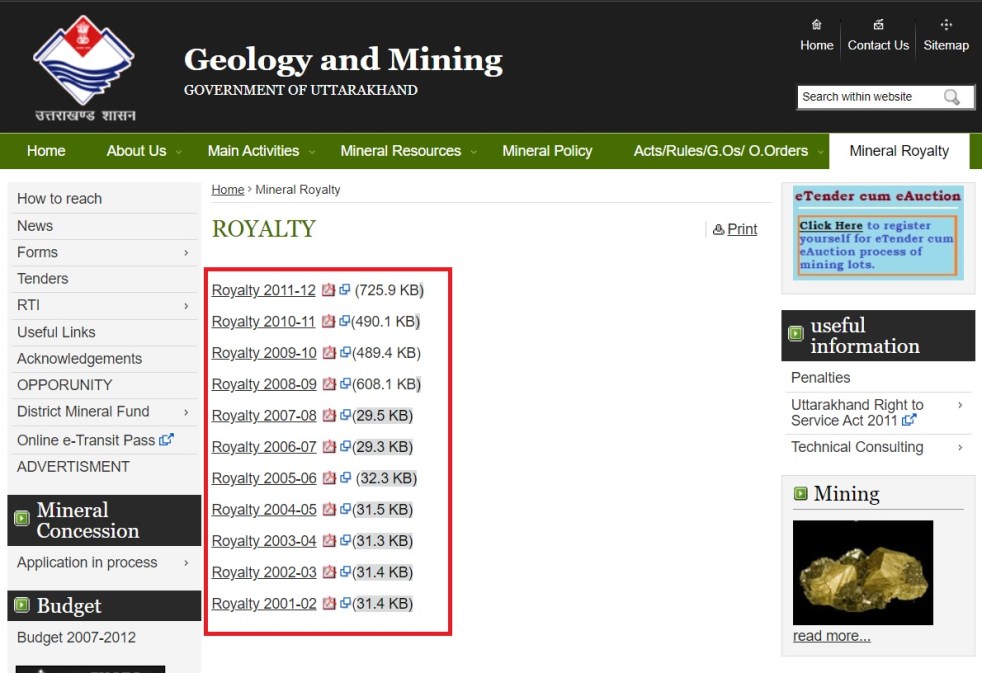
Uttarakhand Riverbed Mining 2020: Rivers, People, Revenue Robbed

The hilly state of Uttarakhand also known as land of rivers has seen increase in riverbed quarrying operations over past decade. With establishment of stone crushers industry, scale and intensity of riverbed minerals (RBM) excavation has further increased in past few years. So has become the impact on villagers and rivers.

However, the government lacks monitoring, transparency, accountability in checking the unscientific, unauthorized RBM as is evident from a review of Uttarakhand Mining and Geology Department (M&G) website and media reports. In fact the state government has neither conducted replenishment study nor formed District Mineral Foundation (DMF), suggesting that it is hand in gloves in organized loot of RBMs. 

Continue reading “Uttarakhand Riverbed Mining 2020: Rivers, People, Revenue Robbed”

Dam Safety · Disasters

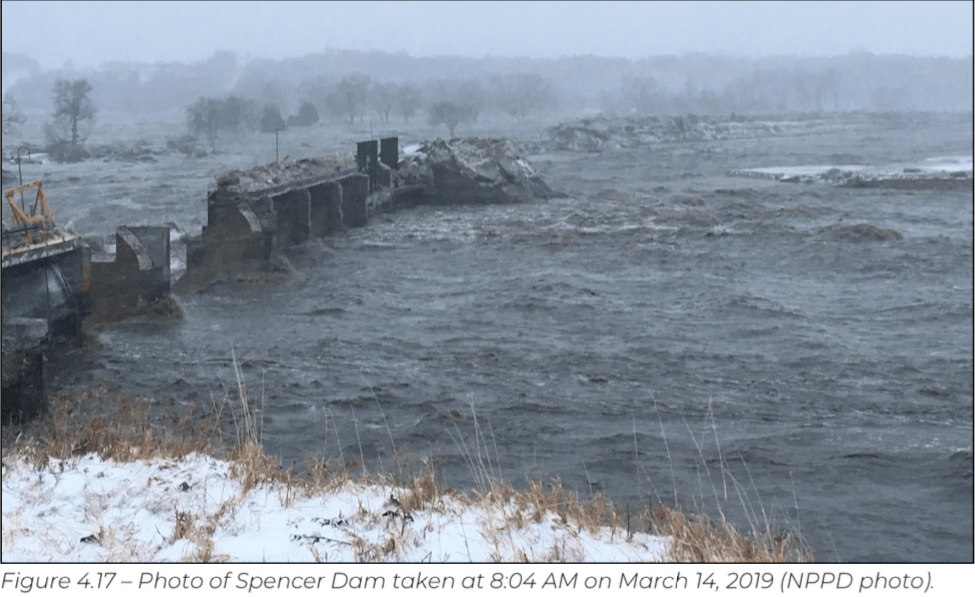
A tale of two dam breaches: Spencer (USA) and Tiware (India)

On March 14, 2019 the Spencer dam on Niobrara river, located south of Spencer in Nebraska state in USA breached, killing four people in the downstream. The Investigation Report about the disaster has been made public now on April 24, 2020. The remains of Spencer Dam — a skeleton of concrete and steel amid a sea of sand — became one of the iconic images of the March 2019 “bomb cyclone” flood that caused billions of dollars in damage across Nebraska.

Less than four months later, on July 2, 2019, Tiware dam breached[i] in Chiplun taluka of Ratnagiri district of Maharashtra, killing 23 people. The then Maharashtra Chief Minister Devendra Fadnavis on July 6, 2019 announced a Special Investigation Team (SIT) to probe into the disaster, the SIT was to submit a report in two months, but the report was submitted in January 2020, but the report is not in public domain. When SANDRP talked with the chairman of the committee, he disclosed that the report has been submitted to the department in early Feb 2020 and it can only be made public by the department once they accept the report. He revealed that the SIT had found that there were issues with material of construction (masonry in place of Concrete) and design of the conduit of the dam. He agreed that the report should be made public promptly, but expressed his helplessness in face of the norms in India. SANDRP also called Secretary, Department of Water Conservation, Govt of Maharashtra, but got no response.

There is a lot to learn for us in India in comparing the two dam breach incidents and how both are treated.

Continue reading “A tale of two dam breaches: Spencer (USA) and Tiware (India)”

Dams · DRP News Bulletin

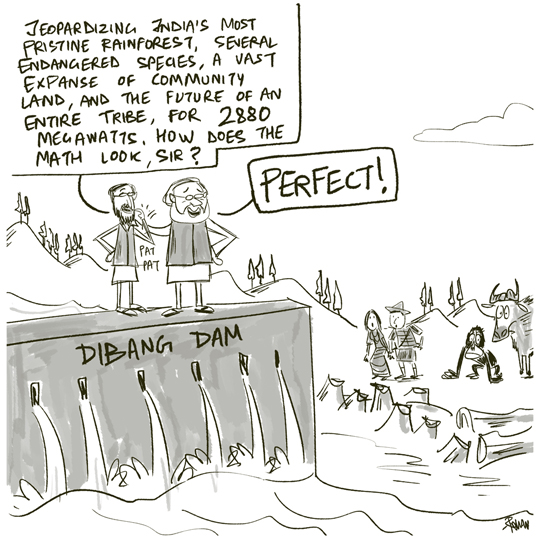
DRP: 27 April 2020: For whom is this unviable Etalin project being pushed?

In the ongoing debate on forest clearance for the controversial Etalin Hydropower project in Dibang Valley in Arunachal Pradesh between the Forest Advisory Committee, The Hindustan Times’s consistent reporting and Sanctuary magazine launching a campaign along with others, one (of the many) key question that remains unanswered is: for whom this economically (in addition to socially, environmentally and from climate change perspective) unviable, massively expensive project being pushed in a power surplus country?

Electricity from hydropower projects is no longer economically viable, since cheaper options are available. Some misguided people are claiming virtue in hydropower project claiming it provides peaking power. The fact is India is today not only power surplus, the peak power deficit has been just around 1% or less for long time. This when there is no attempt to either monitor as to how much of the electricity produced from existing hydropower projects provides peaking power, nor is there any attempt to achieve optimisation of operation of existing hydro projects to produce maximum possible hydropower. Nor is there any attempt to even manage the peaks either through pricing or other policy measures. In such a situation there is clearly no justification for more hydro for peaking. Moreover, the storage option is becoming increasingly cost effective, reducing the peaking power needs. So then for whom this project whose cost won’t be less than Rs 30000 crores at most conservative estimates, being pushed? The contractors, the equipment suppliers, the hydro lobby, the consultants, the timber lobby, the dam lobby, or the kickbacks?

Continue reading “DRP: 27 April 2020: For whom is this unviable Etalin project being pushed?”
Dams · Sand Mining

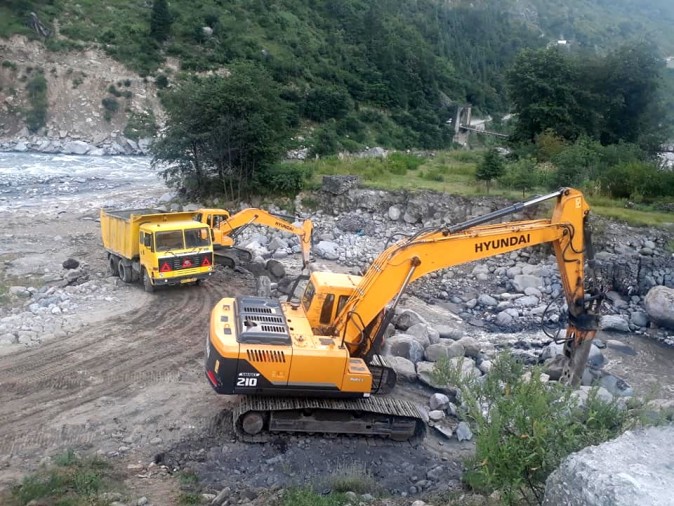
Himachal Pradesh sand mining 2020: No Replenishment study, district foundation

Himachal Pradesh is a hilly state where large scale, mechanized mining of riverbed minerals has been going on for past many years. The damaging impacts on rivers, streams and dependent communities are evident and on the rise. However the state government has failed to bring any change in the scenario as can be seen in this overview covering the related developments during 2019-20.

Continue reading “Himachal Pradesh sand mining 2020: No Replenishment study, district foundation”

Climate Change · Ministry of Environment and Forests

Earth Day 2020: Can we sustain the Collateral Benefits of Covid Lockdown?

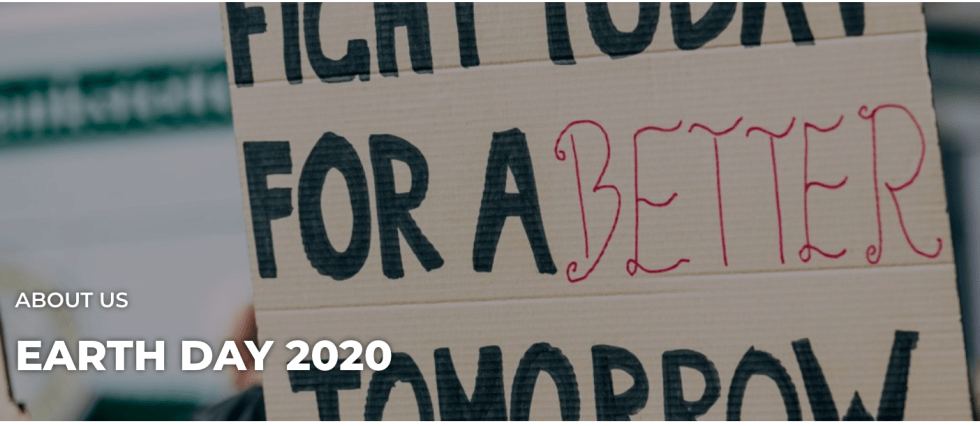
Clearer rivers[i], cleaner air, more birds and wildlife around us, reduced emissions of global warming gases, rock bottom demand of fossil fuels, quieter surroundings, view of Himalayan mountains from Jalandhar and other places, more flamingoes in Mumbai, reduced road accidents, to name a few. Can we call them collateral Benefits of Covid-19 induced lockdown? It’s true that with the kind of unprecedented sickness, misery and impacts that Covid-19 has brought, with all the attendant Hardships to the poor, the death and the sickness of thousands, it’s difficult to talk about any benefits of this episode. But on this 50th anniversary of Earth Day 2020 on April 22, a lot of people are talking about healing of the earth. (The above photo is a screenshot from official Earth Day 2020 website.)

And there is little doubt that this indirect fall out of man made Covid-19 crisis, this healing of the earth was long overdue. It has in fact brought people closer to the nature. Naturally, question arises, how can we sustain these collateral benefits of this crisis? It will of course demand a lot of doing by each of the earth resident to make it possible to sustain these benefits. Continue reading “Earth Day 2020: Can we sustain the Collateral Benefits of Covid Lockdown?”

Bihar · Rivers

Bringing Life back to Champa River

Guest Blog by Dr. Ruchi Shree (TMBU, Bhagalpur)

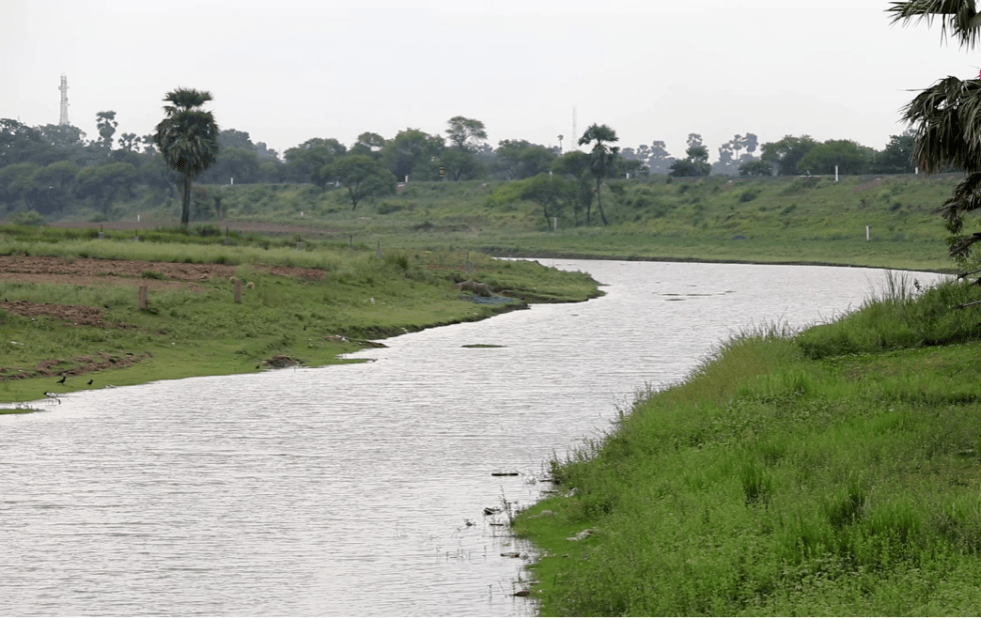
Is it merely a coincidence that I am writing this last segment of my three-part writing on Champa river when due to ongoing lockdown amid unprecedented COVID-19 pandemic, the rivers not only all over India but worldwide are said to have become cleaner. Many scholars and environmentalists are calling it a ‘boon in disguise’ and asking us to take it as an opportunity to re-engage with human being’s relationship with the surrounding nature. To quickly recap what I have already said in my previous writings that rivers are more than merely water-bodies and each river has not one but many stories around it. These stories are about how did they come into existence to what are their specific features and many more. (Photo above: Live History)

Continue reading “Bringing Life back to Champa River”

Dams · DRP News Bulletin

DRP: 20 April 2020: Solutions to Covid 19 & Climate change are same?

This proposition clearly sounds simplistic and seems devoid of science or logic. But the case studies of the epidemics since 1980 and loss of forests, biodiversity and sustainability shows that this is not to be dismissed that easily. In fact the following interview with Dr Aaron Bernstein makes a powerful case to show why this indeed has a lot of science and logic behind it. It also hence makes a case that yesterday (our “normal”), is no longer a good model for better tomorrow.

Continue reading “DRP: 20 April 2020: Solutions to Covid 19 & Climate change are same?”
Indian Meteorological Department · Monsoon

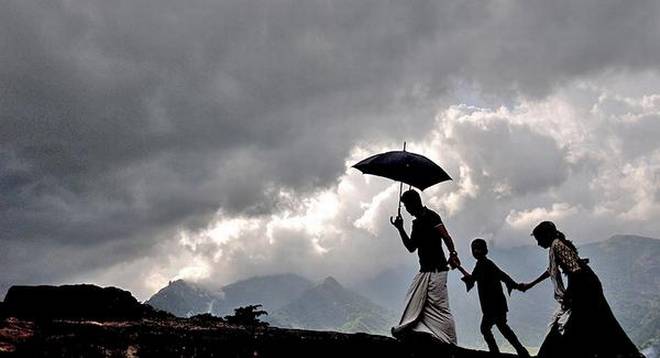
IMD’s 1st Long Range forecast for SW monsoon 2020

IMD’s 1st Long Range Forecast for SW Monsoon 2020 on Apr 15, 2020[i] says:

– Rainfall will be normal (100% of LPA: Long Period Average of 88 cm). IMD says Neutral El Nino Southern Oscillation prevails in Pacific Ocean and Neutral Indian Ocean Dipole conditions prevail in Indian Ocean, likely to remain throughout the monsoon as per most models, some indicate weak La Nina conditions in Pacific Ocean in second half of monsoon.

– FORECAST BASED ON MONSOON MISSION COUPLED FORECASTING MODEL There is high probability (70%) of monsoon rainfall being above average to excess (over 104% of normal)

– FORECAST BASED ON OPERATIONAL STATISTICAL ENSEMBLE FORECASTING SYSTEM: 9% probability of Deficient monsoon (Over 10% below normal); 20% probability of below normal (90-96% of normal) rainfall; 41% probability of normal monsoon (96-104% of normal rains); 21% probability of above normal (104-110% of LPA rains) and 9% probability of excess (over 110% of normal) rains.

Continue reading “IMD’s 1st Long Range forecast for SW monsoon 2020”