Western Ghats

Prof. Madhav Gadgil says Empower the panchayats to protect environment

“At the ground level people are really interested and they want to get involved and our report if nothing else, seem to have serve the purpose of triggering such kind of an interest” said Prof. Madhav Gadgil who delivered a lecture on “Democracy and ecology in contemporary India” at the Nehru Memorial Museum and Library (NMML) on 17th July 2013. His lecture was part of the public lecture series on ‘Science Society and Nature’ and the event was attended by more than 400 people, the second highest audience NMML has witnessed for public lecture as Director Mahesh Rangarajan revealed at the end of the lecture. The lecture was chaired by Jairam Ramesh, the former Minister of Environment and Forests and currently the minister for Rural Development and also in charge of Ministry of Drinking Water and Sanitation.

Prof. Gadgil in his lecture presented several case studies through which he showed how in the name of ‘development’ only lip service has been paid to the environmental norms and all democratic processes have been sidelined. Dr. Gadgil also shared his experiences of working for the Western Ghats Ecology Expert Panel (the report submitted by this panel can be accessed here – http://moef.nic.in/downloads/public-information/wg-23052012.pdf) which was formed by the Ministry of Environment and Forests (MoEF) to study the ecological and environmental concerns of the Western Ghats under his aegis.

Talking about iron mining in Goa, Prof Gadgil said the government of Goa even does not have any account of how much ore has been extracted by the mining contractors, leaving aside environmental concerns. Bringing the issue of unprecedented dam construction in Western Ghats, he gave the example of Athirappilly dam in ChalakudyRiver in Kerela which was the eight dam proposed in the river. There was a clear violation of Forest Rights Act, as construction of this dam would lead to displacement and subsequent extinction of the ‘primitive tribal’ community named Kadar. The government officials were claiming that if this dam was not constructed Kerela would starve for electricity. But a detailed presentation by RiverResearchCenter, Kerela covering technical, economic and social aspects of the proposed dam showed this dam was not viable as there would be not be sufficient water left in the river for this dam as the water would already be harnessed in the seven upstream dams. The government officials, who were claiming that Kerela would go power hungry, had no reply to this.

Presenting the case of Plachimada village in Perumatti Panchayat in Palakkad district of same state, he said that Coca Cola Company had not paid any compensation that it was supposed to pay to the farmers of Plachimada as ordered by the Supreme Court. Coca Cola was also supposed to pay a tax of Rs 60 cores to the government of Kerela but the government had surprisingly given tax exemption of Rs 6 crores to the company. In both these examples he showed how the acts of democratically elected government were actually against people and environment. But he hailed the Plachimada struggle against Coca Cola as a ray of hope since this was a struggle led by a Panchayat, a local level democratic institution which brought a multi-national company to its knees. He also pointed out how law and order mechanism of state had been used to suppress people’s protests against illegal pollution in Lotte, in Ratnagiri district of Maharashtra.

Throughout his lecture Dr. Gadgil strongly argued for decentralization of power in order to protect ecology and environment. He mentioned about the powers given in the hands of the local bodies through the 73rd and 74th amendment of the constitution of India. He said that there are several laws and policies e.g. Bio-logical Diversity Act (2002), National Gene Funds which talked about participation of citizens in the decision making but this was never implemented on the ground. He said that the Environmental Impact Assessment (EIA) documents and the whole environmental clearance process should be reconsidered and reviewed (a press release on the functioning of Expert Appraisal Committee which grants environment clearance termed the committee as Expert Approval Committee  – https://sandrp.wordpress.com/2013/02/05/analysis-of-moefs-eac-on-river-valley-projects-the-expert-approval-committee-has-zero-rejection-in-six-years/).

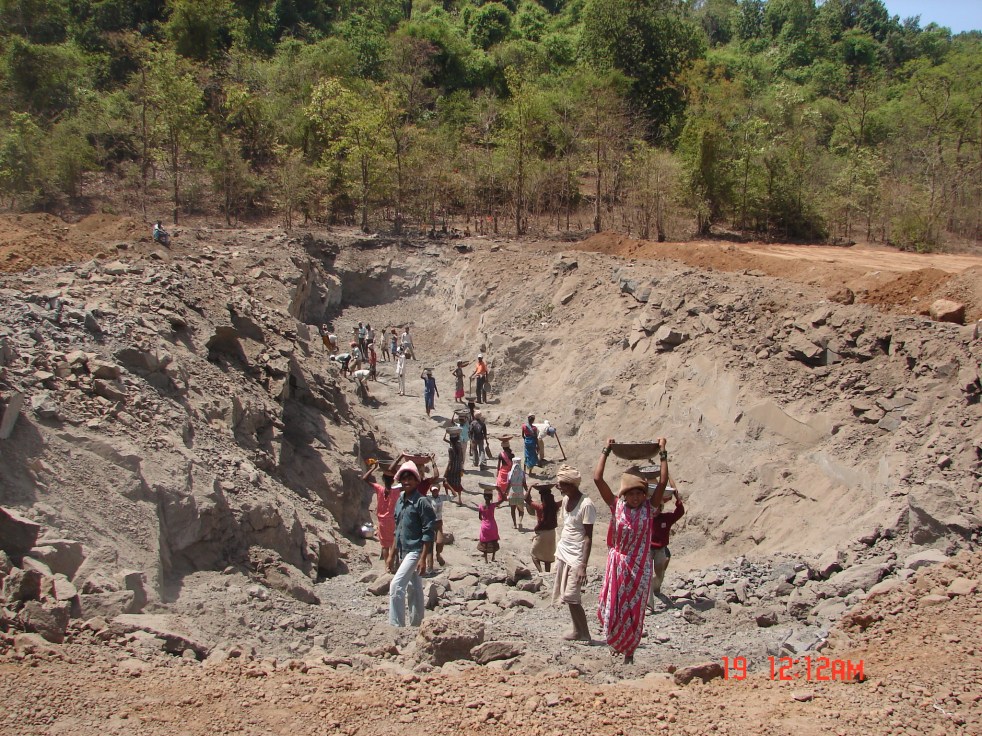
Taking the case of mining in Goa, he said that his team of the Ecology Expert Panel reviewed EIA documents of 75 mines and found that all the mines had made fraudulent statements about how the mines would impact the rivers and rivulets. There were EIA documents of these mines which even denied the existence of perennial streams in the hill plateau where these mines existed. In one case when he wrote to one of the mine managers about the existence of a famous stream near that mine, but the reply was that since there were no blue lines in the geological map of Goa, there are no streams.

He stressed on the need to engage local people in the decision making process and increase dissemination of information. He took the example of ‘Australian River Watch’ programme where the citizens are trained to monitor the health of a river just by looking at the bio-logical indicators. He opined that India should take lessons from this and should initiate such programmes. He said that in our democracy we have many possibilities of engaging in decision making. He ended his speech by saying that for India to progress, India should take bottom up approach and strengthen its democracy, rule of law, scientific temperament and traditional ecological knowledge.


Q&A session brought out more issues – The question-answer session which followed the lecture also brought several important issues in to the foray. Answering a question about how much scientific peoples’ knowledge is, he said that one must understand that peoples’ knowledge is historical and locality specific and traditional. So the people of a certain locality would know better about the ecology and environment of a specific place rather than experts or engineers. Here again he emphasized on the need to include of common people in the decision making process.    

Answering a question about the climate change impacts in the Western Ghats, he said that there are no immediately visible impacts of climate change in Western Ghats. But he said that Himalayan range already had visible impacts of climate change in the form of glacier melting and increased precipitation. But he warned that Western Ghats will surely have climate change impacts in the future.

When asked about his opinion on the future of Western Ghats if the diluted version of his report, i.e. Report of the High Level Working Group headed by Dr Kasturirangan (A blog that compares Kasturirangan and Gadgil Panel report can be found here – https://sandrp.wordpress.com/2013/04/24/how-much-does-the-kasturirangan-committee-understand-about-water-issues-in-western-ghats/) gets accepted by the government, Dr. Gadgil laughingly said that he knew that his report would not be accepted but he was sure that Kasturirangan’s report would also not  be implemented (A letter by Prof Gadgil on Kasturirangan committee can be found here: https://sandrp.wordpress.com/2013/05/18/prof-madhav-gadgil-writes-to-dr-kasturirangan/). But he expressed his surprise on the fact that after his report, people are really awakened and they are now paying attention to these issues. He is happy to see that at the people in the ground level are really interested to know about the environmental issues. He said that the report by his group, had served the purpose of triggering this interest if not anything else. He expressed his optimism about the report. (SANDRP comment on Kasturirangan Committee submitted to MoEF can be found at: https://sandrp.wordpress.com/2013/05/20/comments-on-hlwg-report-submitted-to-ministry-of-environment-and-forests/)

Talking about gender imbalance he narrated an experience of 1984 of a Zila Parishad in Uttar Kannada district in Karnataka. There he organized a meeting of all the Zila Parishad members to know their views on environmental issues in their zila (district). In that meeting it was mainly the women members who vociferously talked about the environmental concerns and they gave excellent feedback on the issue. He added that from his experience of working on such issues all these years, he has found that in the local elected bodies it is the women members who are more concerned with environmental issues.

Answering a question regarding dam construction in northeast he said that very less knowledge is available about the geology of young HimalayanMountain. Giving the example of the recent Uttarakhand disaster he said that one of renowned environmentalist from the state, Dr. K. S. Valdiya have been completely ignored and was never consulted for any of the developmental activity in the state even though he has written extensively about the geology of the hilly state. This is actually ignoring scientific knowledge about the area and he expressed his fear that similar things might be happening in the northeast as well.

Answering a question about recent flood devastation in Uttarakhand, he said that from Dr. K. S. Valdiya what he had come to know is that lawless and a mindless construction activity like dhabas and hotels, in the river bed of Mandakini in Uttarakhand is one of the major reasons for the increased amount of devastation in the recent flood. He said that traditionally the people of Uttarakhand used to construct houses far from the river in order to save themselves from the fury of floods. He was also informed that for hydroelectric dam the residences of project engineers and labour have been constructed at wrong places and in the recent floods these constructions must have been affected (a detailed report on Uttarakhand floods is available here – https://sandrp.wordpress.com/2013/06/21/uttarakhand-deluge-how-human-actions-and-neglect-converted-a-natural-phenomenon-into-a-massive-disaster/).

Answering a question about whether inter-linking of rivers in justified or not and if environmental movements have taken a view of ‘changelessness’, Professor Gadgil said he is not sure whether environmental movements are trying to suppress debate and pushing for only one kind of debate, which is undermining scientific spirit. Regarding inter-linking of rivers, he said that all the pros and cons should be thoroughly studied and then only the decision should be taken. However what he has been informed by Dr. K. S. Valdiya that those who are in favour of pushing through the projects are often suppressing all kinds of debates. Here he brought the issue of Athirappilly dam again and said that River Research Centre which had been long talking about the pros and cons of the project, their voices had been suppressed. He said that if environmentalists are trying to suppress the debate then that is clearly wrong but he has got no evidence of that. But he has seen evidences of things happening in the other way round where project proponents are suppressing questioning of project proposals.

On a question regarding faster growth versus sustainable growth, he said that if faster growth is genuinely leading to employment generation and improve quality of life, then following the path of faster growth is right.  But if this is not happening, he said there were many evidences that faster is obviously not better. He ended the question answer session by quoting a German proverb which said ‘if you are running in the wrong direction then it is better to run slowly than fast.’

Concluding Remarks by Former MoEF – Jairam Ramesh in his concluding remarks highlighted couple of points which Prof. Gadgil has raised. He said that the greatest contribution of the work done by Prof. Gadgil is that it had brought high levels of ecological sensitivity which is grounded in the primacy of local democratic institutions and anchored in  a belief on the scientific method. He said for the younger generation Prof. Gadgil is a role model. But he also points out that as a democracy India has to make a choice between growth and environmental concerns and he warned against the romanticization with environmental movements. He pointed out that India faces a unique challenge of adding 10 million jobs to its labour force every year. He opined that India cannot choose between faster or sustainable growth but India’s growth has to be faster and sustainable. The responsibility of the scholars, activists and government here, according to him is to find ways and means to reach this. The twin pillars to reach this have to be what Prof. Gadgil has mentioned in his talk – 1. Organized skepticism or the respect for the scientific methods and  2. Respect for full functioning of democratic institutions at all levels, from bottom to the top. Emphasizing on the need for laws to implement environment policies in a fast growing economy, he said that Indian Parliament has passed some of the most progressive laws in the world but it is in the implementation and enforcement of these laws where India has failed again and again.

Parag Jyoti Saikia (meandering1800@gmail.com)

Western Ghats

Dams in Western Ghats: Nardawe Dam, Sindhudurga, Maharashtra

Through this series,  will be trying to publish issues related to dams in the World Heritage site of Western Ghats. The dilemma of Conservation Vs Development of this ‘most populated biodiversity hotspot in the world’ has been highlighted with the WGEEP and HLWG Report. Through this series, we will try to look at the way in which rivers, forests and communities in the Ghats are being affected by dam construction and to what extent do these dams contribute to development of teh region whihc suffers the impacts.

1. Nardawe Dam, Sindhudurga District, Northern Western Ghats, Maharashtra

Introduction

Nardawe dam is being built on GadRiver in Kanakavali taluka of Sindhudurg district by Konkan Irrigation Development Corporation (KIDC), under the Water Resources Department, Maharashtra. Gad is a small west flowing river originating from the Western Ghats, meeting the Arabian Sea. According to the White Paper on Irrigation Projects in Maharashtra brought out by the Water Resource Department (WRD) in December 2012, Administrative approval for Nardawe Dam was granted in 1989 for Rs. 32 Crores. Due to a number of delays, the project could not be started for more than a decade. By the third administrative approval in 2007, the sanctioned cost shot up to ₹ 446 Crores.

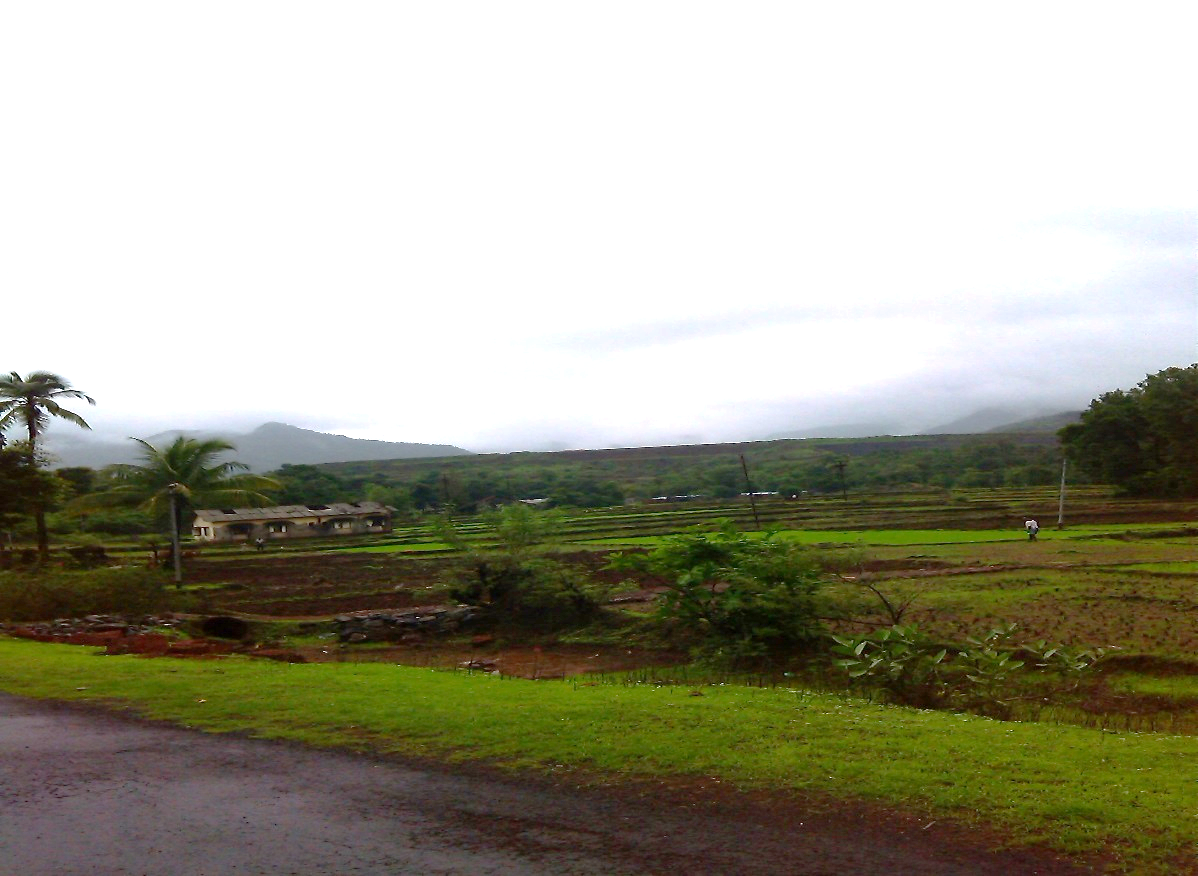
Rice sowing at Nardawe
Rice sowing at Nardawe Photo: Damodar Pujari


A brief reading of the White Paper and actual situation in Maharashtra indicates that this is a typical tale of most dams, where cost and time estimates have been escalated multiple times.

By June 2012, the KIDC has spent ₹ 311 Crores on this project. Costs have escalated despite the fact that canals in the original proposal have been cancelled and converted into 16 ‘Kolhapur Type’ gated weirs (KT Weirs). Its Command area (after the dam completion) is supposed to be 12, 530 ha, through 16 KT weirs. It will store 123.74 Million Cubic Meters (MCM) water .Total submergence of Nardawe Dam is 625 ha which will affect 3849 people from 967 families. 1 village is completely affected (Jambhalgaon) and 4 (Naradawe, Yavateshwar, Bhairavgaon, Durganagar) villages are partially affected. 34.13 ha of identified forests will have to be diverted for the project

Actual work on the project started in 2001.

According to white paper, 61% work on the dam is complete, which includes the earthen dam wall and 10 KT weirs.

This project finds itself mired in violations of several kinds That it is coming from KIDC comes as no surprise. This section of the WRD Maharashtra has been a regular in violating several norms while pushing its projects. KIDC was also found to have indulged in corruption in the case of Konadhane Dam in Raigad, has started work on Dams like Kalu and Balganga without Forest Clearances or rehabilitation plans.

Illegal Work without Environment Clearance The project has a command area more than 10,000 hectares and hence, requires an Environmental clearance according to the EIA Notification of 1994 which was in effect when the construction work for the dam started. Legally, work cannot start on the dam without an Environmental Clearance. In Nardawe, work has been 61% complete even without an Environment Impact Assessment or Public Hearing.

NardaweDam
Work at Nardawe Dam. Photo; Damodar Pujari

Executive Engineer of the Project, Mr Godse, while speaking to SANDRP on the 7th July 2013 accepted that the project has just applied for Terms of Reference (TORs) with the Ministry of Environment and Forests (MoEF) and had started work without an Environment Impact Assessment, Public Hearing or Environmental clearance.

Forest Clearance The project affects 34 ha of identified forest land (वन संज्ञा क्षेत्र) and hence requires Forest clearance from Divisional Forest Office, Bhopal. It does not have final forest clearance. Violating the Forest Conservation Act 1980, work on the project went on, even in Forest area.

Work at Nardawe Dam Photo: Damodar Pujari

The Executive Engineer, while speaking to SANDRP stated that a number of queries have been raised by the Forest Office, Bhopal, one of which is that the project is in vicinity of Radhanagari Wildlife Sanctuary and may need clearance from National Board for Wildlife too.

Forest Rights Act: Individual and community Rights of people dependent on Forest areas are not yet settled. This is serious as these are private forest lands and there is a strong dependence of people on these forests.

High Level Working Group (HLWG) and Western Ghats Expert ecology Panel (WGEEP) Reports All of the affected villages fall under Ecological Sensitive Areas as per the HLWG report and entire Kanakavali Taluka was considered as Ecologically Sensitive Zone (ESZ) – I by WGEEP. WGEEP Report has recommended that no large dams should be built in ESZ 1. According to HLWG Report, peoples’ consultation and resolution are a must prior to starting work in Ecologically Sensitive Areas.

These committees were formed after work on the Nardawe Dam started. However, these reports highlight the high ecological richness of the area. If KIDC had conducted a credible Environment Impact Assessment, as it is legally bound to conduct, these issues could be highlighted before starting work. Current ecological and related social loss could have been avoided.

Officials agree to violations, say that it is more of a norm When SANDRP talked with the Executive Engineer of the project, Mr. Godse on 7th July 2013, he agreed that work on the project is in advanced stage without an Environmental Clearance or Forest clearance in place. As a justification, he said that many projects in Maharashtra indulge in these violations! He said that the project has just applied for TORs for Environmental Clearance with the Ministry of Environment and Forests’. However, the project is yet to come up before the Expert Appraisal Committee of MoEF on River Valley Projects.

Dubious role of EIA Agencies While the Executive Engineer himself agrees that the project has progressed without an Environmental and Forest Clearance in place, The EIA agency for this project, namely Science and Technology Park, Pune[i] did not bat an eyelid while agreeing to do an EIA for this project. They did not point it out to KIDC that applying for an Environmental Clearance when the work is supposedly 61% complete is illegal, neither did they refuse to be a party of such a violation. When SANDRP talked with official from Science and Technology Park involved in this work, he admitted that have visited the region and know that work is at advanced stage. He also agreed that this is a violation and there is little meaning in doing an EIA in such a case. This same agency has worked on EIA Reports of other dams in Konkan region as well.

KT Weirs instead of Canals Letter written by Upper Secretary, Irrigation Department dated 23rd November 1994, claims that the proposal of building RBC (85 km) and LBC (45 km) can generate less irrigated area compared to their length and hence appear to be inefficient in terms of cost as well as irrigation potential. The letter further asks the executive engineer to change the cropping pattern to arecanut and floricultural crops in the command area which require less water which could be supplied from gated barrages through lift irrigation. With this letter as support, canals have been cancelled and KT weirs are being installed, at an increased cost.

Abandoned site office of teh nardawe Dam at Nardawe Photo: Damodar Pujari
Abandoned site office of the Nardawe Dam at Nardawe Photo: Damodar Pujari


Issues of rehabilitation and resettlement When a survey was conducted in 1997, it concluded that 967 families were affected by Nardawe Dam. Sixteen years after the survey, villagers say that the number of affected families has grown to 1245. This means that more than 6000 people may be affected by this project. The villages where resettlement will take place are nothing but sections of hill slopes, as I saw for myself.

Figure 5. Santosh Sawant. One of the affected people and non-governmental member on rehabilitation committee at district administration level

Currently, No resettlement has taken place and villagers are not moving out of their homes.

In a bid to force the affected families out from their homes, administration has stopped construction and repairing of basic civic facilities in the affected villages since 2001. No new water connections, repairing of roads and even ZP schools has taken place in the affected villages in order to push the residents accepting lands in resettlement villages.

Response of the administration has been to assert that local opposition has been the main reason behind the delay in the project. Actually, work on the project has been going on irrespective of local protests, morchas or sit-ins, in complete disregard of the local demands and concerns.

In Conclusion According to villagers, KT weirs built downstream the dam are largely unused because of the cropping pattern, which depends mainly on monsoon and availability of groundwater. Before the KT weirs too, the river was used for some seasonal irrigation.

Time and again it has been proved that major and medium irrigation projects are not a solution for Konkan’s agriculture. According to the White Paper, while the ‘Created’ Irrigation potential of a large dam ‘Tillari’ in Sindhudurga is 7,295 hectares, the actual irrigation potential utilized is just 162 ha!

According to Economic Survey Report of Sindhudurg District in 2012 (Please see table below), large and medium projects have performed dismally. Of the total command area of 49878 hectares, the area actually irrigated by major projects is a mere 158 hectares that is 0.31% and for medium projects with command area of 40821 hectares, area irrigated is an unbelievable 82 ha that is 0.2%!

As against this, minor projects seem to have done better with 4619 hectares irrigated in command of 12851 hectares (around 36%).

Performance of water resources projects in Sindhudurg

No Taluk

Small

Medium

Large

Command area Actual irrigated area Command area Actual irrigated area Command area Actual irrigated area
1 Devgad

1205

533

0

0

0

0

2 Vaibhavwadi

770

114

9027

0

0

0

3 Kankavali

2697

453

20652

82

0

0

4 Malvan

2650

1201

0

0

0

0

5 Vengurla

942

313

0

0

0

0

6 Kudal

3298

1218

0

0

26285

0

7 Sawantwadi

904

598

11142

0

0

0

8 Dodamarg

385

189

0

0

23654

158

Total

12851

4619

40821

82

49939

158

Source- District Economic Survey of Sindhudurg, 2012

The region receives more than 2500 mm of rainfall and decentralized rainwater harvesting, watershed management, revival and renovation of traditional irrigation systems like temple tanks and paats can be cost effective, ecologically sustainable, equitable and efficient solution for this region. The entire Sindhudurg district has several small, decentralized traditional irrigation systems like paats. There exist intricate conflict resolution and water sharing arrangements at the community level about using these paats. Sindhudurg is also rich in irrigation through Temple tanks. TempleTanks in Dhamapur and Nerur stand testimony to the fact that even today, these systems are being utilized.

So then, why are projects like Nardawe, which are costly, unviable, ecologically destructive and stemming unrest in the region being pushed and promoted?

The primary motive behind these irrigation project does not seem to be irrigation or public welfare,  for which number of benign options are available. These projects are an easy source profits for contractors, engineers and politicians.  Issues like sustainability, efficiency and equity do not seem to matter for the KIDC or Water Resources Department in Maharashtra.

Nardawe Dam is just one example of the large dam centric water management prevalent in Maharashtra. The Irrigation scam which is still unfolding, has demonstrated how hollow this dependence on large infrastructure projects is. If we weigh the meager benefits of these projects against the ecological, social and economic losses to the local communities, environment and public exchequer, it becomes clear that specifically in Konkan region, large dams like Nardawe have no case.

Damodar Pujari, SANDRP


[i] According to its website (http://www.scitechpark.org.in/): “The Science and TechnologyPark is an institute set up jointly by Department of Science and Technology, Ministry of Science and Technology, Govt. of India and University of Pune in the year 1988.”

Environment Impact Assessment · Western Ghats

No Chief Minister Sir, we are not doing social/ecological assessment of large dam projects

Maharashtra’s Chief Minister Prithviraj Chavan was the Chief Guest for one day symposium regarding water management in Maharashtra organised by the Gokhale Institute of Politics and Economics in Pune on the 2nd of July 2013.

In his address, the CM raised a number of important topics about water management in Maharashtra. Some of his thoughts were encouraging. He talked about the problems and expense of large irrigation projects, their underperformance and underlined the need for decentralised water management systems. He mentioned that the 2000 crores spent on tankers and animal shelters during 2013 drought was an avoidable expense, if we had developed decentralised water sources. He highlighted the problems of water regulatory authorities like MWRRA. He also mentioned that improper dam operation is a reason behind many disasters like the floods in Surat in 2006 due to Ukai Dam, Sangli floods due to mismanagement of Almatti Dam and stressed that Maharashtra should be concerned about this.

Significantly, he mentioned that while we are assessing the economic costs and efficiency of large dams, we are not looking at their social and ecological and that such assessments should take place. He also said that there should be an in-depth study on the ecological costs of these projects. This is a very welcome statement.

In reality, there has been a huge gap on what he said and what is happening on the ground.

The most blatant example of this is the Kalu Dam where work has stopped currently due to a stay order by the Hon. Bombay High Court. This dam is coming up in the Murbad block of Thane District and falls entirely in the tribal sub plan area and ecologically sensitive region of the Western Ghats. It is set to submerge 1000 hectares of Western Ghats forests and will affect more than 18000 primarily tribal population. The dam, being built by the Konkan Irrigation Development Corporation (KIDC,) has not done any Social Impact Assessment as per the National Rehabilitation Policy. Nor has it undertaken an Environmental Impact Assessment or Cumulative Impacts Assessment of its impact on the Forests. The individual and community Forest Rights have not been settled, in violation of the Forest Rights Act, 2006. Despite all this, the construction started illegally, without a Forest Clearance and is halted only because of a petition filed in the High Court by Shramik Mukti Sangathana.

Illegal Work on Kalu Dam Site by FA Constructions Photo: SANDRP, May 2011

The Forest Clearance of this dam was rightfully rejected in 2012 by the Forest Advisory Committee (FAC) of the Ministry of Environment and Forests (MoEF). But exactly a year later the Forest Advisory Committee went back on its decision and gave Forest Clearance to this project unjustifiably.

One of the important reasons as, stated by the FAC in in its minutes is that

“(The FAC) also noted that Hon’ble Chief Minister of Maharshtra has specifically requested for a review of the decision of the Forest Advisory Committee” (FAC Minutes 3-4th April 2013)

How is it that the CM actually pushed for a Forest Clearance which would destroy over one lakh trees in Western Ghats, without any studies or options assessment?

When we asked this to the CM after this meeting, he replied that there is no law which says that EIA study for a drinking water supply dam is needed. While this is true and attributed to the erroneous omission in the EIA notification 2006, there is no law which says that such studies should not be conducted! Especially for a dam which is going to submerge 1000 hectares of forests and affect 18000 tribals! A Chief Minister with vision would in fact ask for such studies suo motto.

Dams around Mumbai which are mainly for drinking and industrial water supply can together submerge more than 6000 hectares of Forest. Even the State Forest Department under the Chief Minister himself has said that EIA of Kalu Dam is necessary. Chief Conservator of Forests, Central Circle has said that Cumulative impact Assessment of Dams coming up around Mumbai is necessary.

In this scenario, rather than urgently demanding for such a study the CM has in fact pressurised the FAC into giving a Forest Clearance to Kalu Project, WITHOUT any assessments.

Forests in Tansa Wildlife Sanctuary. 750 hectares of these primer forests will be submerged for the Gargai Dam. Photo: SANDRP

During his speech, the CM said how important afforestation is. He said that he has asked all departments to undertake afforestation. “The issue is so important that even tanker water should be given for afforestation”. When afforestation is so important, why are we submerging last remaining forests of  Western Ghats without any studies?

Misrepresentation of Western Ghats Expert Ecology Panel (WGEEP) Report: The CM also said that WGEEP Report has banned all development from Gujarat to Kerala and that the on-going laterite stone mining in Sindhudurga-Ratnagiri districts  is a result of WGEEP which will hamper development in these places. It has laid a blanket ban on development.

CM seems to be entirely misinformed on this count. Firstly the laterite stone mining ban has nothing to do with WGEEP Report, but is in place due to a Supreme Court Order. This point has been reiterated several times and it is surprising to see the CM still claiming this. Secondly the WGEEP has not banned developmental activities, but has said that local communities should be in the driving seat while taking decisions affecting their regions. This is also upheld by several laws including the Forest Rights Act. So CMs statement about the WGEEP is clearly ill informed.

It was great to see the CM mention Climate Change, its impacts, need for advanced weather monitoring, etc. It was also good to hear from him about ecological importance for rivers and their flow. It will be good if environmental flows are released from dams of Maharashtra, as also upheld by the Krishna Water Disputes Tribunal. This is currently not happening.

The CM seems to have progressive opinions about water and natural resource management. Hence, we are sure that the CM will demand for an Environment Impact Assessment, Social Impact Assessment and Cumulative Impact Assessment of dams coming up around Mumbai, especially Kalu Dam and will take a critical look at dams coming up across Western Ghats in Konkan being undertaken by KIDC, breaking laws like Forest Conservation Act, Forest Rights Act, Environment Protection Act, National Rehabilitation Policy with impunity. In fact he should see that KIDC and contractors which started work illegally are brought to the books.

We hope that the CM walks his talk about decentralised water management and valuing ecology.

-Parineeta Dandekar and Himanshu Thakkar, SANDRP

Indavi Tulpule, Shramik Mukti Sangathana

Suhas Kolhekar, Convener, NAPM Maharashtra

Cumulative Impact Assessment · Dams · Environment Impact Assessment · Hydropower · Ministry of Environment and Forests · Western Ghats

Comments on HLWG Report submitted to Ministry of Environment and Forests

This post is based on a submission made by SANDRP and our colleagues on the HLWG Report on Western Ghats. 20th May 2013 is the last date to submit comments on this. Comments need to be sent to: amit.love@nic.in. We request groups and individuals to make as many submissions as possible.

Comments on HLWG Report with a focus on Water issues

Date: May 20, 2013

To,


Mrs. Jayanthi Natarajan

Union Minister of State (IC)

Ministry of Environment and Forests

Government of India

Email: mosefgoi@nic.in, jayanthi.n@sansad.nic.in


Dr. V Rajagopalan

Secretary

Ministry of Environment and Forests

Government of India

Email: envisect@nic.in


Dr. Amit Love,

Deputy Director,

Ministry of Environment and Forests

Email: amit.love@nic.in


Dear Mrs. Jayanthi Natarajan and Dr. Rajagopalan,


SUB: Comments on the High Level Working Group Report with respect to water sector

This is in response to announcement posted on MoEF website about submitting comments on the HLWG report under the Chairpersonship of Dr. Kasturirangan. These comments mainly deal with water in Western Ghats: One of the most critical issues for Western Ghats States.

A lady collecting drinking water from a sacred grove in Western Ghats Photo: SANDRP

Unfortunately, we have to note that recommendations of the HLWG Committee in response to WGEEP Report as well as some of HLWGs omissions and commissions are detrimental to the well-being of rivers, wetlands and dependent communities in the Western Ghats and hence, for related sectors like ecology, water supply, irrigation, hydropower, etc. This is elucidated in the following points:

  1. HLWG does not comment on any other issue related to water except hydropower:

While the Gujarat, Maharashtra, Goa, Karnataka, Kerala and Tamilnadu are facing multiple issues with respect to rivers, drinking water, irrigation, loss of biodiversity and livelihoods, dam-induced displacement, etc., the only issue HLWG report has commented upon is Hydropower. The WGEEP report has dealt with a number of issues related to the water sector from democratic community driven bottom up governance, watershed development, opposition to large dams in ESZ I and II, drinking water, fisheries, etc. However, the HLWG does not comment on any of these recommendations of the WGEEP, nor does it offer its own position on these. This is a serious lacuna in the HLWG Report.

In the absence of such recommendations, we request that MoEF adheres to WGEEP recommendations.

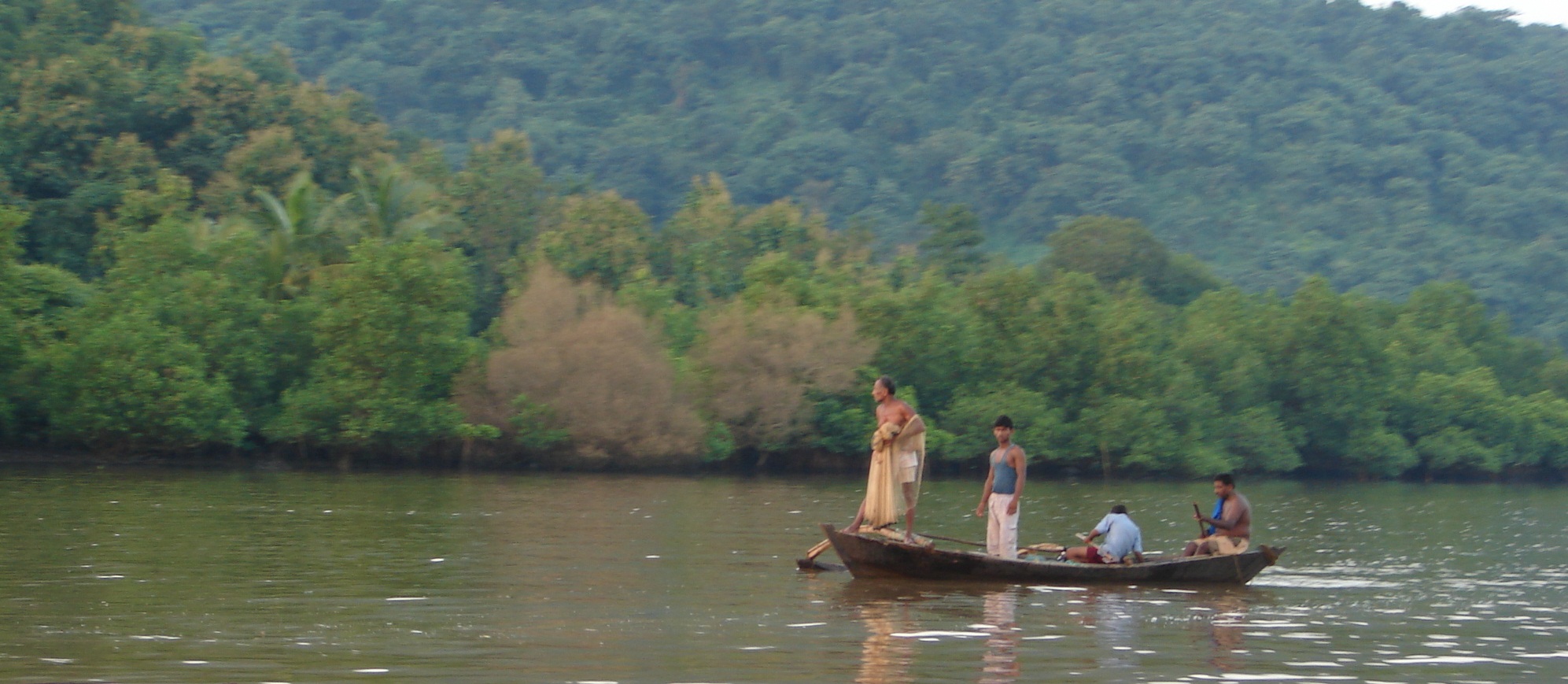
Fishing in Vashishthi Estuary, Western Ghats. Photo: SANDRP
  1. HLWGs recommendations about Hydropower are ad hoc, unscientific and misleading
  1. HLWG claims that all Hydropower is “renewable and clean.”

This is a completely incorrect statement and it’s surprising to see that it comes from HLWG. The world over, the myth of Hydropower as clean source of energy has been busted.[1],[2] Hydropower projects have huge impacts on environment, ecology, forests, rivers, biodiversity and livelihood security of the people. Studies have proved that methane emissions from reservoirs formed by hydropower dams in tropical countries can have significant global warming potential, methane being about 21 times more potent global warming gas than CO2. Dams emit methane at every draw down.[3] With tropical forests in the Western Ghats (WG) under submergence and otherwise destruction by such projects, this threat is even more serious. Already WG has some of the biggest hydropower plants in the country including the Koyna, Bhandardara, Ghatghat HEPs and three Tata HEPs in Maharashtra, Linganmakki, Gerisouppa, Bhadra, Tungabhadra, Upper Tunga, Talakalale, Kabini, Harangi, Chakra, Supa, Varahi, HEPs in Karnataka, Idukki, ldamalayar, Lower Periyar, Poringalkuttu, Sholayar HEPs in Kerala and Bhavani HEPs in Tamil Nadu. All these projects have not only contributed to greenhouse gas emissions, but have also adversely affected communities, forests, rivers and ecosystems in Western Ghats. There are numerous pending cases of rehabilitation from these dams (for example Koyna in Maharashtra) till date involving tens of thousands of people and communities in many areas are still suffering from erratic water releases from these projects (downstream communities near Jog Falls d/s Linganmakki).

Hydropower dams in WG are in many cases transferring water across the basin for power generation, making it unavailable of the original basin and its inhabitants (For example:  Interbasin transfers from Koyna and Tata Hydropower dams in Maharashtra). Every hydropower project has finite life. Thus, for the basin dwellers and everyone else, Hydropower not much renewable either.

 HLWG is not justified in giving a ‘clean and renewable’ certificate to hydropower.

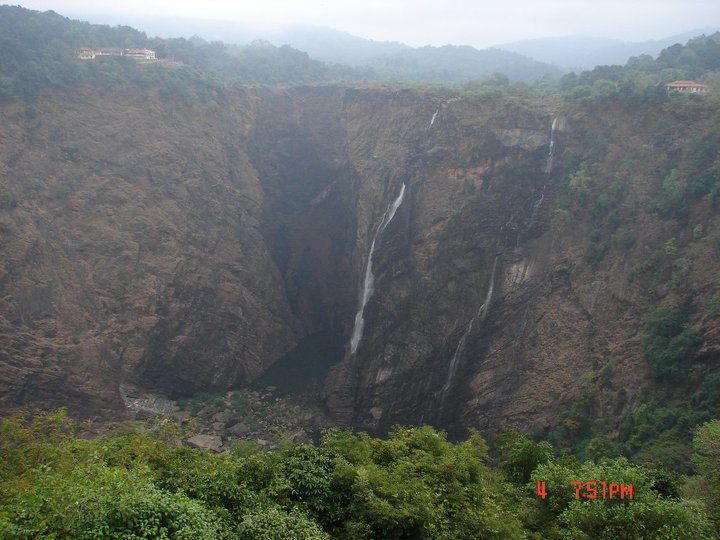
Jog Falls on Sharavathy: Dried and diverted by the Linganmakki HEP in Karnataka Western Ghats. Photo: SANDRP


  1. HLWG allows Hydropower projects in ESAs while not looking at performance of existing projects

While the WGEEP did not allow large dams and hydropower projects in ESZ I and II, HLWG has allowed hydropower projects in its demarcated ESAs. This is unacceptable. Western Ghats are already ravaged by dams and at least the areas of high biodiversity value should now be protected from the same onslaught. But the HLWG has rejected WGEEP recommendations about this. While doing so, they have not looked at the performance of the existing HEPs in WG. SANDRP has been studying performance of HEPS in India for some time now based on generation data from Central Electricity Authority. The performance of existing hydropower plants in WG is dismal as can be seen below:

  • In Koyna Basin, the per MW generation in 2010-11 has dropped by a huge 56.79% from the highest per MW generation achieved in the year 1994-95.[4]
  • In Kali Nadi projects, the per MW generation has dropped by 46.65% from the highest per MW generation achieved in 1994-95[5]
  • In Sharavathi Basin projects, per MW generation in 2010-11 has dropped by 37.60% from the highest per MW generation achieved in the year 1994-95[6]
  • Same situation is true for most other hydropower projects.
  • Most of these projects are performing far below the level at which the projects were given techno-economic clearances.
  • There is no assessment as to how much of the generation from such hydropower projects is during peaking hours. Nor is there any attempt at optimising the peaking power from these projects.

It is clear that there is huge scope to make the existing projects more efficient, rather than destroying ESAs in WG with more projects.

We request that in line with WGEEP report, large dams should not be permitted in ESAs of Western Ghats.

  1. Recommendation about mitigating impacts of Hydropower are extremely weak
  • The HLWG has recommended 30 % of lean season flow as the minimum flow throughout the year as a conditionality for allowing hydro power projects in the ESA. This is contradictory to the recommendation for ecological flows by the HLWG.  Ecological flows means trying to mimic the natural flow regime in the river as far as possible and that would include arriving at different seasonal flows based on studies and consultation with the river communities and other stakeholders, using the Building Block Methodology which even the Inter Ministerial Group on Ganga Basin has said is the most appropriate for India. Moreover, the IMG has recommended 50% releases in lean season flows, applicable for all existing projects. MoEF should accept these norms immediately for all existing projects.

The MoEF should be recommending ecological flows / environmental flows as in the WGEEP report and not minimum environmental flows and this should be determined through holistic methodologies like Building Block Methodology and local participation.

  • The HLWG recommendation of 3 km minimum distance between dams is totally ad hoc, arbitrary and hence unacceptable. Firstly, the HLWG should have mentioned min 3 km of flowing river between projects. The minimum distance is river specific and would depend upon a basin level study of the river including the altitudinal profile of the river, the riparian forest status, the aquatic habitats and biodiversity, the present dependability and many such criteria. More significantly, the cascade hydropower dam menace which is destroying rives in Himalayas need not be replicated in western ghats. We would like to reiterate that no large dams should be allowed in the ESA of WG.

The MoEF should recommend for arriving at river specific studies while accepting 5 km of free flowing river between projects as minimum distance of free flowing river between projects. The best case is not to allow any further large dams in Western Ghats.


No flows in Sharavathy downstream Linganmakki  Dam and Jog Falls. Photo: SANDRP
No flows in Sharavathy downstream Linganmakki Dam and Jog Falls. Photo: SANDRP


  1. The HLWG does not stress the need for Environmental Clearance for Mini hydel Projects

Hydro projects less than 25 MW are currently exempt from Environmental Clearance due to a dangerous omission in the EIA Notification 2006. WG is currently facing a severe threat due to a flood of these unplanned cascades of Mini Hydel Projects. Ecosystems and communities in rivers like Netravathi, Kumaradhara, Krishna and Cauvery are facing impacts of these projects, many of which are fraudulent.[7] Netravathi has more than 44 mini hydel projects planned and under operation. Kerala has plans to set up  around 100 mini Hydel projects on its rivers. The threat of these projects on river systems in Western Ghats is so high that in March 2013, the Karnataka High Court, has banned any new mini hydel projects in Karnataka Western Ghats[8].

WGEEP had recommended no mini hydel projects in ESZ I and II. HLWG has not done this. While the HLWG makes a rather vague statementThere is a need to redesign and reevaluate small hydropower projects – below 25 mw as these often have limited impact on energy generation and can lead to huge impacts on ecology’, it has not recommended that these projects should need an EIA and EC process, like it has said for Wind Energy. This is a very serious omission. SANDRP and many organizations have written about this to the MoEF several times.

The MoEF should amend the EIA Notification 2006 and include all hydel projects above 1 MW in its purview.


Pristine Forests set for submergence under the 24 MW Kukke Mini hydel Plant in Dakshin Kannada, Karnataka. Photo: SANDRP
  1. The HLWG does not stress the need of Environmental Clearance (EC) for Drinking Water and Industrial supply dams

HLWG has not looked at water as a sector, but has only confined itself to hydropower. This has resulted in several loopholes. Many dams are being constructed in Western Ghats for Drinking Water and Industrial water supply. These are also exempt from EC process as per the EIA Notification 2006. Dams like Kalu, Shai, Balganga, Khargihill, Pinjal, Gargai are set to submerge more than 6000 hectares of forest in ESAs and Protected Areas in Northern Western Ghats in Maharashtra.

WGEEP Report had recommended no large dams in ESZ I and II, but the HLWG does not talk about these dams at all. Their impacts on WG forests and communities are entirely ignored. This is another serious lapse of the HLWG report.

The MOEF should amend the EIA Notification 2006 to include all large dams, irrespective of the purpose, including drinking and industrial water supply dams in its purview. No large dams should be planned in ESA of Western Ghats.


Ravines of Vaitarna already submerged by the Middle Vaitarna Dam near Mumbai Photo: SANDRP
  1. HLWG does not recommend eflows from existing projects

Several hundreds of Irrigation, water supply, hydropower dams have transformed the nature of rivers and dependent communities in Western Ghats. While the WGEEP Report mentioned maintaining eflows from existing projects, the HLWG does not make any recommendation for eflows from existing projects.

Hydropower projects in Karnataka like Kali, Linganmakki have affected communities and ecosystems in the region, have driven some species to extinction. There is an urgent need to restore eflows in all WG rivers.

The MoEF should recommend that eflows should be assessed with holistic and participatory methodology like BBM and recommend e-flows for all dammed rivers in Western Ghats with time limit of one year.

  1. HLWG does not apply its mind to dam decommissioning

The HLWG has chosen to ignore the recommendations on dam decommissioning. While the states have rejected the recommendation the MoP (Ministry of Power) and Central Electricity Authority has noted that dam decommissioning in a phased manner is worth considering.

There are several irrigation and hydropower dams in the Western Ghats which are severely underperforming or incomplete after two decades, or more than 100 years old, and/or unsafe. For example, several experts have opined than large irrigation projects in Konkan region of Maharashtra are severely underutilized. Tillari Interstate Project between Maharshatra and Goa which has come up affecting a wildlife corridor and which has still not rehabilitated its affected population, has a created irrigation potential of 7,295 hectares in Maharashtra of which farmers are utilizing just 162 hectares, according to the Govt Of Maharashtra’s 2012 White Paper on Irrigation Projects in Maharashtra. This underlines the redundancy of large irrigation projects in the WG.

The HLWG had an opportunity to relook at such projects, which it has not done. The HLWG could have noted that the state governments and the MoEF and MoP should start the process of evolving parameters / criteria towards the process of dam decommissioning.

The MoEF may please recommend the same.

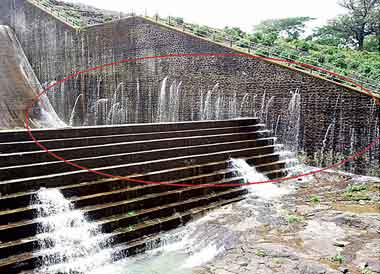
Leaking Khadkhad dam Mahrashtra Western Ghats Photo: Pune Mirror


  1. HLWG does not recommend free flowing rivers for WG

Rivers in Western Ghats are repositories of biological, ecological and cultural diversity. Rivers in WG harbor high endemism and diversity in freshwater fish. They also house several Sacred groves at river origins, river fish sanctuaries, etc., protecting rivers and fish. The freshwater biodiversity remains the most fragmented among all biodiversity and HLWG has taken no note of this state and further risks that freshwater biodiversity faces. The WGEEP had wisely followed a graded approach in tune with the ecological connectivity of river ecosystems. ln the HLWG approach, stretches of rivers would flow out of the natural landscape into the cultural landscape which is open to indiscriminate development and the chance for their restoration or protection would be completely lost out. A river cannot be protected in pieces like this.

Looking at the pressures from dams and water abstractions, there in an urgent need to conserve ecologically, culturally and socially important rivers in their free-flowing condition. This approach is well accepted globally and several countries have created specific legislations for protecting free flowing rivers[9]. It seems that the IMG Committee on Upper Ganga, in which Ms. Sunita Narain (Member of Kasturirangan Committee), was also a member has recommended that some six tributaries of Upper Ganga basin should be kept in pristine state. While rejecting WGEEPs recommendation about dam decommissioning or dam free rivers in the ESZs, HLWG has not recommended keeping even a single river in Western Ghats in its free flowing condition.

MoEF should identify ecologically, culturally and socially important rivers, based on community and ecological knowledge and conserve Heritage Rivers of Western Ghats in their free flowing condition for the current and future generations.


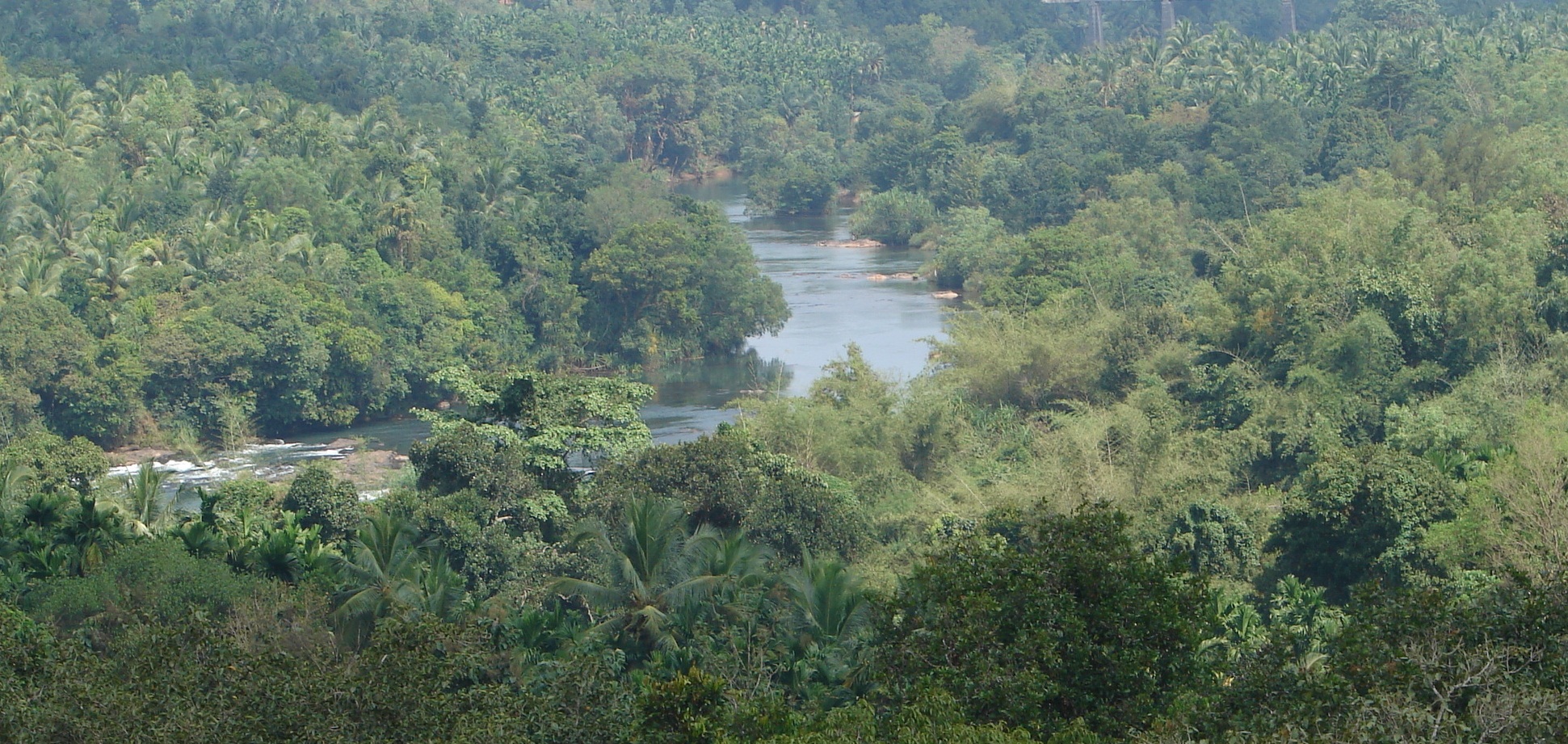
Seetha Nadi, free flowing river in Karnataka Western Ghats. Photo: SANDRP
  1. HLWG allows Inter basin transfers in Western Ghats, without any justification or studies

The HLWG has agreed to inter basin transfers toeing the claims of some of the states. There are ample instances of failed interstate – inter basin transfers in the Western Ghats rivers which have turned into permanent scenes of conflicts like the famous Mullaperiyar,  Parambikulam Aliyar, Siruvani interstate inter basin transfers between Kerala and Tamil Nadu. The HLWG while acknowledging the need for ‘ecological flows assessment’ in rivers has failed to note that in all these inter basin transfers, the river / tributary has been completely diverted and has lost its ‘ecological flows’. The HLWG could have recommended a cumulative impact assessment of the existing inter basin transfers which would reveal the ground reality.

HLWG seems to have accepted the contention of states like Maharashtra: “This (stopping IBT) would be a problem, they explained, as many regions of the Western Ghats lie in the rain shadow area and need water to be diverted for irrigation and drinking.”

Reality is that, ALL the interbasin transfers happening in Maharashtra currently (through Koyna and Tata Hydro power projects, an amount more than 4 Billion Cubic Meters Annually) are transferring water FROM the rain shadow area of Krishna and Bhima basins TO water surplus regions in Konkan. If HLWG was concerned about water supply for rain shadow regions, it would have at least recommended that this transfer from deficit area to high rainfall area be immediately reviewed and reversed in a time bound manner. It has chosen not to, showing its complete ignorance of ground reality or its completely pro government and pro vested interests bias.

The MoEF should retain the recommendation for no more inter basin transfers as in the WGEEP report and ask for immediate review of transfer of water from deficit basins to high rainfall areas. 


  1. HLWG allows hydro projects in first and second order streams

The HLWG has not said no to hydro power projects in first and second order streams in ESA. Meanwhile the MoP, CEA and WAPCOS all agree that hydro power projects should not be permitted in these highly ecologically sensitive areas which are the ‘origin’ of Western Ghats Rivers.

The MoEF should retain the recommendation for no run of the river schemes in first and second order streams as in the WGEEP report.

  1. HLWG offers no comments of on several water sector recommendations of WGEEP which have been supported by State Governments

Kerala and Maharashtra have accepted many of the recommendations of the WGEEP in water sector (page 14 section 2.3 – point 9) like catchment area treatment plan, protection of high altitude valley swamps, water conservation measures, rehabilitation of mined areas, improved river flows etc. It is surprising to note that the HLWG is silent on these very important measures and has not even endorsed these acceptable recommendations which can significantly contribute towards improving water availability in the Western Ghats.

The MoEF should follow these recommendations of the WGEEP.

  1. HLWG takes an extremely biased stand about Athirappilly and Gundia Hydropower projects, rejected by the WGEEP

The WGEEP had categorically stated that the Athirappilly and Gundia Hydropower project should not come up in Western Ghats, looking at their huge impacts on biodiversity, several studies by local organisations and local opposition. However, ignoring all these, the HLWG has taken a very pro project stand on these projects, stating that they can be considered with some vaguely due process, which the state government would be happy to show they have followed it on paper. This is entirely unacceptable.

The MoEF should not allow Athirappilly and Gundia HEPs looking their impact on ecology and communities and in face of the strong local opposition that they are facing.

DSC02831
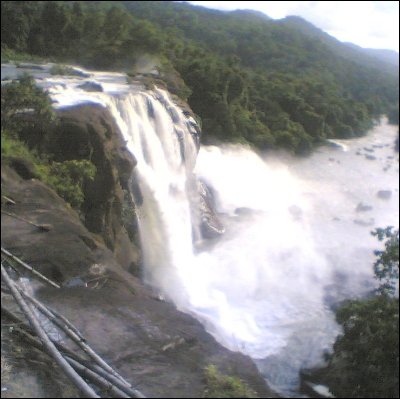
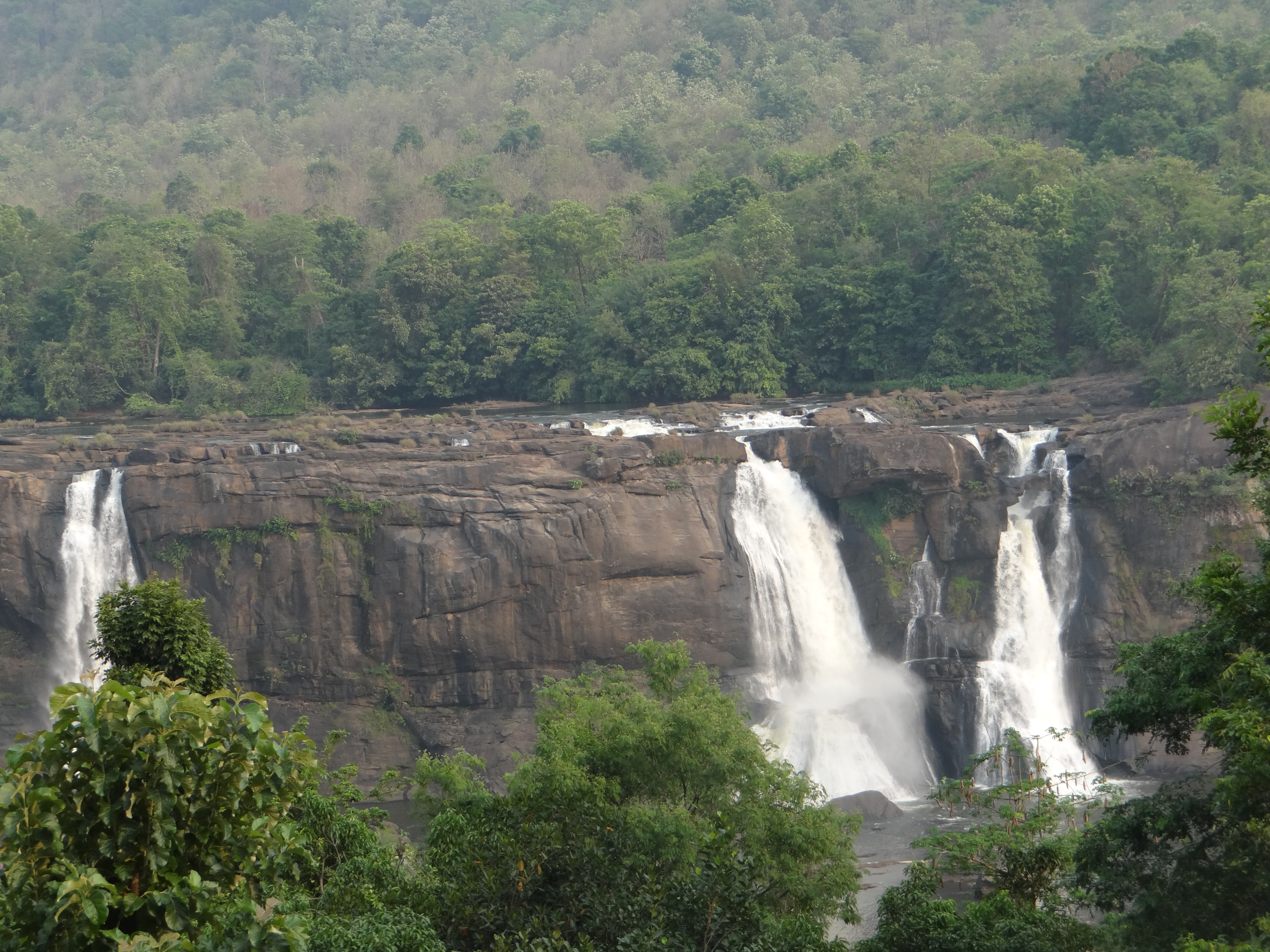
Athirappilly Waterfalls on the Chalakudy River Photo; SANDRP

The WGEEP process and report initiated a robust discussion about the paradigm of development and conservation in Western Ghats. Water and Rivers is a cross cutting issue connecting ecosystems and communities, rural areas and urban centers, providing goods and services and supporting freshwater biodiversity, which is most threatened currently.

A proactive position on conserving rivers in Western Ghats will go a long way in protecting and conserving myriad livelihoods and ecosystems that thus depend of them.

We hope the MoEF considers the recommendations made above about the WGEEP and HLWG Reports and helps conserving rivers of the Western Ghats for people and ecosystems urgently. The HLWG Report cannot be accepted the way it stands presently. As a step in this direction, we also suggest that WGEEP should get a formal chance to respond to the points raised about it in the HLWG.

Thanking You,


Yours Sincerely,

Himanshu Thakkar, Parineeta Dandekar, South Asia Network on Dams, Rivers and People, New Delhi and Pune (ht.sandrp@gmail.com , parineeta.dandekar@gmail.com)

Dr. Latha Anantha, River Research Centre, Thrissur, Kerala (rrckerala@gmail.com)

Shripad Dharmadhikary, Manthan Adhyayan Kendra, Pune, Maharashtra (manthan.shripad@gmail.com)

Dr. T.V. Ramchandra, Energy & Wetlands Research Group, Centre for Ecological Sciences, IISc, Bangalore (cestvr@ces.iisc.ernet.in)

Janak Daftari, jalbirdari, Mumbai, Maharashtra (daffy@jalsangrah.org)

Sujit Patwardhan, Parisar, Pune, Maharashtra (patwardhan.sujit@gmail.com)

Dr. Nilesh Heda, Samvardhan, Vidarbha, Maharashtra (nilheda@gmail.com)

Nisarg Prakash, Nature Conservation Foundation and Nityata Foundation, Bangalore, Karnataka (nisargprakash@gmail.com)

Mrinalinee Vanarase, Iora Consultants, Pune, Maharashtra (ioraespune@gmail.com)

Shankar Pujari, President, Nivara Bandhkam Kamgar Sangh, Sangli, Maharashtra (shankarpujari16@gmail.com)

Damodar Pujari, SANDRP, Pune, Maharashtra (damodar.sandrp@gmail.com)

Saili Palande-Datar, Kalpavriksha, Pune, Maharashtra

Following Members from Energy and Wetlands Research Group, Centre for ecological Science, Indian Institute of Sciences: 

  • Dr. M.D. Subash Chandran
  • Dr. Prakash Mesta
  • Dr. Uttam Kumar
  • G R Rao
  • Mahima Bhat
  • Vishnu Mukri
  • Sreekanth Naik
  • Balachandran C
  • Boominathan M
  • Bharath H Aithal
  • Bharath Settur
  • Vinay S
  • Ganesh Hegde
  • Anindita Dasgupta
  • Arun D T
  • Vishnu Bajpai
  • Gouri Kulkarni
  • Sudarshan Bhat
  • Durga Madhab Mahapatra
  • Ashwath Naik
  • Sowmya Rao
  • Shwetmala


Dams · Western Ghats

Prof. Madhav Gadgil writes to Dr. Kasturirangan

Open Letter sent by Prof. Madhav Gadgil to Dr. Kasturirangan on the High Level Working Group Report on WGEEP and Western Ghats. 

MadhavGadgil

17 May 2013
Dear Dr. Kasturirangan,

JBS Haldane, the celebrated 19h century scientist and humanist who quit England protesting its imperialistic invasion of Suez to become an Indian citizen has said: Reality is not only stranger than we suppose, but stranger than we CAN suppose! I could never have imagined that you would be party to a report such as that of the High Level Working Group on Western Ghats, but, then, reality is indeed stranger than we can suppose!

In our report to the Ministry of Environment & Forests, based on our extensive discussions and field visits, we had advocated agraded approach with a major role for grass-roots level inputs for safeguarding the ecologically sensitive Western Ghats. You have rejected this framework and in its place, you advocate a partitioning amongst roughly one-third of what you term natural landscapes, to be safeguarded by guns and guards, and two-third of so-called cultural landscapes, to be thrown open to development, such as what has spawned the 35,000 crore rupees illegal mining scam of Goa. This amounts to attempts to maintain oases of diversity in a desert of ecological devastation. Ecology teaches us that such fragmentation would lead, sooner, rather than later, to the desert overwhelming the oases. It is vital to think of maintenance of habitat continuity, and of an ecologically and socially friendly matrix to ensure long term conservation of biodiversity rich areas, and this is what we had proposed.

Moreover, freshwater biodiversity is far more threatened than forest biodiversity and lies largely in what you term cultural landscapes.  Freshwater biodiversity is also vital to livelihoods and nutrition of large sections of our people. That is why we had provided a detailed case study of Lote Chemical Industry complex in Ratnagiri district of Maharashtra, where pollution exceeding all legal limits has devastated fisheries so that 20,000 people have been rendered jobless, while only 11,000 have obtained industrial employment. Yet the Government wants to set up further polluting industries in the same area, and has therefore deliberately suppressed its own Zonal Atlas for Siting of Industries.

Your report shockingly dismisses our constitutionally guaranteed democratic devolution of decision making powers, remarking that local communities can have no role in economic decisions. Not surprisingly, your report completely glosses over the fact reported by us that while the Government takes absolutely no action against illegal pollution of Lote, it had invoked police powers to suppress perfectly legitimate and peaceful protests against pollution on as many as 180 out of 600 days in 2007-09.

India’s cultural landscape harbours many valuable elements of biodiversity. Fully 75% of the population of Lion-tailed Macaque, a monkey species confined to the Western Ghats, thrives in the cultural landscape of tea gardens. I live in the city of Pune and scattered in my locality are a large number of Banyan, Peepal and Gular trees; trees that belong to genus Ficus, celebrated in modern ecology as a keystone resource that sustains a wide variety of other species. Through the night I hear peacocks calling, and when I get up and go to the terrace I see them dancing. It is our people, rooted in India’s strong cultural traditions of respect for nature, who have venerated and protected the sacred groves, the Ficus trees, the monkeys and the peafowl.

Apparently all this is to be snuffed out. It reminds me of Francis Buchanan, an avowed agent of British imperialism, who wrote in 1801 that India’s sacred groves were merely a contrivance to prevent the East India Company from claiming its rightful property.

It would appear that we are now more British than the British and are asserting that a nature friendly approach in the cultural landscape is merely a contrivance to prevent the rich and powerful of the country and of the globalized world from taking over all lands and waters to exploit and pollute as they wish while pursuing lawless, jobless economic growth. It is astonishing that your report strongly endorses such an approach. Reality is indeed stranger than we can suppose!

With warm personal regards,

I remain,

Yours sincerely,

Madhav

Cumulative Impact Assessment · Environment Impact Assessment · Expert Appraisal Committee · Forest Advisory Committee · Hydropower · International Water Issues · Ministry of Environment and Forests · Western Ghats

Dams, Rivers and People Feb-March 2013 Edition

How is the 2012-13 drought worse than the one in 1972?

The present drought in Maharashtra is dubbed as being worse than the one in 1972. This article conclusively proves that these critical conditions are not due to the rainfall, but due to poor water management decisions. The rainfall in 2011-12 has been more than 1971-72 in most of the worst drought-affected districts.  Mismanagement of water in the dams, and irrational promotion of water-intensive sugarcane, unjustifiable west ward water diversions for hydro power generation have all led to the dearth of water to a much larger extent than the quantum of rainfall.

sugar farmers

Maharashtra’s sugar shackles

Maharashtra has 209 sugar factories, the highest in any state in India. most of them in worst drought-affected districts. Of its 30 cabinet Ministers, 13 either own sugar factories or have considerable shares in them. This article examines the impact of this hegemony on the state’s farmers and it’s water.

Free flow after dam removal

Decommission dams as an Environmental Priority!

Some of the oldest dams in the world exist in India with around 100 large dams are more than 100 years old. These are increasingly unsafe. MoEF needs to consider dam decommissioning as a viable option for restoring the ecology of rivers

Our missing dams

How much do we know of our dams and rivers?

This article analyses the National Register of Large Dams. It is a disturbing situation that the agencies that are responsible for our large dams do not even know for majority of our large dams the names of the rivers on which they are located!

Gharial on the river bank

Vertebrates of Chambal

National Chambal Santuary is one of the very few protected river sanctuaries in India.This article describes a project to provide a peer-reviewed and  open-access compilation of vertebrate fauna of the Chambal River basin, which highlights the regions ecological significance as also the threats it faces

Protesting against dams

Journey from Cooperation to Conflict

This article discusses the various conflicts developing in the Indian Sub-continent. International, inter-state, and inter-sectoral conflicts are discussed. The article also discusses the steps that need to be taken to achieve greater water cooperation across the world

Ujani Dam

Will water released from Ujani help Solapur?

The HC order to release water from upstream dams to  Ujani dam for mitigating drought in Solapur is examined. Unfortunately, the Maharashtra water resources department is unable to curb unathorised water use, let alone promote equitable usage of water from canals, dams and rivers

Related News: 

Impact of nearly 100 mini hydel projects on Bangalore’s Water Supply: SANDRP Report

No New Mini hydel Projects in Karnataka Western Ghats!       

Bhutan on a Hydropower Spree

Water Privatisation is not for India

Rivers changing course in Arunachal

One All verdict for India Pakistan in Kishenganga Arbitration

Bring back our Yamuna! 

Huge Anti Dam Protests in Tawang, Arunachal Pradesh headed by monks   

Traditional Fisherfolk evicted from Loktak in blatant disregard to human rights as well as law

India Water Week 2013: MoWR again working as a big dam lobby?

Forest Advisory Committee reconsidering clearance for Kalu Dam again!

Hydropower at the cost of Drinking water?

Good News. HC stays a sugar factory that was coming up (again) in drought affected Solapur District 

Debatable Dam in the Western Ghats

How the World Bank undermines its own development goals

Cumulative Impact Assessment · Environment Impact Assessment · Forest Advisory Committee · Ministry of Environment and Forests · Western Ghats

Kalu Dam in Western Ghats: FAC goes back on its word without any justification

Through an unfortunate and short sighted decision, the Forest Advisory Committee of the Ministry of Environment and Forests has gone back on its decision of rejecting Forest Clearance to Kalu Dam that it took on 2nd April 2012. It reconsidered the project and in its last meeting on 3rd-4th April 2013, and has actually recommended the Kalu Dam project for FC, involving 1000 hecatres of Forests in the Western Ghats. It has done this when all the illegalities and irregularities from the proponent still stand today, entirely unaddressed.

We have sent a submission condemning this decision on behalf of Shramik Mukti Sangathana as well as villagers to be affected by Kalu Dam to the Forest Advisory Committee and Minister of Env and Forests Ms. Jayanthi Natarajan. (see below)
You can support the communities and Forests in Kalu by sending similar letters to MoEF Minister and Forest Advisory Commitee.

Illegal Work on Kalu Dam Site by FA Constructions Photo: SANDRP, May 2011


To,

Ms. Jayanthi Natarajan,

Minister of State (IC) for Environment and Forests,

Ministry of Environment and Forests, New Delhi


Subject: Request not to grant Forest Clearance to Kalu Dam in Maharashtra due to several procedural and legal irregularities on the part of the Project Proponent and also the Forest Advisory Committee.


Respected Madame Minister,

This is to express our utter shock and dismay at FAC’s decision of recommending Forest Clearance to Kalu Dam falling in Western Ghats area in Murbad, Thane District, Maharashtra as seen in the minutes of the FAC meeting of April 3-4, 2013.

Just one year ago on the 2nd of April 2012, the Forest Advisory Committee had rejected this proposal, raising substantial points against the proposal and closed the file. This was a respite for the communities facing displacement, community groups working on the issue, for the Western Ghats ecology and the forests. We had then thanked FAC for this decision of April 2012.

On 4th of April 2013, the same Forest Advisory Committee (now with a changed constitution) went back on its decision and recommended Forest Clearance (FC) to Kalu Dam even when nothing has changed on ground and all of the objections based on which FC was rejected in the first place still stand todayThe Project Proponent (PP): KIDC, Maharashtra Water Resource Department, has not been able to respond in credible way to any of the points raised by the FAC, Chief Conservator of Forests (Central), State Forest Department, affected villagers or civil society organisations.

We strongly condemn this decision by the FAC of recommending Forest Clearance for diverting nearly 1000 hectares of Forests in the Western Ghats. We urge you (i) not to recommend FC for Kalu Dam; (ii) request you to take steps to make Forest Advisory Committee more transparent, responsive and accountable to issues of communities and forests; specifically, all the documents from the project proponent, including all the annexures of the Form A and gram sabha resolutions for the projects on FAC agenda must be on FAC website at least ten days in advance as per CIC orders and as also assured by you in public; (iii) We also urge you to direct action against those responsible for illegal construction of the Kalu dam as noted by the FAC minutes; (iv) urge you ask FAC to hence forth recommend strict action against such violations.

 Major issues about recommending FC to Kalu Dam:

Non-transparent decision making in violation of CIC Orders: None of the documents submitted by the project proponent about the Kalu Project were available in full with all the annexures on the MoEF website even a week before FAC meeting on the 3rd and 4th of April. This is a blatant violation of the CIC orders and we had pointed this out to the FAC through our letter dated March 25, 2013, but the FAC chose to ignore this. As a Minister, you had taken a strong stand against this and had said in October 2012 “These actions and decisions of the officials are unacceptable to me. The forthcoming meeting of the FAC will be postponed, and I shall resolve these (violation of CIC orders and non-compliance of FRA) issues.”[1]

Considering that the lives and livelihoods of about 18000 people will be affected by this project, and when they have the first and foremost right to have all the information on decision making around this project, such irresponsibility on the part of FAC is unacceptable and it is also bad in law. Petition against Kalu Dam is in the High Court of Bombay currently and this point will be raised there.

Complete reliance on Project Proponent’s (PP) claims While recommending FC, the FAC has relied entirely on claims of the proponent, without checking the veracity of the claims or applying its mind. FAC has not even mentioned the numerous submissions made by communities and community-based organisations raising pertinent points against PP’s claims. The FAC needed to keep in mind that the same proponent has gone against its word many times earlier and each time, it has been pointed out to the FAC. It has wilfully violated the Forest Act by starting construction of the project in the absence of FC when the project is to submerge nearly 1000 hectares of land in a biodiversity hotspot, it has gone against its written word when it said that ‘no new project will be required for Mumbai until 2031”, in the process of seeking Stage I Forest Clearance for Shai Project, barely 20 kilometres from Kalu Project.

But the FAC, instead of taking any strict action against the proponent in this regard, has simply accepted its claims, which are again misleading and false.

Grounds for rejection of Kalu Project in 2nd April 2012 by FAC: The FAC minutes state:

·                    Submergence of 18 villages and their connectivity,

·                    Initiation of construction without Forest Clearance,

·                    Breach of commitment given by the Project Proponent during Stage I clearance of Shai Dam,

·                    Location of the dam within 7 kms of Protected Area

·                    Location of the project in eco sensitive Western Ghats

·         Non-furnishing of:  Rehabilitation Plan, Environment Impact Assessment report, Technical Report on Wildlife Status, Gram Sabha resolutions about compliance of Forest Rights Act


NONE of the issues stated above are resolved through the PP’s responses as clarified below:


·                    No Gram Sabha Resolutions Passed supporting the project:  Misleading the Forest Advisory Committee:  PP has claimed that it has secured Gram Sabha Resolutions from 8 villages out of the 11 villages that will be fully or partially submerged by the dam. In fact, Shramik Mukti Sangathana has letters from 10 Gram Panchayats out of these 11 that they have not issued any such resolutions at any stage. The last resolution in this regard that they passed was AGAINST the project. These were sent to the FAC on 16.11.11.

If the Project Proponent has the resolutions as claimed, why have they not put these up on the FAC website with the necessary documentation from the PP?

Why did the FAC not see the need to ascertain this even when it was pointed out by us in our letter dated 29.10.12 and again in 25.03.13 that no such resolutions exist?

·                    Clear violation of the Forest Conservation Act (1980): The proponent accepts that it violated the Forest Conservation Act (1980) by starting work before an FC, but states that it stopped AFTER High Court Orders. High Court Orders were in response of a PIL filed by Shramik Mukti Sangathana against the illegal nature of the work. So, stopping AFTER HC orders is no justification for committing the illegality. Before the High Court orders, Shramik Mukti Sangathana had written several letters about this violation to the Collector, Chief Secretary and Forest Department and had also served a notice to the PP. It did not stop work then.


Considering this, the Forest Advisory Committee ought to have penalised the project proponent for violation of Forest Conservation Act (1980), not recommend the same project for clearance.This only gives out a signal that no action will be taken by the MoEF even after it knows that violation of Forest Act is happening, that too by a state agency.

·                    Continued violation of the Forest Rights Act (2006) It has been pointed out several times to the FAC that Kalu Project is violating the Forest Rights Act (2006) as community and individual claims are yet to be settled. The Forest Rights Act was passed to safeguard historical injustice on Forest-dependent communities, but the FAC itself is encouraging the PP to violate FRA, PESA, Rehabilitation Policy and Forest Conservation Act. You, as a Minister, had reasserted MoEF’s commitment to implementation of Forest Rights Act.

·                    No Rehabilitation Plan has been submitted at the time of recommending Forest Clearance There is no such plan available in public domain, nor has there been any participatory process of approval of the plan with the affected people. A claim of a rehabilitation package of Rs 68.75 Crore does not constitute a Rehabilitation Plan. This point was raised several times by community organisations, State Forest Department, Chief Conservator of Forests as well as the FAC.  Villages to be affected by Kalu Dam fall in Tribal Subplan and attract PESA. Without any legally mandatory process, just the claim of rehabilitation package of Rs 68.75 crore seems good enough for FAC. It was clearly wrong on the part of the FAC to recommend FC based on such claims.

·                    Konkan Irrigation Development Corporations letter that “it is not necessary to construct any new water source till 2031”:  This was submitted to the MoEF while seeking Stage I Forest Clearance for Shai Dam, less than  25 kms from proposed Kalu dam in 2010-11. FAC recommended Stage I Clearance to Shai Dam based on that assurance. In less than 3 years, the proponent feels that Shai dam, whose clearance was obtained on such a claim, will not be sufficient till 2031. This is unjustifiable and tantamount to misleading the FAC with false assurances.

·                    No Environment Impact Assessment (EIA) Conducted The Kalu Dam falls in ecologically sensitive Western Ghats. The Western Ghats Expert Ecology Panel had categorised the region in ESZ I where no large dams should be permitted. Even as per the Kasturirangan Committee Report, more than 5 villages affected by Kalu Dam are falling in the ESA.

The State forest Department, Chief Conservator of Forests (Central), community groups have all urged that EIA as well as a Cumulative Impact Assessment of the Project has to be done before granting Forest Clearance. In fact, this was one of the conditions laid by the State Forest Department. Looking at the ecologically sensitive location of Kalu Dam and submergence of nearly 1000 hectares of Western Ghats Forest Land, this was a reasonable expectation.

Despite these clear conditions, the PP argues that EIA is not required. And despite this, the FAC recommends FC to this project!

In this context, Section 2.3 (ii) of FCA (1980) read, “Notwithstanding the above, if in the opinion of the Ministry or the Advisory Committee, any proposal should be examined from the environmental angle, it may be required that the project proponent refer the case to the Environment Wing of the MOEF.” So irrespective of the requirement of EIA notification, the FAC has been provided powers to refer to an such project to the environment wing of MoEF or EAC for examination of the project from the environment angle, but FAC failed to do this just under the claim of the PP that EIA is not required under EIA notification.

FAC recommendation that Cumulative Impact Assessment has to be undertaken for drinking water projects around Mumbai is welcome but again, it could have been done before considering this project for clearance and not after recommending clearance. Similarly their recommendation to the MoEF to amend the EIA notification to ensure that such dams are included for environmental impact assessment is welcome, but they could have waited for MEF response rather than recommending Forest Clearance.

In this regard we urge you: (i) immediately change the EIA notification to include Kalu and all such large dams under the ambit of the EIA notification, irrespective of the purpose of the project; (ii) Direct specifically that Kalu Dam require EIA and Env clearance, using the above mentioned part of the Forest Conservation Act, 1980 and EPA, 1986; (iii) Order a cumulative impact assessment of all the projects in the western ghats region around Kalu dam, as recommended by FAC and (iv) direct that FC for Kalu will NOT be considered till all these requirements are fulfilled.

·                    Forest Conservation Act requires Gram Sabha clearance Moreover, section 2.1(vii)(4) of the Forest Conservation Act, 1980 clearly states: “Therefore, whenever any proposal for diversion of forest land is  submitted,  it should be accompanied by a resolution of the ‘Aam Sabha’ of Gram Panchayat/Local Body of the area endorsing the proposal that the project is in the interest of people living in and around the proposed forest land except in cases wherever consent of the local people in one form or  another has been obtained by the State or the project proponents and the same is indicated in the proposal explicitly.  However, it would be required where the project activity on forest land is affecting quality of life of the people residing in nearby areas of the site of diversion; like mining projects, displacement of people in submergence area, etc.” This provision is particularly applicable to a project like Kalu that has not had EIA or public hearing as stated in the same section in FCA, 1980. Recommending FC for Kalu Dam project without fulfilling this requirement is clearly a violation of the FCA, 1980 by the FAC.

We urge you to direct the project proponent to get gram sabha resolutions on the lines mentioned above in FCA Section 2.1(vii)(4) and direct FAC consider the project only after these have been received.

·                    Distance from Protected Area: The submergence of the project is less than 10 kms from Kalsubai Sanctuary. Considering the fact that no EIA is conducted, no report on Wildlife Status exists, this makes ecological impacts of Kalu Dam on Western Ghats ecosystem even more serious. Considering all these issues, FC should have been rejected on this ground alone. In fact the PP goes ahead to say: “No rare or endangered flora or fauna has been reported from this site” How can this be stated when no EIA has been conducted and no wildlife report exists?

·                    The PP states that only “44566” and “44611” that is ‘only’  89177 tress will be felled during and the rest ‘may be’ saved. Ninety thousand trees in Western Ghats is a huge number. But it seems FAC does not see any objection in this. The claim that the rest of the 60 000 trees can be saved is of doubtful credibility. Similarly the claim in the FAC meeting minutes that “No rare or endangered species of flora and fauna has been reported in the area” is also without any credible basis.


·                    We would like to reiterate that no options assessment about water supply options to Mumbai has been done. No consideration of rainwater harvesting, using saline water for some uses, grey water recycling, demand management, water use efficiency, and conjunctive groundwater use has been done. The FAC minutes notes this, but from the minutes it seems it has not applied its mind to these issues and recommended FC as a matter of blind support for the project. The mention of the letter from the Chief Minister in the minutes only adds to the suspicion that the FAC has cleared the project without looking into merits of the issue.

·                    Contradictions in FAC conditions? The FAC has recommended FC to the project, with some additional conditions, one of the additional conditions states: “The User agency will abide by all conditions by Regional Office, Bhopal and State Government during inspection of the project.” So the PP has to adhere to all the conditions imposed by the Regional Office, Bhopal and the State forest Department while inspecting the project.

One of the conditions imposed by the Regional office, Bhopal included: “…the State Govt. may be directed to stop all the construction related activities till all the legal formalities and forest, wildlife and environment related studies are completed and a well-considered decision regarding forest diversion is taken based on proper scientific documentation and studies.”

We seem to be in a funny situation now. The FAC, while recommending FC, put a condition that says that decision of FC should not be taken without “proper scientific documentation and studies”, but FAC has done just that! In any case, one implication of this is that the project should not get even first stage FC without the studies recommended by Regional Office, Bhopal, including EIA has been done.

Similarly the State forest department too has asked for (i) Rehabilitation Plan (ii) EIA (iii) technical report from WII on impact of project on wildlife in and around the project area (iv) gram sabha resolutions from all affected villages under FRA. The project should not thus be given even stage I clearance without satisfaction of all these conditions.

Most of these issues have been brought to the attention of the FAC time and again by us, Shramik Mukti Sangathana and other community groups. However, the FAC still went ahead with the incomprehensible decision. Hence, we are writing to you with the hope that after looking at all the points raised above, you will definitely not recommended Forest Clearance to Kalu Dam. We also hope that MoEF will punish violators of FC and FRA Acts to send a strong signal and will take steps to make the present Forest Advisory Committee more transparent, accountable and responsive to issues ailing our forests and forest-dependent communities.

We will look forward to detailed response on this from you. Thanking you for your attention,

Yours Sincerely,


Indavi Tulpule: Shramik Mukti Sangathana, Murbad, Thane


Affected Villagers of the Kalu Dam:

Anil Kantaram Kawate: Parchonde (Upsarpanch)

Ganpat Deu Mengal: Zadghar (Gram Panchayat Member)

Navsu Shiva Wagh: Shisewadi

Mrs. Sonibai Shiva Wagh

Nama Shankar Shida: Banachi wadi

Maloji Alo Mengal: Bhoirwadi

 Mrs. Tulibai Wakh: Diwanpada

Bhagawan Bhala: Dighephal

Budjhaji Songwan: Wakalwadi

Anil Waman Wakh: Tejwadi  (Phangane)

Shivram Lakhu Hilam: Talegaon

Harbhau Raut: Kasole

Popatrao deshmukh: Jadai

Devram Darwade: Khutal

Ashok Pathare: Khutal

Tulshi Bhau Wagh: Zadghar

Moreshwar Bhala: Zadghar


Brian Lobo, Shramik Kashtakari Sanagthana: Dahanu

Surekha Dalawi, Shramik Kranti Sangathana: Raigad

                                                                                                                                                                                                Neema Pathak, Kalpavriksha: Pune 

Parineeta Dandekar, Himanshu Thakkar, South Asia Network on Dams and People: Pune and Delhi


Forest Advisory Committee · Ministry of Environment and Forests · Western Ghats

How much does the Kasturirangan Committee understand about Water Issues in Western Ghats?

The Ministry of Environment and Forests constituted the Western Ghats Experts Ecology Panel (WGEEP) in March 2010 under the Chairmanship of Prof. Madhav Gadgil. The Panel submitted its report on 31st August 2011. Here on, the report was kept under wraps by the MoEF and only after strict orders from the CIC and High Court was it released to the public in May 2012.

On Aug 17, 2012, MoEF set up the High Level Working Group (HLWG) under the Chairmanship of Dr. K. Kasturirangan to study recommendations of this Report. Members of this Committee include Sunita Narain, Prof. C.R. Babu, J.M. Mauskar, Prof. Kanchan Chopra, Shri Darshan Shankar etc. The HLWG was to look into the recommendations of the WGEEP report and the comments from the various stakeholders. The very constitution of the HLWG raised suspicions that this has been formed to dilute the recommendations of the WGEEP. The functioning of the HLWG left a lot to be desired, it refused to give time to listen to the affected people at many places. On April 17, 2013, after a number of extensions, the HLWG submitted its report. 

It seems the HLWG Report (HLWGR) has worked hard to hugely dilute the WGEEP reccomendations. In many cases, HLWG report has made the recommendations of the WGEEP report ineffective. No wonder, Prof. Madhav Gadgil himself has said: “ The initial impression (about HLWG Report) is that there are differences of approach in protecting the ecology of the region. The WGEEP report talks about the facts and we have pointed out that misgovernance is a major issue affecting the ecology of the Western Ghats. This was totally neglected in the new report, which calls for more role for bureaucracy. Providing more power and money to bureaucracy is like giving it to ‘Dusshasana’, and it is a wrong approach” . (http://newindianexpress.com/states/kerala/Kasturirangan-Committee%E2%80%99s-report-favours-bureaucracy-says-Gadgil/2013/04/20/article1553460.ece)


Dilution of WGEEPs strong recommendations is highlighted in the case of 200 MW Gundia Hydel Project in Karnataka and 163 MW Athirappilly Hydel Project in Kerala. While WGEEP Report has categorically rejected these projects based on their severe impacts on ecology and communities, the HLWG has refrained from doing so. The HLWG Report has gone ahead to recommend a few largely irrelevant, measures, while actually giving OK to these projects. Whatever suggestions of review HLWGR has given, the governments would be happy to do the necessary paper work and show that they have done that. The authors of the HLWG report seemed happy to toe the lines that government wants, rather than do justice to the mandate given to them. This was unexpected as both the projects not only have severe impact on ecology, but are also facing stiff and sustained local opposition. The HLWG Report does not seem to give any value or try to understand the reasons behind these local protests.

HLWGR has certified that Athirappilly Project is required for Kerala for peaking power. This is very strange certificate. Do we have an assessment of how much of the power generation from Kerala Hydro projects (incidentally Kerala has one of the highest proportion of installed power capacity under hydro projects, compared to any other state) today is providing peaking power? None. Do we have any credible attempt at ensuring more optimum peaking power generation from existing hydro projects in Kerala? None. Do we have any credible attempt at demand side management in Kerala to manage the peak load requirements? None. Have the KSEB and Kerala government implemented the orders of the Kerala High Court while HC rejected the environmental clearance to the Athirappilly project? No. Then on what basis has the HLWGR certified that “the project’s importance for meeting the peaking power requirements of the State cannot be disputed”?

The other recommendations of the HLWGR about hydropower development in Western Ghats are also problematic. It recommends environmental flows as 30% of lean season flow for hydropower dams, rather than asking for assessment of environment and social requirements of flow in the rivers. These studies cannot be done at a later stage as indicated by the HLWG. It makes no recommendations for flows in other seasons, including monsoon. The HLWG recommends that distance between 2 hydel projects should be minimum 3 kms, again without any basis. It should have asked for site specific studies rather than making such one-size-fits-all kind of recommendation, indicating lack of understanding of environmental issues. It should have at least mentioned ‘distance of free flowing river between two projects should be three kilometre”. Even in case of ROR projects, the submergence itself stretches for kilometres. Cascade hydel dam development which is devastating the Himalayas has not started in Western Ghats. Giving a recommendation like this is in fact inviting more cascades in Western Ghats, that too in the ESA.

The HLWGR has allowed what is it calls Green Growth in the Western Ghats area. But there is no credible process suggested as to who will decide this and how? How will such a process be achieved? Where is the road map to achieve it? The government itself calls all hydropower projects as green growth projects. It is shocking to read that HLWGR also describes all hydropower projects as clean and renewable, exposing their lack of understanding of the hydropower projects and their impacts. The HLWGR seems not bothered by the adverse impacts of such projects on the Western Ghats environment, this is clear in its recommendation agreeing to green growth projects without any credible process.

The HLWG has also not rejected Inter basin transfers from Western Ghats. In doing so, they have quoted justification that “Maharashtra that Rain Shadow Regions” need drinking water. Ironically, all the inter basin transfers happening in Maharashtra (Koyana and six Tata Dams) actually involve transfers FROM the rain shadow region TO water-rich Konkan region for power generation. But the HLWG Report says nothing about this Ulti Ganga. They should have actually recommended stoppage of these diversions if they had the interest of drought prone areas of Maharashtra in mind.

The HLWG Report is also entirely silent on the need to amend the EIA Notification 2006 to include Drinking Water and Industrial Water Supply Dams and Mini Hydel Projects below 25 MW and irrigation projects with command less than 10000 ha under the purview of this Notification. This has been one of the most serious challenges faced by Rivers in Western Ghats right now and the HLWG does not comment on this. It has not commented on dams like Kalu, Shai, Balganga, Lendhi, Gargai, Pinjal, Khargihill which will have a huge impact on Western Ghats ecology and communities. The extent of this damage is evident in the fact that in a recent Forest Clearance granted to Kalu Dam, the Forest Advisory Committee has asked the proponent to follow the recommendations of the Kasturirangan Committee Report. If only the report had made strong and proactive recommendations there was a chance of saving 1000 hectares of forests of Western Ghats

The HLWGR has not commented on fisheries at all.

While a more detailed critical look at the HLWGR will take time, this compilation puts before the readers exact passages from HLWG (see Section A below) and WGEEP (see Section B that comes after Section A) Reports for ready reference. It shows how much understanding of water issues the members of HLWG have or do not have.

– SANDRP

EXCERPTS FROM HLWG AND WGEEP REPORT ON WESTERN GHATS

A. High Level Working Group (HLWG) Report on Western Ghats (Kasturirangan Committee Report)

(HLWG Report Volume I, pp. XII-XXIII)

Out of the estimated 164,280 km2 of the Western-Ghats area, the natural landscape constitutes only 41 per cent. The area identified as ecologically sensitive is about 37 per cent i.e., about 90 % of the natural landscape.

1. Hydropower

Hydropower projects may be allowed in the ESA but subject to following conditions:

(a) Uninterrupted ecological flow at least 30 per cent level of the rivers flow in lean season till a comprehensive study establishes individual baselines.

(b) After a cumulative study which assesses the impact of each project on the flow pattern of the rivers and forest and biodiversity loss.

(c) Ensuring that the minimum distance between projects is maintained at 3 km and that not more than 50 per cent of the river basin is affected at any time.

The villages falling under ESA will be involved in decision making on the future projects. All projects will require prior-informed consent and no objection from the Gram Sabha of the village. The provision for prior informed consent under the Forest Rights Act will also be strictly enforced.

The strategy evolved for the continuation of the Western Ghats Development Programme, in the 12th Plan centres around, besides watershed based development, fragility of the habitat, and development needs of the people i.e. a Watershed + approach – an approach which emphasizes conservation, minimal ecological disturbance, involvement of locals along with sustainable model of economic development and livelihood generation with enhanced allocation.

2. Power/Energy, including hydropower and wind-

(HLWG Report, Volume I, pp. 106-108)

Hydroelectric projects, proposed and planned in the forested regions of the Western Ghats have often come in for opposition. It is clear that as much as the country needs hydroelectric power, which is renewable and clean, but it also needs to balance this requirement with the loss of biodiversity in forests and the need for ecological flow in rivers. Both are essential components and policy must determine that these elements are safeguarded. It is also clear that rivers in India play more than just basic ecological functions. These are lifelines for local livelihood, nutrition and water security. The desire to use the river for generating electricity cannot be at the cost of the value of the river. It is this balance that needs to be maintained. In fact, the potential of hydroelectric power has remained the sole driver for management of the river, particularly in its upper reaches. In the lower reaches, the use of the river for large-scale water diversion projects for irrigation and industrial uses becomes the criterion for development. But these single focus objectives must be enlarged so that the competing – and often the primary needs – can be taken into account at the time of planning and management.

It is also clear that rivers do not know boundaries. Therefore, the conditions for hydropower will be stipulated for the entire Western Ghats and not just for ESA. HLWG recommends that future hydroelectric projects in the ESA and the entire Western Ghats must only be considered on the basis of the following policies:

a. Hydropower development must be based on the acceptance of uninterrupted ecological flow at 30 per cent level of the rivers flow in lean seasons till a comprehensive study establishes individual baselines. The 30 per cent ecological flow is mandated in Western Ghats keeping in mind the shorter length of rivers in this region. The compliance with this condition will require rigorous and seasonal data collection in upper reaches of rivers to prepare a hydrological mapping of the basin. It is also clear that this hydrological assessment is critical given the changes in rainfall patterns because of climate change.

b. Hydropower projects must be considered only after a cumulative impact assessment on the flow pattern of the rivers and forest and biodiversity loss. Currently, individual projects are planned and executed without consideration of these impacts. The Environment Assessment Committees will only consider proposals for individual projects after cumulative impacts have been studied.

c. Current and future hydropower development in the Western Ghats must be based on clear rules that stipulate distance between projects and that do not allow for over-exploitation of the basin. The minimum distance between projects must be maintained at 3 km in most cases (shorter distance requirement because of the short length of the rivers in Western Ghats as compared to other regions) and not more than 50 per cent of the river basin should be affected at any time. This will require reworking the current projects to provide for optimized energy generation but it is necessary given the need to balance development with ecology.

d. Better and more balanced planning for hydropower will lead correct tariff of energy, taking into account the cost of raw material of water. Energy costs, world over, take into account the cost of raw material. It is imperative that the current subsidies and distortions in raw material supply for energy are minimized. It is in this context that water, as the raw material for generation of hydropower, must be factored in the project design. The ecological, social and cultural health of the river is a price that cannot be discounted at the time of planning for the feasibility of power.

e. There is a need to redesign and reevaluate small hydropower projects – below 25 mw as these often have limited impact on energy generation and can lead to huge impacts on ecology. The rationale for small projects must be considered within a policy framework, which provides for mini-grids and local energy distribution.

HLWG about Inter-basin transfers-

(HLWG Volume-I. pp- 100-103)

WGEEP recommendations for sector level planning and their implications

The WGEEP has recommended guidelines for sector-wise activities, which would be permitted in categorized ecologically sensitive area of the region. In this way, regions with the highest ecological sensitivity would have restricted developmental activities – from a total ban on mining to large hydroelectric projects or inter-basin transfer of water and even plantations. The listing is comprehensive and provides an important direction to what will constitute environmentally sound development in this ecologically rich region. The question is how such a development plan will be implemented. Furthermore, it is also important that environmentally sound development should be incentivized and not only practiced through fiat. It is also clear that this recommendation of the WGEEP has evoked the strongest criticism from many quarters. There is apprehension that this ‘blanket prescription’ could be detrimental to economy and livelihoods.

It is also a fact that permit-based regulations are often open for misinterpretation and misuse. A similar issue was raised with the High Level Group on its visit to Maharashtra, when officials explained that there was concern that the WGEEP, if implemented could lead to complete halt of all economic activity. “It would condemn people to live in stone-age”. According to them, the guidelines would not allow for any infrastructure development, from renewable energy to inter-basin transfer of water. This would be a problem, they explained, as many regions of the Western Ghats lie in the rain shadow area and need water to be diverted for irrigation and drinking. Clearly, their concern was the impact of the sweeping nature of the recommendations on the region’s economy. It is not possible to design an effective framework for sustainable development based on such an approach. It is clear that large -scale water diversion projects, which have impacts on the environment and forests, should not be allowed. However, this recommendation should not imply that all water diversion would be stopped even without any study or scrutiny about the individual project or cumulative impact of the projects.

HLWG recommendations for two hydel projects that were categorically rejected by the WGEEP Report

  • 163 MW Athirappilly HEP, Kerala:

HLWG is of the view that while the importance of the proposed Athirappilly hydropower project for meeting the peaking power requirements of the State cannot be disputed, there is still uncertainty about ecological flow available in the riverine stretch, which has a dam at a short distance upstream of the proposed project.

It recommends that given the increased variability due to unpredictable monsoon, the project must be revaluated in terms of the generation of energy and whether the plant load factor expected in the project makes it viable against the loss of local populations of some species. Based on this revaluation and collection of data on ecological flow, the Government of Kerala, could take forward the proposal, if it so desires with the Ministry of Environment and Forests.

The HLWG along with the officials of Kerala State Electricity Board and Kerala Forest Department visited the Athirappilly Hydropower Project, after hearing the presentations made by Kerala State Electricity Board (KSEB) and also a local NGO (River Research Centre, Trissur). The team visited the dam site, the settlement of Kadar tribes impacted by the dam, rapids and waterfalls and irrigation dam site. During presentation, the KSEB explained the upstream run of the river hydropower projects – the Sholayar project on the Sholayar river which is tributary of Chalakudy river, the tail water of which is discharged into downstream that flows into Poringalkuthu project which is on the main river itself, the tail water of which is discharged into downstream of Chalakudy river and is used for the proposed Athirappilly project which is about 40 km away from the backwaters of Cochin. All these projects are run of the river projects and there are no dry stretches of the rivers. If these streams/rivers are not dammed, the excess monsoon run off cannot be stored and enters into sea within 48 hours. The average annual inflow, based on 32 years data at Athirappilly, is 1169.Mm3. This is confirmed from the flow data of Chalakudy river at Arangals collected by Central Water Commission. The tail water from Athirappilly will be released into Chalakudy via its tributary at Kannankuzhithodu.

The fluctuations in the water flow in different months and the plant load factor were also explained. The issues relating to Kadar tribal families living close to the submergible portion of the dam were explained to HLWG and it was informed that a package has been worked out for their welfare without rehabilitation as the areas inhabited by them does not come under submergible zone. The NGOs, who met with HLWG, brought to its attention that project would have irreversible impact on the rich biodiversity value of the forest; particularly, along stretch of 7.89 km between dam site and the point where the tail race water joins Chalakudy river. They said that the habitat of the Kadar tribal population would be adversely hit and that people had not yet given their consent. In addition, they said that this project, being built in an area of biodiversity value, would have minimal benefits. The technical feasibility of the project was doubtful with meager amount of power obtained at high cost. In addition, plantation owners and farmer representatives located below the proposed project said it would have adverse impacts on downstream irrigation and drinking water.

The HLWG examined the status of forests, including the riparian forests and submergible slope forest, a small swampy area and the plantations. It is clear that as in all hydropower projects, there is a need to balance the need for energy, particularly peaking power, water supply and irrigation with the loss of biodiversity, forest habitat, displacement of tribal communities and the need for ecological flow in the river.

HLGW, after detailed deliberations on each of the critical issues, is of the view that while the project’s importance for meeting the peaking power requirements of the State cannot be disputed, there is still uncertainty about ecological flow available in the riverine stretch, which has a dam at a short distance upstream of the proposed project. Given the increased variability, in flow from catchments due to unpredictable monsoon rains, the project may be revaluated in terms of the generation of energy and if the plant load factor expected in the project makes it viable against the loss of local populations of some species. Based on this revaluation and collection of data on ecological flow, the Government of Kerala, could take forward the proposal if it so desires with the Ministry of Environment and Forests.

  • 200 MW Gundia HEP, Karnataka:

As the proposed Gundya hydropower project is located in the ESA, it must be proceeded upon with extreme caution. HLWG recommends that the Government of Karnataka should reassess the ecological flow in the downstream areas, based on a thorough evaluation of hydrological regimes in the area. The project should not be given the go-ahead, till such a review and reassessment is made. The Government’s review must also assess local damage to all forests, which will emanate from the construction work and if at all, this can be mitigated. The HWLG has not proposed a complete ban on the construction of hydropower projects in the ESA, but its recommended conditions that balance the needs of energy with environment, must be followed.

Background: The Karnataka Power Corporation Limited (KPCL) has proposed a hydroelectric project in the Gundya River basin in the Hassan and Dakshina Kannada district in two phases: Phase I of 1x 200 MW and Phase II of 1x 200 MW. The project is on Gundya river – a tributary of west flowing river of Netravathi; phase I involves pooling of waters by linking Yettinahole, Kerihole, Hongadhalla and Bettakumari and water from these streams will be intercepted by small weirs and will be drawn through a tunnel running from Yettinahole leading to Bettakumari reservoir. From the foreshore of this reservoir, 7.8 km long head trace tunnel takes water to a surge tank and from there to an underground powerhouse. The Phase II will have two tunnels – one tunnel will take water from Kadumanehalla and surrounding areas by 13 km long unlined tunnel and discharge into tunnel that takes water from Yettinahole weir, and another tunnel of 15 km long will take water from Lingath hole and Kumaradhara to Bettakumari reservoir. The submergible area will be 184.64 ha. An additional 560 ha will be needed for infrastructure. KPCL is not going ahead with the Hongadhalla dam because of the extensive submergible area of 523.80 ha. The project has got necessary clearances from different regulatory agencies; EAC of MoEF has asked KPCL to conduct also public hearing in Dakshna Kannada District, as project area falls in both the districts. The public hearing was conducted at Siribagiln village of Puttur taluka on 25.03.2009. Meanwhile the Malenadu Janapara Horata Samithi made a representation before the subcommittee of EAC during its visit to the site on 5.12.2009. The EAC has recommended clearance but the MoEF has not issued the environmental clearance.

The land required for the project includes forest area of 113 ha, revenue land of 263.63 ha, which also includes forests (though mostly degraded); and 71.5 ha of private land making it a total of 448.13 ha. The site has unique forest types with high biodiversity values (endemic, rare, threatened and new species) and also the cardamom and coffee plantations with scattered forest patches, which will be impacted adversely by land use changes and changes in hydrological regimes in the river basin due to project.

The major impacts of the project would be: (i) submergence of patches of riparian forest, (ii) land degradation/fragmentation of forest patches for tunneling and road construction; (iii) the drying up of down streams of three Yellinahole (with 60.50 km2 catchment area), Kerihole (27.00 km2 catchment area), Hongadahalla (8.50 km2 catchment area) and Bettakumari (35.00 km2 catchment area) before they join Gundya river, although each of them has small catchments, and a stretch of 34 km of Gundya river; and (iv) the apprehension of shortage of water at Subramanya Swami temple.

HWLG notes that the Gundya hydel project is run of the river project, which must ensure ecological flow in the affected stretch of the river. Furthermore, while the area of the submergible portion of forest is small, the construction of the project and tunneling in the region will have adverse impacts on both government forests and green areas on private land. As the Gundya hydropower projects is located in the ESA, HLWG recommends that it must be proceeded upon with extreme caution. It would recommend that the Government of Karnataka should reassess the ecological flow in the downstream areas, based on a thorough evaluation of hydrological regimes in the area. The project should not be given the go-ahead, till such a review and reassessment is made. The Government’s review must also assess damage to all forests, which will emanate from the construction work and if at all, this can be mitigated. The HWLG has not proposed a complete ban on the construction of hydropower in the ESA, but its recommended conditions that balance the needs of energy with environment must be followed.

B. WESTERN GHATS EXPERT ECOLOGY PANEL (WGEEP) REPORT

Athirappilly and Gundia Hydel projects

WGEEP Categorically rejects both the projects for their impact on communities and ecosystems.

Sectoral Recommendations relating to Water

Recommendations for ESZ I, II, III-

Decentralized water resources management plans at Local Self Government level Protect high altitude valley swamps and water bodies. Catchment area treatment plans of hydroelectric and major irrigation projects should be taken up to improve their life span. Improve river flows and water quality by scientific riparian management programmes involving community participation Water conservation measures should be adopted through suitable technology up gradation and public awareness programmes inter-basin diversions of rivers in the Western Ghats should not be allowed

Hydropower projects

For ESZ I-

  • Allow run of the river schemes with maximum height of 3 m permissible which would serve local energy needs of tribal/ local communities / plantation colonies subject to consent of gram sabha and all clearances from WGEA, SEA and DECs.
  • No forest clearance or stream diversion for new projects
  • Run of the river schemes not allowed in first order or second order streams
  • Promote small scale, micro and pico hydropower systems, that are people owned & managed and are off grid
  • New small hydropower projects (10 MW and below) are permissible

For ESZ II-

  • Small bandharas permissible for local and tribal community use / local self- government use
  • No new dams above 15 m or new thermal plants permissible
  • New hydro projects between 10- 25 MW (up to 10 m ht) permissible
  • All project categories subject to very strict clearance and compliance conditions through SEA and DECs of WGEA
  • Have run off the river hydropower projects but after cumulative impact study of the river basin is done

For ESZ III-

  • Large Power plants are allowed subject to strict environmental regulations including 1. Cumulative impact assessment studies 2. Carrying capacity studies 3. Minimum forest clearance (norms to be set by WGEA) 4. Based on assessment of flows required for downstream needs including the ecological needs of the river.
  • For already existing dams reservoir operations to be rescheduled for allowing more water downstream

Common recommendations for all the three zones-

  • No diversion of streams/ rivers allowed for any power projects and if already existing, to be stopped immediately.
  • Catchment area treatment in a phased manner following watershed principles;
  • Continuous non-compliance of clearance conditions for three years would entail decommissioning of existing projects
  • Dams and thermal projects that have crossed their viable life span (for dams the threshold is 30–50 years) to be decommissioned in phased manner
  • All project categories to be jointly operated by LSGs and Power Boards with strict monitoring for compliance under DECs

Fisheries

Recommendations for ESZ I, II, III-

  • Strictly control use of dynamite and other explosives to kill fish; provide fish ladders at all reservoirs Introduce incentive payments as ‚conservation service charges‛ for maintenance of indigenous fish species in tanks under control of Biodiversity Management Committees or Fishermen’s co-operatives; monitor and control trade in aquarium fishes with the help of Biodiversity Management Committees

Water use-

(WGEEP Report Volume II, pp. 32-37)

Water resources management in the Western Ghats region is inextricably linked to improving the flows in the rivers and the health of the catchments. Western Ghats is the origin of many of the important Peninsular Rivers like Cauvery, Krishna and Godavari that drain the Deccan Plateau and flow eastwards. The hundreds of shorter perennial monsoon fed west flowing rivers like Sharavati, Netravathi, Periyar, and the Bharathapuzha travel through steeper and more undulating topography before emptying into the Arabian Sea. A rough estimate reveals that 245 million people in the five Western Ghats states directly depend on these rivers for their diverse water needs. Geographically, the Western Ghats is the catchment for river systems that drain almost 40 % of the land area in India. The basin area of west flowing shorter rivers is mostly located on the steep western slopes. Except for a few coastal streams 1/3 rd of the basin area of most of the river basins is located within the Western Ghats. This too makes them fragile and calls for their proper care and management. Once these streams leave the Western Ghats proper, they are drained and enriched by the once fertile steep river valleys, midlands and flood plains. The coastal and backwater fisheries is sustained by the rich nutrients and sediments brought down by the flowing rivers. The musings by fisher folk in coastal Kerala: ‘The Sea begins in the mountains and ‘fertility of the coast and the plains depends on the wealth from the rivers’ holds significance in this context. Open dug wells and springs are the other important water resources being extensively used for irrigation and drinking water purposes in the Western Ghats region. In several places, water–‐ harvesting structures dependent on rainwater are also used. In the Sigur plateau, numerous drinking water schemes dependent on the Moyar River are being operated for the tribal and dalit populations. Bore wells have made their entry in the recent past due to intensive irrigation patterns and lowering of water tables. As for Kerala, the groundwater potential is low when compared to other states and shallow dug wells are the most common source of freshwater. However, over the years the groundwater table is lowering at an alarming rate indicative of poor recharging capacity. On the other hand, water needs for drinking water, energy, irrigation and industrial purposes are growing in the Western Ghats States. More and more water is being diverted even from irrigation dams to meet the thirst of the expanding urban spaces and for industries. We have examples of Siruvani, Kabini, Peechi and Malampuzha reservoirs across the Western Ghats where irrigation water is being diverted for drinking and for the industrial needs of cities in the midlands like Coimbatore, Bangalore and Mysore, Thrissur and Palakkad respectively. New dams are being planned and some of them are in different phases of construction in the Maharashtra Western Ghats to meet the expanding needs of Mumbai and its suburbs. Pinjal, Shai, Gargai, Kalu and Vaitarani dams are recent cases. Water abstraction through check dams across hill streams is being practiced for decades by tea and coffee plantations in upstream catchments of rivers to meet their drinking and irrigation needs. This has resulted in cutting off the stream flows at their origin itself. Indiscriminate and unplanned tourism is another reason for increasing water abstraction and diversion. The tourism industry in Ooty depends on the reservoirs constructed across the tributaries of the Cauvery in the high mountains since the times of the British. Studies reveal that east–‐ flowing Rivers like Krishna, Cauvery are struggling to reach the seas due to over abstraction of both surface and groundwater. Basins are closing and its impact is felt even on delta fishing, farming livelihoods and ecology. During the 2001-2004 drought years, the discharge from the Krishna to the ocean was almost nil! As for the west-flowing rivers, saline ingress is advancing even into the midlands due to reduced downstream flows. Crop losses and saline water intrusion into drinking water has been reported in Kerala during severe summer owing to salinity intrusion. In Goa, mining has affected groundwater and surface flows and drainage patterns of rivers impacting downstream needs and water quality. Tailings from mines are polluting streams and rivers. The Kudremukh mining issue is a classic case of mining- related pollution. This mountain range has a long history of human interventions and each of these have directly or indirectly impacted upon the water resources availability and recharge in the region. Some of the important interventions and issues that have had lasting impacts on water resources and its management in the Western Ghats are briefly discussed below.

Issues of Concern

Forest destruction in the river catchments

Western Ghats has a long history of deforestation. Deforestation of upper catchments of rivers for timber, river valley projects and plantations has drastically reduced the capacity of the hill streams that feed into the rivers to hold and recharge water. Drying up of streams immediately after the monsoons and desiccation related to deforestation is clearly evident. This in turn has contributed to reduced summer flows.

River management in the Western Ghats

Most of the rivers in the Western Ghats are either dammed or diverted, some of them at several sites for power generation in the upper reaches and irrigation in the lower reaches. For instance, the east–‐‑flowing tributaries of Cauvery (Bhavani, Moyar, Kabani) and Krishna (Bhima, Tunga, Bhadra) are already dammed. The west–‐‑flowing shorter rivers (Sharavathi, Periyar) have been dammed at several places. We also have complete diversion of river flows at Mullaperiyar and Parambikulam dams involving Kerala and Tamil Nadu. West-flowing rivers have been virtually made into east–‐‑flowing Rivers by violating all natural laws. Dams are without dispute the most direct modifiers of river flows. They can heavily modify the magnitude (amount) of water flowing downstream, change the timing, frequency and duration of high and low flows and alter the natural rates at which rivers rise and fall during runoff events. Severe daily flow fluctuation between peak and off peak times below dams is commonplace in west–‐‑flowing dammed rivers. This has impacted drinking water schemes, major and minor irrigation projects operating in downstream areas apart from cutting off flood plains and impacting aquatic ecology and riparian systems. However very few studies are available that correlate the reservoir operations with the different types of downstream impacts and put measures in place for mitigation. In the case of inter-basin water, no water flows or even

The Mullaperiyar dam is a classic case where the main tributary of Periyar has been completed diverted to the Vaigai basin in the east. Idukki dam does not even have a spillway for allowing monsoon spills into the river. In Maharashtra, the tail race discharges of Koyna Powerhouse I, II and III are released into the west–‐‑flowing Vashishthi River and lead to heavy floods in Chiplun. Continuous stretches of rivers have dried up irreparably below diversions affecting river ecology, surface flows and even ground water seepage. Many of the reservoirs especially in the steep valleys are silting up prematurely due to the massive encroachment and deforestation of catchments consequent to dam construction. Idukki dam is a classic case wherein the entire catchment was encroached along with dam construction. The operations of hydroelectric stations (reservoir operations) are in tune with the power needs rather than the downstream water needs. Hence daily flow fluctuations created by peak and off peak operations of reservoirs in dammed rivers have led to upstream- downstream conflicts in many river basins. Similarly diversion of flows into another river basin after power generation is creating problems of daily flood in the recipient basin and drought in diverted basins. These are turning into management issues which need to be addressed at a basin level. However, there is a lack of systematic river basin level data on ecological changes due to hydrological alterations created by dams.

Incorrect land use patterns

Mining for mineral ores, granite and lateritic mining has affected water availability and recharge especially in the lower altitude regions and midlands. In Goa alone, the government itself has acknowledged that over half of the 300 odd mining leases are located close to water bodies. Data tabled in the Goa Assembly revealed that several of the 182 mining leases exist within one kilometer of a major irrigation project, the Selaulim dam, which provides drinking water to six lakh people in south Goa, virtually half the population of Goa (Ref: Deccan Herald Article).

In South Karnataka and North Kerala, surangams, a traditional irrigation system in lateritic hills is losing out to lateritic mining. Many of the rivers in this region originate from these lateritic hills and many of the Western Ghats Rivers like Chandragiri, Valapattanam, and Netravathi benefit from the water recharged by lateritic hills in their flow downstream.

Agricultural practices including cropping patterns have a role to play in water resource management in the Western Ghats. Planting steep slopes with soil–‐‑eroding monocu;ture crops like rubber and banana, and heavy tillage, has led to increased surface runoff along with loss of precious top soil. This has contributed to low seepage and infiltration into deeper soil depths. The deforestation for tea, coffee and cardamom plantations located at higher altitudes has contributed to drying up of hill streams.

 Reclamation of high altitude valley swamps is contributing to water scarcity in the upper catchments. Many of the rivers originate from these swamps and are source of perennial flow. In the Nilgiris, most of the fertile water rich swamps have been converted for intensive pesticide-based farming, greenhouse farms, housing, etc.

Sand mining

Most of the rivers in Western Ghats are facing the consequences of indiscriminate sand mining. The lowering of water tables and deterioration of water quality are the immediate impacts. River beds in some stretches are lower than the sea level accelerating saline ingress. Drinking water scarcity is on the rise in river bank panchayats in spite of being close to the river. Plan funds are spent for providing drinking water even to panchayats on river banks. Sand mining has also impacted breeding and feeding grounds of fish and other aquatic species

Measures for Mitigation/Improvement

Time for river basin-­level planning and decentralised management of water resources in the Western Ghats As cited above, the impacts of incorrect land use and interventions are already evident. Reduced summer flows, flow fluctuations, lowering of water tables and degrading water quality are all direct impacts of the presently followed project–‐‑oriented, demand-supply based and ad hoc approach to water resource planning and management. The time is ripe for a paradigm shift in approach to river basin–‐‑level management of water resources where water is considered an integral part of the ecosystem. Some important measures that can be adopted in this regard are briefly detailed.

1. Local self–‑ government level decentralized water management plans to be developed at least for the next 20 years: Water resource management plans with suitable watershed measures, afforestation, eco–‐‑restoration of catchments, rainwater recharging and harvesting, storm water drainage, water auditing, recycling and reuse etc. should be built into the plans. These water management plans should integrate into basin level management plans. The objective is to reduce the dependence on rivers and external sources and to improve recharge.

2. Reschedule reservoir operations in dammed rivers and regulate flows in rivers to improve downstream flows and also to act as a conflict resolution strategy. These should be implemented with an effective public monitoring system in place.

3. Revive traditional water harvesting systems like recharge wells, surangams, etc.

4. Protect high altitude valley swamps that are the origins of rivers from further reclamation and real estate or agricultural development and declare them as ‘hotspots for community conservation’

5. Participatory sand auditing and strict regulations to be put in place.

6. Declare “sand holidays’ based on assessments and sand audits for mined river stretches. Items 5 and 6 would work to improve the water retention capacity in the river.

7. Rehabilitation of mined areas to be taken up by the companies / agencies with special focus on reviving the water resources like rivers, wells, tanks, etc. that have been destroyed by the mines.

8. Planters, local self–‐‑governments and Forest Departments in high altitude areas should come together for eco–‑restoration of the forest fragments between the tea and coffee estates and revive hill streams.

9. Take up catchment area treatment plans of hydro and major irrigation projects to improve their life span.

10. Riparian management can be taken up with community participation and involvement to improve river flows and water quality.

11. Water conservation measures should be adopted through suitable technology upgradation and public awareness programs.

12. Reconnect children and youth to rivers and water resources through basin level education programs.

Actionable points for the WGEA-

The (proposed) Western Ghats Ecology Authority (WGEA) can take a strong recommendatory and advisory role in this regard. Some of the important recommendations for WGEA are:

1. Declare origins of rivers as Ecologically Sensitive Localities (ESLs) (the catchment area)

2. Many projects in the Western Ghats are on–‐‑going or completed with violations in environmental clearance and forest clearance or even no clearances at all, as in the case of the Kalu and Shai dams in Maharashtra. The WGEA should act as an additional layer for screening projects approved by the Expert Appraisal Committees (EACs), subject them to additional scrutiny in terms of the geographical context, ecological sensitivity, status of river basin and need for environmental flows taking into consideration all season flows instead of ad hoc allocations.

3. Till the WGEA comes into operation, issue a moratorium on all on–‐‑going projects like dams and mines that can impact upon water resources in a substantial way. The WGEA should subject the projects to scrutiny for mandatory clearances and compliances, and augment the level of public consultation before deciding on whether to allow them to progress or not.

4. No more inter–‐‑basin diversions of rivers shall be allowed in the Western Ghats.

5. Take up sample river basins in each state and recommend to the State Governments to carry out:

  • Environment flow assessments involving social movements for river protection, research institutions, NGOs along with communities to put in place indicators for environmental flow assessment
  • Assessment of downstream impacts of dams on river ecology, flood plains, fishing habitats, livelihoods, etc.
  • Salinity intrusion mapping so as to suggest improved flows in future
  • Improve reservoir operations management in dammed rivers to improve meeting of water needs of downstream populations. Put proper monitoring of reservoir operations in place involving downstream local self–‐‑governments and departments.
  • Update and upgrade hydrological databases in rivers and consolidate the ecological database and information at river basin level
  • Based on the consolidation of databases, declare high conservation value stretches of rivers as ESAs and keep them free them from further development.

6. Recommend to State Governments to take up decentralized bottom􀈮up river basin planning with restoration built into the plans.

7. River Basin Planning should be supported by suitable legal institutions that are capable of integrating different departments which are presently dealing with or impacting on the rivers in a compartmentalized manner. Put in place river basin organizations adapted to state administrative context.

8. All new projects in the Western Ghats (dams, mines, tourism, housing, etc. that impact upon water resources) should be subject to cumulative impact assessment and should not exceed the carrying capacity.

9. Stronger and stricter laws for regulation of sand mining to be developed

10. Recommend the decommissioning of dams that have outlived their utility, are underperforming, and have silted up beyond acceptable standards, etc.

 Fisheries

 (WGEEP, Volume II, pp. 48-49)

Depletion of the fishery resources is a serious issue in the Western Ghats region. Compared to marine fish resources / biodiversity, the freshwater fish diversity is on the decline due to various reasons. Traditionally the conservation and management of fishery resources were vested with local communities, but this has now been altered. Several innovative measures are required to revive this highly valued resource and to use it in a sustainable manner on account of its relevance in livelihood improvement and food security. There is a need to readdress these issues with the fisheries department and other impacting sectors to reorient conservation measures in a participatory mode. Furthermore, local fish consumption has been a traditional source of protein for local people from time immemorial.

Issues of Concern

  • Habitat loss, including loss of mangroves
  • Pollution due to pesticides, industrial effluents/other sources
  • Waste dumping in rivers
  • Improper river maintenance and management
  • Unscientific methods of collection (use of poisons, electro–‐‑fishing, dynamiting etc.)
  • Impoundments in rivers, check dams
  • Introduction of exotic fishes
  • Destruction/loss of breeding grounds
  • Fish diseases
  • Overexploitation
  • Unauthorised ornamental fish trade
  • Sand mining
  • Excessive tourism activities in freshwater lakes
  • Decline of indigenous species due to introduction of exotic and alien fishes species

Measures for Mitigation/Improvement-

  • Regular monitoring of fish wealth to assess the health/ diversity of the fish population.
  • Banning the use of plastics which settle at the bottom of water bodies and lakes and affect breeding of some species.
  • Management measures aimed at conserving freshwater fish biodiversity to be incorporated into the fishery policy.
  • The database on population size and geographical distribution of endangered and endemic species should be strengthened by undertaking extensive micro–‐‑geographical surveys. Information on area of distribution and micro–‐‑geographical characteristics of the habitats of these ecologically sensitive fishes will be inputs for establishment of aquatic reserves for the conservation of these species.
  • Information regarding migration, breeding behavior and spawning grounds of threatened fishes should be generated through extensive surveys and analysis. Such a database is essential for both ex situ and in situ conservation of the species.
  • Techniques should be developed for the captive breeding and brood stock development of fishes of potential economic importance.
  • Brood stock maintenance centers and hatcheries should be established exclusively for indigenous, endangered and critically endangered fishes for their in situ conservation and aqua ranching as a substitute for their natural recruitment.
  • Investigation on the invasive nature of exotic species in the natural habitats should be carried out. The functioning of the committee constituted under the Government of India to quarantine and control introduction of exotic species should be made more effective and foolproof.
  • Strict vigilance and monitoring, including enforcement of laws, to be ensured to reduce the loss of the natural breeding grounds of the fishes arising from reclamation of paddy and wetlands.
  • Strengthen awareness programs to ensure the sustainability and survival of fish resources.
  • Regulation on fishing, during breeding seasons in freshwater environs to restore natural/ wild stock
  • Establishment of fish sanctuaries
  • Sand mining and other activities which destroy the habitat of many endemic fishes to be restricted.
  • Live–‐‑fencing using native plant species instead of stone walls to be encouraged for protecting river banks.
  • River Management Funds to be utilised for activities related to river health programs and not for construction or other developmental activities.
  • Regulation of ornamental fish collection from the wild.

Compiled by Damodar Pujari, SANDRP (damodar.sandrp@gmail.com)