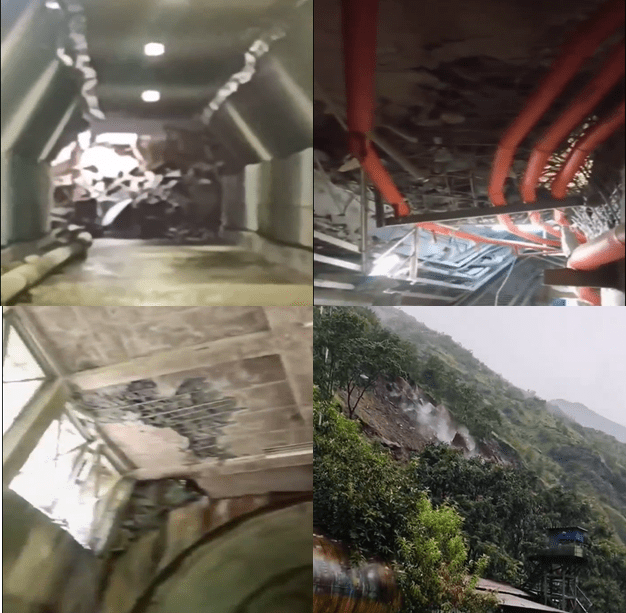
A landslide incident has partially damaged the power house tunnel of NHCP’s Dhauliganga HEP in Pithoragarh district of Uttarakhand. The incident occurred in the evening of Aug 30, 2025 after heavy rainfall also blocked the mouth of underground tunnel with rocks and debris. The HEP is built on Dhauliganga river in Dharchula tehsil of the district.
Continue reading “Aug 2025: Landslide Damages NHPC’s Dhauliganga HEP in Uttarakhand”Category: Uttarakhand
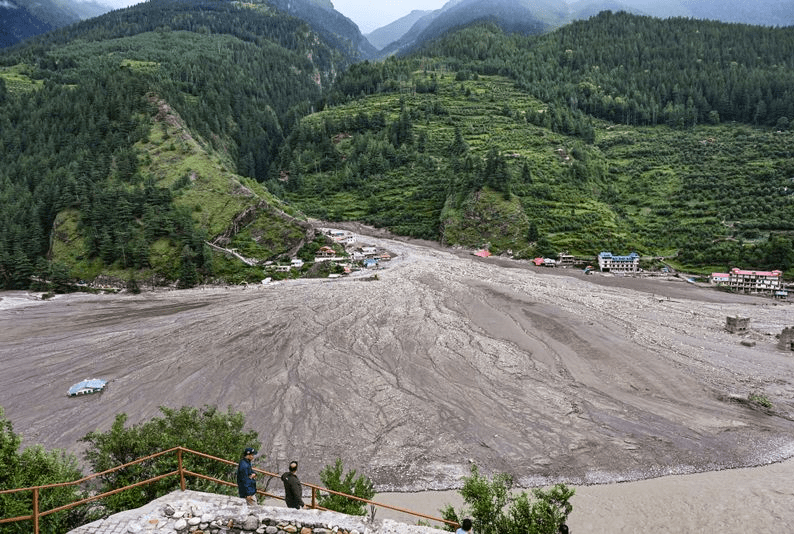
DRP 110825: Non-Implementation of NDMA’s 2020 GLOF Guidelines Worsened Dharali Disaster
(Feature Image: Mud, debris following flashfloods at Dharali)
The following Indian Express report highlights some key aspects of the Oct 2020 guidelines from the National Disaster Management Authority related to disasters caused by Glacial Lake Outburst Floods (GLOF). Unfortunately, as is clear from the recent Dharali disaster most key aspects of the guidelines remain unimplemented almost five years after the Guidelines were published. Had they been implemented with any seriousness, the proportions of the Dharali disaster would have been significantly reduced.
Continue reading “DRP 110825: Non-Implementation of NDMA’s 2020 GLOF Guidelines Worsened Dharali Disaster”
Systemic failures at the root of Joshimath disaster
The 520 MW Tapovan Vishnugad Hydropower project of NTPC (formerly National Thermal Power Corporation Limited) has remained controversial at least since 2009 as it is again now in January 2023. This time it is in the dock over the sinking of Joshimath town in Chamoli district of Uttarakhand.
Continue reading “Systemic failures at the root of Joshimath disaster”
Open Letter to PM on Uttarakhand Hydro in Sept 2021
Open Letter to the Prime Minister, Minister of Environment and media on 09/09/2021:
Restarting seven under-construction hydro projects in Ganga Himalaya unjustified
Recently the MoEF&CC has recommended restarting the construction of seven under-construction HEPs in Uttarakhand namely Tehri II (1000 MW), Tapovan Vishnugad (520 MW), Vishnugad Pipalkoti (444 MW), Singoli Bhatwari (99 MW), Phata Byung (76 MW), Madhmaheshwar (15 MW), and Kaliganga II (4.5 MW). The news came as a shock to citizens, devotees and environmentalists who have been struggling since over a decade to preserve our national river Ganga and the Himalaya. The deeply felt concern over the fate of these two pivotal ecological systems and defining symbols of Indian culture, compel us to write this letter. Not the least, as a citizen, it is also our constitutional duty ‘to protect and improve India’s natural environment’.
Continue reading “Open Letter to PM on Uttarakhand Hydro in Sept 2021”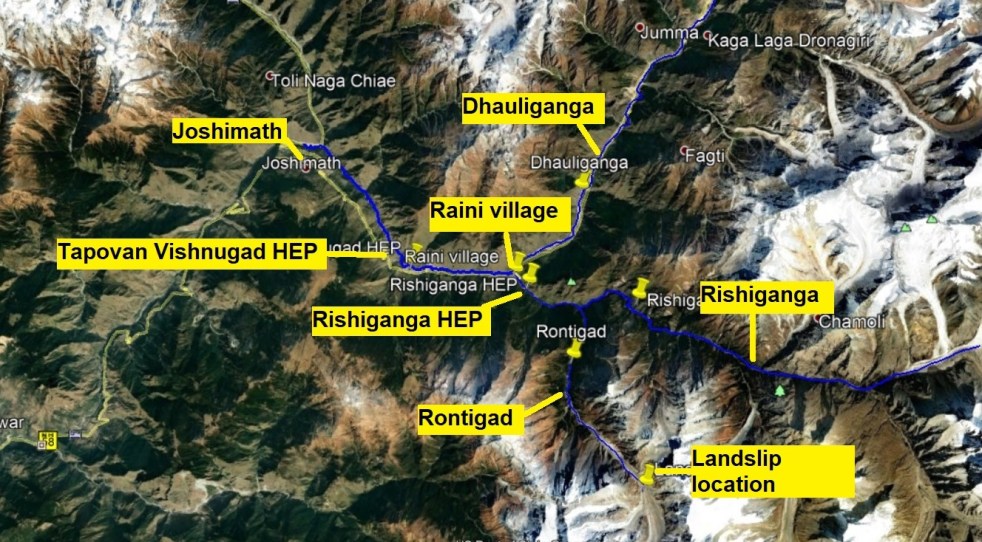
Himalayan Disasters: Early Warning Systems must, but much more needed
Guest Article by Prof S P Sati
The suggestion of a robust early warning system always echoes as and when there is a disaster in the Himalaya. Hence, the murmuring of having a state of art early warning system after the February 7th 2021 Rishi Ganga disaster is nothing new.
Several concerned scientists of the country are considering of instituting a new centre using the state of art remote sensing techniques. The centre would be dedicated to the early warning forecasting in the Himalayan region. This is heard practically after every disaster since last two decades.
Continue reading “Himalayan Disasters: Early Warning Systems must, but much more needed”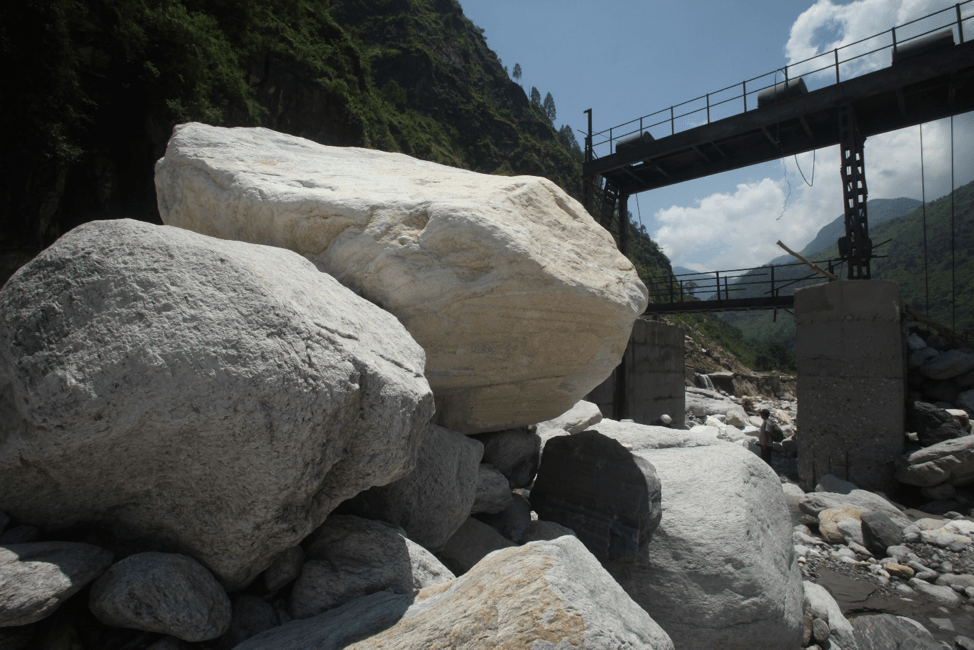
Ltr to Expert Appraisal Committee on Env Clearance for 120 MW Sirkari Bhyol Rupsiabagar HEP in Uttarakhand
Date: 12.4.2021
To:
The Expert Appraisal Committee (EAC) for River Valley Projects,
Ministry of Environment and Forest Officials, Government of India
1. Dr. K. Gopakumar (Chairman), Professor, Department of Electronic Systems
Engineering (Formerly CEDT), Indian Institute of Science, Bangalore-12. e-mail Id:
kgopa@iisc.ac.in
2. Dr. N. Lakshman, Professor, Dept. of Applied Mechanics, National Institute of
Technology Karnataka, Surathkal Srinivasnagar, Mangalore, Karnataka, India
575025. e-mail Id: lnand@rocketmail.com
3. Dr. Mukesh Sharma Professor, Civil Engg. Department, IIT Kanpur, Kanpur
208016, India. e-mail Id: mukesh@iitk.ac.in
4. Dr. B.K. Panigrahi, Professor, Department of Electrical Engineering, Head, Centre
for Automotive Research and Tribology, (CART), IIT Delhi, New Delhi-110016, email Id: bijayaketan.panigrahi@gmail.com
5. Dr. Chandrahas Deshpande, Professor (Economics), Welingkar Institute of Management Development and Research, Mumbai, Maharashtra. e-mail Id:chandrahas.despande@welingkar.com
6. Dr. A.K. Malhotra, C-6, Subhavna Niketan, Road No. 41, Pitampura, New Delhi –110 034. e-mail Id: ajitkumarmalhotra463@gmail.com
7. Dr. Uday Kumar R. Y. Director, Malviya National Institute of Technology, Jaipur. Email Id: udaykumarry@yahoo.com, director@mnit.ac.in
8. Dr. Narayan Shenoy K. Associate Director (Student Welfare) Professor, Department of Civil Engineering M.I.T., Manipal – 576 104. e-mail Id: kn.shenoy@manipal.edu
9. Shri Balraj Joshi Former CMD NHPC Ltd. Flat No. 406, Urja Vihar, Sector-45, Faridabad-10. e-mail Id: balrajjoshi@hotmail.com, balrajjoshi@gmail.com
10.Nominated Member of CEA Representative of Central Electricity Authority (CEA),Sewa Bhawan, R.K. Puram, Sector-I, New Delhi-110 066. e-mail Id: Dirhpa3@gmail.com
11. Shri Amrendra Kumar Singh, Chief Engineer, CWC, Representative of CentralWater Commission (CWC), Sewa Bhawan, R.K. Puram, New Delhi 110 066. e-mailId: ceenvtmgmt@nic.in
12.Shri A.K. Johnson, Representative of Wildlife Institute of India (WII), Post BoxNo.18, Chandrbani, Dehradun- 248001, e-mail Id: jaj@wii.gov.in
13.Dr. B. K. Das / Shri Amiya Sahoo, Representative of Central Inland FisheriesResearch Institute (CIFRI), Barrakpore, 700120 West Bengal e-mail Id: amiya.sahoo@icar.gov.in, amiya7@gmail.com
14.Shri Vijay Kumar, Representative of Ministry of Earth Sciences, Prithvi Bhawan, IMD Campus, Opp. India Habitat Centre, Lodi Road, New Delhi 110 003. e-mail Id: vijay.kumar66@nic.in
15.Dr. S. Kerketta, Director IA – 1, Ministry of Environment, Forest & Climate Change, Indira Paryavaran Bhawan, Jor Bagh Road, New Delhi – 110003. e-mail Id: s.kerketta66@gov.in
16.Dr. Mohit Saxena, Ministry of Environment, Forest and Climate Change · ImpactAssessment, Ph.D, Scientist/ Deputy Director, MoEF&CC, GoI, e-mail Id: mohit.saxena@gov.in
17. Shri Yogendra Pal Singh, Member Secretary EAC
Regarding Environmental Clearance being sought by UJVNL for the 120 MW Sirkari Bhyol Rupsiabagar HEP on the Gori river, Uttarakhand.
Dear Chairman and Members of the EAC,
UJVNL has sought Environmental Clearance for a proposed 120 MW HEP on the Gori river in Uttarakhand, and a final draft EIA is under consideration for approval by the Expert Appraisal Committee. We, citizens of Uttarakhand and other parts of the country are appalled that such a proposal for Environmental clearance should be submitted to you as a final draft. Not only because of its lack of critical information on the most important aspects required by the TOR, but also for providing false information to you, and most importantly, because of its attempt to obscure hazards and environmental impacts. The procedural flaws include 1. The lack of spatio-temporal coverage of the assessment, 2. The lack of standard methodology in assessing ecological and geo-hydrological parameters, and 3. Factual errors and information plagiarized from other reports.
Continue reading “Ltr to Expert Appraisal Committee on Env Clearance for 120 MW Sirkari Bhyol Rupsiabagar HEP in Uttarakhand”The factors that worsen the Uttarakhand Disasters
Abstract: While Uttarakhand is vulnerable to disasters, climate change is increasing these vulnerabilities. Major human interventions like hydropower projects and highways implemented without an informed or democratic decision-making process act as force multipliers during such disasters. The violations of legal and other prudent norms in their implementation further increase the damages. The absence of necessary monitoring, early warning systems and the overall disaster management system add another layer of damages during the disasters. The lack of the ability to learn lessons from disasters and lack of any accountability ensures the perpetuation of the situation.
Continue reading “The factors that worsen the Uttarakhand Disasters”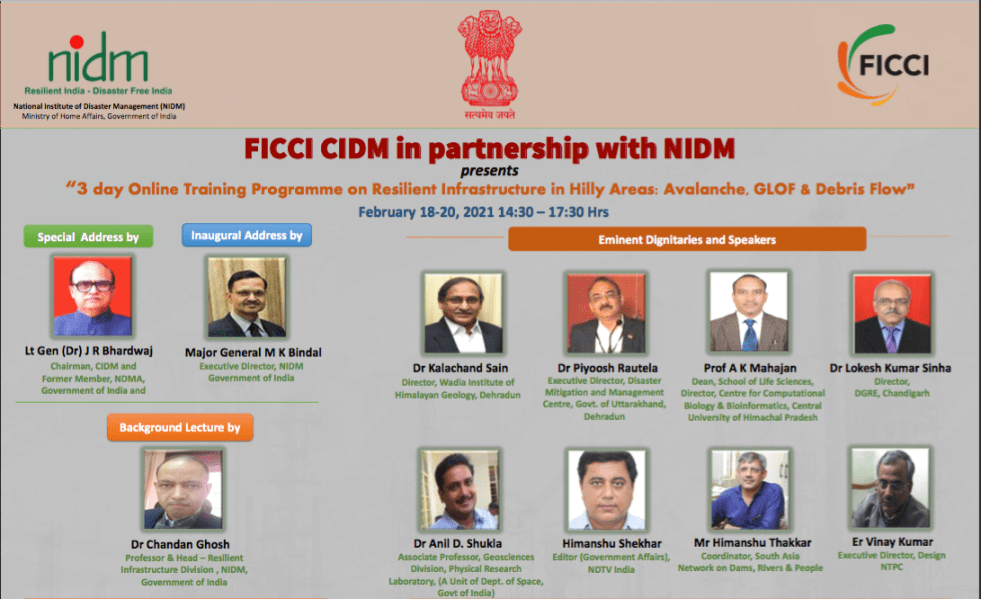
Force Multipliers in Uttarakhand disaster
Given below if the text of the presentation made by SANDRP coordinator on Day 1 at the FICCI-NIDM (NIDM: National Institute of Disaster Management; FICCI: Federation of Indian Chambers of Commerce and Industry) 3-day training program on Feb 18-20, 2021 on “Resilient Infrastructure in Hilly Areas: Avalanche, GLOF & Debris Flow” in the context of the Chamoli Disaster of Feb 7, 2021.
Continue reading “Force Multipliers in Uttarakhand disaster”
Letter to MoEF’s Expert Committee: Why Pancheshwar Project should not be considered for Environment Clearance
(Above: Protest outside MoEF on Oct 24, 2017 when EAC met to consider EC for Pancheshwar Project)
Oct 23, 2017
To
Chairman and Members, Expert Appraisal Committee (River Valley Projects), Union Ministry of Environment and Forests, Jor Bagh, New Delhi
Respected Chairman and Members,
The agenda of the EAC (for RVP) to be held on Oct 24, 2017, put up on the EC website only on Oct 18, 2017, just six days before the EAC meeting includes the 5040 MW Pancheshwar Multipurpose project (PMP), India’s largest proposed hydropower projects. The agenda should be available at least ten days before the meeting, and this should also be a reason for not considering the Pancheshwar project by EAC for its meeting on Oct 24. Moreover agenda mentions 5600 MW Pancheshwar project, where as the capacity as per EIA is 5040 MW. Is MoEF just callous in mentioning wrong installed capacity or has the capacity gone up? In either case, the 5040 MW Pancheshwar project should not be on EAC agenda. Continue reading “Letter to MoEF’s Expert Committee: Why Pancheshwar Project should not be considered for Environment Clearance”

Prime Minister Modi at Kedarnath: What was said; what was left unsaid
The central theme of Prime Minister Narendra Modi ji’s 40 minutes speeach at Himalayan pilgrimage centre of Kedarnath in Uttarakhand on Oct 21, 2017[i], was that we need to come out of the shadow of a disaster. It was to chart out new design, development and reconstruction of the temple, the road, the banks of River Mandakini and its tributary Saraswati and the memorial of Shankaracharya. The reconstruction was required since the disaster had destroyed all this and more. Continue reading “Prime Minister Modi at Kedarnath: What was said; what was left unsaid”
 SANDRP