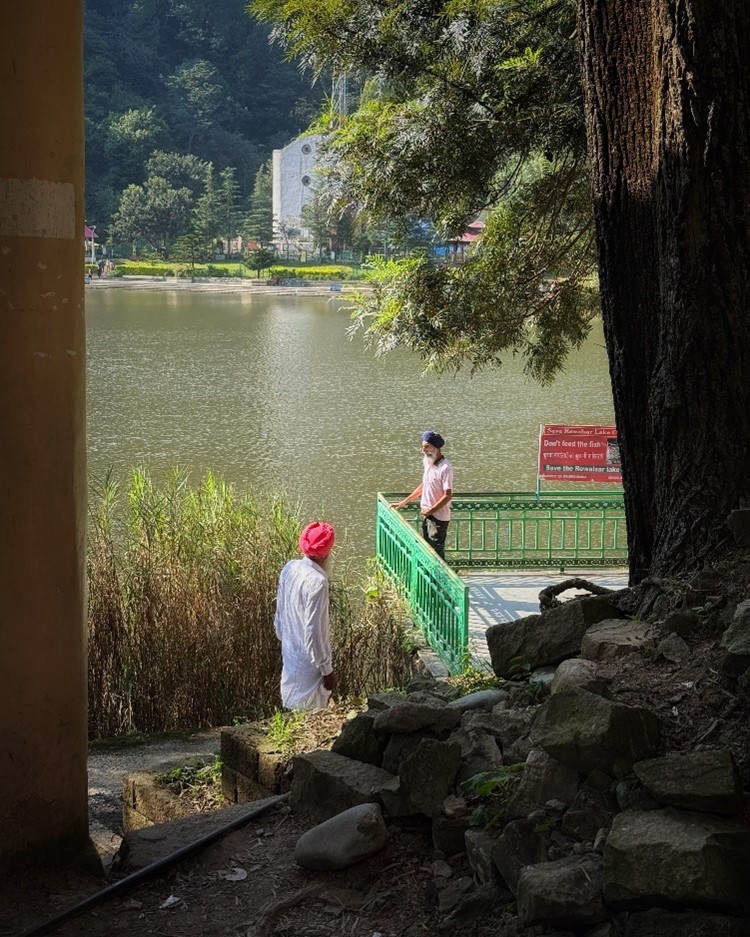
Rivers and lakes of the Indus basin have been at the crossroads of civilizations, trade routes, and ecosystems for centuries. They are surrounded by stories and songs from many religions, languages and tribes. One such river is Beas, celebrated as Vipash[1] or the ‘breaker of chains’ in the Rigveda, circa 1500 BC. Beas originates at 4361 meters near Rohtang Pass[2] and flows through the Himalayan state of Himachal Pradesh before meeting River Sutlej in the plains of Punjab, literally “the land of five rivers’. Beas flows for about 470 kms to water some of the most fertile valleys in the world.
Continue reading “Rewalsar Lake: Where Faiths, Ecosystems and Communities Meet”Category: Rivers

2024: Dams, Mining, Construction Damaging Gangetic Dolphin Habitats
(Feature Image: Dolphin corpse found along Ganga in Sahibganj, Jharkhand in Feb. 2024. Image source: ETV Bharat)
Despite declaring Gangetic Dolphin a National Aquatic Animal in May 2010, launching of Project Dolphin in August 2020 and recognizing October 05 as National Dolphin Day since 2022, the key species indicating river health continues to face unnatural deaths and threats from various developmental activities. This overview highlights the incidents of suspicious death of precious mammal and looming threats on its habitat along with some noteworthy steps being taken by conservationists and governments to protect the endangered species.
Continue reading “2024: Dams, Mining, Construction Damaging Gangetic Dolphin Habitats”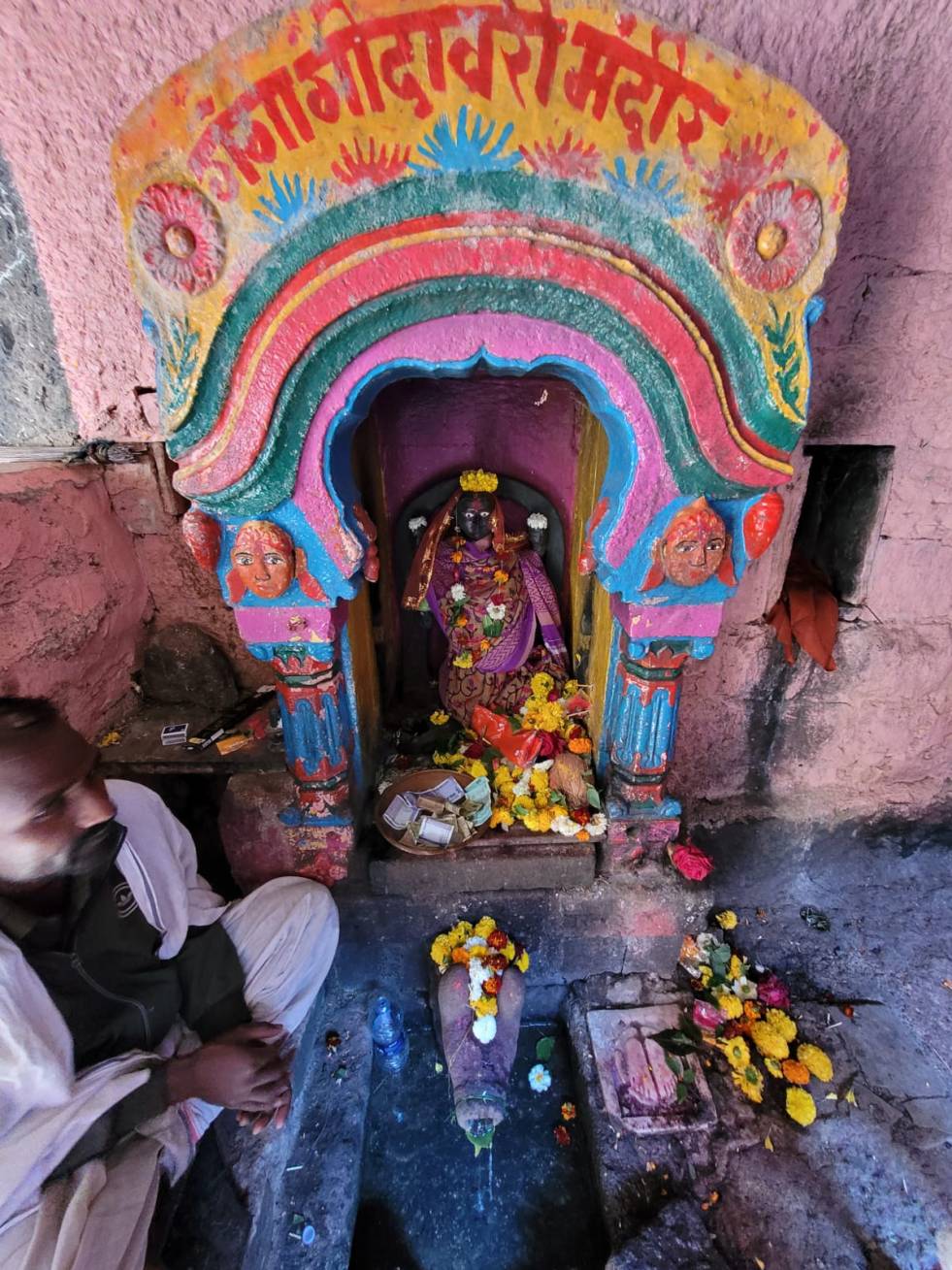
उगम: Story of Godavari and Vaitarna’s Origin
Most Indian languages have a saying which goes something like: “Do not go looking for a river’s origin or a Rishi’s lineage”. I thought this was because these stories become eclectic and frankly scandalizing as we trace them. But while looking at several origins of River Godavari on the Brahmagiri Mountain, I realized that the meaning can be much simpler (or much complicated): It is difficult to decide on a single origin for a river.
Continue reading “उगम: Story of Godavari and Vaitarna’s Origin”
Lessons for Other River Basins from the Cauvery Dispute
Guest Article by Prof Bhakti Devi
Numerous articles have cropped up explaining the reason behind the Cauvery water inter-state dispute. A remarkable thing to note in these explanations is that every one of the articles focuses on the volumetric allocation of water. Even the documents relating to legal agreements between the two states on how the water of the Cauvery River will be shared focus on the volumetric distribution. Which, on the surface, appears completely logical but seems illogical when you understand the science of how a river gets its water which is the elephant in the room.
Continue reading “Lessons for Other River Basins from the Cauvery Dispute”
Co-sculptors of the Central Highlands: River Sindh and its People
GUEST ARTICLE BY POORVA GOEL
At Pachnada (see the photo above, the river in Uttar Pradesh, photo by Poorva Goel), the Sindh River meets four other rivers- Yamuna, Chambal, Kunwari and Pahuj, in a rare spectacle. Over time, the gentle currents of these rivers have meandered and unloaded their sediment on the floodplains. The floodplains are lush with mustard and wheat fields, and the scrub slopes are dotted with grazing cattle.
Continue reading “Co-sculptors of the Central Highlands: River Sindh and its People”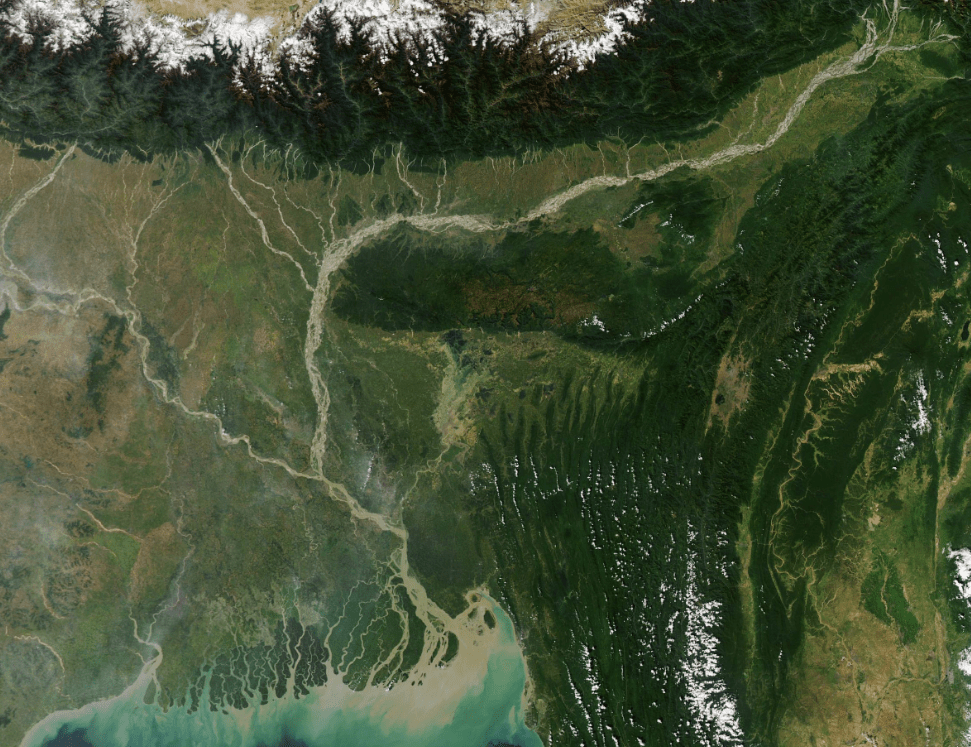
From River to Cup: History of Assam’s Tea Plantations and the role of Brahmaputra
Guest article by Anantaa Ghosh
[Feature image above: A NASA Earth Observatory image by Lauren Dauphin]
Author’s note: In this article, I have taken grammatical liberties by omitting the use of ‘the’ before a river’s name and ‘it’ when referring to them. I firmly believe that reimagining and re-understanding rivers necessitate a profound change that extends to our lexicon as well. Consequently, I am deliberately employing the pronoun ‘they’ to refer to Brahmaputra and all the rivers mentioned herein, rather than ‘it’ which may reduce the river to an object. I also refrain from using ‘he’ or ‘she’ (as per Indian mythology) as these pronouns tend to impose a mythological identity as the sole identity of a river,, negating the multifaceted nature and diverse forms of identity that a river has.
Continue reading “From River to Cup: History of Assam’s Tea Plantations and the role of Brahmaputra”
India Lost 10 More Gangetic River Dolphins In One Year in 2022-23
(Feature Image: Post mortem being done of a dolphin carcass found at gate number 01 of Girija barrage in Bahraich, UP. Image Source: Dainik Bhaskar, Nov. 2022)
May 18, 2023, would mark 13 year of declaration of Gangetic dolphin as a national aquatic animal. However, the habitats of this ‘highly endangered’ species continue to suffer anthropogenic threats including wrong operations of dams & barrages, inland waterways projects, decreasing flows & increasing pollution in rivers, sand mining and poaching etc. in India. As a result, there are frequent incidents of mysterious and unnatural deaths of these fresh water mammals.
SANDRP has been tracking such incidents since January 2020 and our previous two reports published in January 2021 & April 2022 on the subject have complied deaths of at least 21 Gangetic dolphins in 2 years (2020 and 2021). In continuation of the same, this account covers the incidents of deaths of Gangetic river dolphins during past one year.
Continue reading “India Lost 10 More Gangetic River Dolphins In One Year in 2022-23”
Changing Course: Teesta Mahananda Rivers in North Bengal
Guest Article: Steve Lockett, Mahseer Trust
(Above: Teesta-Mahananda Link Canal, part of a water-use strategy that seems broken. Copyright: Adrian Pinder, Mahseer Trust)
Rivers change course, it is part of their being. A river changing course can bring unexpected or unwanted ramifications. Sometimes they can be quite devastating. But when they come as a result of deliberate actions to alter the river’s course how can we expect people, whole communities or wildlife to cope?
Continue reading “Changing Course: Teesta Mahananda Rivers in North Bengal”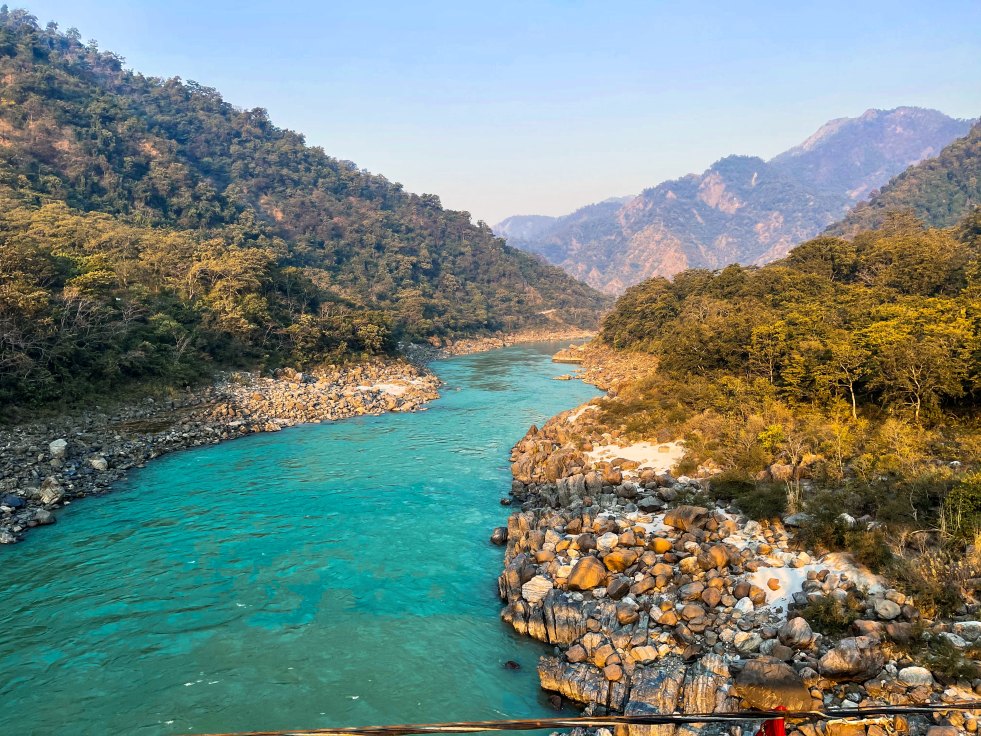
The Eternal Ganga: A Journey Through Artistic Depictions of India’s Sacred River
(Feature photo above: “… But I go on forever” The pristine Ganga flowing through the mountains (Rishabh Gagneja, June 2021))
Guest Article by Anantaa Ghosh
The Ganga, often termed as the ‘River of Heaven’ has always been deemed as the purest and most sacred of all rivers. In the west, Ganga was believed to be Phison, a river flowing in Eden. The river has found its place in the works of several famous authors, including Kalidasa who describes the river in words of unique grace.
Then in familiar Alaka find rest,
Down whom the Ganges’ silken river swirls
Whose towers cling to her mountain lover’s breasts,
While clouds adorn her face like glossy curls.[1]

Tirthan’s Way
Abhay Kanvinde’s photo story of Tirthan, as the free-flowing river makes its way out of the Great Himalayan National Park, then flows close to villages, touching the people and finally when it gets dammed as it comes out of the valley that is its home.
Continue reading “Tirthan’s Way” SANDRP