Dams · Rivers

The River, Her Bounty and Fury: The Sakura and Tokyo

GUEST BLOG BY: Aparna Datar

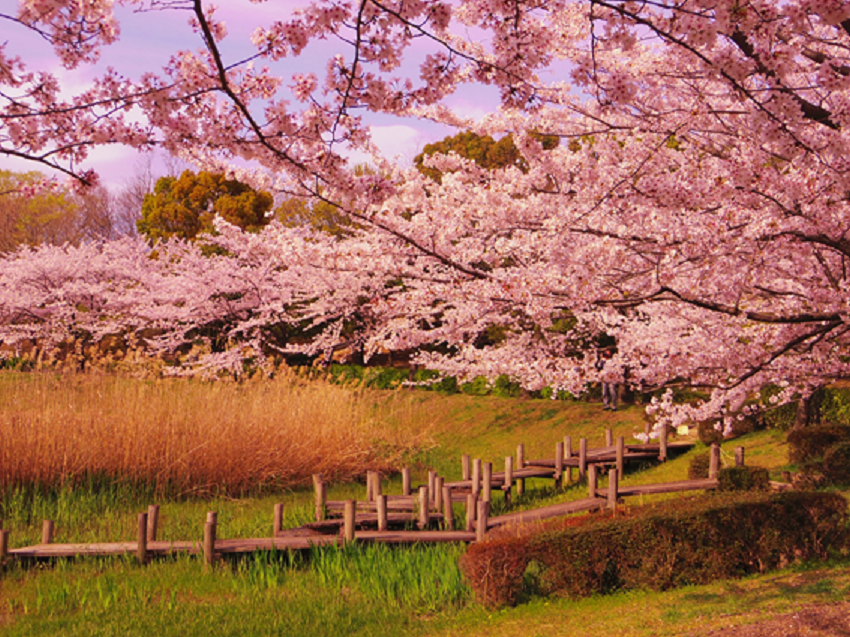
The cherry blossoms of Japan are a glorious seasonal spectacle, swathing the entire country into a gentle blanket of soft pink Sakura flowers. Tokyo’s rivers turn pink as the Sakura petals, float upon their surfaces.

Sakura is a genus of the Prunus, with a genetic name Prunus serrulata, or the Japanese Cherry.

Continue reading “The River, Her Bounty and Fury: The Sakura and Tokyo”

Ganga

Is there hope from National Mission for Clean Ganga? Listen to official agencies

In this second part of the Ganga article, let us listen to some official agencies about the state of Ganga River following the recent efforts.

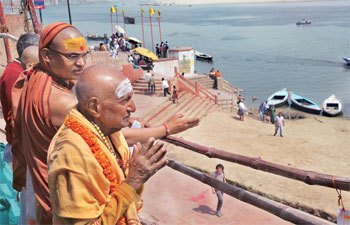
Parliamentary Committee: Why is Ganga among the five most polluted rivers of the world? Said Parliamentary estimates committee (2016-17) for Ministry of Water Resources, Ganga Rejuvenation and River Development (MoWR for short) in a report on “Ganga Rejuvenation” submitted to the Lok Sabha (lower house of India’s Parliament) on 11th May, 2016[i]: “However, indiscriminate anthropogenic interventions like construction of HPPs[ii] in the seismically active and fragile Himalayas, diversion of 80 to 90 percent of water, discharge of extremely hazardous effluents by 144 drains and dumping of solid waste has converted the Ganga into one of the ten most polluted rivers of the world. Alarmed by the drying-polluted Ganga and taking note of the solemn resolve of the Prime Minister to rejuvenate the Ganga, the Committee decided to select the subject for in depth examination and report with a view to accelerate the work of Ganga rejuvenation.” The report also noted, “The Public Accounts Committee (2014-15) in their 8th Report on Water Pollution had expressed distress that the Ganga has become one of the five most polluted rivers in the world, despite launching of the ‘Ganga Action Plan’ and the ‘Mission Clean Ganga’ (2009) by the NGRBA[iii].” Continue reading “Is there hope from National Mission for Clean Ganga? Listen to official agencies”

Ganga · Ministry of Water Resources

What ails Ganga: Why Namami Gange is spectacular failure

Ganga river basin’s importance is well acknowledged. The World Bank, that is funding a currently ongoing USD 1 Billion project for Ganga Clean up says in its Project Appraisal Document[i]: It’s the most populous basin in the World. 50% of India’s poor are in the five states along the main stem of Ganga: Uttarakhand, Uttar Pradesh, Bihar, Jharkhand and W Bengal. The basin of the 2525 km long river spans four countries (China, Nepal, India, Bangladesh) and 11 Indian states. More than 60 million people came to the Ganga river in the city of Allahabad for pilgrimage in January 2007 during Kumbh Mela, making it the largest gathering in the world. It will again happen in January 2019. Continue reading “What ails Ganga: Why Namami Gange is spectacular failure”

Assam · brahmaputra · Dam Induced Flood Disaster · Floods

Role of Doyang Dam in bringing unprecedented floods in Golaghat

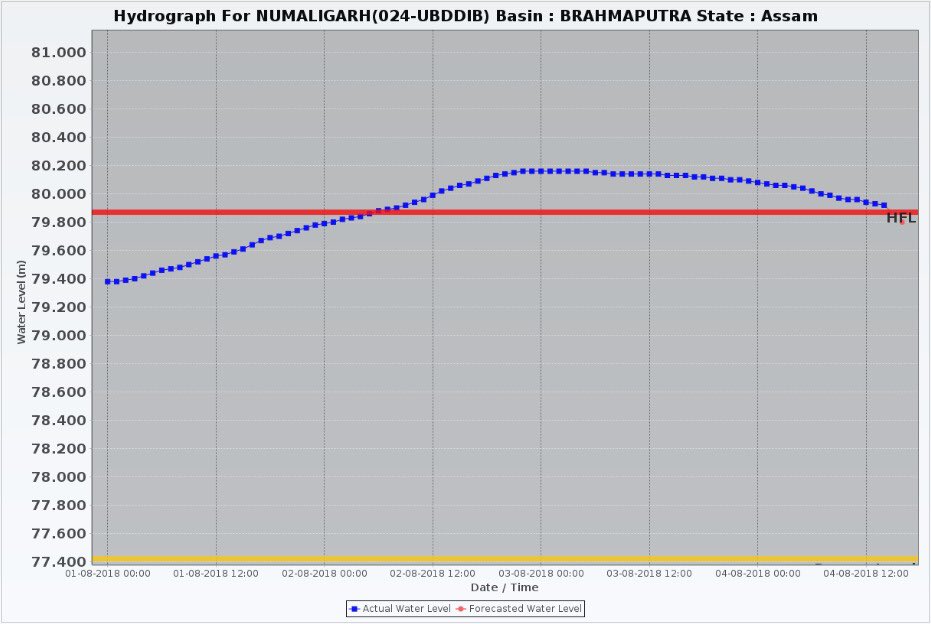
When Dhansiri river broke the highest flood level mark at Numaligarh site in early hours of Aug 2, 2018 in Golaghat district in Assam, it was not only completely out of the blue, the whole episode was unprecedented.

The earlier Highest Flood Level of Dhansiri River at Numaligarh was 79.87 m. The new HFL, it seems, was 80.18 m, full 31 cm above the previous HFL. This is rather rare, normally the new HFL would be a few cm higher, not almost one third of a meter. Secondly, the water level remained above 79.87 cm, the old HFL, for over 60 hours. This is also unusual, normally the water level rarely remains above HFL for more than a day or so. Thirdly, the earlier HFL was achieved on Sept 24, 1985, so this sudden episode of flood was breaking 33 year old record. Continue reading “Role of Doyang Dam in bringing unprecedented floods in Golaghat”

Bihar · Ganga · Inland Waterways

National Inland Waterways in Bihar: Viable or desirable?

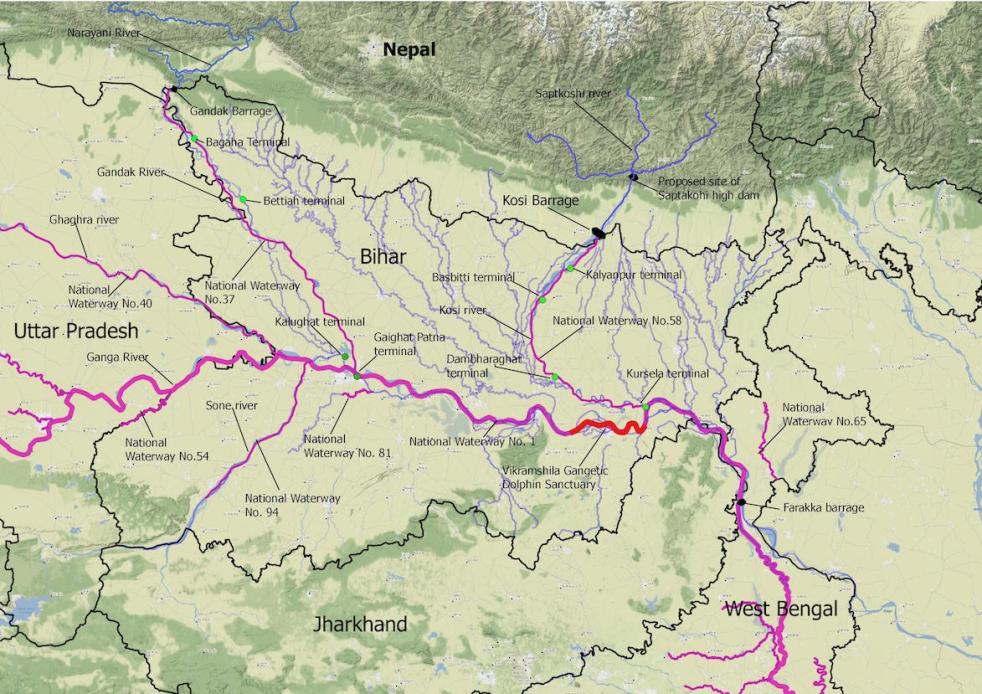
A new surge in the developmental interventions in the rivers in India is seen with the implementation of National Inland Waterways Act, 2016. Under this Act, 138 stretches of the rivers, creeks, backwaters, estuaries, etc. in 24 states and 2 union territories will be developed as the ‘national inland waterways’ for the transportation of huge cargo and passenger vessels. Being declared as “national” means that the control and regulation of these waterways will be in the hands of the central government and not state governments. This project of Central Government is being pushed forward with the claims of inland water transport being cost-effect, environmental friendly and safe for the transportation of hazardous goods. However, these so called benefits are neither universal nor automatic as they will be dependent on certain conditions, and will accrue if and when those conditions are met. Development of these waterways will be controlled and regulated by Inland Waterways Authority of India (IWAI). Continue reading “National Inland Waterways in Bihar: Viable or desirable?”

Bihar · Dams · Floods · Ganga

Will sluggish Farakka again create prolonged floods along Ganga in Bihar?

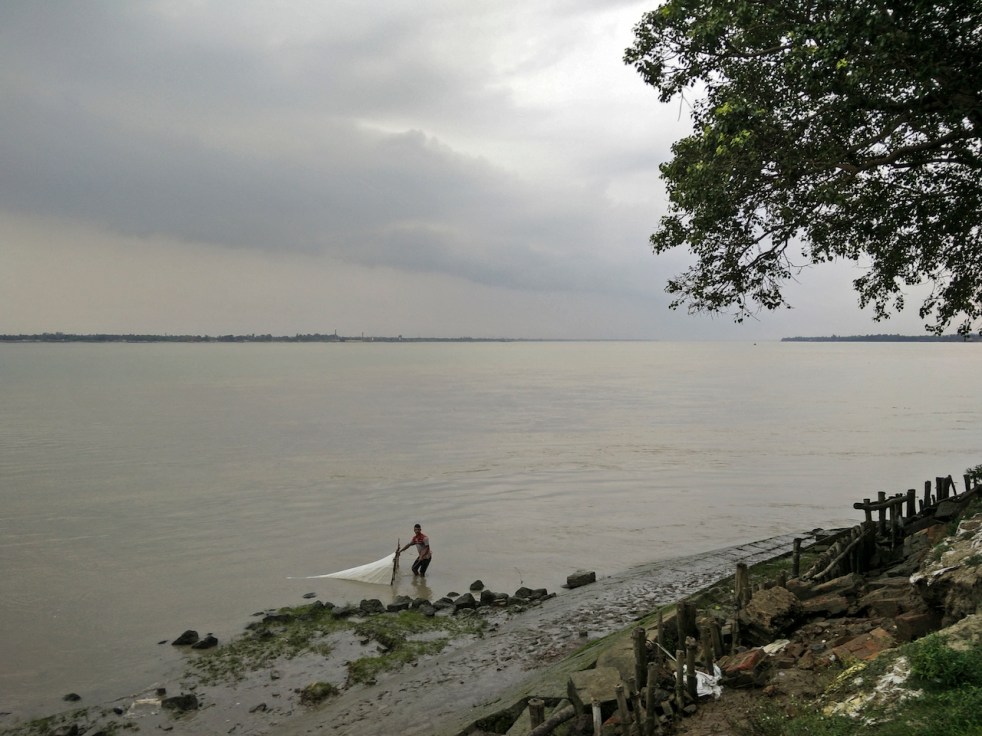
It’s a bit intriguing situation. IMD and Skymet experts are downgrading the monsoon rainfall from earlier forecast 100% to 92%. Both agencies are predicting even lower rainfall in remaining part of current South West Monsoon.  Bihar has received 413.2 mm rainfall till Aug 2, 2018, 22% below normal. And yet, starting Aug 1, CWC’s flood forecasting sites along the Ganga were showing ominous portents. For the first time this monsoon, the sites started showing steep upwards trend. Continue reading “Will sluggish Farakka again create prolonged floods along Ganga in Bihar?”

Beas · Fish · Fish Sanctuaries

Beas Dolphins: A Flash Of Fin, A Glimmer Of Hope

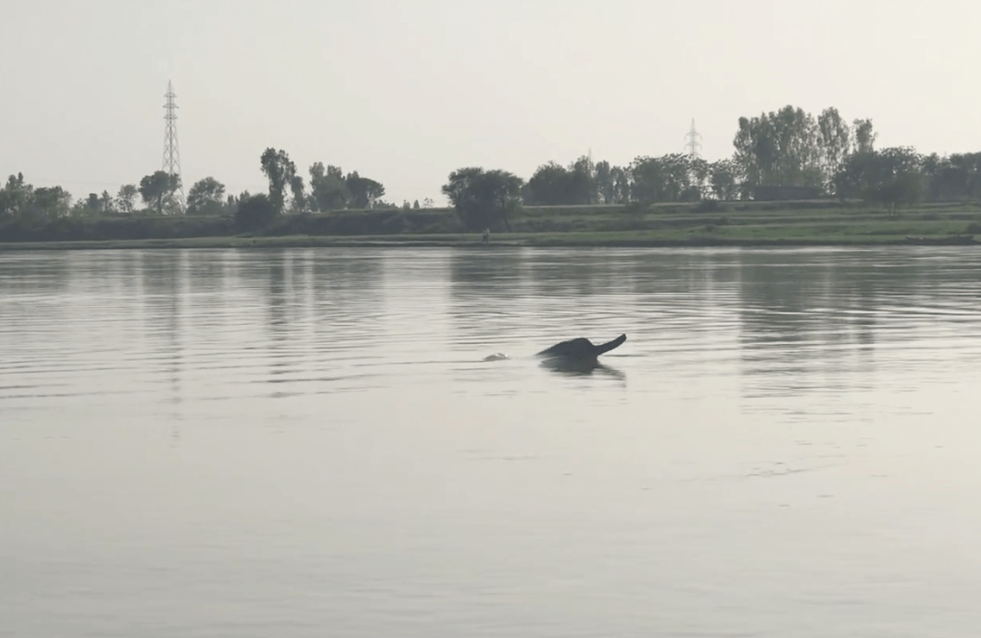
Above: A female Platanista gangetica minor breaks the surface of the Beas (Photo by Arati Kumar Rao)

India’s few remaining Indus river dolphins are confined to one short, beautiful stretch of the Beas. They have a fighting chance at survival only if we ensure a healthy river

Guest Blog by Arati Kumar Rao

A dark shape cleaves the Beas river, leaving a long wake in its trail. From the way it moves, it is neither a human, nor fish, nor even a river dolphin. The shape swims strongly, shrugging off the strong current. It holds its line and makes straight for a sandbar, hauling itself up on a buff-coloured spit.

A black dog, probably feral. It shakes itself free of water and, running across the sand, begins tugging at the beached carcass of a cow. Another bigger dog appears out of nowhere, and the two begin to snarl and gorge, yanking and tearing flesh off the arcing ribs.

River sandbars contain multitudes. I was upstream of Harike, the largest wetland in north India. The critically endangered gharial (Gavialis gangeticus), the fish-eating, long-snouted crocodilian, of which no more than a few hundred survive in the world, bask and nest on these sandbars. Freshwater turtles like the red-crowned roofed turtle (Batagur kachuga) and the Indian narrow-headed soft-shell turtle (Chitra indica), among the most endangered of freshwater species, use sand islands extensively to breed and to bask. Hundreds of thousands of birds — some transient visitors from China and Siberia and Central Asia wintering here, some resident — forage, nest, breed, raise chicks. Many of these creatures have this in common – they are all threatened, to greater or lesser degree.

The sight of predatory, feral dogs in this delicate ecosystem comes with chilling implications. Continue reading “Beas Dolphins: A Flash Of Fin, A Glimmer Of Hope”

Cauvery · central water commission · Dams · Disasters · Floods · Karnataka · Tamil Nadu

Cauvery is facing very serious flood risk, but CWC is in slumber

(The figure above is screen shot of CWC Flood forecasting site showing no warning signs even at 5 pm on 230718)

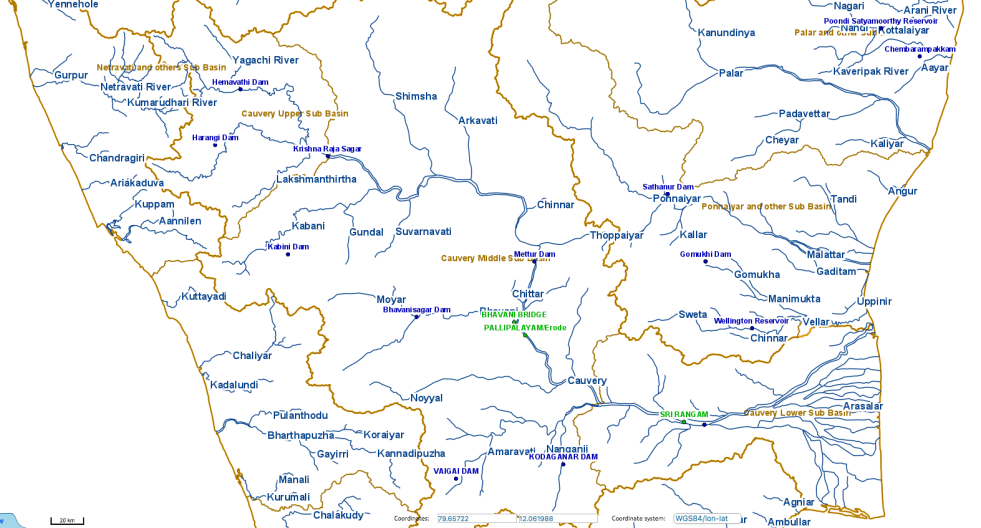
Almost all the big dams in Cauvery Basin are full on the earlier ever monsoon date this year. This includes Krishnaraj Sagar, Mettur, Kabini, Harangi, Hemavathi and Bhavanisagar. They are almost full and have started releasing large flows to the downstream areas. This is when we are past just about six weeks of South West Monsoon, the North East monsoon would come after that. It means that the basin is facing major risk of floods in next 2-5 months. And yet Central Water Commission, India’s flood forecasting agency, seems to be in deep slumber. It has not even bothered to update the flood readings on its designated sites from the 2017 figures.  Continue reading “Cauvery is facing very serious flood risk, but CWC is in slumber”

Dams · Rivers

Review of fascinating Dams, Rivers related developments in American continent in 2017

Brazil Announces the End of Mega-Dams in the Amazon The Brazilian government has announced it will stop building mega-dams in the Amazon, according to reports in the Brazilian newspaper O Globo and in an article published in Mongabay. This is great news indeed. Congratulations to everyone in Brazil Campaign.  https://www.internationalrivers.org/resources/brazil-announces-the-end-of-mega-dams-in-the-amazon-international-rivers-statement-16587 (3 Jan 2018) Continue reading “Review of fascinating Dams, Rivers related developments in American continent in 2017”