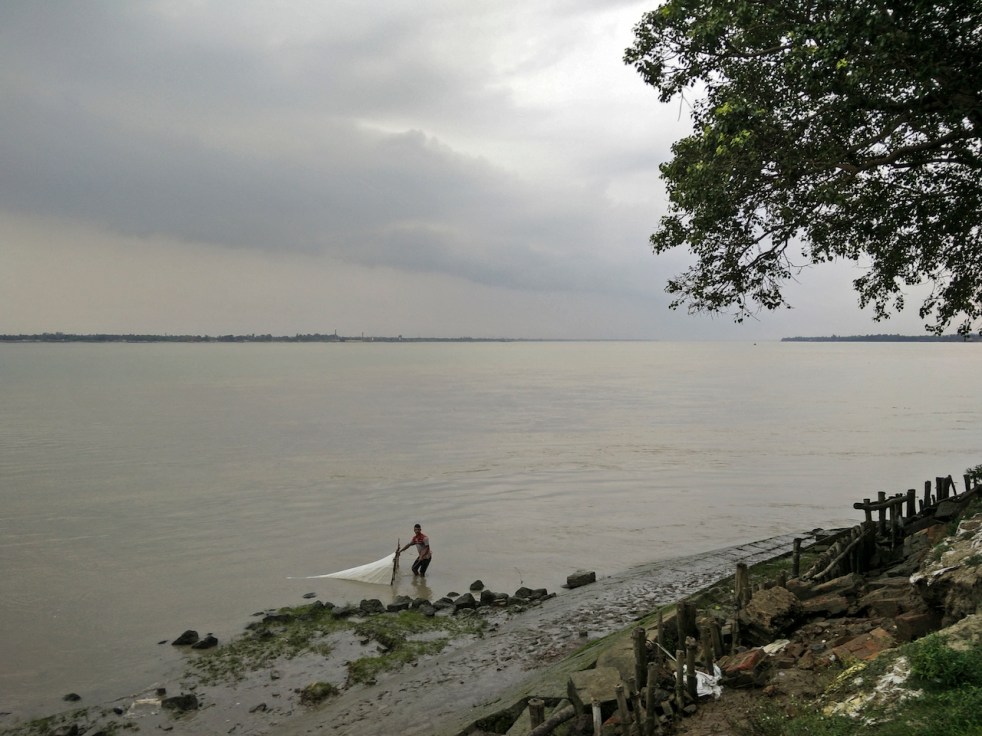
It’s a bit intriguing situation. IMD and Skymet experts are downgrading the monsoon rainfall from earlier forecast 100% to 92%. Both agencies are predicting even lower rainfall in remaining part of current South West Monsoon. Bihar has received 413.2 mm rainfall till Aug 2, 2018, 22% below normal. And yet, starting Aug 1, CWC’s flood forecasting sites along the Ganga were showing ominous portents. For the first time this monsoon, the sites started showing steep upwards trend. Continue reading “Will sluggish Farakka again create prolonged floods along Ganga in Bihar?”
Category: Regions
Country wise list here with different states
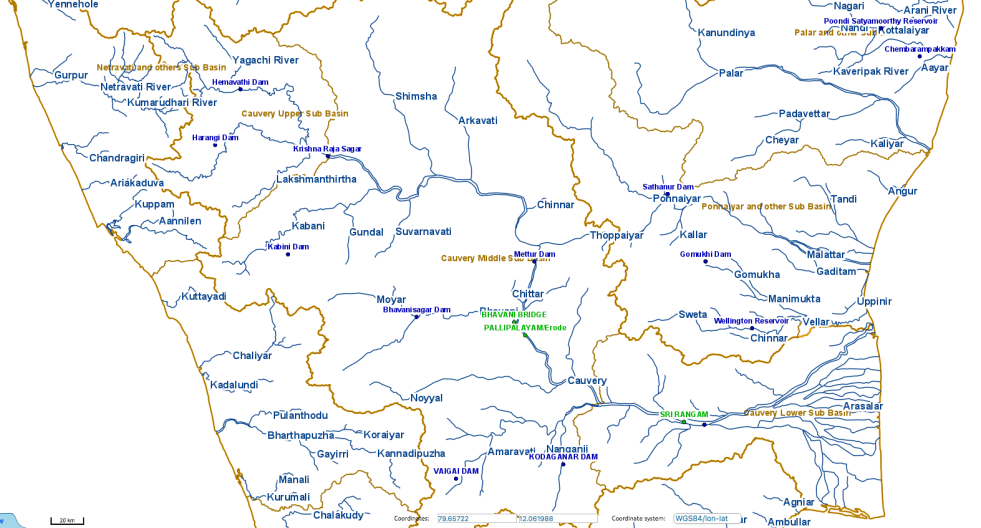
Cauvery is facing very serious flood risk, but CWC is in slumber
(The figure above is screen shot of CWC Flood forecasting site showing no warning signs even at 5 pm on 230718)
Almost all the big dams in Cauvery Basin are full on the earlier ever monsoon date this year. This includes Krishnaraj Sagar, Mettur, Kabini, Harangi, Hemavathi and Bhavanisagar. They are almost full and have started releasing large flows to the downstream areas. This is when we are past just about six weeks of South West Monsoon, the North East monsoon would come after that. It means that the basin is facing major risk of floods in next 2-5 months. And yet Central Water Commission, India’s flood forecasting agency, seems to be in deep slumber. It has not even bothered to update the flood readings on its designated sites from the 2017 figures. Continue reading “Cauvery is facing very serious flood risk, but CWC is in slumber”
Maharashtra Monsoon Musings – July 2018
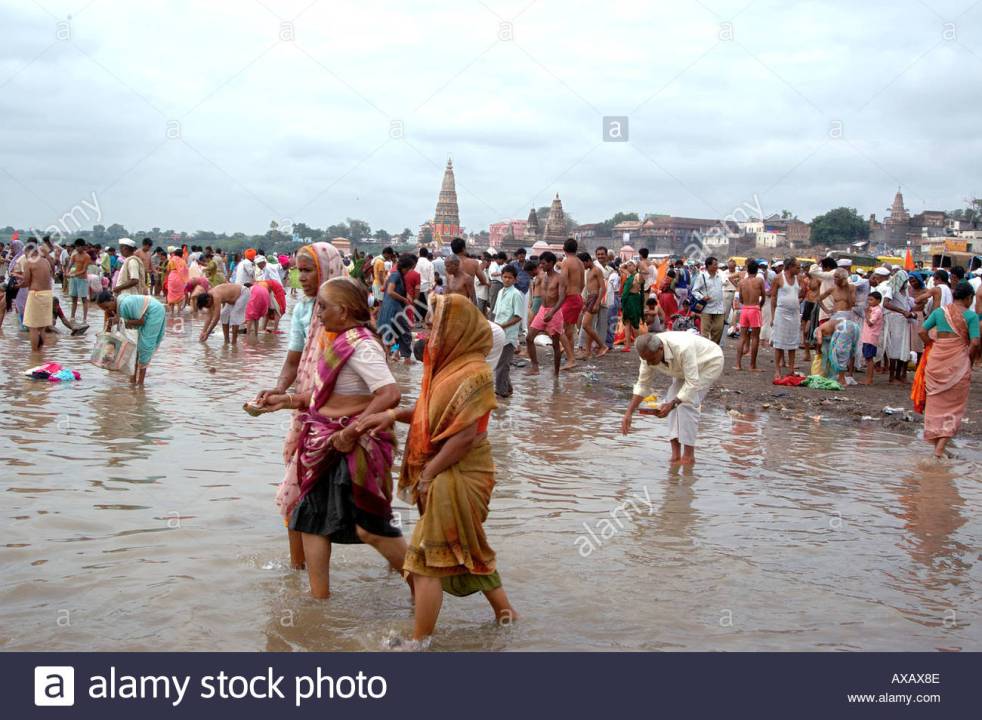
Maharashtra celebrates Ashadhi Ekadashi today[i], also called Dev Shayani Ekadashi, when god Vishnu went to sleep. Ashadhi Ekadashi is a cultural phenomenon in Maharashtra, holding a special place in the hearts of devotees and atheists alike. This is the day when the Vaari, a travelling caravan of devotees reach Pandharpur, the abode of Pandurang or Vitthal from various places in the state. Pandurang is a special god himself. He is the loving god of the farmers and cattle herders and the toiling masses of the state. People travel to Pandharpur with tradition attire and gaiety. Ashadhi Ekadashi is supposed to fall right in the middle of monsoon as coughing Parineeta told me in the morning, enjoying the Pune rains. She also said that Farmer leader Sharad Joshi used to be unhappy with this festival as farmers left behind their fields right in the sowing season to go for the Pandharpur Vaari, away from their fields for days at end. Festivals are always fun though. Continue reading “Maharashtra Monsoon Musings – July 2018”

Ferocity of Glacial Lake Outburst in Bhaga Valley in Himachal
Have you seen how FEROCIOUS glacial lake outburst flood can be? I too have not, but watch this[i].
Frightening, is it not?
Continue reading “Ferocity of Glacial Lake Outburst in Bhaga Valley in Himachal”

USA manages to reduce 2015 water use to below 1970 level
Water use across US has been decreasing since 2005, has now reached pre 1970 levels, says the U.S. Geological Survey (USGS) study[i] published on June 19, 2018. According to a new USGS report[ii], 445 BCM (Billion Cubic Meters, all BCM figures are annual figures) of water were withdrawn for use in the United States during 2015. This represents a 9 percent reduction of water use from 2010 when about 489 BCM were withdrawn and the lowest level since before 1970 (511 BCM). Continue reading “USA manages to reduce 2015 water use to below 1970 level”

Floods in Tripura, Mizoram, Barak Valley in June 2018
The second wave of floods (first wave came in around May 20-24) this year inA North East India is affecting Tripura, Mizoram and mainly Barak Valley in Assam. Worryingly, while CWC flood forecast site shows water level reaching unprecedented levels in Manu river at Kailashahar in North Tripura District, CWC seems to have NO flood forecasting site in Mizoram. At Matizuri site in Hailakandi district in Barak Valley in Assam, the Katakhal river also approaching its highest ever flood level. In Bangladesh too sites like Amalshid have crossed the HFL. Continue reading “Floods in Tripura, Mizoram, Barak Valley in June 2018”
Shimla water crisis: How smart are we getting?
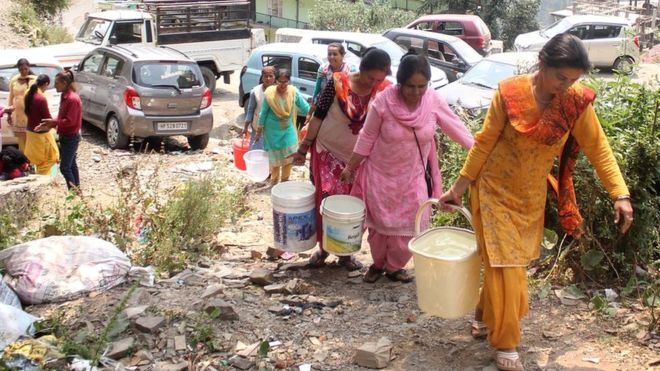
“If you love Shimla, please do not visit” is one of the viral messages in social media this season, encapsulating the water crisis in the hill city this summer. The current round of severe water crisis in Shimla possibly had some roots in what happened here in Dec 2015-March 2016. In winter of 2015, Shimla faced severe water quality issue[i], out break of hepatitis lead to huge reduction in water use in Shimla from Ashwini Khad. Thousands suffered from the outbreak and dozens of people died. The poorly functioning Malyana Sewage Treatment Plant, was releasing the effluent in the same Ashwini Khud from where the Hill city was taking a significant part of water. That water supply was then reduced, but nothing has been done to improve the situation. The Himachal Pradesh Chief Secretary has also told media[ii] that water available from Giri and Gumma streams have hugely reduced currently. Continue reading “Shimla water crisis: How smart are we getting?”
SOUTH ASIA 2017: MISS YOU, RIVERS & FISH! As Dams and Water sharing dominate
India-Bangladesh-Myanmar face big quake threat A giant fault in the earth’s crust in one of the world’s most densely populated areas could kill tens of millions of people, scientists have warned according to a new paper in the journal Nature Geoscience. Researchers placed hundreds of highly accurate GPS receivers in locations across India, Bangladesh and Myanmar and monitored them over a ten-year period. Now the scientists fear the location is home to a mega-thrust fault which could unleash a 8.2-9.0 magnitude earthquake. More than 140 million people live within a 60-mile area of the potential disaster zone in Bangladesh. The scientists, led by Dr Michael Steckler from Columbia University published their findings in the journal Nature. This is also a warning against major interventions in the North East India. http://www.indiaspend.com/cover-story/india-bangladesh-and-myanmar-face-big-quake-threat-99557, July 19, 2016, http://thenortheasttoday.com/earthquake-of-9-0-magnitude-could-be-unleashed-anytime-from-a-major-fault-underneath-bangladesh/, July 22, 2016, http://www.nature.com/ngeo/journal/vaop/ncurrent/full/ngeo2760.html Continue reading “SOUTH ASIA 2017: MISS YOU, RIVERS & FISH! As Dams and Water sharing dominate”

Australia 2017: Floods due to Dams key issue
Probe into operation of Queensland dam following April 2017 floods YET ANOTHER INSTANCE OF DAM FLOODS IN AUSTRALIA? This time it is Kinchant Dam in Queensland, and it is accused of allowing water level to rise to 103% before starting releases only a day before the floods arrived, worsening the downstream floods. In downstream areas, the internet and text messages were not reaching people, leading to dramatic rescues and avoidable damages. The Queensland government has ordered an independent review of how a dam was operated before floods hit the Eton area in March-April 2017, south of Mackay, sparking dozens of dramatic rescues. https://www.brisbanetimes.com.au/national/queensland/probe-into-queensland-dam-after-dramatic-rescues-20170405-gvdxk6.html, https://www.dailymercury.com.au/news/exclusive-states-orders-independent-look-at-eton-d/3163103/ 5 April, 2017) Continue reading “Australia 2017: Floods due to Dams key issue”

ASIA-2017: Surplus power, cancelled Hydro and dam risks dominate
SOUTH EAST ASIA Rivers are invaluable INTERESTING QUESTION: HOW MANY DIFFERENT WAYS CAN YOU MEASURE A RIVER? “Perhaps the most important – and largely overlooked – measure of a river is its value to the economy and wellbeing of a nation, a region, and its people. Simply put, large healthy, productive rivers like the Mekong and Ayeyarwady (or Irrawaddy) are unifying geographic features that serve as economic juggernauts, essential to long term growth and in maintaining the quality of life for millions of people.”
“These (FLOOD) benefits are valued annually at US$8-10 billion (K10.8 trillion), while floods in the Lower Mekong basin cause a much lower $60-70 million in damage every year.” “Floods and sediment are the artisans of river systems. If you lose them you are left to human-engineered solutions. That is now the only option for the US government in the Mississippi River. A $50-billion program has just been launched to rehabilitate the Mississippi delta. Conserving the natural processes that created it in the first place would have been a much more cost efficient option.” https://www.mmtimes.com/news/rivers-are-invaluable-south-east-asia.html Continue reading “ASIA-2017: Surplus power, cancelled Hydro and dam risks dominate”
 SANDRP