Dams · Karnataka · Ministry of Environment and Forests

Yettinahole diversion Project (literally) holds no water

Above: The modest Yettinahole Stream, close to location of proposed weir. Photo: Parineeta Dandekar

~~~

Debate over Yettinahole Diversion Project has been raging in Karnataka for more than two years now. While Dakshin Kannada has been rightly raising issues of unassessed social and ecological impacts of the project on this region, fresh information now available, including a study by scientists of the Indian Institute of Science – Bangalore, and other experts proves that Yettinahole Diversion Project just does not have the water that the project developers claim it does, taking out the very hydrological foundation of the project. Continue reading “Yettinahole diversion Project (literally) holds no water”

Dams · Maharashtra

Digging deeper into water scarcity after watershed development

Above: Watershed measures in Maharashtra Photo: WOTR

~ Guest Post by Zareen Pervez Bharucha 

Farmer after farmer had the same story: fields were parched, wells were empty, it was painful to see the land crack up and peel away like the soles of ones’ feet. ‘What can we do? This is what Nature has become,’ they said, in interview after interview.

I was speaking with farmers in Parner taluka in Maharashtra’s Ahmednagar district. My conversations were part of a research project on the long-term impacts of watershed development. In the same taluka, the village of Ralegaon Siddhi had turned dry fields into green farms using soil and water conservation and a strict set of rules governing land management. Their example and those of other seminal cases have shown the amazing potential of decentralized soil and water conservation. These successes have helped launch watershed development as India’s foremost strategy for dealing with the nexus of dryland degradation, rural poverty and hunger. I was curious about the lived experiences of people in ‘normal’ – rather than well-known – watershed projects. Continue reading “Digging deeper into water scarcity after watershed development”

Jammu and Kashmir

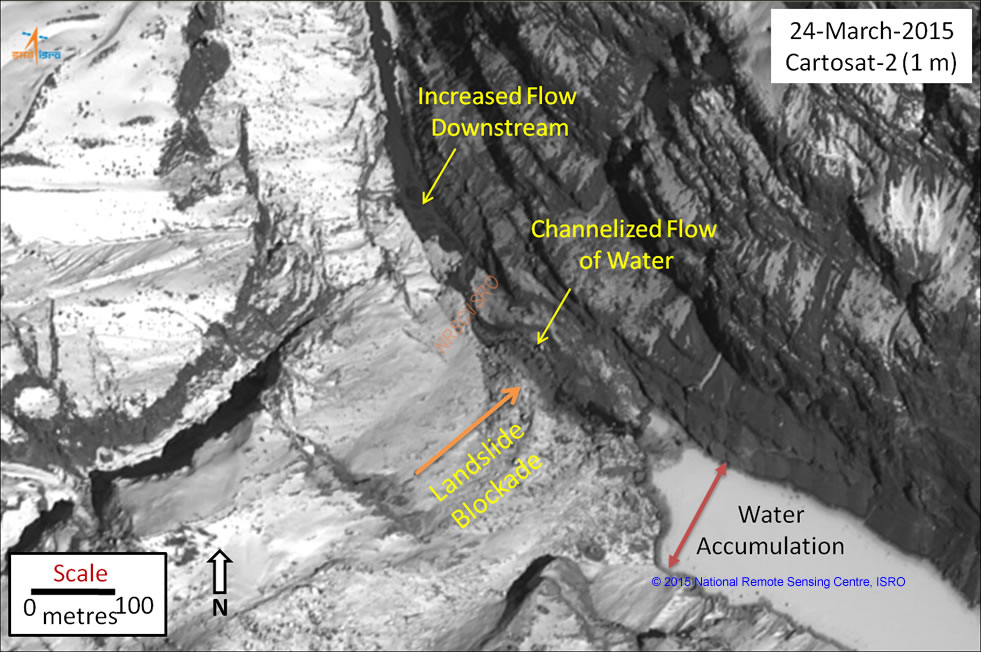
Phutkal landslide dam bursts in Zanskar valley, flood creates extensive damage in 2015

NRSC image of blockade 240315

Marking a significant failure of India’s Disaster Management apparatus, the massive dam created by landslide on the Phutkal River in Zanskar Valley[1] in Kargil district in Jammu and Kashmir burst on May 7, 2015, leading to extensive damage to the bridges, culverts, some buildings and land along the river. Continue reading “Phutkal landslide dam bursts in Zanskar valley, flood creates extensive damage in 2015”

Groundwater · Maharashtra

Maharashtra Groundwater Authority: Can it save the state from deep trouble?

(Photo from Outlook)

Harischandra Yerme from Latur (Maharashtra) sunk not one or two but 60 borewells in his field in Marathwada in the hope of finding water for his orchard. None of these 60 borewells yield water today. Mr. Yerme has taken on himself the task of educating farmers in his region that there is no sense in growing an orchard on bore wells: the supply may dry up at any moment, resulting in huge losses. He told me, “We don’t even consider 250 feet borewells now, all bores are at least 700-800 feet deep and even then they don’t work.” Marathwada is reportedly drilling as many as 10,000 borewells[1] per month in this drought: a boom that is sustained by the “boring mafia” from Andhra Pradesh and Tamilnadu using travelling rigs… In as many as 247 villages of Marathwada, the draft has exceeded recharge to such an extent that the aquifer has literally gone dry.. Water in villages is plummeting even by 7 meters of the 5 years average.[2] The density of borewells is so high that is villages near Tasagaon, a 40-50 square kilometer area has more than 210 deep bore wells. Officials from GSDA tell SANDRP of multiple instances where farmers only lose money in the hope of going deeper for groundwater, deeper than 800-900 feet. The landscape is likened to a “Chaalan”: a sieve in Marathi, but also several gunshot wounds.. Continue reading “Maharashtra Groundwater Authority: Can it save the state from deep trouble?”

Nepal

Nepal’s Everest sinking 7.9 Earthquake of April 25-2015: Himalayan warning

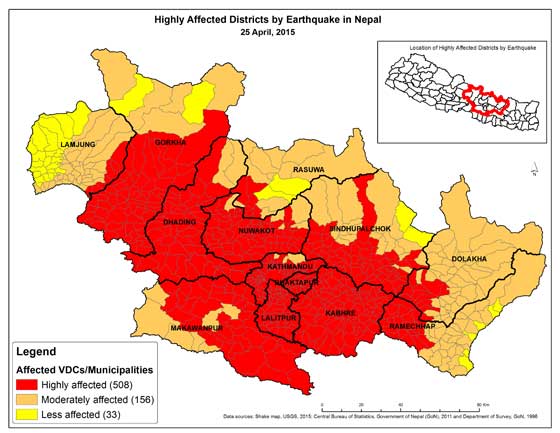
The massive Nepal earthquake of 7.9 intensity (Richter scale) on April 25, 2015 with epicenter 77 km north-west of Kathmandu in Nepal is a major noteworthy event in the Himalayas which also has warnings for what is in store for future. The earthquake left a major trail of destruction affecting over 20 districts of Nepal, of which 8 million live in 11 severely affected districts. Besides, it affected areas of India (Bihar, UP, W Bengal, Sikkim, Assam), Bangladesh, Tibet. The earthquake has now been given the official name of Gorkha Earthquake.

Continue reading “Nepal’s Everest sinking 7.9 Earthquake of April 25-2015: Himalayan warning”

Dams · Interlinking of RIvers · Maharashtra · NWDA

Par-Tapi-Narmada Link: Divided States, United Tribals

Above: Just a few hundred meters upstream the proposed Jhari Dam, a tribal woman struggles to find water in the dry Par river bed Photo: Parineeta Dandekar

Village of Jhari at the northern most corner of Western Ghats has some of the loveliest houses I have seen. Appreciation for the evolved vernacular architecture goes beyond the obvious urban romanticisng of anything tribal. Homes in this region of tribes like Kokani, Warli, Thakurs, etc, are unique in their architecture, building materials, craftsmanship and the seamless mix of beauty and functionality. The tiled roof of our host Haribhau had intricate wooden trimmings, the mudfloor was cool and the door frame was carved in exquisite motifs. Vines arched and spread in disarray over courtyards. We were assembled under a passion fruit or ‘Rasna’ vine, bursting with white flowers. Inside, cane baskets creaked under the weight of Ragi, Udid and Rice filled to the brim: This year’s harvest has been good, though that’s not always the case. The hosts, both men and women, were busy with lunch preparations. Continue reading “Par-Tapi-Narmada Link: Divided States, United Tribals”

Arunachal Pradesh · Bhutan · Cumulative Impact Assessment · Dams · Hydropower

Cumulative Impact Assessment of Tawang Basin: Highlights from the NEHU Study

“We want sacred rivers of Tawang to flow freely, not inside Tunnels!” What makes the assertion on this banner more remarkable is the fact that the people holding it up are not fiery activists, but peace-loving Buddhist monks of the Monpa community, from the farthest corner of Arunachal Pradesh: Tawang (photo by Urmi Bhattacharjee).  About 13 hydropower projects are slated to come up on main river stem and tributaries of Tawang Chhu (River) in Tawang in a distance of just  160 kms[1].

Monpa Child from Tawang Photo: tawang.nic.in

Tawang is a tiny district of Arunachal Pradesh nestled between Tibet and Bhutan. The region has had a troubled past and is home to Monpa Buddhists who practice an ancient form of Buddhism. Monpa culture itself is unique and fragile, with less than 50,000 Monpas in Tawang and less than one lakh globally. The region is famed for Tawang Monastery, Galden Namgey Lhatse (which literally means Celestial Paradise on a Clear Night), which is the 2nd largest monastery in the world. Continue reading “Cumulative Impact Assessment of Tawang Basin: Highlights from the NEHU Study”

Maharashtra · Telangana

Pranahita Chevella Project: What it means for the affected people in Maharashtra

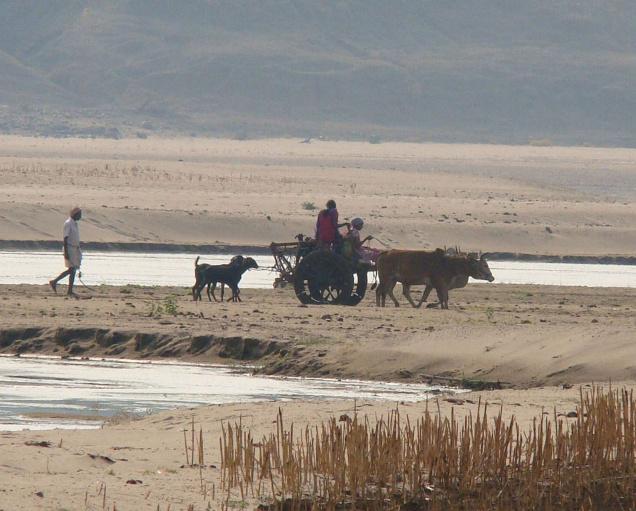
Above: A farmer family crosses the Pranahita river close to the Pranahita-Chevella project barrage site. Photo: Harpal Singh, The Hindu

Shivni is a small village of about 700-800 population in Gondpimpri Tehsil of Chandrapur District situated right at the confluence of Wardha and Weinganga rivers. These two rivers meet at juncture of three districts of two states (viz. Gadchiroli & Chandrapur of Maharashtra and Adilabad of Telangana) to form River Pranahita which is one of the biggest tributaries of Godavari. Pranahita travels a length of 113 km and meets Godavari at Sironcha tehsil of Gadachiroli Dist. Continue reading “Pranahita Chevella Project: What it means for the affected people in Maharashtra”

Maharashtra

Krishna Marathwada Project: A costly pipe dream?

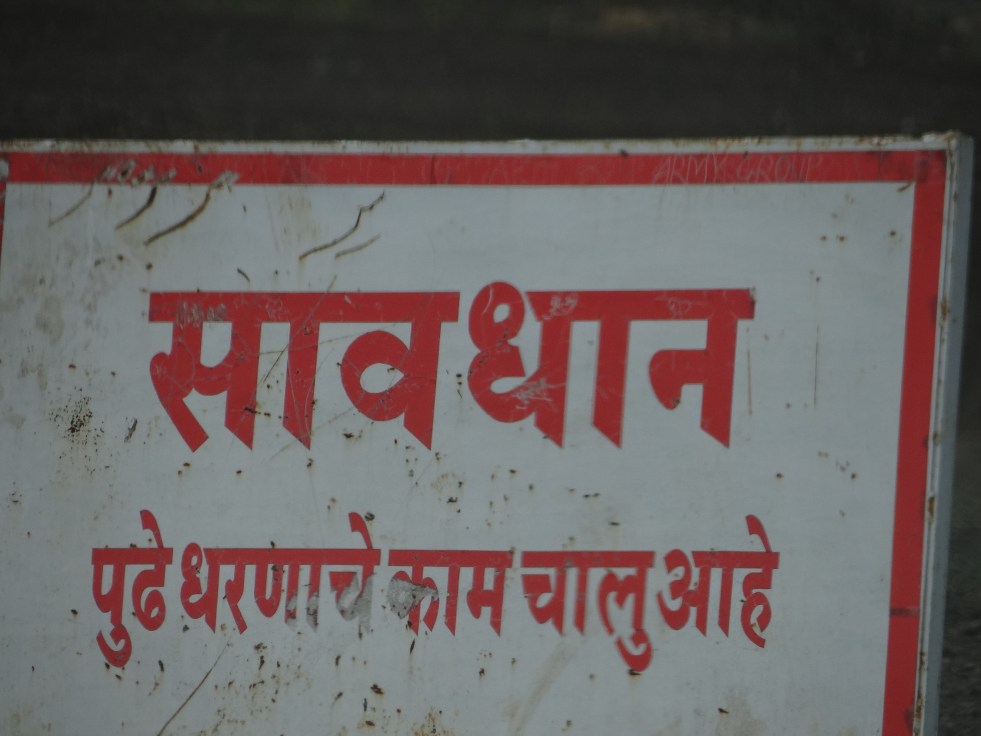
Above: A board at the dam site proclaims: “Beware, dam work ahead”. The warning pretty much sums up the situation of Krishna Marathwada Project Photo: Parineeta Dandekar

It was a blazing hot afternoon, made hotter by the subconscious association of Marathwada with all things dry, parched and drought-stricken. I was standing on the half completed dam wall of the Khuntephal Storage Tank in Beed, along with Macchindra Thorave and his colleagues. I’ve seen many dams and many dam walls, but it was impossible to believe this was a dam wall, supposed to impound 5.68 TMC of water (TMC=Thousand Million Cubic Feet. 1 TMC=28.317 billion liters). Primarily because there was no water in sight on either sides of the dam! There was no river in sight either! It actually looked like an under-construction road connecting two hills.

But as I realized later, being a part of the Krishna Marathwada Lift Irrigation Scheme and Krishna Bhima Stabilisation Project, issues like water were inconsequential.  This was Dam for Dam’s sake.

Half completed wall of the Khuntephal/Ashti Storage Tank, part of the Krishna Marathwada Project. Photo: Parineeta Dandekar

Continue reading “Krishna Marathwada Project: A costly pipe dream?”

Delhi

ENSURING ENVIRONMENTAL FLOWS IN INDIAN RIVERS

Above: Dead river Yamuna at Mawi (Panipat) in Haryana (Photo by Yamuna Jiye Abhiyaan)

Guest Blog by: Manoj Misra (yamunajiye@gmail.com)

A perennial river that does not flow is no river. This is because flow enables a river to fulfil its various ecological functions of which completion of the water and nutrient cycles; maintenance of aquatic and riparian flora and fauna and recharge of ground water through aquifer action is the most evident and critical. The recharged ground water also helps meet a number of human dependencies like irrigation and drinking water supplies.

On this World Water Day (March 22) 2015, following the 6th meeting of the Yamuna Review Committee held under chairperson ship of Union Water Resources Minister Sushri Uma Bharti (See Annexure for the PIB Press Release about it) on March 20, 2015, this blog shows how it is possible to achieve environment flows in Yamuna River. Hope all the concerned state governments including that of Delhi headed by Arvind Kejriwal, Union Water Resources Minister and the National Green Tribunal that made an order in this regard, will take due note of this.

The state of the Yamuna has reached a boiling point as eleven members of the Yamuna Muktikaran Abhiyaan have started a fast unto death on March 21, 2015 in Delhi, charging Union Water Resource Minister Uma Bharti that “she only made hollow promises. She barely knew about the issue”. This group has been marching to Delhi every year since last three years and have felt cheated by the authorities each time. They decided to end the protest action on March 22, 2015 under some rather vague promise by the government that within two months Yamuna river will be brought under Environment Protection Act, 1986.

Continue reading “ENSURING ENVIRONMENTAL FLOWS IN INDIAN RIVERS”