Dams · Delhi · DRP News Bulletin · Floods · Ganga · Groundwater

DRP: 16 Oct 2017: New Groundwater Guidelines threat to India’s Water Lifeline

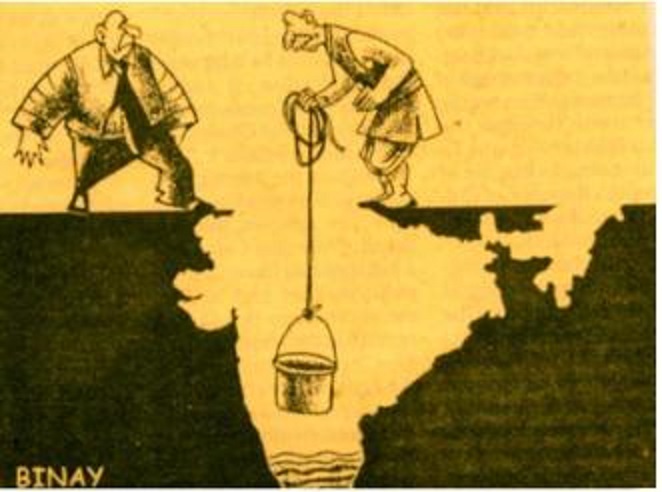
GROUND WATER

New Draft Guidelines designed to privatise & destroy Groundwater The Ministry of Water Resources of the Union Government has on Oct 11, 2017 (see notice: http://www.wrmin.nic.in/forms/List.aspx?lid=1180&Id=6) put up draft guidelines on Groundwater management in India (see draft Guidelines: http://www.wrmin.nic.in/writereaddata/guideline-NOC-CGWA.pdf), with comment period of 60 days. The comments are to be sent to: Member Secretary, Central Ground Water Authority, West Block-2, Wing 3 (Ground Floor), Sector 1, RK Puram, New Delhi – 110066, e-mail: cgwa@nic.in.

New Draft Groundwater guidelines designed to destroy groundwater further and open floodgates for privatisation of common property resource? “Groundwater is a common property resource and should be used for greater good. But these guidelines are not doing that. Groundwater governance and management should happen in a transparent, participatory and accountable way but that too is not happening through guidelines,” Thakkar said.

Explaining, Thakkar said that the guidelines are “trying to make a system wherein state or district level authorities will be giving NOCs but whether those authorities have capacity to give NOCs after understanding the implications is the question.” “The draft guidelines also take out the need to recharge groundwater. Present regulations say that you if you take out groundwater you need to put in recharge capacity but now they are saying that’s not necessary and are only seeking charges. These things will definitely lead to further destruction of groundwater,” he added. http://www.livemint.com/Politics/irx1jFCWMFjGJk82Z8VZ2O/Govt-proposes-new-guidelines-on-groundwater-usage-by-industr.html, http://www.newindianexpress.com/nation/2017/oct/13/centre-proposes-water-conservation-fee-for-use-of-groundwater-1673480.html, http://www.newindianexpress.com/nation/2017/oct/14/townships-with-gym-club-must-pay-water-fee-1673790.htmlhttp://www.hindustantimes.com/environment/centre-proposes-nixing-recharge-requirement-for-industries-extracting-groundwater/story-kN3iPmO9m4MIoYkUX32n7I.html  

Continue reading “DRP: 16 Oct 2017: New Groundwater Guidelines threat to India’s Water Lifeline”
Interlinking of RIvers · Madhya Pradesh

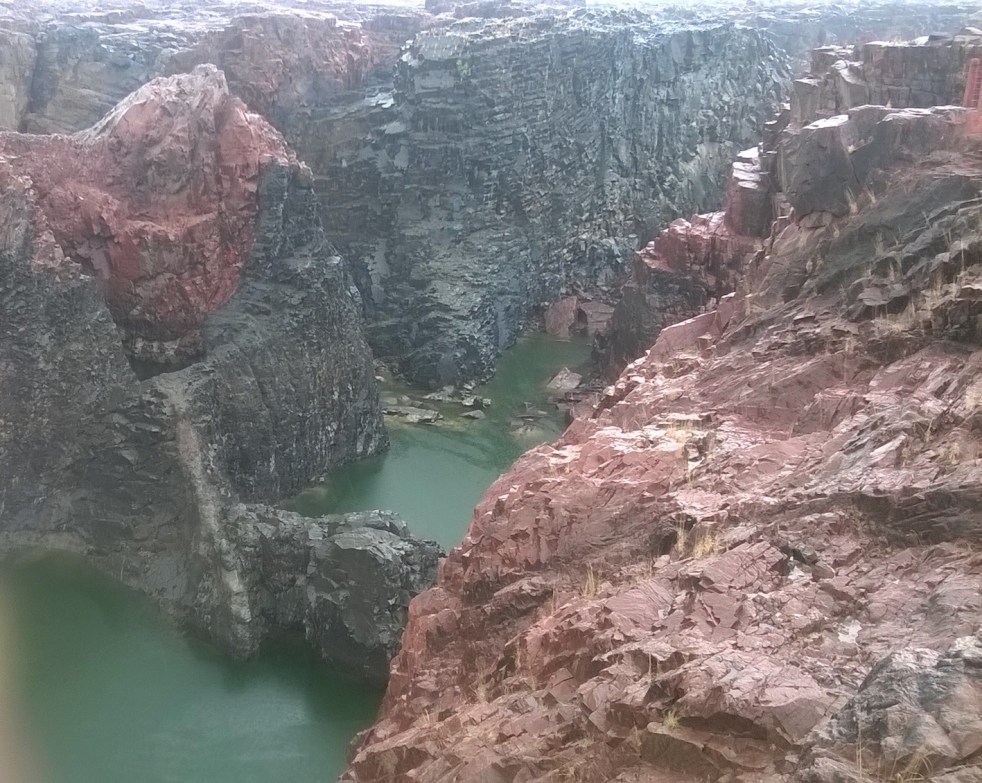
Ken Betwa Project to destroy Raneh Falls: India’s Mini Grand Canyon-cum- Mini Niagra

“Oh my god! I wont have believed that such an amazingly beautiful river canyon exists in India had I not seen this!” These were my first words, believe or not, on seeing Raneh Falls earlier this year. It was such mesmerizingly beautiful scene that I could not believe no one has even mentioned that this whole site is likely to be destroyed by the proposed Ken Betwa Project (KWP).

In fact, there are Amazing number of untold stories of the destruction that the proposed Ken Betwa link will cause. One of them is the story of Raneh Falls. The name is a bit of misnomer, but let us stick to it. Continue reading “Ken Betwa Project to destroy Raneh Falls: India’s Mini Grand Canyon-cum- Mini Niagra”

Delhi

Decentralized STPs in the Delhi Capital Region

Guest blog by Kelly D. Alley and Nutan Maurya

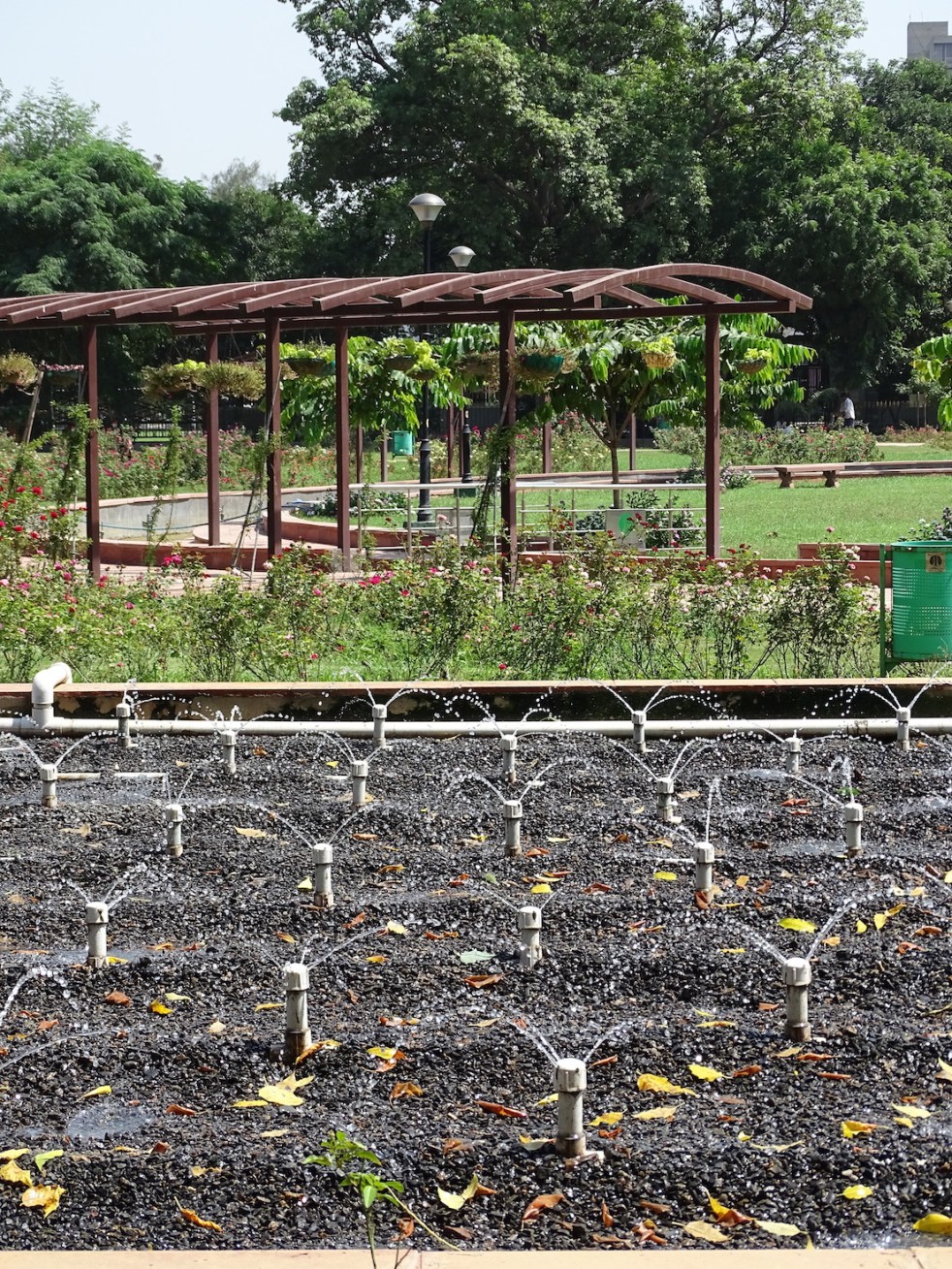
The territory under the jurisdiction of the New Delhi Municipal Council, or Lutyen’s Delhi, is lush with beautiful gardens. The New Delhi Municipal Council maintains around 8,000 parks and uses about 80 million gallons of water a day for grass, plants, shrubbery and trees. The Delhi Jal Board estimates that the total water treated at its sewage treatment plants is about 455 million gallons a day (mgd) of which they provide 142 mgd for horticulture and irrigation in the Delhi metropolitan region. With groundwater levels depleting to over 300 feet in some sections of Delhi, there has been increasing focus on curtailing use of groundwater for horticulture and other non-essential services. In this context, the National Green Tribunal has directed all urban municipalities to use treated wastewater for horticulture.    Continue reading “Decentralized STPs in the Delhi Capital Region”

Bihar · Floods · Ganga

Ganga basin faces unprecedented floods in Aug 2017

Ganga Basin, particularly Bihar is facing unprecedented floods, starting on Aug 12, 2017. Water levels of Major tributaries of Ganga, including Kosi, Mahananda, Rapti, Ghagra, Bagmati, Gandak and Kamlabalan are close to or above the historically highest flood levels almost simultaneously. This has rarely happened in the past. The water level of Ghagra is close to HFL at Elgine Bridge in Barabanki district in Uttar Pradesh. Most other flood forecasting sites in North Bihar and East UP were shown as pink dots on CWC flood forecasting map on Aug 13-15, signifying that water level at these sites was above the danger level. This is possibly the beginning, this wave is expected to rise as it travels down towards Bihar and then W Bengal and Bangladesh. Continue reading “Ganga basin faces unprecedented floods in Aug 2017”

Assam · brahmaputra · Dams · Floods · West Bengal

Brahmaputra basin faces unprecedented flood wave in Aug 2017

In the morning of Aug 11, 2017, while checking my daily morning routine sites, I saw the sudden appearance of purple patch (signifying rainfall in access of 175 mm rainfall in previous 24 hours) on NASA daily rainfall accumulation map for Indian subcontinent.[i] The purpose  patch covered parts of the West Bengal, North East Indian and Bangladesh. I was taken aback, but it was not very unusual to see in the peak of monsoon. So as we usually do, I took a screenshot and put up on SANDRP FB page with a warning that this could lead to floods. I did not realize that this was the beginning of an unprecedented wave of floods for these regions that may extend to Ganga basin as I write this. Such purple patches generally disappear in 24 hours, since the rains do not last to long. However, in the case of current phase, not only the purple patch has last now for 42 hours, it has extended  to the west, all along India Nepal region along the southern boundary of Nepal.   Continue reading “Brahmaputra basin faces unprecedented flood wave in Aug 2017”

Dams · Environment Impact Assessment · Ministry of Environment and Forests · Ministry of Water Resources · Nepal · Public Hearing

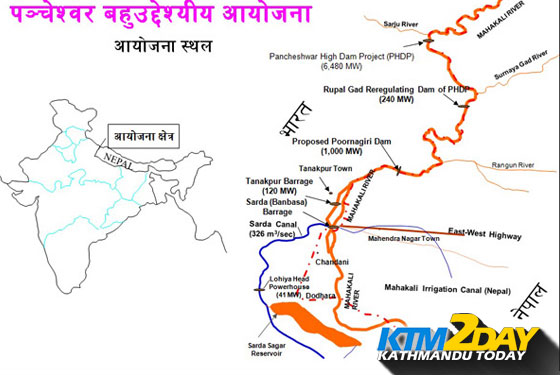
Cancel Pancheshwar Dam Public Hearings: It involves too many violations and illegalities

From: SANDRP,

50-D, AD block, Shalimar Bagh, Delhi 88

we4earth@gmail.com, https://sandrp.wordpress.com/

August 11 2017

To

1. District Magistrate,

Pithoragarh, Uttarakhand

dm-pit-ua@nic.in

2. Chairman/ Regional office incharge,

Uttarakhand Environment Protection and Pollution Control Board,

Dehradun, dkjoshi21@yahoo.com

COPY to: 1. IA Division (River Valley Projects) MoEF, Delhi

2. Chairman and Members of Expert Appraisal Committee on River Valley Projects

Respected Members of Public Hearing Panel for Pancheshwar Dam,

The public hearing now being conducted for the massive Pancheshwar Dam at Pithoragarh today, as part of the requirement under the EIA notification of Sept 2006 is being held in complete violation of letter and spirit of many norms of the EIA notification. Hence these public hearings should be cancelled. They should be rescheduled after appropriate conditions are achieved for the public hearing. Some of the key reasons for this are listed below, but these are not exhaustive reasons, but only a list of key indicative reasons. Continue reading “Cancel Pancheshwar Dam Public Hearings: It involves too many violations and illegalities”

Sikkim · Teesta

Retracing Her Path -3: A Journey along the Teesta River in Sikkim

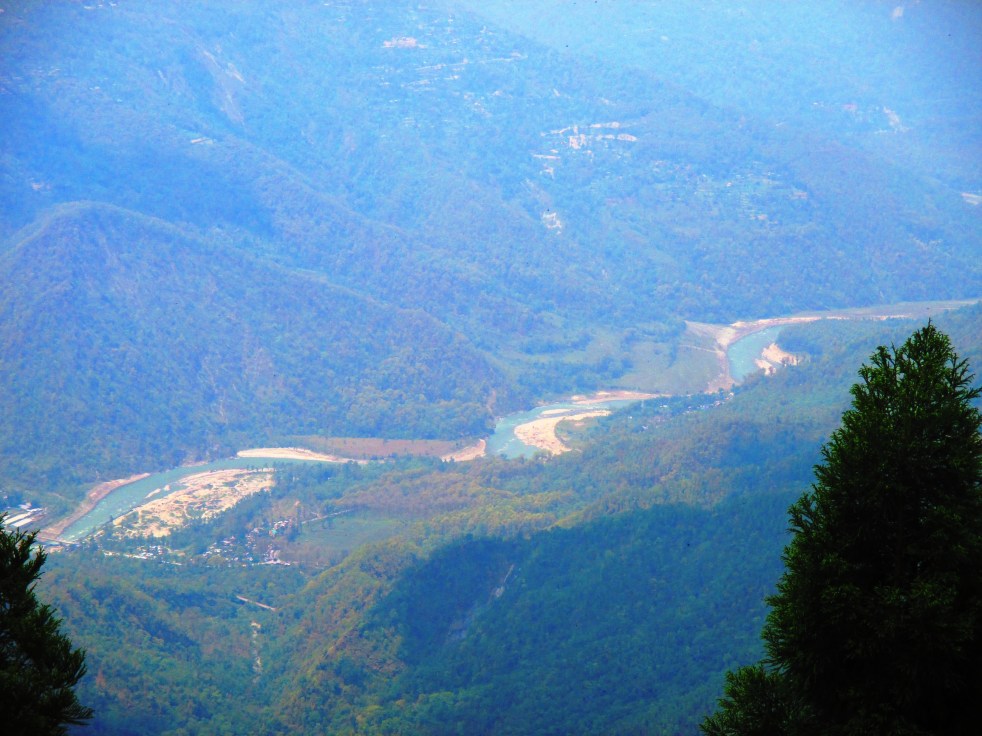
Above: The Teesta valley (photo: Gauri Noolkar-Oak)

Guest Blog by Gauri Noolkar-Oak

A day later, I set out on the last leg of my journey – through Sikkim, to the source. The journey from Kalimpong to Singtam and further to Mangan was breathtaking. The mountains grew taller as I climbed higher, the Teesta keeping me company all the while. It rained breezily and the clouds came down, clinging to the thick cloak of green that draped the mountains. Beauty was all around me and at one point, I just had to put my camera away and take in the splendour of nature.

Continue reading “Retracing Her Path -3: A Journey along the Teesta River in Sikkim”

Bangladesh · brahmaputra · Sikkim · Teesta · West Bengal

Retracing Her Path 1: A Journey along the Teesta River in Bangladesh

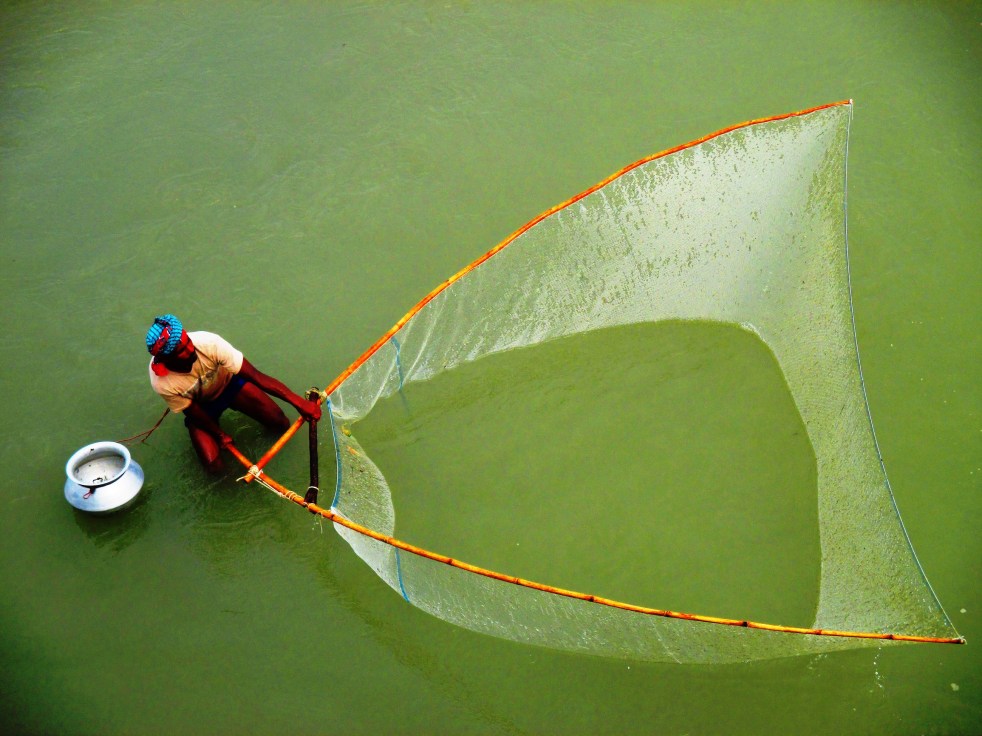
Above: A local fisherman fishing upstream of the barrage (Photo: Gauri Noolkar-Oak)

Guest Blog by Gauri Noolkar-Oak

Few journeys take us through a string of experiences that nourish the senses and the soul. A thoroughbred urban, city-lover, I nevertheless knew deep down that my journey of such nourishment would be with a river. I began researching rivers by chance, but with time, I grew to first like and then worship the entity. In early 2017, I acquired a grant from the Joke Waller-Hunter Initiative to study water conflicts in the Teesta basin, and I knew: this was going to be it.

My journey was inspired by the book “Empires of the Indus” written by Alice Albania, a brave woman who travelled the Indus river from mouth to source, and explored her history and cultures. But beyond that, I hardly had a plan; I did not know how long the journey would take, whether I would be able to see the whole river, and when I would return home.  When I landed in Dhaka at the end of April this year, all I knew was that I wanted to see the Teesta right from her confluence with the Brahmaputra River in Bangladesh all the way up to her source at Tso Lamo in Sikkim, on the Indo-China border. Continue reading “Retracing Her Path 1: A Journey along the Teesta River in Bangladesh”

Gujarat · Madhya Pradesh · Maharashtra · Narmada

Sardar Sarovar gate closure without resettlement or justification is a inhuman, unjust decision: Will SC intervene?

On June 17, 2017, a PIB Press Release from Union Ministry of Water Resources announced, “Narmada Control Authority (NCA) has cleared the final raising of Sardar Sarovar Dam (SSD) in Gujarat by lowering of gates and impounding of water in the reservoir upto its Full Reservoir Level (FRL) of EL 138.68 mts. The NCA which met here yesterday under the Chairmanship of Dr. Amarjit Singh, Secretary (WR, RD & GR) considered all aspects of environmental and Resettlement and Rehabilitation (R&R) issues.”

The gate closure will lead to submergence and displacement of lakhs of tribals and farmers of Gujarat, Madhya Pradesh and Maharashtra, without even proper resettlement as legally required. There is also no justification for the decision as the canal infrastructure necessary to use the additional water that the dam will store with increase in height from 121.92 mts to 138.68 mts is not even ready. Continue reading “Sardar Sarovar gate closure without resettlement or justification is a inhuman, unjust decision: Will SC intervene?”

Andhra Pradesh · Dams · Karnataka · Maharashtra · Telangana

STOP DIVERSION OF WATER FROM DROUGHT HIT KRISHNA BASIN

Release water from Koyna & Tata dams to drought hit Karnataka, Telangana & Andhra Pradesh

Large parts of South India, including parts of Karnataka, Andhra Pradesh and Telangana are facing unprecedented drought and water scarcity. However, Maharashtra is sending OUT billions of liters of water FROM drought hit Krishna basin to High Rainfall Konkan region to flow to the sea. Continue reading “STOP DIVERSION OF WATER FROM DROUGHT HIT KRISHNA BASIN”