Dams · Fish, Fisheries, Fisherfolk

World Fisheries Day 2018: India’s Increasing Fish Kill Incidents

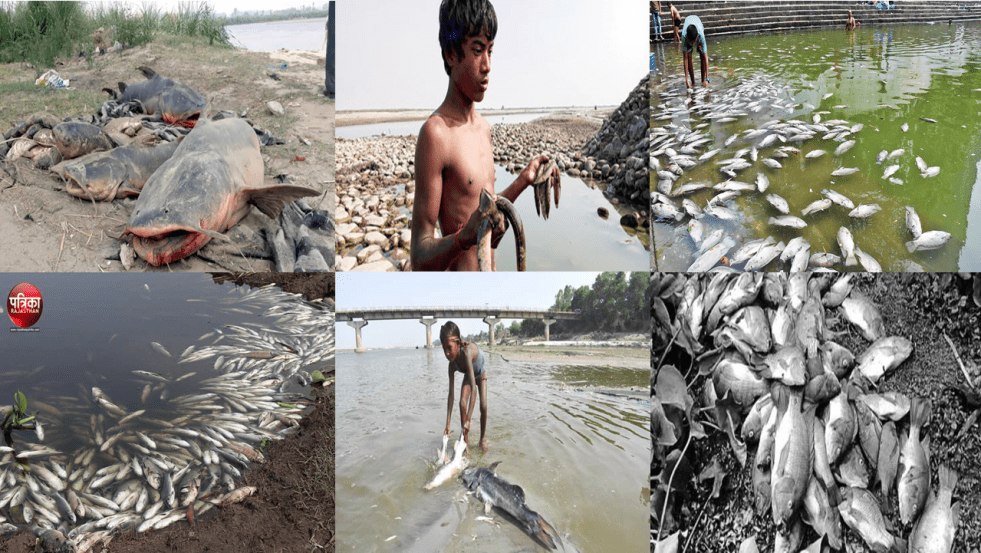
21 November is celebrated as world fisheries day across the world. Apart from crucial source of food and livelihood to lakhs of fisherfolks in India, fish diversity determines the health of the water body including lakes, ponds and rivers. However with growing threats and pollution mass fish mortality has been taking place in various rivers and lakes in the country every year. On World Fisheries Day 2018 SANDRP has put together known mass fish kill incidents that took place this past year to highlight the gravity of threat so that corrective measures can be taken by respective Governments and others concerned.

Continue reading “World Fisheries Day 2018: India’s Increasing Fish Kill Incidents”

Dams · DRP News Bulletin

DRP: 19 Nov 2018: India Rivers Week 2018 to focus on Ganga Rejuvenation

The India Rivers Week 2018, in fifth year, will be held at WWF, Delhi during Nov 24-26, 2018. The focus of the IRW this time is: “Can India Rejuvenate Ganga?“. Shri Rajiv Ranjan Mishra, Director General of the National Mission for Clean Ganga will address the inaugural session with Chief Guest Shri Jairam Ramesh, former Union Minister, in Chair. The meeting will see over 150 people from all over India participate to discuss state of India’s rivers at the only meeting in India focussing exclusively on rivers.

The Annual River Lecture will be given by Prof Rajiv Sinha of Indian Institute of Technology, Kanpur. The Bhagirath Prayas Samman award for the best work on River Conservation and the Anupam Mishra Medal for exemplary media work on River conservation will be given away by famous Chipco leader Shri Chandiprasad Bhatt.

Shri U P Singh, Secretary, Union Ministry of Water Resources has agreed to the chief guest at the concluding session on Nov 26, Monday. Started in 2014, the meeting is collectively organised by Yamuna Jiye Abhiyan, WWF-India, INTACH, Toxics Link, People’s Science Institute (Dehradun), Peace Institute and SANDRP.

For more information, please see: https://indiariversforum.org/2018/11/19/india-rivers-week-2018/. Follow IRW at: https://www.facebook.com/IndiaRiversWeek/ and https://twitter.com/IndiaRiversWeek

Continue reading “DRP: 19 Nov 2018: India Rivers Week 2018 to focus on Ganga Rejuvenation”
Dam floods · Dams

Dam Floods 2018: Assam, Himachal; Making Dam Operators Accountable

ASSAM: NEEPCO a repeat offender? On July 27, 2018 sudden release of water from NEEPCO’s Doyang Hydropower Electric Project (HEP), located in Wokha district, Nagaland led to flood disaster[1], submerging[2] about 36 villages in Golaghat a district in Upper Assam. According to Rony Rajkumar, project officer of the Golaghat district disaster management authority, around 5,575 people were affected by the deluge which damaged 887.9 ha of crop.

Earlier, on July 11, 2018, reviewing the severe flood situation Lakhimpur Assam, the Chief Minister (CM) Sarbananda Sonowal strongly warned[3] the state-owned power utility NEEPCO not to release water from its Ranganadi dam without warning like previous years.

Continue reading “Dam Floods 2018: Assam, Himachal; Making Dam Operators Accountable”

Dam floods · Dams · Floods

Kerala: Dams Floods 2018: Follow Rule Curves to Avoid Flood Disasters

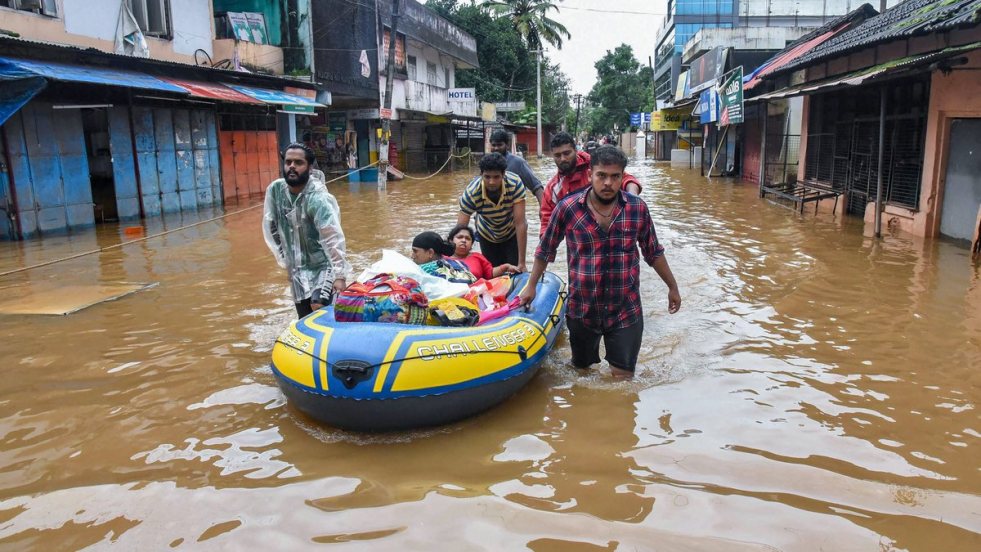
Unprecedented Kerala deluge[1] that swept through the coastal state on the day of Independence day 2018 was most disastrous flood incident in the year. It has also been termed as one the worst flood in the state and reminded the people of July 1924 and July 1962 flood calamities. Many experts, several reports and studies have established the role of dams in worsening the deluge. According to reports, 35 out of the 46 dams within the state were opened for the first time in history[2]. All 5 overflow gates of the Idukki Dam were opened at the same time, for the first time in 26 years.

State Government Accepts Dams Role

Kerala is usually considered a flood-proofed[3] state with its undulating terrain. For a state that receives an annual average rainfall of nearly 3,000 mm, its natural landscape protects it from recurrent floods. Indeed, the Kerala flood has highlighted our poor dam management[4] system. 

As per officials the crisis could have been contained[5] had the state “gradually released” water from at least 30 dams, in advance of high rainfall, adding that local authorities failed to foresee the imminent danger with high rain predictions. “Such floods have probably recurred after 100 years, exposing the State’s unprofessionally run reservoirs management system and unpreparedness on disaster mitigation and disaster resilience.

Continue reading “Kerala: Dams Floods 2018: Follow Rule Curves to Avoid Flood Disasters”

Dams · DRP News Bulletin

DRP: 12 Nov 2018: Waterways Deteriorate Ganga, But Gadkari And Modi are Oblivious

PM Modi inaugurated the first multi-modal terminal on the Ganga river in Varanasi on Nov. 12 under a project aimed at promoting inland waterways as a cheaper and more environment-friendly means of transport. The multi-modal terminals are being built as part of the central government’s Jal Marg Vikas Project that aims to develop the stretch of the river Ganga between Varanasi and Haldia for navigation of large vessels weighing up to 1,500-2,000 tonnes. https://www.ndtv.com/india-news/pm-modi-to-inaugurate-1st-multi-modal-terminal-on-ganga-river-in-varanasi-1944924  (9 Nov. 2018)

Explaining the negative impact of waterways projects on Ganga River, Shripad Dharmadhikary in Hindi report titled जलमार्ग परियोजना बदहाल नदियों पर एक हमला writes that the projects lack public consultation “गंभीर बात है कि जलमार्ग विकास से सबसे ज्यादा प्रभावित होने की सम्भावना स्थानीय जनता को है। इसके बावजूद जलमार्ग के विकास से संबंधित ज्यादातर कामों के आयोजन और क्रियान्वयन के लिए न तो इनकी सलाह ली गई है, और न ही इनके बारे में जनता को जानकारी दी गई है। कुल मिलाकर इन जलमार्गों के सामाजिक और पर्यावरणीय प्रभावों का ठीक से आकलन नहीं हुआ है, ऊपर से इन्हें पर्यावरणीय मंजूरी के दायरे से बाहर रखा गया है और सारी प्रक्रिया में लोगों की सहभागिता का भी पूरा अभाव है। ऐसे में जलमार्गों के रूप में इतना बड़ा हस्तक्षेप हमारी नदियों पर एक और बड़ा हमला है जो पहले से बुरी हालत में हैं। https://www.downtoearth.org.in/hindistory/%E0%A4%A8%E0%A4%A6%E0%A5%80%E0%A4%B9%E0%A4%82%E0%A4%A4%E0%A4%BE-%E0%A4%AA%E0%A5%8D%E0%A4%B0%E0%A4%AF%E0%A4%BE%E0%A4%B8-62034  (5 Nov. 2018)

Continue reading “DRP: 12 Nov 2018: Waterways Deteriorate Ganga, But Gadkari And Modi are Oblivious”
Dams · Ken River

Ken River Yatra: Exploring A Threatened River And Knowing River People

Two environmentalists take a walk along a river and find that they should have brought along the policymakers, planners, engineers and politicians claiming to help it.

When heading out on an adventure, it is standard practice to look at satellite imagery of the area to chart an informed plan of action. However, when we were preparing for our walk along the Ken river, we couldn’t access a reliable map of the watercourse all the way from source to mouth.

We tried tracing the river on a map using satellite data for cues, moving upstream from an established point of identity: Chilla ghat, the confluence of the Ken with the Yamuna in Uttar Pradesh. However, this exercise proved difficult and led us astray multiple times, especially in the upper catchment area. It was only later, when walking along the river, did we realise that this was because almost all of Ken’s tributaries have a larger discharge than the Ken itself. Our virtual search for the Ken’s source kept taking us to the source of its tributaries in nearby hills. Thanks to the walk, we now have an actual and detailed map of the river that we intend to share soon.

Continue reading “Ken River Yatra: Exploring A Threatened River And Knowing River People”

Dams · Monsoon

Monsoon 2018 Overview: Serious Anomalies Hidden by Macro Figures

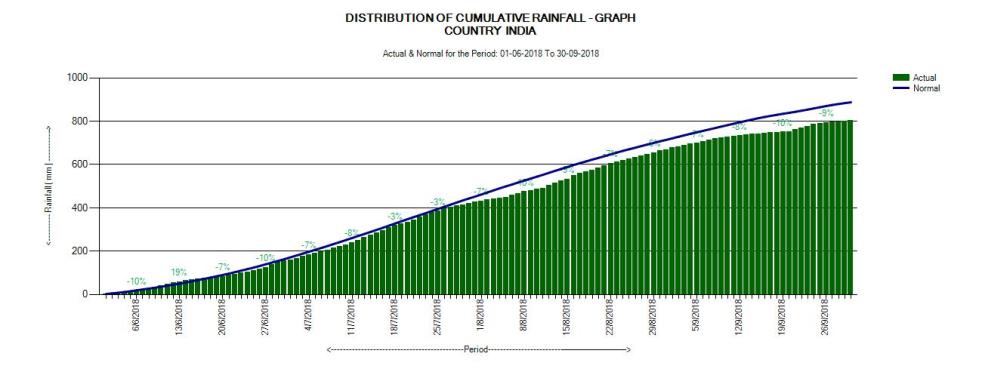
2018 becomes fifth year in a row when India’s south west monsoon has been below normal.  In the beginning of monsoon season, Indian Meteorological Department (IMD) has forecasted rains to be normal with rainfall equal to 97 percent of the long term average. However at the end of the season the overall rainfall turned out to be 91 percent, with deficit of 9 percent at national level. However, as we see in this overview, the situation as move from national to local figures, is much different, mostly much worse.

According to IMD’s State Rainfall Map (cumulative) dated 30 Sept. 2018, the country received 804.0 mm rains against 887.5 mm of normal average. Thus the south west monsoon 2018 had 9.4 percent below normal rainfall.

Continue reading “Monsoon 2018 Overview: Serious Anomalies Hidden by Macro Figures”

Dams · DRP News Bulletin

DRP: 5 Nov 2018: More Reports on Failure of Namami Gange Program 

(Feature image showing preparation of Kumbh 2019 at Prayagraj by Siddharth Agarwal of Veditum)

EDIT article in SCIENCE magazine by TUSHAR SHAH and others on Ganga: “The quickest, cheapest, and most effective way for Mr. Modi to show a less polluted Ganga by 2019 would be operating dams and barrages in the Ganga basin with the sole objective of augmenting river flows. This would be a start to controlling discharge of untreated sewage and industrial waste, which will take a long time.” http://science.sciencemag.org/content/362/6414/503  (2 Nov. 2018)

DOWN TO EARTH says about Ganga: “the river will continue to run as – and even more – polluted as ever… Till August 31, 2018, only a little more than a quarter of the total number of projects sanctioned under it (Namami Gange) had been completed… according to CPCB’s Water Quality Map, only five out of the 70-odd monitoring stations on the river had water that was fit for drinking; only seven had water that was fit for bathing…”

-“Down To Earth quotes a study report and CPCB data to say that the actual measured discharge of wastewater into the Ganga is 123 per cent higher than what has been estimated…”

-“Numerous hydroelectric projects on the Bhagirathi and Alaknanda have turned the upper stretches of the Ganga into ecological deserts, says the Down To Earth assessment. The baseflow amount of the river has decreased by a huge 56 per cent in 2016, as compared to the 1970s.”

– “about 180 MLD of sludge will be generated in the five Ganga Basin states (Uttarakhand, Uttar Pradesh, Bihar, Jharkhand, West Bengal) when they become ODF. If proper sludge management is not done, this would invariably pollute the Ganga. What should cause further concern is that faecal sludge is a bigger pollutant than sewage – while BOD of sewage is 150-300 mg/litre, that of faecal sludge would be 15,000-30,000 mg/litre.” https://www.cseindia.org/ganga-may-not-flow-clean-in-the-near-future-says-new-analysis-9085  (30 Oct. 2018)

Meanwhile, a new CAG report reveals that almost 26 million litres of untreated sewage still flows into the Ganga every day in Uttarakhand. https://www.downtoearth.org.in/news/water/uttarakhand-has-failed-to-rejuvenate-the-ganga-through-namami-gange-62027  (2 Nov. 2018)

Continue reading “DRP: 5 Nov 2018: More Reports on Failure of Namami Gange Program “
Dams · DRP News Bulletin

DRP: 29 Oct 2018: Better Paddy Options Exist For Punjab

A try-out of the technique to grow paddy without puddling at village Chehlan of Ludhiana has resulted in higher yield in comparison to puddled fields, while saving water in the process. The crop was ready for harvest days before expected time, saving irrigation water otherwise to be used for another fourteen days. This trial was funded and supervised by ATMA, a central govt.  scheme under the Union Ministry of Agriculture.

Puddling is a traditional method of flooding paddy fields with running water, whereas in non-puddling technique, ‘ridges and furrows’ are formed in soil to let water store in spaces and let it stay, thus reducing irrigation frequency.

“Not paddy but puddling is the enemy of waters of Punjab. It is wastage of water to puddle fields as most of it just evaporates. We have saved 45-50 per cent of water in non-puddled fields. Our yield has been almost 30 per cent more from fields where crop was not puddled. Also, non-puddled crop matured very early, saving at least ten days of irrigation water,” says Rupinder Singh Chahal (43) who along with his brothers Jasvir Singh (48) and Kulwinder Singh (52) experimented with ‘non-puddling’ technique on four acres this year.

Continue reading “DRP: 29 Oct 2018: Better Paddy Options Exist For Punjab”
Dams · Monsoon

Himachal Pradesh Monsoon 2018 Overview

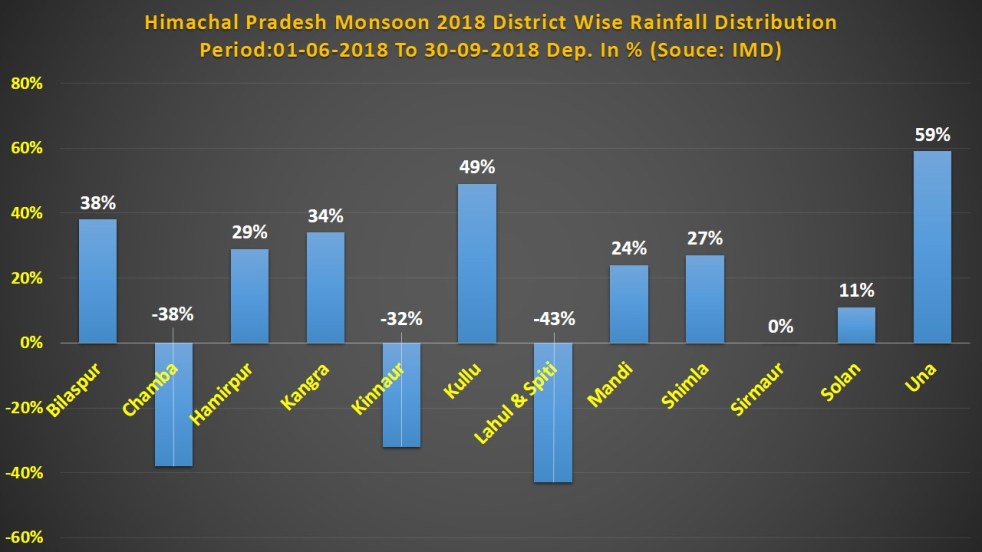
Himachal Pradesh has received 917.3 mm rainfall during South West Monsoon 2018. The amount is 11 percent higher than normal rainfall category of 825.3 mm. However at district level there is considerable variation in the distribution of rainfall. Out of 12 districts in the state, rainfall departure has been in deficit in three districts namely Chamba, Kinnaur and Lahul & Spiti by 38 percent, 32 percent and 43 per cent respectively. All these three districts are in upper part of Himalaya, the origin of many rivers & where mountains are mostly snow covered.

Continue reading “Himachal Pradesh Monsoon 2018 Overview”