Climate Change · Dams · Disasters · Floods · Rivers

DRP 210725: Moving Joshimath Landslide a threat to Tapovan Vishnugad HEP in UKD?

Continue reading “DRP 210725: Moving Joshimath Landslide a threat to Tapovan Vishnugad HEP in UKD?”
Climate Change · Cloud Burst · Disasters · Himalayas

Jammu-Srinagar NH-44 An Unfolding Long Term Disaster in Ramban District?

Continue reading “Jammu-Srinagar NH-44 An Unfolding Long Term Disaster in Ramban District?”
Climate Change · Disasters · Himalayas

CWC, IMD Need to Improve Extreme Weather Forecast Services

Continue reading “CWC, IMD Need to Improve Extreme Weather Forecast Services”
Disasters · Hydropower

Sikkim HC Order on Public Safety at Hydropower projects

Sikkim High Court Order on Dec 5, 2022 in the matter of death of two persons on May 23 2020 due to drowning following sudden release of water from a private hydropower project flags very important lessons that are relevant for all hydropower projects in India.[i]

Continue reading “Sikkim HC Order on Public Safety at Hydropower projects”
Disasters · Landslide dam · Manipur

Manipur’s Ejei river blocking landslide at under construction railway line involved violations, no EIA, NGT pending case

Eighteen Territorial Army personnel among 24 people were killed in a massive landslide in Manipur’s Noney district[i] on Wednesday (June 29, 2022), and at least another 40, including 18 soldiers, are feared trapped or buried in the rubble of an under-construction railway yard. An adjoining construction camp and security camp engulfed in the avalanche of rock and mud.[ii] The Railway line is under construction since a decade.

Continue reading “Manipur’s Ejei river blocking landslide at under construction railway line involved violations, no EIA, NGT pending case”
Disasters · Floods

Kerala and Uttarakhand floods in Oct 2021: Did the forewarnings help?

The October 2021 flood disasters in two ends of India, in Kerala and Uttarakhand have a lot common. Both happened after the end of normal dates of South West Monsoon 2021. In both cases it is repeat of earlier such disasters in respective states. In both cases, there were reports by expert reports warning about the disasters. In both cases the rainfall events were broadly along the lines warned by the climate scientists, but in both cases the state was ill prepared to cope with it. In both cases, inappropriate human interventions have worsened the disasters in major ways. And in both cases disaster management seems to be absent from ground. In both cases, more precise forecasts about the rainfall quantum and location would have helped. (Feature Image above is from The Hindustan Times, Oct 23, 2021)

Continue reading “Kerala and Uttarakhand floods in Oct 2021: Did the forewarnings help?”
Disasters · Landslide

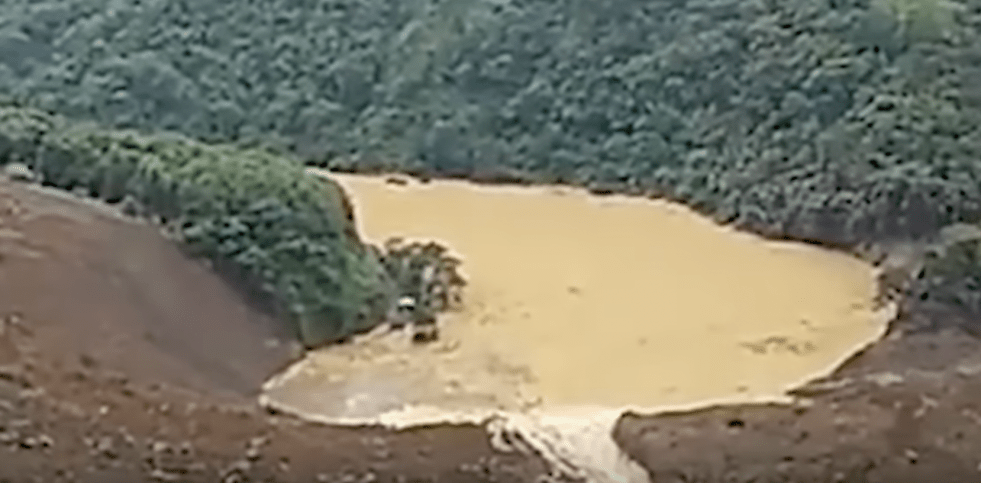
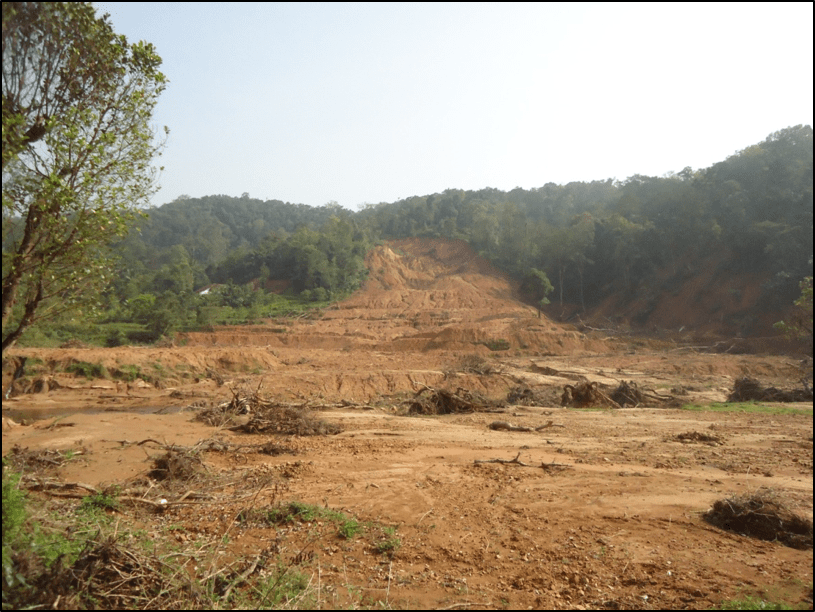
Landslides in Kodagu & Western Ghats: A critique of GSI report

Guest Article by Prof Mysooru R. Yadupathi Putty 

Introduction This write-up is with regard to the news-paper reports on the “The Geological Survey of India (GSI) Report on the landslides in Kodagu”. This is based on the information furnished by the news-papers and by the scanned copies of the original report of the GSI. The report attributes the landslides to excessive rainfall and extensive slope modifications due to anthropogenic activities, and puts blame on the people who have been using the land to their benefit. This brief article is written in order to bring it to the notice of the authorities concerned, and the people in general, that some of the observations of the GSI are highly ill-conceived, mutually contradictory and technically unsound. They unnecessarily go to rake up untoward feelings and create an impression that the people of Kodagu (Karnataka’s ‘Male-naadu’, in general) responsible for pulling the wrath of the Nature on to themselves.  The author of this critique is a Hydrologist, who has been working in the region on Runoff processes, Land-use and Soils for nearly three decades. The following is a review of the available material of the report, point by point. Continue reading “Landslides in Kodagu & Western Ghats: A critique of GSI report”

Dam Safety · Disasters

A tale of two dam breaches: Spencer (USA) and Tiware (India)

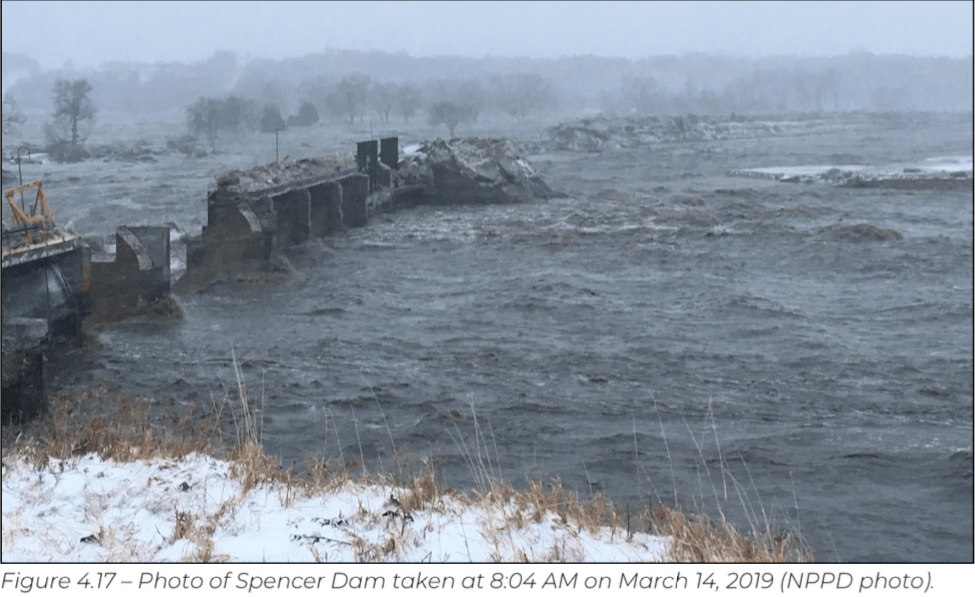
On March 14, 2019 the Spencer dam on Niobrara river, located south of Spencer in Nebraska state in USA breached, killing four people in the downstream. The Investigation Report about the disaster has been made public now on April 24, 2020. The remains of Spencer Dam — a skeleton of concrete and steel amid a sea of sand — became one of the iconic images of the March 2019 “bomb cyclone” flood that caused billions of dollars in damage across Nebraska.

Less than four months later, on July 2, 2019, Tiware dam breached[i] in Chiplun taluka of Ratnagiri district of Maharashtra, killing 23 people. The then Maharashtra Chief Minister Devendra Fadnavis on July 6, 2019 announced a Special Investigation Team (SIT) to probe into the disaster, the SIT was to submit a report in two months, but the report was submitted in January 2020, but the report is not in public domain. When SANDRP talked with the chairman of the committee, he disclosed that the report has been submitted to the department in early Feb 2020 and it can only be made public by the department once they accept the report. He revealed that the SIT had found that there were issues with material of construction (masonry in place of Concrete) and design of the conduit of the dam. He agreed that the report should be made public promptly, but expressed his helplessness in face of the norms in India. SANDRP also called Secretary, Department of Water Conservation, Govt of Maharashtra, but got no response.

There is a lot to learn for us in India in comparing the two dam breach incidents and how both are treated.

Continue reading “A tale of two dam breaches: Spencer (USA) and Tiware (India)”

Climate Change · Disasters

GermanWatch Report: Can India not assess its Climate Risk & Vulnerability?

The Climate Risk Index Briefing Paper “GLOBAL CLIMATE RISK INDEX 2020: Who Suffers Most from Extreme Weather Events? Weather-Related Loss Events in 2018 and 1999 to 2018” released by the Environmental Think tank German Watch[i] on Dec 4, 2019[ii] made a media splash in India[iii] since the report ranked India as fifth country  (it was 14th in 2018 report) most at risk in the context of climate change.

Indeed, it is worth taking note that maximum number of deaths (2081) and Economic losses (USD 37808 million[iv], equivalent to four times country’s annual health sector budget) due to climate change happened in 2018 in India. Both these numbers were highest among the top ten Climate Risk countries of the world in 2018. This is one of the many reports which are coming out on the occasion of 25th Conference of Parties happening in Madrid (Spain) in early December 2019. Continue reading “GermanWatch Report: Can India not assess its Climate Risk & Vulnerability?”

Agriculture · Disasters · Rainfall

44% above normal rainfall in Oct 2019 creates hopes for Rabi, Disaster for Kharif crops at many places

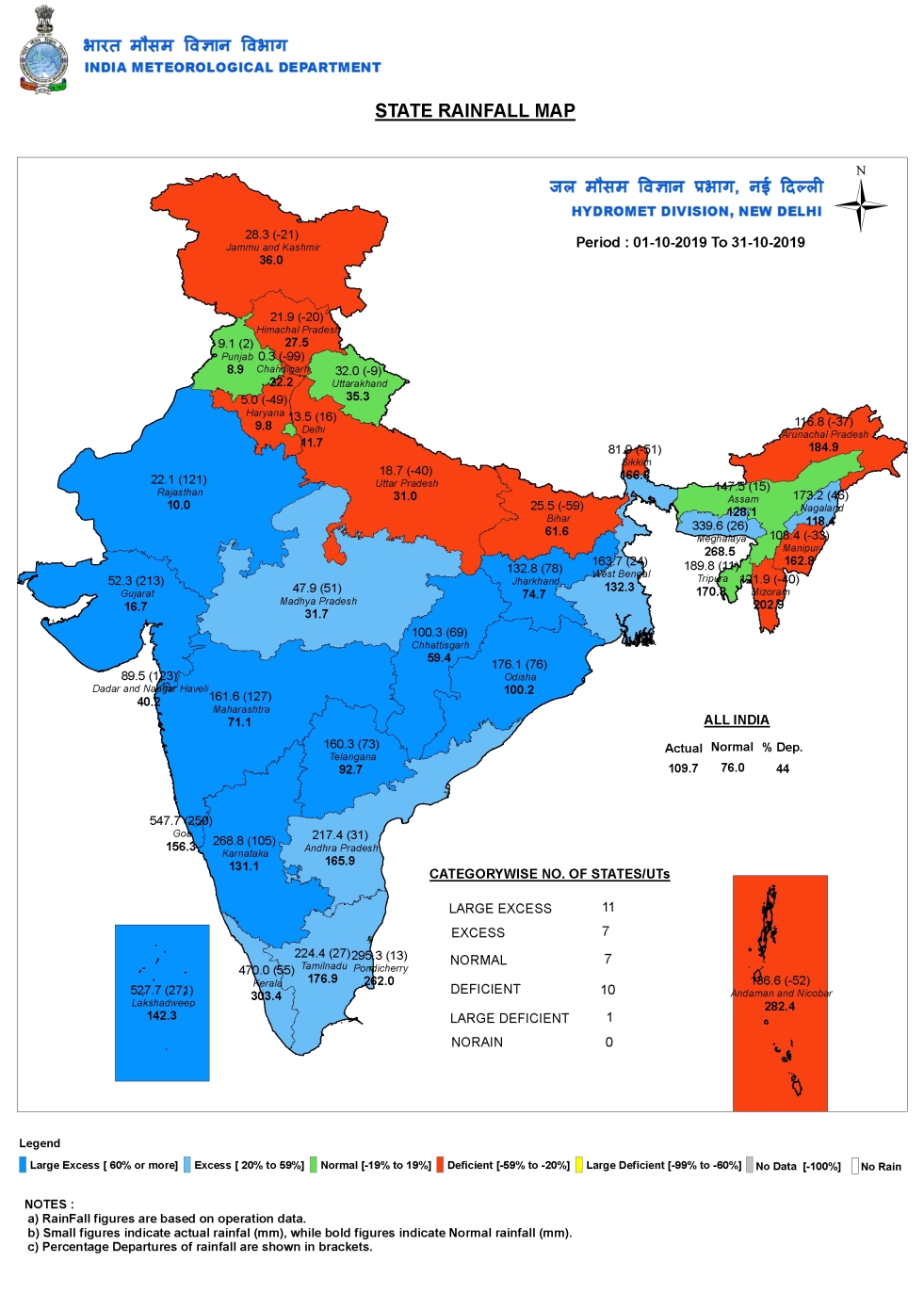
The Oct 2019 rainfall all over India was 109.7 mm, 44% above normal expected rainfall of 76 mm, following 53% above normal in Sept 2019. The rainfall this month has been unusual and has had some major impacts. One of the reasons has been that the SW monsoon withdrawal continued well into Oct 2019, when it almost always gets over by the end of Sept. There were also several cyclonic circulations and depressions mostly from Arabian sea. Continue reading “44% above normal rainfall in Oct 2019 creates hopes for Rabi, Disaster for Kharif crops at many places”