Sand Mining

South Zone: 25 sand and stone mining workers died since Dec. 2020

(Feature Image:- The spot where gelatin sticks exploded in Feb. 2021 killing 6 people at a quarry site at Hirenagaveli village, Chikkaballapur district. Credit: DH Photo/Pushkar V)

Annually scores of Indian people have been meeting untimely deaths and suffering injuries due to violence and accidents associated with unregulated sand mining activities. We have compiled zone wise detailed reports on human toll of sand mining for the period between December 2020 and March 2022. The reports for North, East and North East and West zones have been published. This is fourth and last summary report of detailed file attached here on the issue for South zone covering Karnataka, Telangana, Tamil Nadu and Kerala states. We did not come across any report on the subject from Union Territory of Puducherry for this period.

Continue reading “South Zone: 25 sand and stone mining workers died since Dec. 2020”
Dams · Narmada · Rivers

Narmada and Rappahannock: A Tale of Two Rivers

Guest Article by Lori Udall

When I think back on my work in India in the late 1980s and early 90s, my memory takes me most often to the Narmada River and Manibeli, the first Adivasi village in Maharashtra to be submerged by the Sardar Sarovar dam.  The storied Narmada, with its Hindu temples, landscapes, the mystical parikramas and distinct voice will be forever stored in my soul. As an activist who tracked World Bank development projects in India, I worked with Narmada Bachao Andolan.  As I travelled on or near the Narmada, I documented the resettlement issues facing the Adavasi and other oustees and sent reports back to the World Bank and U.S. Congress.

Continue reading “Narmada and Rappahannock: A Tale of Two Rivers”
Sand Mining

West Zone: In 16 months 17 children died in sand mine pits

(Feature image:- 19 year old mine helper died in sand mine pit in Sone river, Sidhi in March 2022. Image source: Vindhya News.)

One of the major impacts of riverbed mining in India is deaths and injuries due to accidents and violence. In 16 months since Dec 2020 (our previous report on this issue covered the period till Nov 2020) to March 2022, at least 17 children have died in sand mine pits in West India.  

This is West India summary report for this 16 month period on sand mining violence and accidents. The detailed file for West zone can be see here. The West Zone states included here are: Madhya Pradesh, Rajasthan, Gujarat, Maharashtra and Goa. The summary reports along with detailed accounts for North, East and North East zones have already been published. The previous such report covering the issue from January 2019 to November 2020, can be seen here.

Continue reading “West Zone: In 16 months 17 children died in sand mine pits”
Dams · Sand Mining

East India: 58 govt officials survived sand mafia attacks since Dec. 2020

(Feature image:- DC Srivastava, SDPO Banka district, Bihar injured in sand mafia attack in Oct. 2019 (Dainik Jagran). The same official has again faced lethal attack by sand mafia in Jan. 2022.)

In 16 months between Dec 2020 and March 2022, states in East India saw sand mafias attacking at least 58 government officials. In addition to this, at least 137 have died and 156 suffered injuries on account of riverbed mining and transportation activities during this period in this zone.

This report tracks human toll of excessive, unlawful riverbed mining excavation and transportation activities in East Indian States of Bihar, West Bengal, Jharkhand, Odisha and Chhattisgarh during December 2020 and March 2022. It also documents some sand mining related fatalities in North East states of Assam and Manipur in this period.

This is a summary report of a more detailed file attached here. The first part covering the sand mining violence and accidents in North India during the same period can be seen here. The following parts would cover the West and South Zone.

Continue reading “East India: 58 govt officials survived sand mafia attacks since Dec. 2020”
DRP News Bulletin

DRP 04 April 2022: Gujarat Tribals unite to stop Par Tapi Narma

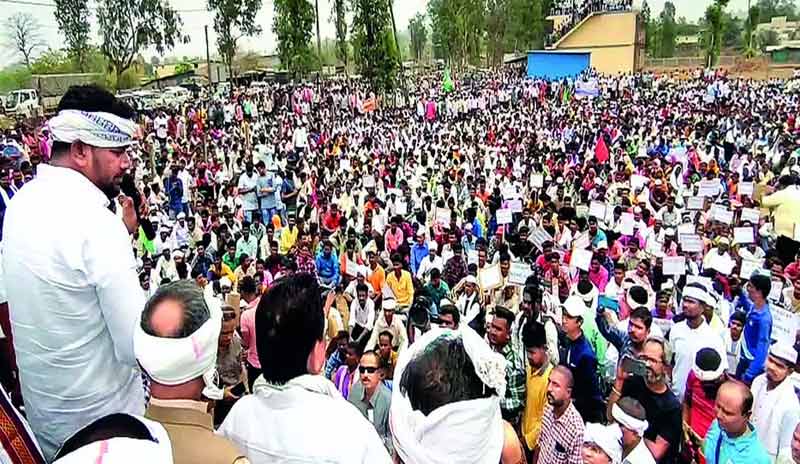
(Feature Image:-Tribals protesting against Par-Tapi-Narmada Project. The Indian Tribals)

The amazing unity and fight shown by Gujarat Tribals in their protest against the Par Tapi Narmada Link has led to both Gujarat govt and Central govt agreeing to suspend the project. However, the tribals are rightly not satisfied with the word of play indulged in by the Gujarat and Union govt so far. The central govt has said that the project will not go ahead as long as there is no consensus among the party states, but that statement is true even with or without the campaign launched against the project. The Maharashtra govt in any case is not in agreement with the project. Gujarat govt has not taken a clear decision to permanently cancel the project and without such a decision, Gujarat govt can again revive the project any minute. Same is true about the Central govt. So until both Gujarat govt and Central govt decide to cancel the project and come out with official notification to that effect, the tribals are right to continue the protest and not believe in either of the govt.

Continue reading “DRP 04 April 2022: Gujarat Tribals unite to stop Par Tapi Narma”
Sand Mining

North India: 136 people killed in sand mining violence & accidents in 16 months

(Feature Image: 1 killed, 17 injured after a sand truck toppled in mine pit in Kosi river, Ram Nagar. Source Amar Ujala, 30 Jan. 2021)

Among the many issues affecting Riverbed sand mining is the issue of violence of various types. Stories of such violence keeps coming up from all across the country all the time. However, there is no comprehensive picture emerging about this violence. SANDRP has been trying to compile available information about instances of various types of violence related to river bed mining since last few years.

Tracking the issue, this year we have prepared detailed accounts along with summary reports in a Zone wise format. This first part is a summary report of the detailed account on North Zone states including Uttar Pradesh, Haryana, Uttarakhand, Punjab, Delhi, Jammu & Kashmir and Chandigarh and covers sand mining violence and deaths that took place between December 2020 and March 2022, following after our earlier report that carried the figures for period upto Nov 2020. The successive parts will cover East & North East, West and South Zones. SANDRP’s previous report detailing nearly 193 human deaths between January 2019 and November 2020 on account of illegal sand mining activities can be seen here.

Continue reading “North India: 136 people killed in sand mining violence & accidents in 16 months”
Dams, Rivers & People

DRP 28 Mar 2022: Is Climate Change making big dams MORE dangerous?

That big dams are dangerous, disaster prone is well known, the parliament having passed the Dam Safety Act is just one of the clear evidence of it. However, are big dams becoming even MORE dangerous in changing climate? All the science and also practical evidence seems to suggest that. This is also what the SCROLL report mentioned below concludes.

What is shocking is that the CWC (Central Water Commission), India’s premier technical body on dams and water, when asked about this through an RTI, is in slumber. CWC told the journalist that there are no such cases! This should be worrying for everyone concerned including those in the risk zone of the dams, the beneficiaries of the dams and also the dam operators. This also exposes how weak is the mechanism set up by the Dam Safety Act passed recently by the Parliament is. This is because under the act, CWC Is the main organisation responsible dam safety in India. Can CWC really save us from unsafe dams, structurally unsafe or operationally unsafe? The SCROLL article illustrates through the example of Andhra Pradesh dams that CWC has not. It also quotes the compilation of SANDRP where to the frequency of disasters are only going up and there is again no confidence inspiring role from CWC.

Continue reading “DRP 28 Mar 2022: Is Climate Change making big dams MORE dangerous?”
Rivers

How and where can ‘greening’ help Indian Rivers?

Guest Article by Manoj Misra

The Indian Council of Forestry Research and Education (ICFRE) under the union Ministry of Environment, Forest and Climate Change (MOEFCC) has recently prepared Detailed Project Reports (DPRs) for the rejuvenation of 13 Indian rivers and released a document called the ‘overview of Detailed Project Reports for rejuvenation of major Indian rivers through forestry interventions’. These rivers are Jhelum, Chenab, Ravi, Beas, Sutlej, Yamuna, Brahmaputra, Luni, Narmada, Godavari, Mahanadi, Krishna and Cauvery (Kaveri). This article is in the nature of a caveat on the overview DPR report and the plans.  

Continue reading “How and where can ‘greening’ help Indian Rivers?”
Dam Disaster

MAJOR DISASTER AGAIN AT KOPILI DAM OF NEEPCO IN ASSAM IN 2022

The 275 MW Kopili Hydropower Dam of NEEPCO (a Union Power Ministry organisation, now under NTPC) has again faced a major disaster on Saturday, March 26, 2022. Earlier, the same project had suffered disaster in October 2019.[i]

The penstock pipe that takes water at high flow rates and speed from the Umrangso dam to the hydropower house burst during early hours of Saturday in Assam’s Dima Hasao (earlier called North Cachar Hill) district. A large portion of the Kopili Hydro Electric Plant was also inundated.[ii] At least three employees of the North Eastern Electric Power Corporation Limited (NEEPCO) who were present at the site were killed in the mishap.

Continue reading “MAJOR DISASTER AGAIN AT KOPILI DAM OF NEEPCO IN ASSAM IN 2022”
Springs

Celebrating hill women and their role in Springshed development and governance

Guest Blog by: Seema Ravandale

Abstract: The hill women share the special intricate and culturally nurtured connection to forest and water, which makes them better steward or owner of their resources. This demands their participation beyond the right-based “beneficiary” approach, recognizing their accumulated knowledge and resilient and adaptive capacities in recently contested discourse of Springshed development and governance in Indian Himalayan Region (IHR).

Continue reading “Celebrating hill women and their role in Springshed development and governance”