
(Feature Image: Ramganga river at Marchula, Uttarakhand. Bhim Singh Rawat/SANDRP/Sept. 2024)
Exactly three months back, on Sept 30 2024, we had highlighted the urgent need for credible river studies in India (https://sandrp.in/2024/09/30/drp-nb-300924-focus-on-river-studies/). A new research report published last week in Nature has corroborated this, showing that volume of research across global south is disproportionately small compared to need based on basic population, water withdrawals and water consumption.
Based on review of 4237 publications using machine learning and desk review of 325 publications, analysis of 4713 case studies across 286 basins, it shows that river research currently in global south is predominantly led by global North institutions, thus the river research is shaped by selection of theme and locations done by such institutions.
The insight from this study thus underlines not only more studies, but also the need for study agenda to be selected by global south based on the local situations and needs. This has become even more urgent considering the increasing impacts of climate change and increasing urgency to study the sustainable management of transboundary rivers as also exemplified by cases of Indus, Ganga, Teesta, Siang around India, among others.
Study Global disparities in transboundary river research Abstract: -Anthropogenic pressures, climate change, and hydro-politics pose significant risks for sustainable transboundary river basin management. We reviewed 4237 publications using machine learning and conducted a desk review of 325 publications, analyzing 4713 case studies across 286 basins. Our objectives were to: assess major perspectives and key research themes; analyze how they vary based on basin size, location, runoff, water withdrawal, discharge, and consumption; and reflect on implications for sustainable basin management.
-Findings show that the volume of research in the global south is disproportionately small compared to basin population size, water withdrawals and water consumption. Moreover, research is predominantly led by global north institutions, shaping study themes and locations. While research in the global south focuses on hydro-politics and natural hazards, the global north emphasizes landscape ecology and governance. These insights highlight the need for more comprehensive assessments in the global south to support sustainable management of transboundary river basins. https://www.nature.com/articles/s43247-024-01928-0 (25 Dec. 2024)
HYDRO POWER PROJECTS
SANDRP Overview 2024: Concerns about Pump Storage Projects The government push of Pumped Storage Projects in Western and Eastern Ghats has strongly been contested by communities and experts. Stories here show that these projects are already facing opposition in Maharashtra, Karnataka, Andhra Pradesh and Rajasthan. https://sandrp.in/2024/12/26/2024-concerns-about-pump-storage-projects/ (26 Dec. 2024)
Sikkim EAC expresses defers nod on plan to redesign Teesta III HEP The expert appraisal committee (EAC) has expressed serious concerns about the redesign of the 1,200 MW Teesta-III Chungthang Dam, which was washed away after a glacial lake outburst in October 2023, and deferred its nod for restarting the project with a new dam. The EAC said it had concerns regarding the dam’s design and stability and its ability to withstand potential natural disasters in the future. It also decided to carry out a site visit before making any recommendation on restarting the project.
Govt enterprise Sikkim Urja Limited has sought an amendment to the project’s old environmental clearance as it has proposed to redesign the project dam. It wants to replace the washed-away, concrete-faced rockfill dam with a concrete gravity dam. It has also proposed to enhance the spillway capacity from 7,000 cumecs to 19,946 cumecs, which it claimed can “accommodate both glacial lake outburst floods and probable maximum flood.”
However, the EAC was not convinced and during the deliberations held on November 30, it decided to seek the views of the Central Electricity Authority (CEA) on the proposed modifications. The committee also thought it prudent to carry out a thorough review of the proposed modifications to ensure the structural resilience and safety of the dam, particularly given the region’s susceptibility to extreme hydrological events, as per minutes of the EAC meeting. While deferring the proposal, it formed a sub-committee of two EAC members, and representatives of the CEA, the Central Water Commission and the Union environment ministry who will visit the project site.
In fact, the company has proposed that partial generation can be started by constructing a coffer dam upstream. It has been proposed that the main dam can be restored in three years after partial generation begins, and the estimated cost of restoration is Rs 4,189.51 crore. https://indianexpress.com/article/india/environment-ministry-panel-concern-redesign-sikkim-dam-9742668/ (24 Dec. 2024)
GLOF damage: Revised loss amount rise to ₹1,076 cr NHPC Ltd. on Dec 26 revised the loss incurred at its Teesta-V Power Station due to flash floods to Rs 1,075.97 crore. The earlier loss amounted to Rs 1,005.10 crore that included material damage loss and business interruption loss.
– In addition, the company has informed the insurers of an initial assessment of material loss amounting to Rs 327.67 crore due to a landslide that occurred in Aug. 2024. The company also noted that the tailrace tunnel and GIS are still buried under debris; hence, it has caused hindrance to further inspection of the damage. https://www.ndtvprofit.com/business/nhpc-sikkim-flash-flood-revised-loss-teesta-v-rs-1076-crore (26 Dec. 2024)
Arunachal Pradesh Anger over plan to send armed forces for SUMP survey The proposal to send armed forces is not limited to only the Siang district. Another letter on December 9, seen by Scroll, sent by the state home department to the deputy commissioner of three districts – Siang, Upper Siang and East Siang – said that nine companies of central armed forces along with state forces and women police will be deployed “to implement the Siang Upper Multipurpose Project”. In nearby Komkar village, Sangum Yao, the 70-year-old headman was emphatic: “Even if we die, we will not move from our land.” A rally was taken out in the village on the day we visited, with residents burning an effigy of CM Pema Khandu before the march.

– The National Hydroelectric Power Corporation has selected three sites – Uggeng, Ditte Dimme and Parong – along the Siang river to assess if the dam is feasible in this area. As we reached Parong, across the river from Riew, on the morning of December 18, a 60-year-old farmer, Tabeng Siram, welcomed us with these words: “You are in a submerged area.”
– Siram explained that two senior officials – the Siang deputy commissioner and the chief engineer of the Arunachal hydropower development department– had visited the village on October 6. “They told us that the [height of the reservoir] will be as high as our village school, so our fields will be under water,” Tabeng Siram said. His son, Dubit, said that they did not need the kind of development the government was planning for them. “In two months, we cultivate paddy and grow vegetables and that is enough for the whole year,” he said. “We don’t need development. We don’t need money. We can survive without money. That’s why we are protesting. We don’t need dams that will take our land, our life.” Scroll spoke to over 40 residents from the Geku, Parong, Komkar and Riew villages, most of whom expressed their objections to the mega-dam. They refuted the government’s claim that only a minority was opposing the hydropower project.
– While the consent of the village councils is needed before a project of this nature gets forest clearance, the newly amended Forest (Conservation) Amendment Act, 2023, allows the Centre to divert forests for strategic projects within 100 km of India’s international borders – without the need for any forest clearance.
– Many of the residents wondered why they were alone in their protests – why the downstream communities especially in Assam have not spoken out against the dam on the Siang river.
– Himanshu Thakkar of the South Asia Network on Dams, Rivers and People said a dam in a fragile seismic region had a “greater downstream disaster potential”. He said the state government’s claims that the project would protect against the Chinese dam were questionable since a dam on the Siang would bring its own set of adverse consequences. “A dam on the Siang means that when the reservoir is filling up in the monsoon, there will be very little or no flow in the downstream areas, and into the Brahmaputra,” he said.
Thakkar said sudden changes in the flow of water from the dam are likely to lead to more severe and intense floods in downstream areas. The dam is also likely to reduce the silt and nutrients flowing downstream, which will result in increased erosion along the river course due to silt-free or “hungry water”. He also warned that the project will limit the upstream-to-downstream flow of biodiversity, particularly of fish and other organisms. “All this will happen even without a Chinese dam.” https://scroll.in/article/1077113/are-we-militants-in-arunachal-pradesh-anger-over-plan-to-send-armed-forces-for-mega-dam-survey (24 Dec. 2024)
Concerns, protests against SUMP growing The Adi residents here revere Siang as a provider, referring to it as Aane (mother) Siang. Cultivation on its banks was encouraged and facilitated by the state after Independence to move away from shifting cultivation in the hills. So while settled agriculture along the river — or pani kheti as locals call it — is 60 years old among the farmers of this belt, they are now completely dependent on it. “Look around you,” says Gao, pointing to the steep hill further up the village. “It is jungles and rocks. There is no water there. Where will we go and where will we farm?”
This Dec 23, dozens of villagers from Riew, another affected village, who are opposed to the project gathered on the Dite Dime bridge over the Siang. With chants led by the elders among them, they held a ritual praying for their land to be protected from the project. “We will become refugees like Chakmas and Hajongs. There is no question of compensation. We have been on this land for hundreds of years,” says Tashong Jamoh, 60, one of those who joined the rituals. He was speaking of the roughly one lakh Chakmas and Hajongs from the Chittagong Hill Tracts, then in east Pakistan and in present-day Bangladesh, who had fled to Arunachal Pradesh since the 1960s after their land was submerged by the Kaptai dam project.
Despite the resistance on the ground, the government says it is confident of starting the surveys soon. Local NHPC officials said the “campaign” for outreach to villagers will now be conducted by members of village-level sub-committees, the SUMP Development Committee, constituted by the state, which villagers in favour of the survey have been called to join. “We want to explain to people that the survey is a very preliminary step. Based on this survey, one of the three sites will be selected. After that, there will be extensive investigation, the environmental impact assessment will be done and the compensation related data will be collected. Public hearings will be conducted before the DPR (detailed project report) is sent for approval. Without public approval, no funds will be allotted to the project,” said the official.
But Gegong Jijong, president of Yingkiong-based SIFF, says the resistance to this first step will continue. “If the PFR finds the area feasible, there will be no turning back. Such a big dam has never been built anywhere in this country, that too right among human settlements.” https://indianexpress.com/article/long-reads/siang-upper-multipurpose-project-not-without-resistance-arunachal-people-farms-surveys-9748204/ (28 Dec. 2024)
Riew the village against militarisation Riew village, located in Siang district, is one of the epicentres of the latest wave of protests against the state government’s arbitrary decision to deploy hundreds of central and state armed police for a pre-feasibility study for the proposed 11,000 mw Siang multipurpose project. The village is just a short distance from the magnificent Siang river, which, for now, stands as a quiet witness to the present unrest, uncertainty, and anxiety of its people.
The situation is similar in Parong village, another epicentre of protests against militarisation, which is almost an hour away from Riew. The Siang river, the very core of Adi society and culture, may be a good place to start a conversation about consent and respect for the right of the people to make informed choices. One can only ignore this at their own peril, unless they are ready to compromise on peace in this sensitive border region, zealously guarded by people proud of their land, their dere (community hall), where all important decisions are taken collectively by the villagers at the call of village elders, and where there is space for discussion and mutual respect. https://arunachaltimes.in/index.php/2024/12/25/riew-the-village-against-militarisation-by-state/ (25 Dec. 2024)
Forum seeks govt aid for protection of d/s communities East Siang Downstream Dam Affected Peoples’ Forum (ESDDAPF) has sought government intervention to protect the lives, lands, and properties of downstream communities. These communities are likely to be affected by the proposed Siang Upper Multipurpose Project (SUMP), planned for construction in the upper ridges of the Siang River in Siang and Upper Siang districts. Considering the declaration of the government to build a super mega reservoir dam at Upper Siang, representatives from 24 villages surrounding Pasighat Township along with intellectuals, retired personals, NGOs and experts had conducted a public meeting at Gidi Notko, Pasighat on October 8, forming the ESDDAPF, informed Jobomchang Mengu.
In the second meeting held on December 21, just before the press conference, the house unanimously selected Oni Tamuk and Jobomchang Mengu as President and General Secretary, respectively, to lead the united organization known as the ESDDAPF to represent the people of East Siang District. This has now evolved into a people’s movement encompassing all 72 villages of East Siang District, seeking protection from the potential aftereffects of the dam at Upper Siang, if it is constructed by the government.
“The objective of the forum is to seek acknowledgement from the government to consider East Siang District as a direct impact zone of SUMP. ESDDAPF will do everything possible to protect East Siang District from economic, social, and environmental devastation that may result from the construction of SUMP. ESDDAPF will also very soon engage with the government to address its future demands and memorandums,” added ESDDAPF President Oni Tamuk. https://www.indiatodayne.in/arunachal-pradesh/story/arunachals-siang-project-forum-seeks-government-aid-for-protection-of-downstream-communities-1141663-2024-12-21 (21 Dec 2024)
ADP flags concern over CAPF deployment In a representation to the governor, Arunachal Democratic Party (ADP) appealed for his intervention to halt the use of force in the area and called for a more inclusive approach to address the concerns of local communities. Blaming the state govt for failing to resolve long-standing issues surrounding the SUMP, ADP urged the formation of a high-level committee comprising representatives from all political parties, community-based organisations, civil society groups, and other stakeholders to initiate meaningful dialogue.
ADP general secretary Kipa Natung noted that the deployment of CAPF has already triggered mass protests in the Riew, Geku, and Boleng villages, with demonstrators gathering in large numbers at Parong village to voice their opposition to the project. Natung emphasized that the Adi community, which primarily inhabits the Siang basin, is intricately linked to its land, forests, and rivers. https://timesofindia.indiatimes.com/city/guwahati/adp-flags-concern-over-capf-deployment-for-siang-project/articleshowprint/116722890.cms (27 Dec. 2024)
United Tani Army seeks quashing of HEPs The National Socialist Council of Taniland (NSCT), now known as United Tani Army (UTA) has sought the quashing of all the MoUs and MoAs signed with hydropower developers to construct mega dams in the state. The group in a statement said that “in case of any such consideration being too indispensable for the best interest of Arunachal people that can, at the most, be done only after taking all concerned stakeholders and the public into confidence totally.” https://arunachaltimes.in/index.php/2024/12/24/united-tani-army-seeks-quashing-of-hydropower-projects (24 Dec. 2024)
Jammu & Kashmir Ganderbal’s 15 Mw HEP producing just 2 Mw One of the state’s oldest power projects and the first in the Ganderbal district – the Lower Sindh Hydroelectric Power Project commissioned in 1955 with a capacity of 15 MW is generating just 2 MW of electricity these days. Officials said that the less flow of water had led to a nearly 70 percent dip in power generation and brought down the generating capacity from 15 MW to 2 MW only. https://www.greaterkashmir.com/front-page-2/ganderbals-15-mw-hydel-plant-now-producing-just-2-mw/ (27 Dec. 2024)
11 ‘high-risk’ Alpine lakes at risk of catastrophic GLOFs: Study J&K has 67 ‘potentially dangerous’ alpine lakes, 11 of which are ‘high-risk’ and require immediate intervention to mitigate the catastrophic glacial lake outburst floods (GLOF) that could have an impact on hundreds of thousands of people living downstream, according to a new study. The study has also warned that some alpine lakes, like Gangabal on ‘Kashmir Great Lakes’ trail which attracts the highest number of professional mountain climbers and trekking enthusiasts every year during summers, pose risk due to glacial retreat which has resulted in “expanding water volume and unstable terrains nearby”.
The study has identified Kishtwar in Chenab valley of Jammu division as the “most vulnerable” dist of the Union territory. The preliminary findings of these studies noted that there are three high-risk lakes – Mundikeswar, Hangu Lake and an unnamed lake in the Kishtwar district of Jammu – that are ‘highly hazardous’, while the remaining eight such alpine lakes are located in the Kashmir valley. “These lakes exhibit characteristics such as unstable moraines, steep downstream gradients, and proximity to unstable glacier tongues, making them critical for targeted mitigation measures,” the study, which is being coordinated by Dr Binay Kumar, Associate Director at the Centre for Development of Advanced Computing Ahmedabad, noted.
According to a 2023 study by the ICIMOD, more than 70% of the 700 GLOFs in the world since 1833 have taken place in the past 50 years with the year 1980 witnessing the highest number (15) of GLOF events followed by 13 in 2015. An official spokesperson of DDMRRR said that the strategy, which has not yet been made public, would be implemented in two phases and a Glacial Lake Outburst Flood Early Warning System (EWS) is also proposed to be established to “enhance preparedness”. https://thewire.in/environment/jammu-kashmir-glof-risk-lakes (29 Dec. 2024)
Report Over 370 Himalayan glacial lakes could cause massive floods Indian scientists have identified 50 glacial lakes in the Himalayas as “very highly hazardous” with the potential to trigger massive glacial lake outburst floods like what happened at Kedarnath in 2013 or in Sikkim last year while another 324 such lakes have been categorised as “highly hazardous”: Gurudongmar – a tourist attraction – and South Lhonak in Sikkim, Samadar Tapu in Himachal Pradesh and a few lakes in Ladakh are among those water bodies ranked high to very high hazard potential. Researchers at Indian Institute Technology, Ropar identified 851 glacial lakes directly connected to the parent glacier, of which over 550 pose moderate (198) to high (324) to very high (50) risks. They are spread over 232 sq km of area. The lakes are in India, Nepal, Bhutan and China. https://www.deccanherald.com/science/over-370-himalayan-glacial-lakes-could-cause-massive-floods-50-of-which-are-very-highly-hazardous-study-3335071 (28 Dec. 2024)
Kerala KSEB dries Kallarkutty dam for urgent repair works The Kerala State Electricity Board (KSEB) has dried up the Kallarkutty dam in Idukki under the Neriamangalam power house for urgent renovation. According to KSEB officials, the board completed the process on Friday (Dec. 27) and began the crucial repair works on Saturday (Dec. 28).
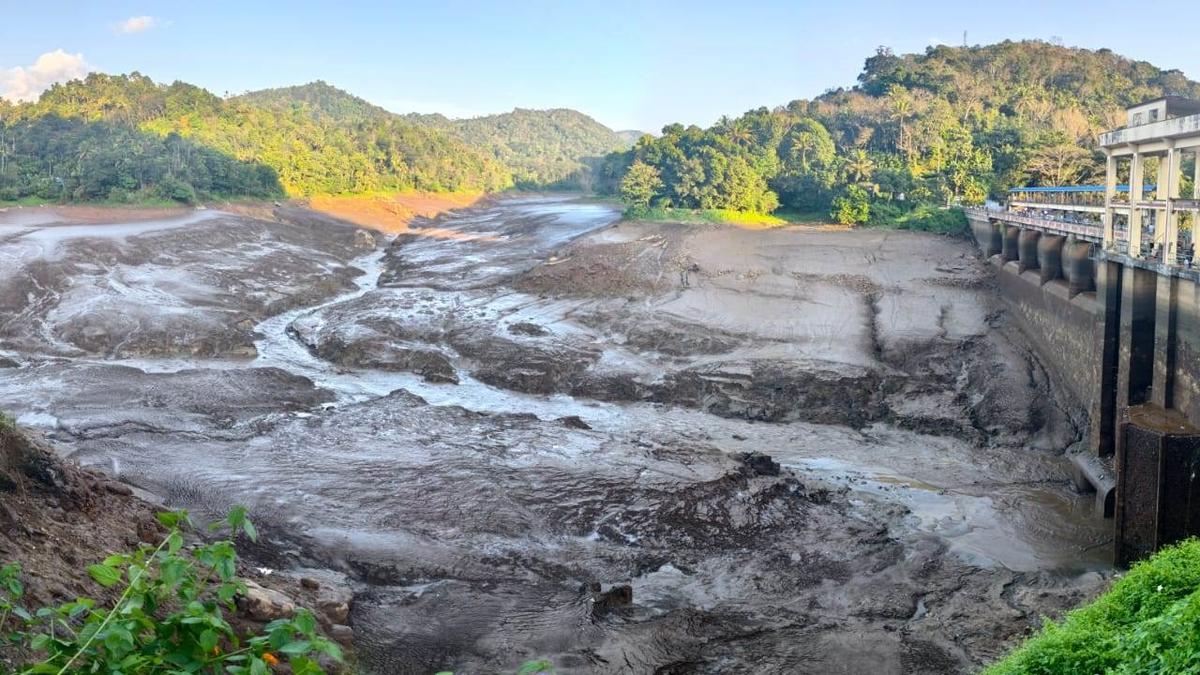
An official of the board said the move to empty the dam was taken after a leakage was detected on the sluice valve and to replace the old trash racks. “The trash racks are structures that are installed in the intake system of hydroelectric power plants to prevent the entry of large debris, such as trees and tree branches, which can damage turbine parts and hinder the power plant operations. The schedule for the repair works is from December 27 to January 6,“ said the official.
The KSEB dam safety wing will manage the major repair works at the Kallarkutty dam. “During the shutdown period, the board will also complete the crucial repair works at the Neriamangalam powerhouse,” said an official. Meanwhile, after the dam and reservoir was dried up, a large number of residents from Konnathady, Vellathooval, Bison Valley, Vathikudy, and Pallivasal panchayats started fishing from the Kallarkutty reservoir. https://www.thehindu.com/news/national/kerala/kseb-dried-up-the-kallarkutty-dam-for-urgent-repair-works/article69037134.ece (28 Dec. 2024)
Karnataka ISFR shows loss of forest cover in western ghats In fact, Shivamogga — where the govt is aggressively pushing for a pumped storage project, widening of highways, and mini-hydel units — has witnessed rampant destruction of forest cover. A total of 74.5 sqkm of forest cover in Shivamogga has been lost, the report revealed. Close on the heels of Shivamogga is Belagavi district with a loss of 24.9 sqkm. In Belagavi, the state govt is “bargaining” over a deal with Goa for the implementation of the Mahadayi water project in exchange for land for the latter state’s power transmission project. https://timesofindia.indiatimes.com/city/bengaluru/forest-loss-in-karnatakas-western-ghats-region-alarming-report/articleshow/116640127.cms (25 Dec. 2024)
MoEF Agenda for EAC for River Valley Projects to be held on Dec 31, 2024: 1. Tarali Open Loop Pumped Storage Project (1500 MW) in 150.74 Ha at Village Nivade, Tondoshi, Kalambe and Jalu, Sub-Dist Patan, Dist Satara, Mah by Adani Green Energy Ltd: Env Clearance
2. Warsgaon Warangi Close Loop Pumped Storage Project (1500 MW) in 226.16 Ha at Village Khanu, Teckpole and Warangi, Sub Dist Velhe & Mahad, Dist Pune & Raigad, Mah by Adani Green Energy Ltd – Terms of Reference
3. Chentikheda Major Irrigation Project (CCA: 15300 ha) in 1361.25 Ha at Villages Agra, Bijaipur, Devra, Garhi and etc., Sub-dist Vijaypur & Sabalgarh, Dist Sheopur & Morena, Madhya Pradesh –Terms of References https://parivesh.nic.in/utildoc/115627985_1734962746631.pdf
DAMS
SANDRP Overview 2024: Dam Affected Continue to Struggle across India All through the year 2024, the Narmada Bachao Andolan continued peaceful protests seeking justice for Sardar Sarovar Project affected villagers. Tribals in upper Narmada Valley have also been fiercely opposing the Basania dam. The Hirakud dam displaced people have demanded formation of statutory national commission to hear their grievances.
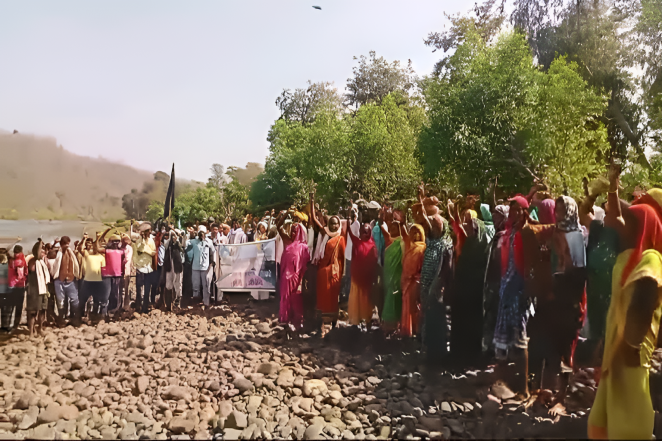
The plight of Pong dam affected villagers have worsened as they again face displacement from rehabilitated lands due to new development projects while most of the land given to Renuka dam affected has been damaged by floods. It is indeed tragic that despite sacrificing their land and livelihoods for the ‘development’ of the country decades back, thousands of dams affected villagers are still forced to fight for promised rehabilitation. https://sandrp.in/2024/12/25/2024-dam-affected-continue-to-struggle-across-india/ (25 Dec. 2024)
Kaleshwaram Project Notices to KCR, Harish suspended Telangana high court on Tuesday (Dec. 24) suspended the notice issued to them by the principal district sessions judge of Bhupalpally in a petition that sought a probe into the alleged scam in the construction of Kaleshwaram irrigation project. Justice K Lakshman gave the interim order while hearing a joint plea by KCR and Harish Rao who questioned the notices issued to them by the district court. https://timesofindia.indiatimes.com/city/hyderabad/kaleshwaram-case-notices-to-kcr-harish-suspended/articleshowprint/116640820.cms (25 Dec. 2024)
Odisha Lower Suktel dam PAFs yet to be properly rehabilitated The displaced families of Lower Suktel dam project of Balangir district are yet to be properly rehabilitated. A survey was conducted in 1996 and the Lower Suktel project was initially planned to be built at a cost of Rs 216 crore. However, initially the work could not start due to public opposition. Later, in 2012, a movement was started in favor of the project and the plan materialized. Since 2021, the work was accelerated and finally the Lower Suktel project was built at a cost of more than Rs 5259 crore. However, even today, the displaced people have not been resettled and rehabilitated properly.
29 villages, 15 completely and 14 partially were submerged. Out of the 11,606 affected families, 7,212 families have been completely affected while 4,126 families have been partially affected. Where did the people of these villages go? What are these displaced families doing after losing their livelihood and being washed away by the dam water? There are many unanswered questions. The chief construction engineer of the Lower Suktel Irrigation project said that the resettlement of the displaced people is continuing.
The district administration has identified 10 places for the resettlement of the displaced families. Houses have been provided in areas like Jhankar Pali, Larkipali, Khujen Pali, Hardatal, Kusmel, Bagdia, Lankabahal etc. At the Jhankarpali rehabilitation area. There is no pond for the villagers or school for the children. Besides, the road work is going on at a slow pace. Many families who were displaced and stayed here in 2022 are still deprived of complete resettlement and proper rehabilitation. The displaced people were evicted from their house overnight with many promises. Now all the promises have remained empty. The sacrifice the people made to make this possible are in sorrow, because they are yet to be properly rehabilitated. https://kalingatv.com/features/balangir-displaced-families-of-lower-suktel-dam-project-yet-to-be-properly-rehabilitated-watch/ (28 Dec 2024)
Telangana After 5 year gap SC to hear plea on PRRLIS irregularities -More than five years after it issued notices to the Telangana government, Bharat Heavy Electricals Limited (BHEL) and Megha Engineering Infra Limited (MEIL) to respond to allegations in connection with an alleged Rs 35,000 crore scam in the Palamuru-Rangareddy Lift Irrigation Scheme (PRRLIS), the Supreme Court has directed the state government and BHEL to produce the original files related to the project.
-A bench comprising Chief Justice Sanjiv Khanna and Justice Sanjay Kumar issued the order on 18 December. Additionally, the bench also ordered BHEL to file an affidavit detailing the equipment it manufactured and supplied, and the payments received for the project.
-The court is seized of an appeal filed by former MLA Nagam Janardhan Reddy in which he challenged the state high court order dismissing his public interest litigation (PIL) demanding a probe by the Central Bureau of Investigation into the alleged PRRLIS scam. In 2017, when Reddy was part of the Bharatiya Janata Party (BJP), he had moved a PIL in the high court, challenging the contract awarded to a joint venture between BHEL and MEIL. He had alleged that it caused a loss of over Rs 2000 crore to the public exchequer, claiming that the state had “fraudulently revised the value of the equipment to be used in the project from Rs 5,960 crore to Rs 8,386 crore”. https://theprint.in/judiciary/telangana-irrigation-project-at-the-centre-of-rs-35000-cr-scam-under-scs-scanner-5-yrs-after-notice/2418932/ (26 Dec. 2024) 121996
Himachal Pradesh Renukaji dam cost goes upto ₹8262 cr The ambitious Renukaji Dam project, envisioned on the Giri river 48 years ago (1976), is poised to emerge as a game-changer, transcending decades of delays. PM Modi laid the foundation stone of this Rs 6,946 crore project on Dec 27, 2021. With 95 per cent of procedural hurdles already cleared, global tenders will be floated for the project soon. The project cost, factoring a 5 per cent annual escalation, has surged to Rs 8,262 crore. The project is expected to be completed by 2030 and operations to commence in 2032. As per Harikesh Meena, Managing Director, HP Power Corporation Ltd Rs 1,573 crore has already been disbursed as compensation and 90 homeless families have been offered rehabilitation options at designated sites.
The dam part of the PM Krishi Sinchai Yojana will store 498 million cubic metres of water, supplying 275 MGD to Delhi and generating 40 MW of hydroelectric power for Himachal. A breakthrough was achieved when an agreement to resolve water-sharing issues among six states was signed in January 2019. Haryana leads with a 5.73 BCM share, contributing Rs 555.95 crore, followed by Uttar Pradesh (3.721 BCM and Rs 361.04 crore), Rajasthan (Rs 108.58 crore), Delhi (Rs 70.25 crore) and Uttarakhand (Rs 30.17 crore). Himachal will receive Rs 36.67 crore. (KS Tomar) https://www.tribuneindia.com/news/himachal/renukaji-dam-project-promises-economic-growth-to-hp-water-security-to-delhi/ (28 Dec. 2024)
INTERLINKING OF RIVERS
SANDRP Guest Blog केन–बेतवा नदी जोड़ परियोजना का विरोध कर रहे पन्ना के आदिवासी केन-बेतवा नदी जोड़ परियोजना को लेकर जय आदिवासी युवा शक्ति संगठन के पन्ना जिला अध्यक्ष मुकेश कुमार गौंड कहते हैं कि, “प्रभावित गांव 90 प्रतिशत आदिवासी क्षेत्र हैं। इन गांवों में लोग बुनियादी सुविधाओं से वंचित हैं। लेकिन, इन लोगों को सुविधाएं देने की वजाए विस्थापित किया जा रहा है। परियोजना में आदिवासियों को कुर्बानी देनी पड़ रही है। हम पहले विकास से वंचित हैं। ऐसे में परियोजना से हमारा क्षेत्र तहस-नहस हो जायेगा।“ मुकेश आगे बताते हैं कि, “मेरा अनुभव है कि पन्ना में जितने भी बांध बनाए गये, उसमें ज्यादातर बांध आदिवासियों की जमीन पर बनाए गए हैं। इन बांध योजनाओं में बहुत लोगों को मुआवजा नहीं मिला है। बहुत लोगों को बहुत कम मिला है। जिससे उनका जीवन विखंडित हो गया है।” https://shorturl.at/JRVKM (23 Dec. 2024) इस परियोजना को लेकर हमने पीपुल्स साइंस इंस्टीट्यूट कार्यरत वैज्ञानिक अनिल गौतम से बातचीत की। कहते हैं कि, “केन-बेतवा प्रोजेक्ट में मुख्य बिंदु यह रखा गया था कि, केन में पानी अधिक है और बेतवा में विचार करने योग्य है। यह मान्यता ही ग़लत है। क्योंकि दोनों नदियों के बेसिन में वर्षा दर समान है। केन नदी जल का अधिक दोहन नहीं हुआ है जबकि बेतवा नदी के जल का अत्यधिक दोहन हुआ है। इसलिए यह कहा जाता है कि, केन नदी में पानी अधिक है। जबकि, यह बात पूरी तरह से गलत है।” अनिल गौतम आगे बताते हैं कि, “परियोजना से सटा हुआ पन्ना टाईगर रिजर्व भी है। उसका क्षेत्र भी परियोजना में डूब रहा है। वहीं, परियोजना से केन घड़ियाल सेंचुरी भी प्रभावित होगी। इसके अलावा परियोजना क्षेत्र में पहले से बने सिंचाई नहर की प्राथमिकता भी खत्म होगी।“ https://climateeast.in/tribal-people-are-opposing-ken-betwa-river-linking-project/ (26 Dec. 2024)
शिलान्यास से नाराज प्रभावितों ने मनाया काला दिवस… एक तरफ देशभर का पत्रकार बिना ग्राउंड पर गए सरकारी पोस्टर और विज्ञापन पर इस परियोजना के गुणगान कर रहा है। वहीं इस केन बेतवा लिंक से नाराज स्थानीय आदिवास और ग्रामीणों ने आज बांध स्थल पर चिताओं मे लेटकर काला दिवस मनाया है।

केन के पानी पर पहला हक हमारा देश की स्वच्छ और प्रदूषण मुक्त नदियों में सुमार केन नदी पन्ना टाइगर रिज़र्व के मध्य से प्रवाहित होती है। यह नदी वन्य प्राणियों सहित केन किनारे स्थित ग्रामों के लोगों के जीवन का आधार है। केन नदी के किनारे स्थित गांव के लोग बहुचर्चित केन-बेतवा लिंक परियोजना को लेकर सशंकित और चिंतित हैं। बीरा गांव के वीरेंद्र सिंह (78 वर्ष) अपनी चिंता जाहिर करते हुए कहते हैं कि “केन को पानी यदि ऊपर छेंक लेहें तो हम का करबी। हमसे कउनो राय व सहमति नहीं ली गई, जा तो हम लोगन के संगे सरासर अन्याय है”। ग्रामीणों का साफ कहना है कि केन के पानी पर पहला हक हमारा है। हम केन के पानी को रोककर बांध बनाने के पक्षधर नहीं हैं, क्योंकि इस नदी की जलधार पर ही हमारा जीवन निर्भर है।
उल्लेखनीय है कि पन्ना जिले से प्रवाहित होने वाली केन नदी रीठी कटनी के पास से निकलती है और 427 किलोमीटर की दूरी तय करने के बाद उत्तर प्रदेश के बांदा में यमुना नदी से मिल जाती है। ढोढन गांव के निकट जहां पर बांध का निर्माण होना है, वह नदी के उद्गम स्थल से लगभग 200 किलोमीटर की दूरी पर है। इस तरह से बांध के निचले क्षेत्र में नदी की लंबाई तकरीबन 227 किलोमीटर बचती है, जहां सैकड़ों की संख्या में पन्ना, छतरपुर व बांदा जिले के गांव स्थित हैं। 44 हजार करोड रुपए से भी अधिक लागत वाली इस परियोजना के मूर्तरूप लेने से बाघों सहित दूसरे वन्य जीवों और गिद्धों का सदियों पुराना रहवास जहाँ नष्ट होगा वहीं लाखों पेड़ों के कटने से पर्यावरण की अपूर्णीय क्षति होगी। केन नदी के किनारे स्थित फरस्वाहा गांव के करण त्रिपाठी का कहना है कि बांध बनने से केन की जलधार यदि रुक गई तो केन किनारे के गांवों में जिंदगी मुश्किल हो जाएगी। केन नदी में यदि पानी नहीं रहा तो इन गांवों के लोग कैसे जिंदा रहेंगे ? https://pannastories.blogspot.com/2024/12/25-3.html (24 Dec. 2024)
Inauguration done but crucial questions remain Not everyone is convinced. Environmental activists have long said what the former bureaucrat wrote. “These are claimed benefits..assumptions. Not realistic. These claims are not independently scrutinised,” Himanshu Thakkar from the South Asia Network on Dams, Rivers and People told The Telegraph Online. Thakkar pointed out that it will take 20 years to complete the Ken-Betwa project.
– Activists like Thakkar say there are other, less drastic ways to address the problem. “Bundelkhand gets 900 mm of rainfall. Even higher than Marathwada, Rajasthan and Kutch area, and parts of Andhra Pradesh,” Thakkar pointed out. According to Thakkar, the environmental cost is too high. His estimate of the number of trees to be felled is around 46 lakh trees. There will be loss of habitat, he underlined.
– Environmental activists say the plan is merely on paper. Thakkar said Bundelkhand has a history of destruction in the name of development. “Forest advisory committee said this project should not be cleared. Destroying trees would lead to decrease in rainfall. Floods will increase. There will be erosion after monsoon. Ken basin will remain backward,” Thakkar said.
– But what could have been the alternative? “Even 60 years ago Bundelkhand didn’t have a water problem,” Thakkar said. “Destruction in the name of development led to this deficit. They should have ensured there is proper ground water recharge. There should be rainwater harvesting. These are much more cost-effective.”
– The Supreme Court had appointed a central empowered committee to submit a report on the project. “The very objective…of natural evolution unhindered by human intervention will be defeated and will result in complete breakdown of the evolutionary process of millions of years,” the committee report said. “The alternative to the main objectives of the project proposal of irrigation and alleviation of poverty have not been examined by the project proponents. The disturbance to wildlife during the construction phase will extend beyond the 6071 ha of forest proposed for diversion and will last for more than a decade exerting tremendous biotic pressure on the core of national part and critical tiger habitat,” it added. https://www.telegraphindia.com/gallery/as-narendra-modi-inaugurates-ken-betwa-river-link-project-crucial-questions-remain-photogallery/cid/2073266 (25 Dec. 2024) KBL foundation stone laid but questions still pending! https://hindi.downtoearth.org.in/river/pm-modi-laid-foundation-stone-of-ken-betwa-river-link-project-but-questions-still-remain (25 Dec. 2024) PM to lay foundation stone of ‘controversial’ Ken- Betwa river linking project https://globalbihari.com/pm-to-lay-foundation-stone-of-controversial-ken-betwa-river-linking-project-on-atals-100th-birth-anniversary/ (24 Dec. 2024) The Congress on Wednesday (Dec. 25) said that by laying the foundation stone of the Ken-Betwa River Linking Project, PM Modi will give another proof of the difference between his “talk and walk” on environment as it poses a serious threat to the Panna Tiger Reserve. https://www.thehindu.com/news/national/ken-betwa-river-linking-project-poses-serious-threat-to-panna-tiger-reserve-congress/article69025522.ece (25 Dec. 2024)
Link will not solve Bundelkhand water problems Instead of transferring water from a river already ravaged by sand mining, a very different approach is needed for resolving water problems of Bundelkhand. https://countercurrents.org/2024/12/ken-betwa-river-link-project-will-not-solve-the-water-problems-of-bundelkhand/ (27 Dec. 2024) Ken Betwa link project is not practical https://globalbihari.com/mudda-ken-betwa-link-pariyojna-vyavaharik-nahin-hai/ (24 Dec. 2024) Govt should think once more on river connection https://globalbihari.com/bharat-sarkaar-ko-nadi-jod-par-ek-baar-aur-vichaar-karna-chahiye/ (25 Dec. 2024) The 77m-tall Daudhan Dam would submerge 8,650 hectares of land, including a part of the biodiversity-rich reserved forests of Panna Tiger Reserve, as per a government report. https://www.news18.com/explainers/why-ken-betwa-river-project-will-be-boon-for-bundelkhand-but-bane-for-environment-explained-9168885.html (26 Sept. 2024) What really is the Ken Betwa River “Linking” project doing? https://www.youtube.com/shorts/RLPDhshRjM8 (25 Dec. 2024)
EDIT KBL product of political expediency The project seems more the product of political expediency and self-image than current ecological sense. The more resources the government sinks into it, the more unlikely changing or reversing course will become in the face of adverse developments. When they come to pass, the responsibility and costs of mitigating the adverse consequences of this and other projects, including the recently launched Parbati-Kalisindh-Chambal link, will fall to the people. https://www.thehindu.com/opinion/editorial/pushed-through-on-the-ken-betwa-river-interlinking-project/article69029968.ece (27 Dec. 2024)
Linking river can cause irreversible damages The Ken-Betwa linking project has been challenged on many grounds. It will submerge about 10% of the Panna Tiger Reserve and affect the entire biodiversity of the area. About 23 lakh trees will be felled. There are questions about the availability of surplus water to be transferred. Some experts have said that linking will make both the Ken and the Betwa basins water-deficient, and affect rainfall, sedimentation, soil fertility, and natural water storage capacity. It is also pointed out that there are alternatives, and the government has gone ahead with the project, ignoring the recommendations of an empowered committee. Extreme caution is needed in executing projects that seek to change nature, because the damage they cause is often irreversible. https://www.deccanherald.com/opinion/editorial/linking-of-rivers-calls-for-extreme-caution-3335669 (30 Dec. 2024)
INTERSTATE WATER DISPUTES
Cauvery Water Disputes CWRC directs TN to remain watchful The Cauvery Water Regulation Committee (CWRC) has advised the Tamil Nadu government to be cautious about water use from its Mettur reservoirs as the northeast monsoon is about to end and the reservoir level is almost five per cent lesser than normal. However, Karnataka has so far released 279.8 thousand million cubic feet (TMC) of Cauvery water as against the required 161.41 TMC between June 1 and December 18, 2024, at interstate point Biligundlu than required according to the Cauvery Water Disputes Tribunal (CWDT), as modified by the Supreme Court. Even in November, Karnataka released 19.82 TMC against the requirement of 11.78 TMC and between Dec 1 and Dec 18, Karnataka released over 15 TMC as against the required 4,27 TMC. https://www.newindianexpress.com/states/tamil-nadu/2024/Dec/21/cwrc-directs-tn-to-remain-watchful-of-its-water-usage-from-mettur-reservoirs (21 Dec. 2024)
Krishna Water Disputes AP, TG gear up for next round Even as the Central Water Commission (CWC) informed the Telangana irrigation department that it has removed the Palamuru Rangareddy Lift Irrigation Scheme project from its list of under appraisal projects, the Andhra Pradesh irrigation department is learnt to have urged that the detailed project report of PRLIS be made available to it.
This is one of the requests that the AP government is learnt to have made to be included in the agenda at a meeting of the Krishna River Management Board to be held after Sankranti festival between representatives of the two states. Both states are learnt to have submitted their proposals for inclusion in the agenda for the meeting.
Andhra Pradesh is learnt to have asked the KRMB that it must not allow Telangana to take up the ₹4350 cr Narayanpur-Kodangal Lift Irrigation Scheme, which it says is being taken up without any permission. A contentious issue between the two states has also been the control & management of the Nagarjunasagar dam. https://www.deccanchronicle.com/southern-states/telangana/ap-tg-gear-up-for-next-round-of-battle-over-krishna-river-1849660 (25 Dec 2024)
Dispute takes a new turn Telangana has requested the Tribunal to consider the pleadings, evidence, and documents from both states as a common record for adjudication. The state also requested the Tribunal to consider the reference under Section 89 of the Andhra Pradesh Reorganisation Act, 2023, and pass any further orders deemed fit in the interests of justice.
Telangana‘s plea includes a demand for project-wise specific allocations of water resources. This is in line with the new Terms of Reference (ToR) issued under the Inter-state River Water Disputes (IRWD) Act, 1956, which allows for a wider scope, including reallocation of water for ongoing and new projects. https://telanganatoday.com/longstanding-telangana-ap-krishna-water-dispute-takes-a-new-turn (24 Dec. 2024)
URBAN RIVERS
Mula-Mutha; Pune Illegal Dumping in Mula-Ramnadi River Could Cause Floods Again, Residents March Illegal and unethical debris dumping in the Mula-Ramnadi River has provoked widespread public outrage, with citizens and activists accusing local authorities of violating court orders and jeopardizing the safety of Pune’s residents. The dumping, allegedly carried out by the Pune Municipal Corporation (PMC) and Pimpri-Chinchwad Municipal Corporation (PCMC), is said to be in contempt of a Bombay High Court directive requiring the scientific re-identification of the city’s flood lines. https://www.freepressjournal.in/pune/pune-illegal-dumping-in-mula-ramnadi-river-could-cause-floods-like-sinhagad-road-again-residents-march (22 Dec. 2024)
Nature lovers and activists carry posters denouncing the RFD project and the dumping of debris at the Ramnadi and Mula River confluence in the Baner neighborhood of Pune city. https://www.youtube.com/watch?v=pdbgD-L1Ngw (22 Dec 2024) Dr Priyadarshini Karve on Effects of RFD work. https://www.youtube.com/watch?v=qx3Ymz6R5xI (26 Dec 2024) Fishermen speak up about RFD https://www.youtube.com/watch?v=0__TX8_NvRE (25 Dec 2024)
Indrayani Toxic foam resurfaces A thick layer of white toxic foam has resurfaced on the holy Indrayani river near Alandi on Sunday (Dec. 29). Environment activists and villagers have blamed the Maharashtra Pollution Control Board (MPCB) and civic bodies for their failure to curb pollution in the river despite reporting similar incidents in the past to the officials concerned. An environment activist from the area said the PCMC often sprays some chemical in the river in its jurisdiction to ensure the foam is not visible whenever such an incident is reported. However, there is a need to reduce pollution in the complete stretch passing through urban areas to solve the issue, he said.
“Municipal councils like Dehu and Alandi do not have STPs. They directly release untreated water into the river. If the administration manages to ensure that untreated water is not released into Indrayani from any point, the pollution will reduce to a large extent,” Nisar Syyed of Avirat Foundation said. Earlier in July this year, the issue of foam on Indrayani river was also raised with the then chief minister Eknath Shinde during his visit to the Alandi temple. Shinde had assured that the govt would soon make the Indrayani pollution-free and that they are working on it. The Indrayani river passes through the jurisdiction of multiple municipal councils, villages, and the industrial area of Chakan MIDC. https://timesofindia.indiatimes.com/city/pune/toxic-foam-resurfaces-on-indrayani-activists-blame-mpcb-civic-bodies/articleshow/116775330.cms (30 Dec. 2024) Locals claim that this is not an isolated incident, but a recurring problem that has been ignored by the government for the past eight years. Despite the alarming situation, the authorities have failed to take concrete action to address the issue. The pollution has not only affected the river’s ecosystem but also poses a significant threat to the health and well-being of millions of devotees who visit the river as part of their pilgrimage. https://www.mypunepulse.com/indrayani-river-foams-again-in-alandi-locals-demand-action-over-pollution-crisis/ (29 Dec. 2024)
Arkavathy; Bengaluru NGT seeks govt response on pollution The Principal Bench was hearing the matter taking suo-motu cognisance of the ‘Deccan Herald’ news report which appeared on November 22, 2024 titled “Mercury cancer-causing pesticide found in Arkavathy river water samples.’ The NGT has issued notices to the Centre and Karnataka Government seeking reply for alarming levels of heavy metals and toxic substances in Arkavathy river water. The further hearing of the matter has been transferred to its Southern Bench & posted for Feb 10, 2025. https://www.deccanherald.com/india/karnataka/ngt-seeks-response-from-state-for-arkavathy-river-pollution-3329954 (23 Dec. 2024)
Buddha Dariya; Ludhiana Seechewal pitches tent to clean Buddha Nullah Environmentalist-turned-Rajya Sabha MP Sant Balbir Singh Seechewal on Saturday (Dec. 28) pitched a tent in Ludhiana with a resolve to free the Buddha Nullah of the widespread pollution. Launching a strong front to clean one of the most polluted Sutlej tributaries, which passes through Ludhiana and joins the river before entering Rajasthan, Seechewal cancelled his scheduled foreign trip to kick-start a kar sewa to clean and preserve the Buddha Nullah on the lines what he had done with the Kali Bein, a rivulet that flows into the confluence of the Beas and Sutlej at Harike.
He appealed to the people of the state, especially Ludhiana, to join hands and cooperate in the kar sewa to again turn the nullah into a clean and pristine Buddha Dariya. He said the rivers of the state were the real heritage of Punjabis and it was the joint responsibility of all residents to maintain it. https://www.tribuneindia.com/news/ludhiana/seechewal-pitches-tent-to-clean-buddha-nullah/ (29 Dec. 2024)
Local bodies minister Dr Ravjot Singh and Rajya Sabha MP Balbir Singh Seechewal inspected visited the Buddha Nullah site and also the 225-MLD Jamalpur sewage treatment plant (STP) on Tajpur road and issued directions to speed up work on biogas plant projects and also the cleaning works. https://www.hindustantimes.com/cities/chandigarh-news/ludhiana-officials-asked-to-speed-up-buddha-nullah-clean-up-biogas-plant-work-101735501575383.html (30 Dec. 2024)
Umngot; Dwaki Govt invites tenders for Rs 27.5 cr RFD The state govt has invited tenders for the development of the Umngot riverfront in Dawki with approximate value of work Rs 27.5 cr. The scope of work includes construction of trails with pathway, buildings for amenities, a pedestrian bridge, and utility buildings including civil, electrical and plumbing works.The time of completion for the project is 2 years. The Umngot river carries the tag of being one of India’s cleanest rivers due to its crystal clear waters. The place has also become of the most prominent tourist spots in recent times. https://theshillongtimes.com/2024/12/28/govt-invites-tenders-for-rs-27-5-cr-dawki-riverfront-project/ (28 Dec. 2024)
RIVERS
Opinion Restoring India’s rivers: European experiences & challenges The article argues that an examination of the structural differences in hydroclimatic conditions, socio-political context, institutional attributes, and water policy processes between the two regions will be critical to identifying the key lessons from Europe that could strengthen India’s river rejuvenation journey. (Debarshee Dasgupta and Subia Ahmad) https://www.theindiaforum.in/environment/restoring-indias-rivers-european-experiences-and-challenges (16 Dec. 2024)
CAUVERY Tiruchi Old channels become sewage drains While the Tiruchi Corporation has been engaged in expanding the underground sewer network over the past few years, a large number of households and commercial establishments continue to discharge sewage into the open drains in different parts of the city. In the absence of a proper storm-water drainage network, these open drains serve as the city’s primary outlet to carry the rainwater flows to the Cauvery.
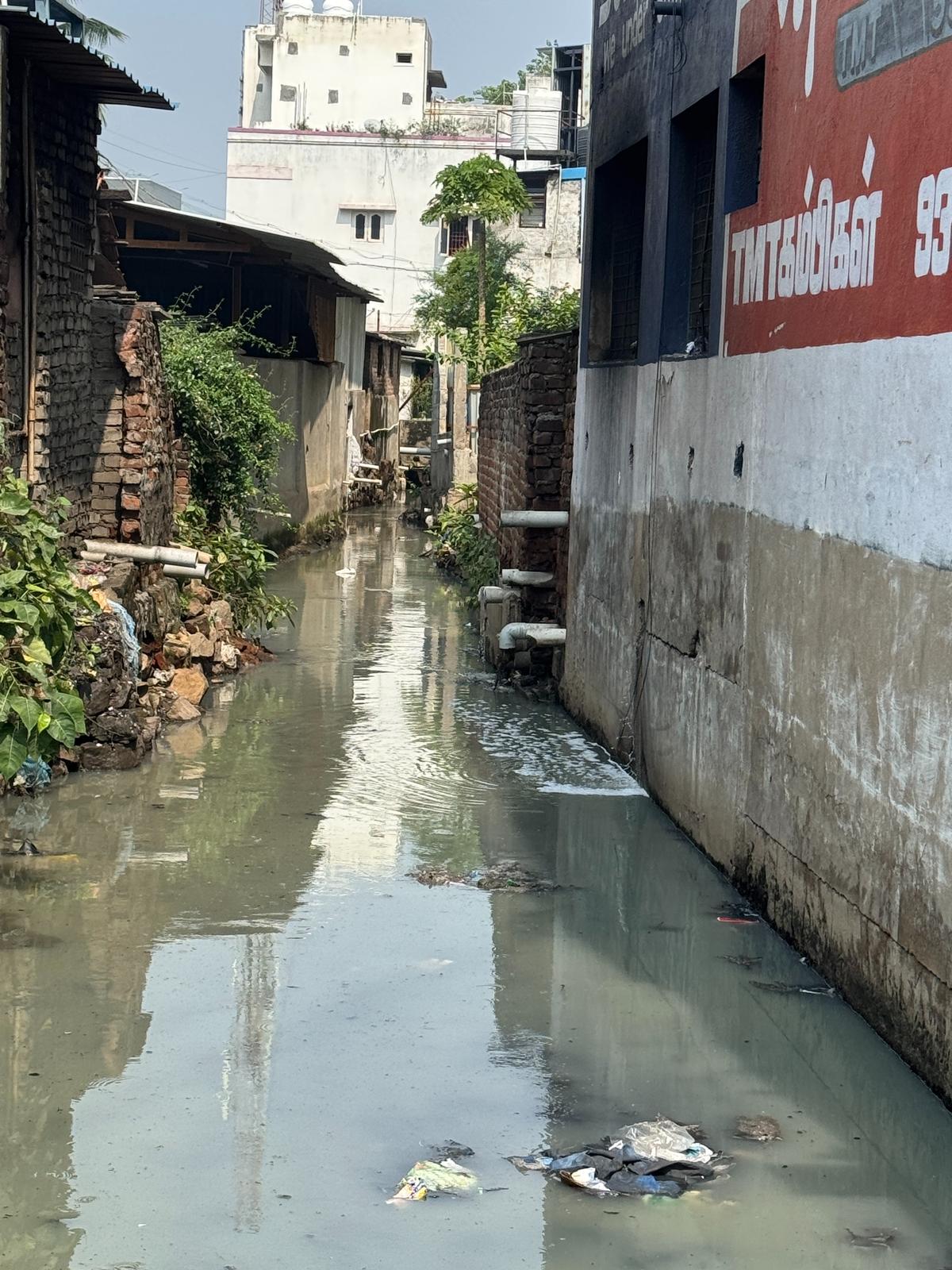
Although several such open drains could be seen across the city, eight of them — the Virupachipuram, Vannarapettai, Thennur Irattai, Kottai, Kathan, Thotti, Devadhanam and Tharanallur vaicals — had been serving as important storm-water drains. These have been irrigation canals in the past and were handed over to the Corporation for maintenance by the WRD following rapid urbanisation in recent decades. Most of these canals were more than 20-foot wide, originally but have now drastically shrunk in width.
But just as the Uyyakondan, which cuts across the city, has been nearly destroyed by urban pollution, the open drains have also turned into convenient discharge points for hundreds of households and commercial establishments which have not been connected to the underground sewer network. Sewage could be seen flowing directly into the canals from pipes put up brazenly at the rear of the houses or small business establishments. Such outlets could be seen along the Thennur Irattai and Tharanallur Irattai vaicals.
Farmers had long been complaining over the heavy urban pollution to the Uyyakondan because of the discharge of sewage into it between the Puthur Weir and Ariyamangalam. “Farmers of the ayacut areas of the river are adversely affected as the sewage mixed water flows to their fields. Agricultural labourers complain of contracting skin diseases,” says R. Subramanian, a farmer. The Corporation’s plan to establish a STP on the canal banks to check the pollution had failed to materialise. https://www.thehindu.com/news/cities/Tiruchirapalli/age-old-channels-have-become-open-drains-for-discharging-raw-sewage-in-tiruchi/article69023431.ece (25 Dec. 2024)
Tamil Nadu Ancient artefacts unearthed along Thenpennai river Research scholar C Immanuel and postgraduate scholar V Prathap from the History Department of Aringar Anna Government Arts College in Villupuram conducted the survey.
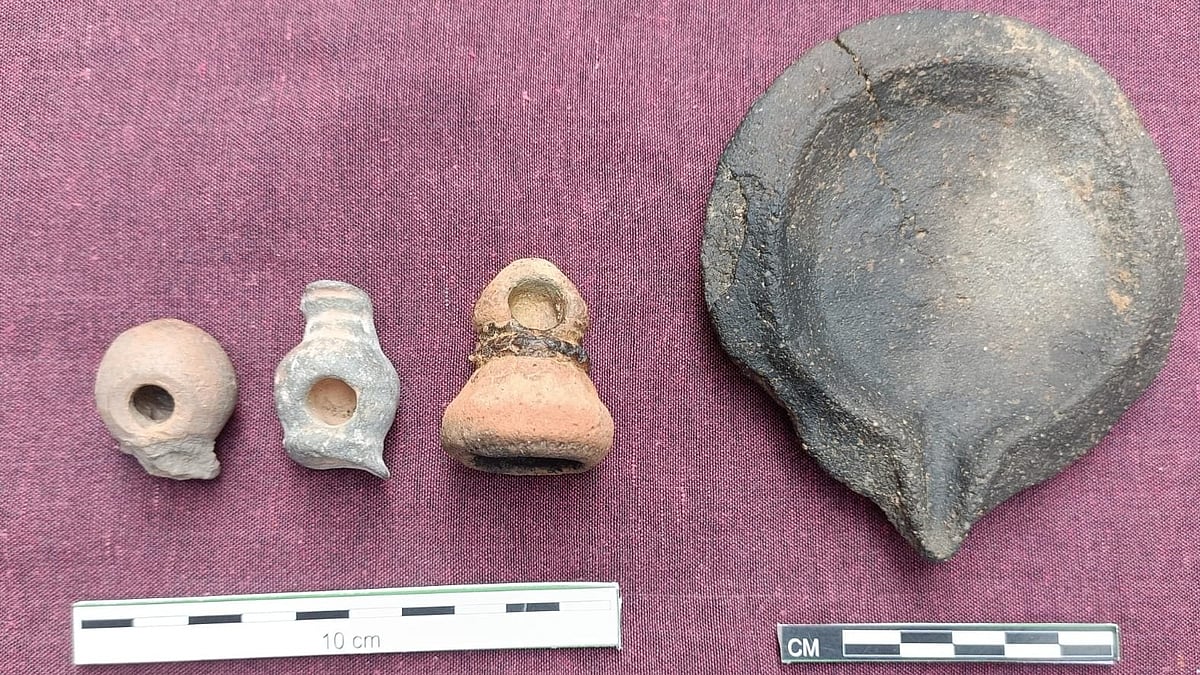
-Immanuel said, “The recent floods in the Thenpennai river caused soil erosion, exposing ancient artefacts, including pottery shards. We found three red terracotta smoking pipes and a black terracotta lamp along the riverbank.” Similar pipes were found in large quantities during excavations at sites such as Adichanallur, Vembakkottai, and Keeladi, and similar lamps in Payyampalli, Modur, and Appukallu as well as other key archaeological sites, including Arikamedu, he said.
-Prathap said, “The terracotta smoking pipes and lamps found on the Thenpennai riverbank align with findings from various archaeological sites in Tamil Nadu. These discoveries provide valuable insights into the lives of ancient Tamil people and the settlements along riverbanks during the Sangam era.” https://www.newindianexpress.com/states/tamil-nadu/2024/Dec/25/ancient-terracotta-artefacts-unearthed-along-thenpennai-river-bank-near-panruti (25 Dec. 2024)
Karnataka MoEF sits on govt plea to delist 3 rivers from polluted list Based on its monitoring of the water quality in rivers across India, CPCB updates its list of polluted rivers. In 2017, it had notified 17 rivers in Karnataka as polluted. Acting tough on pollution-causing agencies, Karnataka State Pollution Control Board (KSPCB) was successful in getting Malaprabha delisted. Subsequently, in 2019, the Centre revised the list and added new rivers to it. However, much to the dismay of Karnataka, a few of the state’s pristine rivers, such as Aghanashini, Sharavathi, and Gangavali, were notified as polluted. Eshwar Khandre, the state forest, environment and ecology minister, revealed that to date, there have been no further revisions to the 2019 list.
-“As of 2023-24, Karnataka has 12 rivers notified as polluted by the Centre, and an action plan to revive these rivers has also been approved,” the minister said. A total of 40 STPs, with a capacity to treat 657 MLD of wastewater, have already been set up. In addition, multiple reminders were sent to both MoEFCC and CPCB, Khandre added. “Yet, the Centre has not responded.” “In fact, a few months ago, CPCB had agreed to send a team to Karnataka for a joint inspection, but the team never arrived,” an official from KSPCB claimed. https://timesofindia.indiatimes.com/city/bengaluru/centre-sits-on-ktaka-plea-to-delist-3-rivers-from-polluted-list/articleshowprint/116641459.cms (25 Dec. 2024)
Haryana 5,000-year-old water management techniques unearthed at Rakhigarhi Dr Sanjay Manjul, joint director of the ASI revealed that a dried-up riverbed, identified as the Chautang river (also known as the Drishavati river), is located about 300 metres from the site. “This river, now extinct, was likely a lifeline for this region in ancient times. Archaeological evidence suggests the Harappan people stored water from the Drishavati river, which may have been the primary source of water supply for this ancient city,” he said.
-Archaeologists believe that the Drishavati river began to dry up around 5,000 years ago, leading to a water crisis in prosperous cities like Rakhigarhi. The gradual disappearance of the Drishavati and Sarasvati rivers likely contributed to the decline of the Harappan civilisation in the region. “This area may have been the largest water storage centre of its time,” Dr Manjul said, noting the advanced techniques employed by the Harappan people for water storage and conservation. Excavation findings indicate the existence of reservoirs and canals that were part of an intricate water management system. https://www.tribuneindia.com/news/haryana/5000-year-old-water-management-techniques-unearthed-at-rakhigarhi/ (21 Dec. 2024)
GANGA Prayagraj Ensure drinking, bathing quality water during Kumbh: NGT With sewage generation estimated to increase by 10 % during the 2025 Maha Kumbh Mela in Prayagraj, the NGT’s principal bench has ordered the Uttar Pradesh govt & CPCB to ensure no untreated sewage is discharged into the Ganga & Yamuna rivers & that no pilgrims suffer during the event. The tribunal directed that since the Magh Mela will continue for 45 days till Feb end, the authorities have to ensure that river water quality is of “drinking water/bathing water quality” at all times.
The principal bench passed the order earlier this week while disposing of a petition which had raised grievances about the discharge of untreated sewage from drains into Ganga River in Prayagraj. The order further went on to state that CPCB and UPPCB have to collect water samples from Ganga and Yamuna rivers at least twice a week from the monitoring points and they would have to display analysis reports on their website. During the Maha Kumbh and after it is over, the authorities have also been directed to take steps for effective disposal of the sludge generated in the STPs and deposited in geo-tubes, by following requisite environmental norms.
Before the NGT passed the order, the UP govt was asked to place on record its comprehensive sewage management plan to keep up with the rise in sewage load during Maha Kumbh 2025. The projected flow of sewage is likely to be around 519.09 MLD, of which nearly 65 per cent would be through drains and the rest through sewer networks, as per the Uttar Pradesh environment department. Of the 519.09 MLD projected sewage flow, 450.58 MLD would be treated at existing STPs while 68.41 MLD would be treated on-site, the UP government submitted to the green court. A total of 81 drains join the Ganga and Yamuna rivers out of which 37 drains are tapped into existing STPs while 44 drains are untapped, as per data submitted by the UP government. https://indianexpress.com/article/india/maha-kumbh-mela-2025-ganga-water-quality-ngt-9748891/# (28 Dec. 2024)
Rudraprayag पुनाड़ गदेरे पर निर्माणाधीन पार्किंग की शटरिंग ढही Roof of car parking facility being built on Punad stream near bus stand in Rudraprayag by Irrigation department at a cost of ₹1.05 crore collapse on Dec. 24 injuring two workers. Rise in water level of stream and use of inferior quality construction materials are being reported as possible reason behind the incident. रुद्रप्रयाग नये बस अड्डे के पास पुनाड़ गदेरे पर लगभग 70 मीटर लंबी और 5.15 मीटर चौड़ी पार्किंग का निर्माण किया जा रहा है। मंगलवार (Dec. 24) को दोपहर लगभग पौने दो बजे निर्माणाधीन पार्किंग की 13 मीटर हिस्से की शटरिंग अचानक ढह गई। पार्किंग के एक हिस्से पर लेंटर डाला जा रहा था जिसमें 30 से अधिक मजदूर काम कर रहे थे। शटरिंग ढहने से दो मजदूर सरिया व बल्लियों के साथ गदेरे में जा गिरे और घायल हो गए। । कार्यदायी संस्था सिंचाई विभाग का कहना है कि गदेरे में पानी बढ़ने से बल्लियों ने छोड़ी जगह और हादसा हो गया। वहीं प्रशासन ने पार्किंग की शटरिंग ढहने के कारणों की जांच शुरू कर दी है। https://www.amarujala.com/dehradun/under-construction-parking-shuttering-punar-gadera-collapsed-two-workers-injured-rudraprayag-news-2024-12-25 (25 Dec. 2024)
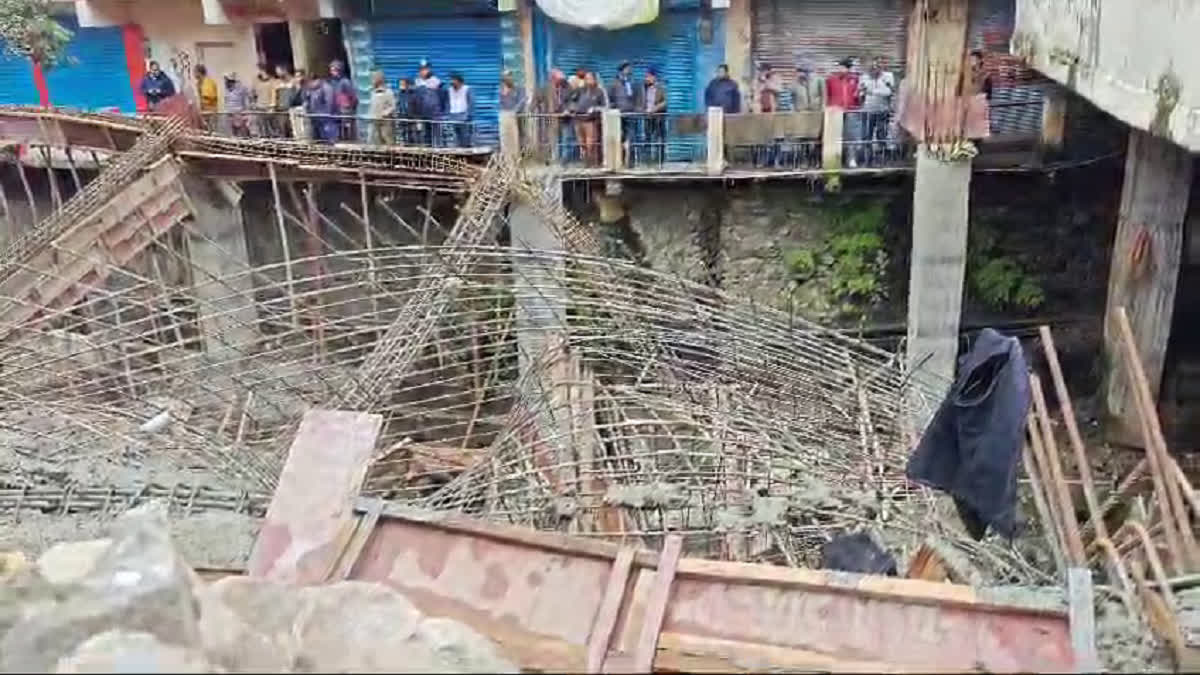
लगभग एक करोड़ पांच लाख की लागत से इस पार्किंग का निर्माण कार्य किया जा रहा था. घटना के पीछे के कारण अभी तक यही बताया जा रहा है कि पार्किंग की निर्माणाधीन छत भार नहीं झेल पाई. जिसमें संबंधित कार्यदायी संस्था, जेई और ठेकेदार की गलतियां सामने आ रही हैं. https://www.etvbharat.com/hi/!state/several-workers-injured-due-to-collapse-of-roof-of-under-construction-parking-near-new-bus-stand-rudraprayag-uttarakhand-news-uts24122403480 (23 Dec. 2024)
YAMUNA Delhi बांसेरा पार्क में हो सकेंगे कल्चरल दिल्ली के यमुना किनारे बने पहले बांस थीम पार्क बांसेरा की बुकिंग डीडीए ने सांस्कृतिक कार्यक्रमों के लिए शुरू की है। पर्यावरण एक्टिविस्टों ने इसके जैव विविधता पर संभावित असर को लेकर चिंता जाहिर की है। यह पार्क बुकिंग से डीडीए के रेवेन्यू में वृद्धि करेगा। बांसेरा पूरी तरह बांस से तैयार पार्क है। इसमें पांच जोन हैं और सभी जोन के लिए बुकिंग के अलग-अलग रेट तय किए गए हैं। जोन के साइज, वहां मौजूद फूलों, वॉटर बॉडी से दूरी, ग्रीन लॉन आदि के हिसाब से बुकिंग रेंज 25 हजार से 3.5 लाख रुपये तक है। इसे ऑनलाइन और ऑफलाइन दोनों तरह से बुक करवाया जा सकेगा।

साउथ एशिया नेटवर्क ऑन डैम्स, रिवर्स एंड पीपल्स (SANDRP) के भीम सिंह रावत ने कहा कि बांसेरा प्रोजेक्ट यमुना फ्लड प्लेन एरिया में बनाया ही नहीं जाना चाहिए था। इस पार्क के साथ फ्लड प्लेन एरिया का कमर्शलाइजेशन शुरू हो गया है। पार्क बनाने के लिए बाढ़ क्षेत्र की लेवलिंग की गई, अब वहां कैफेटेरिया और किड जोन भी शुरू कर दिया है। कल्चरल इवेंट से वहां की जैव विविधता नष्ट होगी और पक्षियों के लिए वह जगह उपयुक्त नहीं रह जाएगी। एनजीटी के नियमों का भी इसमें उल्लंघन दिखता है। दिल्ली 2023 में बाढ़ का उग्र रूप देख चुकी है। https://navbharattimes.indiatimes.com/metro/delhi/other-news/delhi-baansera-park-cultural-event-plan-environment-activists-has-objection-full-details/articleshow/116781152.cms (30 Dec. 2024)
Haryana Interstate boundary on river to get markers The PWD has approved tenders for installing concrete pillars in the Yamuna riverbed to demarcate the interstate boundary between Haryana and Uttar Pradesh in Faridabad and Palwal districts. Spanning nearly 100 kilometres, the Yamuna serves as a natural border between the two states. According to district administration sources, the department has completed the survey and awarded the tender to an agency for execution. While the DPR estimates the total cost at Rs 10.20 crore, officials note that the final expenditure could vary based on material requirements. Of the total, Rs 8.70 crore is allocated for Palwal and Rs 1.50 crore for Faridabad.

The project involves installing 135 pillars in Faridabad and 529 in Palwal. Each 70-foot-long pillar will be embedded 50 feet deep into the ground to ensure stability and withstand peak water flows. However, the Revenue Department’s inputs will be critical in identifying the exact locations for erecting these pillars. The initiative follows a detailed report from the Survey of India, prepared a few months ago to address a long-standing boundary dispute. Similar poles were installed in the 1970s following recommendations by the Dixit Commission. However, most of these were washed away or damaged over time, reviving the boundary issues. https://www.tribuneindia.com/news/haryana/interstate-boundary-on-yamuna-to-get-markers/ (29 Dec. 2024)
NGT serves notices on unrecovered ₹230 cr fine Giving one month reply time, the NGT on Dec 20 week issued notices to the Haryana govt and the SPCB after a petition argued that Rs 230 crore, which was imposed on entities or individuals who had violated environmental norms, was yet to be recovered and utilised to make up for the damages. The tribunal was hearing a plea filed by Delhi resident Varun Gulati, who argued that govt and HSPCB’s “inefficiency” in recovering environmental compensation was harming the environment by preventing restoration, remediation and rejuvenation efforts. The tribunal scheduled the next hearing in the case for Feb 13. https://timesofindia.indiatimes.com/city/gurgaon/rs-230-cr-green-damages-not-collected-ngt-serves-notice-to-haryana/articleshow/116609567.cms (24 Dec. 2024)
RIVERS BIODIVERSITY
World Bank This report has link of 9 World Bank-supported projects in Ganga Brahmaputra Meghna basin. https://www.worldbank.org/en/news/feature/2024/12/18/working-together-to-save-the-ganges-river-dolphin (18 Dec. 2024)
FISH, FISHERIES, FISHERFOLKS
Pune Dead fish found in Mula-Mutha river The incident came to light on Dec 23, when Prajkta Mahajan, a member of citizen group Pune River Revival, posted the dead fish incident on social media. In her post Mahajan mentioned that volunteers Amitraj and Nishad Sevekari on Dec 22 documented dead fish found floating along the riverbank from the Naidu STP outlet till Bund Garden. She alleged chemical contamination as the cause of death as volunteers reported bad odour in the river water.
Incidents of fish dying due to contaminated water in Mula, Pavana and Indrayani rivers is a perennial problem in the Pimpri-Chinchwad area and activists have been demanding concrete measures to prevent river pollution rather than just focusing on beautification. https://www.hindustantimes.com/cities/pune-news/dead-fish-found-in-mula-mutha-river-101734983508725.html (24 Dec. 2024)
Mass fish death in Mula-Mutha A case of environmental negligence has come to light as the Mula-Mutha River near Naik Island, behind the Regional Transport Office in Pune, is shockingly littered with dead fish and other aquatic animals, due to the release of untreated waste According to reports, residents have attributed this mass accumulation of dead fish to untreated sewage being released from the Naidu Water Purification Project.

The local community has said that untreated effluents that are being discharged directly into the river from the Naidu Pumping Station, is declining the water quality and resulting in the death of aquatic life. A large number of dead fish were found floating in the Mula-Mutha River near the Naidu Hospital STP in Pune on Sunday (Dec. 22). The huge number of dead fish clearly shows the severe impact of untreated sewage and industrial waste being discharged into the river, bringing to light a critical environmental issue that needs immediate attention. https://timesofindia.indiatimes.com/etimes/trending/why-hundreds-of-fish-are-dying-at/articleshowprint/116617220.cms (24 Dec 2024) Residents stated that both the PMC & MPCB have failed to curb pollution in the river. https://www.freepressjournal.in/pune/pune-thousands-of-dead-fish-found-floating-in-mula-river-sparking-outrage-over-pollution-video (24 Dec. 2024)
W Bengal Exhibition on river vessels Christened ‘Nadir Sange Dekha’ (a tryst with the river), the initiative was the brainchild of the Sea Explorers’ Institute (SEI), a non-profit founded in 1984 aimed to arouse public interest in marine and riverine resources and value them as a crucial part of our environment.
-Elaborating on Nadir Sange Dekha, SEI general secretary Sudheshna Chatterjee said: “Kolkata is known for car rallies but a rally or parade of aquatic vessels in something unknown to the city. This year’s Nadir Sange Dekha aims at showcasing the different traditional boats of Bengal along with the service craft of various organisations involved with the Hooghly.”
-She added: “Apart from the boat parade, we have set up a small display of model boats of Bengal.” Swarup Bhattacharyya, an anthropologist researching on Bengal boats, curated the model boat exhibition. About 15 models of different boats were on display. Moreover, the entire area was decorated with paper boats, fishing nets and sails besides several photographs of boats with detailed descriptions. https://www.telegraphindia.com/my-kolkata/events/sea-explorers-institute-makes-a-splash-with-display-of-river-vessels-at-prinsep-ghat-on-river-hooghly-in-kolkata/cid/2072893 (23 Dec. 2024)
SAND MINING
Goa When the rivers found peace The most significant judgment that obtained this year was from the High Court of Bombay at Goa on a PIL filed by Goa Rivers Sand Protectors Network to halt the continuance of illegal sand mining from Goa’s rivers. The sustained action from the high court on an almost weekly basis over nearly four years ensured that by December 2023, the rivers finally found peace. It must be appreciated that it is only because the judges recognised the importance of protection of the rivers which had already been mined for sand far beyond their capacity and which would be permanently damaged if the illegal sand mining continued that this nefarious activity could be finally brought to a complete halt with a standard operating procedure in place for dealing with future cases of illegal sand mining.
It was a long and hard-won battle, the success of which was possible due to the persistence of the activists, who regularly provided updates either on the progress or the setbacks they encountered but more significantly due to the willingness of the judges to carefully address these grievances and admonish the authorities, compelling them to find ways to uphold their obligations to society. (Norma Alvares) https://theleaflet.in/year-end-special-2024/the-year-that-was2-when-the-rivers-in-goa-found-peace (28 Dec. 2024)
Delhi NGT asks applicant to approach DPCC or Mining dept first In an order dated Dec 24, a bench of NGT has asked a petitioner to approach the DPCC or the mining department regarding allegations of illegal instream and riverbed sand mining from the Yamuna in north Delhi. The tribunal gave the order to enable the committee or department to ascertain the extent of the illegal activity. The green body was hearing a petition by the Jagatpur village chief, or ‘pradhan’, who alleged that the sand maa was illegally extracting huge quantities of the sand in the area. The petition also alleged that a bund (check dam) created near Jagatpur and Burari villages in Delhi had developed cracks because of unauthorised activities. https://www.deccanherald.com/india/delhi/illegal-mining-in-yamuna-ngt-asks-applicant-to-approach-dpcc-or-mining-dept-first-3335255 (29 Dec. 2024)
Uttar Pradesh ‘Road’ stopped, sandbags still there Construction of an unauthorised road at a bend of the Yamuna between Delhi and Ghaziabad near Loni stopped earlier this month after a NGT notice, but scores of sandbags used in its construction are yet to be removed from the riverbed. Experts say the prolonged presence of the sandbags could obstruct the river’s flow, potentially causing diversions and dryness in sections of it.
The road, being built by the official leaseholder for sand mining in the area, had been laid by tethering wooden planks to the riverbed, filling them up with sandbags and then with sand to make it look like any other part of the heavily silted river. A TOI report in Nov highlighted that the miners were building the road for excavators to make their way across the Yamuna and dredge sand. Over decades, under the guise of leases, sand miners have operated with abandon on the Yamuna floodplains to meet a voracious appetite for construction, it said. Ghaziabad mining officer Saurav Chaturvedi said they would remove the sandbags once the river changed its course, and the area became dry. https://timesofindia.indiatimes.com/city/noida/road-on-yamuna-stopped-sandbags-still-there/articleshow/116692173.cms (27 Dec. 2024)
मौरम खदान ‘सांडी खंड 77’ पर बाँदा प्रशासन की कार्यवाही आशीष सागर दीक्षित बाँदा पैलानी क्षेत्र के ग्राम सांडी मे इस सीजन 2024 के अंतिम माह मे खण्ड 77 मौरम खदान के संचालन का आगाज हो गया है। खदान पट्टेधारक जयपुर निवासी हिमांशु मीणा है। वहीं खदान फर्म ‘न्यू यूरेका माइन्स एंड मिनरल्स’ का पता मध्यप्रदेश का छतरपुर सूचना बोर्ड पर अंकित है। पैलानी क्षेत्र के मौरम मास्टर बंसल, अवैध खनन विशेषज्ञ जावेद, लाइजनर सेंगर ने पूरी कमान संभाल ली है। बड़ी प्रतिबंधित पोकलैंड केन के कछार फिर पट्टे की जद और बेखौफ नदी जलधारा पर उतरने को व्याकुल है। बीते 26 दिसंबर ही सुबह से बाँदा पत्रकारों की पैनी गिद्ध नजर और खदानों पर बाज सी झपट्टा मारने की कला ने खण्ड 77 से जुड़ी खबरों को ब्रेकिंग बनाना शुरू कर दिया था।

इस दिनभर की ग़दर का फलसफा शाम तक यह हुआ कि ज़िले के आला अफसरों का निर्देश क्षेत्र के अधिकारियों एवं खनिज विभाग को मिला कि मौके पर जाकर जांच की जाए। अलबत्ता एडीएम न्यायिक अमिताभ जी, एसडीएम सदर इरफान उल्ला जी, नायब तहसीलदार पैलानी डाक्टर मुस्तकीम जी, खनिज इंस्पेक्टर गौरव गुप्ता, खान अधिकारी अर्जुन सिंह, हल्के का लेखपाल सुनील कुमार टीम बनाकर सांडी खदान खंड 77 पहुंच गए। लेकिन खदान संचालक की चपलता और अवैध मौरम खनन की तेज नेटवर्किंग ने उन्हें इसकी सूचना दे दी। जानकारी मिलते ही केन की जलधारा पर गरजती और नदी की अस्मिता उधेड़ती आधा दर्जन से ज्यादा प्रतिबंधित अर्थ मूविंग पोकलैंड किसानों के खेतों की तरफ मुड़ गई। खबर की तस्वीर पर आप कुछ मशीनों को नदी क्षेत्र के किनारे खड़ा देख भी सकते है। https://soochanasansar.in/sandi-ilgal-sand-mining-khand-77-pailani-erea-dm-and-other-officer-take-action-26-disambarbanda/ (27 Dec. 2024)
Himachal Pradesh ED arrest in PMLA case The two persons — Gian Chand and Sanjay Dhiman — have been taken into custody under the provisions of the Prevention of MoneyLaundering Act (PMLA) on Monday (Nov. 18), the federal probe agency said in a statement. Official sources said they were arrested from Himachal Pradesh. The case pertains to unauthorised sand and minerals mining in Beas in Himachal Pradesh & Yamuna River in the Saharanpur district of Uttar Pradesh.
ED received ed formal complaints and intelligence inputs alleging illegal sand and mineral mining operations on the river bed of the Beas river by several mining mafias including Gian Chand and proceeds of crime to the tune of hundreds of crores have been generated through these illegal mining operations, the agency said.
The ED took cognisance of police FIRs filed in both the states to book its money laundering case. Six FIRs registered by different police stations in the districts of Kangra and Una in Himachal Pradesh related to illegal mining have been analysed. It has been alleged that “illegal” mining activities were taking place on govt land and tippers, heavy earth mover machines, JCBs and tractors were “actively engaged” in this activity. “These vehicles were involved in illegal extracting of minerals and unlawfully transported these to stone crushers on overloaded vehicles,” it said.
Another FIR was registered by Behat police station in Saharanpur (UP) on Nov 1 against Gian Chand under the Mines and Minerals (Regulation and Development) Act, 1957 and some other laws and this complaint was clubbed with the complaints filed in Himachal Pradesh, according to the ED. Searches were conducted against various persons and scrutiny of “incriminating” material found that Gian Chand and his associates are involved in illegal mining operations ranging from Beas river to Yamuna river. The proceeds of crime generated from this activity have been used in purchasing immovable properties and mining machineries like trucks, tippers, JCBs, crushers etc., the ED said. https://realty.economictimes.indiatimes.com/news/regulatory/ed-arrests-two-persons-in-pmla-case-linked-to-illegal-sand-mining-in-hp-up/115484114 (20 Nov. 2024)
Haryana Mining mafia brings down Aravali hillock Days after authorities found that 6,000 metric tonnes of stones had been mined from the Aravalis of Nuh, another hillock in Rava village of the district was blown into pieces on the night of Dec 19. Though the administration is aware of illegal mining in this area along Rajasthan border, no action has been taken till now.
-The scale of the operation was recorded by the mining department on Dec 16 and 17, when an inspection by officials found fresh signs of stones being quarried from the hills. The team noted that an area of 200 metres in length, 10m in width and two metres in depth had been mined in Rava, amounting to 6,000 MT of stones.
-While mining of the Aravalis is banned in Nuh, there is no such ban in Bharatpur, Rajasthan. The lack of a clearly demarcated boundary between Haryana and Rajasthan also makes it challenging to monitor and control illegal mining activities. This ambiguity allows mining mafias to exploit the situation, moving operations across borders to evade enforcement.
-The Aravali ranges are ecological barriers that maintain climate, support biodiversity and ensure water security for millions while keeping the Thar desert at bay. Still, the Aravalis in Haryana are rapidly losing cover to illegal mining, encroachments and construction. Despite a blanket ban imposed by the Supreme Court in 2009 in three south Haryana districts (Gurgaon, Nuh and Faridabad), quarrying of stones and sand remains a means of livelihood for locals who supply to the construction industry. Last year, authorities found that 85.8 crore metric tonnes of stones had been mined from the Aravalis of Rava, Naharika and Chitoda in Firozpur Jhirkha, Nuh. The mining department quantified this loss to a monetary value of Rs 2,000 crore. https://timesofindia.indiatimes.com/city/gurgaon/mining-mafia-brings-down-aravali-hillock-in-nuh-6k-mt-of-stones-quarried-illegally/articleshowprint/116575613.cms (23 Dec. 2024)
छत्तीसगढ़ के एमसीबी जिले में रेत नदियों का सीना चीरकर भी माफियाओं का पेट नहीं भर रहा। अब उनकी नजरें गरीबों के आशियाने पर भी है। मिली जानकारी के मुताबिक, जिले के ग्राम पंचायत हरचौका के आश्रित ग्राम घुघरी में प्रधानमंत्री आवास पाने वाले बैगा जनजाति के व्यक्ति की जमीन भी खाली करवाने पर रेत माफिया लगा हुआ है। वहीं पर शासन- प्रशासन मूकदर्शक बनकर तमाशा देख रहे हैं। हरचोका वह ग्राम है जहां वनवास के दौरान प्रभु श्री राम ने कुछ दिन गुजारे थे। https://www.haribhoomi.com/state-local/chhattishgarh/news/sand-mafias-arrogance-manendragarh-chirmiri-bharatpur-mineral-department-63738 (23 Dec. 2024)
West Bengal Govt to mine Teesta after gap of 5 years Sources said the WB Mineral Development & Trading Corp Ltd (WBMDTCL) has issued tenders, seeking bids to extract sand from four locations of the river: Sadar, Mal, and Mainaguri blocks of Jalpaiguri. Altogether, an area of around 42 hectares of the riverbed has been offered on tender.
The decision has come as a relief for the officials of the state irrigation department and river experts. After the Oct 2023 GLOF in Sikkim, engineers of the department and experts pointed out that the river bed of the Teesta has risen by four to eight feet in different locations. Because of the flash flood, huge quantities of debris like sand, boulders, and pebbles were carried downstream of the Teesta which led to a rise in the riverbed, they said.
The irrigation department had also conducted a survey and submitted its report to the state, which said dredging was required along a 33-kilometre stretch of the Teesta. Along with the Teesta, tenders have also been issued for extraction of sand from certain locations of the Chel and the Ghish rivers of Malbazar, the Neora river of Matiali (all in Jalpaiguri), and in three rivers, namely, the Torsha, the Jaldhaka and the Raidak, in the Cooch Behar district,” said a source.
Most of these rivers originate in Bhutan and descend to Bengal. CM Mamata Banerjee has time and again said that these rivers carry huge debris in Jalpaiguri, Alipurduar, and Cooch Behar districts and often cause floods, affecting villages, tea estates and forests. She has also demanded that the Centre should take up the issue with the Bhutan government and form a joint river commission to address the issue. A resolution in this regard has also been passed in the Bengal Assembly earlier this year. https://www.telegraphindia.com/west-bengal/bengal-government-issues-tenders-to-draw-sand-from-teesta-river-after-gap-of-five-years/cid/2073594 (27 Dec. 2024)
Andhra Pradesh Srikakulam: Advanced tech fails to curb illegal sand mining Advanced technical resources like drones, CCTV cameras, Global Positioning System (GPS), drone cameras remained ineffective in curbing illegal sand mining, storage and shifting in the district. Sand is being excavated through earth movers round the clock at Dusi, Muddadapeta, Madapam, Gopalapenta, Purusottamapuram and other ramps in Nagavali and Vamsadhararivers. It is stored at different locations near the ramps is being shifted through heavy lorries round-the-clock, particularly during night hours. Though it is not difficult to notice and take action against the perpetrators, authorities concerned are turning a blind eye to illegal sand mining and smuggling. https://www.thehansindia.com/andhra-pradesh/srikakulam-advanced-tech-fails-to-curb-illegal-sand-mining-933074 (28 Dec. 2024)
Assam Tribals protest against cement plant in Dima Hasao The Assam govt’s plans to allocate 9,000 bighas of land to the Adani Group to establish Asia’s largest cement plant have sparked widespread concern among the Karbi & Dimasa communities, who have been living in the area for centuries. “The Geology and Mining dept has not taken consent from the landowners and villagers for this mining project. If this is undertaken, we will have nowhere to go & settle,” said Joysing Durong, Former Member of the Dima Hasao Autonomous Dist Council (DHADC).
The Karbi Student’s Association (KSA), Mining Area Affected People Association (MAAPA), and Kopili Area Mining Affected People Association (KAMAPA) have expressed their vehement opposition to the project, citing the devastating impact it will have on the local ecosystem and the displacement of indigenous communities. “In the name of development, we have been donating land to the government, but we have not benefited earlier; therefore, we do not want mining in our region anymore,” added another resident. This sentiment is shared by many in the community, who feel that their rights and interests have been consistently ignored by the authorities.
The Karbi people, who were initially displaced in the 1970s by the NEEPCO Kopili Hydro Electric Project, have been forced to relocate multiple times due to industrial projects, including the establishment of cement factories such as Vinay Cement Ltd. and NECEM Cement Ltd. The proposed new mining lease, which covers 1,270 hectares of land, directly affects many of these villages, including New Umrongso, Langmeklu, and Borolarpheng.
Bida Enghi accuses the authorities of violating the land rights of the tribal people, who have historically depended on communal property and forests for their livelihood. “The mining companies have no regard for our community’s connection to the land, which is sacred to us,” he added. The tribal groups also raised concerns about the environmental impact of the proposed mining projects, citing potential deforestation, water pollution, and land degradation. They emphasized that the mining activities would disrupt the fragile ecosystem of the region and adversely affect the livelihoods of the local people who depend on agriculture and forestry. “The exploitation of mineral resources in the name of mining and cement industries in the Umrongso area caused a wide range of environmental problems such as land degradation, deforestation, air, water, and noise pollution,” the letter read. https://www.eastmojo.com/news/aipp-eastmojo-fellowship-2024/2024/12/12/why-indigenous-people-are-protesting-against-yet-another-cement-plant-in-dima-hasao/ (12 Dec. 2024)
WETLANDS, LAKES, WATER BODIES
Kerala BJP stages protest against Kottooli wetlands encroachment BJP State general secretary M.T. Ramesh has demanded that the encroachers of Kottooli wetlands be booked under non-bailable charges. Inaugurating the ‘Sarovaram Raksha March’ of the BJP against the encroachments on wetlands on Monday, he pointed out that confiscating the earth movers used in the act was no solution and that encroachment of wetlands was an offence punishable with six months of imprisonment. BJP district president V.K. Sajeevan led the march from Eranhipalam to Calicut Trade Centre where it was blocked by the police with barricades. https://www.thehindu.com/news/cities/kozhikode/bjp-stages-protest-against-kottooli-wetlands-encroachment/article68992577.ece (17 Dec. 2024)
GROUNDWATER
Rajasthan Tubewell collapse triggers 12hr water eruption in Mohangarh In a dramatic geological incident near Jaisalmer’s Mohangarh canal area on Saturday (Dec. 28), a tubewell drilling operation caused the ground to collapse, releasing water and gas under immense pressure. The eruption created a 10-feet-high jet of water, alarming nearby villagers who fled in panic. The incident occurred at a depth of 250 metre (850 feet), turning the area into a flooded expanse, with water gushing continuously for over 12 hours. The collapse also swallowed the drilling machine and truck, leaving only the truck’s exterior visible.
Senior groundwater scientist Dr. Narayan Das Inkhia said, the incident likely resulted from an artesian condition. A breach in a buried groundwater reservoir within the trasseri sandstone formation caused pressurised saline water, mixed with white sand, to gush out forcefully. Dr. Inkhia warned that the water flow might continue for several days and advised against approaching the site due to the potential for a major incident. The surrounding area has been evacuated as a precaution. https://timesofindia.indiatimes.com/city/jaipur/tubewell-collapse-triggers-12hr-water-eruption-in-mohangarh/articleshow/116750858.cms (29 Dec. 2024)
28 दिसंबर को जैसलमेर के मोहनगढ़ नहर क्षेत्र के पास एक नाटकीय भूगर्भीय घटना में, एक ट्यूबवेल ड्रिलिंग ऑपरेशन के कारण जमीन ढह गई, जिससे भारी दबाव में पानी और गैस निकल गई। विस्फोट से 10 फीट ऊंची पानी की धार निकली, जिससे आस-पास के ग्रामीण घबराकर भाग गए। यह घटना 250 मीटर (850 फीट) की गहराई पर हुई, जिससे क्षेत्र बाढ़ में तब्दील हो गया, जिसमें 12 घंटे से अधिक समय तक लगातार पानी बहता रहा। इस ढहने से ड्रिलिंग मशीन और ट्रक भी डूब गए, जिससे केवल ट्रक का बाहरी हिस्सा ही दिखाई दे रहा था।
वरिष्ठ भूजल वैज्ञानिक डॉ. नारायण दास इनखिया ने कहा, यह घटना संभवतः आर्टेसियन स्थिति के कारण हुई। ट्रैसरी सैंडस्टोन संरचना के भीतर दबे भूजल भंडार में दरार के कारण सफेद रेत के साथ मिला हुआ दबावयुक्त खारा पानी जोर से बाहर निकल आया। डॉ. इनखिया ने चेतावनी दी कि पानी का प्रवाह कई दिनों तक जारी रह सकता है और किसी बड़ी घटना की संभावना के कारण साइट के पास न जाने की सलाह दी। एहतियात के तौर पर आसपास के इलाके को खाली करा दिया गया है। जिस क्षेत्र में ट्यूबवेल की खुदाई के समय यह घटना घटी है. वह विलुप्त हो चुकी सरस्वती नदी का इलाका है. https://timesofindia.indiatimes.com/city/jaipur/tubewell-collapse-triggers-12hr-water-eruption-in-mohangarh/articleshow/116750858.cms (29 Dec 2024)
Punjab Abohar farmers worried as subsurface saline water level rises Around five villages in Abohar are dealing with subsurface waterlogging, also known as “sem” in the local language. After the monsoons, saline water has surfaced in some areas of these villages, and it is present at a depth of 2-4 feet in large patches where either kinnow or cotton has been cultivated. The issue is serious in Patti Billa, Dalmirkhera, Sappanwali, Giddranwali, and Daulatpura in Abohar villages. Each of these villages has agricultural land ranging from 2,000 to 2,500 acres, where farmers cultivate cotton and kinnow. This time, they have also attempted to grow paddy. Sappanwali village is a nursery for government-approved kinnow saplings, while Daulatpura has most of its area dedicated to paddy cultivation.
Water was seen at a depth of 8-10 feet about 8-10 years ago, and the level has gradually increased since then. Prem Kumar, a farmer of Patti Billa village, said, “For the past 3-4 years, we have been flagging the issue of the water level gradually rising. This time, the water has come up to the surface in many areas and is just below the surface in others. The saline water is not good for the soil, so we are worried about our ability to grow wheat in the coming season.”
When contacted, Jasbir Singh, executive engineer of the drainage department in Fazilka, said, “ After the assessment, we will propose a solution. For now, we are using lift pumps to raise water from the fields and discharge it into nearby streams about 8 km away from the villages. In the future, we plan to implement a project involving the installation of perforated underground pipes to allow saline water to flow underground and be directed into pits and then to the streams. We are aware of the problem and are in the process of conducting the assessment.”
Farmers alleged that the increase in underground water levels in some areas is due to the lack of cleanliness in existing “sem nallahs”. They have also pointed out that this season, heavy rainfall in Abohar, an area near the border of Rajasthan, is a contributing factor that cannot be denied. The area under cotton in the Fazilka district has decreased to 50 per cent this year. Some villages have attempted to sow paddy for the first time in certain patches. It remains to be seen whether the paddy crop has also contributed to the rise in underground water level, as observed by the authorities. The problem exists in many Muktsar villages as well, but farmers are currently occupied with the paddy crop in the area and, therefore, are not raising the issue at the moment, said Jakhar. https://indianexpress.com/article/cities/chandigarh/farmers-in-punjabs-abohar-worried-as-subsurface-saline-water-level-rises-9572656/ (18 Sept. 2024)
Telangana Private RO units linked to resurgence of fluorosis in Nalgonda The resurgence of fluorosis in several villages in Nalgonda district has been linked to the flourishing business of private Reverse Osmosis (RO) units. These units, intended to provide clean drinking water, are reportedly supplying groundwater with high fluoride content, undermining the efforts of initiatives like Mission Bhagiratha, which aims to provide safe drinking water to rural households.
Private water units are largely free from any form of administrative supervision. Political patronage has insulated these units from official controls, as they deliberately discourage use of Mission Bhagiratha water by the people in the villages. These units draw groundwater at places from depths exceeding 1,000 feet. The problem is not limited to households but extends to welfare hostels and schools, including international and corporate schools.
Before the State’s bifurcation, there were nearly 12,500 private mineral water units (RO units) in the erstwhile Nalgonda district. Many of these units were established as commercial ventures with little social concern and no knowledge of proper water purification and de-fluoridation processes. The situation has not improved, and there is a risk of further proliferation of such units.
Superstition and misinformation are the twin contributing factors to the issue. Residents of Guvvalagutta Tanda in the Deverakonda area believe that the Krishna River water is contaminated with industrial pollutants from upstream towns and districts, making it unfit for consumption. This belief has persisted since the tragic helicopter crash that claimed the life of former Chief Minister YS Rajasekhara Reddy on September 2, 2009. The crash site, Pavurala Gutta in the Rudrakonda Hills of the Nallamala Range, is part of the Krishna River catchment area. Despite thousands of TMCs of water flowing down the river since then, the villagers’ impression of Krishna water remains unchanged. Consequently, they rely mainly on groundwater and are exposed to multiple health hazards. https://telanganatoday.com/private-ro-units-linked-to-resurgence-of-fluorosis-in-telanganas-nalgonda (28 Dec. 2024)
URBAN LAKES, WETLANDS
Gurugram Pond case: NGT warns of sr officers’ arrest, gives last chance for revamp Angered that its order on redeveloping a pond was not being followed despite two deadline extensions, the NGT last week warned the chiefs of GMDA, MCG and HSVP and DTCP secretary to complete the project by March or face civil action. The officials, the bench of NGT chairperson Arun Kumar Tyagi and expert member Dr Afroz Ahmad said on Dec 19, “could face arrest and detention in civil prison until the orders are fully complied with. They may also be prosecuted under Section 26 of the NGT Act, 2010.” Section 26 outlines the penalties for failing to comply with NGT’s orders. This can include a jail term up to three years, or/and fine up to Rs 10 crore.
The tribunal’s warning came on a petition filed by Gurgaon resident Brig (retd) Paramjit Singh, who contended that civic agencies did not comply with NGT’s March 2023 order on redeveloping a pond in Sector 41. The pond has been at the centre of a legal dispute since April 2022, when the Haryana Shahari Vikas Pradhikaran (HSVP) revised the sector’s layout plan to construct a commercial complex, triggering public outcry. In May that year, a resident petitioned NGT against HSVP’s move and sought preservation and redevelopment of the pond in the sector.
In March 2023, NGT ruled in favour of the petitioner and directed agencies to restore the pond, build pathways and green belts around it, and introduce fish and other aquatic species to keep the water clean. The deadline to complete this work was set at one year, but agencies failed to complete it. In May 2024, the tribunal granted a six-month extension to GMDA and other agencies. But this deadline too went by without progress till Dec 2. Again, a ten-day extension was given, but this also lapsed on Dec 12. Last week, NGT granted authorities three months to complete the project, but said it was the last extension. The tribunal said it will ask officials to appear before it physically if its ruling is not complied with by the next hearing. Next hearing on March 27. https://timesofindia.indiatimes.com/city/gurgaon/in-pond-hearing-ngt-warns-of-sr-officers-arrest-gives-last-chance-for-revamp-in-gurgaon/articleshow/116609610.cms (24 Dec. 2024)
Chennai Lake areas outside Pulicat sanctuary must be protected: SWA The Tamil Nadu State Wetland Authority (TNSWA) has said the lake areas outside Pulicat bird sanctuary limits should be brought under the Wetlands (Conservation and Management) Rules, 2017, to prevent the conversion of wetlands for non-wetland uses. The submission was made in a report filed pertaining to a suo motu case, taken up by the Principal Bench of the NGT and subsequently transferred to the Southern Bench, based on an article by The Hindu on concerns over the shrinking of Pulicat bird sanctuary limits.
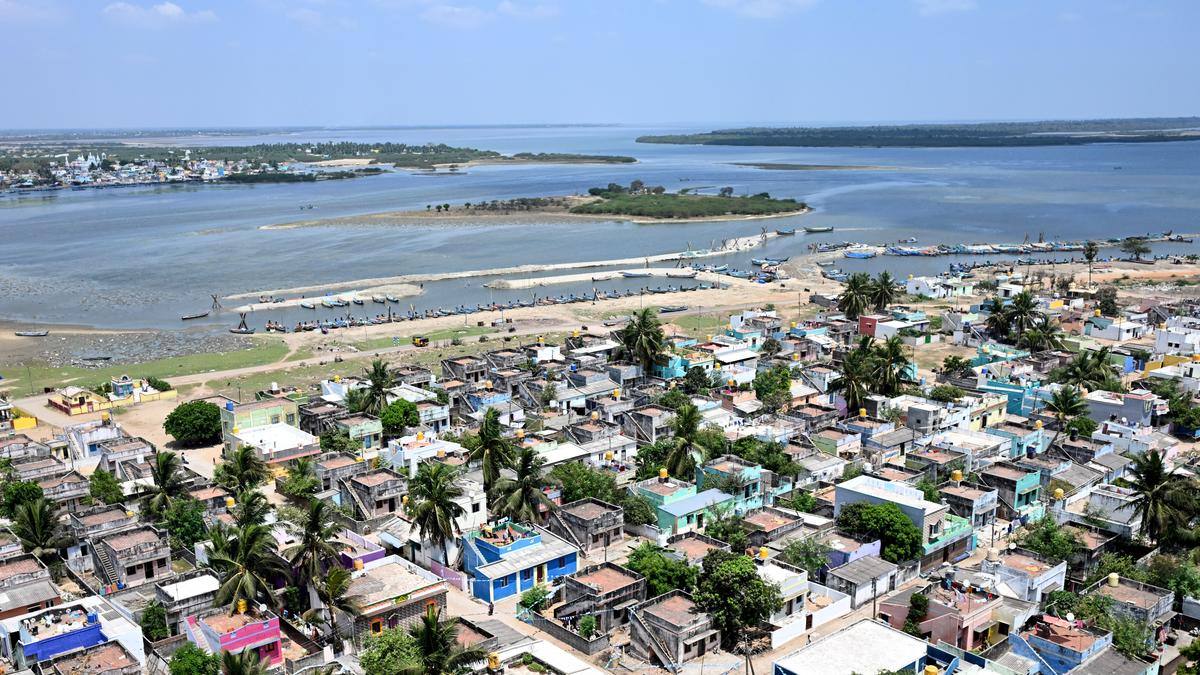
In the report, Deepak Srivastava, member secretary of the TNSWA, pointed to a 2022 directive from the MoEF&CC, which emphasised that all wetlands listed in the National Wetland Inventory Assessment of 2011, including Pulicat lake, must be protected under Rule 4(2). This protection is mandatory, regardless of whether the wetland has been formally notified. This rule prohibits the conversion of wetlands for non-wetland uses, such as encroachment and the establishment or expansion of industries. It also bans the dumping of solid waste, construction debris, hazardous materials, and untreated waste into wetlands. https://www.thehindu.com/news/cities/chennai/lake-areas-outside-pulicat-sanctuary-must-be-protected-under-wetland-rules-2017-wetland-authority/article69036721.ece (28 Dec. 2024)
Work on to transform lakes into drinking water sources Officials said the goal is to add 21 tmcft of storage capacity. “We are preparing a detailed project report ahead of the next budget session,” an official said. The proposal includes work for increasing rainwater storage capacity upstream of Chennai by creating new reservoirs, expanding existing water bodies, improving water flow systems, and interlinking water bodies wherever feasible.
-A senior official told TNIE, “As of now, six reservoirs – Cholavaram, Chembarambakkam, Poondi, Red Hills, Kannankottai-Thervaikandigai and Veeranam – with a combined capacity of 13.213 tmcft cater to the needs of Chennai city’s drinking water requirements. However, this storage capacity is far below the city’s annual drinking and industrial water demand of 24 tmcft which is expected to rise to 34 tmcft by 2035.”
-Highlighting recent efforts, the official noted that Kattur and Thatmanji tanks have been upgraded, increasing their combined capacity from 58.27 million cubic feet (mcft) to 350 mcft. “This will improve water storage in the coming years and benefit 5,804.38 acres of ayacut lands,” he said. https://www.newindianexpress.com/cities/chennai/2024/Dec/27/work-on-to-transform-lakes-in-city-suburbs-into-drinking-water-sources (27 Dec. 2024)
Hyderabad SPCB, HYDRAA to join hands for arresting water pollution The Telangana Pollution Control Board (TGPCB) has announced that it will work together with the Hyderabad Disaster Response & Asset Protection Agency (HYDRAA) to address the issue of domestic, construction and industrial waste being dumped in city’s lakes and water bodies.
Teams consisting of HYDRAA and TGPCB officials will henceforth work together towards real-time monitoring of the water quality in lakes and water bodies, stopping illegal dumping and seizure of vehicles thereof, a statement from the TGPCB said on Monday (Nov. 18), following a meeting jointly chaired by HYDRAA Commissioner A.V.Ranganath & TGPCB Member-Secretary G.Ravi. A decision has been taken to use effluent metres to understand the origin of chemical pollutants so that targeted action may be taken. Collaborating with educational institutions, research institutes, and environmental NGOs and encouraging local communities to join the efforts are part of the action plan which will be taken up on a large scale for all identified lakes & water bodies. https://www.thehindu.com/news/national/telangana/telangana-pollution-control-board-hydraa-to-join-hands-for-arresting-water-pollution/article68882446.ece (19 Nov 2024)
Mumbai 289- ha Panje wetland dries up Even as the migratory bird season has begun, the 289-hectare Panje wetland, equivalent to the size of 30 Azad Maidans, has gone dry with the blocking of intertidal water flow, much against the state environment department’s orders, green groups said. NatConnect Foundation director B N Kumar pointed out that as per BNHS studies, Panje attracts at least 50 species of birds, including 30 migratory ones. The wetland, which is also a source of fishing for the local community, is now more or less dead with the blocking of intertidal water flow.
As per the State Environment Director’s order dated November 11, 2020, CIDCO was supposed to maintain the tidal water flow to the wetland, yet the city planner keeps violating it, said Nandakumar Pawar, head of Sagar Shakti. This time, CIDCO shut down the sluice gates built on the creek from which water flows into the wetland. Uran Tahsildar Uddhav Kadam said he will look into the matter. https://www.freepressjournal.in/mumbai/navi-mumbai-289-hectare-panje-wetland-dries-up-environmental-groups-warn-of-ecological-crisis (14 Nov. 2024)
Activist alleges Nerul wetland destruction Environment activist Sunil Agarwal has raised concerns over the destruction of wetlands, lakes, mangroves, and other natural resources in Sector 60, Nerul. Following a complaint lodged by Law Global on behalf of Agarwal, an inspection was carried out by the Tahsildar, Thane, at pockets A, B, C, D, and E in Sector 60 on December 23, 2024, under the direction of the Maharashtra Coastal Zone Management Authority (MCZMA).
The Panchnama revealed the presence of a wetland, anked by mangroves on one side and separated by an unpaved kuccha dam road. The inspection contradicted earlier statements by CIDCO denying the existence of wetlands in the area and claiming the presence of a road on the creekward side of pockets A and E. Agarwal has questioned these discrepancies in statements and has called on authorities, including the MCZMA, the Urban Development Ministry, the MoEF&CC to clarify the misinformation. https://www.newsband.in/article_detail/activist-alleges-wetland-destruction-in-nerul (27 Dec. 2024)
Srinagar 11 lakh MTs of legacy waste dumped at landfill site Raja Muzaffar Bhat According to the report, more than 11 lakh metric tons (MT) of legacy waste is dumped in Srinagar’s landfill site located at Achan locality and is spread over an area of 123 acres. The report further says that 600 tons per day (TPD) municipal solid waste gets generated in Srinagar city and out of which 450 gets dumped into the same landfill site. The report added that a faecal sewage treatment plant with a capacity of 130 kiloliters per day and a septage treatment plant were defunct. The lack of functional leachate collection systems has led to untreated leachate flowing directly into a drain connected to Anchar Lake, situated just 500 meters from the landfill. https://www.downtoearth.org.in/waste/unscientific-waste-disposal-in-jk-11-lakh-mts-of-legacy-waste-dumped-at-srinagars-landfill-site (28 Dec. 2024)
URBAN WATER
Chennai Safe drinking water is a luxury for this suburb In Pallavaram, a sleepy suburb of Chennai, the water supply from the Palar River — once the lifeline of every household — has turned into a silent threat. On December 5th, three residents lost their lives in separate incidents allegedly after drinking contaminated water. At least 50 others were rushed to Chromepet Government Hospital over three days with severe diarrheal symptoms.
The locality is in the Tambaram City Corporation limits. But neither the corporation nor Tamil Nadu’s Public Health Department has specified the cause of the deaths (as of publishing this article). The BJP’s state unit has claimed that lab reports confirm the presence of E. coli bacteria, a strong indicator of sewage contamination. In April 2024, tests commissioned by a residents’ association showed clear evidence of bacteriological contamination in the Palar water.
Behind this tragedy lies a history of decaying infrastructure, outdated pipelines and a broken promise of safe drinking water — a legacy that stretches back to the 1970s when the Palar water supply scheme first began. https://citizenmatters.in/pallavaram-tragedy-highlights-why-safe-drinking-water-is-a-luxury-for-this-suburb/ (26 Dec. 2024)
Surplus rain helps raise groundwater table There has been a steady rise in groundwater level in Chennai since June owing to surplus rainfall both during southwest monsoon and ongoing northeast monsoon, according to an analysis by Chennai Rains (Chennaiyil Oru Mazhaikalam), a weather blogging site. Madhavaram, Ambattur and Anna Nagar were among the city zones that saw a significant rise in their groundwater table between June and December 20. The analysis was carried out based on the groundwater data of Chennai Metropolitan Water Supply and Sewerage Board (CMWSSB). https://www.thehindu.com/news/cities/chennai/analysis-points-to-steady-rise-in-chennais-groundwater-table-since-june/article69019302.ece (24 Dec. 2024)
Tiruchi Sewage overflow poses health hazard A section of city residents is raising a stink over frequent incidents of leaky and overflowing sewage in residential areas. Sewage outflow has been troubling residents and commuters of several residential areas. The sight is common in interior streets, especially at Kaliamman Kovil Street in Khajamalai, Melur Road, North Chithirai Street, and Thiruvallur Street in Srirangam, Emily Nagar, Kallukuzhi and K.K. Nagar areas. https://www.thehindu.com/news/cities/Tiruchirapalli/sewage-overflow-poses-health-hazard-in-many-areas-of-tiruchi/article69015767.ece (22 Dec. 2024)
Mangaluru Villagers fear release of untreated water into drinking water barrage Residents of Maravoor and nearby villages face uncertainty due to the alleged discharge of treated sewage water from Mangaluru City Corp’s (MCC) sewage treatment plant (STP) near Pachanady into a dam built on the Phalguni River. This dam, constructed in 2017, is part of a multi-village drinking water initiative. Local residents highlighted that the STP water flows into the dam that supplies drinking water to 14 villages. The opposition in MCC, have decided to conduct a on-site assessment and discuss this matter at the next council meeting. The MCC invested Rs 2.5 crore to install pipelines for directing secondary treated water from the STP to areas downstream of the drinking water barrage. https://timesofindia.indiatimes.com/city/mangaluru/villagers-fear-release-of-untreated-water-into-drinking-water-barrage/articleshow/116480003.cms (19 Dec 2024)
City corporation to upgrade sewage pumps amid pollution concerns Following reports about untreated water from wet wells polluting drinking water, the Mangaluru City Corporation (MCC) has taken up necessary measures in this regard. “Sewage or treated water is not being released to drains from the sewage treatment plant (STP) at Pachanady or the wet wells of Manjalpade and Kongoorumutt,” said MCC commissioner Anand CL. MCC has an STP of 8.75 MLD capacity at Pachanady with two wet wells at Manjalpade and Kongoorumutt. The STP at Pachanady has provision to treat the sewage from wet wells. Further, provision has been made to direct the treated water from the STP to the downstream of the dam across the Phalguni River in Maravoor. https://timesofindia.indiatimes.com/city/mangaluru/city-corporation-to-upgrade-sewage-pumps-amid-pollution-concerns/articleshow/116573101.cms (22 Dec. 2024)
Hyderabad Godavari Phase-2 project to be completed in 2 years The Hyderabad metropolitan water supply and sewerage board (HMWSSB) has set the target of completing the Godavari Phase-2 drinking water project in the next two years. Construction of pumphouses, sub-stations, STP, and laying main pipelines are part of that project. The project endeavours to draw 15 tmcft water from Mallanna Sagar which will meet the drinking water needs of Hyderabad, including 5 tmcft to replenish the Himayatsagar and Osmansagar reservoirs under the Musi rejuvenation project. Presently, the demand for drinking water in the twin cities is 560 mgd, which is expected to climb to 867 mgd by 2030 and 1,114 mgd by 2050.
Hyderabad’s urban agglomeration generates 1,950 mld of sewage, with 1,650 mld coming from GHMC limits. Currently, 25 STPs with a capacity of 772 mld treat 46% of the sewage. To address future needs, HMWSSB will invest Rs 3,866 crore to install STPs with a combined capacity of 1,106 mld, sufficient to meet the twin cities’ sewage treatment requirements until 2036. Hyderabad currently has 11 STPs with plans to install nine more which will have the capacity to treat 443 mld of sewage. The Telangana government has sent proposals for 39 additional STPs to the Centre, as part of the AMRUT 2.0 scheme. HMWSSB also plans to instal four more 4 STPs to treat the sewage entering Osmansagar and Himayatsagar reservoirs. https://www.siasat.com/hyderabad-godavari-phase-2-project-to-be-completed-in-2-years-3155995/ (28 Dec. 2024)
Bengaluru Apartment complexes saddled with unused treated water Many apartment associations across the city are still trying to figure out a solution for where to store the treated water left with them after use for purposes such as gardening and flushing. An MoU signed between Bangalore Apartments’ Federation (BAF) and Bangalore Water Supply and Sewerage Board (BWSSB) on the sale of treated water in April 2024, which many thought would bring a solution to the ongoing problem, has been plagued by slow progress and lack of enforcement.
-According to associations, the treated water project has seen a slower uptake because of its seasonality. The city experienced significant rainfall over the past few months, improving the groundwater situation. As a result, the demand for treated water decreased slightly. https://timesofindia.indiatimes.com/city/bengaluru/bengalurus-apartment-complexes-saddled-with-unused-treated-water/articleshowprint/116574762.cms (23 Dec. 2024)
Mumbai Dharavi project: Greens worried about urban assault on salt pans The matter was also challenged in the Bombay High Court in October this year. Sagar Devre, a lawyer and Mumbai resident, raised concerns about the ecological significance of salt pan land, emphasising its role as a vital part of the coastal ecosystem. Supporting mangroves, wetlands and estuaries, this land not only maintains an ecological balance but also provides livelihoods for salt harvesters. Devre highlighted that salt pans, being low-lying areas, act as natural sponges, absorbing rainwater and preventing excessive flooding. He warned that allowing construction on these lands would lead to environmental disasters.
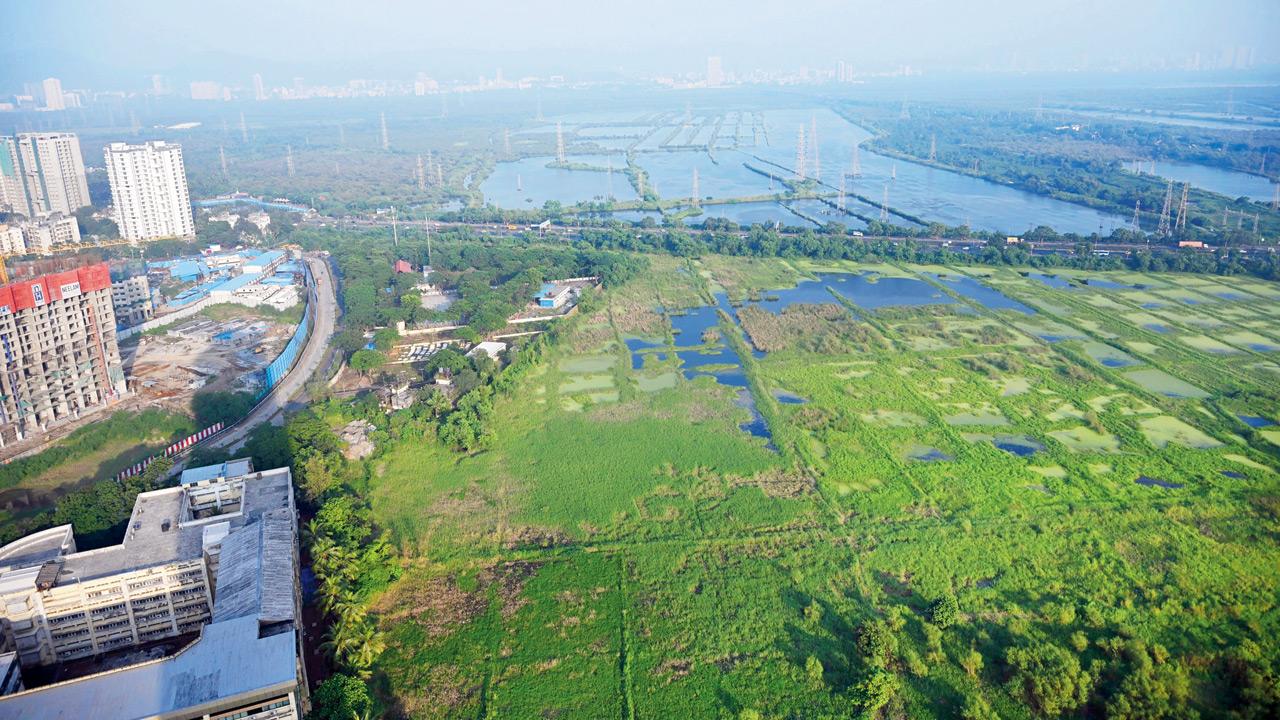
-In the PIL filed in the Bombay High Court, Devre challenged the statutory validity of an Office Memorandum issued by the Department for Promotion of Industry and Internal Trade (DPIIT) on August 23, which approved the transfer of three salt pan land parcels in Kanjurmarg, Bhandup and Mulund to the Maharashtra government for the Dharavi redevelopment project. He argues that the OM, an executive instruction, violates multiple laws, including the Environment (Protection) Act, 1986, the Wetland (Conservation & Management) Rules, 2017, and the Coastal Regulation Zone (CRZ) Notification, 2019.
-“Salt pans act as essential natural holding ponds, which prevent the higher ground of Greater Mumbai, especially the eastern suburbs, from flooding during monsoon storm surges. Opening salt pans for intensive uses like mass slum rehabilitation will have serious environmental implications, as this watershed will be impacted and will require significant mitigation measures,” said Pankaj Joshi, urban planner and principal director of the Urban Centre Mumbai.
-Salt pans are akin to wetlands as they absorb excess water and act like urban sponges, pointed out NatConnect Foundation Director B N Kumar. “It is a gross misconception that salt pans are developable land parcels,” he said. “Water tends to find its own course if one plays with it, and we have ample examples of flooding in concrete jungles built on wetlands,” Kumar added.
-Environmentalist Stalin D, director of NGO Vanashakti, warned, “The present anthropogenic footprint of Dharavi will be multiplied a hundredfold if the area is constructed upon. The amount of rainwater runoff and wastewater will be massive. The Mithi river is not equipped to handle this excess load. Flooding is imminent and poses a serious threat. Mangroves in the region will also be impacted. The socio-cultural and economic impacts due to the displacement of communities are a serious issue. The heat island effect will intensify, and temperatures in the city will rise. Moreover, the impact on existing forest areas like Maharashtra Nature Park has not been factored in. Salt pans are coastal wetlands vital for protecting the city from flooding. Construction on salt pans is suicidal for the city. I hope the planners understand this issue.” https://www.mid-day.com/mumbai/mumbai-news/article/dharavi-redevelopment-environmentalists-worried-about-urban-assault-on-salt-pans-23453630 (26 Dec. 2024)
Pune Tanker vendor supplies STP water for drinking Residents of the elite Nyati Elysia society in Kharadi are grappling with a severe health crisis as contaminated water from a sewage treatment plant was allegedly supplied to their homes. Over the past three months, nearly 80% of residents have reported waterborne illnesses, prompting widespread panic and a call for immediate action from authorities. -Nyati Elysia residents discovered that the water supplied to their society by a private tanker vendor was sourced from a STP. This revelation came to light after multiple complaints of illness and a recorded Zoom meeting between the residents, the builder, and the water supplier earlier this month.
“The supplier admitted his wrongdoing during the meeting and promised to cease operations immediately. However, he continued to deliver contaminated water, jeopardizing the health and safety of hundreds of families,” said a Nyati Elysia resident. Despite the termination of the contract, the supplier reportedly obstructed new water deliveries by blocking the society’s water entry point with tankers on Dec 20. The residents were forced to call the police to remove the blockage and restore the supply from a new vendor. https://www.punekarnews.in/pune-tanker-vendor-supplies-sewage-water-for-drinking-80-of-kharadi-society-residents-fall-ill/ (25 Dec 2024)
Leprosy colony faces water supply shortage It is a daily struggle to access safe drinking water for the residents of Leprosy Colony in Antulyanagar, Kondhwa-Yewalewadi. The colony is home to 2,000 people affected by leprosy, disabled, orphans, elderly and their families. The colony’s residents have been facing severe water shortage for the past few years. Their persistent efforts to reach out to the Pune Municipal Corporation (PMC) bore fruit when the civic administration increased the daily water tanker count from one to two. The civic body’s earlier initiative to set up water tanks in each lane on the compound failed since the residents could not move out to fetch water because of their disabilities. https://www.hindustantimes.com/cities/pune-news/leprosy-colony-faces-water-supply-shortage-101735066871414.html (25 Dec. 2024)
Opinion Can artificial rain clean our air? Theoretically, rain is expected to capture particles. However, outdoor air quality is an open system wherein air pollution boundaries are not contained. Air pollution is widespread, crossing state and city boundaries. While pollutant concentrations may decrease in areas with rain, pollutants from neighbouring regions without rain remain unaffected and can be transported by wind into the region where it rained. Therefore, once the rain stops, the pollutant concentrations will start to increase again. How quickly the pollutant concentration rises, depends on local emission sources, air quality in neighbouring regions and the extent of the rain. Mimicking rain through sprinklers or cloudseeding is not very effective, as the impact, if any, is temporary and localised. (Prakash Doraiswamy Programme Director – Air Quality, Sustainable Cities and Transport, WRI India) https://www.deccanherald.com/opinion/can-artificial-rain-clean-our-air-3330046 (24 Dec. 2024)
JJM/ RURAL WATER SUPPLY
MoJS JJM target extended to 2025 Over 15.37 crore rural households out of a total of 19.36 crore have been equipped with tap water connections under the Jal Jeevan Mission. However, around four crore households remain uncovered. A Ministry official said it is focused on bridging these gaps in 2025, ensuring no household is left without access to clean drinking water. Sanitation remains a parallel priority for the Ministry in 2025. Currently, 95% of villages in India have declared themselves ODF Plus, a status that encompasses not just toilet construction but also solid-liquid waste management and holistic sanitation.
The Ministry has also set a 2025 target to complete afforestation on 1,34,104 hectares of land within the Ganga basin to enhance ecological balance. https://www.thehindu.com/news/national/jal-shakti-ministry-eyes-2025-to-complete-tap-water-connections-in-rural-india-achieve-sanitation-goals/article69028352.ece (26 Dec. 2024)
WATER
Tamil Nadu Re-examine tungsten block in Madurai: Centre to GSI The Union Ministry of Mines on Dec 24 requested the Geological Survey of India (GSI) to re-examine the Nayakkarpatti tungsten block in Madurai, which comprises six villages, including Arittapatti, a notified biodiversity heritage site famous for archaeological monuments. It also suggested that the GSI explore the possibility of redefining the boundaries by excluding the biodiversity heritage site from the block, and requested the Tamil Nadu government to keep the process of issuing the Letter of Intent to the preferred bidder – Hindustan Zinc Limited – on hold for the time being.
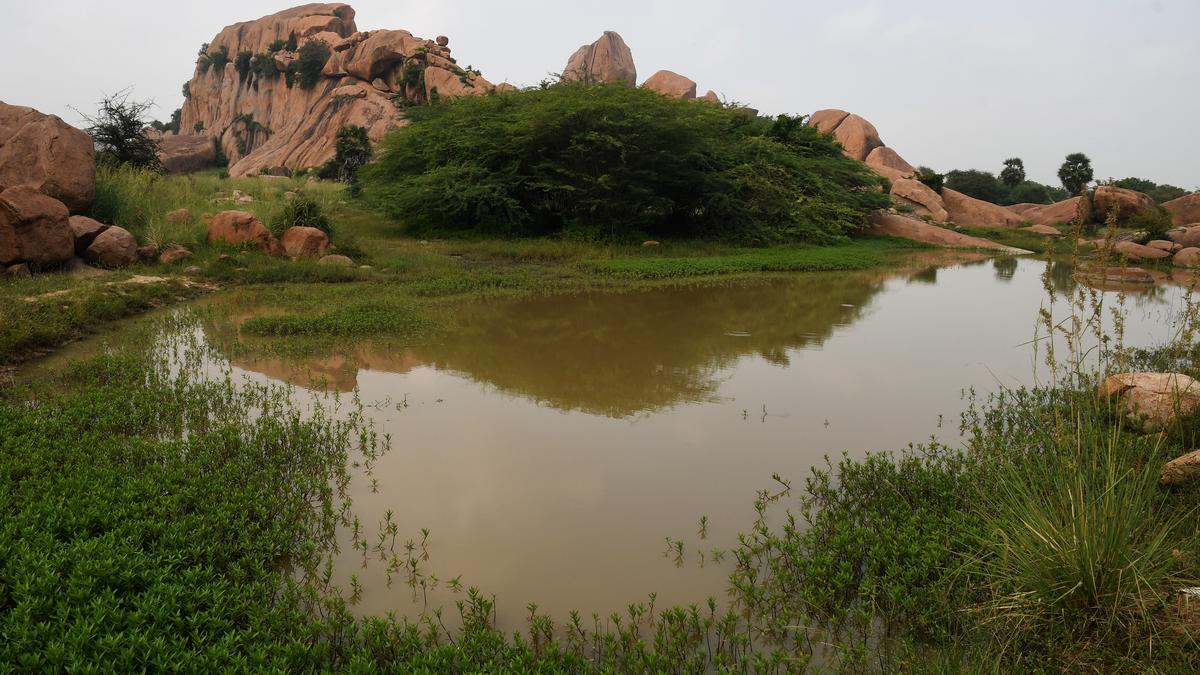
The decision was taken considering the number of representations received against auctioning the block that includes Arittapatti. Further, the Union Ministry alleged that though the Tamil Nadu government had informed it about the existence of the biodiversity site covering an area of 193.215 hectares – about 10% of the total area of the block – it did not recommend against auctioning the block. https://www.thehindu.com/news/national/tungsten-block-centre-tells-tamil-nadu-to-keep-letter-of-intent-to-hindustan-zinc-on-hold/article69024017.ece (25 Dec. 2024)
MONSOON 2024
Uttarakhand 90% rain deficit in Dec Meteorological Dept scientist Rohit Thapliyal confirmed that Uttarakhand has seen 90 % less than normal rainfall in Dec, and that there has been no significant rain in the last 3 months. November had also passed without rain in Uttarakhand while Oct also witnessed 80 % less rainfall than normal. https://garhwalpost.in/uttarakhand-witnesses-90-rain-deficit-in-december/ (23 Dec. 2024)
मौसमी चुनौतियों के बीच गुजरा साल उत्तरकाशी की हर्षिल घाटी के सुखी गांव के सेब बागवान मोहन सिंह अपने नोट्स देखकर वह बताते हैं कि 12 दिसंबर 2023 और 17 जनवरी 2024 को सिर्फ 2-2 इंच बर्फ़ गिरी थी, जो नाकाफी थी, “इससे तो मिट्टी भी गीली नहीं होती। इसके बाद 31 जनवरी से 5 फरवरी तक अच्छी बर्फ़ गिरी। फिर 19 फरवरी से 4 मार्च तक रुक-रुक कर बर्फ गिरती रही। लेकिन फरवरी में दिन लंबे होने लगते हैं और तापमान बढ़ जाता है। इससे बर्फ जल्दी पिघलती है और पहाड़ की ढलानों से बह जाती है। मिट्टी में समा नहीं पाती। यही बर्फ़ दिसंबर-जनवरी में गिरी होती तो धरती और बगीचे दोनों को ज्यादा फायदा होता”।

मोहन सिंह के इस साल के नोट्स की पुष्टि मौसम विभाग के आंकड़ों से भी होती है। जनवरी 2024 में उत्तराखंड में सामान्य से 99 फीसदी तक कम बारिश हुई। अक्टूबर और नवंबर सूखे बीते। मौसम विभाग के मुताबिक 1 अक्टूबर से 17 दिसंबर तक राज्य में सामान्य से 90 फीसदी कम बारिश हुई। वर्षा पर निर्भर रहने वाली पहाड़ की खेती, किसान और बागवान-बर्फ़बारी की टकटकी लगाए बैठे हैं। ये समय गेहूं समेत रबी की फसल की बुवाई का है। राज्य की करीब 70% आबादी आजीविका के लिए खेती पर ही निर्भर है। https://indiaspendhindi.com/cover-story/uttarakhand-year-passed-amidst-dry-winters-burning-forests-cracking-mountains-seasonal-challenges-936004 (25 Dec. 2024)
Delhi 5th wettest Dec in history A persistent patter of rain that continued through Friday (Dec. 27) to soak Delhi and its surrounding regions, delivering an unusually wet December day that shattered long-standing rainfall records and highlighted the unpredictability of the season. By the end of the day, the city had recorded 42.8mm of rainfall this month, making it the fifth wettest December in Delhi’s recorded history and the rainiest since 1997, or in 27 years, according to data from the India Meteorological Department (IMD). IMD data shows that December’s total rainfall this year has reached levels not seen in nearly three decades. The last time December rains were this intense was in 1997, when the total monthly precipitation was 71.8mm. Going further back, the highest December rainfall was recorded in 1901 at 77.2mm, followed by 1967 (69.5mm) and 1936 (68.1mm). https://www.hindustantimes.com/cities/delhi-news/fifth-wettest-december-in-delhi-s-history-101735320381830.html (28 Dec. 2024)
Chandigarh 4th wettest Dec day in decade Chandigarh, which experienced two consecutive dry months, on Saturday (Dec. 28) recorded the fourth highest single-day December rainfall since 2012. According to the city weather department, in the last 24 hours, the city witnessed 29.7 mm of rainfall. Before that, the city witnessed 40mm rainfall in a day on Dec 1, 2023; 38.3mm rainfall was recorded on December 14, 2019, and the highest was recorded as 74.3mm on Dec 14, 2014. https://timesofindia.indiatimes.com/city/chandigarh/after-2-dry-months-chd-sees-4th-wettest-dec-day-in-decade/articleshow/116750749.cms (29 Dec. 2024)
ENVIRONMENT GOVERNANCE
Supreme Court Sacred groves deserve recognition as forests In a recent judgement, the Supreme Court ordered the Rajasthan government to conduct a mapping exercise of sacred groves and notify them as deemed forests. Since 2018, the Rajasthan government has only notified around 5,000 out of 25,000 orans as deemed forests.
The Court also recommended the central government identify sacred groves across the country and formulate a policy for their protection. https://india.mongabay.com/2024/12/sacred-groves-deserve-recognition-as-forests-says-supreme-court/ (26 Dec. 2024)
ISFR Worrying trend of forests degrading, point out experts The country’s green cover may be increasing according to the headline findings of the India State of Forest Report (ISFR) 2023 , but the study also points to the degradation of large tracts of forests, increase in plantations and lack of clarity in status of so-called unclassed forests — all of which could have serious impacts for biodiversity, forest dependent people and ecosystem services provided by old-growth forests, experts said. https://www.hindustantimes.com/india-news/worrying-trend-of-forests-degrading-point-out-experts-101734978710273.html (24 Dec. 2024)
Questions on ISFR Courts and conservationists have demanded that the state follow the dictionary definition of forests whereas the administration has been muddying it to exclude “community” forests, among others, while including plantations and orchards. -The 25% figure hides forest cover loss in the biodiverse Western Ghats, the Nilgiris and the northeast, the shrinking of mangroves in the Kutch and the Andamans, and of ‘moderately dense’ forests and the ongoing endangerment of open natural ecosystems.
-The report also lacks details about whether its estimates of the carbon sequestration potential of degraded land account for the specific uses to which they are currently being subjected. The government has been weakening environmental safeguards — more recently, the Forest (Conservation) Amendment Act 2023 further contracted the 1980 Act’s purview — and distorting its official inventory of forests. It is hard to imagine anyone winning in the end. https://www.thehindu.com/opinion/editorial/%E2%80%8Bcanary-in-the-canopy-on-the-india-state-of-forest-report-2023/article69019158.ece (24 Dec. 2024)
Shift towards plantations, a threat to natural ecosystems The Forest Survey of India released its latest India State of Forest Report (ISFR) which shows a marginal increase in forest and tree cover. However, there is a decline of forest cover in some biodiversity-rich areas, which experts say is concerning. The report highlights an increase in agroforestry and a loss of mangrove cover, particularly in Gujarat and Andaman and Nicobar Islands. https://india.mongabay.com/2024/12/forest-survey-reveals-indias-shift-towards-plantations-a-threat-to-natural-ecosystems/ (27 Dec. 2024)
Missing the woods for the trees While anecdotal evidence points to the retreat of core forests falling to mining and road building activity, ‘flexible’ interpretations of what constitutes ‘trees’ and ‘forest cover’ ensures the picture remains rosy and green. In actual fact, our natural forests are dying; and the annual weather cycle of rainfall and the charging of our rivers and streams crucial to the agricultural economy are in extreme danger. But to reverse the denudation of our forests one has to first accept that a problem exists. https://www.newindianexpress.com/business/2024/Dec/29/missing-the-wood-for-the-trees (29 Dec. 2024) -Experts claimed that the government counted bamboo plantations, coconut groves, and orchards among others as part of the forest cover and produced “another faulty report with inflated data” https://www.thehindu.com/news/national/experts-claim-latest-govt-data-on-indias-forests-inflated/article69018959.ece (23 Dec. 2024)
Opinion India 2024 is Bhopal 1984++ Delhi’s toxic air, vanishing wildlife, the Great Nicobar project, Wayanad landslides—India’s self-destructive policies are creating many Bhopals. (Pankaj Sekhsaria) https://frontline.thehindu.com/environment/bhopal-1984-gas-leak-emblematic-india-environmental-degradation-great-nicobar-indian-bustard/article68968130.ece (25 Dec. 2024)
SOUTH ASIA
IWT Need to adapt, or perish While the legal justifications for India’s position are strong, the geopolitical ramifications of terminating the treaty are complex. Both nations must recognise the importance of water security in a region already grappling with the climate crisis, population growth, and resource scarcity. The best outcome would be for Pakistan to return to the negotiating table and for both countries to update the treaty to reflect modern challenges that have arisen due to the fundamental changes in the Indus basin. (Shravan Yammanur) https://www.hindustantimes.com/opinion/the-indus-waters-treaty-need-to-adapt-or-perish-101734967785890.html (23 Dec. 2024)
Future of IWT The Indus Water Treaty has survived wars, political upheaval and governmental changes and is hailed as one of, if not the, most successful documents of its type in the world. However, it is now facing its toughest test yet. India’s push to rework the treaty, coupled with the realities of climate change, threatens to unravel one of the few success stories in Pakistan-India relations. If the two nations cannot find a way to address their differences diplomatically, there could be far-reaching consequences not just for Pakistan but for the entire region. (Moiz Sohail) https://www.brecorder.com/news/40339241/the-future-of-indus-water-treaty (24 Dec. 2024)
No need to amend IWT The international law binds the states to follow the treaties and boundary agreements. Under the Vienna Convention on the Treaties (1969), no agreement can be amended or terminated without the consent of the signatories. In the case of IWT, neither the World Bank nor Pakistan finds it necessary to make any amendment. (Dr Shuja Ahmed Mahesar) https://tribune.com.pk/story/2516880/pakistan-india-and-growing-water-disputes (19 Dec. 2024)
Nepal Rahughat HEP: 2 workers killed in tipper accident Two people were killed when a tipper met with an accident at Bukla of Raghuganga rural municipality-4 in Myagdi on Dec 26. The deceased are Indian workers employed at the Rahughat Hydropower Project. They are 33-year-old Dasrath Yadav, the tipper driver from Uttar Pradesh and his helper 40-year-old Shatrudhan Rajak of Madhya Pradesh, both died on the spot. The Indian construction company, Jaya Prakash Associates, is undertaking the construction of the 40-MW Rahughat Hydropower Project being developed by the Raghuganga Hydro Limited, a subsidiary company of Nepal Electricity Authority (NEA). https://radionepalonline.com/en/2024/12/26/398300.html (26 Dec. 2024)
CHINA
Tibet mega dam has left India worried China has approved a major hydropower project on Tibet’s Yarlung Zangbo River, which becomes the Siang River when it enters India. Billed as the world’s largest hydropower dam, it could generate 300 billion kilowatt-hours of electricity annually, over 3 times the electricity produced by 3-Gorges dam at 88 BU. It may cost USD 137 Billion, over 4 times the cost of USD 34.8 B for 3 Gorges dam. It is not yet known when the construction will start and even the exact location of the dam. A part of the Yarlung Zangbo falls 2,000 metres (6,561 feet) within a short span of 50 km, giving a major hydropower potential.
Nearly six 20 km-long tunnels will have to be carved out from the Namcha Barwa mountain to divert half of the river’s flow at about 2,000 cubic metres per second, as per the SCMP report. https://www.firstpost.com/explainers/china-tibet-mega-dam-india-worried-13847681.html (26 Dec 2024)
China approves Tibet mega dam However, a 2023 study by scientists at Tsinghua University’s department of hydraulic engineering said the project could benefit China, India and Bangladesh if the countries were to cooperate. The researchers said reservoir storage could increase the minimum water flow during the dry season and add one to four navigable months per year for the Indian portion of the river. Using reservoir storage to manage flood peaks can reduce flood-affected areas by as much as 32.6 per cent in India and 14.8 per cent in Bangladesh, according to the study. “The construction of [a] mainstream cascade hydropower system with reservoir storage would have enormous benefits for hydropower development, waterway navigation and agricultural production in the Yarlung Tsangpo-Brahmaputra River basin,” they wrote in the peer-reviewed Journal of Hydrology: Regional Studies. https://www.scmp.com/news/china/science/article/3292267/china-approves-tibet-mega-dam-could-generate-3-times-more-power-three-gorges (26 Dec. 2024)
This is a bit strange story. It claims “China has approved the construction of what will be the world’s largest hydropower dam” without quoting source person or document as to where it got this information of approval. It provides some sketchy, known details of the proposal, already in public domain. It does not say when the work will start, if it will nor what studies have been done, if any, including EIA etc. https://www.asahi.com/ajw/articles/15566458 (26 Dec. 2024)
SANDRP
Also see: DRP 23 Dec. 2024 & DRP 16 Dec. 2024
Follow us on: www.facebook.com/sandrp.in; https://twitter.com/Indian_Rivers

 SANDRP