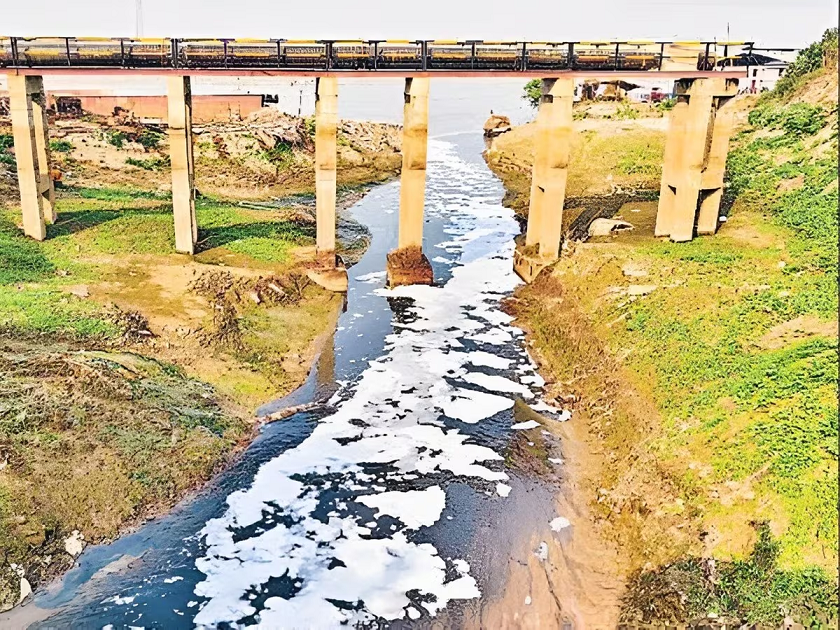
(Feature Image: Untreated effluents falling into Ganga river in Patna Bihar. Source: Live Hindustan 15 Nov. 2024)
The government website on Maha Kumbh (https://kumbh.gov.in/) has started the countdown to Mahakumbh 2025 to be held in Prayagraj from January 13 to Feb 26, 2025. It says today that it is 55 days to the beginning of Mahakumbh. But the Ganga is highly polluted in Prayagraj, and even upstream even in Uttarakhand, the state where it originates as the following reports this week say and as we all know.
The reason why the largest congregation on earth happens here every 12 years is because, as puranas say, Ganga water turns into Amrit on these holy days. So how will the Ganga water turned into Amrit at Prayagraj in 55 days?
Shutting down some polluting industries, releasing water from upstream Tehri dam, diverting sewage carrying stream from the Ganga and temporarily ensuring better functioning of the sewage treatment plants, solid waste collection and Central Effluent Treatment Plants are some of the measures taken every time there is a Kumbh Mela and the same may be done this year too. All these are minimum measures necessary for treating Ganga as a river. But should we not be treating Ganga as a river all-round the year?
As Bhupen Hazarika sang, how long will the Ganga keep flowing quietly, taking all the dirt that we dump in it? All the activities that we do that harm the very existence of the river? We may recall that Ganga, in Mahabharat, cursed Arjun, no less, for ill-treating just one of her sons, Bhishm. How many daughters and sons of Ganga are we ill-treating every day?
Prayagraj About a 1.5 km stretch of Ganga from Shashtri Bridge to Sangam is being dredged to reclaim riverbed land for forthcoming Kumbh gathering. As per reports the exercise began in May-June 2024 and Ganga’s flowing course was pushed 200 meters away but floods in following month made the effort futile. Now dredgers deployed again to turn braided channel of 3 streams into one stream.
ड्रेजिंग मशीन की मदद से बदली जा रही गंगा की धारा करीब 4000 हेक्टेयर में लगने वाले महाकुंभ मेले की बसावट की प्राथमिक रूपरेखा मेला प्रशासन ने तैयार कर ली है. इसके तहत मेला क्षेत्र को 25 सेक्टरों में बांटते हुए आवश्यक इंतजाम किए जा रहे हैं. कुंभ मेला अधिकारी विवेक चतुर्वेदी का कहना है कि संगम क्षेत्र में 60 प्रतिशत घाट कटान के कारण पहले से प्रभावित हैं. इससे जगह की कमी आ रही है. ड्रेजिंग से हमें मेले की बसावट में सुविधा मिलती है. घाट अच्छे मिलते है और मेला देखने में भी अच्छा लगता है.
मेला अधिकारी ने बताया कि साल 2019 के कुंभ में इसी तरह गंगा की धारा पर काम किया गया था. उस दौरान भी इसमें कामयाबी मिली थी. मेला की बसावट में दिक्कत नहीं आई थी, इस बार भी मेले की बसावट में दिक्कत आ रही थी. इसे लेकर अब तीन धाराओं में बह रही गंगा केवल एक धारा में बदला जा रहा है. इस कार्य में सफलता भी मिली है. मशीन समेत मजदूर भी काम पर लगाए गए हैं. मेला अधिकारी ने बताया कि अलग-अलग धाराओं में नदी के बहने के कारण बीच में टापू निकल आते हैं. ये टापू मेला बसाने में किसी काम के नहीं होते हैं. नदी की धारा एक होने से मेले को बसाने के लिए पर्याप्त जगह मिल जाती है. https://www.etvbharat.com/hi/!state/prayagraj-maha-kumbh-2024-river-stream-is-being-changed-with-dredging-machines-no-shortage-space-setting-up-fair-uttar-pradesh-news-ups24111200594 (12 Nov. 2024)
प्रयागराज के संगम में 13 जनवरी 2025 से शुरू होने वाले महाकुंभ के लिए गंगा के बहाव को बदलने का काम शुरू हो गया है। कुंभ मेला क्षेत्र में पहली बार गंगा की धारा को एक दिशा में लाने के लिए तीन ड्रेजिंग मशीनें लगाई गई हैं। इन मशीनों का काम है गंगा के बीच बने छोटे-छोटे टापुओं को खत्म करना है ताकि घाट का क्षेत्र बढ़ सके। ड्रेजिंग मशीनें नदी में जाकर टापुओं से बालू और गाद निकाल रही हैं और जिसे बाद में दूसरी जगह शिफ्ट किया जाएगा, ताकि घाट एरिया को बढ़ाया जा सके। https://www.youtube.com/watch?v=grir4G-iRTM (11 Nov. 2024)
ड्रेजिंग पर 19.21 करोड़ रुपये से अधिक खर्च होंगे। सिंचाई विभाग की ओर से कराए गए सर्वे में पाया गया है कि गंगा नदी अपनी दाहिने किनारे (परेड) की तरफ 200-500 मीटर तक स्थानांतरित हो गई है। इसके अलावा कटान की भी समस्या है। संगम नोज पर सर्कुलेटिंग एरिया में कुंभ 2019 की तुलना में 60 फीसदी की कमी हो गई है। जबकि, महाकुंभ 2025 में दोगुने स्नानार्थियों के आने की उम्मीद है। इसे देखते हुए गंगा में ड्रेजिंग करके 150 से 175 मीटर चौड़ा चैनल बनाने का निर्णय लिया गया है। ड्रेजिंग का काम संगम नोज से शास्त्री तक किया जाएगा। इसके अलावा भी कई अन्य कार्य कराए जाएंगे। इसके लिए आईआईटी गुवाहाटी के विशेषज्ञों की मदद ली गई है। https://www.amarujala.com/uttar-pradesh/allahabad/area-reduced-by-60-percent-at-sangam-nose-dredging-will-be-done-allahabad-news-c-3-1-ald1023-473156-2024-10-08 (8 Oct 2024)
प्रयागराज में महाकुम्भ से पहले संगम क्षेत्र में शास्त्री ब्रिज से संगम तक गंगा का प्रवाह बदलने की दूसरी कोशिश शुरू हो गई। प्रवाह क्षेत्र बनाने के लिए गंगा में तीन ड्रेजिंग मशीनें उतारी गई हैं। गंगा का प्रवाह बदलने का काम मई-जून में शुरू हुआ था। उस समय भी ड्रेजर से बालू निकालकर नई धारा बनाई गई थी। वर्तमान प्रवाह क्षेत्र से लगभग 200 मीटर दूर नये मार्ग पर गंगा का प्रवाह भी शुरू हो गया था। जुलाई-अगस्त और सितंबर में गंगा-यमुना का जलस्तर बढ़ने के बाद संगम क्षेत्र जलमग्न हुआ तो गंगा का नया प्रवाह क्षेत्र भी डूब गया। गंगा के नए प्रवाह क्षेत्र में फिर बालूभर गई है। नए प्रवाह क्षेत्र से बालू निकालने के लिए फिर ड्रेजिंग की जा रही है।
सिंचाई विभाग (बाढ़ प्रखंड) के अधिशासी अभियंता डीएन शुक्ला ने बताया कि ड्रेजिंग वाला दायरा डूबा है। पानी सूखने के बाद बालू निकालने का काम तेजी से होगा। इसकी गहराई दो मीटर से अधिक होगी। पिछले कुछ साल से गंगा का प्रवाह दारागंज और त्रिवेणी बांध के करीब आ रहा है। इससे अब तक मेला क्षेत्र की 200 मीटर जमीन गंगा में समाहित हो गई। इसी जमीन को निकालने के लिए गंगा का प्रवाह बदला जा रहा है https://www.livehindustan.com/uttar-pradesh/prayagraj/story-ganga-flow-change-initiated-ahead-of-kumbh-mela-with-dredging-machines-in-prayagraj-201729489406287.html (21 Oct 2024)
Take strict measures to minimise pollution: NGT “There is a total of 34 untapped drains which, as per NGT, discharge around 128 MLD of water daily into the river Ganges in Prayagraj. Moreover, the low water level in Ganges is making the situation even worse. “CPCB has submitted that several untapped drains exist in different cities and, therefore, the state must disclose the timeline for tapping these drains and for setting up the STPs for treating the sewage from these drains” — reads the NGT’s order to the state.

The NGT’s order further directed the chief secretary to file an affidavit disclosing the information relating to each of the drains in different districts, sewage generated from it, the STP to which it is proposed to be connected, the timeline for making the STP functional, funds which are available, identification and allotment of land for setting up the STP. While the sewage-treatment capacity in the city is 394.48 MLD, the sewage generated stands at 468.28 MLD, leaving 73 MLD of untreated sewage.
The NGT also pointed out that, of the 41 STPs across 16 Ganga-front towns, 35 are operational with a combined capacity of 1301.2 MLD, but only 1116.23 MLD is utilised. In Farrukhabad, two STPs remain non-operational, further contributing to untreated sewage discharge into the river. With Mahakumbh set to begin in Prayagraj on January 13, the NGT has urged urgent measures to address these pollution concerns. https://www.news18.com/india/mahakumbh-ganga-pollution-ngt-uttar-pradesh-strict-measures-9120686.html (14 Nov. 2024)
गंगा के मलजल में कैसे लगेगी डुबकी ? – 6 नवंबर, 2024 को नजीटी में उत्तर प्रदेश सरकार की 30 अक्तूबर, 2024 को पेश की गई अनुपालन रिपोर्ट के मुताबिक प्रयागराज नगर में रोजाना 468.28 न एमएलडी सीवेज उत्पन्न हो रहा है, जबकि सीवेज उपचार की क्षमता केवल 340 एमएलडी है। इसका मतलब है कि रोजाना 128.28 एमएलडी सीवेज का उपचार नहीं हो रहा है और वह सीधे गंगा नदी में ही जा रहा है। इसी अनुपालन रिपोर्ट में यह भी सामने आया कि प्रयागराज में 25 अनटैप्ड नालों से बिना उपचारित सीवेज गंगा में और 15 अनटैप्ड नालों से यमुनाजी में गैर उपचारित सीवेज गिराया जा रहा है।
-अनुपालन रिपोर्ट के मुताबिक कुल 11 गंगा जिलों में मौजूद 16 कस्बों में 41 एसटीपी निर्धारित किए गए हैं। इनमें से 6 एसटीपी का काम अभी तक पूरा नहीं किया गया है और वह बंद पड़े हैं। अन्य 35 एसटीपी में सभी 34 एसटीपी निर्धारित मानकों पर सीवेज का उपचार नहीं कर रहे हैं। रिपोर्ट में पाया गया कि गंगा के 11 जिलों के 16 कस्बों में मौजूद एसटीपी की डिजाइन्ड कैपिसिटी 1337.96 एमएलडी है जबकि मौजूद एसटीपी की उपयोगिता क्षमता 1116.24 एमएलडी (85.8 फीसदी ऑपरेशनल) है। इसका अर्थ हुआ कि सीवेज उपचार में 221.72 एमएलडी का अंतर है।
-वहीं, केंद्रीय प्रदूषण नियंत्रण बोर्ड की रिपोर्ट के अनुसार उत्तर प्रदेश में कुल 326 नालों में से 247 नाले अविकसित (अनटैप्ड) हैं और ये नाले 3513.16 एमएलडी गंदा पानी गंगा और उसकी सहायक नदियों में प्रवाहित कर रहे हैं।
एनजीटी ने उत्तर प्रदेश के मुख्य सचिव से यह निर्देश दिया है कि वे एक शपथ पत्र दाखिल करें, जिसमें प्रत्येक जिले के नालों की स्थिति, उनसे उत्पन्न सीवेज की मात्रा, सीवेज उपचार संयंत्रों से जोड़े जाने वाले नालों की योजना और इन संयंत्रों के क्रियान्वयन की समयसीमा का विवरण मौजूद हो। पीठ ने यह भी कहा है कि शपथ पत्र में यह भी बताया जाए कि सीवेज उपचार संयंत्रों के निर्माण के लिए भूमि आवंटन, वित्तीय संसाधन और समयसीमा की क्या जानकारी है। मामले की अगली सुनवाई 20 जनवरी 2025 को होगी। https://hindi.downtoearth.org.in/river/mahakumbh-approaches-how-will-the-dip-in-gangas-sewage-contaminated-waters-impact-devotees (13 Nov. 2024)
वाराणसी में गंगा की सहायक नदियों असि और वरुणा के जीर्णोद्धार में देरी पर एनजीटी ने सख्त रुख दिखाया। गंगा की स्वच्छता को लेकर वाराणसी डीएम एस. राजलिंगम से कई सवाल किए। एनजीटी की पीठ ने डीएम से पूछा- आप वाराणसी में गंगा का पानी पी सकते https://www.bhaskar.com/local/uttar-pradesh/varanasi/news/ngt-asked-varanasi-dm-can-you-drink-ganga-water-get-boards-installed-on-the-banks-of-ganga-ganga-water-is-not-fit-for-drinking-or-bathing-dm-has-the-powerdont-appear-helpless-133979395.html (18 Nov. 2024)
After NGT’s rap, Govt chalks out 2-month plan for Mahakumbh Chief secretary Manoj Kumar Singh conducted a high-level meeting with officials across departments and a plan for short-term and long-term measures were discussed for Prayagraj and the districts from where the Ganga flows towards Sangam City. Screening, ponding with biological and chemical processing and filtration at the point of discharge of the drain will be done in Prayagraj. Screening will reduce waste matter and carcasses flowing in the drain. Ponding of drain water with biological and chemical process will break the heavy pollutants. Filtration will weed out heavy waste.
Among short-term solutions, flow of fresh water from the Narora canal will be attempted to improve the BoD level. This will be done if the previous measures do not show the impact as desired. The UPPCB has also made a roster for industries where the units, emitting effluents in the rivers, will remain shut for specific periods near the Shahi Snan days at the Mahakumbh-2025. This roster will decide which district will keep their industrial units closed on which dates, keeping in view the river distance of the district from Prayagraj. “Under long-term measures, STPs have been planned for these drains. With short-term measures, we hope to improve the water quality as per the required norm before Mahakumbh-2025,” said UPPCB chairman Ravindra Pratap Singh. https://www.hindustantimes.com/cities/lucknow-news/ganga-pollution-after-ngt-s-rap-up-chalks-out-two-month-plan-for-mahakumbh-101731526510051.html (14 Nov. 2024)
500 Ganga Praharis to maintain river sanctity Under the Namami Gange project in Prayagraj, the ‘Ganga Praharis’ are dedicated to ensuring the cleanliness of rivers and ghats while conserving aquatic life, in collaboration with the Wildlife Institute. Working in teams of 15-20 at each ghat and operating in shifts during the Mahakumbh, they are not only cleaning the rivers and ghats but also educating pilgrims on the importance of preserving river sanctity. Additionally, over 200 specially trained Ganga Praharis from across the country are being deployed to ensure no manpower shortage in this monumental effort. Additionally, the team will work alongside security personnel to monitor the ghats, promptly responding to emergencies to ensure the safety and well-being of bathers. https://timesofindia.indiatimes.com/city/allahabad/mahakumbh-2025-prayagraj-gears-up-with-500-ganga-praharis-to-maintain-river-sanctity/articleshow/115381190.cms (17 Nov. 2024)
Kanpur Tanneries adopt sustainable practices to cut environmental impact Kanpur produces 20% of India’s leather, contributing severely to groundwater contamination and polluting the Ganga river. https://scroll.in/video/1075456/eco-india-kanpur-s-tanneries-adopt-sustainable-practices-to-cut-environmental- (10 Nov. 2024)
Uttarakhand ‘Ganga contaminated near origin due to STP discharge’ Untreated effluent discharged from a STP is polluting the Ganga near its source, a report submitted to the NGT has revealed. The report, based on findings from the Uttarakhand govt, was presented during a tribunal hearing on pollution control in the Ganga in Uttarakhand. The NGT, which had requested a report from the state and related authorities, passed an order on Nov 5 and has scheduled the matter for further discussion on Feb 13 next year.
The CPCB’s report to the tribunal has also noted that of the 53 STPs commissioned across Uttarakhand, only 50 were operational, and 48 failed to meet norms regarding FC levels, BOD removal efficiency, and sewage utilisation capacity. Comparing the state’s report with the CPCB’s findings, the NGT observed, “We find that disclosures which have been made by the state of Uttarakhand in its latest report are doubtful.” Regarding untreated sewage, the tribunal observed that 63 drains are discharging directly into the Ganga and its tributaries without treatment. https://timesofindia.indiatimes.com/city/dehradun/ganga-water-contamination-near-source-due-to-untreated-stp-discharge-ngt-report/articleshow/115187607.cms (11 Nov. 2024)
HYDRO POWER PROJECTS
SANDRP Blog Nov 2024: Shongtong Karchham HEP Tunnel Leakage in Kinnaur There is no information made public by HPPCL and Patel Engineering about the tunnel leakage incident. However, Shashank Gupta, SDM Kalpa told us that excessive blasting could be reason behind the leakage in the tunnel. It is worth to mention that the under-construction project has repeatedly been facing such accidents and disasters.

The common element in all of these avoidable disasters as suggested by reports time and again is deliberate negligence being exercised by the hydro power project companies in the district. No post disaster reports are available for any of these disasters earlier, no accountability has been fixed. https://sandrp.in/2024/11/17/nov-2024-shongtong-karchham-hep-tunnel-leakage-in-kinnaur-himachal-pradesh/ (17 Nov. 2024)
Uttarakhand HEPs worth over ₹70Kcr at risk due to extreme weather: Report Extreme weather events could potentially destroy or seriously delay hydroelectric power plants worth Rs 70,150 crore, suggests a report released on Nov 13 by the think tank Climate Risk Horizons. The report, “Assessing the Vulnerability of Hydroelectric Power Plants in Uttarakhand”, notes that the state is highly susceptible to extreme weather events including flash floods, landslides, glacial lake outbursts and drought.
– There are 18 operational hydroelectric power plants in the state with many more in development, the report added. Extreme weather events could damage infrastructure, leading to project delays and significant cost escalations. The report was based on a case study of the 2021 flash floods in Chamoli district, which destroyed the Tapovan-Vishnugad hydropower project. “The initial project cost of Rs 2,978 crore has more than doubled due to the flash floods,” the report observed. The authors identified eight major river basins and assigned them ratings from high to low risk based on the population density of nearby settlements, nearby glacial discharge patterns and damage assessment of past flash floods. The report suggests that the Joshimath-Srinagar basin is the most vulnerable to natural disasters, followed by the Tehri-Uttarkashi and Pithoragarh-Bageshwar basins. There are 15 hydropower projects currently in development across these three basins worth Rs 70,150 crore.
– In an accompanying press release, the lead author of the report, Sagar Asapur, said that three steps were essential for all hydropower investments: avoiding high-risk zones, incorporating climate-proofing strategies and embracing innovative financial mechanisms. https://scroll.in/latest/1075600/hydropower-projects-worth-over-rs-70000-crore-at-risk-due-to-extreme-weather-in-uttarakhand- (13Nov. 2024)
रिपोर्ट के मुताबिक, चमोली में 2021 और तीस्ता III में 2023 में इसके उदाहरण भी देखे गए हैं। जलवायु जनित घटनाओं ने इस दोनों परियोजनाओं को काफी पीछे धकेल दिया है और भारी आर्थिक क्षति पहुंचाई है। चमोली में कुछ अनुमानों में आपदा का वित्तीय प्रभाव करीब 1,625 करोड़ रुपए आंका गया है। हालांकि केवल मलबा हटाने में ही 3,400 करोड़ रुपए खर्च होने का अनुमान है। चमोली की घटना में अनुमानित 1,74,58,547 क्यूबिक मीटर मलबा आया था जो 4,30,35,319 टन के बराबर है। अगर इस मलबे को नोएडा में बिल्डिंग गिराने के बाद हटाए गए मलबे को हटाने की दर से भी हटाया जाए तो 48,415 दिन यानी करीब 133 साल लगेंगे। https://hindi.downtoearth.org.in/climate-change/15-hydropower-projects-in-uttarakhand-are-in-high-risk-areas (14 Nov. 2024)
Jammu & Kashmir IWT under fire amid perennial power cuts Both the state and Centre hydropower projects during winter generate around 600 MW, significantly lower than their installed capacity of 3500 MW owing to the depletion in water levels in the rivers. A general feeling among the people in the Valley is that the power generated by NHPC hydro projects in Jammu and Kashmir is sold to other states, leaving the region in an energy crisis. The major powerhouses commissioned by the NHPC include 690 MW Salal, 480 MW Uri-I, 240 MW Uri-II, 390 MW Dulhasti, 330 MW Koshanganga, 120 MW Sewa, 44 MW Nimo Bazgo and 44 MW Chutak.
Reacting to Abdullah’s remarks, PDP president Mehbooba Mufti said that the CM ister should seek return of projects from the Centre. She termed the IWT as a settled issue and its reopening could create tension between India and Pakistan. Mehbooba sought the return of at least two power projects to Jammu and Kashmir.
A Kashmir based economist, who wished anonymity, said that the treaty had incurred economic losses to Jammu and Kashmir by hindering its economic progress due to restricted use of waters. “In the absence of seamless electricity, industrial growth is not possible”, he said. He added that a substantial compensation from the Centre could mitigate the losses and support the region’s economic development. https://www.thehindubusinessline.com/news/national/indus-water-treaty-under-fire-amid-kashmirs-perennial-power-cuts/article68872494.ece (15 Nov. 2024)
CM blames IWT for creating hurdles in power generation “The Indus Water Treaty (IWT) restricts the ability on river-rich Jammu and Kashmir to harness its huge hydel power potential primarily due to storage constraints,” Omar said while speaking during the conference of Power Ministers of States & UT in New Delhi on Nov. 12. Omar, who is also the Power Minister of J&K, highlighted the limiting clauses in the Indus Water Treaty that restrict Jammu and Kashmir from realising its full hydel potential by only permitting run-of-the-river projects. “As a fallout of Indus Water Treaty barriers, J&K pays a heavy price in peak winter months when power generation hits low, creating hardships for its people,” Omar said.
Omar said to address this (power generation) issue, J&K would require special compensation from the Govt of India, including viability gap funding and equity assistance, to harness its untapped hydro-energy potential. “The support would not only help in meeting the region’s energy needs but also contribute to national clean energy goals.” He also sought the Centre’s intervention in holding Central Public Sector Undertakings like PESL & National Thermal Power Corp accountable in fast-tracking loss reduction works under the Revamped Distribution Sector Scheme in J&K. He requested the Power Ministry to consider gap funding for the electric infra works under RDSS. https://www.newindianexpress.com/nation/2024/Nov/12/cm-omar-abdullah-blames-indus-water-treaty-for-creating-hurdles-in-jks-power-generation (12 Nov 2024)
We want our losses compensated: CM’s advisor Commenting on the remarks made by CM Omar Abdullah in a discussion over Indus Water Treaty (IWT), his advisor Nasir Aslam Wani Thursday (Nov. 14) said they don’t want to break the agreement, rather want J&K should be compensated for the losses it suffered in past years. “What CM Omar Abdullah has said, and what you have perceived from his speech, is different. Since the times of Sher-e-Kashmir Sheikh Mohammad Abdullah, we are saying that both India and Pakistan have conceived a treaty, but we always voiced that the people of Jammu & Kashmir has been affected with such agreements, and needs to be compensated,” Advisor to CM, Nasir Aslam Wani told reporters. https://www.greaterkashmir.com/jammu-kashmir/indus-water-treaty-we-want-our-losses-compensated-says-cms-advisor/ (14 Nov. 2024)
Over 250 activists condemn PSA on environmental activists More than 250 activists representing a range of organizations, have signed a statement initiated by the NAPM, condemning the detention of six social and environmental activists in Jammu Kashmir under the Public Safety Act (PSA). The detained individuals, who were advocating for socio-environmental justice and raising concerns about large-scale infrastructure projects, were accused of attempting to “obstruct projects of national importance.” The signatories called for their immediate release, demanding the withdrawal of charges against them for simply exercising their right to voice ecological concerns.
According to the NAPM statement issued to The Kashmiriyat the detainees were raising concerns over the environmental and socio-economic impacts of hydropower projects, including infrastructure damage, environmental violations, and poor compensation for affected communities. “The activists were not obstructing development but were raising pertinent issues such as environmental degradation, damage to local properties due to blasting, and the lack of proper rehabilitation,” said the NAPM statement.
The NAPM emphasized that the opposition to hydro-power and mega infrastructure projects is not limited to Jammu & Kashmir, but is a growing movement across the Himalayan states due to the environmental threats these projects pose to the region. “Clamping down on ecological movements only hampers the much-needed struggle to combat the climate crisis,” the statement asserted. The signatories appealed to both the Jammu & Kashmir government and the Union Government to refrain from high-handed interventions. https://thekashmiriyat.co.uk/over-250-activists-condemn-psa-on-environmental-activists-in-jammu-kashmir/ (13 Oct. 2024)
DIGIPUB condemns Admin’s legal threat against The Chenab Times The Chenab Times had recently published a report covering the detention of a local activist from Doda under the PSA. In a letter dated Nov 12, 2024, the administration’s DIPR in Doda referred to the video as an “irrelevant post”. The letter alleged that the video content “prejudiced the due process of law,” created “rumours” and portrayed the district’s administrative procedures in a “bad light,” claiming it risked public order. The district information officer (DIO), Doda, warned of legal action against The Chenab Times for publishing the video report about the detention of Rehamatullah, a Doda-based activist, allegedly for raising civic issues.
DIGIPUB, a coalition of over 90 digital news outlets nationwide objected “the tone and content of the letter” calling it “yet another attempt by the J&K administration to silence critical reporting and prevent reporters from questioning the authorities.” The foundation has questioned the legal grounds on the basis of which which the DIO summoned the news outlet and demanded documents regarding the outlet’s “authority” to operate. https://thewire.in/media/digipub-condemns-jk-administrations-legal-threat-against-the-chenab-times (15 Nov. 2024)
5 union leaders detained for protesting HEPs Five union leaders have been detained under the Public Safety Act in Kishtwar district for allegedly attempting to “obstruct” the construction of hydropower projects in Chenab Valley, the Kashmir Times reported on Monday (Nov. 11). Those detained were identified as Mohammad Abdullah Gujjar, Noor Din, Ghulam Nabi Choppan, Mohammad Jaffer Sheikh and Mohammad Ramzan. They had flagged issues related to environmental degradation, damage to property, health hazards caused due to the ongoing construction of these projects and inadequate compensation for those affected, reported The Wire citing unidentified sources. https://scroll.in/latest/1075521/j-k-five-union-leaders-detained-for-protesting-hydropower-projects-in-chenab-valley (11 Nov. 2024)
Activist arrested under PSA A young activist from Doda, whose detention under the PSA was quashed in 2016 by J&K high court, has again been booked under the controversial law, with his family and a member of J&K legislative assembly alleging that he was targeted by the authorities for his activism. Doda MLA Mehraj Malik sought to link the detention of Rehamatullah under the PSA with a video interview on November 6 in which the activist had accused the Doda deputy commissioner of failing to enforce the rules governing the disposal of solid waste in the town.
The action comes days after five trade union leaders from the adjoining Kishtwar district of Chenab Valley were slapped with the PSA and taken into preventive custody, allegedly for raising concerns over the increasing health risks and environmental degradation caused by the construction of power projects in the region. The controversial legislation, which has been dubbed as a “lawless law” by Amnesty International, has been widely used to silence political dissidents and government critics in Jammu and Kashmir by the Union government after the reading down of Article 370 in 2019, according to free speech activists. Though the Union territory of J&K now has an elected government, the police report to the Union ministry of home affairs via the LG since the UT government’s limited mandate does not extend to law and order. https://thewire.in/rights/public-safety-act-psa-jammu-kashmir-doda-rehamtullah (11 Nov. 2024)
Arunachal Pradesh Black-Necked Crane leaves shortly after arrival The highly revered and endangered black-necked crane, which visits its wintering sites at Zemithang in Tawang and Sangti Valley in West Kameng, now faces an uncertain future due to growing human activities in these areas. The arrival of two black-necked cranes at their wintering site along the Nyamjang Chhu River in Zemithang was reported on Friday (Nov. 15). This short 3-km stretch of the river, between Brokenthang and Zemithang, is one of only two regular, long-term wintering sites for this revered bird in India. However, according to local residents, the pair of cranes that arrived on Friday has since left, while another single crane landed at the site the following day.
In Sangti Valley, West Kameng district, residents reported that no cranes have arrived so far this year. However, they are concerned that increasing human habitation and activities near the cranes’ wintering site could discourage the birds from staying. If these activities continue, they fear that in the near future, the cranes may no longer visit the area. Environmental enthusiasts from both Tawang and West Kameng districts are calling on the authorities to designate these wintering sites as protected areas, where no human activities should be allowed during the cranes’ stay. https://arunachaltimes.in/index.php/2024/11/18/black-necked-crane-leaves-shortly-after-arrival-locals-call-for-protection-of-habitat-site/ (18 Nov. 2024)
CEA Renewable energy capacity hits new milestone India’s total renewable energy capacity crossed the 200 GW. According to the Central Electricity Authority, the total renewable energy-based electricity generation capacity now stands at 203.18 GW (total electricity generation capacity reached 452.69 GW). India’s total renewable energy installed capacity grew by 24.2 GW (13.5%) in one year, reaching 203.18 GW in Oct 2024, up from 178.98 GW in Oct 2023.
– Solar power contributes 92.12 GW, Wind power 47.72 GW, Controversial large Hydroelectric projects 46.93 GW and small hydro power adding 5.07 GW Biopower 11.32 GW, https://pib.gov.in/PressReleaseIframePage.aspx?PRID=2073038&fbclid (13 Nov. 2024)
DAMS
Kaleshwaram Project Probe all set for extension Formal orders extending by two more months the term of the judicial commission of inquiry headed by Justice Pinaki Chandra Ghose, which ended on October 31, are expected to be issued soon. While the commission’s report is hoped to be received by the government by the end of this year, the irrigation department too is hoping that the National Dam Safety Authority (NDSA) will submit its final technical report by December 31. It is only after this report is received that the department can begin planning its next steps towards possible restoration of the damaged Medigadda, Annaram, and Sundilla barrages.
Sources said that as far as work to be done on the barrages, it will be only after corrective steps are suggested by the NDSA in its final report, and the required designs for these steps are prepared by the irrigation department’s engineers, or the Central Designs Organisation (CDO) of the department. The target is to get all of the work done by summer next so the barrages can be ready for next year’s monsoon season, a senior official said. https://www.deccanchronicle.com/southern-states/telangana/kaleshwaram-probe-all-set-for-extension-repair-work-hopes-only-around-summer-1837581 (12 Nov. 2024)
W Bengal Dams a double-edged sword in annual flood crisis Dams, long seen as crucial tools in flood management, have come under increasing scrutiny in regions like south Bengal, where the effectiveness of this infrastructure is being hotly debated. While dams were designed to store excess water & prevent downstream flooding, their operations are now being questioned by state officials, experts, and the people who suffer when their rivers break free of control.
At the heart of the flood management infrastructure in the region is the Damodar Valley Corporation (DVC), which operates a network of dams designed to control water flow and mitigate flooding. These dams — including the Durgapur Barrage and the Kangsabati Barrage. However, this system has been called into question by state leaders and environmentalists who argue that poor management, outdated infrastructure, and a lack of coordination have turned these dams into a double-edged sword. https://www.thestatesman.com/supplements/8thday/dams-and-flood-management-a-double-edged-sword-in-south-bengals-annual-flood-crisis- (11 Nov. 2024)
Karnataka Tungabhadra Dam to get major overhaul The Karnataka govt, in collaboration with Andhra Pradesh and Telangana, has announced plans to replace all 33 sluice gates of Tungabhadra dam. The project will be executed under the Centre’s Dam Rehabilitation and Improvement Project (DRIP) scheme. The urgency of the project was reinforced by the recent collapse of sluice gate No 19, which was washed away in Aug. https://timesofindia.indiatimes.com/city/bengaluru/tungabhadra-dam-overhaul-165-crore-project-to-replace-aging-sluice- (13 Nov. 2024)
Cash-strapped KNNL spent ₹300 cr on mutts, halls between 2020-23 The Karnataka Neeravari Nigam Ltd, set up for irrigation works, has spent hundreds of crores of rupees for building community halls, mutts and a handful of shaadi mahals between 2020 and 2023, diverting funds based on requests from MLAs and MP of Shivmogga district. Over the last one year, cash crunch at KNNL has affected crucial works like repairing of canals. Documents show that non-irrigation works were taken up based on requests by the then Shikaripur MLA and former chief minister B S Yediyurappa, his son and MP B Y Raghavendra and Thirthahalli MLA Araga Jnanendra. The KNNL board is chaired by the chief minister. Under the guise of providing basic amenities to catchment areas of the Upper Tunga Project, the board spent about Rs 300 crore for community halls and renovation of mutts.
Of the more than 300 works reviewed by DH, 90% were related to construction of religious halls (Basavat Tatva Mandira, Raghavendra Swami temple, Sadguru Seva Trust, halls for Basaveshwaqra Temple, Kalabhairaveshwara temple, Nandigudi Bruhanmutt, Taralabalu mutt) and community halls catering to different communities. Except for a handful of them in Belagavi and Davangere, all works were taken up in Shivamogga. https://www.deccanherald.com/india/karnataka/cash-strapped-knnl-spent-rs-300-cr-on-mutts-halls- (13 Nov. 2024)
₹ 6.5 cr Chikkodi bridge cum barrage collapses The Manjari-Bavanasoundatti bridge-cum-barrage, recently constructed by the Minor Irrigation Department at a cost of Rs 6.50 crore across the Krishna river near Manjari village of Chikkodi taluk in Belagavi district, has collapsed, barely three months after its inauguration, triggering widespread anger among locals. Residents of the area are accusing government officials and the department of their negligence, alleging that poor quality construction led to the bridge being swept away by strong river currents.
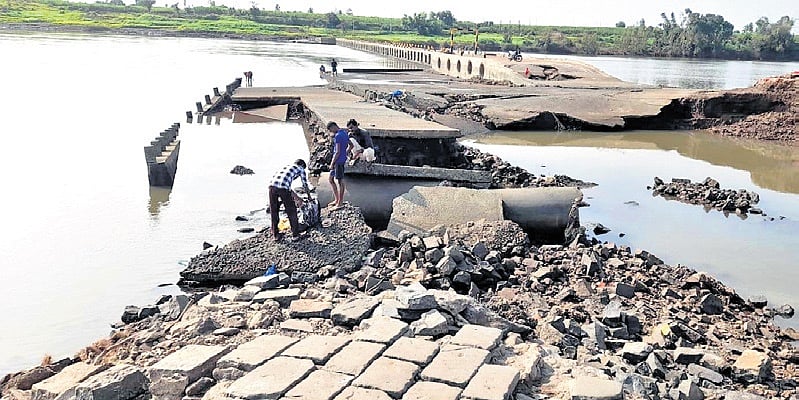
-The collapse has made the bridge, intended to improve connectivity for several border villages. The bridge, which also served as a barrage, was meant to benefit farmers and workers by connecting various villages and easing travel between places like Miraj, Ingali and Yadur. However, with its collapse, locals are facing major hurdles in their daily commute. https://www.newindianexpress.com/states/karnataka/2024/Nov/16/rs-65-crore-chikkodi-bridge-in-karnataka-collapses-just-three-months-after-inauguration (16 Nov. 2024)
Tamil Nadu Farmers worried over WRD Minister statement on desilting Mettur dam On July 26, the government approved a project to restore the original capacity of the Mettur, Vaigai, Pechipparai, and Amaravathy reservoirs, which includes removing 13.75 million cubic meters of sediment from Mettur over four years. A project estimate of Rs 3.6 crore was prepared to obtain environmental clearance.
However, Water Resources Department Minister Duraimurugan stated that reservoirs are not desilted anywhere in the world and that sand would naturally wash away with the water flow. Farmers are concerned whether the state intends to abandon the desilting of Mettur Dam, which has not undergone maintenance since its construction in 1934.
Meanwhile, the Water Resources Department (WRD) on Sunday (Nov. 10) issued a release stating that the tenders to desilt Vaigai and Amaravathy will be floated on November 13 and 20, respectively. Additionally, the tenders for Mettur and Pechipparai have already been opened. https://www.newindianexpress.com/states/tamil-nadu/2024/Nov/11/farmers-concerned-over-water-ministers-statement-on-desilting-mettur-reservoir (11 Nov. 2024)
Himachal Pradesh Illegal muck dumping in Bhakra: FIRs against 8 firms The forest department has informed the Himachal Pradesh high court that eight police cases have been registered against road infrastructure development companies for dumping muck unscientifically and illegally near Bhakra dam reservoir along the Kiratpur-Manali highway in Bilaspur district. The police cases have been registered under Sections 15 (penalty for contravention of the provisions of the Act) and 16 (environmental offences committed by companies) of the Environment Protection Act and for polluting public spring or reservoir under the BNS, on complaints filed by the Bilaspur forest department.
In July, the high court had also imposed a cost of Rs 50,000 on the forest department for “trying to protect the guilty and failing to initiate prosecution against violators involved in illegal muck-dumping in the forests and along the Kiratpur-Manali national highway”. In its report, submitted to the advocate general, the forest department has also stated that it had deposited the amount of Rs 50,000 with the high court. https://timesofindia.indiatimes.com/city/shimla/himachal-pradesh-high-court-orders-firs-against-8-firms-for-illegal-muck-dumping-near-bhakra-dam/articleshowprint/115232496.cms (13 Nov. 2024)
INTERLINKING OF RIVERS
Andhra Pradesh Center backs river interlinking project: TDP The Telugu Desam Party on Friday said the Centre has agreed to CM N Chandrababu Naidu’s proposals on interlinking the Godavari and Pennar rivers, and reviving Singapore’s participation in the construction of the state capital Amaravati.
Briefing media on Naidu’s separate meetings with Union Finance Minister Nirmala Sitharaman and External Affairs Minister S Jaishankar on Nov. 15, TDP MP Lavu Krishnadevarayalusaid the central government has given the green signal for the river interlinking project, which is crucial for the development of the backward Rayalaseema region. The Union finance minister has agreed to extend all cooperation for completing the Polavaram project as well, the MP said. https://www.deccanherald.com/india/andhra-pradesh/centre-backs-cm-naidus-proposal-on-interlinking-of-godavari-pennar-rivers-tdp-3278777 (16 Nov. 2024)
Govt reaffirms commitment to ‘river-interlinking’ The CM N. Chandrababu Naidu chaired a review meeting on the Water Resources Department in his chambers at the Assembly on Wednesday (Nov. 12), focusing on the government’s water policy and the interlinking of the Godavari, Krishna, and Penna rivers. The meeting explored proposals to interlink the Godavari, Krishna, and Penna rivers, building on the success of the Pattiseema Lift Irrigation Project completed during the previous TDP regime, which linked the Godavari and Krishna. Detailed presentations were made on transporting water from the Polavaram Right Canal to Krishna, Bollapalli Reservoir, and Banakacharla. Another proposal focused on extending water from Polavaram to Krishna, Bollapalli, and Somasila projects.
Discussions included enhancing the Polavaram Right Canal’s capacity through expansion or constructing a parallel canal. The meeting also addressed the Polavaram Rehabilitation and Resettlement (R&R) works. Officials reported that 18,925 houses still need to be constructed, with contractors citing pending bills of ₹155 crore and outdated rates as barriers. The Chief Minister directed officials to resolve these issues and ensure R&R work progresses in tandem with Polavaram’s construction. Immediate funds of ₹2,600 crore were identified as necessary for land acquisition and resettlement. https://www.thehindu.com/news/national/andhra-pradesh/andhra-pradesh-govt-reaffirms-commitment-to-irrigating-every-acre-of-farmland-in-state-through-river-interlinking-projects/article68864458.ece (13 Nov. 2024)
At the review meeting on Wednesday (Nov. 13), the irrigation officials apprised the chief minister of the options before the government for the diversion of the Krishna waters to the Penna River. The officials made a presentation to the chief minister on how water from Polavaram could be transferred to Krishna river to Banakacherla via Bollapali reservoir. Another option the officials presented related to the transfer of Krishna waters that reach Bollapally to Somasila Reservoir.
The Bollapally Reservoir is a balancing reservoir proposed in the Guntur district intended to divert Godavari waters to the Banakacherla head regulator. The reservoir has a capacity of 150 Tmcft and is estimated to cost around ₹60,000 crore. It is part of the larger initiative to interlink the Krishna and Godavari rivers.
As the state government intended to divert a huge volume of water from Polavaram to the Penna River, the chief minister discussed whether it would be prudent to have a parallel canal to the Polavaram Right Canal or whether augmenting its capacity would suffice. The CM asked the officials to discuss which of the two options would entail less investment and better results as he was keen on interlinking the three rivers. He asked them to focus more on augmenting the capacity of the Right Canal of the Polavaram project. https://thesouthfirst.com/andhrapradesh/drought-proofing-andhra-pradesh-chandrababu-naidu-focused-on-interlinking-of-godavari-krishna-and-penna-rivers/ (14 Nov. 2024)
The CM made it clear that the construction of irrigation projects should be taken up in the State on a priority basis. By interlinking rivers and with the water that is flowing into the sea every acre can be supplied irrigation water, he felt.
Irrigation officials informed the CM that 18,925 houses are yet to be constructed as part of the rehabilitation of the displaced families of Polavaram project. Mentioning that the previous govt did not take up the works of rehabilitation colonies, they informed him that bills amounting to Rs 155 cr are still pending clearance to the contractors. At the request of officials, Naidu gave his consent to release Rs 2,600 cr for the R&R works. The meeting also discussed the proposed new water policy. https://www.newindianexpress.com/states/andhra-pradesh/2024/Nov/14/interlinking-of-rivers-will-ensure-water-supply-to-every-acre-cm-naidu (14 Nov 2024)
The state government, he said, had previously prepared proposals to transfer Godavari water to Rayalaseema. “I propose to take this plan forward. As part of this initiative, irrigation officials presented a set of proposals for the Godavari-Krishna-Penna river linking. This involves moving the water from the Godavari river at Polavaram to the Krishna river and then directing it to various reservoirs, including the Bollapalli and Banakacherla.”
Despite the financial challenges involved, Naidu reiterated that the project was essential for the state’s agriculture and the well-being of its farmers. These irrigation initiatives would be crucial in addressing water scarcity issues and improving agricultural productivity, he said. https://www.deccanchronicle.com/southern-states/andhra-pradesh/river-linking-cm-naidu-eyes-godavari-krishna-penna-rivers-1838057 (14 Nov. 2024)
RIVERS AS NATIONAL WATERWAYS
Andhra Pradesh Water level in Krishna to be maintained at 12 feet for sea plane operation As AP plans to launch a seaplane from Vijayawada to Srisailam from February-March, the water level in the Krishna River at Prakasam barrage has to be maintained at a full reservoir level of 12 feet for having adequate water for the seaplane either to land or to take off from the surface of the river water at the newly set up jetty near Prakasam barrage. It may be mentioned that on Nov 9, CM N. Chandrababu Naidu launched the seaplane demo flight operation from Prakasam barrage in Vijayawada to Srisailam in Nandyal district by flying in it along with Union civil aviation minister K. Ram Mohan Naidu and others.
The water resources authorities are supposed to maintain the water level in the river at 12 feet at the edge where the jetty is located during the operation of the seaplane. In case the river has no adequate water level for operation of the seaplane, especially during the summer season like March, April, and May, the authorities have the plan to draw (500-1,000 cusecs ) water from the upstream Pulichintala project to enhance the water level to 12 feet. The authorities from the water resources department and the AP Inland Waterways Authority have to give the route map and the runway coordinates, keeping in mind the required depth of water, so that the seaplane will navigate in the specified route either for landing or take off. They are also to keep a check on the movement of the fishing boats in the river in the flight path to avoid any trouble for the seaplane. https://www.deccanchronicle.com/southern-states/andhra-pradesh/water-level-in-krishna-to-be-maintained-at-12-feet-for-operation-of-seaplane-1838860 (16 Nov. 2024)
West Bengal Ganga cruise set to sail to Varanasi from Kolkata Amidst rising concerns about environmental issues over cruise travel, Antara Cruises relaunches MV Bengal Ganga, keeping all environmental factors in mind. They have initiatives to ensure a reduced carbon footprint and use as much shore electricity as possible so that diesel usage and carbon emissions in water remain minimal. MV Bengal Ganga is a 2004-built Burmese cruise that has been sailing in the Gangetic waters since 2009. The journey between Kolkata and Varanasi will be a unique 19-day trip. Antara Cruises also has the unique experience of a 52-day-long cruise experience between Varanasi and Dibrugarh via five Indian states, and Bangladesh. This covers 27 rivers and is the longest cruise journey in the world. https://www.thehindu.com/news/national/west-bengal/mv-bengal-ganga-cruise-gets-new-lease-of-life-set-to-sail-to-varanasi-from-kolkata/article68690428.ece (27 Sept. 2024)
URBAN RIVERS
Pune People’s manifesto for clean rivers Amid the ongoing Maharashtra Assembly elections, the ‘Pune River Revival’ team organised a meeting on Sunday (Nov. 10) at Vaghacha Ghat, Aundh, and released a people’s manifesto to highlight that they will vote for the candidate who will meet their demands. They want Pune to become a city of healthy rivers and zero-carbon water management. Their manifesto announced some ambitious plans to transform Pune into a model for sustainable water management and river health. https://www.freepressjournal.in/pune/pune-river-revival-team-releases-peoples-manifesto-for-clean-rivers-sustainable-water-management-ahead-of-elections (12 Nov. 2024)
Green push to Assembly elections On Nov 10 morning, as bubbles of methane covered parts of the Mula river at Vaghacha ghat, a civil society group, Pune River Revival, released a citizens’ manifesto. The first demand was that all projects related to tackling the pollution of the Mula-Mutha river under the 2016 Japan Investment Cooperative Authority (JICA) fund, be completed on schedule “with public participation and full transparency”. The second was that authorities must recognise that, even with the JICA projects, 100 percent sewage treatment may not be achieved. The third was to “form a committee with citizens and experts to assess further measures and provide timely recommendations”. The release of untreated sewage into the river is one of the main reasons for the pollution of Pune river and the death of fishes and damage to biodiversity.
The 16-point manifesto included a demand to protect riverside ecology, safeguard floodplains and wetlands, reevaluate the Riverbank Improvement Project and preserve riverbank heritage. The construction boom is one of the concerns of the manifesto. The new government has been urged to replace the affidavit-based water supply assurances of developers with expert assessments of local water availability. “New construction permissions should rely on scientific, location-specific water data,” they said. Beginning with government and military buildings, there should also be mandatory rainwater harvesting and rooftop solar installations. This practice is to eventually include private and commercial properties. https://indianexpress.com/article/cities/pune/pune-citizens-green-push-maharashtra-assembly-elections-9664900/ (11 Nov. 2024)
Musi; Hyderabad RFD fails to address root cause behind pollution A group of youngsters, environmentalists and activists on Nov 10 took a critical view of the Congress government’s Musi River Front Development Project and argued that it fails to address root cause of the pollution in the river – industrial and pharmaceutical effluents discharges into the river. They claimed the project was aimed at establishing commercial establishments along the riverbed for generating revenue for the government coffers.
Addressing a press conference organized by Climate Front Hyderabad here, John Michael of Musi Andolan sought to know if there was any policy, DPR, environmental and social impact assessment reports for the project. Any attempt to re-develop, rejuvenate or clean the river is nothing more than a “cosmetic” fix, until the industrial and pharmaceutical companies’ pollution in the river is addressed, he said. Anmol of Climate Front Hyderabad pointed out that several river redevelopment projects in Europe failed due to concreting of the riverbed and added, “It is time to save the rivers but not build concrete structures on the riverbed.” https://telanganatoday.com/climate-front-hyderabad-argues-musi-project-fails-to-address-root-cause-behind-pollution-in-river (10 Nov. 2024)
RFD dream with a human cost The idea of developing the Musi riverfront dates back to 1997, when then CM N. Chandrababu Naidu proposed rerouting the dried-up river into a small concrete drain to enable beautification and development of the riverbanks. This plan involved evicting families, who were relocated to Nandanavanam, in the suburbs of Hyderabad. However, the project’s flaws became evident during the 2000 floods when the river breached its concrete confines, proving the initiative was misguided and ultimately, leading to its abandonment.
In 2009, a rubber dam was built in the river to hold enough water for exploring tourism potential. But that only led to growth of water hyacinth and mosquitoes. In 2017, the Musi Riverfront Development Corporation Limited (MRDCL) was formed under the previous BRS government, though it remained inactive for most part. Through MRDCL, the BRS government planned 14 heritage bridges across the river at various locations, on the lines of the Seine River in Paris. Before the project could take off, the BRS faced defeat in the 2023 Assembly elections, and Congress assumed the reins.
The river development project does not include provisions for industrial effluents. Hyderabad and its surrounding areas house over 400 bulk drug manufacturing units yet lack adequate effluent disposal facilities. Microbial resistance due to pharmaceutical waste dumped in Musi river has been explored by multiple studies. Within the Outer Ring Road (ORR) of Hyderabad, there are around 11-12 industrial clusters consisting of pharmaceuticals, tanneries, textiles, oil mills, electroplating, ferro alloys, lead extraction, and battery manufacturing units. According to the SPCB, the city has only four CETPs, located at Patancheru, Jeedimetla, Balanagar, and Bolarum. https://www.thehindu.com/news/national/telangana/musi-development-project-in-telangana-riverfront-dream-with-a-human-cost/article68869729.ece (15 Nov. 2024)
Vishwamitri; Vadodara बारहमासी से मौसमी नदी विश्वामित्री नदी के साथ छेड़छाड़ ने इसे शहरी बाढ़ का जनक बना दिया है। बारहमासी नदी अब मौसमी नदी बन गई है. वडोदरा की विश्वामित्री समेत अधिकांश शहरी नदियों का वर्तमान परिदृश्य दर्दनाक और व्यथित करने वाला है। नदियों को एक छोर से दूसरे छोर तक पानी पहुंचाने के माध्यम मात्र के तौर पर देखा जाता है।
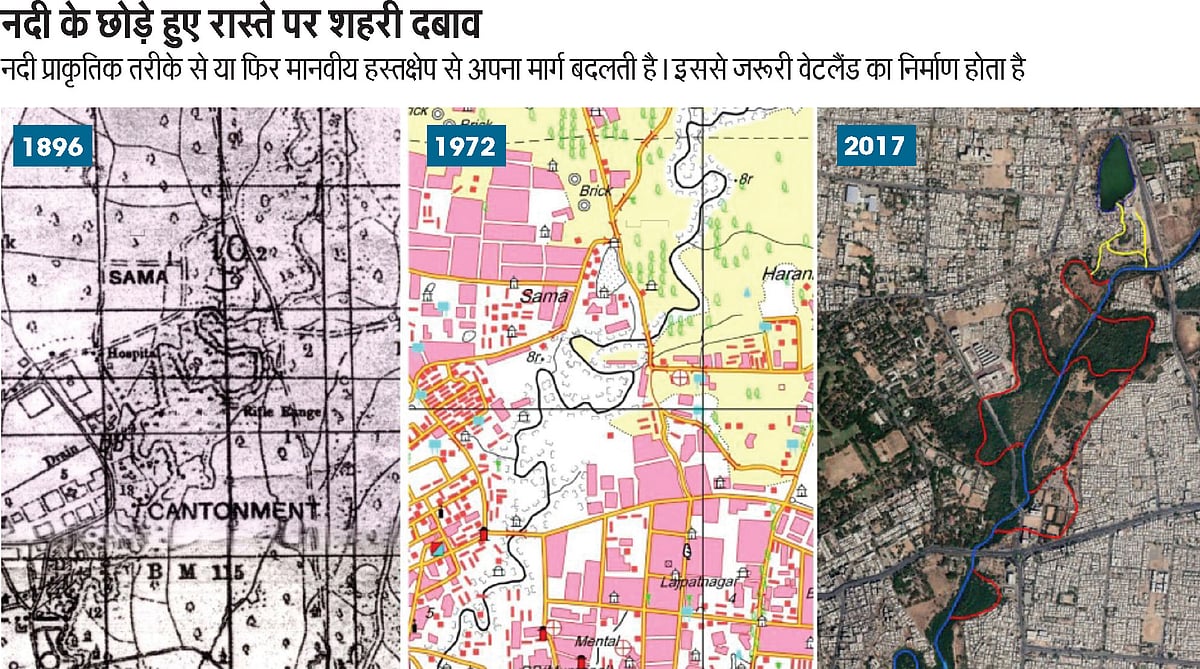
नदी और उसकी जल विज्ञान प्रणाली की ऐसी गलत समझ ही शहरी बाढ़ की समस्या का मूल कारण है। व्यवस्थागत उपेक्षा, विकास योग्य शहरी भूमि के लालच और नदियां के प्राकृतिक सीवेज नालियां होने की धारणा से शहरी नदियां मात्र नालों में तब्दील हो गई हैं। प्राकृतिक और मानवीय क्रियाओं के नतीजतन शहरी क्षेत्रों में बाढ़ आती है। विश्वामित्री की पारिस्थितिक संरचना में भी औपचारिक और अनौपचारिक परिवर्तन आए हैं। https://hindi.downtoearth.org.in/river/vishwamitri-has-become-a-seasonal-river-from-a-perennial-river (14 Nov. 2024)
Buddha Nullah; Ludhiana HC leaves decision on pollution to NGT The Punjab and Haryana High Court has left it to the NGT to decide the issue pertaining to the Buddha Nullah pollution and has disposed of suo motu case in the matter. The High Court had on October 4 taken suo motu note of a newspaper report highlighting that effluents were being dumped into the Buddha Nullah. “During the course of proceedings taken up before this court on October 25, it was informed by the state counsel that appeals are pending consideration before the NGT Principal Bench,” the CJ-led Division Bench said in an oral order.
Taking up two separate appeals filed by the polluting industries against the orders of the Punjab PPCB to stop discharge of treated effluents from three CETPs into the Sutlej tributary, the NGT had on November 4, posted the matter for December 2 while directing the PPCB to produce the original record along with a copy thereof concerning to passing of the impugned orders. Meanwhile, the Punjab State Human Rights Commission (PSHRC) has also taken cognisance of the widespread pollution in the nullah and has sought a report on the issue from the PPCB Chairman before January 27 next, which has been fixed as the next date of hearing in the case.
An environmentalist, Col Jasjit Gill (retd), who is spearheading a sustained campaign against widespread pollution in the Buddha Nullah, has sought personal intervention of Punjab Governor Gulab Chand Kataria in saving the Sutlej tributary and the entire river. https://www.tribuneindia.com/news/ludhiana/ludhiana-punjab-and-haryana-high-court-leaves-decision-on-buddha-nullah-pollution-to-ngt/ (16 Nov. 2024)
RIVERS
MoEF Rules under new Water Act notified The Union Environment Ministry on Monday (Nov. 11) notified new rules for holding inquiry and imposing penalties for violations of the Water (Prevention and Control of Pollution) Act. The new Rules – Water (Prevention and Control of Pollution) (Manner of Holding Inquiry and Imposition of Penalty) rules, 2024, will come into effect immediately, as per the government’s notification.
The Rules come in the backdrop of the amendments made to the Water Act earlier this year, wherein offences and violations of the Act were decriminalized, replacing them with penalties instead. Earlier in July, the Union Environment Ministry also notified Rules exempting non-polluting ‘white’ category industries from obtaining prior permissions to establish and operate under the Water Act, to give effect to certain amendments in the Act.
The amendments had also allowed the Centre to appoint officers to adjudicate offences, violations and determine penalties. “The Central Pollution Control Board, State Pollution Control Boards, Pollution Control Committees and Integrated Regional Offices of the MoEF, in their respective jurisdictions, through their authorized Officers, or any other persons, may file a complaint …to the adjudicating officer regarding any contravention committed under sections 41, 41A, 42, 43, 44, 45A and 48 of the Act,” the new Rules state. These sections relate to contravention of norms on releasing industrial effluents and pollutants. https://indianexpress.com/article/india/rules-under-new-water-act-notified-how-inquiry-and-penalties-process-will-work-9665847/ (12 Nov. 2024)
Environmental permits for low-polluting industries waived On Thursday (Nov. 14), a new notification released by the MoEFCC dated 12 November said 39 categories of “white industries” will no longer require consent to establish (CTE). All industries with a pollution index score up to 20 will also not require consent to operate (CTO) from the state governments. Among other industries expected to benefit are assembly and repair of air coolers, blending and packaging of tea, cotton and woollen hosier making.
While the government is pushing this move to promote the ease of doing business, environmental experts said this will only worsen the monitoring of industrial pollution. Bhavreen Kandhari, a Delhi-based environmental activist, said that the latest government notification is a “dangerous precedent”, prioritising short-term economic gains over long-term sustainability and public wellbeing. “In an era when nations, including India, are committing to implement stricter environmental controls to combat climate change and protect public health, decisions to relax such safeguards are alarming,” Kandhari said. She also explained that the role of state pollution control boards is crucial because these bodies are better equipped to address local environmental conditions and enforce compliance with pollution standards. https://theprint.in/environment/govt-waives-environmental-permits-for-low-polluting-industries-in-push-for-ease-of-doing-business/2356437/ (14 Nov. 2024)
No dual eco-clearance for 39 categories of industry Saying that it has complied with a “long standing demand by industry,” the Union Environment Ministry has exempted 39 categories of industries from the mandatory requirement of approaching State pollution control boards for permission to run their industries.
An official in the Ministry told The Hindu that even prior to the notification, ‘white category’ industries were given permits by the State departments responsible for industry. “These are the least polluting category but this notification formalises an existing practice where such industries got a consent to operate without much trouble.” The easing of this norms also flows from amendments to the ‘Water Act,’ earlier this year in Parliament. https://www.thehindu.com/sci-tech/energy-and-environment/centre-exempts-white-category-industries-from-key-state-pollution-board-permits/article68868439.ece (15 Nov. 2024)
Study River emits 5 times more methane after WTP A stretch of river into which treated wastewater has been discharged emits five times more methane than a stretch of river without that wastewater. This is according to research by Ida Peterse and Lisanne Hendriks of Radboud University. The paper is published in the journal Science of The Total Environment. For the study, microbiologist Peterse and ecologist Hendriks measured methane emissions at different points of the Linge and Kromme Rijn rivers. Peterse said, “Using a floating chamber, we caught the gases rising from the river on the water surface and analyzed them. We also investigated which nutrients were in the water and in the soil.”

The researchers thus show that the treated water, although clean according to Dutch standards, has effects on a river. Hendriks said, “The treated water also contains nitrogen, phosphate and carbon. All those nutrients in the water cause more algae to grow, for example. These eventually die and sink to the bottom, which in turn is an ideal situation for methane-producing micro-organisms.” Since that process takes a while, methane emissions are not much higher just after a discharge point. A bit further on, however, they are. Peterse added, “Although water discharged into rivers meets Dutch standards, it is important to realize that it still contributes to higher methane emissions. Since water systems like rivers are 50% responsible for methane emissions, this is something we might be able to address.” https://phys.org/news/2024-11-river-emits-methane-wastewater-treatment.html (15 Nov. 2024)
NASA Satellites reveal abrupt drop in global freshwater levels An international team of scientists using observations from NASA-German satellites found evidence that Earth’s total amount of freshwater dropped abruptly starting in May 2014 and has remained low ever since. Reporting in Surveys in Geophysics, the researchers suggested the shift could indicate Earth’s continents have entered a persistently drier phase.
From 2015 through 2023, satellite measurements showed that the average amount of freshwater stored on land—that includes liquid surface water like lakes and rivers, plus water in aquifers underground—was 1,200 cubic km lower than the average levels from 2002 through 2014, said Matthew Rodell, one of the study authors and a hydrologist at NASA’s Goddard Space Flight Center in Greenbelt, Maryland. “That’s two and a half times the volume of Lake Erie lost.” https://phys.org/news/2024-11-nasa-satellites-reveal-abrupt-global.html (15 Nov 2024)
Book Review Muddying divide between land & water This interdisciplinary collection delves into the experiences and meanings of life in environments where water levels and availability are in constant flux. Amphibious Anthropologies brings together a global set of case studies, from Italy’s historic marshes to the tidal pools of the Bahamas, to show how living with unpredictable wetness has become crucial in the age of climate crisis. The book introduces “amphibious anthropologies” as a framework to challenge the dichotomy of water and land and interrogate spaces marked by rapid and profound environmental change. It brings to light the everyday creativity and uncertainty in wet environments like California’s Salton Sea and India’s North Bihar floodplain. Engaging with disciplines like anthropology, geography, and STS, this work offers a timely discourse on environmental change and resilience. https://uwapress.uw.edu/book/9780295753881/amphibious-anthropologies/
Arunachal Pradesh Thousands take part in Mission Clean Kley The entire 22 km stretch of Kley river passing through Ziro-Hapoli was cleaned by around 7000 participants including, government officials, members of civil society, educational institutions and general public during the 10th edition of Mission Clean Kley River-2024 conducted on Nov 13. The Mission, an annual calendar event of Lower Subansiri district administration, was organized in collaboration with Apatani Youth Association. https://arunachaltimes.in/index.php/2024/11/14/thousands-take-part-in-mission-clean-kley/ (14 Nov 2024)
Kerala With local support, a tributary comes to life First, the members of the Pullur Periya Panchayat biodiversity management committee performed a preliminary survey of the trees, shrubs, herbs, birds, spiders, butterflies, moths, odonates, mammals, and herpetofauna along the Chithari river in Kasargod district. Following this, the committee identified a two-km stretch between the Makkaramkodu and Velloor Vayal bridges as the site for the pilot restoration project.
-Part of panchayat land, unscientific river management had led to heavy degradation on the site, and floods in the past had uprooted many trees. “After the survey, we took some of the panchayat ward members on a walk through the site, showing them how invasive species, such as trailing daisy (Sphagneticola trilobata), are abundant, and that they need to be weeded out first to be able to plant anew,” says Shyamkumar Puravankara an architect by profession and an avid birdwatcher who led the initiative.
-For the next phase of the project, the committee worked with the Kanhangad Block Panchayat Agro Service Centre to prepare saplings of the 10-12 native species identified and selected for replanting. It took two years to complete the first round of planting, even though they were parallelly working on invasive species removal and sourcing saplings through the agro service centre. As per Puravankara, they will begin the next round of weeding and replanting by December, once the northeast monsoon gives way.
-As for the immediate next steps, Puravankara wants to update the flora survey list. He believes many grasses and plants, especially water plants, have escaped their attention. Recently, Puravankara successfully applied for a grant with the Zoo Outreach Organisation (an NGO working on wildlife conservation in India since 1985) to develop a flora inventory along the Chithari tributary. He hopes this can lead to a commercially viable nursery that nurtures native wild plants and can cater to the needs of all restoration projects in the state.
-Though the Chithari river project has been commissioned for only three years, Puravankara believes it will take another five or six years before nature can take over, and only then can they declare whether the project has been a success or not. Thubeevi is adamant they will not give up on the project even after the panchayat scheme ends in 2025. “As long as I am in office, we will continue to do what we can to protect the river,” she says. https://india.mongabay.com/2024/11/with-local-support-a-tributary-comes-to-life/ (13 Nov. 2024)
Uttar Pradesh River rejuvenation by Women water protectors In recent months a story from a remote village of Jhansi district (Uttar Pradesh) that attracted attention at the national level has been that of the efforts of about 18 women volunteers of Simravari panchayat for the rejuvenation of Ghurari river. This river has been in decline after an important check dam got damaged and there was growth of weeds. This panachayat has about 18 jal sahelis or water protector volunteers. They decided to take up the work of creating a sack bund on their own as well as cleaning weeds. In Mar-Apr, they filled up nearly 1000 sacks & placed these at a carefully selected place in the river to provide a temporary bund. https://countercurrents.org/2024/11/rejuvenation-of-river-by-women-water-protectors-of- (15 Nov 2024)
Punjab ‘Water Warriors’ unite to save dying rivers A bunch of young volunteers associated with the NGO aim to restore the water table and revive wetlands. Their long-term goals include achieving zero industrial waste in rivers, increasing public participation, and creating green tourism opportunities along riverbanks.
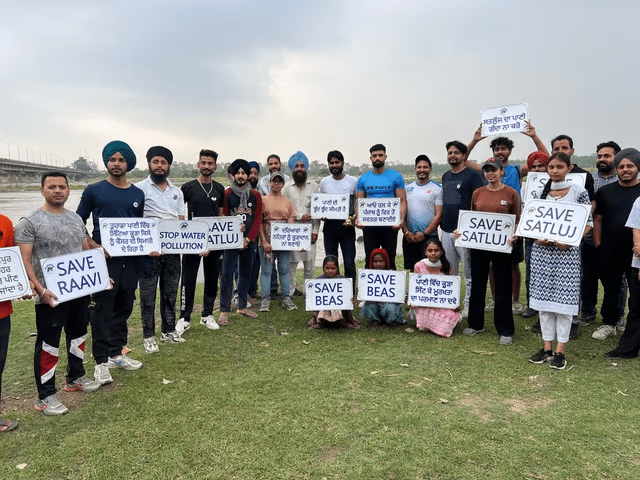
Manjit Singh, the founder of the NGO Water Warriors Punjab left his position as an Assistant Professor to dedicate himself to saving these sacred rivers. With a dedicated team of 150 to 200 volunteers, Singh is actively cleaning the polluted stretches of the Satluj, Beas, and Raavi rivers in Ludhiana. These volunteers, primarily the youth, come from all walks of life, but the unifying factor is their determination to save Punjab’s rivers from irreversible damage. Through awareness campaigns, clean-up drives, and community engagement, the Water Warriors have made significant strides. Their efforts are not only about removing physical waste from the rivers but also creating a psychological shift among Punjab’s youth and local communities. They have inspired a new generation to take ownership of their natural resources.
Despite initial challenges such as a lack of manpower and funding, Water Warriors has now garnered significant attention on social media, allowing them to grow their volunteer base. However, the task remains daunting, with rivers being polluted almost as quickly as they are cleaned. Yet, Singh and his team remain undeterred, knowing that every small step brings them closer to a cleaner and greener Punjab. Their dream goes beyond merely cleaning the rivers—they aim to restore the water table, revive wetlands, and even develop green tourism around these restored ecosystems. Through their relentless campaigning and grassroots involvement, the water warriors have inspired a growing movement for environmental justice across Punjab, ensuring that future generations may one day witness the rivers running clean again.
However, the path ahead is fraught with challenges. Without stringent industrial regulations and robust waste management systems, Punjab’s rivers will continue to face the risk of degradation. Public participation, government collaboration, and community-driven action are key to ensuring that Punjab’s rivers do not just survive but thrive once again. https://www.outlookindia.com/environment/water-warriors-in-punjab-unite-to-save-dying-and-decaying-rivers (17 Nov. 2024)
Himachal Pradesh SPCB imposes Rs 1.73-cr fine on Manali MC for Beas pollution The NGT has also slapped a fine of Rs 4.6 crore on the MC, and the last date for its submission is December 19. The decision comes after the High Court of Himachal did not provide relief to the MC. Meanwhile, due to a political turmoil in the MC, the post of the president has been lying vacant since September 25.
The waste from the district was dumped at the Refuse Derived Fuel (RDF) Plant at Rangri near Manali and various civic bodies paid Re 1 per kg of waste to the MC from 2019 to July 15, 2024. However, the MC officials abstained from divulging the details related to the income received from other civic bodies for the garbage. Due to this, the legacy waste piled up and now, leachate discharge from this waste was polluting the Beas and the environment.
The MC had also received funds from the Urban Development Department and the government for the removal of legacy waste. However, the accumulated waste has not been removed despite the MC officials’ claim to have lifted it. The officials stated that machines were being installed by the new contractor, and that problem would soon be resolved. https://www.tribuneindia.com/news/himachal/pollution-board-imposes-1-73-cr-fine-on-manali-mc-for-contaminating-beas/ (17 Nov. 2024)
GANGA West Bengal River refugees People living in villages along the Ganga River in Malda and Murshidabad regions have faced displacement for decades. The erosion by the Ganga River is attributed to natural dynamics, exacerbated by the construction of structures like the Farakka Barrage. Located in Murshidabad district, the intervention in the Ganga at Farakka has impacted the equilibrium of the river.

Since the flow of the river was intercepted by the barrage and the water level of the river was raised at Farakka, sedimentation on the riverbed has increased. The recurrent bank failures and consequent changes in the course of the Ganga upstream and downstream of the barrage have created a large population of environmental refugees. In recent years, 100s of sq kms of land has eroded in the Malda-Murshidabad region. Lakhs of people have left their homes and belongings. These environmental refugees lead their lives under the shadow of poverty and insecurity. https://www.outlookindia.com/national/the-river-refugees-of-the-ganga (23 Sept. 2024)
Howrah bridge’s health audit, 1st time in 4 decades, starts Railways consultancy RITES, which conducted the last such study between 1983-88, is undertaking the task. They will be joined by the British firm Rendel Palmer and Triton, the original designers of the bridge, to complete the study in the 4 months. “The findings will be compiled and analysed. We expect a comprehensive report by Mar 2025,” an official of Syama Prasad Mookerjee Port (erstwhile Kolkata Port or KoPT) said on Nov 17. https://timesofindia.indiatimes.com/city/kolkata/howrah-bridge-health-audit-first-in-40-years-to-ensure-structural-integrity/articleshow/115390286.cms (17 Nov. 2024)
All Weather Road Project: Senior Advocate critically analyses the former CJI’s judgments Colin Gonsalves, a senior advocate and recipient of the Right Livelihood Award, ranks the Char Dham Road widening project judgement as the worst of the five decisions made by former Chief Justice DY Chandrachud. https://www.youtube.com/watch?v=vM2TbNQa7lw (11 Nov. 2024)
Bageshwar 2km-lake formed on Shambhu river to be probed by experts The district administration in Bageshwar, Uttarakhand, launched an urgent investigation on Thursday into a 2,000m-long lake that was formed on the Shambhu river due to landslides. The lake can have potentially catastrophic impacts of the landslide-dammed lake on downstream villages, including Armal, Tharali, and Narayanbagad in Chamoli. Kapkot block head Govind Singh Danu, who first spotted the lake during a routine tour of Pinder Valley, said district officials had earlier promised to drain the lake, but no action was taken. He warned that the water body poses a much greater threat than similar formations in 2022 and 2023 as it is bigger in size.
– Sub-divisional magistrate (SDM) Anurag Arya announced deployment of a multi-departmental team—including officials from the SDM’s office, irrigation, and disaster. https://timesofindia.indiatimes.com/city/dehradun/urgent-investigation-launched-into-landslide-dammed-lake-on-shambhu-river/articleshowprint/115307453.cms (15 Nov. 2024)
2km lake formation on river sparks concern A landslide dammed lake stretching over 2,000m has formed on the Shambhu river, which flows through Bageshwar’s Kunwari village and converging with the Pindar river in Chamoli district. The development has raised concerns among residents and experts regarding potential catastrophic impact on downstream villages, including Armal, Tharali and Narayanbagad in Chamoli. The current lake formation follows similar occurrences in 2022 and 2023 when authorities had to deploy teams to clear the blockages and to prevent downstream flooding in case the blockages burst suddenly.
Kapkot block head Govind Singh Danu, who initially spotted the lake formation during a routine tour of Pinder valley, said, “This time, the lake’s length is more than earlier instances, making it a much greater threat. Earlier, its expansion led to temporary action by the district officials, who ensured water drainage from the lake, but it hasn’t happened.” Geologists believe that tectonic shifts are triggering landslides, resulting in debris accumulation that obstructs the river flow, forming an unstable lake. https://timesofindia.indiatimes.com/city/dehradun/huge-2000m-long-lake-on-bageshwar-river-raises-alarm-for-villages/articleshow/115265533.cms (14 Nov 2024)
शंभू नदी बागेश्वर के कुंवारी गांव से होकर गुजरती है और यह चमोली जिले में जाकर पिंडारी नदी में मिल जाती है. यहां पर साल 2022 और 2023 में भी ऐसी झील बन चुकी है. सबसे पहले इसकी शुरुआत 2013 में हुई थी, ऐसा बताया जाता है. उस समय भी स्थानीय प्रशासन को झील का पानी निकालने के लिए एक टीम लगानी पड़ी, जिससे अचानक झील के हिस्सों में टूट आने से निचले इलाकों में बाढ़ की नौबत ना आ जाए. https://hindi.news18.com/news/knowledge/explainer-2-km-lake-formed-in-kuwari-village-of-uttarakhand-how-it-can-be-a-big-threat-8835995.html (15 Nov. 2024)
YAMUNA Delhi Permanent solution needed for toxic foam Bhim Singh Rawat of SANDRP said that instead of focusing on river pollution for 15 days before Chhath Puja, a round-the-year action plan is needed, and the underlying cause should be tacked. “The Upper Yamuna River Board water agreement between the Yamuna basin states is up for renewal next year, and that could be first step to restore the river water.” https://www.hindustantimes.com/cities/delhi-news/permanent-solution-needed-for-toxic-foam-in-yamuna-djb-101731523328896.html (14 Nov 2024)
Money going down the drain Delhi has spent over Rs 7,000 crore on Yamuna river’s cleaning since 2017 but has very little to show in terms of progress, according to a Moneycontrol analysis. The Delhi government has allocated over Rs 200 crore for Yamuna cleaning for the current fiscal. Centre has spent over Rs 15,000 crore on the Clean Ganga program—some of this has also gone to Delhi for Yamuna clean-up—since FY15 but has made incremental gains.
Reports submitted to the NGT by the governments of Delhi, UP and Haryana in January 2024 indicated severe deficiencies in implementing the rejuvenation program. Haryana had no data on the segregation of treated and untreated sewage, and UP was not tapping 14 drains flowing into the Yamuna river. https://www.moneycontrol.com/news/india/despite-spending-rs-7000-crore-yamuna-in-delhi-is-no-better-than-before-mc-analysis-12863173.html (11 Nov. 2024)
Natural drain encroached, NGT told A natural stormwater drain in Goyla Khurd, sw Delhi, is completely filled and encroached upon by private properties, with officials concerned unable to locate the drain, a joint committee headed by the DM told the NGT. The Nov 8 report says two separate inspections of the area were carried out last month: on October 3 by the Naib Tehsildar, DPCC and DJB officials, while a second inspection by the CPCB was undertaken on October 19. Officials said that they were unable to find the drain on the ground in either inspection.
“There exists no drain on the site at present…. in the Khasra No. 38…which is now bifurcated in plots of different sizes and bearing hoarding indicating the ownership of the land,” the report said, adding that a detailed analysis by CPCB, using Google Earth images, revealed that a drain existed on the ground in 2022. The joint committee was constituted by NGT in July to check the ground situation of the natural drain, on a petition by Goyla Khurd’s Shyam Kunj RWA, which alleged a natural drain in the village—forming a part of the Najafgarh drain (Sahibi river)—had been encroached completely. The petition said that the drain was around 450 metres long and 15 metres wide, contending the encroachment led to waterlogging in the area in monsoon. https://www.hindustantimes.com/cities/delhi-news/natural-stormwater-drain-in-goyla-khurd-filled-encroached-ngt-told-101731262433100.html (11 Nov. 2024)
Uttar Pradesh Hindon a river lost: Unchecked discharge of industrial effluents and inadequate sewage treatment facilities have turned the Hindon’s water toxic. Down To Earth tracks the Hindon’s journey through seven Uttar Pradesh districts, starting from its origin in Saharanpur.
A river has primarily two sources of pollution: industrial effluents (for which factories are required by law to instal effluent treatment plants) and domestic wastewater (which government bodies are mandated to treat in sewage treatment plants or STPs before releasing in waterbodies). CPCB’s 2023 compliance report estimates that along its course in the seven districts, the Hindon receives 72,170.9 kilolitres per day (KLD) of effluents from 357 industries, and 943.63 million litres per day (MLD) of domestic sewage.
Though the industries are equipped to treat effluents, they often do not, as shown by CPCB’s 2023 compliance report, which says closure orders were issued to 33 units in the seven districts, while 13 units were fined Rs 76.78 crore as “environmental compensation” in 2023-24. Similarly, the 16 STPS in the seven districts treat only about 711.6 MLD of the 943.6 MLD sewage generated, which means that over 220 MLD sewage is released into the Hindon without being treated. https://www.downtoearth.org.in/pollution/a-river-lost-unchecked-discharge-of-industrial-effluents-and-inadequate-sewage-treatment-facilities-have-turned-the-hindons-water-toxic (16 Nov. 2024) The report is also available in Hindi. https://hindi.downtoearth.org.in/river/ground-report-the-name-of-a-dying-river-is-hindon (12 Nov. 2024)
Prayagraj Floating restaurant on river Visitors arriving for Maha Kumbh will be able to enjoy sumptuous meals at first floating restaurant built on Yamuna. Inaugurated by CM in Dec 2023, the floating restaurant will provide a new and unique experience to tourists who can have the best food amid the grandeur of the mega religious event. Along with this, UPSTDC is also operating Rahi Triveni Darshan Hotel on Yamuna Bank Road. https://timesofindia.indiatimes.com/city/allahabad/experience-culinary-delights-at-ups-first-floating-restaurant-on-the-yamuna-river/articleshow/114598980.cms (26 Oct. 2024)
RIVERS BIODIVERSITY
Tamil Nadu Smooth-coated otter identified in Vaigai A recent research report on the Vaigai River and its surrounding areas has confirmed the presence of the smooth-coated otter (Lutrogale Perspicillata) in the dense forest regions at the river’s origin. The IUCN has classified this species as ‘vulnerable’. In addition to the otters, researchers recorded 35 mammal species, including deer and mongoose, as well as 67 types of plant species. The study also documented 175 bird species in the area, with 12 of them classified as vulnerable.
Conducted by the Madurai Nature Cultural Foundation from August 28 to September 6, the research aimed to assess pollution levels in the Vaigai River. Results indicated that the river is heavily polluted and unsuitable for consumption. Water samples collected from 28 points along the river were found to be highly contaminated and classified under category ‘E,’ the lowest in water quality grading. Additional samples from 36 points showed alarming levels of contamination, largely due to pesticide pollution. Sources from the Water Resources Department stated that while water quality is better at the river’s origin, it deteriorates downstream due to human activity.
Researchers also highlighted the proliferation of invasive plant species, such as water hyacinth and various types of grasses, which obstruct the waterway and further degrade water quality. The research team urged the government to take immediate action to restore Vaigai River. “The Vaigai is the lifeline of several southern districts in Tamil Nadu and holds cultural significance. Strong intervention at the level of the Chief Minister is essential to restore the river to its former state,” R. Palaniswami, a Professor of Environmental Studies said. https://www.dtnext.in/news/tamilnadu/rare-species-of-smooth-coated-otter-identified-at-vaigai-rivers-origin-in-tn-811169 (14 Nov. 2024)
FISH, FISHERIES, FISHERFOLKS
Centre India’s fish production rises from 96 to 176 lakh tonnes in a decade: Minister Union Minister for Fisheries, Animal Husbandry & Dairying, Rajiv Ranjan Singh Singh said that the fish production in the country has increased significantly in the last 10 years. He said, that in 2014 the total fish production was 96 lakh tonnes and today it is 176 lakh tonnes. He added that of these 176 lakh tonnes, 132 lakh tonnes are the contribution by the inland fishing. Mr Singh said that Arunachal Pradesh has a lot of potential in the fishery sector. https://theindianawaaz.com/indias-fish-production-rises-from-96-to-176-lakh-tonnes-in-a-decade-minister/ (13 Nov. 2024)
Western Ghat A new genus of freshwater fish discovered A team of researchers have discovered Koima, a new genus of freshwater fish endemic to the Western Ghats encompassing two known species that were previously assigned under the genus Nemacheilus. While its discovery highlights the importance of Western Ghats as a biodiversity hotspot and a centre of endemism, it also underscores the need for a comprehensive taxonomic revision of many freshwater fish groups including nemacheilid loaches. The new genus was described by V.K. Anoop and Rajeev Raghavan, of Kerala University of Fisheries and Ocean studies (Kufos), and Neelesh Dahanukar, of Shiv Nadar Institution of Eminence, Delhi.
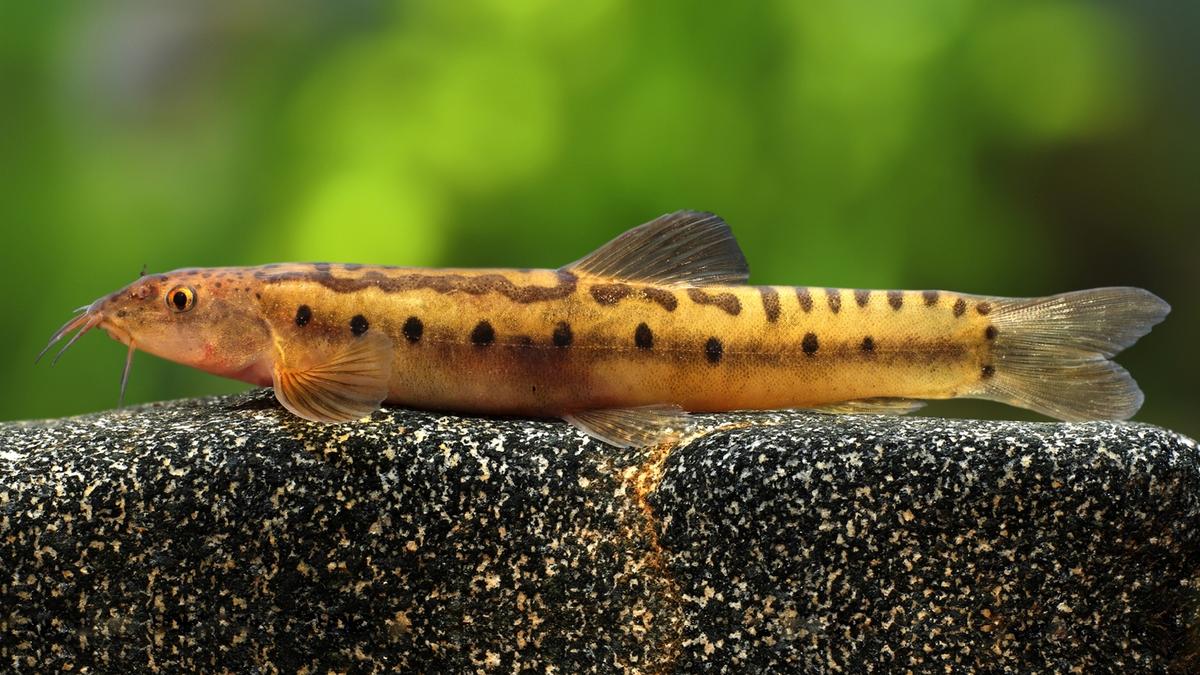
The study employed an integrative approach to re-evaluate the taxonomic status of two enigmatic nemacheilid loaches of the Southern Western Ghats: Mesonoemacheilus remadevii & Nemacheilus monilis. The research showed that both species were misclassified until now and require placement in a new genus. Koima, the new genus is distinguished from other Western Ghats and Indian subcontinent nemacheilids based on a combination of characters. Specimens for this study were collected from the Kunthi, Bhavani, Moyar, Kabini, and Pambar rivers.
Koima remadevii typically inhabits swift-flowing riparian streams with substrates comprising rocks, boulders, and gravel, with sand and silt patches scattered throughout. These substrates produce a variety of microhabitats, such as gaps under boulders, and clefts between rocks that provide protection from powerful currents. Koima remadevii thrives in fast-flowing streams with rocky substrates. These fish seek shelter in the gaps between rocks and beneath boulders, finding protection from strong currents. Currently, Koima remadevii is only known from its type locality in the Kunthi river inside Silent Valley National Park. Meanwhile, Koima monilis inhabits various tributaries of the Cauvery river, occupying microhabitats ranging from large rivers to small, fast-flowing streams at elevations between 350 and 800 m. The generic name, Koima is derived from Malayalam and is the vernacular word used for loaches. https://www.thehindu.com/news/national/kerala/a-new-genus-of-freshwater-fish-discovered-in-western-ghats/article68872417.ece (15 Nov. 2024)
WFFP 8th general assembly officially begins The 8th General Assembly of the World Forum of Fisher Peoples (WFFP) officially commenced on November 14, 2024, in Brazil, marking the beginning of a week-long gathering that unites members from across the globe to discuss and address critical issues facing ocean, water, and fisher peoples. This year’s assembly, running through November 21, includes a diverse range of activities and sessions designed to foster solidarity, exchange knowledge, and develop collective solutions to challenges such as ocean grabbing, the climate crisis, and food sovereignty. https://wffp-web.org/the-8th-general-assembly-of-the-world-forum-of-fishers-peoples-wffp-officially-begins/ (15 Nov. 2024)
Film Matsyanyaya Hrutika Patole’s latest film ‘Matsyanyaya’ takes viewers on an uncomfortable journey of the widespread infrastructure development across India. The film gets its name from the Indian political philosophy of the ‘law of fish’ and shows us the negative consequences of rampant development and how it is affecting low-income groups. The 15-minute documentary-style film is being shown at special screenings. https://india.mongabay.com/2024/11/matsyanyaya-a-journey-through-indias-landscapes-swallowed-by-urbanisation/ (12 Nov. 2024)
SAND MINING
Haryana Unabated excessive riverbed mining in Yamuna threatening the structural safety of Nagli bridge connecting Yamuna Nagar and Saharanpur. (Dainik Jagran, 18 Nov. 2024)
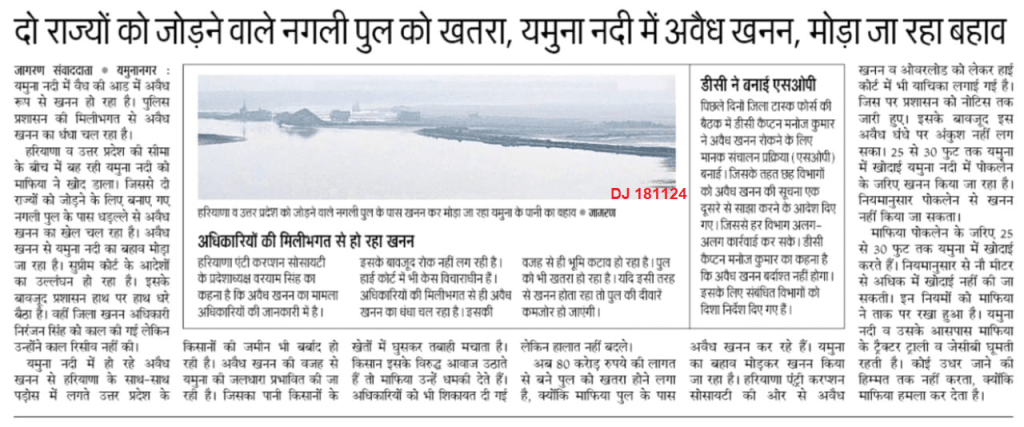
यमुनानगर के नगली घाट पर 140 करोड़ की लागत से बनाए जा रहे पुल के पास खनन हो रहा है। यहां से ओवरलोडेड ट्राले गुजरने से पुल का निर्माण होने से पहले ही क्षतिग्रस्त होने का खतरा मंडरा रहा है। पुल का 70 प्रतिशत निर्माण हो चुका है। https://www.dainiktribuneonline.com/news/Haryana/threat-to-the-under-construction-bridge-connecting-haryana-uttar-pradesh-71182/ (08 Nov. 2023)
Odisha Illegal sand quarrying poses threat to T-Bridge in Cuttack Rampant smuggling of sand from nearby areas of the T-bridge on the Mahanadi River at Baideswar locality under Banki subdivision of Cuttack district is allegedly posing a serious threat to said structure. According to sources, several mafias are active in the region and are earning handsomely in the absence of regular raids by the local administration. Concrete pillars of the bridge are facing threats as the minor mineral is illegally being quarried from around the structure. In view of the same, the district Collector Dattatraya Bhausaheb Shinde has clamped Section 163 in the nearby areas and ordered to arrest the sand mafia involved in the illegal activity. https://odishatv.in/news/odisha/illegal-sand-quarrying-poses-threat-to-t-bridge-in-cuttack-248814 (13 Nov. 2024)
NGT orders personal appearance of law secy The NGT east zone bench has ordered for personal appearance of Odisha’s law secretary regarding illegal morrum extraction in Jharsuguda dist, following the state’s failure to represent itself during Wednesday’s hearing. The bench directed the law secretary to appear virtually on Jan 9, 2025, to explain the absence of state counsel. Key state respondents, including the chief secretary, forest & environment secretary, Jharsuguda district collector and divisional forest officer, were unrepresented during the proceedings.
The case stems from a petition filed by Jitendra Kumar Pradhan of Brajrajnagar, alleging unauthorized morrum (weathered laterite) extraction and tree felling on revenue forest land by a private construction company in Jharsuguda tehsil. A fact-finding committee, constituted by NGT on Feb 5 confirmed the illegal extraction of 56,100 cubic metres of morrum up to five metres depth. The findings were corroborated by revenue inspector reports and drone surveys. The committee discovered that the construction company operated without mandatory environmental clearance from the SEIAA and required consents from SPCB. https://timesofindia.indiatimes.com/city/bhubaneswar/ngt-summons-odisha-law-secretary-over-illegal-morrum-extraction-in-jharsuguda/articleshow/115300739.cms (14 Nov. 2024)
Kerala Informers helping illegal sand mining gangs in Chaliyar: Activists Despite the police claiming that illegal sand mining attempts in the Chaliyar have largely come down, activists in Mavoor say gangs continue to mine sand with the help of informers in the area. Locals say the informers even conduct ‘night patrol’ along the riverbed to alert truck drivers deployed by the sand mining gangs. Incidentally, the concrete pillars erected to block the entry of goods carriers to the riverbed in Mavoor have vanished. Streetlights are also not functional apparently to facilitate illegal sand extraction at night.
As per local residents, there are specific locations along the riverbed where sand mining agents stock illegally extracted sand. “Goods carriers with partly covered number plates are reportedly being used to cart off the stock from such spots for large-scale construction groups,” they alleged. Meanwhile, police officers from the Mavoor station claimed that with the seizure of country boats and vehicles used for transporting sand, they could crack down on illegal sand mining to a large extent. https://www.thehindu.com/news/cities/kozhikode/local-informers-helping-gangs-engaged-in-sand-mining-in-chaliyar-say-activists/article68868171.ece (14 Nov 2024)
मध्य प्रदेश सरकार ने प्रदेश में अवैध खनि ज परिवहन रोकने के लिए एआई (आर्टिफिशियल इंटेलिजेंस) आधारित 41 ई-चेकगेट लगाने की योजना तैयार की है। इन चेकगेटों पर वेरीफोकल कैमरा , आरएफआईडी लीडर और ऑटो मेटिक नंबर प्लेट रीडर का उपयोग कर खनिज परि वहन में संलिप्त वाहनों की निगरानी की जाएगी । सरकार ने दिसंबर तक E-चेकगेट स्थापित करने का लक्ष्य रखा है। साथ ही प्रदेश की सभी 7 हजार खदानों का जियो टैग किया गया है। https://thesootr.com/state/madhya-pradesh/mp-bhopal-e-checkgate-will-be-installed-to-stop-illegal-mining-and-transportation-7578840 (17 Nov. 2024)
WETLANDS, LAKES, WATER BODIES
Jammu Kashmir Hundreds of geese found dead along Wular Hundreds of native geese, locally known as ‘Kashur Aenz’, were found dead along the banks of Wular Lake, south Asia’s largest freshwater lake, officials said on Monday (Nov. 11). The sudden deaths have sparked concerns among wildlife experts, conservationists, and official. Locals told the news agency—Kashmir News Observer (KNO) that they have been finding the lifeless bodies of native geese along the banks of Wular, particularly in the Suderkoot area, for the past several days. Distressed by the sight, they alerted the concerned authorities.
District Animal Husbandry Officer, G.A. Lone confirmed that the deaths, initially thought to be caused by a local disease, prompted immediate sampling to rule out viral infections. Lone noted that testing showed no signs of communicable diseases affecting migratory birds, which frequent Wular Lake during this season. He added that a potential diagnosis of “RaniKhet” disease, known to affect domestic birds, is under investigation. https://thekashmiriyat.co.uk/hundreds-of-native-geese-found-mysteriously-dead-along-wular-lake/ (12 Nov. 2024)
Parched wetlands delay arrival of avian visitors The prolonged dry weather in the Kashmir Valley has left its wetlands parched, significantly impacting the arrival of migratory birds. As December approaches, bird watchers report a notable decline in the number of avian visitors compared to previous years. Typically, by late September or October, lakhs of birds from Siberia, China, Central Asia, and Northern Europe migrate to the Valley’s wetlands, with the Hokersar wetland—a Ramsar site of international importance near Srinagar—hosting the largest numbers. However, this year, officials and bird watchers note a sharp decline.
Experts attribute the lower bird numbers to various factors. “We’re witnessing the effects of global warming. Prolonged summers have delayed the onset of extreme winter, causing a 10-15 day delay in bird arrivals,” said a Srinagar-based bird expert. He added that local conditions, such as reduced rainfall and dry wetlands, have exacerbated the problem. “These factors combined are responsible for the fewer birds this November, but with changing weather, the numbers are expected to rise in the coming days.” https://www.tribuneindia.com/news/j-k/long-dry-spell-parched-wetlands-delay-arrival-of-avian-visitors-to-kashmir-valley/ (17 Nov. 2024)
Punjab Ponds reeking of sewage, but rejuvenation expensive In villages across Punjab, most of the ponds are dry or are getting contaminated due to sewage discharge. Ponds have disappeared in many villages due to encroachment. Settlements have come up in their place. Burj village in Bathinda district once had six to seven ponds. Only two are left now, and they are yearning for attention. The condition of ponds in Teona village of Bathinda block is no different. Four out of five ponds are contaminated by sewage discharge from the entire village households.
-6.jpg)
In Punjab, Amrit Sarovar is implemented under the name Sanjha Jal Talab. As many as 2,133 spots have been identified in 23 districts of the state, out of which work on 1,479 ponds started. Most of these ponds were old, and it was decided to renovate them, while the remaining ones were decided to be built on the vacant land of panchayats. Till now, 1,450 ponds have been prepared in the state on Thapar and Seechewal models, but rainwater has not collected in them and so many of them are lying empty.
However, Punjab’s Joint Development Commissioner (Integrated Rural Development) Amit Kumar said that water is present in most of the ponds. “Due to land disputes, encroachment etc., there has been obstruction in the access of water. Many cases are in courts,” he says. Asked when can all the ponds in the state be restored to their original form, Kumar notes that this is a huge and extremely expensive task that requires much time and money. “Punjab has 17.2 lakh ponds. A pond renovation costs Rs 20-25 lakh,” he says. Considering the huge amount required, this task seems like a pipe dream because in the limited annual budget that the panchayats get from the Fifteenth Finance Commission, there is very little provision for drinking water. https://101reporters.com/article/social/Bathindas_ponds_reek_of_sewage_but_rejuvenation_cost_a_thing_to_ponder_over (11 Nov. 2024)
Kerala Kole wetlands: Urgent action needed to preserve biodiversity, livelihoods: study A study conducted by the Karunya Institute of Technology and Sciences for Ramsar Bureau-East Asia, on “Impact of climate change on Kole wetlands” highlights alarming trends threatening this vital ecosystem, which was designated as a Ramsar Site in 2002. The research reveals that escalating urbanisation around the wetlands, rising salinity levels, excessive use of agrochemicals, declining mangroves, and increasing contamination are sounding a death knell for the Kole fields.
The study shows significant urban encroachment over the past two decades, particularly in areas like Puzhakal, Cherpu, and Irinjalakuda, where built-up zones have doubled. Alarmingly, if precautionary measures are not implemented, three-fourth of the wetland could be inundated due to a predicted sea level rise of 0.5 m linked to global warming. The salinity model identifies Mullesary, Cherpu, and Irinjalakuda as “highly vulnerable.” While crop production may see a slight uptick by 2030, it is expected to systematically decline by 2060, with maximum temperatures projected to rise by 1.5 to 2° C by the 2040s. https://www.thehindu.com/news/national/kerala/as-climate-change-threatens-kole-wetlands-urgent-action-needed-to-preserve-biodiversity-livelihoods-study/article68783626.ece (22 Oct 2024)
Bihar NGT asks govt to form fact-finding committee to probe wetland takeover The NGT has directed the government to form a fact-finding committee to probe allegations of encroachment on Kabartal Lake in Begusarai, the state’s first Ramsar site and a major catchment area. The eastern zonal bench of the NGT has acted on a petition filed by environment activist Subhas Datta that the lake has been encroached upon for cultivation and commercial and industrial activities. The fact-finding committee has been asked to submit a report within four weeks. The wetland, stated to be the largest oxbow lake in Asia, was once a paradise for migratory birds. The NGT order was passed on July 8.
Datta claimed that no “integrated management plan” for the lake, a mandatory requirement for a Ramsar site, was prepared over the last 35 years. “At present, certain threatening activities through draining in and draining out of water, obstruction of water by damming and canalisation have become rampant,” the petitioner said. The activist also complained about several constructions, including a large temple complex and a police station, coming up in the wetland area and amassing waste with no management system in place. https://www.telegraphindia.com/india/national-green-tribunal-directs-bihar-government-to-form-fact-finding-committee-to-probe-wetland-takeover/cid/2032897 (11 July 2024)
WATER OPTIONS
Ahmedabad By 2027, water recycling to be compulsory for societies In a few months, the state govt is set to implement the central govt’s Liquid Waste Management Rules, 2024, which are currently in the draft stage. These rules aim to address the growing challenges of wastewater management across residential societies, urban local bodies and industrial clusters.
-Under the new rules, residential societies are categorised as bulk users of water, especially those exceeding 5,000 litres of daily water consumption or having pollution load exceeding 10kg of BOD per day. This will include a vast majority of apartment complexes. These societies must register on a centralised website managed by the CPCB. A crucial aspect of the new regulations is the concept of extended user responsibility (EUR).
Beginning April 2027, new residential societies will be required to recycle 20% of their total water usage. From April 2030, this requirement will increase to 50% recycling of the water used. Existing societies have lower targets, beginning with 10% in 2027-28 and 25% from 2030-31 onwards.
For industries, the rule states that they must meet specific wastewater reuse targets, calculated as a percentage of their total freshwater consumption. For example, an industrial unit consuming 1,00,000 litres of freshwater per day must reuse at least 60,000 litres of treated wastewater by 2027-28. “These rules particularly apply to thermal power plants, the pulp and paper industry, and the textile industry, which are key sectors for implementing wastewater reuse initiatives,” the senior UDD official added.
“Real estate developers are reducing water usage in construction and implementing systems for recycled water use in residential buildings,” said Viral Shah, vice president of Credai Ahmedabad-Gihed. The textile processing industry uses large quantities of water and believes it cannot meet recycling and reuse targets without govt support. https://timesofindia.indiatimes.com/city/ahmedabad/water-recycling-regulations-activating-by-2027-what-you-need-to-know/articleshow/115151374.cms (11 Nov. 2024)
Bengaluru Plan to make grey water recycling mandatory for new homes An official said, “BWSSB has already made it mandatory for apartments with 120 or more flats to establish wastewater treatment units. Expanding on this, the board has now decided to extend the greywater recycling system to independent houses under construction. After consulting with experts in four rounds of discussions, BWSSB has finalised this decision and will soon submit the proposed regulations to the state government for approval”.
-Currently, 40% of the water supplied by BWSSB is wasted through non-potable uses. Additionally, greywater, which is typically released into drains, contributes to increasing the load on the city’s sewerage system. BWSSB Chairman Dr Ram Prasad Manohar explained, “The primary objective of this initiative is to ensure that current water needs are met without compromising the ability of future generations to meet their needs. By implementing greywater recycling, we can save up to 50% of water consumption, which could result in an annual savings of `20,000 crores for the board.” https://bangaloremirror.indiatimes.com/bangalore/others/new-homes-in-bengaluru-must-recycle-greywater/articleshow/115150480.cms (11 Nov. 2024)
Chennai Restoring urban wetlands: A case study Restoration of Polachery lake near Chennai demonstrates how scientific interventions and community participation can recover lost biodiversity and support environmental sustainability. https://idronline.org/article/environment/a-step-by-step-guide-to-wetland-restoration-in-urban-india/
Indore Piezometer installation launched In a step aimed at groundwater conservation and management, mayor Pushyamitra Bhargav and municipal commissioner Shivam Verma inaugurated drilling work for the installation of piezometers under the Public Investment Board (PIB) project on Saturday (Nov. 16). The ceremony was held at Regional Park, marking the beginning of the project aimed at real-time groundwater monitoring. The Central Ground Water Board is spearheading the initiative. This project includes the installation of Digital Water Level Recorders (DWLR) at 23 selected locations across the city. https://www.freepressjournal.in/indore/indore-launches-piezometer-installation-project-to-monitor-groundwater-levels-across-23-locations (17 Nov. 2024)
Manipur SRI introduced As an initiative measure, the Directorate of Environment, Govt of Manipur has introduced the SRI technique to reduce GHGs emissions and improve agricultural productivity in Phayeng village in Manipur where a project to transform the village to a carbon positive eco model village is in progress. Twenty one farmers covering about 12 hectares of land had been selected based on their interest on innovative ideas and field conditions for pilot study of the System of Rice Intensification in the particular village. Recent changes in local and regional climate are affecting the Phayeng ecosystem services in terms of agricultural sectors and food insecurities. https://ccmanipur.mn.gov.in/en/blog/16/55/
Innovation A new tool to measure agricultural water insecurity The Agricultural Water Insecurity Experience (AgWISE) module is a questionnaire designed to assess the severity and impact of water-related problems on agricultural production. By asking a series of 13 questions, the module helps researchers gauge adequacy, reliability, accessibility, and safety of water related to agriculture. Respondents are asked to rate the frequency of water-related challenges they have faced over the past 12 months, such as worries about water availability, interruptions to water supply, forced changes in farming practices, difficult decisions related to water use, food shortages, and stress and anxiety.
By analyzing these responses, researchers can gain valuable insights into the social, economic, and psychological impacts of water insecurity. The AgWISE module offers several benefits. It considers the interconnectedness of different aspects of water insecurity, including crop production, livestock, and household water use. It recognizes that water insecurity affects different groups of people in different ways, taking into account factors like gender, age, and socioeconomic status. It can be used by researchers, policymakers, and practitioners to inform evidence-based interventions and develop strategies to improve water management and agricultural resilience. https://www.cgiar.org/news-events/news/a-new-tool-to-measure-agricultural-water-insecurity/ (16 Nov. 2024)
Research IIT-G researchers devise eco-friendly wastewater solution A team of researchers at IIT-Guwahati, under the leadership of Prof Kannan Pakshirajan, has introduced an innovative technique for eliminating ammonium from wastewater through the combined action of microalgae and bacteria. This eco-friendly solution substantially reduces power consumption compared to conventional wastewater processing methods. https://timesofindia.indiatimes.com/city/guwahati/innovative-eco-friendly-wastewater-treatment-solution-developed-by-iit-guwahati-researchers/articleshow/115218551.cms (12 Nov. 2024)
GROUNDWATER
Study Extreme weather could increase risk of groundwater contamination This study, published in the journal Water Resources Research, found that sudden bursts of water from heavy rains following a drought caused nitrates — a component of nitrogen fertiliser — to seep 33 feet, or 10 metres, in as little as 10 days. “The conventional wisdom was that it could take several weeks to years for nitrates to move from the crop root zones to reach groundwater,” corresponding author Isaya Kisekka, a professor at the University of California – Davis, US, said. “We found these extreme events, such as California’s atmospheric rivers, are going to move nitrate more quickly,” Kisekka said.
Previous studies have shown that about 40 per cent of nitrogen fertilisers used for vegetables is not absorbed by the plants but remains in the soil. During droughts, crops do not use nitrogen efficiently, leading to excess nitrogen in the soil, researchers explained.
The authors said that using conservation practices that limit leftover nitrates in the crop’s root zone after harvest could help farmers reduce groundwater contamination. Affordable tools for monitoring nitrates in soil real-time can help farmers manage the use of fertilisers efficiently, Kisekka said. https://timesofindia.indiatimes.com/science/extreme-weather-could-increase-risk-of-groundwater-contamination-study-finds/articleshow/115333473.cms (15 Nov. 2024)
Rajasthan Groundwater Atal plan VN Bhave, Nodal officer for Atal Bhujal Yojana in Rajasthan, said that the department is sure about arresting the decline of groundwater in eight blocks of six districts. “A committee has been formed to carry out a post-monsoon impact study of the schemes we implemented in the last five years. We are sure we checked the decline in eight blocks, and the study will reveal the status of the remaining 30 blocks where the yojana was implemented. We are expecting a significant change in the level of groundwater in these 17 districts in 2025 and in the next few years.”
On Dec 19, 2019, the Atal Bhujal Yojana was introduced in 1,132 gram panchayats of 38 blocks of 17 dists (out of the old 31 dists). Through this project, the groundwater department officials and engineers tried to shift the demand for agriculture and irrigation to alternative means other than groundwater. At the same time, new technologies were adopted to increase the level of groundwater. The committee will now review the level of groundwater in the 17 districts through Telemetric Digital Water Level Recorder technology to find out the rate of decrease and the real-time level of groundwater. https://timesofindia.indiatimes.com/city/jaipur/rajasthan-groundwater-level-set-to-rise-by-2025-thanks-to-atal-bhujal-yojana/articleshow/115368203.cms (16 Nov 2024)
URBAN LAKES, WETLANDS
Mumbai Panje wetland goes dry as officials busy with polls With govt machinery on election duty, the controversial 289-hectare wetland at Panje in Uran which once housed vast biodiversity has gone dry again with the shutting down of “illegal” sluice gates on the adjoining creek, environmentalists have complained to the authorities. Even during the 2019 Lok Sabha poll, major wetlands and stretches of mangroves were buried in Uran and Vashi, activists said, expressing regret that no action was taken despite subsequent official inspections confirming the damage.
“As per the state environment director’s Nov 11, 2020, order, Cidco was supposed to maintain tidal water flow to the wetland, which is the size of around 30 Azad Maidans, yet the city planner keeps violating norms,” Nandakumar Pawar, head of Sagar Shakti group, said. “This is worrisome as India ranks 176 out of 180 countries in international biodiversity index and it is high time that we started building back the biodiversity of Panje,” B N Kumar said.
Pawar and Kumar warned that the killing of the Panje wetland would spell disaster for Uran as tidal water will find its way and flood other areas. In fact, the burial of intertidal wetlands has already been causing unseasonal floods in the villages, they said, appealing to the government to take the issue seriously and conserve the wetland. https://timesofindia.indiatimes.com/biodiversity-rich-panje-wetland-goes-dry-as-officials-busy-with-polls-say-greens/articleshow/115382090.cms (17 Nov. 2024)
Chennai Choked Ennore wetland leaves residents in fear of flooding Members of the fishing community in Ennore have raised an alarm about the growing flood risk in North Chennai as a vigorous northeast monsoon is on cards. In an open letter to the state government, fishers alleged the degradation of the Ennore wetland and tidal sections of the Kosasthalaiyar river has led to environmental decline, thereby increasing the frequency of flood in the Chennai metropolitan area. The community traces the roots of the problem to unchecked industrial activity that began in the 1960s with the establishment of the first thermal power plant in Ennore.
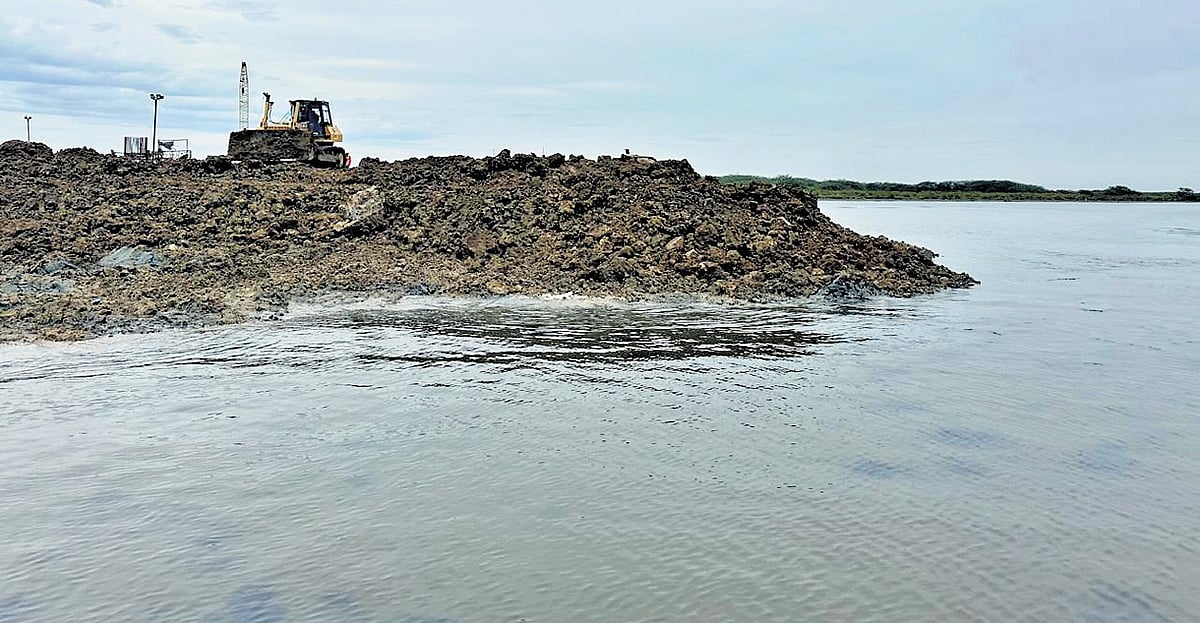
In 2022, the NGT ordered the state government to notify the wetland and to remove 56.7 lakh metric tonnes of fly ash choking the Kosasthalaiyar river. The tribunal also directed the government to prepare a restoration plan for the wetland. However, the fishing community notes that no significant restoration efforts have been made on the ground. On October 3, responding to a petition filed by an Ennore fisherman, the water resources department assured the NGT that it will begin removal of Kaaka Aazhi (the invasive mussel) from three sections of the river – Kattupalli, Athipattu and Puzhuthivakkam.
Environmental activist Durga Moorthy told TNIE the removal was carried only in one location, which is not enough. She said foreign ships docking at Kamarajar and L&T Ports have introduced invasive mussel species, which has infested local waters and further obstructed tidal flows. This, combined with industrial waste, has restricted boat movements and water flow, exacerbating the risk of floods. https://www.newindianexpress.com/states/tamil-nadu/2024/Oct/16/chocked-ennore-wetland-leaves-north-chennai-residents-in-fear-of-flooding (16 Oct. 2024)
Tiruchii Heavy weed growth prevents replenishing groundwater table The Kasi Viswanathar temple tank at Gandhipuram in Thillai Nagar lies covered with silt, weeds, and garbage due to lack of proper maintenance. The silt, tangled weeds, and water hyacinths prevent water in the temple tank from permeating underground and replenishing the water table, complain residents.
The tank was desilted in 2017 at the initiative of the residents, Although the Corporation removed the garbage about six months ago, the condition of the temple tank has not improved as weeds and water hyacinths have sprouted again while some residents continue to dump garbage into the tank. The residents hoped that the Tiruchi City Corporation would dredge the temple tank at regular intervals. When contacted, K.Suresh Kumar, Corporation councillor, representing ward 23, said a tender has been floated at an estimate of ₹1 lakh to dredge the temple tank. “There are plans to beautify and pave a walking track around the tank,” he said. https://www.thehindu.com/news/cities/Tiruchirapalli/heavy-weed-growth-at-kasi-viswanathar-temple-tank-prevent-replenishing-of-underground-water-table-say-residents/article68832766.ece (06 Nov. 2024)
Hyderabad 12 City Lakes Set for Rejuvenation While the HDMA has proposed to restore 12 lakes with its own funds, the GHMC is selecting the lakes. Incidentally, some of the shortlisted lakes don’t even have a drop of water. The project lake rejuvenation will include fencing of lakes, building walking tracks, gazebos, open gyms, children play areas and benches. These works will be in addition to illumination and developing greenery. Strengthening of sluice gates, bunds and desilting will also be taken up as part of the exercise. https://www.deccanchronicle.com/southern-states/telangana/hyderabad-12-city-lakes-set-for-rejuvenation-1838559 (15 Nov. 2024)
Bowlis disappeared but names remain etched Bowlis, implying step wells, were commonplace in Hyderabad of long ago. Many of these historic structures have disappeared over time, and only the names remain. While the government has restored some of them, many others lie forsaken. Many of those living near the step wells demand their restoration as they are deeply connected to Hyderabad’s history, enhance the beauty of the surroundings and help store rainwater. In what is certainly official apathy, some existing step wells are filled with garbage and stagnant water covered in thick green algae. Rather than be concerned about their upkeep, GHMC has covered them with grills and fencing. https://www.deccanchronicle.com/southern-states/telangana/most-bowlis-in-the-city-have-disappeared-but-names-remain-etched-for-posterity-1838824 (16 Nov. 2024)
URBAN WATER
Hyderabad 19,000 litres of substandard water seized In a major crackdown on sub-standard bottled water, food safety officers inspected the premises of K2 King Aqua and Beverages in Kacheguda on Thursday (November 14, 2024) and seized over 19,000 litres of bottled water that did not meet Food Safety Standards (FSS) norms. During the inspection, officers seized 5,400 litres of Brislehri bottled in one-litre containers, 6,108 litres of Brislehri in half-litre bottles, 1,172 litres of Kelvey in one-litre bottles, 6,480 litres of Kelvey in half-litre bottles, and 108 litres of Nature’s Pure in half-litre bottles. “Testing revealed that the TDS levels in the seized water were below the FSS-prescribed minimum of 75 mg/L, indicating inadequate mineral content,” stated a release. Authorities stated that further action would be taken under the provisions of the Food Safety and Standards (FSS) Act. https://www.thehindu.com/news/cities/Hyderabad/food-safety-officials-seize-19268-litres-of-substandard-brislehri-and-kelvey-water-bottles-in-hyderabad/article68869285.ece (15 Nov 2024)
JJM/ RURAL WATER SUPPLY
Uttarakhand जल स्रोतों में बाहरी बिल्डरों का कब्जा, गांव में पड़ा सूखा धारी ब्लाक के सतबुंगा खपराड़ में बाहरी बिल्डरों ने जल स्रोतों में कब्जा कर अवैध रूप से वाटर टैंक बना दिए हैं। इस पानी को बिल्डर अपने होटल, रिसार्ट व घरों में पहुंचा रहे हैं। जिसके कारण ग्रामीण क्षेत्रों में पेयजल संकट उत्पन्न हो गया है। सतबुंगा के ग्राम प्रधान जीवन सिंह गौड़ ने बताया कि खगराढ़ स्थित होटल व बिल्डिंग निर्माण व अन्य व्यावसायिक गतिविधियों के लिए बिल्डरों ने पेयजल स्रोत पर कब्जा कर गांव का पानी रोक दिया है। इससे क्षेत्र के करीब पांच हजार की आवादी के लिए पेयजल का संकट हो गया है। इससे ग्रामीणों में आक्रोश है।
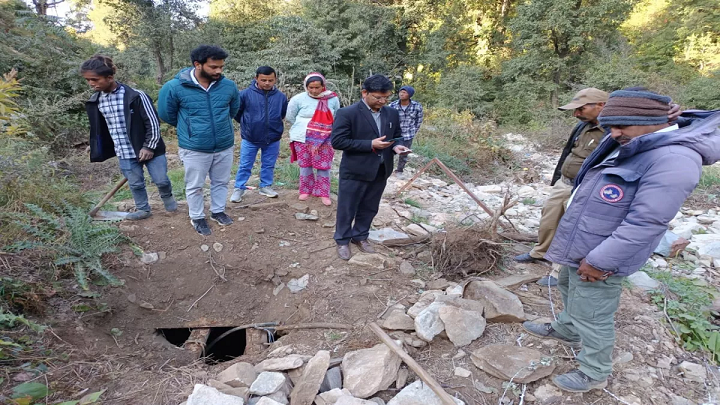
बीते दिनों बिल्डरों ने रामगढ़-मुक्तेश्वर मोटर मार्ग से 2 किलो मीटर नीचे एक उच्च क्षमता का जलाशय बनाया। ग्रामीणों के विरोध के चलते उसे तोड़ना पड़ा। इसके अलावा 50 मीटर ऊपर 20 फिट चौड़ा एवं 50 फीट गहरा लगभग 2 लाख लीटर पानी क्षमता वाला गहरा भूमिगत टैंक बनाया है। जिसमें सतबुंगा के जल स्रोतों का पानी भरा जाता है। इसी वह से जल स्रोतों से जुड़े जल संस्थान की पंपिंग योजनाओं में पानी नहीं पहुंच रहा है। जिसके कारण गांव सतबूंगा, लोद व गल्ला सहित आसपास के गांव में पेयजल किल्लत को समस्या हो रही। https://www.jagran.com/uttarakhand/nainital-illegal-water-tanks-by-builders-cause-water-scarcity-in-bheemtal-23832500.html (17 Nov. 2024)
WATER
Draft bill on integrated water resource management authority circulated among states A draft model bill proposing to set up an Integrated Water Resources Management Authority which will be responsible for developing water security plans from villages to cities, groundwater management and floodplain management has been circulated among the states. Rakesh Kumar Verma, Additional Secretary, Department of Water Resources, said on Nov 12 that the government has proposed the Integrated Water Resources Management Authority (IWRM) at the state level, which will coordinate and integrate efforts of multiple water-related departments and agencies. “A draft model Bill has been circulated to all the states. This state IWRM authority, under the overall supervision of an IWRM council headed by chief minister, has been vested with various regulatory powers to set the direction of water sector development,” he said. https://www.newindianexpress.com/nation/2024/Nov/12/draft-bill-on-integrated-water-resource-management-authority-circulated-among-states- (12 Nov. 2024)
AGRICULTURE
Opinion Natural farming still to grow deep roots Laxmi Joshi, Souryabrata Mohapatra:- Natural farming has the potential to transform Indian agriculture, but its future hinges on addressing several critical challenges. Strengthening bio-input supply chains, mechanising labour-intensive processes, and improving market access are all essential. Will the BRCs be able to meet the demands of millions of farmers, or will supply chain disruptions limit their impact? Can India create a robust market for natural products that benefits farmers and consumers?
The Union Budget has laid a promising foundation, but much remains to be done to ensure the long-term success of natural farming. Can this ambitious vision of a chemical-free agricultural future become a reality for millions of smallholder farmers across India? Or will natural farming remain a niche practice in select regions? https://www.thehindu.com/opinion/op-ed/natural-farming-in-india-sprouting-but-still-to-grow-deep-roots/article68877029.ece (17 Nov. 2024)
Uttar Pradesh ‘Govt aims to train 1 crore farmers in natural farming’ Former Dean of the Central Agricultural University, Imphal, Anil Kumar Tripathi highlighted the vital role of cows in India’s traditional agricultural system during a lecture on ‘Cow-Based Natural Farming’ at Mahayogi Gorakhnath University’s Faculty of Agriculture here on Saturday (Nov. 16).”The govt’s ambitious target is to train one crore farmers in natural farming methods by 2024-25. This initiative aims to equip farmers with scientific approaches to natural farming and ensure the availability of healthy food for all,” he added. https://timesofindia.indiatimes.com/city/varanasi/indian-government-plans-to-train-1-crore-farmers-in-sustainable-natural-farming-by-2025/articleshow/115368531.cms (16 Nov. 2024)
MONSOON 2024
Goa Climate change fuels year-round rainfall It was in 2021, when Goa set the record of receiving rainfall in the entire calendar year — January to December — and the trend continued thereafter with some or the other rain gauge recording showers in all 12 months. This year too, the pre-monsoon season starting from March, followed by the monsoon season till September and the post-monsoon season in October-November is experiencing rainfall activities along with thunderstorms and lightening. https://www.thegoan.net/goa-news/monsoon-mystery-climate-change-fuels-yearround-rainfall-in- (16 Nov. 2024)
Northwest Himalaya Post Monsoon Rainfall in Uttarakhand, Himachal Pradesh and Jammu & Kashmir between Oct. 01 and Nov 15, 2024.

Uttarakhand: -Against normal rainfall of 34.7 mm during Oct. 01 and Nov. 15, 2024, the state has received just 3.5 mm actual rainfall and is facing a deficit of 90%. Except Bageshwar and Pithoragarh all the 11 districts have more than 90% rainfall deficit.

Himachal Pradesh: The rainfall deficit in the state between Oct. 01 and Nov. 15, 2024, is 98% as against the normal rainfall of 33.6 mm, it has got just 0.7 mm rainfall. Of 12 districts in the state 6 are 100% rainfall deficit while 3 are 99% rainfall deficit.

Jammu & Kashmir: Between Oct. 01 and Nov. 13, 2024, the J&K has got 15.7 mm rainfall against the normal of 47.3 mm and is rainfall deficit by 67%.
URBAN FLOODS
Chennai 95 missing links to SWD detected The Greater Chennai Corp has identified 87 areas that were flooded during the onset of the Northeast monsoon in October, including the Perambur vehicular subway and Pattalam. The Storm Water Drain (SWD) Department is addressing the gaps in the storm-water drain network to prevent future inundation, a GCC official said. According to data from the SWD Department, 95 missing links in the storm-water drain network had been identified in October, over 44 of which are under construction. These were found across the core city (19), Kosasthalaiyar basin (44), and Kovalam basin (32). “The number of missing links has currently reduced to fewer than 10 areas are facing this issue. The GCC is working towards completing the rest soon,” he said. https://www.thehindu.com/news/cities/chennai/chennai-flood-fix-95-missing-stormwater-links-found-in-first-northeast-monsoon-rains-85-areas-flood-prone/article68856481.ece (12 Nov. 2024)
Bengaluru No more demolition drives to clear drain encroachments: BBMP The BBMP will no longer take up demolition drives to clear encroachments from stormwater drains unless there are fresh bottlenecks. According to the civic body, it has cleared all encroachments and will not go by the data shared by the Revenue Department as “alternative drains” have been built. Speaking to reporters, BBMP Chief Commissioner Tushar Girinath said he had asked all zonal commissioners to submit an affidavit related to encroachments on stormwater drains in their respective jurisdiction. https://www.deccanherald.com/india/karnataka/bengaluru/no-more-demolition-drives-to-clear-drain-encroachments-bbmp-3272011 (12 Nov. 2024)
ENVIRONMENT GOVERNANCE
Report Courts key in enforcing green laws: NGT chief The NGT chairperson Justice Prakash Shrivastava has emphasised on the role of judiciary in the implementation and enforcement of forest laws, noting that the judicial mechanisms are vital in holding govts and industries accountable for their environmental obligations, ensuring compliance with international agreements, and fostering a culture of sustainability. He was speaking here on the sidelines of CO on Friday (Nov. 15) on the Model Forest Act Initiative (MoFAI) to develop such a law as a systematic way to provide expertise, efficiency, and scale required to match the severity of the global forest crisis. He also participated in a global dialogue among judges on pollution, nature and water in the context of climate change and addressed a gathering on Saturday (Nov. 16). https://timesofindia.indiatimes.com/india/courts-key-in-enforcing-green-laws-ngt-chief/articleshow/115374810.cms (17 Nov. 2024)
Nagaland ‘Go back’ chants echo during NBWL’s site visit As the officials arrived at the disputed Dissoi Valley Reserve Forest on Nov. 15, approximately 60 Naga protestors confronted them, raising “Go back” slogans and preventing the team from getting down from their vehicles. The protestors asserted that oil exploration by Vedanta would only be allowed after the Supreme Court resolves the border dispute involving the reserve forest. Meanwhile, the Krishak Mukti Sangram Samiti (KMSS) has also expressed concerns about the inspection process.
In October, the NBWL Standing Committee deferred approval for the project, citing the need for an on-ground inspection. Earlier on November 15, the NBWL had observed that the proposal falls in the RED category of polluting industries, and as per the ESZ notification of Hollongapar Gibbon Sanctuary and the guidelines dated February 9, 2011, setting up of industries causing pollution (water, air, soil, noise, etc.) has been placed in the prohibited category. Notably, there was no public consultation by the project developer or any government agencies on the proposals related to both exploratory drilling and the railway track electrification in the eco-sensitive zone and inside the sanctuary, respectively. https://assamtribune.com/assam/go-back-chants-echo-during-nbwls-site-visit-to-disputed-dissoi-valley-reserve-forest-in-jorhat-1558113 (16 Nov. 2024)
The Assam government had approved the oil exploration project by the Vedanta group near Hollongapar Gibbon Wildlife Sanctuary a few months back. The decision evoked criticism from environmentalists and local people. https://assamtribune.com/assam/proposed-oil-exploration-at-hollongapar-wildlife-sanctuary-falls-in-red-category-nbwl-1557981 (15 Nov. 2024)
Delhi Solid waste management rules remain on paper: SC Expressing concern over “unchecked waste accumulation at landfill sites, waste from construction, and the risk of fires at waste storage areas,” the Supreme court in Nov 11 order has warned the authorities of “harsh orders” if the Solid Waste Management Rules, 2016 were not implemented in a time-bound manner.
While hearing a 1985 PIL on pollution filed by lawyer-turned environmental activist MC Mehta, a Bench led by Justice AS Oka directed Delhi Chief Secretary to call a meeting of the Municipal Corporation of Delhi (MCD) and other stakeholders and come up with a time-bound schedule for implementation of the Solid Waste Management Rules, 2016. “If we find that all other authorities do not come together and tell us the time-bound schedule for implementation of the 2016 Rules, the Court may have to consider passing harsh orders,” it said, posting the matter for further hearing on December 16. https://www.tribuneindia.com/news/delhi/solid-waste-management-rules-remain-on-paper-sc-warns-delhi-govt-mcd-of-harsh-orders/ (16 Nov. 2024)
Goa Ecology & ethos being erased by commerce The state was once a poster for all things exquisite with breath-takingly beautiful landscapes and seafronts, villages nestled in the greens, laid-back way of life. Goa turned to commerce, tourism, real estate development almost with a vengeance in the 2000s. Two decades later, the development fueled by the post-pandemic rush, is making Goans see their ethos and ecology wane; even local cuisine is on the backburner in places. The Goa story cannot all be about tourist footfalls and elite homes at the cost of its natural wealth – this hope comes from Goans willing to raise voice, join forces, and protect their land. https://questionofcities.org/go-goa-gone-ecology-and-ethos-being-erased-by-commerce/ (15 Nov 2024)
CLIMATE CHANGE
This award-winning photo from Fiji depicts an old man and his grandson both standing at a point where there used to be seashore, now submerged, one of the stark impacts of climate change.

SOUTH ASIA
Report Confronting water crisis in South Asia The climate crisis is, at its core, a water crisis. Our cities are facing extremes – unprecedented droughts and devastating floods – reshaping lives and landscapes across South Asia. “Floods and the Cities” is a powerful look at the rising water challenges facing millions as climate change accelerates. From Dhaka’s flash floods to Karachi’s recurrent damage, this film highlights the resilience and determination of South Asian cities as they adapt, survive, and fight for a sustainable future. https://www.youtube.com/watch?v=ocRKKoF9S3s (05 Nov. 2024)
Tibet Delegates call attention to Derge Dam project at COP29 The Tibetan representatives at COP29 have called attention to environmental concerns in Tibet, emphasizing on the ecological impacts of the Derge Dam project on Drichu river in eastern Tibet. Officials said they highlighted the potential ecological impacts of the Derge Dam project, a hydropower initiative poised to alter the landscape of the Drichu River and affect downstream communities reliant on its waters. Derge is a town in east Tibet. COP29 began on Nov 11 in Baku-Azerbaijan & will continue till Nov 22.
The Dharamshala based Central Tibetan Administration (CTA) spokesperson Tenzin Lekshay said people in Tibet are opposing the project, adding, “The project has forcibly displaced many Tibetans and disrupted some historic monasteries. Tibet has a fragile ecosystem, and China’s dam-building spree inside Tibet have devastating impacts not only in Tibet but also on downstream countries. This disturbance to the ecosystem is compounded by the fact that Tibet is a seismic-prone zone, so the dam poses long-term ecological risks. Tibetans are not allowed to speak up, and many are imprisoned for raising their voices.” https://www.hindustantimes.com/cities/chandigarh-news/tibetan-delegates-call-attention-to-derge-dam-project-at-cop29-101731449616133.html (13 Nov. 2024)
Nepal The impact of the 26 to 28 Sept 2024 rainfall event Between 26 and 28 September 2024 Nepal suffered an extraordinary rainfall event that triggered thousands of landslides, killing over 200 people. The cause was a heavy rainstorm that was well-forecasted. Estimated losses from this rainstorm are now US$340 million (which is about 0.7% of GDP), including damage to 41 roads, 26 hydroelectric facilities and 54 bridges. Almost 6,000 houses were destroyed, such that almost 11,000 families have been displaced.

– One of the most seriously affected districts was Kavre. The Nepali Times has a very interesting article that highlights the role that quarrying has played in the initiation of debris flows in the area. This quote, from the article, sums up the situation: “When it rained, the debris that had piled up in the quarries was swept down in a wall of mud that took away my house and everything I own,” says [Rajesh] Humagain, who now rents a single room in Panauti town.
Many areas that are populated have high landslide densities, but many areas with forest have very few failures. Compare the middle part of the image – to the west the number of landslides is almost negligible, to the east there are many. There are two obvious possible explanations for this. 1st is that some areas are unsuitable for habitation (too steep or too dry, for example), which also makes them less prone to landslides. The 2nd is that human activity has greatly increased the likelihood of landslides occurring. The true explanation may be a combination of both.
This needs much more detailed investigation. Given that these extreme rainfall events are going to be more likely in the future, this spells deep trouble for Nepal. https://eos.org/thelandslideblog/the-impact-of-the-26-to-28-september-2024-rainfall-event-in-kavre- (13 Nov. 2024)
Pakistan Melting glaciers leave homes teetering in valley of jagged mountains. https://www.bbc.com/news/articles/cvgly8y1j12o (17 Nov. 2024)
CHINA
Study Characterization of dam failure flooding in an urban reservoir Abstract: This study used observed data from the heavy rainfall event in Zhengzhou on July 20, 2021, with Jiangang Reservoir in Zhengzhou in China as the study site. The study designed a storm-flood process with different rainfall scenarios that combines the long-duration rainstorm formula and Chicago rain pattern method, establishing a response relationship between extreme rainfall and flooding processes. Flood evolution simulation analyses were carried out for different scenarios of rainfall and flooding processes under three working conditions: rainfall only, dam failure only and dam failure coupled with rainfall, to characterize the flood response due to dam failure under different rainfall conditions.
– The results showed that the peak of the rainfall occurs earlier in the total rainfall calendar time, the faster the dam failure rate of the reservoir. As the rain peak occurs at a time that is later in the total rainfall calendar, and the recurrence period and rainfall duration increase, the flood volume increases and urban inundation becomes more severe. The rainfall type had less of an effect on the difference in the extent of inundation between different working conditions. The extent of flood inundation for the dam failure-coupled rainfall scenario is much greater than that for the dam failure only scenario. The increase in inundation extent in the dam failure coupled rainfall scenario at the higher levels of flood severity is smaller. Study results provide hydraulic element support for flood hazard assessment.
– From 1954 to 2019, the total number of dam failures in China was 3,541, with an annual average of 53.7 dam failures. The causes of dam failure include flood overtopping, dam quality problems, and improper management, among which flood overtopping accounts for more than 50%. As global warming worsens, extreme rainfall continues to increase and intensify exacerbating the disastrous nature of floods. Once a dam failure occurs in the upstream reservoir of a city under extreme rainfall, the resulting dam failure flooding superimposed on urban flooding has much destructive power than natural flooding.
– The Jiangang Reservoir is a medium-sized reservoir with urban flood control and water supply functions located in the upper reaches of the Jialu River in the Huaihe River Basin. The control basin area of the reservoir is 113 km2, and the length of the main stream is 28.4 km2. The total capacity of the reservoir is 60.7 MCM, and the utilizable capacity of the reservoir is 47.9 MCM. The elevation at the top of the dam, which is 34 m high, is 158.52 m, and the maximum height of the top of the dam is 8.4 m. The reservoir is located in the upstream of Zhengzhou City. Downstream of the reservoir, 6 km away, are the Beijing-Guangzhou Railway, Longhai Railway, city power plant, water plant, and other water supply and energy facilities. https://www.nature.com/articles/s41598-024-78968-1 (11 Nov. 2024)
THE REST OF THE WORLD
Africa Drought saps Zambia and Zimbabwe of hydropower All is not well with the waters of Lake Kariba, the world’s largest human-made lake. A punishing drought has drained the huge 180 BCM capacity reservoir close to record lows, raising the prospect that the Kariba Dam, which powers the economies of Zambia and Zimbabwe, may have to shut down for the first time in its 65-year history. That has led to authorities rationing the water allowed to flow through the dam and, in recent months, power cuts of up to 21 hours a day in Zambia on the lake’s northern side and 17 hours in Zimbabwe to the south. Zimbabwe’s 1,050MW power station accounts for about 38% of the country’s generating capacity. Zambia’s 1,080MW counterpart represents about a third. The drought has also wiped out crops, with hunger stalking much of southern Africa. Lesotho, Malawi, Namibia, Zambia, and Zimbabwe have declared a national disaster and parts of Angola and Mozambique are also affected.
There was an agreement, though, that more diverse power sources were needed – and that this was a lesson that should have been learned from droughts in 2015 & 2019. New coal & solar plants are now being built in Zambia & Zimbabwe. https://www.theguardian.com/global-development/2024/nov/11/levels-are-dropping-drought-saps-zambia-and-zimbabwe-of- (11 Nov 2024)
Kariba Dam crisis is one of inequality Zambia and other African countries need to ensure that rural areas and their needs in terms of reliable and affordable access to water, energy and food are prioritised. The necessary political will and budgets for that must be made available. The electricity cuts and crop failures engendered by the latest drought, once again, point to the injustices and risks associated with urban bias and big dams. Global warming will only enhance these pathologies – unless resolutely different paths are taken. https://www.aljazeera.com/opinions/2024/11/16/zambias-kariba-dam-crisis-is-one-of-inequality (16 Nov. 2024)
New York Daylighting a Brook in the Bronx Daylighting Tibbetts Brook in New York is one of the city’s most ambitious green infrastructure projects to date. It will cost $133 million to restore the waterway along a new route that won’t disturb the neighborhood’s structures, including our house. That sounds like a lot of money, but it’s a bargain compared to the high price of sewer and stormwater overflows when cloudbursts drop their heavy payloads. On dry days, four to five million gallons of freshwater flow from the brook into the sewer, ushering our filth and concentrated street runoff down to the Wards Island wastewater treatment plant.

But when we get rain bombs, the volume of water is way too much for that system to process and spills unfiltered into the Harlem River, further contaminating the ecosystem, sickening all it touches. Daylighting will abate combined sewage overflow, extend greenspace, absorb heat, and relieve chronic flooding in our area’s janky, archaic drainage system, in an act of climate mitigation and as a community effort to solve a mess caused by old crimes. https://pioneerworks.org/broadcast/daylighting-bronx-emily-raboteau (24 Oct. 2024)
USA Drought hampering hydro generation The U.S. Energy Information Administration (EIA) has forecast that electricity generation from U.S. hydropower plants in 2024 will be 13% less than the 10-year average, the least amount of electricity generated from hydropower since 2001. “Extreme and exceptional” drought conditions have been affecting parts of the United States, particularly the Pacific Northwest, which hosts the majority of U.S. hydropower capacity. By the end of Sep, 72.6% of the continental United States was experiencing dryer-than-normal to exceptional drought conditions. By the end of Oct, this value increased to 87.2%. https://www.hydroreview.com/dams-and-civil-structures/drought-is-hampering-hydro-generation-by-double-digit-percentages-in-the-u-s-this- (07 Nov. 2024)
Plastic’s Toxic River In our latest report, we examined the records of 70 U.S. facilities that make plastics or the main chemical ingredients in plastics and found they discharged almost 12 million pounds last year of total nitrogen and phosphorus, which can cause fish-killing “dead zones.” Sixty-nine of these 70 plants had no limits in their permits for these pollutants.
“It is inexcusable that EPA is not following the Clean Water Act and is failing to require the multi-billion-dollar plastics industry to install modern pollution control systems,” said Jen Duggan, Executive Director of the Environmental Integrity Project. “Plastics plants are poisoning our waters and contaminating our bodies – and EPA needs to do its job and protect our waterways and downstream communities.” https://www.youtube.com/watch?v=oqiN9TCC22k (15 Nov. 2024)
EPA’s Failure to Regulate Wastewater from Plastics Plants The plastics manufacturing industry dumps almost a half billion gallons of wastewater per day into U.S. waterways, and a failure of EPA oversight means that most plants have no limits on the amounts of nitrogen, phosphorus, 1,4-dioxane, dioxins, and other harmful pollutants they are allowed to release. This problem has grown out of EPA’s failure to update federal pollution control technology standards for chemical plants and plastics manufacturers for over 30 years, in violation of the federal Clean Water Act, despite the fact that modern pollution control technology could dramatically reduce this contamination. https://environmentalintegrity.org/news/report-documents-epas-failure-to-regulate-wastewater-from-plastics-plants/ (14 Nov. 2024)
SANDRP
Also see: DRP 11 Nov. 2024 & DRP 04 Nov. 2024
Follow us on: www.facebook.com/sandrp.in; https://twitter.com/Indian_Rivers

 SANDRP