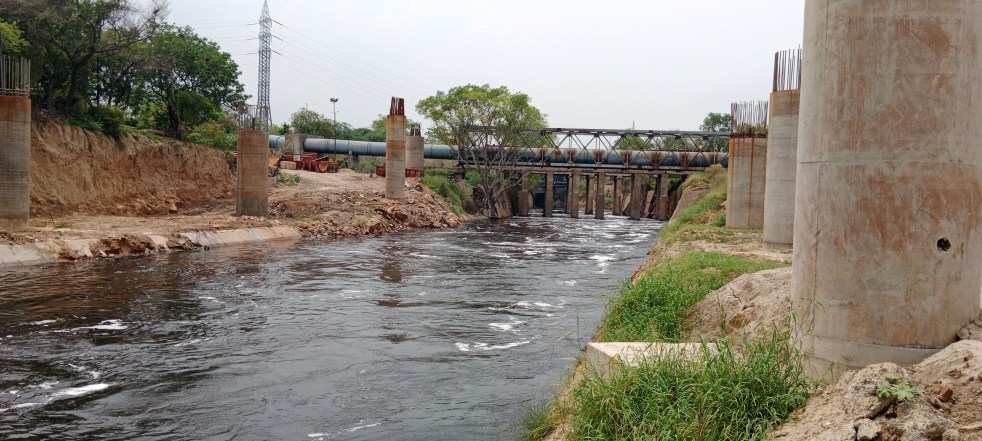
(Feature Image: Najafgarh drain at Wazirabad barrage Delhi in June 2023. Bhim Singh Rawat/SANDRP)
A careful reading of the PIB release on the statement of Minister of State for Jal Shakti, Shri Bishweswar Tudu in Rajya Sabha on Dec. 04 regarding Namami Gange Program shows that the NMCG has actually failed to make any significant improvement in cleaning of River Ganga so far. Firstly, the program has been extended upto March 2026 without any course correction during its first 7 years of implementation between June 2014 and March 2021.
Secondly, the program since beginning has primarily been focusing on creation and upgradation of sewage treatment capacity and river bank infrastructures without even looking into the root causes including ineffective and undemocratic governance affecting the ecosystem of Ganga rivers let alone the questions of addressing them.
So far the government has released more than 16,000 crore rupees still around 900 MLD untreated effluents are officially going into the national river from the 110 Ganga front towns. In reality, the situation of Ganga pollution is only going from bad to worse. Worryingly the sewage treatment infrastructure created so far has grossly failed to meet its purpose. The case of Ramna STP in Kashi is one such example among scores of others.
The minister statement tries to suggest that its work is in progress and lacks any serious intent to achieve the NMCG targets which is clear from the fact that the PRAYAG online monitoring dashboard the minister mentions in his statement seems to be non-existent on ground. On the contrary, the threats impacting Ganga rivers are only getting bigger as shown by the recent media reports on the issue.
The government itself is taking several measures that is deteriorating the condition of Ganga including pushing for navigation, dredging, Char Dham Highway, more dams and hydropower projects, river front development projects, the river commerce project like the tent city project in Varanasi, indiscriminate sand mining and also the Ken Betwa River Link project, to name a few. To this should be added the deterioration in the protection sites along the river & tributaries including Chambal River sanctuary among others. The NGT case about additional extractions from river leading to deterioration of the river mentioned below is another case in point. Most of these projects are taken up without proper informed (no credible EIAs) or democratic decision-making process.
Sadly, Namami Gange is just rebranding of Ganga Action Plan which totally failed in its objective and unless the sincere efforts are made to address the issues of governance, informed and democratic decision making, environmental flows, construction of dams, hydro projects; encroachments of floodplain and wetlands in Ganga basin, money being spent on Namami Gange is only going down the drain.
Parliament Session Cleaning & Conservation of Rivers For conservation of rivers, this PIB Release on details of the on-going projects under National River Conservation Plan (NRCP) and Namami Gange programme. For the period of Financial Year (FY) 2021-22 to 2025–26, i.e., the 15th Financial Cycle period, the allocation of funds for the schemes of NRCD and NMCG is Rs 2652.00 crore and Rs 22,500 crore, respectively. This information was given by the Minister of State for Jal Shakti, Shri Bishweswar Tudu in a written reply in Rajya Sabha today (Dec. 04). https://pib.gov.in/PressReleasePage.aspx?PRID=1982444 (04 Dec. 2023)
NMCG Money going down the drain? Namami Gange Program was launched in June 2014 for a period up to 31st March, 2021 to rejuvenate River Ganga and its tributaries. The program was subsequently extended up to 31st March, 2026. A total sum of Rs. 16,011.65 crore were released by the Government of India to the National Mission for Clean Ganga (NMCG), from Financial Year 2014-15 till 31st Oct 2023. NMCG have released/disbursed Rs. 15,015.26 crore to various agencies during the said period, for implementation of projects under the Program.
-CPCB has estimated sewage generation of 3558 MLD from the 110 Ganga front towns in 5 Ganga main stem states (Uttarakhand, UP, Bihar, Jharkhand and W Bengal). With the interventions taken up under Namami Gange program, at present the total treatment capacity along the towns located along main stem of river Ganga increased to 2589 MLD. In addition, approximately 910 MLD sewage is treated through East Kolkata Wetland. Apart from the above, projects for developing 1104 MLD STP capacity in the towns along river Ganga main stem have been taken up which are at different stages of implementation.
-PRAYAG-Platform for Real-time Analysis of Yamuna, Ganga and their Tributaries, an online dashboards was setup on 20th April 2023 for continuous monitoring of river water quality, performance of STPs, CETPs and etc. on the Ganga and Yamuna river. This information was given by the Minister of State for Jal Shakti, Shri Bishweswar Tudu in a written reply in Rajya Sabha on Dec 4. https://pib.gov.in/PressReleasePage.aspx?PRID=1982450 (4 Dec 2023)
Uttar Pradesh NGT issues notices to MoEF, NTPC over water scarcity in Prayagraj In an order passed on Monday (Dec. 4), a bench of NGT Chairperson Justice Prakash Shrivastava said the petition raised “a substantial issue relating to compliance of the environmental laws”. The bench, also comprising Judicial Member Justice Sudhir Agarwal and Expert Member A Senthil Vel, said it is impleading as respondents several authorities in the matter. According to the petition, the scarcity has been caused by the withdrawal of water by several entities, including the Kishanpur canal and two thermal plants. The matter has been listed on February 7 for further proceedings. https://www.business-standard.com/india-news/ngt-issues-notice-to-environment-min-ntpc-over-water-scarcity-in-prayagraj-123120501421_1.html (06 Dec. 2023)
कोर्ट के आदेशानुसार इन सभी को आठ सप्ताह के भीतर अपने जवाब दाखिल करने होंगें। यह आवेदन उस पत्र याचिका के आधार पर दायर किया गया है जिसमें चिंता व्यक्त की गई है कि किशनपुर नहर सिंचाई के लिए यमुना से 420 क्यूसेक पानी निकाल रही है। इसके अतिरिक्त, बारा थर्मल पावर प्लांट 96 क्यूसेक, मेजा नगर निगम 80 एमएलडी और करछना नगर पालिका 54 एमएलडी पानी यमुना से ले रही हैं। वहीं एनटीपीसी मेजा यमुना के 90 क्यूसेक पानी का उपयोग करता है। आवेदक ने चिंता व्यक्त की है कि जिस तरह से पानी का दोहन किया जा रहा है उसके चलते प्रयागराज में यमुना और गंगा में पानी की कमी पैदा हो रही है। ऐसे में आशंका जताई गई है कि इसके कारण अगले 20 वर्षों में कुंभ और माघ मेले का आयोजन खतरे में पड़ जाएगा। https://www.downtoearth.org.in/hindistory/river/ganga/environment-in-court-05-dec-2023-93212 (05 Dec. 2023)
गंगा की सफाई तब होगी, जब गंगा बचेगी: बीडी त्रिपाठी-बनारस हिंदू विश्व विद्यालय के महामना मालवीय गंगा शोध संस्थान के अध्यक्ष बीडी त्रिपाठी ने 1977 में जब गंगा नदी के संदर्भ में प्रदूषण शब्द का पहली बार इस्तेमाल किया था तब देश में हंगामा मच गया था। संसद में सवाल उठे थे। आम लोगों के जन्म-मरण से जुड़ी गंगा के लिए प्रदूषित शब्द कोई मानने को तैयार नहीं था। लगभग पांच दशक से गंगा नदी की स्वच्छता को अपना एकमात्र लक्ष्य रखने वाले त्रिपाठी का अब कहना है कि गंगा की सफाई तब होगी, जब गंगा बचेगी। गंगा नदी के प्रवाह में इतनी कमी आ गई है कि उसके संदर्भ में प्रदूषण बेमानी है।
-अपने दशकों के शोध के आधार पर मैं आपको बता सकता हूं कि प्रदूषण अब एक गौण मुद्दा है। अब मुख्य चुनौती पवित्र नदी को बचाने की है। महज घाटों की सफाई या भव्य योजनाओं की घोषणा करने से कुछ हासिल नहीं होगा। एक बार पूर्व प्रधानमंत्री स्वर्गीय राजीव गांधी ने मुझसे पूछा था कि गंगा को लेकर स्वच्छता अभियान असफल क्यों हो जाते हैं। तब मैंने उनसे कहा था कि केंद्र और राज्य सरकारों के बीच किसी प्रकार का समन्वय नहीं होना एक बड़ा कारण है। दूसरा कारण है किसी के ऊपर गंगा की तयशुदा जिम्मेदारी नहीं है, इससे गंगा के प्रवाह में कमी, गाद तेजी से जमा हो रही है और तीसरा, गंगा में दोनों ओर से अतिक्रमण हो रहा है। ऐसे में नदी तेजी से सिकुड़ रही है और उथली होती जा रही है।
-अप्रैल में तो वाराणसी के घाट के पास रेत के टीले दिखाई पड़ने लगते हैं। वाराणसी के घाट पर रेत के टीले देख मुझे यकीन हो गया है कि गंगा न केवल प्रदूषित है, बल्कि यह एक आपदा के कगार पर खड़ी है। अकेले वाराणसी में ही नहीं जिन पांच राज्यों से होकर यह बहती है, अगले 20 वर्षों में अधिकांश क्षेत्रों में नदी सूखने लगेगी। गंगा साफ नहीं हो सकती यह मुद्दा तो पीछे रह गया है। अब एक मात्र लक्ष्य नदी को बचाने का होना चाहिए क्योंकि इसका अस्तित्व ही खतरे में है। अगर हमने ऐसा नहीं किया तो आने वाले वर्षों में गंगा अपने आप “साफ” हो जाएगी। यही नहीं कुछ-कुछ 2013 की केदारनाथ व हाल में ही जोशीमठ में आई आपदा जैसा हाल होगा। https://www.downtoearth.org.in/hindistory/river/ganga/If-Ganga-dries-up-the-lives-of-45-crore-people-will-be-in-danger-92796 (28 Nov. 2023)
Varanasi गंगा किनारे से महज 650 मीटर अंदर ही आबाद थी टेंट सिटी गंगा पार रेती पर जगह-जगह पक्के निर्माण, कहीं टैंक तो कहीं जमीन से दो फीट ऊपर निकली हुई पाइप अब भी नजर आ रहे हैं। टेंट सिटी बसाने वाली कंपनियों ने गंगा की धारा से केवल 60 मीटर दूरी पर ही टेंट सिटी आबाद कर दी थी। गंगा पार रेती पर तलहटी का इलाका रामनगर से प्रह्लाद घाट तक है। 11 हेक्टेयर के इलाके में जगह-जगह छोटे-छोटे पक्के निर्माण ऐसे ही छोड़े गए हैं। गंगा पार रेती पर टहलने वालों के लिए यह खतरनाक भी है। राजघाट से रामनगर तक का इलाका गंगा का नदी तल है। इसी इलाके में गंगा की रेत जमा होती है और इसे कछुआ सेंचुरी भी घोषित किया गया था। गंगा के जलीय जीवों का यह स्थान है और साइबेरियन पक्षी भी इसी रेत में अपने अंडे भी देते हैं। केवल रामनगर से राजघाट तक गंगा की धारा किनारे से सात सौ मीटर दूर बह रही है। बाढ़ और बरसात के दिनों में यह पूरा इलाका पानी से भर जाता है।

शासन ने पर्यावरण को नुकसान पहुंचाने के मामले में रोजाना के हिसाब से 12 हजार पांच सौ रुपये का जुर्माना दोनों टेंट कंपनियों पर लगाया है। एनजीटी ने कहा था की संयुक्त समिति की 24 मई की रिपोर्ट में यह स्पष्ट हो चुका है कि टेंट सिटी का निर्माण गंगा नदी तल में हुआ है। न्यायमूर्ति सुधीर अग्रवाल ने तल्ख टिप्पणी करते हुए कहा था कि थोड़ा सा गंगा नदी का पानी कम हुआ और नदी में टेंट सिटी लगा दी। एनजीटी ने वाराणसी विकास प्राधिकरण को विलेन भी कहा था और जुर्माना लगाने की बात कही थी। हालांकि 30 नवंबर को होने वाली सुनवाई में वीडीए और टेंट कंपनी ने अगली तारीख मांगी थी। एनजीटी ने 15 दिसंबर की तारीख तय की है। https://www.amarujala.com/uttar-pradesh/varanasi/the-tent-city-was-situated-just-650-meters-from-the-banks-of-ganga-varanasi-news-c-20-vns1013-444032-2023-12-07 (07 Dec. 2023) In a reply to the Varanasi development authority on October 26, the nodal agency for the management of the Ganga said that the project lacked clearance. https://www.newslaundry.com/2023/10/30/modi-flagged-off-varanasi-tent-city-project-without-clean-ganga-clearance (30 Oct. 2023)
West Bengal Governance Issues Plague Namami Gange Himanshu Thakkar of SANDRP, told NewsClick that governance issues plague River Ganga management. The government’s focus on finance, infrastructure, and technology is inconsistent and often worsens the river’s condition.
Thakkar pointed out that various projects, such as the navigational route in the Ganges and the tent city in Varanasi, were detrimental to the river’s well-being. River link projects, inconsistent measures, and non-functional STPs contribute to the failure to achieve the project’s objectives.
To address governance issues, Thakkar suggested transparency, accountability, and participatory management. “Information about STPs should be publicly available, and STP management committees should include 50% external government nominees. We need more nature-friendly STPs, and water treated should be recycled, and there should be decentralised STPs along with environmental impact assessments, democratic decision-making processes, and annual reports for every Ganga tributary,” he said. https://www.newsclick.in/bengal-governance-issues-plague-namami-gange-polluted-water-flows-through-river (01 Dec. 2023)
Bihar SC directs govt to remove encroachments near the Ganga The Supreme Court has ordered the Bihar government to clear unauthorised constructions from the floodplains of river Ganga, especially in and around Patna. The order came on an affidavit filed by Bihar identifying 213 unauthorised constructions near the river. The State said it was taking measures to remove the encroachments. A Bench of Justices Aniruddha Bose and Augustine George Masih directed the State government to file an affidavit informing it about the removal of identified illegal structures.
The top court was hearing a plea filed by Patna resident Ashok Kumar Sinha against the June 30, 2020, order of the NGT dismissing his plea against illegal constructions and permanent encroachments on the eco-fragile floodplains. The plea contended that the tribunal passed the order without examining the detailed particulars of the violators encroaching upon the Ganga floodplains in Patna submitted by the appellant.
The plea stated that the tribunal failed to note the fact that a clean Ganga was vital and essential to meet the drinking and domestic water needs of the 5.5 lakh population of the city as the groundwater in the district was contaminated with Arsenic. “A massive 520 acres of ecologically sensitive Ganga floodplain, stretching from Nauzer Ghat to Nurpur Ghat, in Patna, have been usurped. This stretch is prone to recurrent floods every year. A multi-storey building, belonging to the Takhat Shri Harmandir Sahib, has further come up since 2017 and parts, thereof, are still under construction,” the plea said. https://www.thehindu.com/news/national/sc-directs-bihar-to-remove-encroachments-near-ganga-river/article67598460.ece (02 Dec. 2023) https://www.livelaw.in/amp/top-stories/ensure-no-further-constructions-adjacent-to-ganga-river-supreme-court-directs-bihar-govt-243485 (01 Dec. 2023)
Report India’s holy river desecrated By the time the Ganga reaches the floodplains, several tributaries, or streams that feed into others, replenish the river. But that water is only as good as the land that funnels rain into it, often called a catchment, said Himanshu Thakkar, coordinator of SANDRP, an influential network of environmentalists. “If the catchment is forested, the water quality and quantity are both high,” he said.
– “I would argue that the tributaries are more important than the mainstream of the Ganga,” said Thakkar, the water resources expert. According to a 2019 report, rivers in the Ganga basin—such as Betwa, Chambal, lower Yamuna, Damodar and Ganga Sagar—have recorded more than 50% decline in annual and seasonal flow between 1975 and 2005 alone.
– Vallabhacharya Pandey, a Gandhian philosopher who has lived in Varanasi all his life, remembers learning to swim in the Ganga in his childhood. “However, these days in summer months, we just walk across to cross the river,” he said. There is very little water flow, but that has not stopped the Modi government from dredging up the river to accomodate for large cargo—a plan that Thakkar, the water policy expert, said is “not economically viable.”
– I have never been a believer. I would never have even identified as Hindu. But, traveling the length of the Ganga made me think I could worship a natural life-affirming force. The river has, after all, nurtured the land, nourished its people, and fueled its biodiversity for millennia. Even if I don’t think it’s a God, that makes it no less divine. Over the course of my journey, I’ve realized that enough is enough. We’ve taken enough life from the river that gives it. Maybe it’s time to ask ourselves, Hindus and nonbelievers alike: If rivers are the cost of human growth, what do we humans stand to lose in the process? https://atmos.earth/indias-ganges-river-desecrated/ (27 Nov. 2023)
MoU with Mississippi river initiative signed The NMCG has signed a Memorandum of Common Purpose (MoCP) with the Mississippi River Cities and Towns Initiative (MRCTI), which represents 124 cities/towns situated along the banks of the Mississippi River, the United States. In a statement, the Jal Shakti Ministry said the MoCP was signed by G Asok Kumar, DG, NMCG, and Mayor Mitch Reynolds of La Crosse (Wisconsin), Mayor Errick Simmons of Greenville (Mississippi), Mayor LaToya Cantrell of New Orleans (Louisiana), and Colin Wellemkamp (executive director, MRCTI) on behalf of USA’s MRCTI, in the presence of senior officials from US State Department, UNEP, National Institute of Urban Affairs (NIUA) and Rotary International. The NMCG has signed the MoCP on behalf of the River Cities Alliance (RCA). The signing ceremony took place at the Rotary Hall as part of the COP28, currently underway in Dubai, the statement said. https://indianexpress.com/article/india/clean-ganga-mission-signs-pact-with-mississippi-river-initiative-9060582/ (09 Dec. 2023)
HYDRO POWER PROJECTS
Sikkim Teesta Declaration to safeguard NE rivers Organisations from across Northeast India who gathered in Gangtok, Sikkim, for the ‘Northeast India meet on free-flowing rivers’ have come up with the Teesta Declaration to safeguard the rivers of the region from large hydroelectric dams. The gathering called for an immediate halt to the construction of large dams in Northeast India, citing concerns over fragile biodiversity, seismic activity, climate change, and various social and environmental impacts. The assembly demanded scrapping and decommissioning of the 1,200 MW Teesta-III dam in Sikkim, citing the disastrous consequences witnessed on 4 October, which had led to loss of lives and extensive damage to properties.
– A call was made to international financial institutions, including the World Bank and the Asian Development Bank, to cease financing large dams in Northeast India, emphasising the importance of sustainable and just energy solutions. The two-day event, which started on 29 November, was organised by the Affected Citizens of Teesta, the Centre for Research and Advocacy, Manipur, and the Borok Peoples Human Rights Organisation. The participants addressed critical concerns regarding the region’s rivers and their ecosystems.
The key resolutions in the declaration include preservation of river flow, as the participants unanimously resolved to ensure unimpeded flow of all the rivers in Sikkim and across Northeast India, recognising the inherent right of rivers to flow freely. The Arunachal delegation consisted of Dibang Resistance’s Ebo Mili, Siang Indigenous Farmer’s Forum general secretary Dunggo Libang, and Lobsang Gyatso. The event was organised by the ACT’s Gyatso Lepcha and co-organised by Manipur-based Centre for Research and Advocacy secretary Jiten Yumnam and Tripura-based Burok People’s Human Rights Organisation secretary-general Anthony Debbarma. https://arunachaltimes.in/index.php/2023/12/04/teesta-declaration-to-safeguard-ne-rivers/ (04 Dec. 2023)
Arunachal Pradesh Hydropower: Balancing development and ecological fragility Tongam Rina Given the disastrous outcomes of hydropower projects in the Himalayan regions of the country and neighbouring Bhutan, proceeding with numerous hydropower projects in an ecologically fragile state like Arunachal doesn’t seem feasible. None of the completed or near-completion hydropower projects have been without major disasters. The government must acknowledge these realities and deeply question whether it’s truly worth the cost. Is it truly possible to control rivers without impacting the immediate and downstream areas in Assam and Arunachal? Or is national security, often cited as the reason for hydro projects, prioritised despite the fact that the maximum flow of the rivers is due to glaciers within the Indian territory in Arunachal, at the expense of local communities?
Is financial self-reliance, sought from hydro projects, deemed so crucial that the state is willing to disregard the ecological fragility of an area susceptible to earthquakes and landslides? While hydroelectric power might be less polluting, as claimed, it’s a flawed statement that disregards indigenous people in the state. It erases the communities themselves, as their lives are intricately linked to the river and land. Clean and green energy should not come at the cost of uprooting communities residing alongside rivers, destroying their land and forests, and erasing their history and memories. The cost of constructing these hydropower projects is massive and irreparable. The choice is ours to make. https://arunachaltimes.in/index.php/2023/12/11/hydropower-balancing-development-and-ecological-fragility/ (11 Dec. 2023)
Himachal Pradesh Work on Shong Tong HEP delayed The completion of the 450 MW Shong Tong Hydroelectric Project located on the right bank of the Sutlej has been delayed due to the stalemate over the issue of the relocation of an ammunition depot at Powari in Kinnaur district, close to the China border. Successive state governments had taken up the ammo depot issue with the Union Defence Ministry as it hampered excavation work on a silt flushing tunnel. https://www.tribuneindia.com/news/himachal/ammo-depot-not-shifted-work-on-power-project-in-kinnaur-delayed-567636 (01 Dec. 2023)
Dominant Narratives of Himalayan Dam Building This article examines the conflict around hydropower development in Himachal Pradesh to understand the trajectory of State policy, dominant narratives & responses of affected communities. Tracing the history of such contestation in the 180 MW Bajoli Holi hydropower project in Chamba’s tribal belt Bharmour, it illustrates the complicity of project proponents, regulatory institutions, political actors, scientists & the judiciary in transferring the project’s risks to local inhabitants & environment. The burden of building fresh evidence, staking claims & posing counter-narratives lies unfairly with the dispossessed as they struggle for safety & survival. (Manshi Asher, Vivek Negi, Himdhara Environment Research & Action Collective) https://repository.nls.ac.in/nlsj/vol17/iss1/1/ (6 Dec 2023)
Uttarakhand Kundan Green Energy company has inked a Rs 1000 Cr MOU with Uttarakhand govt to set up 80 MW of hydropower projects. It is not clear which projects this will be invested in. https://energy.economictimes.indiatimes.com/news/renewable/kundan-green-energy-signs-mou-with-uttarakhand-govt-for-rs-1000-cr-hydropower-boost/105841978 (08 Dec. 2023)
Report ‘Catastrophic loss’ to Himalayan glaciers ‘even at 2C’ A new report by the International Cryosphere Climate Initiative (ICCI) warns of severe consequences for millions and irreversible damage to glacial areas if the global average temperature rise reaches 2˚C. The Hindu Kush Himalayas in particular will be badly affected, the report notes. “We are talking about the lives of millions of people who have had minimal carbon footprints themselves and yet are being disproportionately affected by climate change,” says Aditi Mukherji, a hydrology expert with the Intergovernmental Panel on Climate Change. https://www.thethirdpole.net/en/climate/report-reveals-catastrophic-loss-to-himalayan-glaciers-at-2c/ (04 Dec. 2023)
DAMS
Kaleswaram Project PIL filed by congress leader seeking CBI enquiry Senior Telangana Congress leader G. Niranjan on Friday (Dec. 08) filed a PIL before the Telangana High Court seeking a direction to transfer the criminal case filed regarding the sinking of pillars of the Lakshmi barrage of the Kaleshwaram lift irrigation scheme at Mediggada to the CBI for thorough investigation. The criminal case (FIR 174/2023) was registered at the Mahadevapur police station of Bhupalpally district on October 22. He requested the court to direct the Serious Fraud Investigation Office (SFIO) to conduct an investigation in the activities of Kaleshwaram Irrigation Project Corporation Ltd, which had borrowed Rs 86,064.01 crore from public sector banks and financial institutions.
– He said in the PIL that the NDSA had also faulted the quality and design of the Medigadda barrage, after its inspection following the sinking of pillars. No action was initiated yet, he said and asked the High Court to direct the registration of a criminal case as per Section 41 (b) of Chapter X of the Dam Safety Act 2021. Niranjan said that according to the NDSA report, the dam owners had not inspected or maintained the cement concrete blocks or launching aprons since the commissioning of the barrage in 2019-20. https://www.deccanchronicle.com/nation/in-other-news/081223/pil-filed-by-congress-leader-seeking-cbi-enquiry-into-kaleswaram-proje.html (08 Dec. 2023)
Maharashtra Protest against proposed dam on Painganga river Protests were staged against a proposed dam on the Painganga river in Yavatmal and other districts of Vidarbha region on Tuesday (Dec 4), an activist said. People from 24 villages in Vidarbha and 26 villages in Marathwada took part in the agitation including `jal-samadhi’ (protest in the water) at five places along the banks of the river, said Mubarak Tanvar, secretary of the Painganga Virodhi Sangharsh Samiti. Their demand is that the lower Painganga dam project be scrapped, he said. https://theprint.in/india/protest-staged-against-proposed-dam-on-painganga-river/1873421/ (5 Dec 2023)
Sardar Sarovar Project ‘More Narmada water channelled towards Rajasthan amid polls’ A “technical snag” that caused the loss of over 11,000 cusecs of water into the Narmada Main Canal (NMC) mid-November has raked a political row. Patan Congress MLA Kirit Patel has alleged that the state government channelled more Narmada water towards Rajasthan during assembly elections in the neighbouring state while denying farmers in Gujarat their due during the ongoing Rabi season. The state government, however, stressed, this was due to a snag at the canal head powerhouse (CHPH) at the Narmada dam.
– AF Bhoraniya, Chief Engineer, (Electrical & Mechanical, Vadodara), SSNNL, further said that in mid-November, four of the five 50MW installed turbines were functional. Bhoraniya said, “One of the four functional turbines developed a snag in mid-November and tripped, causing downtime of about two and a half days… It caused a loss of about 4,500 cusecs of water per day into the main canal. However, the issue was rectified swiftly.” https://indianexpress.com/article/cities/rajkot/farmers-deprived-more-narmada-water-channelled-towards-rajasthan-amid-polls-alleges-cong-mla-9056231/ (06 Dec. 2023)
Odisha 6 dams to be revamped under WB prog After “rehabilitation” of 26 dams in the first phase under the World Bank-funded dam rehabilitation and improvement project (DRIP), the state government has taken up six more projects in the second phase of the programme. Of the six dams, three are in Keonjhar district and rest in Angul, Boudh and Ganjam districts.
– The state government had submitted a proposal to the Central Water Commission (CWC) for rehabilitation and safety improvement of 36 dams with an estimated cost of Rs 933 crore. After screening of the state proposals, the central project monitoring unit of the CWC recommended 13 dams for the approval of the World Bank. Proposals of nine dams to the tune of Rs 53 crore have been approved by the World Bank.
– The Water Resources department has awarded the contract of six dams at an estimated cost of Rs 31.67 crore. Kanjhari, a medium irrigation project and Ardei and Jagadala, two minor irrigation projects in Keonjhar district, Rengali dam in Angul district, Jagatghai in Ganjam district and Domkutch in Boudh district have been taken up for rehabilitation. Official sources here said that the state government has signed two separate agreements with World Bank and Asian Infrastructure Investment Bank for a loan of 4.89 million dollar each for dam rehabilitation. The sharing pattern between the two external financial agencies and state government is 70:30 and the project implementation period will end on December 31, 2027. https://www.newindianexpress.com/states/odisha/2023/dec/06/six-dams-in-odisha-to-be-revamped-under-world-bank-prog-2639091.html (06 Dec. 2023)
Uttar Pradesh रूहेलखण्ड: पहले किसानों के सब्र का बांध टूटेगा या सरकार पक्का बांध बना कर देगी? यह बरेली के किसानों का जज्बा है कि वे अपने हाथों और जेब के बल पर सात साल से कच्चा बांध बनाकर खेती को बचाए हुए हैं वरना इस साल दस महीने में सात किसान यहां खुदकुशी कर चुके हैं जबकि सरकारी कागजात में बरेली मंडल कृषि निवेश और विकास की रैंकिंग में अव्वल है। सिंचाई के लिए सौ साल से एक बांध का इंतजार कर रहे यूपी के डेढ़ सौ गांवों की कहानी सुना रहे हैं शिवम भारद्वाज.
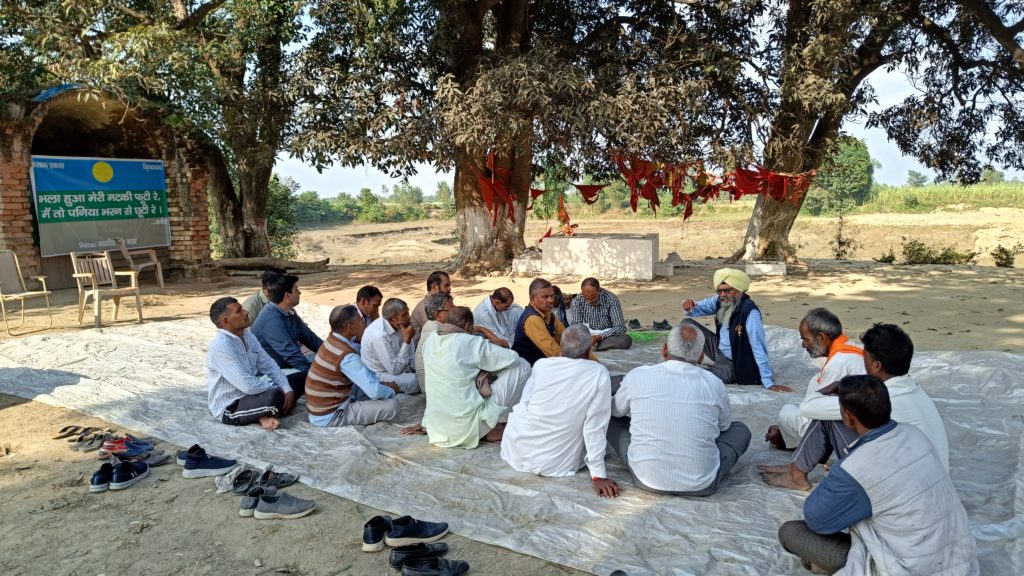
https://www.gaonsavera.com/farmers-of-ruhelkhand-up-waiting-for-irrigation-dam-for-more-than-100-years/ (09 Dec. 2023)
RIVERS AS NATIONAL WATERWAYS
Operation of ships from Barwani to Statue of Unity Madhya Pradesh Tourism Board (MPTB), Government of Madhya Pradesh has sought technical help of Inland Waterways Authority of India (IWAI) for starting cruise operation from Barwani to Statue of Unity, Gujarat. IWAI is rendering technical help to set up jetties at Kukshi and Sakarja in Narmada River in Madhya Pradesh. Further, IWAI has agreed for setting up floating jetties at Hanfeswar and Sardar Sarovar Dam in Narmada River in Gujarat. This information was given by the Union Minister for Ports, Shipping and Waterways, Shri Sarbananda Sonowal in a written reply to the Rajya Sabha. https://pib.gov.in/PressReleasePage.aspx?PRID=1982665 (5 Dec 2023)
IRRIGATION
Himachal Pradesh Villagers stop Baddi-Chandigarh rail line work About 30 to 40 farmers gathered at Sandholi village in Baddi this afternoon and shouted slogans against Railway officials and the local administration for failing to address their grievances for the past one year. Farmers stopped vehicles, which were supplying material for the construction of a railway platform. The villagers said that they were yet to receive the balance payment for their land acquired for the project.
They added that water from tubewells was not reaching their fields after supply pipes were damaged in excavation work. They demanded laying of new supply pipes from tubewells to their fields or digging of new tubewells. They said the road to their fields had been damaged and an alternative road should be built immediately. The Tehsildar assured the farmers that their balance dues would be paid by the month end and other issues would be taken up with the officials concerned. https://www.tribuneindia.com/news/himachal/villagers-stop-work-on-baddi-chandigarh-rail-line-570216 (09 Dec. 2023)
गुजरात में अब पूरे फर्जी सिंचाई विभाग ऑफिस का ही चौंकाने वाला मामला सामने आया है। सिंचाई विभाग का यह फर्जी ऑफिस छोटा उदेपुर जिले के बोडेली में दो साल से चल रहा था। पुलिस ने इस मामले में दो मुख्य आरोपियों समेत ऑफिस में काम करने वाले 12 लोगों को अरेस्ट किया है। फिलहाल मामले की जांच जारी है। प्राथमिक जांच में पता चला है कि सिंचाई विभाग के प्रभाग के रुप में शुरू किए गए इस ऑफिस के जरिए अब तक सरकार समेत आम लोगों को 4.15 करोड़ रुपए की चपत लगाई जा चुकी है। इतना ही नहीं, पिछले दो सालों में करीब 93 सरकारी कामों को पूरा करने के लिए सरकारी विभाग से भी तीन करोड़ रुपए से ज्यादा की रकम ऐंठी जा चुकी है। इसके अलावा कई ठेकेदारों को भी लाखों की चपत लगाई गई है। हालांकि, फर्जीवाड़े की रकम का सही आंकड़ा ऑफिस से जब्त डॉक्यूमेंट्स और फाइलों की जांच के बाद ही सामने आ पाएगा।

इस ऑफिस के जरिए अनुदान प्रशासक के कार्यालय में जो प्रस्ताव प्रस्तुत किए गए थे, वे बोडेली के कार्यकारी अभियंता, सिंचाई परियोजना प्रभाग के थे। इसके लिए फर्जी सील और रकम के भुगतान के लिए फर्जी बैंक खाते भी खोले गए थे। तब भी इसकी जांच नहीं की गई। इसकी भी जांच नहीं की गई कि सरकारी कामों के आदेश किसके जरिए किए जा रहे थे और उन्हें अप्रूव करने के बाद उन कामों के निरीक्षण सरकारी इंजीनियर की टीम द्वारा क्यों नहीं किए गए? अगर कागजों पर फर्जी निरीक्षण किए गए तो क्या कुछ सरकारी इंजीनियर्स की भी इसमें मिलीभगत थी। ऐसे अनेकों सवाल हैं, जिनके जवाब जांच के बाद ही सामने आ पाएंगे। https://www.bhaskar.com/national/news/now-fake-irrigation-project-office-caught-in-gujarat-132062785.html (Nov. 2023)
URBAN RIVERS
Indore As we critiqued earlier, Indore, awarded for clean rivers, is back to dirty rivers.

https://www.naidunia.com/madhya-pradesh/indore-mp-elections-2023-indores-plea-for-kanh-saraswati-river-when-will-we-be-saved-8236759 (19 Oct. 2023)
Pune PMC serves notices to 30 building owners in riverbed area The building permissions department of Pune Municipal Corporation (PMC) has served notices to 30 structures illegally coming up in the riverbed area between Rajaram Bridge and Mhatre Bridge area. The buildings comprise marriage halls, restaurants, and other cement concrete structures which have been primarily constructed against norms. https://www.hindustantimes.com/cities/pune-news/mhatre-bridge-encroachment-pmc-serves-notices-to-30-building-owners-in-riverbed-area-101701627528621.html (04 Dec. 2023) A week after the building permissions’ department of the PMC on November 30 served notices to 30 illegal structures in the riverbed area between Rajaram Bridge and Mhatre Bridge, directing that the structures be voluntarily taken down till December 7 else face action, the civic body on Friday (Dec. 08) brought down all unauthorised structures that had not been taken down voluntarily. The PMC was forced to raze an unauthorised wedding pandal even as the marriage rituals were underway. Those who were part of the marriage ceremony claimed that they had not been informed earlier about the unauthorised structure or the PMC order pertaining to it. https://www.hindustantimes.com/cities/pune-news/pmc-razes-unauthorised-structures-in-riverbed-between-rajaram-bridge-mhatre-bridge-101702061241573.html (09 Dec. 2023)
RIVERS
CAUVERY Study Natural vegetation on nearly 12,850 sq. km in the Cauvery basin has been lost Natural vegetation on nearly 12,850 sq. km of land in the Cauvery basin was lost in the 50 years between 1965 to 2016, according to a recent paper published by scientists and researchers at the Indian Institute of Science (IISc), Bengaluru. Karnataka has lost much more than any other State in the basin.
It accounts for three-fourths of the lost cover, while Tamil Nadu’s share is around one-fifth, the study added. Pointing out that natural vegetation cover went down by around 46% all these years, the paper, authored by T.V. Ramachandra, Vinay S., Bharath S., and Bharath H. Aithal, stated that the quantum of reduction of dense vegetation was 35% (6,123 sq. km) and that of degraded vegetation, 63% (6,727 sq. km). https://www.thehindu.com/sci-tech/energy-and-environment/natural-vegetation-on-nearly-12850-sq-km-in-the-cauvery-basin-has-been-lost-says-a-research-paper/article67624533.ece (10 Dec. 2023)
Jammu & Kashmir Jhelum: Kashmir’s lifeline gasps for breath Arif Shafi Wani Considered to be the lifeline of Kashmir, river Jhelum is facing a serious ecological threat due to unabated pollution triggered by flow of sewage and dumping of garbage. Ironically, instead of constructing STPs, successive regimes constructed pumping stations to empty all drains into the river. Jhelum assumes tremendous importance not only for providing water for drinking and irrigation purposes, but mainly for draining the surplus waters, thus saving Kashmir from floods.
Till a few decades ago, Jhelum acted as a prime mode of transport from north to south Kashmir. In absence of any regulation, the banks of the river have been gradually encroached upon. Unregulated and extensive sand extraction has severely disturbed the river’s flora and fauna. Wetlands on the left and right of Jhelum acted as reservoirs of the floodwaters. However, in the last five decades, most of the wetlands have lost their carrying capacity mainly due to conversion into agriculture land or concrete landscape.
Many years ago Jhelum Action Plan was co-formulated by Ajaz for four towns of Anantnag, Srinagar, Sopore and Baramulla to intercept, divert, transmit the sewage of these cities and towns and treat it in the STPs. This project was approved by the Government of India but still awaits funding and execution. There are ample funds for conservation of Jhelum, only will and zeal in proper execution of the project is missing. https://www.greaterkashmir.com/editorial-page-2/jhelum-kashmirs-lifeline-gasps-for-breath/ (11 Dec. 2023)
GANGA Uttarakhand Silkyara tunnel collapse: In 2017 reports had flagged risk Excellent report about Silkyara tunnel collapse raises questions related to how the project’s parameters were changed and how there were early red flags regarding the geological challenges and the level of risk. https://indianexpress.com/article/india/tunnel-collapse-in-2017-and-even-three-months-ago-reports-had-flagged-risk-and-challenges-9060503/ (09 Dec. 2023)
Char Dham project did not need EIA: Centre to Parliament This shows that Union Minister accepted in Parliament how the Char Dham Highway escaped the requirement of EIA by breaking a 850 km road project into 53 packages each below 100 km, the thresh-hold above which EIA is required. https://www.thehindu.com/news/national/parliamentary-proceedings-char-dham-project-did-not-need-environment-assessment-centre-to-parliament/article67611169.ece (06 Dec. 2023)
The Char Dham project was passed without necessary evaluation, as revealed by the Centre’s response to a parliamentary query recently. Nitin Gadkari, Union minister of road transport and highways, admitted to have bypassed the environmental impact assessment norms for the civil works. https://www.downtoearth.org.in/news/environment/government-admits-to-have-bypassed-environment-impact-assessments-for-chardham-project-93268 (08 Dec. 2023)
Gadkari was asked whether the government has conducted a probe as to why Navayuga Engineering Company did not build a rescue route, as is the norm in tunnel construction. “After encountering minor spalls/falling of debris-forming cavities during construction in 2019, the construction sequences and primary support system are reviewed from time to time on the basis of actual ground behaviour observed and are approved by authority’s engineer engaged for the project, which are executed under the supervision of officials of NHIDCL,” he added. https://www.business-standard.com/india-news/openings-provided-in-silkyara-tunnel-to-help-stranded-commuters-escape-123120600728_1.html (06 Dec. 2023)
CPI MP Binoy Viswam on Monday (Dec. 04) submitted a notice under Rule 267 demanding suspension of business in the upper house to discuss the ecology of the Himalayas. This came in the backdrop of Shilkyara tunnel collapse. https://www.business-standard.com/india-news/winter-session-cpi-moves-notices-seeking-discussion-on-himalayan-ecology-123120400109_1.html (04 Dec. 2023)
Portion of the tunnel had collapsed on March 01, 2023 endangering workers lives. https://navbharattimes.indiatimes.com/state/uttarakhand/dehradun/landslide-in-the-longest-tunnel-in-uttarkashi-laborers-escaped-and-saved-their-lives/articleshow/98358777.cms (02 March 2023)
RIVERS BIODIVERSITY
Uttar Pradesh Prayagraj STF rescues 741 turtles In a major breakthrough, a team under Prayagraj unit of Special Task Force (STF) nabbed three smugglers and rescued 741 turtles of a protected species that were being smuggled to West Bengal on Friday (Dec. 08) night. The rescued turtles were handed over to forest department officials to be released into a suitable river. An FIR has been registered against the accused at Nawabganj police station under relevant sections of the Wildlife Protection Act and the Indian Forest Act, as stated by STF officials.
The three persons in the vehicle, identified as Shani and Suraj from Gandhinagar Palpur area of Amethi and Adarsh Singh from Kamipur village of Barabanki, presently living in Rae Bareli, were arrested and formally charged with smuggling, he added. During interrogation, the trio revealed that they had procured the turtles from three persons in Jagdishpur area of Amethi identified as Salman, Akbar and Phool Mohammad and were to be sold in West Bengal. Efforts to arrest these three individuals are also underway, the DySP further added. https://www.hindustantimes.com/cities/others/prayagraj-stf-rescues-741-turtles-arrests-three-smugglers-101702141591275.html (09 Dec. 2023)
SAND MINING
Goa HC pulls up DGP, chief secretary for failing to act Pulling up the govt and the police, the Goa bench of the Bombay High Court Dec 6 2023 said it seemed that neither the Director General of Police (DGP) nor the Chief Secretary were “seriously interested” in preventing illegal sand mining in the state. While hearing a contempt petition filed by the Goa River Sand Protectors Network, the court said, “This is not a question of simply disobeying orders made by this court from time to time, but of protecting Goa’s natural resources… Considering the material placed before us, we get the impression that neither the DGP nor the Chief Secretary are seriously interested in preventing illegal sand mining in the state of Goa.” Observing that affidavits filed by the DGP and the Chief Secretary, assuring strict action have remained “paper assurances”, the court said it expected “greater sensitivity” from top officials on the issue of environmental protection, if not compliance with the court’s repeated directions. The court has directed the Chief Secretary and the DGP to submit a detailed action plan by Dec 12. https://indianexpress.com/article/cities/goa/illegal-sand-mining-goa-hc-pulls-up-dgp-chief-secretary-for-failing-to-act-9059131/ (08 Dec. 2023)
Jammu & Kashmir Sand Mining Crisis In Kashmir, the river Jhelum, its tributaries, and the flood plains are the only source of sand, boulders and gravel for construction.
Sand mining supports the livelihoods of nearly 21,000 families. But illegal mining by unlicensed contractors and environmental violations by licensed entities could jeopardise river ecosystems and the livelihoods of thousands if they continue unchecked, Article 14 found. https://www.youtube.com/watch?v=yCpwInWJuU4 (05 Dec. 2023)
Kerala Offshore deposits enough to meet requirements for 25 years: GSI The Marine and Coastal Surveys Division of the Geological Survey of India (GSI), which has surveyed the territorial waters off Kerala since 1985 has found substantial deposits of construction grade sand, which can address the perennial shortage of construction sand in the State. The deposits, estimated at around 750 million tonnes, can last for nearly 25 years at the present requirement of 30 million tonnes for construction purposes a year in Kerala, said C.V. Gopalan, Director, GSI, Mangaluru.
He added that the Government of India, which was exploring the potential of sea resources, would make an elaborate impact assessment before mining is undertaken. He was making a presentation on ‘Offshore sand resources of Kerala – An alternative sand crisis’ recently at the Diamond Jubilee Annual Convention of the Indian Geophysical Union here. The presentation consisted of findings by a team of GSI scientists comprising Dr. Gopalan, N.M. Shareef, A.C. Dinesh, C. Jayaprakash, S.V. Hegde, N. Maran, and K.K. Bhat.
The presentation said a sizeable amount of construction grade sand resources were reported from several areas off Ponnani, Chavakkad, Kochi, Alappuzha and Kollam at water depth varying from 22 metres to 45 metres. The team found that the recovered sand was of good quality and grade where sand percentages in the sediment recovered material varied from 80 to 96. The clay content in the sediment varied from 4% to 20%. The sand includes fine, medium and coarse grains. The silica sand is mixed with clay and carbonaceous matter/peat. The vibro-core samples were collected onboard vessel Samudra Shaudhikama and core lengths varied. https://www.thehindu.com/news/cities/Kochi/offshore-deposits-enough-to-meet-keralas-sand-requirements-for-25-years-finds-gsi/article67604400.ece (05 Dec. 2023)
Haryana Govt not taking orders to curb Aravali mining seriously: NGT In its November 30 order, NGT observed that the state government had not disclosed any information on steps taken to stop illegal mining of the hills that are only barriers holding back expansion of desert-like conditions from Rajasthan towards north India. The bench of NGT chairperson Prakash Shrivastava, judicial members Sudhir Agarwal and Arun Kumar Tyagi, and expert member Dr A Senthil Vel was hearing a petition by city resident HS Khatana, who had alleged in November 2021 that rampant illegal mining was polluting water bodies and depleting the district’s green cover.
“The state authorities are not taking the orders of the tribunal seriously and are not complying with the same. No material has been disclosed even today in respect of the steps taken to stop illegal mining in the area but only a prayer for adjournment has been made. No report in terms of the previous order of the tribunal has been filed till now,” the latest order said. The NGT, in August too, had come down heavily on the government and said there was nothing in the government’s action-taken report explaining “in quantified terms” the steps taken to curb mining. The tribunal noted it was “pious/legal duty” of the state to control illegal mining in the ancient hill range. https://timesofindia.indiatimes.com/city/gurgaon/ngt-haryana-not-taking-order-to-check-mining-in-aravalis-seriously/articleshow/105768078.cms (06 Dec. 2023)
Govt to map Aravali areas damaged by mining Haryana’s Aravali districts will map out areas damaged by illegal mining, the first step in coming up with an action plan that the NGT has been asking for to protect and revive the ancient hill range. The tribunal last month expressed its frustration with the Haryana government, saying that authorities were not taking the bench’s orders “seriously” to crack down on mining and plan ways to protect the hills.
The forest and mining departments will map areas that have suffered most damage from stone mining and come up with a preliminary plan to reclaim and restore the land. They will also take assistance from experts on how to go about the process. The draft action plan for Gurgaon, Nuh, Faridabad, Rewari, Mahendergarh, Charkhi Dadri and Bhiwani will be unveiled by December 16, officials said on Dec. 7. The action plan will include ways to shield the Aravalis from mining in the future. https://timesofindia.indiatimes.com/city/gurgaon/ngt-haryana-not-taking-order-to-check-mining-in-aravalis-seriously/articleshow/105825099.cms (8 Dec 2023)
Uttar Pradesh भाजपा नेता का बालू से भरा ट्रक रोकने पर चार पुलिसकर्मी निलंबित बांदा जिले में ट्रक चालक के अभद्रता के मामले में एसएसआई, एक एसआई व दो कांस्टेबलों को एसपी ने तत्काल प्रभाव से निलंबित कर दिया गया है। बताया जा रहा है कि ट्रक भाजपा नेता का था। भाजपा नेता ने मामले की शिकायत एसपी से की, जिसके बाद पुलिसकर्मियों को निलंबित कर दिया गया। इस प्रकरण की पूरी जांच सीओ सदर अंबुजा त्रिवेदी को सौंपकर तीन दिन में रिपोर्ट तलब की है। जांच रिपोर्ट के आधार पर आगे की कार्रवाई की जाएगी। पूरा मामला जसपुरा थाना क्षेत्र के अमारा गांव का है। जानकारी के अनुसार, बुधवार (Dec. 06) की रात पैलानी थाना क्षेत्र के खप्टिहा कलां गांव में बंद पड़ी बालू खदान से एक ट्रक बालू लेकर आ रहा था। अमारा गांव में गश्त के दौरान जसपुरा थाना पुलिस ने ट्रक को रोककर ट्रक का रवन्ना चेक किया तो ट्रक चालक ने ट्रक मालिकों का नाम बताते हुए कार्रवाई न करने को कहा। आरोप है कि पुलिस ने उसके साथ अभद्र व्यवहार किया। https://www.amarujala.com/uttar-pradesh/kanpur/four-policemen-suspended-for-stopping-sand-laden-truck-of-bjp-leader-in-banda-2023-12-08 (08 Dec. 2023)
8 people killed in head-on collision between truck and car In a horrific accident, eight people, including a child, were tragically charred to death after a head-on collision between a dumper (carrying sand) and a car on the Bareilly-Nainital Highway on Saturday (Dec. 09) night. The accident occurred in the Bhojipura police station area of Uttar Pradesh due to a burst tire that led to a collision with a dumper from Uttarakhand. A massive explosion followed the collision, causing both vehicles to erupt in flames. The bodies have been sent for post-mortem examinations. https://timesofindia.indiatimes.com/city/bareilly/eight-including-child-charred-to-death-in-head-on-collision-between-truck-and-car-on-bareilly-nainital-highway/articleshow/105872590.cms (10 Dec. 2023)
WETLANDS, LAKES, WATER BODIES
Maharashtra Inspection team stopped from entering construction site A joint inspection team of forest officials, mangrove cell and environmentalist Sunil Agarwal, who wanted to inspect a private construction site next to the coastal wetland at Palm Beach road, were unable to do so as the construction company objected to the presence of the environmentalist (Agarwal), although he is the main complainant in the matter. The joint inspection had been planned to check if any barrier or fencing was installed to protect the wetland and buffer zone from the ongoing construction. https://timesofindia.indiatimes.com/city/navi-mumbai/navi-mumbai-jt-inspection-team-member-stopped-from-entering-construction-site-next-to-wetlands-in-seawoods/articleshow/105733019.cms (04 Dec. 2023)
WATER OPTIONS
Bundelkhand A community-driven path to replenishing groundwater Thanks to a revival of old farming practices and growing community involvement in all matters relating to water, this village is now known in India as a model jalgram, or water village.
– Jakhni is a settlement of barely 1,600 people, mostly farmers. Its stony, hilly terrain is typical of Bundelkhand, an arid region spread across parts of the neighboring states of Madhya Pradesh and Uttar Pradesh. This region receives between 800 and 1,300 millimeters of rainfall annually, but locals quip that like their children, who all tend to migrate for better opportunities, the rainwater runs off too. The rocks that lie beneath the region are not very porous, and there are relatively few aquifers (layers of underground water). As a result, most of the rainwater flows away from the region instead of being locally absorbed.

– Meanwhile, Pandey plans to start the country’s first water university within the coming year and says his work is far from done. “The university will synthesize insights about water conservation and water security from across India,” he says. “Rather than just academics and experts, I’d like to see ordinary people with practical experience teaching there.” His phone rings constantly, and his ringtone, the Hindi version of the anthem “We Shall Overcome,” seems oddly appropriate. “We have to keep at it, build bunds in other regions, and convince more people about the importance of every drop of rain,” he says. “For water can’t be made — it can only be conserved for the generations to come.” https://reasonstobecheerful.world/banda-india-drought-community-water-budgeting/ (07 Dec. 2023)
Chhattisgarh IISc researcher leads Bastar village to water supply without electricity The project in Taipadar village, led by Punit Singh, Associate Professor at the Centre for Sustainable Technologies, IISc, uses low-head check dams and cascades of such dams along rivers, with turbine pumps installed to pump water without any electricity. https://www.deccanherald.com/india/chhattisgarh/iisc-researcher-leads-bastar-village-to-water-supply-without-electricity-2801755 (07 Dec. 2023)
Karnataka Six open wells revived in Hunsmaranahalli TMC serve as water source (Kannada). https://www.youtube.com/watch?v=7W9jgll_fKY (06 Dec. 2023)
GROUNDWATER
Parliament Session Efficient groundwater management & regulation One of the main activity under the scheme is National Aquifer Mapping and Management Program (NAQUIM) which is being implemented with the objectives to delineate and characterize the aquifers geometry and develop plans for sustainable ground water management. Aquifer mapping and management program has been completed by 31.03.2023 and has covered about 25 lakh sq.km area of the country.
Further, under the Scheme, CGWB has also carried out high resolution aquifer mapping using heli-borne geophysical survey in around 1 lakh km2 of arid/semi-arid areas which have been completed. Further, Ground Water Resource assessment is being carried out throughout the country which since 2022 is being taken up on an annual basis.
To ensure continuity of the activities, the scheme has been approved for implementation till 31st March 2026 and includes activities like monitoring, assessment and regulation of groundwater resources and strengthening of infrastructure for technological upgradation. This information was given by the Minister of State for Jal Shakti, Shri Bishweswar Tudu in a written reply in Rajya Sabha on Dec 4. https://pib.gov.in/PressReleasePage.aspx?PRID=1982449 (4 Dec 2023)
Punjab Groundwater turns black, stinky The residents of Mangat village of Ludhiana are being forced to drink black and stinking water that has been coming out of their tube wells and hand pumps which, they say, is due to the dumping of untreated industrial effluents into the earth by the dyeing unit located in the village. The villagers also say that the drinking water via taps is also polluted.
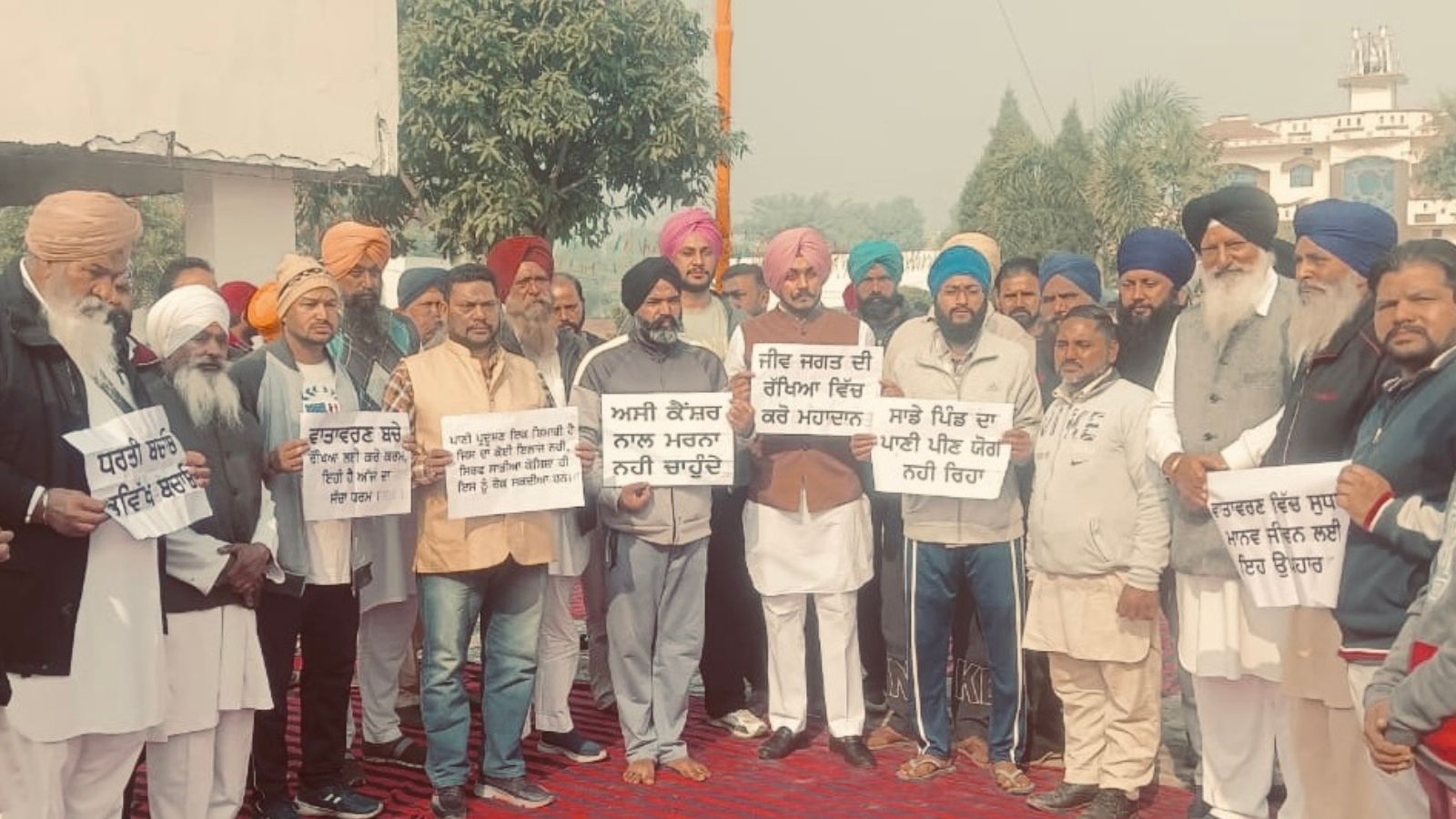
The residents of Mangat have further alleged that several people from their village had died of cancer in the past decade and many have got skin infections, cancer, and suffered kidney failure, among others, due to the consumption of the polluted water. https://indianexpress.com/article/cities/chandigarh/groundwater-udhiana-villagers-die-cancer-9054795/ (05 Dec. 2023)
Tripura CM launches first ever groundwater treatment plant CM Dr Manik Saha Tuesday (Dec. 05) inaugurated the state’s first ever Superiority Control and Data Acquisition (SCADA) groundwater treatment plant at Ushabazar in Agartala to provide clean drinking water to every household. The plant, with a capacity of eight million litre per day, was built at a cost of Rs 78 crore. The plant has a smart water quality metre and remote control facilities to ensure purity of water. https://indianexpress.com/article/india/tripura-cm-launches-first-ever-groundwater-treatment-plant-which-can-generate-8-million-litre-of-drinking-every-day-9056043/ (5 Dec 2023)
Report Central board flags ‘over-extraction’ of groundwater As per the latest assessment of dynamic groundwater resources, the total annual groundwater recharge for the entire country is 449.08 billion cubic metre (bcm). The total natural discharge works out to be 41.89 bcm. The annual extractable groundwater resources for the entire country is 407.21 bcm. However, a report by the Central Ground Water Assessment Board says that the extraction of groundwater is more than 100 per cent in several states and UTs, including Haryana, Punjab, Rajasthan, Dadra & Nagar Haveli and Daman & Diu. In Punjab, especially Sangrur and Malerkotla, the extraction of groundwater is 164 per cent more than the recharge. https://www.tribuneindia.com/news/india/central-board-flags-over-extraction-of-groundwater-in-punjab-haryana-568784 (05 Dec. 2023)
Arsenic found in 25 states, fluoride in 27 states: Govt Arsenic has been detected in groundwater in parts of 230 districts in 25 states and fluoride in 469 districts in 27 states, Union Minister of State for Jal Shakti Bishweswar Tudu informed the Rajya Sabha on December 4. CGWB along with the National Institute of Hydrology (NIH) prepared a report on “Mitigation and Remedy of Groundwater menace in India: A Vision Document” in 2010 and it has been circulated to various concerned agencies and departments for guidance and execution. https://www.thehindu.com/news/national/arsenic-found-in-groundwater-in-25-states-fluoride-in-27-states-govt/article67604776.ece (04 Dec. 2023)
URBAN WATER
Bengaluru Bridge over rajakaluve not encroachment: HC A bridge constructed across a rajakaluve that does not affect the flow of water in any manner cannot be termed an encroachment, the Karnataka HC observed in a recent judgment. Bridges built on the banks of and across a rajakaluve, without a structure built inside the rajakaluve that would have obstructed the flow of water, cannot be considered as encroachments, Justice Suraj Govindaraj observed while granting relief to M/s Janaadhar India Private Limited. https://timesofindia.indiatimes.com/city/bengaluru/bridge-over-rajakaluve-not-encroachment-karnataka-hc/articleshow/105851988.cms (09 Dec. 2023)
Why RWH is not popular? Given that Bengaluru gets 900-1,000 mm of rainfall annually, the entire city can easily sustain 4-6 months on harvested rainwater alone, says Dr U T Vijay, Executive Secretary at the Karnataka State Council for Science & Technology. But, despite the clear benefits in terms of water availability and cost savings, most properties still don’t have functional RWH systems.
Bangalore Water Supply and Sewerage Board (BWSSB) monitors RWH non-implementation in the properties that already have its connections. But due to gaps in data, it is not clear how many properties exactly are supposed to implement RWH. According to data that BWSSB shared with this reporter, the city currently has 10.8 lakh properties with water connections, but only 1.9 lakh (nearly 18%) of them have implemented RWH. Another 39,703 properties have been identified for non-implementation and are paying penalties every month. These properties include individual homes, apartments (each apartment is counted as a single connection), and commercial properties. https://citizenmatters.in/bengaluru-rainwater-harvesting-bwssb-kscst-water-36374 (07 Dec. 2023)
RWH: BMRCL washes its hands off Through an RTI response, the Bangalore Metro Rail Corporation (BMRCL) has clarified that provision of RWH to recharge groundwater is available only on the metro line between MG Road and Baiyappanahalli metro station (Reach-1). The rest of the existing lines, according to BMRCL, are under examination to see if the provision can be created as it can be a safety concern.
BMRCL officials, however, clarified that no survey of existing lines is being carried out as installing an RWH system to recharge will compromise the structural integrity of concrete columns. “No survey is being conducted and the recharge system is not being considered for existing lines. It could have been integrated with lines at design and planning stages. If incorporated now, it will damage the pillars. However, the provision can be considered for upcoming lines such as KR Puram to the airport or Silkboard junction,” said a BMRCL official. https://bangaloremirror.indiatimes.com/bangalore/others/rainwater-harvesting-bmrcl-washes-its-hands-off/articleshow/105849063.cms (09 Dec. 2023)
Soil dumping puts Hennagara Lake at risk Hennagara Lake near Electronic City – which was constantly fed with industrial effluents – is in trouble yet again. Hundreds of trucks are making a beeline to the lake on a daily basis, filling the live waterbody with fresh soil. Residents, who live close to the 330-acre lake, are worried that the unchecked dumping of soil could leave their homes flooded. Over the past year, it’s estimated that no fewer than 10,000 trucks of soil were dumped into the water to raise the ground’s elevation. This is also evident as the Jigani – Bommasandra link road has turned muddy and the soil has expanded into the water body at least by 300 metres to half a kilometre. Residents say trees were cut and hyacinth was also cleared in a bid to change the nature of the land. https://www.deccanherald.com/india/karnataka/bengaluru/soil-dumping-puts-330-acre-hennagara-lake-at-risk-2802029 (08 Dec. 2023)
Residents upset as BWSSB demands Rs 14 cr in ETP charges The BWSSB has demanded close to Rs 14 crore from 13 private layouts in East Bengaluru as Establishment of Tools and Plants (ETP) charges. The hefty charges, which come up to Rs 64 per square foot of land, have irked the locals. The residents have written to the BWSSB, arguing that it was the government’s responsibility to provide basic infrastructure such as water supply and an Underground Drainage (UGD) system.
“The charges come up to close to Rs 76,000 for a house constructed on a 30×40 plot. Along with this, we will have to pay other connection charges and the total would cross Rs 1 lakh. This is a heavy fee for citizens,” said Anandappa L, a resident of Nagarjuna Layout in KR Puram. Yet another resident said that the BWSSB had started disconnecting the UGD connections, forcing them to pay up. “We have no other option but to pay up for even basic facilities,” he said. However, senior officials said that the BWSSB was allowed to levy such charges on private layouts and gated communities. https://www.deccanherald.com/india/karnataka/bengaluru/residents-upset-as-bwssb-demands-rs-14-cr-in-etp-charges-2803797 (09 Dec. 2023)
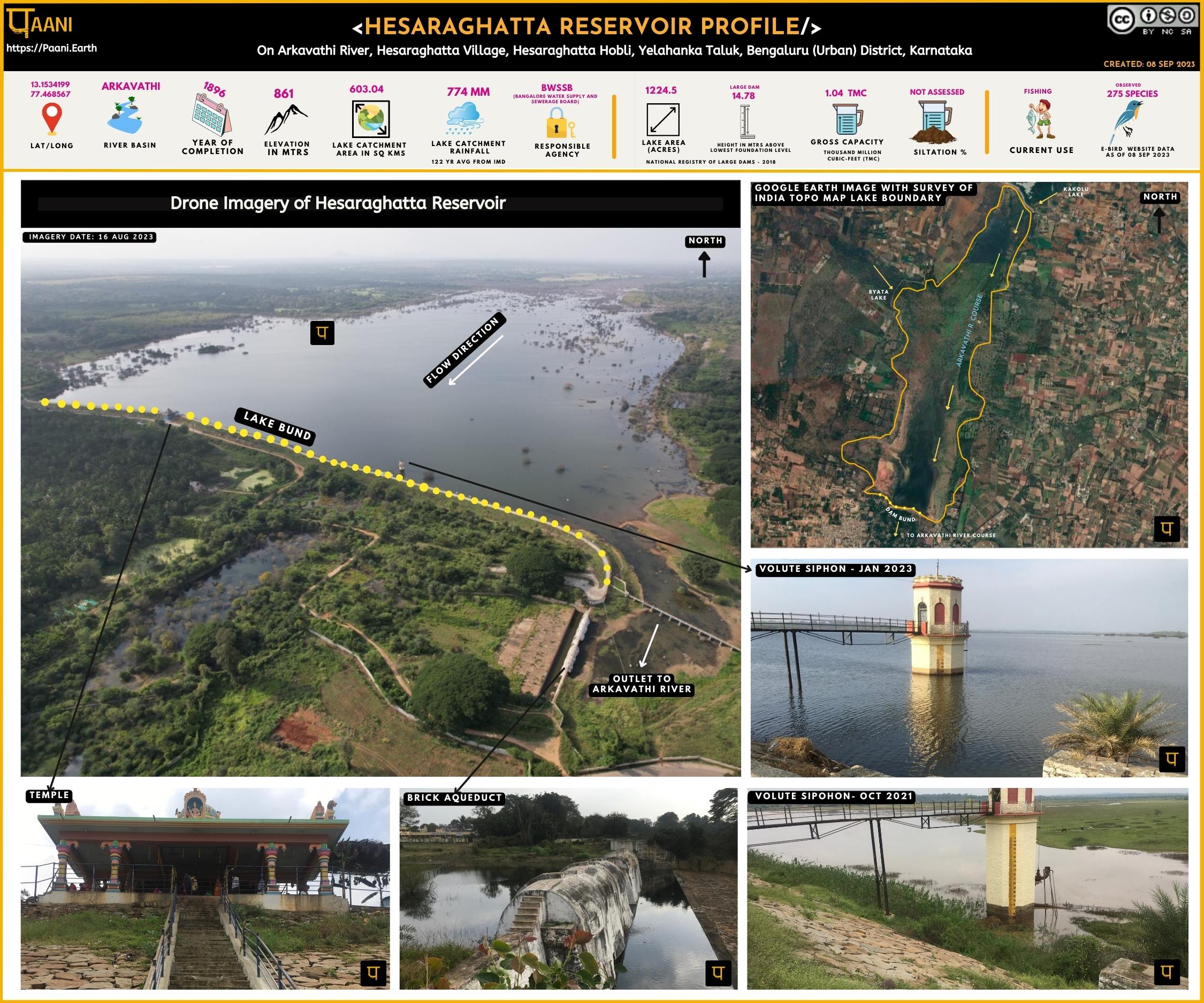
Hesarghatta Lake Basic Profile Shows Hesarghatta lake inlet, outlet, lake bund, siphon and brick aqueduct. The lake is in the Arkavathi River Basin. The lake is in the Bengaluru Urban District. https://paani.earth/rivers/arkavathi-river/hesarghatta-lake-profile-page/
Thane Admin considers separate dam reservation for Kalyan-Dombivli In response to the persistent demand from Kalyan-Dombivli region, there has been a push for the reservation of the Kushivali dam in Ambernath taluka for the Kalyan-Dombivli Municipal Corporation (KDMC). The Thane district administration has instructed the water resources department and KDMC to submit a comprehensive report on the matter. In the recent meeting, Thane Collector Ashok Shingare instructed the Water Resources Department to submit a comprehensive report on the water storage of Kushivali Dam. Simultaneously, KDMC was directed to provide data on the anticipated population growth and water requirements for the next thirty years. https://timesofindia.indiatimes.com/city/thane/thane-administration-considers-separate-dam-reservation-for-kalyan-dombivli/articleshow/105819254.cms (07 Dec. 2023)
Pune Girl falls into 40 feet deep water tank, rescued The Kondhwa Fire Brigade personnel successfully pulled out a 16-year-old girl who accidentally fell into a 40-feet deep water tank located opposite the Dorabjee Heritage Mall at NIBM Road, officials said on Tuesday (Dec. 05). According to Citizen activist Jaymala Dhankikar, the water tanks constructed five years ago were meant to supply water to all the dry areas of Mohammadwadi. Currently, the water tank compound has no security guard, and the main gate is not locked, she said, “Several anti-social elements visit the place in the evening and couples enter the tank area and climb onto the top for fun activities. The compound is abandoned and neither PMC nor the police are bothered about what is happening in the compound. https://www.hindustantimes.com/cities/pune-news/girl-falls-into-40-feet-deep-water-tank-rescued-101701802757221.html (06 Dec. 2023)
Delhi NGT: Crack down on city hotels extracting groundwater illegally NGT has directed the chief executive officer of the Delhi Jal Board (DJB) and the member secretary of the Central Ground Water Authority (CGWA) to take action against hotels illegally extracting groundwater in the city. It has also asked them to consider the issue of management and control of groundwater in Delhi.
The Delhi Pollution Control Committee (DPCC) had earlier informed the tribunal that out of the 536 hotels, 257 were illegally extracting groundwater and 185 were doing so under a voluntary disclosure scheme. “During the course of argument, an issue also came up as to who is the competent authority to regulate and manage extraction of water through borewells in Delhi. The stand of the counsel for DPCC is that the competent authority is DJB, and not CGWA. To support the contention, the counsel has placed reliance upon Section 9 of the Delhi Jal Board Act 1998 and submitted that in terms of sections 9(1)(b) and Section 9(1)(d), the responsibility to regulate and manage the exploitation of groundwater in Delhi is with DJB,” noted the tribunal.
NGT also observed that the Union environment and forest ministry in 1997 had exercised the power conferred upon it under Section 3(3) of the Environment (Protection) Act 1986 to constitute the Central Ground Water Board as an authority for the regulation and control of groundwater management and development. The bench, hence, issued the notice to both DJB and CGWA. https://timesofindia.indiatimes.com/city/delhi/ngt-crack-down-on-city-hotels-extracting-groundwater-illegally/articleshow/105796634.cms (07 Dec. 2023)
41% of Delhi overexploiting groundwater Delhi has been drawing more groundwater than it recharges since 2022. The Central Ground Water Board’s assessment found that the total annual groundwater recharge decreased from 0.41 billion cubic metres (bcm) in 2022 to 0.38bcm in 2023, while the annual extractable groundwater resource available decreased from 0.37bcm to 0.34bcm.
A CGWB report said that tubewells remained the major source of water extraction, accounting for over 41% of the city’s total area being “overexploited” in terms of groundwater resource use. The imbalance in extraction and recharging has been attributed to a reduction in recharge from rainfall because of lower precipitation in the current assessment year. https://timesofindia.indiatimes.com/city/delhi/41-of-delhi-overexploiting-groundwater-says-report/articleshow/105689494.cms (03 Dec. 2023)
WATER
Tamil Nadu Resolution against conservation center at Longwood Shola in the Nilgiris The Jackanarai panchayat of Kotagiri has passed a resolution against a proposal by the Forest department to establish an International Conservation Center and a watch tower in the Longwood shola forest in Kotagiri. “The proposal raised concerns among the villagers and environmentalists as this shola forest is very important in maintaining the local ecology, including the hydrology of the region. It is the only source of water for around 30,000 families downstream and in the areas surrounding the forest,” said Yukesh Saravanan, a local resident who was part of the meeting with local villagers who opposed the project.
The villagers had opposed the forest department’s construction of concrete beds to raise saplings in Longwood Shola. “The state policy on forests does not permit any construction activities within protected areas, other than for inspection work. Longwood shola is a sacred grove, where extant annual rituals are performed by the local indigenous communities from time immemorial and footfall in the region would deprive the indigenous rights of the people,” added Mr. Saravanan. https://www.thehindu.com/news/national/tamil-nadu/panchayat-passes-resolution-against-conservation-center-at-longwood-shola-in-the-nilgiris/article67606780.ece (05 Dec. 2023)
MONSOON
Anna Mani: Why you need to know this Indian weather scientist. https://www.bbc.com/news/world-asia-india-67634192 (08 Dec. 2023)
FLOOD
Odisha OPGC ash pond collapses, inundates villages In a troubling incident near Rengali, the Orissa Power Generation Corporation Ltd’s (OPGC) ash pond C in Ib Thermal Banharpali collapsed on Saturday (Dec. 09) morning leading to ash-laden water seeping into nearby Kantatikra and Saradhapalli villages in Kumharbandh Panchayat of Lakhanpur block in the district. At around 8.15 am the ash pond, measuring approximately 50 metre in length and 30 to 35 metre in depth, collapsed, sending ash water surging towards Sharadhapali. OPGC’s senior manager, HB Behera, confirmed a 20-foot crack in the ash pond, with ongoing repair work expected to take two to three days. The affected ash pond (C), spanning 110 to 120 acre, collects ash from units 1, 2, and residual ash from units 3 and 4, reportedly accumulating 4,600 to 7,000 cubic metre daily.
Without any other option, the villagers evacuated the area, and took refuge atop nearby ash pond. Villagers in the affected areas are apprehensive of damage to crops and the fishermen too are left worried due to the potential threat to the Hirakud reservoir that could affect the region’s fisheries. The collapse has affected farmlands, impacting 32 families and 41 farmers. They have demanded compensation and relocation by the OPGC. Besides they cited a previous instance of water leak which they alleged was ignored by OPGC. The officials however, denied any such instance. https://www.newindianexpress.com/states/odisha/2023/dec/10/opgc-ash-pond-collapses-inundates-villages-2640215.html (10 Dec. 2023)
Preliminary investigation by the regional office of SPCB revealed the pond’s C-block was breached due to which surface water leaked first and then ash slurry was discharged, which spilled into nearby barren and agricultural land. OPGC attributed the dyke wall collapse to incessant rain. “Owing to rain in the last two to three days, one side of the soil bond had weakened. Water had overflown from the pond that resulted in the breach. We are working on a war footing to fill the dyke breach to prevent leakage,” said an OPGC spokesperson. https://timesofindia.indiatimes.com/city/bhubaneswar/ash-pond-breach-at-power-plant-floods-farmland-with-slurry/articleshow/105878197.cms (10 Dec. 2023)
The breach led to a flooding of toxic slurry waste in areas in the vicinity, the residents alleged. The ash water flooded farmlands on the outskirts of Saradhapali, triggering panic among locals, sources said, adding that crops over several acres of land were damaged. https://www.dynamitenews.com/story/breach-in-ash-pond-at-thermal-plant-floods-crop-fields-in-odishas-jharsuguda (10 Dec. 2023) It has been alleged that the breach occurred due to negligence of the OPGC authorities for not maintaining the embankment. https://pragativadi.com/breach-in-thermal-plant-ash-pond-in-jharsuguda-crops-damaged/ (09 Dec. 2023)
Tamil Nadu According to this report, the floods in Tamil Nadu this week has been the worst in 47 years. https://www.bhaskar.com/local/chhattisgarh/durg-bhilai/news/such-flood-in-tamil-nadu-after-47-years-12-crore-people-affected-132249354.html (06 Dec. 2023)
HFL BREACH
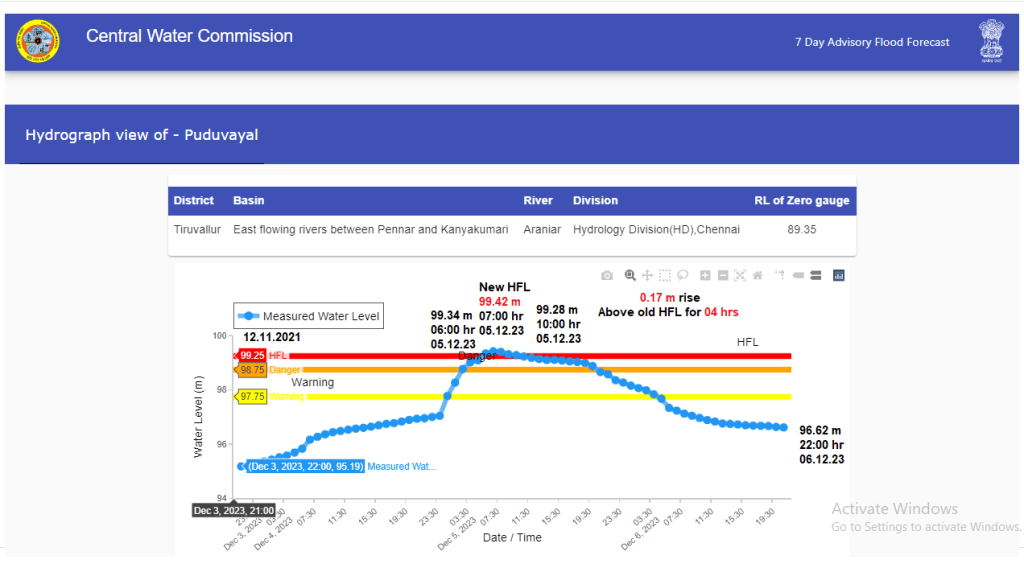
Tamil Nadu River Araniar at Puduvayal site in Tiruvallur district has crossed old HFL 99.25 m dated 12.11.2021 at 06:00 hour on 05.12.2023 and has set 99.42 m as new HFL at 07:00 hour on 05.12.2023. CWC has not updated the hydrograph since 14:00 hour 05.12.2023 and the river seems flowing in severe flood situation there. Previous HFL for the site has been 97.47 m dated 27.11.2020.
URBAN FLOODS
Chennai Cyclone Michaung Flood: Similarities, differences from the 2015 floods Nityanand Jayaraman: Think of the estuaries with their limited flood discharge capacity as a permanent traffic bottleneck on a highway. Building SWDs is like building feeder roads leading to the highway while increasing the vehicle population on the streets.
– It is common knowledge now that the city has been built on floodplains, water courses and waterbodies, and that sprawling wetlands like the Pallikaranai, and Kovalam and Ennore backwaters, have been carved up as residential, commercial and industrial real estate by successive governments. This piece will explore whether SWDs present a viable solution to keep the city dry in its current state of growth, and whether the city can continue to grow without endangering itself.
– The capacity of natural drains, particularly in coastal plains like Chennai, is one rigid limit that, if exceeded, can only be overcome through expensive engineering interventions.
– Chennai has four natural mega drains that gather and discharge rainwater run-off from various catchments into the sea. The Kosasthalaiyar river drains through the Ennore estuary; Cooum river through the estuary near Napier Bridge; Adyar river through the river mouth north of Urur Kuppam; and the Pallikaranai marshland and Kovalam backwaters through the Kovalam estuary. The amount of floodwater that can be discharged at these exit points is finite. It cannot be enhanced. In fact, human interventions can drastically reduce the discharge capacity at the river mouth, as is already happening.
– According to a Chennai Metropolitan Development Authority (CMDA) document prepared sometime between the 2005 and 2015 floods, Kosasthalaiyar’s maximum flood discharge capacity is reported as 1,10,000 cusecs (cubic feet per second). Adyar’s flood discharge capacity – i.e. the rate at which it can discharge floodwater into the sea – is 39,000 cusecs.
– Just as natural drains have capacities, macro and micro drains, including stormwater drains, too have design capacities. These are fixed probabilistically based on the recurrence period of flooding for that particular drain. The same quantum of rainfall can cause more frequent flooding, and the probability of extreme flooding can double (1/50 year event) or even quadruple (1/25 year event) when there is land use change in the catchment of the drain. Things will be worse if the urbanisation involves conversion of waterways and drains into built-up areas.
– Chennai’s built up area was 47 square km in 1980; by 2010, it had increased to 402 square km, according to a study by Care Earth. Meanwhile, the capacity of major drains have remained the same, or reduced due to encroachments or siltation, and area under wetlands decreased from 176 square km to 71 square km. he Mambalam Canal, for instance, had an original design capacity to handle a 1/25 year flood event. That means the chance that the canal will flood for a given rainfall in any given year is 1/25 or 4%. According to the Detailed Project Report for restoration of the canal, the current capacity of the drain is insufficient to even handle a 1/2 year event. i.e. there is a 50% chance that the canal will flood in any given year.
– Between 2015 and 2021, the Ennore backwaters have lost more than 700 acres, including around 250 acres to a plastics industrial estate and 40 acres to accommodate TANTRANSCO’s (Tamil Nadu Transmission Corporation) transmission towers. Additionally, more than 1,000 acres of the backwaters are choked with coal ash from TANGEDCO’s (Tamil Nadu Generation and Distribution Corporation Limited) leaky pipelines despite a 1996 order of the Madras High Court and a 2017 direction from the NGT prohibiting leaks and ordering cleanup.
– The article shows that built up area of a city creates its own run off and flooding that no amount of old and new drainage systems may be able to cover. https://indianexpress.com/article/explained/cyclone-michaung-2015-floods-9055525/ (06 Dec. 2023)
In Dec 2015, like in Dec this year, Chennai faced massive floods This year, the rainfall was heavy due to three reasons: the proximity of the cyclone to the TN coast, the slow moving cyclone and intensification of the cyclone while almost stationary close to the coast. However, the flood disaster was not as bad as in 2015 due to better management of Chembarambakkam and Poondi reservoirs compared that in Dec 2015. https://indianexpress.com/article/explained/cyclone-michaung-2015-floods-9055525/ (06 Dec. 2023)
Action on Thiruppugazh panel report would have saved Chennai? The interim report of Thiruppugazh Committee report submitted in May 2022 had identified the biggest challenge as the lack of flood carrying capacity of Chennai’s rivers and stormwater drains, and urged the government to implement its recommendations at the earliest. The report also highlighted the issue of encroachments and recommended a ban on developments along the flood plains. There are provisions in the Town and Country Planning Act to reserve land in floodplains and hazard-prone areas to regulate construction. However, it is not reflected in the land use plans prepared by CMDA in the Second Master Plan as there was no flood hazard map for Chennai Metropolitan area, the report said.
– The report also said $251 million Asian Development Bank loan for climate-resilient, integrated urban flood protection and management in Chennai-Kosasthalaiyar river basin to strengthen resilience of Chennai city to floods do not address inundation along the Cholavaram, Redhills and Madhavaram surplus courses.
– Details on the final report, which was submitted in May this year, and its long-term plans for water management in Chennai are yet to be made public. Chief Minister MK Stalin had requested the committee to give area-specific stormwater drain plans for the city and devise long-term plans for basin areas in Chennai, Kancheepuram, Tiruvallur, Chengalpattu and Ranipet. https://www.newindianexpress.com/states/tamil-nadu/2023/dec/08/action-on-thiruppugazh-panel-report-would-have-saved-chennai-2639537.html (08 Dec. 2023)
Excellent article today about Chennai’s encroachments on wetlands, floodplains; ignoring CAG report recommendations after 2015 floods and continued encroachments on wetlands. https://timesofindia.indiatimes.com/chennai-you-cant-walk-on-water/articleshow/105881511.cms (10 Dec. 2023)
Key question this article asks: Must India have third rate Urban Infrastructure? https://timesofindia.indiatimes.com/india/our-cities-that-sinking-feeling/articleshow/105761152.cms (05 Dec. 2023)
More rainfall in 2023 compared to 2015 The floods in 2015 were exacerbated by the mismanagement of the Chembarambakkam reservoir on December 1, when water was suddenly released. The huge release of water caused the Adyar river to flood. Srikanth says this is the lesson the Tamil Nadu administration and successive governments have learnt since 2015. “This time, water has been released from Chembarambakkam reservoirs and other tanks for the past week because a buffer is needed in case of heavy rainfall,” says Srikanth. https://www.thenewsminute.com/tamil-nadu/chennai-received-more-rainfall-in-2023-compared-to-2015-a-look-at-rainfall-statistics (05 Dec. 2023)
As writer Krupa Ge wrote in her book Rivers Remember on the 2015 floods, “the state seems to be on war with these water bodies”. Simultaneously, construction expanded onto low-lying areas and wetlands. Land was cannibalised for luxury apartments and villas, sprawling IT parks, and factories. The city’s four reservoirs – Chembarambakkam, Red Hills, Cholavaram and Poondi – are now being encroached upon. The floodplains of rivers were taken over for construction projects. So, when a city is built over a natural system that once drained water into the sea, and when a city is built along a coast that’s vulnerable to storms and cyclones – where can the water go? https://www.newslaundry.com/2023/12/07/why-chennai-floods-every-year-and-why-no-government-will-solve-it (07 Dec. 2023)
PM approves India’s first project to tackle urban floods PM Narendra Modi has sanctioned an ambitious urban flood mitigation project for Chennai, with a budget allocation of Rs. 561.29 crore under the National Disaster Mitigation Fund (NDMF). The ‘Integrated Urban Flood Management activities for Chennai Basin Project’ represents a proactive measure to address the challenges posed by urban flooding. It is designed to enhance Chennai’s resilience to such natural disasters by implementing comprehensive flood management strategies. The project will focus on improving the city’s infrastructure to better manage excessive rainwater, thereby reducing the risk of flooding and minimizing the impact on residents’ lives and livelihoods. https://www.indiatoday.in/environment/story/chennai-deluge-urban-flood-mitigation-project-cyclone-michaung-2473115-2023-12-07 (07 Dec. 2023)
DISASTERS
Parliament Incidents of earthquakes Data indicates increase in earthquake activity in the year 2023 and it was mainly attributed to the activation of the Almora fault in Western Nepal. This activation triggered significant mainshock earthquakes on January 24, 2023 (M: 5. 8 October 3, 2023 (M:6.2), and November 3, 2023 (M:6.4). These mainshocks, accompanied by subsequent aftershocks, have led to an increased frequency of earthquakes in the year 2023. However, the background seismicity remained unchanged during this period.
It is common for northern India and Nepal to occasionally experience moderate earthquakes, and fluctuations in seismic activity. Nepal and the neighbouring northern part of India, situated near the active faults of the Himalayan region, are highly seismically active areas prone to frequent earthquakes due to collision tectonics, where the Indian plate subducts beneath the Eurasian Plate. This information was given by the Union Minister of Earth Sciences, Shri Kiren Rijiju in a written reply in the Lok Sabha on Dec 6 2023. https://pib.gov.in/PressReleaseIframePage.aspx?PRID=1982964 (06 Dec. 2023)
ENVIRONMENT GOVERNANCE
NCRB Report Maharashtra tops list in environmental violations Maharashtra recorded most violations under the Environment Protection Act (EPA), 1986 and air pollution control rules in all states in India, according to the National Crime Records Bureau’s 2016 report. With 170 cases, environment-related offences, too, showed a 25% rise in Maharashtra compared to previous years, the data showed.
According to the NCRB, 97 of 120 EPA violation cases in India in 2016 and 21 of 25 air pollution rule violation cases in India last year were from Maharashtra. In 2015, the state had recorded second highest violations under EPA with 46 offences. This is the second year in a row when Maharashtra recorded maximum violations under Air (Prevention and Control of Pollution) Act, 1981. In 2015, 42 of the 50 offences in India were from the state. State government officials said the rise can be attributed to increased vigilance and better enforcement by different government bodies.
Environment-related offences cover five laws – Forest Act, 1927, Wildlife Protection Act, 1972, EPA, Air Pollution, and Water (Prevention & Control of Pollution) Act, 1974. The state recorded 136 environment-related offences in 2014 and 127 in 2015. This year, 239 people – 234 men and five women — were arrested for environment-related offences in the state. “Most offences involved violation of environmental laws by polluting industries, mangrove and wetland destruction, land reclamation, noise pollution, sand mining, and destruction of forests and wildlife,” said a state government official.
Uttar Pradesh topped the list of environment-related offences in India (2,130 cases) in 2016, followed by Rajasthan (1,381 cases). Environment-related offences across India have been on steady decline – 5,835 cases in 2014, 5,156 in 2015 and 4,732 in 2016. https://www.hindustantimes.com/mumbai-news/maharashtra-tops-list-in-environmental-violations-ncrb/story-mUsRe1AqB7pnsXUVMm5TgI.html (04 Dec. 2023)
The NCRB analysis for 2022 suggests Uttar Pradesh as the second state to have the highest such cases at 103 followed by nine in Telangana and four in Goa. Interestingly, if compared with the 2021 data, the cases have risen in Maharashtra, UP and Goa. A senior environment official, who did not want to be named, said rapid urbanization was the major reason that leads to such offending acts by people such as destruction of trees or mangroves, illegal littering of areas with garbage or construction debris, burning or incineration without proper filters or licenses, illegal garbage burning, no dust-prohibiting measures at construction sites, polluting of water bodies such as lakes and rivers, and noise pollution. The Environment Protection Act deals with management of waste, e-waste, plastic waste, solid waste, biomedical waste, noise, coastal norms and breach of environment clearance conditions laid down by the government. https://timesofindia.indiatimes.com/city/mumbai/environmental-protection-act-violations-surge-in-maharashtra-198-cases-filed-in-2022-ncrb-data/articleshow/105790199.cms (06 Dec. 2023)
The total number of environmental crimes in India decreased by around 18 per cent in 2022, compared to 2021, according to the latest data shared by the NCRB. But offences under four important acts meant for protection of the country’s air, water and environment increased, the report showed. In 2022, a total of 52,920 environmental-related crimes were recorded across the country, in comparison to 64,471 in 2021, according to Crimes in India, 2022. The cases registered for violating the Air (Prevention and Control of Pollution) Act and the Water (Prevention & Control of Pollution) Act have increased by around 42 per cent. In 2022, 78 cases were registered under these acts, compared to 55 cases in 2021. https://www.downtoearth.org.in/news/environment/increase-in-offences-under-4-of-7-environment-related-acts-in-2022-ncrb-93222 (06 Dec. 2023)
In 2022, over 88,400 environment-related cases were pending trial in India, and the courts will need to dispose of at least 242 cases every day to clear the existing backlog in a year, according to the latest data released bsy the National Crime Records Bureau. This disposal rate is almost twice as high as the current pace. In 2022, the courts resolved an average of 129 cases each day. https://www.downtoearth.org.in/news/environment/india-will-need-around-34-years-to-dispose-of-the-pending-cases-under-the-environment-protection-act-93272 (08 Dec. 2023)
Parliament Session 90K hectares of forest land diverted for non-forestry use in 5 years In the past five years, 90,000 hectares of forest land have been diverted for non-forestry purposes, the Union Environment Ministry informed the Rajya Sabha today (Dec. 07). The data pertains to the period from January 2018 to March 2023. Any use of forest land other than for the purpose of afforestation falls under the category of “non-forestry purposes”.
Irrigation, mining, road construction and defence projects were the major sectors for which forest land was diverted. According to the statistics shared by the ministry, of the 90,000 hectares of forest land, 13,346.82 hectares were diverted for irrigation, 18,790.18 hectares for mining, 19,496.76 hectares for road construction and 7,630.81 hectares for defence projects across the country.
Madhya Pradesh witnessed the highest diversion of forest land with 19,730.36 hectares followed by Odisha 13,304.79 hectares, Uttar Pradesh (4,090.64 hectares), Uttarakhand (3,368.89 hectares), Himachal Pradesh (2,512.65 hectares) and Punjab (2,391.57 hectares). Prior approval of the Union Environment Ministry is sought for any project that requires diversion of forest land. https://www.tribuneindia.com/news/india/90k-ha-of-forest-land-diverted-for-non-forestry-use-in-5-years-569755 (08 Dec. 2023)
Haryana Govt weakens SPCB On CM’s demand, the state pollution control board, a regulatory agency, was turned into a service provider. The move imposed unrealistic deadlines in granting approvals to industry, coupled with penal action on officials missing the tight deadlines. https://www.reporters-collective.in/trc/haryana-pollution-control-board (11 Dec. 2023)
SOUTH ASIA
How hydropower is shaping the geopolitics of South Asia In August 2023, India, Nepal and Bangladesh announced a tripartite hydropower trade deal, a first of its kind in the region. Under the agreement, Nepal will supply 500MW of hydropower to Bangladesh using a high-voltage Indian transmission line. In return, India wants Bangladesh to grant it permission to lay new transmission lines connecting its north-eastern states. The move promises to boost cross-border electricity trade in South Asia. Bangladesh currently imports 1.16GW of electricity from India every year. In addition, as Indian investment pours into Nepalese hydropower projects, Nepal has become a net exporter of electricity, supplying an annual 452MW to India. https://www.power-technology.com/features/how-hydropower-is-shaping-the-geopolitics-of-south-asia/ (07 Dec. 2023)
Pakistan WB Vice President visits Tarbela 5th Extension, Dasu HEP The World Bank Vice President Martin Raiser along with a 4-member delegation, visited Tarbela 5th Extension and Dasu Hydropower Project. Chairman WAPDA Eng Lt Gen Sajjad Ghani (Retd) and World Bank Executive Director Syed Tauqir Hussain Shah also accompanied him. World Bank is providing financial support for construction of these projects. In the first leg, the World Bank Vice President visited Tarbela 5th Extension Hydropower Project, being constructed on Tunnel No. 5 of Tarbela Dam. He witnessed construction activities on main components. The project management apprised him about progress on the power house, tail race culvert, canal and switch yard. Tarbela 5th Extension has an installed power generation capacity of 1530 MW. On its completion, power generation capacity at Tarbela Dam will increase from 4888 MW to 6418 MW. Tarbela 5th Extension Project will start electricity generation in 2025. Later, the World Bank Vice President also visited 1410 MW-Tarbela 4th Extension Hydel Power Station, completed in 2018 with financial assistance of the World Bank.
– In the second leg, the World Bank Vice President flew to under-construction Dasu Hydropower Project at River Indus upstream of Dasu town in Khyber Pakhtunkhwa. The 4320 MW-Dasu Hydropower Project will be completed in two stages. At present, WAPDA is constructing Stage-I, with installed generation capacity of 2160 MW and annual energy generation of 12 billion units. Stage-I of the Project is likely to be commissioned in 2026. https://islamabadpost.com.pk/world-bank-vice-president-visits-tarbela-5th-extension-dasu-hydropower-project/ (03 Dec. 2023)
THE REST OF THE WORLD
Report It cloud be a vast source of clean energy buried deep underground In the rocky soil of Lorraine, a former coal mining region near the French-German border, scientists guided a small probe one recent day down a borehole half a mile into the earth’s crust. Frothing in the water table below was an exciting find: champagne-size bubbles that signaled a potentially mammoth cache of so-called white hydrogen, one of the cleanest-burning fuels in nature. “Hydrogen is magical — when you burn it you release water, so there are no carbon emissions to warm the planet,” said one of the scientists, Jacques Pironon, a senior researcher and professor at the University of Lorraine. “We think we’ve uncovered one of the largest deposits of natural hydrogen anywhere in the world.”
– Natural hydrogen, also called white hydrogen because of its purity, could be a game changer, scientists say, because it is a potential source of clean energy continuously generated by the earth. Hydrogen reservoirs form when heated water meets iron-rich rocks. According to the U.S. Geological Survey, just a small fraction of these deposits could provide enough clean energy for hundreds of years. “If they do verify this discovery, then it is very significant and would have a big impact on society,” Geoffrey Ellis, a geochemist at the U.S. Geological Survey and a global expert on hydrogen, said of the French finding. “There are many other places around the world where similar finds could also be made, and people are looking at it because it really could be impactful.” Researchers didn’t give white hydrogen much credence until a chance discovery in Bourakébougou, a small village in Mali, in 1987 when a worker accidentally set fire to a water well by lighting a cigarette over it. The well was found to contain natural hydrogen, and it is now used to power shops and homes after a local entrepreneur hired a petroleum company to tap the gas. In Australia, Gold Hydrogen, an independent energy company, is digging for natural hydrogen near Adelaide after unearthing historical papers from two oil wells drilled in the 1930s that showed vast amounts of high-purity hydrogen in the area. Bill Gates is among the investors in the United States who have provided funding to Koloma, a Colorado company probing for hydrogen in a huge geological rift in the Midwest. In Europe, small energy companies from Spain, Switzerland, the Nordic countries and beyond are all scouring the earth’s crust.
– Whether white hydrogen lives up to the hype remains to be seen. So far, the finds range from potentially huge ones that may take years to verify, like the one in Lorraine, to small or extremely deep accumulations that may not be economically viable to go after, Mr. Ellis said. Questions linger about whether it is an unlimited source of clean fuel. Big oil companies, like TotalEnergies of France, have not jumped in to invest and appear to be waiting on the sidelines to see how things develop.
– “The No. 1 question is what the cost will be,” said Marco Alverà, chief executive of Tree Energy Solutions, or TES, a company that plans to produce and import clean hydrogen to Europe. For natural hydrogen to be competitive, “it depends on many factors, including the pressure the gas is under, the temperature, the type of rock you drill through,” he said. Green Hydrogen cost is currently USD 5 per kg and it is hoped it will come down to USD 1 per kg soon. Can White Hydrogen match that cost?
– If all goes according to plan in Lorraine, new drilling will start next year with an advanced probe that will take gas samples from as far as 1.8 miles below ground — deeper than the Golden Gate Bridge is long — to test the magnitude of the hydrogen trove, with the aim of extracting natural hydrogen by 2027 or 2028. Mr. Pironon and Mr. de Donato have high hopes. When they started searching for methane gas left by the coal mines, they instead discovered hydrogen the deeper they went. A half-mile down, they found higher concentrations of hydrogen than had been reported anywhere else in the world, Mr. de Donato said. “We might have a real hydrogen factory hidden under our feet,” he said. “It’s a cause for real excitement.” https://www.nytimes.com/2023/12/04/business/energy-environment/clean-energy-hydrogen.html (04 Dec. 2023)
SANDRP
Also see: DRP 04 Dec. 2023 & DRP 27 Nov. 2023
Follow us on: www.facebook.com/sandrp.in; https://twitter.com/Indian_Rivers

 SANDRP