Bhakra Beas Management Board (BBMB, http://bbmb.gov.in/english/index.asp) is the manager of India’s celebrated icons: Temples of Modern India as our first Prime Minister called it. In a rare occasion, when we get a candid account of insider’s view of this organisation, it is worth taking note of it.
Bhakhra Dam: Photo from BBMB
BBMB, created on Oct 1, 1967, has current annual budget of massive Rs 1000 crores and manages the Bhakra Nangal Project, the Beas Project I (Pandoh dam, the Beas Sutlej Link and the Dehar Power House) and the Beas Project II (Beas Dam and Pong power houses). With close to 3000 MW of installed capacity it generates about 12.5 billion units of power annually.
Mr Satish Loomba, who served as Financial Advisor to BBMB between 1996 and 2001 has just provided an interesting view about the functioning of BBMB in his article Need to corporatise BBMB in The Tribune of January 23, 2014: http://www.tribuneindia.com/2014/20140123/edit.htm#6. While the author, as the title suggests, is advocating a corporate restructuring of BBMB, what he has said in the process provides a valuable insights from an insider. Here are some snippets:
Þ “This organisation, which has become heavy, slow and bureaucratic…”
Þ “However, despite a façade of running smoothly, the BBMB, from the organizational standpoint, suffers from several infirmities, limitations and internal contradictions.”
Þ “At the core of the inadequacies in the BBMB are the… systems which do not promote efficiency, cost control and long term health of its vast assets… It has no concern with the value of its output…”
Þ “… capital of the BBMB is not being preserved in accordance with accepted principles…” In fact in recent years, the illegal dumping of humungous quantities of muck (even a 100 MW project creates several million meter cube of muck) by the numerous major, medium and small hydropower projects in upstream Sutlej (see: https://sandrp.in/basin_maps/Hydro_Electric_Projects_on_Sutlej_River_in%20HP.pdf) and Beas (see: https://sandrp.in/basin_maps/Hydropower_Projects_in_Beas_Basin.pdf) basins is leading to accelerated silting up of the Bhakra, Pong and Pandoh reservoirs, but no one, not even BBMB has shown the slightest concern.
Þ “For the ageing irrigation wing assets, which are colossal and could be in sudden need of massive recapitalization…”
Þ “… there is no account which summarises its results for a specific time period…”
This is a very serious indictment, not only of BBMB but also the way the “icons” of India are being managed by an organisation controlled by the Union Ministry of Power. Are these remediable infirmities or are these the implications of the kind and size of structures that BBMB manages? The author of the above article does not even pose this question, but is a very relevant one.
Declining Hydropower generation As per our analysis of hydropower generation from the three BBMB projects in Himachal Pradesh, namely Bhakra (1325 MW), Dehar (990 MW) and Pong (396 MW), with total installed capacity of 2711 MW, the generation per MW installed capacity has shown hugely declining trend with trend line declining by 18-20% in less than three decades. We also have graphs of individual BBMB hydropower projects that show similar trend line. This is a massive decline and in any responsible governance, questions would be asked as to why this is happening, but here, there are no questions.
Unravelling Bhakra In a comprehensive critique Unravelling Bhakra, (see: http://www.manthan-india.org/spip.php?rubrique1, available in both English and Hindi), author Shripad Dharmadhikary has shown that it is a myth to assume that Bhakra dams were the only or major reasons behind India’s food security, green revolution or irrigation in North West India. He has shown with facts and figures that are yet to be proven wrong that the contribution of Bhakra dams was limited.
Displaced people still awaiting justice Over five decades after commissioning of the Bhakra project, the people displaced by this most celebrated of Indian dams are still awaiting justice, as is clear from this latest news report (http://www.tribuneindia.com/2014/20140120/haryana.htm#10) in January 2014. This has been highlighted by many in the past including Govt of India’s Water Resources Minister in his autobiography, by SANDRP in 2002, by Shripad Dharmadhikary in above mentioned book and continuous media coverage. This also shows the callous attitude of BBMB and concerned state and central governments.
Ad hoc, callous reservoir operation It is no secret that even this irrigation system is in bad and declining health. This is due to many reasons, including due to lack of maintenance and participatory governance. Several times it has been pointed out how unaccountable and inefficient has been the operation of the Bhakra reservoirs. Two recent occasions when SANDRP pointed this out include the following:
Þ With general elections approaching in coming April May 2014, we have to wait and see if the Bhakra reservoirs will again be operated in an ad hoc manner like it happened before previous two national elections.
We hope right lessons will be learnt from this insider’s view of the alarmingly inadequate functioning of the BBMB and efforts will be made to make its functioning more participatory, transparent and accountable.
Sub: 2700 MW Lower Siang project – Cancel Illegal Public Hearings proposed for January 31st 2014.
Dear Dr. Rajgopalan,
We write to you on behalf of the Forum for Siang Dialogue (FSD), Siang Peoples’ Forum (SPF) Sirit-Siyom Banggo Dam Affected peoples’ Forum (SSBDAPF), Siang Bachao Andolan (SBF), Nyiko Bachao Forum (NBF) to seek cancellation of the Three public hearings proposed to be held for the 2700 MW Lower Siang hydroelectric project in the East Siang, West Siang and Upper Siang districts of Arunachal Pradesh on January 31, 2014.
Through a notification dated 30th December 2013 published in the Arunachal Times dated 31st December 2013 the Arunachal Pradesh State Pollution Control Board (APSPCB) has announced the conduct of public hearings for the 2700 MW Lower Siang project in three districts of Arunachal Pradesh. A scanned copy of the notice is attached for reference (Annexure 1).
There are a number of legal reasons due to which the public hearings need to be cancelled, here are a few of them:
1) Public hearing on the same day and time in the West Siang, East Siang and Upper Siang districts of Arunachal Pradesh
There are a number of local persons/clans/local communities who have land directly affected by the Lower Siang project cross-cutting the district boundaries. Such persons/clans/local communities will not be able to exercise their legal right to participate in all the public hearings in the districts where their ancestral lands are affected, since they are being held on the same day, at the same time. This is a gross violation of the letter and spirit of the EIA notification 2006 as well as the article 14 of Right to equality and article 19, the freedom of Speech under the Constitution of India.
It is crucial that the public hearings are held in the three districts with sufficient days in between to enable the affected persons to participate in the public hearings wherever their ancestral lands are affected.
It cannot be argued that they should put their viewpoints in one of the public hearings in one of the districts. It is their legal right to participate in the public hearings wherever their lands are affected. This is a clear ground for cancellation of the public hearings and re-announcement by keeping sufficient days in between hearings being held in different districts.
2) Location of public hearing venue more than 100 km. away from 11 villages
The public hearing venue fixed for the East Siang district is Pasighat, the district headquarters, in the downstream-affected area of the project. While the APSPCB is welcome to organise a separate public hearing for the downstream-affected area, this is an extremely inconvenient location for the upstream-affected villagers in the East Siang district who are directly affected. And Pasighat town is nowhere listed as an affected village/area/circle in the EIA,EMP and Social Impact Assessment report of the Project Proponent. (Attached is the list of the affected villages as prepared by WAPCOS for the project.
The Public Hearing for Upper Siang District is also fixed at Katan which is 40 Kms away from Geku villages, which is encompassing the majority of the villages to be affected by the dam and above all there are not even a single Govt/Public or Private transport plying/ operating there. And the only village which is going to be completely submerged happens to be Pongging village under Upper Siang district, and the people have to walk on foot covering a distance of 17 kilometers to reach Katan as there is no Public/Private/Govt Transport system plying there.
Out of the 25 villages directly affected in East Siang district, at least 11 are more than 100 kms. away from the public hearing venue! In fact Riga village, one of the severely affected village under East Siang District is 172 km. away from Pasighat. A further nine villages are 60 – 100 km. away. Please note that 6 (Six) villages have to walk for up to 12 km. even before reaching the motor able road.
It is clear that the public hearing venue in East Siang district has been decided in order to disallow active participation of directly affected villages. This is completely unacceptable as per the letter and spirit of the EIA notification 2006 and various court orders/judgements on the need for proximity of the public hearing venue to the affected area. Public hearings cannot be located as per convenience of government officials who do not want to travel to affected areas and stay in the district headquarters. This another strong ground why the public hearings announced for 31st January 2014 have to be cancelled immediately.
And Chapter II U/s 5 of The Right to Fair Compensation and Transparent Land Acquisition Relief and Resettlement Act 2013 also clearly states that Public Hearing should be held in the Affected area and not otherwise.
3) Siang river basin cumulative impact assessment study is not complete and placed in the public domain at designated places before public hearing
Section 9.4 of Form I of the EIA notification requires that cumulative impacts of a project are examined during the EC process. Further the Ministry of Environment and Forests (MoEF) has issued an OM dated 28th May 2013 stating that it will consider hydropower projects based on cumulative impact assessment and carrying capacity studies. The OM is attached as Annexure 2.
The OM states that:
“While the first project in a basin could come up without insisting on cumulative study for all subsequent hydro-power projects in the basin it should be incumbent on the developer’ of the second/other project(s) to incorporate all possible and potential impact of other project(s) in the basin to get a cumulative impact assessment done.”
An important aspect of Appraisal done by EAC/MoEF is detailed scrutiny done of all documents including public consultation proceedings. As per the EIA notification 2006 (section 9.4 of Form I) and the MoEF’s OM dated 28th May 2013 if cumulative impacts studies have to be the basis for decision-making, then such studies have to placed in the public domain at designated places 30 days prior to the public hearing.
However, the Siang river basin cumulative impact assessment is neither complete nor placed in the public domain at the designated places prior to the public hearing. Please note that this study currently underway is looking at all projects in the Siang river basin (Siang and its tributaries).
Although we disagree with the logic that the first project could come up without ‘insisting’ on a cumulative impact assessment study (since that project could be the most ecologically and socially destructive), in this case Lower Siang is NOT even the first project in the river basin for which either a public hearing is being held or being considered for environmental clearance. A number of public hearings have been held for other projects in Siang river basin and projects have also been already considered for Appraisal by EAC/MoEF. In fact 1000 MW Siyom and 700 MW Tato II project in the Siang river basin have already received final environmental clearance from the MoEF.
By no stretch of imagination is the 2700 MW Lower Siang project the first project being considered in the Siang river basin. Therefore as per the MoEF’s own OM dated 28th May 2013, Siang river basin cumulative impact assessment will first have to be completed. Public hearing should only be held after this is completed and these reports are placed in the public domain at least 30 days before the hearing.
Keeping all this in mind we strongly urge the MoEF to direct the APSPCB to cancel the Illegally notified public hearings proposed for the 2700 MW Lower Siang project on 31st January 2014.
Sub: Lower Siang HEP (2700 MW) EIA-EMP Report not fully available on APSPCB website; many links not working; Public hearing will be illegal without full EIA-EMP in public domain
Respected Sir,
This is regarding the EIA-EMP report of Lower Siang HEP (2700 MW) uploaded on APSPCB website. The public hearing for the Lower Siang HEP is schedule to be held on 31st January 2014.
As per the EIA notification of 2006 the full and complete EIA and EMP report should be made available on State Pollution Control Board website, in this case your website at least 30 days in advance of public hearing date as this is necessary not only for the affected people but also for wider consultations for concerned individuals and groups, as required under the EIA Notification. However, full EIA-EMP are not available on your website, with at least three chapters of EIA, one chapter of EMP and several annexures not opening, even ten days before the public hearing date.
It is very surprising and confusing to most people to see that the reports have been uploaded in 145 parts totaling 320 MB file size. These documents should have been uploaded as five reports as done for EIA-EMP report of several other projects. However, we have gone through all the files available on APSPCB website and based on perusal of these files, we find that crucial parts of the statutorily required documents are not available on APSPCB website. The list of missing chapters and annexures with the name of the report is given below. A screenshot of the links to these chapters are also attached and annexure as mentioned below.
No
Chapter/Figure
Report
Status
Attached
1
Chapter 2 – CONCEPT & METHODOLOGY
EIA
Failed to upload
Annexure 1
2
Chapter 10 – AQUATIC ECOLOGY FISH & FISHERIES
EIA
An incomplete, possibly irrelevant table on a 1-page
Annexure 2
3
Chapter 12 – CONSTRUCTION METHODOLOGY
EIA
Failed to upload
Annexure 3
4
Chapter 10 – REHABILITATION & RESETTLEMENT PLAN
EMP
Failed to upload
Annexure 4
5
Fig 3.3 – Gradient profile of Siang river including its major and minor tributaries of the Siang river catchment
EIA
Not uploaded
6
Fig 3.4 – Gradient profile of the Siang river with its main tributaries in the Siang river catchment area
EIA
Not uploaded
7
Fig 7.3 – Land use/ land cover map of the submergence area of the proposed Lower Siang H.E. project
EIA
Failed to upload
Annexure 5
8
Fig. 2.3 – Drainage map of the free-draining catchment area of the proposed Lower Siang H.E. project
EMP
Not uploaded
9
Fig 7.3 & 7.4 – Cross-section at the proposed dumping site
EMP
Incomplete, failed to upload
Annexure 6
We therefore request you to upload these chapters immediately and also upload smaller size single documents of each report for the perusal of the local people and all concerned. In the meanwhile, since non availability of full EIA-EMP on pollution control website a month before the public hearing is a statutory violation, we request you to cancel the public hearing now slated for Jan 31st, 2014 as holding a public hearing without full EIA-EMP on the APSPCB website a month before the PH will not be legally tenable.
Thanking you, we will look for your early response,
Yours Sincerely
Parag Jyoti Saikia
South Asia Network on Dams, Rivers & People (SANDRP), 86-D, AD Block, Shalimar Bagh, Delhi – 110 088
Lohit Basin Peoples’ forum for Project Affected Families
Tezu, Arunachal Pradesh
Press Note January 20, 2014
Kalai II Public hearing was full of violations, must be cancelled
Affected people intimidated, beaten up and not allowed to speak by police & politicians
The statutory Public hearing conducted on Saturday, January 18, 2014 at Hawaii in Anjaw district in Arunachal Pradesh about the proposed 1200 MW Kalai II hydropower project in Lohit River Basin was marked by some serious violations that included intimidation of the affected people who wanted to raise questions and speak up, several people getting beaten up by the police and others, people that were not allowed to speak up, taking over of the public hearing by the MLA with his six hour long speech and public hearing stretched beyond midnight, apparently to manipulate the minutes of the public hearing. All these are serious violations of all the accepted norms of public hearing and cannot be acceptable. This is in addition to many procedural violations that were communicated through our written letter to Arunachal Pradesh State Pollution Control Board, Deputy Commissioner of the Anjaw district and members of the Expert Appraisal Committee on River Valley Projects in Union Ministry of Environment and Forests, the letter remains unanswered.
A public hearing without public: Chairs remain vacant at the Kalai II public hearing venue
The hearing began at 10 AM with officials of WAPCOS (the EIA consultant agency) briefing the public about the EIA report. When Mr. Bihenso Pul, one of the project affected person stood up to question the officials on their false claim that a consultation was held with the affected land owners in the third stage of EIA, all of a sudden, the local MLA Mr. Kalikho Pul along with his close relatives and workers started threatening him and warning him of dire consequences. Witnessing this, the whole project affected public who had come to take part in the public hearing stood up in support and defense of Mr. Bihenso Pul. Following this, the personnel of Arunachal Pradesh Police started indiscriminately assaulting and lathi charging the public. Mr. Soti Tawsik, a Gram Panchayat Member from Nukung village from INC ticket was also grievously injured due to the lathi charge by police personnel when he tried to raise questions and express his opinion on the project. He was referred to Dibrugarh for further treatment as he was in a critical condition. Others injured include Baah Tawsik and Checheso Tawsik.
A Public hearing held by Suppressing the Public: The Injury Mark from the Lathi charge is Clear on his Forehead
During the presentation on EIA by WAPCOS (it is an agency under Union Ministry of Water Resources, which itself functions like a Big Dam lobby and hence there is conflict of interest in WAPCOS doing any impact assessment work since impact assessment is supposed to be done by an unbiased, independent agency. Moreover WAPCOS is also involved in feasibility studies and detailed project reports for justification of projects, its track record is also very poor with both Expert Appraisal Committee and Forest Adivosry Committee of MoEF having crticised their work), even the illiterate villagers started expressing resentment over WAPCOS’s complete lack of knowledge on the topology, flora and fauna of the project affected region which was evident from the multiple factual mistakes made by the during the presentation. They were showing pictures of common fishes found in Parshuram Kund region and telling the villagers that the fishes were photographed from must higher elevation Kalai II project affected region. They did not even recognize the species of common Mynah available in the region and were calling it with different names.
The Public hearing was completely dominated by Shri. Kalikho Pul, the local MLA who spoke for 6 hours at a stretch starting from 6 pm, trying to convince the project affected families with misleading facts, while his workers and the Police personnel were highhandedly suppressing and manhandling every single person who stood to express his opinion or raise a question. Mr. Kalikho Pul also levelled baseless allegation of corruption against Mr. Bihenso Pul who is not even a government servant. Eventually, after being frustrated by the arbitrary, coercive and one sided conduct of the Public hearing, the project affected people started leaving the venue shouting slogans against the MLA and the administration stating they would never succumb to such illegitimate pressure tactics. If the public had not shown restrain and maturity during the mindless repressive act by police the incident could have taken an extremely dangerous turn.
An overwhelming about 60% of the affected people are against the project now being taken up. Even those 30% of affected who may be giving conditional support, have put forward a list of 23 conditions that are yet to be responded to. The rest 10% of the affected are as yet undecided. It is thus clear that the project as it stands do not have public support and with people not allowed to participate in the public hearing, the opposition will only get stronger. It may also be added that the same WAPCOS had done a shoddy EIA of the under construction Lower Subansiri project that remains stall for over 25 months now due to public opposition. The fate of Kalai II, if pushed without proper credible assessment of the project and basin level impacts and credible public hearing, will not be any different.
Finally, all the members of public left the meeting venue. The request to postpone the Public hearing in view of the incident to the next day by Mr. Bihenso Pul too was turned down and the hearing continued past 12 in midnight with only the Deputy Commissioner of Anjaw District, officials of Reliance Power Limited, Officials of WAPCOS & APSPCB and Mr. Kalikho Pul, Local MLA Anjaw district present during the meeting. This was clearly done to ensure finalization of manipulated minutes of public hearing.
This public hearing must be cancelled, an independent, credible enquiry conducted in the way in was sought to be conducted and in any case a fresh public hearing should be ordered after taking care of all the legal violations.
SANDRP made the following submissions on Pinjal and Gargai Dam proposals which will be considered for First Satge Environmental Clearance ( Terms of References or TORs) by the Expert Appraisal Committee (EAC) of the Ministry of Environment and Forests (MoEF) of the 20th and 21st of January.
As is clear from the submissions below, there are major issues with these projects: Pinjal Dam will submerge 2100 hectares of forest land in 11 villages in Western Ghats, it falls under the Schdeule 5 of Indian Constituion: a special schedule for tribal areas. Local tribal communities are opposing the dam, but need support.
Gargai Dam will submerge 6 villages and 750 hectares of Tansa Sanctuary. Tansa Sanctuary is already scarred by many developments, including the Middle Vaitarna Dam. Putting more pressure on a protected area which also provides ecological services to Mumbai region is not justified.
Finally, these dams are for supply drinking and industrial water to Mumbai. But is the Mumbai Metropolitan region using its available water wisely? Has it explored any options like recycling and reuse of sewage water, the way Singapore or Chennai has? Is it serious about Rainwater harvesting? Has it taken accountable steps against the 1000+ MLD water that is wasted every day through leakages?
If answeres to the above are negative, is the region justified in asking for more dams, affecting people and nature? (SANDRP’s detailed (draft) report on the many dams coming up around Mumbai can be found here:https://sandrp.in/Mumbai_Dams_Draft_Report_Dec_2013.pdf)
If you agree with the points in the submission below, please consider making a similar submission to the MoEF.
__________________________
To,
Chairperson and Members,
Expert Appraisal Committee, River Valley and Hydroelectric Projects
Ministry of Environment and Forests,
New Delhi
Subject: Urgent, multiple concerns about considering Pinjal Multipurpose Project for TORs
Respected Chairperson and members,
We are writing to you as Pinjal Multipurpose Project is on agenda of EAC for TORs for the 71st meeting to be held in January 2014.
This is a second submission we are making about Pinjal Multipurpose Project. The project was on Agenda for the 70th EAC meeting, but was dropped without stating any reasons.
We had organized a meeting on dams coming up around Mumbai on the 18th December 2013 and were also a part of farmers meeting at Pinjal Dam site. This submission draws on both these events. (Please see a Background Report on Dams around Mumbai here:https://sandrp.in/Mumbai_Dams_Draft_Report_Dec_2013.pdf)
At these meetings, there was unanimous conclusion that:
1.No dams should be considered for Mumbai Metro Region (which includes MCGM) before cumulative impact assessment of the dams and developments in the region:
More than 12 dams in close proximity are in various stages of completion, construction and planning for supplying drinking and industrial water to Mumbai Metropolitan region (MMR). The affected region is home to various tribes and majority area id under the Fifth Schedule of the Constitution of India.
As per cursory account of the current (unassessed) cumulative impacts, these dams will result in submergence of more than 22000 hectares of this region, including 7000 hectares of forest land and will affect more than 100,000 tribals.
Looking at these massive impacts, Forest Advisory Committee, MoEF, while giving stage I clearance to Kalu Dam (also in Thane district), has recommended “A cumulative Impact Assessment of all drinking water projects in the region on the flora and fauna of the area will be undertaken by the state government at the cost of the User Agency and mitigative measures and other conditions suggested in the study will be binding on the User Agency.” This has been reiterated in the Stage I clearance letter of the MoEF dated 31st May 2013 (attached).
Even according to MoEF’s May 28, 2013 notification, cumulative impacts of multiple projects should be done before considering clearances for the next project. Hence, per MoEFs instructions itself, TORs should be issued only in light of the Cumulative Impact Assessment Study.
Hence, TORs should not be recommended to Pinjal Project without such an assessment is completed and public consultations on the same conducted.
Planned, under construction and existing dams around Mumbai. Map: SANDRP
2.Strong opposition to the project:
Pinjal Project will be submerging 11 villages in Jawhar and Mokhada talukas in Thane district. This is predominantly a tribal region, with many areas falling under Schedule 5 of the Constitution and tribal sub plan. All the tribals from affected villages are strongly against the project. They have convened many meetings and have also passed Gram Sabha resolutions against the project. Considering the strong local opposition, Pinjal Dam should not be recommended TORs because:
a.Violation of Panchayat (Extension to Scheduled Areas) Act 1996:
As the entire affected region falls under the fifth schedule of the constitution, it comes under the PESA Act. PESA mandates that Gram Sabha consent is a mandatory pre requisite for any project being considered in scheduled region. In addition, PESA lays stress on local self-governance of tribal regions by tribals. Considering this and unanimous opposition to Pinjal Dam project, it should not be considered for TORs by the MoEF.
People’s meeting protesting Pinjal Dam. Date: 04.01.14, Photo: Amit Tillu for SANDRP
b.Forest Rights as per the Forest Rights Act 2006 are not settled:
Lives of the tribals in this region an inextricably linked with their forests. However, their community and individual Forest Rights on their forests have not yet been recorded or settled. In the absence of this, no project should be considered from this region that will affect their forests, as per the Forest Rights Act 2006.
Seeta bai, from Tansa Forests, Ogade village which will be submerged for Gargai Dam. Photo: Parineeta Dandekar, SANDRP
c.Right to Fair Compensation and Transparency in Land Acquisition, Rehabilitation and Resettlement Act (2013), section 42 (i)says: “As far as possible no land acquisition shall be made in scheduled areas”.
It also says: Section 42 (3) prior informed consent of gram sabhas is mandatory in Schedule 5 regions.
Considering the above legal issues and current local opposition, Pinjal Dam should not be considered by the MoEF.
3.Ecosensitive Zone of the Western Ghats world Heritage Site:
Almost all of the affected villages by Pinjal Dam fall under Ecosensitive Area as per HLWG (High Level Working Group) on Western Ghats report and Eco-sensitive Zone I By WGEEP (Western Ghats Expert Ecology Panel) Report. While The HLWG mandates Gram Sabha consent prior to any developmental activity in Eco-sensitive Region, WGEEP bans large dams in ESZ I. Hence, looking at both these reports as well as extremely rich local biodiversity, TORs should not be recommended for Pinjal Dam Project.
Forests to be submergec by Gargai Dam Photo: Parineeta Dandekar, SANDRP
4.Serious misrepresentation of Clearance from NBWL:
Form I ( Table 3, Page 10) submitted by the project developer to MoEF says: “Permission from National Wild Life Board, New Delhi, Government of India for geo-technical investigations.”
To the best of our knowledge and from the minutes of the NBWL meetings, Pinjal project has never been considered by the NBWL for any clearance. If this is indeed the case, we ask the EAC to take strong action against the user agency for providing false and misleading information.
5.Contradictions in PFR, Form I and additional information:
There are several serious errors in the Form I and the PFR uploaded on MoEF website. For example:
Form I states that the Gross Storage Capacity of the dam will be 421.6 MCM (Table 1, Section 5). But, PFR states that gross Storage Capacity of the dam will be 483 MCM (Page 8, PFR)
Additional information sheet says that annual yield at Pinjal dam site at 95% dependability is 421.6 MCM, while PFR states the same as 524 MCM.
PFR states 865 MLD water from Pinjal is earmarked for Mumbai, while the Additional information letter puts the same value at 1073 MLD!
Looking at these serious contradictions, the PFR, Form I and the letter about additional information needs to be reworked and the project should not be considered for TORs on the basis of such fundamentally misleading information.
Tribal settlement at Ogade village which will be submerged for Gargai Dam. Photo: Parineeta Dandekar, SANDRP
6.Form I says ‘No cumulative impacts”:
Form I says that there are no cumulative impacts envisaged (Section 9.4). However, there are very serious cumulative impacts of dams planned and under construction in the region, in addition to the existing projects. As states above, even the FAC and the MoEF has asked for a Cumulative Impact Assessment study of all dams in the region. Hence, the information provided in the Form I is wrong and the project should not be recommended TORs based on such misleading information.
7.Serious errors in the Prefeasibility Report
The prefeasibility Report prepared by Mott Macdonald who is also the contractor for MCGM) has many errors. Some examples:
· 2011 Report gives MCGMs population as 14.5 million. (Page 1). According to Census of India Reports, population of Municipal Corporation of Greater Mumbai (MCGM) in 2011 was in fact 12.4 million.
· Pre-feasibility report has not relied on census, but on projections, which have proved wrong. Its water demand calculation based on these incorrect predictions are also wrong,
· It assumes that in 2011, the slum population is 40% and planned is 60%, in fact according to census as well as Deputy Commissioner of Mumbai[1], it is exactly opposite ( slum population is 60% and planned is 40%) Thus, again changing the water demand projections.
· Further water demand projects are based on exuberant figures like 240 lpcd. This is unjustified and no dam development should happen at a huge social and ecological cost for lavish water usage.
8.Current water demand of Mumbai is misrepresented
· The PFR as well as Municipal Commissioner’s note state that current water demand in Mumbai is 4240 MLD and there is a shortfall in supply currently.
· This is completely wrong. According to Census 2011, population of Mumbai is 12.4 million, with a majority population living in the slums. According to Deputy Municipal Commissioner of Mumbai[2],slum population gets 100 lpcd (liters per capita per day) and non-slum population gets 200 lpcd water. Consumption is 686 MLD (Million Liters per Day) for slum and 1297 MLD for non-slum population, which comes to a total of 1983 MLD. It should be added here that slums constructed post 1995 are currently not entitled to any water from BMC.
· Total water supply to MCGM at source is 3520 MLD.[3] According to the Deputy Commissioner, per capita water availability currently is greater than 180 lpcd, which is still higher than water supplied to London (150 lpcd), Singapore (160 lpcd) and Paris (150 lpcd). It is clear thatthere is NO current shortfall of water in Mumbai.
· At the same time, if supply at source is 3520 MLD and the use is 1983 MLD for drinking water, 260 MLD for commercial and industrial uses[4] and 120 MLD en route supply, there is an additional 1157 MLD water that is available. That is32.86% of the current water supplied at source is unaccounted for. It is assumed that leakages are to the tune of 25% supply at the source (which is very high), we still have 7.86% water supplied that is unaccounted for. This means 880 MLD of water! Nearly equal to two large dams Mumbai is planning to build!
· But MCGM and PFR is stating that current demand is 4240 MLD[5] and that there is a current shortfall of at least 720 MLD. Where does this 4240 MLD figure come from? This is assuming 240 lpcd water supply which is extremely high and unjustified even by international standards!
This indicates that the PFR and Additional Information letter are misrepresenting and exaggerating the water demand of Mumbai, to justify an ecologically and socially destructive dam projects in the Western Ghats. MoEF should not recommend TORs for Pinjal Dam in this case.
9.No options Assessment about Mumbai’s Water supply options
Before exploring options like new dams, Mumbai needs to explore and exploit its existing options. Some of these include:
Inequitable water supply: parts of MCGM get less than 40 lpcd water, some slum areas receive no water, while affluent addresses get over 300 lpcd water. Equitable, metered water supply will reduce the misleading water demand.
Fixing leakages and wastage: As per the PFR itself, MCGM wastes an unbelievable 1208 MLD water every day in leakages, which is more than the capacity of Pinjal and more than twice the capacity of Middle Vaitarna Dam which is completed this year for water supply to MCGM. There is no transparent program for fixing leakages and wastages in the system.
Rainwater harvesting: MMR receives average rainfall upto 2500 mm annually and thus has a huge potential of rainwater harvesting. MCGM has made rainwater harvesting compulsory for buildings above 300 sq. meters since 2007. However, MCGM needs to make RWH compulsory for all government buildings, all institutional buildings, all commercial buildings, all colleges, schools, parks, stations, flyovers, malls, multiplexes and give them one year time limit after which consequences should follow. This should be accompanied by credible monitoring and compliance systems. MCGM has not done this.
There are several examples where residents themselves have set up RWH plants either to recharge bore wells or to store water. Examples of Sea Line Apartments in Khar, Jago Mumbai Movement, or Shivaji Park in the heart of the city indicate the potential and benefits of Rain water harvesting. In Khotwadi slum, a public toilet with washrooms is managed by Triratna Prerna Mandal and does not use a drop of water from MCGM. The facility is used by nearly 1400 people daily and needs approx. 8000 liters of water per day. An ingenuous rainwater harvesting and ring well facility with a storage tank supplies all water needed. (Dhaval Desai, Time is Running out: Does Mumbai have enough water? Observer Research Foundation, 2012). Observer Research Foundation’s report “Why is there a drought of Rainwater harvesting in Mumbai” indicated MCGM’s Rainwater harvesting Cell is functioning dismally and does not even have data on number of building that have functioning rainwater harvesting systems or the status of RWH in government buildings. “The condition of the cell is pathetic and it functions in a small room, with leakages, no place for paperwork and severely limited manpower”. This indicates how non-serious Mumbai administration.
Navin Chandra, Sea Line Apratment with harvested rainwater. Photo: Times of India
Reuse and recycle sewage MCGM also needs to ensure that as much reuse and recycle of the sewage is affected in the city as possible. MCGM needs to make such systems compulsory for all government buildings, all institutional buildings, all commercial buildings, all colleges, schools, parks, stations, flyovers, malls, multiplexes and give them one year time limit after which consequences should follow. This should be accompanied by credible monitoring and compliance systems. MCGM has not done this.
Protection of local water systems Mumbai Metro Region also needs to protect all local water bodies including tanks, rivers, forests and wetlands that help harvest and recharge water. There is again no effective step in this direction.
Several lakes exist in Vasai Virar, Kalyan Dombivali, navi Mumbai, etc which can be protected and used as conjunctive sources. Bhiwandi still uses a lake in the city. Photo: Vasai Today
Demand Side Management In addition to above there are many other demand side management measures can be adopting, including use and incentives for water conserving flushes and such other appliances, among others.
No new projects for exogenous water supply sources should be considered until all these options have not been explored by the Mumbai Municipal Corporation and MMR bodies through credible policies and programmes.
10.Contradicts the 12th Five Year Plan:
The 12th Five Year Plan Working Group Report on Urban Water states: “cities must only get funds for water projects, when they have accounted for the water supply from local water bodies and have protected these water bodies and their catchments. This precondition will force protection and build the infrastructure, which will supply locally and then take back sewage also locally”[6]. And that rather than focussing only on supply management, Investments in water supply must focus on demand management, reducing intra-city inequity and on quality of water supplied.
We hope that the EAC considers this roadmap laid out by the 12th Five Year Plan, Working Group on Urban and Industrial Water Supply and Sanitation.
Conclusion Looking at all the serious issues above, we are sure that the EAC will not recommend TORs for Pinjal Dam and will respect the ecological integrity of the region as well as the protests from tribals who are entirely dependent on their forests for survival. These forests are also the lungs of Mumbai Metro Region and Western Ghats.
We and the affected tribals of Pinjal are looking forward to a wise decision by the EAC considering all the issues mentioned above and reject the Pinjal Dam proposal.
Thanking You,
Sincerely,
SANDRP
Submission on Gargai Dam:
It is based on the same lines as above. Additional points:
Serious misrepresentation of Clearance from NBWL in case of Gargai Dam:
Form I (Table 3, Page 10) submitted by the project developer to MoEF says: “Permission from National Wild Life Board, New Delhi, Government of India for geo-technical investigations.” This is completely false information.
The project was considered by the Standing Committee of the National Board for Wildlife in its 28th meeting (minutes attached) which states:
“At the time of approval for the Shahi project, the project authority had given a written undertaking that “It is not necessary to construct any new source for water supply up to year 2031”. He (Kishor Rithe, NBWL) also mentioned that the former Chief Wildlife Warden himself had rejected this proposal as this dam will destroy 750 ha of good forest area of Tansa sanctuary and hence he would not support this proposal.”
“The committee, after discussions, decided to have a site inspection by Dr Asad Rahmani and take a view based on the site inspection report.”
However, in the 29th meeting, (See here: http://www.moef.nic.in/sites/default/files/NBWL-29th-MOM-06-06-13.pdf)non-official member Kishore Rithe writes: “The Proposal for survey and investigation for Gargai project in Tansa Sanctuary for Gargai River Project, Maharashtra which requires 750 ha forest from Tansa Sanctuary,was rejected by all the non-official members and not suggested any site inspection. However the final minutes has recorded that the “The committee, after discussions, decided to have a site inspection by Dr Asad Rahmani and take a view based on the site inspection report.”
Considering the above, it is clear that not only does the project not have ANY clearance from NBWL, but ALL non-official members have rejected the project. When this is clearly stated in NBWL minutes, it is shocking to read the false information being provided by the user agency. We urge the EAC to take strong action against such misleading information being provided to the MoEF.
________________
Selected media reports about dams around Mumbai:
1. Front page report in Hindustan Times on 18th Dec
Kalai II HEP – Status of compliance with TOR in EIA and EMP:
Serious non compliance of EIA-EMP: EIA-EMP must go back to consultants WAPCOS
Public hearing based on such EIA-EMP will not be legally valid
The EIA EMP reports of the proposed 1200 MW Kalai II HEP in Lohit basin in Anjaw district in Arunachal Pradesh has been put up on the Arunachal Pradesh Pollution Control Board in advance of the public hearing slated for January 18, 2014. The EIA-EMP report is supposed to comply with the Terms of Reference (TOR) for the EIA-EMP given by the EAC and MoEF, this is statutory requirement as per the EIA notification of Sept 2006. We have just checked this compliance and find that the EIA and EMP reports have not fulfilled a very large number of the TOR (Terms of Reference) that the project was to cover in EIA-EMP as per the TOR clearance given for the project on 9.12.2009. Such EIA-EMP will clearly not be acceptable even from statutory and legal point of view and cannot be basis for a public hearing. Hence Arunachal Pradesh State Pollution Control Board (APSPCB) and MoEF should immediately cancel the public hearing and ask the EIA-EMP consultants to comply first with the TOR.
Invalid extension since EIA-EMP does not comply with the TOR Here it may be added that as per minutes of 70th EAC meeting dated Dec 10-11, 2013, “In the mean while, MOEF issued an Office Memorandum dated 22-Mar-10 which stipulates that the proposals which were granted TORs prior to the issue of this OM, the EIA / EMP reports should be submitted after public consultation no later than four years from the date of the grant of the TORs with primary data not older than three years. Thus the TOR issued to the project on 9th December 2009 is valid up to 8th December 2013”. By this norm, the Kalai II TOR clearance should have lapsed on Dec 8, 2013. However, EAC decided to give an extension to TOR for this project, since the project developer claimed, as noted in EAC minutes, “With the completion of all the studies, the draft EIA/EMP report for 1200MW Kalai-II HEP was prepared and submitted by the developer to Arunachal Pradesh State Pollution Control Board (APSPCB) vide letter dated 31st July 2013…”. However, this assumes that the EIA-EMP submitted complies with the TOR given by MoEF. But this analysis shows that there is serious non compliance of the EIA-EMP with the TOR and hence submission of such fundamentally inadequate EIA-EMP cannot be a valid reason for providing TOR extension beyong legally stipulated period.
Location of Kalai II HEP. Source: EIA report
A list of TOR noncompliancein the EIA-EMP is given below.
Noncompliance in EIA Report:
Geological and Geophysical Aspects
Regional Geology and structure of the catchment – some details only about has been mentioned in the EIA, the latter is not available
Seismicity , tectonics and history of past earthquakes in the area – the EIA only mentioned about seismicity, the latter two has been completely ignored
Critical review of the geological features around the project area – not available
Impact of project on geological environment – not available
Justification for location & execution of the project in relation to structural components (Dam height) – not available
Hydrology
Graph of 10 – daily discharge before and after the project at the dam site immediately below the dam should be provided i n the EIA study – Not available
The TOR mentioned “An elementary stream gauging station should be established at a suitable location downstream to the Dam site of the project” and “Installation of two Rainfall Gauge Stations at upstream of dam site” but none of these has been complied with.
Surprisingly the EIA also mentioned “No gauge and discharge (G&D) data is available at the Kalai-II project site or in the neighborhood.”
Biological resources
1) “Cropping and horticulture pattern and practices in the study area” – no mention of this in the EIA
2) Regarding identification of rare and endangered flora and fauna the EIA report mentioned only one “During the study in various seasons in Kalai-II HE project area, following IUCN Red List of threatened plant, Lagerstroemia minuticarpa falls under endangered category. Rest of the species are common in Arunachal Pradesh. However, this species though observed in the study area but not found in the land to be acquired for the project.” (section 8.7 page 8 -22) This is a strange claim that the species is observed in the study area but not found in the land for the project.
3) Fish and Fisheries
a) The 5 location of study of Fish migrations & Breeding grounds was not done
b) Impact of Barrage building on fish migration and habitat degradation was not studied
c) Overall ecological impact upto 10 Km d/ s from the confluence of the TRT with the river or reach of the river in India have not been not studied. The impact of untreated and waste water into the river was not studied and no alternatives explored.
4) In the part of impact prediction, impacts on flora and fauna due to changed water quality has not been assessed
Socio Economic aspects In terms of Socio-economic aspects the following should have been included in the EIA report.
· Land details*
· Demographic profile
· Ethnographic Profile
· Economic structure
· Development profile
· Agricultural practices
· Cultural and aesthetics sites
· Infrastructure facilities: education, health and hygiene, communication network, etc.
· Impact on socio- cultural and ethnographic aspects due to Construction of Barrage
But the EIA does not do several of these profiles and limits itself to – Demographic profile, Educational levels, Occupational Profile, Land holding pattern, Assets owned and Livestock and other socio-economic parameters etc.
In page 11- 8 EIA report says “Impacts on cultural, archeological and religious properties Monuments of cultural/ religious/ historical/ archaeological importance are not reported in the project area. Thus, no impacts on such structures is envisaged.” However, the EIA should have looked into the impact of project on places of cultural, religious importance for the local communities.
Impacts related to Land The EIA ignores what has been suggested in terms of impact prediction for land. The EIA completely ignores –
a) Changes in land use and drainage pattern
b) Changes in land quality including effects of waste disposal
c) River bank and their stability
d) Impact due to submergence
However, in page no 10-23 in the section “Impact of Impoundment on Landuse” the EIA mentions: “The construction of the dam would form the reservoir which will submerge about 640 ha of area in upstream. The area witnessed jhum/shift cultivation practiced by local inhabitants. Submergence of the area would not impact much on the prevailing land use pattern.” This is a false and misleading statement since in the hilly areas of Arunachal Pradesh, shifting cultivation is the main process of cultivation and submergence of such a large area is sure to have impacts on land environment.
TOR Noncompliance in Environment Management Plan:
Under Catchment Area Treatment Plan, the TOR letter had asked the project proponent to prepare 5 thematic maps v i z . Slope map, Drainage map, soil map, Land use/ Land cover Map, Aspect map. Basing on these maps an Erosion Intensity map should have been prepared. But the EMP only has two maps Slope map and Land use Map. No Erosion Intensity map was prepared.
Under Compensatory Afforestation Plan it was mentioned that “The choice of species for Afforestation should be suggested and the proper sites for the same should be demarcated on the maps.” There is no map in the EMP report’s chapter on Compensatory Afforestation Plan.
Under Greenbelt Plan the scoping clearance asked for “….suitable plant species should be recommended with physical and financial details. A layout map showing the proposed sites for developing the green belt should be prepared.” But the EMP report chapter on greenbelt does not at all comply with it. It makes no mention of any species and no map had been prepared.
The TOR clearance letter under “Reservoir Rim Treatment Plan” asked for “Layout map showing the landslide/ landslip zones should be prepared.” But the maps provided in chapter 17 of the EMP report are not at all clear and the when zoomed in they get blurred. So the sites, even if they exist in the maps cannot at all the located.
The TOR clearance letter under “Muck Disposal Plan” had asked for “The quantity of muck to be generated and the quantity of muck proposed to be utilized should be calculated.” This was not complied with and EMP report in chapter 6 mentioned only about the muck generated from excavation. Under the same, the scoping clearance also asked for “Layout map showing the dumping sites viz – viz other project components should be prepared.” There is no layout map showing the dumping sites.
The TOR clearance letter under “Restoration Plan For Stone Quarries” asked for “Layout map showing quarry sites vis-à-vis other project components should be prepared.” There is no map prepared for complying with this condition.
For “Landscaping and Restoration Plan” TOR letter asked for proper map showing landscaping and restoration site but this was not complied with in the EIA report.
The TOR letter asked the consultant to include a “Certificate” in EIA/EMP report regarding portion of EIA/EMP prepared by them and data provided by other organization (s)/Laboratories including status of approval of such laboratories. The consultant WAPCOS did not comply with this.
Conclusion These are crucial issues which were specifically mentioned in the TOR letter and EIA-EMP not complying with such crucial issues is unacceptable. The public hearing of the project is schedule to be held on 18.01.2014 but going for public hearing without complying with the condition mentioned in the TOR clearance is against the due process of law. The public hearing of Kalai II project should not be held and the EIA should be sent back to the projects developer. Moreover, as pointed out at the outset, the TOR extension given to the project beyond the stipulated period was based on false claim of submission of EIA-EMP that adheres to the TOR. Thus the extension given is invalid and the project must be asked to apply for TOR clearance afresh as per the MoEF norms. The public hearing if conducted on January 18, 2014 in spite of this, will not stand legal scrutiny.
Parag Jyoti Saikia (meandering1800@gmail.com)
South Asia Network on Dams, Rivers and People (SANDRP)
The 1200 MW Kalai II HEP located on LohitRiver in Anjaw district of Arunachal Pradesh is being developed by Kalai Power Private Limited (KPPL), which is the Special Purpose Vehicle of Reliance Power Limited. The company had signed the Memorandum of Agreement (MOA) with Govt. of Arunachal Pradesh on 2-Mar-09. The EIA consultant for the project is WAPCOS. The project was recommended for scoping clearance in 31st Meeting of Expert Appraisal Committee (EAC) held on 21-22 October 2009. The project was considered in the 70th EAC meeting on 10-11 Dec 2013 for extension of TOR validity. The advertisement published in Arunachal Times suggests the date as 18th January 2014.
The EIA study cannot clearly state whether Kalai II is a storage project or a run of the river project. The EIA study is also not clear about the height of the dam. Detail analysis of the EIA study reveals that the study is incomplete, inadequate and shoddy. The study cannot qualify to be called an EIA study.
Cumulative Impacts Assessment Study of Lohit Basin Prepared by WAPCOS is Farce The local people from Lohit basin have categorically stated that the cumulative impact assessment study done for the Lohit basin by WAPCOS is farce. In a news published in Arunachal Times (available in Annexure I) people have stated “Water and Power Consultancy Services (WAPCOS) had earlier conducted a cumulative impact assessment of various hydropower projects in the entire Lohit river basin, as per the directives of MoEF. WAPCOS made a farce report, completing within 2-3 weeks. The study is very poor and shoddy…..” Now for the Kalai II project the same organization is preparing the EIA report. From the track record of WAPCOS and from the experiences of the people in the Lohit basin, it is clear that an EIA prepared by WAPCOS cannot at be accepted as a complete, unbiased study.
People of Lohit Basin will not Accept Studies done by WAPCOS It is important to note that people of Lohit basin have already expressed their anger and disbelief on studies done by WAPCOS. In a letter written to the Union Minister on Environment and Forests on 15 march 2012 the, Peoples Forum For Project Affected Family (PFPAF) had clearly stated the following “….no study of WAPCOS would be acceptable to the people of the Lohit Valley and other social and environment conscious people for two main reasons. Firstly, WAPCOS is an organisation under the Union Water Resources Ministry, and Union Water Resources Ministry is basically a pro dam lobby. WAPCOS also does other pro dam studies like the feasibility reports and Detailed Project Reports for Big dams, such studies are done in favour of Big dams and an organisation that is doing such business cannot be entrusted to do an environment or cumulative impact assessment study. Secondly, WAPCOS also has had very poor track record and has done very poor quality EIA and CIA reports. Hence, in future, we will not accept any reports done by such organisations.”
It is important to note that when the people of the whole Lohit basin had raised objections against WAPCOS, the government and companies should not have hired WAPCOS the project consultant. This indicates a hidden strategy on the part of the project authorities to employ only pro-dam EIA consultants to get favourable outcomes.
Location of Kalai II HEP. Source: EIA report
Critique of the Kalai II EIA study
Biased EIA An EIA report should be an unbiased assessment of impacts of the project. The EIA report of Kalai II HEP is a biased towards hydropower, as can be seen from what has been written in section 1.3, page 1-3: “In Arunachal Pradesh so far a capacity of 423.5 MW has been developed which is just 0.84 % of the total potential. Hydro projects of about 2600 MW are being constructed which is about 5.17 % of the total potential. It is evident from the above that the capacity developed and under development will be achieved for 3023.5 MW in very near future, still leaving behind a potential of about 47304.5 MW (93.99%).” This shows clear towards hydropower project and this EIA report of Kalai II HEP prepared by WAPCOS cannot be considered a neutral assessment of impacts of the project.
EIA does not mention Maximum Water Level of the reservoir The EIA study does not mention the Maximum Water Level of the reservoir when the dam passes peak flood. It only mentions the FRL as 904.80 m.
Large Submergence Area The area which Kalai II project will submerge is very large considering that it is RoR project. The EIA document in Section 6.4 mentioned “The construction of a 198 m high concrete gravity dam shall create a reservoir of area approx. 640 Ha at FRL of El.904.8m. The reservoir will extend up to 15 km along the river Lohit. The reservoir width shall range from about 600 m to 1000 m over most of its length.” But news report published Arunachal Times states that submergence route extends upto 23 km upstream. The report also stated that the project will submerge the entire Hawai circle and all the major villages directly affecting 1500 people.
It is important to note here is that size of the total area required, the number of affected villages and population mentioned in this EIA is much higher than the numbers mentioned for the project when it was considered for TOR clearance in EAC on 21.10.2009. The minutes of that EAC for Kalai II stated that Total land requirement is 830 ha, which has now grown by 32.5% to 1100 ha (Section 2.2 of EIA), No of affected villages has grown from four villages to 25 (525% increase), No of PAFs has grown from 22 to 595 (2605% increase) and no of affected people has grown from 122 to 2279 (1768% increase). This means that the impacts were grossly understated at scoping stage. Is such gross and deliberate understatement acceptable?
Huge land requirement not justified The project claims to require 1100 ha of land, 370 ha more than the land requirement of 830 ha stated at the time of scoping. This land demand seems unjustified and inflated and cannot be accepted at face value. The EIA does not even attempt to look into this issue.
EIA under estimates the number of affected population Even though the EIA has stated 595 as PAFs it still seems a hugely under stated number of affected families. The report claims that their survey team contacted a total of 595 PAFs where the total population of the project affected area is stated as 2279. But the detailed news report of Arunachal Times says that the project will submerge the entire Hawai circle and all the major villages. If this is true then the project will affect much larger no of people.
It is also relevant to note that even as the Kalai II project will affect 595 families (according to the EIA) in order to generate electricity, 565 families or 91.6% project affected families already have electricity supply. (EIA report page 9-13)
Submergence of the existing national highway: Impacts of alternative road not assessed The reservoir of Kalai II HEP will submerge 16 km of existing national highway. The border roads organization will construct two lane road at a higher elevation in place of this. The construction of this alternative road will imply land use, more social impacts, more blasting and other construction related activities, but these impacts have not been included in the EIA.
The alternative highway is planned to be constructed at elevation 910 m. However, since MWL is not given and also backwater effect, which will be higher than MWL at times of peak flood, it is not clear if the alternative elevation would be affected by back water effect.
Many Maps are not readable The project layout map at Figure-2.1 is not legible. The map is very small and except title none of the other details or legends are legible. The EIA must provide a detailed layout map for the Kalai II HEP. The same is case with Geological Plan of Reservoir Area map (Fig 6.1 and 6.2) which are two very important maps but they are not at all legible.
In most places the project consultant have used unclear maps. e.g. ‘Fig 7.7 – Water Sampling location map’ or ‘Fig 8.1 Terrestrial Ecological sampling location map’. An EIA with such illegible maps cannot be acceptable.
Impacts on Migratory Fish Construction of Kalai HEP II will have devastating impacts on fish in the river. The path of the migratory fish will be blocked and this has been accepted by the EIA as well – “The dam construction activities will also create a problem for migratory fish species (Tor tor and Tor putitora).” (Page 8-38). The two species of Mahseer, Tor tor and Tor putitora, locally known as Ngorika and Ngauch respectively and have been listed as ‘endangered’ in IUCN list. But it is surprising to see that EIA opining that “These migratory fish species may move into the small tributaries of LohitRiver.” It is no clear what is the basis of this statement by WAPCOS, it does not seem to show sufficient ecological literacy. The EIA prepared by WAPCOS also seem to ignore that several dams have been proposed in the tributaries as well. The EIA also does not say how well the area has been studied and what kind of biodiversity we may be losing.
Wrong claims about reservoir water quality The EIA says about reservoir water quality, “The proposed project is envisaged as a runoff the river scheme, with significant diurnal variations in reservoir water level. In such a scenario, significant re-aeration from natural atmosphere takes place, which maintains Dissolved Oxygen in the water body. Thus, in the proposed project, no significant reduction in D.O. level in reservoir water is anticipated.” This conclusion is clearly wrong. The EIA says about the reservoir: “The Gross and diurnal Storage of the Kalai-II reservoir are 318.8 M cum and 29.76 M cum with FRL at El 904.80 m and MDDL at El 900.00 m respectively”. This means that 93.35% of the reservoir is dead storage and only 6.65% of the reservoir capacity acts as live storage. Such a large quantity of dead storage will have huge impact on the water quality and the claim to the otherwise by the EIA is clearly wrong and misleading. Similarly the EIA claim of no Eutrophication risk due to “significant diurnal variations in reservoir water level” is clearly wrong.
No Options Assessment The EIA of Kalai II HEP does not do any options assessment. The EIA religiously focuses on the construction of 1200 MW project without mentioning the fact that successful sub-megawatt capacity hydropower projects (Less than 1 MW) are operational in Anjaw district (see Annexure II).
Conversion of community land into forest land can have negative impacts on the communities The EIA on page 10-25 states, “The total land requirement for the project, is 1100 ha. The entire land is considered as forest land. A part of the community land also includes forest land as well. For EMP purposes, the entire quantity of land has been considered as the forest land.” This can lead to severe impacts on the communities.
Here it is important note the implications of actions of similar nature on the Meyor community in the Kithibo area of Anjaw district, in the upstream of Kalai II HEP. A news published by Asian Human Rights Commission (see Annexure III) reports, “The Asian Human Rights Commission (AHRC) has received information from civil society groups regarding death threats, arbitrary detention and harassment of members of the Meyor community, a group of indigenous people in Arunachal Pradesh. They are being targeted for their activities on conservation of community land and natural resources.” The leaders of the community reported to have “protested the conversion of the community forest land of Walong and Kibitho area into reserved forest land because it was carried out without the free, prior and informed consent of the Meyor community.” It is important to note that this report also mentioned about impact of dams and other development activities on tribal ethnic communities. However, the EIA is silent on these aspects.
Cumulative impact migrant population in Lohit valley can be catastrophic The Kalai II project EIA states that the maximum number of people coming from outside the region for construction will be 3000 and the impacts are predicted to be only in the construction phase. Here it is important note that the number of outside workers provided by EIAs have proved to be gross under-estimates. But the EIA here does not mention anything about the cumulative impacts of migrant population for other projects along with Kalai II. In fact in a letter written to the Minister of Environment and Forests by the PFPAF, it was mentioned that the whole area of Lohit valley is inhabited by tribal population. The total tribal population as according to 2011 census is 16500. The cumulative number of migrant workers will clearly surpass this population figure, leading to severe impacts on the people of the area.
Lohit river in Anjaw district. Source: EIA report
Disaster Management Plans do not mention about seismic risks Discussing the disaster management plan for the dam, the EIA study mentions only few issues and ignores the issue of earthquakes: “However, in the eventuality of dam failures in rare conditions, catastrophic condition of flooding may occur in the downstream area resulting in huge loss to human life and property. Floods resulting from the failure of constructed dams have also produced some of the most devastating disasters of the last two centuries. Major causes of failures identified by Costa are overtopping due to inadequate spillway capacity (34 percent), foundation defects (30 percent), and piping and seepage (28 percent).”
The EIA does not include the following important assessments:
a. Assessment of impacts of quarrying on the river bed and river banks The Kalai II project will require 72.6 lac cumec boulders for construction of the project and all of these will be extracted from the river bed and river banks.
Even though the EIA itself mentions how the removing of boulders and gravel from the river bed will affect spawning areas of fishes (page 10-29), but does not suggest for any detail impacts assessment. It limits itself by stating about adequate precautions during dredging period. But it is highly doubtful that any of those precautions will be followed when actual dredging will be done to extract lakh cumecs of construction material when there are no specific steps or mechanisms suggested. Without full assessment and management plan, the EIA cannot be considered adequate.
b. Assessment of impacts of blasting for tunneling and other works in the pristine and fragile hill range – Blasting in the fragile hill ranges of Arunachal can have severe impacts, especially in increasing the probability of landslides. In Such circumstances, the EIA stating that no major impacts of blasting are envisaged at the ground level is wrong and puts a big question mark on the EIA.
c. Impact of the project on disaster potential of the area has not been assessed.
d. Impacts of peaking power operation on hydrological regime, biodiversity, and life & livelihoods of people
e. Impact of flushing out of silt from the reservoir
f. Impacts of climate change on the project and project’s impacts on local climate
g. There is no assessment of the value of the river that will be destroyed by submergence in the upstream and drying up and changed hydrology in the downstream.
h. The EIA has not properly assessed the downstream impacts of the project. It may be recalled that the ongoing massive agitation in Assam against such impacts of the under construction 2000 MW Lower Subansiri HEP, that has led to stoppage of work there since Dec 2011 is focused on downstream impacts and this project will face the same fate if this is not attended to.
i. No public consultations in Assam Linked to the above issue is the need for public consultations in downstream Assam about this and all other Lohit basin projects, without which there will be no question of public acceptability of the project and the project may face the same fate as that of Lower Subansiri HEP.
Doubtful, contradictory and sweeping statements in EIA The EIA at several places have stated made such statements:
Page 10 -23, para 4: “The construction of the dam would form the reservoir which will submerge about 640 ha of area in upstream. The area witnessed jhum/shift cultivation practiced by local inhabitants. Submergence of the area would not impact much on the prevailing land use pattern.”
This is clearly wrong, since jhum cultivation is one of the key livelihood supporting activity in these areas and if such land is submerged, it will have major impacts on the land use pattern.
Page 10 – 30, para 3: “As a result, barring for monsoon season, (May to September), the river Lohit will have dry periods for few hours for generation of peaking power.”
The idea of ‘few hours’ a complete misnomer and misleading, it will happen daily for 15-20 hours. In the analysis of Lohit basin study SANDRP had found that for Kalai II, “In lean season river water will be stored for a period of 15-20 hours. As a result, downstream stretch of river from the dam site will remain dry for that period. This will be followed by a continuous flow of 1112.27 cumecs (rated discharge) for a period of 4 to 9 hours.” (Lohit Basin Study by WAPCOS: A mockery of e-flows and cumulative impacts – https://sandrp.in/rivers/Lohit_Basin_Study_by_WAPCOS_A_mockery_of_e-flows_and_cumulative_impacts.pdf)
Parag Jyoti Saikia (meandering1800@gmail.com)
with inputs from Himanshu Thakkar
——————————————————————————-
Annexure I
Villagers block road demanding scrapping of Kalai II dam
HAWAI, Jun 05: About 500 villagers of Hawai circle on Monday staged a dawn-to-dusk road blockade at Walong-Hawai road demanding scrapping of the 1200 MW Kalai II dam proposed on LohitRiver.
The villagers protested under the banner of Peoples Forum for Project Affected Families (PFPAF). Road communication at Hawai was totally disrupted for the whole day affecting even the movement of military vehicles.
Talking over telephone from Hawai, PFPAF Chairperson Behenso Pul said: We had earlier submitted memorandum demanding scrapping of Kalai II dam to Union Ministry of Forest and Environment, chief minister, local representatives putting our grievances. But no one is listening to us. So we decided to launch our democratic movement.
The villagers staging protest demanded for permanent halt of property survey, and other survey and investigation being carried out for the hydro electric project. A memorandum was submitted to deputy commissioner, Hawai placing all grievances and the demands.
We are highly encouraged by the massive participation of villagers in such short notice. It is a great moral boost for people working against dam, said Pul. But there was no participation from panchayat leaders, students union and other civil society organization.
The Kalai II Hydro Electric Project is to be developed by one of the major Reliance Power subsidiary, Kalai Power Private Limited (KPPL). It was incorporated on September 26, 2007. The project site is in LohitRiver in Kumblung and the submergence route extends upto 23 km upstream.
The project involves construction of 161 meter high concrete dam. An underground power house will be constructed to house 8 units of 150 MW turbines. The total project cost is estimated at Rs. 69,551 million and is likely to be completed in 7 years time.
The Kalai II project will lead to submergence of entire Hawai circle and all the major villages. Around 1500 people are being directly affected by the dam, said Pul. Since last week, we carried out grassroots campaign on dams. We haven’t met one single person who is in favour of dam. Everyone one is scared and against it. In Anjaw district alone, at least 6 large dams are proposed within 150 km of river route out of 13 projects in the entire Lohit basin. Water and Power Consultancy Services (WAPCOS) had earlier conducted a cumulative impact assessment of various hydropower projects in the entire Lohit river basin, as per the directives of MoEF.
WAPCOS made a farce report, completing within 2-3 weeks. The study is very poor and shoddy, said Pul.
According to PFPAF, they are, however, not opposed to all dams in Anjaw district. They view that projects along the tributaries of Lohit river can be harnessed, instead of building large dams along the main river alone. Citing a report in a national news magazine, Pul said the tributaries of Lohit alone had capacity to produce 8000 MW.
Out of the 7 circles in Anjaw district, 5 are situated along the main Lohit river. Even Hawai headquarter is in the bank of Lohit river. So, if dams are built along the main river, majority of the 18000 Mishmi population will be affected, said Pul.
In April 13 meeting with Chief Minister Nabam Tuki at Tezu, the PFPAF had suggested the government to consider harnessing power in the tributaries of Lohit river, not in the main river, where majority of population live. It is learnt that chief minster had made assurance of stopping all dams wherever not required.
If small dams are built in the tributaries, which are in the interior places, people there can benefit in the form of roads and other developments,Pul said.
ITANAGAR: The remote Anjaw district of Arunachal Pradesh is marching ahead to notch a record in the hydropower sector and is being hailed as the future powerhouse of the country with a 58,000 MW hydropower potential.
Kaho, a village in the district located near Kibithoo along the tri-junction of the China-Myanmar-India border, had created a record in 2007 by becoming the first village in the state to have round-the-clock power supply besides supplying power to the Army personnel guarding the frontier.
This feat was achieved thanks to the determination of the lone elected representative of the district, Kalikho Pul, and the equally committed deputy commissioner, Prashant S Lokhande. The two officials were instrumental in commissioning a micro hydel project in the last border village, a 24-hour trek away from last pitch road, for which all the machines and material had to be transported manually.
The duo’s efforts in turning the odds to their advantage made Anjaw the first of the 17 districts in the state to commission many of the ongoing projects.
Pul, who toured the district and inspected all the project sites recently, said the 2X100 KW Yapak, 2X50 KW Khrowtipani, 2X250 KW Matinala and 2X250 KW Teepani projects were commissioned recently and made the border district self-sufficient in power.
At the moment, Hawai, Hayuliang, Goiliang, Manchal, Walong, Kibithoo and Metengliang administrative centres and adjoining villages are getting 24-hour uninterrupted power supply, Pul said, adding that various development activities would begin now with availability of power, thereby boosting the local economy as well.
Located along the Sino-India border, the district is spread across an area of 9,936 sq km and crisscrossed by numerous perennial rivers, including Lohit, Dav, Dalai, Lati, Kulong, Syang, Helei, Yapak and Kathang, has total hydropower potential of above 7,000 MW.
The projects – 2X50 KW Hatipani at Goiliang, 2X30 KW Ashapani, 2X100 KW Kachopani, 2X30 KW Maipani and 2X200 MW Langpani at Gamliang – are likely to be commissioned within a month or two, Pul informed.
He added despite the locational and other disadvantages, the projects could register speedy growth because of proper utilization of funds and strict monitoring.
The hydropower projects were taken up with the vision to benefit the locals as well as the state in general, he said, adding the 16 MW Haleipani project, which is at an advanced stage, is likely to be commissioned within 2012. “It will cater to the needs of Lohit, Dibang and Changlang districts besides meeting the requirements of Anjaw,” he added.
However, according to official sources, no steps have been initiated so far for erecting transmission lines for evacuation of excess power to be generated by the Haleipan project. Once the transmission lines are commissioned the state would be almost self-sufficient and would not need to purchase power at high prices from outside.
Pul added as the Haleipani project is on the verge of completion, the state government, particularly the hydropower department, should take up the transmission line project proposed in Anjaw. The project is pending with the department for the last many years. Without the transmission lines, any quantity of power generated would be futile as it cannot be utilized for any purpose, he said.
Kaho, a village in the district located near Kibithoo along the tri-junction of the China-Myanmar-India border, had created a record in 2007 by becoming the first village in the state to have round-the-clock power supply
——————————————————————–
Annexure III
INDIA: Violent Attack, Arbitrary Detention, Death Threats to activists of Meyor Community, Arunachal Pradesh
ASIAN HUMAN RIGHTS COMMISSION – URGENT APPEALS PROGRAMME: Urgent Appeal Case: AHRC-UAC-152-2013
9 December 2013
—————————————————————————————
INDIA: Violent Attack, Arbitrary Detention, Death Threats to activists of Meyor Community, Arunachal Pradesh
ISSUES: Arbitrary detention, freedom of speech and expression, indigenous people’s rights, protection of environment, land rights, human rights defenders
—————————————————————————————
Dear friends,
The Asian Human Rights Commission (AHRC) has received information from civil society groups regarding death threats, arbitrary detention and harassment of members of the Meyor community, a group of indigenous people in Arunachal Pradesh. They are being targeted for their activities on conservation of community land and natural resources. The Meyor community with about 450 members is classified as one of the Scheduled Tribes under the Indian Constitution and is mostly confined to the Anjaw district of the state. They have been criticized for opposing government activities that includes conversion of community land to reserved forest land and corruption in the Public Distribution System (PDS).
CASE NARRATIVE Several representatives of the community assumed a leadership role. They are, namely:
Mr. Chung Meyor, 33, Dhanbari village
Mr.Chaping Meyor, 55, Gaon Bura (village chief), Khroati village
Mr. Unchen Meyor, 45, Barakhundun village
Mr. Chethel Meyor, 25, Dhanbari village
Mr. Tharpa Meyor, 26, Musai village
Mr. Tenzing Dorjee Meyor, 30, Sotakhundun village
Mr. Fendey Meyor, 30, Musai village of Arunachal Pradesh
These men protested the conversion of the community forest land of Walong and Kibitho area into reserved forest land because it was carried out without the free, prior and informed consent of the Meyor community.
The conversion of community land into forest land was initiated, allegedly, by Mr. Kalikho Pul, a member of the Arunachal Pradesh Legislative Assembly. He allegedly collected signatures from the Meyor community under the pretext of development works in the area. Conversion of this forest area was completed in 1995-1996 with a proposal of afforestation. Through an application, under the Right to Information Act, 2005 filed by Mr Dimso Manyu of the Meyor community, the people came to know of this development only on 14 March 2012.
The villages of the Meyor community are within a 36 square kilometer perimeter and their livelihood is dependent on natural resources. Over a period of time they faced limited access to the land resources due to the conversion of community land into ‘forest land’. Once they came to know of the conversion, the community vehemently opposed it. Due to their opposition, it is alleged that the police and unknown trouble-makers carried out frequent detentions, arrests, tortures and intimidations of community leaders and representatives of the Meyor tribe.
On 26 April 2013, armed reprobates arrived in a white Scorpio Jeep, threatened and attempted to torture Mr. Chung Meyor near Naraliang village on Tezu-Hayuliang Road. On the same day, Mr. Chung lodged a complaint about the incident at the Khupa police station. Police have not taken any action so far.
On 1 June 2013, Mr. Unchen Meyor filed a complaint at the Khupa Police Station. He cited mismanagement, corruption and illegal activities committed at a Fair Price Shop set up under the government’s Public Distribution System. Incidentally, on 12 November 2013 some local youths discovered that Mr. Agam Rai was selling PDS items illegally to people who were not subscribed under the PDS system. In connection to this discovery, a counter- police complaint was lodged by Mr.Kayawlum Tawsik, Chairperson, Zilla Parishad (local government), Anjaw Disttrict, against Mr. Unchen Meyor, Mr. Chethel Meyor and Mr. Tharpa Meyor.
On the night of 13 November 2013, Mr. Unchen and his family were brutally assaulted by a group of criminals at his residence in Barakhundun village. Mr. Unchen is still in critical condition due to injuries to his head, nose and chest. His daughter made a complaint about the attack on 15 November to the Khupa police station. However, till now, the police have not taken any action.
A second time, on 28 November 2013, Mr. Fendey Meyor, member of Gram Panchayat (local government) was arrested by the police from his village, Musai. They demanded the immediate surrender of Mr. Unchen, Mr. Chethen, Mr.Tenjing at the Khupa police. Mr. Fendey was released on 3 December on bail, with fabricated charges of vandalising still pending. Mr. Unchen is in hospital (at Aditya Diagnostic, Diburgar) struggling for his life. Mr. Chethen and Mr. Tenjing are in hiding, fearing for their lives and personal security. Similarly other community activists like Mr. Chung Meyor, Mr. Chaping Meyor and Mr. Tharpa Meyor are equally exposed to threats to their lives.
ADDITIONAL INFORMATION Arunachal Pradesh, bordering on China, is one of the most thinly populated states in India. It has 101 recognized indigenous tribal groups and about 50 languages. There are several rivers with the potential for generating hydro-electric power. The government has planned to construct some 168 mega-dams in the state, a move opposed by the indigenous people living there. There is a heavily militarized presence due to the international border. Draconian measures under the Armed Forces Special Powers Act, 1958 (AFSPA) is applicable in two districts of Arunachal Pradesh, namely Tirap and Changlang, and a 20 kilometer area bordering Assam.
SUGGESTED ACTION:
1. Urge the Government Authorities of India and the State Government of Arunachal Pradesh to guarantee the physical and psychological security of the members of the Meyor Community and its leaders.
2. Urge the authorities to protect the indigenous people’s right to land and resources.
3. Urge the authorities to protect the environment and not to grant deforestation rights.
The AHRC is writing a separate letter to the UN Special Rapporteur on the Rights of Indigenous People and the UN Special Rapporteur on Protection of Human Rights Defenders for immediate intervention in this matter.
Sub: Violations in public hearing to be held on Jan 18, 2014 for 1200 MW Kalai – II HEP
Respected Sir,
The Arunachal Pradesh State Pollution Control Board (APSPCB) has proposed to conduct a public hearing for the 1200 MW Kalai – II project at Hawai on 18–01–2014. Through this communication we urge you to cancel the public hearing which is illegal for the following reasons.
We would also like to point out that EIA and EMP reports prepared by WAPCOS have not fulfilled a very large number of the TOR (Terms of Reference) that the project was to cover in EIA-EMP as per the TOR clearance given for the project on 9.12.2009. Such EIA-EMP will clearly not be acceptable even from statutory and legal point of view and cannot be basis for a public hearing. A report on the status of compliance with TOR in EIA and EMP is attached along with a detailed critique of the EIA-EMP report. APSPCB and MoEF should immediately cancel the public hearing and ask the EIA-EMP consultants to comply with the TOR first.
1) Project currently has no valid Scoping (ToR) clearance The 1200 MW Kalai II project was granted Scoping (ToR) clearance on 9-12-2009 by the Ministry of Environment & Forests (MoEF). As per MoEF Office Memorandum (OM) dated 22-3-2010 the validity of Scoping (ToR) clearances granted for carrying out pre-construction activities is four years and therefore the clearance for Kalai II has expired on 8- 12-2013.
Hence the public notice dated 13-12-2013 issued by the APSPCB in the Arunachal Times dated 14 – 12 – 2013 for conduct of public hearing (a pre-construction activity) is illegal as the project did not have valid Scoping / ToR clearance on those dates. Such a notice can only be issued if there is a valid Scoping clearance for carrying out pre-construction activities which is also placed in the public domain, which is not the case till date.
We have noticed that the Expert Appraisal Committee (EAC) on River Valley & Hydroelectric projects discussed the issue of extension of Scoping clearance for the 1200 MW Kalai II project and recommended extension in its December 10-11 2013 meeting. However, an order granting fresh Scoping clearance for an additional year has not been issued by the MoEF, which is the concerned regulatory authority. A perusal of the MoEF website till today (11-01-2014) shows that the Scoping clearance order available for the 1200 MW Kalai II project is only the original one dated 9-12- 2009 (which has expired on 8–12–2013) and no additional/fresh Scoping clearance is available.
In such a scenario, both the announcement and conduct of the public hearing on January 18th, 2014 is illegal, as no clearance existed on the date of public notice. It is only after the MoEF issues a fresh Scoping clearance for pre-construction activities to the 1200 MW Kalai II project (which is also placed in the public domain) can the APSPCB announce and conduct a public hearing (with no less than 30 days notice).
Hence we urge you to immediately cancel the public hearing announced for the 1200 MW Kalai II project proposed for 18-1-2014. Please note that issue of fresh Scoping clearance for preconstruction activities by MoEF between now and 18-1-2014 will still render the conduct of public hearing on 18–1-2014 illegal. Fresh notice will require to be issued after MoEF issues a fresh Scoping clearance with at least 30 days notice.
2. Law does not provide powers to MoEF to provide back dated extensions There is no provision in the EIA notification of Sept 2006 that could empower MoEF to provide back dated ToR clearances. Hence since MoEF has not issued any extension of the ToR to the Kalai II HEP before 8-12-2013 when the earlier ToR clearance expired, no extension of the ToR clearance can now be issued by MoEF and the project proponent will need to apply afresh for stage I or ToR clearance for the project. This will also be in fitness of things considering that WAPCOS is the consultant for the EIA for Kalai II HEP and we had written to the Chief Minister of Arunachal Pradesh (twice) and to the Union Minister of Environment and Forests that an EIA done by the WAPCOS will not be acceptable. We reiterate that stand and suggest that the fresh EIA should be awarded to a credible independent agency and any study by WAPCOS will not be acceptable, both due to its poor track record and also due to the conflict of interest involved in the governance (WAPCOS is an agency under Union Ministry of Water Resources which is largely functioning as a lobby for large river valley projects) and functioning of WAPCOS (as business model of WAPCOS also involves doing pre-feasibility, feasibility and Detailed Project Reports.
3. Non availability of Cumulative Impact Study Non availability of cumulative impact study of all the hydropower projects (including Kalai II) in the Lohit River Basin in the designated places 30 days before pubic hearing is another reason for the lack of legal backing for the public hearing. As per section 9.4 of form I of the EIA notification, it is necessary for the project proponents to provide information about cumulative impacts of the project along with other projects in the river basin. In the case of Kalai II, it would be cumulative impacts for all the hydropower projects in the LohitRiver Basin. However, a cumulative impact study of Lohit basin is available. Hence the public hearing proposed on Jan 18, 2014 is illegal.
Breathtaking floodplains of the Lohit River, an important tributary of the Brahmaputra, threatened by the 1750 MW Lower Demwe Dam. Photo: Neeraj Vagholikar
4. ToR of Kalai II not fulfilled As per the scoping Terms of Reference clearance issued to the 1200 MW Kalai II project on Dec 9, 2009, one of the objectives is to “perform a rigorous assessment of the significance of the bio-physical, socio-cultural and cumulative effects of the project.” However, the EIA of the project now available does not fulfill this (and a number of other TORs) and hence public hearing cannot be held without fulfilling the TORs.
5. MoEF OM stands violated Further, the MoEF vide Office Memorandum dated May 28, 2013 has stated that it will assess projects based on cumulative impact assessment studies. A LohitRiver Basin study has been commissioned by EAC/ MoEF to study the cumulative impacts of all the projects in the LohitRiver Basin (including Kalai II HEP). Although the draft report of this study is supposed to have been completed, it has not been approved by the Expert Appraisal Committee and thus and approved study is not available and such an approved study has also not been placed with the individual impact assessment study of the 1200 MW Kalai II project at all the designated places (DC office, etc) 30 days prior to public hearing. Thus public hearing for the project will also be in violation of the MoEF OM of May 28, 2013. This is one more strong ground for rendering the current announcement of the public hearing on 18-1-2014 as illegal.
6. Lessons from Uttarakhand Disaster for June 2013 The Uttarakhand flood disaster of June 2013 and the Supreme Court order of Aug 13, 2013 underscore the need for learning lessons from the disaster and also doing advance and credible cumulative impact assessment of the projects and also assessment of disaster potential and how the large number of projects impact the disaster potential of the area. However, this has not been done as part of the EIA for the project or otherwise and hence conducting a public hearing without such a study will not be prudent or proper.
7. Options Assessment not done Experience has shown that Anjaw district has huge potential of sub MW capacity micro hydro projects and these are sufficient for taking care of the power needs of the district, state and region. However, taking up the public hearing without doing such assessment will be clearly violation of EIA notification as such exercise is necessary part of EIA and this has not been done for Kalai II HEP.
8. Downstream Impacts not assessed, downstream consultations not done Downstream impacts of hydropower projects have proved to be huge and this is a very important and sensitive issue as is evident from the situation with respect of Lower Subansiri HEP in Assam where the project has been stopped for over two years now. In case of Kalai II HEP, comprehensive assessment of downstream impact assessment has not been done, nor has there been public consultations organized in downstream areas, nor has there been any public consultations for the Basin study in Anjaw or downstream areas. Without all these, the project public consultation will neither be useful nor legally valid.
9. Full EIA-EMP not available in local languages The full EIA-EMP or even proper executive summary of the EIA-EMP or the basin study is not available in local languages and also to all the gram sabhas in the affected region a month in advance of the public hearing. Holding public hearing in absence of these will clearly not be valid or proper.
Hoping for the prompt action in this respect from APSPCB to cancel the illegal public hearing for the 1200 MW Kalai II HEP. A failure to take action in this respect will lead to protests and legal action at the appropriate stage.
Yours sincerely,
Himanshu Thakkar and Parag Jyoti Saikia
South Asia Network on Dams, Rivers and People (SANDRP), Delhi
The year 2013 was an important for the water sector of northeastern states of India with several significant events. In this article I have tried to summarize some of the important events, issues and concerns of the water sector in northeast.
Massive hydropower projects considered and cleared for northeast An analysis done by SANDRP for the year 2013 has showed that massive hydropower capacity in northeast India has been considered and cleared by Expert Appraisal Committee (EAC) on River valley and Hydroelectric projects. The total installed capacity of considered by EAC for the year 2013 is 29458 MW and out of which 21805 MW (over 74% of 29458 MW) projects are in the northeast India. On the other hand out of the total capacity considered for northeast, 20180 MW (over 92.5% of 21805 MW) projects are in Arunachal Pradesh. The total number of projects considered from northeast for 2013 was 37, all (including the Dibang multipurpose project, which is basically a hydro project) are hydropower projects. Out of these 37 projects, 10 projects of 4917 MW installed capacity has been given TOR (Terms of Reference) clearance or the Stage 1 clearance. 4 projects with 953 MW installed capacity has been given final environment clearances. 13 projects with 9078 MW capacity had been given extension of their TOR validity which implies that in next 2-3 years all these projects would also come up for final environmental clearance.
Pare hydro-power project on Pare/Dikrong river in Arunachal Pradesh is currently under -construction. Photo – Parag Jyoti Saikia
India-China Water Information Sharing MoU of October 2013 One of the most important developments of the year 2013 was the signing of this Memorandum of Understanding through which it was agreed that the current hydrological data (Water Level, Discharge and Rainfall) in respect of three stations, namely, Nugesha, Yangcun and Nuxia located on river Yaluzangbu/Brahmaputra from 1st June to 15th October every year will now be extended to May 15th to Oct 15th with effect from 2014. Another important news through this agreement is that the Government of India recognizes the value of river since the agreement writes “rivers and related natural resources and the environment are assets of immense value to the socio-economic development.” But this agreement has been misread and misreported by a large section of the media. SANDRP wrote a detailed blog “Media Hype Vs Reality: India-China Water Information Sharing MoU of Oct 2013” which clears the fog around this agreement. The blog also lists formation and decisions of the meetings of the Expert Level Mechanisms (ELM) on Trans-border rivers and MoUs on Hydrological Data Sharing on River Brahmaputra / Yaluzangbu and Satluj / Langquin Zangbu.
Forest Clearance Rejected for Tipaimukh and Dibang Hydropower Projects In the year 2013 the rejection of forest clearance to 1500 MW Tipaimukh hydropower project and 3000 MW Dibang multipurpose project by the Forest Advisory Committee (FAC) of MoEF is noteworthy. Here it should be noted that the Prime Minister of India laid foundation stone for the Dibang Project in Jan 2008 when the project did not have any of the statutory clearances! However, NHPC has already started lobbying the Prime Minister headed Cabinet Committee on Investments to intervene for the forest clearance for Dibang Project and a note has already been moved for this. We hope these FAC decisions are not reversed as it happened in case of Kalu dam in Maharashtra, where the FAC decision was reversed following a letter from the Chief Minister. The stay over the construction work of Maphithel dam in Manipur by the National Green Tribunal could have been regarded as a positive sign but recent reports suggests that Union Ministry for Tribal Affairs (MOTA) had done a U-turn by going “back on its views to say that the Forest Rights Act should not apply to the acquisition of land from the Tanghkul and Kuki tribal people as a ‘rare and unique’ exception.”[1]
Two years of Anti-dam protests in Assam and Tripartite Talks The protest against large hydropower dams in Arunachal Pradesh had reached a new milestone as the stoppage of construction work of Lower Suabansiri hydropower project completed two year on 16th December 2013. This stoppage of the construction work of the Lower Subansiri project has brought the issue of downstream impacts of large dams to the forefront and also showed how a mass movement can question a top-down development project. These protests were led by Krishak Mukti Sangram Samiti (KMSS), All Assam Student Union (AASU), Asom Jatiyatabadi Yuba-Chatra Parishad(AJYCP) along with several other organizations.
KMSS president Akhil Gogoi with other members take out a procession in Guwahati on 16th December, 2013. Picture by UB Photos
On Dec 6, 2013, a tripartite discussion was held involving the central government, Government of Assam and experts protesting organizations. Though this meeting failed to come to a common resolution, it led to the expert to expert meeting on the Lower Subansiri dam issues on 22nd December 2013.
These discussions not only help in building public opinion about the issue but also provide platform to discuss the larger issues related with 168 hydropower dam proposed for Arunachal Pradesh and its cumulative impacts in the larger Brahmaputra basin.
Foreign Funding of Hydropower projects in Northeast In the year 2013 Asian Development Bank has agreed to give loan of $ 200 million to construct the Lower Kopili Hydropower project in Karbi Anglong and Dima Hasao districts Assam. This project is being constructed by Assam Power Generation Corporation Limited (APGCL) and it is 8 km downstream of Kopili hydropower project, first dam on Kopili river. It is important to note that acidic contamination of water due to unabated mining in the upstream Meghalaya is a poses a major threat for the viability of the dam and this was disclosed in a study initiated by the project proponent. This project was given TOR clearance in the 69th meeting of EAC.
Proposed Site for Lower Kopili HEP in Assam. Photo – Parag Jyoti Saikia
Foreign funding of hydropower project comes with the risk of huge cost overruns. This was evident in the case of Pare HEP on Pare/Dikrong river which NEEPCO constructing taking a loan of 80 million euros from KfW, a German Bank. Incidentally, this project was schedule to be completed in September 2013 but Central Electricity Authority status report on projects under execution now states the completion time as 2015. The cost of this project has already increased by 205% from its initial estimates. The loan amount along with the interest rest is also increasing year by year and NEEPCO’s 36th Annual Report of 2011-12 states that the loan taken from KfW is “repayable in 30 equal half yearly installments w.e.f. 30.12.2013.” This implies that even before the completion of the project the company has to start paying back the loan.
Assam’s Flood Devastation For Assam, the central state of northeast India, flood is an annual event. In the year 2013 Assam witnessed three waves of flood. The table below provides a glimpse of the extent of the flood disaster Assam faced in 2013. The data is sourced from National Disaster Management Institute under the Ministry of Home Affairs of Government of India.
Data from NDMI, Government of India
Months
No of affected People
No. of affected districts
No of affected Villages
30th June
14649
4
70
31st July
7971
4
55
31st Aug
6123
3
73
16th Sept
6123
3
73
But it was surprising to find that the numbers of affected people and villages provided by a central government organization is much less than the number provided by the disaster management department of the state government. The State Disaster Management Authority of Assam (SDMAA) provides much larger number of affected people. During the monsoon months of 2013, SDMAA published daily flood report on its website. After following the flood reports of four months, the following table with some key dates has been prepared to give an idea of the discrepancy between state government and central government data.
Data from SDMAA, Government of Assam
Months
No of People affected
No. of districts affected
No of Villages affected
30th June
22,696
7
125
16th July
31,174
4
107
31st July
7716
4
45
10th August
53,714
4
164
15th August
33,563
5
102
24th August
6123
3
73
31st August
10,851
4
70
2nd September
2714
3
55
6th September
1,45,054
8
411
7th September
3,24,531
14
572
10th September
3,54,731
13
534
16th September
2510
2
16
This discrepancy points towards the lack of the coordination between the state and the central government departments which is clearly not good sign. Floods need serious attention and such misreporting can lead to confusions which will ultimately have bearing on the people of Assam. It is important to mention that many in Assam believe that the problem of flood in Assam has not been dealt adequately by the central government. The discrepancy detailed above reinforces that belief.
False claim about climate induced displacement in Northeast India by a global agency In connection with the flood issue, the year 2013 will also be marked by the publication of the report named “Global Estimates 2012 – People Displaced by Disasters” by Internal Displacement Monitoring Centre (IDMC) based in Geneva, Switzerland. This report had stated that the largest climate induced displacement in the world for the year 2012 happened in two states of Northeast India, Assam and Arunachal Pradesh in June 2012 due to the monsoon floods which displaced 6.9 million people, constituting about 21.2% of the population of the two states. But a detailed analysis of this report by SANDPR revealed that the though these figure are highly exaggerated. This analysis is available at “2012 Floods Displaced 6.9 Million in Northeast-IDMC: Staggering but Highly Exaggerated”.
Havoc of Erosion In Assam, along with annual floods, river bank erosion by Brahmaputra and its tributaries is a major cause of concern. The year 2013 is also no exception and severe erosion was reported in several parts of the state. A report Study of Brahmaputra River Erosion and Its Controldone by IIT Roorkee, published in 2012 measured the loss of land due to erosion of Brahmaputra for nearly two decades in twelve reaches of the river. The total loss of land on both sides of the river Brahmaputra is mentioned below.
North Bank
South Bank
Total Erosion Length (km)
1990 to 2007 – 08 (in sq. km)
1997 to 2007-08 (in sq. km)
Total Erosion Length (in km)
1990 to 2007 – 08 (in sq. km)
1997 to 2007-08 (in sq. km)
353.85
538.805
327.726
389.13
914.62
730.8
This report, sponsored by National Disaster Management Authority (NDMA), was a very descriptive report from the point of information and data about the river Brahmaputra and its tributaries. But an analysis of the report done by SANDRP, found that this report was biased towards structural interventions and hydropower projects and oversimplifies the problem of erosion by identifying ‘sediment overloading’ as the main reason for erosion. This analysis can be found at “NDMA Commissioned IIT Roorkee Study on Brahmaputra River Erosion: A Biased and Structural Solution Oriented Report?”.
protest against the state governments inactiveness to prevent erosion Photo: Asomiya Pratidin
The year 2013 also witnessed people in river-rine areas of Assam demanding relief from erosion. On May 21st 2013, the people of Bahgara Dhunaguri village panchayat in the Lakhimpur district of Assam floated the effigy of State Water Resources Minister Rajib Lochan Pegu in a traditional raft in the Subansiri River in Dhunaguri Baduli Para area. The TMPK units of Dikrong Awanori and East Dikrong joined in this protest. According to the beliefs of Mishing society when someone dies due to unnatural causes, his/her body is floated in a traditional raft in flowing river. People accused that Mr. Pegu had completely failed to perform his duty as a water resource minister and he had not been able to give any relief to the people by preventing flood and erosion. Failing to perform his duty has been regarded as the ‘unnatural death’ of the minister & that was why people floated the effigy of the minster.[2]
With respect to construction and repair of embankments, some serious issues were brought to light in the year 2013. In May 2013, All Assam Water Resources Contractors’ Association revealed that out of the total embankment length of 4473.82 km in Assam, the government had repaired only 1327 km embankment, leaving 3673 km long embankment completely vulnerable to floods.
Parag Jyoti Saikia (meandering1800@gmail.com)
with inputs from Himanshu Thakkar
——————
In the year 2013, SANDRP has written 13 blogs on issues related to North East India. A list of those blogs is given below. SANDRP has also made continuous submissions on dams and basin studies from Northeast to EAC and those submissions are available in our website https://sandrp.in/.
2013 will remain a memorable year for Maharashtra’s water sector in many ways. The year saw several remarkable events, including country’s the biggest dam scam, a severe drought followed by floods, unprecedented intrastate water conflicts, court rulings in many hues, disaster management preparedness, push for urban and industrial water, etc. These issues have raised a question mark over institutions and governance mechanisms around water in the state. 2013 year has been a crucible of sorts through which the flaws and strengths of prevailing water management in Maharashtra can possibly be assessed. This is an attempt to give an overview of the important water happenings in Maharashtra during this year.
As the year 2012 ended, a White Paper on Irrigation Projects[i]was published by the Water Resources Department (WRD) Government of Maharashtra after much pressure from civil society and media following colossal corruption charges[ii] against the WRD, and also against the NCP (Nationalist Congress Party) which held the portfolio for more than 11 years. This was looked at primarily as a political move in the ongoing tussle between NCP and Congress. Immediately after its publication, Deputy Chief Minister Ajit Pawar who had resigned over corruption charges in WRD was reinstated, without clearing his name. Modus operandi of the dam scam included pushing and initiating multiple projects, incomplete works, unbelievable and irregular cost escalations post tendering: some to the tune of 300%, favoring a cartel of contractors, poor quality of construction, absence of essential studies like water availability, detailed designs, DPRs, absence of canal networks, etc. All this culminated into the fact that after spending Rs 70000 crores on irrigation projects in the past 10 years, the actual increase in irrigated area was extremely low.
Poor quality work at Gosekhurd Canals, Vidarbha Photo: Tehelka
The white paper provided a status report of projects under the WRD, the money spent, cost escalations and reasons, status of clearances, etc. As was predicted by many, the white paper has been a white wash. Not only has it presented false information about many projects, it has chosen not to report many controversial projects, and has not given any convincing reasons for delay and cost hikes. It nonchalantly reported illegalities like the on-going work without mandatory Forest and Environmental clearances.
One of the remarkable features of the dam scam and white paper has been that both issues were highlighted and pushed by the civil society and the media and also the CAG report. Parts of the Dam scam was unearthed after organizations like IAC (India Against Corruption), Shramik Mukti Sangathan, SANDRP, etc. which worked on individual projects, mainly of the Konkan Irrigation Development Corporation (KIDC), strung together evidence to understand the scope and scale of the scam. One of the eloquent voices in this group has been that of Ms Anjali Damaniya, now with the AAP (Aam Aadmi Party), who joined the dots across Maharashtra and collected a body of evidence which irrefutably indicated the massive corruption and problems in the WRD. Equally remarkable was Chief Engineer Vijay Pandhare’s unshaking stand against the functioning of his own department. Not surprisingly, he was deemed as being mentally imbalanced by the Ministers.[iii]
In this entire episode, Chief Minister of Maharashtra and his government succumbed to the pressures of vested interests in the pro dam lobby, losing a golden opportunity to purge the irrigation sector of its collective corruption.
The White paper was followed by the constitution of a Special investigation Team (SIT) in December 2012 under the chairpersonship of Dr. Madhav Chitale, to investigate the corruption charges and to recommend further action to the WRD. Unfortunately, not only did the constitution of the SIT interfere with taking the WRD into the court, the members, including Chitale, are all known for toeing the government line. Chitale is also known for his pro-dam stance. On top of this, the SIT refused to accept any evidence about the scam from anyone outside the WRD. This move was criticized by many, after which the SIT started accepting such submissions. However, many view the constitution only for buying time and diluting and delaying actual strong action which is deserved by the WRD. [iv] This again shows how the Maharashtra government led by Chavan did not understand the issue and did not have the courage to provide transparent governance.
Massive Drought: Monsoon of 2012 had been poor in many regions across Maharashtra. End of 2012 itself saw severe water stress in many regions and increasing conflicts. The situation needed quick appraisal and strong, urgent measures. But the MWRRA (Maharashtra Water Resources Regulatory Authority), expressly constituted in 2005 to provide equitable water distribution in the state was busy holding meetings about water rates.[v] By December 2012 live storages of many projects, including Ujani, touched zero. Months that followed saw one of the most severe droughts experienced by Maharashtra. This was dubbed as a drought worse that 1972 by political leaders, to underline the “natural disaster” and escape responsibility. However, SANDRP’s analysis proved that rainfall in 2012 had been more than that of 1972 in almost all of the 17worse drought-affected districts in Maharashtra. This proved that 40 years after 1972 and after spending thousands of crores on dams and institutions, the impact of a drought less severe than that of 1972 was more severe, highlighting the mismanagement of water on a large scale.[vi]
Water released from Bhama Askhed Dam to downstream Ujani, as per High Court orders. Photo: SANDRP
Sugarcane concentrated in the worst drought hit regions There were many reasons behind this situation, including inequitable water allocation, pollution, dam scam, etc. One of the major culprits was wide spread cultivation of water intensive sugarcane, promoted by the politicians and the government. The water use efficiency of Maharashtra’s cane farming is dismally low, as compared to other states like Uttar Pradesh.[vii] Solapur region, worse hit by drought has the maximum concentration of sugar factories (28) and maximum area under sugarcane.[viii] It also includes Union Agricultural Minister’s (Shri Sharad Pawar) constituency of Madha. Water required for cultivating sugarcane on 155 864 ha area under sugarcane in Solapur works out to be 2630 Million Cubic Meters (MCM). This is 1.73 times the live storage capacity of Ujani Dam (Live Storage: 1517 MCM), the largest reservoir in Bhima basin and third largest reservoir of Maharashtra.[ix] All this cane was crushed when drought was at its worst. In regions like Osmanabad, all of the cane over 50,000 ha was crushed when all of the dams in the region were at dead storage! The same drought-hit region was also going to host several new (mostly private) sugar factories. SANDRP analysed the impact of sugarcane on drought and highlighted this at multiple fora[x]. Some, like Rural Minister Dhobale, promised that new factories will not come up in drought regions. But this has not been implemented.
Most of the water of Ujani Dam in Solapur was diverted for sugarcane, without any checks from anyone. As it reached dead storage, drinking water to villages was affected. The High Court, while hearing a case filed by Prabhakar Deshmukh of Solapur ordered in April 2013 that dams upstream Ujani should release water immediately for the downstream Ujani Dam and other areas. The rationale behind water releases to Ujani has been questioned. Importantly, even in the village of Prabhakar Deshmukh, sugar industries continued to crush cane using huge quantity of water every day, even when he was on fast.[xi] The government has been completely ineffective in dealing with this issue.
Marathwada was most severely hit by drought and was also at the receiving end of a complex upstream-downstream water conflict. After commissioning the massive Jayakwadi Dam near Aurangabad in this region, several (more than 11) dams have been built in the upstream Godavari Basin in Nashik and Ahmednagar Districts. These dams have reduced the water flow into Jayakwadi.[xii] In keeping with Section 11 and 12 of MWRRA, All dams within a basin should have approximately same percentage of water in October each year. However, in Godavari, upstream dams held upto 90% water, even when Jayakwadi was at Dead storage. Multiple cases were filed in Aurangabad bench of High Court which twice ordered release of water from upstream dams. How much water of it actually reached Jayakwadi remains an unanswered question.
Thus the year also saw complete ineffectiveness of MWRRA as an institution. It was shamed by the High Court. More than 13 posts, including the chairperson and expert members were not filled for several years and the authority was all together nonfunctional. Rules of the Act were not made 8 years after formulating the act. They were hastily made after HC orders and very significantly, tried to delete the same clauses which were significant for equitable water distribution. This again was and is being contested by civil society, especially in Marathwada. Now, the WRD has appointed a committee under the chairpersonship of Mr. Mendhegiri, Director WALMI, specifically tasked with making MWRRA “practicable”. Marathwada groups see this as a clear threat to Jayakwadi and have written to the government as well as Mendhegiri Committee. The road ahead seems long.[xiii]
Drought of 2013 was not without bright sparks, though. Collectors from places like Beed, Jalna and Osmanabad took some strong stands. Notable amongst these was Dr. Nagargoze from Osmanabad. Many of their recommendations were however ignored. Civil society groups became active and vocal about equitable water management. Many villages joined initiated desilting tanks and weirs. Several new watershed structures were erected. All this led to considerable storage in 2013 monsoons.
However, quick fix methods like Shirapur pattern which entail deepening and widening of streams and rivulets, was pushed indiscriminately for all, as was string of cement nallah bunds, but this again was contested for its impacts on groundwater and environment. It is now reported that Government has applied for a Rs 60,000 crores loan for drought proofing works, with support from the World Bank. Before such big ticket expenses, we need to check what happened to the thousands of crores spent on watershed management and specifically minor irrigation projects? Large number of minor irrigation projects are dysfunctional and poorly maintained, like their big counterparts. People’s participation in management is the key, but is entirely absent.[xiv] The year 2013 also saw tragic death of five engineers of the WRD, while inspecting a flawed minor irrigation project, which caved in during the inspection.
Unviable LIS also violate laws At the same time, many Lift Irrigation Schemes (LIS) of Maharashtra applied for TOR clearance or Environmental clearances with the Ministry of Environment and Forests, Central Government. SANDRP was following this closely and we were shocked to find that many projects which applied for clearances were already underway, some were nearly finished. All such work before clearance is in complete violation of the Environmental Protection Act 1986 and EIA Notification Sept 2006. All of these projects: Lower Dnyan Ganga, Ar kacheri and Alewadi nalla, Shirpaur Lift Irrigation Scheme and Krishna Marathwada Lift Irrigation scheme were rejected clearance by the MoEF’s Expert Appraisal Committee on River Valley Projects after SANDRP wrote to the EAC about the violations. Though White paper stated Forest and Environmental clearances as hurdles to its work, we see that projects do not wait for these processes and WRD pushes on with illegal works.
2013 Monsoon 2013 monsoon (June-Sept) has been satisfactory for most of the state: Vidarbha got 1360.4 mm (43% above average) rainfall, Madhya Maharashtra got 880.1 mm (21% above average) rainfall, Konkan got 3502.6 mm (20% above average) rainfall and Marathawada got 747.3 mm (9% above average) rainfall. Thus Vidarbha, already stressed by water diversions for thermal power plants and farmers plight, faced severe floods this year. Standing crops of cotton and soyabean were destroyed and the impacts of soil erosion continue till date. Same is the case with Dhule and Jalgaon districts. Operation of Dams has been held responsible for compounding the flood losses in places like Wardha and Chandrapur. Compensation announced to the farmers is meager, with some receiving single digit checks.
The Krishna Water Disputes Tribunal announced its final verdict in November 2013, disallowing Maharashtra to make any further interbasin transfers, especially through the Krishna Marathwada Lift Irrigation project. The work on this project is already progressed to considerable extent. Mostly, this again will be money down the drain. The project also applied for environment clearance, but was denied that following SANDRP submission that work has already progressed before the clearance.
Western Ghats 2013 also saw a huge upheaval and public discourse surrounding the Western Ghats, following the Western Ghats Expert Ecology Panel (WGEEP) Report by Prof. Madhav Gadgil and the problematic Kasturirangan Committee report, mainly to dilute WGEEP recommendations[xv]. The affidavit submitted by Principal Secretary Maharashtra on the WGEEP report is extremely flawed. Even when SANDRP and other organizations highlighted the gross violations in KIDC irrigation projects, the Forest and Irrigation department continued to ignore that[xvi]. The affidavit[xvii] says that interbasin water transfers in Western Ghats are necessary in Maharashtra for the water security of the drought affected region in the Deccan plateau, but ironically, all the current water transfers of more than 2000 MCM annually though Koyana HEP and TATA HEPs is transferring water FROM this very drought hit region TO the water surplus region of Konkan And this was not checked even when the 2012-13 drought was at its peak and organizations like SANDRP raised this issue during the drought.[xviii]
The dithering ways of Congress government at the centre and state are epitomsed in a recent event of appointing Veerapa Moily, a completely unsuitable candidate[xix], as the Union Environment Minister. One of the first persons Mr. Moily met after becoming the Minister of Environment was Mr. Prithviraj Chavan, along with Kerala CM, with the CMs advocating putting a hold on the ESAs in Western Ghats recommended by the Kasturirangan committee and Mr. Moily promptly obliging. In earlier meetings, which I attended, Mr. Chavan intentionally depicted WGEEP report in incorrect light. This may have something to do with entrenched interests another congress MLA, Narayan Rane, in mining and destructive activities in the Western Ghats of Maharashtra.
Looking at Rahul Gandhi’s absolutely incorrect depiction of Environment and Environmental clearances as hurdles at the FICCI meet, it looks like the congress establishment has just not got the message from the AAP episode in Delhi. People have indicated that they want clean, participatory and responsive governance and not just growth at any cost. The establishment seems to have no clue about the dependence of the poor on the environmental resources.
Dams around Mumbai, in the Western Ghats 2013 saw frenzied activity by the Mumbai Metropolitan Regional Development Authority (MMRDA) and Municipal Corporation of Greater Mumbai (MCGM) to push more and more drinking water supply dams in the tribal areas of Western Ghats MMR region. Around 12 dams are now in various stages of completion, construction and planning for the MMR Urban areas. They will together affect more than 100,000 tribals and submerge more than 22,000 hectares of land including over 7000 hectares of forests and protected areas. Looking at options that Mumbai has and its current water management, these dams are totally unjustified. Some dams like Kalu started even before statutory Forest clearance. Balganga dam is 90% complete without land acquisition! In Suseri Dam, the contractor secured permission for a farm house and built a site office instead. SANDRP and other organizations held a workshop focusing on these issues in Mumbai on the 18th December 2013.[xx]Here too, the fight for sustainable and equitable water management looks tough as the power equation is skewed in favour of the urban areas.
Forests in Tansa Wildlife Sanctuary. 750 hectares of these forests will be submerged for the Gargai Dam. Photo: SANDRP
Significantly, it was at Mr. Chavan’s request letter to Union Environment Minister that Kalu Dam was considered again by the Forest Advisory Committee, MoEF in April 2013 and was given in-principle clearance a month later, after being categorically rejected just one year back. The dam will submerge 1000 hectares of forests in Western Ghats and will affect at least 18000 tribals. Mr. Chavan, in one of his meetings, had said that no project will go ahead without assessing its impact on the environment. I had then publicly reminded him there that no assessment has taken place for Kalu and he himself is pushing it without assessment.
The urban water scenario in Maharashtra is seriously problematic at the moment. Many urban areas are in a hurry to build new dams as the only option to their increasing water supply, but are not ready to harvest rain, or to treat and reuse any sewage they generate or to revive their rivers and other local water sources or achieve any participatory governance. Nashik, which receives additional funds from the National River Conservation Directorate for cleaning up Godavari is converting the river into a drain, while hankering for a new dam called Kikvi. SANDRP raised objections about this proposal and it is yet to receive final Forest Clearance from the MoEF.[xxi]Godavari Gatarikaran Virodhi manch, a civil society group in Nashik has filed 3 petitions against the Municipal Corporation and MIDC for polluting Godavari. The corporation is actually releasing untreated sewage in the river, just a few hundred meters upstream the holy Ramkund in which devotees take a dip and consume teerth, especially during Kumbh Mela.
All in all, 2013 exposed the gaping holes in Maharashtra’s water governance. Events which happened this year are not one-off accidents but underline systemic flaws. Some of the main factors include blind push for big dams, no post facto analysis of existing projects, absence of equitable water distribution, exclusion of communities in decision making and management, absence of transparency and accountability in management and corruption and arrogance linked to powerful vested interests.
As the year 2013 closes, Chief Minister, Union Agriculture Minister and all the dignitaries so very linked with sugar sector again came together at the Vasantdada Sugar Institute’s Annual General Meeting in December 2013. The same leaders had met at the same forum in March 2013 in the middle of the drought, when the Union Agriculture Minister had said that from next year flow irrigation to sugarcane will be stopped and drip will be made compulsory.[xxii] But just after 9 months from the “worse drought in 40 years”, these promises seem to have been forgotten. The same Minister did not even mention drip in his December 2013 address.
Union Agriculture Minister Sharad Pawar, Maharashtra Chief Minister Prithviraj Chavan, Deputy CM Ajit Pawar at the award presentation ceremony at the 37th Annual General Meeting (AGM) of the Vasantdada Sugar Institute (VSI) at Manjri in Pune, Maharashtra. Photo: ePrahaar
In conclusion 2013 ends in India on a historical note, with the Aam Admi Party taking over the reins of the government in Delhi, riding to power on the promise of clean, corruption free, pro-people and hence pro-environment governance. The key operative term here is transparent and democratic governance.
In Maharashtra, Chief Minister Prithviraj Chavan assumed office on a similar promise of clean governance, but the CM and his government has completely lost this claim. It was shocking to see that the Chavan government rejected the Adarsh Scam report hat indicting the ruling Cong and NCP leaders, highlighting the misguided, dishonest and weak governance in the State. Political opposition has also completely failed here. In the dam scam or other episodes described above, neither the BJP, nor the Shiv Sena nor any other party could play an effective pro-people role.
Thus, as far as current political set up in the state is concerned, the writing is clearly on the wall. Rural poor who do not receive irrigation, farmers whose water is stolen by industries, urban poor and the middle class who do not get assured water despite the city spending thousands of crores on water supply projects, rivers which are drying up, they all need alternatives and pro people governance.
Let us hope and work to ensure that 2014 will be a different year. It is a tough road ahead.
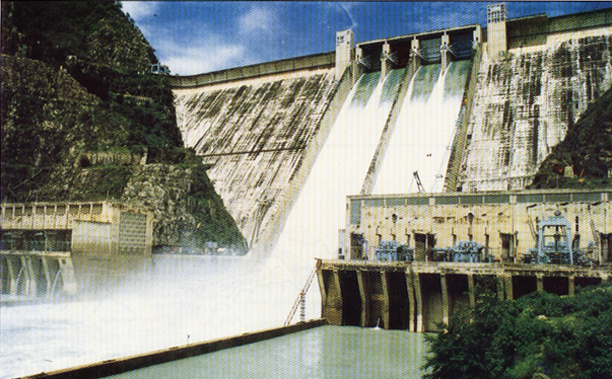
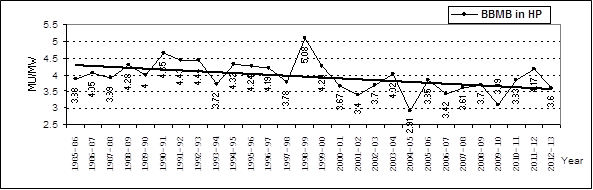



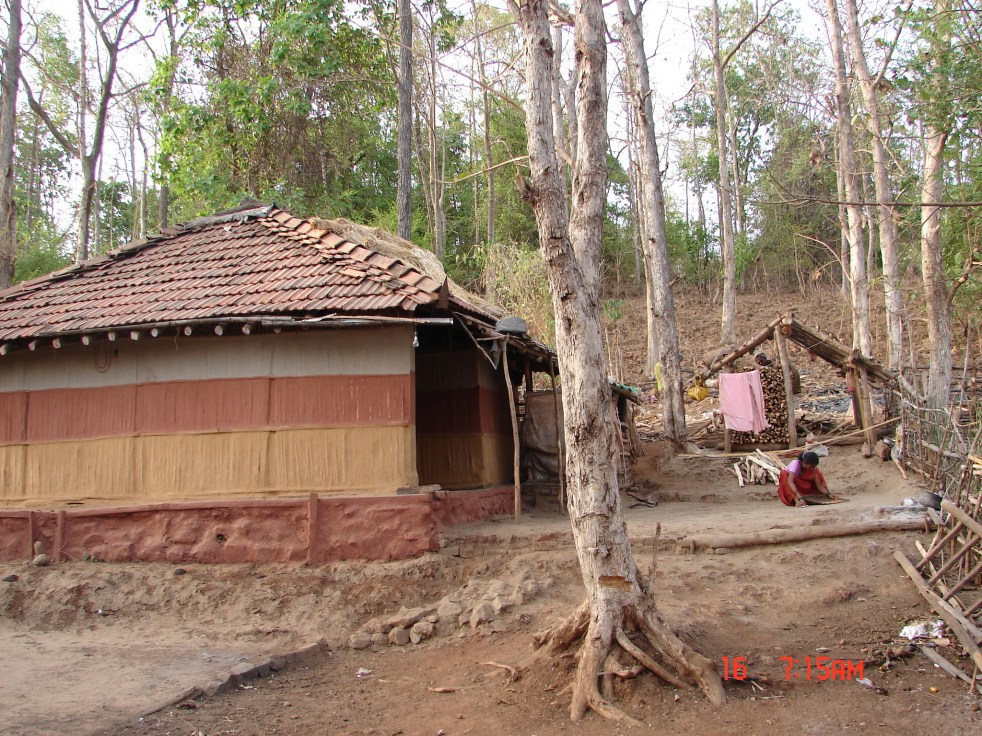


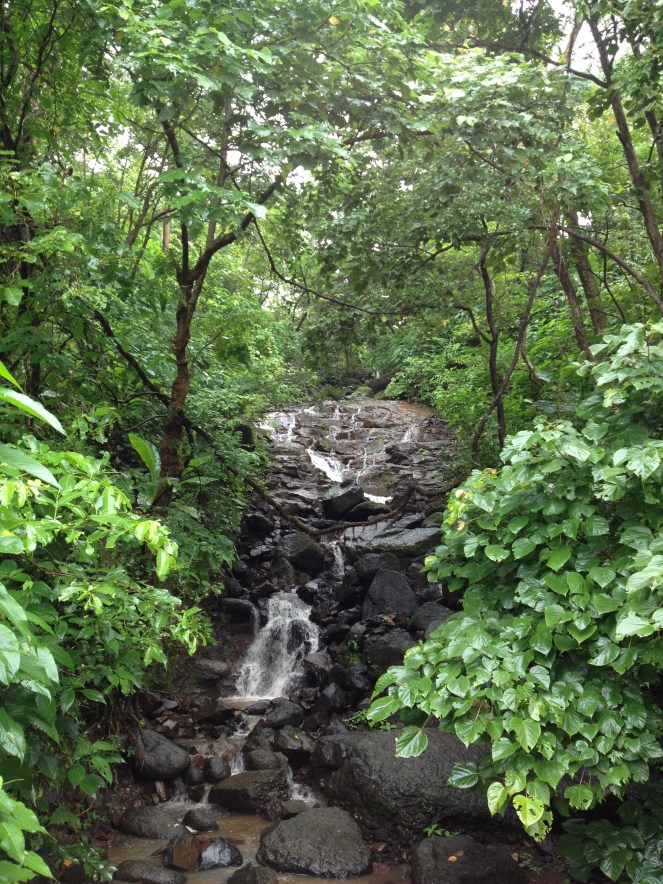


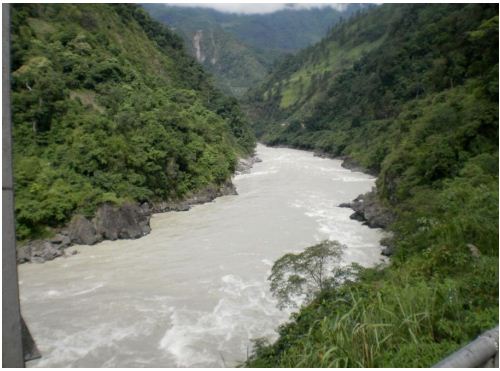
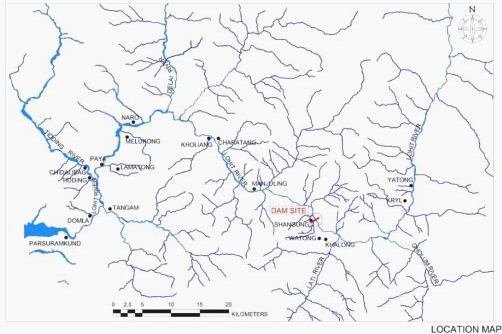


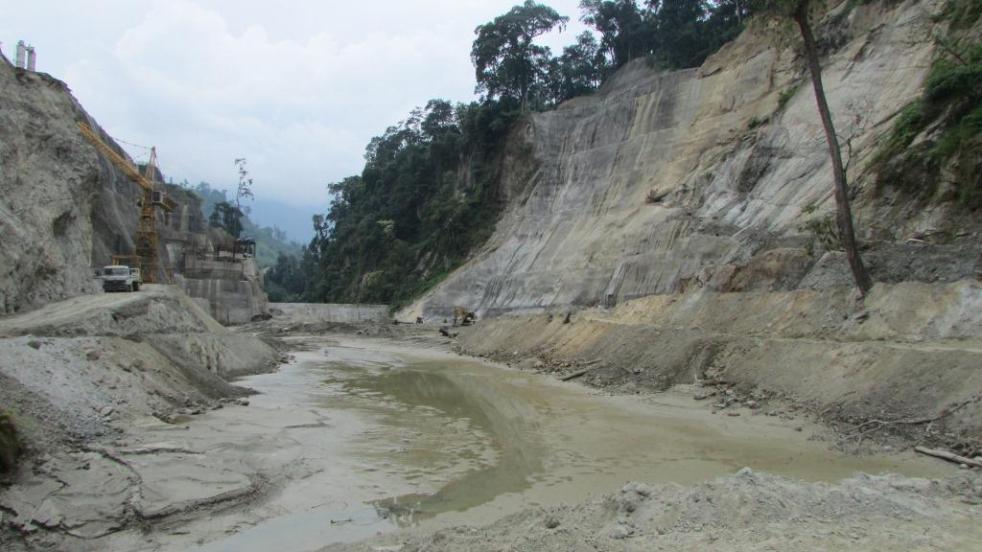


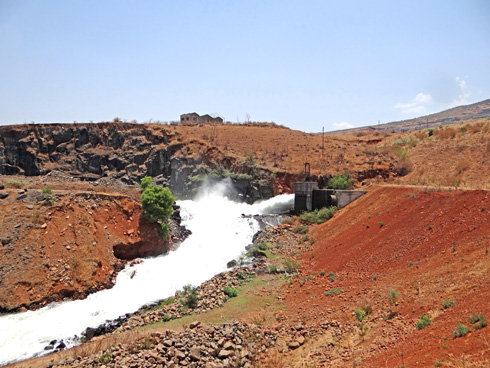

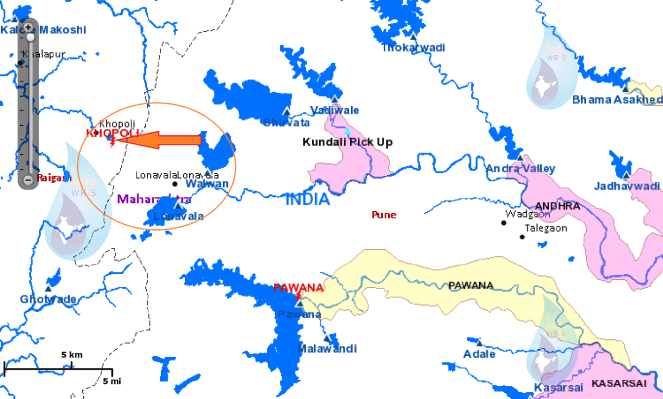
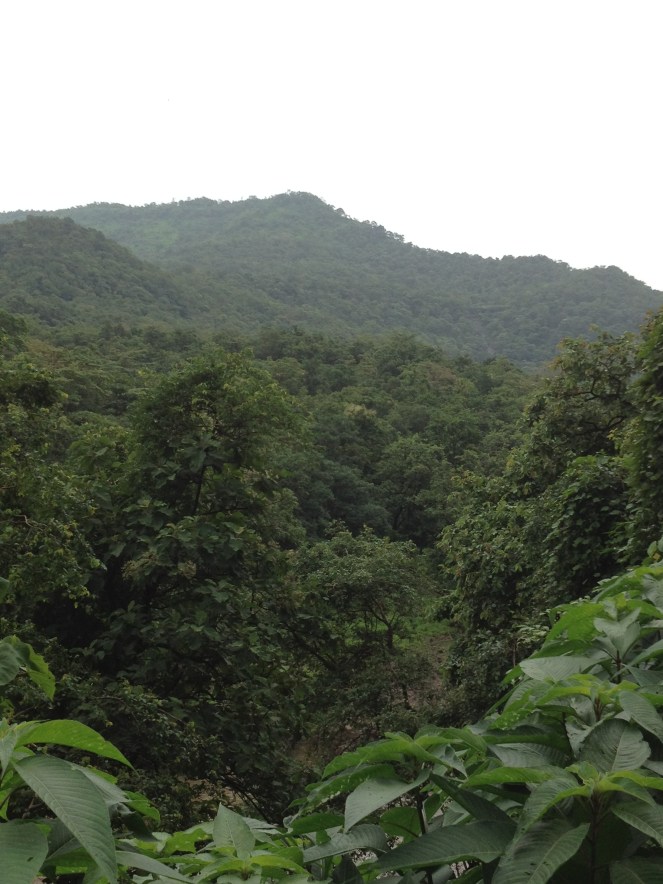

 SANDRP