Dams · DRP News Bulletin

DRP News Bulletin 17 April 2017 (Why Bihar needs to launch Farakka Satyagarha on centenary of Gandhiji’s Champaran Satyagraha)

As the President of India is in Patna today (April 17, 2017) to remember the centenary of Gandhiji’s Champaran Satyagraha, we need to remember that the Central message of Gandhi’s Satyagraha was to fight injustice, atrocities and abuse, irrespective of the source of the atrocities.

During the international workshop on INCESSANT GANGA in Patna on Feb 25-26, 2017, Bihar Chief Minister Nitish Kumar mentioned that this is the centenary year of Gandhiji’s famous Champaran Satyagraha in Bihar. He also mentioned how Bihar has suffered the increasing intensity, duration and destructive floods due to Farakka Dam.

Continue reading “DRP News Bulletin 17 April 2017 (Why Bihar needs to launch Farakka Satyagarha on centenary of Gandhiji’s Champaran Satyagraha)”

Dams

Karnataka Rivers Profile

Karnataka is one of the four southern states of Peninsular India (Figure 1a), came into existence with the passage of the States Reorganisation Act (1956, Nov 1) and is located 11°30′ North and 18°30′ North latitudes and 74° East and 78°30′ East longitude (https://en.wikipedia.org/wiki/Geography_of_Karnataka). The state covers an area of 191,976 km² (5.83% of India‘s geographical area). Karnataka is the eighth largest Indian  state by area, the ninth largest by population and comprises 30 districts (figure 1b) divided in to 4 administrative divisions, 270 towns and 29406 villages (http://ssakarnataka.gov.in/). The state is situated on a table land where the Western and Eastern Ghats ranges converge into the complex, in the western part of the Deccan Peninsular region of India. Karnataka is bordered by the Arabian Sea to the west, Goa to the northwest, Maharashtra to the north, Andhra Pradesh to the east, Tamilnadu to the southeast, and Kerala to the southwest.

Continue reading “Karnataka Rivers Profile”

Dams

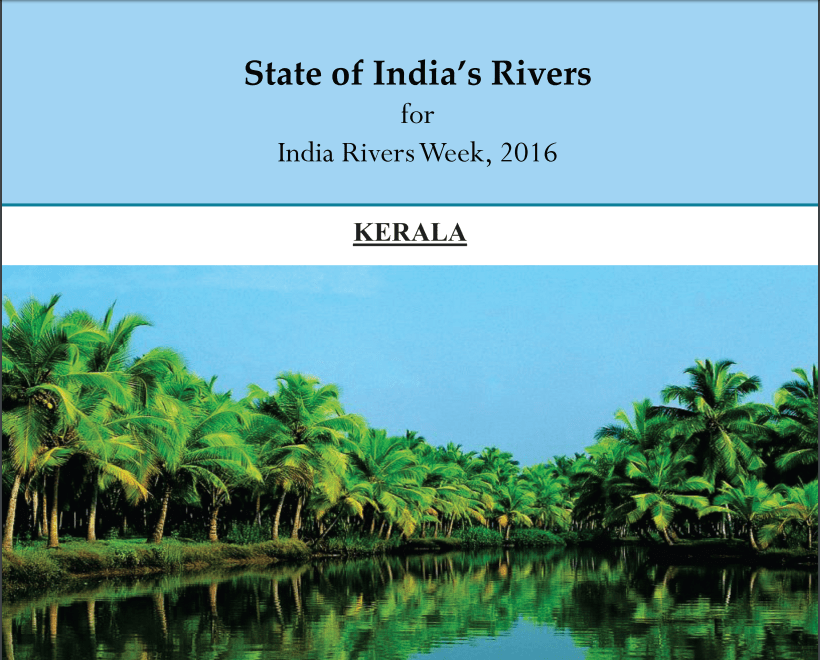
Kerala Rivers Profile

About Kerala Rivers                                                                                                            

Of Kerala‘s 44 rivers, 41 flow westwards and the rest towards east. The basin area of major rivers is located within the Western Ghats, a global biodiversity hotspot, while some other northern rivers originate in laterite hills. The short length of the rivers coupled with very high population density (over 30 million people living in a land area of 38,000 sq km) creates high dependency on water and the rivers‘ susceptibility towards environmental onslaughts.

In the six major rivers featured in the Status Report, we discuss biodiversity in riparian upper catchments and low lying wetlands. Overall, the southern Western Ghats region with catchments including many of the major riers of Kerala, Karnataka and Tamil Nadu has the highest freshwater species richness (260–312 species) and endemism (103–129 species), with particularly unique diversity of fish in Chalakudy and Periyar rivers. In rivers like Bharatapuzha, of the 6000 odd sq km catchment, a mere 100 sq km has intact forests in the catchment of Kunthipuzha, the lifeline of the river‘s summer flows. The Vembanad-Kol wetland, the largest estuarine system in India, is fed by 10 rivers. It supports diverse livelihoods – below sea level paddy farming, fishing, coir retting, to name a few. The wetlands offer flood protection for thickly-populated coastal areas and contributes to groundwater recharge.

Continue reading “Kerala Rivers Profile”

Dams · Ganga

The Sad State Of These Persons Called Ganga & Yamuna – Can State Protect Them?

Guest Blog by: Chicu Lokgariwar

It’s a girl! And another girl!

On March 20 2017, the High Court of Uttarakhand in an unforeseen move, bestowed ‘legal personhood’ on the Ganga and the Yamuna. Ten days later, as people were still trying to understand the implications of this order, the Court declared  the glaciers, lakes, and wetlands of these basins as legal persons. What does this mean exactly?

The decree: As per an order passed on 20th March 2017, while ruling on a public interest litigation filed by Mohammed Salim against the State of Uttarakhand, the High Court has declared the entire length of the Ganga and the Yamuna, including their tributaries to be juristic persons.

The order states, ‘..the Rivers Ganga and Yamuna, all their tributaries, streams, every natural water flowing with flow continuously or intermittently of these rivers, are declared as juristic/legal persons/living entities having the status of a legal person with all corresponding rights, duties and liabilities of a living person in order to preserve and conserve river Ganga and Yamuna.’

Continue reading “The Sad State Of These Persons Called Ganga & Yamuna – Can State Protect Them?”

Dams · DRP News Bulletin

DRP News Bulletin 10 April 2017 (Activists from 40 countries & all continents meet for RIVER GATHERING in Georgia)

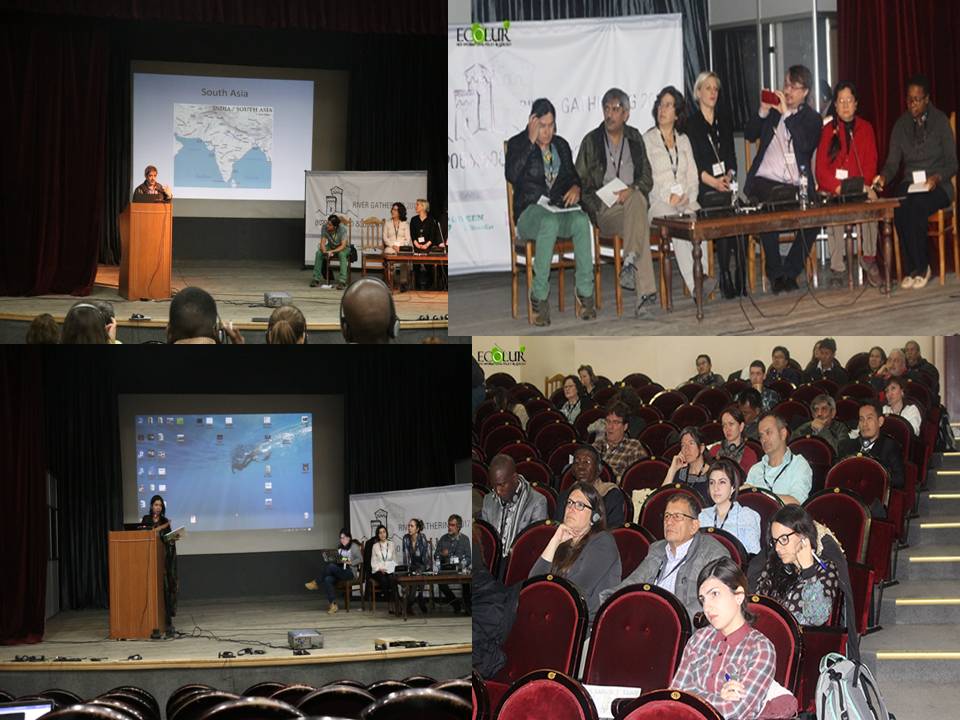
In a most significant event, some 85 river and dam activists from 40 countries and all continents gathered in Tbilisi, Georgia (on border between Asia and Europe, between Black and Caspian Sea) during March 27-31, 2017 to share experiences about their efforts to protect the world’s rivers and join their struggles against destructive hydropower projects. The meeting was organized by CEE BankWatch Network (active in 12 countries in Eastern and Central Europe) and International Rivers.

dahlich

Eight persons from South Asia, including those from India, Pakistan, Nepal and Bangladesh joined the meeting to share experiences from the region. Indian participant included SANDRP coordinator (who was also in steering committee of the meeting) and Associate Coordinator Parineeta Dandekar. A number of participants from neighboring and nearby countries like China, Myanmar, Thailand, Cambodia, Mongolia and Russia also participated. Issues related to trans-boundary rivers, small hydropower projects and multiple projects on the same rivers, decommissioning of the dams, how to achieve free flowing rivers and importance of rivers in changing climate were some of the key issues discussed at the meeting.

Continue reading “DRP News Bulletin 10 April 2017 (Activists from 40 countries & all continents meet for RIVER GATHERING in Georgia)”

Dams

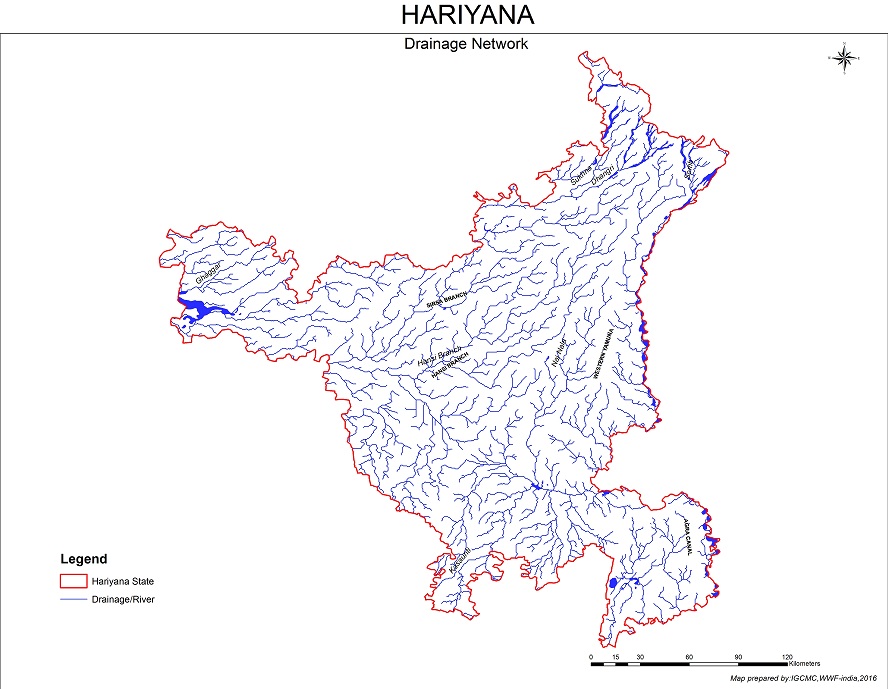
Haryana Rivers Profile

Summary of Rivers in Haryana                                                                              

About Haryana

Location: Northwest India, Carved out of Punjab in 1st November 1966; Area: 44212 sq km. Mostly Gangetic/ Trans-Gangetic Plains; Population: 253.53 lakhs (2011); 4 River Basins, 21 Districts; Climate- Arid to semi-arid with average rainfall

Rivers in Haryana fall mainly within Indus and Ganga basins. River Ghaggar sub basin and its tributaries in the west of the state caters to the Indus basin, while river Yamuna and its tributaries in the east make up the portion of the Ganga basin. 

Continue reading “Haryana Rivers Profile”

Dams · DRP News Bulletin

DRP News Bulletin 03 April 2017 (India: Power Surplus & Exporter, With Record Solar & Wind Generation Trend, Need Not Push Destructive Hydro Projects)

Power surplus, power exporter India, with record solar& wind wind generation trend, why push more destructive hydro projects According to power ministry statement on March 29, 2017, India for the first time became NET EXPORTER OF ELECTRICITY during 2016-17, it exported 4% more power during last 11 months (April-Feb), that what it imported from Bhutan. At the same time, power plants, on a national average, are opera ting at roughly 60%, down from nearly 65% in 2014-15.

Meanwhile, the Cabinet Committee on Economic Affairs has approved the amendments in the Mega Power Policy to push 31 GW stuck projects entailing an investment of Rs 1.5 lakh crore. The stuck projects in mega power policy include hydro projects of above 350 Mw in designated states (J&K and eight NE states) and above 500 Mw in other states.

Amid this, New and Renewable Energy Ministry has added over 5400 Mw wind energy capacity in 2016-17 against the target of 4000 Mw. This year’s achievement surpassed the previous higher capacity addition of 3.423 Mw achieved in the previous year. The leading States in the wind power capacity addition during 2016-17 are Andhra 2190 Mw, followed by Gujarat 1275 Mw and Karnataka 882 Mw.

In the last couple of years, India has not only seen record low tariffs for solar power but wind power too has seen a significant drop in tariffs. The onshore wind power potential alone is about 302 Gw. Preliminary estimates show the Gujarat coastline has the potential to generate around 106,000 Mw of offshore wind energy and Tamil Nadu about 60,000 Mw.

Continue reading “DRP News Bulletin 03 April 2017 (India: Power Surplus & Exporter, With Record Solar & Wind Generation Trend, Need Not Push Destructive Hydro Projects)”

Dams

West Bengal Rivers Profile

About West Bengal 

Area: 88752km2; 20 districts; Population- > 91 million Topography: Mountains, Plateaus and Plains.

About West Bengal Rivers

The state of West Bengal, a land of many rivers, covers an area of about 88,752 km2 and is the home of more than 90 million populations as per census of 2011. The Ganga divides the state into two unequal hubs: the North and South Bengal. The state has been divided into 20 districts, the seven districts are within North Bengal and remaining 13 districts are in South Bengal. West Bengal is the only state of India that extends from the Himalaya in the north to Bay of Bengal in south. It offers wide topographic diversity and intricate drainage network of 29 basins. The south Bengal can further be subdivided into two geographical units taking Bhagirathi-Hugli river (the western distributary of the Ganga) as the demarcating line. The western part is called Rarh Bengal and the eastern part is described deltaic Bengal. The rivers of West Bengal have been divided into five groups: i) the rivers of North Bengal; ii) the Ganga-Padma system; iii) the Bhagirathi- Jalangi-Churni system; iv) the western tributaries to Bhagirathi and v) the tidal creeks of Sundarban.

Continue reading “West Bengal Rivers Profile”

Dams · DRP News Bulletin

DRP News Bulletin 27 March 2017 (DON’T WE NEED TO LEARN TO TRULY CELEBRATE OUR RIVERS?)

This is about the proposed Brahmaputra Festival being planned by the Assam Govt from March 31 to April 4, 2017. The five-day festival will witness significant participation from China. Various other countries such as Vietnam and Singapore are also reported as attending the program. It is scheduled to be inaugurated by President Pranab Mukherjee.  

It is true that the word business appears four times on the opening page of this festival website, but the word flood, erosion and people do not appear even once. This is relevant since for very large sections of people of Assam, the river also means floods, erosion, displacement and disaster on regular basis and not just “lifeline of Assam” or “life-giving prosperity and countless blessings”.  

The festival website also errs in many ways, including when it claims “India’s only male river”, since there are several male rivers, including Damodar, Ajoy, Pagla, Gadadhar, among others. It is true that even the word Nemami is copied from the Nemami Gange, but that should not be such a big issue?

It is true that people also suffer when river dries up or is polluted or is encroached or unsustainably mined, and none of these issues are highlighted by the festival website. It is true that the the Assam also means all the communities, including the bodos and mishing and many others, not just Guwahati or Dibrugarh or Majuli. The festival organisers may argue that we are taking the festival to all 21 districts, but it is important to recognised all communities of Assam.

This is in addition to the fact that Brahmaputra includes all the states of North East India, and more. The Brahmaputra, 2,900 km long, is an international river with 918 km of it flowing in India, 1625 km in China and 337 km in Bangladesh.

It is true that the festival is more about attracting tourists, business and transport along the river. And so it is not even giving a comprehensive picture of the rivers of Brahmaputra basin in Assam, nor is there attempt to do anything to improve the state of the rivers. Similarly, the destruction of the rivers of Guwahati and Assam needs to be halted and reversed, and may be this occasion can be used to push that advocacy?

Continue reading “DRP News Bulletin 27 March 2017 (DON’T WE NEED TO LEARN TO TRULY CELEBRATE OUR RIVERS?)”

Dams

Rajasthan Rivers Profile

About Rajasthan

Location: North West India; Area:- 342,239 sq km; Geography:-Desert plains and mountainous (Aravalli range); Population:- 68.54 million People; Rivers:- 6 Major River basins; Districts:-33 Districts; Climate:- Drier Western and Tropical Eastern part

About Rajasthan Rivers 

Rivers in Rajasthan are mostly seasonal, but this fact explains little because a river is not just the surface flow, evident to a naked eye. All the rivers and their floodplains in this desert state are vast grazing grounds supporting millions of livestock. These unseen rivers also recharge the groundwater making well irrigation possible.  

Modern-day development activities, however, are putting an enormous pressure on them. If deforestation has reduced the water flow, rampant sand mining has affected the water retention and seepage into subsurface channels. Aravallis also has large number of marble mines and processing units. While digging operations extensively damage the environment, discharge of a large amount of slurry by processing units also blocks water channels. Industrial and domestic wastewater has further affected the quality and biodiversity of rivers. 

Continue reading “Rajasthan Rivers Profile”