DRP News Bulletin

DRP 18 April 2022: Clean Hydro does not make much sense in India: Experts

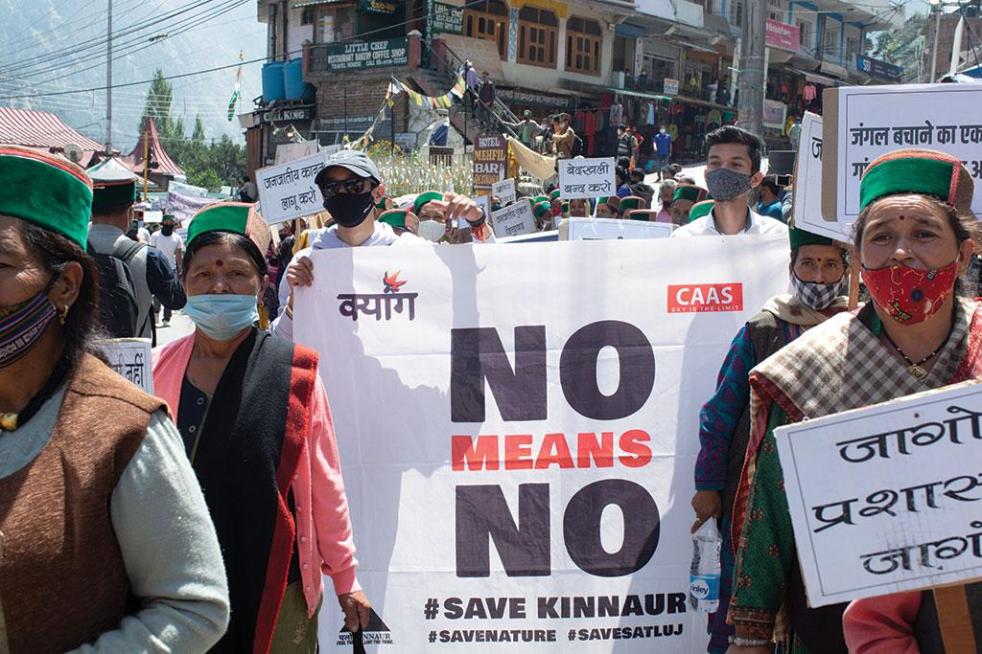
(Feature image:- Following massive landslides in Kinnaur, Himachal Pradesh sees growing protests against hydropower projects. DTE)

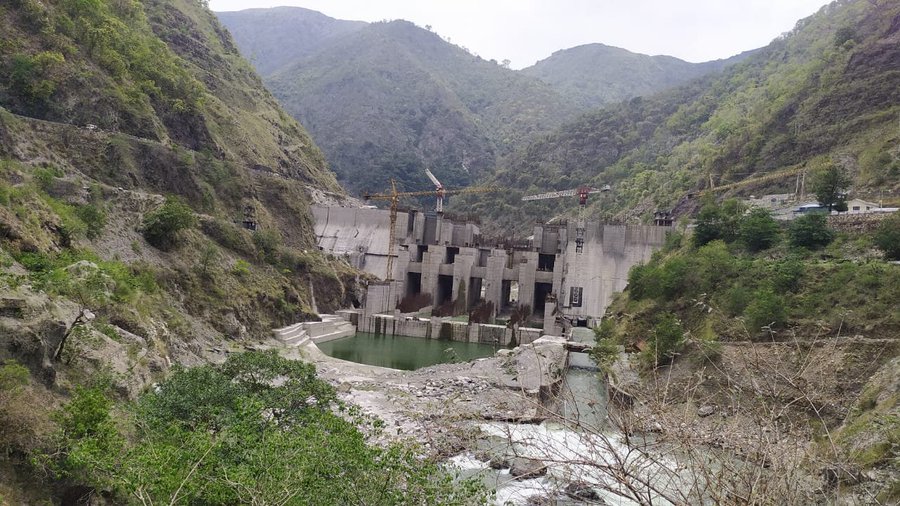
As the following report from Energy Monitor this week says, according to international experts, the idea that hydro is clean does not make sense. They say that for a number of reasons including for the social risks, environmental risks and the increased emissions of methane due to rotting of organic matter flowing in the river and settling in the reservoirs. In spite of some apparent inherent misconceptions, this part of the report is sound and should be a wakeup call for the supporters of big hydro in India. As the report suggests this is particularly true in the context of climate change. Indeed, this has been our own experience in India with increasing disasters related to hydro projects and the increasing unviability of the hydro projects in India.

Continue reading “DRP 18 April 2022: Clean Hydro does not make much sense in India: Experts”
DRP News Bulletin

DRP 11 April 2022: Ken Betwa Affected people protest land acquisition

The residents of about 15 villages affected by the Ken Betwa link project are opposing the land acquisition process being initiated in violation of all norms have opposed the move. The notices have not been pasted in the affected villages, gram sabhas have not been conducted and the information promised in the notice is not available at the designated places. When question, the Madhya Pradesh officials have responded arrogantly. The history of manipulations and violations that has been the norm every step of the way in Ken Betwa Project continues. In fact the project does not have final forest clearance, its wildlife clearance has been questioned by the Supreme Court appointed Central Empowered Committee and its Environment clearance is under challenge before the National Green Tribunal. In absence of the clearances, the land acquisition should not even be started if there is any place for prudent norms in such projects. It would be best if the government stops the process and starts it only if and when it gets all the clearances and after taking all the concerned into confidence through a prudent confidence inspiring process.

Continue reading “DRP 11 April 2022: Ken Betwa Affected people protest land acquisition”
Sand Mining

South Zone: 25 sand and stone mining workers died since Dec. 2020

(Feature Image:- The spot where gelatin sticks exploded in Feb. 2021 killing 6 people at a quarry site at Hirenagaveli village, Chikkaballapur district. Credit: DH Photo/Pushkar V)

Annually scores of Indian people have been meeting untimely deaths and suffering injuries due to violence and accidents associated with unregulated sand mining activities. We have compiled zone wise detailed reports on human toll of sand mining for the period between December 2020 and March 2022. The reports for North, East and North East and West zones have been published. This is fourth and last summary report of detailed file attached here on the issue for South zone covering Karnataka, Telangana, Tamil Nadu and Kerala states. We did not come across any report on the subject from Union Territory of Puducherry for this period.

Continue reading “South Zone: 25 sand and stone mining workers died since Dec. 2020”
Sand Mining

West Zone: In 16 months 17 children died in sand mine pits

(Feature image:- 19 year old mine helper died in sand mine pit in Sone river, Sidhi in March 2022. Image source: Vindhya News.)

One of the major impacts of riverbed mining in India is deaths and injuries due to accidents and violence. In 16 months since Dec 2020 (our previous report on this issue covered the period till Nov 2020) to March 2022, at least 17 children have died in sand mine pits in West India.  

This is West India summary report for this 16 month period on sand mining violence and accidents. The detailed file for West zone can be see here. The West Zone states included here are: Madhya Pradesh, Rajasthan, Gujarat, Maharashtra and Goa. The summary reports along with detailed accounts for North, East and North East zones have already been published. The previous such report covering the issue from January 2019 to November 2020, can be seen here.

Continue reading “West Zone: In 16 months 17 children died in sand mine pits”
DRP News Bulletin

DRP 04 April 2022: Gujarat Tribals unite to stop Par Tapi Narma

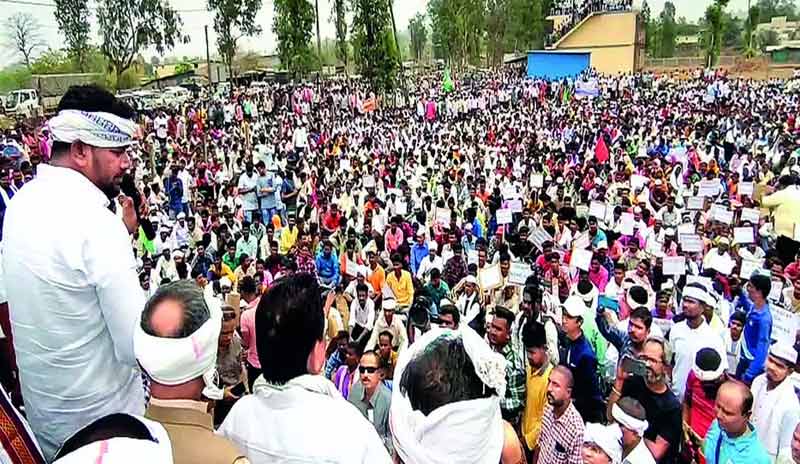
(Feature Image:-Tribals protesting against Par-Tapi-Narmada Project. The Indian Tribals)

The amazing unity and fight shown by Gujarat Tribals in their protest against the Par Tapi Narmada Link has led to both Gujarat govt and Central govt agreeing to suspend the project. However, the tribals are rightly not satisfied with the word of play indulged in by the Gujarat and Union govt so far. The central govt has said that the project will not go ahead as long as there is no consensus among the party states, but that statement is true even with or without the campaign launched against the project. The Maharashtra govt in any case is not in agreement with the project. Gujarat govt has not taken a clear decision to permanently cancel the project and without such a decision, Gujarat govt can again revive the project any minute. Same is true about the Central govt. So until both Gujarat govt and Central govt decide to cancel the project and come out with official notification to that effect, the tribals are right to continue the protest and not believe in either of the govt.

Continue reading “DRP 04 April 2022: Gujarat Tribals unite to stop Par Tapi Narma”
Sand Mining

North India: 136 people killed in sand mining violence & accidents in 16 months

(Feature Image: 1 killed, 17 injured after a sand truck toppled in mine pit in Kosi river, Ram Nagar. Source Amar Ujala, 30 Jan. 2021)

Among the many issues affecting Riverbed sand mining is the issue of violence of various types. Stories of such violence keeps coming up from all across the country all the time. However, there is no comprehensive picture emerging about this violence. SANDRP has been trying to compile available information about instances of various types of violence related to river bed mining since last few years.

Tracking the issue, this year we have prepared detailed accounts along with summary reports in a Zone wise format. This first part is a summary report of the detailed account on North Zone states including Uttar Pradesh, Haryana, Uttarakhand, Punjab, Delhi, Jammu & Kashmir and Chandigarh and covers sand mining violence and deaths that took place between December 2020 and March 2022, following after our earlier report that carried the figures for period upto Nov 2020. The successive parts will cover East & North East, West and South Zones. SANDRP’s previous report detailing nearly 193 human deaths between January 2019 and November 2020 on account of illegal sand mining activities can be seen here.

Continue reading “North India: 136 people killed in sand mining violence & accidents in 16 months”
Dams, Rivers & People

DRP 28 Mar 2022: Is Climate Change making big dams MORE dangerous?

That big dams are dangerous, disaster prone is well known, the parliament having passed the Dam Safety Act is just one of the clear evidence of it. However, are big dams becoming even MORE dangerous in changing climate? All the science and also practical evidence seems to suggest that. This is also what the SCROLL report mentioned below concludes.

What is shocking is that the CWC (Central Water Commission), India’s premier technical body on dams and water, when asked about this through an RTI, is in slumber. CWC told the journalist that there are no such cases! This should be worrying for everyone concerned including those in the risk zone of the dams, the beneficiaries of the dams and also the dam operators. This also exposes how weak is the mechanism set up by the Dam Safety Act passed recently by the Parliament is. This is because under the act, CWC Is the main organisation responsible dam safety in India. Can CWC really save us from unsafe dams, structurally unsafe or operationally unsafe? The SCROLL article illustrates through the example of Andhra Pradesh dams that CWC has not. It also quotes the compilation of SANDRP where to the frequency of disasters are only going up and there is again no confidence inspiring role from CWC.

Continue reading “DRP 28 Mar 2022: Is Climate Change making big dams MORE dangerous?”
Rivers

How and where can ‘greening’ help Indian Rivers?

Guest Article by Manoj Misra

The Indian Council of Forestry Research and Education (ICFRE) under the union Ministry of Environment, Forest and Climate Change (MOEFCC) has recently prepared Detailed Project Reports (DPRs) for the rejuvenation of 13 Indian rivers and released a document called the ‘overview of Detailed Project Reports for rejuvenation of major Indian rivers through forestry interventions’. These rivers are Jhelum, Chenab, Ravi, Beas, Sutlej, Yamuna, Brahmaputra, Luni, Narmada, Godavari, Mahanadi, Krishna and Cauvery (Kaveri). This article is in the nature of a caveat on the overview DPR report and the plans.  

Continue reading “How and where can ‘greening’ help Indian Rivers?”
Water Options

World Water Day 2022: Positive Water Stories from India

This report on World Water Day 2022 highlights the positive impacts of initiative taken by individual, communities, civil societies and government schemes towards revival and protection of water sources in India over the past one year. These efforts show how conservation, restoration and management of water resources including springs, step-wells, ponds, lakes, tanks etc. at local level are far better, cost effective and efficient solutions in comparison to big water projects which in immediate and long term cause more damages than benefits to hydrological cycle, local community, environment apart from incurring huge construction and operating costs. SANDRP has also published media compilation on positive groundwater stories and urban water options on World Water Day 2022 occasion.

Continue reading “World Water Day 2022: Positive Water Stories from India”
Urban Water Sector

World Water Day 2022: Urban Water Options

Feature Image: Bengaluru, second highest in rainwater harvesting in Indian cities. https://bengaluru.citizenmatters.in/rainwater-harvesting-in-bengaluru-webinar-64351

On World Water Day 2022, here are some positive water reports from urban India. Two reports on Positive Groundwater and Water stories from India over past one year have been separately published.

Mumbai BMC scarps Gargai dam, goes for alternatives In a wise move, the Brihanmumbai Municipal Corporation (BMC) has cancelled Gargai dam project. In January 2014, SANDRP had made submission to Expert Appraial Committee (EAC), highlighting the adverse impacts of this project on tribal people and Tansa Sanctuary stressing on exploration of alternatives including recycling of sewage and rain water harvesting. Finally, now the BMC has scrapped the unjustified project which would have caused felling of 4.5 lakh trees which BMC chief Iqbal Chahal rightly finds pointless in the wake of increasing climate change threats.

Continue reading “World Water Day 2022: Urban Water Options”