DRP News Bulletin

DRP 080321: Will Madras HC action help save water bodies?

While on the face of it the Madras High Court order on March 2, 2021 that all district collectors of Tamil Nadu must upload by March 17, GPS/ satellite images of all the water bodies in their districts is not only welcome, it needs to be done in all the districts across India. This order is by the bench of Chief Justice Sanjib Banerjee and Justice Senthilkumar Ramamoorthy.

The same bench had earlier in January 2021 said, in response to a PIL that the government officials must have zero tolerance towards encroachment of waterbodies and ensure that every inch of such encroachment gets removed at the earliest by following the due process of law. The PIL had sought for removal of encroachments from a two-acre swamp at Arehalla in Ithalar, a village in Nilgiri hills.

While these are welcome, we hope these orders get implemented and provisions be made by the HC to ensure accountability of the DMs to ensure that all information is put out on the district water bodies website in form and manner that people understand as also in english and should be archived so that the information can be used in future. The information from the past should also be put up on such websites and a transparent, participatory monitoring of the water bodies be instituted for each district.

Continue reading “DRP 080321: Will Madras HC action help save water bodies?”
Hydro Disaster

Rishiganga HEP: A foretold disaster for River, People and Chipko legacy

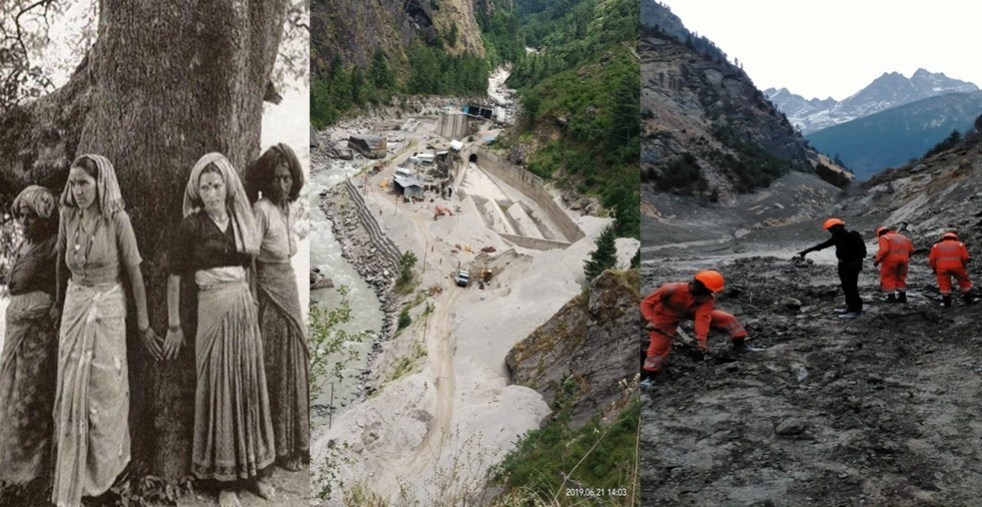
The February 7 2021 Chamoli deluge has completely destroyed Rishiganga Hydro Electric Project (HEP). The 13.2 MW run of the river project has also become graveyard for over 50 innocent workers and villagers. The damages to homes, bridges, forest and river eco-system is additional which cannot be restored easily.

In fact, the disaster is among the threats against which experts and locals had been warning the authorities time and again. Sadly, the past history of struggle and destruction shows that not only the state government but the judiciary also failed miserably to address the pleas of locals and assess the disaster risks in a timely manner.

Continue reading “Rishiganga HEP: A foretold disaster for River, People and Chipko legacy”
Hydro Disaster

Tapovan Vishnugad HPP: delays, damages and destructions

(Feature image of rescue operations at Tapovan Vishnugad barrage following Feb. 7, 2021 deluge in Dhauliganga river, Chamoli. PTI Photo/Arun Sharma)

The tragic Chamoli flash flood episode has become latest and one of most vivid examples of how hydro power projects (HPP) are a recipe for disaster in geologically delicate and climatically sensitive regions of Himalaya.

Even 10 days after the deluge the Alaknanda Basin Rivers are following with muddier water. Death toll is mounting. The immense damages to infrastructure including roads, bridges, homes and hydro projects is still to be fully assessed.

The catastrophic event has offered authorities many valuable lessons: not to be blind to the preventable disasters the hydro projects are inviting frequently.

Initial findings have established that the reason behind the flash flood was detachment of snow and rocks. The fact that the hydro projects and other man made mistakes have led to most human casualties and financial losses is undisputable.

Continue reading “Tapovan Vishnugad HPP: delays, damages and destructions”
CWC - Central Water Commission

Chamoli Disaster: CWC needs functioning, forecasting beyond monsoon

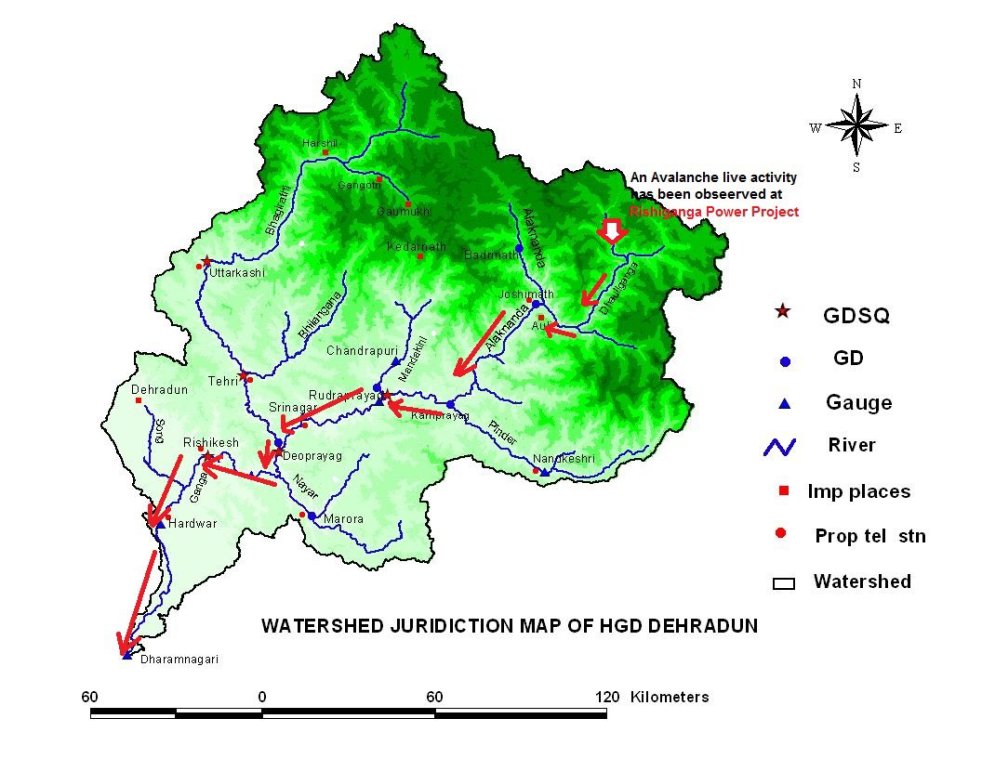
Feature image: CWC’s flow diagram map showing movement of flash flood in Alaknanda valley, Chamoli after landslide induced deluge on Feb. 7, 2021.

The landslide induced[i] flash flood disaster has left long-lasting trail of destruction along the Rishiganga-Dhauliganga-Alaknanda rivers. The flood sludge has filled up the riverbed after damaging infrastructures along the rivers. The rescue work still is underway.

The episode has reignited discussion on vulnerabilities of Uttarakhand, role of hydropower projects and climate change threats. Questions are being raised on destructive projects involving use of blasting, heavy machinery, tree felling challenging the resilience limits of fragile ecology of the region.

Continue reading “Chamoli Disaster: CWC needs functioning, forecasting beyond monsoon”
Wetlands

World Wetlands Day 2021: Five new Ramsar sites in 2020 but threats remain

On the Feb 2 2021, the World Wetlands Day, the Ramsar Convention on Wetlands would also complete its 50 years. The global treaty popularly known as Ramsar Convention was adopted in 1971 and came into force in 1975 following decades of negotiations.

The main objective of the treaty is to promote conservation and wise use of all wetlands through regional actions and international cooperation. Currently, the treaty has been accepted by 171 nations including India. There are 2414 Wetlands of International Importance under Ramsar treaty spreading over 254,540,512 ha of lands across the globe.

Continue reading “World Wetlands Day 2021: Five new Ramsar sites in 2020 but threats remain”
Urban Rivers

South India Urban Rivers Overview 2020

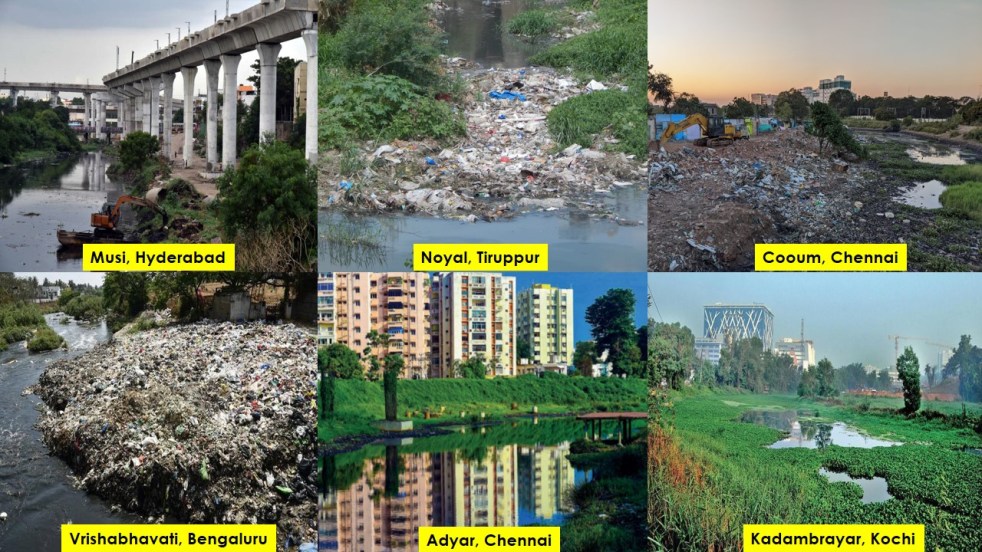
Urban rivers provide a lot of services, but the urban areas are inviting major trouble by destroying them through dumping of solid and liquid waste, encroachments, river front developments, unsustainable mining among others. The urban areas also operate in almost total policy vacuum and none of the cities under smart city programs are dealing with Urban rivers with any smartness.

This overview includes some key developments about Urban Rivers in 2020 from the South Indian states of Karnataka (Vrishabhavati in Bengaluru; Swarna-Netravati in Udupi), Tamil Nadu (Adyar, Buckingham Canal and Cooum rivers in Chennai; Kiruthumal in Madurai; Noyyal in Tiruppur; Bhavani in Coimbatore; Palar in Vellore; Vasishta in Salem), Telangana (Musi in Hyderabad), Andhra Pradesh (Tungabhadra in Kurnool), Kerala (Periyar, Kadambrayar & Konthuruthy in Kochi; Kodoor in Kottayam) and Puducherry (Sankarabarani).

Continue reading “South India Urban Rivers Overview 2020”
Dams

Gangetic dolphin deaths in 2020

More than a decade after Gangetic dolphins (platanista gangetica) was granted the status of national aquatic animal, the rare mammal species continue to face multiple threats impacting their habitat and population in Ganga rivers. Just in past one year, the year when the Prime Minister of India declared the Project Dolphin, six dolphins were found dead for unnatural reasons in three states along the Ganga. In addition to Gangetic, river dolphin were killed in three other states.

Continue reading “Gangetic dolphin deaths in 2020”
Sand Mining

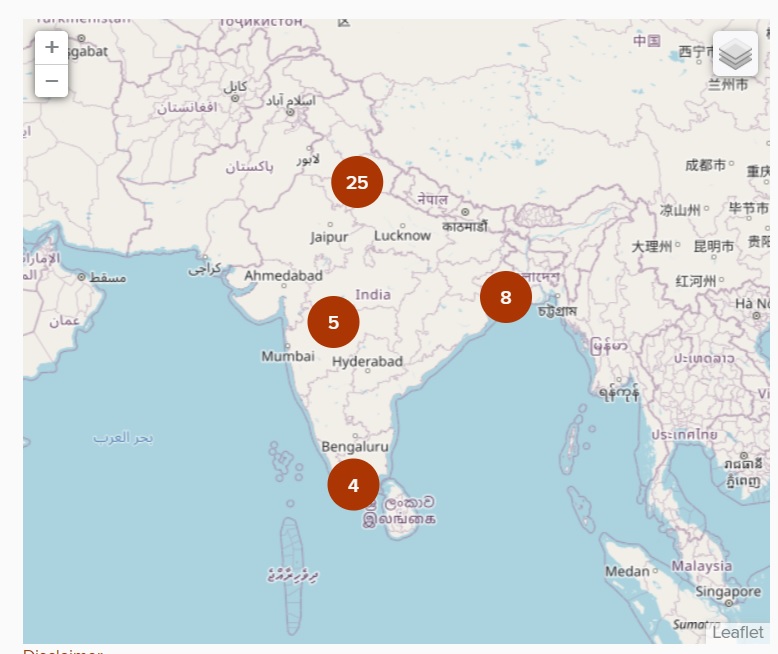
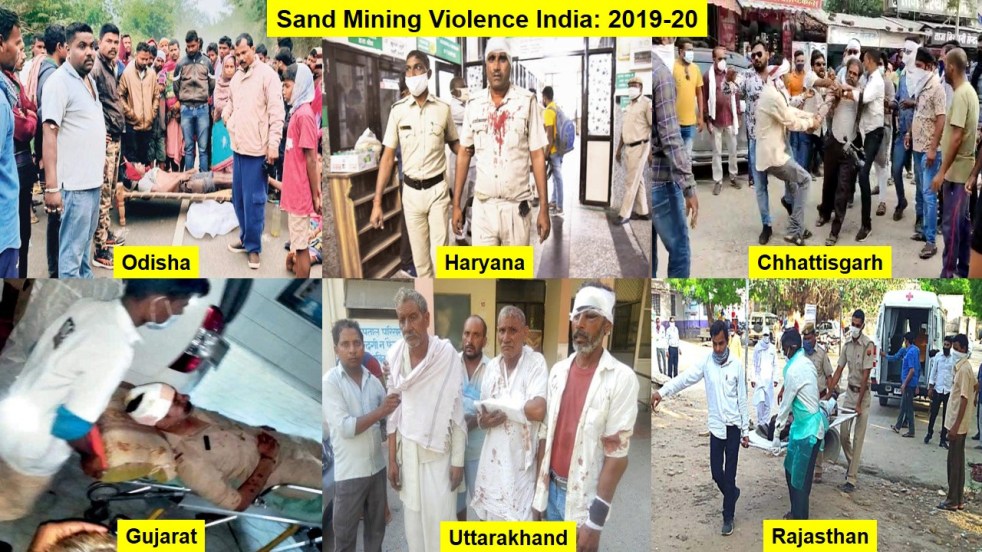
193 dead in River Sand Mining incidents in India in 2019-20

The illegal, excessive sand mining activities have been impacting river ecosystem and riparian communities adversely. Scores of villagers, young kids, reporters, activists and government officials are being attacked and killed every year for objecting to or due to unlawful and unsustainable excavation of River sand. The brazen mining is also leading to fatal road accidents which is again resulting in grievous injuries or even deaths.

The situation has only deteriorated despite several protests by locals and numbers of court orders reprimanding the central and the state governments. Political parties, politicians are directly or indirectly linked to many of these activities. 

SANDRP in its 2018 overview, could compile 28 human fatalities due to illegal sand mining operations. However that was only based on the news reports that came to our notice, the actual death toll would be much higher. SANDRP this time has prepared a more detailed account of violent incidents that have taken place since January 2019 so far causing human death and injuries. The state and zone wise brief summary of these incidents is given here and a bit more detailed report is uploaded separately.

Continue reading “193 dead in River Sand Mining incidents in India in 2019-20”
Sand Mining

Durga Shakti Nagpal at India Rivers Week 2020: Civil society have important role to play in sand mining governance

Transcript of famous, courageous IAS officer Durga Shakti Nagpal’s address and Question Answer session at North Zone Dialogue on “IS SAND MINING KILLING OUR RIVERS” at India Rivers Week 2020 on Oct 31, 2020. It’s a must read for the amazing clarity and forthrightness that she spoke about her experience in taking on Sand Mining Mafia in her very first posting as IAS officer, as SDM Greater Noida in UP in 2013. She describes the dramatic circumstances under which her team was attacked in the middle of the night and how they survived what looked like a certain end of life episode. And she also talks about the biopic being made on her and who are likely heroines and whom she prefers!

Continue reading “Durga Shakti Nagpal at India Rivers Week 2020: Civil society have important role to play in sand mining governance”