
There are a number of stories here that shows that India’s environment governance continues its downhill journey. The first is a Third Pole story that narrates how Indian govt, through the Minister of State of MoEF misled parliament about the state of decline of biodiversity in India. The second is how MoEF is trying to bypass public hearing and public consultation process in oil and gas exploration projects even in the face of the severe consequences India experienced in the Assam episode of similar mis-governance in the past. The third one is how Kerala govt has failed to assess the impacts of tunneling in Western Ghats. These are only some of the signs. There are much bigger warning writ all over. Until and unless people rise up against these, there is little hope of any change here.
Continue reading “DRP: 16 Nov 2020: India’s Environment Governance continues downhill journey”Tag: Ramsar
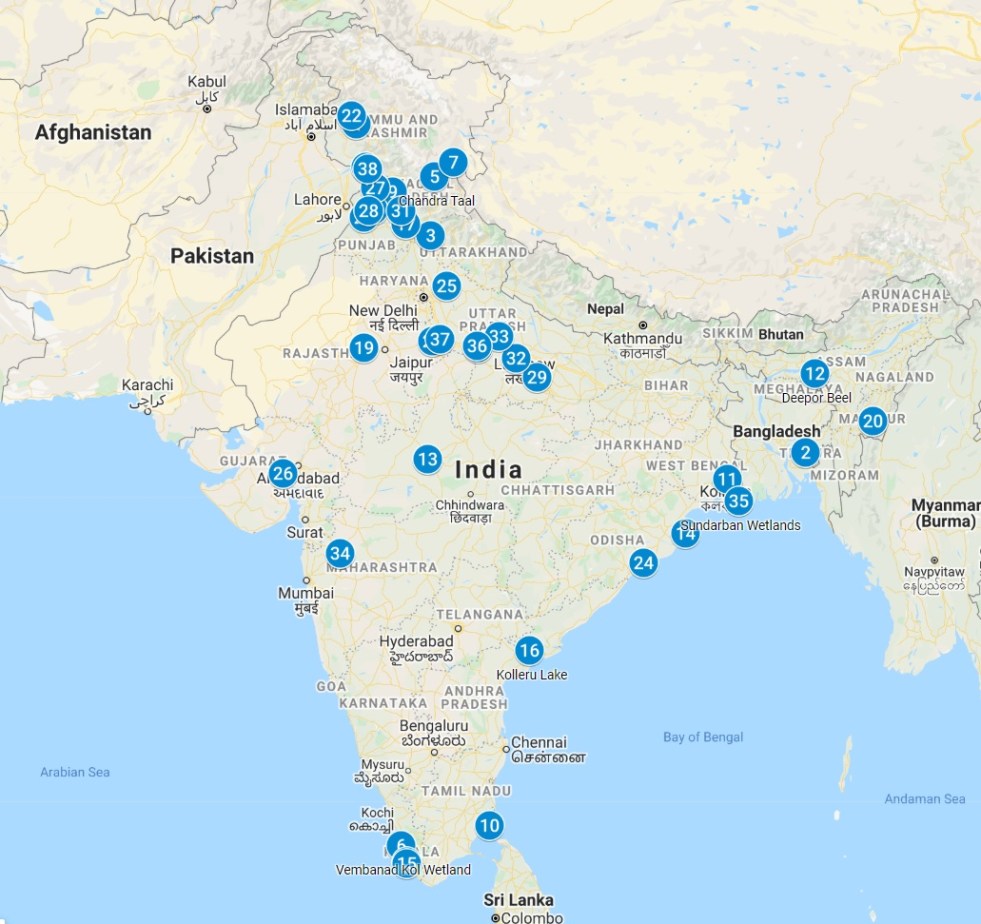
India Ramsar Wetlands in Crisis in 2020
Ramsar wetlands in India require urgent intervention for central, state governments and Ramsar Convention as this 2020 report shows. The five regional reports from India in 2020 show that despite Ramsar tag, the fate of these wetlands has seen no marked improvement. This raises the question as to how helpful for wetlands in India is the Ramsar tag.
In 2019, India has added 10 more wetlands selected under Ramsar Convention taking total number of Ramsar wetlands in the country to 37 covering about 10,679.39 sq km area across 15 different Indian States and two Union Territories (UTs). A description of each of India’s 37 Ramsar wetlands, as given on official Ramsar website is given in Annexure below. A decade after the first meeting at Ramsar in Iran for wetland protection in 1971, India got its first wetlands, Chilika lake (Odisha) and Keoladeo National Park (Rajasthan) registered as Ramsar wetland of global significance in Oct 1981.

Ramsar Wetlands in Crisis 2020: South India
Out of six states/ Union Territory in South India, three stares have five Ramsar wetlands sites which include one each in Andhra Pradesh and Tamil Nadu and three in Kerala. There are no Ramsar wetlands in Telangana, Karnataka and Puducherry. In order to understand and highlight the present day situation of Ramsar sites in India, SANDRP has compiled information on all 37 wetlands under North, West, North East and East zone. This account in the series describes the threats affecting the Ramsar sites in South Indian States.
Continue reading “Ramsar Wetlands in Crisis 2020: South India”
DRP: 2 March 2020: Will Mumbai rise up against unwanted, destructive Gargai Dam?
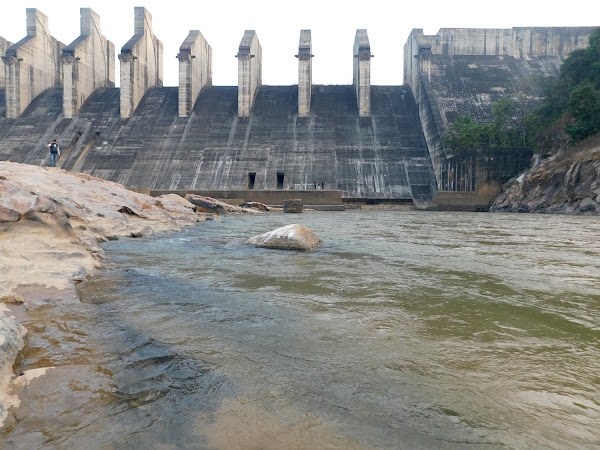
Mumbai Metropolitan Region (MMR), with annual rainfall in access of 2000 mm, does not do much to harvest the rain. It does not protect its local water bodies. It does not recharge groundwater to the extent it can easily do. It does not reduce its transmission and distribution losses. It does not treat its sewage to recycle and thus reduce freshwater demand. It does no demand side management. And yet it keeps demanding more water, and for that building of more dams and thus pushing more destruction. Without any credible options assessment. It has no water policy or water vision for smart water management.
The proposed Gargain Dam that will lead to destruction of over four lakh trees in 720 ha forest mostly in Tansa Wildlife Sanctuary, is a good example of how Mumbai is fuelling such dam building and destruction. The Rs 3105 Cr project will have many other impacts, including displacement of tribals and destruction of livelihoods for thousands others. As SANDRP report showed six years ago, (https://sandrp.in/2013/12/20/dams-in-tribal-areas-of-western-ghats-for-water-supply-to-mumbai-why-are-they-unjustified/, https://sandrp.in/2013/12/18/multiple-dams-for-mumbai-region/) and as our letter to the then Maharashtra Chief Minister emphasised in 2015 (https://sandrp.in/2015/01/13/water-smart-mumbai-open-letter-to-cm-devendra-fadnavis/), MMR region does not need any of these dams.
It was good to see MID DAY news paper report and EDIT highlighting some of these issues. Will the people of Mumbai Rise up, to stop this destructive dam, being pushed in their names, the way they stood up to save the far fewer Aarey Milk Colony trees?
Continue reading “DRP: 2 March 2020: Will Mumbai rise up against unwanted, destructive Gargai Dam?”
Ramsar Wetlands Crisis 2020: North East India
There are three Ramsar sites in eight states of north east India which includes Deepor Beel in Assam, Loktak lake in Manipur and Rudrasagar in Tripura. There are no Ramsar wetlands in remaining North East India states of Arunachal Pradesh, Nagaland, Mizoram, Meghalya, Sikkim. Here is an account of issues these Ramsar sites are facing.
Continue reading “Ramsar Wetlands Crisis 2020: North East India”

Critique of the Loktak Inland Waterways Improvement Project
Guest Blog by Shripad Dharmadhikary& Ram Wangkheirakpam
The Loktak Inland Waterways Improvement Project (LIWIP) essentially aims to extend and expand the motorised inland transport on the Loktak Lake wetland, by augmenting the machinery and equipment that will clear the lake of all obstructions to the water transport. It promises to be a “community welfare” project, with the benefits including growth in trade and commerce, eco-tourism and livelihoods and job creation, all due to the motorised water transport that will increase the ease and means of transport. Continue reading “Critique of the Loktak Inland Waterways Improvement Project”
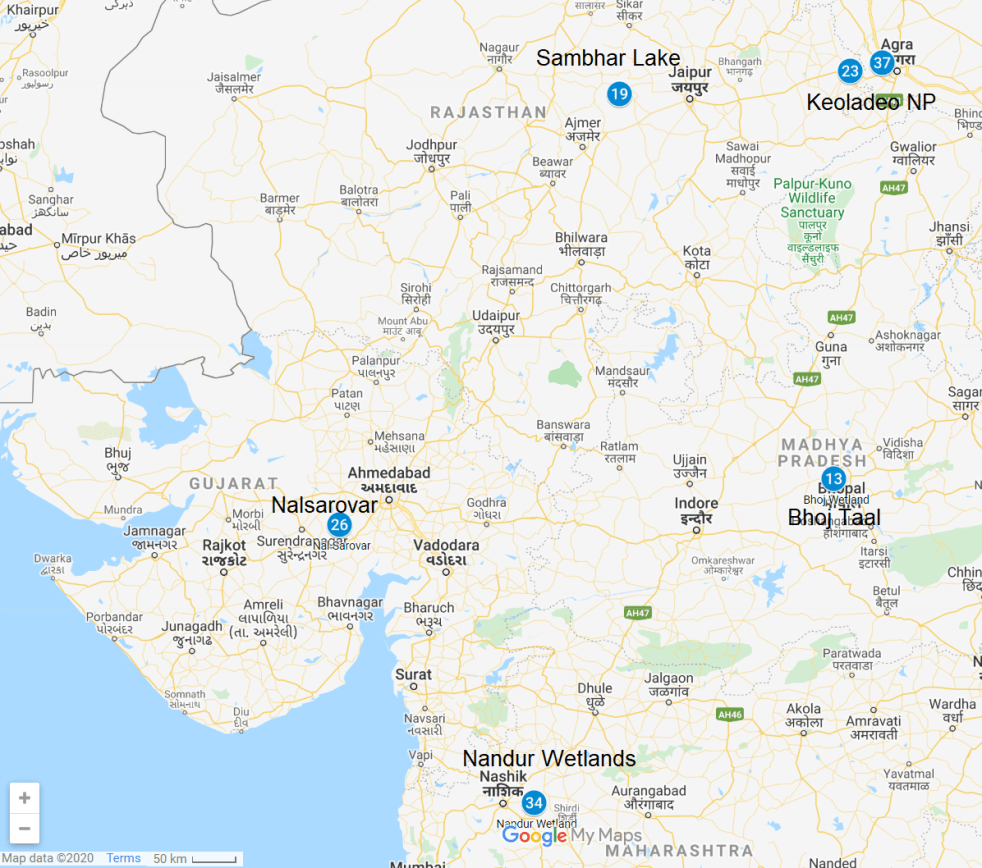
Ramsar Wetlands in crisis 2020: West India
The four state of West India have only five Ramsar sites of international importance. These includes Sambhar lake and Keoladeo NP in Rajasthan, Nalsarovar in Gujarat, Bhoj Taal in Madhya Pradesh and Nandur Madhmeshwar Wetlands in Maharashtra. There is no Ramsar site in Goa state.
Continue reading “Ramsar Wetlands in crisis 2020: West India”
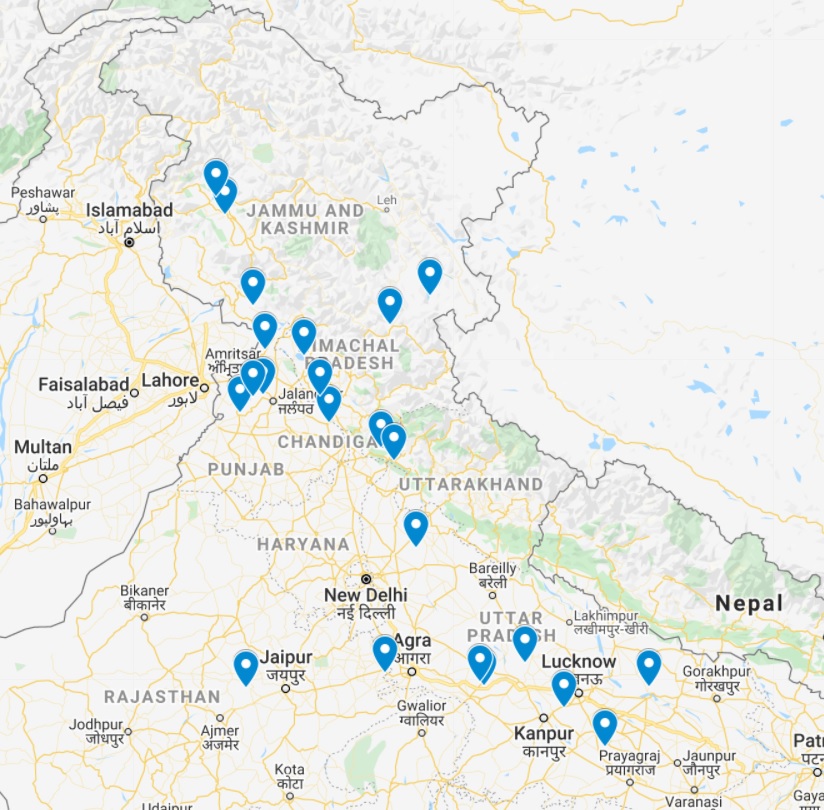
Ramsar Wetlands in Crisis 2020: North India
In the second half of 2019, ten additional wetlands of India have been recognized as Ramsar sites taking the total tally of such wetlands from 27 to 37. Does getting Ramsar tags really help the cause of wetlands protection? Here we try to show the present conditions and threats the Ramsar wetlands sites have been facing in North India. The subsequent compilation would share details of Ramsar sites in other zones of India.
Continue reading “Ramsar Wetlands in Crisis 2020: North India”

DRP: 3 Feb 2020: Some welcome news on Pinjal & other dams
A number of welcome developments around dams appear in this week’s DRP News Bulletin from SANDRP. The prominent is the Brihanmumbai Municipal Corporation declaring that it may not need Pinjal Dam, which SANDRP had said in its report way back in 2012-13 and the then BMC commissioner had agreed to in an interview to NDTV. This should also lead to cancellation of the Damanganga Pinjal River Link proposal. The Maharashtra govt decision to review the need for Human dam is also welcome. The Kerala State Information Commissioner’s decision to direct that the Dam Break Analysis should be in public domain is also a useful precedent that all states and CWC need to follow immediately and also amend the proposed Dam Safety Act to include a provision that all Dam Safety related information, including meeting minutes, agenda, decisions, status reports etc will be in public domain.
Continue reading “DRP: 3 Feb 2020: Some welcome news on Pinjal & other dams”
Punjab Wetlands Overview 2019: More Ramsar Tags no guarantee for Wetlands protection
Punjab government has been successful in getting three more wetlands declared as Ramsar sites of international importance. The state already has three wetlands with Ramsar tags namely Harike, Kanjli and Ropar wetlands. The government in October 2019 had proposed a total of five sites including Ranjit Sagar conservation reserve and Hussainiwala wetland for Ramsar tags. The new wetlands selected for the tag are Keshopur-Miani community reserve, the Beas conservation reserve and Nangal wildlife sanctuary. So now six wetlands in the state are covered under Ramsar convention.
The state forest department and WWF team were working in this direction over past couple of years. In the year 2019, the government has also taken some remarkable decisions regarding conservation of wetlands in the state. However, by the year end, there has not been any significant progress on the issue from the government.
 SANDRP