DRP News Bulletin

DRP 290822: MP’s Dam safety mess: Publish the Karam inquiry report

(Feature Image: Karam dam after breach. Source: Patrika)

Every week we get more evidence of the massive Dam safety mess in Madhya Pradesh. The Karam dam disaster that started on the eve of independence day is still unfolding. The inquiry committee report has been submitted, but it has not been made public. This is totally wrong and shocking. Dam Safety is a public interest issue and all information related to dam safety has to be in public domain. The inquiry committee report should be immediately put in public domain. More importantly an independent inquiry should be set up as the inquiry set up earlier was more of an in-house inquiry.

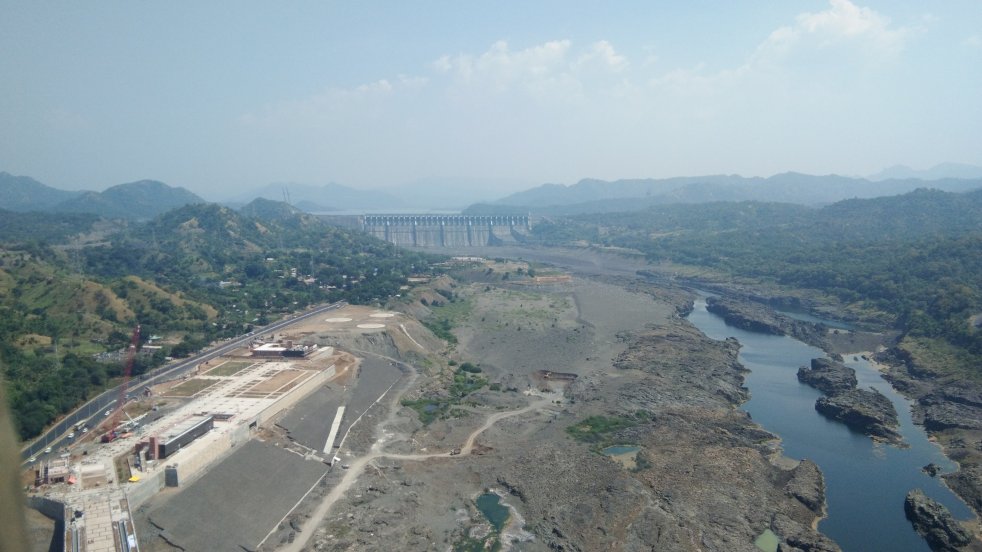
Close on heals of Karam dam disaster comes the news of risks due to unattended Maheshwar dam, a massive dam on Narmada river that remains unfinished and unattended, with one of the gates damaged and story of stolen motors, wires and other spare parts and power cut, which means the hydraulic system for gates is non-functional. Again the report of the NVDA-MWR officials after visit to the dam site should be in out in public domain, as also the reports of the dam safety committee reportedly set up the MP govt for assessing safety of all the dams of MP.

Continue reading DRP 290822: MP’s Dam safety mess: Publish the Karam inquiry report
Dams · Yamuna River

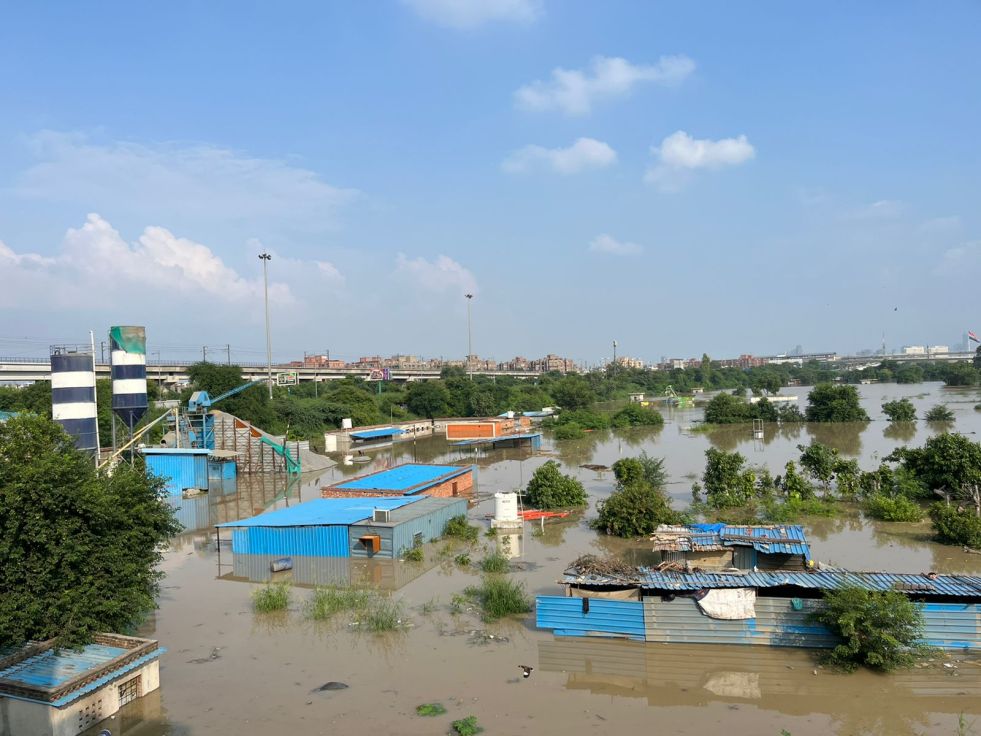
August 2022: Yamuna flood reclaims encroached floodplains in Delhi

(Feature Image: RMC plants located in active floodplain of Yamuna at Noida More submerged in flood water on Aug. 13, 2022. Image Credit:- Vikrant Tongad, SAFE)

A much awaited flood spell has flowed through Delhi during August 13-14, 2022. It came after more than two months of south west monsoon. Usually by this time, Yamuna river would have witnessed two or three flood spells in national capital lending a fresh lease of life to one of the most polluted rivers of India.

The small scale flood spell in the river has invaded parts of floodplains under abuse and encroachment by government agencies in open defiance of National Green Tribunal (NGT) January 13, 2015 judgement[i]. Apart from this flood, Delhi stretch of the river has witnessed few more abnormal events in this monsoon season so far.

Continue reading August 2022: Yamuna flood reclaims encroached floodplains in Delhi
Urban Rivers

Top Ten Judicial Actions on Urban Rivers 2022: Executors Deliberately Delaying, Diluting, Defying orders

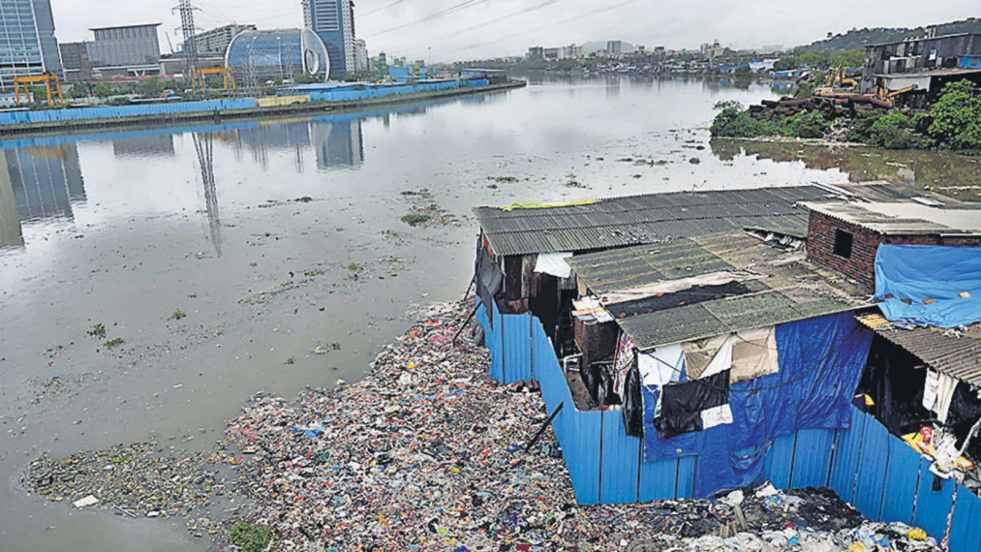
(Feature Image: The order is subject to the orders of the SC which is pending. NGT on Nov. 24, 2021ordered the BMC to deposit within three months an environmental penalty of ₹28.20 crores to the CPCB for discharging raw sewage into the city creeks, rivers and drains. HT Photo)

During past one year, the judicial bodies including National Green Tribunal, Supreme Court, various High Courts have passed several orders and made critical observation while dealing with multiple issues afflicting Urban Rivers in India. This report highlights top ten such judicial interventions across India. The stories underline that the responsible agencies particularly pollution control boards and district, state and union governments have been failing miserably in timely and efficient implementation of these judicial orders, some of which are quite remarkable. If the executive bodies do not show right spirit and seriousness in enforcing the existing rules and court orders the state of India’s urban river only go downhill.    

Continue reading “Top Ten Judicial Actions on Urban Rivers 2022: Executors Deliberately Delaying, Diluting, Defying orders”
Urban Rivers

Top Ten River Front Development Stories 2022: Destroying Rivers, Livelihoods

(Feature Image: Work on Rs. 700 crore Chambal RFD project in Kota which is supposed to be ready by Dec. 2022 end. Image Source: Free Press Journal)

The Central and various state governments have been pushing big budget River Front Developments (RFD) projects as panacea for all the urban water woes. In reality, these are River destruction projects with the objective of encroaching on river floodplain and even river beds of Urban Rivers. These RFDs have been failing to deliver on proposed claims and resulting in waste of public money apart from causing more damages to urban rivers eco-system and livelihoods of dependent communities. The projects are also multiplying the Urban Flood potential. In reality, India urgently requires an Urban River Policy as a subset of Urban Water Policy to guide how to treat urban water and urban rivers.

This compilation highlights situation of ten such RFD projects in the country which are failing miserably and facing stiff resistance from concerned citizens and dependent people during last one year or so.

Continue reading “Top Ten River Front Development Stories 2022: Destroying Rivers, Livelihoods”
Urban Rivers

Urban Rivers 2022: Top Ten Positive Stories from India

(Feature Image: WATERMARK: An 1810 painting by J. Hammer of the Hooghly at Serampore/ Source, The Telegraph)

The plight of urban rivers in India has been going from bad to worse courtesy systematic neglect and unplanned development projects. On the one hand they are being increasingly deprived of freshwater flows by diverting water for domestic supplies and on the other have been turned into dumping place for mostly untreated solid and liquid waste in massive amounts from residential areas as well as industrial pockets. Nevertheless, there are some remarkable efforts being undertaken by individuals, organizations, government departments aiming at restoration of urban rivers at some places across the country. This compilation highlights top ten such positive urban river stories taking place during past one year. 

Continue reading “Urban Rivers 2022: Top Ten Positive Stories from India”
DRP News Bulletin

DRP 070322: As Tata celebrates century of Bhivpuri HEP operation, time to return the project to government and review it?

On March 5, 2022, Tata Power celebrated 100 years of operation of the Bhivpuri hydropower project in Raigad district of Maharashtra. It is possibly right time to consider by the government to ask Tata Power to return all the hydropower projects of Tata Power in that region to the government. Tatas got the right to develop these projects under a colonial agreement that handed over the public resources of land, river and rights over the project benefits to a private company like Tatas almost for free, for the company to profit from these public resources. This arrangement should have been reviewed long back, but possibly it is right time to review it now. Possibly it will be a good move in the year when India celebrates Azadi ka Amrutmahotsav!

The project transfers water from drought prone, water deficit Krishna basin to high rainfall area of Konkan. And such disastrous transfer continues even in drought years. It is high time this is reversed and the water is allowed to flow in the Krishna basin. From this perspective, the project also needs to be reviewed if at all it should continue to operate and if so under what terms and conditions.

Continue reading “DRP 070322: As Tata celebrates century of Bhivpuri HEP operation, time to return the project to government and review it?”
Fish, Fisheries, Fisherfolk

WFD 2021: Of looming & existing threats on fish & fisherfolks

The fish species, fisheries sector and fisherfolk communities in India and South Asia have been undergoing a whole range of anthropogenic threats, sustainability challenges amid turbulent climatic factors casting a complex and uncertain impacts on the overall wellbeing of their future and survival. As part of World Fisheries Day (WFD) 2021, SANDRP has been tracking the critical issues. In first two parts of three part series we have already put together incidents of mass fish death and positive developments taking place in past one year.

This third and final part of the 2021 series focuses on remarkable ongoing resistance by fisher-folks showing constant struggle and firm determination. The report also covers relevant studies underlining adverse impacts of dams, hydro projects and climate change on freshwater fish and dependent fisherfolks. It has briefs on how impacts of pollution and encroachment of water bodies, mining, coastal zone development, invasive fish, aquaculture is gradually going up along with concerns and efforts to address them. Some of the pro and anti-fish, fisherfolks decisions by central and state govts are also compiled here.  

Continue reading “WFD 2021: Of looming & existing threats on fish & fisherfolks”
Fish, Fisheries, Fisherfolk

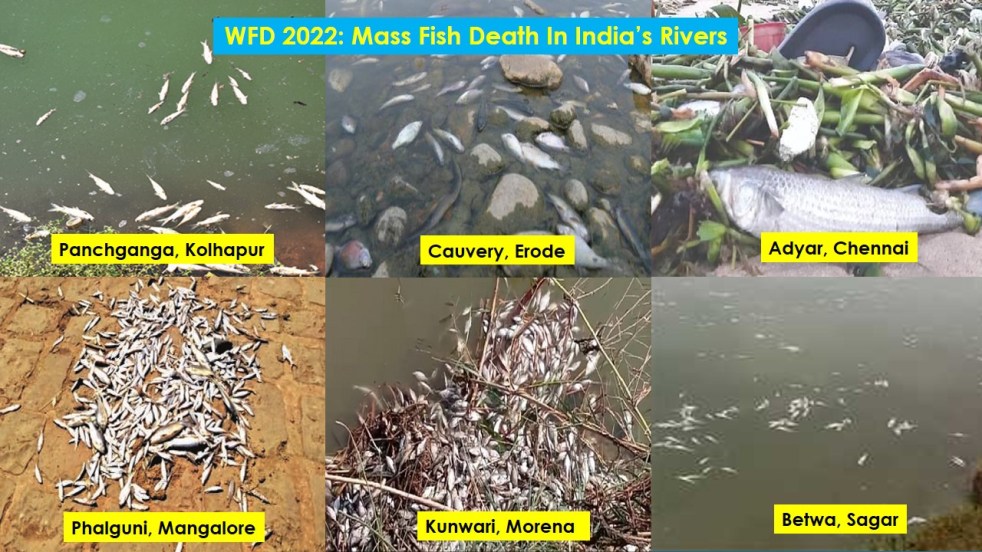
WFD 2021: Incidents of MASS FISH DEATH in India

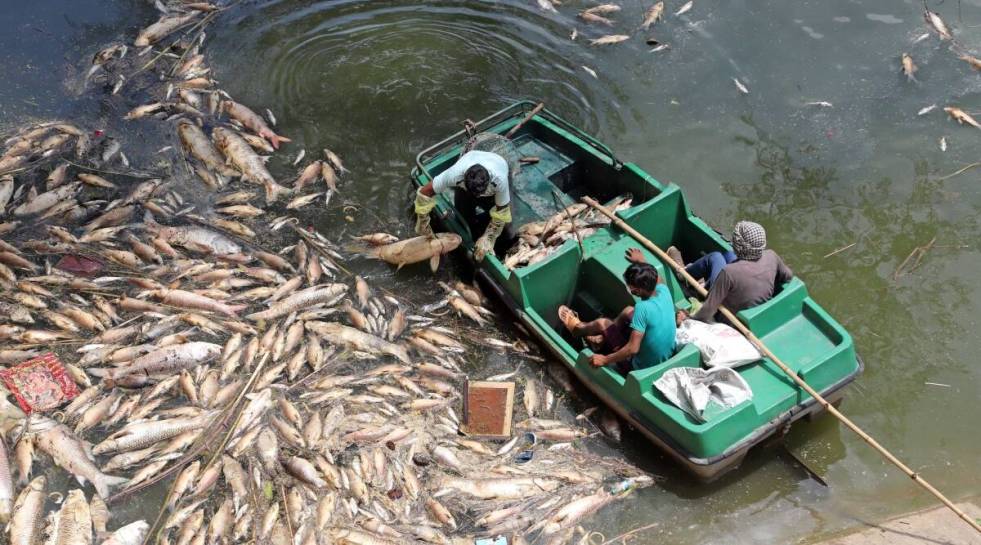
Feature image:- Thousands of dead fish wash ashore on Yamuna banks in Agra (ToI, 27 July 2021)

November 21, marks World Fisheries Day (WFD) to address the sustainability issue in fisheries sector. The day also signifies the critical contribution of largely neglected indigenous fisherfolk communities facing range of threats over their livelihoods. On WFD SANDRP has been presenting detailed annual reports covering important developments concerning fish diversity, fishery industry and fisherfolks wellbeing.

on WFD 2021, this first part in three part series focuses on mass fish death incidents in India over past one year. The next part will cover successful efforts by fisher communities to protect fish diversity and their livelihoods apart from relevant positive developments. The final part will present the overall status of fish species, fisheries industry and fisherfolks struggles during past one year.    

Continue reading “WFD 2021: Incidents of MASS FISH DEATH in India”
DRP News Bulletin

DRP 151121: District Level Vulnerability Assessment in India

This is the kind of study that was long overdue. In fact such a study should have been done before formulating India’s National Action Plan on Climate Change (NAPCC) as SANDRP has been saying since 2009 (see SANDRP critique of NAPCC published under the title “THERE IS NO HOPE HERE) when NAPCC was made public by a dozen wise individuals sitting in a room without any participatory or transparent exercise. One hopes that India will restart the exercise of fresh formulation of NAPCC after doing such a study on an urgent basis, on the lines of the study described below. In any case one hopes the union and state governments will wake up and take up District level vulnerability assessment in India in an independent way on urgent basis.

“This study undertakes a first-of-its-kind district-level vulnerability assessment of India, which maps exposure, sensitivity, and adaptive capacity using spatio-temporal analysis. To do this, we developed a climate vulnerability index (CVI) of Indian states and Union Territories (UTs). Instead of looking at climate extremes in isolation, we map the combined risk of hydro-met disasters and their compounded impacts on vulnerability. By doing so, we aim to inform policy goals in the resource-constrained context of India.

Continue reading “DRP 151121: District Level Vulnerability Assessment in India”
Ganga

Uttar Pradesh: Curious Case of Ramna STP in Kashi

Large scale Sewage Treatment Plants (STP) are being promoted as must have infrastructure to control Urban sewage pollution in rivers across the country. However, most of the Large Scale STPs are mired in controversies from planning to construction and during operational phase, often failing to achieve the basic objective for which they are built, investing crores of rupees. A case in point is Ramna STP of Kashi, Uttar Pradesh. Interestingly, this is a story from Varanasi, many also call it Banaras, the parliamentary constituency of Prime Minister Shri Narendra Modi.

Continue reading “Uttar Pradesh: Curious Case of Ramna STP in Kashi”