DRP News Bulletin

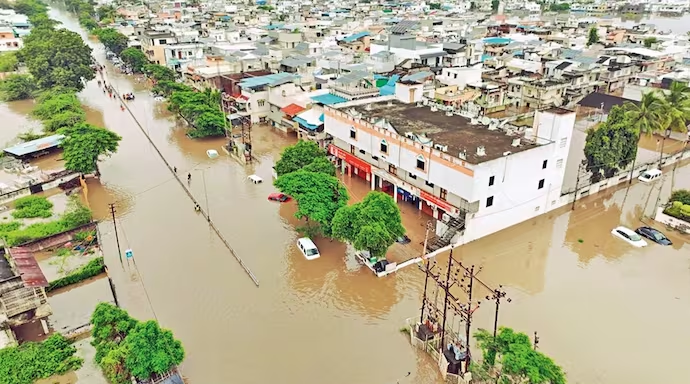
DRP NB 190623: Ten years of Uttarakhand Flood disaster

(Feature Image: Thousands of people have been rescued but the inability of rescue teams to navigate disaster-struck areas has left over 60,000 people stranded in Uttarakhand. The Hindu, 19 June 2013)

This week marks ten years since the Uttarakhand flood disaster of June 2013, the worst recorded disaster in the state. The deaths and destruction in the disaster were unprecedented. Large parts of the deaths and destruction were due to man-made causes. Climate Change played its anthropogenic role too as the unprecedented rainfall happened even before the monsoon was set in. Even the Supreme Court took suo motu cognizance of the disaster and ordered halt to all hydropower projects and independent review of them. One of the major human causes that worsened the disaster was the lack of credible disaster prevention and management systems.

One expected that we and particularly our all powerful governments in the state and the Centre would learn lessons from such an unprecedented, such a massive destructive disaster. The first step to that would have been credible reporting of what exactly happened during the disaster, which agencies played what role and how the destruction could have been reduced. That such a report does not exist even today says a lot.

Continue reading “DRP NB 190623: Ten years of Uttarakhand Flood disaster”
DRP News Bulletin

DRP NB 120623: Tip of Karnataka irrigation scam?

(Feature Image: A decade old Amul caricature on Rs. 70, 000 crore irrigation scam in Maharashtra.)

It’s not very frequent that irrigation scams come to light. Somewhat inadvertently, the Karnataka irrigation scam seems to be getting exposed when the newly elected state government stopped two irrigation projects in the constituency of the irrigation minister of the previous state government, the Gatti Basavanna Dam and the Ammajeshwari Lift Irrigation Project. In both cases, the department officials are saying that they prepared the project reports based on instructions from above. In both cases, the costs proposed at one stage were 3 to 9 times higher than the revised estimated cost.

One only hopes that the government, media and the judiciary will go to the bottom of these revelations and bring to light the full dimensions of what seems like a tip of the Karnataka Irrigation Scam. It is public knowledge that Karnataka has been spending tens of thousands of crores each of the last few years in the name of big irrigation or dam projects, without commensurate benefits.

Continue reading “DRP NB 120623: Tip of Karnataka irrigation scam?”
DRP News Bulletin

DRP NB 050623: Manoj Misra, a True River Warrior Is No More, Salutes to Manoj ji!

(Feature Image: Late Manoj Misra speaking at India Rivers Week seminar in Delhi in Nov. 2018. Source: IRF)

As we mark the World Environment Day 2023; India has lost one of the staunch river crusader Manoj Misra, the convener of Yamuna Jiye Abhiyan (YJA). He has been driving force behind formation and functioning of India Rivers Forum (IRF) a platform dedicated for the rejuvenation and restoration of rivers in India. IRF work started in 2014 and 2023 is the tenth year of annual India Rivers Week meetings focused on rivers. Bhagirath Prayas Samman and Anupam Mishra Medal for exemplary media work on rivers are part of India Rivers Week.

He was hospitalized for over a month due to COVID & related complications and breathed his last on June 4, 2023 afternoon in Bhopal, Madhya Pradesh. His sudden demise is a great loss for all river lovers, experts, activists in the country. Down to Earth, resourceful, open-minded, academician, people’s rivers scientist are few words but not enough to describe the personality of Manoj Misra.

Continue reading “DRP NB 050623: Manoj Misra, a True River Warrior Is No More, Salutes to Manoj ji!”
DRP News Bulletin

DRP NB 290523: Goa Fights to save Mahadayi River

(Feature Image: Thousands form human chain along Mhadei river to celebrate #MahadaiAmchiMai festival. Source: ToI)

On May 20, 2023 when thousands of people of Goa, Rakhondars (protectors) came out to form a 7 km long human chain to save Mhadei or Mahadayi river, they were not only celebrating Goa’s unique Mahadayi River festival, but were also coming together to declare their resolve save and rejuvenate the River that is lifeline of Goa.

A large number of organizations came together, including Earthivist Collective, Goa Heritage Action Group, Save Mhadei Save Goa front, among many others. It was a unique attempt to reconnect with the river, its history, its soul. The people from all kinds of art forms and all walks of life came together in a state where the connection with the river has always been strong for the people.

One hopes their tribe multiplies and they succeed in saving the river from dam building plans and other river affecting activities. That success will provide an example and impetus for river conservation activities elsewhere too.

Continue reading “DRP NB 290523: Goa Fights to save Mahadayi River”
DRP News Bulletin

DRP NB 170423:Forecast of Indian SW Monsoon & definition of normal monsoon

The India Meteorological Department (IMD) has on April 11, 2023 forecast that rainfall at national level in four months of June-Sept 2023 Southwest Monsoon will be 96% of Long Period Average (LPA). IMD considers Indian Monsoon rainfall as normal based on just one parameter of total rainfall in these four months at national level is between 96% and 104% of LPA, with model error of +/- 5%. This raises large number of questions as media has rightly raised post the IMD announcement.

Firstly, in a strange turn of events, on April 12, an update jointly by US weather agencies under the National Oceanic & Atmospheric Administration (NOAA), contradicted a number of assumptions of IMD the previous day, including the period when El Nino will become active and probability of it being a strong event, both of which have a strong bearing on the Indian Monsoon in an adverse way. So the first question that arises is, did the IMD not have the benefit of the observations on April 11 based on which NOAA made the forecast very next day? Or was it an attempt at providing an unjustified feel good monsoon forecast? This question arises as in the past too questions have been raised about such attempts by IMD. This question also becomes important as only a day or two before IMD’s forecast, private forecaster had predicted that monsoon rainfall is likely to be deficient and not normal.

Continue reading “DRP NB 170423:Forecast of Indian SW Monsoon & definition of normal monsoon”
DRP News Bulletin

DRP NB 200323: Time to Focus on Natural Water Storages

(Feature Image: Cover page of World Bank report titled What the Future Has in Store: A New Paradigm for Water Storage)

On the occasion of World Water Day 2023, the United Nation will be organizing a conference (March 22-24) in New York, USA. In its latest report the World Bank has also raised concern over decline in fresh water storages and underlined the need of a new approach for integration of built and natural water storages as a measure to adapt to climate change related water challenges and better management of water resources.

There is no doubt that large parts of the world are facing water scarcity and insecurity from existing and looming threats both from man made reasons and changing climates. Given the omnipresent & increasing shortages of cumulative storage capacity and adverse impacts of built water storages especially big reservoirs and dams; it is time global bodies like UN, World Bank, policy makers and governments at large must focus on conservation and replenishment of natural water storages, which are far better, cost effective options available to address and mitigate ever increasing and evolving climatic threats on human water security and sources.

Continue reading “DRP NB 200323: Time to Focus on Natural Water Storages”
DRP News Bulletin

DRP NB 270223: How much Pump Storage Hydro capacity is required in India?

(Feature Image: State steps up pumped hydro storage projects amid coal crisis. Source: EQ Mag Pro/ May 2022)

On Feb 15, 2023, Union Ministry of Power issued draft guidelines for Pump Storage Projects, inviting comments from stakeholders in 15 days to the email id – hydro2-mop@gov.in. The guidelines say that more Pump Storage Projects (PSPs) are required in view of increasing solar and wind power capacity connected to the grid, to stabilize the grid, store the power to make it available during non-solar and non-wind power hours and for peaking power, reactive power, etc. It describes the PSP as “clean, green, safe, and non-explosive” and “environment friendly” option. No studies or basis are provided for this sweeping conclusion.

Continue reading “DRP NB 270223: How much Pump Storage Hydro capacity is required in India?”
Sand Mining

2022: Riverbed Mining Destroying Indian River Eco-system & Freshwater Species

(Feature image sources: Clock wise (1) Mahseer fish/ Mongabay India, April 2022. (2) Gharials in Chambal/India Today, July 2022. (3) Gangetic dolphin/ECO NE. (4) Smooth-coated Otters in Cauvery/Round Glass, Jan. 2023.)

Indiscriminate mining of riverbeds for sand, gravel, pebbles have been rampant across the country increasingly damaging India’s rivers. The incidents of illegal sand mining, mafias, administrative actions & inactions, govt policies and court cases are routinely covered by the media. However the irreversible impacts of destructive riverbed mining operations on fresh water species and river eco-system are little understood, least explored, rarely covered by media and fails to attract the required attention from govts, judiciary and public at large. 

To some extent, we have been monitoring and highlighting the loop holes in sand mining governance. As part of our annual overview, in 2022 we have complied this separate report underlining the adverse impacts of riverbed mining on rivers and on aquatic life, fresh water species including endangered gharials, dolphins, turtles, fish etc.

Continue reading “2022: Riverbed Mining Destroying Indian River Eco-system & Freshwater Species”
Dam Safety

2022: Growing Concerns over Dam Safety, Sustainability & Impacts

(Feature image: Breach in Karam dam, MP in Aug. 2022. Dainik Jagran)

This annual overview is focused on issues concerning structural and operational safety of dams that arose in 2022. It includes issues related to how climatic threats and siltation is making the large dams unsustainable. It also highlights the impacts of dams on river eco-system and riverine people amid some corrective measures being taken by the various state and central governments including the formation of National Dam Safety Authority.

Please see for links to SANDRP’s analysis on the issues in 2022 in India covering: (1) Dam induced floods, (2) Dam safety and related issues of Polavaram project, (3) Disasters and accidents caused by hydro power projects in Himalayan states, (4) Growing and ongoing resistance against destructive dams and hydro projects, (5) Fly ash dam breaches.

Continue reading “2022: Growing Concerns over Dam Safety, Sustainability & Impacts”
Dams · Hydro Power Projects

2022: People’s Resistance against Unviable HEPs, Destructive Dams

(Feature Image: No Means No Campaign message against hydro projects on a rock in Kinnaur. Source: ToI)

There have been many instances of opposition by local people, organizations and experts against unviable hydroelectric power (HEP) and destructive dam projects in 2022. Such instances of the resistance from across the country have been successful in a number of ways including leading to the funding agencies, corporate houses and government agreeing to withdraw from the project in many cases. This overview presents top ten stories highlighting successful opposition to hydro and dams projects in 2022 in India followed by some relevant reports on the issue. In first part of the annual overview, SANDRP has tracked the dam failures and dam induced floods incidents in India in 2022, along with separate report on unraveling of Polavaram project and another one on breaches of fly ash dams.

Continue reading “2022: People’s Resistance against Unviable HEPs, Destructive Dams”