Letters have been sent by some eminent citizens and activists of Gujarat to the Union Ministry of Environment and Forests and Gujarat Environment Impact Assessment Authority that the massive Gujarat Project of setting up world’s tallest statue is being taken up by the Gujarat government without social or environmental impact assessment, without necessary public consultation process and without clearance under the Environment Protection Act 1986, Environment Impact Assessment of 2006 and also wildlife protection Act of 1972. The necessary permission from the Environment and Rehabilitation Subgroups of the Narmada Control Authority has also not been taken, nor have the party states been taken into account. The Tourism project involves massive constructions in the middle of the eco-sensitive river, just 3.2 km downstream from the Sardar Sarovar Dam and Shoolpaneshwar Sanctuary. Given below is the letter to sent to the Union Minister of State (Independent Charge) Mrs Jayanti Natarajan and secretary, Union Ministry of Environment and Forests. Similar letter has gone to Secretary, Union Ministry of Water Resources since he is the ex-officio chairman of the Narmada Control Authority. Another letter has gone to the Gujarat state EIA authority and concerned state government agencies.
Considering the importance of this issue, SANDRP is happy to share it on our blog, SANDRP Coordinator is also a signatory to the letter.
7 November 2013
To,
Dr V. Rajagopalan
The Secretary
Ministry of Environment & Forests
Government of India
Paryavaran Bhavan, CGO Complex, Lodhi Road,
New Delhi – 110 003.
Sub: To seek detailed environmental scrutiny of project called ‘Statue of Unity’ planned inside Narmada River, 3.2 Kms. downstream of Sardar Sarovar Dam and Shoolpaneshwar Sanctuary by a joint venture of Government of Gujarat and a trust – ‘Sardar Vallabhbhai Patel Rashtriya Ekta Trust’ (SVPRET) and to immediately stop all construction activity in the region.
Dear Sir,
We would like to bring to your attention that work on a project that proposes to build the world’s largest statue in the form of ‘Statue of Unity’ near Sardar Sarovar Dam in the river downstream from the dam, just 3.2 km from the Shoolpaneshwar Sanctuary, in eco-sensitive zone and involving massive infrastructure (see annexure) has started work without legally mandatory environment clearance, environment and social impact assessment or any public consultation process.
This is clearly illegal, in violation of the Environment Protection Act, 1986 and EIA notification of September 2006 and a number of NGT and Court orders about such massive kind of construction on the riverbed. On 31 October 2013, the foundation stone was laid for the project amidst huge fanfare and media attention. Tenders have also been floated. Even the work for the Garudeshwar weir, proposed about 12 km downstream of the Sardar Sarovar Dam, began without any social or environmental impact assessment, public consultation and environmental clearance from the Environmental Sub Group (ESG) of Narmada Control Authority’s (NCA).
The website http://www.statueofunity.in/ clearly state the purpose of tourism and involvement of the ‘Sardar Vallabhbhai Patel Rashtriya Ekta Trust’ (SVPRET) to build ‘Statue of Unity’, 3.2 km downstream of the Sardar Sarovar Dam inside the Narmada River on an islet called Sadhu bet.
“A 13km. long water body (pond) will create an excellent tourist spot with available infrastructure on both the banks.
The Statue of Unity is planned to be erected in the river bed on downstream of the main dam in the Garudeshwar Weir pond. A permanent standing water pool in and around the Statue of Unity will be created by Garudeshwar Weir, which will enable boating activity around the statue.” (Emphasis added.)
The estimated cost of the project is more than Rs. 2,500/- corers (Rs 2063 crores is the cost of “DESIGN, ENGINEERING, PROCUREMENT CONSTRUCTION, OPERATION AND MAINTENANCE OF THE STATUE OF UNITY D/S of Sardar Sarovar Dam, Village Kevadia Ta. Nandod, District of Narmada Gujarat State, India” as per tender notice, see: http://www.statueofunity.in/tendernotice.html). The Government of Gujarat website (http://www.statueofunity.in/) clearly state that “A monument, that will not just be a mute memorial like the rest, but a fully functional, purpose-serving tribute that will boost tourism and facilitate development in the surrounding tribal areas” and will involve huge infrastructure as described in the Annexure downloaded from the official website.
The key issues that beg immediate scrutiny is as follows:
(1) The project clearly needs environment clearance under the EIA notification of September 2006, but has not applied for or obtained the clearance at any stage.
(2) The Shoolpaneshwar Sanctuary boundary is touching the Sardar Sarovar Reservoir (as a part of the Environmental Protection measures of the Sardar Sarovar Project, the earlier Dhumkal Sloth Bear Sanctuary was extended to meet the reservoir boundaries and is called Shoolpaneshwar Sanctuary.) Since the statute is only 3.2 kms from the Sardar Sarovar Dam, it is certainly near by Shoolpaneshwar Sanctuary.
(3) The Project involves construction in the river bed and proposed reservoir, close to sanctuary in eco-sensitive zone, and hence will have serious impacts on the ecology and environment. Hence, and EIA and EC is crucial.
(4) The project will affect the downstream river, its biodiversity, people and livelihoods and other related aspects.
(5) A comprehensive assessment of the environmental and social impacts of the ‘Statue of Unity’ and its contribution to the cumulative impact of all the projects and activities in the area has not been done.
(6) The project also needs public consultation, but none has happened so far.
(7) During the construction of the Sardar Sarovar dam due to hard rock digging, the seismic area already carries the burden of artificial activity in the bed rock and added load in what is deemed geologically fault line area. Public reports on geotechnical and geological studies on the proposed site have raised issues of structural stability as well as safety. This cannot be taken casually by authorities. The seismic hazard analysis claimed to have been done by the Gujarat Government’s in-house “Institute of Seismological Research” (http://www.statueofunity.in/execution.html#sthash.jEBrofSN.dpuf) or the Geological and Geotechnical investigation commissioned to another government institute WAPCOS cannot be considered credible unless peer reviewed and put in public domain.
In view of the above facts on record, we demand that:
Direct the Government of Gujarat to submit application for environment clearance and till that is obtained, not to do any work related to the project.
Direct the Government of Gujarat to immediately stop planned project called ‘Statue of Unity’ and direct them to stop all other activities related to the ‘Statue of Unity’.
Declare the action – of the foundation stone installation on 31 October 2013 for the project called ‘Statue of Unity’ – of the Chief Minister of Gujarat State as illegal, in violation of the EIA notification of September 2006 and the Environment Protection Act, 1986.
We will look forward to your urgent action and also point wise response.
Stepping UP TO BUILD HIGH. Stepping ahead to THE FUTURE.
The Statue of Unity will be a naturalistic and historically accurate representation of Sardar wearing characteristic garments in a walking pose.
The rich bronze cladding on the Statue gives it a marvelous look
World’s fastest elevators to keep the visitor’s tour engaging
The public three-level base of the Statue – exhibit floor, mezzanine and roof – contains the Memorial Garden and a large continuous exhibit hall that will be developed as a visitor attraction focusing on the contributions of Sardar Vallabhbhai Patel
The observation deck at 500ft can accommodate 200 people at a time. The panoramic view from this level will enable visitors to see the beautiful Satpuda & Vindhyachal mountain ranges, the 256kms long Sardar Sarovar Reservoir and the 12kms long Garudeshwar Reservoir
Access to the statue is via boat ride (3.5kms)
An elaborate Gallery for a massive panoramic view of the World’s largest irrigation dam, the river and the hilly terrain, and an illustrious sight of Arabian Sea
A state-of-the-art Underwater Aquarium
A large modern canopied public plaza, overlooking the river and the Statue, will have scrumptious food stalls, ornate gift shops, retail kiosks and other visitor amenities
The project would include:
Museum & Audio Visual Gallery:
The Statue of Unity Project will also include a unique museum and audio-visual department depicting the life and times of Sardar Vallabhbai Patel.
A Laser, Light and Sound show:
A Laser, Light and Sound show on the efforts of Unification of India.
Research Centre:
A research centre dedicated to the research and development of subjects close to Sardar Vallabhbhai Patel’s heart like Good Governance and Agriculture Development. Here, subjects like Water Management and Tribal Development will also be studied and researched.
A Monumental Lift:
A heavy-load open lift with a panoramic view will be built alongside the Statue of Unity. Visitors will be able to rise up to the height of the structure’s head, walk into a viewing gallery and enjoy a panoramic view of the Sardar Sarovar Nigam project and the surrounding region from an astounding height of close to 400ft.
Hospitality & Entertainment:
Refreshment areas like restaurants and recreational spots to make the project area an attractive tourist spot, thus facilitating tourism and employment for the surrounding tribal region.
Ferry Services :
The statue and surrounding area will be accessed by special boats to avoid vehicular traffic and pollution
Sardar Patel brought the nation together and this tribute, the Statue of Unity, will bring the country national pride. Plans will be laid for convention and training centres, development and formulation of tourism plan and provision of technical and managerial assistance for bids to invite EPC contract.
The project site will be connected with modern connectivity infrastructure such as expressways, improved rail system and helipads
Through scientific area planning, clean industries will be located around the project site
Research facilities in the area of biotechnology, clean energy and ethnic crafts will generate white collar jobs in this area
Location and development of educational institutions in the areas of agriculture, animal husbandry, pisciculture will generate an educational and skill development complex to support economic activity in the region
Development of tourism infrastructure to support MICE – Meetings, Incentives, Conferences and Exhibitions; which will generate huge livelihood opportunities for the local tribal population
Ministry of New and Renewable Energy (MNRE), Government of India recently published a report on ‘Developmental Impacts and Sustainable Governance Aspects of Renewable Energy Projects’. Around the same time, Karnataka High Court upheld Elephant Task Force’s recommendation about impacts of Small Hydro Projects (SHPs) on Elephant habitats and directed Karnataka Government to review clearances of all such projects affecting elephant habitats[i]. SHPs are hydel projects between 2 MW-25 MW installed capacity. Looking at the unaddressed impacts of SHPs, such a report by MNRE was sorely needed and was looked at as a welcome initiative.
Unfortunately, the MNRE Report has entirely excluded the small hydel sector from its assessment.
Agitation against 4.5 MW Hul HEP in Himachal Pradesh as it is affecting forests, irrigation channels, mills and drinking water sources of villagers. Source: Sal Ghati Bachao Andolan
SHPs can have and are having severe impacts on communities and ecosystems. They fall under the MNRE and are exempt from environmental impact assessment, public hearing, and environmental management plan as EIA Notification 2006 restricts itself to projects above 25 MW. They get subsidies, tax rebates, tax holidays from the MNRE, apart from other benefits and preferential tariffs from states. Most of the SHP sector is crowded with private investors, wanting to make a quick buck from rivers, without any regulations. The rush is most prominent in Uttarakhand, Himachal Pradesh, Karnataka, Odisha and now Kerala, where cascades of such dams are coming across pristine rivers.
Despite MNRE’s supposed intention, most SHPs are not supplying electricity to any “remote and inaccessible areas”.[ii] Most projects are grid connected, so the local communities do not get electricity from the projects in their backyards, across their rivers which have significant impacts on local water availability, habitat loss, submergence and fraudulent practices.
Following a petition from Western Ghats Forum, Karnataka High Court has ordered a ban on SHPs in Western Ghats, Uttarakhand High Court had cancelled as many as 56 SHPs. In Himachal, communities fought a long and lonely struggle against the 4.5 MW Hul project affecting drinking water security and irrigation of 6 villages, as well as ancient oak forests. [iii]Projects like 24.75 Kukke I in Dakshin Kannada can submerge a massive 388 hectares, including extremely biodiverse forests, plantations and houses.[iv] Greenko’s Perla and Shemburi Projects[v], Basavanna and Mauneshwara SHPs in Karnataka are examples where two 24.75 MW SHPs are fraudulently shown as separate projects, but are single projects on the same river with a common dam. Maruthi Gen projects, also in Karnataka were not only clubbed together, but also hid their significant impact on forest land[vi] . Submergence data of SHPs is routinely hidden & affected communities are kept in dark till water actually floods their lands.
The issues are serious and have been raised by many. As the projects are outside the purview of EIA Notification, none of their impacts are studied; neither do the communities get a platform to record their protests. Hence, a study on the environmental impacts of renewable energy projects was needed to address these issues.
Considering these serious aspects, it is very surprising that MNRE Report on impacts of Renewable Energy projects has chosen not to look at this sector at all. The report does not assess impacts of any such projects, neither does it offer any recommendations for this sector under MNRE. It only makes a sketchy study of wind and solar energy projects. The report makes incorrect statements like: “All hydroelectric power projects have to get environmental clearances which under two categories: category B if capacity of projects is between 50 to 25 MW”, effectively refusing to acknowledge hundreds of SHPs, under the purview of MNRE not requiring any environmental regulation.It states incorrect facts like “There are institutions and processes governing every operational aspect of RE project development and local institutions, in the form of democratic bodies, to safeguard micro level ecological and social concerns.” This is patently untrue for SHPs, which are highly unregulated and non-participatory.
The TORs of the study stress assessment of impacts of solar and wind projects, but do not exclude hydel projects. While TORs should have stressed on impacts of SHPs, looking at the number of protests and inherent problems, that does not warrant report writers’ complete neglect of this sector. Executive Summary states that this study has been done in response to WGEEP and HLWG report recommendations. Despite the fact that WGEEP specifically banned SHPs in Ecologically Sensitive Zone I, this report has chosen to turn a Nelson’s eye to the sector.
Even with regards to solar and wind projects, the report seems inadequate. For primary data, the authors visited 6 wind energy farms and 1 solar energy site. At the solar energy site, interaction was exclusively with project management and engineers. Social and environmental impacts cannot be understood through interviews with project management alone. While the report documents the devastation around wind energy farms in Maharashtra, it is not reflected in conclusions and recommendations.
The report is entirely silent on Clean Development Mechanism applications of SHPs, which are routinely full of lies and incorrect information. CDM credits give project additional pocketable profits, while the affected communities get only unaddressed impacts. Considering the forest land submerged by Small hydel Projects, and their impacts on adaptation and mitigation potential of local communities, they are also problematic from perspective of climate change.
The report ends with unacceptable conclusions and recommendations, most surprising being: “The RE project development is regulated by environmental and social governance system. The current regulatory mechanism is strong… No new changes are required in the legal framework or the governance structure to mitigate environmental and social impacts.” It even pushes for a “fast channel for quick clearances”.
The report says that environmental impacts of RE projects “are not significant” and social impacts of are “not negative”. Report writers need to visit SHPs in Himachal, Uttarakhand and Karnataka where people have lost irrigation channels, water mills, plantations and even lives, when sudden water was released from projects like Perla-Shemburi in Bantwal[vii], Karnataka.
Sweeping conclusions and recommendations for the entire RE sector is highly problematic, especially when there are several examples of unaddressed impacts, which depend on specific site and project.
The report does include some welcome recommendations. These include: siting policy for projects including zonation and increased participation of local communities in planning and decision making about natural resources, affected by the projects. It recommends issuing clear guidelines such that community welfare is not compromised due to RE projects and about proponent’s responsibilities in the zone of influence of the RE project. The report recommends zonation of projects in go-green (no objection), go slow and no go areas for RE project development. These need to be implemented by the MNRE. If the report would have looked at the entire RE sector, it could have made some valuable observations and recommendations.
There is a very urgent need to bring projects between 1 – 25 MW under the purview of EIA Notification 2006. Several representations and evidences later, it is clear that MoEF does not have the will to do so. It was expected that MNRE will raise these issues, but if this report is an indication, MNRE too is not willing to accept the challenges of SHP development, or regulating the impacts.
Lower installed capacity does not always mean lower social or environmental impacts. Targeted efforts are needed to assess, address and mitigate impacts. For this, the first step will be to acknowledge impacts, not brush them under the carpet. World over, impacts of small hydro projects are being highlighted.
As India is looking at expanding its renewable energy sector, it needs to be truly sustainable and clean, not just an assumption. Hence, MNRE’s effort at addressing environmental and social impacts of renewable energy projects is a welcome move. But by refusing to acknowledge the impacts of Small Hydel Projects in its report, MNRE reminds one of Nero, playing his fiddle, when the forests around are being submerged or destroyed in the name of clean energy.
Gangtok, 9 October 2013: Deemed as the greenest state in India, the government of Sikkim has drawn flak of the national board of wildlife (NBWL) for blatant violation of the environmental norms and the standing order of the Supreme Court in implementation of several hydro power projects under different stages of construction.
The background: In its 28th meeting held on 20th March 2013, the proposal for 520 MW Teesta Stage-IV Hydroelectric Power Project, on River Teesta in North Sikkim to be developed by NHPC Ltd, was placed before the SC-NBWL (Standing Committee-National Board of Wild Life) for consideration. The Member Secretary had informed the SC-NBWL that the project location falls 4 km away from the Fambonglho Wildlife Sanctuary and was recommended by the State Board for Wildlife.
Photo from SC-NBWL committee report has this caption: Construction of the Teesta III project at Chungthang on the edge of Khangchendzonga National Park proceeding without SC-NBWL clearances. Note the extensive forest cover and large landslides at the site
Following discussions, the SC-NBWL decided that a team comprising Dr M.K.Ranjitsinh, Kishor Rithe, Dr A.J.T Johnsingh and Dr M.D. Madhusudan would carry out site inspection and submit a report to the committee for its consideration. Following this decision, the above committee visited the project site and nearby areas from 15th to 21st May 2013. The committee met the representatives from the Sikkim Government’s Forest, Environment and Wildlife Management Department (FEWMD), the user agency, NHPC Ltd, and people from local citizens’ groups. The report of the committee dated Aug 2013 is now available online (http://envfor.nic.in/division/wl-orders).
The report raises serious concerns about a number of hydropower projects in Sikkim under construction without wildlife clearance in contravention to the Supreme Court order[1] (in the Goa foundation case). The Chamling government in Sikkim has allowed blatant violation of the Supreme Court order, a situation compared by the report with what had happened in Goa with respect to mines which were operating without wildlife clearance in violation of SC orders (the subject of the Shah Commission report). The Union Ministry of Environment and Forests is equally responsible for allowing continuing construction of these projects without legally mandatory clearances. The decision based on this report in the NBWL Standing Committee is still pending.
Map with locations of projects and protected areas from the SC-NBWL committee report
Both before and during site inspection, multiple stakeholders brought to the notice of the NBWL team that there were other proposed and ongoing hydel projects in the Teesta Basin located within the eco-sensitive zone (as defined by the Supreme Court in the Goa Foundation case), of the Khangchendzonga NP and Fambonglho WLS, which had not obtained the Supreme Court mandated clearance from the Standing Committee of the National Board for Wildlife.
Besides this, the team in their journeys saw two projects under active construction—the Dik Chu[2] and the Teesta III[3]—that were clearly within the Supreme Court mandated eco-sensitive area. For Dik Chu HEP, the report says, “However, the accompanying FEWMD officials informed us that these mandatory wildlife clearances from the SC-NBWL had, apparently, not been obtained.” For Teesta III HEP, FEWMD officials were not aware of the SC-NBWL clearance, and the committee noted, we “must therefore conclude, on the basis of information available with us, that such a clearance was not obtained… we are deeply concerned about the advisability of this project.”
Deeply concerned about the likelihood of various hydel projects coming up in violation of the Supreme Court’s order in the Goa Foundation case, the team has requested the MoEF to write to the government of Sikkim, seeking a comprehensive list of completed, ongoing and proposed hydroelectric projects within the Supreme Court mandated 10-kilometre zone of the Khangchendzonga National Park (KNP) and Fambonglho Wildlife Sanctuary (FWLS). For each project, details sought included: (a) location (latitude-longitude) and distance from KNP and FWLS; (b) current status of the project; and (c) if and when they had obtained the required Environment, Forest and Wildlife Clearances. Even after waiting for 10 weeks, the NBWL team did not receive either an acknowledgment, or a response from the Pawan Chamling government to their query.
The committee, left with no option was compelled to use publicly available information on Environmental Clearances (EC) (http://environmentclearance.nic.in), submissions and information provided by other stakeholders, and to examine minutes from the SC-NBWL’s meetings, to ascertain if there was merit to the allegations made about the violations of the Supreme Court’s order of 12/2006.
Key recommendations Based on examination of available information on legal compliances required for the projects in the Teesta basin, the committee concluded that, with the notable exception of the Teesta IV project (which has currently approached the SC-NBWL for clearance), none of the other projects appear to have sought/obtained this compulsory SC-NBWL clearance, as mandated by the Supreme Court. While the SC-NBWL is fully aware that there are many more proposed/ongoing hydroelectric projects situated within the Supreme Court mandated 10-km eco-sensitive zone of wildlife sanctuaries and national parks in Sikkim, it has not been able to ascertain whether Supreme Court stipulations in their regard are being followed, or being violated, and if latter be the case, the MoEF should take due cognizance of the same urgently.
“We are of the unanimous considered opinion that it is absolutely essential to assess the overall impact of these projects, both from the recent past and those in the pipeline, rather than deal with them in a piecemeal fashion. Hence, we urge the Standing Committee not to consider the Teesta IV project’s request for clearance separately, but treat it as part of a larger set of hydroelectric projects in the Teesta Basin, with vast ecological, social and legal portents”, the committee has recommended.
It further recommend that the Standing Committee direct the MoEF to write to the Government of Sikkim asking them to immediately investigate and submit a detailed report listing hydroelectric projects in Sikkim that are being constructed prima facie in violation of Supreme Court’s order. Based on the list provided by the government of Sikkim, if it is indeed ascertained that the projects are proceeding in violation of the said Supreme Court ruling, it further adds that the MoEF initiate action by asking the State Government to suspend ongoing work on those projects immediately and to direct user agencies to formally seek clearance for these projects from the SC-NBWL. It adds that the MoEF and the Government of Sikkim thoroughly investigate the circumstances under which the seemingly widespread bypassing of Supreme Court orders in the construction of dams within the 10-km ecosensitive zone of Sikkim has taken place, fix responsibility for the transgressions and violations, and punish the guilty.
About Teesta IV proposal from NHPC, for which the committee visited Sikkim, the report recommends, “Finally, in the light of the devastating June 2013 Uttarakhand floods, we are deeply concerned about the wisdom of such large-scale manipulations of mountain river systems that are being implemented, against all reasonable scientific advice (and thedisregard of the CISHME’s recommendation against the construction of Teesta III, is a case in point)… Hence, we urge the Standing Committee not to consider the Teesta IV project’s request for clearance separately, but treat it as part of a larger set of hydroelectric projects in the TeestaBasin, with vast ecological, social and legal portents.”
The report also recommends that projects already in the pipeline and that may be proposed in future in Sikkim, be placed before the Standing Committee, “chaired by a very senior official of the MoEF, Besides senior officials of the MoEF and the Sikkim Government, this committee must include legal experts as well as experts in hydrology/ geology/ seismology/ social science/ botany/ riverine ecology/wildlife ecology, from reputed research institutions and some representatives of local communities” whenever they fall within the purview of the Supreme Court-mandated 10 km eco-sensitive area around PAs. The committee report adds that much of the summary and recommendations section of Justice Shah’s report (pp. 189-200) is extremely relevant to the case of the hydroelectric dams in Sikkim, and that any committee constituted to examine hydroelectric dams in the eco-sensitive areas of Sikkim, pay close attention to this report.
No ecological flows from NHPC’s Teesta V What the report says about this subject makes disturbing reading: ”On 16th May 2013, driving upstream of the Teesta V powerhouse, we noted extremely low flow in the river, which was particularly so in the stretch of the river directly downstream of the Teesta V dam (Figure 1), where the river was diverted through a tunnel. Such low flows, where River Teesta has been diverted through tunnels, are a cause for serious concern in the context of maintaining the ecological function of a river. We enquired from NHPC officials about how details of ecological flows were determined, and learnt that ecological flow was not a parameter that was optimised in the planning process. We were told that downstream flows were effectively a consequence of maximising hydropower potential of various river basins as determined jointly by the Central Electricity Authority and the Central Water Commission. These values, in turn, were used as the basis for soliciting proposals for hydroelectric power projects. In other words, we learnt to our great dismay that absolutely no ecological consideration whatsoever was used in the process of determining the hydropower potential of river basins.”
Violations galore, government unresponsive In a submission made by Tseten Lepcha in his capacity as the then Honorary Wildlife Warden of North Sikkim to Jayanthi Natarajan in 8th October 2011, Lepcha had contended that how the 1750 MW Demwe Lower by the Athena group is being considered by the SC-NBWL for wildlife clearance, when a project by the same promoters (1200 MW Teesta III) is under construction in violation of Supreme Court orders (without wildlife clearance). The current NBWL report confirms that the 1200 MW Teesta III is under construction illegally, violating SC orders. In an earlier submission he had made to the SC-NBWL on April 19, 2011 he mentioned violation of the WLPA (killing of a Serow – Schedule I species) in the 1200 MW Teesta III project being developed by the Athena group. The developer of the project, Teesta Urja Ltd (a special purpose vehicle of M/S Athena Pvt. Ltd.), through its sub-contractor, SEW Infrastructure Ltd, was involved in the death of a Serow (Capricornis sumanntraensis), a Schedule I animal, at the project site on June 4, 2008.
Photo from SC-NBWL com report with this caption: The Teesta V dam showing the virtual absence of flow in the river downstream of the dam, which can have devastating consequences for river-dwelling and river-dependent species
Several attempts by this correspondent, to contact the PCCF –cum-Secretary of the FEWM department of Sikkim Mr. Arvind Kumar on his cell phone, and his official e-mail address to get the Sikkim government’s official version on the controversy, remained unanswered.
How IPPs are cheating by flouting norms Sikkim Bhutia Lepcha Apex Committee (SIBLAC) convenor Tseten Tashi Bhutia, while speaking to this correspondent expressed immense joy at the NBWL report. “We have been protesting cultural and religious genocide being committed by the Sikkim government in the name of developing hydro power, apart from severely degrading the environment, this is a moral boost. I hope GOI takes strong action”, he said. Bhutia added that there are violations of the Places of Worship (special provisions) Act 1991, extended to Sikkim, and the gazette notifications of the Chamling government, in allowing the Tashiding project on holy river Rathong Chu.
SIBLAC along with another apolitical group Save Sikkim on September 28th, 2013 filed FIRs against an IPP, Shiga Energy Pvt ltd, developer of the 97 MW Tashiding hydro power project for alleged cheating, distortion of facts and violation of environmental norms and the SC order. This is in addition to an ongoing PIL at the Sikkim High Court.
The facts revealed by Tseten Tashi Bhutia in his FIR are startling and shocking. As per the requirement of the Environment Ministry (MoEF, Government of India), the executing agency i.e. Shiga Energy Private Limited, is required to submit a Six-monthly compliance report[4] on the status of the 97 MW Tashiding HEP to the stipulated environmental conditions in a prescribed format .However, while going through the latest Six monthly report dated 22.11.2012[5] submitted by the executing agency to the concerned authority i.e. North Eastern Region Office, Ministry of Environment & Forest, Government of India , it is found that as against the IX necessary conditions required in the prescribed format, the executing agency have intentionally deleted Stipulation No. VIII, jumping to the next condition.
The Monitoring report of MEF regional office (signed by DR S C KATIYAR, SCIENTIST ‘D’) dated Oct 2012[6] says about Stipulation VIII: “the proposed site is about 5 Km away from the buffer zone of the Khangchendzonga Biosphere Reserve as per Supreme Court order clearance from NBWL may be obtained (if required).” Status of Compliance: “Not complied with” and further writes; “the project also falls within 10 Kms from the Fambomgla Wildlife Sanctuary, as such; NBWL clearance needs to be obtained.”
Thus the agency has not complied to nor has obtained NBWL clearance yet as evident from the Monitoring Report on the Implementation Status of Conditions of Environmental Clearance dated Oct 4th, 2012. In other words, the executing agency has simply and swiftly been misleading and cheating the authorities till date by submitting wrong report to Ministry of Environment and Forest, Govt. of India. More surprising is to witness the lack of action by the MoEF on these manipulations and lack of action even after the Monitoring Report clearly reports non compliance.
Rathongchu is a sacred river according to the Denjong Neyig and Nesol texts having its source at various secret and sacred lakes at Khangchendzonga, Sikkim’s supreme guardian deity and runs independently till it meets River Rangit at the lower reaches; This sacred Rathongchu is the source to the annual Tashiding Bumchu ceremony which is held in the first lunar month, corresponding to the months of February and March. In fact, this Bumchu (Sacred Water) ceremony has been continuing for centuries and attracts thousands of devotees and pilgrimages from far across including Bhutan, Nepal, and entire Himalayas.
Ironically, a one-man Professor P S Ramakrishnan committee, of the JNU School of Environmental Sciences, submitted a report titled Ecology and Traditional Wisdom, on October 9th 1995, to the government of Sikkim where he categorically stated, “on social, cultural, and religious considerations, apart from the rich bio-diversity and fragile ecology of the Yuksom valley region, I strongly recommend that no hydro power or other projects should be allowed on River Rathongchu, deemed extremely sacred by Buddhists”. Under the circumstances, how was the Tashiding HEP allotted to the Shiga Energy Ltd by the Sikkim Government and cleared by the MoEF is moot question.
Some of the other proposed projects that are mentioned in the SC-NBWL committee that are also coming up requiring the SC-NBWL clearance include the 300 MW Panan HEP, the Ting Ting HEP, besides the ones mentioned above, see the accompanying map from the SC-NBWL report. Other hydropower projects of Sikkim that are being considered by the MoEF for clearances and that are also close to the protected areas include: 63 MW Rolep HEP on Rangpo river in E Sikkim (5-6 km from Pangolakha and Kyongnosla WLS), 126 MW Ralong HEP (4.05 km from Kangchendzonga Biosphere Reserve and 1.8 km from Maenam Wildlife Sanctuary), 96 MW Chakung Chu HEP inn North Sikkim district (1.8 km from Kangchendzonga Biosphere Reserve). Other such possible projects include: 71 MW Sada Mangder, 60 MW Rangit III, among others.
Let us hope now following the SC-NBWL report, the MoEF will promptly order stoppage of illegally ongoing construction of the guilty HEPs, not waiting for the SC-NBWL committee to meet, since the new Standing Committee of the NBWL remains to be constituted after the term of the earlier committee ended. The evidence provided by the SC-NBWL committee is sufficient to take prompt action. The fact that the MoEF has not take action yet, weeks after submission of the SC-NBWL report speaks volumes about the possible collusion of the MoEF in this murky affair.
[1] WP 406/2004, Goa Foundation vs. Union of India, Order dated 04/12/2006: “The MoEF would also refer to the Standing Committee of the National Board for Wildlife, under Sections 5 (b) and 5 (c) (ii) of the Wild
Life (Protection) Act, the cases where environment clearance has already been granted where activities are within 10 km. zone”
[3] The Six monthly compliance report for Teesta III dated June 2013 also is quite on the issue of compliance with SC-NBWL clearance, see: http://environmentclearance.nic.in/writereaddata/Compliance/57_Teesta%20HEP-III%20_june2013.pdf, the condition for this was mentioned in the MoEF letter dated 30-04-2010 with additional condition: “Considering the proximity of Khangchendzonga National Park from the project site, clearance from the Standing Committee of theNational Board for Wildlife (NBWL) should be obtained”.
Reconstituted Expert Appraisal Committee on River Valley Projects:
MoEF has neither environment sense, nor guts: Unacceptable Committee
On Sept 5, 2013, Union Ministry of Environment and Forests came out with “Re-constitution of Expert Appraisal Committee (EAC) for River Valley & Hydro Electric Project” (see: http://envfor.nic.in/sites/default/files/EAC-Order-05092013.pdf). Mr Alok Perti, former Coal Secretary, has been made chairperson of the committee that appraises all major irrigation projects, dams, hydropower projects and river valley projects for Environment clearances at two stages (TOR and final). It is shocking to see that Mr Perti who has absolutely no environment credentials, who has been known to be anti environment, who has been accusing the environment ministry to be in road block of coal mining and who has shown his ignorance of environment issues on several occasions has been selected as chair person, putting aside basic environmental sense. This reconstituted EAC on RiverValley and Hydropower projects is completely unacceptable.
It is equally disturbing to see that the committee has no woman representation, no sociologist, no one from non-government organisations. All ten members are either from government, government organisations or government funded academic organisations. This means that none of them would be in a position to take a stand independent of the government stand. The committee also has no river expert, climate change-water expert or disaster management expert, all of which are crucially important issues for a committee like this that decides the fate of India’s rivers, even more so after the Uttarakhand disaster. P K Chaudhuri, one of the members of the new committee also has had nothing to do with rivers, water or environment. Hardip S Kingra, who was involved in Commonwealth games organisation and also chairman of National Scheduled Castes Finance and Development Corporation has had no work related to rivers or environment.
Specifically, Mr Alok Perti, who has been senior functionary, including secretary of currently controversial Coal Ministry from Oct 2009 to earlier this year and before Oct 2009 in ministries like defense and family welfare, clearly has had no background on environment or rivers. As coal secretary, he had accused MoEF for stalling the growth by not giving clearances to coal mining projects automatically. The Economic Times quoted Perti as saying in a report[1]: “India has to decide whether she wants electricity or tigers.” Such simplistic statements reflect he has absolutely no understanding of environment, biodiversity, leave aside rivers. Perti’s anti civil society stance was also exposed when he refused to discuss issues with activists and asked them to go and file RTIs[2]. These are only a couple of examples we are giving here, there are many others. By appointing such a person as chairman of the EAC on RVP, the MoEF has shown it has no guts or interest in protecting the environment or forests which is supposed to be its mandate. This committee is clearly unacceptable and will also not stand legal scrutiny.
Union Ministry of Environment and Forests, New Delhi, vrg.iyer@nic.in
Maninder Singh
Joint Secretary,
Union Ministry of Environment and Forests, New Delhi, jsicmoef@nic.in
Mr. B. B. Barman
Director (IA) River Valley Projects,
Union Ministry of Environment and Forests, New Delhi, bidhu-mef@nic.in
Subject: Urgent concerns about reconstituted Expert Appraisal Committee on River Valley Proejcts
Respected madam and sirs,
On Sept 5, 2013, Union Ministry of Environment and Forests came out with “Re-constitution of Expert Appraisal Committee (EAC) for River Valley & Hydro Electric Project” (see: http://envfor.nic.in/sites/default/files/EAC-Order-05092013.pdf). Mr Alok Perti, former Coal Secretary, has been made chairperson of the committee that appraises all major irrigation projects, dams, hydropower projects and river valley projects for Environment clearances at two stages (TOR and final). It is shocking to see that Mr Perti who has absolutely no environment credentials, who has been known to be anti environment, who has been accusing the environment ministry to be in road block of coal mining and who has shown his ignorance of environment issues on several occasions has been selected as chair person, putting aside basic environmental sense. This reconstituted EAC on River Valley and Hydropower projects is completely unacceptable.
It is equally disturbing to see that the committee has no woman representation, no sociologist, no one from non-government organisations. All ten members are either from government, or from government organisations or government funded academic organisations. This means that none of them would be in a position to take a stand independent of the government stand. The committee also has no river expert, climate change-water expert or disaster management expert, all of which are crucially important issues for a committee like this that decides the fate of India’s rivers, even more so after the Uttarakhand disaster. P K Chaudhuri, one of the members of the new committee also has done no work with rivers, water or environment, going by his CV. Hardip S Kingra, who was involved in Commonwealth games organisation and also chairman of National Scheduled Castes Finance and Development Corporation has had no work related to rivers or environment.
Specifically, Mr Alok Perti, who has been senior functionary, including secretary of currently controversial Coal Ministry from Oct 2009 to early 2013 and before Oct 2009 he has been in ministries like defense and family welfare, clearly has had no background on environment or rivers. As coal secretary, he had accused MoEF for stalling the growth by not giving clearances to coal mining projects automatically. The Economic Times quoted Perti as saying in a report[1]: “India has to decide whether she wants electricity or tigers.” Such simplistic statements reflect he has absolutely no understanding of environment, biodiversity, leave aside rivers. Perti’s anti civil society stance was also exposed when he refused to discuss issues with activists and asked them to go and file RTIs[2]. By appointing such a person as chairman of the EAC on RVP, the MoEF has shown it has no interest in protecting the environment or forests which is supposed to be its mandate. This committee is clearly unacceptable and will also not stand legal scrutiny.
Under the circumstances, we demand that:
1. The notification (No. J-12011/EAC /2010-IA-I dated Sept 5, 2013) of reconstitution of the EAC be cancelled;
On August 13, 2013, while disposing off a bunch of petitions[i] regarding the controversial 330 MW Srinagar Hydropower Project on AlaknandaRiver in Uttarakhand, the Supreme Court bench of Justice K S Radhakrishnan and Dipak Misra have given some welcome directions on the Uttarakhand hydropower projects.
Perusal of the full judgment[ii] shows that the decision is disappointing on the Srinagar project issue, since the court has directed that the project be completed and disposed off all objections to that, while asking for implementation of the Environment Managemnet Plan and conditions etc. However, there are several contradictions in this regard that seems to have escaped the attention of the court, and a review petition on that part could be field by the petitioners. Importantly, Prof Bharat Jhunjhunwala, who argued the case in person, should be thanked for the role he played in this case.
Courts’s concerns on Uttarakhand Hydro Projects However, the most pertinent and interesting part of the order starts at the bottom on p 62 with the title “Court’s concerns” and goes on till the end of the order on p 72.
In these pages, the order notes that AHEC (Alernate Hydro Energy Centre at IIT Rurkee) has not done the cumulative impact assessment it was asked to do. This is very important to note. The order says, (para 46), “We have gone through the Reports and, prima facie, we are of the view that the AHEC Report has not made any in-depth study on the cumulative impact of all project components like construction of dam, tunnels, blasting, power-house, Muck disposal, mining, deforestation etc. by the various projects in question and its consequences on Alaknanda as well as Bhagirathi river basins so also on Ganga which is a pristine river.” After this clear statement from the Highest Court, no one should rely on this report now on.
We are glad that this statement of Supreme Court supports what SANDRP has been saying for years[iii].
This part the order also refers to the BK Chaturvedi Committee (appointed by the National Ganga River Basin Authority in June 2012) report submitted in April 2013 to emphasise that, “The River Ganga has over a period of years suffered environmental degradation due to various factors.” The court should have directed that the MoEF should make the report of the BK Chaturvedi committee report public since the MoEF has not yet done that. The committee itself stands discredited[iv] since none of the independent members of the committee accepted the report.
The operative part of the order says:
“(1) We direct the MoEF as well as State of Uttarakhand not to grant any further environmental clearance or forest clearance for any hydroelectric power project in the State of Uttarakhand, until further orders.”
This means that environment or forest clearance to any hydropower projects of any size in Uttarakhand cannot be given either by MoEF or by the Government of Uttarakhand till further orders.
“(2) MoEF is directed to constitute an Expert Body consisting of representatives of the State Government, WII, Central Electricity Authority, Central Water Commission and other expert bodies to make a detailed study as to whether Hydroelectric Power Projects existing and under construction have contributed to the environmental degradation, if so, to what extent and also whether it has contributed to the present tragedy occurred at Uttarakhand in the month of June 2013.”
This direction has two parts: A. assessment of cumulative impacts of existing and under construction hydropower projects[v] to the environment degradation in Uttarakhand and B. Whether the projects have contributed to the Uttarakhand flood disaster, if so to what extent.
Only a credible independent panel with sufficient number of independent members can provide a credible report in this regard, the committee should be chaired by a non government person of the stature of Prof Madhav Gadgil. We hope the MoEF will soon constitute such an expert body and also ask the expert body to hold public hearings at various relevant places and seek wider public consultation. The mandate of the committee should be for the entire Uttarakhand and not just Bhagirathi and Alaknanda sub basins. The committee should have credible and independent geologist, sociologist, environmentalist, river expert and disaster management expert.
“(3) MoEF is directed to examine, as noticed by WII in its report, as to whether the proposed 24 projects are causing significant impact on the biodiversity of Alaknanda and BhagirathRiver basins.”
Here it may be remembered that it was MoEF that had asked Wildlife Institute of India to submit a report on the cumulative impact of the hydropower projects in Uttarakhand on aquatic and terrestrial biodiversity. It should also be remembered that WII is one of the credible institutes and is also a centre of excellence of the MoEF. There is no reason for MoEF to reject the clear recommendation of the WII report that the 24 projects listed by it should be dropped. The clearances given to the projects like the 300 MW Alaknanda Badrinath HEP of GMR should be suspended immediately keeping this direction in mind.
“(4) The Disaster Management Authority, Uttarakhand would submit a Report to this Court as to whether they had any Disaster Management Plan is in place in the State of Uttarakhand and how effective that plan was for combating the present unprecedented tragedy at Uttarakhand.”
This direction should have also been for the National Disaster Management Authority since preparation of proper State Disaster Management Plan and ensuring setting up of required machinery for its implementation is also a mandate of the NDMA. This is particularly important in view of the failure also of NDMA as reported by the Comptroller and Auditor General of India report of March 2013. Since the court has asked in para 52 that, “Reports would be submitted within a period of three months. Communicate the order to the Central and State Disaster Management Authority, Uttarakhand.”, it is implied that NDMA is also to submit a report.
Since the original petitions and applications are disposed off, it is not clear if the original petition survives or a new case will be registered. It is also not clear if the original petitioners survive. In such cases it is the normal practice of the court to appoint and Amicus Curie and it would be interesting to see whom the court appoints for such a purpose.
These orders are indeed welcome in view of the fact that hydropower projects in Uttarakhand have certainly played big role in increasing the disaster potential and disaster proportions in Uttarakhand floods in June 2013. More than twenty groups and individuals of Uttarakhand, Himachal Pradesh and other states have already written to the MoEF in July 2013[vi], asking for suspension of such hydropower projects that have prime facie played such a role and set up an independent enquiry. The MoEF has not yet responded to this letter. We are glad now SC has asked for such an inquiry.
[i] These includes Civil Appeal No 6736 of 2013, Special Leave Petition no 362 of 2012, Civil Appeal nos 6746-47 of 2013 (arising out of SLP (Civil) nos 5849-50 of 2012 and Transfer cases (C) (National Green Tribunal) numbers 55 to 57 of 2013.
“At the ground level people are really interested and they want to get involved and our report if nothing else, seem to have serve the purpose of triggering such kind of an interest” said Prof. Madhav Gadgil who delivered a lecture on “Democracy and ecology in contemporary India” at the Nehru Memorial Museum and Library (NMML) on 17th July 2013. His lecture was part of the public lecture series on ‘Science Society and Nature’ and the event was attended by more than 400 people, the second highest audience NMML has witnessed for public lecture as Director Mahesh Rangarajan revealed at the end of the lecture. The lecture was chaired by Jairam Ramesh, the former Minister of Environment and Forests and currently the minister for Rural Development and also in charge of Ministry of Drinking Water and Sanitation.
Prof. Gadgil in his lecture presented several case studies through which he showed how in the name of ‘development’ only lip service has been paid to the environmental norms and all democratic processes have been sidelined. Dr. Gadgil also shared his experiences of working for the Western Ghats Ecology Expert Panel (the report submitted by this panel can be accessed here – http://moef.nic.in/downloads/public-information/wg-23052012.pdf) which was formed by the Ministry of Environment and Forests (MoEF) to study the ecological and environmental concerns of the Western Ghats under his aegis.
Talking about iron mining in Goa, Prof Gadgil said the government of Goa even does not have any account of how much ore has been extracted by the mining contractors, leaving aside environmental concerns. Bringing the issue of unprecedented dam construction in Western Ghats, he gave the example of Athirappilly dam in ChalakudyRiver in Kerela which was the eight dam proposed in the river. There was a clear violation of Forest Rights Act, as construction of this dam would lead to displacement and subsequent extinction of the ‘primitive tribal’ community named Kadar. The government officials were claiming that if this dam was not constructed Kerela would starve for electricity. But a detailed presentation by RiverResearchCenter, Kerela covering technical, economic and social aspects of the proposed dam showed this dam was not viable as there would be not be sufficient water left in the river for this dam as the water would already be harnessed in the seven upstream dams. The government officials, who were claiming that Kerela would go power hungry, had no reply to this.
Presenting the case of Plachimada village in Perumatti Panchayat in Palakkad district of same state, he said that Coca Cola Company had not paid any compensation that it was supposed to pay to the farmers of Plachimada as ordered by the Supreme Court. Coca Cola was also supposed to pay a tax of Rs 60 cores to the government of Kerela but the government had surprisingly given tax exemption of Rs 6 crores to the company. In both these examples he showed how the acts of democratically elected government were actually against people and environment. But he hailed the Plachimada struggle against Coca Cola as a ray of hope since this was a struggle led by a Panchayat, a local level democratic institution which brought a multi-national company to its knees. He also pointed out how law and order mechanism of state had been used to suppress people’s protests against illegal pollution in Lotte, in Ratnagiri district of Maharashtra.
Throughout his lecture Dr. Gadgil strongly argued for decentralization of power in order to protect ecology and environment. He mentioned about the powers given in the hands of the local bodies through the 73rd and 74th amendment of the constitution of India. He said that there are several laws and policies e.g. Bio-logical Diversity Act (2002), National Gene Funds which talked about participation of citizens in the decision making but this was never implemented on the ground. He said that the Environmental Impact Assessment (EIA) documents and the whole environmental clearance process should be reconsidered and reviewed (a press release on the functioning of Expert Appraisal Committee which grants environment clearance termed the committee as Expert Approval Committee – https://sandrp.wordpress.com/2013/02/05/analysis-of-moefs-eac-on-river-valley-projects-the-expert-approval-committee-has-zero-rejection-in-six-years/).
Taking the case of mining in Goa, he said that his team of the Ecology Expert Panel reviewed EIA documents of 75 mines and found that all the mines had made fraudulent statements about how the mines would impact the rivers and rivulets. There were EIA documents of these mines which even denied the existence of perennial streams in the hill plateau where these mines existed. In one case when he wrote to one of the mine managers about the existence of a famous stream near that mine, but the reply was that since there were no blue lines in the geological map of Goa, there are no streams.
He stressed on the need to engage local people in the decision making process and increase dissemination of information. He took the example of ‘Australian River Watch’ programme where the citizens are trained to monitor the health of a river just by looking at the bio-logical indicators. He opined that India should take lessons from this and should initiate such programmes. He said that in our democracy we have many possibilities of engaging in decision making. He ended his speech by saying that for India to progress, India should take bottom up approach and strengthen its democracy, rule of law, scientific temperament and traditional ecological knowledge.
Q&A session brought out more issues – The question-answer session which followed the lecture also brought several important issues in to the foray. Answering a question about how much scientific peoples’ knowledge is, he said that one must understand that peoples’ knowledge is historical and locality specific and traditional. So the people of a certain locality would know better about the ecology and environment of a specific place rather than experts or engineers. Here again he emphasized on the need to include of common people in the decision making process.
Answering a question about the climate change impacts in the Western Ghats, he said that there are no immediately visible impacts of climate change in Western Ghats. But he said that Himalayan range already had visible impacts of climate change in the form of glacier melting and increased precipitation. But he warned that Western Ghats will surely have climate change impacts in the future.
When asked about his opinion on the future of Western Ghats if the diluted version of his report, i.e. Report of the High Level Working Group headed by Dr Kasturirangan (A blog that compares Kasturirangan and Gadgil Panel report can be found here – https://sandrp.wordpress.com/2013/04/24/how-much-does-the-kasturirangan-committee-understand-about-water-issues-in-western-ghats/) gets accepted by the government, Dr. Gadgil laughingly said that he knew that his report would not be accepted but he was sure that Kasturirangan’s report would also not be implemented (A letter by Prof Gadgil on Kasturirangan committee can be found here: https://sandrp.wordpress.com/2013/05/18/prof-madhav-gadgil-writes-to-dr-kasturirangan/). But he expressed his surprise on the fact that after his report, people are really awakened and they are now paying attention to these issues. He is happy to see that at the people in the ground level are really interested to know about the environmental issues. He said that the report by his group, had served the purpose of triggering this interest if not anything else. He expressed his optimism about the report. (SANDRP comment on Kasturirangan Committee submitted to MoEF can be found at: https://sandrp.wordpress.com/2013/05/20/comments-on-hlwg-report-submitted-to-ministry-of-environment-and-forests/)
Talking about gender imbalance he narrated an experience of 1984 of a Zila Parishad in Uttar Kannada district in Karnataka. There he organized a meeting of all the Zila Parishad members to know their views on environmental issues in their zila (district). In that meeting it was mainly the women members who vociferously talked about the environmental concerns and they gave excellent feedback on the issue. He added that from his experience of working on such issues all these years, he has found that in the local elected bodies it is the women members who are more concerned with environmental issues.
Answering a question regarding dam construction in northeast he said that very less knowledge is available about the geology of young HimalayanMountain. Giving the example of the recent Uttarakhand disaster he said that one of renowned environmentalist from the state, Dr. K. S. Valdiya have been completely ignored and was never consulted for any of the developmental activity in the state even though he has written extensively about the geology of the hilly state. This is actually ignoring scientific knowledge about the area and he expressed his fear that similar things might be happening in the northeast as well.
Answering a question about recent flood devastation in Uttarakhand, he said that from Dr. K. S. Valdiya what he had come to know is that lawless and a mindless construction activity like dhabas and hotels, in the river bed of Mandakini in Uttarakhand is one of the major reasons for the increased amount of devastation in the recent flood. He said that traditionally the people of Uttarakhand used to construct houses far from the river in order to save themselves from the fury of floods. He was also informed that for hydroelectric dam the residences of project engineers and labour have been constructed at wrong places and in the recent floods these constructions must have been affected (a detailed report on Uttarakhand floods is available here – https://sandrp.wordpress.com/2013/06/21/uttarakhand-deluge-how-human-actions-and-neglect-converted-a-natural-phenomenon-into-a-massive-disaster/).
Answering a question about whether inter-linking of rivers in justified or not and if environmental movements have taken a view of ‘changelessness’, Professor Gadgil said he is not sure whether environmental movements are trying to suppress debate and pushing for only one kind of debate, which is undermining scientific spirit. Regarding inter-linking of rivers, he said that all the pros and cons should be thoroughly studied and then only the decision should be taken. However what he has been informed by Dr. K. S. Valdiya that those who are in favour of pushing through the projects are often suppressing all kinds of debates. Here he brought the issue of Athirappilly dam again and said that River Research Centre which had been long talking about the pros and cons of the project, their voices had been suppressed. He said that if environmentalists are trying to suppress the debate then that is clearly wrong but he has got no evidence of that. But he has seen evidences of things happening in the other way round where project proponents are suppressing questioning of project proposals.
On a question regarding faster growth versus sustainable growth, he said that if faster growth is genuinely leading to employment generation and improve quality of life, then following the path of faster growth is right. But if this is not happening, he said there were many evidences that faster is obviously not better. He ended the question answer session by quoting a German proverb which said ‘if you are running in the wrong direction then it is better to run slowly than fast.’
Concluding Remarks by Former MoEF – Jairam Ramesh in his concluding remarks highlighted couple of points which Prof. Gadgil has raised. He said that the greatest contribution of the work done by Prof. Gadgil is that it had brought high levels of ecological sensitivity which is grounded in the primacy of local democratic institutions and anchored in a belief on the scientific method. He said for the younger generation Prof. Gadgil is a role model. But he also points out that as a democracy India has to make a choice between growth and environmental concerns and he warned against the romanticization with environmental movements. He pointed out that India faces a unique challenge of adding 10 million jobs to its labour force every year. He opined that India cannot choose between faster or sustainable growth but India’s growth has to be faster and sustainable. The responsibility of the scholars, activists and government here, according to him is to find ways and means to reach this. The twin pillars to reach this have to be what Prof. Gadgil has mentioned in his talk – 1. Organized skepticism or the respect for the scientific methods and 2. Respect for full functioning of democratic institutions at all levels, from bottom to the top. Emphasizing on the need for laws to implement environment policies in a fast growing economy, he said that Indian Parliament has passed some of the most progressive laws in the world but it is in the implementation and enforcement of these laws where India has failed again and again.
As Uttarakhand faced unprecedented flood disaster and as the issue of contribution of hydropower projects in this disaster was debated, questions for which there have been no clear answers were, how many hydropower projects are there in various river basins of Uttarakhand? How many of them are operating hydropower projects, how many are under construction and how many more are planned? How many projects are large (over 25 MW installed capacity), small (1-25 MW) and mini-micro (less than 1 MW installed capacity) in various basins at various stages?
This document tries to give a picture of the status of various hydropower projects in various sub basins in Uttarakhand, giving a break up of projects at various stages, As per available information in July 2013.
River Basins in Uttarakhand Entire Uttarakhand is part of the larger Ganga basin. The Ganga River is a trans-boundary river, shared between India and Bangladesh. The 2,525 kms long river rises in the western Himalayas in the Indian state of Uttarakhand, and flows south and east through the Gangetic Plain of North India into Bangladesh, where it empties into the Bay of Bengal. The Ganga begins at the confluence of the Bhagirathi and Alaknanda rivers and forms what we have called Ganga sub basin till it exits Uttarakhand. Besides Bhagirathi, Alaknanda and Ganga sub basin, other river basins of Uttarakhand include: Yamuna, Ramganga (Western Ramganga is taken as Ramganga basin in this document, eastern Ramganga is considered part of Sharda basin) and Sharda. Sharda sub basin includes eastern Ramganga, Goriganga, Dhauliganga, Kaliganga and part of Mahakali basin.
Destroyed 400 MW Vishnuprayag HEP on Alaknanda. Photo: Matu Jan Sangathan
Existing hydropower projects in Uttarakhand In the table below we have given the sub basin-wise list of existing hydropower projects in Uttarakhand along with their capacities. The list has been prepared based on various sources including Central Electricity Authority, Uttarakhand Jal Vidhyut Nigam (UJVNL), Uttarakhand Renewable Energy Development Authority (UREDA) and Report of Inter Ministerial Group on Ganga basin.
Existing Hydropower projects in Uttarakhand
Projects
Installed Capacity (MW)
Projects in Alaknanda River Basin
1. Vishnu Prayag (P)
400
2. Tilwara
0.2
3. Soneprayag
0.5
4. Urgam
3
5. Badrinath II
1.25
6. Rajwakti (P)
3.6
7. Tapowan
1
8. Jummagad
1.2
9. Birahi Ganga (P)
7.2
10. Deval (P Chamoli Hydro P Ltd on Pinder)
5
11. Rishiganga (P)
13.5
12. Vanala (P Hima Urja P Ltd Banala stream)
15
13. Kaliganga I (ADB)
4
Alaknanda Total
455.45
Projects in Bhagirathi River Basin
14. Maneri Bhali-1 (Tiloth)
90
15. Maneri Bahli-2
304
16. Tehri St-I
1000
17. Koteshwar
400
18. Harsil
0.2
19. Pilangad
2.25
20. Agunda Thati (P Gunsola hydro Balganga river)
3
21. Bhilangana (P – Swasti)
22.5
22. Bhilangana III (P – Polyplex)
24
23. Hanuman Ganga (P – Regency Aqua)
4.95
Bhagirathi Total
1850.9
Projects in Ganga River sub basin downstream of confluence of Bhagirathi and Alaknanda
24. Chilla
144
25. Pathri
20.4
26. Mohamadpur
9.3
Ganga sub basin Total
173.7
Projects in Ramganga basin
27. Ramganga
198
28. Surag
7
29. Loharkhet (P Parvatiya Power P Ltd Bageshwar)
4.8
30. Kotabagh
0.2
31. Sapteshwar
0.3
32. Gauri
0.2
Ramganga Total
210.5
Projects in Sharda River Basin
33. Dhauliganga
280
34. Tanakpur
94.2
35. Khatima
41.4
36. Chirkilla
1.5
37. Taleshwar
0.6
38. Suringad
0.8
39. Relagad
3
40. Garaon
0.3
41 Charandev
0.4
42. Barar
0.75
43. Kulagad
1.2
44. Kanchauti
2
Sharda Total
426.15
Projects in Yamuna River Basin
45. Chibro
240
46. Dhakrani
33.75
47. Dhalipur
51
48. Kulhal
30
49. Khodri
120
50. Galogi
3
51. Tharali
0.4
Yamuna Total
478.15
Grand Total
3594.85
Note: (P) in the bracket suggests the project is in private sector, throughout this document. The eastern Ramganga river, which is part of Sharda basin, is included in Sharda basin. Where-ever Ramganga river is mentioned in this document, it refers to Western Ramganga, which is a tributary of Ganga.
Alaknanda flowing beyond the destroyed 400 MW Vishnuprayag Project Photo: Matu Jan Sangathan
In the next table we have given available list of existing mini and micro hydropower projects in Uttarakhand, based on UREDA information.
List of projects up to 1 MW under operation:
SN
Project
Ins Cap (MW)
Dist
Basin
1
Milkhet
0.1
Chamoli
Alaknanda
2
Bamiyal
*
Chamoli
Alaknanda
3
Bursol
0.2
Chamoli
Alaknanda
4
Choting
0.1
Chamoli
Alaknanda
5
Ghagaria
0.1
Chamoli
Alaknanda
6
Ghagaria Extension
*
Chamoli
Alaknanda
7
Ghes
0.1
Chamoli
Alaknanda
8
Gulari
0.2
Chamoli
Alaknanda
9
Niti
0.025
Chamoli
Alaknanda
10
Sarma
0.1
Chamoli
Alaknanda Nandakini/ Maini Gad
11
Wan
0.05
Chamoli
Alaknanda
12
Bank
0.10
Chamoli
Alaknanda Pinder
13
Gamsali Bampa
0.05
Chamoli
Alaknanda Dhauliganga/Ganesh Ganga
14
Kedarnath II
0.2
Rudraprayag
Alaknanda
15
Badiyakot
0.1
Bageshwar
Alaknanda
16
Kunwari
0.05
Bageshwar
Alaknanda
17
Borbalada
0.025
Bageshwar
Alaknanda Pindar/ Chhiyaldi Gad
18
Dokti
0.02
Bageshwar
Alaknanda
19
Dior IInd Phase
*
Pauri
Alaknanda/ Ganga
20
Chandrabhaga Gad
*
Tehri
Bhagirathi
21
Jakhana
0.1
Tehri
Bhagirathi Bhilangana/Balganga
22
Gangotri-I
0.1
UttarKashi
Bhagirathi Kedar Ganga
23
Kanwashram
0.1
Pauri
Ganga
24
Bilkot
0.05
Pauri
Ramganga
25
Dior Ist Phase
0.1
Pauri
Ramganga
26
Gogina II
0.05
Bageshwar
Ramganga
27
Sattshwar
0.05
Bageshwar
Ramganga
28
Toli
*
Bageshwar
Ramganga
29
Ramgarh
0.1
Nainital
Ramganga
30
Lathi
0.1
Bageshwar
E Ramganga/Sharda
31
Liti
0.05
Bageshwar
E Ramganga/Sharda
32
Liti-II
0.05
Bageshwar
E Ramganga/Sharda
33
Ratmoli
0.05
Bageshwar
E Ramganga/Sharda
34
Baghar
0.05
Bageshwar
E Ramganga/Sharda
35
Baicham
0.1
Bageshwar
E Ramganga/Sharda
36
Jugthana
0.1
Bageshwar
E Ramganga/Sharda
37
Kanol gad
0.1
Bageshwar
E Ramganga/Sharda
38
Karmi
0.05
Bageshwar
E Ramganga/Sharda
39
Karmi -III
0.05
Bageshwar
E Ramganga/Sharda
40
Karmi-II
0.05
Bageshwar
E Ramganga/Sharda
41
Bhikuriya Gad
0.5
Pithoragarh
Sharda
42
Kanchauti
*
Pithoragarh
Sharda
43
Lamabager
0.20
Bageshwar
Sharda Saryu
44
Lamchula
0.05
Bageshwar
Sharda Saryu
45
Tarula
0.10
Almora
Sharda Saryu/Jataya Ganga
46
Taluka
0.025
Uttarkashi
Yamuna Tons/ Gattu Gad
47
Bhadri Gad
0.02
Tehri
Yamuna
From http://ahec.org.in/, capacity of some of the projects is as per the UJVNL website. The capacity comes to 3.815 MW for the 41 projects for which capacity is available, for six mini-micro HEPs in Uttarakhand listed above, this information is not available..
5 MW Motigad Project in Pithorgarh District destroyed by the floods. Photo: Emmanuel Theophilus, Himal Prakriti
Based on above two tables, in the following table we have provided an overview of operating hydropower projects and their capacity, with basin wise and size wise break up.
Uttarakhand has total of 98 existing hydropower projects, with total installed capacity of close to 3600 MW. At least eleven of these projects are in private sector with total capacity of over 503 MW. An additional about 1800 MW capacity is in central sector. It means that majority of the power generation capacity in the state is not owned by the state and there is no guarantee how much of that power would be available to the state.
Basin wise number of operating hydro projects in Uttarakhand
Basin
Large Hydro projects (above 25 MW)
Small Hydro projects (1-25 MW)
Mini-micro Hydro projects (below 1 MW)
Total Hydro projects
No of projects
Capacity, MW
No of Projects
Capacity, MW
No of Projects
Capacity, MW
No of Projects
Capacity, MW
Alaknanda
1
400
10
54.75
21
2.22
32
456.97
Bhagirathi
4
1794
5
56.7
4
0.4
13
1851.1
Ganga Sub basin
1
144
2
29.7
1
0.1
4
173.8
Ramganga
1
198
2
11.8
9
1.05
12
210.85
Sharda
3
415.6
4
7.7
21
4.45
28
427.75
Yamuna
5
474.75
1
3
3
0.445
9
478.195
TOTAL
15
3426.35
24
163.65
59
8.665
98
3598.665
Here we should note that as per the Union Ministry of New and Renewable Energy sources, in Uttarakhand, by March 2013, 98 small hydro schemes has been installed with total capacity of 170.82 MW. If we add the small and mini-micro projects in above table, we have 83 operating schemes with installed capacity of 172.315 MW. This mis-match is not possible to resolve since MNRE does not provide full list of operating SHPs in Uttarakhand.
Under Construction Hydropower projects in Uttarakhand In the table below we have given available list of under construction hydropower projects in Uttarakhand. Actual list of under construction projects is likely to be larger than this, since clear and uptodate information is not available on official website. Please note that this does not include the list of mini and micro hydropower projects that are under construction. Even in case of small hydro projects (1-25 MW capacity), the list is not complete. According to this list, 41 projects with 2378.115 MW capacity are under construction in Uttarakhand. 6 of them are large hydropower projects and rest 35 are small or mini-micro hydro projects. Of the 6 large hydropower projects, three are in private sector and three are in central sector, none in state sector.
Mountains of Muck generated by under construction 330 MW Shrinagar Hydel Project
List of under construction projects:
SN
Project
Ins Cap (MW)
Dist
Sub-Basin
1
Srinagar
330
Pauri
Alaknanda
2
Phata- Byung
76
Rudraprayag
Alaknanda
3
Singoli-Bhatwari
99
Rudraprayag
Alaknanda
4
Lata Tapovan
171
Chamoli
Alaknanda
5
Tapovan Vishnugad
520
Chamoli
Alaknanda
6
Madhmaheshwar (ADB)
10
Rudrprayag
Alaknanda
7
Kaliganga-II (ADB)
6
Rudrprayag
Alaknanda
8
Bgyunderganga (P)
24.3
Chamoli
Alaknanda
9
Birahi Ganga-I (P)
24
Chamoli
Alaknanda
10
Devali (P)
13
Chamoli
Alaknanda
11
Kail ganga
5
Chamoli Pinder
Alaknanda
12
Khiraoganga (P)
4
Uttarkashi
Alaknanda
13
Sobla I
8
Pithoragarh
Alaknanda
14
Hafla
0.2
Chamoli
Alaknanda Hafla Gad
15
Nigol Gad
0.1
Chamoli
Alaknanda Nigal Gad
16
Wachham
0.50
Bageshwar
Alaknanda Pindar/SunderDhunga Gad
17
Tehri stage-II
1000
Tehri
Bhagirathi
18
Asiganga-I
4.5
Uttarkashi
Bhagirathi
19
Asiganga-II
4.5
Uttarkashi
Bhagirathi
20
Suwarigad
2
Uttarkashi
Bhagirathi
21
Limchagad
3.5
Uttarkashi
Bhagirathi
22
Kaldigad (ADB)
9
Uttarkashi
Bhagirathi
23
Balganga-II
7
Tehri Garhwal
Bhagirathi
24
Jalandhari Gad (P)
24
Uttarkashi
Bhagirathi
25
Kakora Gad (P)
12.5
Uttarkashi
Bhagirathi
26
Kot-Buda Kedar (P)
6
Tehri
Bhagirathi
27
Siyangad (P)
11.5
Uttarkashi
Bhagirathi
28
KotiJhala
0.2
Tehri
Bhagirathi Bal Ganga
29
Pinsward
0.05
Tehri
Bhagirathi Bal Ganga
30
Dunao
1.5
Pauri
Ganga sub basin
31
Gaudi Chida
0.25
Pauri
Ganga sub basin E Nayar
32
Rotan
0.05
Pithoragarh
Sharda E Ramganga/Rotan
33
Duktu
0.025
Pithoragarh
Sharda Kali/ Nati Yanki
34
Nagling
0.05
Pithoragarh
Sharda Kali/ Nagling Yanki
35
Sela
0.05
Pithoragarh
Sharda Dhauli Ganga/ Seal Gad
36
Kutty
0.05
Pithoragarh
Sharda Kali
37
Napalchu
0.05
Pithoragarh
Sharda Kali/ Piear Yanki
38
Bundi
0.05
Pithoragarh
Sharda Kali/ Pulung Gad
39
Rongkong
0.05
Pithoragarh
Sharda Kali/ Dangiang Yanki
40
Chiludgad
0.10
Uttarakashi
Yamuna Supin/Chilude Gad
41
Khapu Gad
0.04
Uttarakashi
Yamuna Supin/Khapu Gad
Total Under Construction 2378.115 MW
Note: Projects like Loharinag Pala, Pala Maneri, Bhairoghati and other projects along Bhagirathi upstream of Uttarkashi along the Eco Sensitive zone have been dropped from this list. Rest of the list is from the IMG report or from UJVNL website. P in the bracket indicates the project is in the private sector. ADB in the bracket indicates that the project is funded by the Asian Development Bank.
Proposed hydropower projects in Uttarakhand In following tables we have provided available list of proposed hydropower projects in the Alaknanda, Bhagirathi, Yamuna, Sharda and Ramganga basins in Uttarakhand. The list is likely to be longer than the list in these tables since full and upto-date information is not available. Also there are different agencies involved in proposing, sanctioning and executing these projects and there is no single agency which can provide comprehensive picture of what is happening in the basin. However, even this available list is frightening.
List of proposed projects in Alaknanda Basin
SN
Project
Ins Cap (MW)
Dist
Sub-Basin
Status
1
Vishnugad Pipalkoti (WB)
444
Chamoli
Alaknanda
Construction to be started
2
Kotli Bhel (IB)
320
Pauri
Alaknanda
EAC ok/FAC u/consideration
3
Alaknanda (P Badrinath)
300
Chamoli
Alaknanda
EC & FC ok IA not signed
4
Devsari Dam
252
Chamoli
Alaknanda
EC & FC ok CEA concrnce?
5
Kotli Bhel II
530
Pauri
Ganga sub basin
EAC ok/FAC u/consideration
6
Bowla Nandprayag
300
Chamoli
Alaknanda
EAC TOR Approved
7
Tamak Lata
280
Chamoli
Alaknanda
EC ok, DPR under revision
8
Nand Prayag
100
Alaknanda
DPR returned
9
Jelam Tamak
108
Chamoli
Alaknanda
EAC ok in June 2013
10
Maleri Jelam
55
Chamoli
Alaknanda
PFR prepared
11
Rishiganga I
70
Chamoli
Alaknanda
PFR prepared
12
Rishiganga II
35
Chamoli
Alaknanda
PFR prepared
13
Gohana Tal
60
Chamoli
Alaknanda
PFR prepared
14
Rambara
24
Rudraprayag
Alaknanda
IMG report
15
Birahi Ganga-II (P)
24
Chamoli
Alaknanda
DPR under revision
16
Melkhet (P)
56
Chamoli
Alaknanda Pinder
Proposed
17
Urgam-II
3.8
Chamoli
Alaknanda
Under S&I
18
Bhyunder Ganga
243
Chamoli
Alaknanda
FC under consideration
19
Nand Pyayag Langasu
141
Chamoli
Alaknanda
EAC TOR Approved
20
Rambara
76
Rudraprayag
Alaknanda
EAC TOR u/consideration
21
Bagoli
90
Chamoli
Alaknanda
Proposed
22
Bangri
44
Chamoli
Alaknanda
Pinder
23
Madhya Maheshwar
350
Chamoli
Alaknanda
Proposed
24
Ming Nalgaon
114
Chamoli
Alaknanda
Pinder
25
Padli
66
Chamoli
Alaknanda
Proposed
26
Thapli
44
Chamoli
Alaknanda
Proposed
27
Utyasu-I
70
Chamoli
Alaknanda
Proposed
28
Utyasu-II
205
Chamoli
Alaknanda
Proposed
29
Utyasu-III
195
Chamoli
Alaknanda
Proposed
30
Utyasu-IV
125
Chamoli
Alaknanda
Proposed
31
Utyasu-V
80
Chamoli
Alaknanda
Proposed
32
Utyasu-VI
70
Chamoli
Alaknanda
Proposed
33
Rampur Tilwari
25
Rudraprayag
Alaknanda
Proposed
34
Chunni semi
24
Rudraprayag
Alaknanda
Proposed Mandakini
35
Kosa
24
Chamoli
Alaknanda
Dhauliganga
36
Vijay nagar- Rampur
20
Rudraprayag
Alaknanda
Proposed
37
Nandakini-III
19.5
Chamoli
Alaknanda
Proposed
38
Nayar
17
Pauri
Ganga sub basin
Nayar
39
Alaknanda I
15
Chamoli
Alaknanda
Proposed
40
Buara
14
Bageshwar
Alaknanda
Pindar
41
Duna Giri
10
Chamoli
Alaknanda
Dhauliganga
42
Alaknanda II
10
Chamoli
Alaknanda
Proposed
43
Balkhila-II
10
Chamoli
Alaknanda
Proposed
44
Mandani Ganga
10
Rudraprayag
Alaknanda
Mandakini Mandani ganga
45
Rishiganga
8.25
Chamoli
Alaknanda
Proposed
46
Subhain
8
Chamoli
Alaknanda
Dhauliganga
47
Son
7
Rudraprayag
Alaknanda
Mandakini son gad
48
Kalp ganga
6.25
Chamoli
Alaknanda
Proposed kalpganga
49
Lustar
6
Rudraprayag
Alaknanda
Mandakini Lustar
50
Madhya maheshwar -II
6
Rudraprayag
Alaknanda
Mandakini madmaheshwar
51
Hom 6
6
Chamoli
Alaknanda
Dhauliganga
52
Amrit ganga
6
Chamoli
Alaknanda
Amrit ganga balsuti gadera
53
Gaddi
5.25
Chamoli
Alaknanda
dhauliganga Gaddi Gadera
54
Deval
5
Chamoli
Alaknanda
Proposed
55
Ghrit Ganga
5
Chamoli
Alaknanda
Proposed
56
Jumma
5
Chamoli
Alaknanda
Proposed
57
Ringi
5.5
Chamoli
Alaknanda
Dhauliganga
58
Tamak
5
Chamoli
Alaknanda
Proposed
59
Balkhila-I
5.5
Chamoli
Alaknanda
Proposed Balkhila
60
Basti -I
4
Rudraprayag
Alaknanda
Proposed
61
Basti -II
4
Rudraprayag
Alaknanda
Proposed
62
Laxmanganga
4
Chamoli
Alaknanda
Proposed
63
Nil ganga
3
Chamoli
Alaknanda
Proposed
64
Santodhar – I
2
Pauri
Ganga sub basin
W Nayar
65
Santodhar – II
2
Pauri
Ganga sub basin
W Nayar
66
Birahiganga
4.8
Chamoli
Alaknanda
Proposed
67
Byaligaon
2.25
Pauri
Ganga sub basin
E Nayar
68
Ghirit Ganga
1.3
Chamoli
Alaknanda
Proposed
69
Jummagad
1.2
Chamoli
Alaknanda
Proposed
70
Kailganga
3
Chamoli
Alaknanda
Proposed
71
Kakra
1
Rudraprayag
Alaknanda
Proposed
72
Kali Ganga
3
Chamoli
Alaknanda
Proposed
73
Garud Ganga
0.6
Chamoli
Alaknanda
Proposed
74
Gansali Bampa
0.05
Chamoli
Alaknanda
Dhauliganga/Ganesh Ganga
Alaknanda Total
5199.25
List of proposed projects in Bhagirathi Basin
SN
Project
Ins Cap (MW)
Dist
Sub-Basin
Status
1
Kotli Bhel (IA)
195
Pauri
Bhagirathi
EC/FAC stage 1
2
Jhalakoti (P)
12.5
Uttarkashi
Bhagirathi
Proposed dharamganga
3
Bhilangana II A
24
Uttarkashi
Bhagirathi
Proposed
4
Karmali
140
Uttarkashi
Bhagirathi
IMG, on Eco-sensitive zone?
5
Jadhganga
50
Uttarkashi
Bhagirathi
IMG: PFR prepared
6
Bhilangana IIB
24
Tehri
Bhagirathi
Under S&I
7
Bhilangana IIC
24
Tehri
Bhagirathi
Under S&I
8
Pilangad-II
4
Uttarkashi
Bhagirathi
Proposed
9
Bhela Tipri
100
Uttarakashi
Bhagirathi
Proposed
10
Nelong
190
Uttarakashi
Bhagirathi
Proposed
11
Asiganga-III
9
Uttarkashi
Bhagirathi
Proposed
12
Gangani (P)
8
Uttarkashi
Bhagirathi
Proposed
13
Balganga-I
5
Tehri Garhwal
Bhagirathi
Proposed
14
Khirao ganga
4
Uttarkashi
Bhagirathi
Proposed
15
Lagrasu (P)
3
Tehri Garhwal
Bhagirathi
Proposed
16
Songad
3
Uttarkashi
Bhagirathi
Proposed
17
Jalandhari Gad
3
Uttarakashi
Bhagirathi
Proposed
18
Jalkurgad I
2
Tehri Garhwal
Bhagirathi
Proposed jalkur gad
19
Rataldhara
0.4
Tehri Garhwal
Bhagirathi
Proposed Jalkur Gad
20
Lamb Gaon
0.4
Tehri Garhwal
Bhagirathi
Proposed Jalkur gad
21
Dhatirmouli
0.4
Tehri Garhwal
Bhagirathi
Proposed Jalkurgad
22
Gangi-Richa
0.2
Tehri Tehri
Bhagirathi
Bhilangana/ Re Gad
Bhagirathi Total
801.9
List of proposed projects in W Ramganga Basin
Golden Mahseer in Ramganga
SN
Project
Ins Cap (MW)
Dist
Sub-Basin
Status
1
Babas Dam
88
Almora
Ramganga
Proposed
2
Khati
63
Bagehwar
Ramganga
Proposed
3
Lumi
54
Bagehwar
Ramganga
Proposed
4
Kuwargarh
45
Bagehwar
Ramganga
Proposed
5
Bawas Gaon
34
Nainital
Ramganga
Proposed
6
Jamrani Dam
30
Ramganga
Proposed
7
Khutani
18
Bageshwar
Ramganga
Proposed
8
Sarju Stage-II (P)
15
Bageshwar
Ramganga
Proposed
9
Sarju Stage-III (P)
10.5
Bageshwar
Ramganga
Proposed
10
Sheraghat
10
Almora
Ramganga
Kho
11
Baura
14
Bageshwar
Ramganga
Proposed
12
Sarju Stage-I (P)
7.5
Bageshwar
Ramganga
Proposed
13
Balighat
5.5
Bageshwar
Ramganga
Proposed
14
MehalChaura-I
4
Pithoragarh
Ramganga
Proposed
15
MehalChaura-II
3
Pithoragarh
Ramganga
Proposed
16
Agarchatti
2
Pithoragarh
Ramganga
Proposed
17
Kho I
2
Pauri
Ramganga
Kho
18
Kho II
2
Pauri
Ramganga
Proposed
19
Harsila
0.7
Bageshwar
Ramganga
Proposed harsila gad
20
Kalsa
0.3
Nainital
Ramganga
Proposed
Ramganga Total
408.5
List of proposed projects in Sharda Basin
SN
Project
Ins Cap (MW)
Dist
Sub-Basin
Status
1
Mapang Bogudhiyar (P)
200
Pithoragarh
Sharda
EAC TOR Approved
2
Bogudhiyar Sarkaribhyol (P)
170
Pithoragarh
Sharda
EAC TOR Approved
3
Sarkaribhyol Rupsiabagar
210
Pithoragarh
Sharda
EAC TOR Approved
4
Rupsiabagar Khasiabara
260
Pithoragarh
Sharda
EAC Ok / FAC Rejected
5
Bokang Baling
330
Pithoragarh
Sharda
Proposed THDC
6
Chungar Chal
240
Pithoragarh
Sharda
Proposed NHPC
7
East Ram Ganga Dam
30
Pithoragarh
Sharda
Proposed
8
Khartoli Lumti Talli
55
Pithoragarh
Sharda
Proposed
9
Budhi
192
Pithoragarh
Sharda
Mahakali
10
Garba Tawaghat
610
Pithoragarh
Sharda-Mahakali
Proposed NHPC
11
Garbyang
131
Pithoragarh
Sharda
Mahakali
12
Lakhanpur
160
Pithoragarh
Sharda
Proposed
13
Malipa
138
Pithoragarh
Sharda
Mahakali
14
Pancheshwar
6000
Pithoragarh
Sharda
Indo Nepal Project
15
Purnagiri Dam
1000
Champawat
Sharda
Indo Nepal Project
16
Tawaghat – Tapovan
105
Pithoragarh
Sharda
Mahakali
17
Taopvan Kalika
160
Pithoragarh
Sharda
Mahakali
18
Tapovan Chunar
485
Pithoragarh
Sharda
Proposed
19
Sela Urthing
230
Pithoragarh
Sharda
Proposed
20
Urthing Sobla (P)
340
Pithoragarh
Sharda
Proposed
21
Sobla Jhimjingao
145
Pithoragarh
Sharda
Proposed
22
Kalika – Baluwakot
120
Pithoragarh
Sharda
Mahakali
23
Kalika Dantu
230
Pithoragarh
Sharda
Proposed
24
Dhauliganga Intermediate
200
Pithoragarh
Sharda
Proposed NHPC
25
Gauriganga III A & B
140
Pithoragarh
Sharda
Proposed NHPC
26
Madkini (P)
39
Pithoragarh
Sharda
Proposed
27
Burthing – Purdam
5
Pithoragarh
Sharda
Proposed Jakula
28
Jimbagad
7.7
Pithoragarh
Sharda
Proposed
29
Suringad-II
5
Pithoragarh
Sharda
Proposed
30
Tanga (P)
5
Pithoraharh
Sharda
Proposed
31
Tankul
12
Pithoragarh
Sharda
Proposed
32
Motighat (P)
5
Pithoraharh
Sharda
Proposed
33
Painagad
9
Pithoragarh
Sharda
Proposed
34
PhuliBagar- Kwiti
4
Pithoragarh
Sharda
Proposed Jakula
35
Kumeria- Garjia (Bawas)
12.5
Nainital
Sharda
Kosi
36
Balgad
8
Pithoragarh
Sharda
E Ramganga
37
Kuti SHP
6
Pithoragarh
Sharda
Maha Kali/ Kuti yangti
38
Palang SHP
6.5
Pithoragarh
Sharda
Maha Kali/ Plang gad
39
Najyang SHP
5.5
Pithoragarh
Sharda
Maha Kali/ Najyang gad
40
Simkhola SHP
8.75
Pithoragarh
Sharda
Maha Kali/ Simkhola gad
41
Birthi
1
Pithoragarh
Sharda
Balchinn
42
Baram
1
Pithoragarh
Sharda
Dhauli Ganga/ Baram Gad
43
Unchiya
0.05
Pithoragarh
Sharda
Dhauli Ganga/ Khari Gad
44
Murtoli
0.02
Pithoragarh
Sharda
Goriganga/ Martoligad
45
Burphu
0.03
Pithoragarh
Sharda
Goriganga/ Martoligad
46
Ralam
0.03
Pithoragarh
Sharda
Goriganga/ Ralangad
47
Ram Gad-II
0.1
Nainital
Sharda
Kosi/ Ramgad
48
Watcm
0.1
Pithoragarh
Sharda
Ramgad E/ Watchraila
Total Sharda Basin
12022.28
List of proposed projects in Yamuna Basin
SN
Project
Ins Cap (MW)
Dist
Sub-Basin
Status
1
Lakhwar
300
Dehradun
Yamuna
EAC TOR Approved
2
Vyasi
120
Dehradun
Yamuna
EAC Recommended
3
Arakot Tuni
81
Uttarkashi
Yamuna
EAC TOR Approved
4
Tuni Plasu
66
Dehradun
Yamuna
EAC TOR Approved
5
Mori-Hanol (P)
63
Uttarkashi
Yamuna
EAC TOR Approved
6
Naitwar Mori (Dewari Mori)
60
Uttarkashi
Yamuna
EAC Recommended
7
Hanol Tuni (P)
60
Uttarkashi
Yamuna
EAC Recommended
8
Jakhol Sankri
45
Uttarkashi
Yamuna
EAC TOR Approved
9
Kishau
600
Dehradun
Yamuna
Proposed
10
Chammi Naingaon
540
Uttarakashi
Yamuna
Proposed
11
Chatra Dam
300
Uttarakashi
Yamuna
Proposed
12
Taluka Sankri
140
Uttarkashi
Yamuna
Proposed
13
Taluka Dam
112
Uttarakashi
Yamuna
Proposed
14
Sankri Mori
78
Uttarakashi
Yamuna
Proposed
15
Barkot Kuwa
42
Uttarakashi
Yamuna
Proposed
16
Hanuman Chatti Sianachatti
33
Uttarakashi
Yamuna
Proposed
17
Barnigad Naingaon
30
Uttarakashi
Yamuna
Proposed
18
Rupin Stage V (P)
24
Uttarkashi
Yamuna
Proposed
19
Damta – Naingaon
20
Uttarkashi
Yamuna
Proposed
20
Tons
14.4
Uttarkashi
Yamuna
Proposed
21
Supin
11.2
Uttarkashi
Yamuna
Proposed
22
Rupin Stage IV (P)
10
Uttarkashi
Yamuna
Proposed
23
Rupin Stage III (P)
8
Uttarkashi
Yamuna
Proposed
24
Barnigad
6.5
Uttarakashi
Bhagirathi
Proposed
25
Pabar
5.2
Dehradun
Yamuna
Proposed
26
Badyar (P)
3
Uttarkashi
Yamuna
Proposed
27
Lagrasu
3
Tehri
Yamuna
Proposed
28
Rayat (P)
3
Tehri
Yamuna
Proposed
29
Ringali
1
Tehri Garhwal
Yamuna
Proposed Aglar Ringaligad
30
Purkul
1
Dehradun
Yamuna
Tons
31
Paligad
0.3
Uttarkashi
Yamuna
Proposed Paligad
32
Rikhani Gad
0.05
Uttarkashi
Yamuna
Rikhanigad
33
Bijapur
0.2
Dehradun
Yamuna
Tons
Yamuna Total
2780.85 MW
Grand Total
21212.78 MW
Note: EAC: Expert Appraisal Committee of MoEF; FAC: Forest Advisory Committee of MoEF; EC: Environment Clearance: FC: Forest Clearance; TOR: Terms of Reference (of EIA); for Alaknanda, the first 17 projects are listed as given in IMG report and for Bhagirathi first 8 projects are as listed in IMG report. However, many of these projects have been recommended to be dropped by the WII (Wildlife Institute of India) report. Also, IMG and other have said that no further projects should be taken up in Bhagirathi and Alaknanda basins. The projects listed above in the Bhagirathi basin beyond serial number 8 and those in Alaknanda basin beyond 17 would, in any case, not be taken up.
In the table below we have provided and overview of proposed hydropower projects in Uttarakhand based on the information from above five tables.
Overview of Proposed Hydropower Projects in Uttarakhand
Basin
Large Hydro projects (above 25 MW)
Small Hydro projects (1-25 MW)
Mini-micro Hydro projects (below 1 MW)
Total Hydro projects
No of projects
Capacity, MW
No of Projects
Capacity, MW
No of Projects
Capacity, MW
No of Projects
Capacity, MW
Alaknanda
29
4823
43
375.6
2
0.65
74
5199.25
Bhagirathi
5
675
13
125.5
4
1.4
22
801.9
Ramganga
6
314
12
93.5
2
1
20
408.5
Sharda
26
11920
16
101.95
6
0.33
48
12022.28
Yamuna
17
2670
13
110.3
3
0.55
33
2780.85
TOTAL
83
20402
97
806.85
17
3.93
197
21212.78
Overview of hydropower projects in Uttarakhand In the table below we have put together the number and capacities of existing, under construction and proposed hydropower projects in various basins of Uttarakhand. Uttarakhand government has plans to have total of 337 hydropower projects with total capacity of 27191.89 MW. Largest number (124) of such projects are in Alaknanda basin, the largest capacity is proposed to be in Sharda basin at 12450.905 MW.
In the table below we have given basin wise figures of total large, small and mini-micro hydropower proejcts (including existing, under construction and proposed) projects in Uttarakhand. According to Union Ministry of New and Renewable energy, total potential of small hydro in Uttarakhand is 1707.87 MW from 448 small hydro projects. If we take that into account the figures in the following tabes would change (go up) accordingly.
Basin wise total capacities for large, small and mini HEPs in Uttarakhand
Basin
Large Hydro projects (above 25 MW)
Small Hydro projects (1-25 MW)
Mini-micro hydro projects (<1 MW)
Total Hydro projects
No of projects
Capacity, MW
No of Projects
Capacity, MW
No of Projects
Capacity, MW
No of Projects
Capacity, MW
Alaknanda
35
6419
61
524.65
26
3.67
122
6947.32
Bhagirathi
10
3469
28
266.7
10
2.05
48
3737.75
Ganga Sub basin
1
144
3
31.2
2
0.35
6
175.55
Ramganga
7
512
14
105.3
11
2.05
32
619.35
Sharda
29
12335.6
20
109.65
35
5.155
84
12450.405
Yamuna
22
3144.75
14
113.3
8
1.135
44
3259.185
TOTAL
104
26024.35
140
1150.8
92
14.41
336
27189.56
In the table below we have given basin wise figures of existing, under construction and proposed hydropower projects of all sizes in Uttarakhand.
Overview of all Hydropower projects in Uttarakhand
Basin
Existing Hydro projects
Under construction projects
Proposed hydropower projects
Total Hydro projects
No of projects
Capacity, MW
No of Projects
Capacity, MW
No of Projects
Capacity, MW
No of Projects
Capacity, MW
Alaknanda
32
456.97
16
1291.1
74
5199.25
122
6947.32
Bhagirathi
13
1851.5
13
1084.75
22
801.9
48
3737.75
Ganga Sub basin
4
173.8
2
1.75
–
–
6
175.55
Ramganga
12
210.8
–
–
20
408.5
32
619.35
Sharda
28
427.75
8
0.375
48
12022.28
84
12450.405
Yamuna
9
478.195
2
0.14
33
2780.85
44
3259.185
TOTAL
98
3598.665
41
2378.115
197
21212.78
336
27189.56
Basin Maps Maps of Hydroelectric Projects in various sub basins of Uttarakhand are available at the following links. Please note that the maps are based on information available when the maps were created in 2011:
How do the hydropower projects increase the scale of disaster?
This is a question that a lot of journalists and TV anchors have been asking me since the Uttarakhand disaster. Here is a quick response:
Þ Almost all hydropower projects of Uttarakhand involve deforestation. Deforestation directly increases the potential of erosion, landslides and floods since water now just runs off to the rivers. Moreover the compensatory afforestation and catchment area treatment, even when done, usually involves planting of commercially important variety of trees like pine and teak and not broad leaf tress like oaks which not only adds humus in the soil, but also allows rich under growth. Pine does not allow this to happen. This change in character of forests is something Gandhiji’s disciple Mira Behen has been warning since independence, but there is little impact of this on the forest department.
Þ In fact largest proportion of deforestation in Uttarakhand has happened basically for hydropower projects.
Þ All run of the river projects involve building of a dam, diversion structure, desilting mechanism, tunnels which could have length of 5 to 30 km and width sufficient to carry three trains side by side, as also roads, townships, mining, among other components. All of these components increase the disaster potential of the area in one or the other way. Cumulative impacts of all the components of any one project and all projects together in a given basin is likely to be larger than the addition of the impacts of individual projects in many cases.
Þ Massive blasting of massive proportions is involved in construction of all these components, which adds to landslide risks. In fact Uttarakhand’s Disaster Mitigation and Management Centre in their report of Oct 2012 after the Okhimath disaster of Sept 2012 recommended that no blasting should be allowed for any development activity anywhere in Uttarakhand, but Uttarakhand government did nothing about this recommendation.
Þ The massive tunneling by itself weakens the young and fragile Himalayan mountains, increasing the disaster potential.
Þ Each of the hydropower project generates immense amount of muck in tunneling, blasting and other activities. A large hydropower project could typically generate millions of cubic meters of muck. The large projects are supposed to have muck disposal plan, with land acquired for muck disposal, transportation of muck to the designated sites above the High Flood levels, creation of safety walls and stabilization process. But all this involves costs. The project developers and their contractors find it easier to dump this muck straight into the nearby rivers. In the current floods, this illegally dumped muck created massive disaster in downstream areas in case of 330 MW Srinagar HEP, the 76 MW Phata Byung HEP and the 99 MW Singoli Bhatwari HEP. When the flooded rivers carry this muck, boulders and other debris, has much greater erosion capacity and also leaves behind massive heaps of this muck in the flooded area. In Srinagar town about 100 houses are buried in 10-30 feet depth of muck. Such debris laden rivers also create massive landslides along the banks.
Muck Disposal directly into the Alaknanda river by Srinagar Project Photo: Matu janSangathan
Þ Wrong operation of hydropower projects can also create greater disasters in the downstream areas. For example the operators of 400 MW Vishnuprayag HEP on Alaknanda river did not open the gates when the river was flooded on June 16-17, possibly to maximize power generation. However, this lead to accumulation of massive quantities of boulders (for photos of dam filled with such boulders see: http://matuganga.blogspot.in/) behind the dam, so much so that that there was no space for water to flow. The river then bypassed the dam and started flowing by the side of the dam, creating a new path for its flow. This created a sudden flashflood in the downstream area, creating a new disaster there.
Boulders devouring the Vishnuprayag Project. 26th June 2013 Photo: Matu jan Sangathan
Þ The incomplete, broken and ill designed protection wall of the Maneri Bhali projects in Uttarkashi lead to erosion and landslides in the downstream areas.
DAMAGED HYDRO PROJECTSA large number of hydropower projects are likely to have suffered damage due to the flood disaster in Uttarakhand. Some of the projects that have suffered damage include:
According to the update from http://www.energylineindia.com/on June 27, 2013, the 520 MW under construction Tapovan Vishnugad HEP has suffered damaged by rains on June 16, 2013: “While construction of diversion tunnel was completed in April this year, the same was washed away due to heavy rains on June 16. Diversion dyke has washed away and damages have been observed in chormi adit approach road. In August last year, the flash floods had caused serious damages in the coffer dam of the project.”
76 MW Phata Byung HEP of Lanco in Mandakini Valley in Uttarakhand
99 MW Singoli Bhatwari HEP of L&T in Mandakini Valley in Uttarakhand NDTV India reported that the water level of the river has gone up due to the silt dumped by dams. This is likely to be due to the Phata Byung and Singholi Bhatwari HEPs.
Assiganga projects on Assiganga river in Bhagirathi basin in Uttarakhand
5 MW Motighat I HEP in Goriganga basin in Pithoragarh (Himalprakriti report)
280 Dhauliganga Project of NHPC in Pithoragarh district of Uttarakhand (reports said the power house was submerged, but is now working, part of the township was submerged.)
The Himalaya Hydro (HH) Tanga Phase I for 5 MW, located along the Paina gad in Goriganga basin, is badly damaged. The dam has got smashed by a deluge of huge boulders. One sluice gate is torn through. The metal filter-gates are all choked with boulder debris, and the remnant concrete and gate pulleys of the dam are now stranded mid-river, with both banks eroded and the river now running along the true-left bank. (Himalprakriti report)
The UREDA 500 KW Motigad microhydel on Moti gadh (a tributary of Paina gadh) at Bindi (Dani Bagad) is also badly damaged. The water has broken through the wall, cut under the foundation, inundated the turbines with water and debris, and smashed the housing for the electrical distribution system. (Himalprakriti report)
The 5.5′ diameter head race waterpipes taking water to the HH Phase II, located on the Gori opposite Seraghat, has also been damaged. The generator and housing for the HH Ph II has collapsed into the river. All this damage is said to have happened on the evening of 17th June. People working as non-skilled labour have been sent home for a few months, but welding work on the new pipes feeding the powerhouse is still underway! (Himalprakriti report)
Down to Earth (http://www.downtoearth.org.in/content/hydropower-projects-suffer-severe-damage) has given some details of damage to some of the hydropower projects, quoting UJVNL sources. It says: 19 small hydropower projects have been completely destroyed, while others have been damaged by the raging waters (see table below)
Project
Location
Capacity
Estimated Loss
Dhauli Ganga
Pithoragarh
280 MW
Rs 30 crore (project completely submerged)
Kaliganga I
Rudraprayag
4 MW
Rs 18-19 crore (power house and 4 houses washed away)
Kaliganga II
Rudraprayag
6 MW
Rs 16 crore (power house and 4 houses washed away)
In addition, a large number of projects had to stop generation temporarily due to high silt content, including Maneri Bhali I and II, Tanakpur, Dhauli Ganga, Kali Ganga I, some of the Yamuna basin projects among others.
Conclusion This article was intended to give an overview of hydropower projects in Uttarakhand. However, we should add that there are many glaring issues related to these hydropower projects, some of the key issues include:
Most of these projects are out of the environmental governance. Projects below 25 MW do not require EIA, Social Impact Assessment, public consultation, environmental clearance, environmental management plan or monitoring. This is clearly wrong as all projects have environmental impacts, and they are particularly serious in Himalayan region with multiple vulnerabilities. We have for years demanding that all projects above 1 MW should need environment clearance, EIA and so on.
Even for projects above 25 MW we do not have any credible environmental or social impact assessment. Former Environment Minister Jairam Ramesh is on record having accepted that most EIAs are dishonest cut and paste jobs. We do not have any credible process in place to ensure that EIAs are proper and those that are not are rejected and consultants are black listed. Jairam Ramesh did put in place a process of registration of EIA consultants under the Quality Council of India, but that is completely non transparent, unaccountable and ineffective process. It is amazing that reputed NGOs like the Centre for Science and Environment are on board of this process, but they have completely failed to achieve any change and have chosen to remain quiet.
The Environment clearances of the River Valley Projects (which includes hydro projects and dams) is considered by the Expert Appraisal Committee on River Valley Projects appointed by Union Ministry of Environment and Forests. However, the ministry chooses members of the EAC such that they rarely object to any project. As per SANDRP analysis in six years ending in Dec 2012, the EAC had not said NO to any project for environment clearance. Its appraisal of projects, EIAs, public consultation process and its own minutes were found to be inconsistent, unscientific and loaded in favour of the project developers.
Our environment compliance system is non-existing. The projects are supposed to implement the environment management plan pari passu with the project work, they are supposed to follow the conditions of environment clearance, follow the environmental norms, but who is there to ensure this actually happens? The Union Ministry of Environment and Forests which is supposed to ensure this compliance has no capacity the officials tell us. The officials do not have time to even check if six monthly compliance reports are being submitted or make any surprise visits. However they do not even seem to have will, since we have seen no change in this situation for decades. Nor do they seem to have willingness, since even when NGOs present photographic and video and other evidence of violations they refuse to take action.
One way to achieve compliance is to have a project monitoring committee for each project where over 50% of the members are from local communities and other independent persons and such committees ok must be required each stage for the project to go ahead. We have been suggesting this for long, but the MoEF has shown no willingness to follow this.
More pertinently, none of the assessment reports look at the impact on the disaster potential of the area. Each of these projects have significant impact on the disaster potential of the area, particularly in the context of a vulnerable state like Uttarakhand. This should be a must for all such projects.
Similarly the projects must also be assessed in the context of climate change, again in vulnerable area like the Himalayas. How the project will impact the local climate, how it will have impact on adoption capacity of the local communities and also how the project itself will be impacted in changing climate. This again we have been writing to the MoEF numerous times, but without any success so far.
Most significantly, the only impact assessments that we have is for specific projects of over 25 MW capacity. However, we have no credible cumulative impact assessment for any of the river basins of Uttarakhand, which also takes into account carrying capacity of the river basins and all the interventions that are happening in the basins. As our critique of so called cumulative impact assessment of Bhagirathi-Alaknanda basins done by AHEC of IIT Roorkee shows (see: http://www.sandrp.in/hydropower/Pathetic_Cumulative_Impact_Assessment_of_Ganga_Hydro_projects.pdf), it was not much of a cumulative impact assessment. WII (Wildlife Institute of India, Dehradun) report was somewhat better within the mandate given to it (assessment of hydro projects on aquatic and terrestrial biodiversity), but the most important recommendation of the WII report that at least 24 projects should be dropped has not been accepted by the MoEF, so what is the use of the cumulative impact assessment in such a situation?
Unless we address all of the above issues in a credible way, there is little wisdom in going ahead with more hydropower projects in Uttarakhand.They will invite greater disasters. Uttarakhand has many other options for development.
Firstly people of Uttarakhand should get first right over all the power that is getting generated within Uttarakhand.
Secondly, this is not a plea for no projects, but to address the crucial issues without addressing which we are in no situation to even know the impacts or address the issues.
Thirdly, Uttarakhand needs to take up power generation options that do not accentuate the disaster potential of the area. Such options include micro hydro, hydro kinetics, and solar and biomass based power in addition to better utilization of existing infrastructure.
Going ahead with more hydropower projects in current situation would be invitation to greater disasters. In fact, the Uttarakhand government should not allow even the damaged and under construction hydropower projects until al the conditions mentioned above are satisfied.
Some of the hydropower projects that have surely seem to have added to the disaster proportions of current Uttarakhand flood disaster include the 400 MW Vishnuprayag HEP, the 280 MW Dhauliganga HEP, the 330 MW Shrinagar HEP, the 304 and 90 MW Maneribhali II and I HEPs, the 99 MW Singoli Bhatwari HEP and the 76 MW Phata Byung HEP, the last two on Mandakini river.
In response to my question on a programme on Headlinestoday channel anchored by Rahul Kanwal on July 8, 2013 (in presence of panel that also included Dr Vandana Shiva and Vimlendu Jha), the Uttarakhand Chief Minister Shri Vijay Bahuguna agreed that he will institute an enquiry into the damage due to these hydropower projects and hold them accountable for such damage.
Let us see how soon and how independent and credible enquiry he institutes.
– Himanshu Thakkar
South Asia Network on Dams, Rivers & People (www.sandrp.in) July 2013
The following submission has been sent to the Expert Appraisal Committee, River Valley and Hydro Power Projects, Ministry of Environment and Forests, India. The current norms recommended by EAC while clearing hydropower and irrigation projects are hardly leaving any water for the rivers (eflows), thereby destroying rivers as well as livelihoods.
Norms on e-flows followed by EAC need to change
Respected Chairperson and members,
As you know, the Inter ministerial Group on Ganga Basin was constituted by the Union Ministry of Environment and Forests through an order issued on June 15, 2012. It has subsequently submitted its report to the MoEF in April 2013.
While there are several issues about IMG’s report and recommendations, some of the recommendations are the minimum, urgent stop gap measures that need to be implemented by the EAC. IMG’s recommendations are relevant for nearly all rivers across the country. All of the rivers have rich social and religious values and a large proportion of population depends on them for livelihood. Hence, the recommendations of IMG logically apply to all the rivers. In line with the IMG Report recommendations, we urge the EAC to modify its recommendations about eflows and environmental impacts as suggested below:
1. Eflows
a. Eflows to be based on daily uninterrupted flows, not seasonal flows
The IMG report states that: “An important component of the e-flows regime has to be mimicking of the river flows so as to keep it very close to the natural flows. Cumulative norms even on seasonal basis do not meet this objective. Daily inflow norms may, however, enable a sustained river flow as well as have large flows in the high season and hence are more suitable.” (emphasis added)
IMG has thus recommended that all dams and hydro projects should release water based on daily inflows, following the % releases recommended in each season, but the releases must change as per daily inflows.
b. Eflows as 30-50% of daily lean season flows
The IMG report recommends that releases should be 50% of lean season flows where average lean season flow is less than 10% of the average high season flow. Where average lean season flow is 10-15% of the average high season flows, the releases should be 40% of inflows and where 30% for the rest of the rivers.
In keeping with IMG recommendations, we urge that the EAC should be recommending 50% average daily flows in lean season as eflows.
c. Independent, community-based monitoring of Eflows releases
Monitoring of eflows releases from operating projects is crucial, given the fact that it is currently entirely in the hands of the proponent without any monitoring of compliance by the MoEF. In such a situation, proponents are not releasing any eflows as pointed out by the one person Avay Shukla Committee Report, recent CAG report of Himachal Pradesh.
IMG recommends: The IMG has considered the need for an effective implementation of the e-flows as cardinal to its recommendations. It is recommended that the power developer must be responsible for developing a monitoring system which is IT-based and gives on a real time basis the flow of water in the river, both at the inflow and in the outflow after the river gates in the river stream. This should be
(a) monitored by an independent group
(b) reviewed yearly by the Ministry of Environment and Forests in the first five years and
(c) put in public domain the e-flows. This real time public monitoring of e-flows will be the key.
We urge that that EAC recommends similar monitoring norms for all projects. Effective monitoring cannot be done if local affected population is not a part of this process, hence, in addition to above points, EAC should recommend that eflows should be monitored by an independent group which has at least 50% participation of downstream communities facing the impacts of these projects.
d. Assessing eflows only through participatory and true Building block Methodology (BBM)
The IMG states: “Considering environment, societal, religious needs of the community and also taking into taken in to account the status of river Ganga as national river, the IMG recommends adoption of Building Block Methodology (BBM) for assessing the e-flow requirements on a long-term basis. This recognizes the fact that the riverine species are reliant on basic elements (Building Block) of the flow regime, including low flows, and floods that maintain the sediment dynamics and geo-morphological structure. It also includes an understanding of the functional links between hydrology and ecology of the river systems.”
However, the EAC is accepting any eflows assessment as BBM, simply looking at the label provided by EIA consultants, without applying its mind. We have pointed out that BBM purportedly used by consultants like WAPCOS in Lohit Basin Study is not BBM in any sense.
We urge the EAC to:
· Recommend methodology of BBM assessment clearly at the time of granting TORs (This is available from WWF or here: King, J.M., Tharme, R.E., and de Villers, MS. (eds.) (2000). Environmental flow assessments for rivers: manual for the Building Block Methodology. Water Resources Commission Report TT 131/100, Pretoria, South Africa. ),
· Recommend sectors which should be included in BBM study of a specific river (downstream users, fishermen, geomorphology experts, ecologists, etc.) clearly at the time of granting TOR. Downstream users should form a part of the BBM Group in all circumstances.
· Check whether these sectors are duly represented in flows studies
And only then accept the study as being based on BBM methodology. The current practice of EAC of accepting any shoddy assessment as BBM is serving neither the rivers, nor the communities, nor is it expanding India’s experience with BBM.
e. Release of Eflows
It is not just how much the releases are, but how the releases are made that decides if the releases are useful for the rivers, biodiveristy and the society. Unfortunately, EAC has given no attention to this issue.
In this context, one of the guideline of the IMG says, “Fish passes may be made an integral part of hydropower projects. Regular monitoring for their effectiveness be done by project developers.”
EAC should follow this and make well designed eflow release mechanism mandatory part of the EIA study and post-construction monitoring.
2. Free flowing river stretch between projects
Currently, the EAC has a very lax norm of recommending 1 km distance of the river between two projects. In many cases, the EAC is not following even this minimalist distance criterion. Nor is it following recommendations of civil society, or expert committees of having minimum 5 kms of free flowing river before it meets the downstream project/submergence.
In this regard, the IMG notes “There is a clear need to ensure that adequate river length is available to meet the societal needs and River gets adequate time during its flow to regenerate itself.”
The EAC should include, as part of EIA and TOR a detailed study of:
· “Time” required by the river between two projects to rejuvenate itself and how much distance the river need to have such time to rejuvenate itself.
· Ecology (including livelihood fisheries) downstream of a project and how it will be affected by modified flows while granting TORs to hydro projects.
· Social and cultural use of the river downstream the project: presence of religious sites, river sanctuaries, etc. while granting TORs to hydro projects.
Based on this, the EAC should recommend distance of free flowing river that needs to be maintained downstream a specific project. This should be applicable even if this was not stated at the time of deciding TOR.
3. Recommend Free flowing and Pristine rivers in all basins
World over, there exist norms and laws to protect free flowing rivers as “Pristine, Wild or Heritage Rivers”. EAC has been recommending damming most of the rivers in the country in the recent years. The EAC should recommend that some rivers should be maintained in their pristine, undammed (or with the current stage of development, no further) condition.
In fact, the IMG has specifically recommended: “ The River Ganga has over a period of years suffered environmental degradation due to various factors. It will be important to maintain pristine river in some river segments of Alaknanda and Bhagirathi. It accordingly recommends that six rivers, including Nayar, Bal Ganga, Rishi Ganga, AssiGanga, Dhauli Ganga (upper reaches), Birahi Ganga and Bhyunder Ganga, should be kept in pristine form and developments along with measures for environment up gradation should be taken up.”
Unfortunately, currently the EAC is actually clearing projects when Cumulative Impact Studies or Basin Studies on such rivers are not completed or are on-going (Example: Chenab Basin Projects, Satluj Basin Projects, Lohit Basin Projects). We have pointed this out to the EAC on number of occasions, without any response.
We urge the EAC to recommend a few ecologically and socially important rivers in each basin as pristine rivers, to be protected from any projects at the time of clearing basin studies or cumulative impact assessment studies. At the same time, the EAC should analyse the present development stage of a basin while clearing specific projects and should recommend some rivers in pristine state. In places like North East India and western Ghats, certain river basins may need to be left in pristine state.
4. Recommendations to the MoEF about eflows from existing projects
The IMG has made a clear recommendation in this regard: “The suggested e-flows should be applicable to the existing power projects in operation in these States.” IMG has given maximum of three years for the projects to achieve e-flows.
We urge the EAC to make a recommendation to the MoEF to look at existing projects and recommend eflows norms on the same lines as those for new projects in time bound manner.
As the World Environment Day is drawing close, we are sure that the EAC will look at its role of protecting the Riverine environment and communities and will take proactive steps in this regard.
Looking forward to your point-wise response to the issues raised above.
Summary A month after its submission to the Union Ministry of Environment and Forests, the Inter Ministerial Group on Upper Ganga basin Hydropower projects and Ganga river in general is yet to be put in public domain. A detailed perusal of the report shows that the report is hugely biased in favour of large hydropower projects, and has not done justice to the task given to it or to the Ganga river, people or environment. Out of the three non government members (out of total 15 members) on the Group, Dr Veer Bhadra Mishra expired during the working of the group. Rajendra Singh has given a dissent note, not agreeing with the report in its totality. The “alternative view” note from Sunita Narain, the third non-government member, is not much of an alternative and is not in the interest of the river, people or the environment. However, the fact that none of the non-government members have endorsed the report speaks volumes about the credibility of the report.
The recommendations of the IMG report are an exercise largely in supporting the interests of hydropower lobby in the name of balancing the power & development needs of the region and local people. The IMG has actually attempted to make 69 large hydropower projects in the Upper Ganga basin a fait accomplice when only 17 of them are under operation and 14 are under construction. In many cases IMG has reached unscientific and unfounded conclusions. Some of the recommendations are also contradictory in some fundamental nature. In many cases IMG has made statements, and implied recommendations that are bad in law. In general, the report shows that IMG has poor understanding of the science of the rivers. Even where the IMG has sought to make some seemingly environment friendly recommendations, it is generally not serious about these recommendations.
A broad conclusion is inescapable that the IMG report (except the dissent note by Shri Rajendra Singh) is largely an exercise in deception, with a pro-hydropower bias. While this note points out key negative aspects of the IMG report, the IMG report is not without some positive aspects. The report gives a list of positive aspects of the IMG report on which there is a lot of scope for positive action, which the MoEF should initiate, while rejecting the report.
FULL TEXT
1. The Inter Ministerial Group (constituted by the Union Ministry of Environment and Forests through an order issued on June 15, 2012) report has been submitted around April 22, 2013, but it is still not in public domain a month later. The report should have been promptly put in public domain as in the case of the HLWG report on WGEEP panel recommendation on the Western Ghats, which was made public the day after the submission of the report to MoEF. These comments[1] are based on the hard copy of the final report made available by a colleague[2].
2. The IMG final report has been endorsed by all members, except the dissent note by Rajendra Singh attached at Annexure X and a note on “alternate approach” from Sunita Narain, attached at Annexure XI. Shri Veer Bhadra Mishra, who was the third non-government member, expired during the period of functioning of the IMG group. The committee constitution was heavily loaded in favour of the government officers (ten of the fifteen members were government officials), so its independence was already in doubt. With none of the non-government members endorsing the report, the report has little credibility. This review tries to look at the report with an open mind.
3. While SANDRP as a group is critical of large, destructive and non participatory hydropower projects, it does not mean the group is against all hydropower projects. For example, if the projects were to be set up through a participatory and informed, decentralized, bottom up decision making process or if projects were to follow the recommendations of World Commission on Dams, such projects would certainly have greater public acceptance. That is not the case for any of the projects today.
4. The main TOR given to the IMG was to decide the quantum of environment flows for the upper Ganga basin rivers, keeping in mind the IIT (Indian Institute of Technology Roorkee, the report was basically from some individual of Alternate Hydro Electric Centre of IIT-R) and WII (Wildlife Institute of India) reports on cumulative impact assessment of the projects in these river basins. However, IIT (Roorkee) report has been found to be so flawed and compromised (for details see: http://www.sandrp.in/hydropower/Pathetic_Cumulative_Impact_Assessment_of_Ganga_Hydro_projects.pdf) that it should have been rejected by the MoEF and the NGRBA. Even the MoEF’s Expert Appraisal Committee on River Valley Projects has been critical of the IIT-R report. However, since a member of the IIT-R was present on the IMG, it may not have been possible for the IMG to take an objective view of the merits of IIT-R report. It is however, welcome that IMG has relied on WII rather than IIT-R report while accepting recommendations on e-flows. WII report was better in some respects, though still suffering from some basic infirmities. Moreover, to set up an IMG to decide on the course of action considering these two reports (and any other relevant reports) was compromised at the outset and was an invitation for further dilution of the environment norms, considering the track record of the most of the members of IMG.
Ganga river flowing through a channel, diverted for the 144 MW Chilla hydropower project
5. The recommendations of the IMG report are an exercise largely in supporting the interests of hydropower lobby in the name of balancing the power & development needs of the region and local people. The IMG has actually attempted to make 69 large hydropower projects in the Upper Ganga basin a fait accomplice when only 17 of them are under operation and 14 are under construction. In many cases IMG has reached unscientific and unfounded conclusions. Some of the recommendations are also contradictory in some fundamental nature. In many cases IMG has made statements, and implied recommendations that are bad in law. In general, the report shows that IMG has poor understanding of the science of the rivers. Even
where the IMG has sought to make some seemingly environment friendly recommendations, it is generally not serious about these recommendations. All of these points are further elaborated in this note.
6. Cancelled projects & those on Bhagirathi Eco Sensitive Zone shown as under development Shockingly, even the projects like the Loharinag Pala, Pala Maneri and Bhairon Ghati that have been officially dropped are shown as under development by the IMG, see Annex VID! In fact in Table 12 and 13 IMG even calculates the reduction in power generation and increase in tariff at Loharinag Pala (among others) if the IMG recommended e-flows are implemented! The 140 MW Karmoli HEP on Bhagirathi, on a stretch that the MoEF has been declared as Eco Sensitive Zone, and on which the GOI has said no large hydro will be taken up, the IMG has actually suggested that the project can be taken up! The 50 MW Jadhganga project, very close to the Gangotri, is shown to be project under development by the IMG! These examples show how the IMG has played a role of supporter of the hydropower lobby.
7. Wrong classification of projects as under construction and under clearance projects IMG has divided the 69 hydropower projects in Upper Ganga basin (leaving our the Kotli Bhel 2, since it is on Ganga river and not on Bhagirathi or Alaknanda) in four categorie
s: Operating projects, under construction projects, under clearance projects and under development projects. It is here that IMG has done its biggest manipulation by classifying a number of projects as under construction when they are not and cannot be under construction. IMG classification of projects under clearances is equally problematic. IMG and even the “alternative View” by Sunita Narian says all these projects in first three categories can go ahead without any change, except the e-flows recommendations. This manipulation shows the stark pro hydro-bias of the IMG.
Dry Ganga river after the river is diverted for Chilla HEP. Photos by SANDRP
8. Manipulations about percentage length of river that the projects can destroy On the one hand, the IMG has recommended that “projects may be implemented so that not more then 60% of the length (of the river) may be affected.” There is no mention how they have arrived at this magic figure of 60%, what is the basis or science behind that magic figure. At the same time the IMG has said that if all the 69 projects were to be implemented than 81% of Bhagirathi and 65% of Alaknanda will be affected. Firstly these numbers are not correct if we taken into account the full length of the reservoirs and the bypassed river lengths by the hydro projects, in many cases the length of the submerged reservoir behind the dam has not been counted. Here we need to add the fact that the reservoir of the 70th Project on its list, the Kotlibhel 2 project will submerge parts of both Bhagirathi and Alaknanda rivers, which has also not been counted by the IMG. WII had to recommend 24 projects to be dropped, and even after that, WII assessed that 62.7% of the rivers would still be affected. However, the IMG has made no recommendation as to which of the projects need to be dropped (except vague review of the projects in Annex VI-D) to achieve that magic figure of 60%. This again shows how non serious IMG is, making this recommendation meaningless.
9. IMG double talk on distance criteria The IMG has said that “There is a clear need to ensure that adequate river length is available to meet the societal needs and River gets adequate time during its flow to regenerate itself” (emphasis added). This sounds good. But IMG has shown no will or interest in ensuring that this happens. In fact IMG exposes its understanding on this matter when it says, “the distance between two hydro projects should generally be such as to ensure that over-crowding is avoided”. What is over-crowding, how do you define it? This is a funny word IMG has used, not even bothering to define it. However, when it comes to implementation, dumping all these requirements, IMG has justified smaller distance (read zero distance) between projects where gradient is high. Now let us understand this: where gradient is high, if the distance left between the projects is less, will the time the river flows between projects be smaller or greater than if the gradient is low? Clearly, if gradient is high, for the same distance, the river will have less time to travel then if the gradient were low. It is in fact the time of free flow that is a crucial driving parameter for river to regenerate itself. So if the river were to have the same amount of time to flow between two points, with higher gradient, river will require more distance, not less. This again exposes the poor understanding of IMG members about science of the rivers.
The IMG even goes on to say that “distance will have to be smaller in view of technical requirement of the hydro power. This could result in continuity in some cases.” Firstly it is clear here again that IMG is basically catering to the hydropower lobby, it is completely non serious about the environmental issues. That is why after all those great sentences, it goes on to say that it is the technical requirement of the hydropower project that will be the decider! If technical requirements means no distance between two projects, then river can disappear, environmental issues do not matter! In case of many projects where the distance of free flowing river between projects is very little or nil and where the construction has not started or has not progressed much, there is today scope for change. For example in case of Vishnudgad Pipalkoti HEP on Alaknanda: the Full Reservoir Level of the VPHEP is same as the Tail Water Level of the upstream Tapovan Vishnugad HEP. This means that there is zero length of free flowing river between the projects. VPHEP does not have all the clearances and its construction has not started. Even for the upstream Tapovan Vishnugad HEP, the construction has not gone far enough and there is scope for change in both projects to ensure that there is sufficient length of free flowing river between the projects. IMG should have recommended change in parameters in this and other such cases, but it has done no such thing, it has shown no interest in any such matter! Even the “alternative approach” note in Annexure XI has not bothered to recommend such changes even while recommending 3-5 km free flowing river between two projects.
The IMG makes another unscientific statement in this context when it says, “With the recommendation of IMG for environment flow which will be available and which would have traveled throughout the diverted stretch, any significant gaps and large distance may not be required.” This is an unscientific, unfounded statement. Firstly where is the evidence that the environment flows that IMG has suggested would take care of the need for river to flow on stretches between the projects? Secondly, the need for river to flow between the projects to rejuvenate itself will also depend on the length of the rivers submerged by the reservoirs, and also depend on the biodiversity, the social, cultural and religious needs in addition to the ecological needs. By making such ad hoc unfounded statements devoid of scientific merit, the IMG has exposed itself.
While the IMG talks about the rich diversity of fish species and other aquatic diversity of the river, it has no qualms in saying that e-flows alone will address all the problems caused by bumper to bumper projects. As many including Government of India’s CIFRI (Central Inland Fisheries Research Institute) have concluded, Dams have been the primary reason for the collapse of aquatic diversity in India, not only because of the hydrological modifications and lack of e-flows, but also because of the obstruction to migration they cause, destruction of habitat during construction, muck disposal, trapping of sediments, destruction of terrestrial (especially riparian) habitats. But these concerns are not even considered by the IMG while saying that recommended e-flows will be able to solve all problems caused by bumper to bumper projects.
Dry Bhagirathi downstream Maneri bhali HEP Photo: Peoples science Institute
10. WII recommendation of dropping 24 HEPs rejected by IMG without any reason The IMG notes that WII has recommended that 24 hydropower projects of 2608 MW installed capacity should be dropped in view of the high aquatic and terrestrial biodiversity. However, IMG decides to dump this WII recommendation without assigning any reasons. This again shows the strong pro hydro bias of the IMG. WII report says that even after dropping these 24 projects, at least 62% of the river will be destroyed.
It is shocking that projects like Kotlibhel 1B and Alaknanda HEP, which have been rejected by WII and Forest Advisory Committee, is considered as “under development” by IMG, when they should have been rejected. While the IMG Report talks of unique biodiversity of the Ganga Basin, Valley of Flowers and Nanda Devi National Parks, it still supports projects which will be affecting these National Parks like the 300 MW Alakananda GMR HEP, which was also rejected by the WII and FAC (twice).
As a matter of fact, of the 24 projects that WII report recommended to be dropped, the IMG has shown 8 as under construction and 4 as “projects with EC/FC clearances”. This is sheer manipulation, in an attempt to make them a fait accomplice. Strangely, the “alternative approach” note in Annexure XI does not say anything about this manipulations and in fact says the projects in Annexure VI-B and VI-C can go ahead!
11. Non serious recommendation about keeping six tributaries in pristine state IMG (Para 3.70) “recommends that six rivers, including Nayar, Bal Ganga, Rishi Ganga, Assi Ganga, Dhauli Ganga (upper reaches), Birahi Ganga and Bhyunder Ganga should be kept in pristine form and developments along with measures for environment up gradation should be taken up. No new power projects should be taken up in these River Basins.” This sounds good, but turns out to be like a joke, since firstly, IMG recommends construction of projects on these rivers that yet to be constructed! If these rivers are to be kept in pristine state then IMG should have asked for immediate stoppage of under construction projects and also time bound decommissioning of the operating projects on each of these rivers. In stead, the IMG report shows that projects are under construction on rivers like Assi Ganga (stage I and stage II projects each of 4.5 MW), Birahi Ganga (24 MW stage I project), Bal Ganga (7 MW stage II project listed in Annex VI B of IMG report, in addition to the 1 MW Balganga and 5 MW Balganga I project are also under construction as per IIT Roorkee report) and Bhyunder Ganga (24.3 MW stage II project) and IMG has (implicitly) recommended that these projects be allowed to continue, on rivers that IMG says it wants to remain pristine! Moreover, Rishi Ganga (13.2 MW project) and Birahi Ganga (7.2 MW) have operating projects on these rivers to be kept pristine! In addition, on Assi Ganga the 9 MW stage III project, is considered by the IMG as ready for development since it has some of the clearances.
Rishiganga HEP Photo: Ashish Kothari, Courtesy The Hindu
The IMG has noted that 70 MW Rishi Ganga Stage-1 and 35 MW Stage II Project are under development on Rishi Ganga (IIT-R report mentioned another project on Rishi Ganga, namely the 60 MW Deodi project, it is called Dewali project by WII report; WII report also mentions 1.25 MW Badrinath II existing project on Rishi Ganga) and 24 MW Birahi Ganga-II project is under development. But the IMG does not recommend dropping of these projects.
So at least five of the six rivers that the IMG claims it wants to stay in pristine state are no longer pristine! They have multiple projects, most of them under construction or yet to be developed and the IMG has not said that any or all of these projects should be stopped, cancelled and those under operation be decommissioned in time bound manner. Even on Nayar, the sixth small tributary that IMG said should be kept in pristine condition has a 1.5 MW Dunao project under development by UJVNL, as per the UJVNL website. It’s clear how non serious IMG is about its own recommendation. IMG has included Dhauli Ganga (upper reaches) in this recommendation, but has not even bothered to define which stretch of the Dhauli Ganga this applies to, again showing the non-seriousness of IMG.
In para 4.22 IMG says, “Specifically, it is proposed that (a) Nayar River and the Ganges stretch between Devprayag and Rishikesh and (b)… may be declared as Fish Conservation Reserve as these two stretches are comparatively less disturbed and have critically important habitats for long-term survival of Himalayan fishes basin.” If IMG were serious about this, they would have also said that Kotli Bhel II project should be cancelled since it is to come in this very stretch.
IMG’s claim that not having any more projects on these six streams will mean loss of generating capacity 400 MW is also not backed by any sort of information or list of projects to be dropped, it seems IMG is in the habit of making such claims and does not feel the need to back them.
12. IMG on environmental impacts of Hydropower projects One of the key TORs given to IMG was “to make a review of the environmental impacts of projects that are proposed on Bhagirathi, Alaknanda and other tributaries of river Ganga and recommend necessary remedial action.” What has the IMG done about this TOR? IMG wrongly claims (Para 4.18), “The environment impact of proposed 69 hydropower projects has been considered by IMG.” It has done absolutely no justice to this very crucial TOR. First thing IMG has done in this regard is to dump the WII recommendation to cancel 24 hydropower projects, without giving any justifiable reasons. The IMG has produced a set of guidelines for the hydropower projects, which have almost nothing new, they are certainly not comprehensive or legally binding. They miss the most important issues of inadequate environment impact assessment, inadequate public consultation process, inadequate appraisal, lack of accountable governance and compliance.
What is required is certainly not new set of guidelines. MoEF already has a long list of environment and forest clearance conditions, environment management plans and manuals. But there is no interest, will or willingness to achieve compliance in MoEF. IMG is obviously aware of this state of affairs. Yet they have happily prepared a new set of five page guidelines just to show they have done something about this TOR. The “alternative approach” in Annex XI also has nothing to offer on this score.
Muck Disposal directly into the Alaknanda river by Srinagar Project Photo: Matu janSangathan
13. Unwarranted conclusion about BBM methodology The IMG has said, “Considering environment, societal, religious needs of the community and also taking into account the status of river Ganga as national river, the IMG recommends adoption of Building Block Methodology (BBM) for assessing the e-flow requirement”. This is good and needs immediate and credible implementation.
However, IMG says this will be applicable only “in situation where the required conditions are satisfied and resources, time and data are available.” The only basis for this conclusion by IMG is the fact that WWF took three years to do a study of environment flow requirements of three sites along Ganga involving large number of experts. This is clearly an unwarranted conclusion since WWF was only doing it first time and has much less resources at its disposal than the government have. By arriving at this unjustified conclusion that has no basis, the IMG implies is that BBM methodology is required and is justified, but Indian rivers including the Ganga won’t get it since IMG (wrongly) thinks that “required conditions” are not satisfied. This is clearly wrong and unwarranted conclusion. The BBM can and must be applied in all cases immediately, including for all existing and under construction projects and cumulative impact assessments.
Also, while stating multiple times that BBM for three locations for Ganga took three years, the IMG does not go into the details of what caused this delay. One of the important reasons stated by WWF itself is that required data was not made available to them, which contributed to the delay. So it is the government itself that was part of the reason for the delay in WWF study, and now IMG uses that delay to suggest that BBM is not practicable for Ganga! If the Government has the will to implement a more holistic methodology like BBM, it can be done and IMG conclusion is unwarranted and wrong.
14. Unjustified pro hydro bias of the IMG The IMG has shown its pro hydro bias at several places. At one place it says that a balanced approach needs to be taken as “It is important to see that the flows do not result in exorbitant cost of power which the people of the region may not be able to afford. This would make these power projects uneconomic and un-implementable”. Firstly, as far as people in immediate neighbourhood of the projects are concerned, history of grid connected hydropower projects in India shows that local and particularly the affected people almost never get power benefits from projects but they surely suffer all the negative impacts. IMG is wrong as far as this section of the people is concerned.
Secondly as far as the people of Uttarakhand in general are concerned, where all the projects in Upper Ganga basin are situated, the state would get 12+1 % of free power. Since most of the projects are in central or private sectors, the rest of the electricity would mostly go outside the state. As far as this 13% free power is concerned, since it is supposed to be free, there will be no impact of e-flows on the tariff of such projects, except some marginal reduction in quantum of power.
Lastly, is it the bottom line of the IMG that projects must be economic and implemented at all costs, by hook or by crook, as is apparent from the above quoted sentence? How can that be the bottom line of IMG considering its TORs? Moreover, by making the projects economic and implementable by hook or by crook, the IMG seems to be saying that irrespective of the social, environmental, cultural, religious and even economic costs, the projects must go on. Thus what IMG is suggesting is that artificially low cost electricity must be produced for the cities and industries irrespective of any concerns of costs and impacts on people, environment, future generations and rivers including the national river! This is clearly a plea to export the water, livelihood and environment security of the people for the short term economic prosperity of far off city dwellers and industrialists. Is this acceptable?
15. What is environment flow? IMG should have provided a definition of what is meant by river and environment flow. Since it is linked with enabling the river to perform its various roles and services in the downstream area, it cannot be just limited to water flow downstream. The downstream river also needs silt and nutrition from the upstream and the biodiversity and geomorphology in the river crucially depends on such flows of nutrition and silt. However, IMG has said nothing on this count.
Dry River at Uttarkashi Photo: Open Magazine
16. Environment flows = aviraldhara? The IMG has said, “Environment flows in the river must lead to a continuous availability of water (aviraldhara) in the river for societal and religious needs.” This equation of aviral river with continuous flow of water is clearly flawed, since by that token even a pipeline has aviraldhara, but a pipeline is not the same as aviral River. For a river to be flowing aviral, continuous flow of water is a necessary but not a sufficient condition. A river means so much more.
17. No attempt at assessment of social, religious, cultural needs The IMG keeps talking about social, religious and cultural perspective and needs of the society from the river and so on. However, there has been no attempt to assess what exactly this means in terms of river flow, quality, content of flow across the time and space. More importantly, how is all this to be decided and who all are to be involved in the process. IMG just assumed that this has already been done by IITR and WII, which is flawed assumption, since WII or IIT-R has clearly not done any such assessment. So in stead of giving standard monthly flow release percentage across the rivers (releases to vary based on daily flow variations, this recommendation of daily changing flow is certainly an improvement from IMG), IMG should have asked for actual assessment of such needs across the rivers and IMG should also have given the process for arriving at such decisions. But while deciding social, religious or cultural needs, the IMG sees no role for the society, religious groups or cultural institutions.
In this context it may be added that the IMG has also not taken note of the legal stipulations like the order of the Allahabad High Court that says that no project can divert more than 50% of river flows existing at the point of diversion.
DevPrayag: Confluence of Alaknanda and bhagirathi Threatened by Kotli Bhel I A, IB and II Projects. Photo: Wikimedia
18. IMG recommendation during High Flow Season (May-Sept) The IMG has recommended 25% of daily uninterrupted (no clear definition is given how this will be arrived at) flow, with the stipulation that the total inflow in the river would not be less than 30% of the season flows. This is same as 30% of mean seasonal releases recommended by WII (para 8.3 of WII report, para 4.11 of IMG report) and also used by even Expert Appraisal Committee on River Valley Projects currently. The recommendation of releases based on daily flow is an improvement compared to the earlier situation, but its implementation is in serious doubt considering the weak compliance requirements from IMG.
It should be added here that IMG has not mentioned how the environment flow will be released. Just dropping it from the top of the dam won’t help, the flow must be allowed to flow downstream in an environmentally sound manner that is as close as possible to the flow of the river and helpful for the biodiversity in the river to link up from downstream to upstream and vice versa. Moreover, while deciding flows, IMG has largely followed the recommendations of the WII. However, WII conclusion of classifying Upper Ganga basin under EMC class C itself is flawed. IMG should have corrected this flaw, before concluding on environment flows.
19. IMG recommendation during Lean Flow season (Dec-March) The IMG has recommended (Para 3.48) release of 30% of daily uninterrupted river flows, this will go up to 50% where the average monthly river flows during lean season (Dec-March) is less than 10% of average monthly river inflows of the high flow season (May-Sept) and to 40% (however, Para 3.51 does not mention this 40% norm) where this ratio is 10-15%. While this is an improvement in the current regime, this remains weak considering that IMG has not done project wise calculations where 30, 40 and 50% stipulation is applicable, which it could have easily done at least for the existing and genuinely under construction projects.
20. IMG recommends lower flow for India’s national river compared to what India promises Pakistan in Jhelum basin The IMG has recommended 30-50% winter flows for all projects as described above. This in case of a river everyone recognizes as the heart and soul of India, a river that has such an important social, religious, spiritual significance and it has been declared as the national river. Let us compare this with what e-flows Indian government has promised to Pakistan downstream of the Kishanganga Project in Jhelum river basin in Kashmir. In a case before the Permanent (International) Court of Arbitration (PCA), Indian government has assured that India will release more than 100% of the observed minimum flow from the dam all round the year, and now in fact the government is considering even higher than 100% of the observed minimum flow all round the year. The PCA is yet to decide if what India has proposed will be sufficient or more water flow is required. So, as against the assurance of more than 100% of minimum flow at all times on another river, for the river flowing into another country; for the national river Ganga, for India’s own people and environment, all that the IMG recommends is 30-50%. On most winter days, KishengangaRiver downstream of the hydropower project, flowing into Pakistan, thus will have higher proportion of its daily flows than what Bhagirathi or Alaknanda will have.
Dry Ganga at Haridwar in August 2012 Photo: SANDRP
21. Monitoring and compliance of Environment Flows The IMG has said that effective implementation is cardinal part of its recommendations. This is good intention. However, by asking the power developer to be responsible for the implementation, the IMG has made the recommendations ineffective. IMG has chosen to ignore the fact that there is clear conflict of interest for the power developer in assuring e-flows, since the e-flows would reduce the power generation and profits of the developer. Its faith in IT based monitoring is also completely untested and there is no evidence to show that such monitoring will be free of manipulation. Secondly, to ask the MoEF to do annual review, that too only for first five years ignores the track record of MoEF in such matters where MoEF has shown no will, capacity or interest in achieving post-clearance compliance of the environment laws of the country. Thirdly, to require this only for projects above 25 MW shows the lack of understanding of IMG as to how important the smaller streams are for the water, ecology and livelihood security of the community in hills. Its recommendation of monitoring by an independent group is welcome, but lacks credibility in the absence of sufficient involvement of local community groups in such a mechanism.
22. Baseless assumption of low water requirement for fish in the Himalayan region The IMG has assumed that in the Himalayan region, the water requirement for fish in the river is less and hence the rivers here will not require as much water as the rivers do in the plains. This is completely unscientific, flawed and baseless assumption. The amount of e-flows needed has to be assessed not only based on the requirement of fish (IMG has not done even that assessment), but entire aquatic and connected terrestrial biodiversity across the seasons, in addition to the water needs of a river for providing the social and environmental services.
23. Suggestions that are bad in Law The IMG report shows several projects as “Under Construction” (Annex VI B) category, when they do not even have statutory clearances and hence cannot even legally start the work. This is a ploy to make these projects a fait accomplice when these projects are perfectly amenable to review and rejection since the project work has not started. In fact to categorise such projects without having all the statutory clearances (e.g. Vishnugad Pipalkoti does not have forest clearance) as under construction project is plain illegal.
24. Wrong representations The IMG has shown several projects in Annex VI C, as “Hydropower projects with EC/FC Clearances and others”, basically a ploy to push the projects that do not even have all the statutory clearances. None of these projects have all the statutory clearances and are certainly not in position to start construction and hence these projects are the ones where dropping of the projects or modifications in dam location, dam height, FRL, HRT length, e-flows, capacities etc are still possible. But IMG did not do it for any of the projects. As mentioned above, four of these projects have been recommended by WII to be dropped, and IMG should have recommended dropping these or should have categorized them as ‘to be reviewed’.
25. No mention of impact of peaking operation of hydropower projects The IMG has missed many crucial environmental impacts. One crucial one that it has missed is the issue of peaking operation of hydropower projects on the downstream people, environment, flood plains, geo morphology, biodiversity and other aspects of the river. This is very important since one of the Unique Selling Proposition (USP) of hydropower projects is supposed to be that they can provide peaking power. However, peaking operation means sudden changes of huge magnitude of flows in downstream river, having far reaching impacts including those on safety of people, flood plain cultivation, impacts on cattle and property, impact on ecology, amongst many others. The IMG has completely missed this, which is very strange since this is a huge issue being taken up by people and campaigns in the North East against large hydropower projects there.
26. IMG cannot see through poor work of IIT-R It is well known that IIT-R report on Ganga basin study is of poor quality. In the IMG report there is an attempt to respond to only a couple of the criticism of IIT-R report, but IMG could not even see through the wrong facts presented by IIT-R report. For example, IMG report says, “The requirement of flushing during monsoon is not required in both rivers as all hydro projects except Tehri reservoir are run of river types where silt is not stored.” This is completely wrong. All the projects, even if run of the river, have storage behind the dam where the coarser silt will settle down and will need to be flushed out periodically. The dams are being provided with bottom sluices to facilitate this. A quick perusal of the EIA reports of some of the hydropower projects in the region shows that Vishnugad Pipalkoti, Srinagar, Kotli Bhel 1-A, Kotli Bheal 1-B, to name only a few all have proposed to provide bottom sluices for periodic release of silt accumulated behind the dam. Thus the contention that most projects do not need flushing is wrong. In any case, for all projects, the de-silting chambers would be releasing silt laden water and there is no attempt to assess the cumulative impacts of such actions. IMG’s attempt to provide scope for some defense for the IIT-R has clearly back fired on IMG! Moreover, even in case of Tehri, the biggest project in the region under review, IMG report has nothing at all, about it social, environmental impacts and performance, about its power generation, irrigation, water supply, flood control performance or even its silt management performance.
The contention that all projects except Tehri are ROR is entirely wrong and misleading. Even as per the WII report, out of the 69 projects, a whopping 13 projects are storage projects. This includes the biggest and most problematic projects like Srinagar, KotliBhel IB, KotlibhelIA, Koteshwar, Vishnugad Pipalkoti, Devsari, etc.
27. IMG on Srinagar HEP and Dharidevi Temple The IMG was also asked to “review the impacts of the Alaknanda (GVK) Hydro Power Project on flow of the River and the issues related to the temple relocation.” The IMG gave an interim report on this issue, which was so disappointing that Rajendra Singh and Late Shri Veer Bhadra Mishra both members of the IMG, gave a dissenting note, Rajendra Singh also suggested shelving the project. The IMG rejected the suggestion of its own members without giving any justifiable reasons.
DhariDevi Temple threatened by submergence
28. Time bound action plan for E-flows from existing projects The IMG says that the existing projects should also follow the suggested e-flows and this should be achieved in three years (Para 3.52). However, IMG should have been more clear about the role of different agencies (MoEF, state government, developers, state electricity regulatory commissions and power purchases) and what is the legal backing such a step will have.
29. Lack of understanding of conflicting projects and public protests The IMG report, Annex VI B shows 12.5 MW Jhalakoti (wrongly) as under construction project. In fact the Jhalakoti project has been recommended by WII to be dropped. The IMG seems to have no clue that Jhalakoti project is being strongly opposed by the local communities and no work has started on the project. The under construction status given by IMG for this project is clearly wrong. If the Jhalakoti HEP comes up then the existing 40 KW Agunda micro HEP will no longer be able to function. Many of the other projects including the Devsari and Vishnugad Pipalkoti HEP are also facing strong opposition, but the IMG has not taken note of these or any of the social impacts of the projects in the Upper Ganga basin.
Peoples protests against Large dams on Ganga. Photo: Matu Jansangathan
30. IMG onTOR on pollution abatement in Ganga It is good to see that IMG has suggested that “all users must be forced to plan for water needs based on what the river can spare, not what they can snatch.” However this should not mean an advocacy for more big dams and storages on the rivers. This seems to be the case when we read the IMG recommendation that says, “The government then has a choice to build storages to collect monsoon water for dilution within its territory or to ‘release’ water to rivers and make other choices for use in agriculture, drinking or industry”. Storages can come in many forms and sizes and IMG should be careful not to recommend more big storages on the rivers. The suggestion that “there will be a clear conditionality in Central government funding, which is matched to the quantum of ecological flow released by the state in the river” is welcome. Linking of JNNURM-II and National Mission for Clean Ganga to the above norm, incentivisation of use of innovative bioremediation and in-situ drain treatment are also welcome. However, IMG has shown no interest in understanding or tackling the real problem in river pollution: Lack of participatory, democratic governance in urban water and pollution control regime.
IMG has recommended in Para 6.7(i), “Ecological flow will be mandatory in all stretches of the river.” This is welcome. IMG goes on to suggest some norm for the urbanized stretches of rivers, but no norms are suggested for the non urbanized stretches of river in the lower river basin.
31. Report does not reflect the discussions in IMG? The dissent note by Shri Rajendra Singh, a member of IMG says that on several aspects, IMG report does not reflect what transpired in the IMG meetings. This is a very serious charge that puts a big question mark on the IMG report and its recommendations, particularly since Rajendra Singh is the lone independent voice in the IMG after the sad demise of Shri Veer Bhadra Mishra[3].
32. Incomplete project list The IMG does not seem to have full information about the existing, under construction and planned hydropower projects in the Upper Ganga basin in Uttarakhand. Some of the projects not listed in the IMG report include:
A. Operating projects under 1 MW: According to the website of UJVNL (Uttarakhand Jal Vidhyut Nigam), the state has 12 such projects with total capacity of 5.45 MW, see for details: http://www.uttarakhandjalvidyut.com/cms_ujvnl/under_operation1.php. Most of these projects are in Upper Ganga basin, though it is not clear how many.
B. UJVNL has larger list of schemes under development by UJVNL including in the Upper Ganga basin, not all of them are included in the IMG list, see: http://uttarakhandjalvidyut.com/bd2.pdf.
D. There is another “full list” of hydropower under development in Uttarakhand including sub-MW size projects, see: http://uttarakhandjalvidyut.com/bd5.pdf. Some of the projects here in Upper Ganga basin do not figure on IMG list.
One would expect better information base of the IMG than what they have shown.
33. No specific recommendation to save the prayags There are five holy prayags (confluence of rivers) along Alaknanda river in Uttarkhand, including Deoprayag, Vishnuprayag, Karnaprayag, Rudraprayag and Nandprayag.
Vishnuprayag has already been destroyed by the 400 MW existing Vinshnuprayag HEP of Jaiprakash Associates, rest would be destroyed by the projects listed by IMG. The IMG keeps talking about cultural importance of the rivers, but has not said a word about how it plans to save these culturally important confluences and how it plans to rejuvenate the Vishnuprayag already destroyed.
34. “Alternative View” in Annexure 21: How much of an alternative is it? In Annexure XI of IMG report, a note authored by one of the IMG members, Sunita Narian of Centre for Science is given, it is titled: “TOR (ii): Alternative View: Environment flow”. The Annexure opens with the line “The recommendations of this IMG report are not acceptable.” It is not clear if this sentence applies to all the recommendations of the IMG or about environment flows mentioned in the title or it applies to TOR (ii) that applies to all environmental aspects, not just environmental flows. The Annexure also deals with some issues besides environment flows, so one assumes this “alternative view” is about environmental aspects of hydropower projects.
The Annexure XI seems to give an impression that, principles of distance between dams, ecological flow and limit on % of river than can be “affected” will lead to “sound hydropower development, balanced for energy and environment”.
One of the three principles listed in the note says: “Distance between projects: 3-5 km”. The note does not say how this distance has been arrived at or how this distance is to be measured, the least the note should have mentioned was that this is not distance between projects but distances of flowing river between the Tailwater level of upstream and full reservoir level of downstream project. No elaboration is given about this criterion at all. Most importantly, there is not even any attempt to apply this criterion to the projects that IMG is supposed to look into. On the contrary, the note says that “The projects under construction can be built” (point 7(ii)) and “projects with EC and FC clearances can be taken up for construction” (point 7(v)). So in fact there is absolutely no application of the criterion to the projects on hand. The conclusion that this is half baked and non serious criterion is inescapable.
Another of the three principles listed in Annexure XI is: “Maximum intervention allowed in river length: 50-60 per cent”. Again there is no elaboration as to how these figures are arrived at, why there is a range, what is meant by “intervention”, which lengths it will apply and so on. Again, the note does not bother to apply this criterion to the rivers under review and actually says in point 7(ii) and 7(v) described above, that projects in Annexure VI (B) and VI(C) can go ahead without even checking if in that case this criterion will be violated or not. Again the conclusion that this is also a half baked and non serious criterion is inescapable.
The whole of the Annexure XI is basically devoted to application of the third principle: “Ecological flow regime: 30/50 per cent (high and lean period)”. About this, the annexure says: “The engineering design of the uninterrupted flow would take into account the need for sediment and fish transfer”, not clear how this will be achieved. The Annexure does not suggest any new measure of achieving compliance with its recommendations. The note mentions “design changes incorporated to maximize energy generation during high discharge season” but does not elaborate what these would mean.
Annexure XI says that IIT-R tried to suggest that e-flows must be low and in this effort did “big and large manipulation of data”. This is good. However, it would have been better if the full data and notes from IIT-R were annexed here to illustrate how the manipulation was done.
Bullet point 3 in Annexure XI reads, “It is important to consider that water of a river is similar to the coal or gas as raw materials used in thermal plants”. This statement needed to be qualified that the impact of taking out coal or gas from its source is not comparable to taking out water from the river, the latter’s impact is much more severe, since river is not equal to just water flowing in it.
Since Annexure XI does not raise objection to any other conclusions and recommendations of the IMG except the three principles mentioned above, it would not be incorrect to assume that author agrees to the rest of the IMG report. This, when taken together with the fact that at least two of the three principles in the alternative view note have not been applied to the projects under review, leads to the conclusion that there is not much of an alternative in “alternative view” note and this won’t help the cause of the river, people, environment or even sustainable and sound development.
35. Conclusion A broad conclusion is inescapable that the IMG report (except the dissent note by Shri Rajendra Singh) is largely an exercise in deception, with a pro-hydropower bias. While this note points out key negative aspects of the IMG report, the IMG report is not without some positive aspects. One of the positive aspect of this report is that possibly for the first time heads of central organizations like CWC and CEA have sat with some non government members to discuss some important subjects that have remained contentious for these official agencies.
However, as noted above, on most positive aspects, while IMG has been less than sincere, there is a huge potential to take the environment flow movement forward.
The MoEF and NGBRA should, considering all the above points, take some positive aspects forward. Some of the positive retrievable aspects of the IMG report include the following, on each of which there is a lot of scope for serious action:
Ensuring at least 50% E-flows in non monsoon months in all rivers.
Keeping some rivers in pristine form, stopping all ongoing and planned projects on suggested rivers and time bound decommissioning of existing projects on such rivers that are to be in pristine form. This should be immediately implemented on the rivers recommended by IMG and also in other selected rivers in all river basins.
Rejecting planned and under construction projects which have high impact on terrestrial and aquatic biodiversity, as per score developed by WII Report as well as projects which irreversibly impact spiritual and religious places like rivers, prayags, places of worship and ghats.
Give deadline of one year and maximum of two years for all the existing dams, diversions and hydropower projects across the Ganga basin (& other rivers) to achieve the suggested e-flows with clear inbuilt mechanisms for monitoring and compliance with participation of river basin communities, as a first step.
Accepting BBM as the standard methodology for E-flows assessment, e-flows to mimic the river flows and involving communities as an important stakeholder in this methodology.
Ensuring Aviraldhara.
Ensuring rivers have adequate free flow time between projects to regenerate itself. Mandating at least 5 km free flowing river between any two projects as an immediate measure pending site specific studies and reviewing all under construction, under clearance and under development projects in the basin keeping this in mind.
Releases based on daily flows rather than monthly or seasonal averages in all rivers. Define uninterrupted flows to arrive at uninterrupted daily flows.
Monitoring of e-flows and other environmental compliance by independent group involving at least 50% of the monitoring group from local communities.
Assuring that e-flows through well designed fish passages (taking consideration of Guideline 7, Annex IX).
The IMG has recommended that a technical group may be made to study alternatives including the alternative suggested by Prof Bharat Jhunjhunwala that only partial dams across rivers may be allowed. This should happen expeditiously. The proposed projects should be stopped till this is done.
[3] One of the members of the IMG started discussing the report in public domain through her writings even before the report was in public domain, see: http://www.downtoearth.org.in/content/training-engineers-not-ganga and http://www.downtoearth.org.in/content/ganga-saga-part-ii-redesign-dams-not-rivers. This can create misleading impression about the report, when the readers do not have benefit of cross checking what the report is actually saying. The articles in any case are full of serious errors, for example it said: “Most of the proposed projects are run-of-the-river schemes, which are seemingly benevolent as compared to large dams”, not understanding that EACH of the so called run of the river schemes ALSO involves a dam, most of them are large dams as per international definition. It incorrectly said, “Run-of-the-river projects, which used flowing water as the raw material for energy”, in reality NONE of the so-called ROR projects generate power from flow of the water in the river, they all dam and divert the water away from the river to produce power. It also tried to dilute the impact of the projects on rivers (akin to killing of rivers) by saying projects “affect” rivers. It misleadingly wrote, “The hydropower engineers argued for 10 per cent e-flow” without mentioning that the EAC of MoEF is prescribing 20-30% of mean season flows. The article claimed that figures of water flow and tariffs were modified by IIT-Roorkee, but in the entire IMG report, (except the Annexure XI written by author of the articles), there is no mention of any of these. The article talks about engineers’ claims that “this source provides power during peak demand hours”, but as we noted above the IMG has not even looked at the impact of peaking generation. There is not even an attempt to understand how much of the current generation from hydropower projects is happening during peaking hours, or what is the generation performance of hydropower projects, issues that SANDRP has been raising for many years.
2 Irrigation Projects from Buldhana: Ar Kacheri Irrigation Project and Alegaon IrrigationProject, Vidarbha Irrigation Development Corporation (VIDC), were discussed for granting Terms of Reference (TORs). However, on the ground, both the projects have started work without an Environmental Clearance and this work was stopped only after strong local protests and even litigation. This was pointed out by the EAC and admitted by Vidarbha Irrigation Development Corporation. Together, both projects are set to submerge 436 hectares of forest and irrigated, cultivated land. Although 80% of the land under submergence is cultivated and irrigated by ground water, the Pre-feasibility reports (PFR) of the projects say that they will not cause submergence or affect population. EAC has pointed out this discrepancy too.
Alewadi project is just 1.75km from the core boundary of Melghat Tiger Reserve while Ar-Kacheri is 4.75km from the same. The projects have also received Stop Work order from the Forest Department in 2012.
Wan Wildlife Sanctuary from where Ar Nallah originates. Photo: Wikimedia
Despite all these serious issues, the project proponent chose to hide these facts from the EAC. SANDRP had sent a submission to the EAC prior to the meeting, highlighting many issues and saying: “Considering the violations by both the project developers of EIA notification 2006 by starting work without the required clearances, the EAC should first recommend an enquiry into these violations and ask the responsible officials to be held accountable before even considering any clearance.”
The EAC has observed that both the projects have indulged in violations. According to the EAC: “Such cases are to be dealt in terms with the MoEF OM No. J-11013/41/2006-IA.II (I) dated 12.12.2012. Accordingly, the project proponent is required to submit an affidavit with an undertaking not to execute works without obtaining environmental clearance and furnish photographs of the site from all four sides of the project.” The OM also states for such violations, the State Government will have to take necessary legal action against the violations as per the Environment Protection Act. In case of serious violations, the MoEF reserves the right to reject projects all together.
Even as the White Paper on Irrigation Projects points fingers at Green Clearances as one of the reasons for time and cost overruns of irrigations projects in Maharashtra, the functioning of Water Resource Department itself has been responsible for these delays and irregularities. Without an Environmental Clearance, work on the project cannot start as per the EIA Notification 2006 and EPA 1986.
However, all Irrigation Development Corporations in Maharashtra have been breaking this law with impunity many times over. This was observed in case of Konkan Irrigation Development Corporation for several projects, Maharashtra Krishna Valley Development Corporation for numerous lift Irrigation schemes on Ujani and Vidarbha Development Corporation, for Lower Painganga Project.
With this decision, there is hope that VIDC and other IDCs in Maharashtra become less callous about issues relating to environment and affected communities.


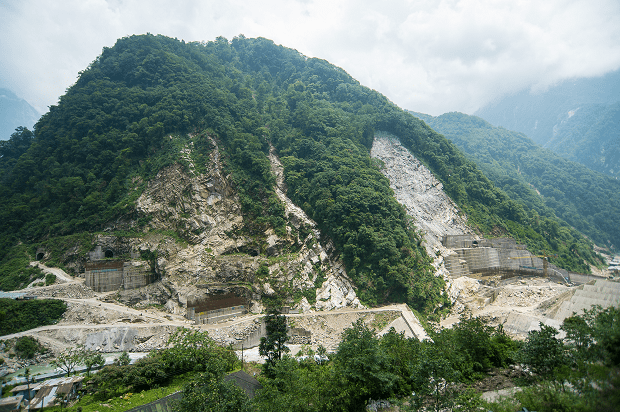


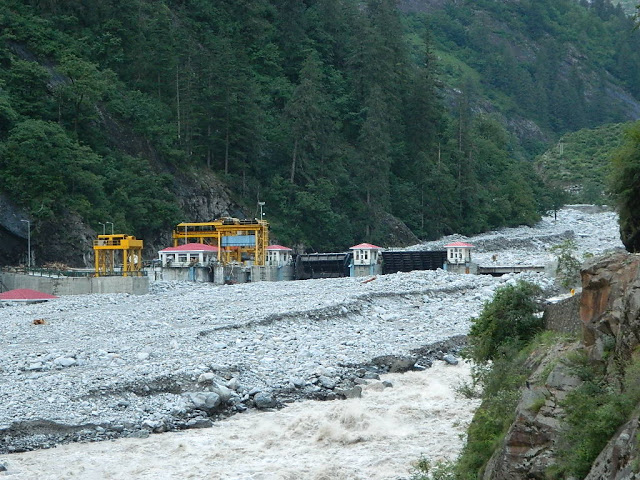
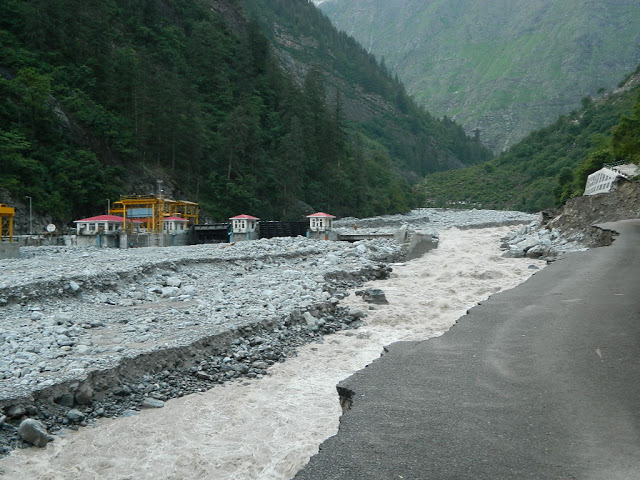


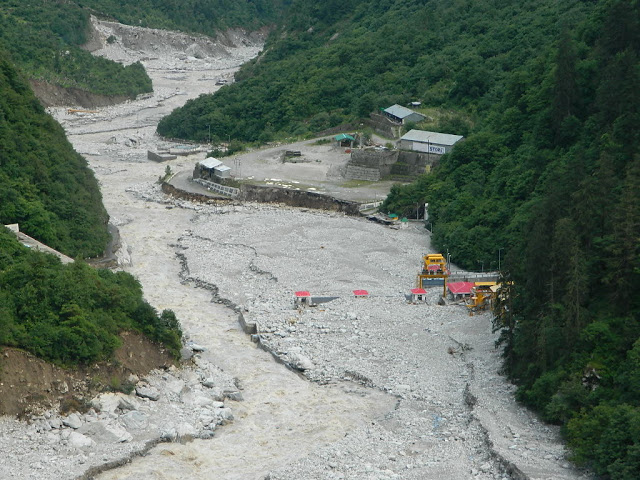
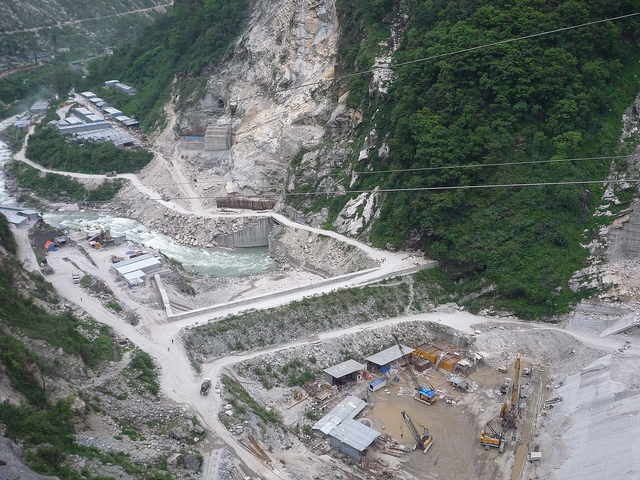


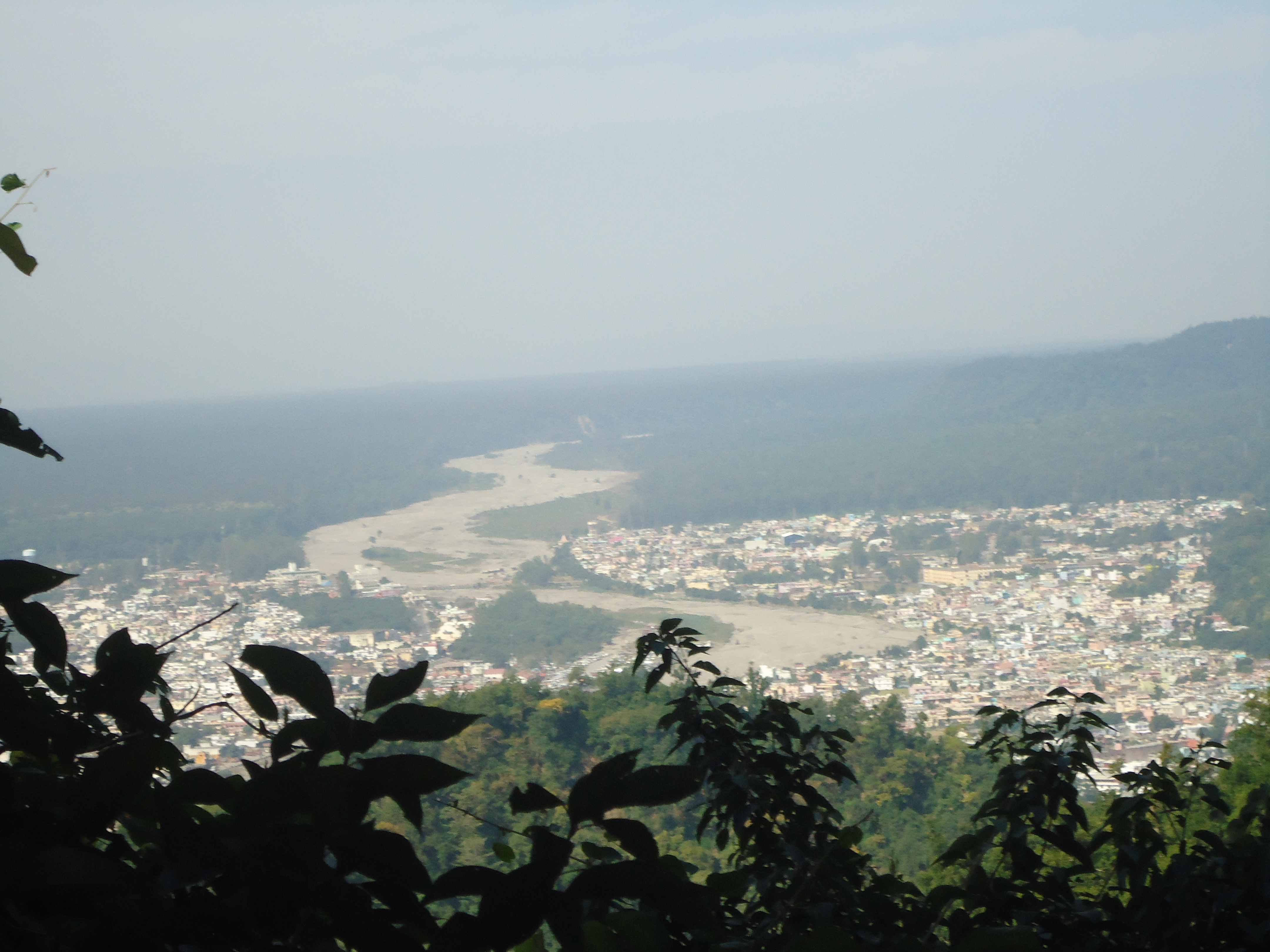




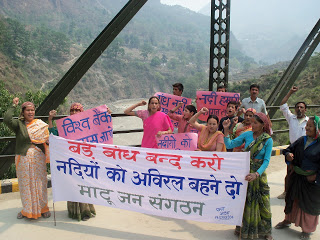
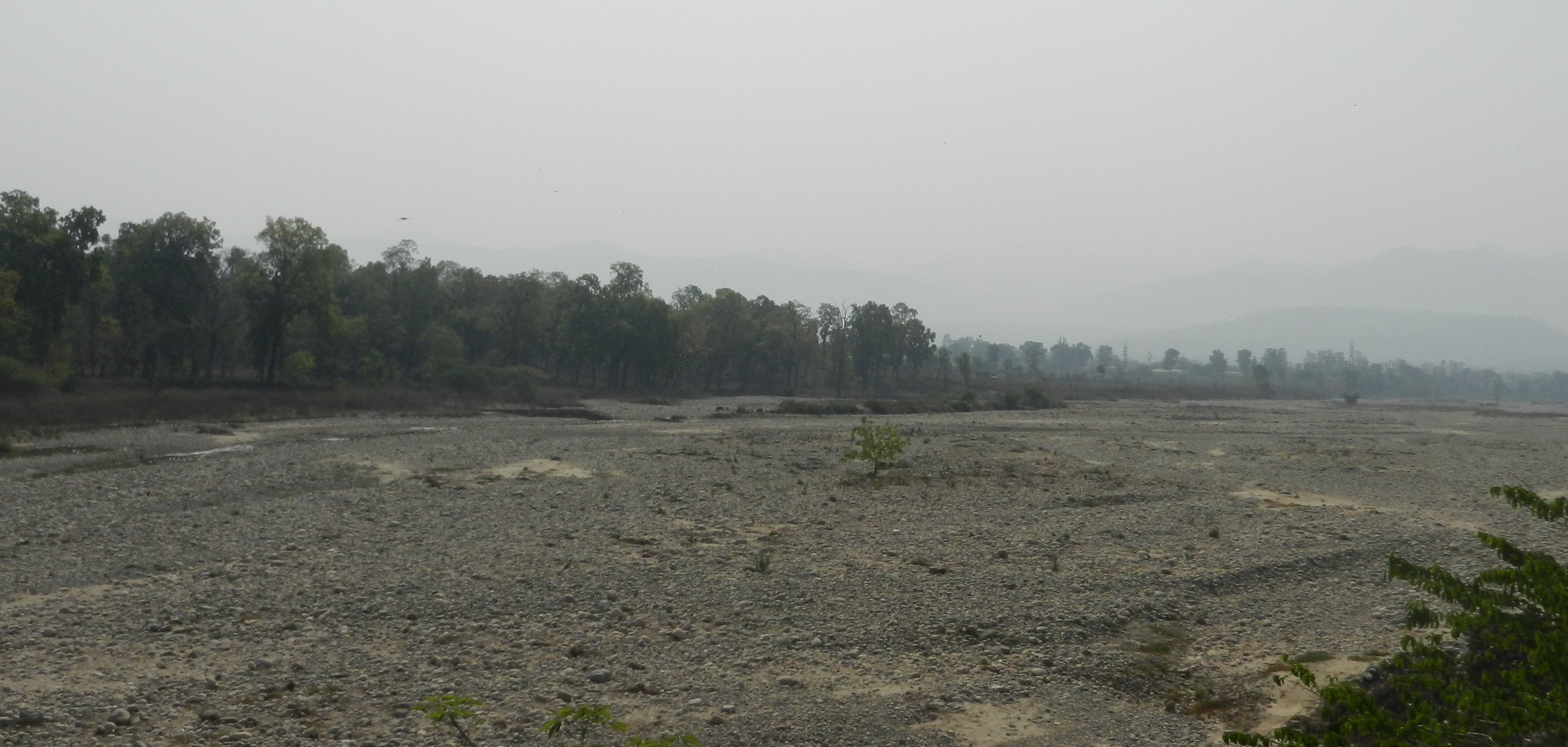


 SANDRP


