As per the Daily Status Reports of Narmada Control Authority[iv], inflow into SSP Dam suddenly jumped from 495 cumecs (Cubic Meters per second) on Sept 12, to 2518 cumecs on Sept 13, 2383 cumecs on Sept 14 and 2210 cumecs on Sept 15, 2384 cumecs on Sept 16, in anticipation of the birthday, so that when Narendrabhai visits the dam site to formally declare the project complete, the reservoir is seen to have substantial water. Expectedly, SSP water level rose from 126.19 m to 128.5 m by 8 am on Sept 15. How was this made possible?
Madhya Pradesh depletes its water storage so that SSP looks full on Sept 17? The increased inflow into SSP was made possible only by increased outflow from upstream Madhya Pradesh dams like Indira Sagar Project (ISP) on Narmada. ISP, incidentally is India’s largest reservoir in terms of storage capacity.
So the ISP storage level which was already very low (about 33%) on Sept 11 with monsoon almost coming to close, was depleted by further 450 MCM (Million Cubic Meters) from Sept 11 to Sept 16 (date for which latest information is available), while SSP water level rose by 750 MCM during the same period. All this, so that water level at SSP could look more respectable on Sept 17. Its not known why Madhya Pradesh is ready to lose water from its low storage levels (in fact, the water level at Omkareshwar Project on Narmada is below Minimum Draw Down level throughout this period).
Will Madhya Pradesh Chief Minister and MP Govt be held accountable for this by the media, judiciary and the people?
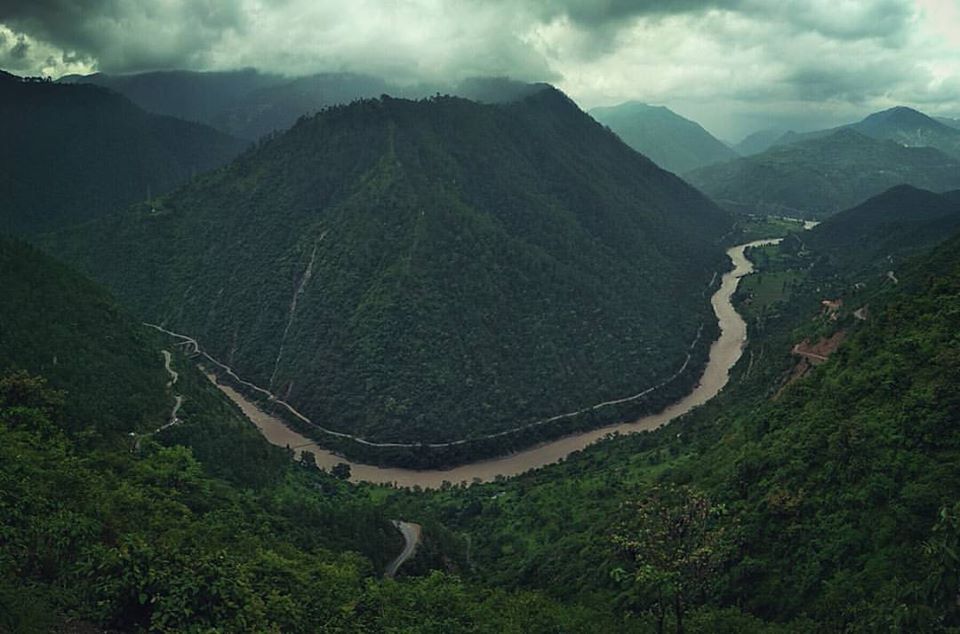
Featured Image: Saryu River winding through Pithoragarh by Sumit Mahar, HIMDHARA
This is Hindi version of SANDRP petition submitted to District Magistrate Almora, Pithoragarh and Regional Official, Environment Protection and Pollution Control Board, Uttarakhand pleading them to postpone the unfair and unjust public hearing of Pancheshwar Multipurpose Project on Mahakali River. The English version of same can be seen here https://sandrp.wordpress.com/2017/08/10/cancel-pancheshwar-dam-public-hearings-it-involves-too-many-violations-and-illegalities/
आदरणीय पंचेश्वर बॉध पर्यावरण जनसुनवाई अधिकारिक सदस्य दल,
आज पंचेश्वर बॉध परियोजना की अल्मोडा जिले में तय तीसरी एवं अंतिम पर्यावरण जनसुनवाई, पूरी तरह से पर्यावरण प्रभाव आकलन Environment Impact Assessment (EIA) राजपत्र 2006 के नियमों के विपरीत है। अतः इस जनसुनवाई को निरस्त कर, प्रभावित गॉववासियों से समोचित चर्चा के बाद, भविष्य में यथोचित स्थान पर जनसुनवाई कि जानी चाहिए।
All through the month, several states in the country have been battling severe flood situation. The Northeastern (Arunachal Pradesh, Assam), Western (Rajasthan Gujurat), Central (Madhya Pradesh, Uttar Pradesh) and Eastern (Bihar, Odisha, West Bengal) regions have been particularly affected by floods following incessant rain.
Superficially water deluge seems a natural disaster occurring on annual basis. But a closer observation of flood monitoring mechanisms and scores of media reports reveal that most of the flood crisis is man-made and dams have been playing a bigger role in creating a disaster out of a natural phenomenon.
Similarly, there is information from reliable sources proving that the wrong operation of dams end up creating flood situation in downstream areas which were already facing heavy rains. The devastating floods in Lakhimpur Assam around July 09, 2017, were a result of release of huge amount of water from Ranganadi dam in Arunachal Pradesh. https://scroll.in/article/844509/severity-of-assam-floods-heightens-old-fears-about-dams-in-the-brahmaputra-basin
In one more similar and latest incident, untimely release of water by Damodar Valley Corporation (DVC), Jharkhand resulted in flood disaster in Birbhum, Purulia, West Medinipur and Hoogly districts. As per West Bengal Govt the DVC officials discharged the around 2 lakhs cusec of water on 25 July 2017, from many dams built on Damodar river without intimating it. https://scroll.in/latest/845268/mamata-banerjee-blames-west-bengal-floods-on-centre-run-damodar-valley-corporation
The third dimension in the flood tragedy is the fact that responsible authorities like Central Water Commission (CWC), concerned state department have failed to issue timely warning in so many incidences which could have otherwise been avoided or mitigated. There are also reports suggesting that there was no prior forecast and warning for ongoing floods in Gujarat and Rajasthan.
Similarly there have been dozens of incidents in different parts where flood situation has been either caused or aggravated by faulty dam operation, breach in dams and lack of timely warning by responsible authorities.
Since May 2017, several flood related incidents have taken place in the North East showing how our shortsightedness in understanding the rivers, how our thoughtless construction along the rivers in the name of flood control and how our careless operation of dams have converted floods into a disaster.
At the same time, there have been incidents raising suspicion over quality of construction of built and ongoing dams. Then the news of NHPC being accused of forging Gram Panchayats signs to build 520 MW Teesta IV dam is shocking revelation in itself. Contribution of such factors in worsening the floods is always underplayed.
The countless landslides and Cyclone Mora (http://www.hindustantimes.com/india-news/cyclone-mora-reaches-northeast-many-houses-damaged-in-mizoram/story-UzcDuPOge0drAklftXW38L.html) have already left the region crippling, despite this there is no regular monitoring of flood situation and no timely warning being issued by States or Central Agencies about the rainfall and floods. All this is enough to prove that the ongoing flood devastation in North East has very much to do with the way we are destroying rivers with hydro projects, dams and embankments and disturbing the fragile environment of North East. These incidents also put question mark before govt agencies which are first pushing the destruction in the sensitive region and then lagging way behind in monitoring and issuing timely precautionary warnings.
In a remarkable trend emerging in hydro sector in Himachal Pradesh, many leading private companies have started surrendering hydro power projects allotted to them by State Govt. As per the news report, Tata Group, Reliance, Jindal and Larsen & Toubro have either surrendered or are in process of surrendering numbers of hydro projects given to them over past one and half decade. These companies are now increasingly terming the projects as non-viable and unprofitable.
In the last week of June, 2017, Tata group reportedly has written to Directorate Energy, expressing its desire to surrender the 450 MW Duggar power project in Pangi area of Chamba district. The project had been allotted to them in 2007-08 and post feasibility study done by its consultants the group has found the unviable. http://www.tribuneindia.com/news/himachal/tatas-give-up-chamba-power-project/428456.html
Before this the Reliance group had declined to set up 300 Mw Purty and 130 Mw Sumte Kothan hydro projects in Spiti. Following this, the State Cabinet on June 24, 2017 meeting agreed to return Rs 85 crore paid as upfront money by Reliance group.
In the latest incident, anticipating problems in evacuating power, with the market being very grim as far as buyers and power rates are concerned, Larsen and Toubro (L&T) is reported to have urged the state govt to enter into a power-purchase agreement (PPA) with it for two of its hydel projects — Reoli Dugli (Lahaul-Spiti) and Sach Khas (Pangi), located in the arduous Chenab basin.
Finally on World Environment Day, Swami Shivanand has withdrawn[I] his fast unto death agitation. It was thirteenth day of his indefinite hunger strike including six days of water fast (from May 25 – 30, 2017) against illegal mining in Ganga.
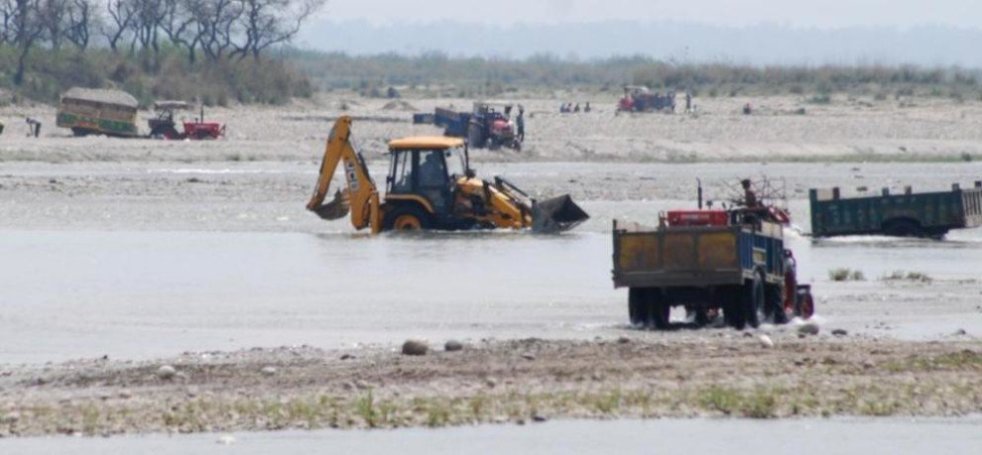
The saint ended his protest around 6pm on June 05, 2017, only after receiving written assurance from the Central Government. As per information, referring to Matri Sandan repeated pleas, UP Singh Director General of National Mission for Clean Ganga has accepted that there were violations[II] of rules specially Rule No. V of Environment Protection Act during mining in Ganga. Subsequently he has asked Chairman, Central Pollution Control Board initiate criminal proceedings against the officials[III] concerned for non-compliance of the rules.
Today is 13th day of the Swami Shivanand fast unto death to protect Ganga River from illegal mining. The health of 70 years old Marti Sadan head is turning critical with each passing hour. If no intervention is done immediately, the Saint’s life will be in danger.
Matri Sadan resumed its fight against rampant mining in Ganga on May 13th, 2017 after State Government opened Ganga riverbed mining which the Ashram is strongly opposing for last many years.
For first eleven days two disciples of the Ashram observed hunger strike. But seeing no response from Govt, Swami Shivanand himself sat on fast unto death on May 24, 2017 against indiscriminate mining of national river. Still the Govt went ahead with Ganga mining activities stating that it was necessary to protect the city from flood.
In response the Saint shunned even taking water. But instead of communication with the protesters, the State Govt reportedly on May 28, 2017 triedto force feed the saint to fail the agitation for which the Govt was criticized greatly.
After mounting pressure the CM of Uttarakhand is learnt requesting to stop hunger strike. Following this mining was stopped in Ganga and the saint started taking water after six days but decided to continue fast as long as Government imposes complete ban on mining in writing.
On June 02, 2017, accusing the State Govt of blatant apathy towards Swami Shivanand’s hunger strike against illegal mining on the Ganga riverbed in the Kumbh Mela area, a group of scientists, activists and followers have written to the PM Modirequesting the PM to intervene without delay to stop unscientific mining of the Ganga.
Union Minister of State of Environment, Forests and Climate Change (Independent Charge)
Paryavaran Bhawan, Jor Bagh, Delhi 110 003
dr.harshvardhan@sansad.nic.in, ps2mefcc@gov.in (PS to MoEF Minister)
Respected Sir,
We have just learnt that Prof Sharad Jain of NIH, Roorkee, and chairman of Expert Appraisal Committee (EAC) on River Valley and Hydropower Projects (RVP), is also holding additional charge of DG of NWDA, see: http://www.nwda.gov.in/writereaddata/linkimages/6419983647.pdf. His office just told one of us that he has been holding this charge since about three months already.
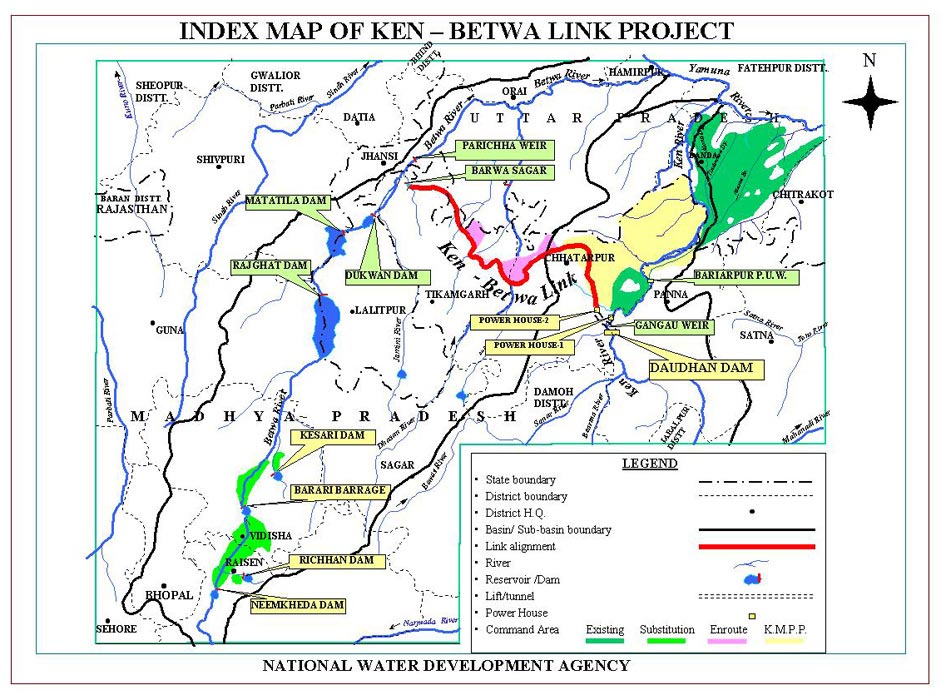
This is a clear case of conflict of interest. As you know, a number of NWDA projects come to EAC for approval at various stages. One such project that came before the EAC headed by Dr. Jain was the Ken Betwa project, which the committee headed by Dr. Jain promptly cleared in very first meeting of the reconstituted EAC in Dec 2016, weeks before Dr. Jain took over as Director General of NWDA, over ruling the issues that earlier four meetings of the EAC had raised about this project. How can one expect that the EAC chairman would be able to objectively, independently and scientifically appraise a project of the organisation (NWDA in this case) of which he is the Director General?
Under the circumstances, we believe there is no option, except that you must ask Dr. Jain to resign from his post as chairman of EAC, as his holding additional charge of NWDA DG, and already in conflict of interest. We also request you to ask the EAC to review their decision about Ken Betwa Project (and any other NWDA project) that the current EAC may have appraised, after appointing a new chairman of EAC.
We would like to bring to your attention that there is already a precedent in this context when in 2009, the then chairman of the EAC (RVP), Dr P Abraham was asked to resign since he was also director of hydropower companies whose projects came before EAC headed by him.
We hope you will act promptly on this issue. There is some urgency of this since the next meeting of EAC (RVP) is on May 31, 2017, that is tomorrow.
Thanking you,
Yours Sincerely,
1. Prof Brij Gopal (Retired Prof from JNU, Delhi), Centre for Inland Waters in South Asia, Jaipur, brij44@gmail.com
2. Dr E A S Sarma, former Secretary, Govt of India, Vishakhapatnam, eassarma@gmail.com
3. Dr Bharat Jhunjhunwala (Formerly with IIM Bangalore), Uttarakhand, bharatjj@gmail.com
4. Vimal Bhai, MATU jan Sangathan, Uttarakhand, bhaivimal@gmail.com
21. Prof Sunil Kumar Choudhary,Prof. & Head, University Dept. of Botany, T. M. Bhagalpur University, Bhagalpur, sunil_vikramshila@yahoo.co.in, 09431875861
Copy to: 1. EAC (River Valley Projects) members
2. Prime Minister’s office
MEDIA COVERAGE:
June 1, 2017: http://timesofindia.indiatimes.com/india/chief-of-eac-on-rivers-faces-conflict-of-interest-charge/articleshow/58937121.cms
June 1, 2017: https://www.nationalheraldindia.com/environment/2017/05/31/ken-betwa-river-linking-project-a-clear-case-of-conflict-of-interest
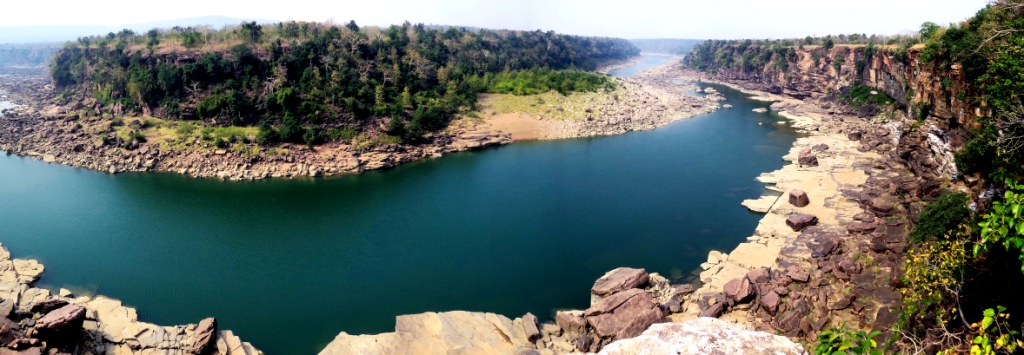
A fabulous view of Ken river. Nesting sites of Long-billed vultures are to the right. All will go under water if Ken-Betwa linkup is carried out,AJT Johnsingh
RajasthanLessons from a reborn river The district of Alwar in Rajasthan is water-stressed, receiving less than 650 mm of rainfall in a year, most of which falls during the Southwest monsoon. But Alwar exists in a stable equilibrium, where even if there is a drought, the Johad’s and the forests make it possible for water to be stored underground. Because of strong communal interdependencies, all villagers stuck to sensible crops for the region, and maintaines the Johads. The community, the Forests, the Johads, the choice of crops, all worked together and reinforces one another. Equilibriums are maintained by such reinforcing activities that fortify status quo. FASCINATING account of how Arvari community rejuvenated their rivers and what are the lessons.
On conclusion of five month long Narmada Sewa Yatra, Prime Minister Narendra Modi is today ( May 15, 2017) launching a road-map for steps to be taken for the conservation of the Narmada river. The MP state assembly has also recently declared river Narmada a living entity. Even otherwise quiet on rivers environment minister Anil Madhav Dave has expressed concerns for Narmada.
Contrary to all this, the Central Govt and 3 states of MP, Maharashtra and Gujarat have begun a process towards sanctioning completion of the Sardar Sarovar Dam, with closure of the 17 meters high gates. It is a countdown towards impounding waters in the 214 km land stretch where more than 40,000 families are residing till date. There are standing crops and massive plantations; thousands of pakka houses, schools, other public and private services erected; hundreds of temples, tens of mosques (as opposed to three temples claimed by the authorities), adivasi gods and worship places, all of which will be submerged. In protest thousands of people from Narmada valley, to be affected by Sardar Sarovar Project created a Human Chain on the borders of living village communities and on the banks of the river, protesting against any decision to close the dam gates.






 SANDRP