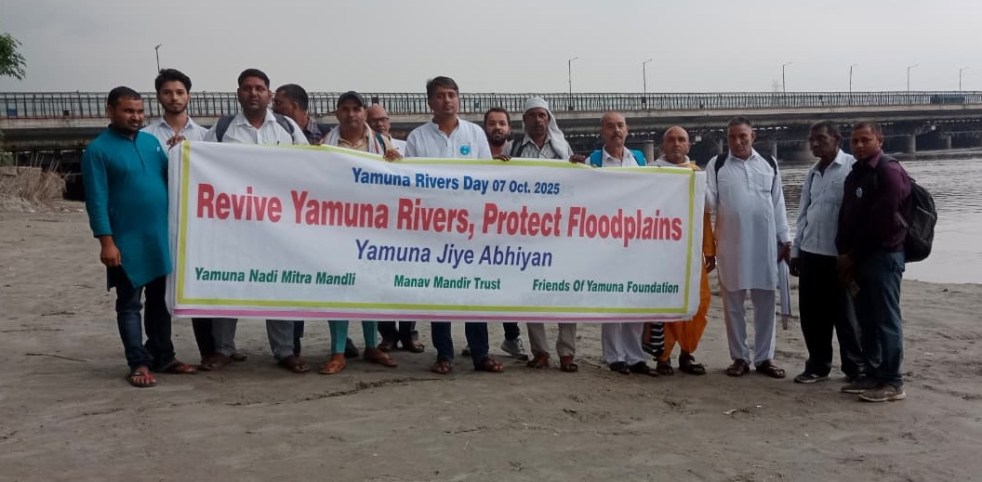
दिल्ली चुनाव के दौरान यमुना नदी प्रदूषण एक अहम मुद्दा बना। चुनाव जीतने के बाद नई सरकार निरंतर यमुना सफाई को लेकर कई घोषणाएं और योजनाओं पर बात कर रही है। स्वयं प्रधानमंत्री और उसके बाद केंद्रीय गृहमंत्री, जल संसाधन मंत्री इसके लिए बड़ी बैठक कर चुके हैं। इन सबमें हरियाणा, दिल्ली और उत्तर प्रदेश सरकार द्वारा मिलकर कार्य करने की आवश्यकता सबसे सराहनीय पक्ष रहा है। सरकार द्वारा एसटीपी क्षमता विकास, औद्योगिक प्रदूषण रोकथाम, जल संचयन बढ़ाने और जल स्रोतों को बचाने की बातें भी कही जा रही है। पर ये सब बातें तो पिछली सरकारों द्वारा पहले भी कही जा चुकी हैं और बातों से आगे ठोस नीति और सफल निष्पदान कार्ययोजना की तरफ नहीं बढ़ पा रही है। इन सबके बीच यमुना नदी स्वास्थ्य में गिरावट जारी है।
Continue reading “केवल सफाई नहीं, चाहिए समग्र यमुना नदी तंत्र संरक्षण नीति “Tag: Lakhwar

Uttarakhand: Aug 2023 Landslide Renders Jakhan in Yamuna Valley Inhabitable
(Feature Image: Landslide damaged homes in Jakhan village, Dehradun. Image source: Social Media)
The Jakhan village in Yamuna valley suffered a huge landslide in noon hours of August 16, 2023. The village is populated by 28 families. The incident has reportedly damaged 10 houses and 07 cowsheds fully and 02 houses partially apart from impacting a power transmission tower of Power Transmission Corp of Uttarakhand Ltd (PTCUL) forcing the villagers to take refuge in nearby primary school of village Pashta.
The village is part of Binhar region situated about 5 km uphill the power station of 120 Mw Vyasi Hydro Electric Power (HEP) Project on Yamuna river. The Vyasi Project is in Hathyari village of Vikas Nagar tehsil in Dehradun district. Before the fateful incident, the area had witnessed prolonged rain spells and the villagers had seen small cracks around the village.
Continue reading “Uttarakhand: Aug 2023 Landslide Renders Jakhan in Yamuna Valley Inhabitable”
Vyasi Hydro: Village Drowned; River Dried but little power generation
(Featured Image: Submerged Lohari village houses in Vyasi HEP ‘RoR’ dam reservoir. SANDRP, June 2023)
The 120 Mw Vyasi HEP built by Uttarakhand Jal Vidyut Nigam Ltd (UJVN Ltd.) in Vikas Nagar tehsil of Dehradun is on its way to become the textbook example of how thoughtlessly pushed hydro power projects are proving a nightmare for local people, a costly affair for the state and the nation and a disaster for free-flowing living river.
The project offers some bitter lessons for the policy-makers, experts and society who have been assuming that hydro power is a cheap, green source of energy and the Run of River (RoR) projects don’t dam and cause much harm to the environment, people or rivers.
Continue reading “Vyasi Hydro: Village Drowned; River Dried but little power generation”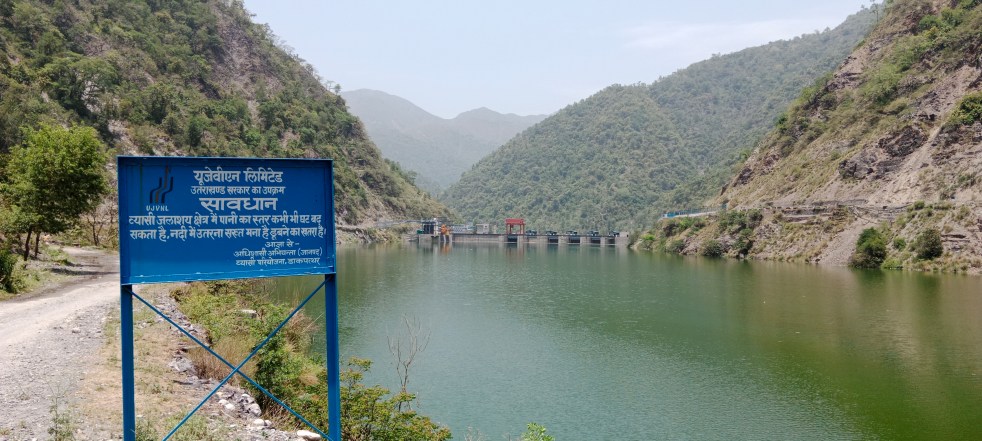
Photo Blog: Yamuna River A Year After Vyasi HEP
Vyasi HEP on Yamuna River is latest example of how the hydro power projects being pushed in the name of clean and green energy sources are failing on all fronts and proving a costly affair for the river, people and the nation.
The people who still think that the Run of the River (RoR) projects do not require a dam and cause no submergence of land; must visit the Vyasi HEP to witness the about 4 km long reservoir behind the 86-meter tall and 200-meter-long dam there.
Continue reading “Photo Blog: Yamuna River A Year After Vyasi HEP”
DRP 24 Jan 2022: MoEF’s complete surrender: Rating SEIAA on faster clearances
If rating of the State Environment Impact Assessment Authorities (SEIAA) of various states were to be done, it has to be based on how rigorous, how transparent, how participatory, how well defined, how consistent, how comprehensive, how rules following has been the functioning of the various SEIAA. Such an exercise has to be done by a panel of independent experts, who are experienced and knowledgeable about the various aspects of environmental governance and functioning of these authorities. In fact the exercise should also include the National EIAA too and the various Expert Appraisal Committees under it. It clearly cannot be what the MoEF has now proposed. What MoEF has proposed is completely against all basic norms of environmental governance and is part of MoEF’s complete surrender to the vested interests and not is not in the interest of environment governance. As the Tribune editorial noted, such blatant disregard of the environment is completely unacceptable. Similarly as the TOI editorial said, SEIAAs need to be independent of both business and governments. They should put the environment first, and last. There is a role of judiciary to step in here and ensure that MoEF does not go down this path.
Continue reading “DRP 24 Jan 2022: MoEF’s complete surrender: Rating SEIAA on faster clearances”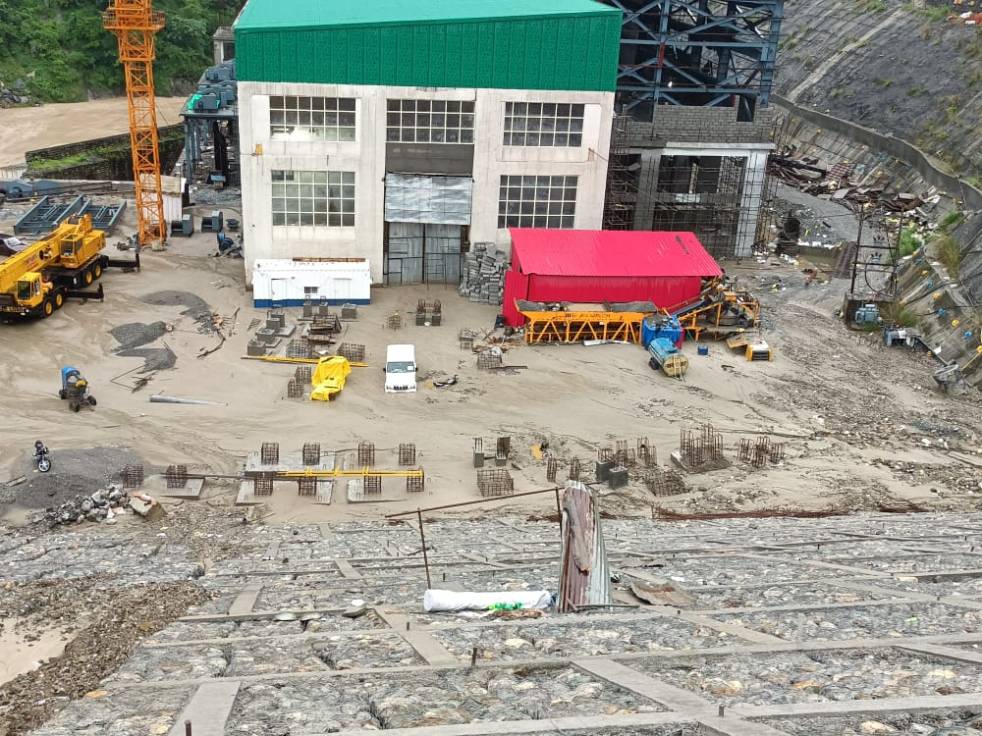
Uttarakhand 2021: Cloud Bursts around Vyasi HEP
On August 25-27, 2021 the most of hilly districts in Uttarakhand witnessed intense rainfall events causing widespread destruction. Media reports and local people suggest at least seven cloud burst incidents occurring in quick succession over Binhar range in Pacchawadoon and Mussoorie hills dividing Ganga and Yamuna basins in Dehradun district. The resultant deluge has also affected the under construction Vyasi Hydro Electric Project (HEP) areas in Vikas Nagar tehsil highlighting that the project is unprepared to cope with existing & emerging disasters.
Continue reading “Uttarakhand 2021: Cloud Bursts around Vyasi HEP”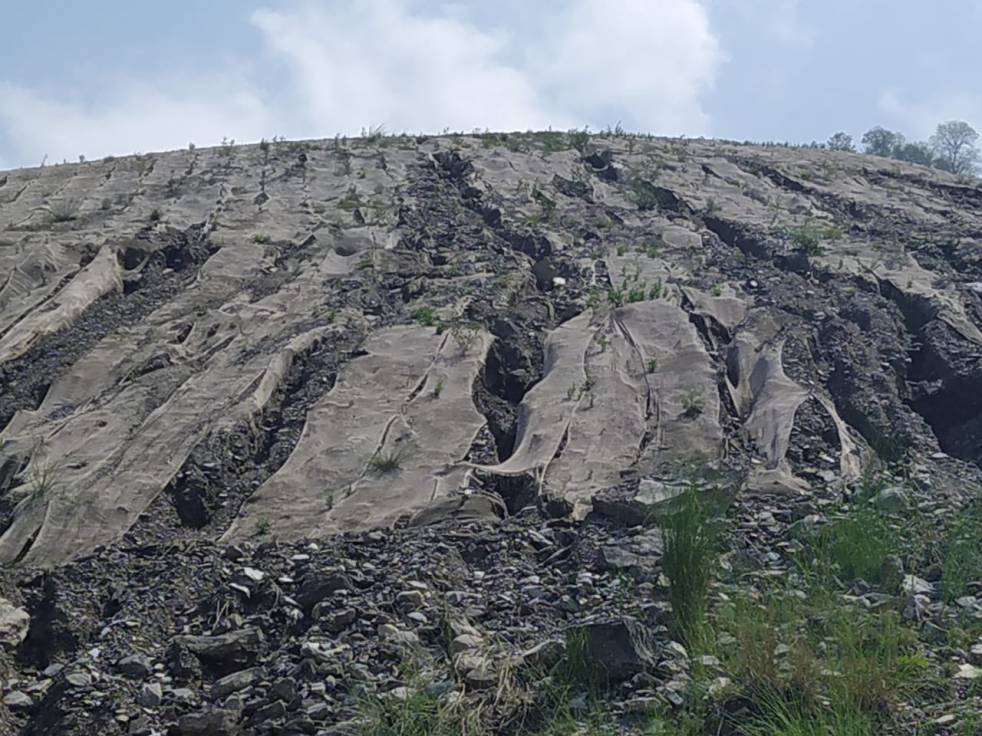
Vyasi Hydro is draining muck and Rs. 40 lakh geo jute work into Yamuna
During the night of June 20, 2020 pre-monsoon showers left series of gully formations on one of the muck dump sites of the under construction 120 MW Vyasi Hydro Electric Project (HEP) in Hathiyari area of Vikas Nagar tehsil, Dehradun district in Uttarakhand. Huge amount of muck washed down into Yamuna River, exposing the credibility of the Uttarakhand Jal Vidyut Nigam Ltd. (UJVNL), the developer of Vyasi HEP.
Local people said that since June 2019, the UJVNL has spent over Rs. 40 lakh on geo jute and hydro seeding (grass slope protection) work at Hathiyari muck dumping yard. The project has already missed several deadlines, the work is far from complete. The careless handling of muck generated during the construction of 2.7 km long, 7-m dia tunnel in last eight years has added -+to the woes of local people and Yamuna river.
Continue reading “Vyasi Hydro is draining muck and Rs. 40 lakh geo jute work into Yamuna”

Yamuna Jayanti 2019: Will the agony of the River & People speak in Elections?
(Feature image by Nishant Panwar, Vikas Nagar, shows Yamuna River in upper reaches in Jan. 2019)
On April 11, 2019, is the birthday of Yamuna river. The Yamuna Jayanti comes every year on the sixth day of ‘Chaitra’ (summer) Navratra. The Kapat (door) of famous Yamnotri shrine would be opened this year on May 7 for Char Dham Yatra.
In April-May 2019 India will vote to elect 17th Lok Sabha or Parliament. On April 11, the 1st of the 7 polling days, the home state of Yamuna river, Uttrakhand and the districts of Western Uttar Pradesh through which Yamuna river flows, will vote.
The two other states heavily dependent and Yamuna river, Haryana and Delhi will see voting on May 12. The district Mathura, Agra, Etawa, Kanpur, Hamirpur, Fatehpur and Allahabad of Uttar Pradesh located along Yamuna river will witness voting from second (April 18) to sixth phase on May 12.

The NDA government come to power in May 2014 promising clean Ganga and Yamuna. The thousands of devotees of Mathura and residents of Agra were especially convinced of a promise of clean flowing Yamuna river. People were also hopeful that the government of the same party, BJP, in centre and in key basin states of Yamuna (Uttarakhand, Haryana and Uttar Pradesh) would bring a change in the situation. But over the five years, things have only deteriorated further. In fact, under the present government apart from dams and pollution a illegal sand mining has emerged as equally dangerous threat for the Yamuna rivers from upper reaches through middle and lower stretches.
On the occasion of Yamuna Jayanti, the Yamuna Nadi Mitra Mandli (YNMM) a voluntary group of villagers and concerned; established along the length of Yamuna by Yamuna Jiye Abhiyan is highlighting the issues affecting the Yamuna river and riparian communities which have remained unaddressed during past five years and none of the political parties even now have remotely focused on these. They also warn that ignoring the problems of Yamuna and dependent community will soon affect every state and dependent people in a significant way apart from endangering the river itself.
Continue reading “Yamuna Jayanti 2019: Will the agony of the River & People speak in Elections?”

DRP: 13 August 2018: Existing Sediment Management Draft Policy Promoting Navigation & Not Rivers’ Health
Traditionally, our river management strategies are mainly focused on the water flows, including flood management, and these have resulted in various interventions such as dams, barrages, canals and embankments. Most of these interventions have had very little consideration for sediment transfer and even if they did, they were generally defunct within a few years of their operations either due to improper design or inadequate maintenance.
A long-term sediment management strategy has never been a part of any protocol of river management, not just in India, but in several other parts of the world. It is amply clear that sediment management must form an important component of management strategies for the Himalayan rivers. The Union Water Ministry has recently circulated a draft policy on sediment management.
Continue reading “DRP: 13 August 2018: Existing Sediment Management Draft Policy Promoting Navigation & Not Rivers’ Health”
DRP: 19 Feb 2018 (How Are We Treating Our Urban Rivers?)
In this comprehensive article Mumbai-based author Vaishnavi Chandrashekhar throws the light on the plight of Uraban Rivers. “Rivers and streams have borne the brunt of the recent urban explosion in India, a nation whose population has nearly doubled in the last 40 years to 1.35 billion. Unplanned growth has led to the use of water bodies as dumping grounds for sewage and industrial effluent. According to CPCB, 63 % of the urban sewage flowing into rivers (some 62 billion liters a day) is untreated.
In addition, riverbanks, wetlands, and floodplains have been claimed over time by infrastructure, slums, offices, and housing developments – all of which has narrowed natural river channels and distorted flow, greatly reducing the ability of India’s rivers to buffer flooding. It also has taken a toll on biodiversity. http://e360.yale.edu/features/dying-waters-india-struggles-to-clean-up-its-polluted-urban-rivers (Yale Environment 360, 15 Feb. 2018)
Continue reading “DRP: 19 Feb 2018 (How Are We Treating Our Urban Rivers?)” SANDRP