In a remarkable trend emerging in hydro sector in Himachal Pradesh, many leading private companies have started surrendering hydro power projects allotted to them by State Govt. As per the news report, Tata Group, Reliance, Jindal and Larsen & Toubro have either surrendered or are in process of surrendering numbers of hydro projects given to them over past one and half decade. These companies are now increasingly terming the projects as non-viable and unprofitable.
In the last week of June, 2017, Tata group reportedly has written to Directorate Energy, expressing its desire to surrender the 450 MW Duggar power project in Pangi area of Chamba district. The project had been allotted to them in 2007-08 and post feasibility study done by its consultants the group has found the unviable. http://www.tribuneindia.com/news/himachal/tatas-give-up-chamba-power-project/428456.html
Before this the Reliance group had declined to set up 300 Mw Purty and 130 Mw Sumte Kothan hydro projects in Spiti. Following this, the State Cabinet on June 24, 2017 meeting agreed to return Rs 85 crore paid as upfront money by Reliance group.
In the latest incident, anticipating problems in evacuating power, with the market being very grim as far as buyers and power rates are concerned, Larsen and Toubro (L&T) is reported to have urged the state govt to enter into a power-purchase agreement (PPA) with it for two of its hydel projects — Reoli Dugli (Lahaul-Spiti) and Sach Khas (Pangi), located in the arduous Chenab basin.
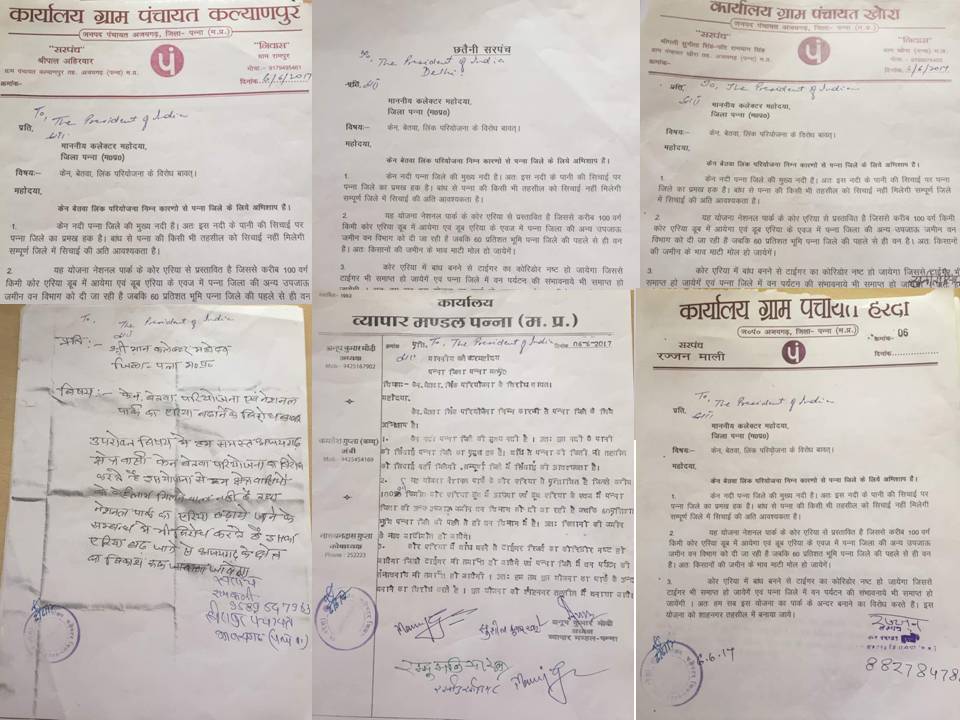
In the month of June 2017 several villages in Panna district Madhya Pradesh have opposed the controversial Ken-Betwa interlinking project. According to locals the project will destroy the Ken River which is the life line of area. Numbers of Village Panchayats have sent their memorandums to District Collector citing negative impact of the project on Panna Tiger Reserve. Many individuals and social groups including trader’s body have also criticized the project. As per locals, Panna district lacks irrigation facilities but the project proposes to transfer Ken river water to other areas. Local political parties have also supported the villagers opposition.
Similarly worried over the scale of destruction, a group of concerned people in Panna have recently organized a meeting on the issue. Discussing the side effects of the project, the group fears that Ken Betwa interlinking project will make the Ken River dry and as a result ground water level in the area will also go down. The people revealed that there is no surplus water in the river on the basis of which the project was planned. They also cited several shortcomings in the planning of the project and stated that downstream impacts of the project has not been studied at all. The group has collectively decided to take up necessary actions to convey their opposition to the project.
A recent IMD study has found that rain-bearing clouds have been thinning out across the country over the last 50 years. The study, published in the IMD journal Mausam, shows that between 1960 and 2010, annual mean low cloud cover (responsible for the bulk of the rainfall) over India has been decreasing by 0.45% per decade on an average.
According to the study, the number of rainy days is also declining during the monsoon season at an average rate of 0.23 days for every decade. This means that the country has lost approximately one rainy day over the last five decades. The study found that while the number of rainy days is decreasing, there is not much change in the total amount of rainfall. This shows a trend towards shorter, heavier bursts of rain.
That is bad news, because heavier raindrops can dislodge wheat and rice grains from their stalks while on the farm. It also means rainwater flows down a slope that much faster instead of percolating underground.
Meanwhile, a new NASA study has warned the amount of rainfall in the Earth’s tropical regions will significantly increase as the planet continues to warm. As per study rainfall is not related just to the clouds that are available to make rain but also to Earth’s “energy budget” — incoming energy from the Sun compared to outgoing heat energy. High-altitude tropical clouds trap heat in the atmosphere. If there are fewer of these clouds in the future, the tropical atmosphere will cool.
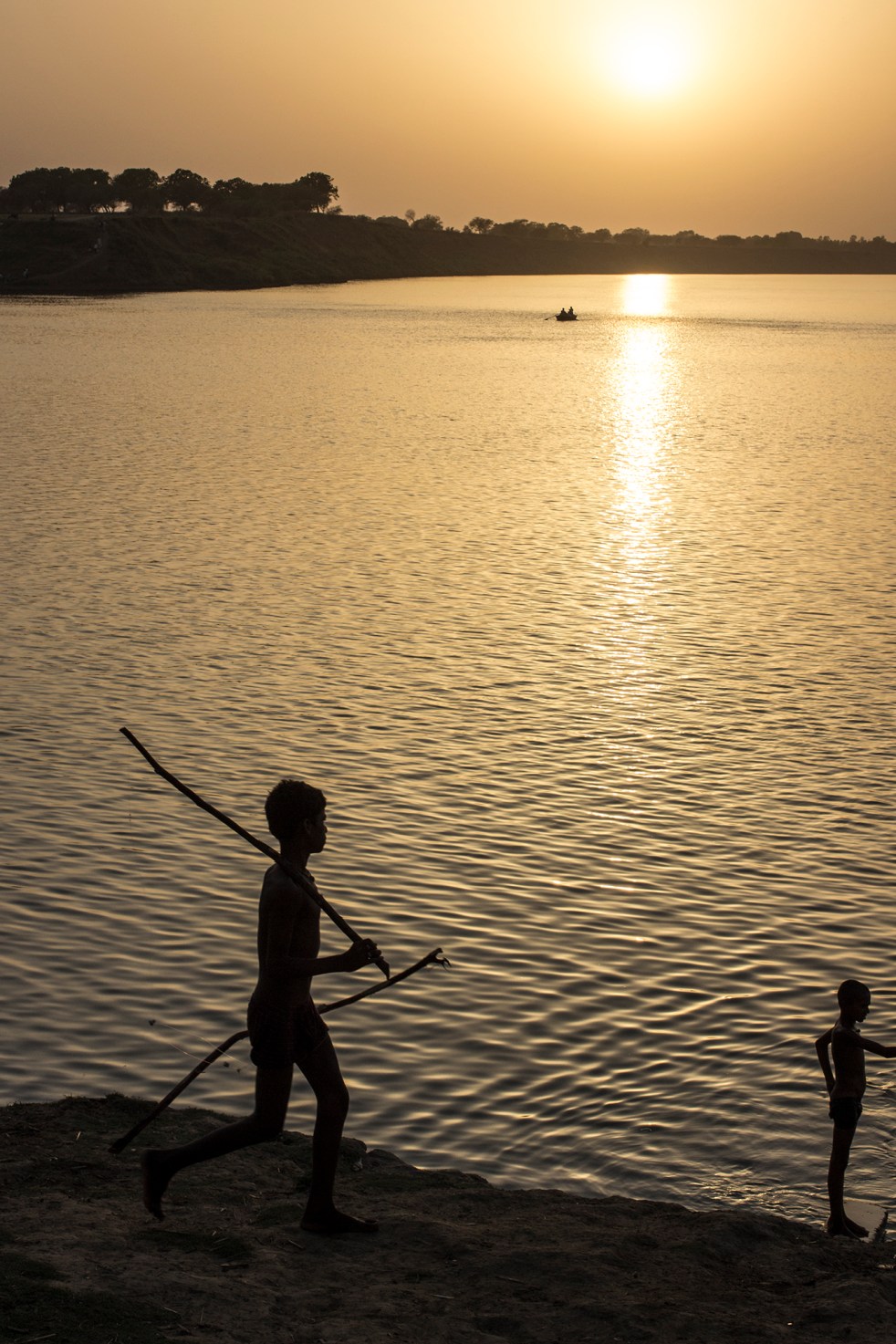
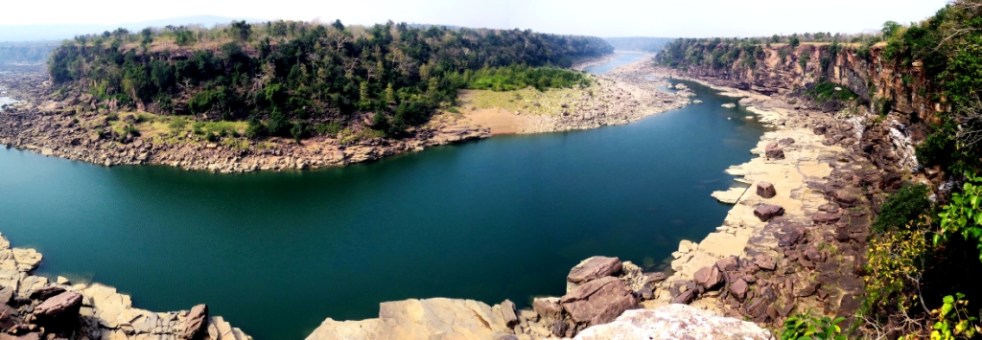
Above: Ken Yamuna Confluence at Chilla Ghat (Photo by Siddharth Agarwal)
We are thankful & glad that Dr Sharad Jain has responded to our open letter to MoEF, circulated through email and blog[i] that he holding the charge of NWDA Director General and Chairman of Expert Appraisal Committee (EAC) on River Valley and Hydropower Projects (RVP) involves Conflict of Interest. We are also thankful that through the Indian Express report (on June 3, 2017), he has provided another set of answers.
Union Minister of State of Environment, Forests and Climate Change (Independent Charge)
Paryavaran Bhawan, Jor Bagh, Delhi 110 003
dr.harshvardhan@sansad.nic.in, ps2mefcc@gov.in (PS to MoEF Minister)
Respected Sir,
We have just learnt that Prof Sharad Jain of NIH, Roorkee, and chairman of Expert Appraisal Committee (EAC) on River Valley and Hydropower Projects (RVP), is also holding additional charge of DG of NWDA, see: http://www.nwda.gov.in/writereaddata/linkimages/6419983647.pdf. His office just told one of us that he has been holding this charge since about three months already.
This is a clear case of conflict of interest. As you know, a number of NWDA projects come to EAC for approval at various stages. One such project that came before the EAC headed by Dr. Jain was the Ken Betwa project, which the committee headed by Dr. Jain promptly cleared in very first meeting of the reconstituted EAC in Dec 2016, weeks before Dr. Jain took over as Director General of NWDA, over ruling the issues that earlier four meetings of the EAC had raised about this project. How can one expect that the EAC chairman would be able to objectively, independently and scientifically appraise a project of the organisation (NWDA in this case) of which he is the Director General?
Under the circumstances, we believe there is no option, except that you must ask Dr. Jain to resign from his post as chairman of EAC, as his holding additional charge of NWDA DG, and already in conflict of interest. We also request you to ask the EAC to review their decision about Ken Betwa Project (and any other NWDA project) that the current EAC may have appraised, after appointing a new chairman of EAC.
We would like to bring to your attention that there is already a precedent in this context when in 2009, the then chairman of the EAC (RVP), Dr P Abraham was asked to resign since he was also director of hydropower companies whose projects came before EAC headed by him.
We hope you will act promptly on this issue. There is some urgency of this since the next meeting of EAC (RVP) is on May 31, 2017, that is tomorrow.
Thanking you,
Yours Sincerely,
1. Prof Brij Gopal (Retired Prof from JNU, Delhi), Centre for Inland Waters in South Asia, Jaipur, brij44@gmail.com
2. Dr E A S Sarma, former Secretary, Govt of India, Vishakhapatnam, eassarma@gmail.com
3. Dr Bharat Jhunjhunwala (Formerly with IIM Bangalore), Uttarakhand, bharatjj@gmail.com
4. Vimal Bhai, MATU jan Sangathan, Uttarakhand, bhaivimal@gmail.com
21. Prof Sunil Kumar Choudhary,Prof. & Head, University Dept. of Botany, T. M. Bhagalpur University, Bhagalpur, sunil_vikramshila@yahoo.co.in, 09431875861
Copy to: 1. EAC (River Valley Projects) members
2. Prime Minister’s office
MEDIA COVERAGE:
June 1, 2017: http://timesofindia.indiatimes.com/india/chief-of-eac-on-rivers-faces-conflict-of-interest-charge/articleshow/58937121.cms
June 1, 2017: https://www.nationalheraldindia.com/environment/2017/05/31/ken-betwa-river-linking-project-a-clear-case-of-conflict-of-interest
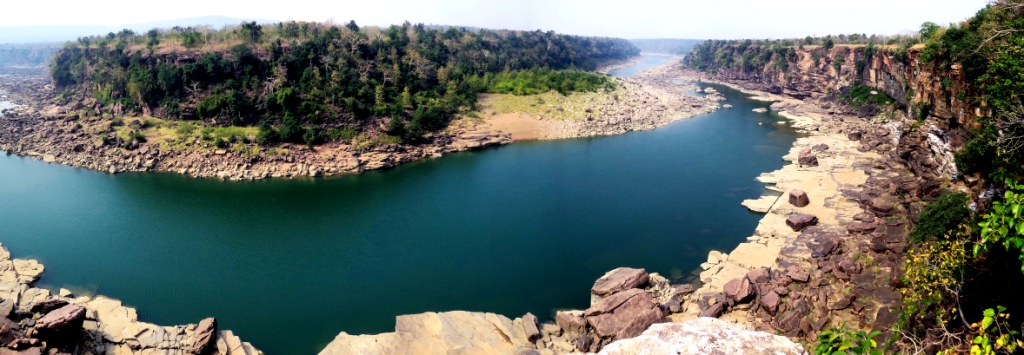
A fabulous view of Ken river. Nesting sites of Long-billed vultures are to the right. All will go under water if Ken-Betwa linkup is carried out,AJT Johnsingh
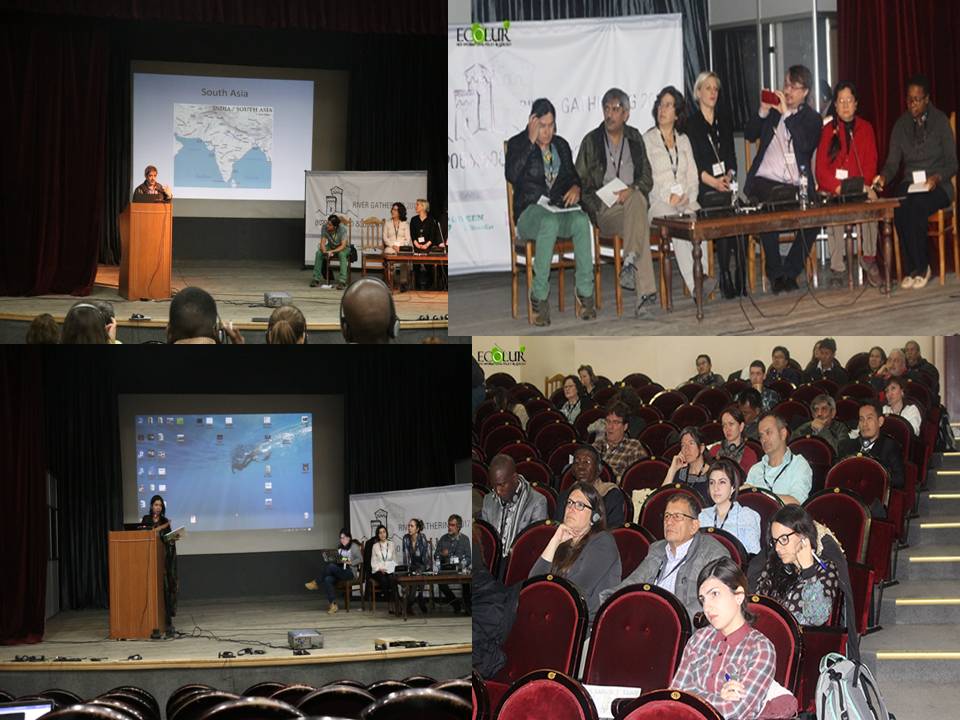
In a most significant event, some 85 river and dam activists from 40 countries and all continents gathered in Tbilisi, Georgia (on border between Asia and Europe, between Black and Caspian Sea) during March 27-31, 2017 to share experiences about their efforts to protect the world’s rivers and join their struggles against destructive hydropower projects. The meeting was organized by CEE BankWatch Network (active in 12 countries in Eastern and Central Europe) and International Rivers.
Eight persons from South Asia, including those from India, Pakistan, Nepal and Bangladesh joined the meeting to share experiences from the region. Indian participant included SANDRP coordinator (who was also in steering committee of the meeting) and Associate Coordinator Parineeta Dandekar. A number of participants from neighboring and nearby countries like China, Myanmar, Thailand, Cambodia, Mongolia and Russia also participated. Issues related to trans-boundary rivers, small hydropower projects and multiple projects on the same rivers, decommissioning of the dams, how to achieve free flowing rivers and importance of rivers in changing climate were some of the key issues discussed at the meeting.
This is about the proposed Brahmaputra Festival being planned by the Assam Govt from March 31 to April 4, 2017. The five-day festival will witness significant participation from China. Various other countries such as Vietnam and Singapore are also reported as attending the program. It is scheduled to be inaugurated by President Pranab Mukherjee.
It is true that the word business appears four times on the opening page of this festival website, but the word flood, erosion and people do not appear even once. This is relevant since for very large sections of people of Assam, the river also means floods, erosion, displacement and disaster on regular basis and not just “lifeline of Assam” or “life-giving prosperity and countless blessings”.
The festival website also errs in many ways, including when it claims “India’s only male river”, since there are several male rivers, including Damodar, Ajoy, Pagla, Gadadhar, among others. It is true that even the word Nemami is copied from the Nemami Gange, but that should not be such a big issue?
It is true that people also suffer when river dries up or is polluted or is encroached or unsustainably mined, and none of these issues are highlighted by the festival website. It is true that the the Assam also means all the communities, including the bodos and mishing and many others, not just Guwahati or Dibrugarh or Majuli. The festival organisers may argue that we are taking the festival to all 21 districts, but it is important to recognised all communities of Assam.
This is in addition to the fact that Brahmaputra includes all the states of North East India, and more. The Brahmaputra, 2,900 km long, is an international river with 918 km of it flowing in India, 1625 km in China and 337 km in Bangladesh.
It is true that the festival is more about attracting tourists, business and transport along the river. And so it is not even giving a comprehensive picture of the rivers of Brahmaputra basin in Assam, nor is there attempt to do anything to improve the state of the rivers. Similarly, the destruction of the rivers of Guwahati and Assam needs to be halted and reversed, and may be this occasion can be used to push that advocacy?
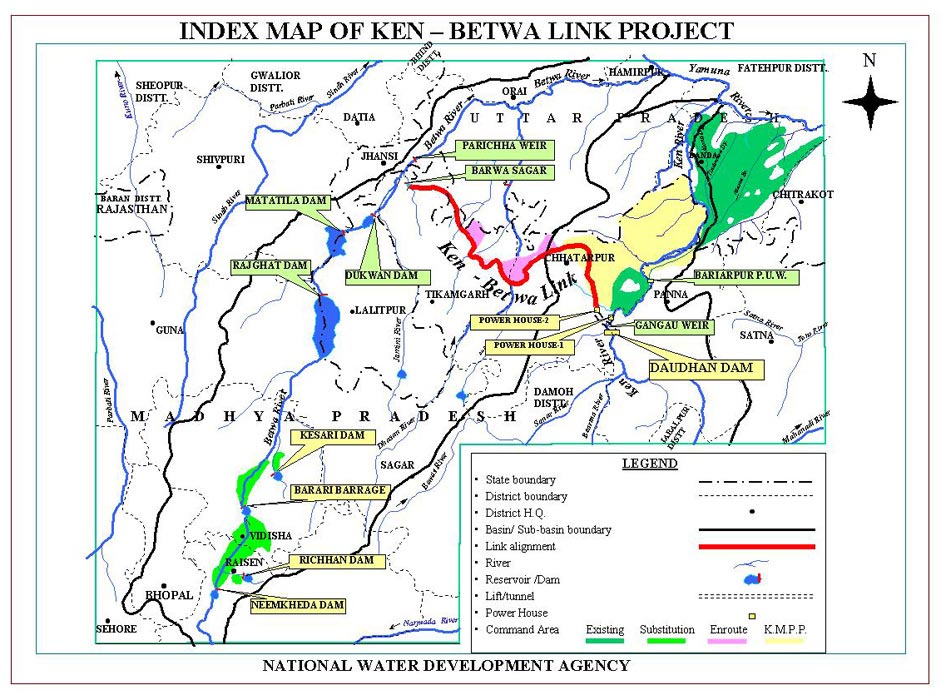
SANDRP Blog Little for Bundelkhand, lot for contractors in Ken Betwa river-linkThe official executive summary of the Detailed Project Report of KBLRP on NWDA website says: “The main objective of the Ken-Betwa link project is to make available water to water deficit areas of upper Betwa basin through substitution from the surplus waters of Ken basin.” Upper Betwa basin (Raisen and Vidisha districts of MP) is not in Bundelkhand. So KBLRP is essentially facilitating export of water from drought prone Bundelkhand to area outside Bundelkhand, which, in fact is well endowed with over 900 mm of average annual rainfall.
The DPR further says, a third o the surplus water will be utilized for “enroute irrigation of 0.60 lakh ha. in the districts of Tikamgarh and Chhatarpur of MP and Mahoba & Jhansi of U.P.” The claim in the minutes of Expert Appraisal Committee meeting of Dec 30, 2016 that “It is proposed to provide irrigation facility in 6,35,661 ha of area in Panna, Chhatarpur, Tikamgarh Districts of Madhya Pradesh and Banda, Mahoba and Jhansi Districts in Uttar Pradesh” needs to be put in context here. Firstly, this claim is far in excess of what the presumed surplus water can irrigate.
Union Environment Minister Anil Madhav Dave on January 5, 2017 reportedly told a meeting called by his ministry of non-official members of statutory bodies like expert appraisal committees and forest advisory committee, “How can we hold up development and not fulfill the needs of the poor for the sake of birds and animals?” This is of course a shocking statement to come from a minister whose mandate is to protect environment!







 SANDRP