Chenab · Indus · Pakistan

India Pakistan resume talks on Indus Treaty: Stakes are high

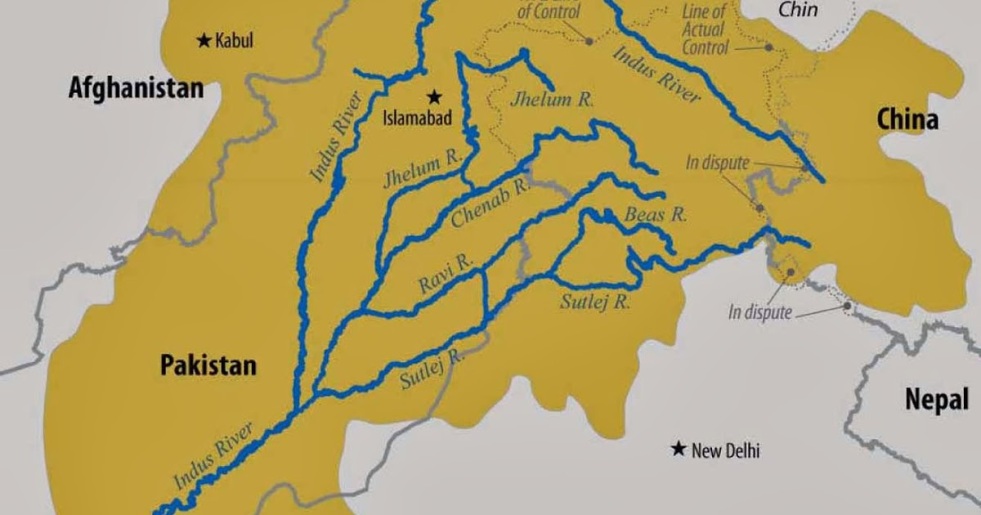
When on March 20-21, 2017, on the eve of World Water Day, India and Pakistan’s Permanent Indus Commission met in Islamabad for its 113rd meeting, there was a lot at stake besides the immediate issue or even the Indus Treaty.

In many ways, the Indus Treaty remains a bright spot in relations between these two neighbors and the treaty keeps bringing them back to the talking table…This is the magic of a shared river! Continue reading “India Pakistan resume talks on Indus Treaty: Stakes are high”

Dams · Indus

So who will suffer in the Indus water imbroglio?

Diplomatic and military strategies, by definition, are not decided through public debates. So the jingoism around Indus treaty with Pakistan seems more like an attempt at sending threatening signals. But it will have multiple serious ramifications in any case, so it is worth deliberating about.

The 1960 Indus treaty has allocated rights of development on three eastern tributaries (Sutlej, Beas & Ravi) to India, and we have exhausted that entitlement almost fully. Attempts to use the occasional remaining flow will mean a huge impact in Indian Punjab, which is unlikely to resonate well with the people of Punjab.  The treaty gave Pakistan dominant right of development of the three western tributaries (Chenab, Jhelum and Indus), India has limitations about water use (both in terms of quantity and manner of use) in case of the western rivers. India has not yet exhausted the entitlement in this case.

Continue reading “So who will suffer in the Indus water imbroglio?”

Dams

Smart Urban Water options: Recycle waste water

Recycling and reuse of wastewater is an important aspect of water management providing a way to increase available water while also preventing pollution of water bodies by sewage.

An estimated 62,000 million litres per day (MLD) sewage is generated in urban areas across India, according to the Environment Minister, while there is treatment capacity for only 23,277 MLD as of Dec 2015. A CPCB report further reveals that the actual amount of sewage treated stands at 18,883 MLD as only 522 out of 816 sewage treatment plants listed across India were operational, as of March 2015 (even this claim of 81.1% capacity utilization seems HIGHLY exaggerated). Thus, at least 70% of sewage generated in urban India is being dumped in rivers, seas, lakes and wells, polluting water bodies and contaminating fresh water sources. Partially treated or untreated sewage is responsible for large part of the pollution in streams and water bodies. Up to 80% of water bodies could be polluted.

Continue reading “Smart Urban Water options: Recycle waste water”

Wetlands

Press Release: World Wetlands Day 2016: Complete Regulatory Vacuum around India’s Wetlands

No National or State Wetlands Authority

No Wetland Rules for 4 yrs

The recent Chennai Flood Disaster of Dec 2015 and the Jammu and Kashmir Flood disaster of Sept 2014 have underlined that Wetlands are important not only for biodiversity & livelihoods of millions, but they are an integral mechanism for flood control and regulation in Rural and Urban India.

India is losing Wetlands at an alarming rate, as much as 38% in a decade (1991-2001). However, for the past four years, there has been a complete regulatory vacuum around the country’s wetlands, despite the Notification of Wetlands (Conservation and Management) Rules with much fanfare in 2010. Continue reading “Press Release: World Wetlands Day 2016: Complete Regulatory Vacuum around India’s Wetlands”

Climate Change

IEA concludes INDCs will not limit warming to 2 °C; focus on India without any push to the OECD countries to reduce consumption

It’s not everyday that the Washington Post features India in headlines, so when on Diwali day, that happened[1] in the context of publication of International Energy Agency’s[2] World Energy Outlook 2015[3], it was noteworthy. The IEA report has worrying conclusion that the world won’t be able to limit warming to 2 °C even if all the pledges (INDCs) submitted in advance of Paris Summit get implemented, “The (global) emissions trajectory implies a long-term temperature increase of 2.7 °C by 2100. A major course correction is still required to achieve the world’s agreed climate goal. As the largest source of global greenhouse-gas emissions, the energy sector must be at the heart of global action to tackle climate change.” Continue reading “IEA concludes INDCs will not limit warming to 2 °C; focus on India without any push to the OECD countries to reduce consumption”

Climate Change

SANDRP critique of India’s NAPCC: There is little hope here

For Full report, see: https://sandrp.in/wp-content/uploads/2015/10/there-is-little-hope-here-sandrp-critique-of-napcc-feb-2009.pdf

EXECUTIVE SUMMARY

The purpose of this study is to provide an Indian civil society view on the contents of the Indian government’s national action plan to confront the threat posed by climate change. The study aims to highlight the equity issues, the options assessment for energy production and the needs for sustainable adaptation practices. The study also aims to give an overview of the available information resources about the impact of climate change on India and tries to map out various actors & their roles. However this is vast issue and this brief study cannot include all the aspects in this regard. The focus is more on water, agriculture and energy related issues, since these are the focus areas of the work of the South Asia Network on Dams, Rivers & People (SANDRP). Continue reading “SANDRP critique of India’s NAPCC: There is little hope here”

Climate Change

Water Sector Options for India in a Changing Climate – Executive Summary of SANDRP publication in March 2012

For Full Report, see: https://sandrp.in/wp-content/uploads/2015/10/water-sector-options-india-in-changing-climate-sandrp-march-2012.pdf

EXECUTIVE SUMMARY

This report tries to capture the relevant issues for Indian Water Sector in the context of changing climate. The report briefly reviews international situation in the context of the four pillars of climate change response that are used in international climate change framework: Adaptation, Mitigation, Technology and Economic/financial issues. It takes a look at the official programmes and projects of governments in water sector. It includes some local options and success stories in water and agriculture in India in the context of changing climate. Continue reading “Water Sector Options for India in a Changing Climate – Executive Summary of SANDRP publication in March 2012”

DRP News Bulletin

Dams, Rivers & People News Bulletin, August 24, 2015

MAHARASHTRA DROUGHT

Stop westward diversion of water from Bhima-Krishna basin:SANDRP (21 Aug. 2015) The Report is based on interview of Parineeta Dandekar of SANDRP and provides the steps that the Maharashtra govt can take to reduce drought and water scarcity in Maharashtra, starting with stoppage of westward diversion from Bhima-Krishna basin. This is based on Open Letter to Mahrashtra written by Parineeta Dandekar in the context of Marathawada drought and analysis of Marathawada drought by Parineeta Dandekar.

SANDRP has also written an Open letter to Tata Sustainability Group to stop westward diversion of Bhima basin water by Tata Hydro projects. SANDRP’s response to Tata Power on this issue was earlier published on August 17, 2015 Continue reading “Dams, Rivers & People News Bulletin, August 24, 2015”

Dams

Dams, Rivers & People News Bulletin (April-May 2015)

HYDROPOWER

“Right now, hydel is almost stalled”: Piyush Goyal (18 May 2015)

Union Power Minister makes some candid comments on Hydro: “Right now, hydel is almost stalled. We have Teesta stuck for various reasons. Subansiri, Maheshwar, Lower Subansiri, all of them have different challenges. Small hydros are facing challenges of transmission, they are facing challenges of local area problems. So, by and by, the hydro sector will need a more holistic thinking. The courts have also taken up certain matters, particularly in Uttarakhand, post the tragedy (of floods in 2013). There is the mission of Ganga to ensure that there is a reasonable flow—Aviral Ganga, which we are committed to. We are working on all of these plans… For example, Subansiri had an issue where the local population had concerns. We immediately got an eight-member very, very high-level expert committee, including Central Water Commission, Central Electricity Authority, and experts from Assam. They are all working together to see the environmental impact, structural impact, riparian state impact and riverbed impact.

http://www.livemint.com/Industry/9HtQbGUG0v4rYIczIT21hJ/Time-is-now-ripe-for-a-power-fund-says-Piyush-Goyal.html Continue reading “Dams, Rivers & People News Bulletin (April-May 2015)”

Bhutan · Hydropower

Changing profile of India’s Hydro Power Import from Bhutan

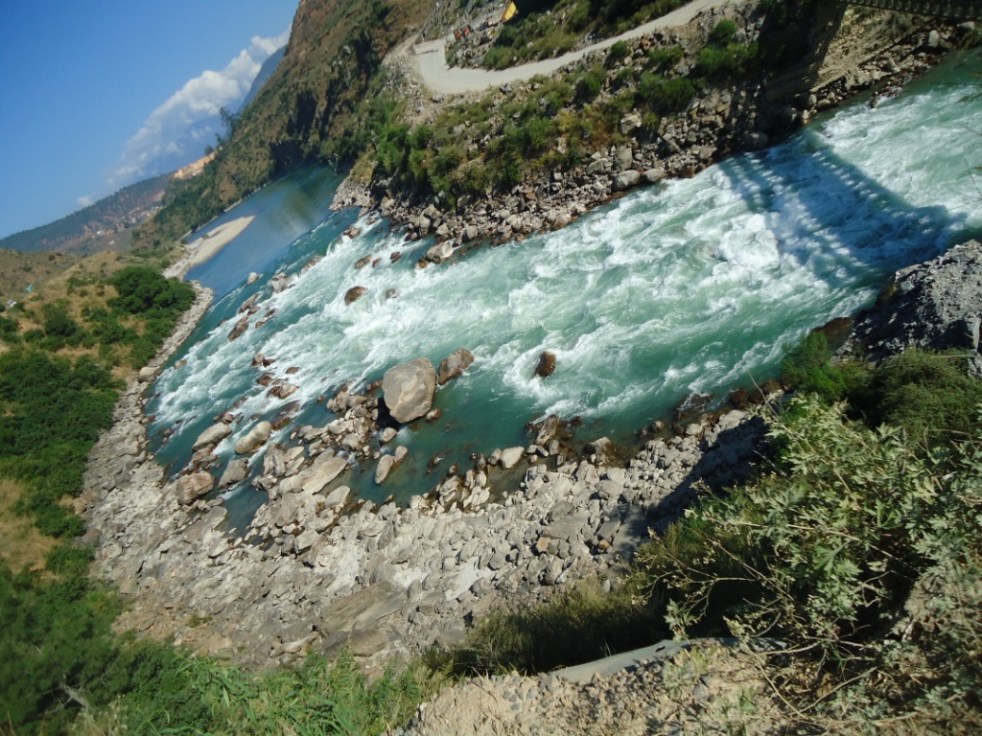
Punatsanghchu River in Bhutan, All Photos by SANDRP

Prime Minister Narendra Modi has been saying to Nepal and others that Bhutan is a good example to show how a country can prosper from hydropower generation and export. During his trip to Bhutan in June 2014, soon after taking over as Prime Minister of India, he said, “Our Hydropower cooperation with Bhutan is a classic example of win-win cooperation and a model for the entire region.”

However, this hydropower import by India from Bhutan is not a new development. Central Electricity Authority under Union Ministry of Power provides[1], in its monthly reports, power import from Bhutan, these figures are available since 2005-06. Continue reading “Changing profile of India’s Hydro Power Import from Bhutan”