5 river basins; Total Area: 55,000 square kms.; Total Population: 68.65 lakhs; Total Catchment Area of 5 rivers; Total Catchment Area: 53311 sq.kms
Himachal is a relatively small state and in 2011 its population stood at 68.65 lakhs. It is only 9% urbanised and most of Himachal lives in its villages. Of the total land geographical area only 10% is under agriculture while close to 70% in under the category of ‘Forest land’. And yet agriculture is the main source of livelihood in Himachal with over 93% of the population dependent on it. As in most mountain areas agriculture and forest dependence is interwoven.
Agriculture is made possible due to the irrigation from river channels or natural springs. The health of the forests directly determines the health of the surface and ground water systems which in turn determines the viability of agriculture and horticulture. Horticulture and cash based agriculture was pushed by the government in the late 70s and 80s. Today the state has massive apple cultivation, apart from commercial vegetable cultivation, which is an important source of income for the farmers.
Area: 88752km2; 20 districts; Population- > 91 million Topography: Mountains, Plateaus and Plains.
About West Bengal Rivers
The state of West Bengal, a land of many rivers, covers an area of about 88,752 km2 and is the home of more than 90 million populations as per census of 2011. The Ganga divides the state into two unequal hubs: the North and South Bengal. The state has been divided into 20 districts, the seven districts are within North Bengal and remaining 13 districts are in South Bengal. West Bengal is the only state of India that extends from the Himalaya in the north to Bay of Bengal in south. It offers wide topographic diversity and intricate drainage network of 29 basins. The south Bengal can further be subdivided into two geographical units taking Bhagirathi-Hugli river (the western distributary of the Ganga) as the demarcating line. The western part is called Rarh Bengal and the eastern part is described deltaic Bengal. The rivers of West Bengal have been divided into five groups: i) the rivers of North Bengal; ii) the Ganga-Padma system; iii) the Bhagirathi- Jalangi-Churni system; iv) the western tributaries to Bhagirathi and v) the tidal creeks of Sundarban.
SC transfers PIL on cleaning Ganga to NGTIn a major development, after monitoring Ganga cleaning work for last 31 years and without achieving any cleaner river, the Supreme Court on January 24, 2017 wrapped up a PIL on cleaning of river Ganga and sent it to the National Green Tribunal (NGT) for more effective adjudication. The apex court had been monitoring the issue for 31 years. A bench of Chief Justice J S Khehar and Justice N V Ramana said that since issues relating to municipal solid waste and industrial waste were already being heard by the NGT on a day-to-day basis, all other issues relating to sources of polluting the river should also be heard by the NGT.
The bench said that the tribunal will be required to submit an interim report to it every six months, only to give an idea about the progress made and difficulties, if any. It also granted liberty to the petitioner, environmentalist M C Mehta, to approach the court if he had any grievances in consonance with the law.
During last week hearing (January 17, 2017), the SC bench has directed the government to file a report on the construction and functioning of STPs alongside the river, which runs through five States.
It has been almost two years after the SC has voiced scepticism about the government’s self-proclaimed promise to clean up the Ganga River. Before this, in 2014, the apex court had voiced its reservations about the various efforts over the decades to return the Ganga to its pristine self, once even saying that it “does not expect Ganga to be cleaned up even after 200 years.”
In the midst of a serious meeting pontificating on water issues, suddenly one hears an evocative sher in impeccable Urdu, followed by laughter and rounds of Irshad. The sher captures a lot in a few lines.
For an MTech Engineer from IIT and a Ph D Structural Engineer, Dr Dinesh Kumar Mishra, Mishra ji, is a colourful personality.
Mishraji, a light moment Photo: kdasgupta2007.wordpress.com
His erudition on rivers and floods in Bihar is tempered by folklore, songs, myths and shayari. A polyglot, Mishraji speaks and writes with eloquence in not only in Hindi and English, but in Bengali, Odiya and Urdu with equal ease. He holds a doctorate from the University of South Gujarat and has been an Ashoka Fellow. Mishraji is an institution in himself when it comes to rivers and floods of North Bihar and has single-handedly contributed to a gradually changing perception of flooding rivers as a catastrophe or “something to be tamed”.
And hence, it gives us great pleasure to share that Mishraji was honored with the Bhagirath Parayas Samman at the India Rivers Week held in New Delhi on the 29th November 2016. India Rivers Week is being organized since November 2014 by a consortium of NGOs including WWF India, INTACH, SANDRP, Toxics Link and PEACE Institute Charitable Trust. More than 100 River experts, planners, researchers, artists, enthusiasts and activists from different parts of the country have been coming together to celebrate India Rivers Week in Delhi in last week of November to discuss, deliberate and exchange their experiences and ideas aimed at the conserving, rejuvenation, restoration of rivers in the country.
Citation of Bhagirtah Prayas Samman states “Dinesh Mishra, an engineer from IIT Kharagpur, has laid the foundation for an extensive knowledge base on floods in rivers.Through his writings, lectures, advocacy and public interactions he has inspired many individuals and organisations to record local knowledge about floods and generate information that creates awareness among communities. All this has become part of a larger social movement… It is an honour to recognize and celebrate Dr Dinesh Mishra’s extraordinary Bhagirath efforts in institutionalizing traditional ways of living with floods.”
Born just prior to independence in a village in Utter Pradesh, Mishraji has dedicated his life in telling us about destruction wrought by infrastructure centric-flood control measures on rivers… especially rivers of the Ganga basin in North Bihar. Since 1984, Mirshraji is engaged in the study of floods, water-logging and irrigation and has slowly nurtured a diverse army which is able to see a lot more in floods than only destruction. He has helped us see the impact of flood control infrastructure like embankments.
Mishraji believes that India’s flood control policy revolves mainly around embankments resulting in severe environmental problems. The maintenance of such structures is in the hands of “indifferent technocracy” which does not take cognizance of the fact that investment in the flood control sector is doing more harm than good. Rising flood prone area of the country is a pointer to that. There are a wide range of aspects that need to be looked into afresh like agriculture, non-farm employment, migration, health, education, and access to civic amenities etc. He finds it intriguing that reciprocal inaccessibility of the flooded areas during the peak season and prolonged water-logging during the peace-time has not attracted the imagination of most of the responsible people. He is trying to learn from the people, their perception of the problem and take it up with those in power while keeping in touch with the people about the probable official intervention. These bridges are rare and much-needed in India. He has raised the issue of floods and water-logging and the links with infrastructure in state, national and international levels.
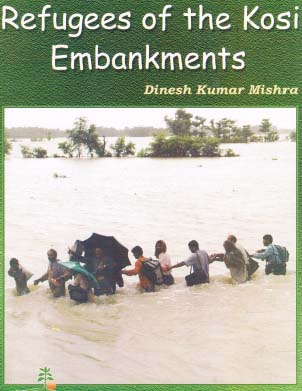
He has highlighted the futility of embankments as a flood control measures in rivers like Kosi and its tributaries. Through his persistent efforts of over more than three decades, Mishraji has helped change the way river floods are understood and managed. Using an approach which respects the natural cycle of floods, founded on local knowledge, he has robustly challenged the main stream flood control approach. For him, the long-term sustenance of rivers as well as their natural processes is the key, supported by meticulous research into the historical and cultural aspects of rivers.
Mishraji’s narration of how people used to come out in boats to enjoy flooded areas at full moon nights in Bihar is not only poignant, it also reminds us of the paradigm shift that came into our water management when we discarded age-old wisdom and adopted measures which were out of sync for our rivers.
Mishraji’s work is a confluence of solid grass root level contacts, extensive knowledge of local traditions, topography, geography and hydrology, robust field research and unique analysis. His writings including articles, books and films have made a deep impact on current understanding and thinking about floods in rivers and how best to deal with them. Through all this, he has made notable contributions towards developing a new policy dialogue on India’s flood control system, and the impact they have had on livelihood practices.
Mishraji is also the convener of an informal group of flood activists called Barh Mukti Abhiyan, an effective informal group with wide acceptance and vast contacts. He is currently engaged in writing about river Gandak and Ghaghara and thus shall complete the entire landscape of rivers of north Bihar.
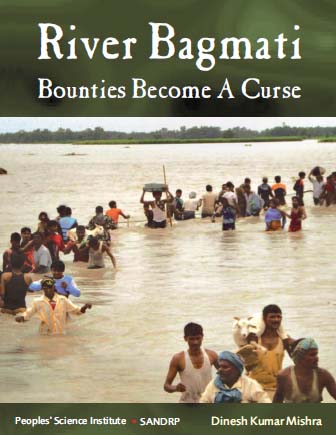
He has over hundreds of Notable among his large number of publications, are “Trapped! Between the Devil and Deep Waters: The Story of Bihar’s Kosi River” and “River Bagmati: Bounties Become a Curse”. His book “Boya Per Babool Ka’ was chosen as one of the best books written over the subject of environment by the Ministry of Forest and Environment, Government of India in 2002. This was later translated into English and published titled, ‘Living with Politics of Floods’ in 2002.
He was a member of the Dams and Development Forum of UNEP and represented Project Affected People there during 2003-07. He was also a member of the Working Group on Flood Control and Water Logging of the Planning Commission of India to review the progress made in eleventh Five Year Plan and make recommendations for the Twelfth.
He has encouraged many organizations to take up the issue of floods and water-logging in their respective river basins, in Bihar and other states as well, and they are carrying on their works. He has encouraged many groups to take up drainage works of small chaurs (land depressions) and resume agriculture on the land that emerges out of water. He provides them with basic technical details and help them executing the work. This has shown very encouraging results as compared to heavily budgeted drainage schemes taken up by the Irrigation Departments.
He has published a book on the River Mahananda (titled Bandini Mahananda in Hindi), a boundary river between Bihar and Bengal, in 1994 followed by a bi-lingual (Hindi and English) book on the Bhutahi Balan (2004) (Bhutahi Nadi aur Takniki Jhar Phoonk / Story of a Ghost River and Engineering Witchcraft) and on the Kamla River (2005) titled Baghawat Par Majboor Mithila Ki Kamala Nadi/ The Kamla-River and People on Collision Course.
His book on the River Kosi titled ‘Dui Paatan Ke Beech Mein – Kosi Nadi Ki Kahaani’ was published in Hindi in 2006. Its updated English version titled “Trapped! Between the Devil and Deep Waters – Story of Bihar’s Kosi River”, co-published by SANDRP, came out in 2008 just before the famous breach of the Kosi embankment at Kusaha in Nepal. Book on Bagmati was published in 2010, titled Bagmati Ki Sadgati. Its English version is also co-published by SANDRP titled “River Bagmati: Bounties Become a Curse” in August 2012. He has now started working on the major river of North Bihar, the Gandak and that will complete detailing the major rivers of north Bihar. This book will touch the Ghaghara and the Burhi Gandak too that flow almost parallel to the Gandak.
Mishraji’s crusade to highlight the wisdom behind age-old methods to “live with the floods”, his fight to expose the utterly destructive impacts of embankments and their role in amplifying flood misery, coupled with his sensitive and scholarly love of folklore and literature make his work accessible and engaging. We need more people like Mishraji who can tell us the stories of our rivers.
We congratulate him for the Bhagirath Prayas Samman and thank him, on behalf of our rivers, for his Bhagirath efforts.
“A river is an ecological system that flows and performs many functions” says Ramaswamy R Iyer, former Secretary to the Government of India, at the India Rivers Week 2014
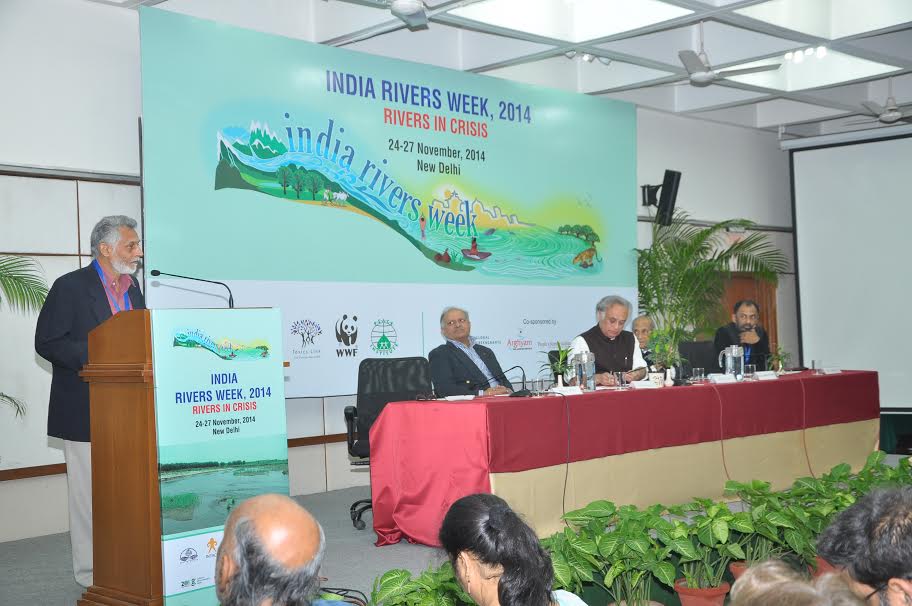
Over 125 river experts, planners, researchers, artists, enthusiasts and activists from different parts of the country that have congregated at first ever India Rivers Week being held in Delhi, discussed and debated on how to define a river. Ramaswamy R Iyer, former Secretary to the Government of India, defined the river as “A natural organic hydrological ecological system that flows & performs many functions.” The attempt was to pen an aspirational, visionary and implementable definition of rivers to underpin an India Rivers Charter”, to be prepared at the end of these deliberations.
Manoj Misra of PEACE Institute, New Delhi, speaking at the India Rivers Week-2014, said the working group he convened defined river as a, “Hydrological, ecological, geomorphic living entity containing other life forms, landscape level ecosystem in dynamic equilibrium between rainwater, snow, glaciers surface water, groundwater, sea, estuary and providing a large number of social, cultural, ecological and economic services to people and ecosystems all along its basins.”
The event is being organized between 24-27 November, 2014 by a consortium of NGOs including WWF India, INTACH, SANDRP, Toxics Link and PEACE Institute Charitable Trust, with additional support from Arghyam (Bengaluru), International Rivers (Mumbai), and Peoples Science Institute (Dehradun) to discuss, deliberate and exchange their experiences and ideas aimed at the conserving, rejuvenation, restoration of rivers in the country.
Can we think in terms of ‘rights of the river’ and then make it part of some legal system, questioned different groups. The groups were discussing the rivers right to unfettered flow, space for flood plains, flood, breathe, perform ecosystem functions, lateral connectivity and natural water.
Manu Bhatnagar, INTACH, representing the deliberations of another group said, “River is a living commons that drains a catchment along a natural course with natural and dynamic flow and providing ecological goods and services necessary for the development and sustenance of human civilizations under challenging social, economic, political and climatic drivers.” Speaking on the issue Professor Brij Gopal noted that, “River regulation is the root of all problems. We need to regulate human activities”.
“We are not obliging the rivers by editing her flow, we in fact are obliged by the rivers due to their life-giving flows”, said Mallika Bhanot, representing another group.
The conference also deliberated on what a river is not. Manshi Aasher said that a river is not static, an artificial drain, lifeless, embanked/ obstructed, without sand and sediments, carrier of wastewater or just a channel of water.
A living, wide, water course which has natural fresh, flow of water above and under the surface, in its course, nurturing life forms, ecosystems, culture, conserving biodiversity in it and is inclusive of small and big tributaries in its catchment area.
Shashank Shekhar explaining about river flows, clarified, “The flow with its natural variability includes natural water, nutrients, sediments and biota and is the defining characteristic of river systems.” Dinesh Mishra, Barh Mukti Abhiyan, said, “Rivers are self cleansing, flooding is purifying and rivers become pure after floods.” Pranab Choudhary discussed the issue of conservation of biodiversity as against utility and noted the importance of defining and protecting rights of riparian communities especially the poor, including from downstream areas, today these are neither assessed, nor compensated.
Paritosh Tyagi summed up the discussion by saying that the older concept of River Action Plan that focused on river flow should be replaced with focus on the complete basin.
2015 Rivers Calendar The organizers have brought out the 2015 desk calendar featuring the photos of 12 different rivers and highlighting the sacrifice tribals have made during the famous struggle against the Koel Karo project in Jharkhand.
“We deal with rivers with utmost unconcern and disrespect… India Rivers Week and India Rivers Forum is most welcome, will look forward to participate in it” says Jairam Ramesh at the India Rivers Week 2014 inauguration
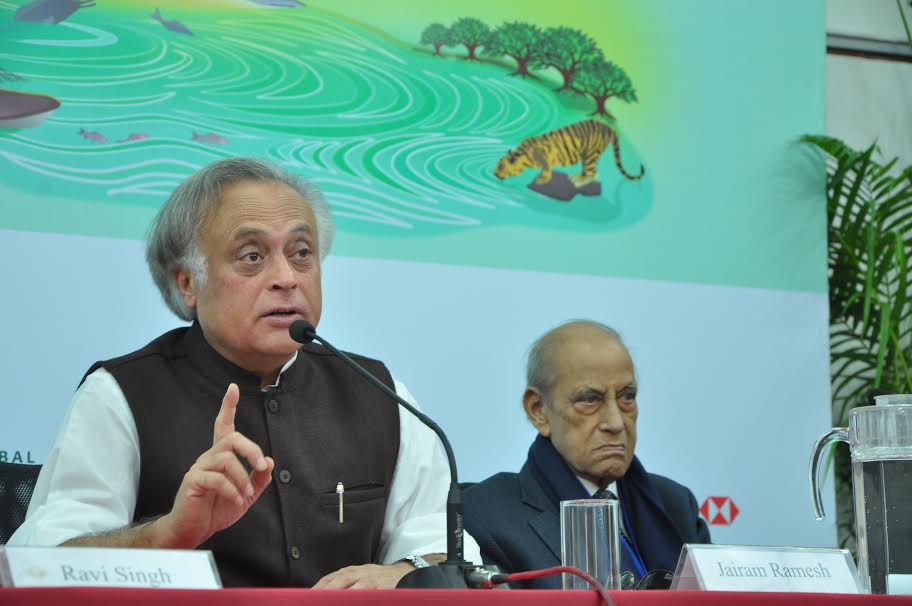
Former Union Minister Jairam Ramesh, giving the inaugural address at the first ever India Rivers week emphasized “Ours is a paradoxical society. While we show a lot of respect for rivers socially, we deal with rivers with utmost unconcern and disrespect… India Rivers Week and India Rivers Forum is most welcome, will look forward to participate in it… If we want to save our rivers, the first step is to ensure that no untreated industrial effluent or sewage finds its way into our rivers.” Speaking on development objectives and the growing energy needs of India, he clarified, “Hydro projects may be a painful choice, but we cannot close our doors to it. What we can do is ensure stricter environmental regulations & their enforcement, a cumulative assessment at ‘basin’ and not ‘project’ level and the minimum environmental flow in the river itself.” He was critical of the current dispensation to dismantle all environmental regulations.
Former Union Minister Jairam Ramesh speaking at the India Rivers Week-2014
Ramaswamy R Iyer, former Secretary to the Government of India stressed in his keynote said that rivers are, ”more than just water, and an integral part of our social, historical and cultural fabric.” He spoke on how we obstruct river flow, encroach flood plains, inflict pollution, and hold a economical, cavalier attitude towards it. In other words, “As an American engineer rightly said, we enjoy pushing rivers around,” he added.
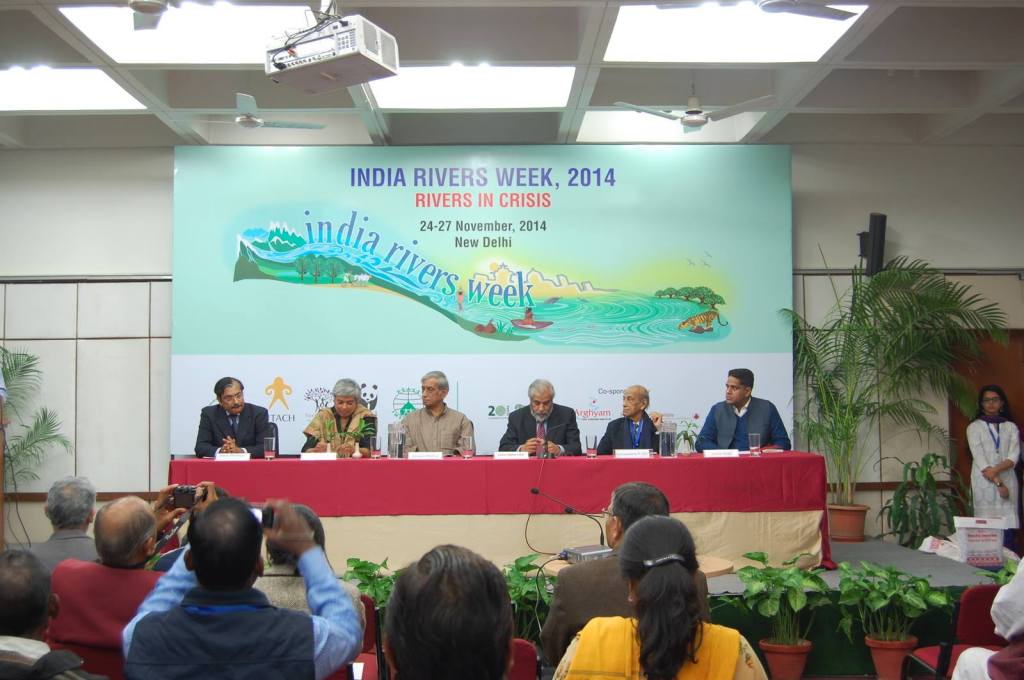
Over 125 River experts, planners, researchers, artists, enthusiasts and activists from different parts of the country have congregated at first ever India Rivers Week being held in Delhi during 24-27 November to discuss, deliberate and exchange their experiences and ideas aimed at the conserving, rejuvenation, restoration of rivers in the country. The event is being organized by a consortium of NGOs including WWF India, INTACH, SANDRP, Toxics Link and PEACE Institute Charitable Trust, with additional support from Arghyam (Bengaluru), International Rivers (Mumbai office), and Peoples Science Institute, Dehradun.
Recently the Union Finance Minister Arun Jaitley during his budget presentation pitched for inter-linking of rivers saying the move can yield “rich dividend”. Jairam Ramesh, former Minister, MOEF however stated “We seem to be indulging in the romance of ILR. We need to be more cautious in hurrying up the proposed Inter Linking Rivers projects,” he said, “and understand their ecological and environmental consequences better.” He urged for more debates on water agreement treatise and better co operation within states and also between the neighboring countries.
“Not only are our rivers misunderstood but mistreated and thoroughly abused”, said Manoj Misra, Yamuna Jiye Abhiyaan. “We need to move beyond the understanding a river simply in terms of water.” What makes this event significant is that the practitioners gathered here, through their experience sharing session and discussions, “will generate, adopt and present a Nation River Charter at the end of the meeting.”
Manoj Mishra, PEACE Institute, at the India Rivers Week-2014
This is the first of conclave to enable learning and promote river restoration skills and actions from sharing and exchange of ideas, experiences and practices. “There has been 76% reduction in aquatic biodiversity over the years. That figure is higher than the loss of terrestrial or marine biodiversity, showing the crisis rivers are facing and we need to act fast to address this crisis”, added Ravi Singh CEO, WWF in his welcoming opening remarks.
Lack of true understanding and appreciation – amongst planners, decision makers, various government departments as well as the common man – of rivers as ecological systems that provide a number of ecological and economic services is a major reason for the sorry state of our rivers. No wonder, there exists no national policy or law that could provide our rivers security from death, degradation and unsustainable and unfair exploitation.
Ravi Agarwal, Toxics link, reiterated, “Rivers are diverse eco systems, where water is just a common defining system”, and hoped this ‘unique meeting’ would debate thoroughly on this complex issue.
A recent appraisal has found that there is no river in any of the top 50 cities in the country that is not sick or dying with river Yamuna in Delhi-Mathura-Agra and Ganga in Kanpur-Varanasi-Patna leading the list. Widespread devastations in Uttarakhand (June 2013) and J&K (Sept 2014) and Assam-Meghalaya in North East (September 2014) bring home the fact that disturbed rivers can become dangerous and highly devastating.
Dams, diversions, bumper-to-bumper hydro projects, diverted natural flows, encroached flood plains, embanked river channels, degraded catchments, destruction of local water systems and pollution of various kinds are causing this. Climate change uncertainties are expected to further compromise the integrity of our rivers.
Ramaswamy Iyer observed, “Disputes rarely come in question when a river is free flowing. Only when water distribution come into play, as in the case of large projects, and issues of power crop in, do conflicts increase.” Speaking strongly against the ‘run of the river hydro projects’, and their ‘green’ tag , he wondered “Can we survive the death of our rivers?”
Rivers have been dammed, diverted, channelized, encroached and polluted no end. Rivers, as ecosystems, have been poorly appreciated. With ‘Rivers in crisis’ as the theme, the Conference endeavors to devise an India Charter for Rivers and initiate an India Rivers Forum for Restoration of Rivers.
The compilation ‘My River Journey’, containing river journey accounts of 47 of the participants has been prepared, published and distributed at the IRW-2014, conclave on 24 Nov, 2014.
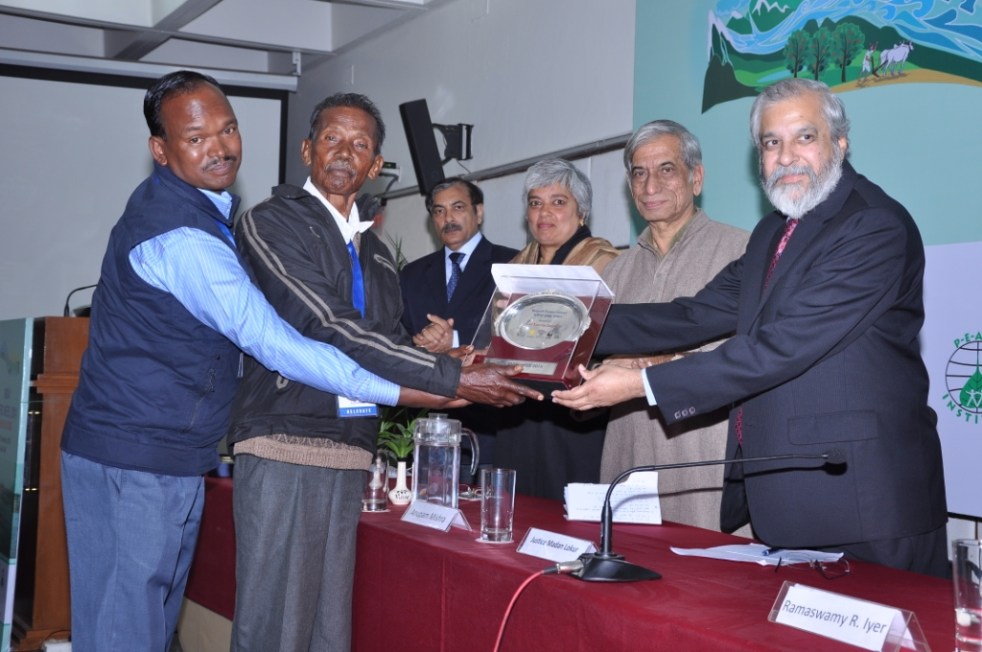
Above: KKJS Activists receiving Bhagirath Prayas Samman Award from Justice Madan Lokur Photo: IRW
We are happy to share the story of Koel Karo Resistance even as the Koel Karo Jan Sangathan gets the Bhagirath Prayas Samman at First India Rivers Week (IRW) meeting at Delhi on Nov 26, 2014. The Award is being given by Justice Madan Lokur of Supreme Court of India. The Award includes a citation, a scroll and cash prize. KKJS is one of he three awardees, the only organisation to get this award this year. IRW is being organised by Peace Institute, WWF-India, INTACH, Toxics Link and SANDRP. It is honour for the exemplary work done to protect a river. The citation says:
The Organisers of India Rivers Week 2014 have great pleasure in awarding the
BHAGIRATH PRAYAS SAMMAN
To Koel Karo Jan Sangathan
in appreciation of its dedicated, valiant, untiring efforts to safeguard the integrity of the rivers Koel and Karo
(Jharkhand).
Koel and Karo are tributaries of river Brahmani in the state of Jharkhand
threatened by the Koel Karo hydroelectric projects.
Koel Karo Jan Sangathan was born in 1976 as a community mobilisation
effort to conserve their sacred sites and
to look at alternative development paths in place of the proposed Koel Karo dam.
The Sangathan has carried on a long and heroic struggle in the face of
enormous pressures from the
vested interests, battling tremendous odds to forge one of India’s foremost
resistance movements
to save rivers, riverine communities and their culture. In Feb 2001,
8 people died in police firing
during the struggle. The project remains cancelled due to the struggle.
The Sangathan has demonstrated the use of many innovative methods of struggle
including people’s curfew and people’s check points. The Sangathan has successfully
mobilised support from villagers, academicians and political parties to ensure that t
heir rivers are still flowing free and pristine. Women of the river basin have played a
key role in the Sangathan’s work.
It is an honour to recognize and celebrate the
extraordinary and truly Bhagirathan efforts of the
Koel Karo Sangathan in ensuring the
integrity of the rivers Koel and Karo.
Dignitaries on the dias to give away the first Bhagirath Prayas Samman Photo: India Rivers Week
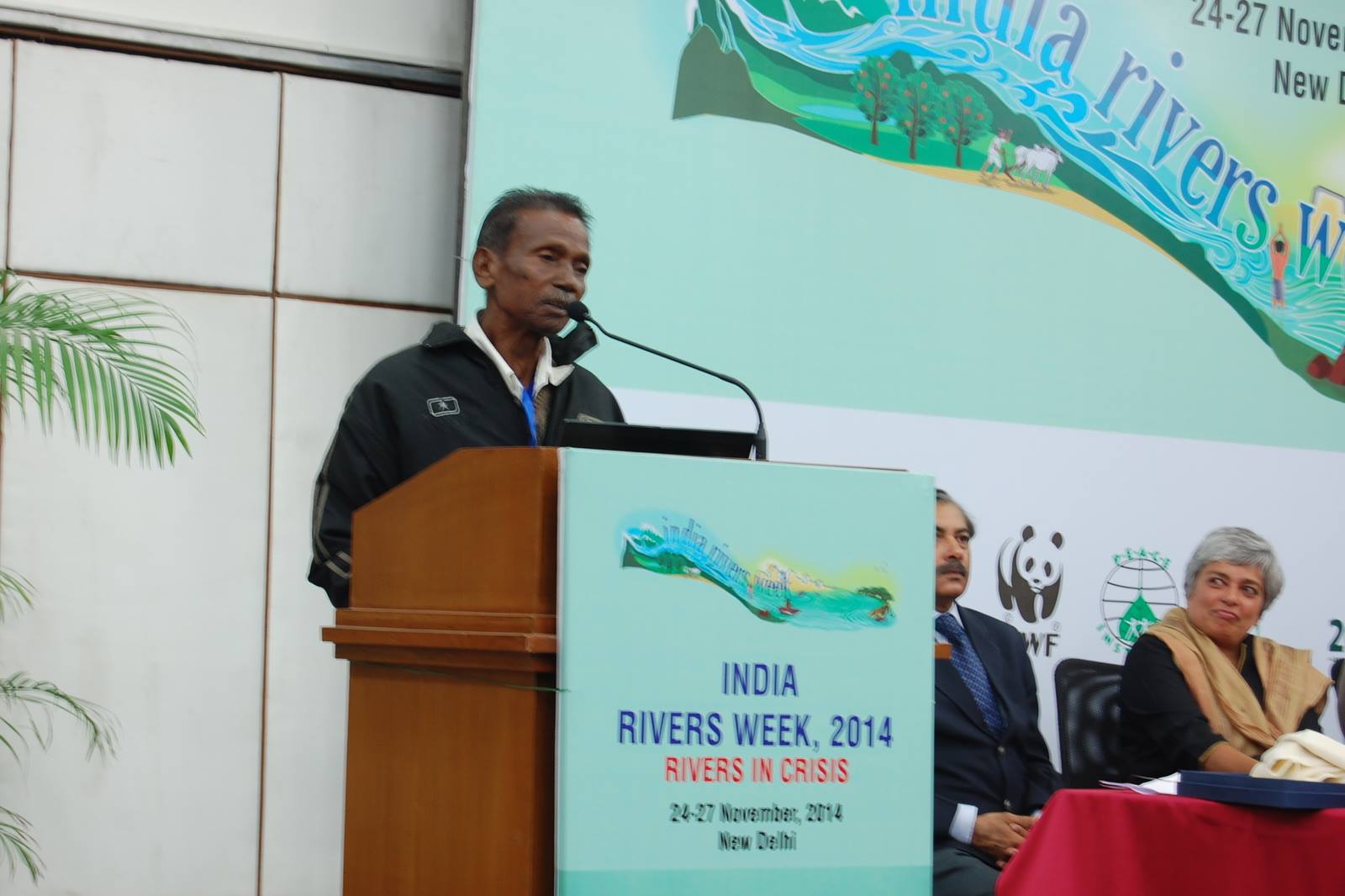
Soma Munda ji of the KKJS, an intergal part of the struggle for decades Photo: IRW
A brief story on the long and arduous struggle
According to the people of Munda tribe in Jharkhand, the whole planet was once under water. It is Sing-Bonga, the god of the Mundaris, who fashioned the earth with some clay from the bottom of the ocean. This he then populated with plants, trees, birds, animals, and finally, with human beings.
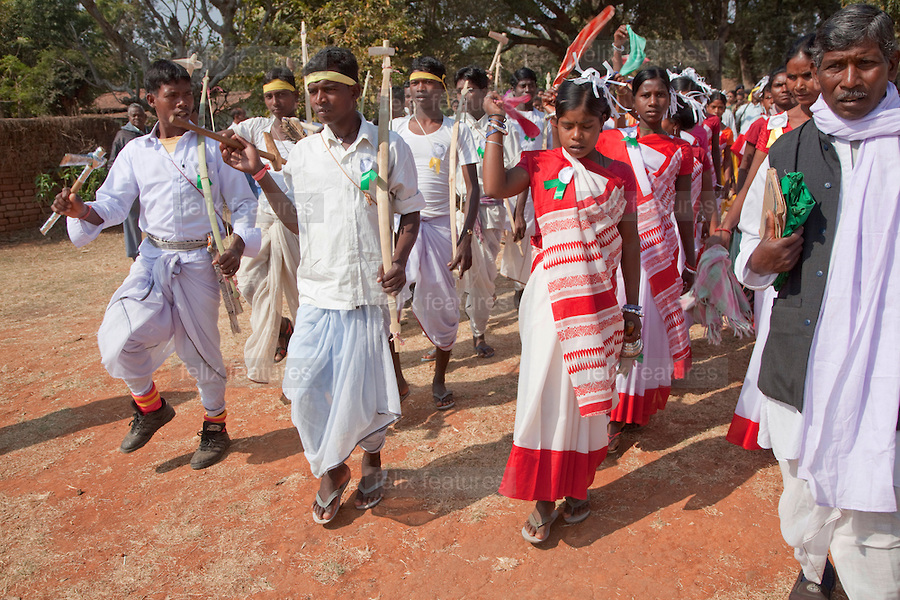
Munda Tribes celebrate Mehla Festival in Tapkara. Photo with thanks from: Felix Featurs/ Panos Features
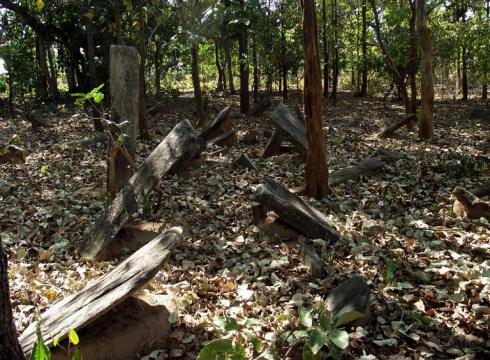
Thus is it that the Mundaris live on the land gifted to them by the Father of all human beings. Over the centuries, the already-sacred landscape became dotted with clusters of sasandiri- the stones marking the resting places of ancestors located at places specified by Sing-Bonga.
Sasandiris in Jharkhand Photo: The Heritage Trust
For much of the latter half of the 20th century, the Mundaris had to wage a long and hard struggle against the State to protect this sacred trust. Unlike how many other similar stories go, this ends in victory. That too, is a testament to the strength of the Mundaris and their deep connection with their lands.
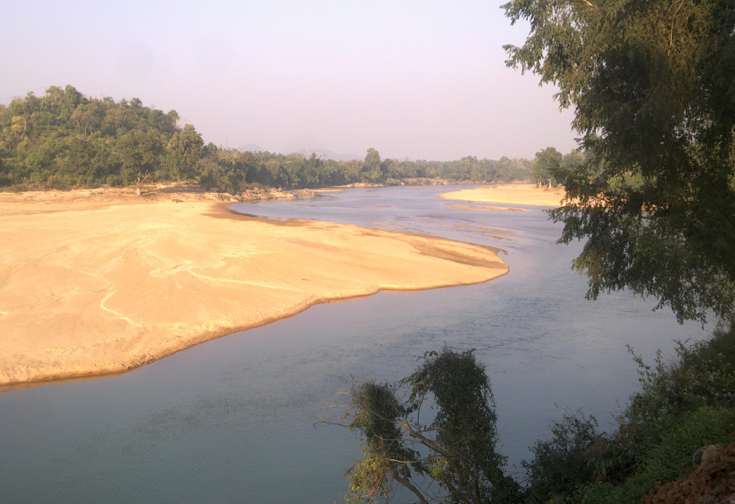
The project: The story begins in the 1950s, when a hydro-electricity project was first conceptualised by the Bihar State Electricity Board[1]. This project aimed to generate 710 MW of electricity by the construction of two earthen dams at a then-estimated cost of 157 crores[2]. Of these, one was a 55-meter high dam on north Karo and the second was a 44-meter high dam on south Koel River.
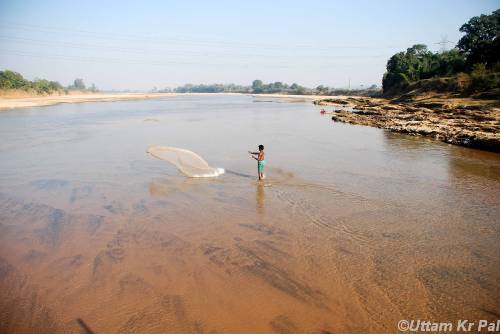
The Koel RIver Photo from : Wikipedia
The real cost of the project was far more than what any project report could budget for, and this was to be paid by the soon-to-be displaced Munda tribals. The 1973 project report estimated that 125 villages would be affected. This was contested by the locals who stated that 256 villages would be affected[3]. Also at stake were approximately 152 sarnas (sites for ritual festivities) and 300 sasandhris (Mathews, 2011).
The people: The Mundari were largely ignored when the project was being finalised. Roads were built and offices established without consulting the villagers. It is only when land began to be bought up that the people of the affected villages came to know of the plans for their ancestral lands. At that time, probably because they were unaware of the full implications of the project, the Mundari were not opposed to the dam in principle. What disturbed them was the opacity and corruption in the land acquisition.
The struggle: This corruption caused the residents of the Koel and Karo rivers to form a group each to safeguard their interests. The dissatisfaction increased when the survey work led to damage of crops in the area. The two groups came together in 1976 as the Koel Karo Jan Sangathan (Koel Karo People’s Organization) KKJS to offer united resistance to the construction work and demand that work be entrusted to local people. It is also around this time that incidents such as deaths due to drowning near Kutku dam and lack of proper rehabilitation for the displaced of Subarnarekha dam opened the Mundaris eyes to the danger that this construction posed to their way of life. Extensive agitation in the following years led to work being stopped in 1979 till the issues could be resolved. The following year responsibility for the project passed from the Bihar State Electricity Board to the National Hydroelectric Power Corporation, causing a setback to the negotiations.
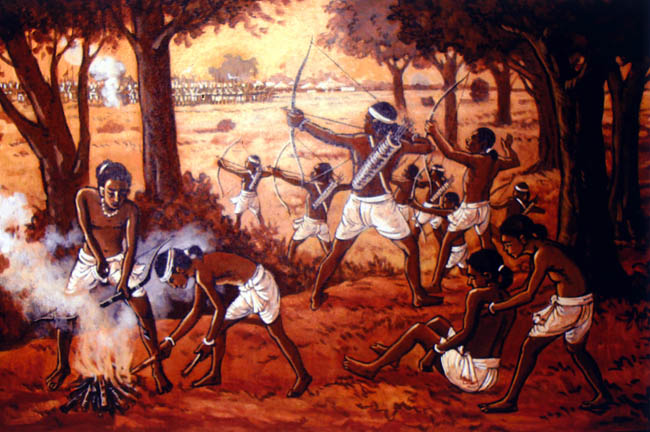
Till 1984, the villagers successfully prevented any work on the site using a variety of non-violent means despite the presence of troops sent in by the State officials to enable the land acquisition officials. The Mundharis worked to prevent the troops and officials from having access to water, firewood and even preventing them from going out into the forest to defecate. “We told them they can’t defecate on our sacred groves..”, said Soma Munda of the KKJS in an interview[4].
In August 1984, the Supreme Court ruled against the use of force to acquire land. The Government of Bihar then offered to build two ‘model villages’ for the Mundharis to decide whether they would agree to relocate. The KKJS retorted that it would first be essential to relocate the sasandiri. The two ‘model villages’ were never built, and things were at a standstill for the next decade.
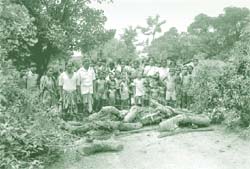
Matters picked up again in 1995 when the then Prime Minister, PV Narsimha Rao declared his intention to lay the foundation stone of the Koel Karo project. The Mundaris resisted this by astonishingly simple and effective means- nearly 25,000 people lay down on the roads effectively blocking access.
Road Blockade in protest of Koel Karo Project Photo from: India Environment Portal
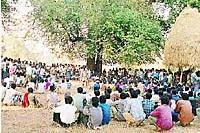
In December 2000, the state of Jharkhand was carved out of Bihar. Just two months later, in February 2001, the police fired 75 rounds (unofficial estimates say 150) on a peaceful crowd at Tapkara killing eight people and injuring more than 30 (PUCL,2002). The Tapkara shooting understandably sparked censure from the country and may have forced the government’s decision regarding the dam.
Meeting organised by Koel Karo Jan Sangathan after the day of firing. Photo: Frontline
The result: In August 2003, the Koel Karo project was scrapped, ostensibly for financial reasons; The price had escalated from Rs.157 crores in 1976 to Rs.3,000 crores in 2003[5]. However, the KKJS as well as several others who have been linked with the struggle consider the sustained resistance to be the primary reason for the project being scrapped. It took another seven years for the government to shut down all offices and reassign staff. But on 21st July 2010 the Koel Karo project became history.
The reason why: Koel Karo is today one of the very rare instances in India where tribal peoples have successfully persuaded the government to shelve a sanctioned project. This is not due to any dearth of such similar struggles by equally determined people throughout the country. What is the difference?
One reason put forth by anthropologists is the strong sense of tribal identity. The Mundari have a strong and democratic tribal leadership system which continues today. They have a history of asserting their rights since the 19th century. The Chhota Nagpur Tenancy Act (1903) which safeguard the rights of tribals to their land is just one of the instances where they have brought pressure to bear on the government to maintain their tribal identity. In that respect, they see very little difference in colonial rule and the current government, both being secondary to tribal government. This is the reason that the Koel Karo struggle was able to mobilise people in their thousands and present such an united front. While the tribal governance may account for the united resistance put up by the Mundharis, their motivation however came from a far older source.
Fights of Birsa Munda with the British Photo from: Sivatravelogue
It came from Sing-Bonga Himself. The Mundharis quite simply had no option but to hold on to their land. It is here that their ancestors were, and all through the resistance, not once did Sing-Bonga appear in a dream and give them permission to relocate the sasandiri. This deep and inviolable connection with the land was key to the struggle and manifested itself in the resistance slogans. Initially, the slogan was “Jaan denge par jamin nahin denge (we will give our lives, but not our lands)”. After Tapkara, they changed it to “Jaan bhi nahin denge, jamin bhi nahin denge, dam ko rok lenge” (we will give neither our lives nor our lands but we will stop the dam)”.
Dayamani Barla Photo: Tehelka
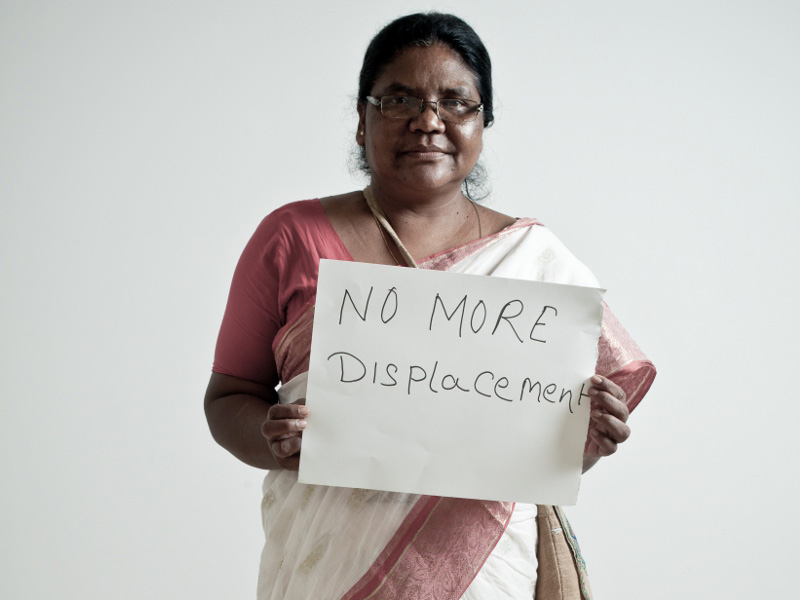
The struggle was lead by a number of tribal and non tribal leaders, notable amongst them is Ms. Dayamani Barla, who was involved with Koel Karo since 1990s. She says, “The natural resources to us are not merely means of livelihood, but our identity, dignity, autonomy and culture have been built on them for generations. These communities will not survive if they are alienated from the natural resources. How is it possible to rehabilitate or compensate us?’[6]
Later when Ms. Barla was imprisoned while upholding tribal rights, she wrote from the prison, ” I never overlooked the questions raised by the Jharkand people. The flowing water of the Koyal, Karo and Chata rivers is a witness to this. I learnt to write with my fingers in the mud and sand of this land. On the banks of the river Karo, while grazing my sheep, I learnt to bathe and swim. The shade of grass and trees covered with dew filled in the sky, gave me love.”
Shripad Dharmadhikary of Manthan puts the success of this movement down to persistence. The Mundharis successfully kept up an unrelenting and non-violent resistance for nearly three decades. To put this into perspective, it is in December 1929- only 18 years before achieving freedom- that the Indian National Congress passed a resolution calling for complete independence. Even dominion status was only demanded since 1916, when the All India Home Rule League was established. By that count, the Koel Karo struggle has lasted as long as India’s struggle for self-rule in one way or another.
And finally, Dharmadhikary points out one overwhelming lesson that present and future struggles can learn from Koel Karo. ‘Such struggles,’ he says ‘can be won.’
– Chicu Lokgariwar, chicu.l@gmail.com
Author is with India Water Portal and is based in Uttarakhand
A recent appraisal has found that there is no river in any of the top 50 cities in the country which is not sick or dying with river Yamuna in Delhi-Mathura-Agra and Ganga in Kanpur-Varanasi-Patna leading the list.
Widespread devastations in Uttarakhand (June 2013) and J&K (Sept 2014) and Assam-Meghalaya in North East (September 2014) bring home the fact that disturbed rivers can become dangerous and highly devastating.
Dams, diversions, bumper-to-bumper hydro projects, diverted natural flows, encroached flood plains, embanked river channels, degraded catchments, destruction of local water systems and pollution of various kinds are some of the reasons for the above.
The uncertainties associated with the phenomenon of climate change are predicted to further compromise the integrity of our rivers.
Lack of true understanding and appreciation – amongst planners, decision makers, various government departments as well as the common man – of rivers as ecological systems providing a number of ecological and economic services is a major reason for the sorry state of our rivers.
No wonder, there exists no national policy or law that could provide our rivers security from degradation and exploitation.
With an aim to remedy the above situation, a consortium of NGOs including WWF India, INTACH, SANDRP, Toxics Link and PEACE Institute Charitable Trust, are organizing with additional support from Arghyam (Bengaluru), International Rivers (Mumbai office), and Peoples Science Institute, Dehradun, the first ever India Rivers Week, 2014 as a national event in New Delhi from 24-27 of November 2014.
The venue for the Conference is the WWF India secretariat in Delhi. Sri Ramaswamy R. Iyer, former Secretary, Ministry of Water Resources and a leading expert on rivers in the country is chairing the consortium partners.
Over 100 River experts, planners, researchers, artists, enthusiasts and activists from different parts of the country shall congregate in Delhi for 4 days to discuss, deliberate and exchange their experiences and ideas aimed at the restoration of rivers in the country.
With ‘Rivers in Crisis’ as the theme, the Conference shall endeavor amongst other things to devise a National Charter for Rivers, promote a National forum for restoration of rivers and reward an individual and an organization with remarkable track record of work on rivers with the “Bhagirath PrayasSamman”.
Advice and expertise from river experts and activists from different parts of the country has been solicited in form of a National Advisory Committee to make the event productive and successful.





 SANDRP