Full page advertisements in most National newspapers in the national capital and possibly in Jammu & Kashmir announced on July 4, 2014 that India’s Prime Minister Narendra Modi will dedicate to the nation the 240 MW URI II hydropower project on Jhelum River near Salamabad village of Uri Tehsil in Baramulla district in J&K, about 18 km upstream from the LOC. The project was aptly described by energylineindia.com in its update on May 27, 2013: “NHPC’s controversial child, Uri has always made the news for all the wrong reasons. Earlier, various natural calamities, law and order problems, frequent bandhs and blockades, and agitation by local residents demanding employment with NHPC” have plagued the project.
The Prime Minister’s dedication of the project to nation has led to a controversy since according to Jammu& Kashmir state government’s minister for health and medical education Taj Mohiuddin, NHPC is operating the project illegally since it does not have consent to operate, which is required as per law. Taj said, “NHPC was supposed to obtain the license under Jammu and Kashmir Water Resources Act but they have not completed the formalities. NHPC authorities have no respect for the local laws.” When asked that what action the state government will take if the NHPC has violated the state laws, Taj said: “The government can close the project.” He added that people of Uri will now approach the High Court through a Public Interest Litigation (PIL) against the NHPC very soon.
Broad Features of the project: (Source: CEA)
Concrete Gravity Dam – 52 m High (43.7 m above riverbed), 172 m long,
Head Race Tunnel – 8.4m diameter; 4.27 km long;
Power House – Underground; 4×60 = 240 MW; net heat 118 m; annual generation 1123 MU in 90% year
Turbine – V. Francis
Tail Race Tunnel (TRT) – 8.4 m dia, 3.78 km Long;
Cost Overrun: Original: 1724.79 Crores; Next: 2081.00 Crores (Rs 8.68 cr per MW, likely to cross Rs 10 Cr per MW); Latest: 2290 as per PIB Press Release on July 4, 2014 after PM dedicated the project to the nation.
Time Overrun: Original commissioning date: 2009-10; actually commissioned: 2014-15.
Layout of the URI II project as given by NHPC website
HCC demands mean cost could go up further The energylineindia.com reported on July 6, 2014: “NHPC involved in Rs 608.99 crore arbitration case with HCC: Civil works contractors HCC has made a claim of an additional Rs 608.99 crore from NHPC over execution of civil works in the Uri-II hydroelectric project in Jammu & Kashmir.
–The demand made by HCC pertains to two claims of Rs 379.30 crore and Rs 229.69 crore.
–The claim for Rs 379.30 crore is sought as compensation for additional time & various costs being incurred on account of various disruptions and deviation from the original contract. For this case, the Arbitral Tribunal has scheduled a series of hearings in August, 2014.
–The second claim made by the contractor is for payment of compensation for un-recovered elements of costs due to reduction in scope of work. The hearing on the case was conducted in May, 2014, however, the final order is yet be given by the Tribunal.”
Alstom Hydro provided turbines for the project claimed[1], this much delayed project that also suffered from serious flaws in construction and social unrest, “this project is certainly amongst major references for Alstom Hydro in India”!
Major Social unrest The project affects 521 families including 173 displaced families and 348 partially affected families, as per the Sept 2012 six monthly compliance report. Strangely, the project was allowed to acquire 124 ha of private land when EIA had stated need for 83 ha of private land. The project had such severe impacts and local people were so agitated by the non responsible attitude of the developer NHPC that they actually stopped work on the project for months. CEA has reported:
Works stopped on all fronts for 105 days from 19.03.2012 to 30.6.12 due to local unrest for demanding jobs in NHPC. Strike called off by local residents on 30.06.2012.
Major construction problems The project saw major construction problems, some of them, as reported by Government of India’s premier power sector technical body, Central Electricity Authority in their various reports are list below. Very few projects would have suffered so many problems. This also shows how poor were the site selection, appraisal, assessments, management and performance of developer (NHPC), government and contractor:
21.09.2005: Civil works awarded to HCC
8.10.2005: Earthquake
March 2007: Flash floods: Coffer dam washed away after river diversion in Jan ‘07
Jan 2008: Massive landslide on right side of dam
Nov 2008: Under construction bridge on Jhelum collapses. HCC and JC Gupta were required to pay a cumulative sum of Rs 4.39 crore against the damage reimbursable from the Contractor All Risk (CAR) policy and the collapse of the Bandi bridge, respectively, but four years later, the NHPC was yet to recover the money from them.
May 2010: Flash floods
17.04.11: Dam overtopped in April due to heavy rains and snowfall!
Sept 2011: Flooding of Tail Race Tunnel due to flash flood, cloud burst on 16.09.2011
Aug 21, 2012: Calling it “civil contractor`s inefficacy”, energylineindia.com blamed HCC for not starting work for 37 days after the agitation against the project was resolved.
Sept 2012: Slush was deposited in D/s portion of Power House and TRT area due to flash flood on Sept. 17, 2012 in Golta Nallah located at the tail race tunnel (TRT) site. This led to excessive flooding of the TRT with water levels reaching up to EL 1,112m. The dewatering pumps, deployed at the TRT outlet, Adit IV and the downstream surge gallery, got submerged in water. The access road to the TRT outlet also got damaged. All this also shows the mismanagement at the project site. This occurrence impacted the completion of the balance invert work in the downstream surge valley and cleaning and finishing work in TRT.
Oct 10, 2012: Energylineindia.com holds “shoddy performance of the involved contractual agencies – HCC and Alstom” for the serious technical flaws in the construction work of the project.
Nov 2012: Contractor HCC claims financial crunch, asks for assistance
April-May-June 2013: Water seepage of 500 litres per minute was observed during filling of Upstream Water Conductor System and Mechanical spinning of units. Seepage was also observed in Power House area: Alstom, the E&M contractor, blamed the civil contractor (HCC) for the seepage in the water conductor system.
July 2013: Cracks in Power Channel have been observed
Sept 2013: After refilling of the water conductor system, high flood occurred in River Jhelum which started erosion of left bank of dam and some cracks were also observed along left bank hill slope downstream of dam.
Dec 2013: Seepage from water conductor system in Power House, Surge shaft area.
Wrong Claims: The industry website energylineindia.com reported on May 14, 2014 that the project achieved “finishing just before the finish line”, when the project was delayed by close to five years! The site was actually contradicted its own repeated earlier updates quoted above.
Environmental noncompliance The project was given environmental clearance on Aug 13, 2004. As per the EIA notification, the project was supposed to submit compliance report to Union Ministry of Environment and Forests every six months. A look at the MoEF website in this regard shows that the latest compliance report available is for Sept 2012[2], clearly violating the EIA notification. The NHPC website though has the six monthly compliance report of March 2014.
Interestingly, the project has seen an unprecedented five monitoring visits by the regional office of MoEF, that is in April 2007, May 2008, July 2009 and June 2011 (all in summer months, not a bad time to visit Kashmir!) & Dec 10, 2013. However, NONE of these monitoring reports are available on MoEF website, another violation of EIA notification.
The project do not seem to be required to release any environment flows, which will dry the river for long stretch & kill all the biodiversity. The Jhelum basin has about existing, under construction or approved projects, but has no cumulative impact assessment. The project has neither done downstream impact assessment, nor have they done any downstream mitigation plans. The upstream 480 MW URI hydropower project, also of NHPC, and funded by SIDA (Swedish International Development Agency), has a fish ladder on 30 m high dam, but was found to be non functional during site visit. Even if that were to function, now with Uri II in the downstream without any fish ladder or downstream management plan, there is little possibility of the fish in Jhelum or Uri to survive. Local people will also suffer in the process, but there is no possibility of any compensation for their losses.
HCC also has full page Advertisement From all the available accounts, the performance of the civil contractor for the project was far from satisfactory, enegylineindia.com called it shoddy. And yet in a full page advertisement in The Times of India of July 4, 2014, HCC amazingly claimed: “HCC has adhered to its commitment of creating responsible and sustainable infrastructure.”
Facts narrated above, all from official reports and industry websites, speak for themselves, how responsible and sustainable is this infrastructure. It is not for nothing that the project is called NHPC’s controversial child.
Very pertinently, the Kashmir Chamber of Commerce and Industry has appealed to the Prime Minister to dedicate the Uri II project to the people of J&K and also start the process of handing over the Salal, Uri and Dul Hasti hydropower projects, all of NHPC, to J&K so that the people of state can get the benefit from the projects as NHPC has already earned huge revenues from these projects. Going by the PIB press release of July 4, 2014 following dedication of the Uri II project to the nation, the Prime Minister did not agree to the KCCI appeal.
The PIB Press Release of July 4, 2014 (from PMO) also said: “Our objective is to tap maximum hydropower potential, the Prime Minister added… Giving the example of Bhutan, he said the economy of that country was now being built around hydropower. The Prime Minister said sufficient emphasis had not been given to power transmission lines network, and his Government will take this task forward through the PPP model… He said this project was conceived during the Government of Shri Atal Bihari Vajpayee, and we have fulfilled that vision.” These are noteworthy words!
Another PIB Press Release on July 5, 2014 (from Power Ministry) described NHPC as “a premier organization in the country in the field of development of hydroelectric projects” & “The technical capabilities of NHPC in executing hydroelectric projects are unmatched in the country.” One wishes Power ministry would have looked at the performance of NHPC in this and other projects before giving that certificate.
Post Script: 1. According to Rising Kashmir, two people were washed out due to sudden release of water from the project in Oct 2014, local blamed the power project for the deaths.
2. Nov 20, 2014 Fire engulfed the project early in the morning at around 4. No deaths reported, but huge damages.
It is close to a year after the worst ever Himalayan flood disaster that Uttarakhand or possibly the entire Indian Himalayas experienced in June 2013[1]. While there is no doubt that the trigger for this disaster was the untimely and unseasonal rain, the way in which this rain translated into a massive disaster had a lot to do with how we have been treating the Himalayas in recent years and today. It’s a pity that we still do not have a comprehensive report of this biggest tragedy to tell us what happened during this period, who played what role and what lessons we can learn from this experience.
Floods in Uttarakhand Courtesy: Times of India
One of the relatively positive steps in the aftermath of the disaster came from the Supreme Court of India, when on Aug 13, 2013, a bench of the apex court directed Union Ministry of Environment and Forests (MoEF)[2] to set up a committee to investigate into the role of under-construction and completed hydropower projects. One would have expected our regulatory system to automatically initiate such investigations, which alas is not the case. Knowing this, some us wrote to MoEF on July 20, 2013[3], to exactly do such an investigation, but again MoEF played deaf and blind to such letters.
5 MW Motigad Project in Pithorgarh District destroyed by the floods. Photo: Emmanuel Theophilus, Himal Prakriti
The committee report, signed by 11 members[5], makes it clear that construction and operation of hydropower projects played a significant role in the disaster. The committee has made detailed recommendations, which includes recommendation to drop at least 23 hydropower projects, to change parameters of some others. The committee also recommended how the post disaster rehabilitation should happen, today we have no policy or regulation about it. While the Supreme Court of India is looking into the recommendations of the committee, the MoEF, instead of setting up a credible body to ensure timely and proper implementation of recommendations of the committee has asked the Court to appoint another committee on the flimsy ground that CWC-CEA have submitted a separate report advocating more hydropower projects! The functioning of the MoEF continues to strengthen the impression that it is working like a lobby for projects rather than an independent environmental regulator. We hope the apex court see through this.
Boulders devouring the Vishnuprayag Project. 26th June 2013 Photo: Matu jan Sangathan
Let us turn our attention to hydropower projects in Himalayas[6]. Indian Himalayas (Himachal Pradesh, Uttarakhand[7], Jammu & Kashmir, Sikkim, Arunachal Pradesh and rest of North East) already has operating large hydropower capacity of 17561 MW. This capacity has leaped by 68% in last decade, the growth rate of National Hydro capacity was much lower at 40%. If you look at Central Electricity Authority’s (CEA is Government of India’s premier technical organisation in power sector) list of under construction hydropower projects in India, you will find that 90% of projects and 95% of under construction capacity is from the Himalayan region. Already 14210 MW hydropower capacity is under construction. In fact CEA has now planned to add unbelievable 65000 MW capacity in 10 years (2017 to 2027) between 13th and 14th Five Year Plans.
Meanwhile, the Expert Appraisal Committee of Union Ministry of Environment and Forests on River Valley Projects has been clearing projects at a break-neck speed with almost zero rejection rate. Between April 2007 and Dec 2013[8], this committee recommended final environment clearance to 18030.5 MW capacity, most of which has not entered the implementation stage. Moreover, this committee has recommended 1st stage Environment clearance (what is technically called Terms of Reference Clearance) for a capacity of unimaginable 57702 MW in the same period. This is indicative of the onslaught of hydropower projects which we are likely to see in the coming years. Here again an overwhelming majority of these cleared projects are in Himalayan region.
Agitation Against Lower Subansiri Dam in Assam Source: SANDRP
What does all this mean for the Himalayas, the people, the rivers, the forests, the biodiversity rich area? We have not even fully studied the biodiversity of the area. The Himalayas is also very landslide prone, flood prone, geologically fragile and seismically active area. It is also the water tower of much of India (& Asia). We could be putting that water security also at risk, increasing the flood risks for the plains. The Uttarakhand disaster and changing climate have added new unknowns to this equation.
We all know how poor are our project-specific and river basin-wise cumulative social and environmental impact assessments. We know how compromised and flawed our appraisals and regulations are. We know how non-existent is our compliance system. The increasing judicial interventions are indicators of these failures. But court orders cannot replace institutions or make our governance more democratic or accountable. The polity needs to fundamentally change, and we are still far away from that change.
Peoples protests against Large dams on Ganga. Photo: Matu Jansangathan
The government that is likely to take over post 2014 parliamentary elections has an opportunity to start afresh, but available indicators do not provide such hope. While UPA’s failure is visible in what happened before, during and after the Uttarakhand disaster, the main political opposition that is predicted to take over has not shown any different approach. In fact NDA’s prime ministerial candidate has said that North East India is the heaven for hydropower development. He seems to have no idea about the brewing anger over such projects in Assam and other North Eastern states. That anger is manifest most clearly in the fact that India’s largest capacity under-construction hydropower project, namely the 2000 MW Lower Subansiri HEP has remained stalled for the last 29 months after spending over Rs 5000 crores. The NDA’s PM candidate also has Inter Linking of Rivers (ILR) on agenda. Perhaps we have forgotten as to why the NDA lost the 2004 Parliamentary elections. The arrogant and mindless pursuit of projects like ILR and launching of 50 000 MW hydropower campaign by the then NDA government had played a role in sowing the seeds of people’s anger with that government.
In this context we also need to understand what benefits these hydropower projects are actually providing, as against what the promises and propaganda are telling us. In fact our analysis shows that the benefits are far below the claims and impacts and costs are far higher than the projections. The disaster shows that hydropower projects are also at huge risk in these regions. Due to the June 2013 flood disaster large no of hydropower projects were damaged and generation from the large hydro projects alone dropped by 3730 million units. In monetary terms this would mean just the generation loss at Rs 1119 crores assuming conservative tariff of Rs 3 per unit. The loss in subsequent year and from small hydro would be additional.
It is nobody’s case that no hydropower projects be built in Himalayas or that no roads, townships, tourism and other infrastructure be built in the Himalayan states. But we need to study the impact of these massive interventions (along with all other available options in a participatory way) in what is already a hugely vulnerable area, made worse by what we have done so far in these regions and what climate change is threatening to unleash. In such a situation, such onslaught of hydropower projects on Himalayas is likely to be an invitation to even greater disasters across the Himalayas. Himalayas cannot sustain this onslaught.
It is in this context, that the ongoing Supreme Court case on Uttarakhand provides a glimmer of hope. It is not just hydropower projects or other infrastructure projects in Uttarakhand, or for that matter in other Himalayan states that will need to take guidance from the outcome of this case, but it could provide guidance for all kinds of interventions all across Indian Himalayas. Our Himalayan neighbors can also learn from this process. Let us end on that hopeful note here!
National Democratic Alliance (NDA) led by BJP’s Mr. Narendra Modi has been given a mandate to govern India for the next five years. Without going into the political and social facets related to this issue, there are a number of justifiable concerns about this government’s stand on critical issues of water and environment.
While the importance of water and environment sectors for the people, their livelihoods, society and economy is acknowledged, how crucial these sectors are for them is not easily appreciated. For example, environment is important not only for tigers and trees, but also for livelihoods of hundreds of millions of Indians who depend on natural resources. More than 60-65% Indians continue to depend on agriculture and every farm can benefit from better water resource management.
Some of the major challenges plaguing the water and environment sectors in India include: urgent need for an inclusive, democratic and accountable governance, holistic assessment of impacts the very many interventions in the Himalayas (lessons from Uttarakhand flood disaster of June 2013[1]), ecological restoration of Ganga and other rivers, dealing with climate change in a way that protects lives and livelihoods of the vulnerable sections, etc., to name a few.
The leaders of the party forming the new government have already declared their agenda in terms of completion of Sardar Sarovar Project (SSP) on Narmada, pushing interlinking of rivers (ILR), pushing for more dams in the name of irrigation, pushing big hydropower projects in North East India (Mr Modi had said in his campaign that NE is heaven for hydropower projects) and mega industrial initiatives like the Delhi Mumbai Investment Corridor.
This agenda indicates that the importance of water and environment to the vast millions is not understood. Nor is the significance of the challenges to this sector appreciated. Pushing the above agenda is not only fraught with serious risks in terms of social, environmental, economic and interstate issues, but these projects are not likely to deliver the promise of this party at the elections: Better life, more jobs, more development, fulfillment of basic needs of the people who do not have access to these at the moment. Pushing this agenda is not likely to deliver stated promises, however blind push for more and bigger projects will compound strife and conflicts.
Let us look at the issues related to the NDA Agenda. These are not incidental issues, but issues inherent to the nature of these centralized, mega projects themselves.
Does ILR have scientific basis? The basic premise of ILR is that certain basins are water surplus and others are water deficit. It is assumed that occurrence of floods in a basin means there is surplus water in the basin and occurrence of drought or water scarcity in other basin means it is water deficit. This premise itself is not scientifically, ecologically and socially robust.
While this is said, there is no attempt at assessing and exhausting the available water options in any basin in India. Twithout this exercise, there can be no scientific basis for declaring a basin surplus or deficit. The ILR advocates seem to ignore the reality that India’s water lifeline is groundwater and the best way to sustain groundwater is through local water systems and recharge. They also seem to ignore the massive social, environmental impacts and constitutional issues. ILR is basically a collection of large number of major irrigation projects (over 84), but proponents of ILR do not seem to realize that in last two decades, there has been no addition to net irrigated area by these projects, in spite of addition of thousands of new projects.[2]
“Sabarmati Model” holds no water for Ganga or other rivers During the elections in Varanasi constituency that elected Mr Modi, the issue of cleaning of Ganga remained prominent. BJP claimed that they will clean up Ganga at Varanasi the way they cleaned up Sabarmati River that flows through Ahmedabad in Gujarat. The trouble with this claim is that Sabarmati has not been cleaned up at all. The water flowing through Sabarmati as it flows through the city of Ahmedabad is actually the water of Narmada River, diverted into Sabarmati. Ahmedabad has no right over this water which was supposed to be meant for Kutch, Saurashtra and North Gujarat. If you go upstream along Sabarmati River from the point where Narmada Main Canal releases water in Sabarmati, you will see the reality of dry Sabarmati River. And if you go down to the Vasna barrage, downstream of Ahmedabad along the Sabarmati, you will see the state of polluted Sabarmati River. This model clearly holds no water either for Ganga or any other river.
River Ministry? There is speculation in media[3] that the new NDA government is going to create a new River Ministry at the centre. The same media report also stated that this ministry will push Inter Linking of Rivers (ILR)! This seems like a proposal for Ministry of River Destruction, since ILR is a recipe for destruction of rivers. If at all the new government is interested in an act of goodwill towards rivers, it needs to start with understanding what is a river and what are its various functions along the various stretches during various periods, including the social, ecological, economic, hydrological, geo morphological, biodiversity related, groundwater related and most importantly, livelihoods related functions. This exercise will mean understanding the roles of various arms of the government which affect the river. Some key ministries which affect river profoundly include: Ministry of Water Resources, Ministry of Environment and Forests, Ministry of Power, Ministry of Urban Affairs, Ministry of Rural Development, Ministry of Home Affairs (Disaster Management), Ministry of Agriculture, Department of North East Region, Ministry of Non Conventional Sources of Energy, to name only a few. How is this new proposed Ministry of River Going to coordinate with these ministries? Moreover, according to India’s constitution, Rivers are essentially state subjects and no state is likely to welcome such infringement of centre into what the states see as their domain of responsibility.
Ganga a National Project? There are statements from Mr Amit Shah[4], that the new government will give National status to the Ganga Project. It is not clear what is meant by this. Ganga is already under the Prime-Minister headed National Ganga River Basin Authority, but the Authority, five years after its constitution, has failed to change a single attribute affecting the Ganga. Similarly, Ganga River Basin Management Plan that IIT consortium is working on is already known to be pathetic in its understanding of the river, while pushing for privatization. We do not need another project in the name of Ganga, national or local. If the aim of declaring Ganga as a National Project is to wrest its control from the state, as the media suggests, then it is going to raise a lot of hackles.
What we need is a new approach to river governance, which is based on ecological, and not engineering principles, which is participatory, and not exclusive and which is democratic and not autocratic.
Himalayas & Hydro-onslaught Irrefutable evidence shows that building large number of major hydropower projects in Himalayas is having unprecedented impacts, some are known, many are unknown. The flawed environmental governance around these projects is well known in terms of dishonest EIAs, flawed and compromised appraisals, ineffective (these are consultations just in the namesake, in reality there is no basis for informed participation) public hearing and non-existent compliance, both at project and cumulative level. One implication of this was felt in terms of the role of such projects in the Uttarakhand flood disaster of June 2013, after which, no political leader from any party spoke about this. It was left to the Supreme Court to order and enquiry into this. The report of this investigation clearly indicates the role of hydropower projects in increasing the proportions of the disaster, and more work on this issue remains to be done. In North East itself, India’s biggest mass based public agitation against dams & hydropower projects has been going on. The anger of people has led to stoppage of the work on 2000 MW Lower Subansiri Hydropower project (largest capacity hydropower project under implementation in India) for 30 months now, after over Rs 5000 crores were irresponsibly spent by NHPC without completing even basic studies. Mindless pushing of more such projects in the region is clearly not a prudent move.
Source: MATU Jansangathan
BJP manifesto’s promise of expeditious and single window environment clearances is clearly dangerous in this context. What India needs is stronger and not weaker environmental governance. The advocacy[5] to “reduce time and transaction costs for the industry” under the circumstances seems inappropriate particularly from an organisation which was possibly the only environmental organisation represented on the completely flawed EIA registration process at Quality Council of India. The QCI process failed to achieve any improvement in the quality of EIA in almost 4 years of its existence
Sardar Sarovar Dam The new government wants to take the SSP Dam from its current height of 121.92 m to its final design height of 138.68 m. Firstly, there are serious doubts if this height increase is required since it can be shown that Gujarat and Rajasthan can get their share of water from Narmada without this increase in height. Secondly, Gujarat is not even in a position to use more than 20% of the water it already gets from the river at current height of the dam for the purposes for which the project was designed: providing water for the drought affected regions in Kutch, Saurashtra & North Gujarat. On the other hand, urban centres, industrials areas, SEZs, cosmetic river beautification schemes have appropriated a large chunk of SSP waters without legal, democratic sanction or justification. Gujarat really does not have a case for increasing the height of SSP Dam.
Moreover, this will also entail such massive additional submergence, displacement and disruption of lives of tribals and farmers that it is sure to create huge opposition. The just rehabilitation of already affected people is far from complete, in fact, most of the affected population has not been given minimum 2 ha of land required under the Narmada Tribunal award and subsequent accepted policies.
Mr Modi during his tenure of 13 years as Chief Minister of Gujarat failed to complete the canal network of SSP in the drought prone areas in whose name the project has always been justified. It needs to be noted that the agitation against SSP did not stop Gujarat government from going ahead with construction of canal network. It was not for lack of finances that SSP could not complete the canal network. SSP has been getting largest quantum of money from the Government of India’s Accelerated Irrigation Benefits Programme ever since the AIBP scheme started in 1996. This support to SSP from AIBP was clearly wrong since SSP was never the last mile project for which AIBP was meant, but the big dam lobby in Union Water Resources ministry and Gujarat government were hand in glove in this misallocation of AIBP money for SSP. In fact, Mr Modi arm-twisted the Planning Commission in 2011-12 to sanction the escalated costs for SSP even when the issues raised by Planning Commission officers remained unanswered.
Unused Narmada Canal waters flow into Salt pans, not only at a huge cost, but also affecting livelihoods of salt pan workers and the ecology Photo: Counterview
It is the ineptitude of Gujarat Government under Mr Modi that is on show in why it could not complete the canal network on drought prone areas in Gujarat. Mr Modi would do well to remember the reasons for that failure before he considers the mega projects agenda as Prime Minister.
Moreover, on SSP, the issues of completing repairs of the damages the Sardar Sarovar dam structure suffered four years ago & related issue of safety of the dam are yet to be resolved[6] and Gujarat has embarked on building another Garudeshwar Dam in immediate downstream without any impact assessments, participatory democratic process or required sanctions[7]. The legality of the Garudeshwar Dam work stands challenged in the National Green Tribunal by the affected tribals.
MAJOR RISKS FOR NEW GOVERNMENT Some major risks for the new government include: the track record of Gujarat government that Mr Modi headed for the last 13 years; no checks from coalition of parties; poor image, strength, morale and track record of Congress as the chief opposition party; large sections of almost completely subservient media[8] and BJP’s problematic manifesto[9].
Why UPA faced people’s anger The new government also needs to remember why the outgoing ruling coalition of UPA (United Progressive Alliance) lost so badly in spite of some unprecedentedly remarkable, and pro people steps taken by it. Absence of accountable and participatory governance (which also manifested in terms numerous scams) was one of the major reasons as to why there was huge anger in people’s mind about the UPA regime. Another aspect of corruption and high-handedness was apparent in the scandalous way UPA dealt with governance of environmental issues: blatantly changing its environment ministers from bad to worse.
Even if we leave aside the Rajas and Balus of UPA I, the UPA II began on a positive note with appointment of Mr Jairam Ramesh as environment minister. While we had our share of criticism of functioning of Mr Ramesh as environment minister[10], he was possibly the best environment minister India have had.
But under pressure from misguided and misinformed corporate vested interests, Mr Ramesh was removed (kicked upstairs) and Mrs Jayanthi Natarajan was brought in. She did not really help the cause of environment as is apparent, for example, from her answers to the two debates on Ganga river in Parliament (these debates were unprecedented in their own right) as also sanctioning projects rejected by statutory bodies like Forest Advisory Committee.
Strangely, she too was removed to bring in disastrously, Mr Veerappa Moily[11], who also held the Oil and Petroleum ministry. Mr Moily then went about the designated task of green lighting everything, not bothering about governance issues, people’s concerns or environmental consequences. This led to massive anger anger against Moily as well as UPA.[12]
Such arrogant handling of governance of environmental issues that affect the lives and livelihoods of millions of most vulnerable sections of people was bound to be punished[13]. This is clearly another reason behind the anger of people that UPA government faced in the elections.
Playing favorites UPA is also guilty of playing favorites when it came to appointing non governmental persons in environmental decision making. In almost every committee on environmental decision making, including Prime Ministers’ Council on Climate Change, National Tiger Task Force, Coastal Zone Management Committee, National Ganga Authority, Inter Ministerial Group on Ganga, Western Ghats Task Force, QCI process on registration of EIA consultants, 12th Plan working Groups to name only a few, everywhere one could find representatives of only particular organisation. Leaving aside the issue of effectiveness of the role played by representatives from this organisation, such tendencies of playing favorites is bound to raise serious questions. While many people at grassroots may not be aware of this inappropriate action by UPA government, the resultant outcomes of these committee invited various reactions ranging from disbelief, anger and even an uproar, as it happened in case of Kasturirangan Committee on Western Ghats.
While the result of anger of the voters could be seen in decimation of the UPA in the elections, the new NDA government will also do well to remember that even the Vajpayee government was voted out in 2004 for similar reasons. The mindless pursuit of agenda of inter linking of rivers and 50000 MW Hydropower initiatives, disregarding all the concerns and protests of the people across the country, along with the rejection of India Shining campaign were some of the causes for the voting out of the previous NDA regime in 2004.
SOME SPECIFIC TASKS In what follows we have given several examples of specific tasks before the new government. This is not an exhaustive, but only an indicative list.
Ganga Action Plan, Rivers Action Plans, NGBRA, CPCB, SPCBs Mr Modi has said that he would like to give priority to cleaning of Ganga River. Any such effort has any chance of success only if there is an attempt at understanding why our efforts at river pollution for the last 40 years have shown no impact:
Þ Water Pollution Control Act, 1974 The Water Pollution Control Act led to setting up a huge and powerful bureaucracy including Central and state pollution control boards. 40 years after setting up of this whole institutional and legal infrastructure, we do not have a single that this establishment can claim to have cleaned up.
Þ Ganga Action Plan, 1986 This plan was launched with much fanfare by the then Prime Minister Rajiv Gandhi, but without trying to understand why the water pollution bureaucracy failed.
Þ National River Conservation Authority 1994 This authority, the only institution in the name or river conservation in India, had Prime Minister of India, no less, its chairman. In ten years of UPA, the Prime Minister of India did not get time for a single meeting of this authority.
Þ GAP II 2000 The second phase of GAP was launched, again without making any honest attempt at understanding the failure of GAP I.
Þ NGBRA 2009 In Feb 2009, just before the last parliamentary elections, National Ganga River Basin Authority, again under Prime Minister. As noted earlier, this too has failed to make any impact on the state of Ganga.
What all this shows is that we have tried many things, including legal, institutional, financial, and authoritative, with Prime Minister at the helm, but have achieved no success. This is also true of the previous NDA regime during 1998-2006. If we do not make an honest attempt at understanding the reasons for these failures, there is little hope for success in future. The efforts at river cleaning has not suffered due to lack of money (over Rs 20 000 crores have been spent on Ganga alone, as per one estimate), for lack of institutions, for lack of political attention, for lack of media attention, for lack of judicial attention, for lack of infrastructure [where infrastructure exists (e.g. Delhi with the highest Sewage Treatment Capacity], there too there is no change in state of river), or technology. One major reason for the failure was the complete disconnect between the people whose lives depend on the river and those who took the decisions or managed the system. In other words, unless you make the river governance more democratic, there is no hope for Ganga or other rivers.
Some basic steps to make governance of rivers democratic could include: Setting up of management committee (with 50% independent members from outside the government) for management of each Sewage Treatment Plant, each freshwater treatment plant, each tributary, each 10 km stretch of river, each water utility, each city (& sub city level where cities have population above 1 lakh). These committees should be legally empowered and the officials should be made responsible to these committees.
Jayanthi Tax In this regard, it would be useful to remember that during the election campaign, Mr Modi had accused Mrs Jayanthi Natarajan for collecting Jayanthi Tax as environment Minister, allegedly for collecting bribes for environment clearances. This was a very serious charge Mr Modi had leveled. Now that he heads the new government at centre, he must institute a credible enquiry into this charge to prove that he was not making just frivolous statements.
Maharashtra Irrigation Scam One state that has given NDA the highest number of seats after Uttar Pradesh is Maharashtra, the NDA coalition got 42 of 48 seats in this state. One of the major reasons for this debacle of UPA was that the UPA here got a very corrupt image, in spite of its Chief Minister having a relatively clean image. This was largely due to the massive Rs 70 000 crores irrigation scam in that state. The NDA partners in Maharashtra also played a role in exposing this corruption, although the top brass of NDA was also allegedly involved in the scandal. To this corrupt image was added the arrogance shown, for example, by deputy Chief Minister (who resigned on charges of corruption, but came back even without any investigation into the charges) when he first asked how are people expecting him to give water from dams – by urinating in the dams? During elections he actually threatened a village that water will be cut off if they do not vote for his party! This combination of corruption and arrogance was sufficient to enrage the voters.
Here again one expects the NDA government at centre to take decisive credible action in exposing the guilty in Maharashtra irrigation scam and brining to book those who are responsible both among the politicians and bureaucrats-engineers. Here, as BJP spokespersons in Maharashtra have been saying, the Madhav Chitale committee has basically done white washing role[14] and hence we need an independent investigation. We hope NDA government at centre will take this up urgently.
Andhra Pradesh Irrigation Scam Similar action is also required in Andhra Pradesh Irrigation scam exposed by the CAG report[15].
AIBP As noted above, the Accelerated Irrigation Benefits Program has majorly failed in achieving any additional net irrigation area by major projects at national level. The CAG has noted in more than one report the failure of AIBP and so has the Planning Commission. The new NDA government could start with instituting a credible independent enquiry into the reasons for failure of this scheme.
Uttarakhand Disaster and role of hydropower projects[16] Following the worst ever disaster faced by the state of Uttarakhand in June 2013, the role played by indiscriminate construction of hydropower projects and other infrastructure needed to be investigated since prime facie they had played significant role in increasing the proportions of disaster. The UPA government did nothing, and it was left to the Supreme Court to ask MoEF to set up an Expert Body for this. In the meantime, SC ordered stay on any more projects. The MoEF along with Central Water Commission and Central Electricity Authority and the Congress’s Uttarakhand state government, have been trying to push more projects in stead of honoring the Apex Court orders. In April 2014, the report of Expert Body lead by Dr Ravi Chopra has been submitted. The new Union government, it is hoped, will take credible steps to implement the recommendations of the Expert Body at the earliest date.
Independent National Environment Monitor It is well known that MoEF as an independent environmental regulator is seriously compromised with shoddy EIAs, flawed appraisal and non existent compliance. This situation has remained unchanged for the last decade and more. The Supreme Court of India, seeing this, had in 2011 ordered that an Independent Environment Regulator needs to be set up at National and state level. The outgoing central government had shown reluctance to do anything in this regard, in spite of repeated Supreme Court orders. The new government has a historical opportunity to indeed set up a truly independent & accountable environment regulator, at the same time increasing the transparency and participation of people in the environmental governance through fresh round of democratic reforms.
Cabinet Committee on Investment One of the flawed legacy of the previous UPA government is the Cabinet Committee on Investment, which has been created to bypass the statutory work of the MoEF. The new Union government would do well to disband this extra legal committee.
Polavaram Project Authority Even as elections were underway, in a most inappropriate decision, the outgoing government set up a Polvaram Project Authority, without even consulting affected states of Orissa and Chhattisgarh. In both these states there is either BJP government or BJP led government. There are also cases going on against this project, including civil suits filed by the governments of Chhattisgarh and Orissa. In the interest of these states and affected tribals, the new Union Government should scrap the Polavaram Project Authority.
Mullaperiyar The 119 year old Mullaperiyar dam has already suffered damages in the past and there is no doubt that it has limited life. To overcome the inflexible attitude of Tamil Nadu and respecting the constitutional duty of Kerala government to protect the life and property of people of Kerala, it become the duty of the Union government to initiate process for new a arrangement (e.g. lower the intake level to 50 ft from current 106 ft, as seen promising both by the Empowered Body and Supreme Court in May 2014) and decommissioning of the dam in a time bound manner. The previous Union government completely failed in this and the new government has an opportunity to correct this.
Central Water Commission Central Water Commission is India’s premier technical body on water resources. Water resources development and management has always remained crucial to any country’s water, food, livelihood and environment security. However, for this we need a really independent and credible technical body at the top, on the lines of United States Geological Survey (USGS). USGS, is known to be source of very reliable water resources data world over. However, USGS’s main task is to gather data and put it in public domain. Use of that data for development tasks and such other functions are not the mandate of USGS, there are other bodies for that. Unfortunately in India, CWC tasked with data gathering, sanctioning projects, monitoring and so many other contradictory functions. Moreover, CWC is working more like a big dam lobby, and even the assessment of hydrological data, flood forecasting functioning, water use data and projections, climate change implications, dam safety issues, etc are all getting colored by the lobbying tendency of those who head CWC. This is having a very deleterious effect on the water resources development and management in India.
It is high time that there are reforms in CWC to separate its various contradictory functions and make its functioning transparent, accountable and participatory. The new Union government has a chance to initiate such reforms in CWC and Ministry of Water Resources.
Technical Advisory Committee of CWC The TAC of CWC is a very little known, but powerful body. It sanctions projects worth thousands of crores every year, but its functioning is completely non transparent, unaccountable and it has no independent members. Since the new government has been raising the issue of corruption by UPA during the election campaign, it is hoped that the new government will work to fight corruption and one of the key steps it can do is to make the functioning of TAC transparent, accountable and ensure that at least 50% members of the TAC are non governmental, independent people with track record of having shown independent mind.
Urban Water Sector The social, environmental, economic and carbon footprint of this sector increasing at huge pace, without any success story in sight. The big cities are find it easy to promote construction of big dams rather than go for rain water harvesting, sewage water treatment & recycle, demand side measurement, groundwater recharge, reduction in losses and such other measures. SANDRP report on unjustified dams being pushed in Mumbai highlights this issue. The 12th Plan Working Group report on Urban water issues have several useful recommendations that has remained unimplemented. These need to be urgently implemented.
Climate Change Climate change in the biggest threat that vulnerable sections of Indian people face, as do the vulnerable sections of the rest of the world. This is not only relevant for water and environment sectors that we are discussing here, but for all sectors. As Environmental Groups in Gujarat have noted[17], people of Gujarat do not have good experience of the Modi regime in the state. The record of the 10 year long UPA government is very poor on this issue. We hope the new Union government will do better and begin with identification of the sections of the people who are vulnerable and start working on action plan to address the concerns of such sections, while also reducing the carbon footprint of India through reduction in consumption patterns of richer sections.
Suggestions for positive actions As analysed by Dr. Ashok Gulati (former chairman of Commission for Agricultural Costs and Prices) and Dr. Tushar Shah (International Water Management Institute) separately, the relatively high agricultural growth in Gujarat in first decade of current millennium was largely due to local water harvesting work that happened in Gujarat through check dams, groundwater recharge etc, largely in non governmental sector. The new government at centre can bring about changes in policies and programs to learn lessons from such success stories to achieve such results all over India.
Similarly on the issue or river rejuvenation, management and conservation front as also environmental management front, a decentralized bottom up community driven approach can be taken up.
It can encourage people led, scientific and ecological river restoration work.
Promote System of Rice Intensification in a major way, it can not only reduce water use, fertiliser use, use of other chemicals, reduce seed requirement, increase farmers’ income, reduce agriculture sector’s carbon footprint and thus help mitigate and also adaptation to changing climate. This is possible in other crops too, as has been demonstrated at farmer level.
Encourage measures that can help increase carbon content of the soil, this will also have multiple benefits to farmers, economy and environment.
It can strengthen implementation of Forest Rights Act which UPA, despite introducing it, failed to do.
It can protect free flowing rivers for their social, ecological, cultural values.
It can also engage more effectively with civil society and community groups in a credible manner.
A recent SANDRP study “Shrinking and Sinking Deltas: Role of Large Dams” has shown that large dams are playing big role in sinking of deltas in India. This is not even properly studied. The new government can initiate a scientific study in this regard and ensure that before taking up any new project, this aspect is studied.
Conclusion I started writing this brief note following questions from several media friends, but it has become much longer! So let us come to the conclusion. I am not even sure if the new government is in any mood to listen to such unsolicited suggestions, but let us put it out and hope for the best! I decided to put this out, even as Mr Modi prepares to take office on May 26.
This article tries to show the risks, challenges and some immediate tasks of the new government at the centre. In sum, the new NDA government would do well not to forget the reasons for rejection of NDA in 2004 and UPA now in 2014. Both were guilty of bull dozing ahead with their agendas without listening to the people. Avoiding that may be the biggest challenge this government faces, besides the specific ones mentioned above.
[13] For example, Dakshin Kannada and Mangalore saw a huge socio-political movement against Moily and Congress due to his politically motivated support to Yettinahole Diversion Project.
The latest (March 2014) edition of the National Register of Large Dams[1] (NRLD) from Government of India’s premier Technical organisation, Central Water Commission (CWC) seems to be giving information about Uttarakhand dams that seems in violation of Environment Protection Act, EIA notification, Forest Conservation Act and Wildlife protection Act. The CWC’s NRLD is also in violation of the Supreme Court of India orders of Aug 13, 2013, the apex court is still seized of this issue. The NRLD is showing several dams like Rambara and Bogudiyar Sirkari Bhyol (BSB for short) as under construction projects, when these projects have received none of the statutory clearances. These projects were absent in the previous (Dec 2013) edition of the NRLD (available with SANDRP), which means these have been added only earlier this year, after the Uttarakhand flood disaster of June 2013 and after the Supreme Court order of Aug 13, 2013. Both CWC (as publisher of NRLD) and Uttarakhand government (as provider of such information) are guilty.
Rambara HEP A 76 MW Rambara HEP on Mandakini river in Rudraprayag district had come before the Union Ministry of Environment and Forests’ Expert Appraisal Committee on River Valley Projects during its meeting in Oct 2008. Just 6 km downstream of the worst affected Kedarnath pilgrim centre, the Rambara town and project site has been completely washed out in the Uttarakhand flood of June 2013. Let us see the important decisions about this project over the years.
Þ Oct 2008 The EAC had than noted that the project is inside the Kedarnath Musk Deer Sanctuary and cannot be given even pre construction (stage I) clearance without an approval from the Supreme Court of India. The project never went back to EAC after that.
Þ 2012 In 2012, Wildlife Institute of India (WII) recommended, in a commissioned by MoEF following an earlier Supreme Court order, that this project, (by now the installed capacity has been reduced to 24 MW, but height of the dam goes up from 28 m to 31 m) be cancelled as its zone of influence coincides with the Kedarnath Wildlife Sanctuary. This was one of he 24 projects that WII recommended for cancellation.
Þ Aug 13, 2013 Following the Uttarakhand disaster of June 2013, the Supreme Court order of 13.08.2013 asked the MoEF to take a view on this recommendation of WII. Following the apex court order, MoEF appointed an Expert Body (EB) under the chairmanship of Dr Ravi Chopra.
Þ April 16, 2014 The EB report[2] recommends that Rambara, along with 22 other projects be dropped, as recommended by WII.
Þ May 7, 2014 Supreme Court orders stoppage of work on the 24 projects that WII had said should be cancelled. This includes Rambara HEP.
While all this is going on, the new NRLD just published by the CWC suddenly shows Rambara dam as under construction dam. When seen in conjunction with the pro hydro lobbying report submitted by CWC-CEA to the MoEF, it is clear that the CWC is trying to bypass the whole Supreme Court ordered process and also attempting to push projects in violation of the process.
Bogudiyar Sirkari Bhyol HEP This 170 MW dam on Goriganga River (tributary of Kali River) in Pithoragarh district in Uttarakhand had come before the EAC for stage I clearance in May 2009. The MoEF website[3] lists this project as awaiting TOR even today. So this project has no environment or forest clearance, no CEA clearance, no EIA-EMP, no public consultations or environmental appraisal, and construction on the project without these would clearly be illegal. However, CWC’s NRLD (March 2014 edition) shows this project too as under construction. This is a massive 98 m high dam on a river that faced the flood disaster in June 2013 and NHPC’s 280 MW Dhauliganga HEP on Kali river faced such destruction[4] that it has still to be repaired. As per the EB report, there is need for a cumulative impact assessment in Goriganga / Kali River, which has not even been initiated.
Lakhwar Dam & Vyasi HEP The CWC’s NRLD also shows the 300 MW Lakhwar storage dam on Yamuna River in Uttarakhand under construction. This biggest dam in whole of Yamuna valley in Uttarakhand has had no EIA-EMP, no public consultations, no Environmental appraisal. The Uttarakhand government and MoEF are guilty of giving forest clearance to the Lakhwar project and downstream 120 MW Vyasi HEP and initiating work on these projects (no work has happened on these projects for over two decades) even as the Supreme Court stay on no clearances was on. Even EB report has mentioned these violations and application on contempt of SC order is pending before the Supreme Court. To show Lakhwar and Vyasi projects as under construction in the CWC’s latest edition of NRLD is clearly wrong.
Other problems with CWC’s NRLD We have in the past pointed out several other issues with CWC’s NRLD[5], including case of missing river names, missing dams and so on. CWC needs to be much more careful about information given in such an important document like NRLD.
CWC cannot act like a post office In the past, when such issues about information in NRLD have been raised with CWC, it has said that NRLD is only a compilation of information provided by states and only states are responsible for the correctness of information. However, CWC is India’s premier technical body on water resources and is also the national body in charge of safety of dams. Under the circumstances, on the issue of information about dams in NRLD, CWC cannot wash its hands and say it is only posting information given by states. In this particular case of Uttarakhand dams, CWC and Uttarakhand government both are responsible for the illegalities involved, as highlighted earlier.
It seems we do not want to learn any lessons from the massive Uttarakhand disaster of June 2013. Two more huge capacity hydropower projects have been submitted to the Expert Appraisal Committee (EAC) of Ministry of Environment & Forest (MoEF) for grant of Environmental Clearance (EC) with very poor quality Environmental and Social Impact Assessment (EIA) reports.
EIA reports of Kiru Hydro Electric Project (HEP) (660MW) and Kwar HEP (560 MW) proposed in Kishtwar district, Jammu and Kashmir by Chenab Valley Power Projects Ltd. (CVPP) were submitted to the EAC for River for its 74th meeting held on 5-6 May, 2014 for grant of EC. The projects are run-of-river schemes proposed on river Chenab as a part of cascade development of Chenab basin.
Vicinity Map(Source Kiru EIA Report)
Partial Map of Commissioned and Proposed HEPs in Chenab River Basin (Map by SANDRP)
Chenab basin may have one of the highest concentrations of hydropower projects among all basins in India[1]. The basin has over 60 HEPs under various stages of planning, construction and commissioning in states of Himachal Pradesh (HP) and Jammu and Kashmir (J&K).
While 49 of these projects are planned or under construction in Chenab in HP, 28 projects of combined generation capacity of 5,800 MW are at an advanced stage of obtaining (Environment Ministry) clearances[2]. State of J&K has 13 projects planned of total capacity 8,623 to 8,923 MW. These consist of at least four operational projects (of total 1563.8 MW), three under construction projects (of 1450.5 MW) and six proposed projects (of 5608.7 MW).
Table 1: Cascade Development of Chenab Basin
Source: EIA report of Kiru & Kwar
Sr. No.
Scheme
River
Capacity
1
Salal (Stage- I & II)
Chenab
690 MW
2
Sawalkot
Chenab
1856 MW
3
Baglhar (Stage-I & II)
Chenab
900 MW
4
Shamnot
Chenab
370 MW
5
Ratle
Chenab
850 MW
6
Dulhasti
Chenab
390 MW
7
Kwar
Chenab
560 MW
8
Kiru
Chenab
660 MW
9
Kirthai-I
Chenab
350 MW
10
Kirthai-II
Chenab
990 MW
11
Barinium
Chenab
240 MW
Himalayan ecosystem, of which the Chenab river basin is a part, is known to be geologically fragile. Cascade of hydel projects proposed on the river basins of this region would make the region even more vulnerable to extreme and erratic weather events, which will increase in changing climate. This has already been witnessed during Uttarakhand disaster of June 2013. Expert Body (EB) headed by Dr Ravi Chopra recently has officially acknowledged this connection in the report submitted to MoEF[3]. In light of this, a thorough impact assessment of all the proposed hydro power projects in this region is thus of critical importance. Various organizations and experts including SANDRP have repeatedly highlighted the fact that Cumulative Impact Assessment (CIA) of all the proposed, under construction and operational projects and carrying capacity assessment (CCA) of the river basin to see if it can support the massive number of HEPs in safe and sustainable way is one of the first steps before considering clearances to HEPs in this region. Without such a study, considering any hydropower project in the basin will be an invitation to disaster[4].
Even though the MoEF sanctioned TORs for cumulative impact assessments of the HEPs on Chenab in HP in February 2012, this critical task was entrusted to the Directorate of Energy, Government of Himachal Pradesh. This is a clear case of conflict of interest. Further the project specific ECs were delinked from the CIAs[5].
More importantly, no such study has been initiated in Chenab basin in J&K or in the Chenab basin as a whole. State of Jammu and Kashmir is not even considering CIA of HEPs on Chenab in the state as MoEF has not asked for it yet. CIA of the entire Chenab basin including HP and J&K is not being considered, which itself is violating MoEFs Office Memorandum dated May 28 2013. The OM states that all states were to initiate carrying capacity studies within three months from the date of the OM No. J-11013/I/2013-IA-I. Since this has not happened in case of Chanab basin in J&K, considering any more projects in the basin for Environmental clearance will be in violation of the MoEF OM.
On Cumulative Impact Assessment, the OM said, “While, first project in a basin could come up without insisting on cumulative impact study, for all subsequent hydro-power projects in the basin, it should be incumbent on the developer of second/ other project(s) to incorporate all possible and potential impacts of the other project (s) in the basin to get a cumulative impact assessment done.” The EIA of both the projects does not include the cumulative impacts.
MoEF continues to give clearances to individual HEP projects despite of poor quality Project Feasibility Reports (PFRs) and EIA reports submitted for appraisal. Kiru & Kwar EIA reports are a classic example of such poorly conducted EIAs. The EIAs demonstrate several serious issues across various stages from TOR non-compliance, non assessment of impacts, cut and paste job, lack of any references, faulty public hearings, the issued raised at public hearings have not been addressed in EIAs, as statutorily required. SANDRP recently made detailed submissions to EAC highlighting these issues for both the projects. Some highlights below:
Copy paste job while preparing EIA reports Both the reports are prepared by a consortium of RS Envirolink Technologies Pvt. Ltd. (Gurgaon) and Jammu University. Kiru EIA report demonstrates a casual approach towards impact prediction and proposing mitigation measures in EMP. The report also misses out on a number of important aspects of EIA like impact of construction activities on geology, flora fauna, impact of climate change, cumulative impacts of cascade development in Chenab basin etc. While Kiru EIA is inadequate on several fronts it was utterly shocking to discover that Kwar EIA report is a complete replica of the Kiru EIA Report. Entire text, save project specific numbers, remains the same in both reports, to the extent that the Kwar EIA report mentions Kiru instead of Kwar at several places!! The impact prediction for both the cases is so vague and generic that the changes in numbers for project-specific details like proposed installed capacity, submergence of reservoir, FRL, head race tunnels etc. do not reflect at all in the reports!
Brief Project Profiles Kiru H.E. Project and Kwar H.E. Project are run-of-river schemes proposed on river Chenab located in the district Kishtwar of J&K.
Kiru HEP envisages the construction of a 193 m long and 123 m high concrete gravity dam above the river bed across river Chenab at village Kiru with four intake, four pressure shafts, an underground powerhouse of 4 units of 165 MW each. Impoundment will cover an area of 1.03 Km extending 6.5 km upstream of dam. The average river bed level at the dam site is about EL 1394 m corresponding to an FRL of 1515 m, the gross storage of the reservoir is 41.50 Mcum and area under submergence is 1.03 Km.
Proposed dam site for Kiru HEP(Source Kiru EIA Report)
Kwar HEP envisages construction of a concrete gravity dam 101 m high from river bed across river Chenab at village Padyarna, four number intakes, four pressure shafts, an underground powerhouse to accommodate 4 units of 140 MW each and two number tail race tunnel. FRL of reservoir is proposed at EI 1385M. Gross storage of the reservoir at FRL is 27.167 Mcum. The reservoir will submerge an area of about 0.8 Sq. Km at FRL.
Proposed dam site for Kwar HEP (Source Kwar EIA Report)
TOR non-compliance First and foremost glaring issue about the proposed projects is the non-compliance with the TORs (Terms of Reference) laid down for conducting the EIA. These TORs were granted by MoEF. We have listed here only an indicative list of non compliance below, not an exhaustive one.
Kiru HEP The TOR clearance letter was issued for Kiru project on Sept 9, 2008, the TORs are valid for a period of 3 years, but the project developer never came back for extension of the TOR on expiry of 3 year period and has come now for EC over 5.5 years after the TOR clearance. Thus the TOR clearance is no longer valid for Kiru HEP as per the law. Also originally the TOR clearance for Kiru was given for 600 MW installed capacity. The EIA however has been conducted for 660 MW capacity. No permission was sought by the PP for this increased capacity.
Kwar project has undergone several changes since the grant of TOR on 17 March 2010. Table given below compares some of these changes. First and foremost alteration has been in the proposed total power generation. While the TORs were granted for 520 MW the EIA has been conducted for 560 MW. Number of affected families goes up by 160% and project cost escalates by 29%. The TORs were granted for over four years back and the project authority never got back to EAC/MoEF for renewal of the TOR as other projects do. Thus the TORs granted originally do not remain valid in this case too.
Table 2: Changes in the scope of Kwar project after grant of TOR on 17 March 2010
Sr. No.
Parameter
Scope at the time of TOR clearance
Current scope of the Proposed Project
1
Total power Generation
520MW
560 MW
2
Land requirement
5 Ha Government land
93.66 Ha Government land
3
Power House Units
4 x 130 MW
(4 x 140MW)
4
Affected families
35
91
5
Project Cost
Rs 3386.11 Cr
Rs. 4375.50 Crores at Jan’2012 PL
Casual approach towards impact prediction
Kwar EIA copy pasted from Kiru EIA report: It is evident that the EIA consultants have done nothing but copy paste job while preparing Kwar EIA report. At certain places Kwar report mentions ‘Kiru’ instead of Kwar. See for example point number 1.7 in Index of Kwar EIA mentions ‘Need of the Kiru HE project’instead of Kwar and point number 4.4 mentions ‘Basin characteristics of free draining area of Kiru HEP’ (p.3 & p.6 of the document). Page 28 of Kwar EIA states that “The case for forest clearance of Kiru HE Project for diversion of 29.75 ha of forest land has been approved in the 81st meeting of J&K State Forest Advisory Committee (FAC) held on 09.12.2013…”
Other than very project specific figures, the entire text for both the reports is exactly the same. Impact prediction is the heart of an EIA study. However in Kwar EIA report an important chapter like Chapter 8- “Identification, Prediction and Evaluation of Environmental Impacts” is also copy pasted. The text of the chapter is same as that of Chapter 8 from Kiru EIA report save the project specific numbers and their description. The impacts predicted are vague and are conveniently kept the same in both the reports. It is clear that no real field work or application of mind is done. Such an EIA study defeats the basic purpose of conducting an EIA.
Impact of construction activities: The Kiru project involves a reservoir of live storage 10.5 MCM, a concrete dam on height (from river bed) 123.0 M & length 193 M, construction of 4 head race tunnels (of 7 m dia and 165 to 190 m length each) for discharging the water to an underground powerhouse of 4 units of 165 MW each. The project also envisages 33.4 Lakh CuM of construction material required from the project site.
The Kwar project involves construction of 101 m (above river bed)/ 109 m (above deepest foundation) high concrete gravity dam, Underground power house complex of four units of 140 MW each, Two concrete lined 9.5 m internal diameter main tailrace tunnels (having length of 2676 m and 2883 m) amongst several other features like four 5.65 m internal diameter main pressure shafts (each with a length of 108-182 m), etc. The project also envisages 38.36 Lakh CuM of construction material required from the project site.
View of Naigarh Nala Rock Quarry at Kwar Dam site (Source Kwar EIA Report)
All these activities will have significant impact on the geology and hydrology of the region. However no significant assessment or quantification of these impacts in terms of change in drainage patterns, springs in the project area, increased thereat of landslides, seismic activities has been carried out.
While talking about the impact of construction activities, the only impact of these two EIAs discussed in the chapter is ‘muck generation’. It does not mention impacts of tunneling and blasting involved in construction and also does not talk about its impact on fragile geology and hydrology of Himalayan region at all[6]. While talking about quarrying activities in the same chapter it states only two impacts viz. visual impacts and noise generation[7]. Impacts on landslides have been randomly dismissed stating that the sliding activity may not be significantly induced by project construction activities[8]. The reports trivialize the impacts on migratory fish Mahseer by stating that the upstream migration of this fish from the lower reached of the Chenab River have already been blocked by Salal and Baglihar, Dul Hasti dams. Thus they conclude that impact of this project on this fish species is not expected to be significant[9]. Option for fish ladder and fish lift has been ruled out for both the projects stating that it is not techno-economically feasible at the project site. Development of a hatchery at the project site has been proposed instead. The impact of the project on all the fish available in the river should have been assessed based on baseline assessment of the fisheries in Chenab River, which is not done. Secondly, there is no credible evidence to show that hatchery as a management option is useful or effective.
Left Bank slide for Kiru Project downstream of Ludrari Nala (Source Kiru EIA Report)
Right Bank slide for Kiru Project about 16 km downstream of Gulab Gargh (Source Kiru EIA Report)
The southern boundary of the Kishtwar National Park is approximately at an aerial distance of 11 km away from the proposed project, it is claimed, but this needs to be independently assessed. Also, just because it lies outside the boundary of study area which is radius of 10 KM, the EIA does not consider the impacts on this national park at all! EIA reports for both Kiru and Kwar HEPs simply state that the proposed activities shall have no impact on the National park[10].
Biodiversity at Kishtwar National Park (Photo: Travel Places[11] & Beauty Spots of India[12])
Several Important aspects of EIA are missing
No mention of free flowing river stretch: There is no mention of what is the flowing river stretch upstream and downstream of the project. As is clear from the EIA, the elevation difference between FRL of Kiru HEP (1515 m) and TWL of upstream Kirthan II (1526.5 m) is just 11.5 m. The elevation difference between TWL of Kiru HEP (1388 m) and FRL of downstream Kwar HEP (1385 m) is just 3 m. Similarly the elevation difference between TWL of Kwar HEP (1270 m) and FRL of downstream Hasti HEP (1264 m) is just 6 m. However, it is not clear what the flowing river lengths in all these locations are. Unless this length is assessed and is found to be adequate for river to regain its vitality, the project should not be considered and it should be asked to change the parameters.
Environmental Flows: The Kiru EIA report states that significant downstream impacts related to the water quality, fisheries, socio-economic and aquatic biodiversity are not foreseen since toe power house is proposed downstream of the dam and tail water level is EL 1388.52 m, discharge will be less only in a “very small stretch of about 800 m”. This seems to show the ignorance of the EIA consultants about how biodiversity in a flowing, lively river like Chenab survives.
Kwar EIA report states that the water entering the reservoir will be released back to river at a distance of 2.6 KM downstream. The report claims that though there in no human activity in this stretch of 2.6 KM the aquatic life will be definitely affected, as also terrestrial biodiversity, groundwater recharge, use of river and silt flow pattern.
10% of average of lean season discharge has been prescribed to be released through the dam gates as environmental flow for both the projects. This quantity has been calculated as 9.0 cumecs based on discharge data of the river. There is no mention of environmental flows in EMP. Firstly, this is even below the norms being followed by EAC and MoEF (30% in monsoon, 20% in lean season and 25% in rest, each at 90% dependability). Secondly, the amount of E-flow required needs to be arrived at based on actual assessment, but no such assessment has been done.
Impact of peaking generation not assessed: The reports talk about advantage of hydropower in terms of ability to providing peaking power. However, when a project operates as peaking station, there are severe impacts in the downstream and also upstream (rim stability). These impacts have not been assessed, nor is it assessed how the project will perform in the cascade development it is in.
Some other important aspects of impact assessment that report misses out on are:
Impact of the project on disaster potential in the project area as well in the downstream due to construction and also operation at various stages, say on landslides, flash floods, etc.
Social and Environmental Impacts of construction and operation of the coffer dams and diversion tunnels during construction phase are not included.
The reports do not even mention Climate Change.Impact of climate change on the project and impact of the project on the local climate has not been assessed. No mention or attempt has been made about or to assess the impact of green house gas emissions from the project.
Impacts on the flood characters of the river due to this dam, what will be the changes and how these will impact downstream areas.
Impact of changing silt flows downstream from desilting chamber and from silt flushing in monsoon on the downstream areas not analyzed. A detail account of how the silt from the dam would be flushed out annually and what would be the impact of this in the downstream as well as on the geo morphology, erosion, stability of structures etc was not done.
Options Assessment is missing, this is crucial part of the EIA to establish that among all options, including non project option, the given option is the least cost and best option.
Cumulative Impacts not assessed The EIA report gives list of Major hydroelectric projects executed /under execution/ under investigation so far in the basin in J&K which are a part of Cascade Development. Kirthan HE Project (990MW with proposed FRL at 1764 m and TWL at 1526.50m) which is yet to be commissioned is proposed upstream of Kiru (660 MW with FRL at 1515M). Downstream of Kiru is Kwar HE Project (560 MW with FRL at 1385 m and TWL at 1270 m) which is yet to be appraised and Dul Hasti HE Project (390 MW with FRL at 1264 m) which is commissioned.
Impoundment of Chenab at Dul Site (Source: Kwar EIA Report)
Moreover, the EIA does not provide the list of hydropower projects being taken up in Chenab basin in upstream Himachal Pradesh[13]. The cumulative impacts of all such projects will be huge.
The report summarizes cumulative impacts in single sentence: “The increased pressure will include uncontrolled logging, hunting of wildlife, non-timber forest product collection, livestock husbandry, the cultivation in forest areas and forest fires.”[14]
EIA report completely misses out on the detailed analysis of cumulative impacts in terms of
Impacts on flora, fauna, carrying capacity, livelihoods
Impact of reduction in adaptive capacity of the people and area to disasters in normal circumstance AND with climate change
Impacts on springs and drainage pattern
Disaster potential of the area
Tunneling and blasting
Geological disturbance caused
Seismic impacts
Carrying capacity
Inadequate Dam Break AnalysisThe Dam break analysis does not take into account the cumulative disaster potential including existing and proposed upstream and downstream projects. The EIA report also does not include cumulative disaster management plan.
Improper Public Hearing Public hearing conducted for both the projects were flawed. Excerpts from the speeches made by the officials from J&K State Pollution Control Board (SPCB) and CVPP that are noted in the public hearing report show that what these persons spoke was inappropriate, misleading and intimidating[15]. Also point wise responses to the issues raised by people at the Public Hearing are not provided in the EIA, as statutorily required. Hence even when people ask for Resettlement and Rehabilitation as per latest Act of 2013 (made effective from Jan 1, 2014), the EIA talks about National Resettlement and Rehabilitation Policy of 2007. The public hearing report strangely end for both projects with the officials asking those who are for the projects to raise their hands. There is no formal provision for voting for or against the project. Such public hearing should be declared null and void and fresh public hearing should be conducted.
Poor quality EIA reports that reflect pro hydro bias of the consultant EIA is the most effective tool to ensure environmental compliance in India. Needless to state that it is of critical importance. Casually predicted, unaddressed impacts and copy paste job of the Kiru and Kwar EIA reports once again highlights the poor quality of EIA reports submitted to the ministry for grant of EC. These reports decide fate of the project, of the people and environment surrounding the project site. Such quality of the report is most definitely not acceptable.
Further, an EIA report is an attempt to understand what are the adverse social and environmental impacts of a project and weather the impacts are acceptable, if the project is viable, optimal and desirable. The answer to this exercise can also include the answer that the project is not viable or desirable or acceptable. In view of this, the EIA consultant needs to be completely unbiased and should be ready to even conclude that the project is unacceptable. However, in case of the EIA consultant for the Kiru & Kwar HEP, EIA starts in very 1st chapter with a shockingly unscientific and biased statement: “Hydropower projects are dependable, renewable, economic, environmentally benign sources of energy with ability to stop and start instantaneously.” This statement is factually wrong on many counts (e.g. hydropower project is renewable or dependable or environmentally benign source of energy). It, along with whole para 1.2 also reflects the bias of the EIA consultants RS Envirolink Technologies Pvt Ltd (with Jammu University) and we urge the EAC and MoEF to reject such poor quality and biased EIAs and take other necessary steps to debar such agencies from doing any EIA or environmental studies in future.
CONCLUSION Looking at serious issues above, based on merit of the EIA reports, as well as complete cut-paste jobs, we are hopeful that the MoEF will not recommend EC for these projects. This case also highlights the importance of cumulative impact assessment in an over developed Himalayan basin. When the experience with Uttarakhand flood disaster of June 2013 is fresh, we hope that MoEF will not commit another blunder.
[15]The Public hearing report of Kiru says that Shri Sajjad Mufti, Regional Director of J&K SPCB said at the public hearing, “Construction of project should not deteriorate the environment….” This is a very strange, untruthful and inappropriate statement from J&K SPCB official. Why should the official be speaking at all at the public hearing and that too make such a statement that would also affect the atmosphere of the public hearing? Similarly the statement of GM of CVPP at the public hearing, “The most viable and cleanest of all (sources of power) is hydro power” was again, wrong, intimidating and inappropriate. The statement of Shri Khursheed Ahmed Butt of CVPP, “forest clearance has already been granted to the proposed project” is incorrect since the proposal for forest clearance for the project has not even come before FAC. Such public hearing should be declared null and void and fresh public hearing should be conducted.
The Public hearing report of Kwar says that the GM of CVPP said at the public hearing, “The best source of power generation is hydro power” was wrong, intimidating and inappropriate. The statement, “forest clearance has already been granted to the proposed project” is incorrect since the proposal for forest clearance for the project has not even come before FAC.
Drop 23 projects, do cumulative assessments & improve governance
In a significant development on role of hydropower projects in Uttarakhand flood disaster of June 2013, the Expert Body (EB) headed by Dr Ravi Chopra has recommended that at least 23 hydropower projects should be dropped, that hydropower projects played significant role in the Uttarakhand disaster and that there is urgent need to improve the environment governance of hydropower projects. The Report “Assessment of Environmental Degradation and Impact of Hydroelectric Projects During The June 2013 Disaster in Uttarakhand” dated April 2014 has been submitted to the Union Ministry of Environment and Forests on April 16, 2014 and was made public following hearing in the Supreme Court on April 28, 2014. The committee was appointed by a reluctant Union Ministry of Environment and Forests (MoEF) in October 2013, following the Supreme Court’s suo motto order of August 13 2013.
Damaged Vishnuprayag Dam in Uttarakhand floods of June 2013: Source: MATU Jansangathan
Uttarakhand floods of June 2013[1],[2]: The committee report endorses the stand taken in a letter[3] that was written to MoEF on July 20, 2013, endorsed by over 20 individuals and groups including from Uttarakhand on the role of existing and under construction hydropower projects in the Uttarakhand floods of June 2013. MoEF did not take any action on this letter, but it was Supreme Court order next month that pushed MoEF to take necessary action.
SC order of Aug 13, 2013[4]: On Aug 13, 2013, while disposing off the petition on Srinagar HEP in Uttarakhand, the Supreme Court, suo motto, made an order that asked, MoEF and Uttarakhand governments not to provide any further clearances to any more hydropower projects anywhere in Uttarakhand till further orders. Both MoEF and Uttarakhand governments have been violating this order. However, one of the fall outs of this order was formulation of Expert Body appointed by MoEF more than two months latter, through an order on Oct 15, 2013, whose report now is available in public domain.
Limited TOR[5]: The Supreme Court order of Aug 13, 2013 pertained to whole of Uttarakhand, as was the disaster of June 2013. However, the MoEF order and subsequently CWC tried to restrict the field of work of the committee to Alaknanda and Bhagirathi sub basins rather than whole of Uttarakhand.
Problematic constitution: The constitution of the Expert body was also problematic from a number of aspects. There was clear conflict of interest with respect to some of the members like Dr BP Das, former member and Vice Chair of the MoEF’s Expert Appraisal Committee on River Valley Projects, as explained below. The committee also included chairman of Central Water Commission and Central Electricity Authority, which unfortunately act like lobbies for hydropower projects. These persons were in the committee to bring in respective expertise, but in stead used their presence in the committee to discredit evidence which suggested clear role of hydropower projects, some members also advocated for more hydropower projects, in stead of adhering to the mandate given by the Supreme Court, thus raising the issue of contempt of court.
In what follows we have given some useful recommendations and conclusions of the EB, followed by some weak recommendations and conclusions of the EB report, based on a quick reading of the report (we got the over 200 page report only on April 29, 2014), following by some remarks on role of vice chair, CWC, CEA, MoEF and our conclusion.
Map of Mandakini Valley, epicenter of Uttarakhand floods of June 2013 (Source: EB report)
On 24 projects recommended to be dropped by WII “After considerable discussions and analysis, the Expert Body concluded that of the 24 proposed Hydropower Projects (HEPs) that Wildlife Institute of India (WII) recommended for Review, 23 HEPs would have significant irreversible impacts on biodiversity values.”
“The EB recommends that for the 23 proposed HEPs out of the 24 identified by WII (other than the Kotli Bhel 1A project) that would have irreversible impacts on the biodiversity of Alaknanda and Bhagirathi Basins, the HEPs that fall in any of the following conditions should not be approved for construction.
(a) Proposed HEPs that fall inside wildlife Protected Areas such National Parks and Wildlife Sanctuaries
(b) Proposed HEPs that fall within the Gangotri Eco-sensitive Zone
(c) Proposed HEPs that fall above 2,500m that encompass critical wildlife habitats, high biological diversity, movement corridors, and fragile in nature due to unpredictable glacial and paraglacial activities.
(d) Proposed HEPs that fall within 10 km from the boundary of Protected Areas and have not obtained clearance from the National Board for Wildlife.”
It would have been in fitness of things if EB had exclusively asked for stoppage of work on all these 23 projects with immediate effect.
On Kotli Bhel 1A The EB has, we believe, erroneously concluded, over ruling the conclusion of WII and expert review initiated by EB, “that the Kotli Bhel 1A project might not significantly worsen the condition of the river Bhagirathi between Koteshwar and Devprayag – already part of a highly fragmented zone”. However, EB has asked for “due modifications to its design and operations so that an adequate stretch of the river downstream of the Koteshwar dam just above KB-IA can be maintained in a free flowing state”. This means the project work should stop and it should reapply for clearances after doing the suggested modifications in credible way.
Restoration: “The river bed profiles at Phata-Byung, Singoli-Bhatwari, Vishnuprayag and Srinagar HEPs have changed significantly. This requires a fresh analysis of the project hydrology and redesigning them if necessary.
All projects must undertake river restoration works after prior clearance from MoEF. It was noticed that project developers were engaged in projects’ restoration only. MoEF needs to conduct a formal review of the environmental damages at all the HEPs in Uttarakhand and prepare guidelines for restoration. Till then none of the projects should begin power production.”
HEPs above 2 MW need EC “All projects > 2 MW, shall require prior Environmental Clearances (EC) from MoEF”.
“A multidisciplinary expert body should be constituted with members of proven expertise and experience to review every year the progress/performance of each HEP and its compliance with the sanction conditions. This body will also review the technicalities of disaster preparedness before each monsoon season and examine the impact of monsoon storm and floods on the performance of all the project components. The environmental health of the river will be a critical area for comprehensive examination.”
No projects above winter snow line “Learning from the June 2013 event, the EB believes that the enhanced sediment availability from and in paraglacial zones could be a serious problem for the longevity of the existing, under construction and proposed HEPs in Uttarakhand. Therefore the EB recommends that the terrain above the MCT in general and above the winter snow line in particular (~2200-2500 m) should be kept free from hydropower interventions in Uttarakhand.”
SIA should be carried out for all river systems in Uttarakhand “The WII study has already identified 24 proposed HEPs in the Alaknanda and Bhagirathi basins as likely to cause irreversible impacts. But comprehensive research studies of other basins in Uttarakhand are lacking at this stage… Strategic Environmental Assessment (SEA) be carried out in other major river basins of Uttarakhand such as the Yamuna and Kali basins.”
Distance between projects in a cascade “Scientific studies by subject experts should be conducted for establishing baseline data on river parameters, diversity and populations of floral and faunal species in different rivers of Uttarakhand at different elevation zones. Such studies should be used for deciding upon the minimum distances between two consecutive HEPs. Until such scientific studies are completed, no new HEPs (in S&I stage) should be cleared on the rivers of Uttarakhand within a distance that may later be revoked. Minimum distances for projects in the clearance stage should be significantly revised upward from the current consideration of 1 km.”
SANDRP Map of Bumper to Bumper hydropower projects in Alaknanda basin in Uttarakhand
National Himalayan Policy “Since the Himalaya are our vital source of growth and abundance, a National Himalayan Policy needs to be urgently created and implemented.”
“Therefore, the EB strongly recommends that a detailed study of the impacts of hydropower projects in terms of deforestation/tunneling/ blasting/reservoir formation on the hydrogeology of the area should be carried out.”
A study on the role of large artificial reservoirs on local climate change and precipitation patterns with special reference to the Tehri dam reservoir.”
Sediment transportation studies “Recent studies have highlighted serious concern about the Indian deltas, which are shrinking due to changes in river courses. The Ganga-Brahmaputra delta is also noted in this category. This seems to be a major issue in near future therefore we recommend that the studies should be carried out regarding the impacts on sediment transportation due to projects existing on Himalayan rivers.”
Cultural impacts of HEPs “Therefore EB recommends that the Ministry of Culture along with the local representatives and spiritual leaders should undertake a comprehensive study of the cultural impacts of HEPs in the spiritually rich state of Uttarakhand.”
“The river bed profiles at Phata-Byung, Singoli-Bhatwari, Vishnuprayag and Srinagar HEPs have changed significantly. This requires a fresh analysis of the project hydrology and redesigning them if necessary.”
“River Regulation Zone (R.R.Z.) guidelines should be issued immediately by the Ministry of Environment & Forests and should be executed accordingly.”
Muck Management: “The existing practices of muck management are inadequate to protect the terrain and the people from an eventuality like the June 2013 flood. Therefore, a serious revisit is required towards evolving technically better and ecologically sustainable methods for muck disposal and rehabilitation in Uttarakhand.”
Environmental Flows: “Till such time as a decision is taken on the EFlows recommendations of the IITs-consortium, the EB recommends EFlows of 50% during the lean season and 30% during the remaining non-monsoon months. Sustaining the integrity of Uttarakhand’s rivers and their eco-systems is not negotiable.”
Eco-Sensitive Zones: “It is recommended that legislation be enacted to (i) protect small but significant rivers (as done in Himachal Pradesh and also recommended by the IMG for Uttarakhand) as pristine rivers and (ii) designate Eco-Sensitive Zones for all rivers of Uttarakhand.”
Community based CA and CAT “Community-based CA and CAT plan execution must be done by the State Forest Department within the construction period of the project.” This is to be monitored by a committee that includes two representatives from local communities, a renowned environmentalist, among others.
Forests and Biodiversity Conservation: “Community based CAT programmes have to be systemically implemented for ensuring sustenance of the plantations. This requires training of forest officials to work with the communities through their Van Panchayats.”
“It was brought to the notice of the EB that clearances to start work had been granted recently to the Lakhwar (300 MW) and Vyasi (120 MW) projects. This is in violation of the spirit of the Hon’ble Supreme Court’s order of August 13, 2013. It is also noticed that these projects were approved more than 25 years ago. Consequently they do not have any EIA/EMP/DMP studies that are mandatory today. Without conducting cumulative impact assessments and disaster management studies of the Yamuna and Kali basins no such projects should be allowed at the risk of fragile ecology, biodiversity and lives of people living in and around the project sites.”[6]
SOME WEAK RECOMMENDATIONS OF EB
“The EB recommends that MoEF strengthens its personnel and procedures for post-sanction monitoring of environmental conditionalities. The MoEF should develop a programme for research studies by reputed organizations on the impacts of HEPs on river water quality (and flows). Pre-construction and post operation long term impacts monitoring studies are required.”
Geology & Social Issues: “Given the massive scale of construction of HEPs in Uttarakhand it may be worthwhile to set up a formal institution or mechanism for investigating and redressing complaints about damages to social infrastructure. The functioning of such an institution can be funded by a small cess imposed on the developers. It is also suggested that to minimize complaints of bias, investigations should be carried out by joint committees of subject experts and the community.”
Disaster Management: “Disaster preparedness is critical because all of Uttarakhand lies either in seismic Zone IV or V. These areas are most vulnerable to strong earthquakes. Disaster Management Plans (DMPs) are critical parts of EIA Reports. They need to be carefully reviewed and approved by local communities in the probable zone of influence.”
“It is necessary to establish an independent authority which may commission EIA Reports…”
CONCLUSIONS OF EB:
On Role of Dams in Uttarakhand disaster:
In Chapter 3 (p 10) chairman of EB notes, “Thus THDC’s inundation analysis results could
not be substantiated by the ground survey in Haridwar city.”
“In September 2010, to retain flood inflows in the face of water levels rising beyond the permitted FRL the (Tehri) dam authorities had to seek the permission of the Supreme Court. It led to inundation of the upstream town of Chinyalisaur and later after draw down fresh landslide zones were created around the reservoir rim.”
“Geo-chemical analysis of sediment samples taken from various locations along the river stretch in Srinagar, however, indicated a significant contribution — varying from 47% near the barrage to about 23% much further downstream (Fig. 3.19, pg 101, Main Report) — from muck eroded from muck disposal sites 6 and 9 located on the concave right bank and consequently experienced an intense current of the order of 7m/sec.
This raises a question that if there was heavy to very heavy rainfall from the glacial reaches of the Alaknanda valley, leading to numerous landslides along the banks, then why was massive damage observed only downstream of the Vishnuprayag and Srinagar HEPs? A detailed investigation is warranted in order to arrive at a scientifically viable explanation.”
“Otters appear to be nearing extinction in the Ganga, Alaknanda sub-basins.”
It is good to see that the EB has effectively rejected the critique of the WII report presented by Dr. Sabyasachi Dasgupta, HNB Garhwal University and consultant to UJVNL, following an independent review of the WII report by Prof. Brij Gopal, an eminent ecological scientist who had worked extensively on river ecosystems. Prof Brij Gopal, while finding some limitations in WII methodology, concluded: “he agreed with WII’s findings that the 24 proposed hydropower projects would impact the biodiversity of Alaknanda and Bhagirathi basins significantly. Based on his own analysis, Prof Gopal recommended that several more projects be dropped.”
SOME WEAK CONCLUSIONS:
“A ground survey of the inundation analysis carried out by THDC on the basis of which it claimed to have saved Haridwar from drowning raised doubts about the accuracy of the computer generated inundation maps. It is therefore not clear how much of Haridwar would have been affected if the Tehri dam had not been there. The problem at Haridwar, as at other towns and habitations along river banks, is that there has been wide spread encroachment and construction inside the river’s regime. Therefore it is imperative to set up river regulation zones where encroachments are forbidden. (Unscientific sand mining on river beds adds to the problem.)”
“There is some doubt about whether the Vishnuprayag project authorities were able to properly manage the opening and closing of the gates.”
Role of Dr B P Das: Dr B P Das has for close to a decade been member or vice chair or officiating chair of the Expert Appraisal Committee of MoEF on River Valley project and has in the process been involved in appraising and deciding on clearances for a no of projects and their impacts in Uttarakhand. Hence he was not likely to be in a position to take an independent view on Uttarakhand hydropower projects as there was a conflict of interest involved with respect to his earlier decisions. His biased views were also known through his article in The Hindu earlier. This got reflected in the alternate view on page 27 of chapter 3 and page 16-17 of Chapter 4 of the report authored by Dr Das. In Chapter 3 box, Dr Das’s abiding faith in the project developer could be seen. In Chapter 4 box Dr Das himself mentions that EAC has yet to take a view on WII report, but the he himself is a responsible party for EAC not having taken a view on WII report.
Role of CWC, CEA chairpersons: CWC (Central Water Commission, India’s premier technical body on water resources development under Union Ministry of Water Resources) and CEA (Central Electricity Authority, India’s premier technical body on power sector are largely known to act as lobbies for hydropower projects, in stead of the independent technical and regulatory body that they are expected to work as. In view of that, inclusion of chairperson of CWC and CEA in this committee was wrong step on the part of MoEF. We learn from a letter written by two eminent members of the committee, namely Dr Shekhar Pathak and Dr Hemant Dhyani on March 27, 2014, that indeed the chairpersons of CWC and CEA did not really participate in the way they were required to, and rather functioned in violation of the Supreme Court order.
Scanned version of last part of the letter of 27.03.2014 from Dr Shekhar Pathak and Dr Hemant Dhyani, members of EB
Role of MoEF: One had expected that the EB would take a critical view of the functioning of the MoEF around HEPs and contribution of MoEF’s failures in increasing the disaster proportions. Unfortunately we are disappointed in this. Possibly, with the committee having been appointed by MoEF and member secretary of the committee being MoEF official this was a difficult ask. However, not being able to take a critical stand on the role of MoEF (and other institutions like CWC, CEA, state environment department, state disaster management department etc) imposes a limitation on the EB report and provides a free reign to guilty party. The consequences of this became apparent when on April 28, 2014, during the Supreme Court hearing, we are told, the MoEF presented erroneous picture that there are two reports of the committee, one by 10 members(wrongly called activists) another by Vice Chair B P Das, with CWC and CEA chair persons, when at best the note from these three persons can be considered dissent note, that too in violation of SC orders. We hope the Supreme Court will take strong view of this misleading picture presented by MoEF and reprimand the responsible officials to ensure that this does not happen again.
View of the Committee working through its minutes
Minutes of the 2nd, 3rd and 4th meeting are available on the MoEF, Lucknow regional office website. Perusal of the minutes shed light of the functioning of the committee, and the biases of some specific members. Some highlights from the minutes:
THDC, Tehri and Muck Disposal Sites: Site visit reports of various members, including Dr. Amit Gupta, Dy Director of MoEF presented that THDC is managing active and non active muck disposal sites ‘poorly’. The sites do not have proper retaining wall, slop or plantations.
THDC hid drift tunnel of Koteshwar dam: Member Hemant Dhyani exposed that THDC officials did not accept the presence of a huge drift tunnel of Koteshwar Project near Payal Gaon, which was suffering from severe subsidence. Only when the local people, including the tunnel construction workers insisted that there is a tunnel that the THDC officials accept this fact!
In the 3rd meeting, the Chief Secretary of Uttarakhand told the committee that projects with EC or FC should not be closed or stopped. Note here that this suggestion is unacceptable when the SC itself has asked the committee to investigate the role of projects in the flood damages.
To top this, Additional Chief Secretary unilaterally asserted that HEP did not have any role in the mishap. He emphasised every Environmental CLearance needs an EIA. This indicates his poor knowledge about the quality of EIAs which has been accepted by most experts.
He further stressed that a umber of FC cases were peding before the MoEF. Moef official YK Singh Chauhan rebutted this claim.
In the 4th Meeting, Dr. B.P. Das, Co Chair of the committee categorized June event as a rare natural calamity and attributed the losses only to road construction ( Incidentally, many roads are being built for hydel projects, and do not even allow access to local communities.)
Dr. Ravi Chopra, Chairperson highlighted the poor data management of THDC. He highlighted that THDC could not provide HFL data, rainfall data, inlet level from Maneri Bhali II and outlet level sought by the committee members.
Conclusion: In spite of certain weaknesses, most of the recommendations of the committee need to be immediately implemented and till they are implemented in letter and spirit, the Supreme Court should order a status quo on any further hydropower projects. The EB headed by Dr Ravi Chopra should be congratulated for this report in spite of difficult circumstances under which the committee operated.
Þ We also hope the Supreme Court would ask MoEF to order stoppage of work on Lakhwar and Vyasi projects that has been started recently, violating the Supreme Court order in letter and spirit, and also as pointed out by the EB.
Þ The work on 24 hydropower projects that was part of explicit TOR of the committee should be ordered to stop immediately. The EB should have made this explicit recommendation, but even if they have not done that, it is implicit in its recommendation.
Þ The Supreme Court should ask MoEF to provide a time bound action plan on implementation of the various recommendations of the EB. The SC an also possibly appoint EB (minus Dr Das, CWC and CEA persons) to oversee the implementation of the action plan and continue to provide independent feedback on adequacy of such implementation.
Þ The Lessons from Uttarakhand are relevant for all Himalayan states of India from Kashmir to all the North East states and we hope Supreme Court to ask the follow up committee to ensure that these lessons are taken note of and necessary steps flowing there from are implemented in these Himalayan states. These will also provide guidance to our Himalayan neighbouring countries.
Þ The failure of environmental governance is one of the clearest stark message from this episode and we hope MoEF will put its house in order in this respect, revamping its entire environmental governance.
[7] Reuters report on this issue: http://in.reuters.com/article/2014/04/29/india-flood-idINL6N0NL0VC20140429
[8] The section “View of the Committee working through its minutes” has been put together by SANDRP colleague Parineeta Dandekar. I am also thankful to her for other useful suggestions from her.
Extracts from and comments on WG3 summary report of IPCC of April 13, 2014
The summary for policy makers[i] of the Working Group 3 (WG3) report of IPCC (Inter Governmental Panel on Climate Change) Assessment Report 5 (AR5) was made public on April 13, 2014 in Berlin. As Dr Youba Sokono, a co-chair of the IPCC’s working group 3 said said science has spoken with a road-map and as IPCC chair Dr Rajendra Pachauri hoped, high-speed mitigation train was all ready to leave the station with all on board, as reported by BBC.
IPCC scenarios showed world emissions of greenhouse gases would need to tumble by 40-70 % from 2010 levels by 2050, and then to almost zero by 2100, to keep rises below 2C. “Ambitious mitigation may even require removing carbon dioxide from the atmosphere,” the IPCC said. The trouble is, the emissions are still rising as the WG3 report summary report shows and there are no plans in sight to reverse that trend and achieve even these targets that may not be sufficient. In such a situation to talk about rather business as usual low carbon technologies do not sound convincing.
Here are some important relevant extracts and comments thereon. As IPCC statement in Berlin while releasing this report highlighted, this report is endorsed by the governments and is supposed to provide the main scientific guide for nations working on a UN deal to be agreed in late 2015. While governments of the world have promised to limit the increase in global temperature within 2 degrees C above pre-industrial level (there are many who have questioned if this will be good enough), this report does not provide clear implications of current global warming path and credible road-map to achieve that objective in a equitable, sustainable and democratic way. Many of solutions suggested in this report including Carbon Capture & Storage, Nuclear Energy, Redd+, CDM and plantations are in reality false solutions, as is also proved by increasing trajectory of emissions in spite of so called actions being taken since over a decade. As a Guardian report on leaked copy of the report warned, it seems this report is largely making business as usual recommendations without showing will to face the reality or learn from past experiences.
According to IPCC, the IPCC WG III assesses options for mitigating climate change through limiting or preventing greenhouse gas emissions and enhancing activities that remove them from the atmosphere. The main economic sectors are taken into account, both in a near-term and in a long-term perspective. The sectors include energy, transport, buildings, industry, agriculture, forestry, waste management. The WG analyses the costs and benefits of the different approaches to mitigation, considering also the available instruments and policy measures. In case of some of the issues, our comment on the IPCC statements is also included. The overall conclusion is that the report is disappointing, but let us first go through some note worthy aspects.
“Total anthropogenic GHG emissions have continued to increase over 1970 to 2010 with larger absolute decadal increases toward the end of this period(high confidence). Despite a growing number of climate change mitigation policies, annual GHG emissions grew on average by 1.0 giga tonne carbon dioxide equivalent (GtCO2eq) (2.2%) per year from 2000 to 2010 compared to 0.4 GtCO2eq (1.3%) per year from 1970 to 2000. Total anthropogenic GHG emissions were the highest in human history from 2000 to 2010 and reached 49 (±4.5) GtCO2eq/yr in 2010.” The figure below provides how the emissions across sectors have been changing over the years. Even at conservative estimates, the emission is likely to have reached 53 GtCO2eq by 2014.
GHG emissions graph WG3 report
“About half of cumulative anthropogenic CO2 emissions between 1750 and 2010 have occurred in the last 40 years(high confidence). In 1970, cumulative CO2 emissions from fossil fuel combustion, cement production and flaring since 1750 were 420±35 GtCO2; in 2010, that cumulative total had tripled to 1300 ±110 GtCO2. Cumulative CO2 emissions from Forestry and Other Land Use (FOLU) since 1750 increased from 490±180 GtCO2 in 1970 to 680±300 GtCO2 in 2010.” It is not clear why the full emission from all sectors was not counted to arrive at this comparative statement.
GHG by sector WG3 report
“Globally, economic and population growth continue to be the most important drivers of increases in CO2 emissions from fossil fuel combustion. The contribution of population growth between 2000 and 2010 remained roughly identical to the previous three decades, while the contribution of economic growth has risen sharply(high confidence). Between 2000 and 2010, both drivers outpaced emission reductions from improvements in energy intensity (Figure SPM.3). Increased use of coal relative to other energy sources has reversed the long‐standing trend of gradual decarbonization of the world’s energy supply.” The equating of contribution from population growth and economic growth this way is a bit inappropriate and in any case, since contribution from economic growth went up, separate figures for the two should have been given.
GHG by type
“Without additional efforts to reduce GHG emissions beyond those in place today, emissions growth is expected to persist. Baseline scenarios, those without additional mitigation, result in global mean surface temperature increases in 2100 from 3.7 to 4.8°C compared to pre-industrial levels” (the increase could be 7.8°C when including climate uncertainty). “For comparison, the CO2eq concentration in 2011 is estimated to be 430 ppm” (uncertainty range means it be as high as 520 ppm).
The Cancún Pledges are likely to keep temperature change below 3°C relative to pre-industrial levels and not below 2°C as is required. This admission that Cancun Pledges (which still does not a credible road map for implementation) are insufficient is welcome.
“In the baseline scenarios assessed in AR5, direct CO2 emissions from the energy supply sector are projected to almost double or even triple by 2050 compared to the level of 14.4 GtCO2/year in 2010, unless energy intensity improvements can be significantly accelerated beyond the historical development (medium evidence, medium agreement).” In the last decade, the main contributors to emission growth were a growing energy demand and an increase of the share of coal in the global fuel mix.
Regarding electricity generation, RE (Renewable Energy) accounted for just over half of the new electricity‐generating capacity added globally in 2012, led by growth in wind, hydro and solar power. However, the IPCC should not have put all hydro on same pedestal as solar and wind, it is well known that large hydro is not considered among Renewable source of energy.
Questionable certificate to Nuclear Energy and CCS This certificate of the IPCC report to Nuclear Energy is certainly going to be questioned: “Nuclear energy is a mature low‐GHG emission source of baseload power, but its share of global electricity generation has been declining (since 1993). Nuclear energy could make an increasing contribution to low‐carbon energy supply, but a variety of barriers and risks exist (robust evidence,high agreement). Those include: operational risks, and the associated concerns, uranium mining risks, financial and regulatory risks, unresolved waste management issues, nuclear weapon proliferation concerns, and adverse public opinion (robust evidence, high agreement). New fuel cycles and reactor technologies addressing some of these issues are being investigated and progress in research and development has been made concerning safety and waste disposal.”
Similarly, the claim of IPCC report about CCS is questionable: “Carbon dioxide capture and storage (CCS) technologies could reduce the lifecycle GHG emissions of
fossil fuel power plants”. In this respect, the warning issued by the Guardian[ii] based on a leaked copy of the report seems to be correct: “The underlying assumption appears to be that business as usual economic growth must be sustained, and industry and corporate profits must be protected and maintained. But if we focus on ‘business-as-usual economics’, seeking and accepting only bargain basement options for addressing global warming – the costs will be far more severe.”
Hopeful forecast for AFOLU GHG emissions The IPCC report is hopeful about emissions from AFOLU (Agriculture, Forestry and Other Land Use) sector: “Most recent estimates indicate a decline in AFOLU CO2 fluxes, largely due to decreasing deforestation rates and increased afforestation… in the future, net annual baseline CO2 emissions from AFOLU are projected to decline, with net emissions potentially less than half the 2010 level by 2050 and the possibility of the AFOLU sectors becoming a net CO2 sink before the end of century”. However, this is not the situation for India where deforestation continues to be on the rise. Moreover, it is not clear if the IPCC report equates forests with plantations. Similarly it is disappointing to note the IPCC saying that REDD+ is a “cost effective policy option” in forest sector, neglecting to note the huge opposition such measures are facing from the forest dependent populations in India and elsewhere.
No mention of SRI The report concludes, “In agriculture, the most cost‐effective mitigation options are cropland management, grazing land management, and restoration of organic soils”. However, it is disappointing that there is no mention of the huge potential of emission reduction through use of cropping methods like the System of Rice Intensification for rice and various other crops. It is good to see that the report notes that suitability of the conclusion “Bioenergy can play a critical role for mitigation” is limited by concerns of food security, water resources and biodiversity conservation.
Urbanisation “As of 2011, more than 52% of the global population lives in urban areas. In 2006, urban areas accounted for 67–76% of energy use and 71–76% of energy-related CO2 emissions. By 2050, the urban population is expected to increase to 5.6–7.1 billion, or 64–69% of world population. Cities in non-Annex I countries generally have higher levels of energy use compared to the national average, whereas cities in Annex I countries generally have lower energy use per capita than national averages”. However, there is little systematic efforts at tapping the huge potential of mitigation in Urban areas. The report has no success story in this regard. On the other hand there are many examples of urban areas demanding more dams in nearby areas at the cost of forests, rivers, biodiversity and people, without doing any options assessment or exhausting local options. From India, Mumbai[iii], Nashik[iv] and Bangalore[v] provide some examples in this regard.
What are low carbon energy sources? It is disappointing to note that IPCC report brackets “renewables, nuclear and electricity generation with CCS” as “low‐carbon electricity supply”. This is certainly recommendation for business as usual situation, without much change for the USD 1200 billion per year investment sector. This is certainly very questionable.
Are energy efficiency measures working? The report makes and interesting observation about labeling programs to achieve energy efficiency: “There is general agreement that rebound effects exist, whereby higher efficiency can lead to lower energy prices and greater consumption, but there is low agreement in the literature on the magnitude”. This is particularly relevant since such programs are more likely to benefit more for the richer sections who are polluters in the first place.
“Cap and trade” is not working? The report conclusion in this regard is noteworthy: “Since AR4, cap and trade systems for GHGs have been established in a number of countries and regions. Their short-run environmental effect has been limited as a result of loose caps or caps that have not proved to be constraining”. In India this program is underway in terms of Renewable Energy Certificates (REC) and India’s power ministry rather misguidingly wants to implement this also for large hydro. In absence of any punitive measures for distribution companies not abiding by the CERC norms, there are few takers for the RECs and the price of RECs have also been low.
No attention to abject failures of UNFCCC and CDM The IPCC report says United Nations Framework Convention on Climate Change has “nearly universal participation” and “Kyoto protocol offers lessons towards achieving the ultimate objective of the UNFCCC, particularly with respect to participation, implementation, flexibility mechanisms, and environmental effectiveness”. Nothing can be farther from truth particularly in the context of actual implementation of Clean Development Mechanism (CDM), which is the main vehicle for achieving UNFCCC objectives. CDM has been a vehicle for perpetrating further environmental degradation, destruction of forests, biodiversity, rivers and livelihoods of people to basically benefit the private sector’s business as usual projects and with no benefits or participation for the local communities. The process of certifying the CDM projects as sustainable and additional in terms of emission reduction have proved to be complete failure as numerous examples from India and elsewhere show.
“Sustainable development and equity provide a basis for assessing climate policies and highlight the need for addressing the risks of climate change. Limiting the effects of climate change is necessary to achieve sustainable development and equity, including poverty eradication.” This sounds good, but there are no credible recommendations in the report to achieve equity or sustainable development.
“Effective mitigation will not be achieved if individual agents advance their own interests independently. Climate change has the characteristics of a collective action problem at the global scale, because most greenhouse gases (GHGs) accumulate over time and mix globally, and emissions by any agent (e.g., individual, community, company, country) affect other agents.” This is welcome indeed and should have been added that there are different classes of people who are polluters, different from those who are vulnerable to the impacts of such pollution.
“Important options for mitigation in waste management are waste reduction, followed by reuse, recycling and energy recovery(robust evidence, high agreement). Waste and wastewater accounted for 1.5 GtCO2eq in 2010. As the share of recycled or reused material is still low (e.g., globally, around 20% of municipal solid waste is recycled), waste treatment technologies and recovering energy to reduce demand for fossil fuels can result in significant direct emission reductions from waste disposal.” Indeed, but there are no credible measures to achieve progress on this front, particularly in country like India.
“Policies governing agricultural practices and forest conservation and management are more effective when involving both mitigation and adaptation. Some mitigation options in the AFOLU sector (such as soil and forest carbon stocks) may be vulnerable to climate change (medium evidence, high agreement). When implemented sustainably, activities to reduce emissions from deforestation and forest degradation (REDD+ is an example designed to be sustainable) are cost‐effective policy options for mitigating climate change, with potential economic, social and other environmental and adaptation co‐benefits (e.g., conservation of biodiversity and water resources, and reducing soil erosion) (limited evidence, medium agreement).” This recommendation of REDD+ is seriously problematic considering the opposition to such measures from forest dependent communities all over the world, including India. This shows how cut off from ground is the report.
Gas a bridge fuel? As BBC report [vii] noted, one of the surprising endorsements in the report is natural gas: “Emissions from energy supply can be reduced significantly by replacing current world average coal-fired power plants with modern, highly efficient natural gas combined-cycle power plants,” says the summary. However, gas is itself a fossil fuel, extraction of gas has its impacts and the extraction of shale gas, the newest and hottest source has worse kind of impacts. Without looking at all these issues, recommending gas as a bridge fuel is not likely to be convincing.
Conclusion The summary of the Working Group 3 report of the IPCC’s fifth Assessment Report is disappointing considering that it has failed provide the current status of climate change and its implications in 2020, 2030, 2050 and 2100 for the various sections of the global society, particularly the vulnerable ones in clear terms. This conclusion seems justified even though the report does have certain welcome statements and recommendations as mentioned above. Since this is the summary for the policy makers and governments, it is a very crucial document, even as we await the full publication of the report. A number of recommendations of the report are disappointing and unscientific, including: continued use of fossil fuels with questionable Carbon (dioxide) Capture & Storage techniques, nuclear energy, and putting them in same footing as Renewables like solar, wind and micro hydro; equating plantation and forests, omission of SRI, omission of democratic and participatory governance, omission of identification of vulnerable sections, omission of critical view of CDM implementation and keeping them in focus and lack of sufficient emphasis on equity. The lack of recommendation that climate change polluters among the developed countries and rich sections of developing countries be made to pay for the pollution and upholding the principle of equity at global, national and local section is glaring. The report mentions nothing about need to reduce the demand. We hope the full WG3 report does not have more worrying aspects and has more hopeful recommendations.
The edits to the summary of the IPCC’s recent report, were all about governments vying for position ahead of crucial UN climate talks in Paris next year. –‘Censored’ IPCC summary reveals jockeying for key UN climate talks by David Stern, Australian National University
One of the graphs dropped from the summary shows that per capita emissions have grown rapidly in middle-income countries like China and India, but have declined in both the richest and the poorest countries. Despite that, it also shows that per capita emissions remain much higher in the developed world than in developing countries.
Another graphs which was dropped shows that the greenhouse gases emitted to produce goods destined for rich countries outweigh the emissions created by rich countries to make goods for export elsewhere. Naturally, the reverse is necessarily true for middle- and low-income countries
Now that the Bharatiya Janta Party (BJP) has made its manifesto for the 2014 Parliamentary elections in India public on April 7, 2014, we are in a position to make a comparative reading of manifestoes of three most prominent parties in fray at national level, namely the BJP, Congress and Aam Aadmi Party (AAP). While manifestos are largely ritualistic exercises, they are also the most important documents that declare the intentions of the political outfits, besides the other statements of the party leaders and track records of the parties and their leaders. These documents need to be read both in terms of the promises that they make as also the roadmaps that the parties provide to achieve the promises.
Overall impression In that respect, the overall impression that BJP manifesto (let us begin with a comment on BJP manifesto since all the opinion polls are giving the party an edge over others, though it is well known that opinion polls are largely doctored exercises that have proved wrong so many times) gives is one of an arrogance: both in terms of the content and the timing of the document. The BJP manifesto reads more like a laundry list of feel good factors, without any roadmap as to how the party hopes to achieve the listed objectives. The fact that the party came out with manifesto even as the voting in first phase of the elections was already underway, signals that it is not bothered to tell people why they should vote for them. There is little in the track record of the party in the states it is in power for over a decade, like Gujarat, Madhya Pradesh and Chhattisgarh, to show that it is serious on these issues in these states.
Congress manifesto, also of 52 pages like that of the BJP manifesto, provides much more details about the specific issues they list, but it is not written in particularly imaginative style, nor is it making any attempt at taking care of the negativity that has been generated around its performance over the last decade. In that sense, Congress’s manifesto makes for somewhat bureaucratic and boring reading. It also lacks in providing the big picture and a big vision.
The AAP manifesto at 28 pages is more interesting as it is not written as a marketing product pamphlet. It starts with the section on Jan Lokapal, their main plank and tries to answer why people should vote for AAP. The major highlight of the whole manifesto is that the party wants to give Gram Sabhas and mohalla sabhas a decisive say in all matters at their respective levels and in overall governance. This is a major departure from other two manifestos, besides their reliance on tackling corruption & Crony Capitalism with more seriousness and convincingly than other two parties. However, while it is more elaborate than the BJP and Cong manifestos in describing how the party seeks to change the governance in India, it seems less comprehensive. Another lacuna of the AAP manifesto’s PDF file is that it is not searchable, unlike the other two manifestos.
Having taken an overall view, let us look at some specific issues that we are concerned about.
Natural Resource Management The BJP manifesto seems to have poor understanding of the scope of ‘Natural Resources’. The manifesto lists only coal, minerals and spectrum among natural resources. The most important natural resources of land, forests, rivers, water sources and biodiversity are not even listed. It seems the party is only interested in directly marketable (as in equity market) commodities that their industry friends are interested in. Interestingly, the section starts with Gandhi’s famous quote on need vs greed, but there is no reflection of this principle in what is said here.
The Congress manifesto talks about “establishment of a clearly defined policy for fair, transparent equitable and time bound development of natural resources. The Indian National Congress will immediately put in place a Special Purpose Vehicle for this.” The fact that this comes in industries section does not sound very confidence inspiring.
The AAP has a section on natural resources that does include water and forests among natural resources along with major minerals and provides Gram Sabha pivotal role, without whose consent, decisions about exploitation of such major natural resources cannot be taken. The ownership of the minor natural resources remains with the gram sabhas in AAP scheme of things.
Environmental governance The BJP section on this issue has interesting heading: “Flora, Fauna and Environment – Safeguarding Our Tomorrow”. However, the section or the rest of the document does not tell us anything how they are going to improve environment governance in India or do they even see this need. On the contrary, by stating in Industry section that it intends to “Frame the environment laws in a manner that provides no scope for confusion and will lead to speedy clearance of proposals without delay” and talking about single window and speedy clearance elsewhere, it is clear what is their understanding is and where they intend to go. This can only be disastrous for India’s environment and environmental governance.
The Congress Manifesto claimed that it intends to set up National Environment Appraisal and Monitoring Authority. However, as Supreme Court judges promptly remarked, this is actually the order of the Supreme Court and Congress had no business of putting it on their manifesto. Moreover, Congress lacks credibility on this, since, when Jairam Ramesh, as environment minister proposed this, he was actually removed and his successor did nothing to implement this. Moreover, the environment ministry under UPA II actually filed an affidavit in the Supreme Court saying that it is not possible to set up such an authority with any teeth. The appointment of Union Oil Minister Veerappa Moily as Environment Minister, forgetting about conflict of interest and the actions that Moily as been taking subsequently including pushing the disastrous Yettinahole Diversion Project to benefit his parliamentary constituency in Karnataka takes away any credibility the party may have had. It is true that National Green Tribunal is the only major contribution of UPA on this issue, but that too is largely due to Mr Ramesh as his successor ministers tried their best to scuttle the functioning of NGT.
The AAP manifesto talks about reforming “Ministry of Environment and Forests and its agencies so that they can empower and facilitate Gram Sabhas to be effective custodians and managers of their local natural resources.” This is certainly welcome. However, there are insufficient details as to how this will be achieved. Their clubbing of Ecology and Economy in one section sounds promising at one level, again how this will be implemented without allowing ecology to be subservient to economic interests is not described.
Rivers It is well known that Inter Linking of Rivers (ILR) is high on agenda of BJP and Mr Modi. However, for some unclear reasons, they have played down ILR, saying, “Inter-linking of rivers based on feasibility.” Possibly they do not want to raise the hackles prematurely. However, the Narmada Kshipra link that was recently inaugurated and the track record of the BJP in Madhya Pradesh and elsewhere seems to suggest that BJP state governments are working at cross purposes with the national ILR plan.
The BJP manifesto says, “BJP commits to ensure the cleanliness, purity and uninterrupted flow of the Ganga on priority”, but this is not helpful, since no roadmap is given how this will be achieved. Moreover, this intentionally ignores the three biggest threats that the Ganga and other rivers face: The dams & hydropower projects, the urban & industrial pollution & encroachment. The BJP manifesto is silent on all these three threats to the river. Even on the issue of River Pollution, the only thing the party manifesto condescends to inform the readers is that “a massive ‘Clean Rivers Programme’ will be launched across the country driven by people’s participation.” No details again. Even on the issue of seemingly unsolvable urban water pollution, the only solution party can offer is more sewage treatment plants, choosing to ignore that the existing STPs are non functional most of the places. Interestingly, BJP manifesto has a section on North East India (unlike the other two manifestos) and mentions the flood problem of Assam and promises tackling the river, but without any details as to how.
It is worth noting in this context that when BJP’s PM candidate Mr Modi visited North East India in general and Arunachal Pradesh in particular he did not mention ILR or large hydropower projects in that region, knowing that local sentiments are totally against them. However, Mr Modi, while proposing his national energy plan in Madhya Pradesh in March 2014, said that North East India is heaven for hydropower projects! The manifesto again is expectedly silent on this issue!
The Congress manifesto says that “The National Ganga River Basin Authority has begun the ambitious task of cleaning the Ganga River. We will use similar models of creating empowered, well-funded agencies to clean other major rivers in the country”. Now this sounds mindless and incredible! NGRBA, five years after it was notified, has been the most ineffective, non transparent institution that has achieved no change in the state of the river. How can such an institution be used as a model for other rivers? The authors of the Congress manifesto seem completely ill informed on this score.
The AAP manifesto seems to have nothing on Rivers: a major omission of the manifesto.
Water The BJP manifesto promises piped water supply to all households! Irrespective of if all households need it or not or is it feasible or appropriate or not. The BJP manifesto claims that there will be 50% gap between demand and supply of water in India by 2050. This is totally off the mark, according to Govt of India’s National Commission for Integrated Water Resources Development, country’s water requirement will match the available resources in 2050, even considering high growth trajectory, we are going far below that level currently. The BJP manifesto writers seem to have no clue about the realities, or they are just trying to push greater market for water companies. There is one promise in this regard that is welcome: “We will promote decentralized, demand-driven, community-managed water resource management, water supply and environmental sanitation.” However, how they will promote this is not given. Moreover, this promise remains unconvincing considering they also talk about river linking.
The Congress manifesto talks about adding 1 crore ha in gross irrigated area in 12th Plan, two years of which are already over! It clearly looks impossible, but more importantly, it does not say how they will achieve it. Both Congress and BJP manifestoes talk about water conserving irrigation techniques, which is actually seems to be scam ridden and affected by crony capitalism. Congress manifesto also talks about increasing irrigation efficiency and water use efficiency in general, but without any roadmap. More worryingly, the UPA government has pushed the proposal to allow Jain Irrigation (the biggest private supplied of drop and sprinkler systems) to set up the National Bureau of Water Efficiency! Crony capitalism?
The AAP manifesto talks about giving priority to watershed development to reduce pressure on big irrigation projects, but fails to take an informed and prudent stand on performance of big irrigation projects. This is certainly a major let down of AAP manifesto.
Urban Water Issues There is nothing noteworthy in BJP manifesto in this regard, even as it plans to prioritise Urban Development. It has no clue about how to tackle Urban Wastewater as it only talks about more STPs when existing STPs are not working, including in Modi’s Gujarat.
The Congress manifesto talks about continuing the problematic Jawaharlal Nehru Urban Renewal Mission under which over Rs 70000/- crores have been spent, mostly on Urban water issues, without any attempt at democratic governance, local water options, demand side management or recycle and reuse of treated sewage. This is creating havoc on surrounding areas with displacement of tribals, destruction of forests and pushing unjustifiable dams. But it seems Congress is least bothered about it. The problem is so acute that some 18000 people in Thane to be displaced by Kalu dam meant for Mumbai have decided to boycott the polls, since the dam is being taken up without any clearances and when all the gram sabhas have passed resolutions against it. The writing is clearly on the walls for the Congress.
The only positive aspect in this regard in AAP manifesto is the proposed empowerment of Mohalla Sabhas. Let us hope they are able to show how this will work.
Climate Change It is interesting to see that Climate Change is an issue recognised by BJP and Congress manifestos, but what they say there is disappointing in both cases. BJP manifesto talks about launching a National Mission on Himalayan Ecosystem, but there is already one existing, which is supposed to be under implementation for some years, but no one seems to know what it is doing! BJP Manifesto also talks about program devised to arrest melting of Himalayan glaciers, sounds strange, since no such program is known.
The Congress manifesto promises of continued implementation of National Action Plan on Climate Change when the plan and its mission stand discredited, along with the Prime Minister’s Council on Climate Change. These are the things that make the Congress manifesto sound so bureaucratic.
AAP manifesto seems silent on climate change.
Renewable Energy It is welcome to note that BJP manifesto talks about promoting small hydro with local support and without displacement. However, it is not welcome that there is no mention of big hydro and big dams. Their promise to push infrastructure development in Arunachal Pradesh without any mention of participatory decision making with the local communities is likely to raise suspicion that this is for pushing big hydro there. The manifesto is also silent about promoting household level solar power projects.
The Congress manifesto is also silent on promoting household level solar power projects. It talks about giving new thrust to small hydro under new and renewable energy sources, but these projects need social and environmental impact assessment, the manifesto is silent on this.
The AAP manifesto is the only one that does talk about pushing decentralized renewable energy plants, which is welcome.
Tribal Development The scary part in BJP manifesto in this regard is that tribal development in India will be pushed on the lines of what has been achieved in Gujarat, Madhya Pradesh and Chhattisgarh! If this is the tribal development model for tribals in other areas, tribals all over India need to be very wary of this party.
The Congress manifesto says: “We will ensure the stringent implementation of PESA, 1996 and the Forest Rights Act, 2006 to ensure that Scheduled Tribes are empowered and brought into the mainstream.” Sounds good, but the trouble is what has Congress governments both at centre and states done? Nothing about PESA and very little to implement FRA in letter and spirit.
In that respect AAP manifesto does make such commitment and this is most welcome. This is possibly the only useful thing for tribals among all three manifestos, in addition to the fact that AAP provides separate section for Tribals, for Scheduled castes and also for Valmikis, unlike the BJP and Congress manifestos basically clubbing all under one head.
In conclusion It is apt that the last page of the BJP manifesto says “Time for Modi” and not for BJP! The Congress manifesto on last page shows Rahul Gandhi sitting with urban youth. This appeal will have limited catchment. The last page of AAP manifesto asks voters in Hindi to vote for the honest party.
This blog also hosted at: http://www.write2kill.in/himanshu-thakkar/election-manifestos-of-bjp-congress-and-aap-comparative-reading-on-environment.html
and at: http://indiatogether.org/comparing-manifestos-of-national-parties-environment.
8. Great to see hydropower projects become election issue in Sikkim: http://www.firstpost.com/politics/in-sikkim-environmental-issue-get-top-priority-1470713.html
10. EPW editorial: “The absence of any engagement with climate change in the planet’s biggest elections is shocking” http://www.epw.in/system/files/pdf/2014_49/15/King_Canutes_Land.pdf
Reconstituted Expert Appraisal Committee on River Valley Projects:
MoEF has neither environment sense, nor guts: Unacceptable Committee
On Sept 5, 2013, Union Ministry of Environment and Forests came out with “Re-constitution of Expert Appraisal Committee (EAC) for River Valley & Hydro Electric Project” (see: http://envfor.nic.in/sites/default/files/EAC-Order-05092013.pdf). Mr Alok Perti, former Coal Secretary, has been made chairperson of the committee that appraises all major irrigation projects, dams, hydropower projects and river valley projects for Environment clearances at two stages (TOR and final). It is shocking to see that Mr Perti who has absolutely no environment credentials, who has been known to be anti environment, who has been accusing the environment ministry to be in road block of coal mining and who has shown his ignorance of environment issues on several occasions has been selected as chair person, putting aside basic environmental sense. This reconstituted EAC on RiverValley and Hydropower projects is completely unacceptable.
It is equally disturbing to see that the committee has no woman representation, no sociologist, no one from non-government organisations. All ten members are either from government, government organisations or government funded academic organisations. This means that none of them would be in a position to take a stand independent of the government stand. The committee also has no river expert, climate change-water expert or disaster management expert, all of which are crucially important issues for a committee like this that decides the fate of India’s rivers, even more so after the Uttarakhand disaster. P K Chaudhuri, one of the members of the new committee also has had nothing to do with rivers, water or environment. Hardip S Kingra, who was involved in Commonwealth games organisation and also chairman of National Scheduled Castes Finance and Development Corporation has had no work related to rivers or environment.
Specifically, Mr Alok Perti, who has been senior functionary, including secretary of currently controversial Coal Ministry from Oct 2009 to earlier this year and before Oct 2009 in ministries like defense and family welfare, clearly has had no background on environment or rivers. As coal secretary, he had accused MoEF for stalling the growth by not giving clearances to coal mining projects automatically. The Economic Times quoted Perti as saying in a report[1]: “India has to decide whether she wants electricity or tigers.” Such simplistic statements reflect he has absolutely no understanding of environment, biodiversity, leave aside rivers. Perti’s anti civil society stance was also exposed when he refused to discuss issues with activists and asked them to go and file RTIs[2]. These are only a couple of examples we are giving here, there are many others. By appointing such a person as chairman of the EAC on RVP, the MoEF has shown it has no guts or interest in protecting the environment or forests which is supposed to be its mandate. This committee is clearly unacceptable and will also not stand legal scrutiny.
Union Ministry of Environment and Forests, New Delhi, vrg.iyer@nic.in
Maninder Singh
Joint Secretary,
Union Ministry of Environment and Forests, New Delhi, jsicmoef@nic.in
Mr. B. B. Barman
Director (IA) River Valley Projects,
Union Ministry of Environment and Forests, New Delhi, bidhu-mef@nic.in
Subject: Urgent concerns about reconstituted Expert Appraisal Committee on River Valley Proejcts
Respected madam and sirs,
On Sept 5, 2013, Union Ministry of Environment and Forests came out with “Re-constitution of Expert Appraisal Committee (EAC) for River Valley & Hydro Electric Project” (see: http://envfor.nic.in/sites/default/files/EAC-Order-05092013.pdf). Mr Alok Perti, former Coal Secretary, has been made chairperson of the committee that appraises all major irrigation projects, dams, hydropower projects and river valley projects for Environment clearances at two stages (TOR and final). It is shocking to see that Mr Perti who has absolutely no environment credentials, who has been known to be anti environment, who has been accusing the environment ministry to be in road block of coal mining and who has shown his ignorance of environment issues on several occasions has been selected as chair person, putting aside basic environmental sense. This reconstituted EAC on River Valley and Hydropower projects is completely unacceptable.
It is equally disturbing to see that the committee has no woman representation, no sociologist, no one from non-government organisations. All ten members are either from government, or from government organisations or government funded academic organisations. This means that none of them would be in a position to take a stand independent of the government stand. The committee also has no river expert, climate change-water expert or disaster management expert, all of which are crucially important issues for a committee like this that decides the fate of India’s rivers, even more so after the Uttarakhand disaster. P K Chaudhuri, one of the members of the new committee also has done no work with rivers, water or environment, going by his CV. Hardip S Kingra, who was involved in Commonwealth games organisation and also chairman of National Scheduled Castes Finance and Development Corporation has had no work related to rivers or environment.
Specifically, Mr Alok Perti, who has been senior functionary, including secretary of currently controversial Coal Ministry from Oct 2009 to early 2013 and before Oct 2009 he has been in ministries like defense and family welfare, clearly has had no background on environment or rivers. As coal secretary, he had accused MoEF for stalling the growth by not giving clearances to coal mining projects automatically. The Economic Times quoted Perti as saying in a report[1]: “India has to decide whether she wants electricity or tigers.” Such simplistic statements reflect he has absolutely no understanding of environment, biodiversity, leave aside rivers. Perti’s anti civil society stance was also exposed when he refused to discuss issues with activists and asked them to go and file RTIs[2]. By appointing such a person as chairman of the EAC on RVP, the MoEF has shown it has no interest in protecting the environment or forests which is supposed to be its mandate. This committee is clearly unacceptable and will also not stand legal scrutiny.
Under the circumstances, we demand that:
1. The notification (No. J-12011/EAC /2010-IA-I dated Sept 5, 2013) of reconstitution of the EAC be cancelled;
On August 13, 2013, while disposing off a bunch of petitions[i] regarding the controversial 330 MW Srinagar Hydropower Project on AlaknandaRiver in Uttarakhand, the Supreme Court bench of Justice K S Radhakrishnan and Dipak Misra have given some welcome directions on the Uttarakhand hydropower projects.
Perusal of the full judgment[ii] shows that the decision is disappointing on the Srinagar project issue, since the court has directed that the project be completed and disposed off all objections to that, while asking for implementation of the Environment Managemnet Plan and conditions etc. However, there are several contradictions in this regard that seems to have escaped the attention of the court, and a review petition on that part could be field by the petitioners. Importantly, Prof Bharat Jhunjhunwala, who argued the case in person, should be thanked for the role he played in this case.
Courts’s concerns on Uttarakhand Hydro Projects However, the most pertinent and interesting part of the order starts at the bottom on p 62 with the title “Court’s concerns” and goes on till the end of the order on p 72.
In these pages, the order notes that AHEC (Alernate Hydro Energy Centre at IIT Rurkee) has not done the cumulative impact assessment it was asked to do. This is very important to note. The order says, (para 46), “We have gone through the Reports and, prima facie, we are of the view that the AHEC Report has not made any in-depth study on the cumulative impact of all project components like construction of dam, tunnels, blasting, power-house, Muck disposal, mining, deforestation etc. by the various projects in question and its consequences on Alaknanda as well as Bhagirathi river basins so also on Ganga which is a pristine river.” After this clear statement from the Highest Court, no one should rely on this report now on.
We are glad that this statement of Supreme Court supports what SANDRP has been saying for years[iii].
This part the order also refers to the BK Chaturvedi Committee (appointed by the National Ganga River Basin Authority in June 2012) report submitted in April 2013 to emphasise that, “The River Ganga has over a period of years suffered environmental degradation due to various factors.” The court should have directed that the MoEF should make the report of the BK Chaturvedi committee report public since the MoEF has not yet done that. The committee itself stands discredited[iv] since none of the independent members of the committee accepted the report.
The operative part of the order says:
“(1) We direct the MoEF as well as State of Uttarakhand not to grant any further environmental clearance or forest clearance for any hydroelectric power project in the State of Uttarakhand, until further orders.”
This means that environment or forest clearance to any hydropower projects of any size in Uttarakhand cannot be given either by MoEF or by the Government of Uttarakhand till further orders.
“(2) MoEF is directed to constitute an Expert Body consisting of representatives of the State Government, WII, Central Electricity Authority, Central Water Commission and other expert bodies to make a detailed study as to whether Hydroelectric Power Projects existing and under construction have contributed to the environmental degradation, if so, to what extent and also whether it has contributed to the present tragedy occurred at Uttarakhand in the month of June 2013.”
This direction has two parts: A. assessment of cumulative impacts of existing and under construction hydropower projects[v] to the environment degradation in Uttarakhand and B. Whether the projects have contributed to the Uttarakhand flood disaster, if so to what extent.
Only a credible independent panel with sufficient number of independent members can provide a credible report in this regard, the committee should be chaired by a non government person of the stature of Prof Madhav Gadgil. We hope the MoEF will soon constitute such an expert body and also ask the expert body to hold public hearings at various relevant places and seek wider public consultation. The mandate of the committee should be for the entire Uttarakhand and not just Bhagirathi and Alaknanda sub basins. The committee should have credible and independent geologist, sociologist, environmentalist, river expert and disaster management expert.
“(3) MoEF is directed to examine, as noticed by WII in its report, as to whether the proposed 24 projects are causing significant impact on the biodiversity of Alaknanda and BhagirathRiver basins.”
Here it may be remembered that it was MoEF that had asked Wildlife Institute of India to submit a report on the cumulative impact of the hydropower projects in Uttarakhand on aquatic and terrestrial biodiversity. It should also be remembered that WII is one of the credible institutes and is also a centre of excellence of the MoEF. There is no reason for MoEF to reject the clear recommendation of the WII report that the 24 projects listed by it should be dropped. The clearances given to the projects like the 300 MW Alaknanda Badrinath HEP of GMR should be suspended immediately keeping this direction in mind.
“(4) The Disaster Management Authority, Uttarakhand would submit a Report to this Court as to whether they had any Disaster Management Plan is in place in the State of Uttarakhand and how effective that plan was for combating the present unprecedented tragedy at Uttarakhand.”
This direction should have also been for the National Disaster Management Authority since preparation of proper State Disaster Management Plan and ensuring setting up of required machinery for its implementation is also a mandate of the NDMA. This is particularly important in view of the failure also of NDMA as reported by the Comptroller and Auditor General of India report of March 2013. Since the court has asked in para 52 that, “Reports would be submitted within a period of three months. Communicate the order to the Central and State Disaster Management Authority, Uttarakhand.”, it is implied that NDMA is also to submit a report.
Since the original petitions and applications are disposed off, it is not clear if the original petition survives or a new case will be registered. It is also not clear if the original petitioners survive. In such cases it is the normal practice of the court to appoint and Amicus Curie and it would be interesting to see whom the court appoints for such a purpose.
These orders are indeed welcome in view of the fact that hydropower projects in Uttarakhand have certainly played big role in increasing the disaster potential and disaster proportions in Uttarakhand floods in June 2013. More than twenty groups and individuals of Uttarakhand, Himachal Pradesh and other states have already written to the MoEF in July 2013[vi], asking for suspension of such hydropower projects that have prime facie played such a role and set up an independent enquiry. The MoEF has not yet responded to this letter. We are glad now SC has asked for such an inquiry.
[i] These includes Civil Appeal No 6736 of 2013, Special Leave Petition no 362 of 2012, Civil Appeal nos 6746-47 of 2013 (arising out of SLP (Civil) nos 5849-50 of 2012 and Transfer cases (C) (National Green Tribunal) numbers 55 to 57 of 2013.
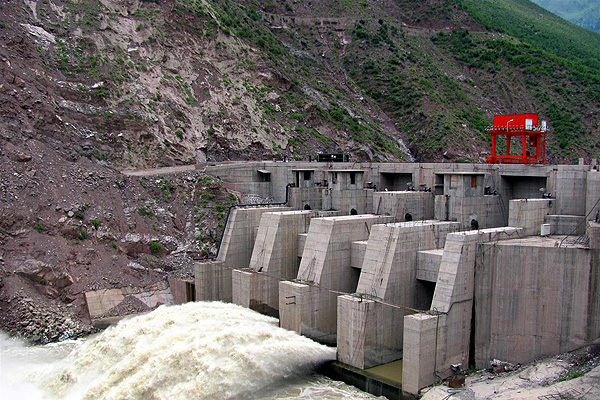


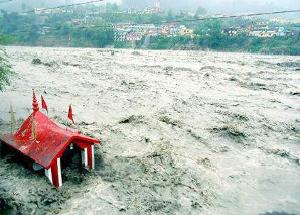

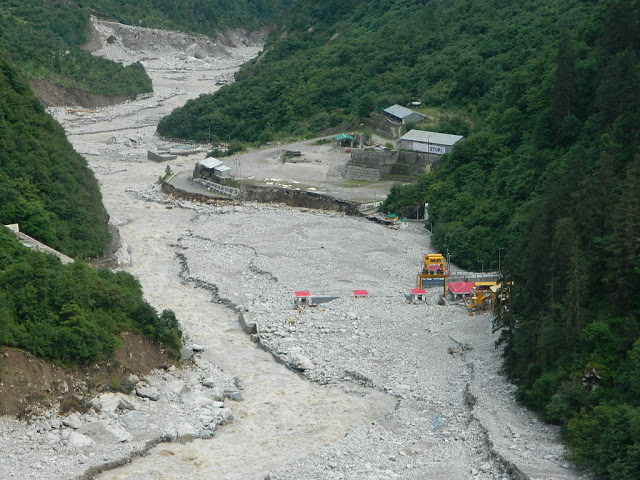

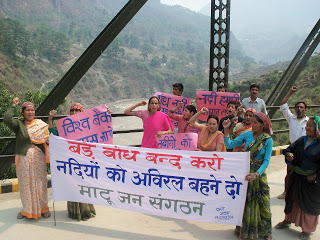


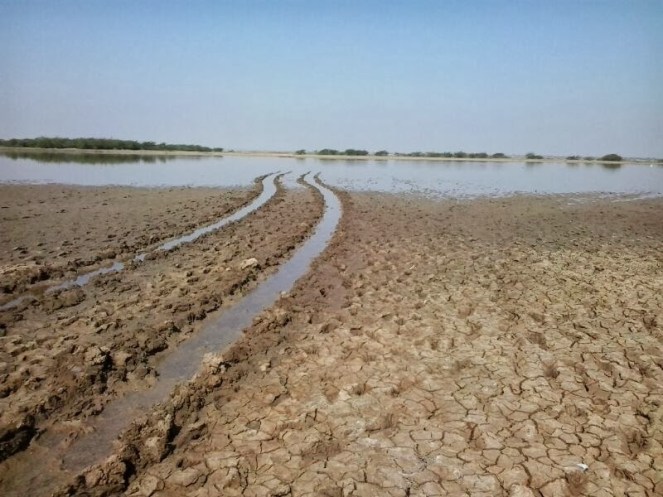

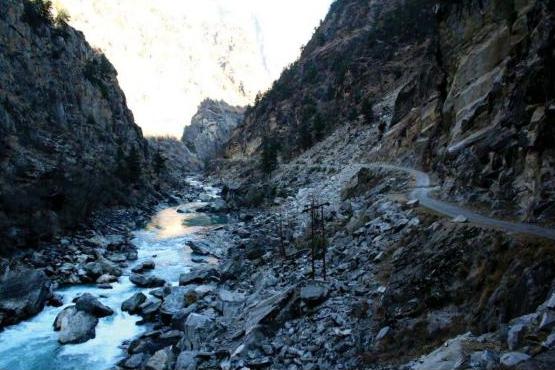


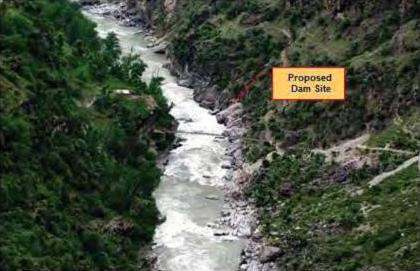





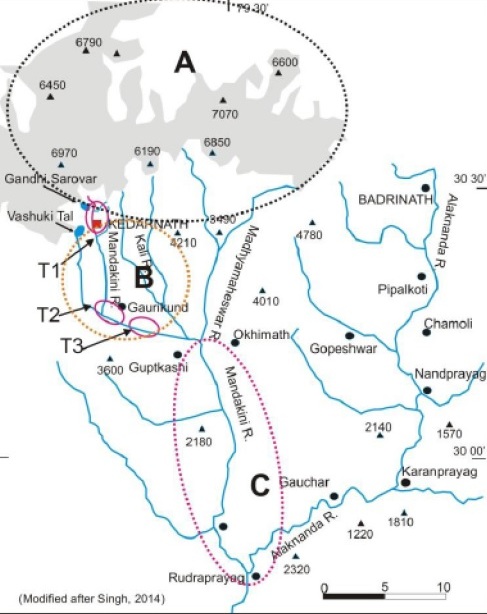


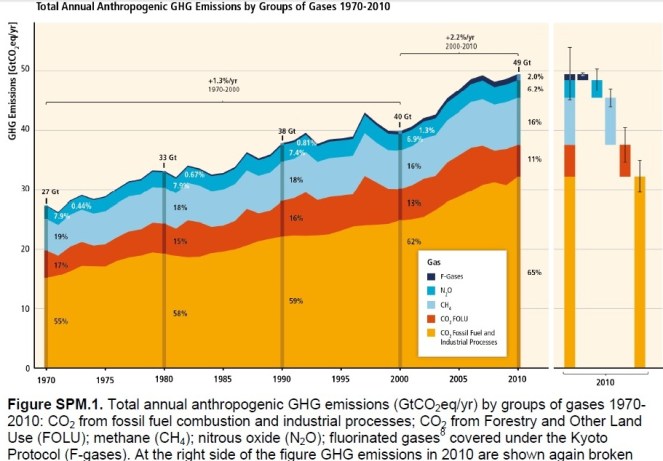
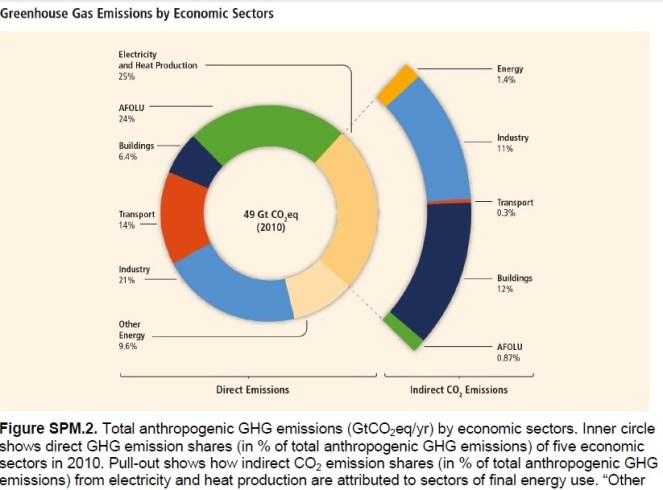
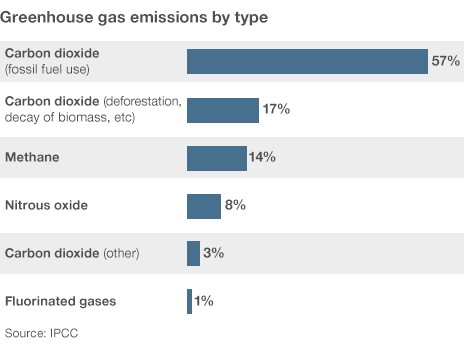

 SANDRP