Dams · DRP News Bulletin

DRP: 11 July 2016 (Namami Gange proving mere an extension of Ganga Action Plan)

Ganga Manthan to Ganga Act: No progress made Chairing the 6th meeting of the National Ganga River Basin Authority on July 04  Water Minister Uma Bharti has said that a new act will be formulated for speedy implementation of Namami Gange programme. On July 06, giving a major boost to Namami Gange Programme Ms Uma Bharti has also announced that 231 projects will be inaugurated at various locations in Uttrakhand, UP, Bihar, Jharkhand, West Bengal, Haryana and Delhi on July 07. Incidentally, on July 07, 2014 NDA Govt. launched the Namami Gange programme to rejuvenate the river to be executed over five years. The project has a budget outlay of Rs 20K crore which is 10 times more than what was allocated in previous Ganga Action Plan (GAP) phase I and II. But more money and the PM minister’s zeal, notwithstanding, Namami Gange seems a carryover from its predecessor in one crucial respect.  The overwhelming emphasis on pollution abatement that had led to the GAP’s failure bedevils Namami Gange as well. In certain respects, Namami Gange is an improvement on the GAP. It seems that the govt has not learnt lessons from the GAP’s failure. The lag between sewage generation and treatment has remained between 55% & 60% even as new STPs were built under the GAP. This is because a lot of the waste is generated outside the sewerage network and is not conveyed to the STPs. A large section of the country’s urban population lives outside this network. Moreover, the STPs can only do so much. The official statistics show that the STPs are currently running at a deficiency of 55%. The problem of STPs is three-fold: underestimation, shortage and underutilization due to lack of a well-connected underground sewage system.

The problems associated with river Ganga, however, do not end or begin in its middle course dotted by factories. The upstream of the river, where Bhagirathi and Alaknanda join to form the Ganga, is part of a very fragile Himalayan ecosystem. Caution is needed in implementing the Namame Gange projects along this stretch. The Kedarnath flood of Uttarakhand is an example of what a combination of melting glaciers and mindless construction can do to a sensitive geological zone. With more than 40 dams, barrages and weirs  and many more planned aviral Ganga seems nothing more than an empty catchphrase. Ganga is the sum total of the contribution of some 12 major tributaries. Without a rejuvenation strategy for each of Ganga’s tributaries, there can be no Ganga rejuvenation.

Meanwhile, increased fishing activity and vessel traffic are proving to be the disturbing element downstream. Deploying more scientific methods for fishing and limiting it to levels enough for species’ sustenance might help without significantly affecting livelihoods. The direct consequences of climate change are also felt in the lower belts, around the Ganga Sagar region. Land is disappearing but no comprehensive plans have emerged as yet to provide for the rehabilitation of the region’s inhabitants.

Continue reading “DRP: 11 July 2016 (Namami Gange proving mere an extension of Ganga Action Plan)”
Hydropower

Drought hits hydropower: Shows how unreliable is hydro in changing climate

India’s hydropower generation dropped by upto close to 20% compared to previous year in some of the months this year even as installed capacity of hydropower projects keeps climbing relentlessly. According to monthly generation figures from Central Electricity Authority, even as installed capacity of hydropower projects went up by 1516 MW in last one year, the power generation from hydropower projects dropped by 10.82%, 19.19%, 17.7% and 15.92% during February, March, April and May 2016 respectively at all India level, compared to the figures in the same months in 2015. Continue reading “Drought hits hydropower: Shows how unreliable is hydro in changing climate”

Dams · DRP News Bulletin

DRP: 21 March 2016 (‘Towards Noyyal’ A people’s initiative to restore a river’s glory)

Tamil Nadu A people’s initiative to restore a river’s glory The Noyyal River Restoration Federation will launch ‘Noyyalai Nokki’ (Towards Noyyal), a people’s initiative to restore the Noyyal river system on 26 March. Social activist Anna Hazare will launch the project at Kooduthurai in Alandurai in Coimbatore district. The river originates in the Western Ghats and runs through the four districts to join the Cauvery at Noyyal village. Known as Jungle stream, in olden times as many as 34 streams used to feed water into it and the river would flow throughout the year with two or three annual flood spell.  But now, just 4 or 5 streams feed the river. In many places, the river is encroached upon, sewage is let into it, or the river needs to be desilted. The river is all set to regain its glory with the ‘Noyyalai Nokki’ initiative. What is encouraging is the willingness of the public to be part of it. The project proposes to divide the river into segments of 500 metres for restoration and maintenance. Ownership groups will be formed for every 500 metres and it will consist of the local people, experts and patrons (divide-distribute-develop model).

Continue reading “DRP: 21 March 2016 (‘Towards Noyyal’ A people’s initiative to restore a river’s glory)”

Dams · DRP News Bulletin

DRP: 14 March 2016 (No Rain Dance, Only Dry Holy This Time: Pune District Administration)

Dam levels down, ‘rain dance’ for Holi dropped Pune district, where a water cut is in effect due to depleting water levels in the dams, will not have any kind of “rain dance” functions this Holi. As water reserved in the dams is to be used only for drinking purposes as per the district administration’s instructions, the collectorate has urged people to go for a “Dry Holi” this year and will ensure that there are no such functions during Holi. With dam levels coming down to as much as 23% of their capacity, the entertainment department of the collectorate will ensure that permissions are not given for events like the “rain dance” during the festival. Meanwhile, a BJP legislator in Mumbai has written to the Brihanmumbai Municipal Commissioner seeking a ban on “rain dance” functions in Mumbai in the metro during Holi. Ameet Satam, in a letter to the BMC, said that the civic body should ban rain dance and even asked the corporation to slap a fine of Rs 50,000 on those who indulge in waste of water.

Continue reading “DRP: 14 March 2016 (No Rain Dance, Only Dry Holy This Time: Pune District Administration)”

Dams · DRP News Bulletin

DRP: 7 March 2016 (Sudden water discharge from Chamera-II hydro Project in Himachal killed 2 Air Force jawans)

Sudden water discharge from Chamera-II hydro project killed 2 IAF jawans  In the evening of 05 March, 2 Indian Air Force (IAF) personnel posted at the Pathankot airbase were washed away by sudden rise in Ravi’s water level from Chamera-II hydro project in Chamba, Himachal Pradesh while 3 other personnel had a close shave. According to Sudesh Mokhta Deputy Commissioner Chamba the 5 IAF personnel on a weekend holiday trip were clicking pictures on the river bank at the time of the incident when the water of the river rose suddenly after discharge from upstream Chamera-II project. The incident happened around 6.30 pm and due to darkness, the search operation remained unsuccessful. It was only on 06 March that the bodies were fished out. Mokhta further stated that a magisterial probe has been ordered to ascertain if the NHPC authorities, which man the Chamera-II project, followed the guidelines laid down by the high court for the discharge of water.  On 08 June 2014 also during a similar accident, 24 students from Hyderabad were killed by sudden discharge of water from Larji hydel project dam in Mandi district.

Continue reading “DRP: 7 March 2016 (Sudden water discharge from Chamera-II hydro Project in Himachal killed 2 Air Force jawans)”

Bhutan

Bhutan Hydropower Developments in 2015

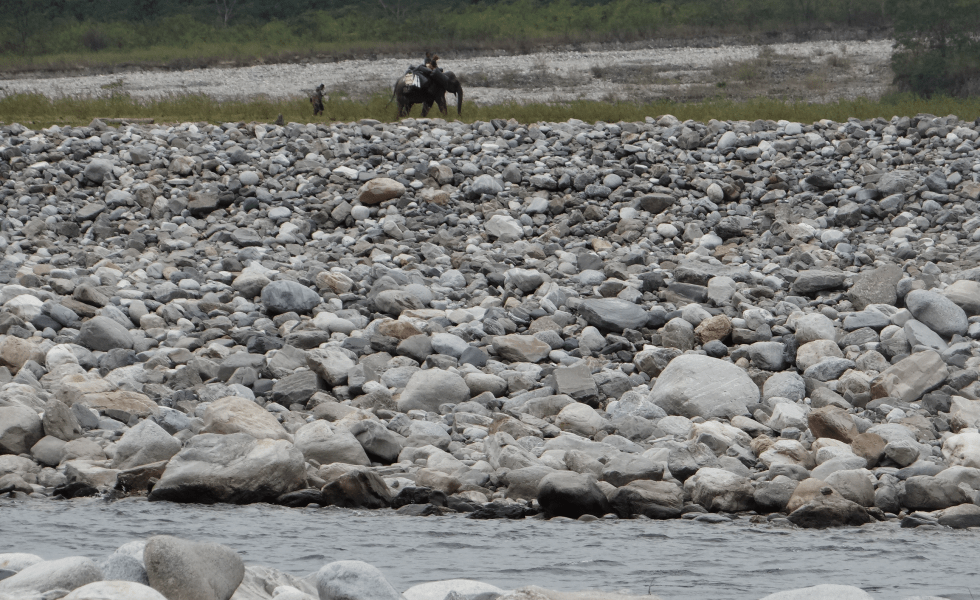
Above: Punatsanghchu River in Bhutan

Bhutan is the only country in the world that measures its development in terms of Gross National Happiness, which includes environmental conservation and preservation of culture[1]. However, Bhutan’s hydropower construction spree in the recent years has increased debt burden on the country. Concerns are emerging over Bhutan’s profligate spending on a single sector without bringing commensurate benefit to its citizens. Hydropower development in the country faces severe risk of climate change effects and has a huge social and ecological cost. But Bhutan continues to develop hydropower claiming that the revenues would fuel economic growth and the loans are self-liquidating. This review of hydropower developments in Bhutan during the year 2015 is based on media reports throughout the year and other publicly available information.  Continue reading “Bhutan Hydropower Developments in 2015”

Arunachal Pradesh · Cumulative Impact Assessment · Hydropower Performance

Hydropower projects in India: Important 2015 Developments

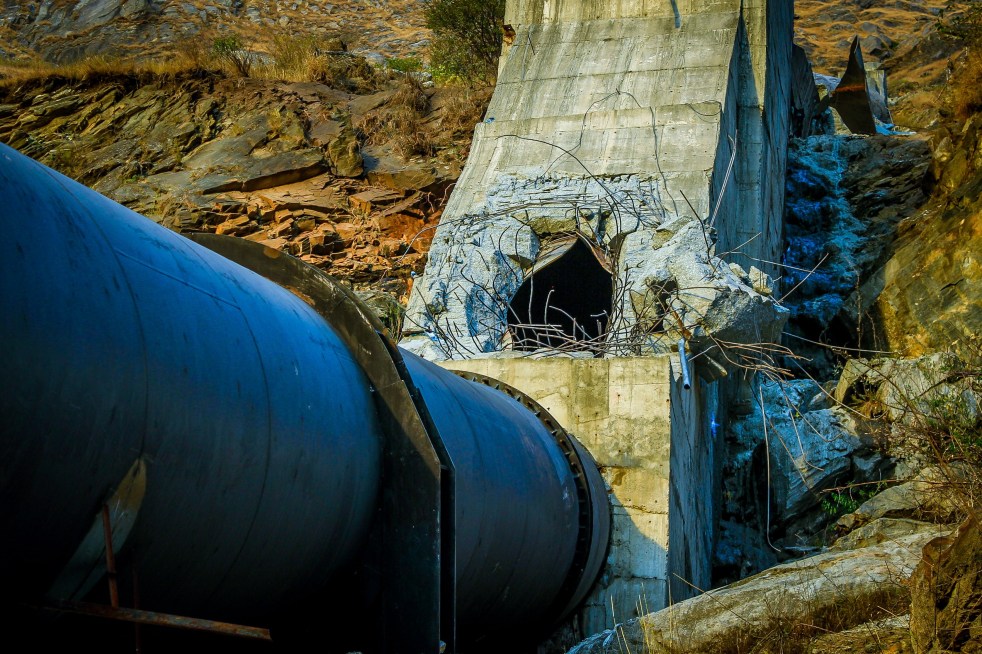
Above: Penstock burst of Sorang Hydropower Project in Himachal Pradesh (Photo: Himdhara)

Indian government continues to have very ambitious hydropower targets, even though all the evidence suggests why we should be reviewing it. As per Central Electricity Authority, India has 42641 MW of installed capacity from large hydropower projects at the end of Dec 2015. The installed capacity from projects below 25 MW is not included in this figure.

CAPACITY ADDITION IN 2015: Troubled projects During 2015, India added 1824 MW of large hydropower capacity. Some of the important projects commissioned during the year include: 800 MW Kol Dam in Himachal Pradesh (one unit each on 30.03, 31.03, 10.04, 12.06), 450 MW Baglihar II in Jammu and Kashmir, 80 MW at Lower Jurala Project in Telangana, 330 MW Srinagar HEP in Uttarakhand and 96 MW Jorethang Loop Project in Sikkim. The first project is in Central Sector, next two in state sector and last two in private sector. Except for the 80 MW from Lower Jurala, rest of the capacity is all in Himalayan states.

As we reviewed these projects closely in a separate blog, all of these projects have had a very troubled track record and most continue to face serious problems even after commissioning.

What does all this show? The reason for going into above details about projects commissioned in 2015 is to illustrate how seriously problematic our decision-making has been, even in these times. Evidently, there is a need to overhaul decision making surrounding hydropower projects in vulnerable areas which face local opposition.

Are we paying any attention to this? Unfortunately, no.

To illustrate, let us look at the decisions taken by the Union Ministry of Environment and Forests’ Expert Appraisal Committee on River Valley and Hydropower Projects. All hydropower projects above 25-50 MW need clearance from this committee, as also all large irrigation projects.

EAC DECISIONS IN 2015: As our earlier analysis showed[1], the EAC has had zero rejection rate and has been clearing huge number of dams and hydropower projects, far exceeding the need, justification or carrying capacity of the river basins, with very little attention to the prudent environment governance.

During the year 2015[2], EAC continued this tradition of zero rejection rate! Even for the couple of projects that it did not agree to approve immediately, it asked for a reformulate of the proposal, keeping the options open.

During 2015, EAC recommended environment clearance to twelve projects; six of them were hydropower projects, all from Arunachal Pradesh. The biggest of them, the Kalai II project of 1200 MW showed how starkly flawed were the EAC decisions. Rest of the six were irrigation projects, including two controversial lift irrigation projects from Maharashtra (Shirapur and Krishna Marathwada) and one irrigation project each from Tamil Nadu, Odisha, Chhattisgarh and Telangana.

It should be added here, as a reminder to the decision makers, that the work at Lower Subansiri Hydropower project continued to remain stalled for the four full years as on Dec 16, 2015. This is an indication, if one was required, to show how costly the consequences of wrong decisions can be.

The EAC cleared 21 projects for first stage environment clearance, including 9 hydropower projects, two each from Arunachal Pradesh, Uttarakhand, Himachal Pradesh, Jammu & Kashmir and one from Sikkim. It also cleared four irrigation projects (one each from Rajasthan, Bihar, Jharkhand and Odisha) and eight lift irrigation projects (five from Karnataka, two from Maharashtra and one from Uttar Pradesh). It also okayed 16 applications for extension of validity for the first stage clearance, the validity, which is supposed to be for 2-3 years, went on for 4-5 years!

The EAC discussed Cumulative Impact Assessments (CIA) of Tawang, Subansiri, Siang, Dibang and Kameng river basins, all in North East India this year. Worrying, during each of these discussions it eventually approved shoddy and seriously problematic CIAs, diluted its own recommendations and refused to understand the concept of conflict of interest.

EAC did say no to first stage environment clearance to Purthi HEP in Lahaul and Spiti district in Himachal Pradesh, but gave its ok when it came back with a slightly different configuration. It did say no to extension of TOR to Lara Sumta and Sumta Kathong HEPs, but suggested they can apply afresh! It has not yet cleared Ken Betwa, Etalin and Pancheshwar, but has not said no either to any of them. It did mention SANDRP submissions dozens of times, but did not invite SANDRP, or any other group to the EAC meetings even once where SANDRP submissions and developer response were discussed. There has never been a point-wise discussion in the EAC about the merits and demerits of the developer’s response. Just to illustrate how problematic has the EAC decisions have been, see our blog about the 86th meeting of EAC held in August 2015 https://sandrp.wordpress.com/2015/09/22/why-the-decisions-and-minutes-of-the-86th-meeting-of-eac-on-river-valley-projects-need-to-be-reviewed/.

All this only goes to illustrate how seriously problematic are our decisions about dams and hydropower projects.

GENERATION PERFORMANCE OF HYDROPOWER PROEJCTS The basic purpose of building hydropower projects is generation of electricity, let us see how India’s hydropower projects perform in 2015. During the year, with total installed capacity of 42641 MW as on Dec 31, 2015, India’s large hydropower projects, as per the data from Central Electricity Authority, generated 129.11 BU (Billion Units, one unit equals one kilowatt hour), compared to 130.8 BU in 2014. So even though installed capacity in 2015 went up by 1824 MW, generation went down by 1636 Million Units! Our earlier analysis[3] has shown how the returns from hydropower projects in India are diminishing in different respects. The trend continues in 2015.

Peaking power It may be added here that USP (Unique Selling Proposition) of hydropower projects is that they can provide peaking power ( power supply in the hours when the demand is highest). There is no agency that is either monitoring or trying to optimize peaking power from hydropower projects. However, let us take a snapshot of this situation. A review of the daily Power Supply reports of the Northern Region Load Despatch Centre shows that on Dec 31, 2015, Northern region had peaking shortage of 1529 MW. Northern Region, incidentally, should give us the best illustration in this regard since it has, at 18815 MW, the highest hydropower capacity among all regions of India. On Dec 31 2015, hydropower projects were providing 10041 MW of generation during peak hours, and 2446 MW generation during off peak hours. So net peak load provided by hydropower projects on Dec 31, 2015 was 7595 MW, which is just 40% of the hydro installed capacity of 18815 MW in the region. This snapshot tells us that on Dec 31, 2015 (incidentally, the rivers have minimal flows at this time and hence all the more reason even for run of river projects to operate in peaking mode) about  60% of the hydropower capacity was NOT providing peaking power, which it was supposed to do! It may be added that Northern region had only 1529 MW of peaking shortage, which could have been easily provided by the more optimum performance of these projects. It also tells us that as far as peaking power requirement is concerned, we do not really need more hydro since the current capacity is sufficient to cater to our peaking needs, if operated optimally, in a manner that hydropower projects are supposed to operate! Even as a snapshot, this tells us a lot!

HYDRO DISASTERS IN 2015 The year 2015 showed increasing disasters related to hydropower projects. Such disasters included the one at Chutak Hydropower project in Kashmir, Sorang hydropower project in Himachal Pradesh, Vishnuprayag hydropower project in Uttarakhand, Multiple disasters in Kinnaur district in Himachal Pradesh, among others. At Rishikesh in Uttarakhand, hundreds of people had narrow escape in Dec 2015 due to sudden release of water from Tehri Dam, as alleged by the news reports. The High Court of Himachal Pradesh, in Jan 2016, while announcing compensation to families of the students who lost their lives due to Larji Dam mishap in Oct 2014, called Larji Dam a Killer.

IN CONCLUSION This year end review of hydropower projects in India tells us that our decision making surrounding hydropower projects is flawed and that we can and must change the way the decision making system in functioning.

On the other hand, power generation performance of hydropower projects continue to diminish and even for peaking power requirement, we do not really need more hydropower.

It should also be added that as large number or organisations from all over the world wrote to the United National Frame Convention on Climate Change, Large Hydropower must not be considered as a solution in the climate change context.

Himanshu Thakkar, SANDRP (ht.sandrp@gmail.com)

END NOTES:

[1] https://sandrp.wordpress.com/2013/02/07/the-expert-approval-committee-has-zero-rejection-in-six-years/

[2] This review is for EAC meetings till November, the minutes of the EAC meeting of Dec 22-23, 2015 were not available till Jan 8, 2016, when I finished writing this article.

[3] https://sandrp.wordpress.com/2015/04/09/diminishing-returns-from-large-hydropower-projects-in-india/

Dams · Hydropeaking · Hydropower

India’s Free Flowing Frontier Part I: Dibang at Nizamghat

What does it mean when landscapes, riverscapes, ways of life are altered forever? When a mighty, flowing river is plugged and made to stop, flow in tunnel and released as per our whims? For most of us, life and environment are so fundamentally modified that we would hardly question it. But as our worldview and our politics is set to dam some of the last free flowing rivers in the North East India into Hydro-Electricity Banks, what is at stake? Continue reading “India’s Free Flowing Frontier Part I: Dibang at Nizamghat”

Dams

Yamuna River Story

River Yamuna is fifth longest river of India. For past many centuries the river has been integral part of Indian culture. It has been sustaining means of livelihoods to millions. Many, in pursuit of spiritual inspiration venerate it with great hope. But at present, the river is more in news for its highly polluted state. In this blog SANDRP attempts to presents the picture of the River Yamuna. The blog also briefly mentions the places of cultural, religious, historical and environmental significance on and around the river, pointing out the various factors which has led to present state of the river.  Continue reading “Yamuna River Story”

Dams

Open letter to Tata Sustainability Group to stop westward diversion of Bhima basin water by Tata Hydro projects

From: Parineeta Dandekar (Pune) & Himanshu Thakkar (Delhi)

South Asia Network on Dams, Rivers & People (SANDRP)

parineeta.dandekar@gmail.com, ht.sandrp@gmail.com

August 20, 2015

TO:

Tata Sustainability Group

Army & Navy Building, 2nd Floor

Mahatma Gandhi Road,

Mumbai 400001, tsg@tata.com

  1. Shankar Venkateswaran

Chief – Tata Sustainability Group: svenkateswaran@tata.com

  1. Dr. Avinash Patkar

Head – Environment Services: apatkar@tata.com

  1. Sudhakar Gudipati

General Manager – Community Services: sgudipati@tata.com

  1. Alka Upadhyay

General Manager – Environment Services: aupadhyay@tata.com

  1. Ajit Chaudhuri

General Manager – Community Services: achaudhuri@tata.com

  1. Sourav Roy

Program Leader – Tata Uttarakhand Program: aroy@tata.com

  1. Abhishek Goyal

Senior Manager – Environment Services: agoyal@tata.com

  1. Zarir DeVitre

Manager – Environment Services: zdevitre@tata.com

  1. Manjula Sriram

Manager – Community Services: msriram@tata.com

  1. Lucas Saldhana

Assistant Manager – Tata Sustainability Group: lsaldhana@tata.com

Dear members of Tata Sustainability Group,

We are encouraged to write to you on this subject, thinking that considering the name, objective of the TSG and also the various statements on the TSG website, you will take prompt and necessary action on this subject.

We are writing to you in the context of Bhima basin in Maharashtra and Krishna river basin in general facing the worst monsoon deficit, crop loss and water scarcity. Millions of farmers are facing crop loss, livelihood loss and worst. Ujani dam on Bhima River is below its live storage level now and in the downstream Telangana, Nagarjunsagar is at zero live storage level and Srisailam has just 9% water in its live storage. Telangana and Andhra Pradesh have said they have no water to save farmers’ crops; they are reserving the available water for drinking water. Continue reading “Open letter to Tata Sustainability Group to stop westward diversion of Bhima basin water by Tata Hydro projects”