Greetings from the India Rivers Week (IRW) Organising Committee!
This is to request for nominations for Bhagirath Prayaas Samman (BPS) 2017.
As you will recall BPS is an attempt to acknowledge and celebrate outstanding, inspirational, unsung initiatives in river conservation.
This year we are also initiating Shri Anupam Mishra Memorial Medal to celebrate media professionals who have established an exceptional body of credible work on various aspects of rivers leading to changes in behaviour, public discourse, law and policy. Self nominations will also be considered.
Please find attached the announcement and the nomination forms.
Before, during and after the controversial public hearing of destructive Pancheshwar Dam, held in three districts in Uttarakhand, wide media reports in print, in audio-visual and social media gave a loud and clear message: The public hearings violated all legal and democratic norms, in letter and spirit and were clearly illegal.
The Pancheshwar multipurpose project has generated much controversy in India and in Nepal. Its Environment Public Hearing (EPH) was held on August 9, 11 and 17 at Champawat, Pithoragarh and Almora in Uttarakhand. Held during monsoon season in disaster prone hilly region they have invited sharp criticism from all concerned.
There have been scores of reports by local and national media revealing the significant environmental issues being compromised by concerned authorities. We have compiled some key media reports here to illustrate, how clear is the message from all media that the public hearing, the EIA and the project itself involves so many violations of law and democratic norms. They are clearly unacceptable.
5 river basins; Total Area: 55,000 square kms.; Total Population: 68.65 lakhs; Total Catchment Area of 5 rivers; Total Catchment Area: 53311 sq.kms
Himachal is a relatively small state and in 2011 its population stood at 68.65 lakhs. It is only 9% urbanised and most of Himachal lives in its villages. Of the total land geographical area only 10% is under agriculture while close to 70% in under the category of ‘Forest land’. And yet agriculture is the main source of livelihood in Himachal with over 93% of the population dependent on it. As in most mountain areas agriculture and forest dependence is interwoven.
Agriculture is made possible due to the irrigation from river channels or natural springs. The health of the forests directly determines the health of the surface and ground water systems which in turn determines the viability of agriculture and horticulture. Horticulture and cash based agriculture was pushed by the government in the late 70s and 80s. Today the state has massive apple cultivation, apart from commercial vegetable cultivation, which is an important source of income for the farmers.
Subject: Submission related to Chenab River and Lahaul Valley in context of EC for 430 MW Reoli Dugli project
Dear Chairperson,
We have read reports that the expert appraisal committee (EAC) on river valley and hydel projects of the Ministry of Environment has decided “not to take any cognizance of representations” received by its members since such representations are ‘anti-development’. The article appearing in Indian Express on January 14, 2017 stated, “In its December 30 meeting, the committee concluded that once a project proposal reaches the EAC for appraisal, it has crossed the stage of public consultation and “the EAC should not go back in time, and should not reopen it, by entertaining unsubstantiated representations received from the people”.Continue reading “Lahaul people write to Environment Committee not to clear Reoli Dugli Hydro project”→
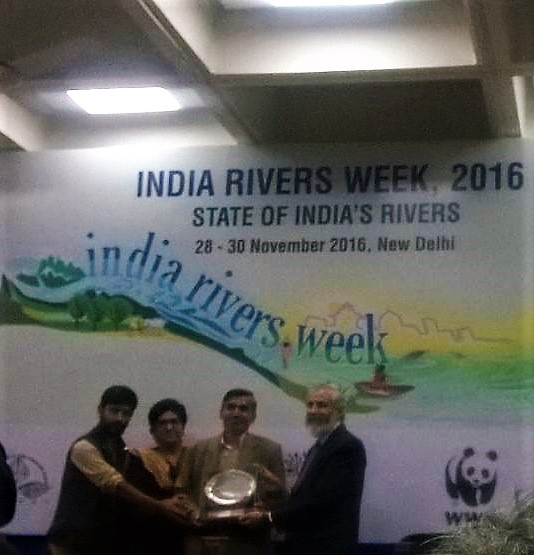
When I talk with Manshi, a friend and co-traveler from Himdhara Collective about Bhagirathh Prayas Samman that the collective received during the India Rivers Week 2016, she is modest, even slightly hesitant. She simply says, “We love the mountains, we want to protect them and help mountain communities fight the unequal battle against unplanned hydropower. That is one motivation of our work. But the other is recognition of the fact that we are privileged… privileged to be able to speak English, to work on a computer, to understand the bureaucratic procedures that alienate a tribal or forest dweller from her land. That understanding also drives us.”
Citation of Bhagirath Prayas Samman given to Himdhara Collective states: “Himdhara’s strength is its engagement with communities, movements and organisations. It has created an effective discourse around issues of resource distribution and their ownership and the resultant impacts on ecological spaces of mountain communities, especially vulnerable groups like indigenous people, dalits and women. It is an honor to recognize and celebrate Himdhara Environment Research and Action Collective’s extraordinary Bhagirath efforts in maintaining the integrity of rivers in Himachal Pradesh.”
In their own words, “Himdhara is an autnomous and informal non registered environment research and action collective, extending solidarity and support, in research and action, to people and organisations asserting their rights over their natural resources and agitating against corporatisation of these resources for destructive development in the state.”
Face of Hydropower in Kinnaur Photo: Himdhara
A collective of young, passionate and questioning minds, Himdhara has been working with communities in far flung areas of Himachal Pradesh include Lahaul and Spiti and Kinnaur in their fight against the onslaught of ill-planned and bumper to bumper hydropower projects in Himachal, amongst other issues.Continue reading “Bhagirath Prayas Samman: Himdhara Collective: Relentless Questioning and Doing”→
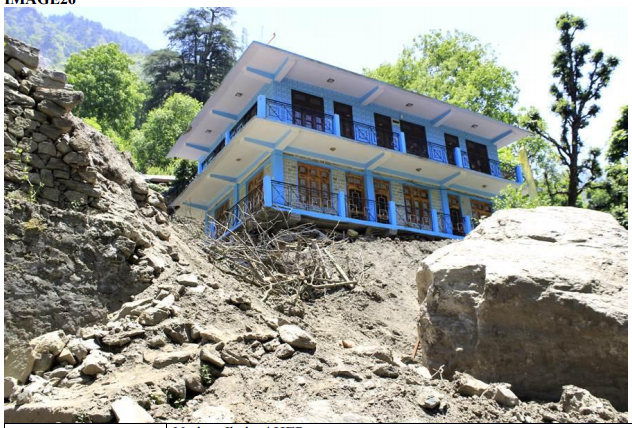
Above: Entirely destabilised house next to 100 MW Sorang HEP transmission lines Photo: Sumit Mahar
Immediate Press Statementfrom Himdhara02/12/15
In the last two weeks a half a dozen lives have been lost in the Kinnaur region alone in three separate incidents that have one thing in common – accidents at hydropower project sites. The first event took place in Burang village on the 18th of November 2015 where a penstock pipe burst of the 100 MW Sorang Hydro-electric project led to the death of three people. On 29th November, two labourers died in blasting operations in the 450 MW Shongthong Karchham project, some others were seriously injured. And on the same day in the Bhabha Valley, a young teacher lost her life in a landslide that occurred in the area. Continue reading “Kinnaur in crisis; Sheer Negligence in hydro projects claiming lives. Who is accountable?”→




 SANDRP