On June 17, 2017, a PIB Press Release from Union Ministry of Water Resources announced, “Narmada Control Authority (NCA) has cleared the final raising of Sardar Sarovar Dam (SSD) in Gujarat by lowering of gates and impounding of water in the reservoir upto its Full Reservoir Level (FRL) of EL 138.68 mts. The NCA which met here yesterday under the Chairmanship of Dr. Amarjit Singh, Secretary (WR, RD & GR) considered all aspects of environmental and Resettlement and Rehabilitation (R&R) issues.”
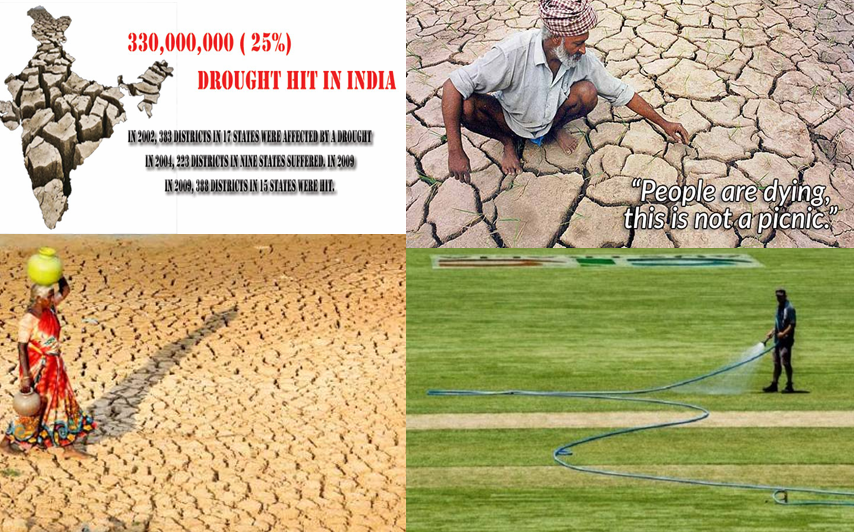
A PIL under Article 32 was filed by the NGO, Swaraj Abhiyan praying for directions for declaration of drought and relief in affected areas. The apex court came out with a 3 part judgment earlier this month – the first one dealt with the issue of drought and the latter judgments took up the poor implementation of the National Food Security Act, 200513 (NFSA) and the Mahatma Gandhi National Rural Employment Guarantee Act, 2005 (NREGA). These directions largely signify the failure of the governance in tackling drought and suggest actions to be taken hence, we need to be thankful to the petitioners and apex court for this. We also hope the apex court continues to monitor the implementation of the directions.
At least six of the 34 Meteorological divisions of India seems to be facing the prospects of crop failure and drought, if we look at the rainfall in these divisions in last 18 prime monsoon days from June 25, 2015 (monsoon had set in almost all over India by that date) to July 13, 2015, the latest date for which division wise rainfall are available. In these six sub-divisions, the rainfall during these 18 prime monsoon days has been between 0.1 mm to 12.8 mm. Continue reading “Six regions of India facing prospects of crop failure and drought?”→
Above: Just a few hundred meters upstream the proposed Jhari Dam, a tribal woman struggles to find water in the dry Par river bed Photo: Parineeta Dandekar
Village of Jhari at the northern most corner of Western Ghats has some of the loveliest houses I have seen. Appreciation for the evolved vernacular architecture goes beyond the obvious urban romanticisng of anything tribal. Homes in this region of tribes like Kokani, Warli, Thakurs, etc, are unique in their architecture, building materials, craftsmanship and the seamless mix of beauty and functionality. The tiled roof of our host Haribhau had intricate wooden trimmings, the mudfloor was cool and the door frame was carved in exquisite motifs. Vines arched and spread in disarray over courtyards. We were assembled under a passion fruit or ‘Rasna’ vine, bursting with white flowers. Inside, cane baskets creaked under the weight of Ragi, Udid and Rice filled to the brim: This year’s harvest has been good, though that’s not always the case. The hosts, both men and women, were busy with lunch preparations. Continue reading “Par-Tapi-Narmada Link: Divided States, United Tribals”→
Above: A girl from the Par Basin. With drinking water problems plaguing her village and the impending diversion project either from Gujarat or Maharashtra, her hardships will only increase. Photo: Parineeta Dandekar
Even as the second meeting of the Special Committee for Interlinking of Rivers was held on the 6th January 2015[i], the Union Minister of Water Resources, River Development and Ganga Rejuvenation Sushri Uma Bharti sought “co-operation of various States in this project” and said that “States can discuss their apprehensions if any, in the next meeting of the committee.” She informed the meeting that on 07 January 2015, she will meet Chief Minister of Maharashtra Shri. Devendra Fadnavis to discuss Damanganga-Pinjal and Par-Tapi-Narmada link projects.
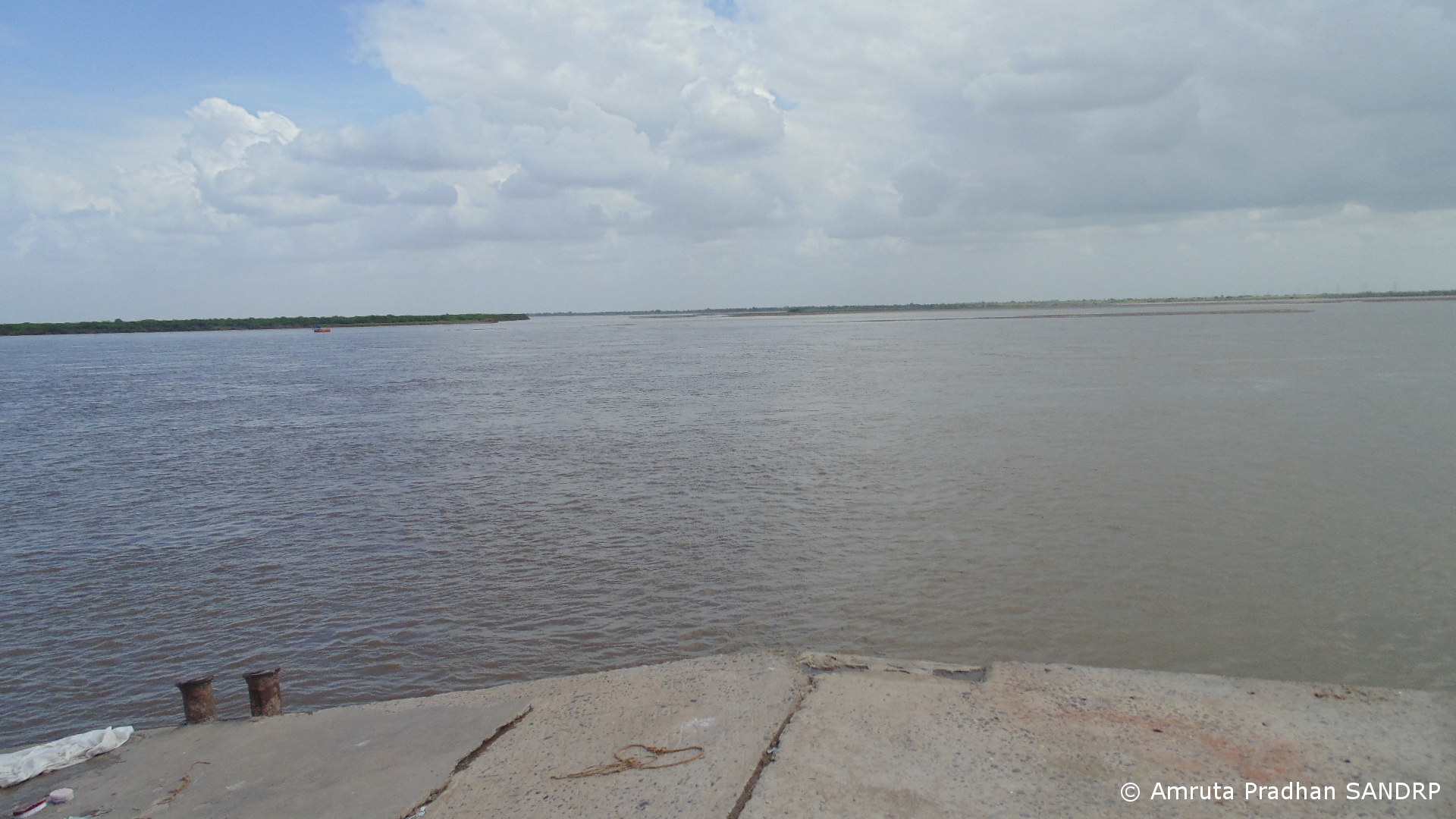
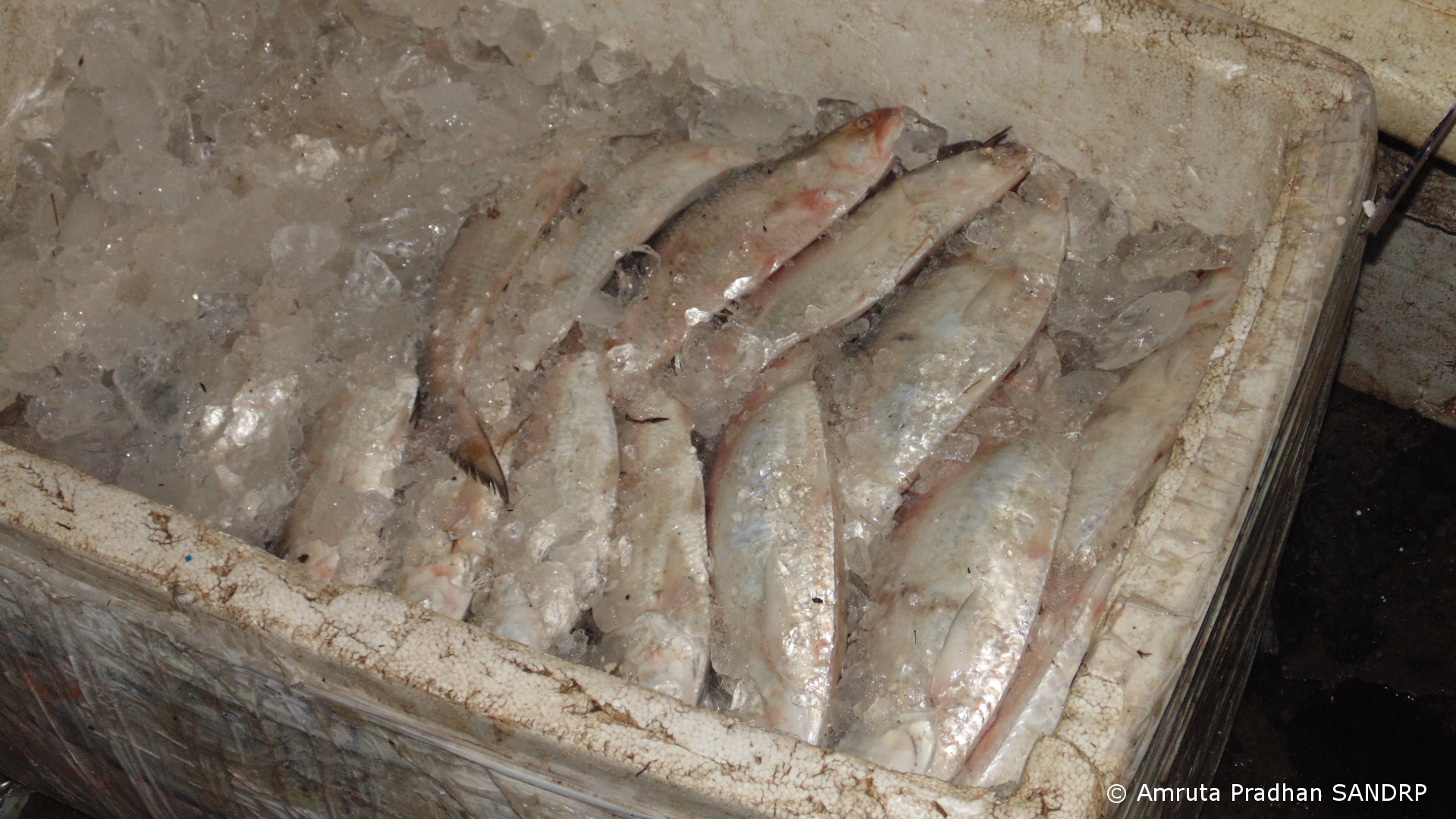
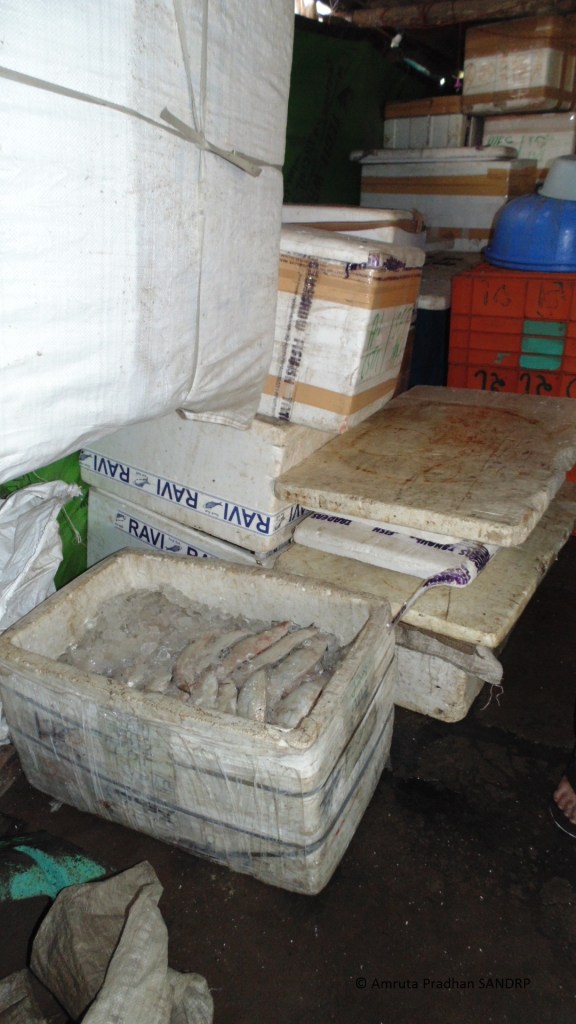
Pungent fishy smell is the first thing that grabs your attention in Bhadbhut village in Bharuch District of Gujarat, which lies on the estuary of the mighty Narmada River, as it meets the Arabian Sea. Every alternate shop in every small lane sells fresh fish and by 11 in the morning, first lot of fresh fish is ice packed in thermocol boxes, all set for far off places like Kolkata and Delhi. Before I was told, I saw for myself that fishing in the Narmada Estuary is the backbone of coastal Bharuch district.
Bhadbhut Village
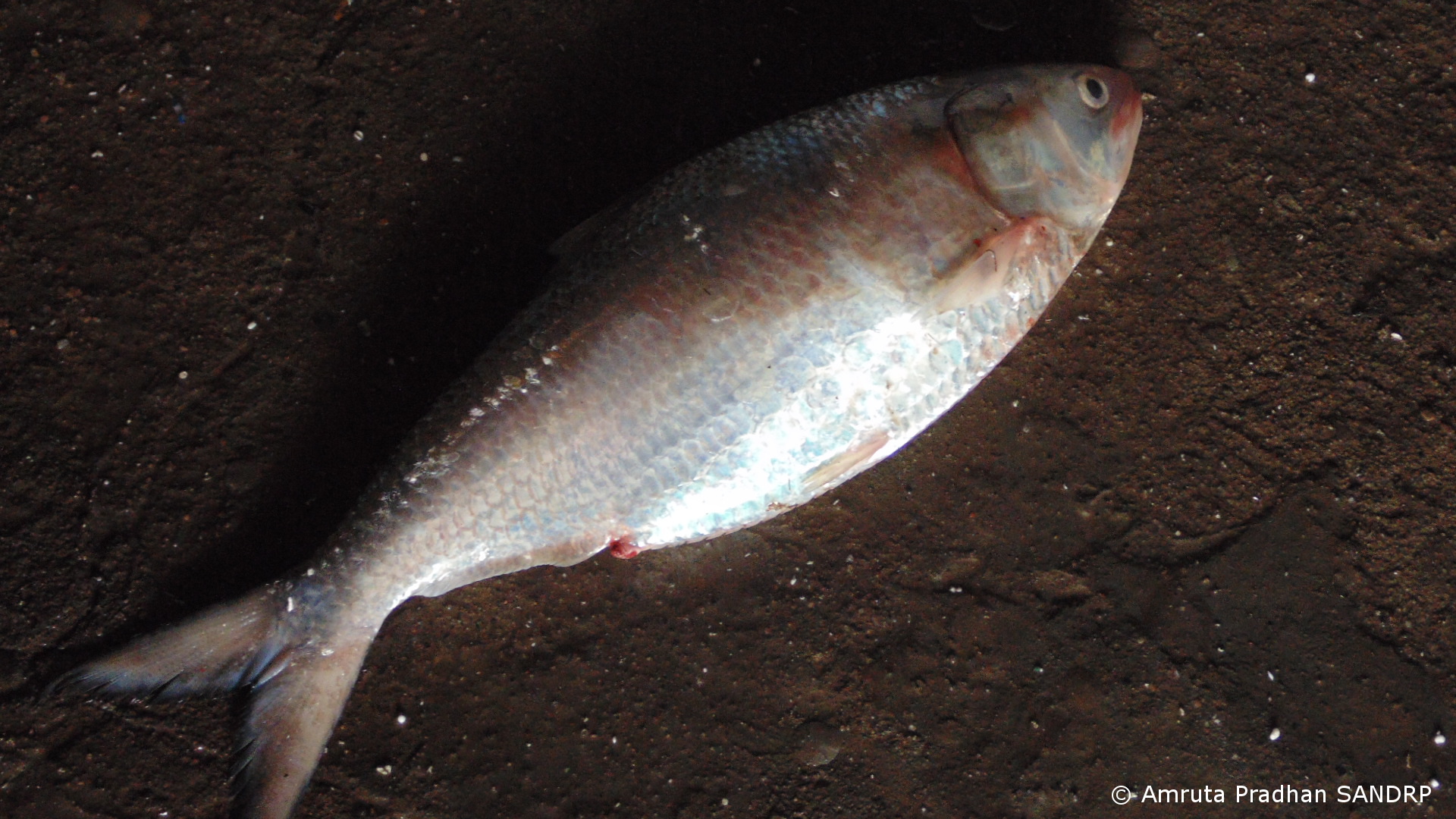
Just 5.15 kilometers from here is the planned Bhabhut Barrage on the Narmada River. What will happen to Bharuch if barrage is constructed? This is the reason why I am here. To understand the implications of this barrage on lives of thousands of fisherfolk from this estuary and on the famed Hilsa fish, that mysterious silver river migrant, on which the fishing economy depends nearly exclusively.
Hilsa is a marine fish that arrives in the brackish water of estuary for spawning normally inhabiting the lower region of the estuaries and the foreshore areas of the sea. For India the peak upstream migration of hilsa in most of the rivers is generally in the monsoon months of July and August and continues upto October or November.
Hilsa
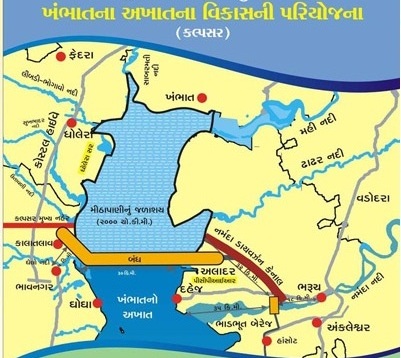
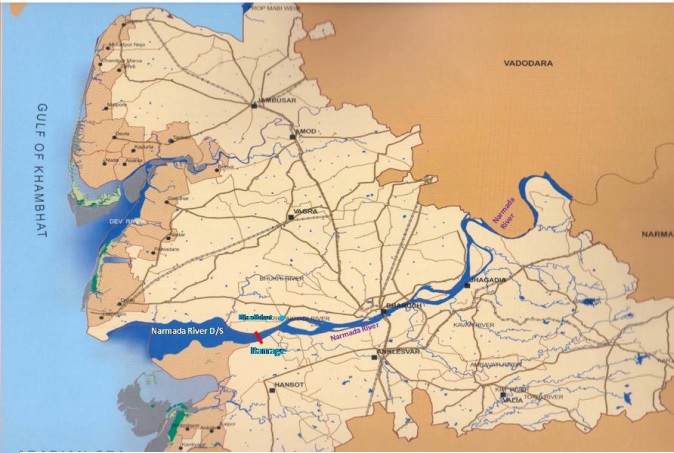
Bhadbhut barrage will be constructed at 5.15 km downstream of village Bhadbhut and 25 km upstream of river mouth. It is part of a gargantuan Kalpasar project pushed by the State Government. Kalpasar (pragmatic critics hold that Kalpasar is in fact an abbreviation of Kalpanic Sarovar, an imaginary reservoir) project which is supposed to be one of the biggest in the world proposes to construct a 30 km long dam (one of the longest in the world) across the Gulf of Khambhat between Bharuch and Bhavnagar districts[i]. The reservoir is supposed to trap the water of twelve rivers that empty their water in the gulf, including Narmada, Mahi, Sabarmati, Dhadar and some Saurashtra rivers. It is expected to create a reservoir of 2000 sq km area, over five times the area of Sardar Sarovar, the reservoir capacity is expected to be over 10 billion cubic meters, that is larger than the SSP reservoir capacity. The project is being pushed ignoring serious issues like hydrological-geological-structural feasibility and needless to say, it’s impacts on environment and fisherfolk. The project will destroy the coastal and deltaic fisheries and wetlands.
As SANDRP has been highlighting for some time now, riverine fisherfolk are one of the most disadvantaged and deprived sections in the dam debate throughout the country. It is no different in Narmada. Livelihood of the fisherfolk from Narmada Estuary has been threatened by several industrial estates established across the district and is now on the verge of being destroyed. Yield of Hilsa has been steadily decreasing (from 15319 tonnes to 4866 tonnes during 1993 to 2004[ii]) since commissioning of Sardar Sarovar Project (SSP) canal and power house in 2006. SSP is built on the Narmada River about 130 km upstream from the estuary. Another dam, Garudeshwar Dam, is under construction downstream from SSP.
Narmada Estuary
Are people here in the estuary aware of the scale of the Kalpasar project? What do these local fisherfolk have to say about this? How have they been coping with the impacts of SSP?
On the lack of study of the downstream environment, the first paragraph from the chapter on this issue from the report of the Independent Review of the Sardar Sarovar Project instituted by the World Bank is worth quoting in full [iii]:
“From the Sardar Sarovar dam to the ocean, the Narmada River runs for 180 kilometers through a rich lowland region which represents about 10% of its catchment area. In the course of our environmental review we sought information that described the ecology of this lower reach of the river, the estuary, and near shore region in the Gulf of Cambay. We hoped to find a description of the aquatic ecosystem, including parameters indicating the quality and quantity of water and its seasonal changes, biological species, processes, and resource linkages. We looked forward to finding a systematic treatment of flow regimes and geomorphology. We expected to find systematic documentation of resource use, from drinking water to fisheries. We thought there would be documents establishing the kinds of physical, biological and socioeconomic changes to be expected as the Sardar Sarovar Projects are brought on stream and more and more of the natural flow is stored, used or diverted out of the river. We looked for a set of ameliorative measures that would be implemented to mitigate impacts. We thought these measures would be scheduled to begin with phased development of the Sardar Sarovar Projects. We hoped they would also be related to the cumulative effects of other developments on the Narmada further upstream, in particular the Narmada Sagar Projects, and to the expansion of industrial activity in the downstream rive basin in Gujarat itself.
In all our expectations we have been disappointed.” (Emphasis Added.)
The paragraph speaks eloquently and what it says it true even till date.
FIELD VISIT:
Eager to find answers to these questions, I along with Bhupat Solanki a volunteer from Paryavaran Mitra, an Ahmedabad based NGO, first met Praveen Madhiwala, a fish trader and exporter. As I explain the purpose of my visit to him, his first reaction is “if the dam at Bhadbhut comes up, Hilsa will be finished. Not only that, but the dam will prove to be destructive to the entire estuary.” He explains, “Tidal flow of water spreads 60 KM from sea shore to upstream of the estuary. They are planning to build the barrage just 25 KM upstream of the sea shore. What will happen then to the incoming salt water during high tide? It is bound to spread laterally along the barrage spreading in the coastal region and will be destructive to the settlements along the coastline. Calculating all these numbers on paper is very different than experiencing the destructive power of sea. We know what the sea can do.”
Destruction of Hilsa and other fish by Sardar Sarovar
Kamalesh Madhiwala, an advocate from Bhadbhut adds further. “Yield of Hilsa has drastically reduced after Sardar Sarowar Dam has been built. There has been a reduction of 65 to 70%. Overall water level of the estuary has gone down. Post monsoon the river becomes so dry that we can walk across the riverbed. This had never happened in the past before Sardar Sarovar.” When asked about the claim by Narmada Control Authority that it constantly releases 600 cusecs (cubic feet per second) of water from the dam[iii] to maintain the health of the river and the estuary, he says “We don’t think water is released from the SSP. There is no mechanism to monitor this. If you approach government they will show you on paper that they release 600 cusecs of water every day. But no one maintains the on ground data.” According to him the SSP has affected overall fish variety of the estuary as well. “A decade ago there used to be 70 to 80 types of fish varieties available in the estuary. Now we get only about 10 to 12 fish varieties. Earlier along with Hilsa many other riverine species like Prawns, Mahseer etc. have been commercially equally important which Sardar Sarovar has vanquished. Now the fisher people’s income is solely dependent on Hilsa which is very sensitive species. Reduction of water flow in the river immediately affects the yield of Hilsa. Even though Hilsa is available only for about 4 months of the year, 70% of the income of fisherfolk at present is from sale of Hilsa alone.”
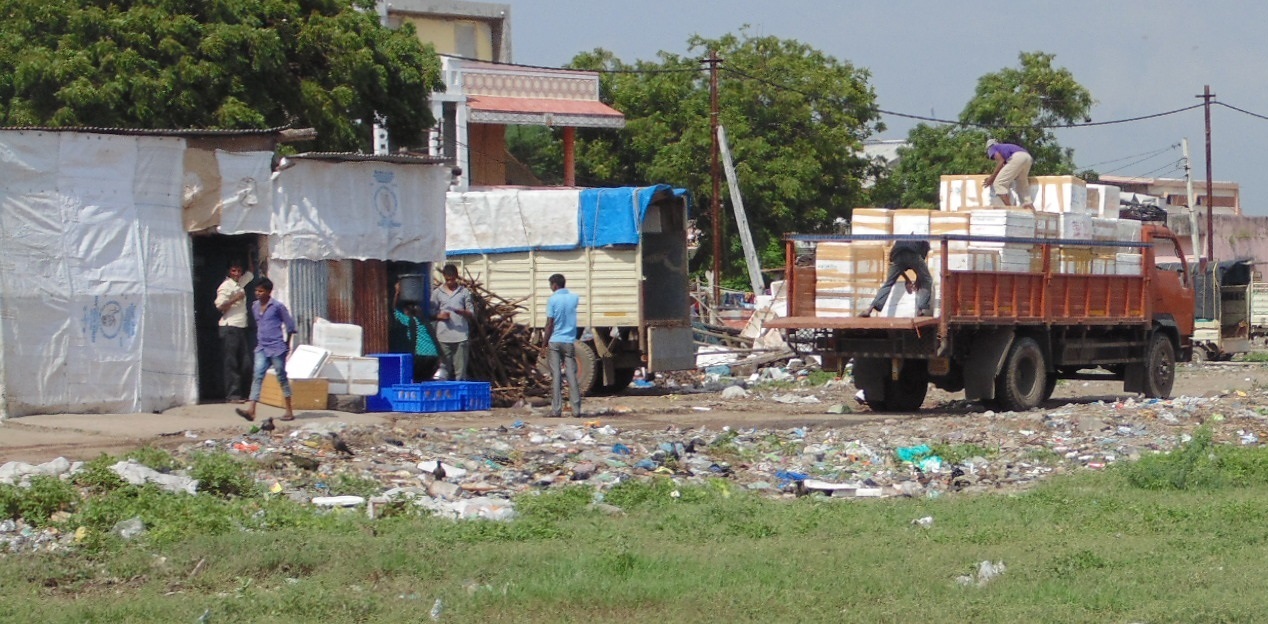
Hilsa ice packed to be transported70% of the income of fisherfolk is from sale of Hilsa
Farcical EIA of proposed Bhadbhut barrage by NEERI
Kamalesh Bhai also points out several lacunae in the Environmental Impact Assessment (EIA) report that National Environmental Engineering Research Institute (NEERI) has prepared for Bhadbhut Barrage. “The entire study has been an absolute farce. First of all none of the local people were aware of any such study going on. It also grossly underestimates the total population of fisherfolk that will be affected by the Bhadbhut dam.” The report considers the total number of fisherfolk residing in 21 villages to be 12,638 based on more than a decade old data from Census 2001.[iv] According to Kamlesh bhai the actual population residing in the estuary region whose livelihood will be affected by barrage is close to 35 to 40 thousand!
SANDRP had sent detailed critique of the EIA to the Gujarat State Environment Impact Assessment Authority before the public hearing for the project held on July 19, 2013. An excerpt from the critique:
“Unclear objectives of the project The objectives of the project stated in the EIA of the project are:
Protection of water quality of Narmada river from salinity due to tidal influence and checking the problems of salinity ingress and deterioration of ground water quality in the upper reaches of Narmada river;
Storage of the regulated release of water from SSP and runoff from free catchment for irrigation, domestic and industrial water supply;
Flood protection of about 400 sq km low lying area covering 17 villages on the left bank of river Narmada;
and Road connectivity between left and right banks, shortening route from Surat/Hajira to Dahej region.
The EIA agency has uncritically accepted these objectives, without assessing if the barrage with low water storage can really fulfill the second the third objective and considering the low salinity level reported by the EIA (mainly based on data provided by the project authorities, again uncritically accepted by NEERI), is the first objective relevant. The fact that the Kalpsar department played such an important role and the fact that it is public knowledge that the barrage is part of the propose Kalpsar project should have been taken note by NEERI. NEERI should have also questioned as to why is this small part of the larger Kalpsar project applying for such piecemeal clearances which is actually in violation of the Supreme Court orders. It should be added here that the Kalpsar project had applied for the TOR clearance from Union Ministry of Env and Forests. The project came up before the MoEF’s Expert Appraisal Committee on River Valley Projects. SANDRP had then sent a letter to the EAC, saying that based on information provided, the project should not be considered for clearance. In its 41st meeting in Sept 2010, the EAC declined to give TOR clearance to the project, saying that the documentation provided are highly inadequate and need to be more holistic and uptodate pre-feasibility report needs to be provided. The project there after has not gone back to EAC.
However, a small part of that same project, the Bhadbhut barrage is now proposed before the Gujarat State Environment Impact Assessment Authority (http://seiaa.gujarat.gov.in/).”
An edited version of letter about the inadequacies of the EIA report sent from Paryavaran Mitra director to Gujarat Pollution Control Board which has been published by Counterview states that the report fails to assess severity of impact on Hilsa and other migratory fishes and instead tries to imply that fishing activity is only a part time employment for fisher community, which is entirely incorrect.[v] The report proposes fish ladder as a mitigation measure with no specific details. Fisherfolk are not impressed. “Tell me madam, have you ever seen a fish climb a ladder?” asks Kamlesh bhai laughing.
While a fish ladder may or may not work (it is not likely to work for Hilsa and other important fish species, it has not worked anywhere in India so far), the fisher folk are not wrong in ridiculing it. Fish ladders have never been taken seriously by the proponents who put them in. Case in point is Farakka Barrage in West Bengal, where too, a fish lock was supposedly made for Hilsa. It has not been operated for over a decade and current officials have no idea that such a thing exists.
Cover Page of the controversial NEERI EIA of Bhadbhut Barrage Project
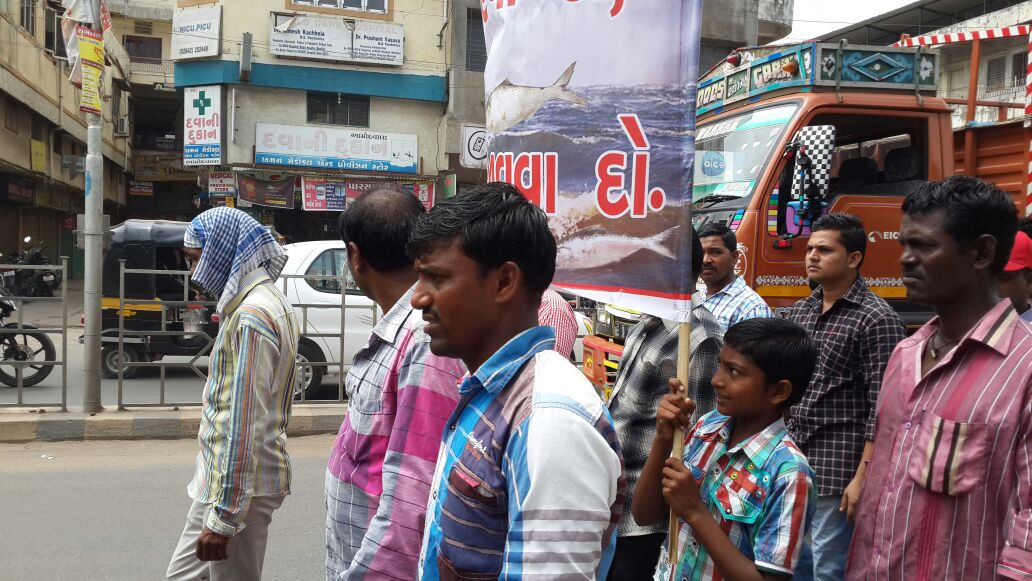
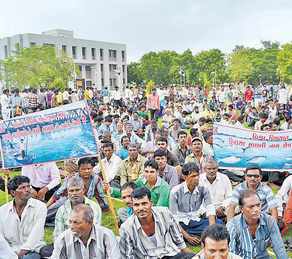
“The NEERI EIA is a complete copy paste job. It has several incidences of plagiarism. It mentions names of places that are found nowhere in this region. This region also comes under PCPIR[vi] project. The PCPIR EIA report does not talk about impact on Hilsa at all!”- Bhupat Bhai adds. “That’s true” says Kamlesh Bhai. “Even after the NEERI completed the report none of the local people had any idea about the project and its impacts. Now we are raising awareness. On 7th July 2014 local fisherfolk organized a protest rally at the District Magistrate office and more than 4000 fisher people were a part of this. This is our fourth rally opposing the project.” When asked if any compensation is being offered for those getting affected by the barrage, I am told none. According to them in the entire argument about the barrage, its impacts etc. there is absolutely no talk about compensating the fisherfolk. They also raised their voices in the public hearing of the project. 1500 farmers and fisherfolk attended the public hearing on July 19 and walked out soon after sharply registering their protest against the proposed project and naming it as “anti-people”.[vii]
Protest March organized on 7th July 2014 (Photo by Kamlesh Madhiwala)
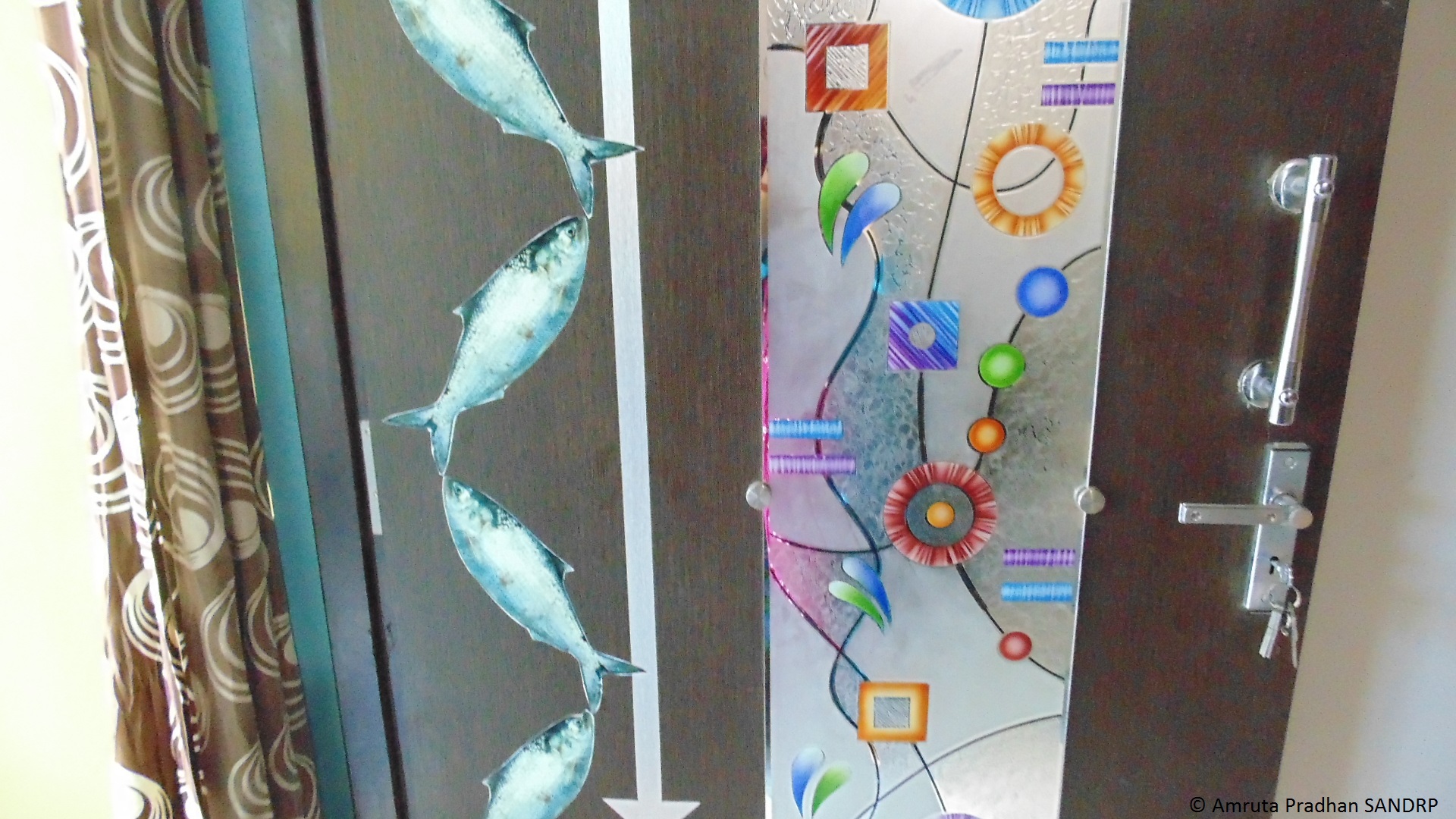
When we arrive at Praveen Macchi’s house, his door is adorned with images of Silvery Hilsa. His family has been involved in fishing from generations. When asked about estuary’s overall condition after SSP he confirms the facts stated earlier by Praveen Bhai and Kamalesh Bhai. “We don’t think water is released from SSP and even if it is, it is so meagre that it is nearly useless. The estuary receives water only when the dam overflows. In 2014 the dam overflowed only once which was as late as September. Other than dam overflow only other source of water is releases from River Bed Power House of SSP, leakage from below the dam wall and some water from downstream streams.” Fish yield of this year is about 30% lower than last year when the estuary received water from dam overflow 4 to 5 times in year. “Now water from SSP has been diverted for hydropower generation. After power generation at Canal Head Power House water is released into Narmada canal instead of river/ estuary.”
Hilsa used as a decorative element
Pressures on Narmada estuary and livelihoods of thousands
When asked as to how does the Hilsa survive without freshwater water released in the estuary, Praveen Bhai explains “As of now Hilsa arrive at least during monsoon as the river stretch of 130 KM holds rain water. If Bhadbhut barrage is built there will be no free flowing river stretch to support fish breeding. Yield of Hilsa will be hard hit and so will be the fishing industry. Entire population dependent on fishing will lose its livelihood.”
If Bhadbhut barrage is built there will be no free flowing river stretch to support fish breeding
Praveen Bhai told me that the fisher people’s cooperative ‘Bhadbhut Matsya Udyog Sahakari Mandali’ is preparing to file a Public Interest Litigation challenging the barrage project. Is livelihood of more than 30000 people getting affected reason enough to argue for stoppage of the project? Will the courts understand this implication? They did not when impact of SSP on fisher people was argued earlier. Let us hope judiciary is more sensitive to the fisher people’s issue this time.
Gujarat Government Map showing Kalpasar and Bhadbhut project locations
Praveen Bhai further informs that the overall salinity of the estuary has gone up due to severely restricted freshwater flow into the estuary. Fish diversity has reduced and riverine fish movement is obstructed due to SSP (Sardar Sarovar Project). Hilsa which would be available till December – January is now seen hardly till September as the salinity levels rise rapidly after monsoon. Says Praveen Bhai: “Narmada has been Hilsa’s favoured habitat. Earlier Hilsa was found in Tapi estuary near Surat as well. But after the Ukai dam was constructed only 2 to 5% of Hilsa arrive at the Tapi estuary. Lives of fisherfolk in the estuary have been devastated. The problem of livelihood of these people became so serious that there are instances where women of the community had to get into prostitution.”
The Narmada estuary is already facing growing pressures from industrial estates. Bharuch District has 13 industrial estates with 137 medium and large scale units of chemicals, textiles, plastics, fertiliser related industries etc. Industrial estate of Dahej which is in close proximity to Bhadbhut releases its untreated effluent in the sea near Bharuch. This is affecting the overall water quality of the estuary. Praveen Bhai points out to a very peculiar phenomenon. A completely different genre of crime has evolved in the industrial estates near Bharuch where youth blackmail the companies when the companies discharge untreated effluent into the sea. The companies, hand in glove with police, bribe the blackmailers for keeping quite. Effluents meanwhile go untreated in the river and sea. This is also true of effluents from Ankaleshwar and other industrial estates. The SSP has worsened this situation due to drastic reduction in freshwater flow that earlier used to dilute the industrial, urban and other effluents.
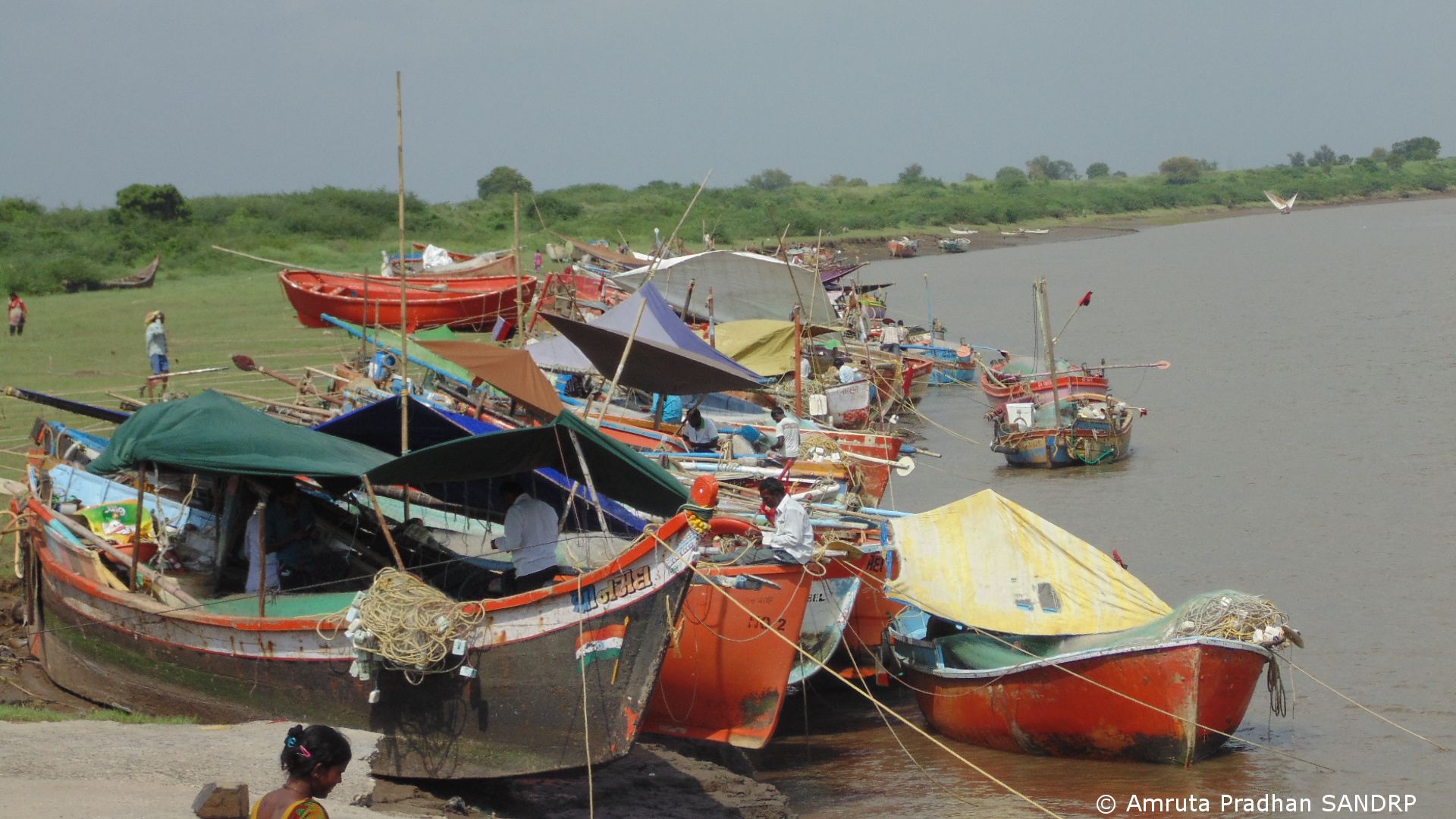
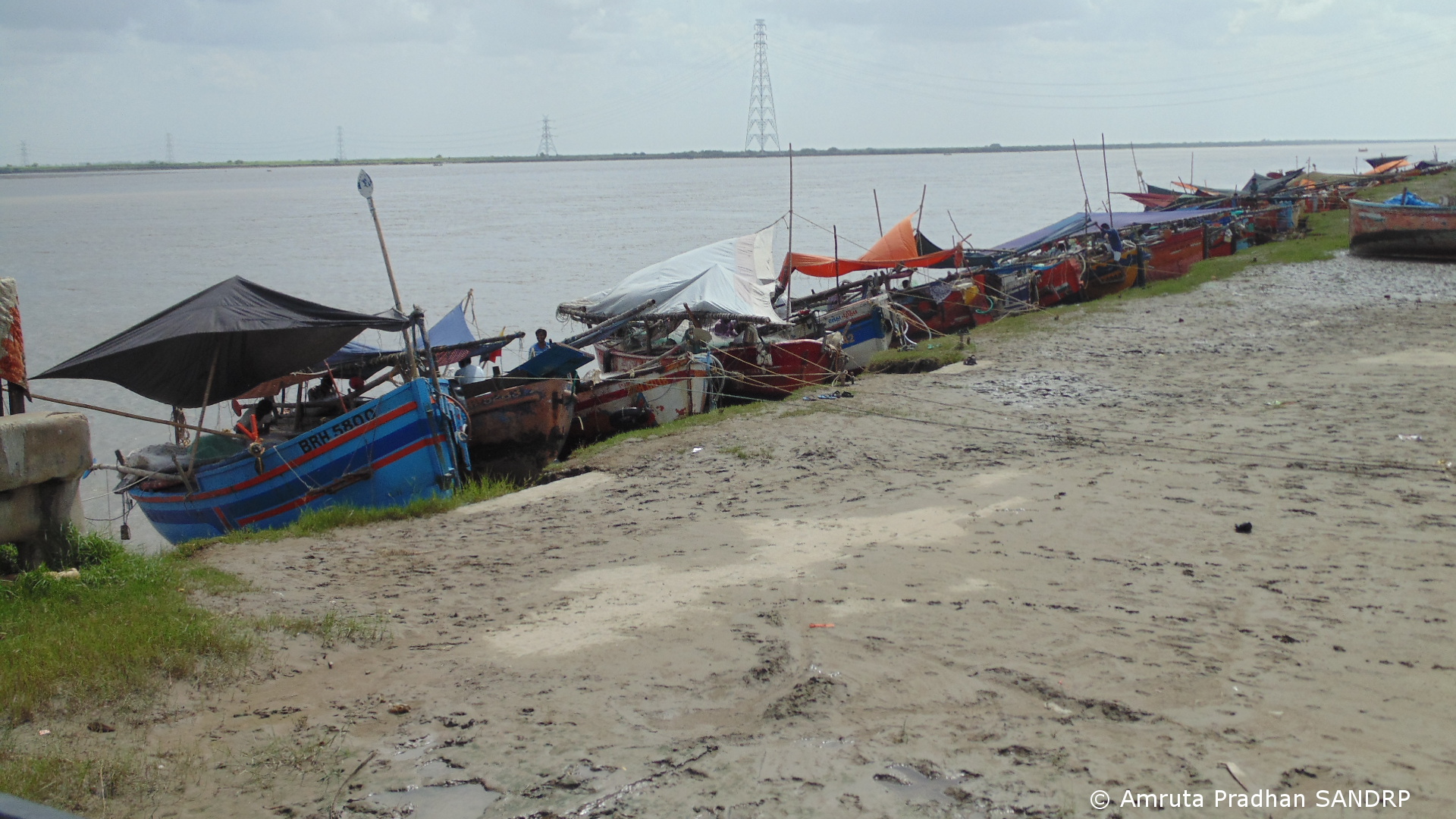
Concerns of fisherfolk We now move towards the banks of Narmada to meet artisanal fisher people there. Boats which can contain upto 5 to 6 people are parked along the banks. Since it is a noon time, hurry burry of fish packing is settling down. One by one tempos from the market are arriving and picking up the packed fish. As we talk with a bunch of fisher people, their worries and concerns tumble out. Several issues emerge while talking to them.
“Government is all set to build a dam destroying our livelihood. As it is government is not extending any kind of support to us river fisherfolk. No bank provides us with loans” one of them speaks.
“Yield of fish has also reduced due to reduced water level of the estuary. Sea water gets contaminated by the untreated effluent that Dahej & other Industrial estates disposes in the sea. This sea water that is highly contaminated with chemicals and heavy metals enters estuary during high tide. This polluted water has also affected the overall fish quality and there is hardly any freshwater from upstream to dilute it because of the dam.Earlier single Hilsa fish used to weigh more than two kilograms. Now it hardly weighs one to 1.25 kgs” says another one.
“With all this polluted water how will the fish grow? It naturally starves” says yet other.
“If Bhadbhut Barrage comes up, Hilsa will no more come here. Our livelihood will be destroyed. Government is not even offering any compensation. No one has been compensated for the impact we have already felt due to the SSP.” They all keep talking anxiously.
They further inform that several farmers in Bharuch who have lost their land in PCPIR project or other industrial estates have shifted to fishing creating more stress in the industry that is already facing a steep decline. Farmers, who are new fisherfolk lack the traditional skills or patience and often fence the estuary and sea with fishing nets in hope of catching Hilsa, which prevents the fishermen’s traditionally used small boats from entering the sea. As they speak, every concern raised is met by a nod by the entire group.
Fishing boats along the banks of river Narmada
Contrary to this scenario the EIA report summary by NEERI states “… the fresh water storage in upstream of the barrage will provide a favourable environment for intensive fresh water fishery and provision of fish ladder with shiplocks would enhance the fishery activities and fetch greater economic benefits to the people.”[viii] Fisherfolk when asked about this conclusion show the other side of the argument. Fisheries department floats tender for fishing in the dam reservoir. Only big contractors can afford to obtain the contracts. “It’s not a job for small fishermen like us. If the dam comes up all these small boats you see will vanish” they say.
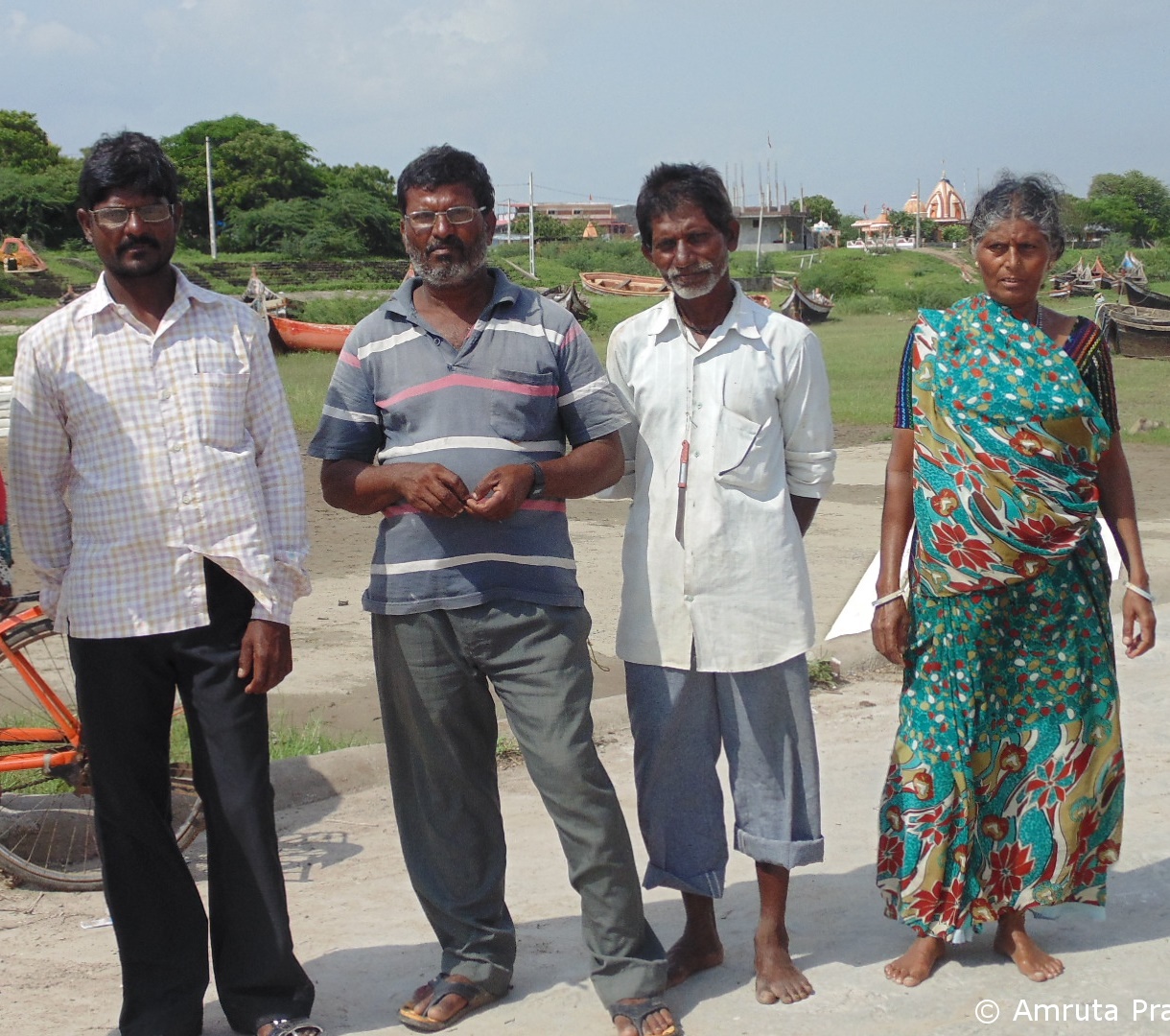
Fisherfolk from Bhadbhut
Other than the threatened livelihood, the fisher families in the estuary are also facing several other issues. Wells of fresh water now contain saline water. Many of them used to rely on Narmada River for drinking water. Since the river has gone dry after SSP, they no more receive drinking water from Narmada River. As the water from the estuary has reduced, the wells which have traditionally been an important source of drinking water are now dry or saline. Villages which are closer to the sea are experiencing saline water and also polluted chemical water ingress. “Many of us are having skin problems because we have to go in the chemical water.” I wonder with fishing industry plagued with so many problems if younger generation is at all willing to continue in the same occupation. When asked about this they tell me that for now the traditional skills is the only real education the younger generation has.
Many of them have protested the project at the public hearing. “We all are opposing the dam. Building dams might to do good for contractors, but what about us? Are we not people?” they ask.
The proposed Garudeshwar Dam on Narmada immediate downstream of SSP will further stop the water flow to estuary as it is designed to pump back to SSP the water released from River Bed Power House. The fisherfolk here do not know about this, nor has the government bothered to tell them or do any impact assessment or prepare any rehabilitation or management plan. The only hope is the petition lying before the National Green Tribunal against the Garudeshwar Dam.
I come back with more questions than answers. Praveen Bhai’s home, with his welcoming door adorned with the silvery Hilsa remains in my thoughts for a long while.
An analysis of the available information on water levels and live storage % during February and March 2014 raises questions marks about the reasons for depletion of water levels in these dams when there was no apparent need. It prime facie seems to indicate that this has been done to generate more electricity in view of impending elections. However, this is likely to threaten water security of the people of Madhya Pradesh and Gujarat during coming summer months. It could also raise difficulties in post summer period if monsoon is deficit as seems to be indicated by the rapidly developing El Nino conditions. In table below we have given these figures for the Sardar Sarovar and Indira Sagar Dams, the biggest dams on Narmada in Gujarat and Madhya Pradesh.
Intake well at Kasrawad. Last intake hole is above the water level Photo: Pancham Choyal, Badwani Bureau chief of Patrika
Level change in SSP and NSP between Feb 6 and April 9, 2014
Project
Particulars
Feb 6
Feb 13
Feb 20
Feb 27
Mar 6
Mar 13
Mar 20
Mar 27
Apr 9
SSP
level m
121.47
120.88
119.8
117.79
117.31
115.62
115.12
113.88
114.82
% live storage
95 (58)
88 (55)
76 (51)
59 (48)
53 (58)
38 (60)
33 (57)
22 (53)
31 (58)
ISP
level m
255.27
254.7
254.38
254.11
253.76
253.49
253
252.5
251.39
% live storage
47 (48)
43 (47)
41 (47)
40 (46)
37 (41)
35 (39)
34 (35)
31 (34)
26 (28)
Note: figures in bracket with those % live storage levels are the figures for % live storage same date last year.
It is clear from the above figures that level and % live storage of water in Sardar Sarovar Project (SSP, on Narmada River in Gujarat, considered Gujarat’s lifeline by Gujarat politicians and government) has drastically reduced from 95% on Feb 6, 2014 to just 22% on March 27, to rise slightly to 31% on April 9. The level last year remained almost constant between 58% and 53% during the same period.
In case of upstream Indira Sagar Project (ISP) in upstream on Narmada River in Madhya Pradesh too the level has been drastically reduced from 47% on Feb 6, 2014 to 26% on April 9, 2014. There was no need for this depletion and water stored could have been of use during summer. Here too it seems level has been reduced to generate more power, again at the cost of water security for people of Madhya Pradesh and Gujarat.
bank of Narmada at Rajghat. Gandhi Samadhi is also being seen in the background Photo: Pancham Choyal, Badwani Bureau chief of Patrika
It should be noted here that the storage gets depleted to the extent water is released from dams for hydropower generation and when water is released from 1200 MW River Bed Power House (RBPH) of SSP, it is not even useful for irrigation. Only water released through the 250 MW Canal Head Power House (CHPH) of SSP goes into canals and can be used for irrigation or water supply.
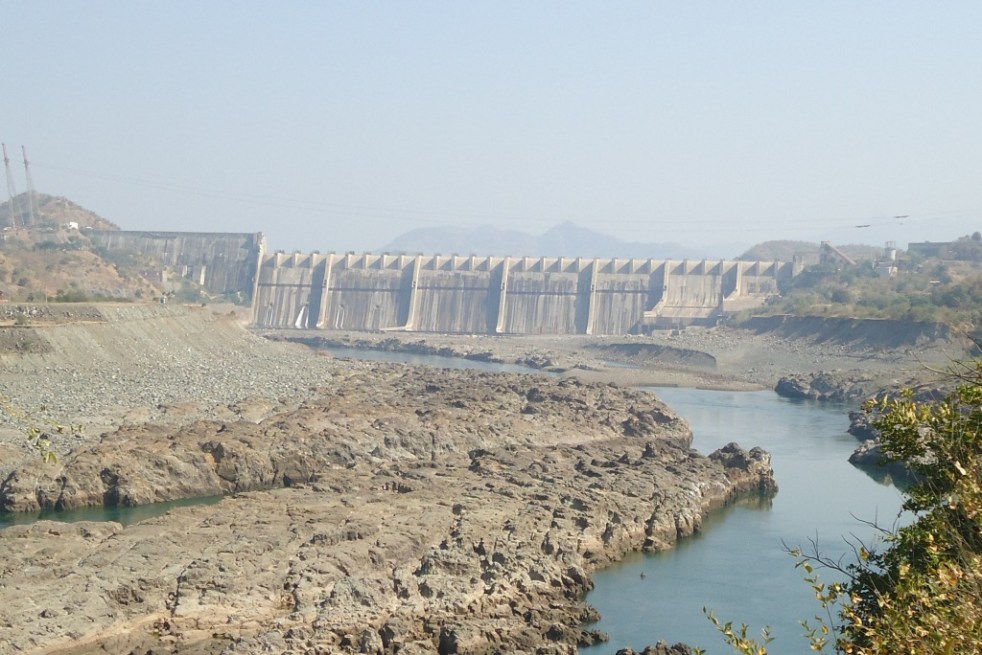
Overflowing Sardar Sarvor Dam in Monsoon 2013: Source: PTI
There was no need for this depletion and considering the impending summer and likelihood of deficit monsoon in view of developing El Nino conditions[1]. It seems the level has been depleted for generating extra electricity in view of ongoing elections, risking the water security for the Gujarat’s drought prone areas in coming summer. It should be disturbing that water level in SSP should reach such low level of 22% by March 27 this year when the monsoon was above average and water level at SSP reached its highest level till date in the monsoon. This mismanagement also punctures the hole in the oft repeated claim of the Gujarat government that Gujarat is suffering as it is not allowed to increase the dam height. If Gujarat cannot use water available at current dam height in optimal way, where is the case for increasing dam height?
Narmada river be between Kasrawad and Rajghat Photo: Pancham Choyal, Badwani Bureau chief of Patrika
Hydropower Generation The figures of electricity generation from these projects (and also Omkareshwar also on Narmada in Madhya Pradesh between ISP and SSP) from the official website of Central Electricity Authority (http://cea.nic.in/monthly_gen.html) for Feb and March 2014 and 2013 are given below.
Project
Power stations
February
March
2014
2013
2014
2013
SSP
RBPH
340.96
51.74
301.61
154.89
CHPH
48.48
17.09
44.3
47.92
Total
389.44
68.83
345.91
202.81
NHDC
ISP
230.76
120.67
242.94
223.21
OHP
106.23
68.08
109.18
116.75
Total
336.99
188.75
352.12
339.96
Note: All figures in Million Units (One Unit is one Kilowatt hour). All figures from Central Electricity Authority Website. The figures for March 2014 are tentative, but the final figures do not change much as past experience shows. RBPH: River Bed Power House; CHPH: Canal Head Power House; OSP: Omareshwar Hydropower Project; NHDC: Earlier known as Narmada Hydroelectric Development Corporation (http://www.nhdcindia.com/ a joint venture of Govt of Madhya Pradesh and NHPC Ltd)
It is clear from these figures that electricity figures at SSP and NHDC hydropower stations have certainly been much higher during Feb-March 2014 compared to the same months the previous year. For SSP, the total power generation during Feb March 2014 was 735.35 Million Units, compared to 271.64 MU during the same period last year, the increasing being huge 171% in 2014 compared to the same in 2013. In case of NHDC stations, the generation during Feb Mar 2014 was 689.11 MU, compared to 528.71 in Feb Mar 2013, increase in 2014 period being 30.33% higher in 2014. Thus it is clear that much higher amount of power has been generated during Feb Mar 2014 at SSP and NHDC stations compared to same period previous month, at the cost of depletion of water level in the SSP and ISP. The power benefits from SSP are shared in the ratio of 57: 27: 16 % for MP: Maharashtra: Gujarat.
While people in Gujarat and Madhya Pradesh are likely to suffer in coming summer and monsoon due to this unjustifiable depletion of these reservoirs, some people are already suffering. For example, as reported by newspapers[2], Badwani city water supply in Madhya Pradesh has already suffered as the water level in the river has gone the lowest intake level. The report says that Badwani does not even get regular electricity to lift water from the river for city water supply. So even as SSP and NHDC power stations are generating extra power, it is not being made available to such small towns. Worse days are in store, it seems. With electricity demand and rates in Feb and March being lower than in summer, it also raises the question as to how prudent it was to generate this power in winter and not in summer when demands and rates of electricity are higher.
As Energylineindia.com reported on April 14, 2014, “in February 2014, the PLF of thermal power plants was at 68.44% against the target of 71.3% on account of weak off-take of power… reason for lower thermal PLF is higher hydro generation. Hydel plants in February 2014 reported a 7.70% higher generation than what was programmed for the month. Hydel power generation is up by a whopping 25.98% in February 2014 as compared to the corresponding period in the previous year.” This also seems to be the case for March 2014. Thus, higher hydro generation during Feb-March 2014 actually led to backing down of thermal power plants, thus the Plant Load Factor of thermal power plans was lower in these winter months when electricity demands are not at peak. However, when electricity demand will be at peak in coming summer, these projects wont have water to generate power! Who will hold the operators of these projects accountable for this questionable decisions?
Reservoir storage at all India level At all India level, Central Water Commission provides storage situation for 85 reservoirs (37 of these reservoirs have hydropower component with installed capacity over 60 MW and total live storage capacity of 111.73 BCM) in its weekly bulletins, these reservoirs have total live storage capacity of 155.05 BCM (Billion Cubic Meters). On Feb 6, 2014, these reservoirs had a healthy 88.934 BCM in live storage, amounting to 57% of live storage capacity. By April 9, 2014 (the latest CWC bulletin), the storage in these reservoirs had dwindled to 59.581 BCM, just about 38% of live storage capacity. We hope these reservoirs are not further depleted in view of ongoing elections.
Not for the first time This is not happening for the first time in India[3]. During 2004 and 2009 elections too reservoir levels were unjustifiably depleted for additional electricity generation and people suffered in following monsoon when there were deficit monsoons. While in case of Narmada dams, the responsible agencies for reservoir operation decisions are state governments, Narmada Control Authority and Union Ministry of Water Resources in case of other dams, Central Water Commission is also responsible.
This again raises the recurring issue of more transparent, accountable and participatory reservoir management, which is completely absent in India. Without such a regime, politicians are likely to use the reservoir water as per their own agendas, to the detriment of the people and economy.
Small temple on the Rajghat Ghat submerged Sardar Sarovar Dam, In the background are Rajghat bridge and Chikhalda village Photo: Pancham Choyal, Badwani Bureau chief of Patrika
ARTICLE IN HINDI TRANSLATED BY REHMAT OF MANTHAN ADHYAYAN KENDRA:
ज्यादा बिजली बनाकर नर्मदा का जलस्तर घटाया
मध्यप्रदेश और गुजरात में पेयजल सुरक्षा खतरे में
सरदार सरोवर और नर्मदा सागर बाँधों के जलस्तर और उनके उपयोगी भण्डारण (प्रतिशत में) के फरवरी और मार्च 2014 के आँकड़ों के विश्लेषण से इन बाँधों का जलस्तर घटाने पर गंभीर सवाल खड़े हुए हैं क्योकि जाहिर तौर पर ऐसी कोई जरूरत नहीं है। प्रथमदृष्टया यह आम चुनाव के मद्देनज़र ज्यादा बिजली उत्पादन के लिए किया जाना प्रतीत होता है। जलस्तर कम किए जाने से आगामी गर्मी में नर्मदा किनारे स्थित मध्यप्रदेश और गुजरात की शहरी आबादियों की जल सुरक्षा खतरे में पड़ने की संभावना है। यदि अल नीनो प्रभाव के कारण बारिश में कमी हुई तो गर्मी के बाद भी जलसंकट बना रह सकता है। इस स्थिति को स्पष्ट करने के लिए नीचे की तालिका में नर्मदा पर गुजरात और मध्यप्रदेश में बने सबसे बड़े बाँधों क्रमशः सरदार सरोवर और इंदिरा सागर के आँकड़े दिए गए हैं।
6 फरवरी से 9 अप्रैल 2014 के मध्य जलाशयों के जलस्तर में बदलाव
परियोजना का नाम
विवरण
6फरवरी
13फरवरी
20फरवरी
27फरवरी
6 मार्च
13मार्च
20मार्च
27मार्च
9 अप्रैल
सरदार सरोवर
जलस्तर, मीटर में
121.47
120.88
119.8
117.79
117.31
115.62
115.12
113.88
114.82
उपयोगी जल भण्डार, प्रतिशत में
95 (58)
88 (55)
76 (51)
59 (48)
53 (58)
38 (60)
33 (57)
22 (53)
31 (58)
इंदिरा सागर
जलस्तर, मीटर में
255.27
254.7
254.38
254.11
253.76
253.49
253
252.5
251.39
उपयोगी जल भण्डार, प्रतिशत में
47 (48)
43 (47)
41 (47)
40 (46)
37 (41)
35 (39)
34 (35)
31 (34)
26 (28)
नोट – उपयोगी जल भण्डार के प्रतिशत वाली पक्ति में कोष्ठक में दिए गए आँकड़े पिछले वर्ष के इन्हीं तारीखों के हैं। इन आँकड़ों का स्रोत केन्द्रीय जल आयोग द्वारा साप्ताहिक जारी किए जाने वाले जलाशयों के स्तर संबंधी अपडेट है। आश्चर्यजनक रूप से 3 अप्रैल 2014 को जारी बुलेटिन में जलाशयों के कोई आँकड़े नहीं दिए गए हैं। इन बुलेटिनों को यहाँ देखा जा सकता है –https://docs.google.com/folderview?usp=sharing&id=0B2IHafYlWNipTm1wVXhXelV4RDg
उपरोक्त आँकड़ों से स्पष्ट है कि सरदार सरोवर जलाशय (नर्मदा पर बने इस बाँध को गुजरात के राजनेता और सरकार गुजरात की जीवनरेखा बताते हैं) का उपयोगी जलभण्डारण 6 फरवरी से 27 मार्च 2014के मध्य 95% से घटकर मात्र 22% रह गया था जो 9 अप्रैल को हल्का सा बढ़कर 31% हुआ है। पिछले वर्ष इसी अवधि में ये आँकड़े 58 से 53% के मध्य स्थिर थे।
नर्मदा के ऊपरी क्षेत्र मध्यप्रदेश में बने इंदिरा सागर जलाशय में भी 6 फरवरी से 27 मार्च 2014 के मध्य जलभण्डारण 47% से घटाकर मात्र 27% कर दिया गया है। इस उपलब्ध जलभण्डारण को गर्मी के दिनों के लिए सुरक्षित रखने के बजाय अनावश्यक रूप से कम किया जा रहा है। ऐसा लगता है कि चुनावी फायदे के लिए अधिक बिजली उत्पादन कर जल भण्डारण में कमी कर मध्यप्रदेश और गुजरात के लोगों की जल सुरक्षा को दाँव पर लगा दिया गया है।
आसन्न ग्रीष्म ऋतु और अलनीनो प्रभाव के कारण अगले मानसून में कमी[i] की आशंका के मद्देनज़र भण्डारित जल में कमी करना उचित नहीं है। ऐसा लगता है कि वर्तमान में जारी लोकसभा चुनाव के कारण अतिरिक्त बिजली पैदा करने हेतु जलाशयों को खाली किया जा रहा है जिससे गुजरात के सूखा प्रभावित क्षेत्रों की जल सुरक्षा खतरे में पड़ गई है। आगामी मानसून में बारिश में कमी या देरी से नर्मदा जल पर आश्रित भोपाल और इंदौर जैसे शहरों में भी जल उपलब्धता प्रभावित हो सकती हैं। हाल ही में जोरशोर से प्रारंभ की गई नर्मदा-क्षिप्रा पाईप लाईन योजना भी नर्मदा में पानी की कमी के कारण अनुपयोगी हो सकती है। यह दुःखद है कि गर्मी का मौसम शुरू होने के पहले 27 मार्च को ही सरदार सरोवर में जलभण्डारण घटाकर मात्र 22% कर दिया गया था जबकि पिछले वर्ष पूरे देश में औसत से अधिक बारिश हुई है और मानसून में सरदार सरोवर जलाशय अपने उच्चतम स्तर तक भर गया था।
गुजरात सरकार दावा करती है कि सरदार सरोवर की ऊँचाई नहीं बढ़ाए जाने के कारण उनका राज्य पीड़ित है। लेकिन सरदार सरोवर के पानी के इस कुप्रबंधन से इस दावे की हवा निकल गई है। यदि गुजरात सरकार बाँध की वर्तमान ऊँचाई पर उपलब्ध जलभण्डार का ही महत्तम उपयोग करने में ही सक्षम नहीं है तो फिर बाँध की ऊँचाई बढ़ाने का सवाल ही कहाँ उठता है?
पनबिजली उत्पादन – केन्द्रीय विद्युत प्राधिकरण (http://cea.nic.in/monthly_gen.html) द्वारा जारी इन परियोजनाओं (औंकारेश्वर परियोजना सहित) से फरवरी-मार्च 2014 और 2013 के बिजली उत्पादन के आँकड़े निम्नानुसार है –
नोट-आँकड़े मिलियन यूनिट में है (एक यूनिट एक किलोवाट घण्टा के बराबर होता है)। सारे आँकड़े केन्द्रीय विद्युत प्राधिकरण की वेबसाईट से लिए गए हैं। मार्च 2014 के आँकड़े अनंतिम है लेकिन पिछले अनुभवों से स्पष्ट है कि अंतिम आँकड़ों में भी कोई खास बदलाव नहीं होता है। नर्मदा हाईड्रोइलेक्ट्रिक डेवलपमेंट कार्पोरेशन (http://www.nhdcindia.com/ )मध्यप्रदेश सरकार और राष्ट्रीय पनबिजली निगम का संयुक्त उपक्रम है।
उपरोक्त आँकड़ों से स्पष्ट है कि सरदार सरोवर और एनएचडीसी (नर्मदा हाईड्रोइलेक्ट्रिक डेवलपमेंट कार्पोरेशन) के पन बिजलीघरों से पिछले वर्ष के फरवरी-मार्च महीनों की अपेक्षा इस वर्ष के फरवरी-मार्च महीनों में विद्युत उत्पादन काफी अधिक था। सरदार सरोवर परियोजना से फरवरी-मार्च 2014 में 735.35 मिलियन यूनिट बिजली का उत्पादन किया गया जबकि पिछले वर्ष इसी अवधि में 271.64 मिलियन यूनिट था। इस वर्ष बिजली उत्पादन में 171% की भारी वृद्धि की गई है। एनएचडीसी के बिजलीघरों से फरवरी-मार्च 2014 में 689.11 मिलियन यूनिट बिजली उत्पादित की गई जबकि पिछले वर्ष इसी अवधि में 528.71 मिलियन यूनिट बिजली का उत्पादन किया गया था। इस प्रकार पिछले वर्ष की अपेक्षा यहाँ भी 30.33% बिजली उत्पादन बढ़ाया गया है। इस प्रकार स्पष्ट है कि सरदार सरोवर और एनएचडीसी के बिजलीघरों से इस वर्ष फरवरी-मार्च में पानी के भण्डारण की कीमत पर बहुत ज्यादा बिजली उत्पादन बढाया गया है। सरदार सरोवर से उत्पादित बिजली का लाभ मध्यप्रदेश, महाराष्ट्र और गुजरात को क्रमशः 57, 27 और 16% के अनुपात में मिलता है।
हालांकि जलभण्डारण में इस अनुचित कमी के कारण मध्यप्रदेश और गुजरात के लोग तो आगामी गर्मी और मानसून में प्रभावित होने वाले हैं ही लेकिन कुछ तो अभी से प्रभावित हो चुके हैं।[ii] सरदार सरोवर जलाशय के स्तर में अचानक कमी कर दिए जाने से बड़वानी की जलप्रदाय व्यवस्था बुरी तरह प्रभावित हुई है। बिजली की कटौती के कारण वैकल्पिक व्यवस्था में भी परेशानी आ रही है। सरदार सरोवर परियोजना और एनएचडीसी द्वारा भारी मात्रा में उत्पादित बिजली का लाभ भी बड़वानी जैसे छोटे कस्बों को नहीं मिल रहा है। लगता है आगे आने वाले दिन और अधिक मुश्किलों भरे होंगें। फरवरी-मार्च महीने में बिजली की माँग और राष्ट्रीय स्तर पर इसकी दरें गर्मी के दिनों के मुकाबले काफी कम होती है। यहाँ यह उल्लेखनीय है कि खेती में बिजली की माँग अभी तक शुरू नहीं हुई है। कपास की अगेती फसल (early crop)की बुआई मई के पहले सप्ताह से शुरू होती है और पानी की उपलब्धता के आधार पर जून के पहले सप्ताह तक चलती है। ऐसे में सवाल उठता है कि माँग और दरों में कमी के दौर में बिजली का भारी उत्पादन कौनसी बुद्धिमानी है?
राष्ट्रीय स्तर पर जलाशयों में भण्डारण – केन्द्रीय जल आयोग अपने साप्ताहिक बुलेटिन के माध्यम से राष्ट्रीय स्तर पर 85 जलाशयों (इनमें से 37 जलाशयों, जिनकी भण्डारण क्षमता 111.73 करोड़ घनमीटर है, में 60 मेगावाट से अधिक का पनबिजली घटक भी शामिल है।) के भण्डारण की स्थिति के बारे में जानकारी उपलब्ध करवाता है जिनकी कुल भण्डरण क्षमता 155.05 करोड़ घनमीटर है। 6 मार्च 2014 को इन जलाशयों में 88.934 करोड़ घनमीटर यानी कुल भण्डारण का 57% उपलब्ध था। लेकिन 9 अप्रैल आते तक भण्डरण मात्र 59.581 करोड़ घनमीटर यानी कुल भण्डारण का 38% ही बचा था। उम्मीद है कि ये इन जलाशयों का भण्डारण अब और चुनावी फायदों के लिए घटाया नहीं जाएगा।
ऐसा पहली बार नहीं हुआ – चुनावी लाभ के लिए ऐसा पहली बार नहीं हुआ है।[iii] वर्ष 2004 और 2009 के आम चुनावों के दौरान भी अतिरिक्त बिजली उत्पादन के लिए अनुचित तरीके से जलाशयों को खाली किया गया था और अगले मानसून में कमी के कारण लोगों को इसका खामियाजा भुगतना पड़ा था। नर्मदा पर बने बाँधों के मामले में जलस्तर का नियमन राज्य सरकारें, नर्मदा नियंत्रण प्राधिकरण और केन्द्रीय जल संसाधन मंत्रालय द्वारा किया जाता है। अन्य बाँधों के मामले में केन्द्रीय जल आयोग भी जिम्मेदार होता है।
अधिक पारदर्शी, जवाबदेह और सहभागी जलाशय प्रबंधन, जो भारत में नदारद है, का बारंबार उठने वाला सवाल यहाँ फिर उठता है। जब तक व्यवस्था में सुधार नहीं होता राजनेता जलाशयों के पानी का अपने एजेण्डे के अनुसार उपयोग करते रहेंगें और आम देशवासी और देश की अर्थव्यवस्था इसकी कीमत चुकाने को मजबूर रहेंगें।
It seems large parts of mainstream national media have gone underground these days. If you view most of the English and some Hindi news channels or most of the English and Hindi newspapers, you suddenly find proliferation of reports favouring Mr Narendra Modi and BJP. The repeated highlighting of the doctored pre poll analysis, without attempt at in-depth analysis or investigation into the credentials of the agencies doing such predictions is only one troublesome part. But even in reporting of the news, there is a clearly discernable pro-BJP tendency and an attempt to black out or under report or mis-report the news surrounding BJP’s rivals, particularly the news around Aam Admi Party (AAP). This was most evident in reporting of AAP’s trip to Gujarat in first week of March 2014.
There will be no doubt to any objective viewer that AAP’s trip punctured the well-crafted balloon of Gujarat’s development image. To many Gujaratis like me, this was not such a big breaking news. But strangely, the media that is supposed to report realities in an objective manner, should have been happy reporting this significant development. Arvind Kejriwal’s hour long speech in Ahmedabad at a hugely attended meeting should have been reported extensively in the media. Strangely, large parts of the mainstream media (both print and electronic) almost blacked this out.
This no doubt reflected poorly on the media that has been accepting the claims of Modi and BJP as gospel truths, since an independent media should have exposed the reality of these claims on its own through trips like the one AAP members did. The speech in Ahmedabad on March 8, 2014 was a good opportunity for the media to correct their own failure. In stead of using that opportunity, by not reporting or under reporting or mis-reporting, the media has further discredited itself.
It reminds one of an episode in Gujarat not long ago. “One morning some years ago, Gujarat’s residents found a newspaper on their doorsteps. They hadn’t subscribed to it, and it carried a vaguely familiar masthead. It was called Gujarat SatyaSamachar, to make it resemble the state’s largest circulated newspaper, Gujarat Samachar. It was produced by Gujarat’s information department (a portfolio held by chief minister Narendra Modi) and contained reports of the state government’s achievements”, wrote former Divya Bhaskar (Gujarati edition of paper from Bhaskar group) editor Aakar Patel in his column in Mint on March 1, 2014.
The reason Gujarat government resorted to Gujarat Satya Samachar was “belief was that the local media was either suppressing stories about government successes or was critical of Modi to the point of antagonism”. The Gujarat Satya Samachar did not run much beyond a couple of issues, since Gujarati media quickly fell in line, the way government wanted. In fact, this episode should not give a misleading picture that Gujarati media was depicting the reality of Gujarat’s development before the government resorted to Gujarat Satya Samachar. Far from it.
While traveling through various parts of Gujarat, I have seen frustration of the aam Gujarati about the way the state is ruled over the last decade and more. Repeatedly, common people on the street have told me, during my numerous trip in the state, about corruption, break down of the regular basic facilities like schooling (everyone seems to have to go for tuitions and tuition classes, “then what are the schools for?” as one frustrated autorikshaw wala told me) or electricity or water and pro-big-industries bias of the state establishment. Intellectuals and independent observers have talked about the huge gap between claims of the Gujarat government and reality for long.
Ahmedabad is supposed to be shining with Sabaramati river front development, but if you go a dozen kilometers upstream or downstream you realize that this is just for the benefit of the real estate developers of the city. The state of the river elsewhere is as bad as Yamuna in Delhi. Even the water you see in Sabarmati flows in it through a fraud. This water is from Narmada project and not a drop from it was planned or allocated for Ahmedabad city or Sabarmati River. The project was proposed and justified for drought prone areas of Kutch, Saurashtra and North Gujarat. They are not getting this water, in stead farmers of Saurashtra are fighting FIRs and cases for using Narmada water! Farmers everywhere are feeling discriminated when the state government favours big industries at their expense and without transparency or due justice or their participation. The tribal belt is not only neglected, it is facing prospects of more and more displacement and deforestation in the name of dams, river linking projects and industrial zones and corridors.
Narmada Waters flowing unused in the Rann of Kutch, harming the ecosystem and saltpan workers livelihoods Photo: Counterview.net
While traveling through the tribal areas near Sardar Sarovar dam, Savitaben Tadvi of Indravarna village told us about the repression they are facing while peacefully opposing the Garudeshwar dam on Narmada river, which has neither any valid approval nor any impact assessment or consent from the affected villages in the upstream or downstream. Lakhan Musafir of Umarva village took us to the washed out portion below the Sardar Sarovar dam, including the viewers park, about which there is so little information in public domain. Rohit Prajapati of Paryavaran Suraksha Samiti, showing the proposed site of the statue of Unity, publicized as world’s highest statue, just downstream of the Sardar Sarovar Dam, said how the foundation stone was laid on Oct 31, 2013 by arresting the peacefully opposing tribals, but that project neither has any impact assessment, nor any of the statutorily required approvals. As Nandini Oza, after traveling for over a thousand kilometers in Gujarat recently said, “You can actually smell development at Vapi, Ankaleshwar!”
Pollution of Damanganga at Vapi Photo: TehelkaProtest against the Bhadbhut Barrage also on Narmada Photo: Counterview.net
BJP’s prime ministerial candidate Narendra Modi, who as a chief minister, resorted to Gujarat Satya Samachar to show slightly critical Gujarati media its place and succeeded in arm-twisting them, has been resorting to less than Satya in his electioneering. Just to illustrate, during his trip to North East, he did not mention his support for either large hydro projects or inter linking of rivers, which are facing huge opposition in Assam, Arunachal Pradesh and other states. But during his speech in following week on February 26, 2014 in Madhya Pradesh, he talked about the North East region being “heaven for hydro power generation”. In that same state of Madhya Pradesh, his party chief Minister flashed full page advertisements (at public expense) for three straight days about Narmada Kshipra link as harbinger of the ILR dream of former prime Minister Atal Behari Vajpayee. In reality it is just a pipeline water supply project with questionable viability and justifiability, without even impact assessment or participation of the people of the Narmada or Malwa region. There is already opposition to the project from among the farmers of the Narmada Valley.
There are others who have taken an objective view of Gujarat story. Revealing research by two professors of British Columbia, Canada about GUJARAT GROWTH VS DEVELOPMENT recently[1] showed: “This is a perplexing picture of development. Gujarat has done so much better in terms of growth and so much worse in terms of development than other states. Why has the fast growth not translated into meaningful development? Finally, it is the grassroot-level institutions that run schools, health clinics, bring water and sanitation to households, and bring the fruits of growth to the multitudes. Could it be that the centralised model of governance that works well for big investment projects does not work as well for grassroot institutions? Or, is this high growth with low development model indicative of the priorities of the government of Gujarat? Or is it something else altogether? It would be good to know the answer.”
Protest against the illegal Garudeshwar Weir Photo: Counterview.net
The trouble is, large part of mainstream media has mostly blacked out all this critical news. This situation is no doubt very bad for Indian democracy. As a senior journalist from financial paper told me, whenever there is extraordinarily positive report about any company or party, first question that arises is, how much has the reporter been paid to write such a story! Media should be wary of at least such a perception.
[7] Why the growth fundamentalist THE ECONOMIST refused to back Modi: “But for now he should be judged on his record—which is that of a man who is still associated with sectarian hatred. There is nothing modern, honest or fair about that. India deserves better.” See: http://www.economist.com/news/leaders/21600106-he-will-probably-become-indias-next-prime-minister-does-not-mean-he-should-be-can-anyone?fb_action_ids=10202394265351839&fb_action_types=og.likes&fb_ref=scn%2Ffb_ec%2Fcan_anyone_stop_narendra_modi_
[8] http://indiatogether.org/could-modi-be-a-development-disaster-government by Ashish Kothri
[9] http://www.ndtv.com/elections/article/election-news/blog-gujarat-s-development-pre-dates-modi-considerably-505647?pfrom=home-topstories by Reetika Khera, Development Economist at IIT Delhi
[14] “CAG reports and data on economic and social development from various sources make it evident that the much-touted “Gujarat model” of development is non-inclusive, socially divisive and highly ineffective in key areas.”
By ATUL SOOD and KALAIYARASAN A.” Gujarat Model: Fiction and Facts: Frontline Cover Story, April 4, 2014: http://www.frontline.in/cover-story/fiction-and-facts/article5795324.ece?ref=sliderNews (needs registration to get full story)
[16] “To sum up, the “Gujarat model” story, recently embellished for the elections, is misleading in at least three ways. First, it exaggerates Gujarat’s development achievements. Second, it fails to recognise that many of these achievements have little to do with Narendra Modi. Third, it casually attributes these achievements to private enterprise and economic growth. All this is without going into murkier aspects of Gujarat’s experience, such as environmental destruction or state repression.” From Hindu article by Jean Dreze, See: http://www.thehindu.com/opinion/op-ed/the-gujarat-muddle/article5896998.ece
[17] Another warning from eminent people against voting for Narendra Modi for Prime Minister: http://www.theguardian.com/commentisfree/2014/apr/10/if-modi-elected-india-future-gujarat
Letters have been sent by some eminent citizens and activists of Gujarat to the Union Ministry of Environment and Forests and Gujarat Environment Impact Assessment Authority that the massive Gujarat Project of setting up world’s tallest statue is being taken up by the Gujarat government without social or environmental impact assessment, without necessary public consultation process and without clearance under the Environment Protection Act 1986, Environment Impact Assessment of 2006 and also wildlife protection Act of 1972. The necessary permission from the Environment and Rehabilitation Subgroups of the Narmada Control Authority has also not been taken, nor have the party states been taken into account. The Tourism project involves massive constructions in the middle of the eco-sensitive river, just 3.2 km downstream from the Sardar Sarovar Dam and Shoolpaneshwar Sanctuary. Given below is the letter to sent to the Union Minister of State (Independent Charge) Mrs Jayanti Natarajan and secretary, Union Ministry of Environment and Forests. Similar letter has gone to Secretary, Union Ministry of Water Resources since he is the ex-officio chairman of the Narmada Control Authority. Another letter has gone to the Gujarat state EIA authority and concerned state government agencies.
Considering the importance of this issue, SANDRP is happy to share it on our blog, SANDRP Coordinator is also a signatory to the letter.
7 November 2013
To,
Dr V. Rajagopalan
The Secretary
Ministry of Environment & Forests
Government of India
Paryavaran Bhavan, CGO Complex, Lodhi Road,
New Delhi – 110 003.
Sub: To seek detailed environmental scrutiny of project called ‘Statue of Unity’ planned inside Narmada River, 3.2 Kms. downstream of Sardar Sarovar Dam and Shoolpaneshwar Sanctuary by a joint venture of Government of Gujarat and a trust – ‘Sardar Vallabhbhai Patel Rashtriya Ekta Trust’ (SVPRET) and to immediately stop all construction activity in the region.
Dear Sir,
We would like to bring to your attention that work on a project that proposes to build the world’s largest statue in the form of ‘Statue of Unity’ near Sardar Sarovar Dam in the river downstream from the dam, just 3.2 km from the Shoolpaneshwar Sanctuary, in eco-sensitive zone and involving massive infrastructure (see annexure) has started work without legally mandatory environment clearance, environment and social impact assessment or any public consultation process.
This is clearly illegal, in violation of the Environment Protection Act, 1986 and EIA notification of September 2006 and a number of NGT and Court orders about such massive kind of construction on the riverbed. On 31 October 2013, the foundation stone was laid for the project amidst huge fanfare and media attention. Tenders have also been floated. Even the work for the Garudeshwar weir, proposed about 12 km downstream of the Sardar Sarovar Dam, began without any social or environmental impact assessment, public consultation and environmental clearance from the Environmental Sub Group (ESG) of Narmada Control Authority’s (NCA).
The website http://www.statueofunity.in/ clearly state the purpose of tourism and involvement of the ‘Sardar Vallabhbhai Patel Rashtriya Ekta Trust’ (SVPRET) to build ‘Statue of Unity’, 3.2 km downstream of the Sardar Sarovar Dam inside the Narmada River on an islet called Sadhu bet.
“A 13km. long water body (pond) will create an excellent tourist spot with available infrastructure on both the banks.
The Statue of Unity is planned to be erected in the river bed on downstream of the main dam in the Garudeshwar Weir pond. A permanent standing water pool in and around the Statue of Unity will be created by Garudeshwar Weir, which will enable boating activity around the statue.” (Emphasis added.)
The estimated cost of the project is more than Rs. 2,500/- corers (Rs 2063 crores is the cost of “DESIGN, ENGINEERING, PROCUREMENT CONSTRUCTION, OPERATION AND MAINTENANCE OF THE STATUE OF UNITY D/S of Sardar Sarovar Dam, Village Kevadia Ta. Nandod, District of Narmada Gujarat State, India” as per tender notice, see: http://www.statueofunity.in/tendernotice.html). The Government of Gujarat website (http://www.statueofunity.in/) clearly state that “A monument, that will not just be a mute memorial like the rest, but a fully functional, purpose-serving tribute that will boost tourism and facilitate development in the surrounding tribal areas” and will involve huge infrastructure as described in the Annexure downloaded from the official website.
The key issues that beg immediate scrutiny is as follows:
(1) The project clearly needs environment clearance under the EIA notification of September 2006, but has not applied for or obtained the clearance at any stage.
(2) The Shoolpaneshwar Sanctuary boundary is touching the Sardar Sarovar Reservoir (as a part of the Environmental Protection measures of the Sardar Sarovar Project, the earlier Dhumkal Sloth Bear Sanctuary was extended to meet the reservoir boundaries and is called Shoolpaneshwar Sanctuary.) Since the statute is only 3.2 kms from the Sardar Sarovar Dam, it is certainly near by Shoolpaneshwar Sanctuary.
(3) The Project involves construction in the river bed and proposed reservoir, close to sanctuary in eco-sensitive zone, and hence will have serious impacts on the ecology and environment. Hence, and EIA and EC is crucial.
(4) The project will affect the downstream river, its biodiversity, people and livelihoods and other related aspects.
(5) A comprehensive assessment of the environmental and social impacts of the ‘Statue of Unity’ and its contribution to the cumulative impact of all the projects and activities in the area has not been done.
(6) The project also needs public consultation, but none has happened so far.
(7) During the construction of the Sardar Sarovar dam due to hard rock digging, the seismic area already carries the burden of artificial activity in the bed rock and added load in what is deemed geologically fault line area. Public reports on geotechnical and geological studies on the proposed site have raised issues of structural stability as well as safety. This cannot be taken casually by authorities. The seismic hazard analysis claimed to have been done by the Gujarat Government’s in-house “Institute of Seismological Research” (http://www.statueofunity.in/execution.html#sthash.jEBrofSN.dpuf) or the Geological and Geotechnical investigation commissioned to another government institute WAPCOS cannot be considered credible unless peer reviewed and put in public domain.
In view of the above facts on record, we demand that:
Direct the Government of Gujarat to submit application for environment clearance and till that is obtained, not to do any work related to the project.
Direct the Government of Gujarat to immediately stop planned project called ‘Statue of Unity’ and direct them to stop all other activities related to the ‘Statue of Unity’.
Declare the action – of the foundation stone installation on 31 October 2013 for the project called ‘Statue of Unity’ – of the Chief Minister of Gujarat State as illegal, in violation of the EIA notification of September 2006 and the Environment Protection Act, 1986.
We will look forward to your urgent action and also point wise response.
Stepping UP TO BUILD HIGH. Stepping ahead to THE FUTURE.
The Statue of Unity will be a naturalistic and historically accurate representation of Sardar wearing characteristic garments in a walking pose.
The rich bronze cladding on the Statue gives it a marvelous look
World’s fastest elevators to keep the visitor’s tour engaging
The public three-level base of the Statue – exhibit floor, mezzanine and roof – contains the Memorial Garden and a large continuous exhibit hall that will be developed as a visitor attraction focusing on the contributions of Sardar Vallabhbhai Patel
The observation deck at 500ft can accommodate 200 people at a time. The panoramic view from this level will enable visitors to see the beautiful Satpuda & Vindhyachal mountain ranges, the 256kms long Sardar Sarovar Reservoir and the 12kms long Garudeshwar Reservoir
Access to the statue is via boat ride (3.5kms)
An elaborate Gallery for a massive panoramic view of the World’s largest irrigation dam, the river and the hilly terrain, and an illustrious sight of Arabian Sea
A state-of-the-art Underwater Aquarium
A large modern canopied public plaza, overlooking the river and the Statue, will have scrumptious food stalls, ornate gift shops, retail kiosks and other visitor amenities
The project would include:
Museum & Audio Visual Gallery:
The Statue of Unity Project will also include a unique museum and audio-visual department depicting the life and times of Sardar Vallabhbai Patel.
A Laser, Light and Sound show:
A Laser, Light and Sound show on the efforts of Unification of India.
Research Centre:
A research centre dedicated to the research and development of subjects close to Sardar Vallabhbhai Patel’s heart like Good Governance and Agriculture Development. Here, subjects like Water Management and Tribal Development will also be studied and researched.
A Monumental Lift:
A heavy-load open lift with a panoramic view will be built alongside the Statue of Unity. Visitors will be able to rise up to the height of the structure’s head, walk into a viewing gallery and enjoy a panoramic view of the Sardar Sarovar Nigam project and the surrounding region from an astounding height of close to 400ft.
Hospitality & Entertainment:
Refreshment areas like restaurants and recreational spots to make the project area an attractive tourist spot, thus facilitating tourism and employment for the surrounding tribal region.
Ferry Services :
The statue and surrounding area will be accessed by special boats to avoid vehicular traffic and pollution
Sardar Patel brought the nation together and this tribute, the Statue of Unity, will bring the country national pride. Plans will be laid for convention and training centres, development and formulation of tourism plan and provision of technical and managerial assistance for bids to invite EPC contract.
The project site will be connected with modern connectivity infrastructure such as expressways, improved rail system and helipads
Through scientific area planning, clean industries will be located around the project site
Research facilities in the area of biotechnology, clean energy and ethnic crafts will generate white collar jobs in this area
Location and development of educational institutions in the areas of agriculture, animal husbandry, pisciculture will generate an educational and skill development complex to support economic activity in the region
Development of tourism infrastructure to support MICE – Meetings, Incentives, Conferences and Exhibitions; which will generate huge livelihood opportunities for the local tribal population






 SANDRP


