Dams · Groundwater

Ground Water India 2016: Plethora of petitions, but no effective action

The year has seen many news reports about national and global water bottling brands abstracting groundwater without valid licenses. In the wake of severe drought, thermal power plants have been criticized for aggravating the water crisis. Reports have suggested that many new thermal power plants are proposed to be built in already water scarce regions. This brief report also covers some judicial orders on this subject.

Continue reading “Ground Water India 2016: Plethora of petitions, but no effective action”

Groundwater · Maharashtra

Maharashtra Farm Ponds: accelerating groundwater exploitation, rather than harvesting rain?

Farm ponds dotting the agricultural fields immediately grab your attention as you enter Hiwargaon Pawasa – a small village of about 1500 population in Sangamner Taluka of Ahmadnagar District. The village is located just off NH-50, the national highway connecting Pune and Nashik. Farm ponds start to appear as soon as you turn east from NH-50 (which broadly runs North South) to head towards Hiwargaon. Nearly every farm, small or big, has a plastic lined farm pond. Hiwargaon Pawasa village alone has some 300 odd farm ponds.

I am here to see how these small scale irrigation facilities now set to be implemented on massive scale through the country are performing on ground. Continue reading “Maharashtra Farm Ponds: accelerating groundwater exploitation, rather than harvesting rain?”

Dams · DRP News Bulletin

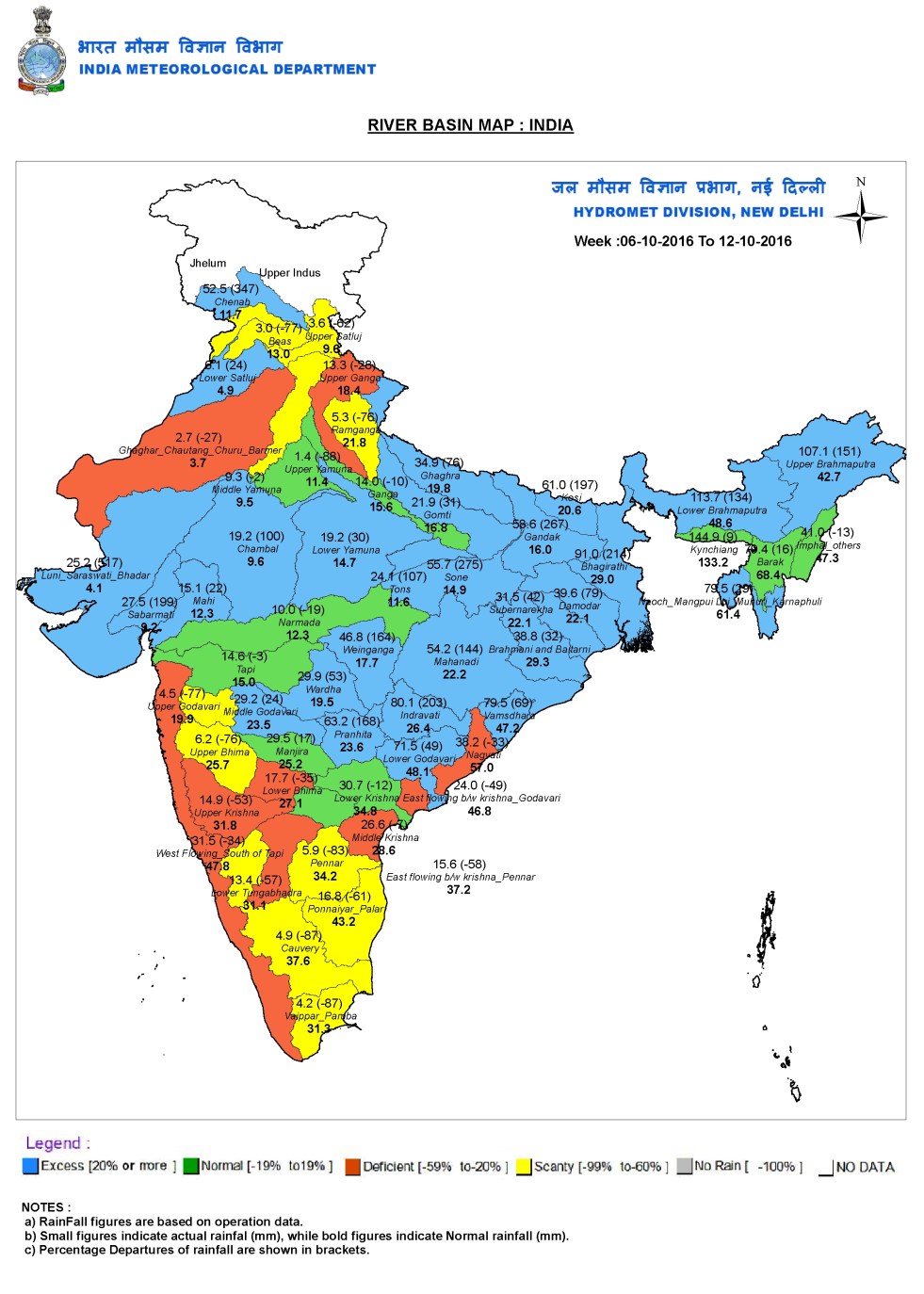
DRP: 17 Oct 2016 (IMD’s River Basin Rainfall Maps Useful But Needs Improvement)

SANDRP Blog IMD’s River Basin Rainfall Maps Useful But Needs Improvement We have noticed during just concluded South West monsoon season that IMD has started a new and welcome feature in rainfall data reporting. The Data is available in maps, on daily, weekly and seasonal basis. We are not sure when this practice started, we noticed it only during 2016 monsoon season. This is most welcome development, since getting rainfall data at basin level is most appropriate and useful, since basin is the hydrological unit that will experience the impact of rainfall or lack of rainfall in the basin, in form of floods or droughts. There a number of limitations as of now. We hope IMD will take necessary steps to remove these limitations and improve the availability and access of basin wise rainfall maps and data in coming years.

Continue reading “DRP: 17 Oct 2016 (IMD’s River Basin Rainfall Maps Useful But Needs Improvement)”
Agriculture · Dams · Irrigation · Maharashtra · Marathwada

This is the time to protect Pulse Farmers in Marathwada

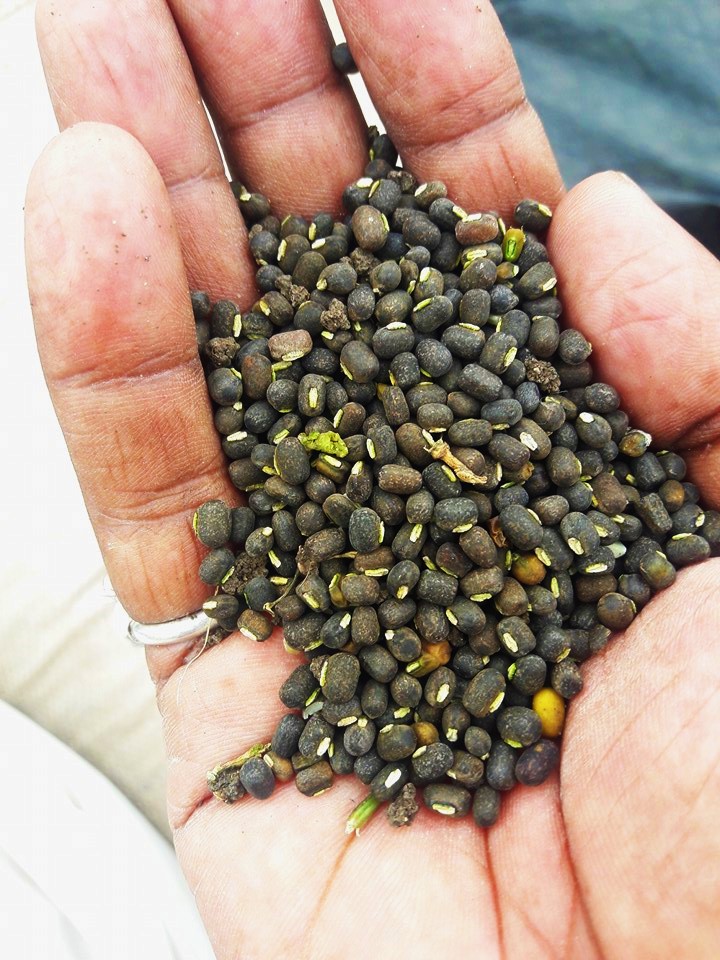
I have harvested Moong (green gram) from my farm, now I’m harvesting Udad (black gram). Their price is crashing each day…I may not get even the Minimum Support Price (MSP)…But I’m not supposed to care about the price… its solely the farmer’s responsibility to reduce inflation and make India a superpower.”

…says Ashok Bhau, a dry land farmer dependent on rainfall and groundwater in the heart of Marathwada: Osmanabad.

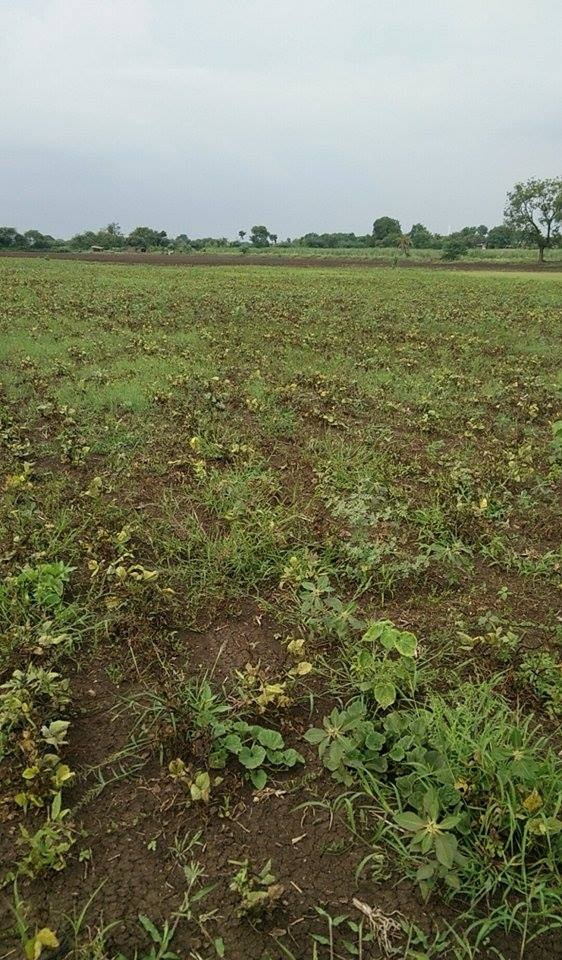
Last year his Moong failed completely, there was no seed development and although his Tur (Pegion Pea/Arhar) fetched a very good price, it did not mean anything for the family as the productivity was dismally low following three droughts and dry wells[i]. Like many farmers in Marathwada, he burned his sugarcane on 4 acres after watering it for many months… finally there was no water to sustain it. We had written about soaring pulses last year.udad (1).jpg Continue reading “This is the time to protect Pulse Farmers in Marathwada”

CGWB · Groundwater · Western Ghats

Many colors of groundwater in a tiny Western Ghats village

“Konkan” is the narrow strip of land encompassing coastlines, estuaries, lateritic plateaus, foothills of Western Ghats and dense forests, which runs from Maharashtra to Goa. It is bound by the Arabian Sea to its west and the mighty Sahyadri ranges (Western Ghats) to its east. The isolated region has a distinct and rich culture of folklore, performing arts, music, literature, culinary art, with subtle changes from north to south. The region receives heavy rainfall of about 2500-3500 mm in summer monsoons, with the lofty Sahyadri ranges blocking the moisture-laden clouds. 

The rivers in the region are as spectacular: gushing and gurgling over steep hilly paths and meeting the Arabian Sea in just about 100-150 kilometers from their origin in the Western Ghats. The steep and hilly terrain makes it difficult to build large dams, (though we keep trying unsuccessfully as can be seen here: https://sandrp.wordpress.com/2016/02/09/large-dams-in-konkan-western-ghats-costs-benefits-and-impacts/) and water resource managers never fail to point out that of the total yield of rivers in Maharashtra, 45% is from of the West-flowing rives of Konkan!

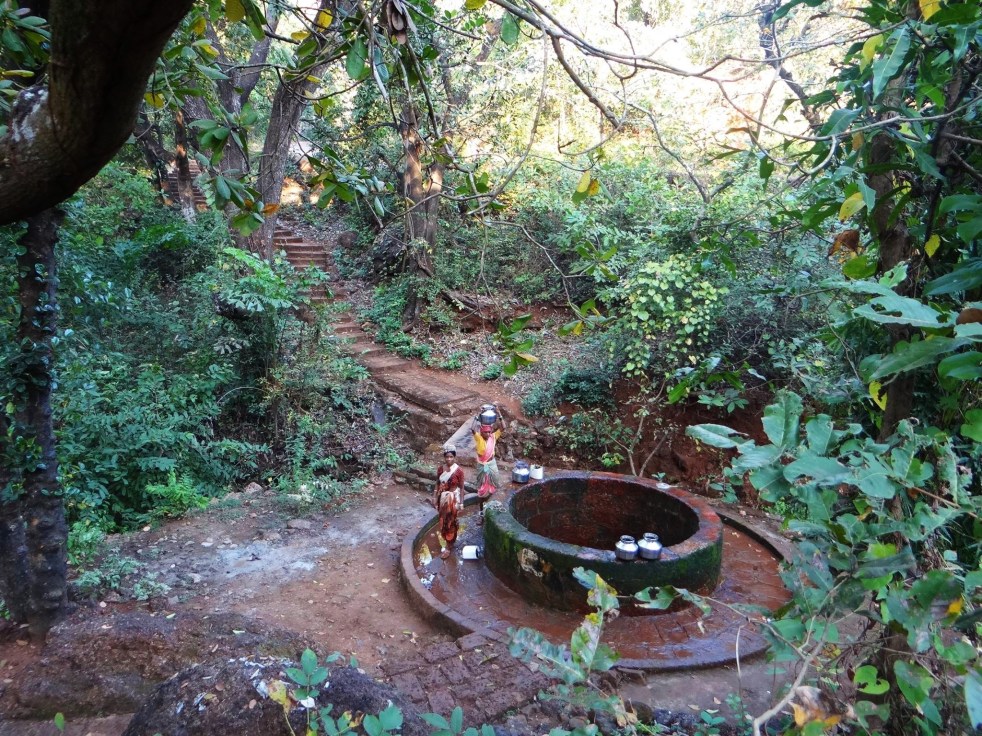
Having said that, the tempestuous nature of rives, rocky terrain and steep slopes mean that rives dry up as fast as they swell. The lifeline here is not surface water, but groundwater…Groundwater that emerges from springs as the predominant porous laterite rock meets a layer of clay..or dug wells…or unique water harvesting structures crafted by local communities. 

Here is a glimpse of some such structures…to appreciate not only the utility and appropriateness, but beauty of small, local structures and traditional wisdom. Also important to note is the diversity and independence of water management in Konkan: as in India..where communities own, maintain and manage their own water. There is a special kind of power and magic in this independence. Continue reading “Many colors of groundwater in a tiny Western Ghats village”

Dams · Maharashtra

Concerns about unplanned River Widening, Deepening and Straightening Works being undertaken under Jal Yukta Shivar and other projects


(This Note is followed by a letter to Maharashtra Chief Minister Devendra Fadnavis in Marathi, which is endorsed by several organisations)

In the past two years, Jal Yukta Shivar Abhiyan has been implemented in many districts of the State. A Government Resolution was issued on the 5th December 2014 to implement Jal Yukta Shivar Abhiyan (JYS from hereon) to make “Maharashtra Drought Free by 2019”. The GR lists out a 13-point program to be implemented, which lays stress on watershed works, deepening and widening of canals, cement nalla bunds, reinstating old water structures, tree plantation, well recharge, etc. The Chief Minister has supported the small scale water harvesting through JYS strongly, as one of the main solutions to water security for farm and villages. Continue reading “Concerns about unplanned River Widening, Deepening and Straightening Works being undertaken under Jal Yukta Shivar and other projects”

CGWB · Groundwater

Submission to Mihir Shah Committee For Restructuring of CWC & CGWB

It is proposed that the current CWC and CGWB should be reconstituted along following lines. Encouraged by communication from the committee and MoWR that the suggestions need not be limited by the TORs since TORs are also extendable, I have proposed a new institutional structure that is different than the current one. A brief outline of this was presented at the 6th meeting of Mihir Shah headed committee on Jan 11, 2016, it is elaborated here further. Continue reading “Submission to Mihir Shah Committee For Restructuring of CWC & CGWB”

Dams · Groundwater · Marathwada

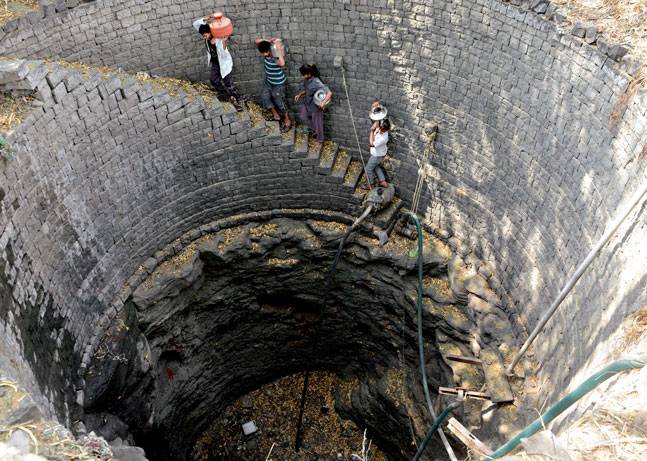
Beautiful but Dry: Dug-Wells of Marathwada in the times of drought

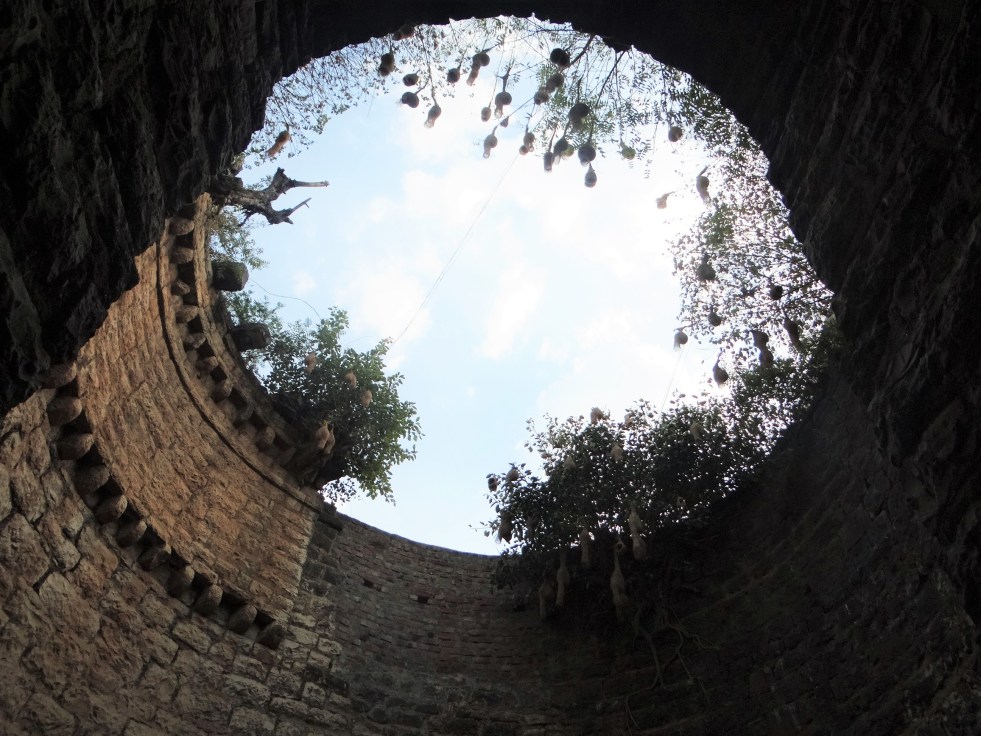
I was looking at a piece of blue sky, from the insides of a step-well. The well was stunning. Perfect. An example of appropriate technology which blended with its surroundings while enhancing it. “This is beautiful” I exclaimed as I climbed up, exhibiting all my city-bred exuberance. An old lady sunning herself next to the well looked at me with sad eyes.  “Yes. But a well is not a well without water. This well has not seen water for the past two years.” 

Wells in Marathwada, like the region itself, are beautiful and poignant. Marathwada’s dry wells are also a reminder of the mistakes we’ve committed, of how we’ve plundered with what we have or had. Continue reading “Beautiful but Dry: Dug-Wells of Marathwada in the times of drought”

Dams

GROUND WATER CRISIS DEEPENED IN INDIA IN 2015

Groundwater issues made news repeatedly in the year 2015. The year saw a 14 per cent deficit in southwest monsoon increasing the dependence on ground water for agricultural, industrial and domestic use. The falling water table and pollution of surface and ground water sources made the situation critical in various parts of the country. Competing demands on the ground water led to protests and litigation. The National Green Tribunal (NGT) tried to safeguard the ground water and pushed the State machinery into action through its orders in various matters. Towards the end of the year, the Central Ground Water Authority (CGWA) came up with revised guidelines for evaluation of proposals for ground water abstraction.

Continue reading “GROUND WATER CRISIS DEEPENED IN INDIA IN 2015”

Dams

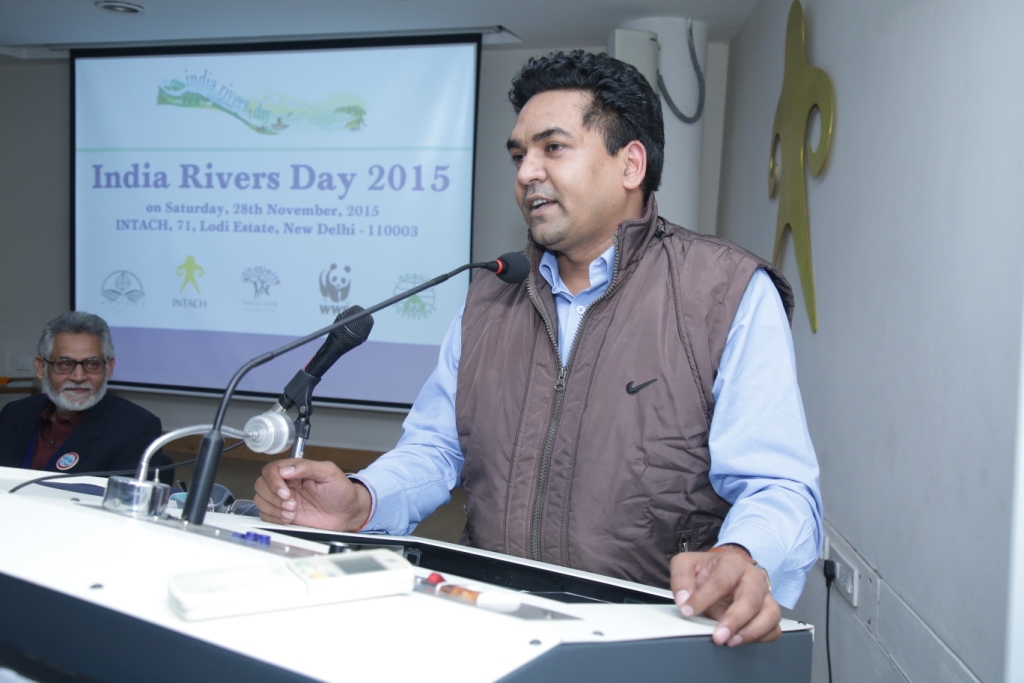
DRP: 30 Nov. 2015 (Delhi does not need Renuka Dam, Sharda-Yamuna linking: Kapil Misra, Delhi Water Minister)

Kapil Misra

Speaking during India Rivers Day- 2015 Kapil Misra said that Delhi does not require any more water from external sources such as the Renuka Dam or Sharda Yamuna River link.  The minister also assured that the Yamuna’s water will be improved within three years to make it good enough to bathe in. He raised doubts over expensive sewerage projects and felt need building of smaller and decentralised sewerage management system. The India Rivers Day brought together several individuals and organisations who have been working on the issues of river conservation in the country.

Continue reading “DRP: 30 Nov. 2015 (Delhi does not need Renuka Dam, Sharda-Yamuna linking: Kapil Misra, Delhi Water Minister)”