DRP News Bulletin

DRP NB 150523: Will the govt listen to caveats against Ken Betwa Project?

The following report raises three caveats regarding Ken Betwa River Link Project, among others. Firstly it urges that the substantial impact of climate change on the rivers needs to be taken into account, particularly the need for accurate hydrological assessment. It underlines that the project themselves are accelerating the climate change impact on monsoons as they are reducing freshwater flows to the oceans, which in turn has an impact on the ocean’s thermal and salinity gradients, both of which are drivers of monsoon.

Secondly, it rightly says that the impact of projects on adaptive capacity of areas like Bundelkhand needs to be taken into account. In Bundelkhand, climate adaptation can be harnessed using rain water harvesting, rejuvenation of traditional water systems, less water intensive crops and alternative agricultural practices. Thirdly, the water sharing issues that may worsen with both climate change and big projects, need to be kept in mind while taking up mega projects, particularly its impact on water and other security issues.

Continue reading “DRP NB 150523: Will the govt listen to caveats against Ken Betwa Project?”
DRP News Bulletin

DRP NB 200223: US EPA starts reporting methane emissions from dams

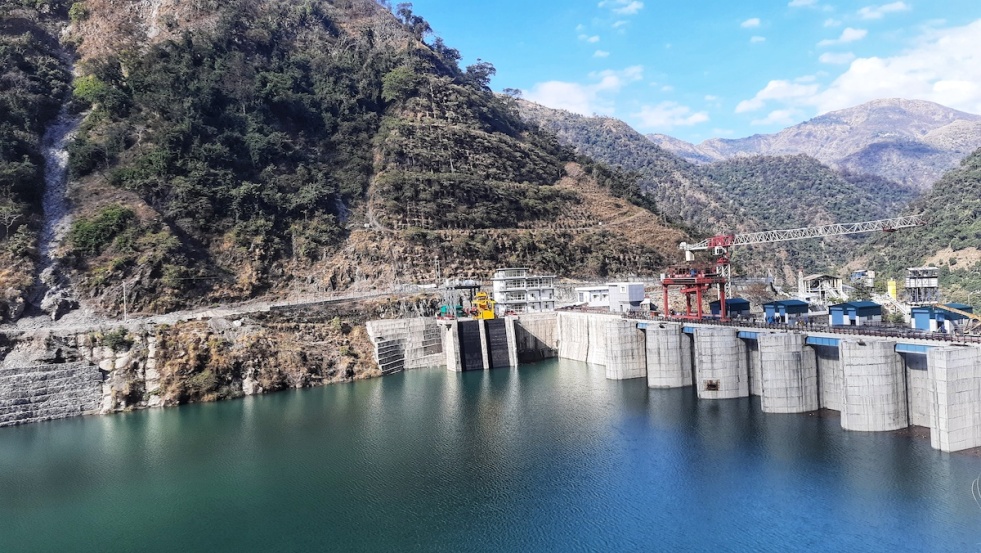
(Feature Image:-Vyasi HEP dam reservoir on Yamuna river in Dehradun. Credit: Varsha Singh/Third Pole, Jan. 2022)

In a landmark move, United States Environment Protection Agency has started reporting methane emissions from dams and hydropower projects in its annual reporting to UN in 2022. It needs to go a step further and make it mandatory for all dams and hydropower projects to annually report such emissions on their websites. This will not only help clear the mistaken notion that hydropower projects are climate friendly, it will also help take right policy measures and project construction or decommissioning decisions. It will also lead to more scientific accounting of global warming causing emissions. It will also give the consumer right picture about GHG emissions from such projects when they look at options for electricity supply. There is a lot that India and rest of the world that needs to learn from this and implement on urgent basis as US EPA seems to be the first agency to do this.  

Continue reading “DRP NB 200223: US EPA starts reporting methane emissions from dams”
Dam Disaster

Hydro Power Projects, Dams Accidents & Damages in 2021

Feature Image:- NDRF team search at Tapovan Vishnugad barrage as rescue operations continue. Source: Business Standard

Hydroelectric projects (HEPs) in India have been causing avoidable accidents and amplifying disaster potential, thus damaging the rivers eco-system, local environment and lives & livelihoods of communities. There have been several of such incidents across the country in 2021. In this report we put together a state wise account of most such incidents. 

Continue reading “Hydro Power Projects, Dams Accidents & Damages in 2021”
DRP News Bulletin

DRP NB 30 Aug. 2021: Why no protection for aquatic biodiversity?

(Feature image Wildlife Along Indian Rivers by Green Humour:- http://www.greenhumour.com/2017/09/wildlife-along-indian-rivers.html)

Aquatic freshwater biodiversity has seen the maximum decline over the years and yet has the least protection under law. In fact fish is not even considered for protection under the Wildlife Protection Act. Fishing cat, Mahseer, Otters, Trout fish, Hilsa fish are all at top of the food chain in freshwater sources, like the tiger is in the forests, but none of them have the legal protection. If we have any serious intension of protecting this important source of biodiversity, we urgently need measures, including policy, legal and institutional measures to recognize and protect this biodiversity.

Continue reading “DRP NB 30 Aug. 2021: Why no protection for aquatic biodiversity?”
Dam Disaster · Uttarakhand

The factors that worsen the Uttarakhand Disasters

Abstract: While Uttarakhand is vulnerable to disasters, climate change is increasing these vulnerabilities. Major human interventions like hydropower projects and highways implemented without an informed or democratic decision-making process act as force multipliers during such disasters. The violations of legal and other prudent norms in their implementation further increase the damages. The absence of necessary monitoring, early warning systems and the overall disaster management system add another layer of damages during the disasters. The lack of the ability to learn lessons from disasters and lack of any accountability ensures the perpetuation of the situation.

Continue reading “The factors that worsen the Uttarakhand Disasters”
Dams, Rivers & People

DRP NB 8 Feb. 2021: Will NITI Aayog study the costs of overturning the Radhakrishnan Judgement on Uttarakhand?

NITI Aayog, we learn, has started studies of implications of the Supreme Court and NGT orders on environment issues. In the context of the massive Chamoli disaster now unfolding in Uttarakhand, NITI needs to urgently institute an inquiry as to who all are responsible for overturning the Justice Radhakrishnan led verdict of Aug 13, 2013 about the June 2013 Uttarakhand disaster and role of hydropower projects in the disaster and the costs of overturning that verdict. In fact if the Justice Radhakrishnan verdict were to have been sincerely and honestly implemented to its logical conclusion, the proportions of the current Chamoli disaster and others would have been majorly reduced. So the costs are no doubt huge and mounting. Will NITI Aayog institute such an independent inquiry urgently?

Continue reading “DRP NB 8 Feb. 2021: Will NITI Aayog study the costs of overturning the Radhakrishnan Judgement on Uttarakhand?”
DRP News Bulletin

DRP News Bulletin 25 June 2018: Himachal Hydro remain stalled: Big Hydro no longer viable

Private Hydro remain in stalled Himachal The State Govt has sought the revised completion schedules of 21 stalled hydropower projects (above 5 MW capacity) having a capacity of 684 MW. Additional Chief Secretary (Power) Tarun Kapoor on June 19, 2018 held a meeting with independent power producers to take feedback from them on the hurdles being faced in completion of the 10 stalled projects on which work has not begun. In the remaining 11 projects also, the progress is extremely slow. “We have asked the power producers to expedite work on these 21 projects and also cancelled the Joiner-II (8 MW) in Kinnaur,” revealed Kapoor. Continue reading “DRP News Bulletin 25 June 2018: Himachal Hydro remain stalled: Big Hydro no longer viable”

Bhutan

Bhutan Hydropower Developments in 2015

Above: Punatsanghchu River in Bhutan

Bhutan is the only country in the world that measures its development in terms of Gross National Happiness, which includes environmental conservation and preservation of culture[1]. However, Bhutan’s hydropower construction spree in the recent years has increased debt burden on the country. Concerns are emerging over Bhutan’s profligate spending on a single sector without bringing commensurate benefit to its citizens. Hydropower development in the country faces severe risk of climate change effects and has a huge social and ecological cost. But Bhutan continues to develop hydropower claiming that the revenues would fuel economic growth and the loans are self-liquidating. This review of hydropower developments in Bhutan during the year 2015 is based on media reports throughout the year and other publicly available information.  Continue reading “Bhutan Hydropower Developments in 2015”