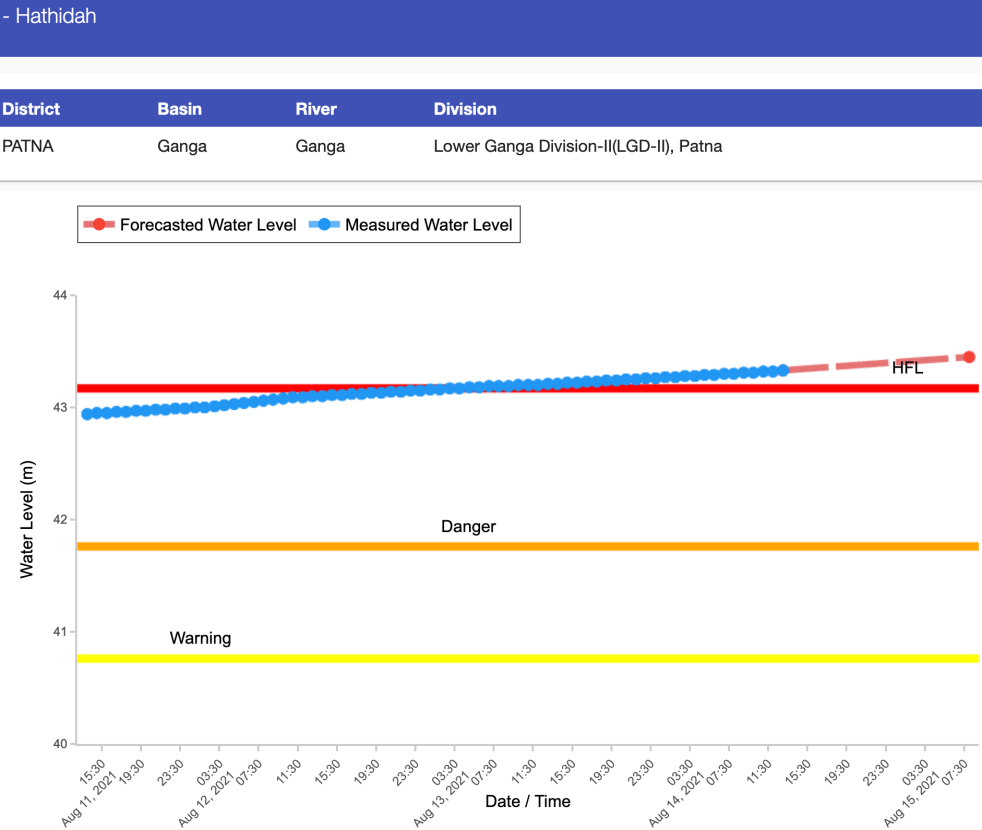
As India prepares to celebrate 75th Independence day on August 15, 2021, large parts of Bihar along the Ganga river, including Patna (flood water entered colonies near Ganga in Patna) and Bhagalpur are preparing to face unprecedented floods. In fact, Central Water Commission’s (CWC) flood monitoring site at Hathidah in Patna district crossed the HIGHEST FLOOD LEVEL (HFL) of 43.17 m at 0300 hours in early morning on Aug 13, 2021. The water level is already at 43.33 m at 1300 hrs on Aug 14. It is forecast to reach 43.45 m by 0800 on independence day still with rising trend. This is apparent from the CWC hydrograph of this site shown above.
Continue reading “Why are Patna & Bhagalpur facing unprecedented floods on India’s 75th independence day?”Tag: Ganga

DRP 090821: Doubtful validity of GOI’s July 15 notification on AP-Telangana water disputes
(Feature image: Two Telugu states, one river — why Andhra & Telangana are fighting it out over the Krishna https://theprint.in/india/two-telugu-states-one-river-why-andhra-telangana-are-fighting-it-out-over-the-krishna/696801/)
The July 15 2021 Govt of India notification on Andhra Pradesh-Telangana water disputes is of doubtful legal validity and the Supreme Court urgently needs to examine this. The 2014 AP Regorganisation Act didn’t make provision for the Centre to take over water infrastructure of the two states, which is what effectively the centre has done through the July 15 notification. The Jul 15 notification effectively dismissing powers of Andhra Pradesh and Telangana without any consultations and there is no provision in constitution for this.
There is no doubt that the long lingering water sharing disputes between Telangana and Andhra Pradesh and which was the major reason for the bifurcation of Andhra Pradesh, needs to be resolved. But the blame for not achieving any resolution of the disputes also lies with the Centre, the KRMB and GRMB are not even functioning with necessary urgency or effectiveness.
Continue reading “DRP 090821: Doubtful validity of GOI’s July 15 notification on AP-Telangana water disputes”
DRP 260721: “Unprecedented rainfall” used to escape responsibility?
(Feature image source: India TV https://www.indiatvnews.com/news/india/monsoon-mayhem-maharashtra-floods-landslides-death-toll-latest-news-721924)
As Maharashtra faced the worst flood disaster of SW Monsoon 2021 in India, we see the phrases like “unprecedented rainfall”, “record breaking rainfall”, “frequent landslides” etc. with increasing frequency along with phrases like climate change floating around. While these are not entirely incorrect claims, these should not be used to escape the responsibility and accountability for failing to either accurately forecast the rainfall or to manage the proportions of disasters, including operation of dams, encroachments into water bodies and water path, not accurately marking locations vulnerable to landslides in landslide prone areas or taking up inappropriate “development” projects in vulnerable areas. All of these factors can be seen at play in disasters this monsoon in Maharashtra, Uttarakhand, Himachal Pradesh among others.
Using such phrases, there is an attempt to escape the accountability or responsibility. This is a culture increasing being propagated by Central Water Commission as they did in Kerala in 2018 and Krishna basin floods in Maharashtra in 2019 as in numerous other occasions. It is known now to everyone that climate change is going to lead to more instances of heavy rainfall that can frequently fall in unprecedented category, but that only means we need to take measures to reduce the damage in such instances, predict them accurately and manage them effectively. That is what the Action Plans for Climate Change and Disaster Management apparatus needs to work on, but we have clearly failed there so far.
Continue reading “DRP 260721: “Unprecedented rainfall” used to escape responsibility?”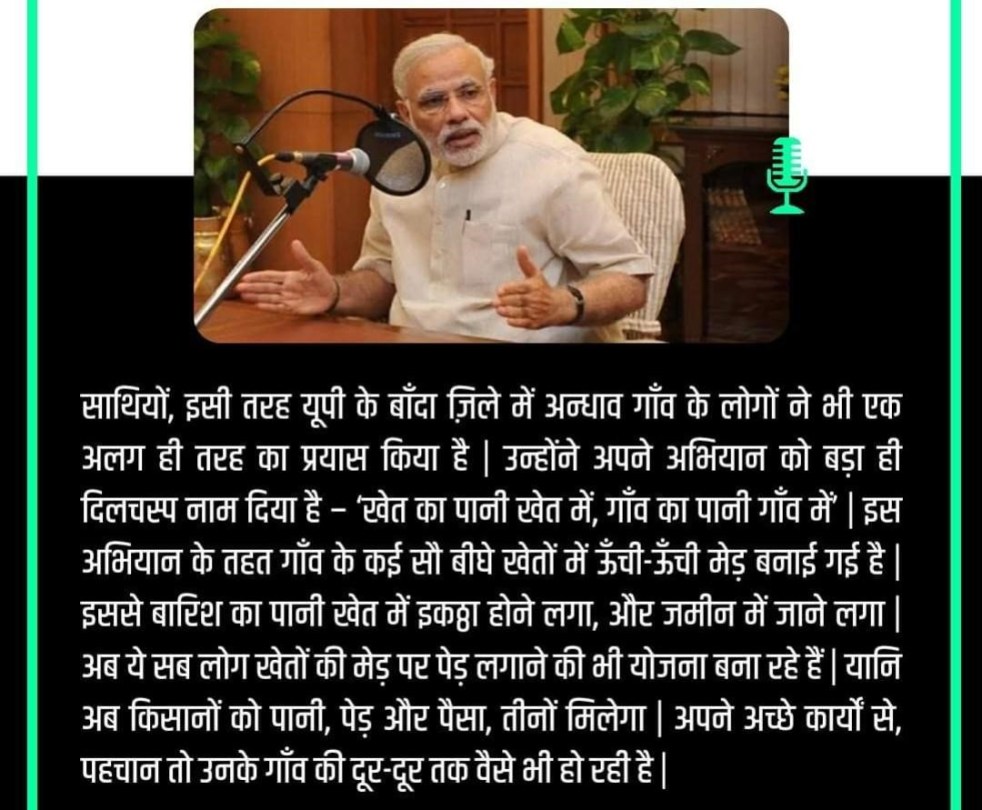
DRP 280621: Where is the impact of lessons of the water conservation efforts that PM praises, on his govt’s water projects & policies?
When the Prime Minister Shri Narendra Modi Mentioned some exemplary water conservation efforts in his Mann ki Baat on June 27, 2021, it was not for the first time he was doing it. These are certainly most welcome.
However, these mentions raise a number of questions. If the Prime Minister considers these local water options as exemplary, which they indeed are, where do we see the reflection of the lessons from such efforts in government programs and policies? In fact why there is no reflection of such lessons in what the government does in water sector? How can the government justify the destruction of Panna Tiger Reserve, over 9000 ha of forests, some 46 lakh trees, the catchment of Ken river and large part of Bundelkhand in the name of Ken Betwa Link Project, in the same Bundelkhand. How can his government justify the destructive projects like the Char Dham Highway, the big hydro projects and so on in the same Uttarakhand where Sachidanand Bharati (who was incidentally recipient of the Bhagirath Prayas Samman of India Rivers Week) works, whose efforts the PM praised? One hope the PM and his government will be awake to the implications and lessons of the works that PM praises.
Continue reading “DRP 280621: Where is the impact of lessons of the water conservation efforts that PM praises, on his govt’s water projects & policies?”
DRP 210621: MGNREGS ALSO helps carbon sequestration
A new study by the researchers at the Indian Institute of Science, Bengaluru, the works undertaken under the Mahatma Gandhi Rural Employment Guarantee Scheme captured 102 Million Tonnes of Carbon Dioxide in 2017-18 through plantation and soil quality improvement works. The MGNREGS has proved remarkable for other reasons, including it being the World’s largest anti-poverty program and also helping improve the local livelihoods, food, employment and water security on a massive scale. If the program is taken up with necessary commitment, priority, planning and participatory governance, it can achieve lot more. Unfortunately the NDA government has not been showing such commitment, priority or financial allocation even for its regular functioning. The IISc Study says that by 2030, the MGNREGS can create annual carbon dioxide sink equal to 249 MtCO2. One hopes our governments would, rather than denigrating the scheme would allocate sufficient financial, human and institutional resources for MGNREGS, rather than false solutions like the destructive projects like big hydropower projects.
Continue reading “DRP 210621: MGNREGS ALSO helps carbon sequestration”
DRP 140621: IPCC-IPBES Scientists: Biodiversity protection & climate change action HAVE TO work together
In a remarkable new report, the 50 top scientists of Inter-Governmental Panel on Climate Change (IPCC) and Intergovernmental Science-Policy Platform on Biodiversity and Ecosystem Services (IPBES) have come together to deliver the first ever joint collaboration report with the message that Biodiversity crisis and climate change crisis are not independent of each other. The message from scientists is clear: The claimed Climate “solutions” that hurt biodiversity or their habitat are false solutions.
By protecting and restoring nature, the report said, we can safeguard biodiversity, help limit warming, improve human well being and even find protection from the consequences of climate change, like intensified flooding and storms.
Continue reading “DRP 140621: IPCC-IPBES Scientists: Biodiversity protection & climate change action HAVE TO work together”
DRP 070621: Local Water Options Stories from Five states
(Feature image A big main pond that has been constructed in the Phular village, Damoh. (Pic: Shahroz Afridi, News 18))
This week we would like to highlight some remarkable local water option stories from five states spread across India: Madhya Pradesh from Central India, Punjab from North India, Karnataka from South India, Rajasthan & Maharashtra from western India. These are stories just from this week among many others that show that local water options exist, they are the cheapest, sustainable, equitable, democratic and with least impacts and most appropriate in the climate change context. In a country like India where groundwater has been India’s water lifeline for over four decades now, these options are best suited for ensuring optimum recharge of groundwater aquifers at local level and sustaining those lifelines. Particularly when South West Monsoon is on our doorstep to gift its annual bounty to India. As UN starts the International Decade for Ecosystems Restoration with the theme of preventing, halting, reversing the degradation of ecosystems, these become even more important.
Continue reading “DRP 070621: Local Water Options Stories from Five states”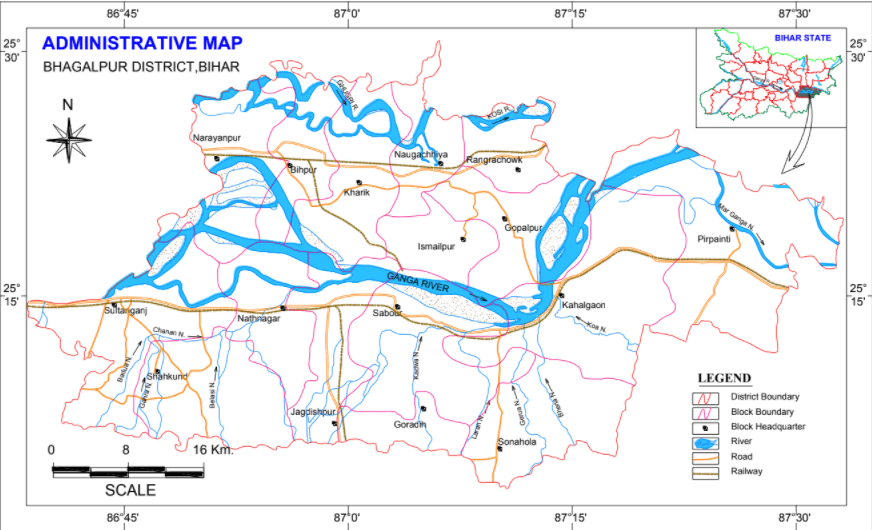
Water on Wheels to Dying Fishes in Ganga River Basin in Bhagalpur
Guest Blog by Dr. Ruchi Shree (TMBU, Bhagalpur-Bihar)
Last year, I wrote three stories on dying Champa river in Bhagalpur and challenges/ prospects of its rejuvenation[i]. That exercise helped me in exploring the city through a river which used be an important waterbody in this region but now at the verge of extinction. Situated at the banks of river Ganga, the Bhagalpur city faces three to four major problems related to water and sanitation, namely, arsenic contaminated groundwater, falling water level, recurrent floods, open drainage, etc. This year, I pedaled (cycling) in the local vicinity to make sense of ‘piped water’ and its limitations in the city. One more concern was to document the growing ecological crisis in the university area as captured and reflected in this blog. This photo essay is based on my observations over a period of last three months in Nathnagar block of Bhagalpur (south-west part of the city). Bhagalpur, a “smart city” of south Bihar is close to Jharkhand. I visited the ward no. 13 and ward no.17 of the Nathnagar block to write this story. Two pictures (near Ganga) towards the end of the blog were taken in a different part of the city i.e. in Adampur area of Bhagalpur.
Continue reading “Water on Wheels to Dying Fishes in Ganga River Basin in Bhagalpur”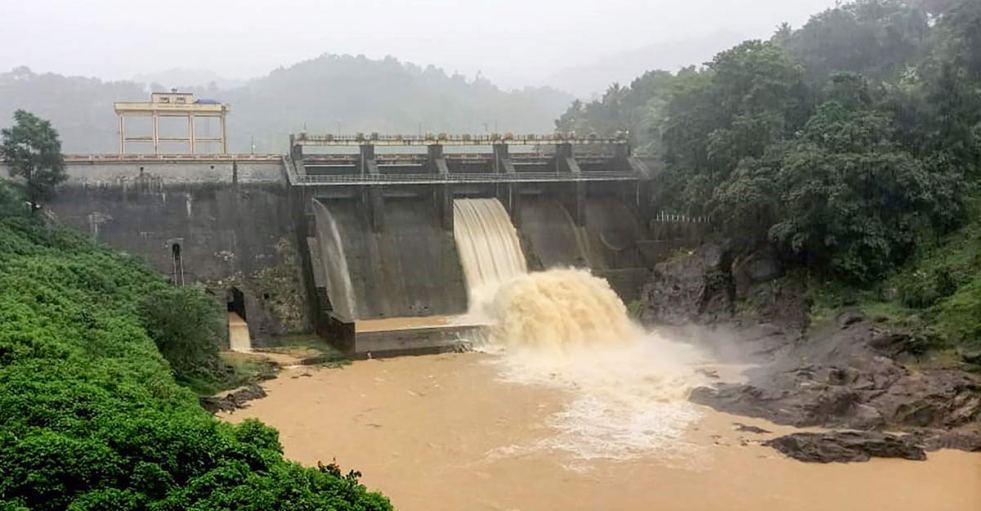
DRP 310521: Worrying Dam Water Storage at the onset of SW monsoon
(Feature image source: Onmanorama.com)
It would be very useful and educative to look at the water storage levels of some of the major reservoirs of India even as India awaits the annual bounty of water from the South West Monsoon that normally officially starts on June 1, but this year may start on June 3 as the latest India Meteorological Department forecast yesterday, that is on May 30, 2021. While high storages at this point in time creates a possible Dam Flood hazard that India has been experiencing with increasing frequency with changing monsoon rainfall patterns and unaccountable reservoir operations, it also indicates the gross inefficiency of our use of water stored in these reservoirs if there is a lot of water there in the beginning of the annual filling period. It indicates that the storages created with such massive economic, social and environmental costs have not been optimally utilised in the just ending water year on May 31. Unfortunately, no agency is monitoring the water storages in these major reservoirs and asking as to why there is non optimal use of water and then addressing the reasons wherever they see such non optimal storages at the end of water year. SANDRP has been raising this issue for many years.
Continue reading “DRP 310521: Worrying Dam Water Storage at the onset of SW monsoon”
DRP 240521: Campaign to protect Pune Rivers
An active campaign has been going on for several months now to save the Pune Rivers from the so called “River Front Development” Project as can be seen the following stories of just last one month. The RFC supporters are also out to push multi crore project, as can be seen from the numerous stories being planted in the media on regular intervals. There is no doubt that the Pune Rivers will be destroyed and the city will face increasing flood disasters if the project goes ahead. One hopes the Civil Society campaign continues and judiciary steps in to stop this destruction at the earliest.
Continue reading “DRP 240521: Campaign to protect Pune Rivers” SANDRP