Dams

Himachal Pradesh Rivers Profile


About Himachal Pradesh  

5 river basins; Total Area: 55,000 square kms.; Total Population: 68.65 lakhs; Total Catchment Area of 5 rivers; Total Catchment Area: 53311 sq.kms

Himachal is a relatively small state and in 2011 its population stood at 68.65 lakhs. It is only 9% urbanised and most of Himachal lives in its villages. Of the total land geographical area only 10% is under agriculture while close to 70% in under the category of ‘Forest land’. And yet agriculture is the main source of livelihood in Himachal with over 93% of the population dependent on it. As in most mountain areas agriculture and forest dependence is interwoven.

Agriculture is made possible due to the irrigation from river channels or natural springs. The health of the forests directly determines the health of the surface and ground water systems which in turn determines the viability of agriculture and horticulture. Horticulture and cash based agriculture was pushed by the government in the late 70s and 80s. Today the state has massive apple cultivation, apart from commercial vegetable cultivation, which is an important source of income for the farmers.

Continue reading “Himachal Pradesh Rivers Profile”

Ganga

While walking upstream along the Ganga from Ganga Sagar to Gangotri: The Price of Exclusivity

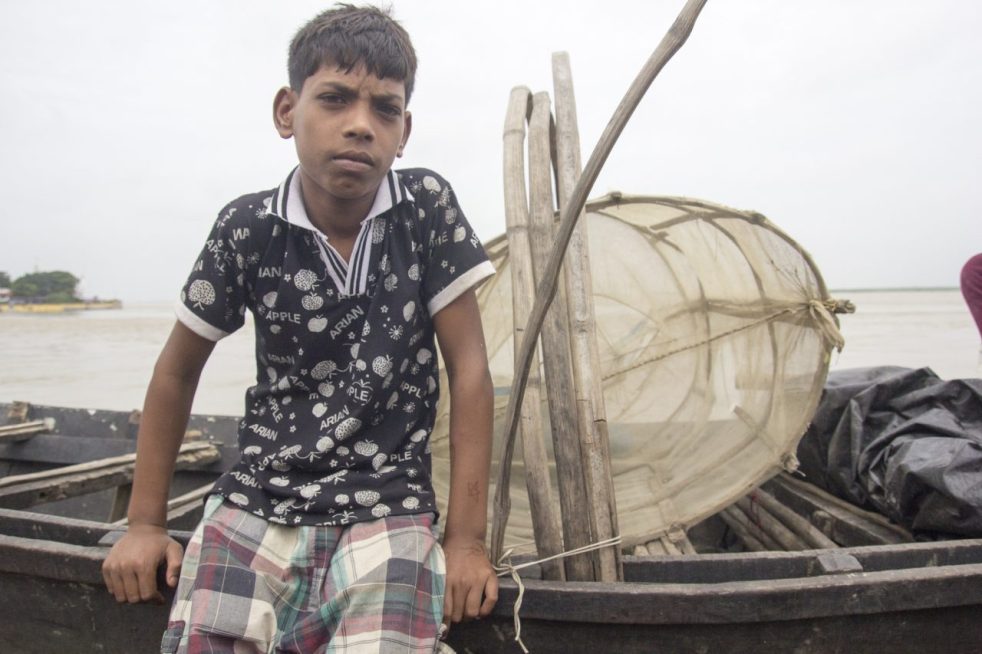
 Above: Young kid from a fishing family in Kahalgaon, even the most informed communities (Ganga Mukti Andolan) are clueless about the government’s intentions (Photo by Veditum)

GUEST BLOG BY: Siddharth Agarwal 

As the Ganga rises and fills streets and alleys with it’s water all along it’s course, I spend a time out at home, partially because of personal reasons and in some parts due to the rising levels of the river hindering all sorts of movement around it. Currently on a walk along the Ganga for Veditum India Foundation’s ‘Moving Upstream’ project, I’ve been able to walk a distance of about 1000 kms alongside it’s banks from Ganga Sagar till Varanasi in 50 days’ time. Some places saw me walking right next to the river while others had me maintaining my distance since it just wasn’t possible to peruse a course anywhere in the vicinity of the flooded banks.

The rising levels of the river are no surprise, an annual occurrence with variation only in ferocity. We’re surprisingly still caught off guard, every single year, with this news about floods in cities like Patna, Allahabad and Varanasi making it to national television on an almost daily basis. But what of all the places between Patna, Allahabad and Varanasi? What of all the places that are not cities and of all the people who are not urban dwellers? The major focus as I walk along the river are the people of the river and their lives, those who inhabit this space known to all as the vastly fertile Indo-Gangetic plains but unknown as a place extremely vulnerable to the forces of nature and shaky towards those man-made.

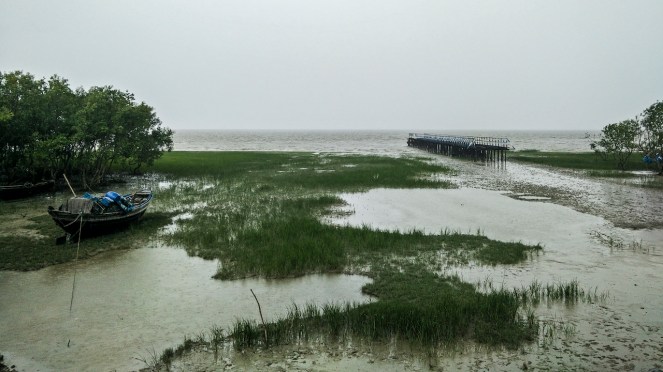
What will happen to a river that already has no fish and is way too salty. The barrages will mean doom for even the few fish that are left (Photo Veditum)
What will happen to a river that already has no fish and is way too salty. The barrages will mean doom for even the few fish that are left (Photo by Veditum)

I had been informed in advance of the situation of our fishermen by minds already working in the field of environment and rivers in our country, often mentioning that these communities were severely under-represented and very much neglected even when it came to discussions relating to them. Non-inclusiveness of communities while making decisions is not a new theme in India, but given the extent of impact that some upcoming government decisions/policies was going to have on these people, I decided to ask them a few questions as I proceeded upstream from Ganga Sagar, starting early June 2016.

Anywhere downstream of the Farakka barrage, the mention of the word barrage has a stunning effect on the people and 1975 is a year that fisher folks remember as a year of doom. For most readers and even for me before I started upon this trip, this would makes sense if one tries to put in a little effort in imagining how a barrage or dam might affect a river. But unlike how logic would dictate, this effect doesn’t exist just downstream of the barrage and similar reactions continued even further upstream, in Jharkhand and Bihar.

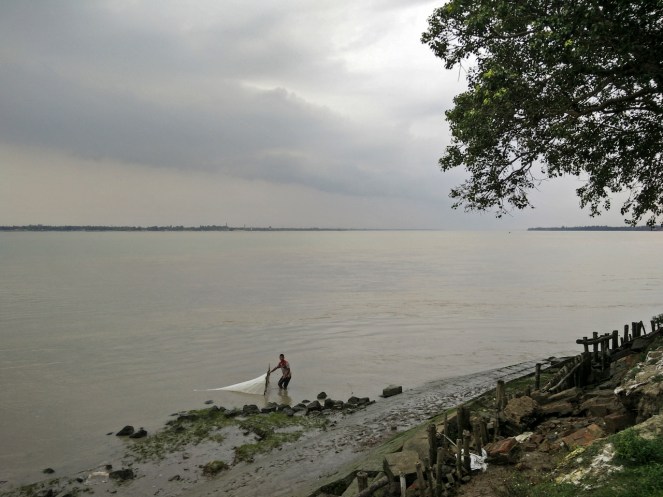
In places along the feeder canal from the Farakka Barrage, an increased frequency of ships to the Thermal Power Plants has resulted in rapid soil erosion
In places along the feeder canal from the Farakka Barrage, an increased frequency of ships to the Thermal Power Plants has resulted in rapid soil erosion (Photo by Veditum)

The National Mission for Clean Ganga and The National Waterways programme have been in the limelight for making grand promises of :

1.) Cleaning and maintenance of the river
2.) Economic Development and Cheaper Transportation.

Now, this is not a commentary on the efficiency and feasibility of making such proposals, simply an attempt to understand the impact of such programmes. EIA (Environmental Impact Assessment) and SIA (Social Impact Assessment) are the terms you might be looking for, something that ideally the governing authority should be taking care of. But why is any of this important or relevant to this article? It is because whatever happens in these places between Patna, Allahabad and Varanasi is very much relevant and important to discuss. These are not uninhabited spaces, but pretty well populated areas with a lot of lives at risk.

Coming back to the point of the two government programmes, firstly, the NMCG letting the Waterways programme run through protected areas and non-protected ecologically sensitive areas goes very much against the whole agenda why this mission was set up. Secondly, the waterways programme in a bid to decrease ‘transportation’ costs and utilise our river potential recently ran tests with large vessels on the Ganga.

Small country boats near Farakka. Wonder what large waves from huge vessels will do to these (Photo by Veditum)

What is surprising (or rather not) is that these test runs were without any warnings to fishermen and boatmen in said test sections, the few who were on the waters at the time of passing of these vessels had to face high waves, enough to topple a less experienced or unaware boatman. The news of these tests were flashed all over the main stream media, but failed to make it to those for whom it mattered. Not an uncommon occurrence at all, but till when will this go un-noticed? On asking these fishermen if they have any clue why this is happening, most of them responded in the negative while a few said they’ve learnt about the government’s plans to run large vessels on the river.

As this conversation extends and questions follow, it is gradually revealed that the picture is not clear and conversations have somehow trickled down in a very muzzled form. Though most fishermen laugh off the prospect of this being a constant activity because of the extreme reduction in water level that the river has seen these past years, often mentioning how large excavators and multiple tugboats have been needed anytime a large vessel has traversed these stretches in lean seasons. There’s talk of loss of fishing nets and reduced catch, difficulty in controlling small country boats in high waves, chances of accidents when transporting villagers to small ‘diars’ for agricultural work, loss of land where there’s no embankments and so on, but this also brings us to the most important part of this article.

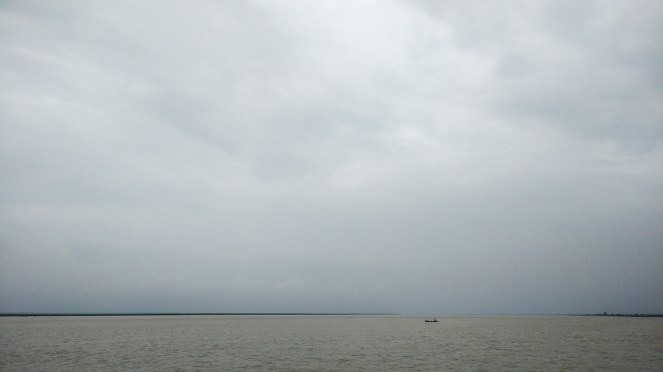
The dark clouds often linger over the heads of those not involved, not informed (Photo by Veditum)

The Water Highway programme on the Ganga has been proposed on a 1500 km stretch from Allahabad to Haldia, with barrages at about every 100 kms. Now, an avid news reader would have knowledge of this as a great policy step but the fisherman who directly depends on the river for his livelihood does not. This holds true for maybe 15-20 different fishing communities that i’ve had the chance to interact with in the first 50 days and even the mention of new barrages was way too shocking for those who have had to bear the burden of Farakka’s impacts. There are even places where locals have signed their wishfulness of a barrage near their villages without understanding consequences and only having been shown the shiny side like we see everyday in the papers, called ‘development’.

The ‘Moving Upstream’ project intends to understand and present a narrative of the river and it’s people, hoping this will lead to more meaningful conversation and inclusive action by the government. In a recent announcement by Sushri Uma Bharti Ji – Union Cabinet Minister of Water Resources, River Development & Ganga Rejuvenation, she said she will march down the length of the river to take stock of the status of various projects commissioned by her. I’m glad that cues are possibly being taken from the Moving Upstream project, but like every other government project, when will our habit of assessment (if at all) after execution stop and preparedness & understanding before implementation materialise? I hope she does her Ganga yatra before approving any projects, I hope for inclusiveness.

Siddharth Agarwal (siddharthagarwal.iitkgp@gmail.com)

Dams · Hydropeaking · Hydropower · Narmada

नदी के बदले नदी दे सकते है? ..on Maheshwar, Narmada and fishing communities of India

What separated Maheshwar Ghats on the mighty Narmada from most other rivers I have seen was the sheer gaiety and joy which people were experiencing, jumping in the Narmada.  The beautiful, jutting steps of the ghats were designed (and used) like diving boards by men, boys and women. For someone who had just seen a dry Godavari and drier rivers of Marathwada, this mirth was therapeutic. Ferry Boats and laidback ferrymen were relaxing on the river, bobbing up and down rhythmically. In the distance was a tiny sailboat, held together by white fluttering sails, zipping through the waters at a startling speed without the din of a diesel engine. A fisherman and his daughter were returning to their village, taking stock of their catch.. Occasional fish rose above the waters and glistened in the evening sun. Continue reading “नदी के बदले नदी दे सकते है? ..on Maheshwar, Narmada and fishing communities of India”

Wetlands

Threats to East Kolkata Wetlands are threats to Kolkata: Majhi jo nau dubaaye…

Guest Blog by: Chicu Lokgariwar (chicu.l@gmail.com), Usha Dewani (usha.dewani7@gmail.com)

‘Majhi jo nau dubaaye, to usey kaun bachaaye’ laments a popular song[i]. It literally translates as: ‘If an oarsman sinks his boat, who can save it?’

This is a question that concerned citizens of Kolkata are asking themselves today in connection with the famed East Kolkata Wetlands. A notified Ramsar site, this extensive wetland spread over 12,500 Ha has been protected for decades by the communities who live within it and by The East Kolkata Wetlands (Conservation and Management) Act, 2006. Today, it is the Environment Minister of West Bengal who has taken it upon himself to destroy the wetlands. Continue reading “Threats to East Kolkata Wetlands are threats to Kolkata: Majhi jo nau dubaaye…”

Dams · Ganga

Four Boats at a River Crossing along Ganga

Above: A fisherman crosses the river with his boat. Photo: © Sameer Kumar/VBREC.

-Nachiket Kelkar (rainmaker.nsk@gmail.com)

It was a pleasant November afternoon when we were travelling down the Ganga River by boat, surveying river dolphins. Tall grass had grown on both banks through the flood recession period. The water level had become very low already. Two magnificently large concrete buildings; one, the agricultural college, and the second, the industrial office, stood precariously by the edge of a rapidly eroding bank. At the turn of this bank, the Ganges Voyager appeared in a sudden sight. British tourists with gleaming shades, sunning their fair skins to balanced tan tempered by muslin umbrellas put over brick-red wooden tables, waved at us from the deck of the Voyager. Uniformed Indian attendants confirmed that they were not waving out to any dangerous people, in a re-enactment of the old colonial days. The Voyager had fifty air-conditioned luxury rooms. Their windows were made translucent by pale mauve and white chiffon curtains artistically tied in an hourglass shape. Continue reading “Four Boats at a River Crossing along Ganga”

Dams

Overview of Global Inland Fisheries Conference, 26-28 January 2015: Rivers support Livelihoods and Biodiversity!

The Global Inland Fisheries Conference in Rome, Italy, organized by FAO and Michigan State University concluded on the 28th January 2015. The three day conference meant a lot of things: A platform to present the worth, the potential and the challenges of a chronically neglected sector, a place to learn from experiences across the world and, as the conference website says, “a cross-sectoral call to raise the profile of inland fisheries and better incorporate them in agricultural, land use, and water resource planning through development of improved assessment frameworks and value estimation.”

Was it successful in doing all this?

Yes, to an overwhelming extent. But, in the end I was left with some questions as well. Continue reading “Overview of Global Inland Fisheries Conference, 26-28 January 2015: Rivers support Livelihoods and Biodiversity!”

Dams

FAO’s First Ever Global Conference on Inland Fisheries in Rome: Opening Day

On this Republic Day of India, when the American President Barack Obama joined Indian Prime Minister Narendra Modi to witness the ever-inspiring Republic Day Parade, 6000 kms away in Rome I heard a Native American woman say, “With colonization, we were alienated from all that we held dear, not only our natural resources but also our legitimate place in decision-making. We are Salmon people. Revitalization and protection of our fish is our sacred duty and we will do it despite the dams.”  A fisherman near Farakka Barrage who was hardly making a living due to the barrage had said something similar to me once.

As the concerns about the environment insensitivity of the current government increase, this coincidence was striking. Continue reading “FAO’s First Ever Global Conference on Inland Fisheries in Rome: Opening Day”

Narmada

Narmada Estuary: Hilsa, other Fish and Fisher people need protection

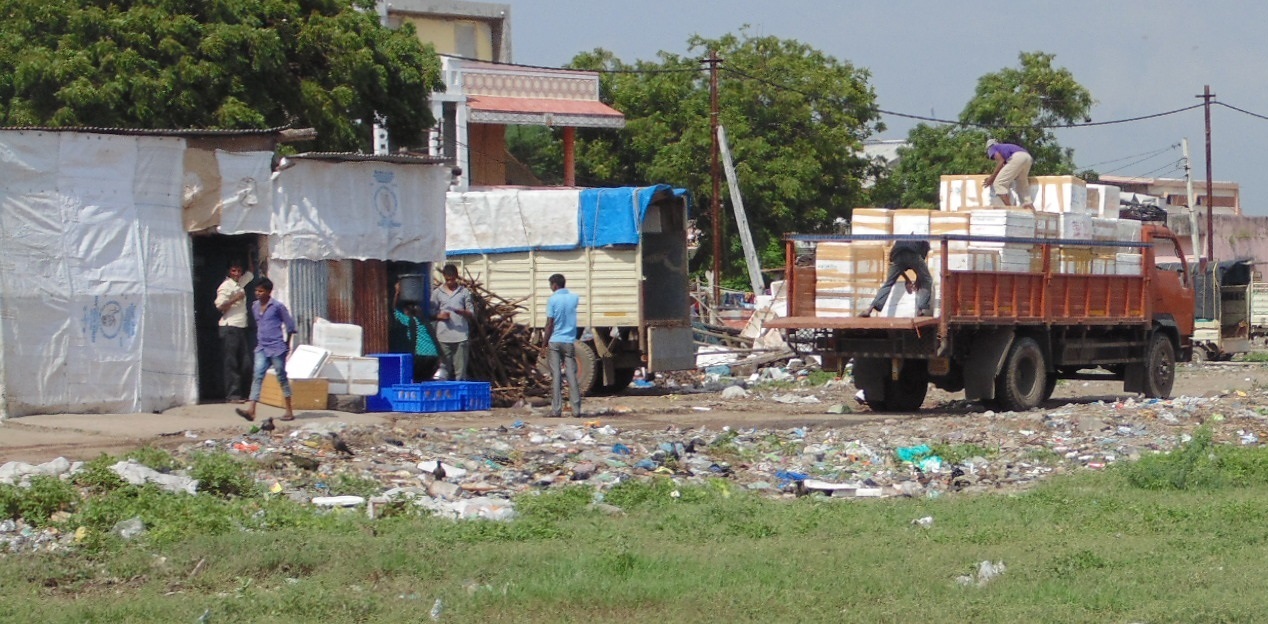
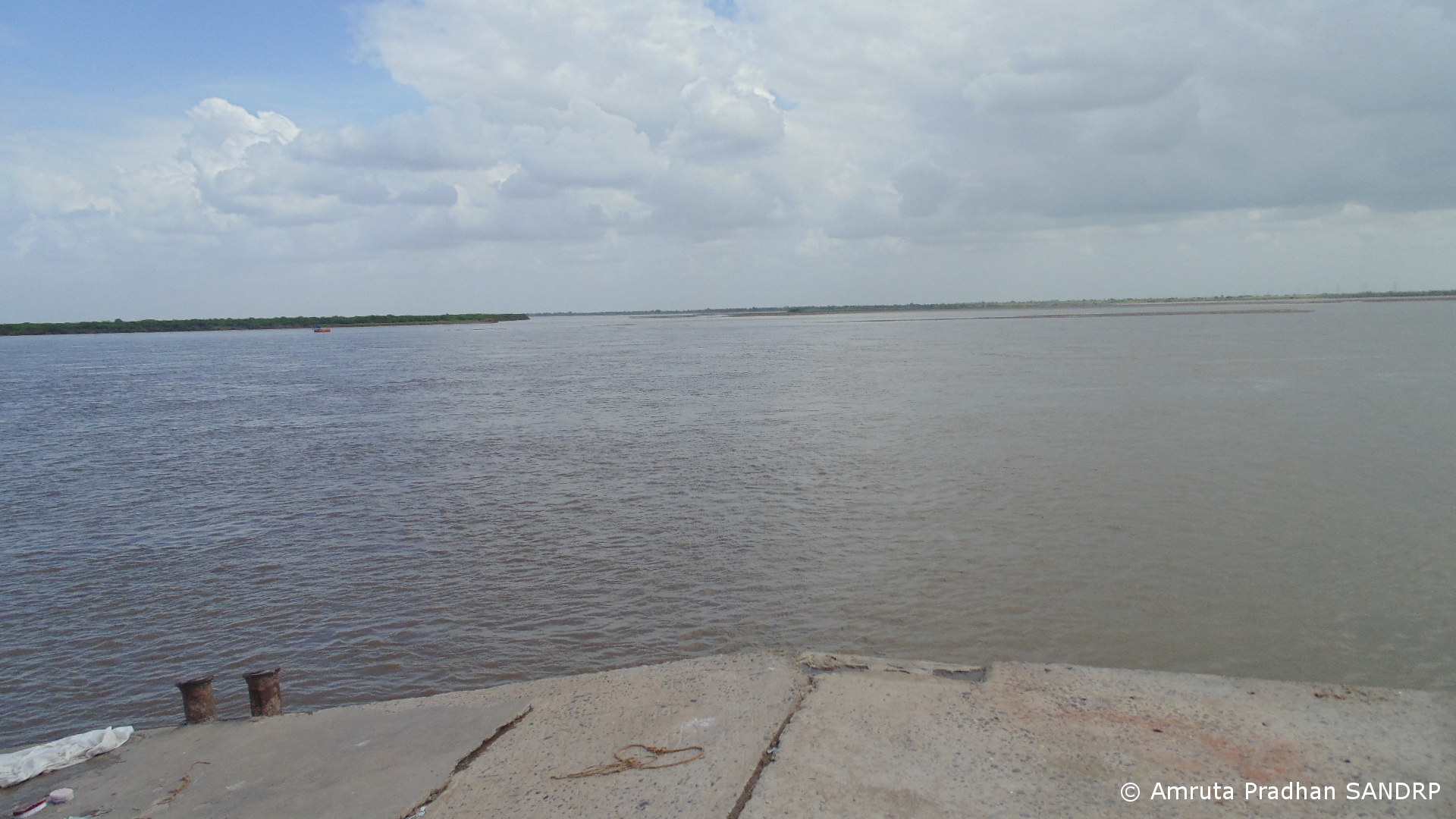
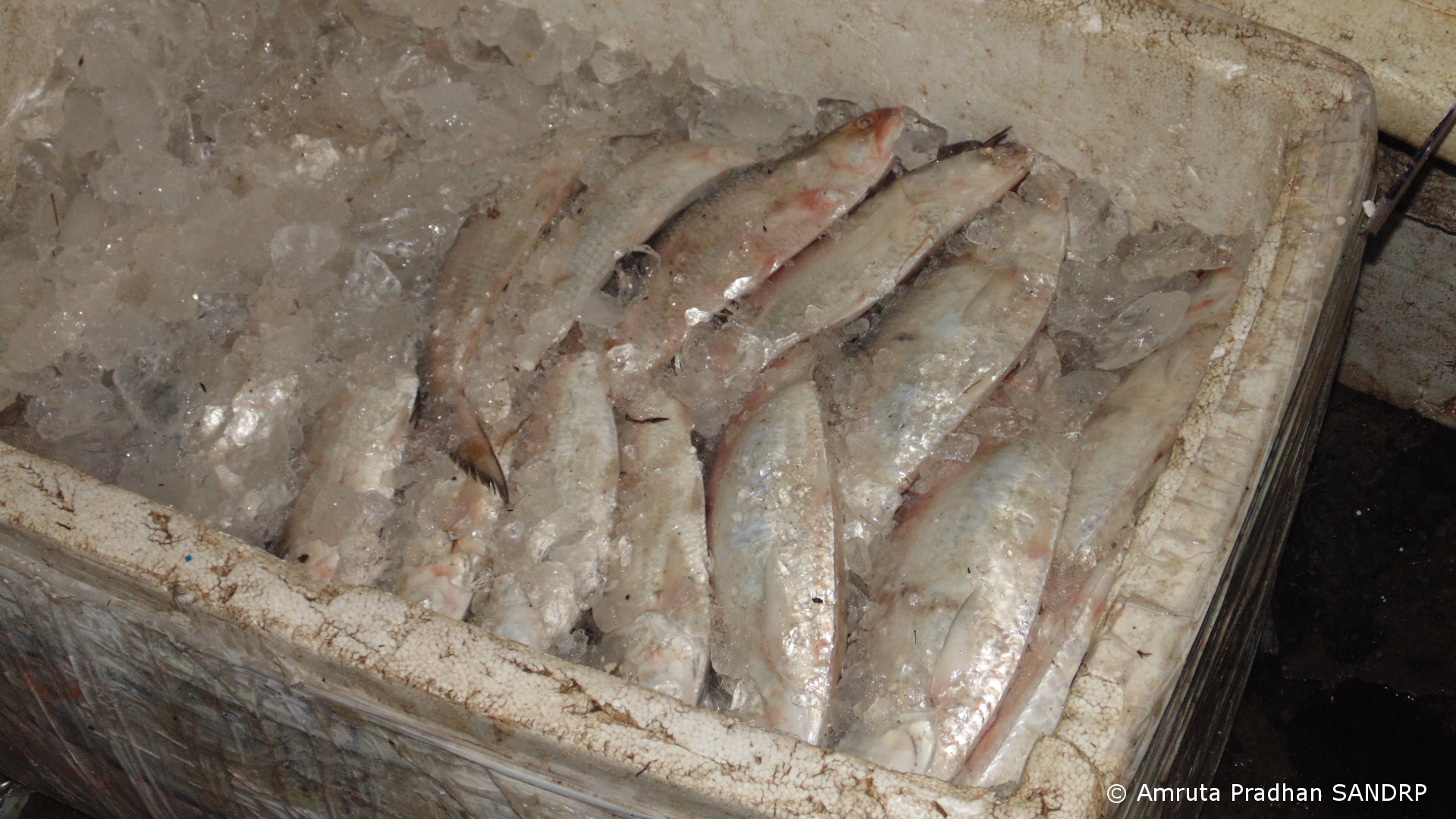
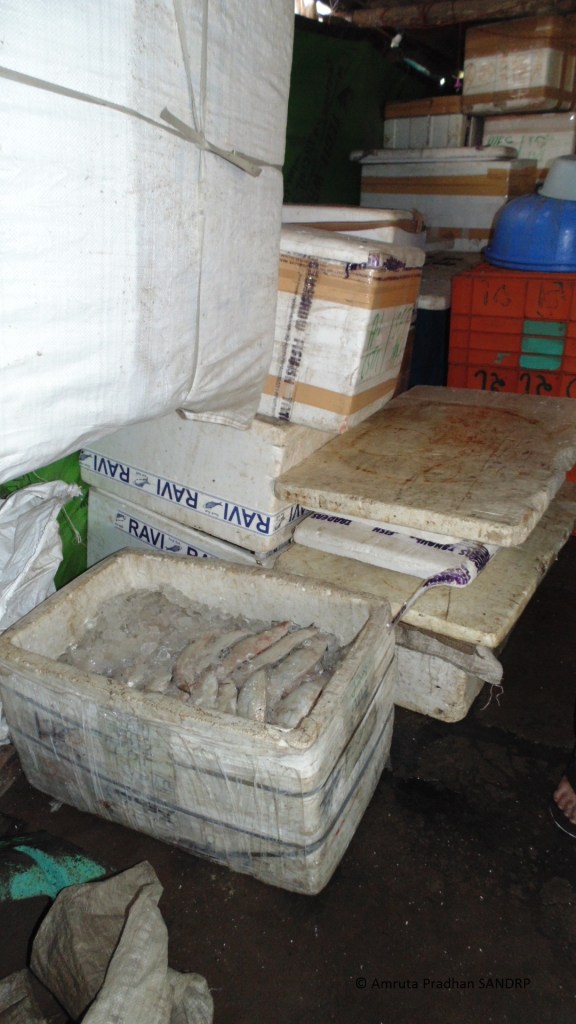
Pungent fishy smell is the first thing that grabs your attention in Bhadbhut village in Bharuch District of Gujarat, which lies on the estuary of the mighty Narmada River, as it meets the Arabian Sea. Every alternate shop in every small lane sells fresh fish and by 11 in the morning, first lot of fresh fish is ice packed in thermocol boxes, all set for far off places like Kolkata and Delhi. Before I was told, I saw for myself that fishing in the Narmada Estuary is the backbone of coastal Bharuch district.

???????????????????????????????
Bhadbhut Village

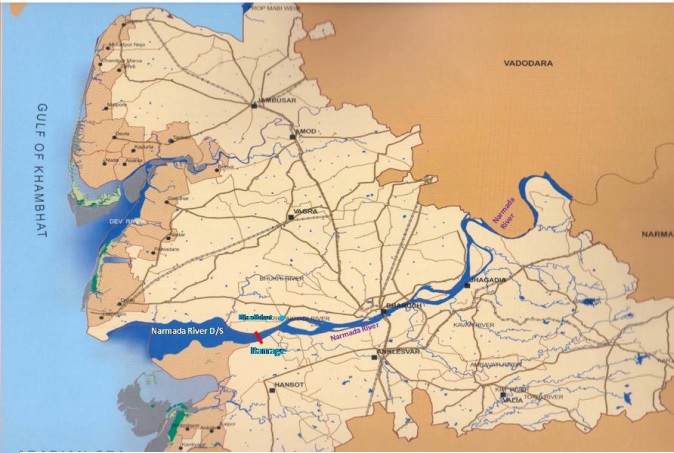
Just 5.15 kilometers from here is the planned Bhabhut Barrage on the Narmada River. What will happen to Bharuch if barrage is constructed? This is the reason why I am here. To understand the implications of this barrage on lives of thousands of fisherfolk from this estuary and on the famed Hilsa fish, that mysterious silver river migrant, on which the fishing economy depends nearly exclusively.

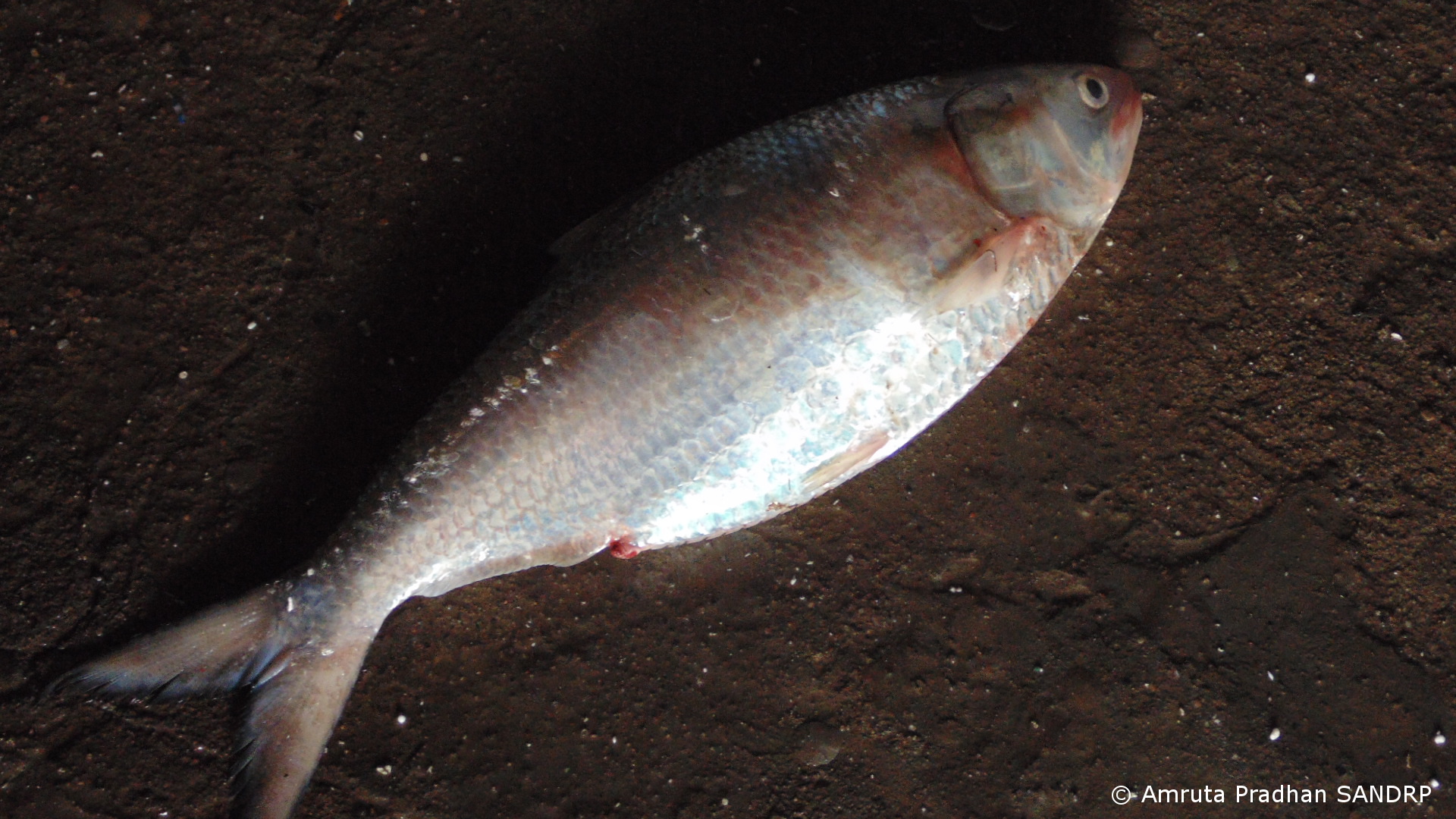
Hilsa is a marine fish that arrives in the brackish water of estuary for spawning normally inhabiting the lower region of the estuaries and the foreshore areas of the sea. For India the peak upstream migration of hilsa in most of the rivers is generally in the monsoon months of July and August and continues upto October or November.

BB 2
Hilsa

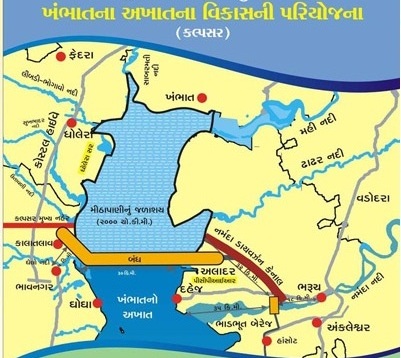
Bhadbhut barrage will be constructed at 5.15 km downstream of village Bhadbhut and 25 km upstream of river mouth. It is part of a gargantuan Kalpasar project pushed by the State Government. Kalpasar (pragmatic critics hold that Kalpasar is in fact an abbreviation of Kalpanic Sarovar, an imaginary reservoir) project which is supposed to be one of the biggest in the world proposes to construct a 30 km long dam (one of the longest in the world) across the Gulf of Khambhat between Bharuch and Bhavnagar districts[i]. The reservoir is supposed to trap the water of twelve rivers that empty their water in the gulf, including Narmada, Mahi, Sabarmati, Dhadar and some Saurashtra rivers. It is expected to create a reservoir of 2000 sq km area, over five times the area of Sardar Sarovar, the reservoir capacity is expected to be over 10 billion cubic meters, that is larger than the SSP reservoir capacity. The project is being pushed ignoring serious issues like hydrological-geological-structural feasibility and needless to say, it’s impacts on environment and fisherfolk. The project will destroy the coastal and deltaic fisheries and wetlands.

As SANDRP has been highlighting for some time now, riverine fisherfolk are one of the most disadvantaged and deprived sections in the dam debate throughout the country. It is no different in Narmada. Livelihood of the fisherfolk from Narmada Estuary has been threatened by several industrial estates established across the district and is now on the verge of being destroyed. Yield of Hilsa has been steadily decreasing (from 15319 tonnes to 4866 tonnes during 1993 to 2004[ii]) since commissioning of Sardar Sarovar Project (SSP) canal and power house in 2006. SSP is built on the Narmada River about 130 km upstream from the estuary. Another dam, Garudeshwar Dam, is under construction downstream from SSP.

Narmada Estuary
Narmada Estuary

Are people here in the estuary aware of the scale of the Kalpasar project? What do these local fisherfolk have to say about this? How have they been coping with the impacts of SSP?

On the lack of study of the downstream environment, the first paragraph from the chapter on this issue from the report of the Independent Review of the Sardar Sarovar Project instituted by the World Bank is worth quoting in full [iii]:

“From the Sardar Sarovar dam to the ocean, the Narmada River runs for 180 kilometers through a rich lowland region which represents about 10% of its catchment area. In the course of our environmental review we sought information that described the ecology of this lower reach of the river, the estuary, and near shore region in the Gulf of Cambay. We hoped to find a description of the aquatic ecosystem, including parameters indicating the quality and quantity of water and its seasonal changes, biological species, processes, and resource linkages. We looked forward to finding a systematic treatment of flow regimes and geomorphology. We expected to find systematic documentation of resource use, from drinking water to fisheries. We thought there would be documents establishing the kinds of physical, biological and socioeconomic changes to be expected as the Sardar Sarovar Projects are brought on stream and more and more of the natural flow is stored, used or diverted out of the river. We looked for a set of ameliorative measures that would be implemented to mitigate impacts. We thought these measures would be scheduled to begin with phased development of the Sardar Sarovar Projects. We hoped they would also be related to the cumulative effects of other developments on the Narmada further upstream, in particular the Narmada Sagar Projects, and to the expansion of industrial activity in the downstream rive basin in Gujarat itself.

In all our expectations we have been disappointed.” (Emphasis Added.)

The paragraph speaks eloquently and what it says it true even till date.

FIELD VISIT:

Eager to find answers to these questions, I along with Bhupat Solanki a volunteer from Paryavaran Mitra, an Ahmedabad based NGO, first met Praveen Madhiwala, a fish trader and exporter. As I explain the purpose of my visit to him, his first reaction is “if the dam at Bhadbhut comes up, Hilsa will be finished. Not only that, but the dam will prove to be destructive to the entire estuary.” He explains, “Tidal flow of water spreads 60 KM from sea shore to upstream of the estuary. They are planning to build the barrage just 25 KM upstream of the sea shore. What will happen then to the incoming salt water during high tide? It is bound to spread laterally along the barrage spreading in the coastal region and will be destructive to the settlements along the coastline. Calculating all these numbers on paper is very different than experiencing the destructive power of sea. We know what the sea can do.”

Destruction of Hilsa and other fish by Sardar Sarovar

Kamalesh Madhiwala, an advocate from Bhadbhut adds further. “Yield of Hilsa has drastically reduced after Sardar Sarowar Dam has been built. There has been a reduction of 65 to 70%. Overall water level of the estuary has gone down. Post monsoon the river becomes so dry that we can walk across the riverbed. This had never happened in the past before Sardar Sarovar.” When asked about the claim by Narmada Control Authority that it constantly releases 600 cusecs (cubic feet per second) of water from the dam[iii] to maintain the health of the river and the estuary, he says “We don’t think water is released from the SSP. There is no mechanism to monitor this. If you approach government they will show you on paper that they release 600 cusecs of water every day. But no one maintains the on ground data.” According to him the SSP has affected overall fish variety of the estuary as well. “A decade ago there used to be 70 to 80 types of fish varieties available in the estuary. Now we get only about 10 to 12 fish varieties. Earlier along with Hilsa many other riverine species like Prawns, Mahseer etc. have been commercially equally important which Sardar Sarovar has vanquished. Now the fisher people’s income is solely dependent on Hilsa which is very sensitive species. Reduction of water flow in the river immediately affects the yield of Hilsa. Even though Hilsa is available only for about 4 months of the year, 70% of the income of fisherfolk at present is from sale of Hilsa alone.”

Hilsa ice packed to be transported
70% of the income of fisherfolk is from sale of Hilsa

Farcical EIA of proposed Bhadbhut barrage by NEERI

Kamalesh Bhai also points out several lacunae in the Environmental Impact Assessment (EIA) report that National Environmental Engineering Research Institute (NEERI) has prepared for Bhadbhut Barrage. “The entire study has been an absolute farce. First of all none of the local people were aware of any such study going on. It also grossly underestimates the total population of fisherfolk that will be affected by the Bhadbhut dam.” The report considers the total number of fisherfolk residing in 21 villages to be 12,638 based on more than a decade old data from Census 2001.[iv] According to Kamlesh bhai the actual population residing in the estuary region whose livelihood will be affected by barrage is close to 35 to 40 thousand!

SANDRP had sent detailed critique of the EIA to the Gujarat State Environment Impact Assessment Authority before the public hearing for the project held on July 19, 2013. An excerpt from the critique:

“Unclear objectives of the project The objectives of the project stated in the EIA of the project are:

  • Protection of water quality of Narmada river from salinity due to tidal influence and checking the problems of salinity ingress and deterioration of ground water quality in the upper reaches of Narmada river;
  • Storage of the regulated release of water from SSP and runoff from free catchment for irrigation, domestic and industrial water supply;
  • Flood protection of about 400 sq km low lying area covering 17 villages on the left bank of river Narmada;
  • and Road connectivity between left and right banks, shortening route from Surat/Hajira to Dahej region.

The EIA agency has uncritically accepted these objectives, without assessing if the barrage with low water storage can really fulfill the second the third objective and considering the low salinity level reported by the EIA (mainly based on data provided by the project authorities, again uncritically accepted by NEERI), is the first objective relevant. The fact that the Kalpsar department played such an important role and the fact that it is public knowledge that the barrage is part of the propose Kalpsar project should have been taken note by NEERI. NEERI should have also questioned as to why is this small part of the larger Kalpsar project applying for such piecemeal clearances which is actually in violation of the Supreme Court orders. It should be added here that the Kalpsar project had applied for the TOR clearance from Union Ministry of Env and Forests. The project came up before the MoEF’s Expert Appraisal Committee on River Valley Projects. SANDRP had then sent a letter to the EAC, saying that based on information provided, the project should not be considered for clearance. In its 41st meeting in Sept 2010, the EAC declined to give TOR clearance to the project, saying that the documentation provided are highly inadequate and need to be more holistic and uptodate pre-feasibility report needs to be provided. The project there after has not gone back to EAC.

However, a small part of that same project, the Bhadbhut barrage is now proposed before the Gujarat State Environment Impact Assessment Authority (http://seiaa.gujarat.gov.in/).”

An edited version of letter about the inadequacies of the EIA report sent from Paryavaran Mitra director to Gujarat Pollution Control Board which has been published by Counterview states that the report fails to assess severity of impact on Hilsa and other migratory fishes and instead tries to imply that fishing activity is only a part time employment for fisher community, which is entirely incorrect.[v] The report proposes fish ladder as a mitigation measure with no specific details. Fisherfolk are not impressed. “Tell me madam, have you ever seen a fish climb a ladder?” asks Kamlesh bhai laughing.

While a fish ladder may or may not work (it is not likely to work for Hilsa and other important fish species, it has not worked anywhere in India so far), the fisher folk are not wrong in ridiculing it. Fish ladders have never been taken seriously by the proponents who put them in. Case in point is Farakka Barrage in West Bengal, where too, a fish lock was supposedly made for Hilsa. It has not been operated for over a decade and current officials have no idea that such a thing exists.

Cover Page of the controversial NEERI EIA of  Bhadbhut Barrage Project
Cover Page of the controversial NEERI EIA of Bhadbhut Barrage Project

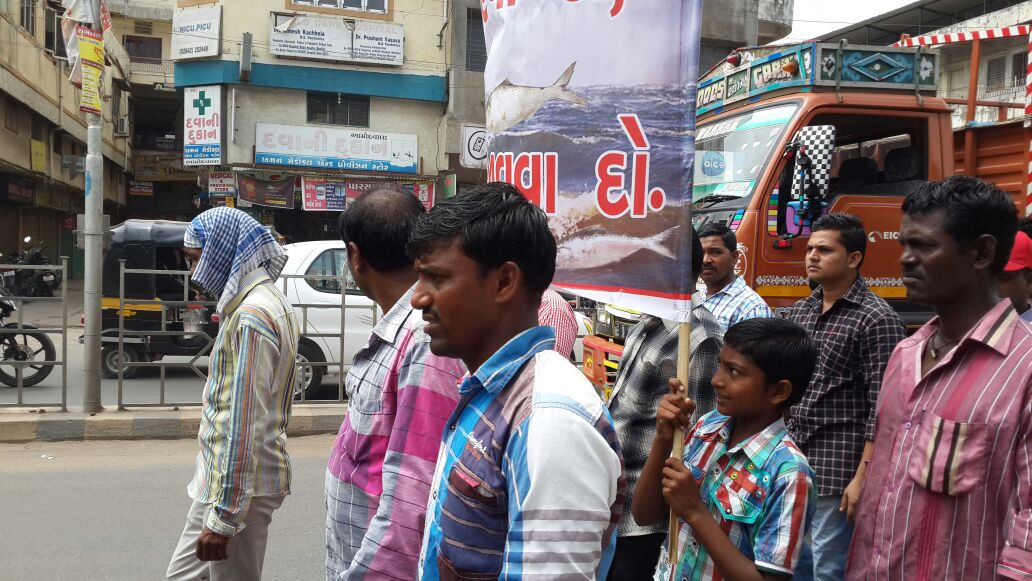
“The NEERI EIA is a complete copy paste job. It has several incidences of plagiarism. It mentions names of places that are found nowhere in this region. This region also comes under PCPIR[vi] project. The PCPIR EIA report does not talk about impact on Hilsa at all!”- Bhupat Bhai adds. “That’s true” says Kamlesh Bhai. “Even after the NEERI completed the report none of the local people had any idea about the project and its impacts. Now we are raising awareness. On 7th July 2014 local fisherfolk organized a protest rally at the District Magistrate office and more than 4000 fisher people were a part of this. This is our fourth rally opposing the project.” When asked if any compensation is being offered for those getting affected by the barrage, I am told none. According to them in the entire argument about the barrage, its impacts etc. there is absolutely no talk about compensating the fisherfolk. They also raised their voices in the public hearing of the project. 1500 farmers and fisherfolk attended the public hearing on July 19 and walked out soon after sharply registering their protest against the proposed project and naming it as “anti-people”.[vii]

BB 7
Protest March organized on 7th July 2014 (Photo by Kamlesh Madhiwala)

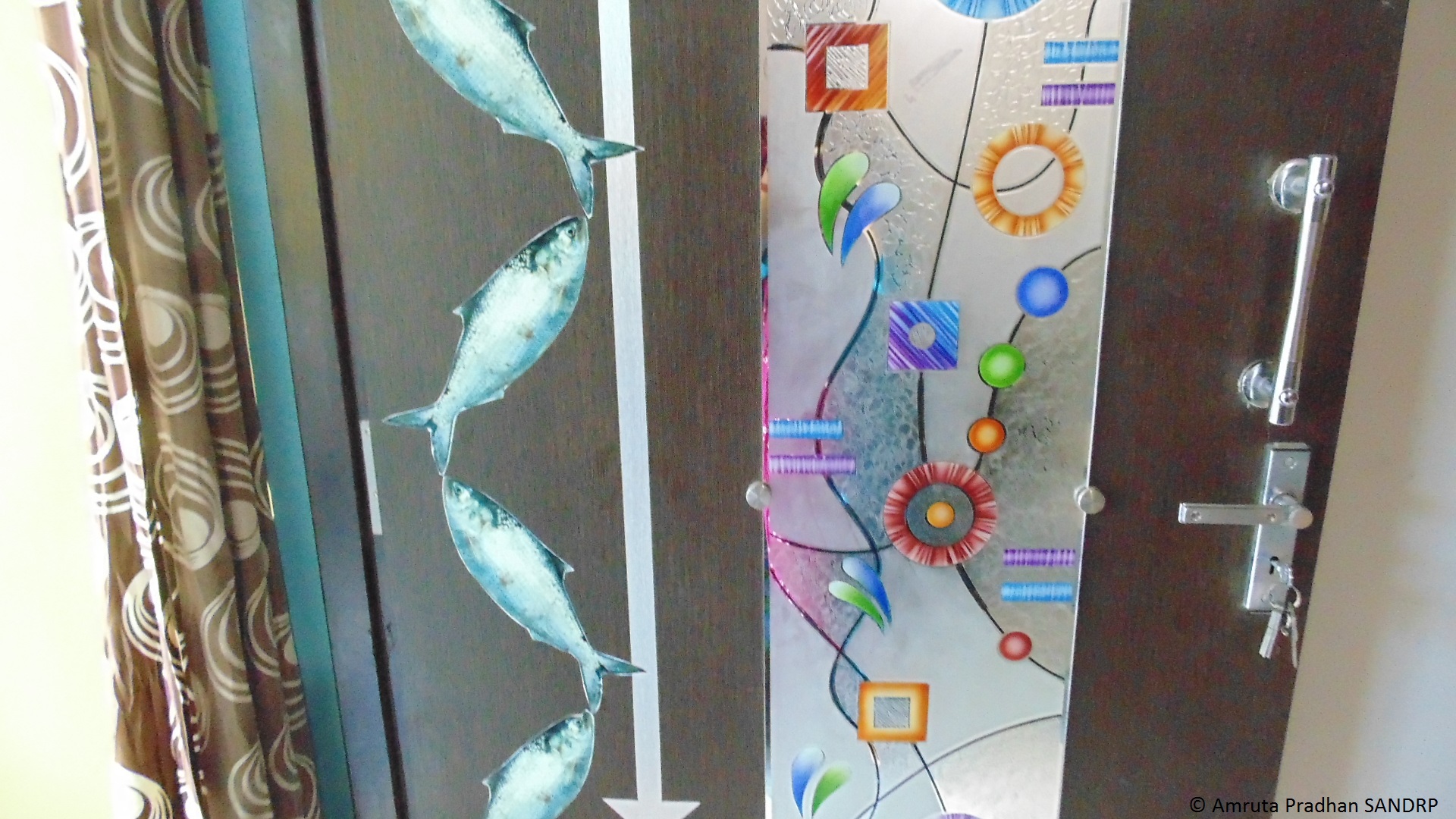
When we arrive at Praveen Macchi’s house, his door is adorned with images of Silvery Hilsa. His family has been involved in fishing from generations. When asked about estuary’s overall condition after SSP he confirms the facts stated earlier by Praveen Bhai and Kamalesh Bhai. “We don’t think water is released from SSP and even if it is, it is so meagre that it is nearly useless. The estuary receives water only when the dam overflows. In 2014 the dam overflowed only once which was as late as September. Other than dam overflow only other source of water is releases from River Bed Power House of SSP, leakage from below the dam wall and some water from downstream streams.” Fish yield of this year is about 30% lower than last year when the estuary received water from dam overflow 4 to 5 times in year. “Now water from SSP has been diverted for hydropower generation. After power generation at Canal Head Power House water is released into Narmada canal instead of river/ estuary.”

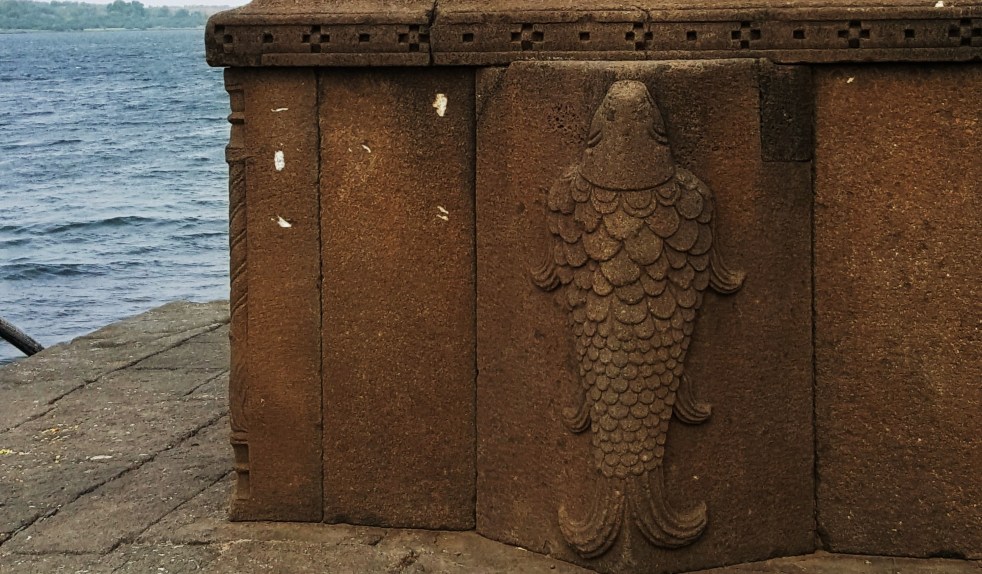
Hilsa used as a decorative element

Pressures on Narmada estuary and livelihoods of thousands

When asked as to how does the Hilsa survive without freshwater water released in the estuary, Praveen Bhai explains “As of now Hilsa arrive at least during monsoon as the river stretch of 130 KM holds rain water. If Bhadbhut barrage is built there will be no free flowing river stretch to support fish breeding. Yield of Hilsa will be hard hit and so will be the fishing industry. Entire population dependent on fishing will lose its livelihood.”

BB 9
If Bhadbhut barrage is built there will be no free flowing river stretch to support fish breeding

Praveen Bhai told me that the fisher people’s cooperative ‘Bhadbhut Matsya Udyog Sahakari Mandali’ is preparing to file a Public Interest Litigation challenging the barrage project. Is livelihood of more than 30000 people getting affected reason enough to argue for stoppage of the project? Will the courts understand this implication? They did not when impact of SSP on fisher people was argued earlier. Let us hope judiciary is more sensitive to the fisher people’s issue this time.

Gujarat Government Map showing Kalpasar and Bhadbhut project locations

Praveen Bhai further informs that the overall salinity of the estuary has gone up due to severely restricted freshwater flow into the estuary. Fish diversity has reduced and riverine fish movement is obstructed due to SSP (Sardar Sarovar Project). Hilsa which would be available till December – January is now seen hardly till September as the salinity levels rise rapidly after monsoon. Says Praveen Bhai: “Narmada has been Hilsa’s favoured habitat. Earlier Hilsa was found in Tapi estuary near Surat as well. But after the Ukai dam was constructed only 2 to 5% of Hilsa arrive at the Tapi estuary. Lives of fisherfolk in the estuary have been devastated. The problem of livelihood of these people became so serious that there are instances where women of the community had to get into prostitution.”

The Narmada estuary is already facing growing pressures from industrial estates. Bharuch District has 13 industrial estates with 137 medium and large scale units of chemicals, textiles, plastics, fertiliser related industries etc. Industrial estate of Dahej which is in close proximity to Bhadbhut releases its untreated effluent in the sea near Bharuch. This is affecting the overall water quality of the estuary. Praveen Bhai points out to a very peculiar phenomenon. A completely different genre of crime has evolved in the industrial estates near Bharuch where youth blackmail the companies when the companies discharge untreated effluent into the sea. The companies, hand in glove with police, bribe the blackmailers for keeping quite. Effluents meanwhile go untreated in the river and sea. This is also true of effluents from Ankaleshwar and other industrial estates. The SSP has worsened this situation due to drastic reduction in freshwater flow that earlier used to dilute the industrial, urban and other effluents.

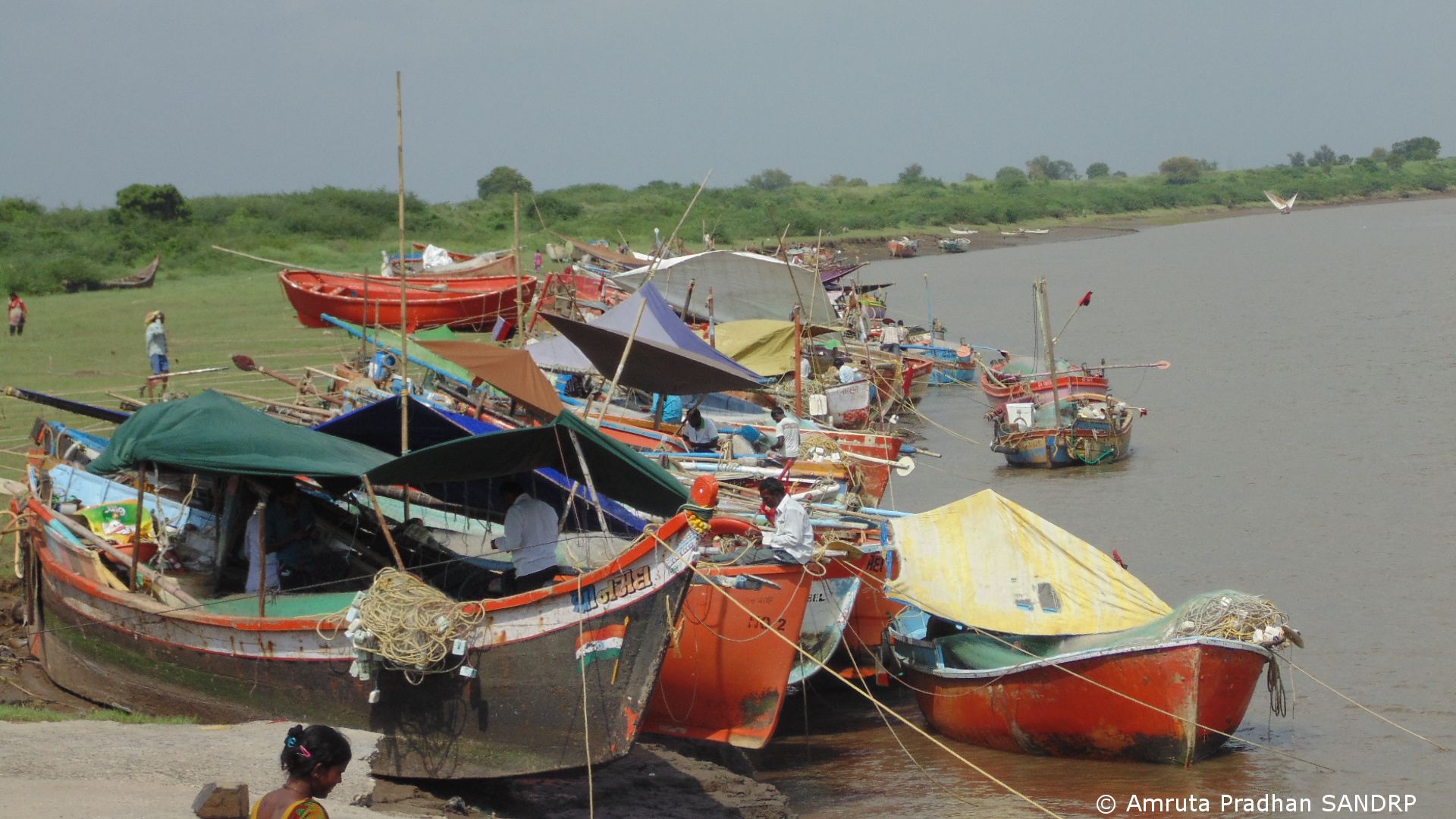
Concerns of fisherfolk We now move towards the banks of Narmada to meet artisanal fisher people there. Boats which can contain upto 5 to 6 people are parked along the banks. Since it is a noon time, hurry burry of fish packing is settling down. One by one tempos from the market are arriving and picking up the packed fish. As we talk with a bunch of fisher people, their worries and concerns tumble out. Several issues emerge while talking to them.

“Government is all set to build a dam destroying our livelihood. As it is government is not extending any kind of support to us river fisherfolk. No bank provides us with loans” one of them speaks.

“Yield of fish has also reduced due to reduced water level of the estuary. Sea water gets contaminated by the untreated effluent that Dahej & other Industrial estates disposes in the sea. This sea water that is highly contaminated with chemicals and heavy metals enters estuary during high tide. This polluted water has also affected the overall fish quality and there is hardly any freshwater from upstream to dilute it because of the dam. Earlier single Hilsa fish used to weigh more than two kilograms. Now it hardly weighs one to 1.25 kgs” says another one.

“With all this polluted water how will the fish grow? It naturally starves” says yet other.

“If Bhadbhut Barrage comes up, Hilsa will no more come here. Our livelihood will be destroyed. Government is not even offering any compensation. No one has been compensated for the impact we have already felt due to the SSP.” They all keep talking anxiously.

They further inform that several farmers in Bharuch who have lost their land in PCPIR project or other industrial estates have shifted to fishing creating more stress in the industry that is already facing a steep decline. Farmers, who are new fisherfolk lack the traditional skills or patience and often fence the estuary and sea with fishing nets in hope of catching Hilsa, which prevents the fishermen’s traditionally used small boats from entering the sea. As they speak, every concern raised is met by a nod by the entire group.

BB 10
Fishing boats along the banks of river Narmada

BB 11

Contrary to this scenario the EIA report summary by NEERI states “… the fresh water storage in upstream of the barrage will provide a favourable environment for intensive fresh water fishery and provision of fish ladder with shiplocks would enhance the fishery activities and fetch greater economic benefits to the people.”[viii] Fisherfolk when asked about this conclusion show the other side of the argument. Fisheries department floats tender for fishing in the dam reservoir. Only big contractors can afford to obtain the contracts. “It’s not a job for small fishermen like us. If the dam comes up all these small boats you see will vanish” they say.

???????????????????????????????
Fisherfolk from Bhadbhut

Other than the threatened livelihood, the fisher families in the estuary are also facing several other issues. Wells of fresh water now contain saline water. Many of them used to rely on Narmada River for drinking water. Since the river has gone dry after SSP, they no more receive drinking water from Narmada River. As the water from the estuary has reduced, the wells which have traditionally been an important source of drinking water are now dry or saline. Villages which are closer to the sea are experiencing saline water and also polluted chemical water ingress. “Many of us are having skin problems because we have to go in the chemical water.” I wonder with fishing industry plagued with so many problems if younger generation is at all willing to continue in the same occupation. When asked about this they tell me that for now the traditional skills is the only real education the younger generation has.

Many of them have protested the project at the public hearing. “We all are opposing the dam. Building dams might to do good for contractors, but what about us? Are we not people?” they ask.

The proposed Garudeshwar Dam on Narmada immediate downstream of SSP will further stop the water flow to estuary as it is designed to pump back to SSP the water released from River Bed Power House. The fisherfolk here do not know about this, nor has the government bothered to tell them or do any impact assessment or prepare any rehabilitation or management plan. The only hope is the petition lying before the National Green Tribunal against the Garudeshwar Dam.

I come back with more questions than answers. Praveen Bhai’s home, with his welcoming door adorned with the silvery Hilsa remains in my thoughts for a long while.

Amruta Pradhan, SANDRP amrutapradhan@gmail.com

(Based on field visit September 2014 by the author.)

END NOTES:

[i] https://sandrp.in/dams/Why_Modis_54000_crore_legacy_project_KALPSAR_is_doomed_Nov_2010.pdf

[ii] https://sandrp.wordpress.com/2014/09/01/collapsing-hilsa-can-the-dams-compensate-for-the-loss/

[iii] Page 277, Sardar Sarovar: The Report of the Independent Review, Resource Futures International Inc, Canada, 1992

[iv] P. 10 of Executive Summary of EIA Report by NEERI

[v] http://counterview.org/2013/07/18/environmental-impact-assessment-report-on-bhadbhut-suggests-project-is-pro-industry-lacks-sensitivity-towards-fisherfolk/

[vi] PCPIR: Petroleum, Chemicals and Petrochemicals Investment Region, see: http://gujaratpcpir.org/

[vii] http://www.counterview.net/2013/07/fisherfolk-walk-of-out-public-hearing.html

[viii] P. 15 of Executive Summary of EIA Report by NEERI

Expert Appraisal Committee · Ministry of Environment and Forests

Reconstituted Expert Appraisal Committee on River Valley Projects: MoEF has neither environment sense, nor guts: Unacceptable Committee

Press Statement                                                                                             September 7, 2013

Reconstituted Expert Appraisal Committee on River Valley Projects:

MoEF has neither environment sense, nor guts: Unacceptable Committee

On Sept 5, 2013, Union Ministry of Environment and Forests came out with “Re-constitution of Expert Appraisal Committee (EAC) for River Valley & Hydro Electric Project” (see: http://envfor.nic.in/sites/default/files/EAC-Order-05092013.pdf). Mr Alok Perti, former Coal Secretary, has been made chairperson of the committee that appraises all major irrigation projects, dams, hydropower projects and river valley projects for Environment clearances at two stages (TOR and final). It is shocking to see that Mr Perti who has absolutely no environment credentials, who has been known to be anti environment, who has been accusing the environment ministry to be in road block of coal mining and who has shown his ignorance of environment issues on several occasions has been selected as chair person, putting aside basic environmental sense. This reconstituted EAC on RiverValley and Hydropower projects is completely unacceptable.

It is equally disturbing to see that the committee has no woman representation, no sociologist, no one from non-government organisations. All ten members are either from government, government organisations or government funded academic organisations. This means that none of them would be in a position to take a stand independent of the government stand. The committee also has no river expert, climate change-water expert or disaster management expert, all of which are crucially important issues for a committee like this that decides the fate of India’s rivers, even more so after the Uttarakhand disaster. P K Chaudhuri, one of the members of the new committee also has had nothing to do with rivers, water or environment. Hardip S Kingra, who was involved in Commonwealth games organisation and also chairman of National Scheduled Castes Finance and Development Corporation has had no work related to rivers or environment.

Specifically, Mr Alok Perti, who has been senior functionary, including secretary of currently controversial Coal Ministry from Oct 2009 to earlier this year and before Oct 2009 in ministries like defense and family welfare, clearly has had no background on environment or rivers. As coal secretary, he had accused MoEF for stalling the growth by not giving clearances to coal mining projects automatically. The Economic Times quoted Perti as saying in a report[1]: “India has to decide whether she wants electricity or tigers.” Such simplistic statements reflect he has absolutely no understanding of environment, biodiversity, leave aside rivers. Perti’s anti civil society stance was also exposed when he refused to discuss issues with activists and asked them to go and file RTIs[2]. These are only a couple of examples we are giving here, there are many others. By appointing such a person as chairman of the EAC on RVP, the MoEF has shown it has no guts or interest in protecting the environment or forests which is supposed to be its mandate. This committee is clearly unacceptable and will also not stand legal scrutiny.

Ritwick Dutta (ritwickdutta@gmail.com, 09810044660, ERC and LIEF, Delhi)

Parineeta Dandekar (parineeta.dandekar@gmail.com, 09860030742, SANDRP, Pune)

Himanshu Thakkar (ht.sandrp@gmail.com), 09968242798, SANDRP, Delhi)

Manoj Mishra (yamunajiye@gmail.com, 09910153601, YJA, Delhi)


[2] http://environmentaljusticetv.wordpress.com/2013/02/25/greenpeace-india-protest-at-the-coal-ministry/

FOLLOWING LETTER HAS BEEN SENT ON SEPT 9, 2013:

9 Sept 2013

To,

Smt. Jayanthi Natarajan,

Union Minister of State (IC) of Environment and Forests,

Paryavaran Bhawan, Lodhi Road, New Delhi, jayanthi.n@sansad.nic.in


Dr V Rajagopalan,

Secretary,

Union Ministry of Environment and Forests, New Delhi, vrg.iyer@nic.in


Maninder Singh

Joint Secretary,

Union Ministry of Environment and Forests, New Delhi, jsicmoef@nic.in


Mr. B. B. Barman

Director (IA) River Valley Projects,

Union Ministry of Environment and Forests, New Delhi, bidhu-mef@nic.in


Subject: Urgent concerns about reconstituted Expert Appraisal Committee on River Valley Proejcts


Respected madam and sirs,


On Sept 5, 2013, Union Ministry of Environment and Forests came out with “Re-constitution of Expert Appraisal Committee (EAC) for River Valley & Hydro Electric Project” (see: http://envfor.nic.in/sites/default/files/EAC-Order-05092013.pdf). Mr Alok Perti, former Coal Secretary, has been made chairperson of the committee that appraises all major irrigation projects, dams, hydropower projects and river valley projects for Environment clearances at two stages (TOR and final). It is shocking to see that Mr Perti who has absolutely no environment credentials, who has been known to be anti environment, who has been accusing the environment ministry to be in road block of coal mining and who has shown his ignorance of environment issues on several occasions has been selected as chair person, putting aside basic environmental sense. This reconstituted EAC on River Valley and Hydropower projects is completely unacceptable.


It is equally disturbing to see that the committee has no woman representation, no sociologist, no one from non-government organisations. All ten members are either from government, or from government organisations or government funded academic organisations. This means that none of them would be in a position to take a stand independent of the government stand. The committee also has no river expert, climate change-water expert or disaster management expert, all of which are crucially important issues for a committee like this that decides the fate of India’s rivers, even more so after the Uttarakhand disaster. P K Chaudhuri, one of the members of the new committee also has done no work with rivers, water or environment, going by his CV. Hardip S Kingra, who was involved in Commonwealth games organisation and also chairman of National Scheduled Castes Finance and Development Corporation has had no work related to rivers or environment.


Specifically, Mr Alok Perti, who has been senior functionary, including secretary of currently controversial Coal Ministry from Oct 2009 to early 2013 and before Oct 2009 he has been in ministries like defense and family welfare, clearly has had no background on environment or rivers. As coal secretary, he had accused MoEF for stalling the growth by not giving clearances to coal mining projects automatically. The Economic Times quoted Perti as saying in a report[1]: “India has to decide whether she wants electricity or tigers.” Such simplistic statements reflect he has absolutely no understanding of environment, biodiversity, leave aside rivers. Perti’s anti civil society stance was also exposed when he refused to discuss issues with activists and asked them to go and file RTIs[2]. By appointing such a person as chairman of the EAC on RVP, the MoEF has shown it has no interest in protecting the environment or forests which is supposed to be its mandate. This committee is clearly unacceptable and will also not stand legal scrutiny.


Under the circumstances, we demand that:

1. The notification (No. J-12011/EAC /2010-IA-I dated Sept 5, 2013) of reconstitution of the EAC be cancelled;

2. A participatory process be initiated for reconstitution of the EAC with the norms some of suggested in our letter to you dated June 29, 2013, see: https://sandrp.wordpress.com/2013/06/29/lessons-from-uttarakhand-disaster-for-selection-of-river-valley-projects-expert-committee/;

3. The EAC meeting slated for Sept 23-24, 2013 should be cancelled.


We will look forward to early reply from you.


Thanking you,


Prof. M. K. Prasad, Kerala Sastra Sahitya Parishad, Cochin prasadmkprasad@gmail.com

Ramaswamy R. Iyer, former secretary, Government of India, Delhi. ramaswamy.iyer@gmail.com

Madhu Bhaduri, former ambassador, Delhi. madhu.bhaduri@gmail.com

Ravi Chopra, People’s Science Institute and member NGBRA, Dehra Doon psiddoon@gmail.com

Ritwick Dutta, ERC and LIEF, Delhi.  ritwickdutta@gmail.com

Manoj Mishra, Yamuna Jiye Abhiyaan, Delhi yamunajiye@gmail.com

Prof. S. Janakarajan, Madras Institute of Development Studies, Chennai, janak@mids.ac.in

Vimal Bhai, MATU jansangathan, Uttarakhand bhaivimal@gmail.com

Shripad Dharmadhikary, Manthan Adhyayan Kendra, Pune, manthan.shripad@gmail.com

10. Latha Anantha, River Research Centre, Kerala latha.anantha9@gmail.com

Sujit Patwardhan, Parisar, Pune patwardhan.sujit@gmail.com

Debi Goenka, Conservation Action Trust, Mumbai debi1@cat.org.in

Souparna Lahiri, All India Forum of Forest Movements, Delhi. souparna.lahiri@gmail.com

Rohit Prajapati, Paryavaran Suraksha Samiti, Gujarat   – rohit.prajapati@gmail.com

Soumya Dutta, Climate & Energy Group, Beyond Copenhagen collective, Delhi soumyadutta_delhi@rediffmail.com

Joy KJ, Society for Promoting Participative Ecosystem Management, Pune joykjjoy2@gmail.com

Anurag Modi, Shramik Adivasi Sangathan, Betul, Madhya Pradesh sasbetul@yahoo.com

Dr Brij Gopal, Centre for Inland Waters in South Asia, Jaipur, brij44@gmail.com  

Rahul Banerjee, Dhas Gramin Vikas Kendra, Indore rahul.indauri@gmail.com

20. Subhadra Khaperde, Kansari Nu Vadavno, Indore subhadra.khaperde@gmail.com

Shankar Tadwal, Khedut Mazdoor Chetna Sangath, Alirajpur shankarkmcs@rediffmail.com

Samantha Agarwal, Chhattisgarh Bachao Andolan, Raipur, Chhattisgarh. samsnomadicheart@gmail.com

Dr V Rukmini Rao, Gramya Resource Centre for Women, Secunderabad. vrukminirao@yahoo.com

Tarun Nair, Researchers for Wildlife Conservation, Bangalore. tarunnair1982@gmail.com

Shankar Sharma, Mysore shankar.sharma2005@gmail.com

C.G. Madhusoodhanan, Research Scholar,Indian Institute of Technology Bombay madhucg@gmail.com

Pushp Jain, EIA Resource and Response Centre, New Delhi ercdelhi@gmail.com

Gopakumar Menon, Wildlifer, Bangalore. gopakumar.rootcause@gmail.com

Gopal Krishna, Toxics Watch Alliance, Delhi. gopalkrishna1715@gmail.com

30. Jai Sen, CACIM, New Delhi, jai.sen@cacim.net

Samir Mehta, International Rivers, Mumbai samir@internationalrivers.org

E Theophilus, Malika Virdi, K Ramnarayan, Himal Prakriti, Munsiari, Uttarakhand, etheophilus@gmail.com

Neeraj Vagholikar, Kalpavriksh, Pune, nvagho@gmail.com

PT George, Intercultural Resources, Delhi, ihpindia@gmail.com

Akhil Gogoi, President, Krishak Mukti Sangram Samiti, Assam, secretarykmss@gmail.com

Subir Bhaumik, Veteran Journalist and author of “Troubled Periphery: Crisis of India’s Northeast” (Sage, 2009), sbhaum@gmail.com

Ravindra Nath, Rural Volunteers Centre (RVC), Akajan, Dhemaji, Assam, rvcassam@gmail.com

Sanjib Baruah, Professor, Bard College, New York, baruah@bard.edu

Shashwati Goswami, Associate Professor, Indian Institute of Mass Communication, shashwati.goswami@gmail.com

40. Mrinal Gohain, ActionAid, Guwahati, mrinalgohain@gmail.com

Keshav Krishna Chatradhara, Peoples Movement for Subansiri & Brahmaputra Valley (PMSBV), Assam, pmsv_subansiri@yahoo.com

Girin Chetia, North East Affected Area Development Society, Jorhat, Assam, neadsjorhat@gmail.com

Azing Pertin, Echo of Arunachal, Arunachal Pradesh, azingp@gmail.com

Parag Jyoti Saikia, SANDRP, Delhi.

Parineeta Dandekar, SANDRP, Pune. parineeta.dandekar@gmail.com

Additional names in letter sent independently by CORE (namdithiu@coremanipur.org on 190913) :

46. Centre for Organisation Research and Education (CORE)

Reformed Education and Development Society (READS) Manipur

Forum for Indigenous Perspective and Action (FIPA)

Action Committee  Against Tipaimukh Project (ACTIP)

50. All Loktak Lake Areas Fishermen’s Union Manipur (ALLAFUM)

All Manipur Thanga People’s Welfare Association (AMTPWA)

Rural Education and Action for Change Manipur (REACH-M)

All Tribal Women Organisation(ATWO)

Weaker Section Development Council(WSDC)

Rongmei Luh Phuam (Assam, Manipur and Nagaland)

REACHOUT North East

River Basin Friends North East

58. Anthony Deb Barma of Borok Peoples’ Human Rights Organisation (BPHRO), Tripura

Himanshu Thakkar, South Asia Network on Dams, Rivers & People, c/o 86-D, AD block, Shalimar Bagh, Delhi)ht.sandrp@gmail.com
Dams

Fish Ladders: Do they Work?

During the last few months several contradictory facts have been surfacing about fish ladders. Fish Ladders are small elevated steps or passes made in dams, with water releases to enable fish to migrate in the upstream (or downstream) of the dam.

Image

This upstream migration is a part of the reproductive cycle of many fish, like Hilsa and Mahseer in India.

Image

A study in the United States, a country with comprehensive attention to impacts of dams on fish, has concluded that actual numbers of fish who make it to their spawning grounds above dams with fish passages is a small fraction of targeted goals of these facilitie.  For example, for American shad (Incidentally, Hilsa is also a type of Shad) – an important species for commercial and recreational fisheries that sustained generations on the East coast of the US – on average about only 3% percent of the fish that pass the first fishway make it past the last dam with a fishway in these rivers. Another example is that species such as Atlantic sturgeon cannot pass fish ladders—so for certain species, fishways do not work at all. Thus, in these systems, effective up and down stream passage is not being provided for anadromous fish. The result is that these species are getting listed as endangered or threatened one by one. The study actually concludes that looking at the dismal success rate of fish ladders and hatchery based recovery programs, “Ecologically and economically significant species restoration is not possible without dam removals”. (International Rivers)

Image

A spectacular film “End of the River” chronicles the impact of small hydropower dams on fish in Europe. The film says that water released from the fish ladders is not enough for the fish species to survive in the downstream. https://sandrp.wordpress.com/2013/03/16/the-end-of-the-river/)

At the same time, ecologically designed fish ladders do help the fish get across the impediment of dams in some cases. For example, a weir on River Elbe in Germany counted its Millionth migrating fish in January 2013, 3 years after it was built.(http://www.dw.de/german-fish-ladder-celebrates-millionth-user/a-16509927)

Image

Lesson for India seems to be that, in keeping with our livelihood dependency on riverine fish and their ecological value:

  • Dams should not be built in ecologically important regions with documented fish diversity like in Western Ghats, Eastern Himalayas, near river confluences and near estuaries.
  • Existing dams, where feasible, should have  fish ladders and passages designed for Indian species, these should be monitored by independent committees with local participationImage
  • all small hydel projects should have functioning fish ladders and most importantly,
  • ALL dams should release e-flows which exceed the flows needed for fish survival and migration. E-flows should be released through fish passages and not turbines. They should keep in mind the need for longitudinal and lateral connectivities.
  • No in stream sand mining should be allowed. No diversion of water for sand mining should be allowed. Sand mining should only be done manually, use of machine should not be allowed.

Unfortunately, even India’s premier research institutes like CIFRI are recommending eflows which are insufficient for species like trouts to survive. Its not a coincidence that these recommendations are very convenient for the private dam developers who are funding these studies.

SANDRP (ht.sandrp@gmail.com)

POST SCRIPT: Some related articles on SANDRP blog:
1. https://sandrp.in/2016/11/24/narora-barrage-fish-ladder-ganga-and-memories/
2. https://sandrp.in/2016/08/12/sushri-umaji-hilsa-fisherfolk-and-ganga-deserve-more-than-a-fish-ladder-by-cifri/
3. https://sandrp.in/2014/02/02/fish-ladder-at-kurichhu-hydropower-project-bhutan-some-thoughts/
4. https://sandrp.in/2014/12/17/larji-dam-fishladder-an-unlovely-trinket-a-deceptive-ornament/