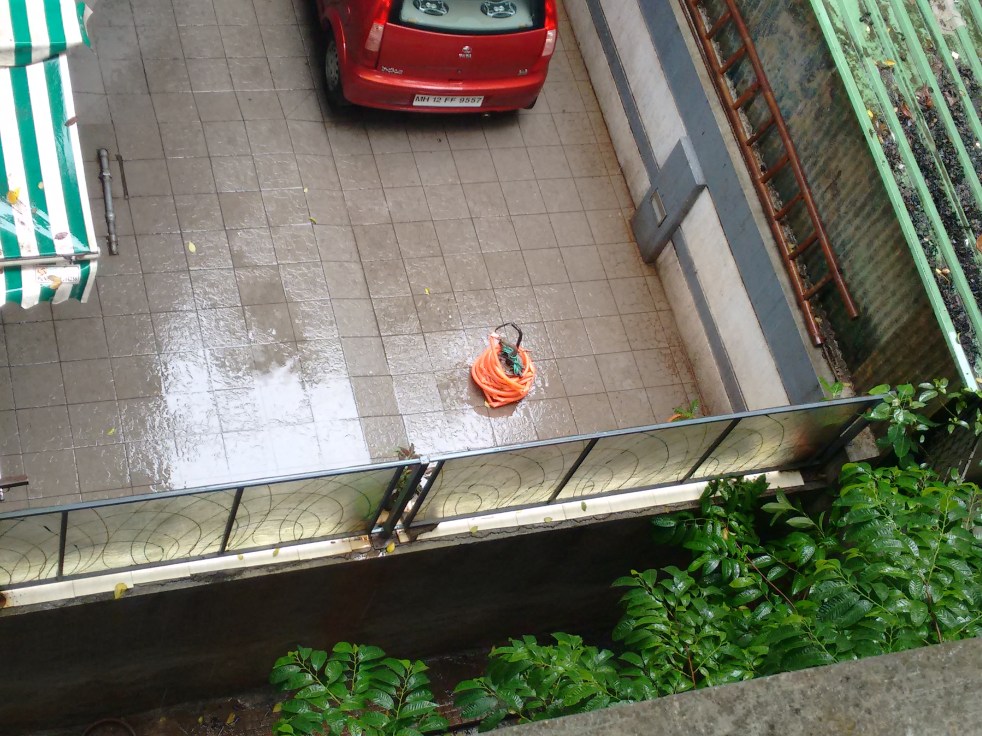
While more than allocated and more than enough water supply from Khadakwasla Project Complex steals the water supply show in Pune, water below the ground remains pretty much out of sight and out of mind for Pune Municipal Corporation (PMC) and everyone else. Roughly estimated use close to one thousand million cubic feet (TMC) remains not just ungoverned but completely unacknowledged. Though groundwater use forms an important component of non-potable water use in the city total quantity of the groundwater extracted remains unassessed. Drilling of borewells has been going on unregulated and groundwater level has been falling at the rate of quarter of a meter per annum. Neither PMC nor any other State agencies like Maharashtra Water Resources Regulatory Authority (MWRRA functioning as State Groundwater Authority) or Groundwater Survey and Development Agency (GSDA) is governing the resource and have taken any concrete steps for its conservation. Continue reading “Groundwater of Pune: An Over-exploited and ungoverned lifeline”
Tag: Drought

DRP: 20 June 2016 (MoWR invites suggestions on National Water Framework & Model Ground Water Bill)
Centre Suggestions invited on Draft National Water Framework Bill and Draft Model Bill for Conservation, Protection, Regulation and Management of Ground Water Ministry of Water Resources, River Development and Ganga Rejuvenation has uploaded the draft national water framework bill and draft model bill for conservation, protection, regulation and management of ground water on its website (http://mowr.gov.in). The Draft National Water Framework Bill provides an overarching national legal framework based on principles for protection, conservation, regulation and management of water as a vital and stressed natural resource, under which legislation and executive action on water at all levels of governance can take place. The comments/suggestions/views from all Individuals/Experts /Organizations/Institutions on the above bill may be sent to jspp-mowr@nic.in or sjcpp-mowr@nic.in latest by June 25, 2016. The Draft Ground Water Model Bill is based on the principles of subsidarity, equitable distribution in an integrated approach. The State should act as a public trustee of ground water, which should be treated as a common pool resource to make sure that groundwater is protected, conserved, regulated and managed. The comments/suggestions/views from all Individuals/Experts/Organizations/Institutions on the above bill may be sent to dirgw-mowr@nic.in or pratul.saxena@nic.in latest by June 25, 2016.
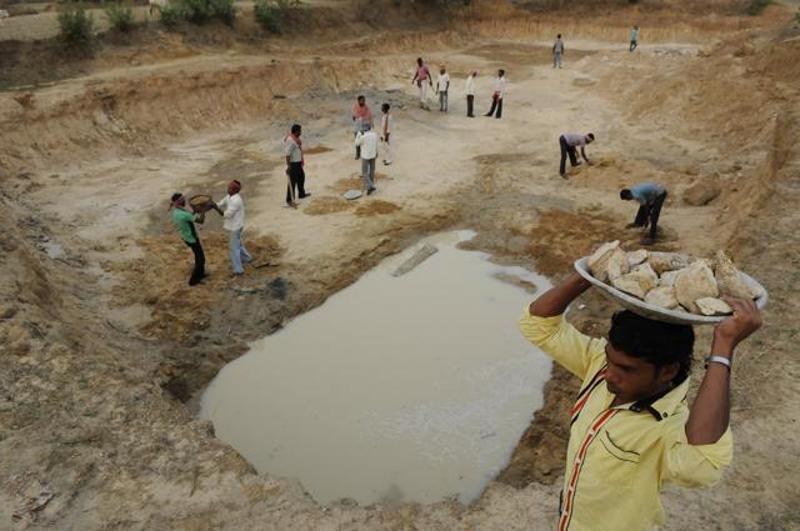
Community Driven Water Conservation Initiatives In 2016 Drought
In 2016, India has been witnessing one of the severest droughts after independence. The phenomena has led to a ‘never before’ kind of water crisis across the country. As a result the surface water sources are under severe stress and aquifers beneath ground have been over drafted. An already depressed agrarian community is worst hit. Thousands of parched villages have been dotting the rural landscape. Many somewhat immune urban centers are also facing the wrath of heat.
However there is no dearth of inspiring tales in the field of water conservation pan nation presenting a ray of hope amid gloomy scenario. The exemplary works being done by several villages, people and organizations across the country offer some lasting solutions to growing water scarcity. So here is an attempt to present a State wise account of drought hit areas which have been wading through the water crisis sound and safe by reinventing the community driven and local water harvesting practices.
Continue reading “Community Driven Water Conservation Initiatives In 2016 Drought”
DRP: 30 May 2016 (Centre’s new wetland protection rules reinforces the stereotype: wetlands = wastelands)
Centre’s new wetland protection rules reinforces the stereotype that govts see wetlands as wastelands The draft Wetlands (Conservation and Management) Rules, 2016 which replace the existing Wetland (Conservation and Management) Rules, 2010, are up for public comments till June 6, 2016. While wetlands nationwide are threatened by encroachment, pollution, catchment degradation and mindless development, the Narendra Modi government’s draft rules show no indications of acknowledging this threat. The draft rules, environmentalists say, reinforces the stereotype that governments see wetlands as wastelands. The essence of the new rules is to decentralise wetlands management to states. The Centre will have a say only in ‘exceptional cases’ While the 2010 rules gave some role to states, the draft rules gives them all powers. But in the process, the whole conservation process has been weakened. The period for public comments on the draft notification ends by the month. Several organisations, including BHNS, WWF, LIFE, International Rivers, INTACH, YJA & SANDRP have sent, or are in the process of sending, representations to the environment ministry. Among the concerns is that the 2010 rules itself were barely getting implemented. No state has identified a wetland yet, and few have made state-level nodal agencies mandated by the 2010 rules. In an ongoing case before the NGT, it emerged that states had not notified wetlands under the 2010 regulations. This forced the tribunal to demand that states begin to do so in at least 5-10 districts in a time-bound fashion. The Union meanwhile has proposed to substantially change the existing regulations. The new regulations do away with the elaborate list of activities that are prohibited or restricted. It prohibits reclamation of wetlands, conversion to non-wetlands, diversion or impediment of inflows and outflows from the wetland and ‘any activity having or likely to have adverse impact on ecological character of the wetland’. The need for the environmental impact assessment before permitting such activities is to be done away with. The earlier regulations allowed appeals against the decisions of the central wetlands authority with the NGT. This, too, is to be done away with, though aggrieved entities could continue to file cases against violations of these rules. The concerns were also raised during a discussion organized in Jodhpur on May 23 by three NGOs EIA Resource and Response Centre, Libra India and Life on Draft Wetland Rules 2016 issued recently by the environment ministry seeking suggestions and comments.
Landmark Supreme Court Order on Govt Failure in Tackling Drought
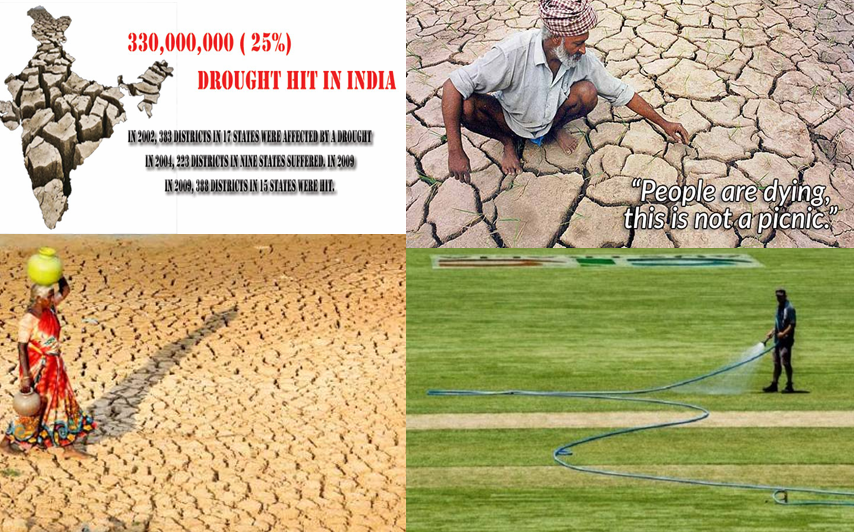
A PIL under Article 32 was filed by the NGO, Swaraj Abhiyan praying for directions for declaration of drought and relief in affected areas. The apex court came out with a 3 part judgment earlier this month – the first one dealt with the issue of drought and the latter judgments took up the poor implementation of the National Food Security Act, 200513 (NFSA) and the Mahatma Gandhi National Rural Employment Guarantee Act, 2005 (NREGA). These directions largely signify the failure of the governance in tackling drought and suggest actions to be taken hence, we need to be thankful to the petitioners and apex court for this. We also hope the apex court continues to monitor the implementation of the directions.
Continue reading “Landmark Supreme Court Order on Govt Failure in Tackling Drought”

India facing its worst water crisis ever: Himanshu Thakkar
Find below interview of SANDRP coordinator Himanshu Thakkar by Aditi Phadnis, Business Standard. The interview was published in Business Standard on the 14th May 2016 (http://www.business-standard.com/article/opinion/india-facing-its-worst-water-crisis-ever-himanshu-thakkar-116051400704_1.html)
~~
Environmental activist and water expert Himanshu Thakkar tells Aditi Phadnis that India needs a comprehensive water-use policy immediately.
You are quoted as saying that India is in the grip of its worst hydrological crisis ever. Isn’t that a bit drastic? After all, India has endured endemic water scarcity in many parts of the country for several years now. What makes you so pessimistic?
I do not think it is statement of pessimism but possibly reflects a reality. What we are seeing this year is unprecedented in many respects: major perennial rivers like the Ganga, Godavari, Krishna and Netravati have dried up at several locations, which was unheard of earlier. Groundwater levels are at a record low. In many places hand pumps have dried up completely. The number ofpeople impacted, the intensity of the impact are huge. This is only the fourth time in a century that there has been a back-to-back drought, but on all previous occasions groundwater, an insurance in times of drought, had provided relief. That is no longer an available option in several places. Our rivers are in a much worse situation today than ever in the past, due to all the ill treatment we have meted out to them, including multiple and often unnecessary, unjustified damming. All this makes the situation this year much worse.
You are credited with making public a lot of information and anlysis about the circumstances of the current shortage of water in Maharashtra. What do your findings tell us about the issue of water in the state?
The first thing that strikes you about Maharashtra is that it has, by far, the highest number of big dams in India. According to the National Register of Large Dams of the Central Water Commission, of the total number of 5,100 big dams 1,845 are in Maharashtra. So about 35 to 36 per cent of all big dams in India are in the state. Yet Maharashtra is in the headlines for drought and water scarcity today. While nationally, 46 per cent of cropped area is irrigated, in Maharashtra the figure is hardly 18 per cent. There is a lot of evidence here that big dams have proved to be a failed water resources development model. The current chief minister did say in his famous Assembly speech on July 21, 2015, that farmers need irrigation, not dams, and dams are not the only means to achieve irrigation. Unfortunately, one of the major planks used by his party to achieve power in Maharashtra, the Rs 70,000-crore irrigation scam, seems to have been totally forgotten by the state government.
Parts of Maharashtra are facing multiple agrarian and hydrological crises this year. Rainfall deficits have been as high as 40 and 42 per cent in the last two years in Marathwada. In some districts and blocks the figure is even higher. So rain-fed kharif crops in many parts have failed for the last two years. The rabi crops were also hit by unprecedented hailstorms in 2014 and 2015. The 2016 rabi season has been hit by unusually dry conditions.
During the 2015 monsoon, we (my Pune-based colleague Parineeta Dandekar does most of our Maharashtra-related work) realised in mid-July that this year is going to be a crisis for most of Maharashtra, in addition to some other adjoining areas. So we wrote to the chief minister in August that the state needed to take certain measures urgently. This included stopping the diversion of about three billion cubic metres of water from the Bhima and Krishna basins to the high-rainfall Konkan area, stopping non-essential water-use activities, taking stock of available water and deploying it for priority needs, and so on.
The Maharashtra government did not wake up to this situation then or at the end of the monsoon or even now. While the Jalyukt Shivar Abhiyaan, the flagship scheme of current Maharashtra government, is welcome, leaving aside some problematic work they are doing in terms of deepening, widening and straightening of rivers, it cannot be a fig leaf to hide its incompetence in handling this crisis.
In Marathwada and western Maharashtra (similarly, also northern Karnataka) sugar cane cultivation on about four to five per cent of cropped land takes up about 70 per cent of available irrigation water. We have been saying that considering the rainfall, weather situation and water availability, sugarcane is not a sustainable crop in these regions. However, even when 2014 and 2015 monsoon had major deficits in Maharashtra, the area under sugarcane remained at record levels. This was after the 2012 drought in Maharashtra, when the same issues had cropped up and the government, including the then Union agricuture minister Sharad Pawar promised intervention. We saw no implementation of those promises then. The situation is the same now.
Industry and agriculture are both responsible for the water crisis. But industries can’t be shut and farmers can’t be told to stop farming. So what is the answer?
I won’t say industry and agriculture are responsible. The kind of industries we set up and the kind of agriculture we do in any region has to keep in mind the various factors prevailing in the region, including water. When we conduct water-intensive activities in water-starved regions, that is an invitation to an inequitable, unsustainable, conflict-generating situation and sooner or later we will face the consequences. We have seen this happening in Maharashtra over the last decade most starkly.
Shouldn’t everyone be made to pay for water? Punjab has 98 per cent irrigation. It has spent money over the years, setting up irrigation channels, etc. Nobody has paid for those. Worse, the water running in those channels is not paid for either. By contrast, Maharashtra has barely 18 per cent irrigated land. What is the solution?
About 80 per cent of the water we use is supposed to be used by farmers, and I think there is national consensus that farmers in most places are not in a position to bear additional input costs in the current situation. Farmers need to be guaranteed much better returns on their produce than they are getting now. Say, if the Bharatiya Janata Party is able to implement the promise it made to farmers in its election manifesto that they should get 50 per cent return on investment, then maybe we can start talking about making farmers pay for the water, as that cost will then be included in the input cost calculations.
Moreover, a lot of users of water even in urban and industrial areas are not paying for the water they use or pollute. For example, a lot of groundwater gets used up by them, but there is no payment or regulation of this. Nor are they being made to pay for the pollution their effluents lead to.
We also need more participatory decision-making in water resources development before we can start asking farmers to pay for all the wrong decisions that are being taken now.
In the midst of all this gloom over lack of water, some states -Telangana and Maharashtra, for instance – have signed a pact to interlink rivers (ILR). Andhra Pradesh and Telanagana have already effected the interlinking of two rivers. Is this the way forward?
Today groundwater is India’s water lifeline, as most of our water comes from it and in every water sub-sector the dependence on groundwater is increasing with each passing year. So whether we like it or not, whether we want it or not, groundwater is our water lifeline. Our water policy, programmes and projects need to focus and prioritise how to sustain the groundwater lifeline. Will ILR help achieve that? The answer is no. In fact, we also need to prioritise optimisation of use of our existing water infrastructure; second, making rainwater harvesting the central focus as that can help sustain groundwater. ILR is costly, environmentally destructive, socially disruptive and a non-optimum option, particularly in view of the changing climate, in addition to other issues.
In hill regions like Uttarakhand and Kashmir, the frenzy of the floods can hardly be forgotten. What is happening there?
Yes, all across the Himalayas, the high disaster vulnerabilities (to earthquakes, floods, landslides, erosion and flashfloods) have deepened because of the changing climate and the kind of interventions we are doing there. Our disaster management infrastructure remains a rather weak link, as the Supreme Court order on on May 11, 2016 about the current drought pointed out. We seem to have learnt little from the Uttarakhand disaster of June 2013 and the Jammu and K ashmir floods of September 2014 and March 2015. As the Nepal earthquake of April-May 2015 showed, these regions are prone to major seismic shocks. All this demands urgent action and possibly course change.
Original link: http://www.business-standard.com/article/opinion/india-facing-its-worst-water-crisis-ever-himanshu-thakkar-116051400704_1.html
DRP: 16 May 2016 (Water conservation: Lessons from ancient India)
Water conservation: Lessons from ancient India As drought-like conditions have gripped many parts of India this year, the pressure to drill borewells in search of increasingly scarce groundwater has escalated. Many regions are in the grip of a vicious cycle of drilling causing the water table to sink further. There is an urgent need to explore what benefits water conservation can bring, whether through modern or ancient water storage structures. This report explains, ecologically safe engineering marvels of water conservation have existed in India for nearly 1,500 years, including traditional systems of water harvesting, such as the bawari, jhalara, nadi, tanka, and khadin. Even today these systems remain viable and cost-effective alternatives to rejuvenate depleted groundwater aquifers, according to experts. With govt support, these structures could be upgraded and productively combined with modern rainwater-saving techniques such as anicuts, percolation tanks, injection wells and subsurface barriers. This may be a far more sustainable approach to alleviating the water scarcity crisis across India. Ultimately, water conservation has to be a key element of any strategy to bring an end to India’s perennial swings between drought and flood.
Continue reading “DRP: 16 May 2016 (Water conservation: Lessons from ancient India)”
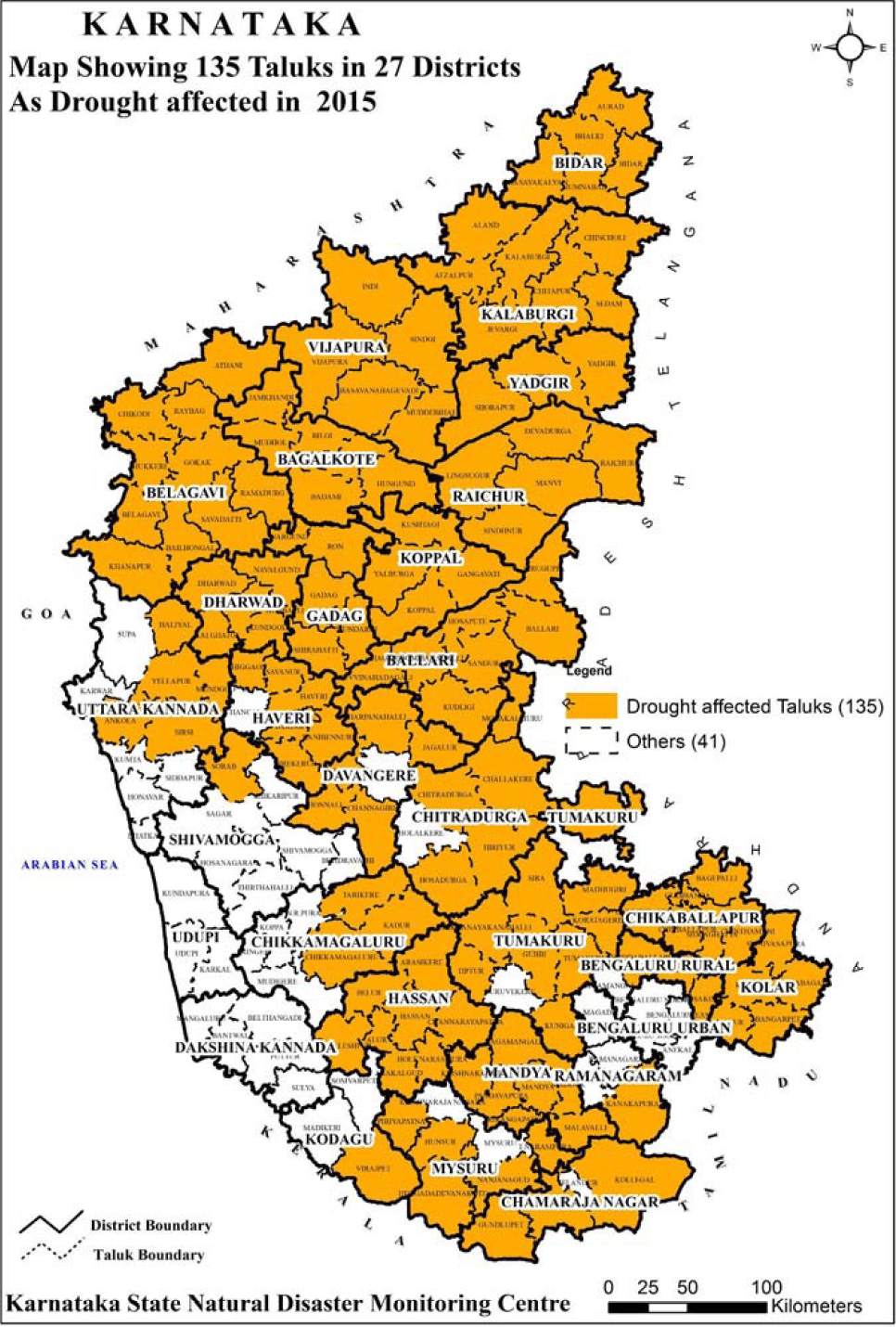
Karnataka: Profile of 2015-16 Drought
Karnataka is witnessing drought for the third successive year; rainfall has been deficient since 2012-13. Because of the rainfall deficit, reservoirs did not fill up completely. Coupled with the hot summer temperatures in March and April 2016, the stored water has now almost depleted. Groundwater, the saviour in times of failure of rainfall, has dipped severely because of years of reckless exploitation for irrigating water guzzling crops in semi arid soils. With even drinking water becoming scarce, agricultural activity has come to a standstill in the region. The drought in 2015 was preceded by unseasonal rains damaging the previous harvest. The monsoon deficit led to a dip in kharif output throughout the State in 2015. The drought spread even to the normally lush Cauvery basin prompting digging and deepening of borewells. While southern Karnataka received some heavy rains in November, districts in Northern Karnataka again saw failure of rains with some districts such as Kalaburagi, Koppal and Yadgir registering over 70% deficiency in rainfall. There has been a near complete failure of crops in Northern Karnataka, with both rabi and kharif crops being wiped out, even as area under sugarcane has gone up! The northern region, which also lags in development indices, is in the clutches of rural distress – over a thousand farmers have committed suicide. Mass migration to cities is being witnessed.
DRP: 25 APRIL 2016 (One Year After Nepal Earthquake, Has the World Learnt Any Lesson?)
On this day in 2015, the massive Nepal earthquake of 7.9 intensity (Richter scale) shook the scenic Himalayan Nation. The earthquake left a major trail of destruction affecting over 20 districts and killing over 9 thousand people. According to expert Dave Petley, Langtang rock and ice avalanche was the most dramatic and significant landslide, that killed the most individuals. The earthquake killed over 9000 people, with 255 still missing. The severity of the quake can be gauged from the fact that more than a third of the disaster related deaths in 2015 occurred in Nepal’s April 25 earthquake. The earthquake-induced flash floods, landslides and aftershocks also damaged up to 15 hydropower plants, which has not been still restored fully. Surprisingly despite the increasing number of disasters taking place across the globe, world only spends less than a fifth of the money on Disaster Risk Reduction Compared to Disaster management. Nepal will still take years from recovering socio-economic losses caused by the quake. But it is pertinent that in the wake of the quake and other disasters, human civilisation must learn its lesson. It’s true that development and disaster cannot be stopped but we must make our developmental decisions more informed, rule based and democratic so that it helps us deal better with disasters by decreasing their intensity and velocity and our short-sighted developmental choices do not get translated into a disaster itself. Continue reading “DRP: 25 APRIL 2016 (One Year After Nepal Earthquake, Has the World Learnt Any Lesson?)”
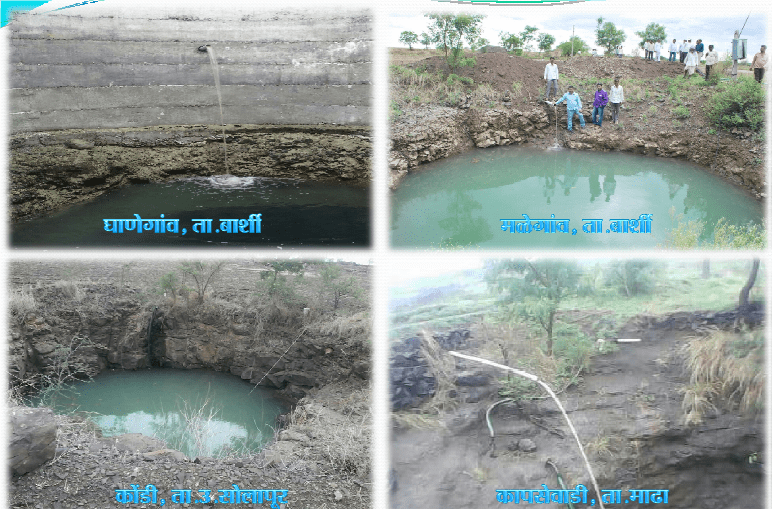
DRP: 18 April 2016 (Prior action & planning can reduce Drought impact: Solapur shows)
Union Water Resources Minister Uma Bharti in an interview tried to refute charges that the Centre reacted late to India’s drought crisis. Water minister makes strange statements that one cannot do any planning about drought & her govt is the first govt to provide water through tankers. However, Solapur, a chronically drought-hit district in Maharashtra was serviced with more than 200 tankers in 2013-14, even when the monsoon rainfall was better than this year. In this drought, there are only 16 tankers plying in Solapur. Drinking water sources have been secured, water from Ujani dam for and sugar cane has been disallowed. The district leads the way in Jal Yukta Shivar Program in the state, new avenues of Agricultural credit are opening, options to sugarcane are being developed, errant sugar factories are being fined for polluting drinking water sources. Will the Union Government accept its mistakes and make amends?
 SANDRP