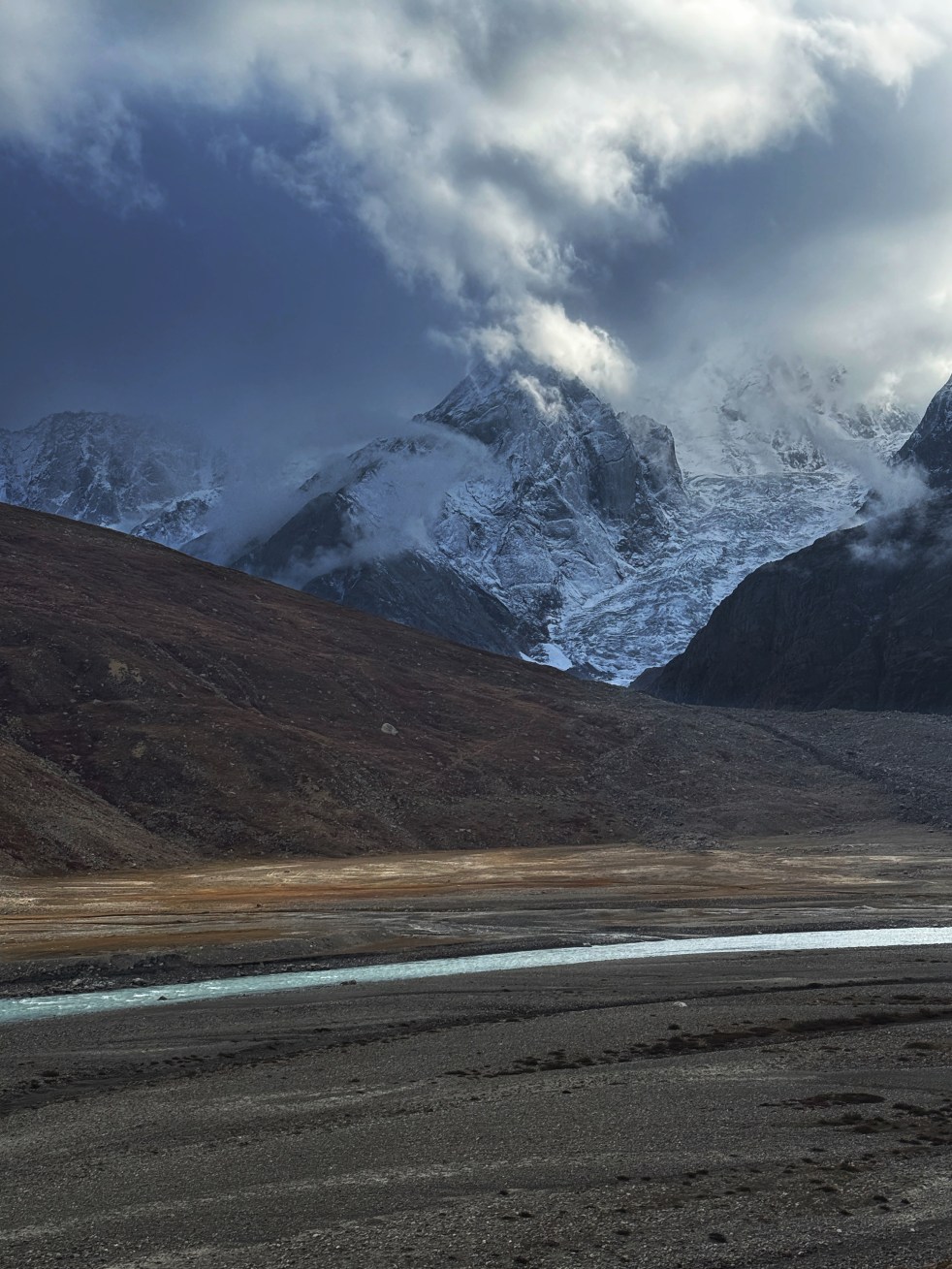
Increasing incidences of Glacial Lake Outburst Floods (GLOFs) are being experienced in the Indian Himalayas. One of the most notable examples of GLOF was the Chorabari Lake GLOF that occurred on 16th June 2013 in Kedarnath, Uttarakhand[1] which was triggered by heavy rainfall induced mass movements into the lake. The GLOF devastated villages of Kedarnath, Rambara, and Gaurikund. Around 6,000 people were officially killed, and a significant number of the deaths were linked to the GLOF. Countless bridges and roads were washed away, and about thirty hydropower plants were affected or completely devastated. Several Hydropower projects resulted in exponential losses to life and livelihoods. Whole of Uttarakhand was affected in the disaster, and a significant proportion of it was related with GLOF.
Continue reading “Hydropower-GLOF Nexus in Chenab Headwaters: Absence of credible studies and accountable governance”Tag: Disasters

DRP NEPAL 2023: Vibrant debate about Hydro Projects
This provides an overview of Dams, Rivers & People related issues in Napel in just concluded 2023. While export of hydropower to India is central this year following Nepal PM’s June 2023 visit to India. Pancheshwar, the most ambitious of the projects have seen no real progress in spite of repeated statements. An agreement signed with India to export upto 10000 MW of hydropower in ten years has raised lot of hopes in both countries. The electricity trade has indeed expanded significantly in 2023. There is also renewed hope for Nepal succeeding in export of hydropower to Bangladesh via India, but this still needs some concrete success.
However, most interesting is the vibrant debate in Nepal media about adverse economics, impact on environment, biodiversity and disasters, in addition to displacement risk for thousands of people. Some called it costly madness. It also notes that climate change does not even figure in decision making process. The overview begins with that debate.
Continue reading “DRP NEPAL 2023: Vibrant debate about Hydro Projects”
दुनिया भर में बांधों को हटाने में वृद्धि
हिमांशु ठक्कर
सभी बड़े बांधों की उम्र सीमित होती है। क्या आपने कभी सोचा है कि एक बार बांध का उपयोगी जीवन समाप्त होने पर उसका क्या होता है? इसे हटाना होता है जिसे डीकमीशनिंग कहते हैं। डीकमीशनिंग का मतलब[i] बांध और उससे जुड़ी संरचनाओं को पूरी तरह हटाने से है। दुनिया के तीसरे सबसे बड़े बांध निर्माता के रूप में भारत के लिए यह एक बहुत ही प्रासंगिक सवाल है। यह मुद्दा इसलिए और भी अधिक महत्वपूर्ण हो गया है क्योंकि अब बड़े बांध न तो आवश्यक है और न ही व्यावहारिक। इसके अलावा अब बहती नदियों के महत्व को तेज़ी से सराहा जा रहा है। यह ध्यान में रखना ज़रूरी है कि किसी बांध को बिना उचित रखरखाव के नदी पर बने रहने की अनुमति नहीं दी जा सकती है। इससे बांध के नीचे की ओर रहने वाले समुदाय और अर्थव्यवस्था के लिए खतरा बना रहता है।
Continue reading “दुनिया भर में बांधों को हटाने में वृद्धि”
DRP 090123: Atal Bhujal Yojana just chaff without any wheat?
According to this detailed report, possibly the first independent review of the Atal Bhujal Yojana, a 5-year program of the Union govt for management of groundwater, India’s water lifeline, with over half of the project period completed, seems bereft of the fundamental aspects that the scheme itself says are necessary for any sound foundation of the scheme. The review describes it as a dish full of chaff, without almost any kernels of wheat for some sound reasons. It says hardly 18% of allocated money has been spent on Gram Panchayat level community-led Water Security Plan. Only 4% of the planned Gram Panchayat level trainings have been held, with Gujarat and Haryana holding none. Only 27% of money allocated for Gram Panchayat level Hydrogeological monitoring network has been spent. The data gathering instruments that were required from the beginning of the program have not been installed in over half the planned locations. On Information, Education and Communication activities, only 16% of allocated amount is spent.
More detailed independent review of the program implementation will help, but from the available information so far, the signs do not look particularly promising. Is it due to ineptness or lack of intention? Only time will tell.
Continue reading “DRP 090123: Atal Bhujal Yojana just chaff without any wheat?”
2022: Accidents & Damages related to Hydro projects in India
In this annual review, SANDRP compiles the hydro power related accidents, disasters and damages in North West and North East Himalayan states during 2022. It also covers relevant reports revealing gradual decline in power generation by hydro power projects amid growing concerns over physical and financial viabilities of new projects. There are also reports highlighting the looming climatic and geological threats over these projects. It is good to see that taking lessons from Chamoli disaster in Feb. 2021, NDMA has officially asked central govt not to rely on hydro power.
In previous parts of yearend roundups, we have covered (1) Dam induced floods & damages, (2) Fly ash dam breach incidents, (3) Impact of floods on Polavaram project, (4) People’s resistance against dams and hydro projects. Please see links for reports tracking hydro power projects related accidents and disasters in 2021 and 2020.
Continue reading “2022: Accidents & Damages related to Hydro projects in India”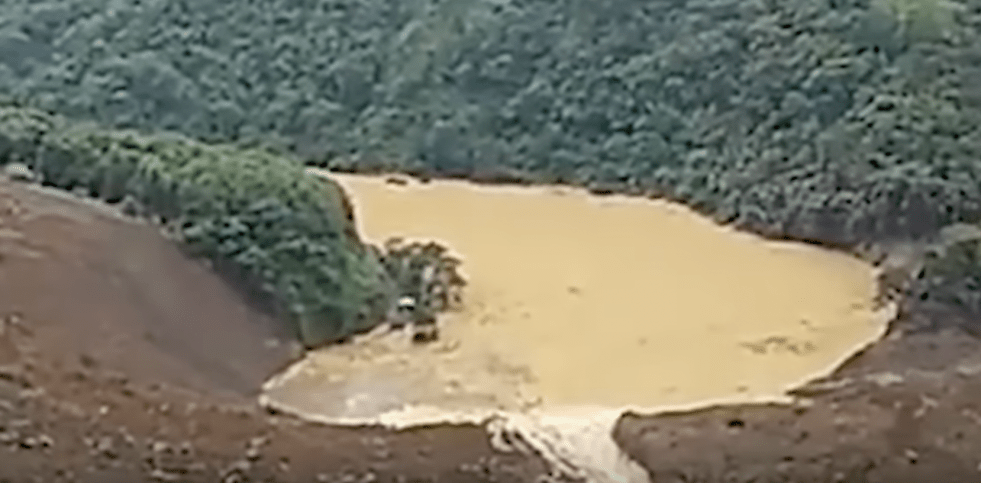
Manipur’s Ejei river blocking landslide at under construction railway line involved violations, no EIA, NGT pending case
Eighteen Territorial Army personnel among 24 people were killed in a massive landslide in Manipur’s Noney district[i] on Wednesday (June 29, 2022), and at least another 40, including 18 soldiers, are feared trapped or buried in the rubble of an under-construction railway yard. An adjoining construction camp and security camp engulfed in the avalanche of rock and mud.[ii] The Railway line is under construction since a decade.
Continue reading “Manipur’s Ejei river blocking landslide at under construction railway line involved violations, no EIA, NGT pending case”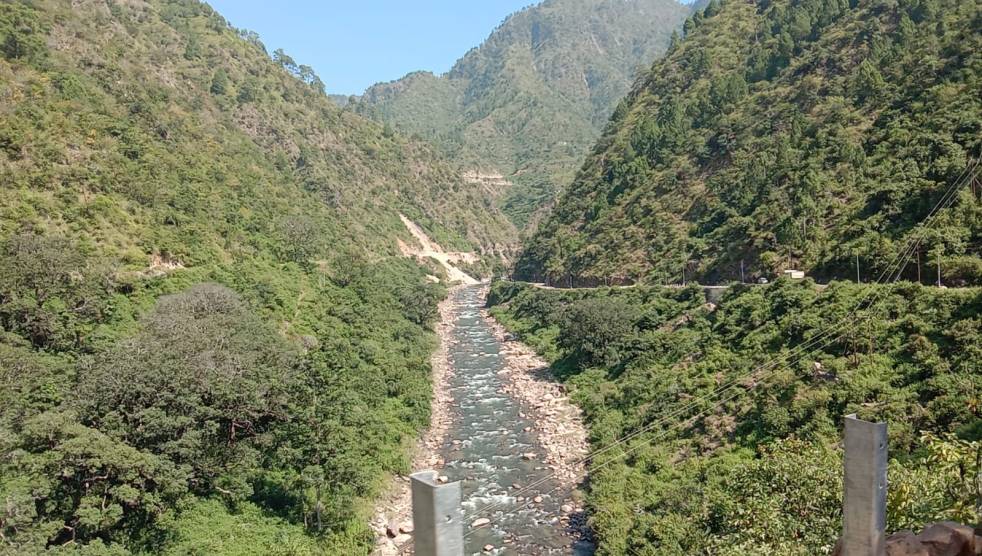
DRP 111021: Are we being forced towards nature based solutions?
Four interesting developments in this week seems to suggest that mankind is being pushed closer to nature based solutions to society’s needs. In Brussels in Belgium (Europe), the local government has started to uncover the Senne river that now is hidden under the pavements with the declared objective to “return nature to the city” and the river becoming an ecological corridor in the city.
In USA, the Army Corps of Engineers, more known as Dam builders, have over the last five years, moved towards nature based flood control by creating wetlands. In the 2020 Water Resources Development Act, US Congress directed the Corps to consider nature-based systems on equal footing with more traditional infrastructure. Its possibly a baby step, but a very significant one for a traditional dam building organisation that has stopped building dams and have been working towards decommissioning dams.
Continue reading “DRP 111021: Are we being forced towards nature based solutions?”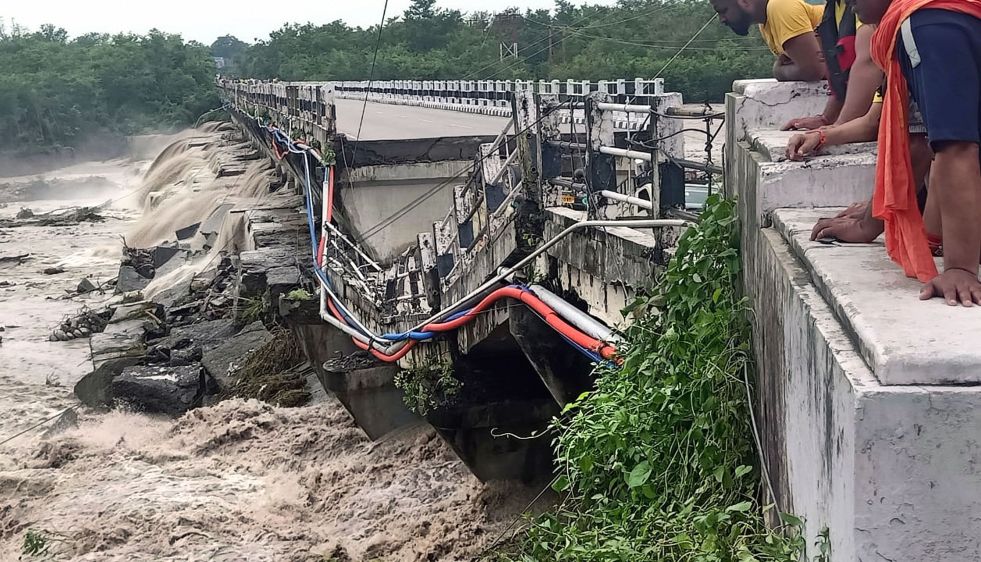
DRP 060921: DISASTERS GOING UP in Himalayas, across India & Globally
(Feature image: Rani Pokhri bridge on the Dehradun Rishikesh highway collapsed near Dehradun, August 27, PTI https://www.thequint.com/news/india/uttarakhand-rains-bridge-on-dehradun-rishikesh-highway-collapses-no-casualties#read-more)
Data published this week (see below) shows that disasters are going up almost five fold in the Himalayas (data from Uttarakhand, HP below, but this is not different in rest of Himalayas), nationally and even globally. The data from UN report this week shows that the disasters are up five fold in recent years. Damage is up even more. As the data of landslides due to Char Dham High way and hydropower projects show, the contribution from these projects to the disaster is clear. So much so that even the editorial in The Hindustan Times this week asked to stop these disastrous projects. While it is unlikely that the governments or politicians would wake up to this reality anytime soon, one expects the judiciary, media, civil society and academics to take up this issue on urgent basis.
Continue reading “DRP 060921: DISASTERS GOING UP in Himalayas, across India & Globally”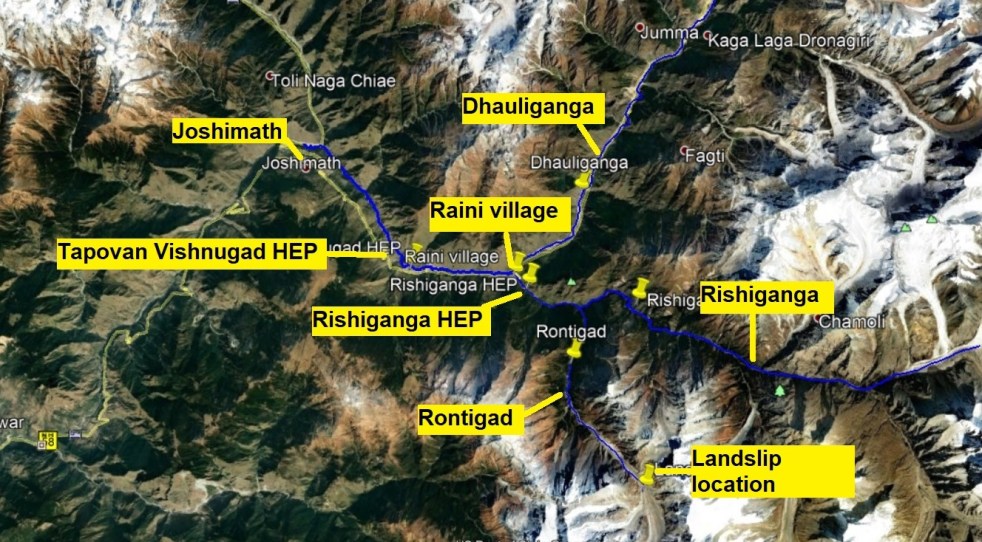
Himalayan Disasters: Early Warning Systems must, but much more needed
Guest Article by Prof S P Sati
The suggestion of a robust early warning system always echoes as and when there is a disaster in the Himalaya. Hence, the murmuring of having a state of art early warning system after the February 7th 2021 Rishi Ganga disaster is nothing new.
Several concerned scientists of the country are considering of instituting a new centre using the state of art remote sensing techniques. The centre would be dedicated to the early warning forecasting in the Himalayan region. This is heard practically after every disaster since last two decades.
Continue reading “Himalayan Disasters: Early Warning Systems must, but much more needed”
Phutkal landslide dam bursts in Zanskar valley, flood creates extensive damage in 2015
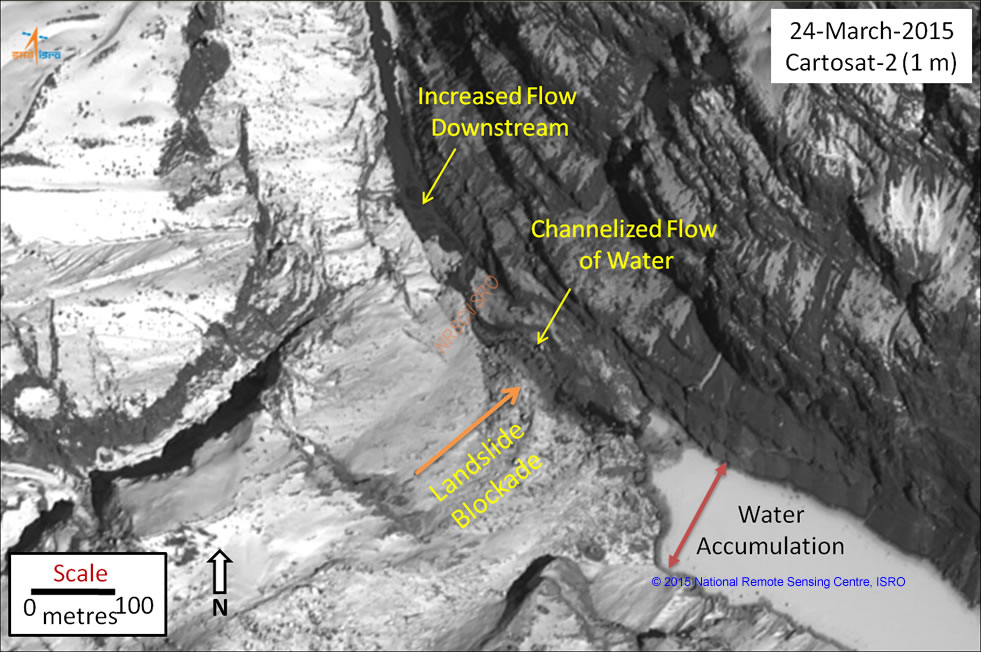
Marking a significant failure of India’s Disaster Management apparatus, the massive dam created by landslide on the Phutkal River in Zanskar Valley[1] in Kargil district in Jammu and Kashmir burst on May 7, 2015, leading to extensive damage to the bridges, culverts, some buildings and land along the river. Continue reading “Phutkal landslide dam bursts in Zanskar valley, flood creates extensive damage in 2015”
 SANDRP