How can we drink this cool water?
For we will see you in it for all our life
Night of atonement, oh girls, oh birds.
~ Sukrat, an elegy for Queen Suhi who was sacrificed for Chamba’s water[1]
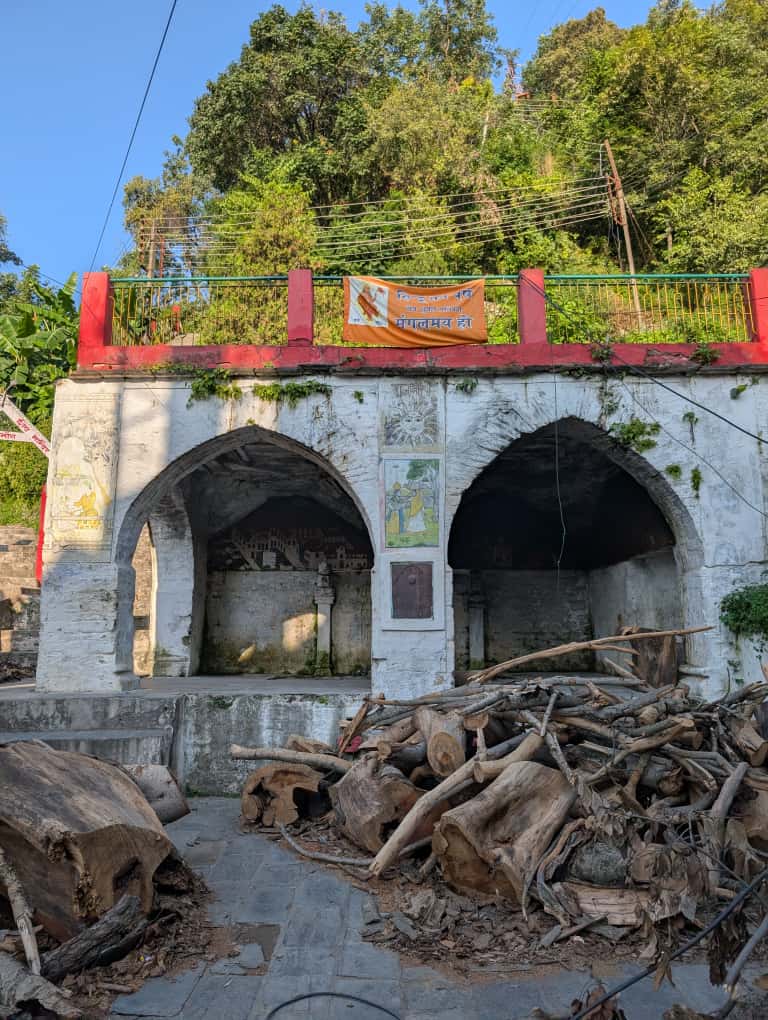
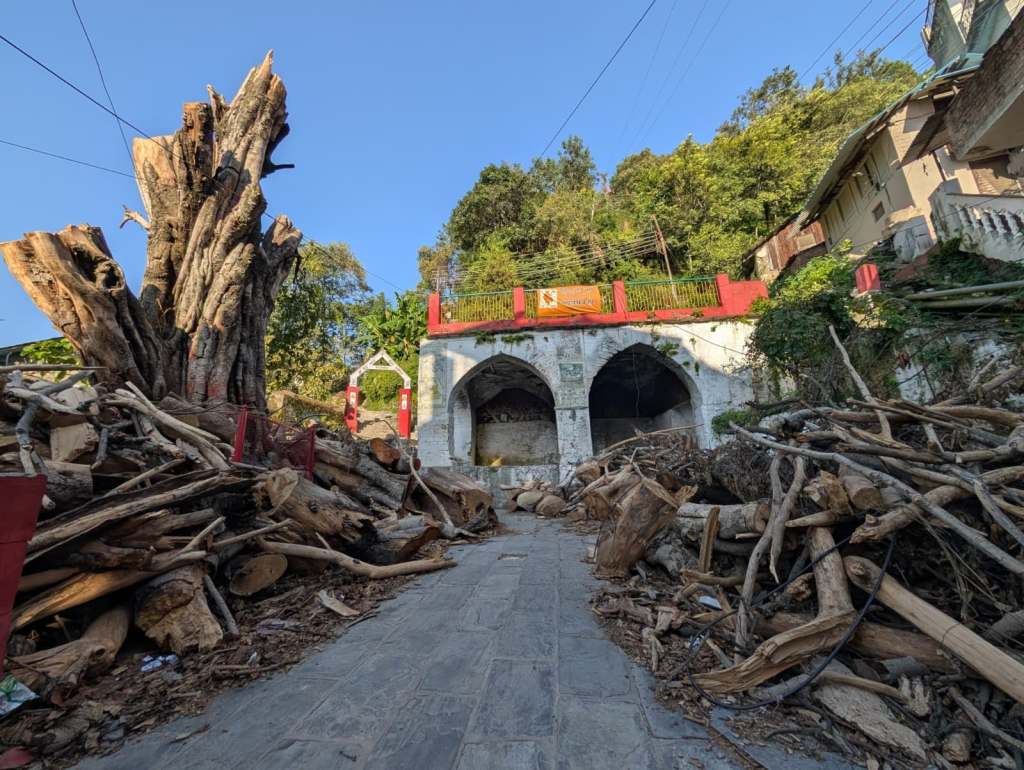
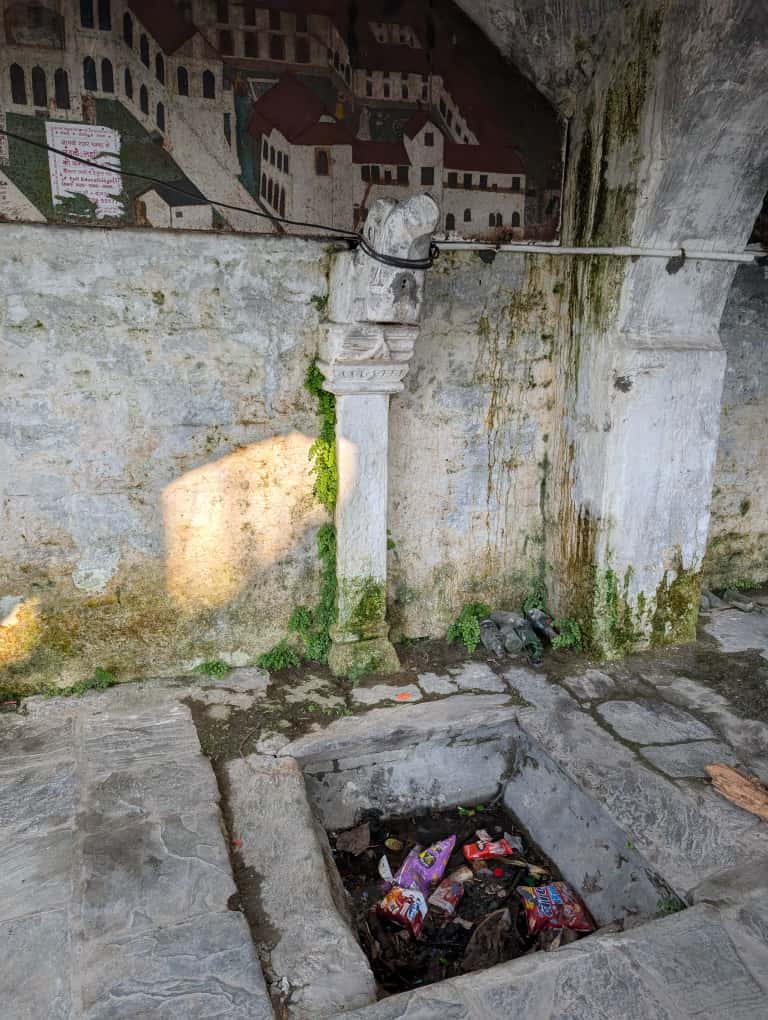
Raj Naun, the Royal Fountain House in Chamba is not what I imagined it to be. After reading and thinking about it obsessively for over a year what lies ahead is not a homage to water but a structure in ruins. The Raj Naun has vaulted ceilings, arches and two beautifully carved waterspouts to channel a robust Himalayan spring. But the spouts are dry, the chamber is full of garbage, bottles of alcohol, stacks of firewood, packets of chips lie around. There is that unmissable stench of urine.
But this should not be so. For a land that prides its stories as much as its rivers and springs, Raj Naun should have been loved and celebrated. For if one believes in the stories, the water here has come at a great cost: A queen is said to have laid her life so that Chamba gets its water.
Today, 12 April 2026, is the second day of the three-day Suhi Mela which sings, celebrates and grieves over the sacrifices made for water. [2]
Chamba and its search for water
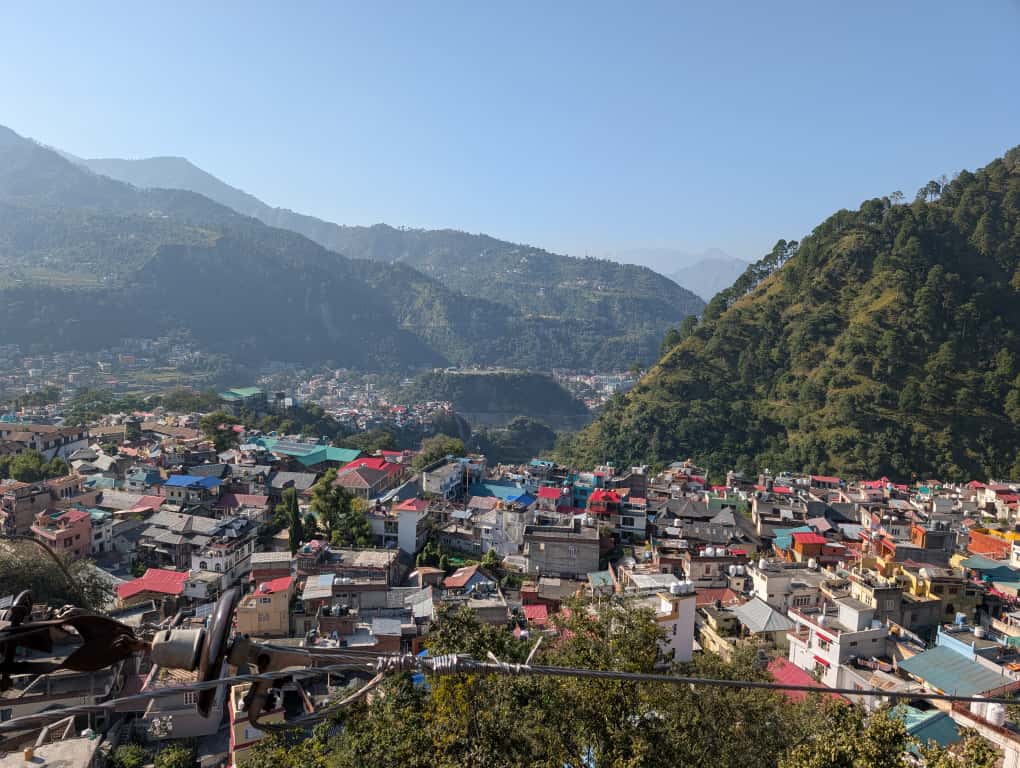
In the 10th century A.D., King Sahila Varma founded the town of Chamba on a plateau near the junction of the Ravi and the Sal Rivers. The origin story of Chamba is intertwined with River Ravi and water access and throughout its ancient and modern history, any mention of Chamba is accompanied by Ravi.
When King Sahila Dev Varman moved the capital from Bharmour, high up in the Himalayas to Chamba, the new capital was plagued with water scarcity. Ironical, as it was situated right on the banks of the abundant Ravi bringing glacial melt as well as monsoon flows. But this is a strange contrast of Himalayas and the Indus basin where large towns are often placed on high plateaus to protect them from floods. What that also means is that the river is deep down, and cannot be utilized. Mountain springs are the lifeline of the people in these regions, a fact borne out by recent studies too. NITI Ayog Working Group on Himalayan Springs says that at least 60% water supply in Indian Himalayas comes from mountain springs. [3]
In Chamba, the king tried to channelize several springs and bring the water to Chamba, but somehow nothing worked. The springs would not yield enough water or the water would not reach the capital. Lore, oral history and old texts record that the king was advised by Brahmins to sacrifice his son (Yugakar Dev Varman) or his queen in his quest for water, to sacrifice “the one his heart loves best”[4]
The Western Himalayas have witnessed horrifically routine sacrifices of women and Dalit men associated with water: while digging new irrigation channels, water sources, for better harvests or during various festivals. Prof. Mahesh Sharma in his “State, Waterways and Patriarchy: The Western-Himalayan Legend of Walled-up Wife.” says that the act of sacrifice connotes not only control over waterbodies but also over the bodies of women. “The body of sacrificed women itself becomes a metaphor for water-bodies.” Such sacrifices were especially common during the construction and maintenance of irrigation channels called Kuhls. The tradition was in place as far as Lahaul which too has haunting songs of women facing imminent death.
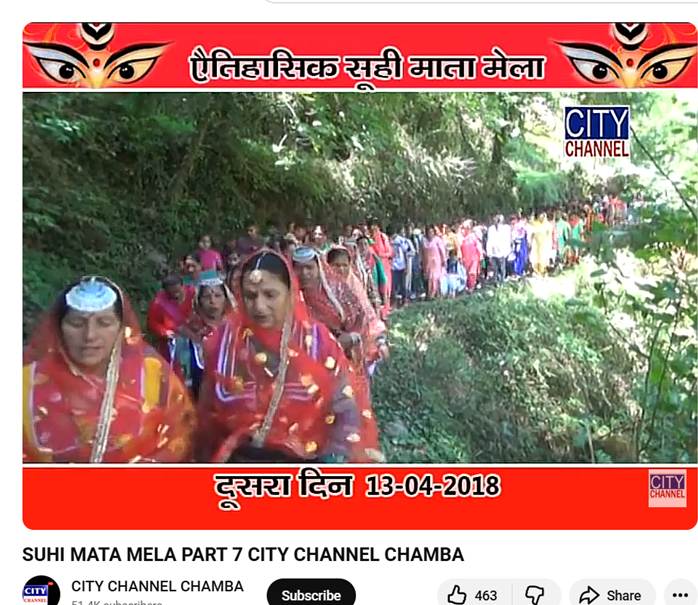
Queen Nenna Devi or Suhi is said to have willingly accepted her fate (possibly because the alternative was the sacrifice of her child). She is described to have walked up a hill overlooking Chamba, to the mouth of the spring where a fresh grave was dug [5]. And she was buried alive. Gazetteer of Chamba, 1904 states, “There can be little doubt that the legend is founded on fact.” [6]
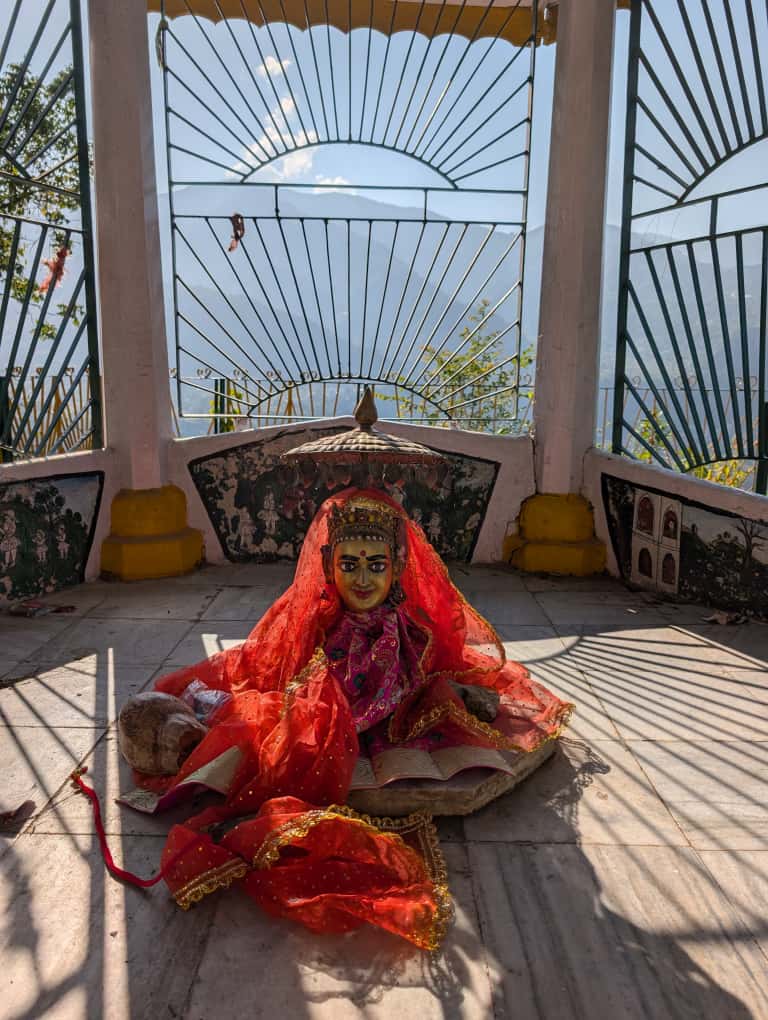
A modest shrine was built at the place where the queen faltered and hurt her thumb on a rock while looking back at her familiar world one last time.[7] The rock was made into a shrine later and it holds a small brass bust of a resolute-looking queen, with her back turned to her home.
We climbed up the stairs leading up to the shrine and looked at Chamba sprawling below, with the crescent of Ravi framing the town. Chamba must have changed, but mountains and the river remain the same. Just a few months back the flooded river had ravaged the region. More than 70 people lost their lives to the raging river and incessant rain. The bridge King Sahil Dev Varman crossed 900 years ago has been wiped off and so were many new bridges. Stories of water are as old as time.
Every year in the month of April (Chaitra) a large fair: the Suhi Mata Mela is held in Chamba. Gazetteers state that this fair too has a history of hundreds of years. Fittingly, men are not allowed at this fair. It’s only for women who sing elegies and ballads of Suhi and her sacrifice, moving from mohalla to mohalla in Chamba, finally culminating at the Suhi Shrine. They perform Ghurei, a circular folk song-dance which can be celebratory but is solemn and more like a funeral march during the Suhi Mata Festival.
Some of the songs sung include:
गुड़क चमक भाऊआ मेघा ओ, राणी चम्बियाली रे देसा ओ |
Another elegy is Sukarat (Night of Atonement)
‘सुकरात कुड़ियों चिड़ियों, सुकरात राजा दे देहरे हो।
ठंडा पानी कियां करी पिणां हो, तेरे नैना हेरी हेरी जीणा हो
Come for the night of atonement, O girls, O birds, (kudiyo, chiddiyo)
Tonight we grieve at the courtyard of the King of Chamba, At the mouth of the new spring fountain
Raj Naun or the royal spring fountain
Queen Suhi’s story does not end at the shrine and the fair though. The channelized spring that was supposed to have flowed after the sacrifice culminates into the Royal Fountain Spring or Raj Naun, at the foot of the hill shrine.
While its history is not entirely clear, it is assumed that this too was built by Sahila Dev Varman in the 10th Century along with an underground system of channels, supplying water to Chamba. Raj Naun consists of an imposing chamber with four ornate spouts, troughs for animals to drink and a vaulted ceiling. Today, none of the spouts bring forth bubbling groundwater. Modern pipes have been thrust in them and they only flow during the Suhi Fair, when water is supplied from a far away tank. The entire place lacks upkeep and there are no signages about its beautiful history and hydrological heritage. Over the structure hangs a saffron sign of a political party, which seems to be the only thing it’s done for the Raj Naun.
There is one more spout at the road level, not ornate or imposing but very modest. It is the only one which still has flowing water. In about two hours, that we were there, nearly forty people: men and women returning from work, shopkeepers and hotel owners, laborers, teachers, retired couples, children playing on the streets came to the spout, drank water, chatted for a while and moved on. The modest spout is a vibrant node of the town.
Most people who stopped at the spout told us stories of Raj Naun and Queen Suhi. Vandana Vakil, who runs a small shop right in front of the Raj Naun said, “We all have piped water connections in our homes, but everyday hundreds of people come here in the morning and evening to collect water for drinking and cooking. We just like it. It’s pure and cold and important for us.”
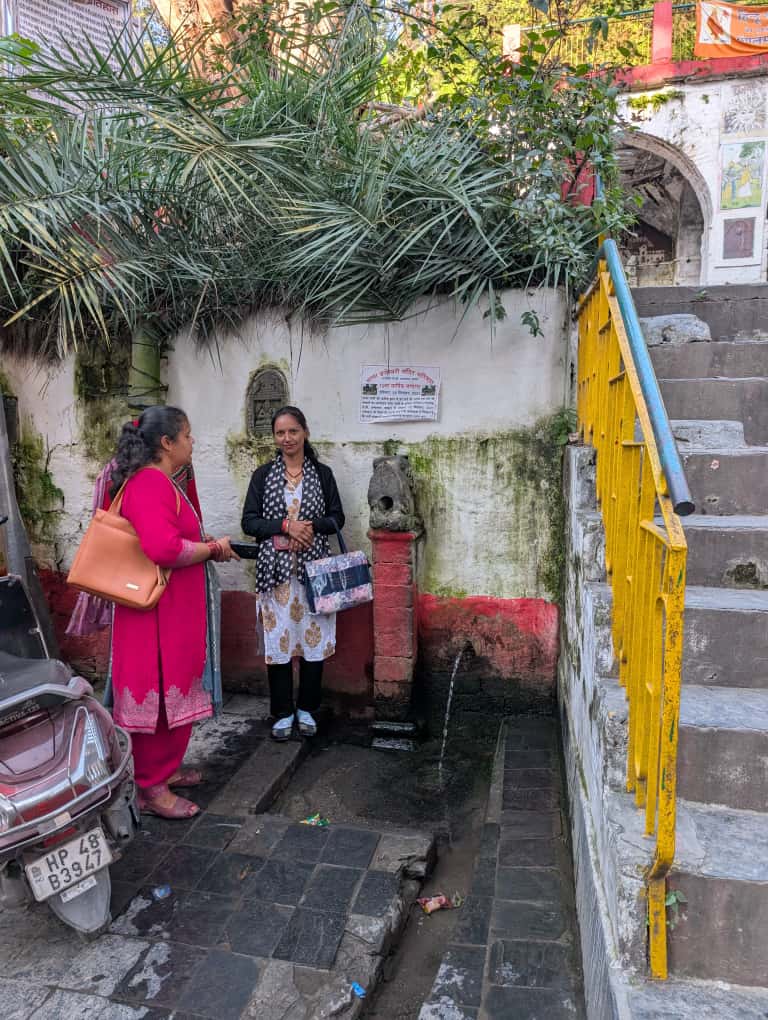
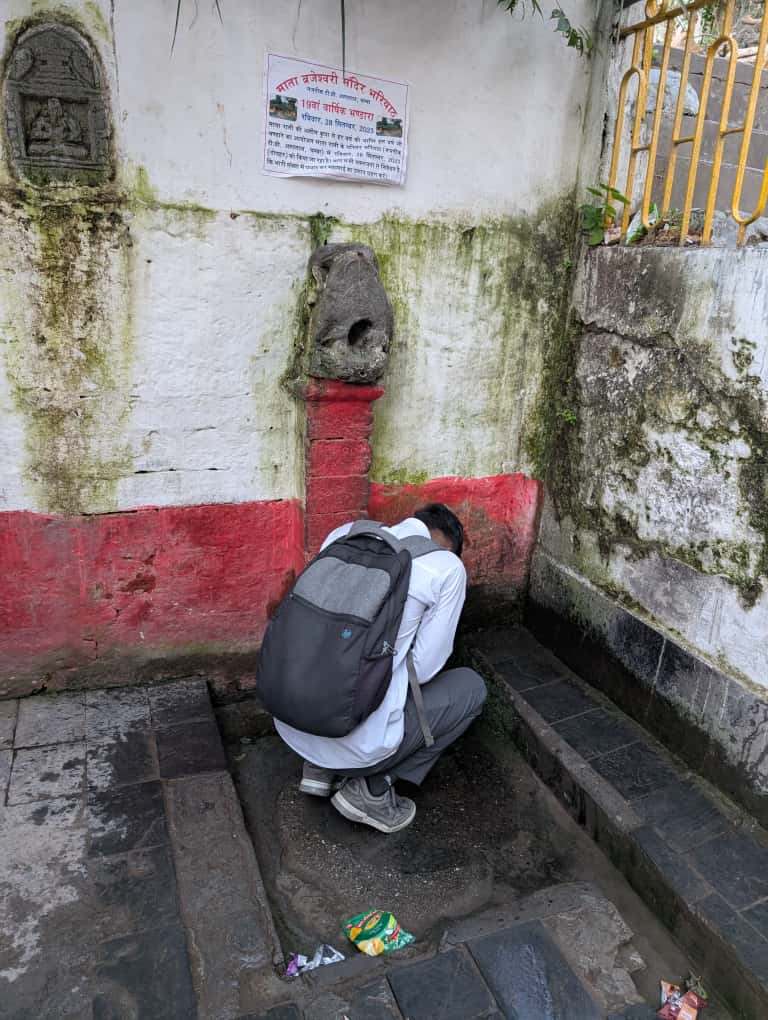
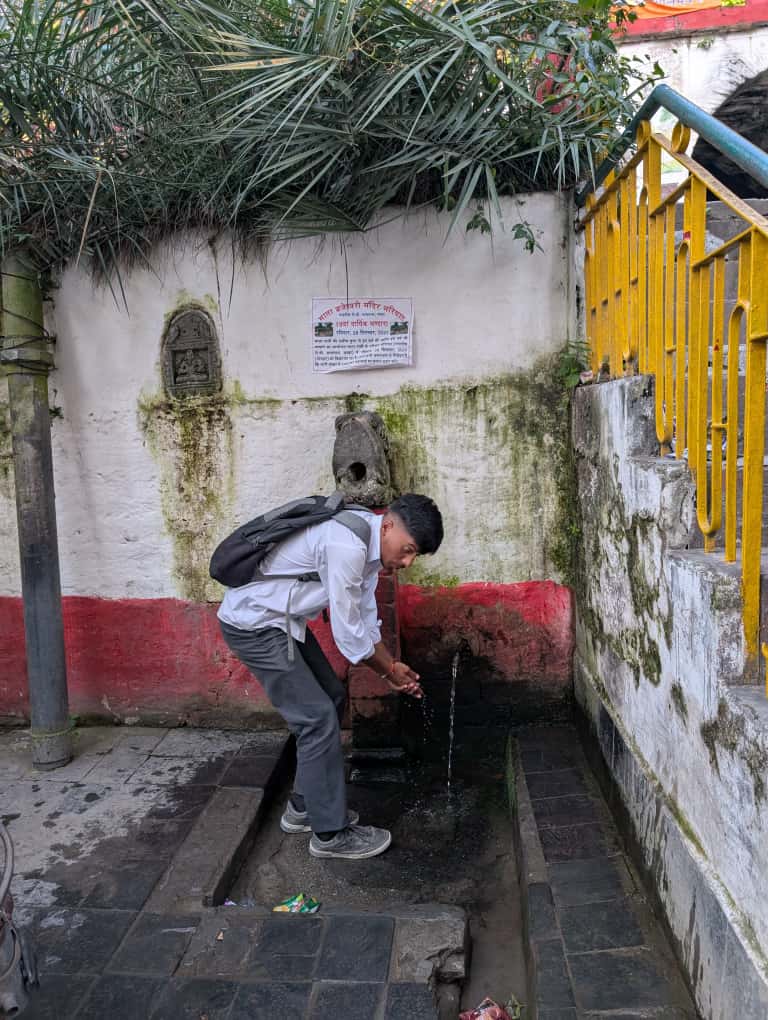
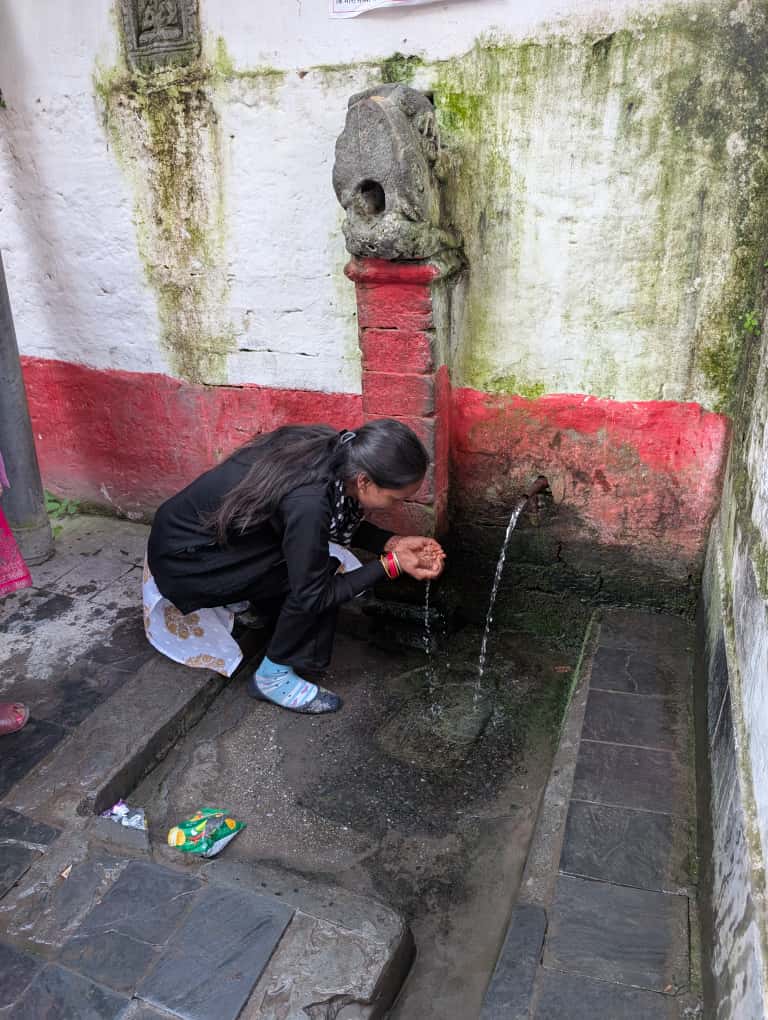
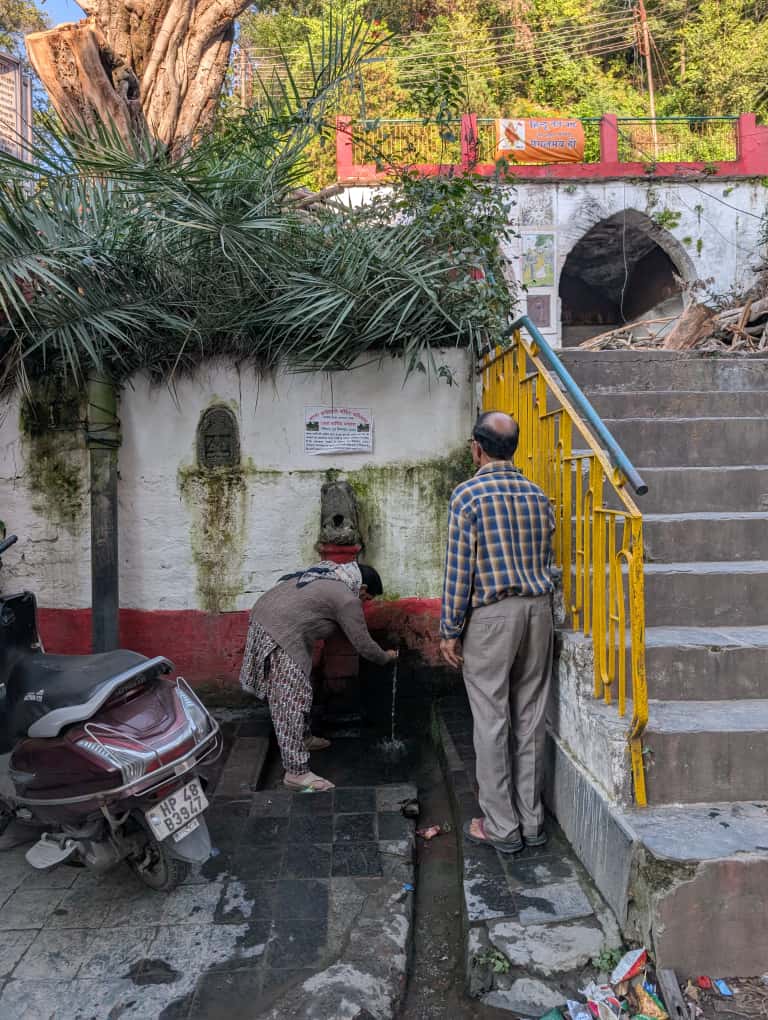
Raj Naun as a watering place for the people of Chamba
Suresh Sharma, 60 and his wife Mrs. Anjali said that the water has been flowing here for as long as they remember. He told us about the channelized water supply system that ran through Chamba and was functional till some decades back. “This is Queen’s water. It is never muddy or clouded and is filtered from the soil. It comes out pure.”
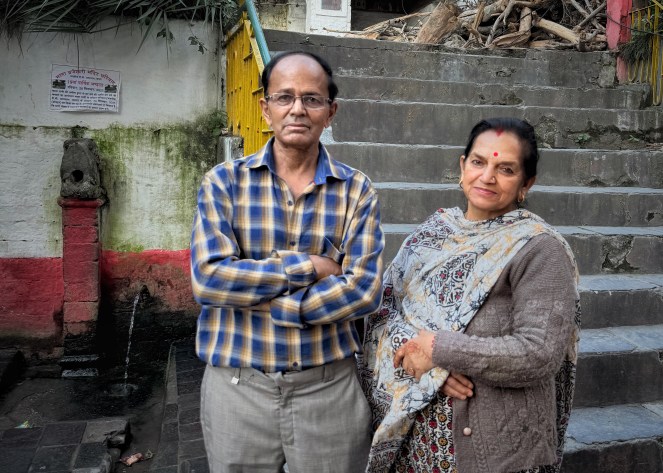
Rajeev who runs a small eatery in the lane fills up a large flask. “I get water from here everyday. It is cool and has a refreshing taste.”
We are invited to a traditional home opposite the Raj Naun (such serendipities happen along rivers). Here lives Padma Shri Lalita Vakil who is a master of the art of Chamba Rumal: an intricate embroidery in silk which holds the same on both sides of the cloth. Ms. Vakil singlehandedly revived the art of Chamba Rumal and brought this artform to the people. She shows her swaths of work, and not surprisingly, one of her most intricate and large panels depicts the story of Queen Suhi and Raj Naun in Silk. “Suhi ki Kahani (Story of Suhi) is a part of our history, mythology and art all at once, it should be told, isn’t it?” she asks.
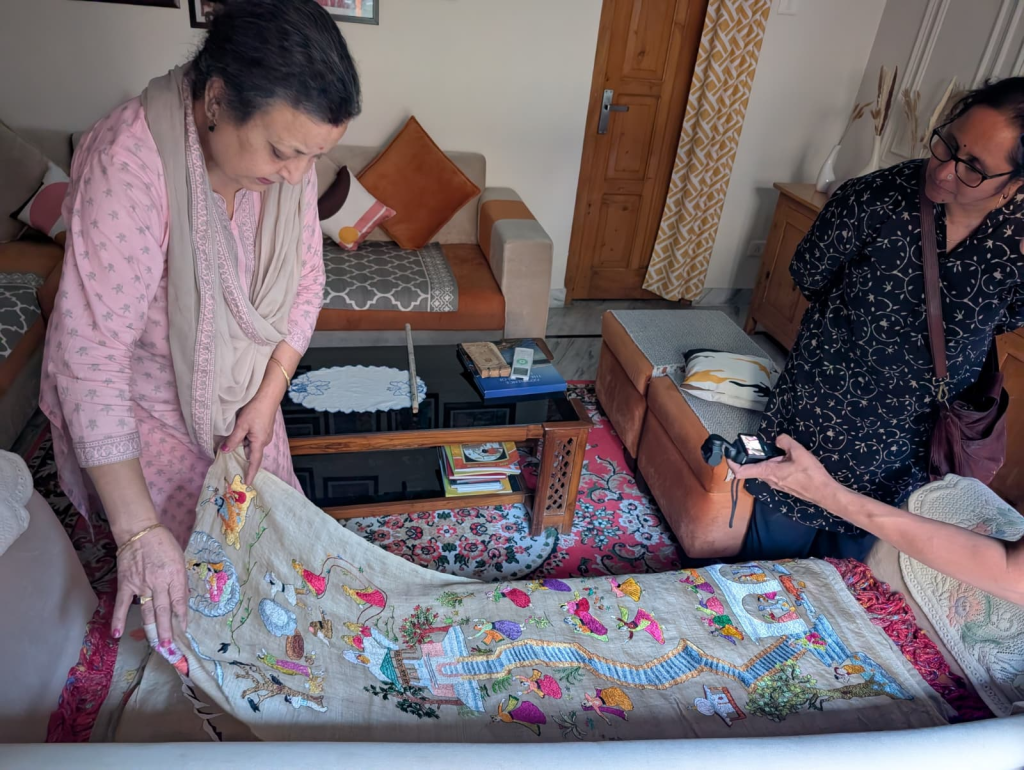
There is a dissonance between the love Raj Naun and Suhi Mata’s story receive from the people and its current condition.
The Governance Gap
There have been no scientific assessments of Raj Naun’s water yield or status by the Chamba Municipal Council or other government body. The water quality remains acceptable as per scholarly publications,[9] but no reports of testing done by Irrigation and Public Health (IPH) Department are available in open domain.
There have been no investigations as to why the Raj Naun springs went dry and what can be done to reinstate the flow. The water channels which supplied water to the city have been buried in rubble or broken through government apathy. Local media keeps raising these issues and keeps receiving non-answers. [10]
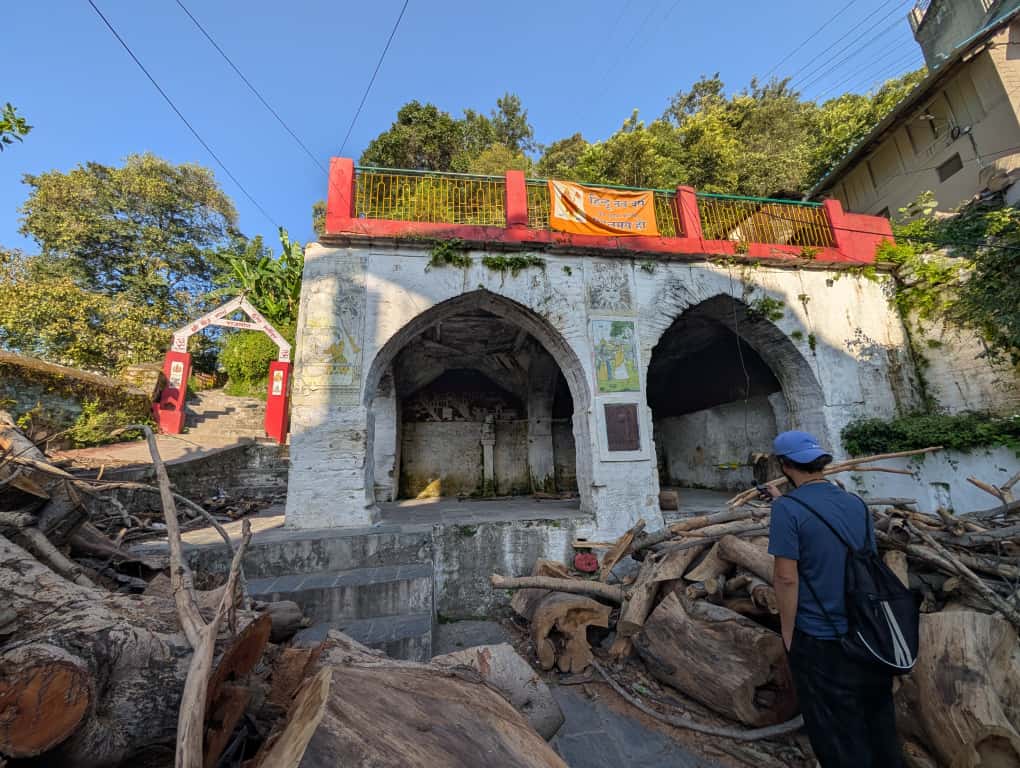
Raj Naun is not alone. Across the Ravi basin, structures like those at Tatwani, Sarol, Kandu, Chhatradi, Brehi and others face the same erasure: loved by the people who use them, invisible to the institutions that should protect them.
There is an urgent need to undertake watershed-based rejuvenation of the Raj Naun and such unique, place-specific groundwater-based structures in Chamba and surrounding areas.
If stories alone could sustain water sources, Raj Naun would be flowing today. The story is intact, sung every April by women who have not forgotten, drunk every day by hundreds of people who know exactly whose water this is. What is absent is accountability and will : of municipalities, of departments, of political parties that hang their banners over a dying spring and consider their job done.
Today is the second day of the Suhi Mela in Chamba [11]. We call upon the administration to use this energy to initiate a project on rejuvenation of Raj Naun along with the people of Chamba.
Story: Parineeta Dandekar, SANDRP with inputs from Madhumita Dutta
Photos: Abhay Kanvinde, Independent Photographer
This piece is a part of Ravi Report from the River Ethnographies Project supported by Ohio State University. Read more: https://mershoncenter.osu.edu/research/river-ethnographies
End Notes
[1] Several old and new versions of Sukrat exist. Check out: https://www.youtube.com/watch?v=dn8BAWCwyc8&list=RDdn8BAWCwyc8&start_radio=1, https://www.youtube.com/watch?v=hFAyffyz1Gs&list=RDhFAyffyz1Gs&start_radio=1, https://www.youtube.com/watch?v=FjI0UujYhKI&list=RDFjI0UujYhKI&start_radio=1
A new fusion: https://www.youtube.com/watch?v=dHoy-J0QlNQ&list=RDdn8BAWCwyc8&index=5
[2] https://www.tribuneindia.com/news/himachal/chambas-suhi-fair-celebrates-legacy-of-queen-sunayana/
[3] NITI Ayog, Government of India, Report of Working Group I
Inventory and Revival of Springs in the Himalayas for Water Security, 2018
[4] Mahesh Sharma, State, Waterways and Patriarchy: The Western-Himalayan Legend of Walled-up Wife, Himalaya, 2016
[5] Vogel, History Of The Panjab Hill States Vol. 1, 1933
[6] Gazetteer of the Chamba State, Government of Panjab, 1904 https://archive.org/details/ChambaState/page/n3/mode/2up
[7] https://www.jagran.com/himachal-pradesh/chamba-12251056.html
[9] Sing et al, Assessment of Seven Conventional Natural Drinking Water Sources in the Periphery of Chamba Town of Himachal Pradesh in India, 2023
[10] https://www.jagran.com/himachal-pradesh/kangra-man-is-unable-to-save-the-water-for-which-the-queen-had-given-her-life-22591015.html
[11] https://www.tribuneindia.com/news/himachal/chambas-suhi-fair-celebrates-legacy-of-queen-sunayana/
 SANDRP