Sand Mining

Rajasthan: SC Banned Riverbed Mining through 2018: Centre & State Show No Concern

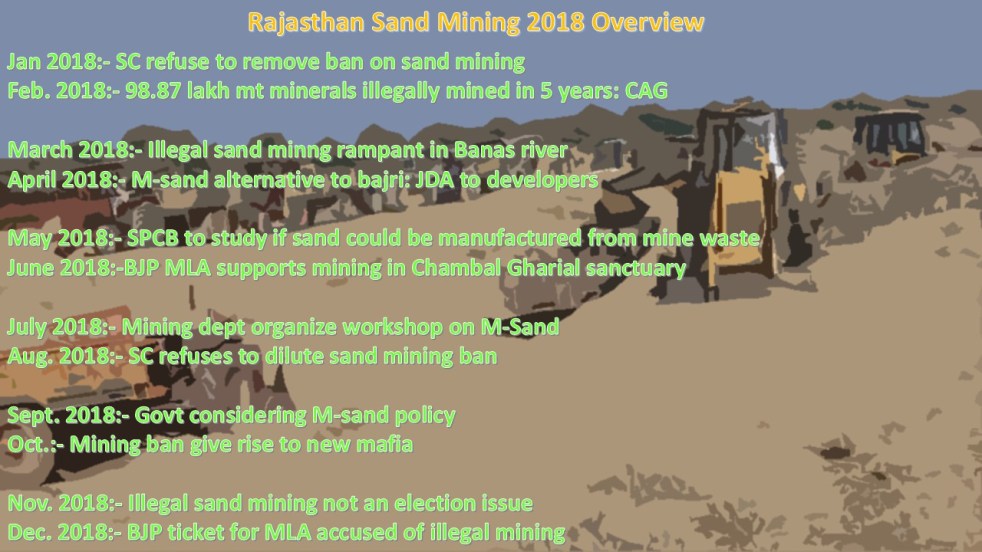
On November 16, 2017, the Supreme Court (SC) of India, prohibited 82 large lease holders from mining sand and stone activities in absence of scientific replenishment study. The ban continued all through the year of 2018 and so were the incidents of illegal sand mining and violent attacks on police officials.

The ban has reportedly hampered some development projects. The prices of sand has increased. Meanwhile the mining department is seen making efforts in exploring Manufactured Sand (M-Sand) as an alternative though it seems there is not much success as yet.

Continue reading “Rajasthan: SC Banned Riverbed Mining through 2018: Centre & State Show No Concern”

Dams · Ganga

HOW MODI GOVERNMENT WENT HORRIBLY WRONG ON GANGA REJUVENATION

Guest Blog by Manoj Misra

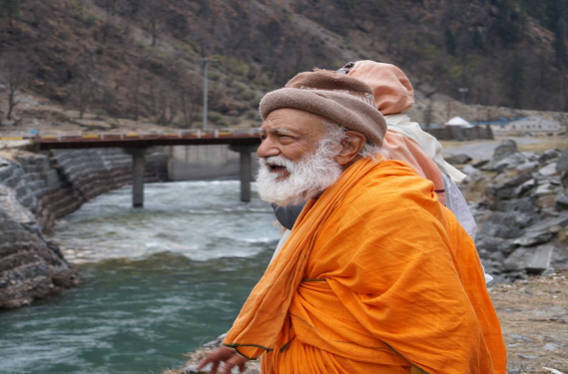
Allowing Swami Gyan Swarup Sanand (formerly Prof. GD Agarwal) to die unheard is perhaps the most tragic but not the only serious faux pas committed by Prime Minister Modi and his team in the matter of Ganga rejuvenation. It was actually the culmination of a series of missteps that began early in his tenure.  

It can reasonably be presumed that candidate Modi was sincere and serious when he made those famous statements at Varanasi during his campaign (and even later) regarding Ganga rejuvenation. They seemed straight from his heart and seemed to be convincing to many. Everybody thought, “Here is a Prime Minister, who does not – contrary to his predecessor – need goading to make all the right noises”. Hopefully these noises shall result into right actions as well. So much so that Swami Sanand waited almost four years before making his discomfort on lack of any worthwhile progress on Ganga rejuvenation known directly to the Prime Minister. He wrote a number of letters before and after embarking (beginning 22 June 2018) on his legendary 111 day fast that ultimately led to his martyrdom on 11 Oct 2018.

Continue reading “HOW MODI GOVERNMENT WENT HORRIBLY WRONG ON GANGA REJUVENATION”

Dam Induced Flood Disaster · Kerala

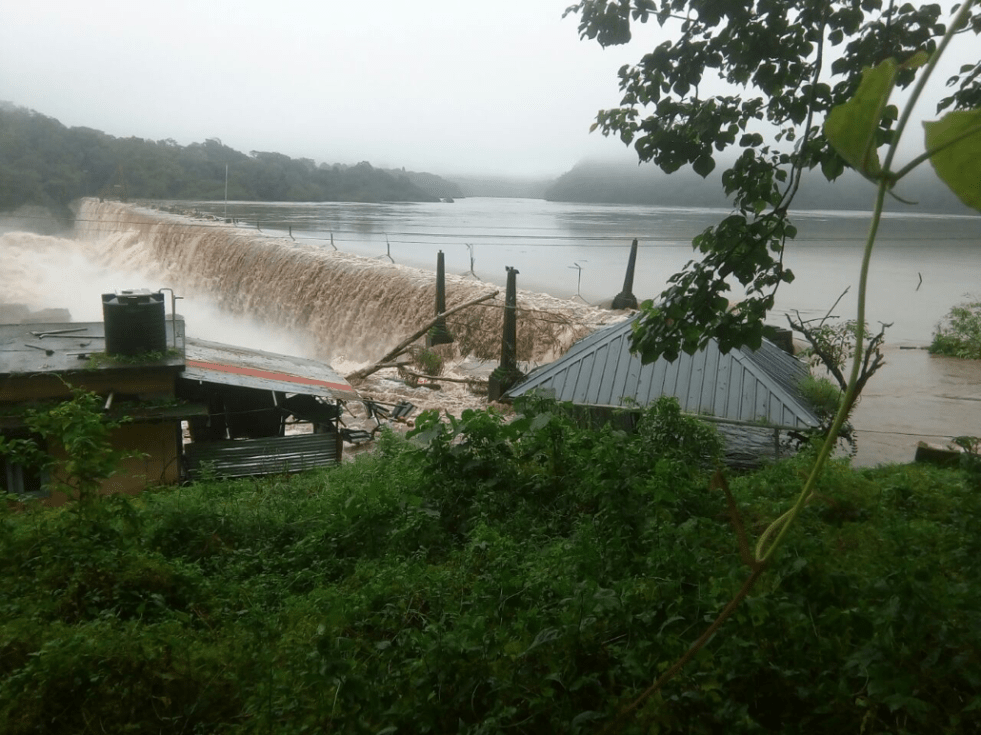
Role of dams in Kerala’s 2018 floods

ABSTRACT: Many independent observers have argued that dams have played a role in increasing the proportions of Kerala flood disaster during July-Aug 2018. This article shows that Kerala dams violated many basic norms and if operated prudently, could have helped. It shows how post dam floods are different than pre dam floods. It lists the steps that would help in future disasters involving dams. The lessons are useful for all large dams of India.

In theory, every dam can help moderate floods in the downstream areas, as long as and as much as the dam has space to store water. In fact, every action that helps to store, hold, recharge (to groundwater aquifer), delay flow of rainwater from the catchment to the river would help moderate flow and hence flood in the river. Our catchments are fast losing that capacity, with continued destruction of natural forests, wetlands, local water bodies and also soil’s capacity to hold water. Continue reading “Role of dams in Kerala’s 2018 floods”

Ganga

Is there hope from National Mission for Clean Ganga? Listen to official agencies

In this second part of the Ganga article, let us listen to some official agencies about the state of Ganga River following the recent efforts.

Parliamentary Committee: Why is Ganga among the five most polluted rivers of the world? Said Parliamentary estimates committee (2016-17) for Ministry of Water Resources, Ganga Rejuvenation and River Development (MoWR for short) in a report on “Ganga Rejuvenation” submitted to the Lok Sabha (lower house of India’s Parliament) on 11th May, 2016[i]: “However, indiscriminate anthropogenic interventions like construction of HPPs[ii] in the seismically active and fragile Himalayas, diversion of 80 to 90 percent of water, discharge of extremely hazardous effluents by 144 drains and dumping of solid waste has converted the Ganga into one of the ten most polluted rivers of the world. Alarmed by the drying-polluted Ganga and taking note of the solemn resolve of the Prime Minister to rejuvenate the Ganga, the Committee decided to select the subject for in depth examination and report with a view to accelerate the work of Ganga rejuvenation.” The report also noted, “The Public Accounts Committee (2014-15) in their 8th Report on Water Pollution had expressed distress that the Ganga has become one of the five most polluted rivers in the world, despite launching of the ‘Ganga Action Plan’ and the ‘Mission Clean Ganga’ (2009) by the NGRBA[iii].” Continue reading “Is there hope from National Mission for Clean Ganga? Listen to official agencies”

Dams, Rivers & People

DRP News Bulletin 20 August 2018: While Kerala Is Recovering From Unprecedented Flood Disaster, Will It Be Cauvery Or Krishna Basin Next?

Well-known ecologist Madhav Gadgil, founder of the Centre for Ecological Sciences at the Indian Institute of Science, Bengaluru, has described the devastating floods in Kerala as a man-made disaster and a reaction to the illegal excavations and stone quarrying done over a decade. https://www.hindustantimes.com/pune-news/illegal-forest-land-acquisition-major-reason-for-floods-in-kerala-says-ecologist-madhav-gadgil-calls-it-man-made-disaster/story-vMHPKUH623GEnjyQHI09NP.html  (19 Aug. 2018)

Further speaking to various regional media, Madhav Gadgil has said that irresponsible environmental policy is to blame for the recent floods and landslides in Kerala. He also called it a “manmade calamity”. He said that the committee report had recommended to protect the resources with the cooperation of local self-govt and people, but those recommendations were rejected.

He also pointed out that quarrying is a major reason for the mudslides and landslides. Other environmentalists also point fingers at the extensive quarrying, mushrooming of high rises as part of tourism and illegal forest land acquisition by private parties as major reasons for the recent calamity. https://energy.economictimes.indiatimes.com/news/power/kerala-floods-the-ghost-of-past-environment-policy-returns/65436707  (17 Aug. 2018)

Dams should never be filled before the end of the monsoons. Because then one doesn’t have any solution but to release the water in the surrounding areas: Himanshu Thakkar, SANDRP says as one of panellist discussing role of dams in aggravating Kerala floods.

https://twitter.com/ETNOWlive/status/1030487469320355840

Also see, NDTV discussion on Kerala flood crisis, it included SANDRP coordinator:

https://special.ndtv.com/kerala-floods-42/video-detail/kerala-floods-non-stop-special-coverage-of-the-unfolding-crisis-491815  (19 Aug. 2018)

Here is NDTV Hindi discussion on Kerala flood crisis, included SANDRP coordinator:

https://khabar.ndtv.com/video/show/ndtv-special-ndtv-india/ndtv-special-coverage-on-kerala-rain-crisis-491820  (19 Aug. 2018)

Here is admission about sudden, excessive releases and not foreseeing the coming disaster. The Kerala crisis could have been contained had the state “gradually released” waters from at least 30 dams, officials said, adding that the local authorities failed to foresee the imminent danger with high rain prediction. “Such floods have probably recurred after 100 years, exposing the state’s unprofessionally run reservoir management system and unpreparedness on disaster mitigation and disaster resilience, an official pointed out. https://timesofindia.indiatimes.com/city/kochi/gradual-dam-water-release-could-have-contained-crisis/articleshow/65436339.cms  (17 Aug. 2018)

Continue reading “DRP News Bulletin 20 August 2018: While Kerala Is Recovering From Unprecedented Flood Disaster, Will It Be Cauvery Or Krishna Basin Next?”

Dams · DRP News Bulletin

DRP News Bulletin 23 July 2018: Landmark CAG Reports on DAM FLOODS & Ineffective; Costly Mega Irrigation Projects

In its latest report, the Comptroller and Auditor General (CAG) has questioned implementation of sixteen National Irrigation Projects. Before this, the CAG has held mismanagement in dams’ operation responsible for Chennai floods in 2015. Both these reports are available on its website now.

The CAG report on National Irrigation Projects, tabled in Parliament on July 20, has revealed that sixteen major multi-purpose water projects, taken up on an expeditious basis about a decade ago, are nowhere near completion, with no work being undertaken in as many as 11 projects despite the incumbent govt’s much-wanted focus on improving irrigation facilities in the country.

The report also mentioned that out of the 16 projects, undertaken under the Accelerated Irrigation Benefits Programme (AIBP) in Feb 2008, only five projects with estimated irrigation potential of 25.10 lakh hectares were under implementation and even these projects suffer from 8 to 99 per cent shortfall in physical progress, the CAG said. The remaining 11 projects with estimated irrigation potential of 10.48 lakh hectares are yet to commence and are at different stages of approval.

Continue reading “DRP News Bulletin 23 July 2018: Landmark CAG Reports on DAM FLOODS & Ineffective; Costly Mega Irrigation Projects”

Dams

West India Rivers Review 2017: Governments, Industries Destroy Rivers

After review of North India and Maharashtra Rivers, SANDRP presents the development surrounding rivers in rest of West Zone: Gujarat, Goa, Madhya Pradesh and Rajasthan states in 2017.

Gujarat Rivers

Dams, industrial pollution killing State Rivers In MoEF report, Gujarat ranks 4th among top 5 states with highly polluted rivers. Sabarmati is among Gujarat’s 20 most polluted rivers including Narmada and Mahi. Over Rs 200 cr has been spent to curb pollution in Sabarmati & Mindola rivers. This fund is the highest amount ever spent outside the Ganga river conservation project on which Uttar Pradesh has spent Rs 917.24 crore, West Bengal Rs 411.26 crore and Bihar Rs 216.46 crore. As per activist, Rohit Prajapati, industrial effluents are being released in big rivers like Sabarmati, Mahi and Narmada without being treated and big dams have been built on big rivers due to which the rivers are drying up and vanishing as a result, the condition of rivers in Gujarat is going from bad to worse. https://timesofindia.indiatimes.com/city/ahmedabad/polluted-rivers-guj-ranks-4th/articleshow/62685910.cms (The Times of India, 29 Jan. 2017)

Continue reading “West India Rivers Review 2017: Governments, Industries Destroy Rivers”

Dams · DRP News Bulletin

DRP News Bulletin 29 May 2017 (Drought Options: Lessons from Rajasthan)


Rajasthan Lessons from a reborn river The district of Alwar in Rajasthan is water-stressed, receiving less than 650 mm of rainfall in a year, most of which falls during the Southwest monsoon. But Alwar exists in a stable equilibrium, where even if there is a drought, the Johad’s and the forests make it possible for water to be stored underground. Because of strong communal interdependencies, all villagers stuck to sensible crops for the region, and maintaines the Johads. The community, the Forests, the Johads, the choice of crops, all worked together and reinforces one another. Equilibriums are maintained by such reinforcing activities that fortify status quo. FASCINATING account of how Arvari community rejuvenated their rivers and what are the lessons.

Continue reading “DRP News Bulletin 29 May 2017 (Drought Options: Lessons from Rajasthan)”

Godavari · Interlinking of RIvers · Krishna River · Telangana

Pranahita-Chevella Project: Gargantuan Project with Gargantuan Violations

Can you imagine a project-not any project, perhaps India’s largest irrigation project till date- going on for years without most statutory clearances? Can you imagine a project on which Rs 7000 Crores[1] have been spent already but its Dam height (FRL – Full Reservoir Level) is yet undecided? Can you imagine a project whose canal works are ongoing in full swing, without having any idea of the submergence? Can you imagine a Public Hearing where the Project Engineer says that the meeting is only about compensation not about environmental impacts or fundamental questions? Can you imagine a state which is set to lose thousands of hectares of rich forests, protected areas, villages for a project of a different state, but is happy to oblige? Can you imagine a Ministry which turns a stony Nelson’s Eye to a project continuing right under its nose without Environmental Clearance, Wildlife Clearance or Forest Clearance?

Continue reading “Pranahita-Chevella Project: Gargantuan Project with Gargantuan Violations”

CAG Report · Forest Advisory Committee · Maharashtra · Ministry of Environment and Forests

Press Release:21.06.14: RAMPANT ENVIRONMENTAL VIOLATIONS OF MAHARASHTRA WATER RESOURCE DEPARTMENT

Press Release:                                          ___________                                                                21.06.14

RAMPANT ENVIRONMENTAL VIOLATIONS OF MAHARASHTRA WATER RESOURCE DEPARTMENT: STATE FOREST AND ENVIRONMENT DEPT AND CENTRAL MOEF NEED TO TAKE URGENT ACTION

A shocking expose by the CAG Report on Management of Irrigation Projects in Maharashtra, 2014, highlights the repeated and rampant Environmental Violations in Maharashtra which have led to huge impacts, environmental issues, stoppage of work, wastage of funds and violations of multiple laws.

CAG states that as many as 249 projects in Vidarbha Irrigation Development Corporation (VIDC) alone started work without receiving the legally required Environmental Clearance (EC) from the Central Ministry of Environment and Forests or the State Environment Department. There are large number of projects also from Konkan IDC, Tapi IDC, Godavari Marathawada IDC and Maharashtra Krishna Valley Dev Corporation. In test cases, an expenditure of Rs 376.96 crore was incurred up to March 2013 without obtaining EC by VIDC alone. In addition, work was started in 89 projects and Rs. 7,129.76 crore were spent without Forest Clearance, in violations of Forest Conservation Act by all IDCs. Issues due to this led to an additional expense of nearly Rs. 2000 Crores. Some of the important CAG findings:

  • There was no mechanism in the WRD to monitor compliance of environmental clearance conditions. However, the responsibility of monitoring compliance also falls with the State and Central Environment Departments and Ministries and the Pollution Control Board. They too have violated the laws by not taking any action against the WRD and are to blame for the terrible state of affairs. Following indicates that some of these agencies refused to take action even when SANDRP and other organisations pointed out the violations in the past.
  • Some examples of projects without Environmental clearance are: Surya, Virdi, Nardawe, Kondane: Konkan IDC, Janai Shirsai LIS and Chaskaman extension by MKVDC (Maharashtra Krishna Valley Development Corporation), Katepurna barrage, Lower Dnyanganga, Januna, Pangrabandhi, Warajahangir, Sukli and  Lower Wardha Major Project by VIDC, Kurha Vadoa project by Tapi IDC and Vishnupuri Project Phase II by Godavari Marathawada IDC which includes 13 barrages on the Godavari.

After the CAG report, the Environment Department, GOM has issued notices to 38 projects without EC. Director, Environment Department told SANDRP that Forest Department may issue a separate notice to projects violating the FC Act.

Violations of Forest Conservation Act (1980). Some of the important CAG findings:

  • 188 projects valuing Rs 46,652.44 crore under the jurisdiction of five IDCs remained incomplete (June 2013) because of pending forest clearances by GoI and GoM. 18 projects were not granted forest clearance due to violation of Forest Act.
  • 139 projects from above mentioned 188 projects needed 19,489 hectares of forest land.
  • An expenditure of Rs 7,129.76 crore was incurred on 89 projects out of these pending clearances under the Forest Act in violation of Forest Conservation Act (1980). For 61 projects and 7636 ha land, no NPV (Net Present Value, required to be deposited for use of forest land) was deposited.
  • In 19 out of 89 projects, commencement of work without forest clearances necessitated changes, stoppage of work etc. resulting in blocking of funds to the extent of Rs 1,944.92 crore.

While the CAG report has done a comprehensive assessment of the violations of Environmental Act, Chitale Committee Report, also brought out around the same time misses many of these projects and violations. However, the Chitale Report also recommends strict action to be taken against Executive Engineers for starting working without clearances.

SANDRP had tried to bring several such violations from bigger projects to the notice of both Govt of Maharashtra and Ministry of Environment and Forests, Government of India consistently. However, most shockingly, no action was taken about these violating projects by these bodies. Letter about irregularities in Nardawe Medium Irrigation Project to Mr. A. Rajeev, Principal Secretary Environment Department, GOM in July 2013, as also to the MoEF, has been unanswered till date.

  • Additional HUGE projects which have commenced without EC include the Krishna Marathwada Lift Irrigation Scheme in Solapur, Lower Tapi Project in Dhule, and as many as 9 lift irrigation schemes based on Ujani.
  • SANDRP had sent relevant information on the above projects in form of submissions to MoEF time to time, but NO ACTION WAS TAKEN BY THE MINISTRY.
  • The State Wildlife Board, Maharashtra, under the Chairpersonship of the Chief Minister has cleared violating projects in its last meeting which were under construction and had already violated the Supreme Court Orders as well as the Environment Protection Act 1986. These projects include Nardawe Medium Irrigation Project and Alewadi and Ar Kacheri Nallah Projects in Buldana. Here too, SANDRP had pointed out the violations to the SWB, but it chose to take no action.
  • Additional Environmental and Forest violations are documented by SANDRP in projects including: Balganga, Kalu, Shai, Talamba and Sarambale Dams of KIDC, Upper Godavari Interbasin Transfer and Manjarpada Phase I project and Components of Gosi Khurd in GMIDC.
  • Lift Irrigation Schemes like Shirapur LIS, Sangola LIS, Barshi LIS, Bhima Seena Link Canal, Dahigain LIS and Seena Madha LIS based on Ujani. All information about these has been given by SANDRP in January 2013 to the Expert Appraisal Committee of the MoEF which grants Environmental Clearance to these projects. But no action has been taken by MoEF.

This points to the inescapable conclusion that the state forest and environment department and ministry as well as the MoEF, Delhi, are equally responsible for consciously turning a blind eye towards violations by WRD, Maharahstra.

Any action taken  by these agencies following the CAG report is only to save face and is too little too late, as environment and forests are already impacted and huge amounts of public funds are already spent or locked in these projects without even basic impact assessments or appraisals. This shows that the government, politicians and bureaucrats have no respect for environment and forest clearances, appraisals, impact assessments & affected community’s opinion through public consultations. Strict action should be taken against all those ministers, officials, engineers & contractors, who are responsible for sanctioning and starting such work. Action also needs to be taken against agencies which have looked the other way and have failed to take necessary action, along with WRD Maharashtra for violating laws of the land and affecting forests, environment, people, society and economy of the state.

While the responsibility of ruling coalition of Congress and NCP is greater, the opposition alliance of BJP and Shiv Sena is also equally to blame for not raising these important issues which are crucial for the people of Maharashtra.

-Parineeta Dandekar (9860030742) parineeta.dandekar@gmail.com, Himanshu Thakkar (09968242798) ht.sandrp@gmail.com

South Asia Network on Dams, Rivers and People (SANDRP), https://sandrp.wordpress.com/, https://sandrp.in/