
W Ghats Forests vital for Tamil Nadu SW Monsoon Rains Researchers have found that the dense vegetation in the Western Ghats determines the amount of rainfall that Tamil Nadu gets during the summer monsoon. A team led by Prof. Subimal Ghosh from the Department of Civil Engineering at the Indian Institute of Technology (IIT) Bombay has found that dense forests of the Western Ghats contribute as much as 40% of moisture to the southwest monsoon rainfall over Tamil Nadu during normal monsoon years. The average contribution is 25-30%. But during monsoon deficit years, the contribution increases to as high as 50%.
Continue reading “DRP: May 7, 2018: WESTERN GHATS FORESTS ARE VITAL FOR SOUTH WEST MONSOON RAINS IN TAMIL NADU”Tag: Bhutan
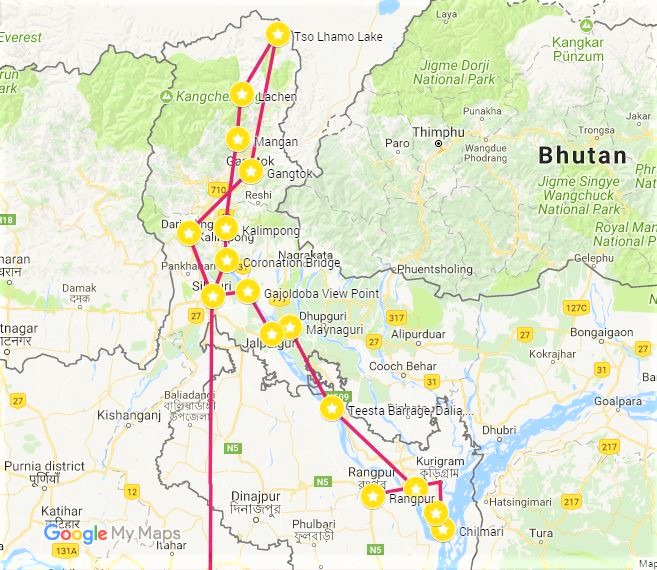
SOUTH ASIA 2017: MISS YOU, RIVERS & FISH! As Dams and Water sharing dominate
India-Bangladesh-Myanmar face big quake threat A giant fault in the earth’s crust in one of the world’s most densely populated areas could kill tens of millions of people, scientists have warned according to a new paper in the journal Nature Geoscience. Researchers placed hundreds of highly accurate GPS receivers in locations across India, Bangladesh and Myanmar and monitored them over a ten-year period. Now the scientists fear the location is home to a mega-thrust fault which could unleash a 8.2-9.0 magnitude earthquake. More than 140 million people live within a 60-mile area of the potential disaster zone in Bangladesh. The scientists, led by Dr Michael Steckler from Columbia University published their findings in the journal Nature. This is also a warning against major interventions in the North East India. http://www.indiaspend.com/cover-story/india-bangladesh-and-myanmar-face-big-quake-threat-99557, July 19, 2016, http://thenortheasttoday.com/earthquake-of-9-0-magnitude-could-be-unleashed-anytime-from-a-major-fault-underneath-bangladesh/, July 22, 2016, http://www.nature.com/ngeo/journal/vaop/ncurrent/full/ngeo2760.html Continue reading “SOUTH ASIA 2017: MISS YOU, RIVERS & FISH! As Dams and Water sharing dominate”
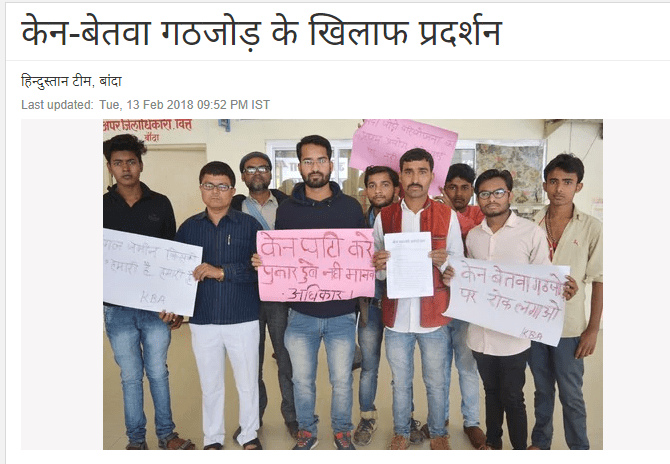
DRP: 26 Feb 2018 (Banda People Also Protest Against Ken Betwa Link)
When Central Government is trying to push Ken Betwa link project terming it as beneficial for both Madhya Pradesh and Uttar Pradesh, local people of Banda are now also protesting against it, in addition to the people of Panna that are already opposing it. On Feb. 13, 2018, the Ken Bachao Samiti comprising of farmers, citizens and social workers in Banda sat on a Dharna before district magistrate office. The group have also sent a memorandum to the President of India, demanding immediate cancelling of the project. Raising serious concerns over environmental and social of the linking project, they asked demanded proper impact assessment and public consultation and said the project wont be allowed to go forward. Indeed, as they have said, there has been no downstream impact assessment and people of Banda are likely to loose their river. https://www.livehindustan.com/uttar-pradesh/banda/story-demonstrate-against-ken-betwa-alliance-1800951.html (Hindustan Hindi,13 Feb. 2018)
Continue reading “DRP: 26 Feb 2018 (Banda People Also Protest Against Ken Betwa Link)”
DRP: 24 April 2017 ( NHPC says Dams have no adverse impacts anywhere in the world! Admits, Hydro is no longer viable for private sector)
Centre Getting forest clearance is not a problem now: NHPC Chairman In an interview, taking a dig at its private peers, NHPC chairman KM Singh said that NHPC is the only company in the county that has the capability to execute hydro projects. He also said that in the NDA regime green clearances come easy, while local agitation by NGOs is the biggest threat. He further stated that there has been no negative impact of building a dam, not just in India, but anywhere in the world.
Continue reading “DRP: 24 April 2017 ( NHPC says Dams have no adverse impacts anywhere in the world! Admits, Hydro is no longer viable for private sector)”
DRP: 13 March 2017 (20 Big Hydro Projects Costing Over 30K Crore, Stalled & Stressed: Piyush Goyal)
20 hydro projects stalled or stressed The Power Minister Piyush Goyal on March 09, 2017 in a written statement has informed the parliament that as many as 20 under construction HPPs totalling 6,329 MW are either stalled or stressed in the country and Rs 30,147.08 crore has already been spent on them. These projects include 2,000 MW Subansiri Lower of NHPC Ltd, 500 Mw Teesta VI of Lanco Teesta Hydro Power Ltd, 120 MW Rangit-IV of Jal Power Corp, 300 Mw Panan of Himagiri Hydro Energy Pvt Ltd, 850 MW Ratle of GVK Ratle HEP Pvt Ltd, 100 Mw Sorang of Himachal Sorang Power Ltd and 960 MW Polavaram of Polavaram Project Authority.
Continue reading “DRP: 13 March 2017 (20 Big Hydro Projects Costing Over 30K Crore, Stalled & Stressed: Piyush Goyal)”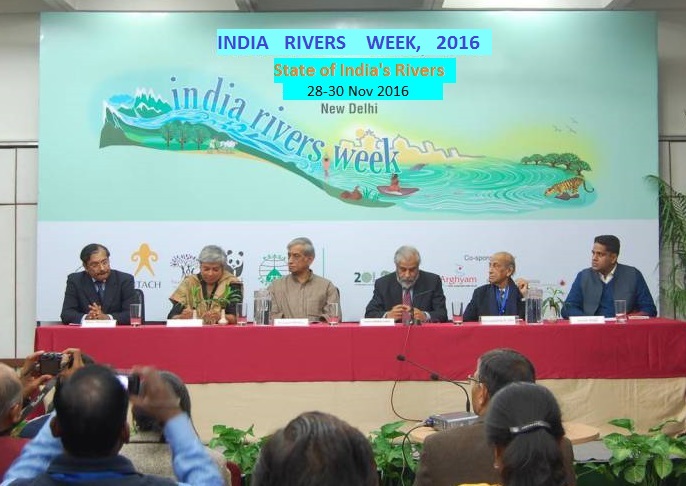
DRP: 21 Nov 2016 (India Rivers Week to be Held in Delhi from Nov 28th)
India Rivers Week 2016 to be organised at WWF-India during Nov 28-30 is just a week away. The theme of the event this year is STATE OF INDIA’s RIVERS. Groups from all the different states have put together reports about the status of rivers in their states with a view of classify rivers as Healthy (blue), Threatened (Pink) and Destroyed (Red) after assessing their health based on a large number of parameters, including Dams, Pollution, biodiversity, encroachment, mining, among others. This is the first ever attempt at such an exercise. The Event will also feature announcement of Bhagirath Prayas Samman Awards for exemplary work in river conservation, River Lecture Preview of a feature film and prominent speakers in inaugural and valedictory functions. Individuals and groups working for better future of our rivers will be travelling to the event from all over India.
Continue reading “DRP: 21 Nov 2016 (India Rivers Week to be Held in Delhi from Nov 28th)”
DRP: 14 Nov 2016 (Northeast Monsoon Failing, Water Crisis in South India to Become Worse)
To provide much-needed succour to those reeling under severe drought and facing acute drinking water shortage, as part of temporary drought-mitigation measures, the district administration has established helplines in all seven taluks.
A look at impacts of failing Northeast Monsoon on 4 South Indian States
South India Northeast Monsoon Failing; Water Crisis To Become Worse Andhra, Tamil Nadu, Kerala & interior Karnataka generally receives good rains during the Northeast Monsoon period that commences from Oct until Dec. However, this year, rains have remained scanty over entire Southern India region. Northeast Monsoon has also set in quite late during Oct end. As of now excluding scattered rain events, Monsoon like heavy rains are still far from coming to the southern region of the country. This is a clear indication of possibility of drought-like conditions that might prevail over south peninsula during Northeast Monsoon. In a nutshell, the picture is not very encouraging for next few days and also any significant increase in rains are not foreseen over the southern regions of the country.
Continue reading “DRP: 14 Nov 2016 (Northeast Monsoon Failing, Water Crisis in South India to Become Worse)”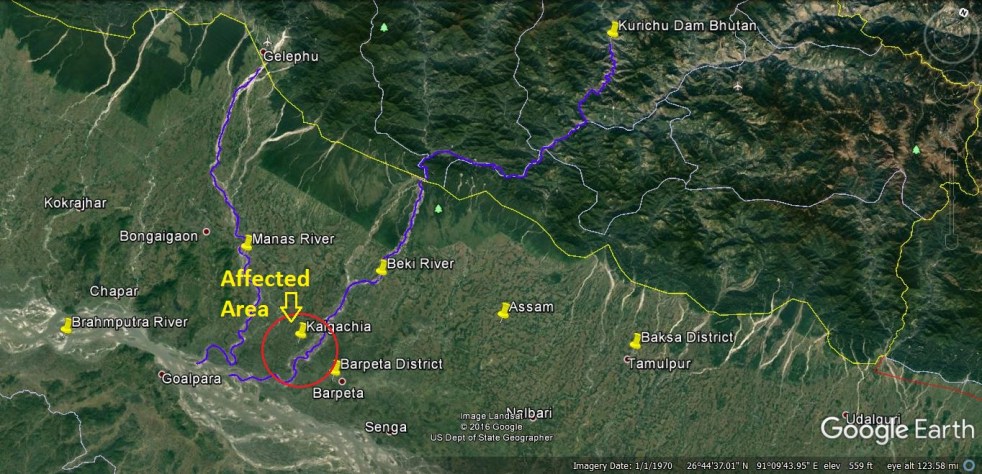
Bhutan’s Kurichu Dam releases floods Assam, again in 2016
Above: Google Map showing relevant locations (Map by Bhim Singh Rawat of SANDRP)
Several media reports have alleged that sudden water releases from Kurichu Dam in Bhutan has led to floods in Beki and Manas rivers in Assam on Oct 13, 2016 (Thursday), affecting thousands of people in Barpeta district & also reportedly Baksa district. This is not the first time that Kurichu water releases have led to this kind of situation, it has happened in the past including in 2004, 2007, 2008, 2009 (150 villages affected[i]), among other instances. The Indo Bhutan joint mechanism, established in 2004-05, following the July 2004 floods, has clearly failed to effectively address this issue. Continue reading “Bhutan’s Kurichu Dam releases floods Assam, again in 2016”
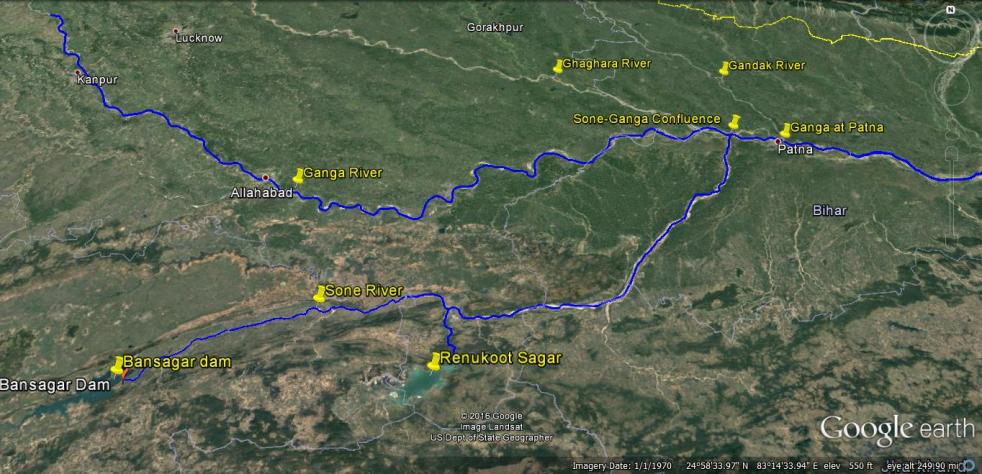
DRP: 29 August 2016-WHEN DAMS CAUSE FLOODS
The dam induced flood disaster could only increase since we refuse to learn any lessons:
SANDRP Blog A tale of two dams: Is Bihar’s unprecedented flood an avoidable man-made disaster? Is the unprecedented water levels of Ganga that has flooded Bihar and UP an avoidable flood disaster? What role did the water releases from Bansagar dam in the upstream and Farakka Dam in the downstream play in this? SANDRP analysis of this developing situation. Feed back is welcome, Please help us disseminate this. Kindlyd also see the Hindi version of this blog here दो बाॅधों की कहानीः क्या बिहार की अप्रत्याशित बाढ़ एक टाली जा सकने वाली मानव जनित त्रासदी है? PRABHAT KHABAR newspaper of Ranchi carries “in-depth” articles by Parineeta Dandekar and Himanshu Thakkar of SANDRP in the context of Bihar floods and demand to decommission Farakka barrage. Flood expert Dinesh Misra explaining role of dams behind unprecedented Ganga flood. In Part I of a separate report he narrates about Bihar/ Patna floods due to Ganga and Sone. Also see, बिना नदियों के उफान के ही पटना डूब गया BBC Hindi website has published this based on a radio discussion they carried earlier on the issue of Bihar floods and role of Bansagar and Farakka dam.
Continue reading “DRP: 29 August 2016-WHEN DAMS CAUSE FLOODS”DRP: 22 Feb. 16 (Unprecedented water crisis in Delhi due to Jat quota stir)
Unprecedented water crisis in Delhi due to Jat stir Terming the water crisis in the national capital as “unprecedented”, Delhi minister Kapil Mishra has warned that the situation might worsen in the next few days if the supply from Haryana is not immediately restored. He said the Delhi Jal Board (DJB) had almost run out of water and advised people to use water judiciously. Delhi gets its bulk of water supply from Haryana and the stir has affected 65% of water supply in Delhi has been cut with the shutting down of seven water treatment plants— Wazirabad, Chandrawal, Dwarka, Okhla, Haiderpur, Nangloi and Bawana which provide around 500 million gallons per day (MGD). In all Delhi has nine water treatment plants which together produce 820 MGD of potable water. Of these, only two Sonia Vihar and Bhagirathi fed by water from Uttar Pradesh are operational. The current production is only 240 MGD. Among the areas affected were Dwarka, Janakpuri, Munirka, Palam, Rajouri Garden, Punjabi Bagh, Vasant Kunj, Saket, Green Park and Lodhi Colony, where residents complained of little or no water. In another news report DJB is reported to have made 140 water filling points functional to feed tankers which would be sent across the city, reeling under an unprecedented water crisis. Water Minister Kapil Mishra reviewed the contingency plan for water management in West, North, North-west, Outer and Central Delhi and said tankers will deliver water at 663 points to partially meet the shortage of 480 MGD. These points will keep rotating. Plan is to cover around 2,000 points by Monday evening. The DJB supplies around 900 MGD of water daily out of which around 600 MGD of raw water come from Munak Canal. Even if Haryana releases water immediately, it will take at least 24 hours to restore the supply. Meanwhile Supreme Court on 22 Feb.16 scolded Delhi government. for approaching the court instead of resolving the water crisis with Haryana. The Kejriwal government had approached the top court on in view of the severe water crisis in the national capital after Jat protesters blocked water supply through Munak canal in Sonipat. During the hearing on government’s plea, the court took strong objection to Water Minister Kapil Mishra’s presence inside the courtroom. On the other hand, the minister accuses Haryana & Central Government for providing no official information on the crisis He said the Delhi government was “repeatedly trying to communicate” with the two governments to find out when will the supply resume, but without much success. Also see Jat quota stir: Water supply cut, Delhi may go dry
Continue reading “DRP: 22 Feb. 16 (Unprecedented water crisis in Delhi due to Jat quota stir)”
 SANDRP