Arunachal Pradesh · Assam · brahmaputra · Dams · Lohit River

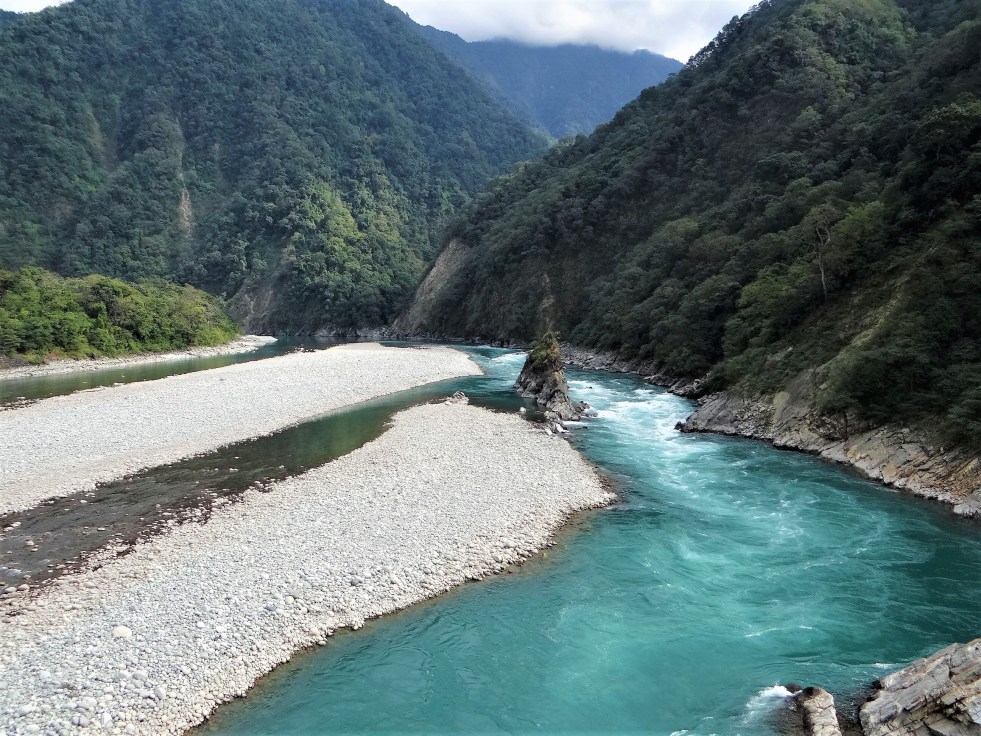
‘Banks of the Lohit will shine’: Glimpses of a free-flowing river

Above: Lohit River, Parshuram Kund on the right. Photo: Parineeta Dandekar

Assam, Arunachal and the North East India, West Bengal and Bangladesh are riverine entities in many ways. Ancient rivers flowing through this landscape have moulded not only the mountains and the silt-heavy banks, but cultural identity of the region itself.  Rivers permeate through the literature, folklore, songs, poems, cuisine, even dressing… Bhupen Hazarika, the Bard of the Brahmaputra, likened the red ripples of the Assamese Gamcha (red and white stole)  to the braided filigree of the Red River. When Guwahati University opened on the banks of Luit, Hazarika sang “Jilikabo Luiter Paar”..Banks of the Luit will Shine. Rivers stood for revolution as they stood for Love.. Jyoti Prasad Agarwal wrote “Luitar Parore Ami Deka Lora.. Moribole Bhoi Nai.” (“We are the youth from the banks of the Luit/ We are not afraid of death”). Older poets like Parvato Prasad Baruah wrote entire books full of poems of Luit and today modern poets in Assam like Jeeban Narah  link their creative processes inextricably to rivers. Continue reading “‘Banks of the Lohit will shine’: Glimpses of a free-flowing river”

Assam · brahmaputra · Dams · Floods · West Bengal

Brahmaputra basin faces unprecedented flood wave in Aug 2017

In the morning of Aug 11, 2017, while checking my daily morning routine sites, I saw the sudden appearance of purple patch (signifying rainfall in access of 175 mm rainfall in previous 24 hours) on NASA daily rainfall accumulation map for Indian subcontinent.[i] The purpose  patch covered parts of the West Bengal, North East Indian and Bangladesh. I was taken aback, but it was not very unusual to see in the peak of monsoon. So as we usually do, I took a screenshot and put up on SANDRP FB page with a warning that this could lead to floods. I did not realize that this was the beginning of an unprecedented wave of floods for these regions that may extend to Ganga basin as I write this. Such purple patches generally disappear in 24 hours, since the rains do not last to long. However, in the case of current phase, not only the purple patch has last now for 42 hours, it has extended  to the west, all along India Nepal region along the southern boundary of Nepal.   Continue reading “Brahmaputra basin faces unprecedented flood wave in Aug 2017”

Bangladesh · brahmaputra · Sikkim · Teesta · West Bengal

Retracing Her Path 1: A Journey along the Teesta River in Bangladesh

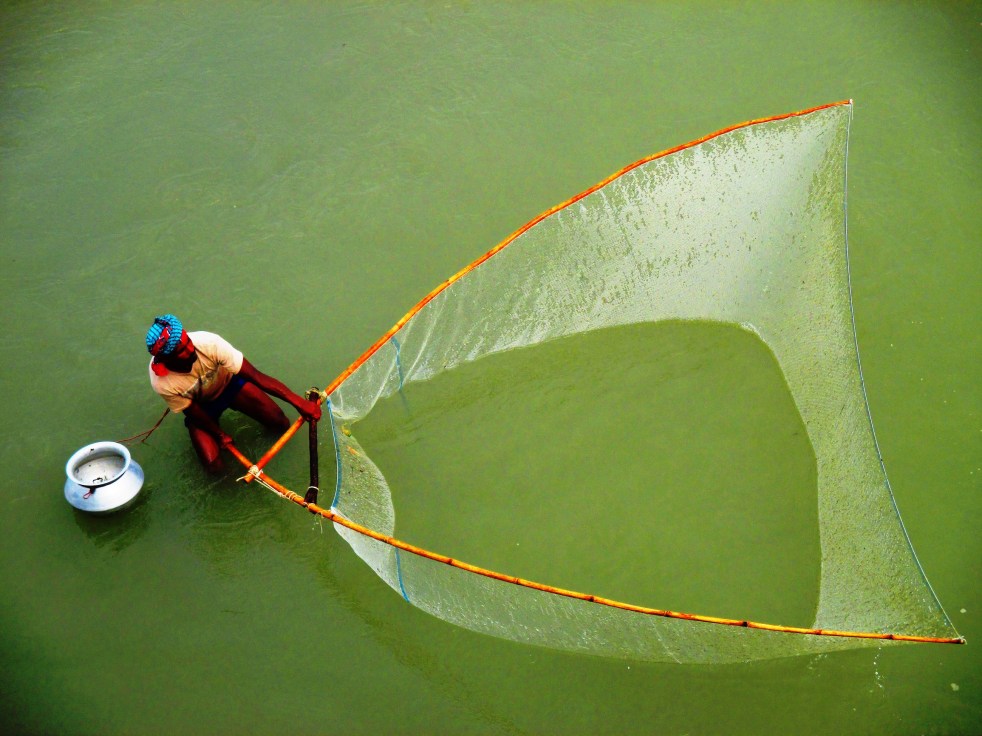
Above: A local fisherman fishing upstream of the barrage (Photo: Gauri Noolkar-Oak)

Guest Blog by Gauri Noolkar-Oak

Few journeys take us through a string of experiences that nourish the senses and the soul. A thoroughbred urban, city-lover, I nevertheless knew deep down that my journey of such nourishment would be with a river. I began researching rivers by chance, but with time, I grew to first like and then worship the entity. In early 2017, I acquired a grant from the Joke Waller-Hunter Initiative to study water conflicts in the Teesta basin, and I knew: this was going to be it.

My journey was inspired by the book “Empires of the Indus” written by Alice Albania, a brave woman who travelled the Indus river from mouth to source, and explored her history and cultures. But beyond that, I hardly had a plan; I did not know how long the journey would take, whether I would be able to see the whole river, and when I would return home.  When I landed in Dhaka at the end of April this year, all I knew was that I wanted to see the Teesta right from her confluence with the Brahmaputra River in Bangladesh all the way up to her source at Tso Lamo in Sikkim, on the Indo-China border. Continue reading “Retracing Her Path 1: A Journey along the Teesta River in Bangladesh”

Dams · DRP News Bulletin

DRP News Bulletin 22 May 2017 (SOLVE SILTATION PROBLEMS OF GANGA OR REMOVE FARAKKA DAM TO REVIVE GANGA: NITISH KUMAR)

Bihar Chief Minister Nitish Kumar again has urged the central govt to remove the Farakka barrage in West Bengal and make a countrywide policy on silt management for letting river Ganga to flow freely.

“Siltation is destroying Ganga’s ecology and health. It’s due to heavy deposits of silt on the riverbed that stream of the river is being badly affected,” Kumar said at a two-day national seminar on ‘Obstacles in the Incessant Flow of the Ganga’.

Speaking on the occasion, Swami Avimukteshwara Anand criticised Union Water Resources Minister Uma Bharati for doing absolutely nothing for the cause of the river Ganga and said she seems more interested in her chair rather  than the river. He also criticised  Prime Minister Modi for claiming that he is son  of Ganga, but doing nothing positive for the river. Swami ji said Nitin Gadkari seems bent on further destroying the river in the name of National Waterway.

Addressing the seminar Nitish Kukar said that Bihar’s demand for the framing of national policy on desiltation of the Ganga and clearance of silt in the state is not a political issue, as the matter is related to larger environmental and biodiversity issues facing the people.

He added, “Concrete steps have to be taken to ensure incessant flow of the Ganga. Otherwise, cleanliness of the river is not possible.” Referring to the need to protect biodiversity, he said conservation of the Ganga dolphins is dependent on the cleanliness of its water. He added the Farakka barrage constructed across the river in West Bengal has led to slow flow of water between Buxar to Bhagalpur, and consequent annual flood and waterlogging during the monsoon.

Nitish recalled the devastating flood that the state had witnessed in the Ganga basin last year and said Bihar had spent Rs 1,058 crore over the last five years to prevent soil erosion. He appealed to the Centre to frame a sound policy on silt management, stressing that it should be prepared by making on the spot survey and assessment of the prevailing situation. Nitish said even the report of the committee headed by Madhav Chitale had accepted the problem of siltation facing the Ganga.

Continue reading “DRP News Bulletin 22 May 2017 (SOLVE SILTATION PROBLEMS OF GANGA OR REMOVE FARAKKA DAM TO REVIVE GANGA: NITISH KUMAR)”

Dams · DRP News Bulletin

DRP News Bulletin 24 April 2017 ( NHPC CMD tells us Dams have no adverse impacts anywhere in the world! Admits that Hydro is no longer viable for private sector)

Centre Getting forest clearance is not a problem now: NHPC Chairman In an interview, taking a dig at its private peers, NHPC chairman KM Singh said that NHPC is the only company in the county that has the capability to execute hydro projects. He also said that in the NDA regime green clearances come easy, while local agitation by NGOs is the biggest threat. He further stated that there has been no negative impact of building a dam, not just in India, but anywhere in the world.

Continue reading “DRP News Bulletin 24 April 2017 ( NHPC CMD tells us Dams have no adverse impacts anywhere in the world! Admits that Hydro is no longer viable for private sector)”

Dams · DRP News Bulletin

DRP News Bulletin 13 March 2017 (20 Big Hydro Projects Costing Over 30K Crore, Stalled & Stressed: Piyush Goyal)

20 hydro projects stalled or stressed  The Power Minister Piyush Goyal on March 09, 2017 in a written statement has informed the parliament that as many as 20 under construction HPPs totalling 6,329 MW are either stalled or stressed in the country and Rs 30,147.08 crore has already been spent on them. These projects include 2,000 MW Subansiri Lower of NHPC Ltd, 500 Mw Teesta VI of Lanco Teesta Hydro Power Ltd, 120 MW Rangit-IV of Jal Power Corp, 300 Mw Panan of Himagiri Hydro Energy Pvt Ltd, 850 MW Ratle of GVK Ratle HEP Pvt Ltd, 100 Mw Sorang of Himachal Sorang Power Ltd and 960 MW Polavaram of Polavaram Project Authority.

Continue reading “DRP News Bulletin 13 March 2017 (20 Big Hydro Projects Costing Over 30K Crore, Stalled & Stressed: Piyush Goyal)”

Dams · DRP News Bulletin

DRP News Bulletin 02 Jan 2017 (Corruption in Nepal’s Hydro Power Projects)

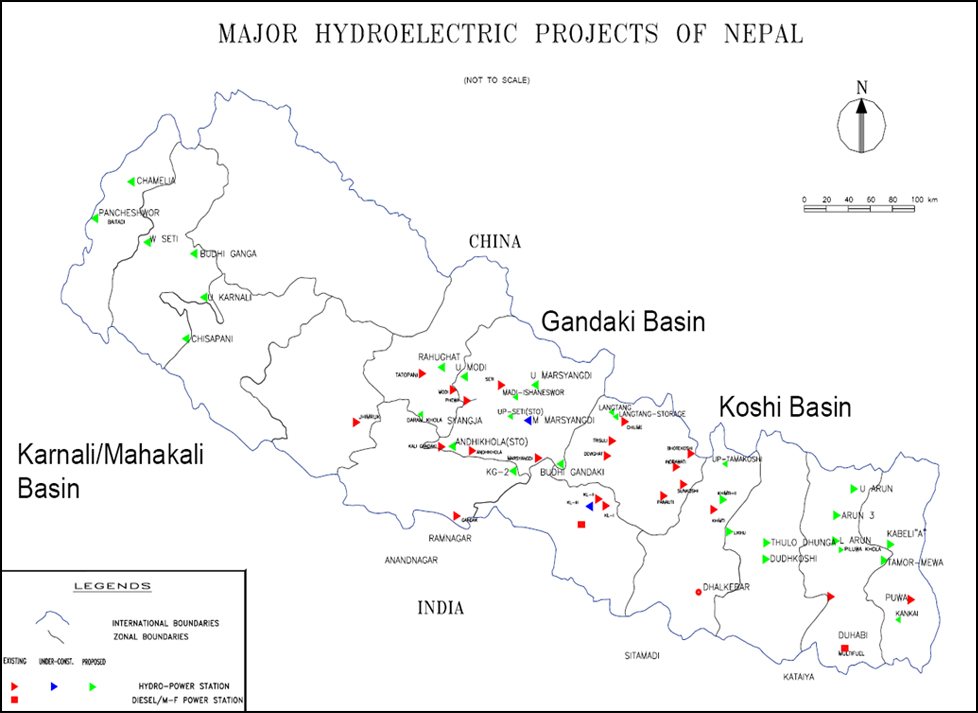
The latest report of Transparency International reveals that lack of dependable hydrological data, authentic study, action plans giving dual meaning, lack of transparency in the power purchase agreement and a failure to increase the risk-bearing capacity among power developers have remained major hindrances towards the development of hydropower sector in Nepal.

As per the report, the irregularities start from the stages of project selection and identification and this tendency further flourished in the period of a survey and the project implementation, the report states, highlighting a responsible role from the government level to control this practice.

The report also points out that environment standard violations, inadequate compensation in regard to land acquisition, false claims, unreasonable local demands, unwarranted contract variations, bias in selection of top officials like board members and CEOs during the construction, procurement, and implementation phases are working as a catalyst to bring the hydro sector under the grip of corruption.

Continue reading “DRP News Bulletin 02 Jan 2017 (Corruption in Nepal’s Hydro Power Projects)”

Inter State Water Disputes

Inter state River Water Disputes in India: History and status

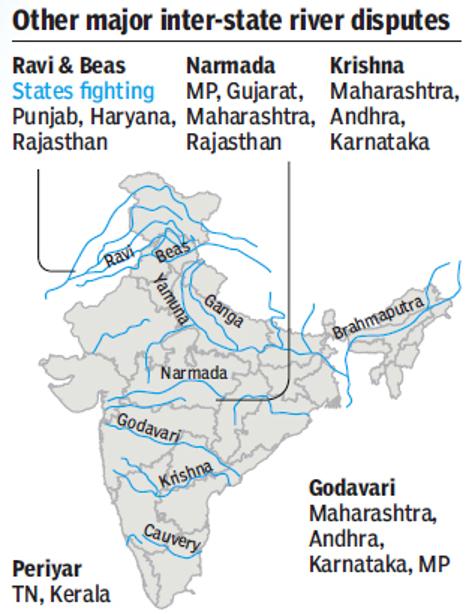
Water sharing disputes across the country (and even beyond) are only going to escalate with increasing demands, and also with increasing pollution & losses reducing the available water. Climate change is likely to worsen the situation as monsoon patterns change, water demands going up with increasing temperatures, glaciers melt and sea levels rise. The government’s agenda of interlinking of rivers would further complicate the matters.

The ongoing Cauvery Water Dispute [iv] has once again brought the focus on interstate river water sharing disputes in India and what has been our experience so far. There is no solution of Cauvery water dispute in sight and the engineer-dominated Cauvery Management Board that the Cauvery Water Dispute Tribunal Award has recommended is unlikely to help matters. Continue reading “Inter state River Water Disputes in India: History and status”

DRP News Bulletin

DRP News Bulletin 29 August 2016-WHEN DAMS CAUSE FLOODS

The dam induced flood disaster could only increase since we refuse to learn any lessons:

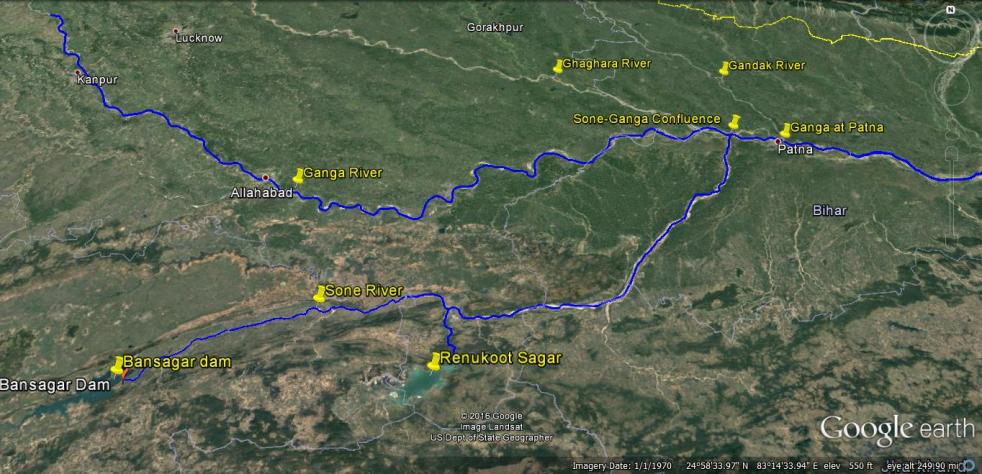
SANDRP Blog A tale of two dams: Is Bihar’s unprecedented flood an avoidable man-made disaster? Is the unprecedented water levels of Ganga that has flooded Bihar and UP an avoidable flood disaster? What role did the water releases from Bansagar dam in the upstream and Farakka Dam in the downstream play in this? SANDRP analysis of this developing situation. Feed back is welcome, Please help us disseminate this. Kindlyd also see the Hindi version of this blog here दो बाॅधों की कहानीः क्या बिहार की अप्रत्याशित बाढ़ एक टाली जा सकने वाली मानव जनित त्रासदी है? PRABHAT KHABAR newspaper of Ranchi carries “in-depth” articles by Parineeta Dandekar and Himanshu Thakkar of SANDRP in the context of Bihar floods and demand to decommission Farakka barrage. Flood expert Dinesh Misra explaining role of dams behind unprecedented Ganga flood. In Part I of a separate report he narrates about Bihar/ Patna floods due to Ganga and Sone.  Also see, बिना नदियों के उफान के ही पटना डूब गया BBC Hindi website has published this based on a radio discussion they carried earlier on the issue of Bihar floods and role of Bansagar and Farakka dam.   Continue reading “DRP News Bulletin 29 August 2016-WHEN DAMS CAUSE FLOODS”

Dams · DRP News Bulletin

DRP News Bulletin 30 May 2016 (Centre’s new wetland protection rules reinforces the stereotype that Govt see wetlands as wastelands)

Centre’s new wetland protection rules reinforces the stereotype that govts see wetlands as wastelands  The draft Wetlands (Conservation and Management) Rules, 2016 which replace the existing Wetland (Conservation and Management) Rules, 2010, are up for public comments till June 6, 2016. While wetlands nationwide are threatened by encroachment, pollution, catchment degradation and mindless development, the Narendra Modi government’s draft rules show no indications of acknowledging this threat. The draft rules, environmentalists say, reinforces the stereotype that governments see wetlands as wastelands. The essence of the new rules is to decentralise wetlands management to states. The Centre will have a say only in ‘exceptional cases’ While the 2010 rules gave some role to states, the draft rules gives them all powers. But in the process, the whole conservation process has been weakened. The period for public comments on the draft notification ends by the month. Several organisations, including BHNS, WWF, LIFE, International Rivers, INTACH, YJA & SANDRP have sent, or are in the process of sending, representations to the environment ministry. Among the concerns is that the 2010 rules itself were barely getting implemented. No state has identified a wetland yet, and few have made state-level nodal agencies mandated by the 2010 rules. In an ongoing case before the NGT, it emerged that states had not notified wetlands under the 2010 regulations. This forced the tribunal to demand that states begin to do so in at least 5-10 districts in a time-bound fashion. The Union meanwhile has proposed to substantially change the existing regulations. The new regulations do away with the elaborate list of activities that are prohibited or restricted. It prohibits reclamation of wetlands, conversion to non-wetlands, diversion or impediment of inflows and outflows from the wetland and ‘any activity having or likely to have adverse impact on ecological character of the wetland’. The need for the environmental impact assessment before permitting such activities is to be done away with. The earlier regulations allowed appeals against the decisions of the central wetlands authority with the NGT. This, too, is to be done away with, though aggrieved entities could continue to file cases against violations of these rules. The concerns were also raised during a discussion organized in Jodhpur on May 23 by three NGOs EIA Resource and Response Centre, Libra India and Life on Draft Wetland Rules 2016 issued recently by the environment ministry seeking suggestions and comments.

Continue reading “DRP News Bulletin 30 May 2016 (Centre’s new wetland protection rules reinforces the stereotype that Govt see wetlands as wastelands)”