Dams · DRP News Bulletin

DRP: 8 May 2017 (Inspiring: How Kerala Panchayat brings a dying river back to life)

The Kuttamperoor stream in Kerala, connecting the Pampa and Achankovil rivers, had been a nearly stagnant, shrunken cesspool of dumped waste and weeds for more than a decade. Some weeks ago, it was resuscitated as a flowing river, thanks to the will of the Budhanur gram panchayat in Alappuzha district, and the commitment of 700 local men and women who worked to bring the river back to life under the MGNREGA.

The Kuttamperoor was once a full 12 kilometres long and, at places, over 100 feet wide. The river originates from Achankovil at Ulunthi, near Mavelikkara, and flows through Ennackad, Budhanur, Kuttamperoor, Mannar, and Pandanad before merging with the Pampa at Nakkida near Parumala in Pathanamthitta district.

Continue reading “DRP: 8 May 2017 (Inspiring: How Kerala Panchayat brings a dying river back to life)”
Dams · Interlinking of RIvers

Open Letter of Protest on Ken Betwa Project to MoEF

Above: Part of proposed Ken-Betwa link submergence area (Photo by Joanna Van Gruisen)

To:

Shri. Anil Madhav Dave
Honourable Minister of State (Independent Charge),

Ministry of Environment, Forest, and Climate Change (MoEF&CC)

Indira Paryavaran Bhawan, Jor Bagh Road, New Delhi – 110003

May 2, 2017

Honourable Minister,

Please consider this joint letter (See PDF file with logos here: Letter to MoEF Ken Betwa 020517) from an informal coalition of environment and wildlife organisations as a collective note of protest against the proposed Ken-Betwa River Link Project. Continue reading “Open Letter of Protest on Ken Betwa Project to MoEF”

Dams · DRP News Bulletin

DRP: 1 May 2017 (Ken Betwa won’t help, here is what CAN help Bundelkhand)

Union Water Ministry has launched an extensive water conservation program for drought prone areas of Bundelkhand, Marathwada, Kalahandi, Bolangir and Koraput in Odisha on April 28, 2017 at Bandri, Sagar Madhya Pradesh. As per report, the Water Ministry has prepared a master plan for artificial recharge of ground water in Bundelkhand region.

In UP region of Bundelkhand, around 1100 percolation tanks, 14000 small check dams/Nala bunds and 7200 Recharge pits/shafts have been identified. In MP region of Bundelkhand, around 2000 percolation tanks, 55000 small check dams/Nala bunds and 17000 Recharge shafts have been identified. She said as a part of ground water exploration, 234 wells in UP are proposed to be constructed in five districts of Bundelkhand i.e., Banda, Hamirpur, Jalaun, Chitrakoot and Mahoba. As a part of ground water exploration, 259 wells in MP are proposed to be constructed in six districts of Bundelkhand.

Continue reading “DRP: 1 May 2017 (Ken Betwa won’t help, here is what CAN help Bundelkhand)”
Andhra Pradesh · Dams · Karnataka · Maharashtra · Telangana

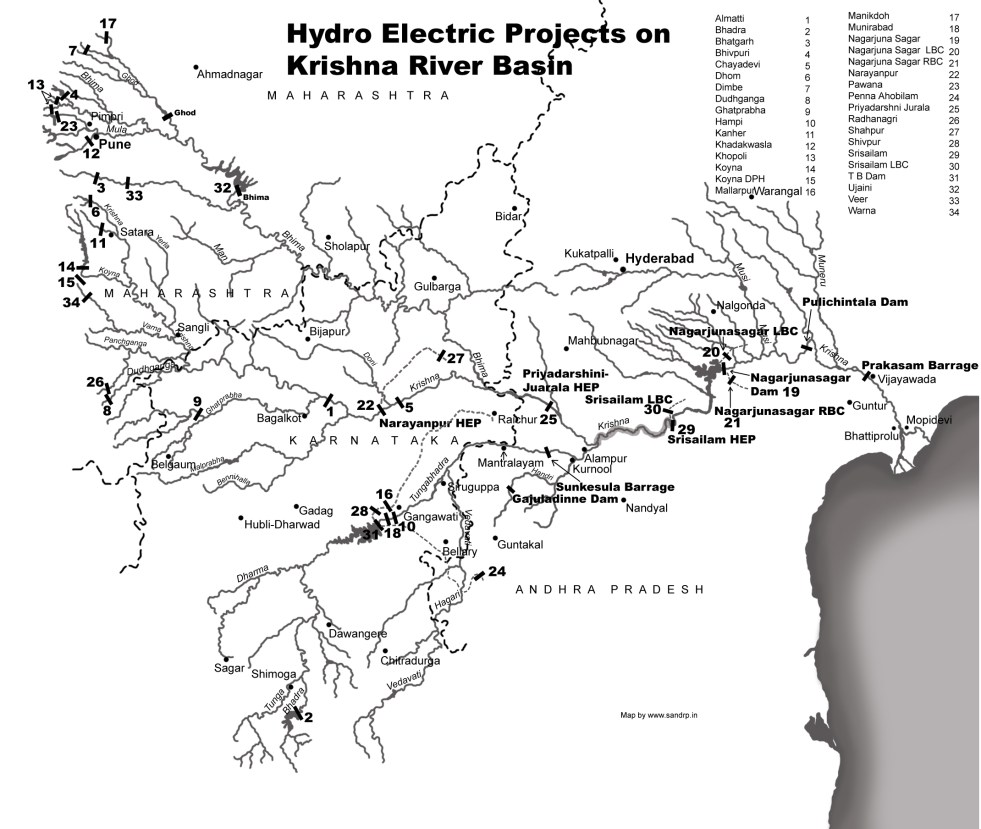
STOP DIVERSION OF WATER FROM DROUGHT HIT KRISHNA BASIN

Release water from Koyna & Tata dams to drought hit Karnataka, Telangana & Andhra Pradesh

Large parts of South India, including parts of Karnataka, Andhra Pradesh and Telangana are facing unprecedented drought and water scarcity. However, Maharashtra is sending OUT billions of liters of water FROM drought hit Krishna basin to High Rainfall Konkan region to flow to the sea. Continue reading “STOP DIVERSION OF WATER FROM DROUGHT HIT KRISHNA BASIN”

Dams · DRP News Bulletin

DRP: 24 April 2017 ( NHPC says Dams have no adverse impacts anywhere in the world! Admits, Hydro is no longer viable for private sector)

Centre Getting forest clearance is not a problem now: NHPC Chairman In an interview, taking a dig at its private peers, NHPC chairman KM Singh said that NHPC is the only company in the county that has the capability to execute hydro projects. He also said that in the NDA regime green clearances come easy, while local agitation by NGOs is the biggest threat. He further stated that there has been no negative impact of building a dam, not just in India, but anywhere in the world.

Continue reading “DRP: 24 April 2017 ( NHPC says Dams have no adverse impacts anywhere in the world! Admits, Hydro is no longer viable for private sector)”
Beas · Himachal Pradesh

NHPC negligence leads to man-made disaster in Parbati Valley in Himachal Pradesh

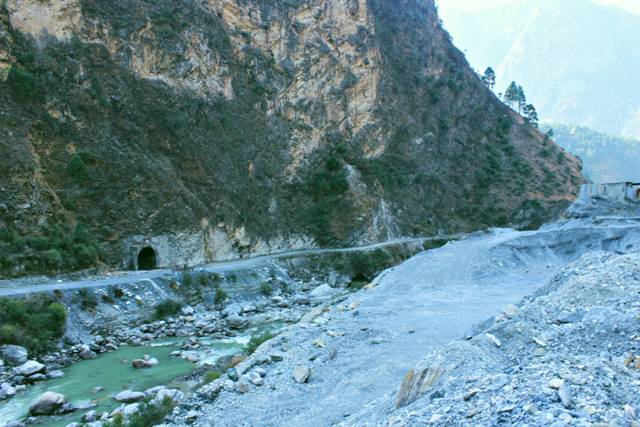
(Above: illegal muck dumping by Parbati HEP along the Sainj River in Himachal Pradesh)

The people of Sainj-Parbati valley in Beas basin in Himachal Pradesh’s Kullu disrict’s Banjar Tehsil are living in constant fear of a disaster. Since six days now, the power tunnel of the NHPC’s under construction 800 MW Parbati II hydropower project is heavily leaking, but NHPC refused to stop water release into the tunnel till the leakage led to landslides and displacement of people. Ultimately on the night of April 17, 2017, huge cracks spread over 200 m appeared in the hills, leading to landslide & fall of soil and rocks, immediately threatening eight families of Rahan (Reina) village, though over 400 families of some 12 villages of Rella Panchayat (including Rella, Sharan, Jiva, Sulga, Khadoa, Rahan, Shalah, Bhebal, Bahara, Bagidhar, Khaul, etc) are facing the prospects of disaster as cracks in the hill have appeared just above the villages. People here are spending sleepless nights since several days now. They are afraid that if the leakage continues, these villages will have to be evacuated any moment, else a major catastrophe may result.[i] Continue reading “NHPC negligence leads to man-made disaster in Parbati Valley in Himachal Pradesh”

Dams · DRP News Bulletin

DRP: 17 April 2017 (Bihar needs to launch Farakka Satyagarha on centenary of Gandhiji’s Champaran Satyagraha)

As the President of India is in Patna today (April 17, 2017) to remember the centenary of Gandhiji’s Champaran Satyagraha, we need to remember that the Central message of Gandhi’s Satyagraha was to fight injustice, atrocities and abuse, irrespective of the source of the atrocities.

During the international workshop on INCESSANT GANGA in Patna on Feb 25-26, 2017, Bihar Chief Minister Nitish Kumar mentioned that this is the centenary year of Gandhiji’s famous Champaran Satyagraha in Bihar. He also mentioned how Bihar has suffered the increasing intensity, duration and destructive floods due to Farakka Dam.

Continue reading “DRP: 17 April 2017 (Bihar needs to launch Farakka Satyagarha on centenary of Gandhiji’s Champaran Satyagraha)”
Maharashtra

Wainganga River: Threatened lifeline of Vidarbha’s Forests

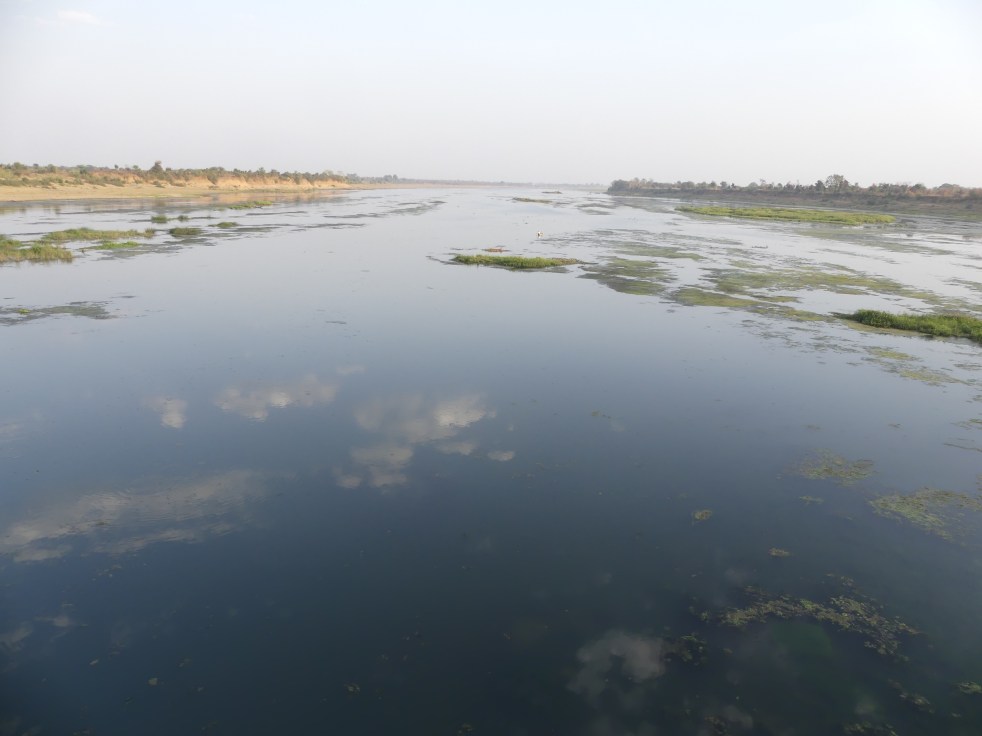
Above: Wainganga River, downstream of Gosikhurd reservoir (Photo by AJT Johnsingh on 09/03/17)

The valley of Wainganga River has served as a backdrop for Rudyard Kipling’s Jungle book. East Vidarbha region of Maharashtra hosts major part of this lush green landscape which is ecologically one of the most significant regions of India. More than 50% of forest of Maharashtra State falls in this region. Government of Maharashtra (GoM) however is doing little on its part to protect these. Perceiving them as ‘hurdles’ GoM is pushing more and more unfeasible dam projects in this region in the name of irrigation. Water for rivers, biodiversity, wildlife has taken a backseat in the growing claims on Wainganga waters. If these projects come up health of Wainganga basin will be further seriously jeopardized.

This is an attempt to put together Maharashtra specific profile of Wainganga River. Continue reading “Wainganga River: Threatened lifeline of Vidarbha’s Forests”

CAG Report · Environment Impact Assessment · Environmental Flow · Expert Appraisal Committee · Hydropower · Ministry of Environment and Forests · River Valley Projects

CAG validates concerns about shoddy environmental appraisal of Dams

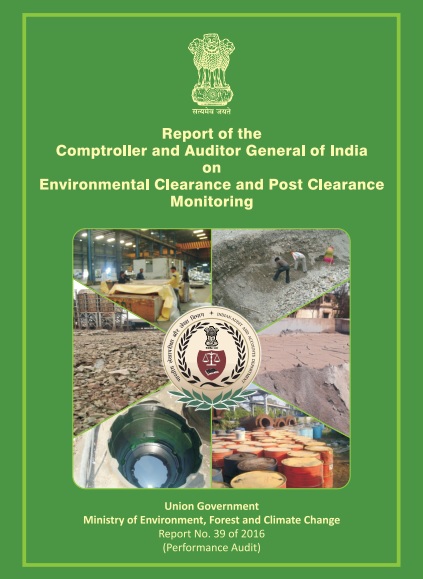
In an unprecedented first ever Audit report, the Comptroller and Auditor General of India (CAG) which recently conducted Performance Audit on ‘Environmental Clearance and Post Clearance Monitoring’ has unambiguously stated that the existing processes for grant of Environmental Clearance are fraught with serious violations, noncompliance and deficiencies.[i] In fact River Valley and Hydroelectric Projects have been highlighted for poorest quality of Environmental Impact Assessment (EIA) Reports, maximum irregularities during Public Hearings, and non-compliance of Environmental Clearance conditions.

This is a resounding slap on the face of the functioning of the current and past Expert Appraisal Committee’s (EACs on Dams and vindicates and validates what SANDRP and other civil society groups have been saying for long. This is indeed much needed critical feedback when EAC is seeking to make its proceedings less and less transparent and providing false justifications for the same. Continue reading “CAG validates concerns about shoddy environmental appraisal of Dams”

Dams

Karnataka Rivers Profile

Karnataka is one of the four southern states of Peninsular India (Figure 1a), came into existence with the passage of the States Reorganisation Act (1956, Nov 1) and is located 11°30′ North and 18°30′ North latitudes and 74° East and 78°30′ East longitude (https://en.wikipedia.org/wiki/Geography_of_Karnataka). The state covers an area of 191,976 km² (5.83% of India‘s geographical area). Karnataka is the eighth largest Indian  state by area, the ninth largest by population and comprises 30 districts (figure 1b) divided in to 4 administrative divisions, 270 towns and 29406 villages (http://ssakarnataka.gov.in/). The state is situated on a table land where the Western and Eastern Ghats ranges converge into the complex, in the western part of the Deccan Peninsular region of India. Karnataka is bordered by the Arabian Sea to the west, Goa to the northwest, Maharashtra to the north, Andhra Pradesh to the east, Tamilnadu to the southeast, and Kerala to the southwest.

Continue reading “Karnataka Rivers Profile”