Beas · Climate Change · Dams · Disasters · Himalayas · Hydro Disaster

Himachal Pradesh: Sainj HEP Remains Out of Operation for over 4 months

Continue reading “Himachal Pradesh: Sainj HEP Remains Out of Operation for over 4 months”
Beas · Climate Change · Himalayas · Small Hydro

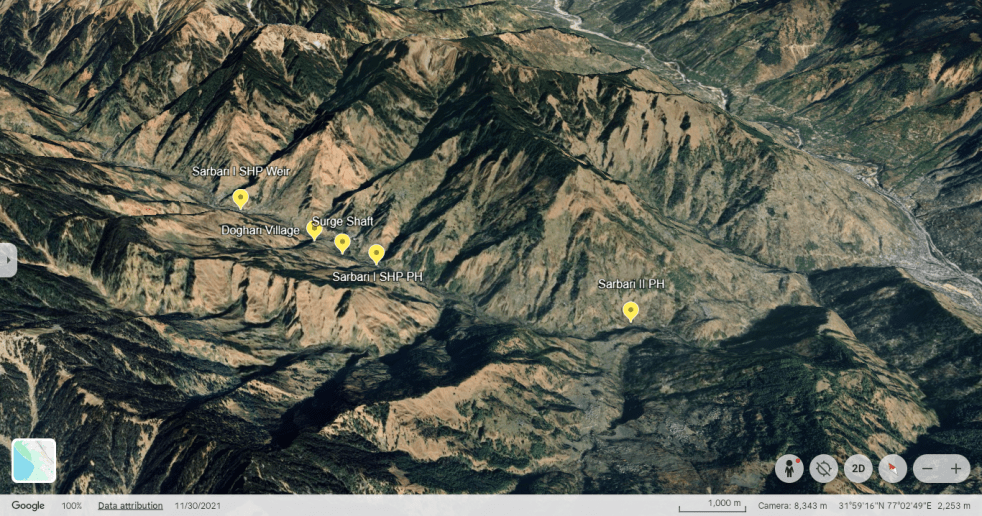
Himachal Pradesh: Kullu Villagers Demand Suspension of Sarbari-I SHEP

Continue reading “Himachal Pradesh: Kullu Villagers Demand Suspension of Sarbari-I SHEP”
Beas · Chenab · Climate Change · Dams · Floods · Himalayas

Vulnerable Nallahs in the Himalayas Need Urgent Attention

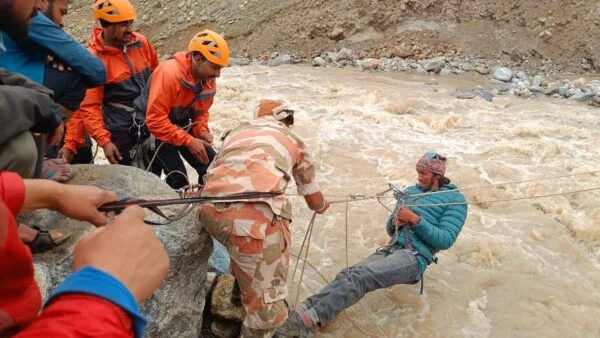
“When Jahlma Nallah starts roaring, we cannot sleep. It has been flooding for the past three years at least” said octogenarian Devi Singhji in October 2024. Jahlma Nallah, which joins the Chenab and blocks it occasionally, flooded again catastrophically in the monsoon of 2025.

Continue reading “Vulnerable Nallahs in the Himalayas Need Urgent Attention”
Beas · Climate Change · Cloud Burst · Hydro Disaster

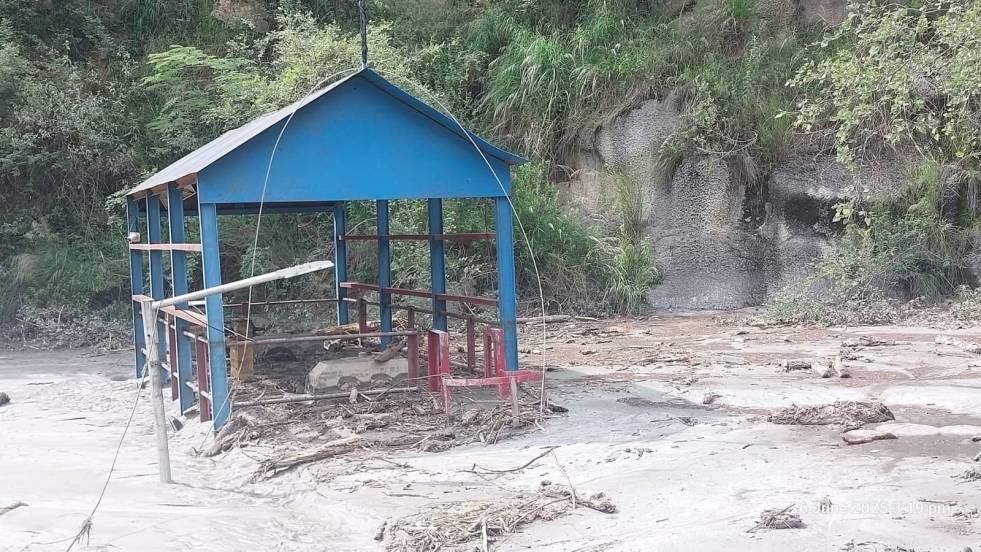
July 2025: Flash Flood Destroys Patikari Hydro Project in Himachal

Continue reading “July 2025: Flash Flood Destroys Patikari Hydro Project in Himachal”
Beas · Culture · Fish Sanctuaries · Wetlands

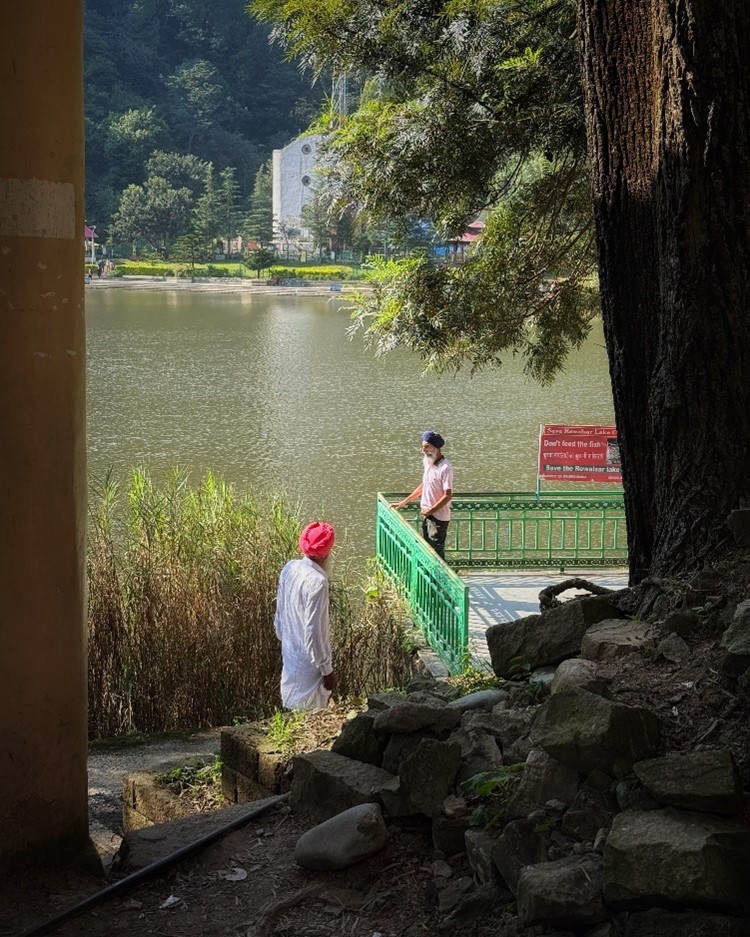
Rewalsar Lake: Where Faiths, Ecosystems and Communities Meet

Rivers and lakes of the Indus basin have been at the crossroads of civilizations, trade routes, and ecosystems for centuries. They are surrounded by stories and songs from many religions, languages and tribes. One such river is Beas, celebrated as Vipash[1] or the ‘breaker of chains’ in the Rigveda, circa 1500 BC. Beas originates at 4361 meters near Rohtang Pass[2] and flows through the Himalayan state of Himachal Pradesh before meeting River Sutlej in the plains of Punjab, literally “the land of five rivers’. Beas flows for about 470 kms to water some of the most fertile valleys in the world.

Continue reading “Rewalsar Lake: Where Faiths, Ecosystems and Communities Meet”
Beas · Free flowing rivers · Himachal Pradesh

In Photos: Gharats of Tirthan: For the tastiest Parathas

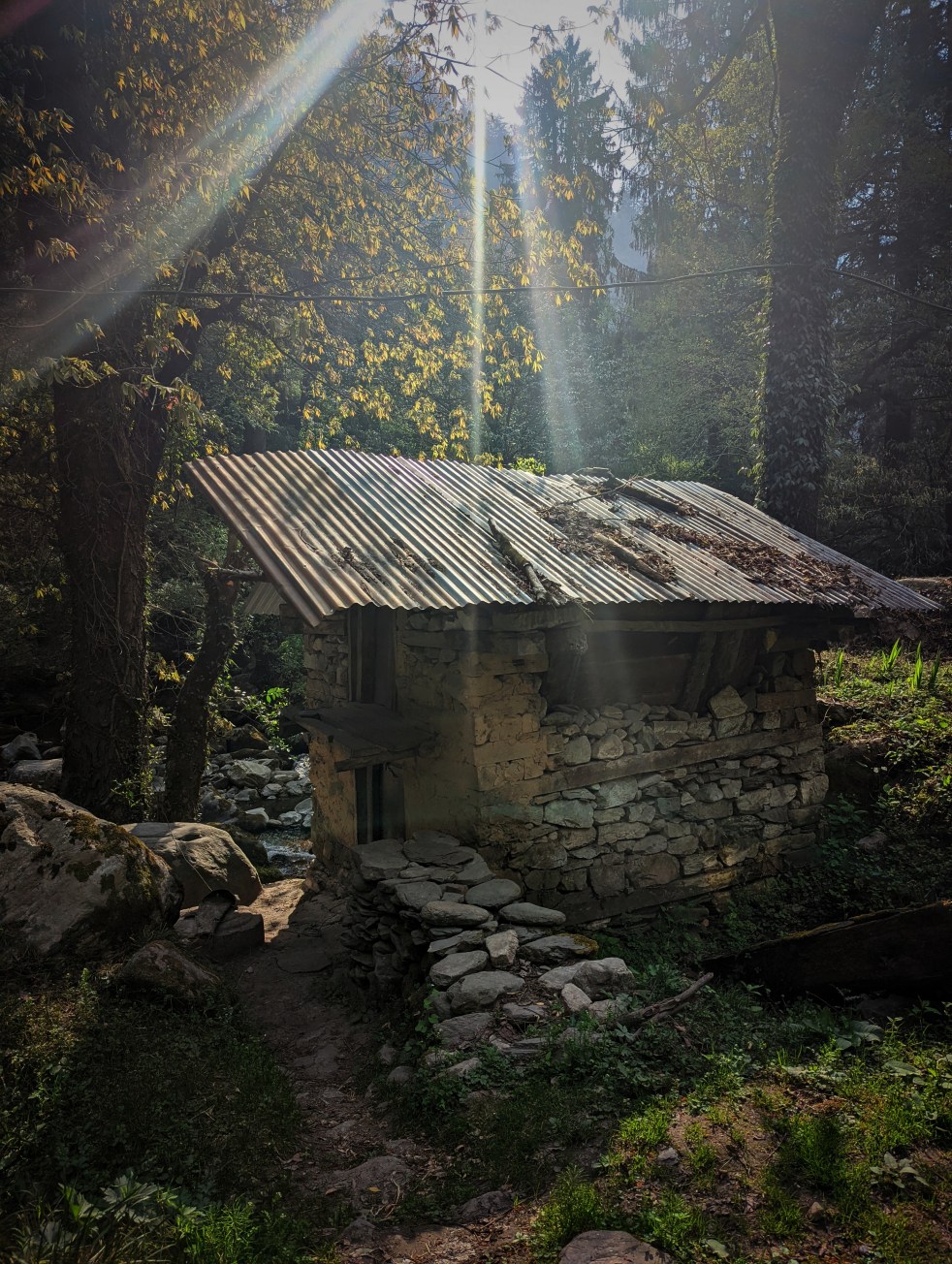
In the Tirthan Valley of Himachal Pradesh, as we crisscrossed tiny wheat fields moist with dew and apple orchards laden with white blossoms, a rhythm accompanied the steps: a constant ghrr-ghrr-ghrr. It came from small slate shelters with sloping roofs, which looked like tiny shrines. Sometimes, the shelters were made directly over a stream, but many times they were on the banks, with a channel diverting some water to them.

These were the Gharats: water-mills running on the kinetic energy of flowing water and milling fresh, cool flour.

Throughout Tirthan Valley, Gharats dot the streams at several locations. Raju Bhartiji says that Tirthan had many more Gharats in the past, but the floods of 1995 washed many of them away and most remaining fell into disrepair. Even so, as compared to other parts of Himachal, Tirthan valley is fortunate. Hydropower dams, including mini hydro projects, with their headrace and tailrace tunnels, flow diversions and blasting have destroyed thousands of Gharats in Himachal and Uttarakhand. These water mills are special not only because they are decentralized and appropriate technology structures. They are a part of the heritage of the land: almost all of the materials for building one come from the surroundings and the masons who build them are artists.

Continue reading “In Photos: Gharats of Tirthan: For the tastiest Parathas”
Beas · Dams · Environment · Environment Impact Assessment · Environmental Flow · Fish · Fish, Fisheries, Fisherfolk · Free flowing rivers · Gharat · Himachal Pradesh · Hydropower · Rivers

Muktadhara Tirthan

How one fish and many people saved a river

“Hark! What is that? What is that sound? It is laughter, bubbling up from the heart of the darkness. It is the sound of water! There is no doubt. The water of Muktadhara is free!”

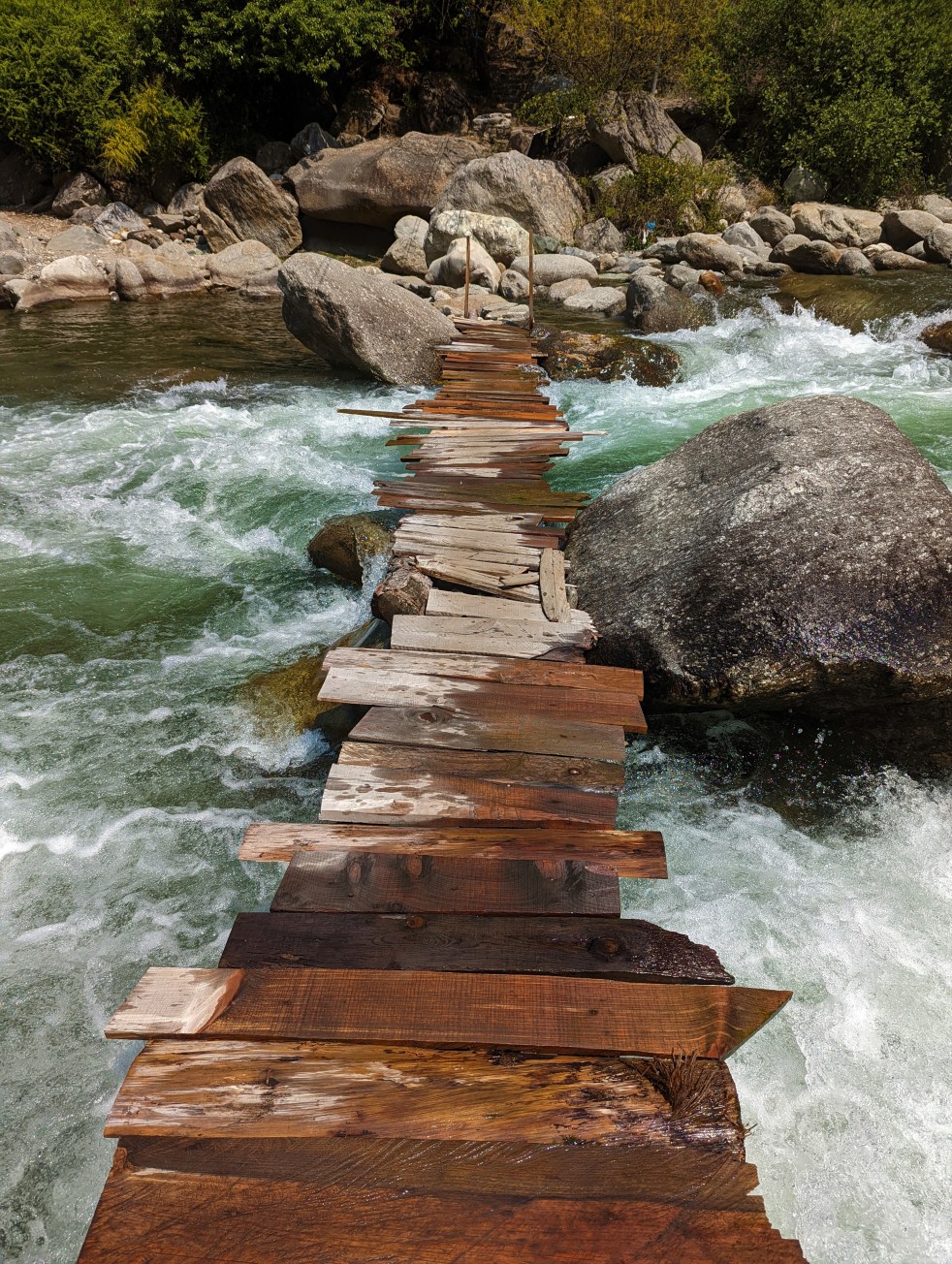
As I stepped on the wooden slats across the joyously gurgling Tirthan River, I remembered Rabindranath Tagore’s lines from his first play, Muktadhara (Free-flowing). I was in the Himalayas to listen to the story of Tirthan, a Muktadhara in her own right! Tirthan is the rarest, possibly the only river valley in India to be declared as a “No-Go Valley” for hydropower or dam development, protected in perpetuity.

Continue reading Muktadhara Tirthan
Beas · Fish · Fish Sanctuaries

Beas Dolphins: A Flash Of Fin, A Glimmer Of Hope

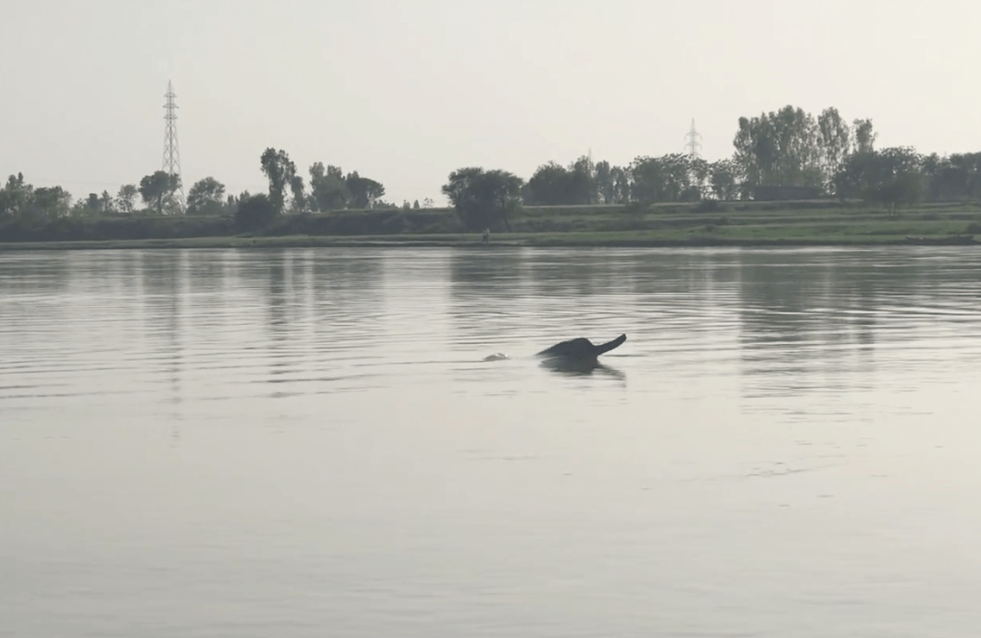
Above: A female Platanista gangetica minor breaks the surface of the Beas (Photo by Arati Kumar Rao)

India’s few remaining Indus river dolphins are confined to one short, beautiful stretch of the Beas. They have a fighting chance at survival only if we ensure a healthy river

Guest Blog by Arati Kumar Rao

A dark shape cleaves the Beas river, leaving a long wake in its trail. From the way it moves, it is neither a human, nor fish, nor even a river dolphin. The shape swims strongly, shrugging off the strong current. It holds its line and makes straight for a sandbar, hauling itself up on a buff-coloured spit.

A black dog, probably feral. It shakes itself free of water and, running across the sand, begins tugging at the beached carcass of a cow. Another bigger dog appears out of nowhere, and the two begin to snarl and gorge, yanking and tearing flesh off the arcing ribs.

River sandbars contain multitudes. I was upstream of Harike, the largest wetland in north India. The critically endangered gharial (Gavialis gangeticus), the fish-eating, long-snouted crocodilian, of which no more than a few hundred survive in the world, bask and nest on these sandbars. Freshwater turtles like the red-crowned roofed turtle (Batagur kachuga) and the Indian narrow-headed soft-shell turtle (Chitra indica), among the most endangered of freshwater species, use sand islands extensively to breed and to bask. Hundreds of thousands of birds — some transient visitors from China and Siberia and Central Asia wintering here, some resident — forage, nest, breed, raise chicks. Many of these creatures have this in common – they are all threatened, to greater or lesser degree.

The sight of predatory, feral dogs in this delicate ecosystem comes with chilling implications. Continue reading “Beas Dolphins: A Flash Of Fin, A Glimmer Of Hope”

Beas · Himachal Pradesh

NHPC negligence leads to man-made disaster in Parbati Valley in Himachal Pradesh

(Above: illegal muck dumping by Parbati HEP along the Sainj River in Himachal Pradesh)

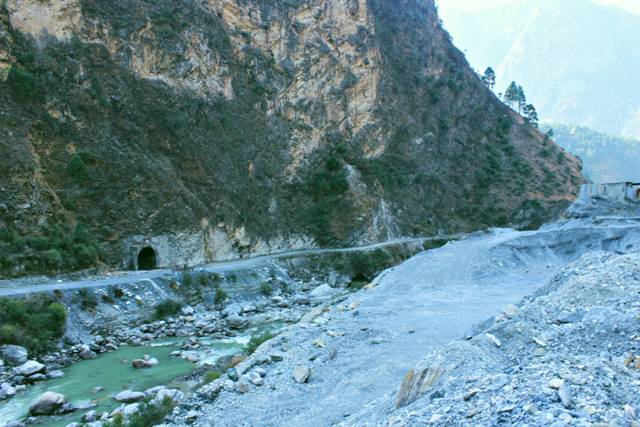
The people of Sainj-Parbati valley in Beas basin in Himachal Pradesh’s Kullu disrict’s Banjar Tehsil are living in constant fear of a disaster. Since six days now, the power tunnel of the NHPC’s under construction 800 MW Parbati II hydropower project is heavily leaking, but NHPC refused to stop water release into the tunnel till the leakage led to landslides and displacement of people. Ultimately on the night of April 17, 2017, huge cracks spread over 200 m appeared in the hills, leading to landslide & fall of soil and rocks, immediately threatening eight families of Rahan (Reina) village, though over 400 families of some 12 villages of Rella Panchayat (including Rella, Sharan, Jiva, Sulga, Khadoa, Rahan, Shalah, Bhebal, Bahara, Bagidhar, Khaul, etc) are facing the prospects of disaster as cracks in the hill have appeared just above the villages. People here are spending sleepless nights since several days now. They are afraid that if the leakage continues, these villages will have to be evacuated any moment, else a major catastrophe may result.[i] Continue reading “NHPC negligence leads to man-made disaster in Parbati Valley in Himachal Pradesh”