Chenab · Jammu and Kashmir

Open Letter to J&KSPCB: Cancel Public Hearings for Sawalkote HEP for violations

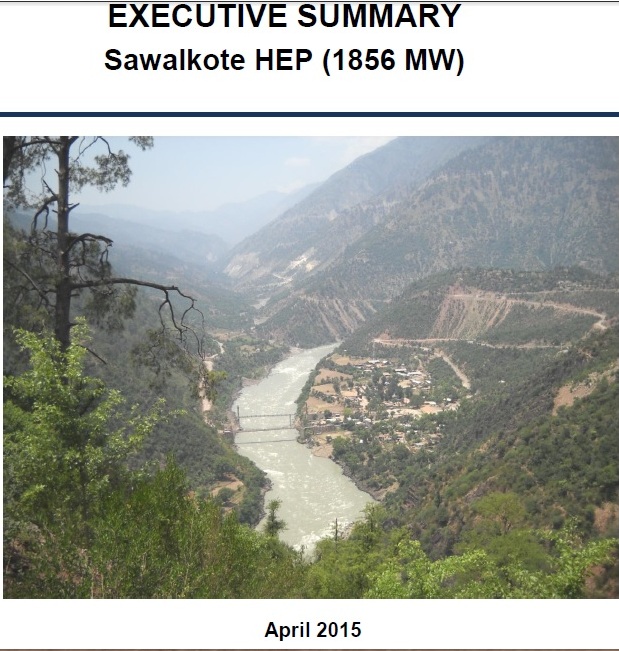
Above: Title page of Sawalkote EIA Executive Summary

January 14, 2016

TO:

J&K State Pollution Control Board,

Parivesh Bhawan, Forest Complex, Gladni, Narwal, transport Nagar,

Jammu (J&K) Telephone Nos:- 0191-2476925, 2476927

  1. Sh. Abdul Razak, IFS

Chairman, J&K State Pollution Control Board, Mob:- +91-9419188852, chairman87jkspcb@gmail.com

  1. Sh. Vasu Yadav, IFS

Member Secretary, J&K State Pollution Control Board, Mob:- 0194-2311165, membersecretaryjkspcb@gmail.com

  1. Regional Director, Jammu,

J&K State Pollution Control Board, Jammu. Email:  regionaldirectorspcbjmu@gmail.com

Sub: Violations in public hearing for 1856 MW Sawalkote HEP

in Ramban, Udhampur and Reasi districts in J&K

Respected Chairman, Member Secretary and Regional Director,

We understand from J&K SPCB website that the pubic hearings for the proposed 1856 MW Sawalkote Hydropower project is to be held in Udhampur (Village Panchari), Reasi (Village Mahore) and Ramban (Village Tanger) districts at 10 am on January 18, 21 and 28, 2016 respectively. However, we notice a number of problems in this context, some of the key ones include: Continue reading “Open Letter to J&KSPCB: Cancel Public Hearings for Sawalkote HEP for violations”

Himachal Pradesh

HIMACHAL PRADESH HYDROPOWER PROJECTS IN 2015

Himachal Pradesh in Northern India is foremost among Indian states in pushing large hydropower projects. It has operating hydropower projects with total installed capacity of 7970 MW, under construction hydropower with 2216 MW and largest capacity projects under consideration for clearances. As this review of Hydropower development in Himachal Pradesh in 2015 shows, HP has also started facing the consequences of too many projects, with fragile Kinnaur area facing multiple disasters in 2015, including the penstock burst disaster at Sorang HEP. However, the Expert Appraisal Committee on Union Ministry of Environment and Forests continues to sanction more projects. In 2015, the committee recommended first stage clearance to 219 MW Luhri Project on Sutlej river and 210 MW Purthi Project on Chenab river. During the year, the 800 MW Kol Dam project was commissioned, and as our separate review of hydropower projects commissioned in 2015 shows, the project faced large number of serious problems and continues to face them even post commissioning.

Continue reading “HIMACHAL PRADESH HYDROPOWER PROJECTS IN 2015”

Arunachal Pradesh · Cumulative Impact Assessment · Hydropower Performance

Hydropower projects in India: Important 2015 Developments

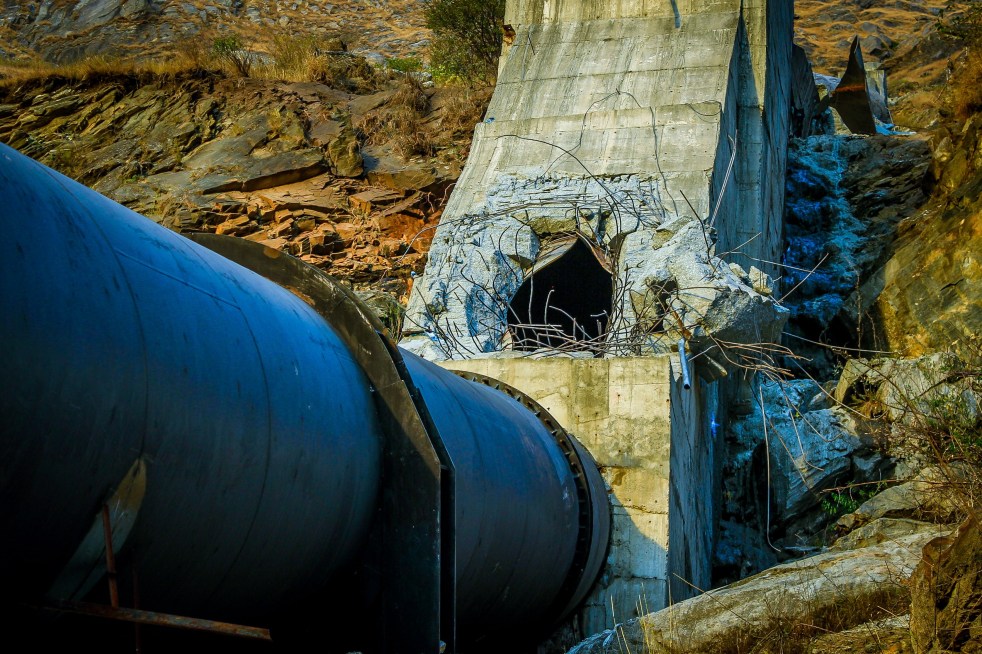
Above: Penstock burst of Sorang Hydropower Project in Himachal Pradesh (Photo: Himdhara)

Indian government continues to have very ambitious hydropower targets, even though all the evidence suggests why we should be reviewing it. As per Central Electricity Authority, India has 42641 MW of installed capacity from large hydropower projects at the end of Dec 2015. The installed capacity from projects below 25 MW is not included in this figure.

CAPACITY ADDITION IN 2015: Troubled projects During 2015, India added 1824 MW of large hydropower capacity. Some of the important projects commissioned during the year include: 800 MW Kol Dam in Himachal Pradesh (one unit each on 30.03, 31.03, 10.04, 12.06), 450 MW Baglihar II in Jammu and Kashmir, 80 MW at Lower Jurala Project in Telangana, 330 MW Srinagar HEP in Uttarakhand and 96 MW Jorethang Loop Project in Sikkim. The first project is in Central Sector, next two in state sector and last two in private sector. Except for the 80 MW from Lower Jurala, rest of the capacity is all in Himalayan states.

As we reviewed these projects closely in a separate blog, all of these projects have had a very troubled track record and most continue to face serious problems even after commissioning.

What does all this show? The reason for going into above details about projects commissioned in 2015 is to illustrate how seriously problematic our decision-making has been, even in these times. Evidently, there is a need to overhaul decision making surrounding hydropower projects in vulnerable areas which face local opposition.

Are we paying any attention to this? Unfortunately, no.

To illustrate, let us look at the decisions taken by the Union Ministry of Environment and Forests’ Expert Appraisal Committee on River Valley and Hydropower Projects. All hydropower projects above 25-50 MW need clearance from this committee, as also all large irrigation projects.

EAC DECISIONS IN 2015: As our earlier analysis showed[1], the EAC has had zero rejection rate and has been clearing huge number of dams and hydropower projects, far exceeding the need, justification or carrying capacity of the river basins, with very little attention to the prudent environment governance.

During the year 2015[2], EAC continued this tradition of zero rejection rate! Even for the couple of projects that it did not agree to approve immediately, it asked for a reformulate of the proposal, keeping the options open.

During 2015, EAC recommended environment clearance to twelve projects; six of them were hydropower projects, all from Arunachal Pradesh. The biggest of them, the Kalai II project of 1200 MW showed how starkly flawed were the EAC decisions. Rest of the six were irrigation projects, including two controversial lift irrigation projects from Maharashtra (Shirapur and Krishna Marathwada) and one irrigation project each from Tamil Nadu, Odisha, Chhattisgarh and Telangana.

It should be added here, as a reminder to the decision makers, that the work at Lower Subansiri Hydropower project continued to remain stalled for the four full years as on Dec 16, 2015. This is an indication, if one was required, to show how costly the consequences of wrong decisions can be.

The EAC cleared 21 projects for first stage environment clearance, including 9 hydropower projects, two each from Arunachal Pradesh, Uttarakhand, Himachal Pradesh, Jammu & Kashmir and one from Sikkim. It also cleared four irrigation projects (one each from Rajasthan, Bihar, Jharkhand and Odisha) and eight lift irrigation projects (five from Karnataka, two from Maharashtra and one from Uttar Pradesh). It also okayed 16 applications for extension of validity for the first stage clearance, the validity, which is supposed to be for 2-3 years, went on for 4-5 years!

The EAC discussed Cumulative Impact Assessments (CIA) of Tawang, Subansiri, Siang, Dibang and Kameng river basins, all in North East India this year. Worrying, during each of these discussions it eventually approved shoddy and seriously problematic CIAs, diluted its own recommendations and refused to understand the concept of conflict of interest.

EAC did say no to first stage environment clearance to Purthi HEP in Lahaul and Spiti district in Himachal Pradesh, but gave its ok when it came back with a slightly different configuration. It did say no to extension of TOR to Lara Sumta and Sumta Kathong HEPs, but suggested they can apply afresh! It has not yet cleared Ken Betwa, Etalin and Pancheshwar, but has not said no either to any of them. It did mention SANDRP submissions dozens of times, but did not invite SANDRP, or any other group to the EAC meetings even once where SANDRP submissions and developer response were discussed. There has never been a point-wise discussion in the EAC about the merits and demerits of the developer’s response. Just to illustrate how problematic has the EAC decisions have been, see our blog about the 86th meeting of EAC held in August 2015 https://sandrp.wordpress.com/2015/09/22/why-the-decisions-and-minutes-of-the-86th-meeting-of-eac-on-river-valley-projects-need-to-be-reviewed/.

All this only goes to illustrate how seriously problematic are our decisions about dams and hydropower projects.

GENERATION PERFORMANCE OF HYDROPOWER PROEJCTS The basic purpose of building hydropower projects is generation of electricity, let us see how India’s hydropower projects perform in 2015. During the year, with total installed capacity of 42641 MW as on Dec 31, 2015, India’s large hydropower projects, as per the data from Central Electricity Authority, generated 129.11 BU (Billion Units, one unit equals one kilowatt hour), compared to 130.8 BU in 2014. So even though installed capacity in 2015 went up by 1824 MW, generation went down by 1636 Million Units! Our earlier analysis[3] has shown how the returns from hydropower projects in India are diminishing in different respects. The trend continues in 2015.

Peaking power It may be added here that USP (Unique Selling Proposition) of hydropower projects is that they can provide peaking power ( power supply in the hours when the demand is highest). There is no agency that is either monitoring or trying to optimize peaking power from hydropower projects. However, let us take a snapshot of this situation. A review of the daily Power Supply reports of the Northern Region Load Despatch Centre shows that on Dec 31, 2015, Northern region had peaking shortage of 1529 MW. Northern Region, incidentally, should give us the best illustration in this regard since it has, at 18815 MW, the highest hydropower capacity among all regions of India. On Dec 31 2015, hydropower projects were providing 10041 MW of generation during peak hours, and 2446 MW generation during off peak hours. So net peak load provided by hydropower projects on Dec 31, 2015 was 7595 MW, which is just 40% of the hydro installed capacity of 18815 MW in the region. This snapshot tells us that on Dec 31, 2015 (incidentally, the rivers have minimal flows at this time and hence all the more reason even for run of river projects to operate in peaking mode) about  60% of the hydropower capacity was NOT providing peaking power, which it was supposed to do! It may be added that Northern region had only 1529 MW of peaking shortage, which could have been easily provided by the more optimum performance of these projects. It also tells us that as far as peaking power requirement is concerned, we do not really need more hydro since the current capacity is sufficient to cater to our peaking needs, if operated optimally, in a manner that hydropower projects are supposed to operate! Even as a snapshot, this tells us a lot!

HYDRO DISASTERS IN 2015 The year 2015 showed increasing disasters related to hydropower projects. Such disasters included the one at Chutak Hydropower project in Kashmir, Sorang hydropower project in Himachal Pradesh, Vishnuprayag hydropower project in Uttarakhand, Multiple disasters in Kinnaur district in Himachal Pradesh, among others. At Rishikesh in Uttarakhand, hundreds of people had narrow escape in Dec 2015 due to sudden release of water from Tehri Dam, as alleged by the news reports. The High Court of Himachal Pradesh, in Jan 2016, while announcing compensation to families of the students who lost their lives due to Larji Dam mishap in Oct 2014, called Larji Dam a Killer.

IN CONCLUSION This year end review of hydropower projects in India tells us that our decision making surrounding hydropower projects is flawed and that we can and must change the way the decision making system in functioning.

On the other hand, power generation performance of hydropower projects continue to diminish and even for peaking power requirement, we do not really need more hydropower.

It should also be added that as large number or organisations from all over the world wrote to the United National Frame Convention on Climate Change, Large Hydropower must not be considered as a solution in the climate change context.

Himanshu Thakkar, SANDRP (ht.sandrp@gmail.com)

END NOTES:

[1] https://sandrp.wordpress.com/2013/02/07/the-expert-approval-committee-has-zero-rejection-in-six-years/

[2] This review is for EAC meetings till November, the minutes of the EAC meeting of Dec 22-23, 2015 were not available till Jan 8, 2016, when I finished writing this article.

[3] https://sandrp.wordpress.com/2015/04/09/diminishing-returns-from-large-hydropower-projects-in-india/

Dams · Indus · Pakistan

Jhulelal or Zindapir: River Saints, fish and flows of the Indus

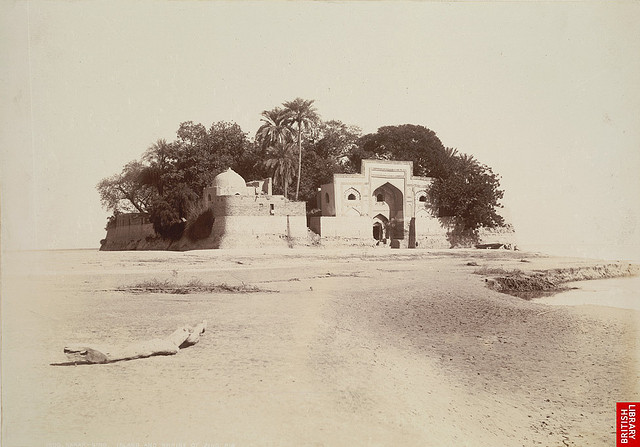
Above: Zindapir Shrine at Sukkur Photo from: British Library

Perhaps we all have our pet projects which we wish would go on forever. I have been working on a Primer on Riverine Fisheries of South Asia for some years now (my office may disagree with the definition of ‘some’). Like a magpie collecting shiny knick-knacks, I keep collecting (quite serendipitously, or so I think) anecdotes and interviews and snippets on the subject. Continue reading “Jhulelal or Zindapir: River Saints, fish and flows of the Indus”

Dam Induced Flood Disaster · Dams · Disasters · Himachal Pradesh · Himalayas

Kinnaur in crisis; Sheer Negligence in hydro projects claiming lives. Who is accountable?

Above: Entirely destabilised house next to 100 MW Sorang HEP transmission lines Photo: Sumit Mahar

Immediate Press Statement from Himdhara 02/12/15

In the last two weeks a half a dozen lives have been lost in the Kinnaur region alone in three separate incidents that have one thing in common – accidents at hydropower project sites. The first event took place in Burang village on the 18th of November 2015 where a penstock pipe burst of the 100 MW Sorang Hydro-electric project led to the death of three people. On 29th November, two labourers died in blasting operations in the 450 MW Shongthong Karchham project, some others were seriously injured. And on the same day in the Bhabha Valley, a young teacher lost her life in a landslide that occurred in the area. Continue reading “Kinnaur in crisis; Sheer Negligence in hydro projects claiming lives. Who is accountable?”

Dams · Maharashtra

Dams and Equitable Water Distribution: Learnings from Maharashtra

Above: Placard proclaiming Ahmednagar’s claim over Mula Dam waters, protesting any downstream release Photo: Zee24 Taas

While largely unheard of in the country, bitter intrastate water conflicts are now routine to Maharashtra since the past few years. Come November or December, just as the state wearily puts behind one more sad monsoon, newspapers start carrying pictures of desperate farmers standing inside canals challenging dam authorities to release water. Politicians are quick to use this opportunity to deepen schisms between the state. Continue reading “Dams and Equitable Water Distribution: Learnings from Maharashtra”

Dams · Himachal Pradesh

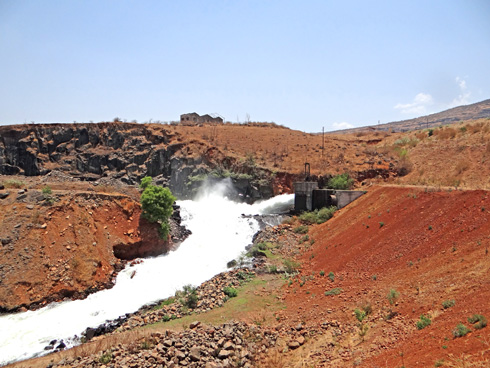
Sorang Hydropower disaster: Will we learn any lessons?

Google Earth Image of the Area 

A burst in penstock pipe of 100 MW Sorang hydro power project (HEP) in Kinnaur, Himachal Pradesh have played havoc with the lives and livelihoods of people of Burang and surrounding villages. On surface it may look like an accident. But deeper look raises doubts about many systemic loopholes that allowed the siutation that led to the disaster. Let us see the shortcomings and negligence exercised by project proponent and state government which finally resulted in the fatal accident. We urge the Himachal Pradesh Govt., other governments where such projects are coming up and Central Electricity Authority,  to constitute a monitoring cell to inspect quality of construction of ongoing HEPs and form adequate safety standards and enusre their strict implementation to prevent such mishaps from becoming a norm.    Continue reading “Sorang Hydropower disaster: Will we learn any lessons?”

Andhra Pradesh

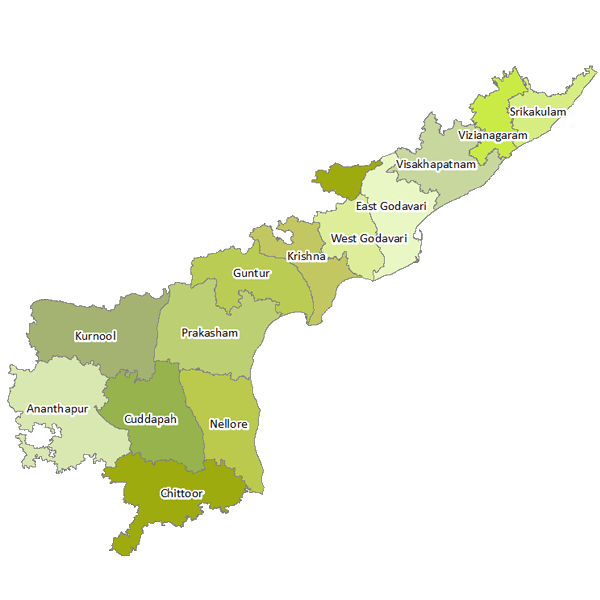
Discrepancies in rainfall figures for Andhra Pradesh’s drought hit districts

On October 28, 2015, the government of Andhra Pradesh declared drought[1] in 196 mandals in seven of the thirteen districts of the state. Having seen the serious discrepancies (between IMD and state government) in the rainfall figures of districts in Maharashtra[2] and Madhya Pradesh[3] where the respective state governments declared drought earlier, we decided to check the same for these seven districts of AP too. The IMD figures[4] for the monsoon (June 1 to Sept 30) rainfall for these seven districts are given in terms of Normal Rainfall, Actual Rainfall and how much actual rainfall departure was there from Normal Rainfall. During 2015 monsoon, IMD figures  say that Coastal Andhra Pradesh (nine districts, three of which are declared drought affected now) received 642 mm rainfall, compared to normal rainfall of 581.1 mm, so a surplus of 10%. Rayalseema (comprising of four districts, all drought hit now) received 358.3 mm rainfall, 10% below the normal figure of 398.3 mm. In the previous year, both regions had 23% deficient rainfall, with actual rainfall of 448.7 mm in Coastal AP and 308.6 mm in Rayalseema. Continue reading “Discrepancies in rainfall figures for Andhra Pradesh’s drought hit districts”

Agriculture · China · Climate Change · Dams · Drought · DRP News Bulletin · Environment · Ganga · Irrigation · Monsoon · Nepal · Pakistan · Rivers · Sand Mining

Dams, Rivers & People: Oct 26, 2015 (Saving Tigers is Saving Rivers, Story of once dry Tamirabarani River )

Tamirabarani teaches: Saving tiger is saving river  After Kalakkad-Mundanthurai was declared tiger reserve in 1992, Tamirabarani river has regained its perennial status. Though shorter than Cauvery and Vaigai, Tamirabarani has always held a special place in the state. It started turning dry for four months every year. People of Tirunelveli and Tuticorin thought their river too was going the way of other state rivers. But a move to save the tiger inadvertently became a save the-river policy. The Union ministry of environment and forests declared the Kalakkad – Mundanthurai area as a tiger reserve in 1992. In three years, there was a noticeable change. A study on water inflow into the Karayar river, a tributary, inside the reserve was taken up. Records show that from 1946 till 1990, the river received only 13,000 cubic feet of water annually. After the area was declared as a tiger reserve, the inflow increased to 23,000 cubic feet.

Continue reading “Dams, Rivers & People: Oct 26, 2015 (Saving Tigers is Saving Rivers, Story of once dry Tamirabarani River )”
Agriculture · Dams · Irrigation · Madhya Pradesh · Maharashtra · Marathwada

Pulse Farmers: Custodians of Fertility, Water and Climate-friendly Agriculture

Above: A rainfed Tur (Arhar/Pigeon Pea) field in Amravati in Vidarbha region of Maharashtra Photo: Parineeta Dandekar, October 2015

Pulse prices are raging in Indian markets, leading to outrage from urban customers. Newspapers are full of coverage, cartoons and puns on pulse prices. The fate of rural population facing successive droughts which has to buy pulses is better left to imagination. If some benefits of this price hike were to reach actual pulse farmers, it would have been some consolation. But for now, as Pulse farmer Ashok Pawar from Osmanabad tells me, the Tur (Arhar/Pigeon Pea) that is in the market is last year’s. It was sold to the middle men (Adatya in Marathi) and market committee at a low rate as the production was dismal due to late rains and drought followed by unseasonal rainfall. This happened in 2013 too. Tur from 2014 is now being sold at a record price, the farmer watches this helplessly. Continue reading “Pulse Farmers: Custodians of Fertility, Water and Climate-friendly Agriculture”