It is becoming increasingly evident that ‘rivers’ do not figure anywhere in the entire e flows discourse and assessments going on at Government level in India. We have so many different types of e-flows assessments being tried out.
Multiple agencies, but where are the flows? At least 69 hydro power projects are in various stages of development in Alaknanda – Bhagirathi sub basins of the Ganga (as per IMG records). Four different e-flow regimes based on different approaches have been put forward by the four different agencies. While AHEC (Alternate Hydro Electricity Centre) has used Mean Annual Flows (MAF), WII (Wildlife Institute of India) has resorted to Mean Seasonal Runoff (MSR) for different seasons based on the needs of the fishes. CWC (Central Water Commission) has resorted to ad-hoc e flows of 20 % of daily flows. IMG (Inter-Ministerial Group) has come out with its own recommendation of percentage of daily inflows for different seasons going upto 50 % for winter season from December – March where winter flows are very low.
The beautiful Nyamjangchu River, Tawang, Arunachal Pradesh, now threatened by the 780 MW Nyamjangchu Hydel Project and very low eflows recommendation Photo courtesy: Tenzing Rab Monpa
While admitting that Building Block Methodology (BBM) is the most comprehensive holistic methodology, IMG report claims (without basis) that since it is time consuming and since it has not been tried out in any large river basin, interim e-flows recommendations be done so that hydro power development is not held up for want of environmental decisions. Mind you, this is the case with all the rivers where hydro power projects are being planned. While many of the project developers and EIA agencies claim that they follow BBM methodology, it is evident that none of these fulfill the requirements of a comprehensive BBM methodology. So who cares about the rivers here?
NIH workshop on Oct 2-3, 2013 without MoEF! The National Workshop on Environmental flows organized by the National Institute of Hydrology (NIH), Roorkee along with UK based Centre for Ecology and Hydrology (CEH) during 2-3 Oct 2013 only reinforced my conviction that what is going on in the name of e flows assessment is indeed not for any goodwill for the rivers. The workshop was conspicuous by the absence of MoEF officials whose main mandate is protecting river ecosystems and life in rivers. Were they not invited or did they decide not to participate? It was mostly dominated by technical persons and organisations who believe that rivers are for the exploitation by humans alone mostly through mega projects. The workshop agenda was set on the oft repeated dictum that e flows should be integrated into water resources development, without any will for such integration.
E-flows are for rivers In India e flows is just a formality to fulfill the requirements of the environmental clearance process. Ironically, resource persons from countries outside India with ample experience on e flows assessment pointed out that the intention was to find ways to ‘limit’ or mitigate the impacts of development. If the agenda had been set with the intention that e flows should be part of river conservation and not just to fulfill the development agenda then we would have some hope for rivers.
Developers don’t want any e-flows Project developers are clearly unhappy with even the meager allocation in the name of e flows. The dam builders like the NHPC, Uttaranchal Jal Vidyut Nigam Ltd. and Tehri Hydro Power Corporation claimed that they are actually releasing more water than they are ‘asked to’! This is indeed ridiculous. Even what they are ‘asked to’ release does not amount to e-flows and is not based on any comprehensive assessment or community validation! And there is clear evidence that they are not releasing even that (e.g. NHPC’s Teesta V or Tehri). Then where does the question of reducing e-flows allocation below dams arise? They even went to the extent of recommending that in those rivers where tributaries join the dry stretch below the dam, can’t e flows allocation be reduced and can’t the tributary contribution added as e flows? Can’t e flow releases be used for power generation by installing dam toe power houses? For them e flows is mere ‘cumecs’ (Cubic meters per second) of water to be released and nor do they understand that each tributary and the main stem of the river have their own ecological niches & functions; and social and cultural dependencies which are linked to the flows in each of these.
Dhauliganga before the June 2013 disaster, with zero water flow downstream from the dam, killing a perennial river. Source: Emmanuel Theophilus
The presentations made by NIH Roorkee, CIFRI (Central Inland Fisheries Research Institute), GBPIHED (GP Pant Institute of Himalayan Environment and Development) and AHEC for proposed hydro power projects in the Himalayas and the North East India revealed that none of the studies had carried out consultations with river dependent communities and did not follow the BBM principles either.
CIFRI-NIH’s flawed assessment of Teesta IV HEP e-flows Teesta IV HEP proposed in Sikkim is presently under the scanner since many groups have raised the genuine concern with the MoEF (Ministry of Environment and Forests), EAC (Expert Appraisal Committee), FAC (Forest Advisory Committee) and the NBWL (National Board of Wild Life) that if implemented it would mean the death of the last free flowing stretch of the main Teesta river. The ToR (Terms of Reference) of the study commissioned by MoEF says, “An estimation to be made for environmental flows downstream forsustenance of aquatic environment and for downstream uses, considering details of streams joining the river below the proposed dam site with their approximate distance from the dam site, their nature (whether perennial or seasonal) etc. A detailed environmental flows study shall be carried out through the premier institutions such as Central Inland Fisheries Research Institute (CIFRI), Barrackpore and National Institute of Hydrology (NIH), Roorkee for biological and hydrological components”.
The consultants took just 7.5 km length of the river from dam axis to the existing downstream project Teesta V which is immediately downstream. The study carried out in 2009- 2010 period has prescribed a minimum discharge of 10 cumecs (Cubic Meters per second) from the dam during the lean period and 40 cumecs for wet season for aquatic life is also prescribed. The ToR has two objectives namely e flows for the sustenance of aquatic environment and for downstream uses, but the sampling parameters in the presentation does not reflect the fulfillment of these objectives.
Teesta V HEP Photo: Tehelka
Since the Teesta V is already commissioned, the impact below the dammed and flow regulated stretch of Teesta V on the aquatic environment and downstream uses would have given useful comparisons. The study seems to have ignored the e flows for downstream uses of communities even in the 7.5 km stretch. The study though claimed to have used the BBM methodology, it is doubtful if all the relevant building blocks have been considered. The study carried out in 2009-10 does not seem to be uploaded in public domain to date.
E-flows for all projects do not make sense? Most shockingly, the chief consultant for the Ganga River Basin Management Plan now being formulated by a consortium of IITs (Indian Institutes of Technology) Dr Vinod Tare was of the opinion that all projects to release e flows does not make sense. He said it is important to seek balance and generate power as well. Now this is problematic. Let us face it that in Indian conditions we are working on e-flows under data and information deficient conditions. We are still far away from understanding a river system in its complexity along with its basin characters, eco- hydrological interactions and land use changes.
Lack of Eco-hydrological understanding Even NIH engineers and other experts agreed during discussions that we lack reliable hydrological data and have absolutely very little ecological data base on our rivers to arrive at proper recommendations for e-flows. MoEF and NGRBA (National Ganga River Basin Authority) has meanwhile accepted BBM methodology (as in the NGRBA Report; Code – 022_GBP_IIT_EFL_SOA_01_Ver 1_Dec 2011) as the most robust assessment approach to e-flows and they also say it needs to be worked upon.
The report says, ‘The BBM methodology is found to be robust with high confidence level. However, specific flow recommendations are difficult to justify at this stage, and will have to be worked out afresh. The major uncertainties centered on the hydrological and hydraulic models due to lack of availability of reliable data’. In BBM all blocks are equally important as they interact with each other. Against such a scenario, Dr Tare needs to think twice before making such statements! They can be used by dam developers to lobby for reduced or even no flows.
What about e-flows from existing dams? Another missing element from e-flows at the NIH workshop that is bothersome was the lack of interest by the experts and the various authorized institutions in allocating e flows below already dammed rivers. They say it will be a tough job and would not be possible politically. However, ultimately e-flows is a social and political choice with trade offs and negotiations inbuilt into it. Does that imply that we can leave heavily dam ravaged rivers like the Mahanadi, Krishna, Cauvery, Narmada, Tapi, Sabarmati, Godavari, Teesta, Sutlej, Ravi, Beas, Chenab, Periyar and the like to die without allowing them at least their long overdue minimum flows leave alone e flows ? It is high time the Government took interest and started engagement and studies in arriving at and allocating e flows below dammed rivers.
The same Baspa, bone dry, about 5 kms downstream Baspa Dam. Photo: SANDRP Partners
Future challenges After two days of debate and disagreements, I came out of the workshop with the following thoughts at the top of my mind.
Several institutions in this country with expertise in ecology and hydrology and with necessary infrastructure who could have made efforts to put in place comprehensive e-flows assessment process are working for dam developers and serving as experts in EIA studies giving green signals to ill conceived hydro electric projects and dams based on inadequate e-flows recommendations. The level of dilution of science and ethics this can lead to is mind-boggling and with disastrous consequences for our rivers. For example e-flows and minimum environmental flows are being used as synonyms by many institutions including CWC. An interesting and dangerous recommendation from CWC at the workshop is; ‘If feasible, a separate storage of water in the upper reaches of a river basin maybe created for environmental needs which will help in augmenting flows during lean season and satisfy the e-flows demands particularly for Himalayan rivers’. So in future all river basins with dam cascades could be recommended with e-flows reservoirs!
What about compliance, MoEF? While e-flows have become mandatory for hydro power projects in this country, it is surprising and shocking that MoEF is yet to ensure compliance and to take up comprehensive and fundamental assessment of e-flows in sample river basins on its own which is its primary mandate. It is high time MoEF develops a ToR for e-flows from its conception to implementation to monitoring. E-flows assessment presently being carried out lacks proper objectives and mostly excludes communities from its purview or assessment. There is vagueness about what constitutes downstream in e-flows assessment. Even for the e flows assessment carried out in River Ganga for the NGRBA has there been any effort to implement the same? Has the MoEF ever tried to seek inputs on e flows from outside the government organisations or from the several groups working tirelessly for conservation of rivers?
Will NIH exercise have credibility? NIH in collaboration with many institutions proposes to take up sample river basins in India and put in place eco hydrological models for e flows. The absence of MoEF and members of the Expert Appraisal Committee on River Valley Projects at this workshop organized by a MoWR institution speaks for itself how e-flows will be realized if the mandatory ministry does not take a pro active role.
Some of the gaps and challenges in e flows assessment in Indian context include: lack of reliable data, lack of understanding of eco- hydrological linkages, river aquifer interactions, pollution related aspects (how to quantify and relate to flow releases), e-flow releases for flood plains, lack of resource allocation, lack of valuation of ecosystem services and societal – cultural value of rivers, multiple institutions working against each other’s interests (MoWR vs MoEF), Peaking induced flashiness, scientific and acceptable ways to compute e-flows and lastly but most importantly, effective implementation and monitoring.
Experts from other countries pointed out that rather than numbers it is better to have distribution ranges for e flows under Indian conditions with complex dependencies. They also made an important comment that uncertainty and risk factors never get integrated into our e-flows estimations. In India land use changes are also not accounted in e flows calculations.
47 experts and organisations from across the country have written to the Ministry of Environment and Forests, including the Minister Ms. Jayathi Natarajan to include hydel projects between 1-25 MW under the purview of EIA Notification 2006. A similar letter has been sent to the Ministry of New and Renewable Energy and Minister Dr. Farooq Abdulla, to address the impacts of these projects which are governed by the MNRE.
Those who have written include eminent personalities like Former Water Resources Secretary: Dr. Ramaswamy Iyer, Former Ambassador of India: Ms. Madhu Bhaduri, Former Secretary of Power and Principle Advisor to Planning Commission: Dr. EAS Sarma, Former member of MoEF’s Forest Advisory Committee: Dr. Ullas Karanth, Head of IISC’s Centre for Ecological Sciences: Dr. TV Ramachandran, Head of People’s Science Institute: Dr. Ravi Chopra, experts from energy field, as well as activists, fisheries experts, scientists and importantly, representatives from affected communities
Letter sent to MoEF is below:
1. Smt. Jayanthi Natarajan,
Union Minister of State (IC) of Environment and Forests,
Union Ministry of Environment and Forests, New Delhi, vrg.iyer@nic.in
3. Mr. Maninder Singh
Joint Secretary,
Ministry of Environment and Forests, New Delhi, jsicmoef@nic.in
4. Mr. Ajay Tyagi
Joint Secretary,
Union Ministry of Environment and Forests, New Delhi a.tyagi@nic.in
5. Mr. B. B. Barman
Director (IA) River Valley Projects,
Union Ministry of Environment and Forests, New Delhi, bidhu-mef@nic.in
Please include Small Hydel Projects (1-25 MW) under the purview of EIA Notification 2006, considering their serious impacts on ecosystems and communities.
Respected Madam Minister and office bearers of the MoEF,
We want to record our concern about serious impacts of small hydro projects on communities and ecosystems. Several groups from us have written to you in the past to urgently amend the EIA Notification 2006 and to include Small Hydel Projects in its ambit. Looking at the serious impacts of these projects, MoEF could have suo motto taken this initiative. But that has not happened, despite several amendments in the EIA Notification down the years.
SHPs can have and are having severe impacts on communities and ecosystems. This is significant as SHPs are exempt from environmental impact assessment, public hearing, and environmental management plan as EIA Notification 2006 restrict itself to projects above 25 MW. The local communities are specifically affected as they do not have a platform to voice their concerns.
To highlight some of the impacts of SHPs:
Þ 70 SHPs in Karnataka under scanner following HC orders Karnataka High Court upheld Elephant Task Force’s recommendation about impacts of SHPs on Elephant habitats and directed Karnataka Government to review clearances of all such projects affecting elephant habitats[1], bringing at least 70 SHPs under scanner, 40 in Hassan district, the rest in Mandya, Chamarajanagar and Uttara Kannada districts.
Gangani Small Hydro project in Uttarakhand across Yamuna which resulted in loss of lives and property during Uttarakhand floods. Photo: Yamuna Jiye Abhiyan
Þ Karnataka HC no to SHPs in W Ghats In Feb 2013, the Karnataka High Court banned SHPs in Western Ghats[2], following a petition filed by Western Ghats Forum.
Þ Uttarakhand Uttarakhand had earlier cancelled as many as 56 SHPs due to irregularities.
Þ Western Ghats reports Considering the impacts of small hydro projects, the Madhav Gadgil Panel on Western Ghats recommended that in Ecologically sensitive zone 1, only projects below 10 MW with max height of 3 m and not involving forest land be taken up. In ESZ 2, projects upto 25 MW can be taken up only if dam height is below 15 m. This shows the nuanced approach that is required for small hydro projects. The panel also recommended that WGEA should include small hydro projects under EIA notification. Even the Kasturirangan committee has recommended that hydropower projects, including SHPs be allowed only on condition that 30% eflows are released, less than 50% of the river length is destroyed and there is 3 km free flowing river between projects. It has also recommended that hydropower projects, including small hydro projects should required environment clearance in the Ecologically Sensitive Area.
Pristine Forests set for submergence under the 24 MW Kukke Mini hydel Plant in Dakshin Kannada, Karnataka. Photo: SANDRP
Þ Bhagirathi ESA In the notified Bhagirathi ESA in Uttarakhand, the MoEF itself has implied that Hydro projects only of below 2 MW installed capacity can be taken up.
Þ BWSSB asks for stoppage of SHPs In March 2013, Bangalore Water Supply and Sanitation Board (BWSSB) asked the Karnataka Power Corporation Limited (KPCL) to stop power generation from four mini hydel projects on Cauvery River as it was affecting drinking water supply to Bangalore.[3]
Most Small Hydro projects (1-25 MW) are grid connected, and local communities do not get electricity from the projects in their backyards, across their rivers which have significant impacts on local water availability, habitats and submergence.
Some examples in this regard are given here:
Þ In Himachal, communities have protested strongly against 4.5 MW Hul project affecting drinking water security and irrigation of 6 villages, as well as ancient oak forests.
Protesst against 4.5 MW Hul project in Himachal/ Photo: Saal Ghati Bachao Samiti
Þ Projects like 24.75 Kukke I in Dakshin Kannada can submerge a massive 388 hectares, including extremely bio-diverse forests, plantations and houses. This is being strongly opposed by local communities.
Þ Greenko’s Perla and Shemburi Projects, Basavanna and Mauneshwara SHPs in Karnataka are examples where two 24.75 MW SHPs are fraudulently shown as separate projects, but are single projects with a common dam. In the latter case, villagers assumed that the power canal is actually an irrigation canal for their fields. They only realised that they were alienated from their river after they were banished from approaching the canals.
Blatant violations in 24.75 MW Perla MHP and 24.75 MW Shemburi MHP across Netravathi. The common, huge barrage can be seen for two supposed seperate projects. Photo SANDRP
Þ Maruthi Gen projects, also in Karnataka, were not only clubbed together, but also hid their significant impact on forest land.
Þ Submergence data of SHPs is routinely hidden & affected communities are kept in dark till water actually floods their lands. 24.75 MW Thangarabalu SHP on Krishna in Karnataka entails a dam of more than 22 meters in height, but has not divulged any data of submergence to villagers or Forest Department.
Þ 3 MW Beedalli MHP in Karnataka is on the boundary of the Pushpagiri Sanctuary and will severely affect wildlife, but does not envisage eflows release, fish passage or environmental mitigation measures
Þ 15 MW Barapole MHP in Kerala is affecting reserve forests in Karnataka. An earlier such project which was affecting Brahmagiri Sanctuary was opposed and cancelled due to pressure from conservation groups in Karnataka.
Þ String of more than 98 mini hydel projects in various stages of operation, commissioning, construction and planning on the Cauvery in Karnataka has affected elephant corridors and movement.
Þ Many mini hydel projects along the Cauvery in Karnataka are adjoining the Cauvery Wildlife Sanctuary, violating the 10 km buffer zone, while also encroaching on forest land.
The lovely bharachukki falls on Cuavery, also shackeled by many mini hydel projects. Photo: SANDRP
Þ In Himachal Pradesh, several hydel projects have been built on streams that are on ‘negative list for hydel projects’. Fisheries department wanted in-situ conservation of fish in these streams.
Þ The 15 MW Om Power project near Palampur in Himachal Pradesh has caused extensive loss of forest cover and has disrupted irrigation and drinking water supply to downstream areas due to indiscriminate muck dumping.
Þ The 1.5 MW Pakhnoj Nala Power project would impact the flourishing apple economy of 19 villages in Kullu District of Himachal Pradesh by disrupting irrigation supplies. The local people have been strongly opposing the project and the matter is pending in the court.
MoEF and NCDMA: National CDM Authority is under the MoEF and has been giving Host Country Approvals to CDM applications of several small hydel projects. Many of us have been writing to NCDMA and MoEF, providing clear evidence of the sham in CDM applications of projects and their validation reports. But the MoEF has never taken a notice of this. In fact, the MoEF certifies that these projects have positive impact on sustainable development without checking the ground situation, when the impacts of some of these projects on sustainable development are negative.
World over, it is being recognised that impact of small hydel projects is in fact comparable with large hydro projects and hence has to be assessed and mitigated.[4] Countries like Vietnam have cancelled 338 small hydel projects as their assessment indicated that environmental and social impacts of these projects is not commensurate with their benefits.[5]
We would be willing to present the problems from the ground to the MoEF. A holistic and truly sustainable approach can help boost renewable energy development in our country.
We are sure MoEF is committed to protecting environmental impacts, irrespective of the installed capacities of projects and will amend the EIA Notification to this effect urgently. Till such a credible regulatory system is in place, we request the MoEF to stop providing Host Country Approvals to Small Hydel Projects.
Some links and additional information related small hydro projects and their impacts can be found at:
Dr. Ullas Karanth, Former member, Forest Advisory Committee, MoEF, Director for Science-AsiaWildlife Conservation Society and Director, Centre for Wildlife Studies, ukaranth@gmail.com
Dr. Ravi Chopra, Director, People’s Science Institute, Dehra Doon, Uttarakhand, psiddoon@gmail.com
Dr. T.V. Ramachandra, Head, Energy & Wetlands Research Group, Centre for Ecological Sciences, Indian Institute of Sciences, Bangalore
Dr. Bijukumar, Associate Professor and Head, Dept. of Aquatic Biology & Fisheries University of Kerala, Thiruvananthapuram 695 581, Kerala, abiju@rediffmail.com/ bijupuzhayoram@gmail.com
Gangtok, 9 October 2013: Deemed as the greenest state in India, the government of Sikkim has drawn flak of the national board of wildlife (NBWL) for blatant violation of the environmental norms and the standing order of the Supreme Court in implementation of several hydro power projects under different stages of construction.
The background: In its 28th meeting held on 20th March 2013, the proposal for 520 MW Teesta Stage-IV Hydroelectric Power Project, on River Teesta in North Sikkim to be developed by NHPC Ltd, was placed before the SC-NBWL (Standing Committee-National Board of Wild Life) for consideration. The Member Secretary had informed the SC-NBWL that the project location falls 4 km away from the Fambonglho Wildlife Sanctuary and was recommended by the State Board for Wildlife.
Photo from SC-NBWL committee report has this caption: Construction of the Teesta III project at Chungthang on the edge of Khangchendzonga National Park proceeding without SC-NBWL clearances. Note the extensive forest cover and large landslides at the site
Following discussions, the SC-NBWL decided that a team comprising Dr M.K.Ranjitsinh, Kishor Rithe, Dr A.J.T Johnsingh and Dr M.D. Madhusudan would carry out site inspection and submit a report to the committee for its consideration. Following this decision, the above committee visited the project site and nearby areas from 15th to 21st May 2013. The committee met the representatives from the Sikkim Government’s Forest, Environment and Wildlife Management Department (FEWMD), the user agency, NHPC Ltd, and people from local citizens’ groups. The report of the committee dated Aug 2013 is now available online (http://envfor.nic.in/division/wl-orders).
The report raises serious concerns about a number of hydropower projects in Sikkim under construction without wildlife clearance in contravention to the Supreme Court order[1] (in the Goa foundation case). The Chamling government in Sikkim has allowed blatant violation of the Supreme Court order, a situation compared by the report with what had happened in Goa with respect to mines which were operating without wildlife clearance in violation of SC orders (the subject of the Shah Commission report). The Union Ministry of Environment and Forests is equally responsible for allowing continuing construction of these projects without legally mandatory clearances. The decision based on this report in the NBWL Standing Committee is still pending.
Map with locations of projects and protected areas from the SC-NBWL committee report
Both before and during site inspection, multiple stakeholders brought to the notice of the NBWL team that there were other proposed and ongoing hydel projects in the Teesta Basin located within the eco-sensitive zone (as defined by the Supreme Court in the Goa Foundation case), of the Khangchendzonga NP and Fambonglho WLS, which had not obtained the Supreme Court mandated clearance from the Standing Committee of the National Board for Wildlife.
Besides this, the team in their journeys saw two projects under active construction—the Dik Chu[2] and the Teesta III[3]—that were clearly within the Supreme Court mandated eco-sensitive area. For Dik Chu HEP, the report says, “However, the accompanying FEWMD officials informed us that these mandatory wildlife clearances from the SC-NBWL had, apparently, not been obtained.” For Teesta III HEP, FEWMD officials were not aware of the SC-NBWL clearance, and the committee noted, we “must therefore conclude, on the basis of information available with us, that such a clearance was not obtained… we are deeply concerned about the advisability of this project.”
Deeply concerned about the likelihood of various hydel projects coming up in violation of the Supreme Court’s order in the Goa Foundation case, the team has requested the MoEF to write to the government of Sikkim, seeking a comprehensive list of completed, ongoing and proposed hydroelectric projects within the Supreme Court mandated 10-kilometre zone of the Khangchendzonga National Park (KNP) and Fambonglho Wildlife Sanctuary (FWLS). For each project, details sought included: (a) location (latitude-longitude) and distance from KNP and FWLS; (b) current status of the project; and (c) if and when they had obtained the required Environment, Forest and Wildlife Clearances. Even after waiting for 10 weeks, the NBWL team did not receive either an acknowledgment, or a response from the Pawan Chamling government to their query.
The committee, left with no option was compelled to use publicly available information on Environmental Clearances (EC) (http://environmentclearance.nic.in), submissions and information provided by other stakeholders, and to examine minutes from the SC-NBWL’s meetings, to ascertain if there was merit to the allegations made about the violations of the Supreme Court’s order of 12/2006.
Key recommendations Based on examination of available information on legal compliances required for the projects in the Teesta basin, the committee concluded that, with the notable exception of the Teesta IV project (which has currently approached the SC-NBWL for clearance), none of the other projects appear to have sought/obtained this compulsory SC-NBWL clearance, as mandated by the Supreme Court. While the SC-NBWL is fully aware that there are many more proposed/ongoing hydroelectric projects situated within the Supreme Court mandated 10-km eco-sensitive zone of wildlife sanctuaries and national parks in Sikkim, it has not been able to ascertain whether Supreme Court stipulations in their regard are being followed, or being violated, and if latter be the case, the MoEF should take due cognizance of the same urgently.
“We are of the unanimous considered opinion that it is absolutely essential to assess the overall impact of these projects, both from the recent past and those in the pipeline, rather than deal with them in a piecemeal fashion. Hence, we urge the Standing Committee not to consider the Teesta IV project’s request for clearance separately, but treat it as part of a larger set of hydroelectric projects in the Teesta Basin, with vast ecological, social and legal portents”, the committee has recommended.
It further recommend that the Standing Committee direct the MoEF to write to the Government of Sikkim asking them to immediately investigate and submit a detailed report listing hydroelectric projects in Sikkim that are being constructed prima facie in violation of Supreme Court’s order. Based on the list provided by the government of Sikkim, if it is indeed ascertained that the projects are proceeding in violation of the said Supreme Court ruling, it further adds that the MoEF initiate action by asking the State Government to suspend ongoing work on those projects immediately and to direct user agencies to formally seek clearance for these projects from the SC-NBWL. It adds that the MoEF and the Government of Sikkim thoroughly investigate the circumstances under which the seemingly widespread bypassing of Supreme Court orders in the construction of dams within the 10-km ecosensitive zone of Sikkim has taken place, fix responsibility for the transgressions and violations, and punish the guilty.
About Teesta IV proposal from NHPC, for which the committee visited Sikkim, the report recommends, “Finally, in the light of the devastating June 2013 Uttarakhand floods, we are deeply concerned about the wisdom of such large-scale manipulations of mountain river systems that are being implemented, against all reasonable scientific advice (and thedisregard of the CISHME’s recommendation against the construction of Teesta III, is a case in point)… Hence, we urge the Standing Committee not to consider the Teesta IV project’s request for clearance separately, but treat it as part of a larger set of hydroelectric projects in the TeestaBasin, with vast ecological, social and legal portents.”
The report also recommends that projects already in the pipeline and that may be proposed in future in Sikkim, be placed before the Standing Committee, “chaired by a very senior official of the MoEF, Besides senior officials of the MoEF and the Sikkim Government, this committee must include legal experts as well as experts in hydrology/ geology/ seismology/ social science/ botany/ riverine ecology/wildlife ecology, from reputed research institutions and some representatives of local communities” whenever they fall within the purview of the Supreme Court-mandated 10 km eco-sensitive area around PAs. The committee report adds that much of the summary and recommendations section of Justice Shah’s report (pp. 189-200) is extremely relevant to the case of the hydroelectric dams in Sikkim, and that any committee constituted to examine hydroelectric dams in the eco-sensitive areas of Sikkim, pay close attention to this report.
No ecological flows from NHPC’s Teesta V What the report says about this subject makes disturbing reading: ”On 16th May 2013, driving upstream of the Teesta V powerhouse, we noted extremely low flow in the river, which was particularly so in the stretch of the river directly downstream of the Teesta V dam (Figure 1), where the river was diverted through a tunnel. Such low flows, where River Teesta has been diverted through tunnels, are a cause for serious concern in the context of maintaining the ecological function of a river. We enquired from NHPC officials about how details of ecological flows were determined, and learnt that ecological flow was not a parameter that was optimised in the planning process. We were told that downstream flows were effectively a consequence of maximising hydropower potential of various river basins as determined jointly by the Central Electricity Authority and the Central Water Commission. These values, in turn, were used as the basis for soliciting proposals for hydroelectric power projects. In other words, we learnt to our great dismay that absolutely no ecological consideration whatsoever was used in the process of determining the hydropower potential of river basins.”
Violations galore, government unresponsive In a submission made by Tseten Lepcha in his capacity as the then Honorary Wildlife Warden of North Sikkim to Jayanthi Natarajan in 8th October 2011, Lepcha had contended that how the 1750 MW Demwe Lower by the Athena group is being considered by the SC-NBWL for wildlife clearance, when a project by the same promoters (1200 MW Teesta III) is under construction in violation of Supreme Court orders (without wildlife clearance). The current NBWL report confirms that the 1200 MW Teesta III is under construction illegally, violating SC orders. In an earlier submission he had made to the SC-NBWL on April 19, 2011 he mentioned violation of the WLPA (killing of a Serow – Schedule I species) in the 1200 MW Teesta III project being developed by the Athena group. The developer of the project, Teesta Urja Ltd (a special purpose vehicle of M/S Athena Pvt. Ltd.), through its sub-contractor, SEW Infrastructure Ltd, was involved in the death of a Serow (Capricornis sumanntraensis), a Schedule I animal, at the project site on June 4, 2008.
Photo from SC-NBWL com report with this caption: The Teesta V dam showing the virtual absence of flow in the river downstream of the dam, which can have devastating consequences for river-dwelling and river-dependent species
Several attempts by this correspondent, to contact the PCCF –cum-Secretary of the FEWM department of Sikkim Mr. Arvind Kumar on his cell phone, and his official e-mail address to get the Sikkim government’s official version on the controversy, remained unanswered.
How IPPs are cheating by flouting norms Sikkim Bhutia Lepcha Apex Committee (SIBLAC) convenor Tseten Tashi Bhutia, while speaking to this correspondent expressed immense joy at the NBWL report. “We have been protesting cultural and religious genocide being committed by the Sikkim government in the name of developing hydro power, apart from severely degrading the environment, this is a moral boost. I hope GOI takes strong action”, he said. Bhutia added that there are violations of the Places of Worship (special provisions) Act 1991, extended to Sikkim, and the gazette notifications of the Chamling government, in allowing the Tashiding project on holy river Rathong Chu.
SIBLAC along with another apolitical group Save Sikkim on September 28th, 2013 filed FIRs against an IPP, Shiga Energy Pvt ltd, developer of the 97 MW Tashiding hydro power project for alleged cheating, distortion of facts and violation of environmental norms and the SC order. This is in addition to an ongoing PIL at the Sikkim High Court.
The facts revealed by Tseten Tashi Bhutia in his FIR are startling and shocking. As per the requirement of the Environment Ministry (MoEF, Government of India), the executing agency i.e. Shiga Energy Private Limited, is required to submit a Six-monthly compliance report[4] on the status of the 97 MW Tashiding HEP to the stipulated environmental conditions in a prescribed format .However, while going through the latest Six monthly report dated 22.11.2012[5] submitted by the executing agency to the concerned authority i.e. North Eastern Region Office, Ministry of Environment & Forest, Government of India , it is found that as against the IX necessary conditions required in the prescribed format, the executing agency have intentionally deleted Stipulation No. VIII, jumping to the next condition.
The Monitoring report of MEF regional office (signed by DR S C KATIYAR, SCIENTIST ‘D’) dated Oct 2012[6] says about Stipulation VIII: “the proposed site is about 5 Km away from the buffer zone of the Khangchendzonga Biosphere Reserve as per Supreme Court order clearance from NBWL may be obtained (if required).” Status of Compliance: “Not complied with” and further writes; “the project also falls within 10 Kms from the Fambomgla Wildlife Sanctuary, as such; NBWL clearance needs to be obtained.”
Thus the agency has not complied to nor has obtained NBWL clearance yet as evident from the Monitoring Report on the Implementation Status of Conditions of Environmental Clearance dated Oct 4th, 2012. In other words, the executing agency has simply and swiftly been misleading and cheating the authorities till date by submitting wrong report to Ministry of Environment and Forest, Govt. of India. More surprising is to witness the lack of action by the MoEF on these manipulations and lack of action even after the Monitoring Report clearly reports non compliance.
Rathongchu is a sacred river according to the Denjong Neyig and Nesol texts having its source at various secret and sacred lakes at Khangchendzonga, Sikkim’s supreme guardian deity and runs independently till it meets River Rangit at the lower reaches; This sacred Rathongchu is the source to the annual Tashiding Bumchu ceremony which is held in the first lunar month, corresponding to the months of February and March. In fact, this Bumchu (Sacred Water) ceremony has been continuing for centuries and attracts thousands of devotees and pilgrimages from far across including Bhutan, Nepal, and entire Himalayas.
Ironically, a one-man Professor P S Ramakrishnan committee, of the JNU School of Environmental Sciences, submitted a report titled Ecology and Traditional Wisdom, on October 9th 1995, to the government of Sikkim where he categorically stated, “on social, cultural, and religious considerations, apart from the rich bio-diversity and fragile ecology of the Yuksom valley region, I strongly recommend that no hydro power or other projects should be allowed on River Rathongchu, deemed extremely sacred by Buddhists”. Under the circumstances, how was the Tashiding HEP allotted to the Shiga Energy Ltd by the Sikkim Government and cleared by the MoEF is moot question.
Some of the other proposed projects that are mentioned in the SC-NBWL committee that are also coming up requiring the SC-NBWL clearance include the 300 MW Panan HEP, the Ting Ting HEP, besides the ones mentioned above, see the accompanying map from the SC-NBWL report. Other hydropower projects of Sikkim that are being considered by the MoEF for clearances and that are also close to the protected areas include: 63 MW Rolep HEP on Rangpo river in E Sikkim (5-6 km from Pangolakha and Kyongnosla WLS), 126 MW Ralong HEP (4.05 km from Kangchendzonga Biosphere Reserve and 1.8 km from Maenam Wildlife Sanctuary), 96 MW Chakung Chu HEP inn North Sikkim district (1.8 km from Kangchendzonga Biosphere Reserve). Other such possible projects include: 71 MW Sada Mangder, 60 MW Rangit III, among others.
Let us hope now following the SC-NBWL report, the MoEF will promptly order stoppage of illegally ongoing construction of the guilty HEPs, not waiting for the SC-NBWL committee to meet, since the new Standing Committee of the NBWL remains to be constituted after the term of the earlier committee ended. The evidence provided by the SC-NBWL committee is sufficient to take prompt action. The fact that the MoEF has not take action yet, weeks after submission of the SC-NBWL report speaks volumes about the possible collusion of the MoEF in this murky affair.
[1] WP 406/2004, Goa Foundation vs. Union of India, Order dated 04/12/2006: “The MoEF would also refer to the Standing Committee of the National Board for Wildlife, under Sections 5 (b) and 5 (c) (ii) of the Wild
Life (Protection) Act, the cases where environment clearance has already been granted where activities are within 10 km. zone”
[3] The Six monthly compliance report for Teesta III dated June 2013 also is quite on the issue of compliance with SC-NBWL clearance, see: http://environmentclearance.nic.in/writereaddata/Compliance/57_Teesta%20HEP-III%20_june2013.pdf, the condition for this was mentioned in the MoEF letter dated 30-04-2010 with additional condition: “Considering the proximity of Khangchendzonga National Park from the project site, clearance from the Standing Committee of theNational Board for Wildlife (NBWL) should be obtained”.
Reports[1] indicate that Congress leader Rahul Gandhi is to lay foundation stone for the controversial Parwan Irrigation Project in Jhalawar district in Rajasthan (see the map above, taken from Down to Earth), before speaking at public meeting in Baran district on Tuesday, Sept 17, 2013. Detailed analysis of official documents and other reliable accounts indicate that this unnecessary dam is seemingly being pushed to supply water to some of the proposed thermal power projects in Baran and Jhalawar districts.
The project will require 12248 ha of land including submergence of massive 9810 ha of land as per conservative government estimates, displacing about 100 000 people[2] from at least 67 villages of Baran and Jhalawar districts in Hadauti region of Rajasthan. It will require at least 1835 ha of forest land, and will affect at least 2 lakh trees only on this forest land, lakhs of trees on non forest land will also stand destroyed. Most of the 1.31 lakh Ha of land in Baran, Jhalawar and Kota districts that is supposedly to get irrigation is already irrigated. These districts have average rainfall of 842 mm (Baran[3]), 923.5 mm (Jhalawar[4]) and 804 mm (Kota[5]), which is high by Rajasthan standards. If there is adequate harvesting of this rainwater, groundwater levels would certainly rise and remain sustainable with appropriate cropping pattern. This has happened in neighbouring Alwar and Jaipur districts.
This Rs 2000 crore dam with huge impacts is certainly not required for this purpose.
From all accounts, in reality the dam seems to be pushed for thermal power projects like the 1320 MW Kawai coal based thermal power project of Adani[6], 1320 MW coal based Chhabra[7] thermal power project of Rajasthan Rajya Vidyut Utpadan Nigam Ltd and the 330 MW gas based thermal power project of RRVUN at the same location. Very strangely, these projects applied for environmental clearance based on water supply from Parwan dam, even when Parwan dam does not have all the required statutory clearances, and when work its yet to start. The MoEF should have refused to sanction these thermal power projects before Parwan dam was in place.
This action of the MoEF speaks volumes about poor environmental governance due to which the TPS were cleared based on water from a project that is yet to see even foundation stone or all necessary clearances! The allocation for thermal power projects has increased[8] from earlier 40 Million Cubic meters (MCM) to 79 MCM to 87.8 MCM and this is likely to increase further considering these allocations did not take into account the transmission and evaporation losses.
Manipulated clearance process In fact the Parwan dam still does not have all the necessary statutory clearances. A quick look at the way Parwan got various clearances:
Þ Environmental Impact Assessment From the minutes of the 40th and 45th meetings of the Expert Appraisal Committee on River Valley Committee held in August and December 2010 it is clear that the EIA of the project did not have: Full social impact assessment, Full R&R Plan with Categories of Project affected persons and land for each category, Proper Dam break analysis, proper command area development plan with cropping pattern or necessary irrigation intensity (Only 14% kharif irrigation intensity provided as noted by EAC) and drainage plan, muck disposal plan. The basic facts in the EIA were wrong and the EAC should have rejected the EIA.
Þ Contradictions in EIA The EIA is full of contradictory information. For example it says the forest land coming under submergence is 1608.59 ha when the FAC form A[9] says that submerging forest land is 1731.48 ha. This is a very big difference by any standards.
Þ R & R Plan Firstly, there is such huge difference in the figures of displaced and affected people in various documents; it is clear there has been no credible social impact assessment. For example, EAC notes that 2722 houses to be submerged, 3002 (2142 in FAC factsheet in 0413) families to be affected, of which 461 tribal families. No R&R for non tribal families, which is completely unjust. Even for the tribal families there is no adequate provision of agricultural land. FAC sub committee accepts: “Most of these families do not belong to the notified Scheduled Tribes and also do not have any documentary evidence to prove that they are in possession of the forest land for a continuous period of minimum 75 years.” So most of the people will not even be eligible for resettlement or rehabilitation.
Þ How many people are affected? About 1401 families with population of 8650 persons will be displaced fully while 741 families with 4172 persons will be displaced partially. The ST population comprises 340 families with population of 1524 persons fully displaced and 121 families population 882 persons are partially displaced. However, independent sources are saying that the project will affect more than a lakh of people. This is a huge difference. Track record of past projects shows that official figures are always gross under estimates.
Þ EAC recommendation However, even when the responses to EAC’s fundamental concerns were not available, EAC recommended clearance to the project in December 2010. This showed how the EAC basically works as a rubber stamp.
Þ Environment clearance After EAC’s recommendation, the MEF is supposed to issue Environmental clearance. However, a visit to MEF website[10] on September 16, 2013 shows no information about clearance to the project. We learn from other sources that the MEF issued clearance to the project in 2011, but since it is not put up on the MEF website as required under EIA notification and NGT orders, the project will remain open to legal challenge with 30/90 days of MEF putting up the clearance letter on MEF website.
Þ Wildlife clearance The Standing Committee of the National Board of Wildlife in its 22nd meeting[11] held on April 25, 2011 considered the project. This was the infamous meeting[12] chaired by the then Union Minister of state (Independent Charge) of Environment and Forests Jairam Ramesh pushed 59 projects in two hours (average two minutes per project). He reportedly[13] said later that this was done under pressure, but the damage was done.
Þ Dr M.K. Ranjitsinh[14] and Dr Divyabhanusinh Chavda[15] submitted dissent notes, but the minister had predetermined objective and did not listen to any argument. The NBWL decided to clear the project even without knowing if the Shergarh wildflife sanctuary will be affected, how much water the downstream river will need, what will be the impact of the project on Jawahar Sagar Sanctuary, Rana Pratap Sagar Sanctuary or Chambal River Sanctuary or the project even had done basic options assessment or impact assessment.
Þ Location with respect to Shergarh WLS One of the key issues about this project is the location of the project with respect to Shergarh Wild Life Sanctuary. As noted by the FAC sub committee, the Parwan Doob Kshetra Hitkari and Jangal Bachao Samiti has been saying that the dam site is right inside the Sanctuary. However, if the project were to affect the WLS, it would require a Supreme Court clearance. To avoid this, manipulations have been going on.
The Site Inspection Report[16] of Forest Advisory Committee noted this issue and conducted a joint inspection in June 2012. The SIR said after this exercise that the proposed dam is 150 m in the upstream of the boundary of the WLS. However, the Parwan Doob Kshetra Hitkari and Jangal Bachao Samiti have contested this conclusion and said there was manipulation in this exercise.
But the EIA of the project, as noted by the 40th and 45th EAC meeting said that the project is five km away from the Shergarh WLS (this itself shows how poor is the EIA and how poor is the appraisal by EAC. Shockingly, even the Environment Clearance letter of 2011 also reportedly says that the project is 5 km away from the WLS, another reason why the EC will remain open to legal challenge.) In June 2013 there was another attempt at resolving this dispute, but again due to heavy rains could not be resolved. Funnily, the NBWL, which should be most concerned about this issue, has shown no concern. Until this issue is satisfactorily resolved, the project cannot go ahead, it will remain open to legal challenge.
Þ Recommendation of 25 cusecs release The NBWL condition that 25 cusecs (cubic feet per second) water should be released for the environment is not based on any assessment of water requirement for the river and biodiversity in the downstream, since such an assessment has never been done. It seems like another manipulation, based on the fact that Shergarh weir, 10 km downstream from the dam site, has storage capacity of 16 MCM, which is equal to release of 25 cusecs water!
Þ Gram Sabha resolutions The FAC factsheet[17] agrees that there are contradictory gram sabha resolutions, one set against the project and another submitted by the project authorities in favour of the project. The resolutions submitted by the opposing committee, which is without vested interests, is likely to be correct. There should be an inquiry about the correctness of the gramsabha resolutions by an independent body.
Þ Forest Advisory Committee The FAC considered the project in its meetings in Sept 2012 and April 2013 and recommended clearance in April 2013 meeting when all the fundamental issues remained unresolved.
Þ FAC sub-committee A sub committee of FAC visited the project in March 2013. Their report accepts a number of serious anomalies. For example, it says: “FAC sub committee report says: “It (is) a fact that a major part of the command area of the project is presently irrigated by using tube wells… Though there is no mention in the EIA report and other documents, about 79 MCM water from the dam is proposed to be utilized for 1,200 MW and 2,520 MW thermal power plants being constructed at Kawai and Chhabra respectively, in Baran district… It has been accepted by the project proponent that approach road to the historic Kakoni temple will be submerged. Submergence of the approach road will hinder free movement of devotees to the said temple, which may result in public resentment.”
Þ Forest Clearance After the FAC recommended forest clearance for the project in April 2013 in questionable circumstances, the MEF is supposed to issue in principle forest clearance and than after fulfillment of conditions in the in-principle clearance, it can issue final clearance. A perusal of the MoEF FC website[18] on Sept 16, 2013 shows that the site does not display any of the clearance letters. Our letter to the concerned MoEF officers on Sept 15, 2013 remains unanswered. We came to know through independent sources that in principle forest clearance has been issued in middle of August 2013, final forest clearance will take a long time.
Þ Compensatory Afforestation Plan Full plan and maps of CAP have not been submitted, says FAC factsheet. It is not even known if the land for CA is free of encroachment, the DFO says it will be ensured when the possession taken, as reported in Factsheet in April 2013. CA land is in 32 villages in at least 32 pieces, the DFO has not even visited all the lands to ascertain if it is suitable for CA and yet DFO has given certificate that it is suitable for CA. This seems like typical case where CA has no chance of success as noted by CAG audit report on CA in Sept 2013. It is completely illegal of CCF, PCCF, state forest department, FAC or MoEF to consider the project without full CAP with all the required details verified on ground.
Þ CWC clearance The Central Water Commission’s Technical Advisory Committee is supposed to clear all major irrigation projects. This TAC appraisal is supposed to happen only after all the final clearances are given as TAC recommendation is the basis for Planning Commission’s investment clearance. Since the Parwan project does not have the final forest clearance, it cannot be considered by the TAC of CWC. However, we learn that on Friday, Sept 13, 2013, TAC met and cleared the project.
Þ Planning Commission Investment clearance Project cannot have the Planning Commission Investment Clearance since it does not have all other clearances in place. Without this clearance no funds can be allocated for the project from state or central plans.
Þ Big irrigation projects not delivering As even Planning Commission and CAG has noted and as SANDRP has been showing through analysis for so many years, since 1992-93, net irrigated area by Major and Medium Irrigation Projects at National level has not seen any increase. There is little sense in spending massive amounts on such projects without understanding this reality. We hope Planning Commission, CWC, Rajasthan government and people concerned with this issue will take heed of this. Unless of course, if the intention is to create reliable reservoirs of water for thermal power projects, as seems to be case here, while pushing projects in the name of irrigation for Rajasthan farmers.
What all this means is that Rs 2332.52 crore project with Rajasthan’s fourth largest reservoir (after Bisalpur, Rana Pratap Sagar and Mahi Bajaj Sagar) is being planned without a proper appraisal or legally supportable clearances. Bull dozing ahead with such a project which has huge social, environmental and economic costs is not only bound to keep it open to agitations, legal challenges and delays, but is also not likely to have justification in public eye. It can even be politically counter productive. Nehruvian era of trying to win elections through such so called temples of modern era is gone, and our politicians need to learn this fast.
It is hoped that better sense prevails and Mr Rahul Gandhi will ask the project to go through due process rather than laying foundation stone of this controversial project that has more questions than answers.
[12]http://articles.timesofindia.indiatimes.com/2011-09-30/india/30229554_1_clearance-process-nature-conservation-foundation-nbwl: ““The NBWL members note that in their last meeting during Jairam Ramesh’s tenure as environment minister they were forced to clear most of the 59 proposals to start projects in protected areas – wildlife sanctuaries and national parks – in only two hours… Yet another fact of the same meeting was that 39 clearance proposals were received only two days prior to the meeting leaving very little time, and no working day, for the members to even glance through the proposals.” The NBWL members who have signed the letter include Biswajit Mohanty from the Wildlife Society of Orissa, Asad Rahmani of the Bombay Natural History Society, T R Shankar Raman of the Nature Conservation Foundation, Bivabh Talukdar of Aranyaak, M K Ranjit Sinh, Divyabhanusinh Chavda, Brijendra Singh, Valmik Thapar, Prerna Bindra, Bittu Sehgal, Mitali Kakkar and Uma Ramakrishnan.”
[14] “The Parvan major irrigation project, Rajasthan, which will submerge 81.67 sq.km. of the Shergarh Wildlife Sanctuary and what is more, will result in the destruction of approximately 186443 trees, in a tree deficit State like Rajasthan. Furthermore, even though 25cusecs of water is proposed to be continuously released into the Chambal from the proposed dam, this project will result in a major diversion of water from the Chambal, which has already been identified as deficient in water flow to support the last viable populations of the endangered Gharial and the Dolphin, in the April 2011 report prepared by the Wildlife Institute of India at the instance of the MoEF. The report specifically recommends that no further diversion of water from the Chambal should take place if the future survival of the endangered aquatic species mentioned above, is to be secured. There is also no EIA of the project, with regard to the impact upon the aquatic life and ecology of the downstream Jawahar Sagar Sanctuary, Rana Pratap Sagar Sanctuary and the National Chambal Sanctuary”.
[15] “With regard to Parvan major irrigation project in Rajasthan, please record that I had pointed out at the meeting that nearly 2 lac trees need to be inundated/chopped for the purpose. Though I did not mention it then, I feel very strongly that proper EIA of the project must be done.”
Yettinahole Diversion Project is being planned in the Western Ghats and Eastern Plains of Karnataka, by the Karnataka Neeravari Nigam Limited (KNNL) purportedly as a drinking water supply scheme to supply 24 TMC water to Kolar and Chikkaballapur Districts. The scheme involves 8 dams in Western Ghat forests, 250 kms long canals, 80 and 50 kms long raising mains, a reservoir that will submerge 1200 hectares of land and 2 villages. A closer look at the Project Report of the scheme indicates that of the 24 TMC to be diverted, assured drinking water to Kolar and Chikkabalapur is just 2.81 TMC! Rest is planned to be allocated for uses like river and tank rejuvenation, irrigation, industries, urban supply etc.
Gundia River, formed of headwaters of Yettinahole, Kerihole, Hongadhalla and Kadumanehole which will be diverted for the Yettinahole Diversion Project Photo: SANDRP
The Project has escaped appraisal by the Expert Appraisal Committee of the MoEF, claiming that it is a drinking water scheme ( as per the EIA Notification 2006, Drinking Water Supply Schemes are exempt from Appraisal and Environmental Clearance process.)
But analysis of the Project report indicates a different picture.
More than 14 individuals, mainly from Karnataka have written to the Union Environment Minister, Secretary, MoEF and Director, Impact Assessment, River Valley Projects Division to appraise the Yettinahole Diversion Scheme entirely. Signatories include Dr. Ullas Karanth, former non-official member of the Forest Advisory Committee, MoEF, Praveen Bhargava from Wildlife First, Dr. T.V. Ramchandra from Indian Institute of Sciences, noted rainwater harvesting expert Vishwanath Srikataiah, Niren Jain of Kudremukh Wildlife Foundation, amongst others. While the signatories support long term and sustainable solutions to legitimate drinking water demands of drought affected regions in Karnataka, as the letter clarifies, Yettinahole Diversion Project does not seem to be an answer to that.
To,
Smt. Jayanthi Natarajan,
Union Minister of State (IC) of Environment and Forests,
Union Ministry of Environment and Forests, New Delhi, vrg.iyer@nic.in
Maninder Singh
Joint Secretary,
Union Ministry of Environment and Forests, New Delhi, jsicmoef@nic.in
Mr. B. B. Barman
Director (IA) River Valley Projects,
Union Ministry of Environment and Forests, New Delhi, bbbdx.dy@gmail.com
Subject: Appeal for fresh Appraisal of the Yettinahole Diversion Project in Karnataka and withdrawal of the Letter/NOC which has been issued by the MoEF on the basis on inaccurate/insufficient information.
Respected Madame and Sirs,
In the 63rd meeting of the EAC for River Valley and Hydropower projects, the committee considered Yettinahole Diversion Project by Karnataka Neeravari Nigam Limited, Government of Karnataka (Agenda Item: 2.11 (b) “Clarification on Drinking Water Supply Scheme to Tumkur, Bangalore (Rural), Kolar & Chikaballapur Districts by M/s. Karnataka Neeravari Nigam Ltd, Government of Karnataka for applicability of EIA Notification, 2006.)
The EAC concluded (emphasis added): “In view of the above, the EAC expressed its inability to consider the project for the purpose of TOR/EIA/EMP etc as this does not fall within the preview and mandate of the EAC although, there appear to be some environmental and R&R issues involved which may be appropriately addressed. Outcome of the WGEEP report may also have to be factored. The drinking water schemes, in fact, do not attract the provisions of EIA Notification, 2006 and its subsequent amendment, 2009… The project neither proposes any hydro-electric power generation component nor comprises of any irrigation component and thus has no command area.”
The EAC also recommended: “The Ministry of Environment & Forests may write to Karnataka Neeravari Nigam Ltd (KNNL), Government of Karnataka that the instant project does not attract the provisions of EIA Notification, 2006 and its subsequent amendment, 2009.” We understand the MoEF sent a letter to KNNL on these lines.
This recommendation of the EAC and MoEF decision are both incorrect. Looking at the facts mentioned below, the scheme is Category A project and needs to be appraised by the EAC not only because it falls under the purview of the EIA Notification 2006, but also due to serious ecological and social impacts. This letter is based on a site visit to the region, discussions with local communities, perusal of the Project Report of the scheme as well as the minutes of 63rd EAC Meeting.
EAC considered the project only on the basis of the proponent’s statements, without studying the Project Report.
An analysis of the Project Report (Version June 2012, prior to EAC Meeting) it is clear that:
1. Irrigation Component: The project aims to supply water to 337 minor irrigation tanks and Zilla Parishad Tanks in Kolar and Chikkaballapur. The command areas of these 337 minor irrigation tanks, as mentioned in the Project Report (Voulme I, Annex 3) come to 29,182 hectares. This is higher than command area of 10,000 hectares; hence this is a Category A project which comes under the purview of EIA Notification 2006 and will have to be considered for Environmental Clearance by Expert Appraisal Committee of the MoEF.
2. Hydropower Generation: The Project Report claims that it can generate 125-150 MW of power through gravity canals. Location details are also made available in the Project erport (Page 59, Volume I). As this is higher than 25 MW, the project comes under the purview of EIA Notification 2006 and will have to be considered for Environmental Clearance by the Expert Appraisal Committee of the MoEF.
Thus, the Project comes under the purview of EIA Notification 2006 and should be considered by the EAC, urgently taking back any letter sent to Karnataka Government to the effect that the project does not require an EC as per EIA notification 2006.
In addition to technicalities about qualifying under the EIA Notification 2006, the project has severe socio ecological impact, which cannot be sidelined by the EAC and the MoEF.
Majority of the project falls in Ecologically Sensitive Zone I as per the WGEEP, where any large infrastructure project is banned. In addition, WGEEP bans any inter-basin transfer of water. MoEF has as yet not decided on WGEEP recommendations. In the absence of this, the MoEF cannot provide any letter to the state about not requiring an Environmental Clearance. MoEF will need to consider the WGEEP Report while making its recommendations, as also directed by NGT, which MoEF has not done.
The project plans to divert 24.01 TMC water from 4 streams in Western Ghats, without making any study of eflows for the downstream Eco Sensitive Zone.
The project does not divulge forest land required. Only by estimating heads under ‘cutting thick forests’ in its estimates, it will require 107.27 hectares land with thick forest cover only for laying raising mains. The Hon’ble Supreme Court has formulated Guidelines in the Lafarge Judgment which mandate that projects that require both forest and environment clearance must first secure forest clearance. This has not been complied with.
Gravity Canal from Harvanahalli (Sakaleshpur) to Tumkur will require a minmum of 400 hectares land
Reservoir at Devarnyadurga will require 1200 hectares of land, including 50% forest land and will submerge at least 2 villages.
Though the project claims to be a scheme for drinking water of Kolar and Chikkaballapur Districts, actual dedicated drinking water allocation of these districts is only 2.81 TMC of the 24.01 TMC diverted which works out to less than 10%. Rest will go for irrigation, river rejuvenation, urban areas, industrial areas, etc. Signatories support long term and sustainable solutions to drinking water crisis. While provision of drinking water to the said districts is a legitimate necessity that we do not object to, what we are questioning is the justification of this ill conceived project whose cost-benefit analysis is extremely skewed and the ecological and social impacts are horrendous.
Alternative and feasible proposals that will provide the 2.81 TMC feet of water for the said districts have, in our considered view, not been explored. Furthermore, the feasibility of large-scale land acquisition required for the project must be considered in the context of the amendments to the Land Acquisition Bill that has just been passed by Parliament.
Considering all these serious issues, the EAC’s appraisal of this project has been incorrect technically as well as wrong on facts and law.
We urgently request the MoEF to:
1. Withdraw any letter/NOC etc., that it may have sent to Karnataka Government in this regard as the current decision of the EAC and MoEF may not stand the test of legal scrutiny and may lead to some wholly un-necessary litigation.
2. Direct the State of Karnataka to present a detailed project report that includes the plans for phase II and III that are sure to follow.
3. Ensure that the EAC considers the DPR and appraises project for Environmental Clearance in its entirety.
Looking forward to your response and appropriate action to points raised above.
Parineeta Dandekar (parineeta.dandekar@gmail.com,09860030742), andHimanshu Thakkar (ht.sandrp@gmail.com, 09968242798) South Asia Network on Dams, Rivers and People, Delhi and Pune
Reconstituted Expert Appraisal Committee on River Valley Projects:
MoEF has neither environment sense, nor guts: Unacceptable Committee
On Sept 5, 2013, Union Ministry of Environment and Forests came out with “Re-constitution of Expert Appraisal Committee (EAC) for River Valley & Hydro Electric Project” (see: http://envfor.nic.in/sites/default/files/EAC-Order-05092013.pdf). Mr Alok Perti, former Coal Secretary, has been made chairperson of the committee that appraises all major irrigation projects, dams, hydropower projects and river valley projects for Environment clearances at two stages (TOR and final). It is shocking to see that Mr Perti who has absolutely no environment credentials, who has been known to be anti environment, who has been accusing the environment ministry to be in road block of coal mining and who has shown his ignorance of environment issues on several occasions has been selected as chair person, putting aside basic environmental sense. This reconstituted EAC on RiverValley and Hydropower projects is completely unacceptable.
It is equally disturbing to see that the committee has no woman representation, no sociologist, no one from non-government organisations. All ten members are either from government, government organisations or government funded academic organisations. This means that none of them would be in a position to take a stand independent of the government stand. The committee also has no river expert, climate change-water expert or disaster management expert, all of which are crucially important issues for a committee like this that decides the fate of India’s rivers, even more so after the Uttarakhand disaster. P K Chaudhuri, one of the members of the new committee also has had nothing to do with rivers, water or environment. Hardip S Kingra, who was involved in Commonwealth games organisation and also chairman of National Scheduled Castes Finance and Development Corporation has had no work related to rivers or environment.
Specifically, Mr Alok Perti, who has been senior functionary, including secretary of currently controversial Coal Ministry from Oct 2009 to earlier this year and before Oct 2009 in ministries like defense and family welfare, clearly has had no background on environment or rivers. As coal secretary, he had accused MoEF for stalling the growth by not giving clearances to coal mining projects automatically. The Economic Times quoted Perti as saying in a report[1]: “India has to decide whether she wants electricity or tigers.” Such simplistic statements reflect he has absolutely no understanding of environment, biodiversity, leave aside rivers. Perti’s anti civil society stance was also exposed when he refused to discuss issues with activists and asked them to go and file RTIs[2]. These are only a couple of examples we are giving here, there are many others. By appointing such a person as chairman of the EAC on RVP, the MoEF has shown it has no guts or interest in protecting the environment or forests which is supposed to be its mandate. This committee is clearly unacceptable and will also not stand legal scrutiny.
Union Ministry of Environment and Forests, New Delhi, vrg.iyer@nic.in
Maninder Singh
Joint Secretary,
Union Ministry of Environment and Forests, New Delhi, jsicmoef@nic.in
Mr. B. B. Barman
Director (IA) River Valley Projects,
Union Ministry of Environment and Forests, New Delhi, bidhu-mef@nic.in
Subject: Urgent concerns about reconstituted Expert Appraisal Committee on River Valley Proejcts
Respected madam and sirs,
On Sept 5, 2013, Union Ministry of Environment and Forests came out with “Re-constitution of Expert Appraisal Committee (EAC) for River Valley & Hydro Electric Project” (see: http://envfor.nic.in/sites/default/files/EAC-Order-05092013.pdf). Mr Alok Perti, former Coal Secretary, has been made chairperson of the committee that appraises all major irrigation projects, dams, hydropower projects and river valley projects for Environment clearances at two stages (TOR and final). It is shocking to see that Mr Perti who has absolutely no environment credentials, who has been known to be anti environment, who has been accusing the environment ministry to be in road block of coal mining and who has shown his ignorance of environment issues on several occasions has been selected as chair person, putting aside basic environmental sense. This reconstituted EAC on River Valley and Hydropower projects is completely unacceptable.
It is equally disturbing to see that the committee has no woman representation, no sociologist, no one from non-government organisations. All ten members are either from government, or from government organisations or government funded academic organisations. This means that none of them would be in a position to take a stand independent of the government stand. The committee also has no river expert, climate change-water expert or disaster management expert, all of which are crucially important issues for a committee like this that decides the fate of India’s rivers, even more so after the Uttarakhand disaster. P K Chaudhuri, one of the members of the new committee also has done no work with rivers, water or environment, going by his CV. Hardip S Kingra, who was involved in Commonwealth games organisation and also chairman of National Scheduled Castes Finance and Development Corporation has had no work related to rivers or environment.
Specifically, Mr Alok Perti, who has been senior functionary, including secretary of currently controversial Coal Ministry from Oct 2009 to early 2013 and before Oct 2009 he has been in ministries like defense and family welfare, clearly has had no background on environment or rivers. As coal secretary, he had accused MoEF for stalling the growth by not giving clearances to coal mining projects automatically. The Economic Times quoted Perti as saying in a report[1]: “India has to decide whether she wants electricity or tigers.” Such simplistic statements reflect he has absolutely no understanding of environment, biodiversity, leave aside rivers. Perti’s anti civil society stance was also exposed when he refused to discuss issues with activists and asked them to go and file RTIs[2]. By appointing such a person as chairman of the EAC on RVP, the MoEF has shown it has no interest in protecting the environment or forests which is supposed to be its mandate. This committee is clearly unacceptable and will also not stand legal scrutiny.
Under the circumstances, we demand that:
1. The notification (No. J-12011/EAC /2010-IA-I dated Sept 5, 2013) of reconstitution of the EAC be cancelled;
Institute independent enquiry into the role of HEPs in increasing the disaster
in Uttarakhand
July 20, 2013
To
1. Union Minister of State (IC) of Environment and Forests
Paryavaran Bhawan, CGO Complex,
Lodhi Road, New Delhi11003
2. Secretary,
Union Ministry of Environment and Forests
Paryavaran Bhawan, CGO Complex,
Lodhi Road, New Delhi11003
Respected Minister and Secretary,
Sub: Suspend ECs to Hydropower Projects in Uttarakhand
Institute independent enquiry into the role of HEPs in increasing the disaster
in Uttarakhand
1. Uttarakhand Disaster and Hydropower projects It is now beyond doubt that existing and under construction hydropower projects in Uttarakhand have played a significant role in increasing the proportions of disaster in Uttarakhand this June 2013. Here are a few examples just to illustrate:
Þ Srinagar HEP This 330 MW project under construction had been illegally dumping the muck into the river or piling heaps on the slope without an adequate retaining wall. Moreover, it is learnt that the project closed the gates of the dam on the evening of June 16, 2013, but opened them up suddenly in the early hours of next morning, which led to flooding of hundreds of houses and buildings in the downstream Srinagar town. The piled muck heaps were washed into the town. The town was submerged in not only water, but also 10-30 feet of muck. The project itself has suffered damages.
Þ Singoli Bhatwari and Phata Byung HEPs on Mandakini river The 99 MW Singoli Bhatwari and the 76 MW Phata Byung HEPs are both under construction projects on Mandakini river in Rudraprayag district. Both projects have been illegally dumping muck along the river banks, which was carried by the river to the downstream villages and towns upto Rudrapayag and beyond. Both the projects have suffered severe damages. Water levels in the MandakiniRiver rose 30 to 40 feet at various locations, destroying roads, private and public properties. All bridges downstram of the S-B project were washed away snapping links across the river and causing enormous hardships to the local people, rescue, relief anf rehabilitation efforts.
Þ Vishnuprayag HEP on Alaknanda River The operators of the 400 MW project did not open the gates in time, leading to the reservoir behind the gates filled with boulders, see before and after photos at: http://matuganga.blogspot.in/2013/06/press-note-30-6-2013.html. The river than bypassed the project and created a new path as can be seen in the photos, firstly, creating a huge flash flood in the downstream area and also eroding the banks and the road. Lambagad market and Govindghat township have suffered massive destruction of private property and public property, including the bridge to the Hemkund Sahib trek, endangering the lives of pilgrims and tourists.
Þ Maneri Bhali I and II Due to lack of protection wall and lack of timely opening of the gates, the people residing on the banks of the project suffered huge flood disaster, large number of houses were washed away and lives lost. Maneri Bhali I is itself damaged and yet to start generation, even Maneri Bhali II started generation only after July 12, 2013.
Þ Dhouliganga HEP This 280 MW Dhouliganga HEP of NHPC is also being held responsible for floods in the downstream area, the power house of the project itself was submerged and project is yet to start generation.
Þ Small HEPs A large number of small HEPs have suffered damages and are also being held responsible for increased disaster impacts. Such projects include 4 MW Kaliganga I and 10 MW Kaliganga II, 9.5 MW Madhyamaheshwar HEP, 5 MW Motighat HEP, Assiganga I and II HEPs, among others. We have been urging the MoEF to amend the EIA notification to include all hydro projects above 1 MW under category B1 so that they all have EIAs, EMPs, ECs, EAC sanction and public consultation process. Kindly make this change urgently.
2. List of Uttarakhand Hydropower projects with EC on the MoEF webiste As per the legal norms under the EPA 1986 and EIA notifications of 1994 and Sept 2006 (both are relevant since some of the projects got clearance under earlier notification), the developers are supposed to send six monthly compliance reports to MoEF and it is also legal obligation of MoEF to put such compliance reports on the MoEF website, see section 10(i) and (ii) of the EIA notification of Sept 2006. It is very important to note that these reports are supposed to reflect the extent to which the projects are complying with the conditions of environment clearance and environment management plans. These reports are an important mechanism for MoEF to know about the status of compliance of the projects. A perusal of the Environment clearance site of the MoEF (See: http://environmentclearance.nic.in/Search.aspx) and looking for the Uttarakhand river valley projects granted Environment clearance, we find that the site displays a list of seven hydro projects, in which since Srinagar project figures twice, the site effectively contains only six names. In the first place this is the first illegality of MoEF, since this is not a complete list. To illustrate, the 76 MW Phata Byung HEP under construction on Mandakini river does not figure on this, there are other projects too that does not figure on this list. We urge MoEF to kindly put up the full list here and also fix responsibility for this legal lapse for not putting up full list.
3. Compliance reports of Under Construction of HEPs not available Since full list of under construction HEPs of Uttarakhand is not displayed on MoEF website, the MoEF is also unable to fulfill its legal duty of putting up compliance reports. Even among the project displayed on the MoEF website, latest compliance report is available only for one project, namely Singoli Bhatwari HEP (it is file of massive size at 30 MB, most people wont be able to download this, MoEF should ask for file size of 1 MB or below and upload them in smaller size segments). So for the rest of the projects there is no compliance report on the MoEF website. This is clearly a serious violations on the part of the MoEF and MoEF needs to urgently hold accountable those who are responsible for this serious legal lapse. The MoEF also needs to take urgent action against those that have not submitted the reports as required, suspension of their environment clearance can be the first step.
4. Suspend Environment Clearance of the projects prime facie responsible for disaster damages MoEF should urgently suspend environment clearance of those projects that have been found to be prime facie responsible for the damages. We urge MoEF to suspend the clearances of following projects: Singoli Bhatwari, Phata Byung, Srinagar (all under construction projects), Vishnuprayag, Dhouliganga, Maneri Bhali I and II (all operating projects), for the reasons described in para 1 above. As a direct consequence there off, MoEF should also ask these projects to suspend their work including repair and reconstruction work till further orders. These are also required from the point of view of future safety of the downstream people and areas and also revisit the features of the projects from this perspective.
Such suspension is also necessary since the projects need a review considering that following issues have not been considered by giving clearances to the projects:
1. Change in climate due to HEPs leading to, among other changes, more erosion and landslides, more irregular rainfall patterns, more violent cloudbursts.
2 Inadequate assessment of landslide impacts of the project by GSI and MoEF.
3 The only norm for use of explosives has been made by Director General of Mines Safety for mines and pucca houses. These norms are being mindlessly applied to the fragile Uttarakhand hills and structures there.
4 Impact on forests of explosives via (1) losening of soil; (2) depletion of aquifers.
5 Impact on global warming by deforestation and depletion of aquifers.
6 Impact of project on disaster potential and implied cost of disaster.
7 Reservoir Induced Seismicity. NCSDP only looks at the safety of the dam structure. There is not agency that looks into the impact on the area, including hills, forests, water sources, houses and other structures.
8. The performance of the projects in view of changing climate, receding glaciers, possibilities of increased flashfloods, landslides and so on.
5. Institute credible, independent enquiry MoEF should urgently institute credible, independent enquiry into the disaster impacts due to the wrong and illegal functioning of the projects mentioned in first para above, including the impacts on people, their lives and property, on the property of the state and other institutions. This should be done on urgent basis so that an assessment of the existing situation can be done urgently before the ground realities change significantly and while the memory of the events are fresh in everyone’s mind.
6. Change EIA notification to include all hydro projects above 1 MW As noted in last bullet points in para 1 above, we urge the MoEF to amend the EIA notification to include all hydro projects above 1 MW under category B1 so that they all have EIAs, EMPs, ECs, EAC sanction and public consultation process.
7. Change EIA notification to include commissioned projects to send six monthly compliance reports and also undergo 5 yearly review For example, in US, the Federal Electricity Regulatory Commission has detailed regulations as to what happens once a project undergoes such emergency situation, see: http://www.ferc.gov/industries/hydropower/gen-info/regulation/dam-safety.asp. This includes, “Every 5 years an independent consulting engineer, approved by the Commission, must inspect and evaluate projects with dams higher than 32.8 feet (10 meters), or with a total storage capacity of more than 2,000 acre-feet (2.5 million cubic meters)… The Commission staff also evaluates the effects of potential and actual large floods on the safety of dams. During and following floods, the Commission staff visits project dams and licensed projects, determines the extent of damage, if any, and directs any necessary studies or remedial measures the licensee must undertake.”
Most hydropower projects of Uttarakhand would come under above description and MoEF as a regulator should be following similar review process for all projects sanctioned by it every five years and also ensure that even projects once commissioned also send six monthly reports to MoEF ensuring compliance of the norms. Such a mechanism has also been recommended by the BK Chaturvedi committee.
Hence we urge MoEF to urgently review the EIA notification to ensure submission of six monthly compliance reports for commissioned projects and also ensure 5 yearly review of the environment clearances.
We will look forward to your urgent response on these issues.
Select Independent persons with clean track report in transparent way:
Do not select any of the current EAC members
Over 50 individuals and organisations from 15 states all over India have written a letter to the minister and secretary in Union Ministry of Environment and forests about their concerns when the MoEF selects members of the Expert Appraisal Committee for River Valley Projects. The signatories include eminent persons like Prashant Bhushan, Akhil Gogoi, Ramaswamy Iyer, EAS Sarma, Vandana Shiva, Prof M K Prasad and Bittu Sehgal. At least eight organisations/ persons from the disaster affected states of Uttarakhand and Himachal Pradesh have endorsed the letter. The letter makes specific suggestions for the criteria of selection and has requested that none of the members of the outgoing EAC be selected, considering the track record of the outgoing EAC. The letter is self explanatory.
It is this EAC that considers all the dams and hydropower projects for environment clearance at initial (Terms of Reference of Environment Impact Assessment) and final (Environment Clearance) stage as also the adequacy of the EIAs, public consultation process and cumulative impact assessments. Selection of right kind of persons for chair and members of this committee is very important as past members and their conduct left a lot to be desired. Right selection of members of EAC can also go a long way in avoiding increased impact of the disasters like the one Uttarakhand is currently experiencing.
June 29, 2013
To
1. Union Minister of State (IC) of Environment and Forests
Paryavaran Bhawan, CGO Complex,
Lodhi Road, New Delhi11003
2. Secretary,
Union Ministry of Environment and Forests
Paryavaran Bhawan, CGO Complex,
Lodhi Road, New Delhi11003
Respected Minister and Secretary,
Sub: Reconstitution of Expert Appraisal Committee on River Valley Projects
We understand that the term of the current Expert Appraisal Committee on River Valley Projects has come to an end and the ministry is in the process of reconstituting the EAC. In this context, we would like to suggest that the ministry must follow some basic criteria while selecting the chair and members for the new committee. Firstly, the ministry must ensure that all the members of the new committee have credible track record on environmental and related social issues related to the River Valley Projects. This cannot be said to be the case of some members of the outgoing committee. In addition to sociologists, ecologists, hydrologists, the committee needs to have representation from tribal groups, members with proven work on services of the river as against hydrology, experts in climatology and disaster management. Secondly, all the members of the new committee must have a track record of unimpeachable integrity and professional independence, of taking position independent of government and developers. Thirdly, there should be no issues of conflict of interest for any of the members or their affiliated organisations with respect to the projects and sector they are dealing with.
The members of the EAC should be accountable for their actions. There should be a code of conduct for EAC members, and they should give an undertaking to the MoEF that they will adhere to it. The Code should include items such as a requirement for the members to read the EIA Reports and send it written comments before each meeting on what they consider are the significant issues, declaring conflict of interests, not taking on consultancy, etc.
Secondly, the committee has been at best inconsistent in applying:
basic parameters of the adequacy of EIA,
the adequacy of EMP,
need for cumulative impact assessment and carrying capacity,
adequacy of public consultation processes,
track record of the developers & EIA consultants,
adequacy of considering climate change issues,
adequacy of consideration of impact of the project on the disaster vulnerability of the area &
Most importantly, adequate application of mind to all these issues.
The committee has been sanctioning projects that have been rejected by other government bodies, without providing any reasonable case for rejecting such recommendations. This has in fact resulted in many of the projects that the EAC has cleared, but have remained stranded because of legal, regulatory interventions and people’s opposition. One of the direct consequences of what the EAC has done can seen in the hugely increased proportions of disaster that Uttarakhand is now facing. It was shocking to see the committee recommending final environmental clearance for the 108 MW Jelam Tamak hydropower project in one of the worst hit Chamoli district in Alaknanda basin in Uttarakhand. This was in spite of at least two government appointed studies recommending that the project should not be cleared, including the Wildlife Institute of India and also the Inter Ministerial Group headed by B K Chaturvedi and SANDRP & Matu jan sangathan writing to the EAC about this and also raising various concerns about the project. Media articles have also said that the current EAC members should be sacked, see: http://www.hindustantimes.com/India-news/NorthIndiaRainFury2013/Can-we-now-please-sack-these-experts/Article1-1081246.aspx.
MEF should realise that it can discharge its Constitutional obligation under Article 48A to conserve the ecology and ensure the sustainability of development only if the processes under the Environment (Protection) Act, 1986 are fully complied with. In this, the selection of the Chairman and the members of the EACs assume central importance.
We urge you in fact to set in place a transparent process of selection of EAC chair and members.
We hope you will take this into consideration.
Thanking you,
Yours Sincerely,
Endorsed by:
Himanshu Thakkar & Parineeta Dandekar, South Asia Network on Dams, Rivers & People, 86-D, AD block, Shalimar Bagh, Delhi, https://sandrp.in/, ht.sandrp@gmail.com, 09968242798
Analysing a natural disaster is a complex task. Many a times, a natural disaster and its human impacts are a result of multiple things occurring together. At the same time, disasters like the one being faced by Uttarakhand currently highlight the stark anthropogenic reasons which contribute towards causing the disaster as well as increasing its impacts manyfold.
SANDRP has been trying to analyse the situation, and looking at number of causes which precipitated in the current tragedy. These include the absence of early warning system, absence of responsible and active disaster management of monitoring system. While the calamity is natural in the sense that the region did receive extreme heavy rainfall and cloud burst, the root causes which increased the human tragedy include unchecked and unplanned infrastructure development along the rivers and development of hundreds of hydel projects in the fragile zone without proper checks and balances, transparent studies and decision-making processes.
A brief update on SANDRPs work on this issue as well a compilation of the numerous ways in which hydel projects in Uttarakhand are flouting norms of sustainability, transparency, participation or safety and what has been the response to this from the highest quarters: Prime Minister, Minster and Ministry of Environment and Forests as well as the state administration.
The first thing that strikes you when you analyse this disaster is that there was no specific and timely warning of impending disaster from the IMD or any other body (their claim to the contrary not withstanding). In fact we do not have a system in place to forecast cloud burst events, when technology is available to achieve that at approximate cost of Rs 15 crores, as informed to me by formed Director General of IMD, Dr S K Srivastava.
Secondly, even after the event of rainfall started and occurred, till date, six days after the event started on 15th, there is no account of how much rainfall occurred at what specific locations, and what was done to alert the populations that were at risk. This is again a failure of IMD and local administration. In fact it transpired that Kedarnath, one of the most affected area, has no raingauge, says Indian Express.
This shows how agencies like IMD, CWC, NDMA and SDMA have failed to put in place basic systems of warning, forecasting, monitoring and information dissemination that can greatly reduce disaster potential of any area.
From all accounts it is clear that areas around all four Pilgrimage centres (Gangotri, Yamunotri, Kedarnath and Badrinath) and the fifth one of Hemkunt Sahib have faced some serious floods this season. In addition, areas of Pithoragarh (Goriganga basin) and Himachal Pradesh (Kinnaur district, mainly Kashang area, a tributary of Sutlej) basin also faced floods during the same period. The rainfall event that lead to these floods started on June 15 and went on till June 16-17. It seems strange to see such vast area facing simultaneous high intensity rainfall. IMD officials tried to explain this (http://www.hindustantimes.com/India-news/NewDelhi/Westerlies-collided-with-monsoon-to-rain-death/Article1-1081810.aspx) as collision of western disturbance with the upcoming monsoon clouds. It is also true, as Anupam Mishra ji explained to me that the catchments of all these basins in their uppermost ranges are not too far from each other. Incidentally, Tibetan area is also not very far from these region, it would be interesting to know if that area also faced cloud burst events in this period.
In an interview with Rediff Editor Sheela Bhatt, NDMA Vice Chair M Shashidhar Reddy accepted that there are no rain-gauges at Kedarnath and Badri nath and hence we may never know how much rainfall feel at those sites and we will never have full scientific explanation of what happened on June 16-17.
The best we have is weekly district wise rainfall in Uttarakhand districts for the week June 13-19, from India Meteorological Department:
DISTRICTWISE RAINFALL DISTRIBUTION
13.06.2013 TO 19.06.2013
DISTRICT (NAME)
ACTUAL (mm)
NORMAL(mm)
% DEP
CAT.
ALMORA
208.7
26.3
694%
E
BAGESHWAR
391.2
26.3
1387%
E
CHAMOLI
316.9
22.6
1302%
E
CHAMPAWAT
351.0
33.5
948%
E
DEHRADUN
565.4
36.8
1436%
E
GARHWAL PAURI
149.7
15.8
847%
E
GARHWAL TEHRI
327.7
22.0
1390%
E
HARDWAR
298.8
21.6
1283%
E
NAINITAL
506.5
38.8
1205%
E
PITHORAGARH
246.9
73.0
238%
E
RUDRAPRAYAG
366.3
53.9
580%
E
UDHAM SINGH NAGAR
157.7
40.2
292%
E
UTTARKASHI
375.6
25.8
1356%
E
Events of June 16-17 at Kedar Nath Based on Media information, it seems Kedarnath shrine saw two massive flood events, one starting around 8.15 pm on June 16 and second at 6.55 am on June 17. The flood witnessed at the shrine (located at 3584 m above msl) originated from catchment that includes two mountain peaks: Kedarnath and Kedarnath Dome (6831 m elevation). Following torrential rains possibly triggered by cloude burst, huge boulders broke away from Kedar Dome and ruptured the downstream charbari lake reservoir, about 6 km upstream from the temple along the Mandakini river. This description seems to suggest that this was also an event of GLOF (Glacial Lake Outburst Flood), though no one seems to have used that term so far.
However, from all accounts, the massive rainfall and cloud burst events were happening at multiple places, including in Bhagirathi basin, Assiganga basin, Mandakini Basin, Badrinath region, other places in Alaknanda region, among others. The high rainfall started sometime on June 15 and went on till at least June 18. When I talked with Prof Bharat Jhunjhunwala staying at Devprayag along the confluence of Bhagirathi and Alaknanda, he said that the peak of the floods happened on the morning of June 17 (The Hindu reported this happened at 3 am on 17th), though massive flood event there in Alaknanda started the previous evening. He also mentioned that the massive amount of muck deposited on the Alaknanda riverbed by the under construction 330 MW GVK Srinagar Alaknanda Hydropower Prooject (the project has had no credible environmental impact assessment) accentuated the flood disaster in the downstream area. The Hindu reported (http://www.thehindu.com/todays-paper/tp-national/no-warning-of-dam-water-release/article4844604.ece) that sudden release of water from the dam along with the illegally dumped muck in the river bed lead to disaster in downstream Srinagar town.
A Sphere India report said that in Rudraprayag (this is likely to be one of the Mandakini hydropower projects, either Phata Byuang or Singoli Bhatwari), “The local are saying the muck of the dam was deposited along the river which has diverted the course of water.” (http://www.sphereindia.org.in/Download/Sitrep-3%20Flood%20Incident%20in%20Uttarakhand.pdf)
It is interesting to note that if these accounts are correct, the peak of flood event at Devprayag and Kedarnath (separated by about 150 km) happened on the morning of June 17, which possibly indicates that there were multiple could burst or very high intensity rainfall events in Alaknanda valley alone.
However, I had already received a detailed report from Uttarkashi Apda Prabanthan Jan Manch with photos of unfolding disaster on the evening of June 16, 2013, so the high rainfall event and beginning of flood disaster at Uttarkashi began much earlier. The news channels were already showing live footage of the event unfolding in downstream Rishikesh and Haridwar on June 17, again indicating that the flood event in the upstream mountains must have started at least two days earlier.
Unfortunately we still do not have an accurate account of this whole episode from any of the official agency. When Vice Chairman of National Disaster Management Authority M Shashidhar Reddy was asked about this by me on NDTV INDIA badi khabar programme on June 21 evening (see: http://khabar.ndtv.com/video/show/badi-khabar/280131), he accepted we still do not have that account six days after the event. This shows the poor monitoring situation from all concerned.
UTTARAKHAND AND GLOFS The mention of GLOFs in the context of current Uttarakhand floods above should trigger other thoughts. In fact not many observers are mentioning GLOFs in current context. However, Climate scientists including ICIMOD has been mentioning increasing risks of GLOFs all across Himalayas.
Anupam Mishra ji in fact mentioned in NDTV INDIA discussion (http://khabar.ndtv.com/video/show/hum-log/280415) mentioned is 1977 article (see in Hindi: http://mansampark.in/2013/06/22/uk/) where he describes the 1970 floods and also the 1893 glacial dam burst, flood due to bursting of which was monitored and local people alerted by the then British government in collaboration with local people.
Chorbari Glacier The Chorabari glacier that played a role in current floods in Kedarnath lies between latitudes 30°44′50″N and 30°45′30″N, and longitudes 79°1′16″E and 79°5′20″E, from an altitude of approximately 6,000 m (20,000 ft) at the slopes of Kedarnath peak, to 3,800 m (12,500 ft). The glacier is around 7 km in length, while the basin area of the glacier is approximately 38 sq km and the glacier ice cover is 5.9 sq km. The glacier slope is around 11 degrees and faces south. The glacier has two snouts. It is hypothesized by R. K. Chaujar that an original single glacier covered the area, which while receding, split into two snouts. One of the snouts is the source of the Mandakini River at 3,865 m (12,680 ft). The other snout, at 3,835 m (12,582 ft), drains into the Chorabari Tal. (http://chimalaya.org/2013/06/19/disaster-in-uttarakhand-india-huge-death-toll/)
DAMAGED HYDRO PROJECTSA large number of hydropower projects are likely to have suffered damage due to the flood disaster in Uttarakhand and Himachal Pradesh. Some of the projects that have suffered damage include:
According to the update from energylineindia.com on June 27, 2013, the 520 MW under construction Tapovan Vishnugad HEP has suffered damaged by rains on June 16, 2013: “While construction of diversion tunnel was completed in April this year, the same was washed away due to heavy rains on June 16. Diversion dyke has washed away and damages have been observed in chormi adit approach road. In August last year, the flash floods had caused serious damages in the coffer dam of the project.”
76 MW Phata Byung HEP of Lanco in Mandakini Valley in Uttarakhand
99 MW Singoli Bhatwari HEP of L&T in Mandakini Valley in Uttarakhand NDTV India reported that the water level of the river has gone up due to the silt dumped by dams. This is likely to be due to the Phata Byung and Singholi Bhatwari HEPs.
Assiganga I-IV projects on Assiganga river in Bhagirathi basin in Uttarakhand
Small HEP in Goriganga basin in Pithoragarh (name not known)
65 MW Kashang HEP in Sutlej basin in Himachal Pradesh
280 Dhauliganga Project of NHPC in Pithoragarh district of Uttarakhand (reports said the power house was submerged, but is now working, part of the township was submerged.)
Down to Earth (http://www.downtoearth.org.in/content/hydropower-projects-suffer-severe-damage) has given some details of damage to some of the hydropower projects, quoting UJVNL sources. It says: 19 small hydropower projects have been completely destroyed, while others have been damaged by the raging waters (see BOX)
Estimated losses from damage to hydropower projects on the Ganga
Project
Location
Capacity
Estimated Loss
Dhauli Ganga
Pithoragarh
280 MW
Rs 30 crore (project completely submerged)
Kaliganga I
Rudraprayag
4 MW
Rs 18-19 crore (power house and 4 houses washed away)
Kaliganga II
Rudraprayag
6 MW
Rs 16 crore (power house and 4 houses washed away)
In addition, a large number of projects had to stop generation temporarily due to high silt content, including Maneri Bhali I and II, Tehri, Tanakpur, Nathpa Jakhri, Karcham Wangtoo, among others.
NO LESSONS LEARNT FROM PAST DISASTERS In fact in August 2012, Uttarkashi district saw similar tragedy that left 29 dead, many more missing and collapse of houses like card board boxes. The Uttarakhand State Diaster Mitigation and Management Centre report of this disaster in Oct 2012 concluded, “It is therefore highly important to strictly regulate developmental initiatives in close vicinity of streams and rivers. Appropriate legislative interventions would be required for formulating a policy in this regard and firm executive action in accordance with letter and spirit of this policy would be required to ensure compliance of the same.”
NOTHING WAS DONE ABOUT THIS RECOMMENDATION.
Similarly in Sept 2012, Okhimath in Rudraprayag district (one of the epicentres of current tragedy) saw monsoon induced landslides killing 69 people among other damages. That state DMMC report of this tragedy in Oct 2012 made made recommendations to reduce the risks of landslides in landslide prone state, one of them read, “Use of explosives in the fragile Himalayan terrain for infrastructure developmental works introduces instability in the rocks and therefore use of explosives should necessarily be banned.” And “This provision would automatically ban habitation in the close proximity of seasonal streams and rivers. In case people are already residing in such areas provision has to be made for their timely relocation.”
AGAIN NOTHING WAS DONE ABOUT THESE RECOMMENDATIONS.
In fact Rudraprayag has faced monsoon related major disasters SEVEN times in last 34 years, including in 1979, 1986, 1998, 2001, 2005, 2006 and 2012, each involving death and destruction.
If implemented, these recommendations could have saved many lives. Each of the hydropower project in the state involves MASSIVE blasting of MASSIVE scale, but there is no regulation in place about this even after clear warning from state DMMC.
Uttarakhand Floods and Climate Change That the vulnerability of already disaster prone Uttarakhand to such events is increasing is well known. Secretary of Government of India Ministry of Earth Sciences Shailesh Nayak has now said that the cloudburst that triggered flash floods in Uttarakhand read like a weather phenomenon brought about by warming. He also narrated how the high intensity rainfall is increasing while low and medium intensity events are decreasing. (See: http://timesofindia.indiatimes.com/india/Earth-sciences-secretary-blames-Uttarakhand-rains-on-climate-change/articleshow/20709643.cms)
In this context, all developmental activities in such areas will need to factor in this increased vulnerability and how any intervention is going to affect the disaster vulnerability of the region. We have been writing to the Union Environment Ministry and its expert Appraisal Committee on River Valley Projects that the Environmental Impact Assessments of the hydropower and other projects need to include an assessment as to how the projects would affect the adaptation capacity of the local people in changing climate and how climate change would affect performance of such projects. There has been no change in the working of the ministry on this so far, but we hope this disaster will provide a wake up call to change that urgently.
Recommendation of National Himalayan Mission ignored National Mission of Sustainable Himalayas, one of the nine missions under National Action Plan on Climate Change, had made a recommendation for protection of areas around the four pilgrimage sites of Gangotri, Yamunotri, Kedarnath and Badrinath by creation of spiritual and ecological buffer zones around pilgrim places in the ecologically-sensitive region. The mission noted that construction of roads should be prohibited beyond at least 10 kms from protected pilgrim sites, which could have reduced the number of casualties. These areas, like national parks and sanctuaries, were to be maintained as special areas, where there would be minimal human interference. These measures could have lessened the extent of damage in these area suffered during current floods. However, the recommendations have been completely ignored and rampant construction were carried out at char dham, as tourist inflow boomed over the years. From 2.15 lakh in 2000, the number of Kedarnath pilgrims increased to 5.75 lakh last year. (http://newindianexpress.com/nation/National-Mission-moots-eco-zones-for-Himalayas/2013/06/26/article1653463.ece)
Geological fault lines ignored Prof KS Valdiya, an honorary professor at Bangalore’s Jawaharlal Nehru Centre for Advanced Scientific Research, said the heavy loss of life and property in the deluge was a result of “criminal oversight” over the decades of the state’s geological features and water channels by various authorities. These features are well-mapped and documented. But engineers and builders choose to overlook them, said Valdiya. The geologist identified four major ways in which constructions flouted scientific norms. First, he said, the seismic fault-lines of this earthquake-prone state were not kept in mind while building roads (and other infrastructure). “These tectonic fault-lines, which are active and see back-and-forth movements, have been cut in many places by roads. More dangerously, roads are built along the fault-lines at many places. As a result, tiny seismic movements in the fault-lines weaken the rocks at the base of the roads, making these stretches susceptible to cave-ins and slides,” Valdiya said.
The second area of rampant neglect, he pointed out, was drainage. “I have never seen road engineers provisioning for draining out all rainwater that can possibly enter the stretch. Where one to two metre bridges are required, they build small culverts. At places where drains have been provided for, these are usually filled with debris.” Buildings have been constructed over old drains and streams, blocking the natural pathways of rainwater, he said. “One of the reasons for the devastation at Kedarnath was that people had constructed houses on the west stream of the Mandakini river that had been dry for decades. When the river returned to its old course following the deluge, these constructions were washed away,” he added.
Valdiya said another type of transgression, similar to the previous one, was construction taking place on river flood ways. A flood way is the area covered by the river at the time of its biggest flooding in the past 100 years. “In places along Alakananda/ Ganga such as Karnaprayag and Rishikesh, constructions have taken place on the lower terraces which are part of the flood way. Sooner or later, water would get to these places,” the expert said.
Lastly, Valdiya said roads have been built over the debris of previous landslides because it’s costlier to build paths higher up on the hills where the rock is firmer. “Sadly, the department geologists are often no more than rubber stamps, okaying everything the engineers say. Independent geologists are never consulted,” he said. “Scientific engineering has very low priority in the state,” he lamented. Unfortunately, the state pays with human lives and huge property losses because authorities do not pay attention to basic scientific principles. (http://timesofindia.indiatimes.com/india/Geologist-explains-why-Uttarakhand-tragedy-was-man-made/articleshow/20780742.cms)
SANDRP’s On-ongoing analysis of the Hydel Power Development in Uttarakhand
Flash Flood of Hydel Projects in Uttarakhand: Uttarakhand is witnessing unprecedented development of Hydel Projects along its rivers: mainly Alaknanda, Bhagirathi and their tributaries as well as Ganga, Gori Ganga, Kali Ganga etc. Though exact estimates are not available, activists like Ravi Chopra have said that there are close to 680 dams in various stages of commissioning, construction, planning in the hill state.
Some maps on the Uttarakhand river basins that contain location and details of the hydropower projects (as in 2011, the maps do not have all the projects, but only those for which we could find details when they were made):
Throughout their lifecycle, from construction, deforestation, blasting, mining, obtaining materials from river bed for construction, muck disposal, debris dumping, damming, altering hydrological cycle to allied activities like colonies, roads, infrastructure deevlopment, Hydel power plants have a profound impact on geology and hydrology of the region.
Dams in various stages in Alaknanda and Bhagirathi Basins in Upper Ganga, also affecting prtected areas. Map by SANDRP
In response to this unprecedented development ( most of these are private hydel projects), Central Empowered Committee (appointed by the Supreme Court) referred the Kotlibhel IA, 1B & II projects back to the Forest Advisory Committee for reconsideration of Forest clearances issued under the Forest Conservation Act (1980). A sub-committee of FAC after visiting the area, recommended that a “thorough study of the carrying capacity of Ganga tributaries has to be undertaken.” MoEF hired The Alternate Hydro Energy Center of IIT Roorkee (AHEC IITR), without undertaking any bidding process.
MOEF commissioned two studies: Assessment of Cumulative Impact of Hydropower Projects in Alaknanda and Bhagirathi Basins which was given to AHEC, IITR &Assessment of Cumulative Impacts of Hydroelectric Projects on aquatic and terrestrial biodiversity in Alaknanda and Bhagirathi Basins, Uttarakhand, which was given to Wildlife Institute of India, Dehra Dun.
The supposed ‘Cumulative Impact Assessment Report’ conducted by IIT Roorkee is so pro dam, biased and unscientific that even the Expert Appraisal Committee of the MoEF (not known for any high standards) found plenty of faults in it.
At that time too, organisations like SANDRP, Himal Prakriti and others had raised the issue that this study is not looking at cumulative impacts due to muck disposal, bad management practises, seismicity, etc.
Parallelly Wildlife Institute of India submitted its report in 2012 which clearly suggested that 24 projects from the 70 projects in Upper Ganga should be shelved due to their high impact on ecology. The report said that these projects are, together, affecting nearly 10,000 hectares of land in this small state, with more than 3,600 hectares of forests going under submergence. There were some limitations to this report too, but it was a huge improvement on the IIT R Report.
It may be added here that the World Bank and Asian Development Banks are guilty of funding hydropower projects in Uttarakhand without adequate impact assessment in place.
Interministerial Group’s Report on Upper Ganga Projects: Continuing its modus operandi of appointing a committee when one committee’s decisions are unpalatable, MoEF appointed the Interministerial Group on Upper Ganga Projects, to study reports of IIT R and WII under the chairpersonship of B. K. Chaturvedi. The Committee was overshadowed with bureaucrats with three non governmental members: Rajendra Singh, Dr. Veerbhadra Mishra (who passed away) and Sunita Narain.
The report is largely biased towards hydro projects in Uttarakhand and does not say a word about WIIs recommendation of dropping 24 projects, without giving any explanations. The IMG report does not go at all into the issues of environmental destruction that such projects would cause and how they will increase the disaster vulnerability of the region, already prone to multiple disasters. IMG report did not even mention that the state is vulnerable to disaster in so many ways and how the projects would influence that.
IMG report also did not mention the increased vulnerability of the region to climate change and how the projects would affect the adaptation capacity and increase the disaster potential. CSE Director General Sunita Narian, member of the IMG, filed what she called “An alternate view” but closer scrutiny reveals that it is not much of an alternate view. It says adoption of three principles would make hydropower development in Ganga basin sound, but does not bother to apply two of the principles to the projects under review. She also does not mention the numerous environmental destruction this projects would cause, how it will impact the disaster potential, nor the increased vulnerability of the region to climate change. She is the member of the Prime Minister’s advisory committee on climate change and in that context, this is most glaring. She was also a member of the High Level Working Group Chaired by Dr Kasturirangan on Western Ghats and she signed on a report that certified all hydro projects as green and renewable. Something that most other countries wont do.
THE IMG REPORT IS NOT EVEN IN PUBLIC DOMAIN, NOR HAS ANY OF THE MEMBERS OF THE IMG DEMANDED THAT IT BE PLACED IN PUBLIC DOMAIN.
Is MoEF truly assessing Hydel Projects in the Upper Ganga?
Despite all these reports, several represenattions from affected population, PILs in National Green Tribunal, submissions from various organisations, the Expert Appraisal Committee of the MoEF did not deny granting Environmental Clearance to ANY projects in the Upper Ganga. This was depsite the fact that for projects like 300 MW Alaknanda HEP by GMR, the Forest Advisory Committee had actually rejected Forest Clearance TWICE and WII had also written strongly against the project. Not only did the project get Environmental Clearance, the EAC (Expert Appraisal Committee) haggled with the private proponent (GMR) about eflows release in the river. It did not keep to its mandate or the powers it has been given to deny EC in case the impacts of the projects are severe. SANDRP and partner organisations had also raised this point with the EAC, to no avail.
More on this issue: https://sandrp.in/drp/DRP_Jan_Feb_2012.pdf
When it comes to granting TORs and Environmental Clearance to Hydropower and Irrigation Projects, EACs track record is so exceedingly poor that since its conception six years ago, it has not rejected a SINGLE project for Environmental Clearance. From an Expert Appraisal Committee, its seems to be an Expert APPROVAL Committee.
Consistent advocacy about impacts of dams on hydrology, communities: Numerous organisations, notably the Matu Jan Sangathan, Ganga Avhan, individuals like Bharat Jhunjhunwala, and even CAG has been raising questions about the impact of unbridled hydel power development in Uttarakhand. Their concerns have gone largely unaddressed till now. In 2009, CAG performed an audit of Hydel Projects in Uttarakhand and concluded that:
“Audit scrutiny of project records revealed that no specific measures had been planned/ designed in any project to cope with the risk of flash floods The adverse consequences of such floods are acute as they can not only damage the project structures but can cause loss of live in low-lying down stream areas. Civil construction in projects is required to factor in this natural threat. Also the bigger the project, the greater should be the efficacy of the preventive measures.”
“Given the current policy of the State Government of pursuing hydro-power projects indiscriminately, the potential cumulative effect of multiple run-of-river power projects can turn out to be environmentally damaging.[Paragraph 5.3.2]”
“Negligence of environmental concerns was obvious as the muck generated from excavation and construction activities was being openly dumped into the rivers contributing to increase in the turbidity of water. The projects seemed oblivious of the gross negligence of environmental concerns”
“The plantation activity was highly deficient, as 38 per cent of projects reported hardly any plantation; posing severe hazards both for natural ecology and stabilization of hill slopes”
“Audit analysis revealed that, negligence in applying appropriate construction norms and structuring the project without appropriate technical counter measures may expose projects to enhanced seismic vulnerability”
“In conclusion, the above also shows inadequate construction practices being followed by project developers who failed to cater for such eventualities which are common place in the region. Additionally, it also highlights the ineffective monitoring by the GoU and the nodal agency as a result of which the slapdash approach of the project authorities towards project execution has gone on unchecked” http://www.cag.gov.in/html/cag_reports/uttranchal/rep_2009/pa_cont.htm
CAG report on Uttarakhand Hydro power projects in 2011 again repeats many of these warnings, but none of them were heeded.
“In a state like Uttarakhand, which is prone to disasters like cloud bursts, flash floods, land slides, the indiscriminate building of hundreds of hydropower projects in this state, each project entailing dam, tunnels that need to be blasted through, the roads, townships and deforestation, the disaster and damage potential goes up multi fold, particularly when there are no credible environment of social impact assessments at project or basin leve, nor any carrying capacity study, nor any credible compliance mechanisms. Even the wrong operation of projects can add to the disaster potential.” http://ibnlive.in.com/news/uttarakhand-needs-proper-weather-forecast-mechanism-himanshu-thakkar/400084-3-243.html
“The South Asia Network on Dams, Rivers and People (SANDRP) says too many hydropower projects, underground tunnels, roads, encroachments of riverbeds by buildings coupled with deforestation could have worsened the impact of the flash floods.
“We do not have credible environmental-impact assessment of infrastructure projects on these highly ecologically sensitive areas,” says Himanshu Thakkar of SANDRP. “Neither is there any credible mechanism to assure compliance with environmental regulations. These are places where there is a heavy tourist influx. The collapse of buildings like a set of playing cards shows these were encroachments on the riverbed and floodplains.”
Thakkar says there have been seven similar flood-related disasters in Rudraprayag in the last 34 years. “The administration should have learnt,” he says. “This is not the first time such a disaster has hit us. Both Uttarkashi and the Chamoli-Rudraprayag-Kedarnath area faced monsoon disasters last year, killing several people. There are a few hundred hydropower projects, for instance, in the various tributaries of the Ganga here. These may all be legal projects approved by the environment and forests ministry but have a serious bearing on the flow of the river.”http://timesofindia.indiatimes.com/india/Unchecked-infrastructure-projects-made-it-worse-in-Uttarakhand/articleshow/20673047.cms
In conclusion:
Managing disasters after they occur is at a huge human, ecological and economic cost. Predicting and controlling disasters transparently and swiftly is a crucial factor.It is clear that numerous organisations, groups, individuals, even government institutions had raised the issue of impacts of cascade hydel dams on Upper Ganga on Hydrology, Ecology and Communities in this fragile region. Most of the suggestions have been ignored.
Even gazette notification of 135 kms of Bhagirathi as an Eco sensitive Zone came in pretty late from the MoEF and is being opposed by the Uttarakhand Government.
The responsibility of the current calamity does not rest alone with Uttarakhand Government or Disaster Management unit. It lies squarely also with the MoWR, Ministry of Environment and Forests and the Prime Minister, who is the chairperson of the National Ganga River Basin Authority. Incidentally, the MoEF has been sitting on Draft River Regulation Zone Notification for more than 3 years now. The RRZ Notification could have helped in controlling infrastructure development like hotels and homes along the river.
At the cost of hundreds of lives, the current disaster is a bitter lesson for us. It is not a time to engage in a blame game of whether or not this is a man made disaster. The contributing reasons like Dams, tunnelling, blasting, mining are well known; History of projects on Assiganga and Dhauliganga is well know and so is the topographical, seismological, geological fargility of the region. It is now a time to act and actually implement recommendations given by so many committees and organisations since past many years.
Climate Change is no longer a distant, obscure event, it is in front of us now.
In keeping with all these factors, there is an urgent need to immediately stop the ongoing hydel projects in Uttarakhand, address pending issues raised by communities and groups, undertake transparent and true carrying capacity study of the region, scrap 24 projects mentioned by WII and more, considering geological impacts, monitor commissioned projects closely for compliance, decommission commissioned projects whihc flout environmental norms or have a severe downstream impact, manage 135 kms Ecosenstive zone on bhagirathi, have a similar one for Alaknanda and near all river origins in Uttarakhand.
When faced with a human toll that is feared to be close to a thousand, hydel power does not seem so bright or clean, green and sustainable like it is touted. It is not something for which India can risk the lives and well-being of its population or environment.
Legendary actor Naseeruddin Shah has extended his support and presence in the film Return of the Ganga, a bold new 3-part documentary film that explores the recent ongoing mad chaotic tension between conservation and exploitation of our land, water and people.
At the heart of the film is the river Ganga being dammed extensively and dried up. The film explores the options we have to save Ganga from over 600 hydro-power projects being built on her. It introspects why for the first time in the 5000-year history of our civilisation, we are facing the death of our very lifeline. Return of the Ganga also explores our choices against the backdrop of vast sweeping global changes. It makes a strong case for clean and renewable energy options and how we can get out and get our act together to ensure good sustainable sense prevails all around and especially in the corridors of power.
Naseeruddin Shah connected with filmmakers Marthand and Valli Bindana and agreed to anchor and narrate in the film. He was moved and affected by the issue and consistent with his effort to support new adventurous filmmakers, extended his involvement. Marthand and Valli are first-time filmmakers and have been working on the project since October 2012. A largely self-funded venture, the film made by this incorrigible 2-person crew, is heading towards completion the end of September. The filmmakers are looking for distribution channels.
Return of the Ganga brings people living by the river in remote regions of the Himalayas, environmentalists, scientists, renewable and solar energy experts, sadhus, politicians, Indian and international activists all together on a single platform discussing policies and demanding change. Change that will ensure conservation of our priceless natural habitats, and environments.
Featuring in the film are people who have been working in the field for decades – Himanshu Thakkar, Vandana Shiva, Rajendra Singh, MC Mehta, Harish Hande, GD Agarwal, Shivanand, Vinod Tare. International activists also throw in their weight behind this effort with Mark Dubois: River Activist, Tony Seba: author of Solar Trillions, Jason Rainey: Executive Director International Rivers and Brad Meikle: Expert on German clean energy policy. The crew is also trying to involve Union Ministers of Power, Environment and Renewables. Some have been reluctant to speak about this very hotly debated topic.
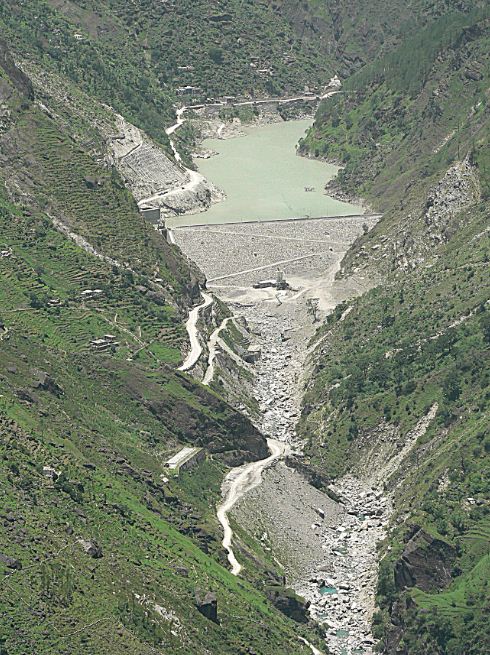


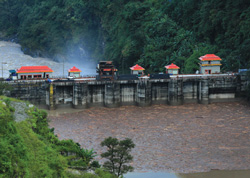

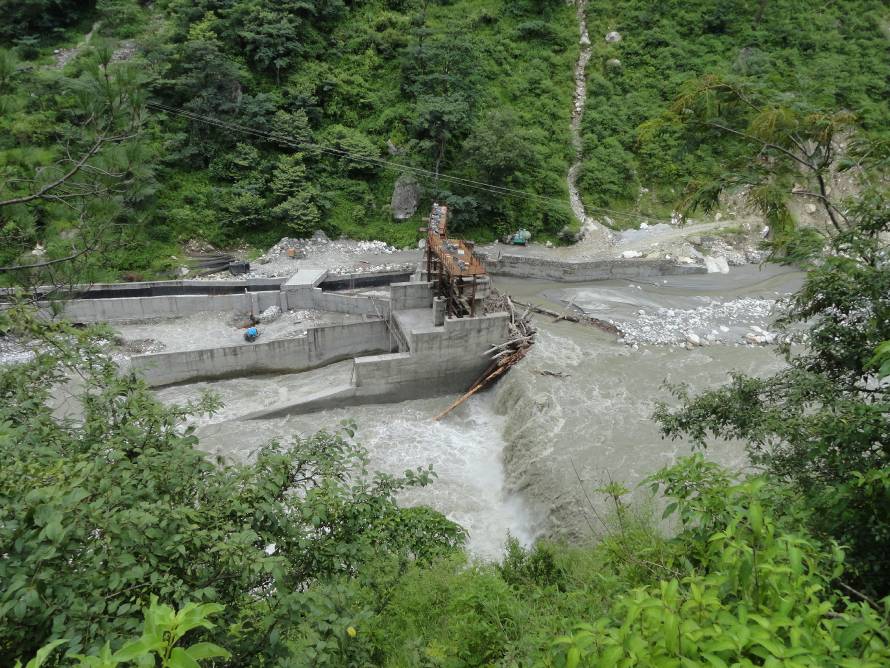


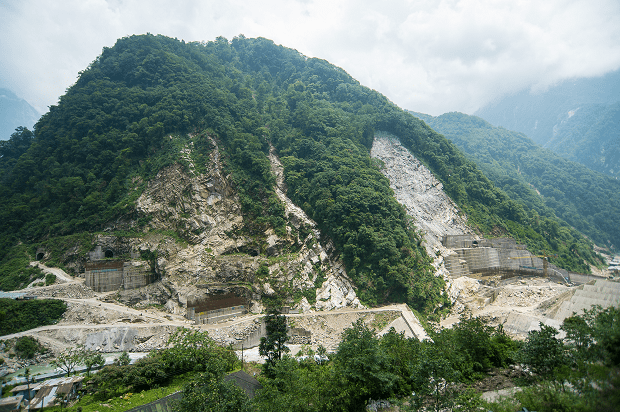


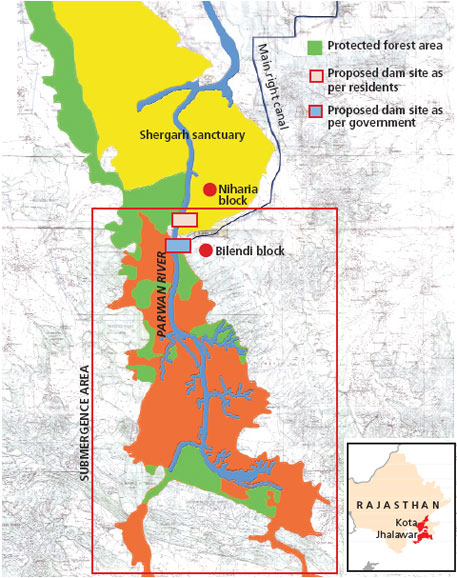




 SANDRP


